(Updated Thursday at 3 p.m.) Metro leaders are hoping to increase service during the morning and evening rush hours next year, but they could well face an uphill battle in convincing Arlington officials to help fund the change.
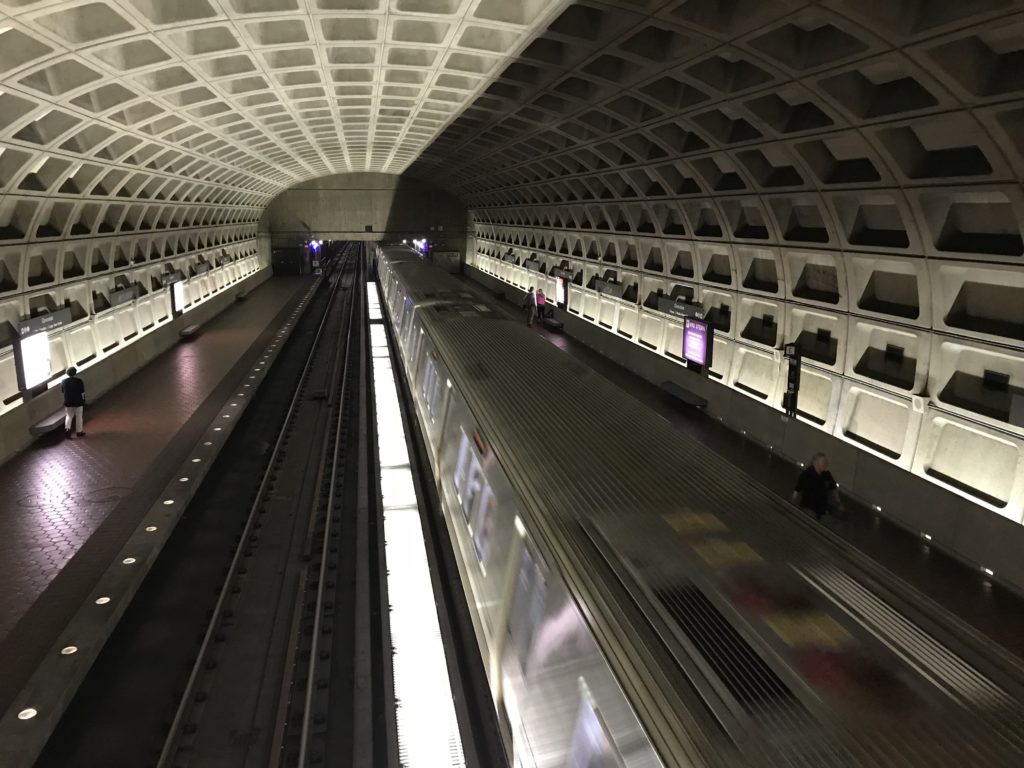
WMATA General Manager Paul Wiedefeld proposed a budget for the new fiscal year that doesn’t include any fare increases, but does call for rush hour service to extend to 10 a.m. and 8:30 p.m. to better serve commuters. The budget, set to be reviewed for the first time by Metro’s Board of Directors tomorrow (Thursday), also beefs up service on the Yellow and Red lines and expands all trains to a maximum eight cars as part of a broader bid to win back riders for the struggling rail service.
The catch, of course, is that such service increases won’t come without a steep price tag. Even though Metro expects to bring in some new revenue with the added service, Wiedefeld expects that he’ll need an extra $20 million from Maryland, D.C. and Virginia to afford those changes.
Virginia relies on individual localities like Arlington to chip in for WMATA each year, and that means Wiedefeld’s proposed changes would increase the county’s annual funding obligation to Metro from $75 million each year to $83 million. That works out to a 9.8 percent increase, a number that is giving Arlington officials some real pause.
“It’s not that it’s a bad idea,” County Board Chair Katie Cristol told ARLnow. “It’s a question of, where does the money come from?”
Christian Dorsey, the County Board’s vice chair and Arlington’s representative on the Metro Board of Directors, agrees that he’d love to see some service increases, particularly as Metro wrestles with a thorny internal debate about how to boost ridership. Yet he’s concerned that Arlington won’t be able to afford all of Wiedefeld’s changes, at least all at once.
The county is already dealing with an intense funding squeeze, driven in part by falling revenues but also by the deal struck by state lawmakers to provide dedicated funding to Metro, which already put a larger burden on Arlington’s budget. This latest funding increase could make the county’s already grim financial picture even gloomier, Dorsey said.
“That’s a challenge, and there’s not the ability for any jurisdiction to just say, ‘Let’s take this budget and adopt it as is,'” Dorsey said. “I’ll be honest with you, this surprised me… I can’t quite come up with a rational reason why these service enhancement proposals were developed in this way.”
As Dorsey puts it, “something’s got to give, and something’s got to shift” in Wiedefeld’s proposal. He expects that some of the proposed changes to boost ridership “might need to wait until later,” due not only to Arlington’s specific budget challenges but one specific issue affecting all of Virginia’s localities.
A provision included in the dedicated funding deal prohibits the state from increasing its funding level to Metro by more than 3 percent each year, as part of a bid to control costs. Yet Wiedefeld’s proposal calls for an increase closer to 16 percent for the entire state, though that is largely driven by new construction costs for the second phase of the Silver Line, borne primarily by Loudoun County.
To Cristol, who doubles as the secretary-treasurer of the Northern Virginia Transportation Commission and argued forcefully for the dedicated funding legislation last year, fighting to exceed that 3 percent cap seems like a perilous decision for Metro.