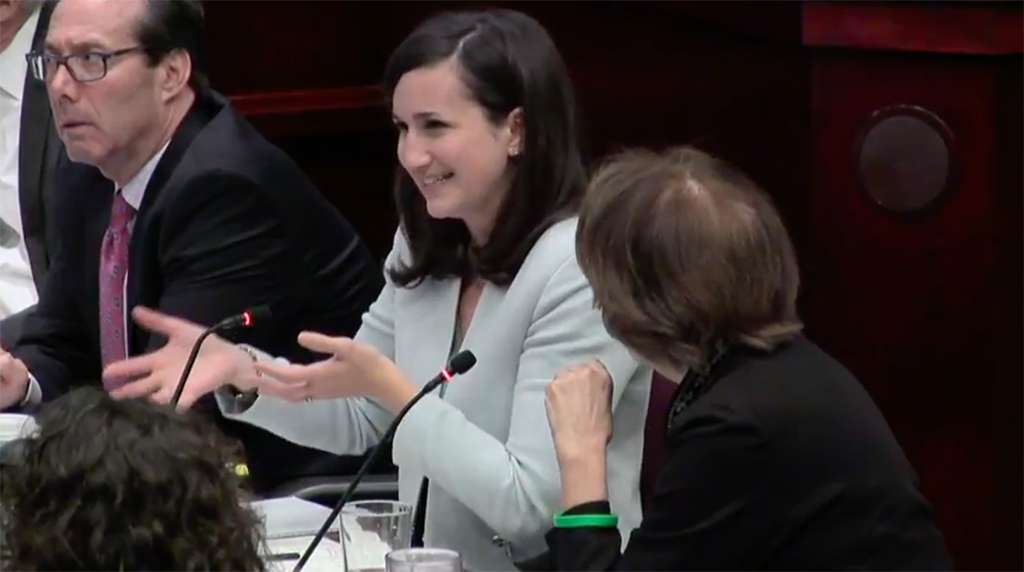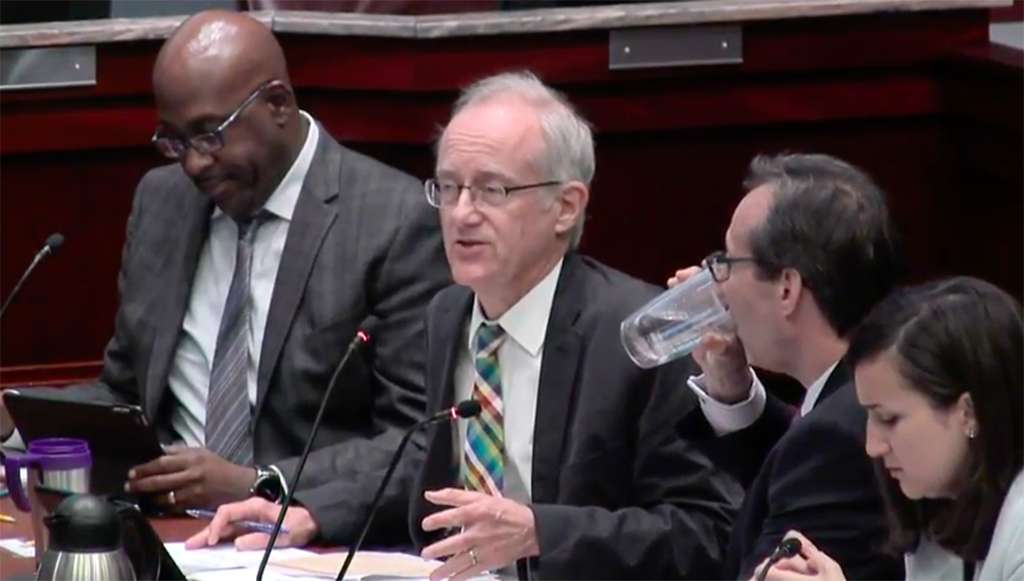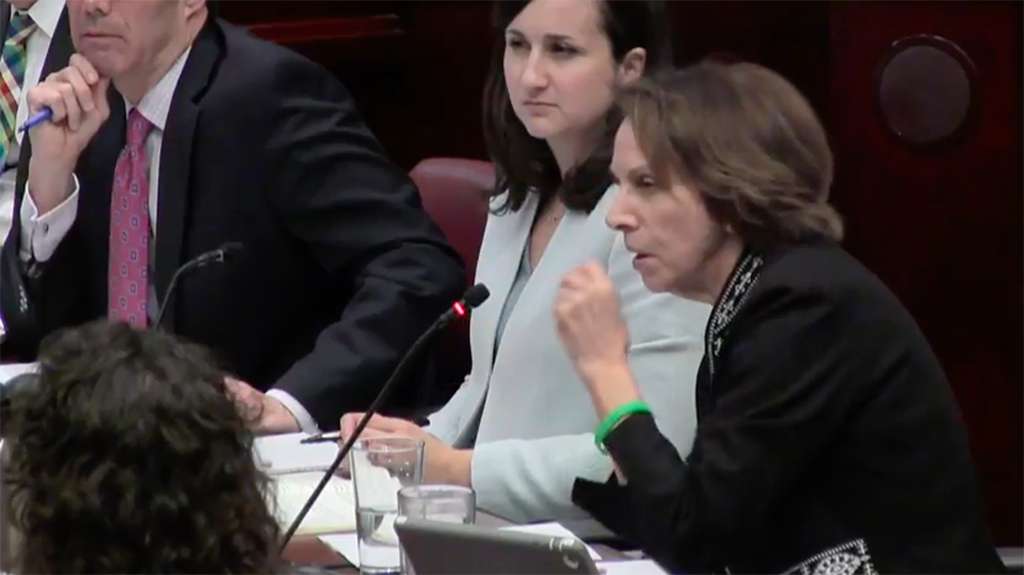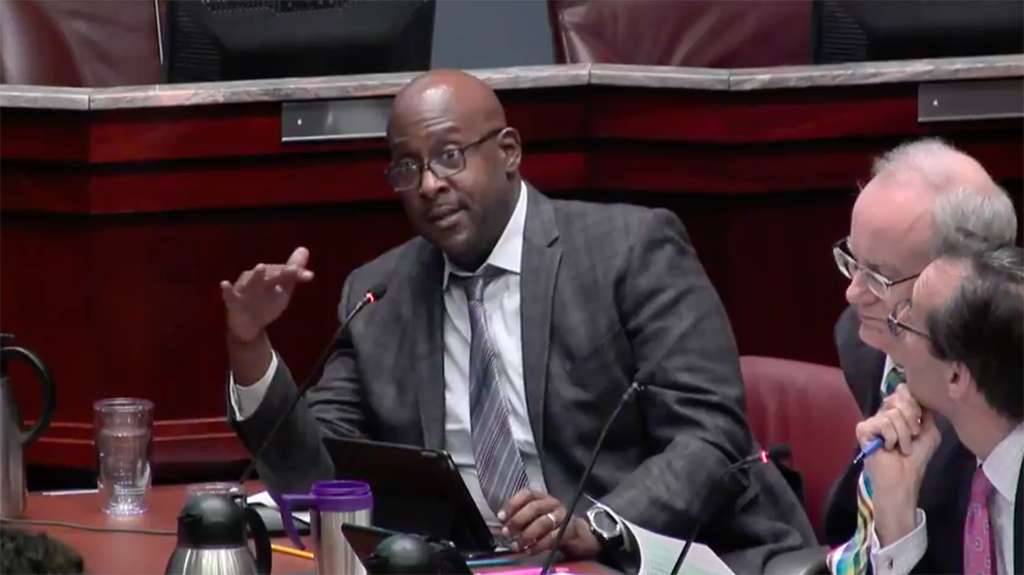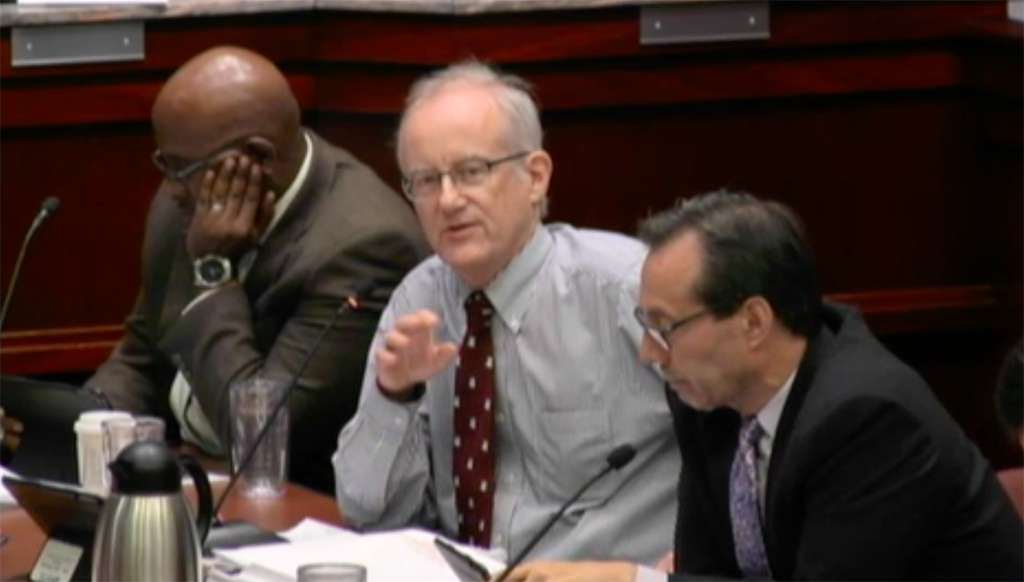
Arlington County Board members wrestled last night with a plan to substitute car parking spaces for spots for bike and car-sharing at new apartment and condo buildings near Metro stations.

The proposal, put together by county staff as part of a number of changes to parking policy under discussion at a Tuesday work session, is meant to encourage developers to contribute to other transit options.

Staff recommended that a developer providing a Capital Bikeshare station could substitute that for for up to four car parking spaces, depending on its size, or bike parking could be exchanged for two parking spaces. One car-sharing space, provided for a private company like Zipcar, could be in place of five spots.

But Board members questioned why the provision for different transit means is tied to reducing car parking spaces, especially near Metro stations, as adding such amenities is becoming a more standard practice in developments across the region.

“It bothers me that going to suggest that we’re not going to get these things until we go down to the minimum [parking ratio],” said Board chair Jay Fisette. “These are things that should be part of every site plan.”

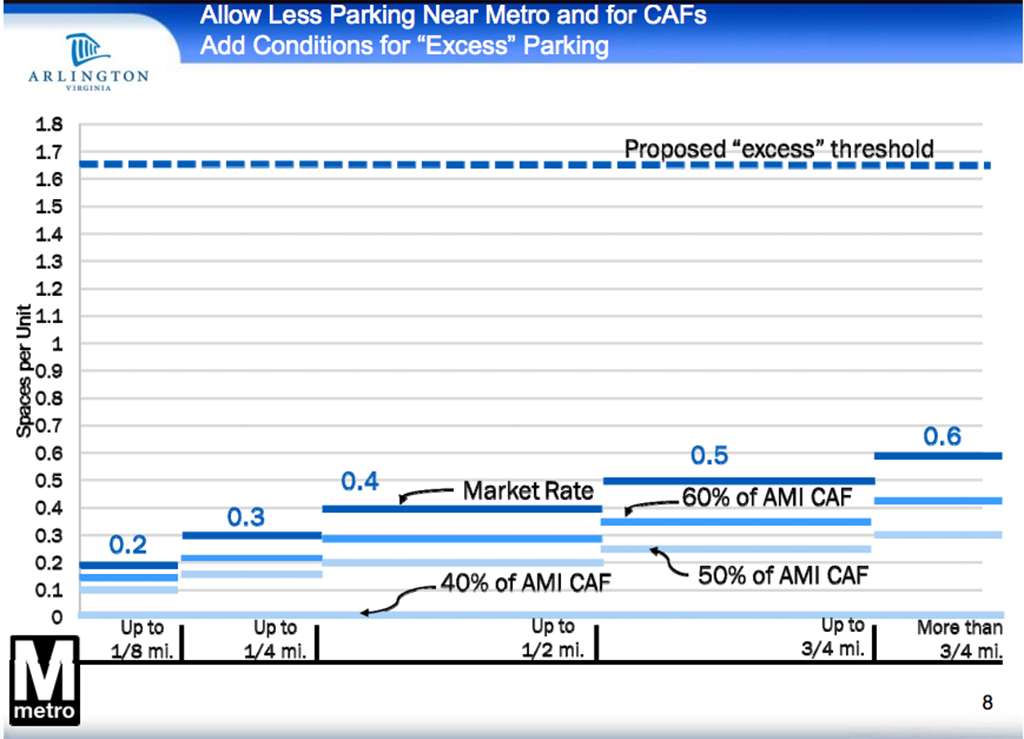
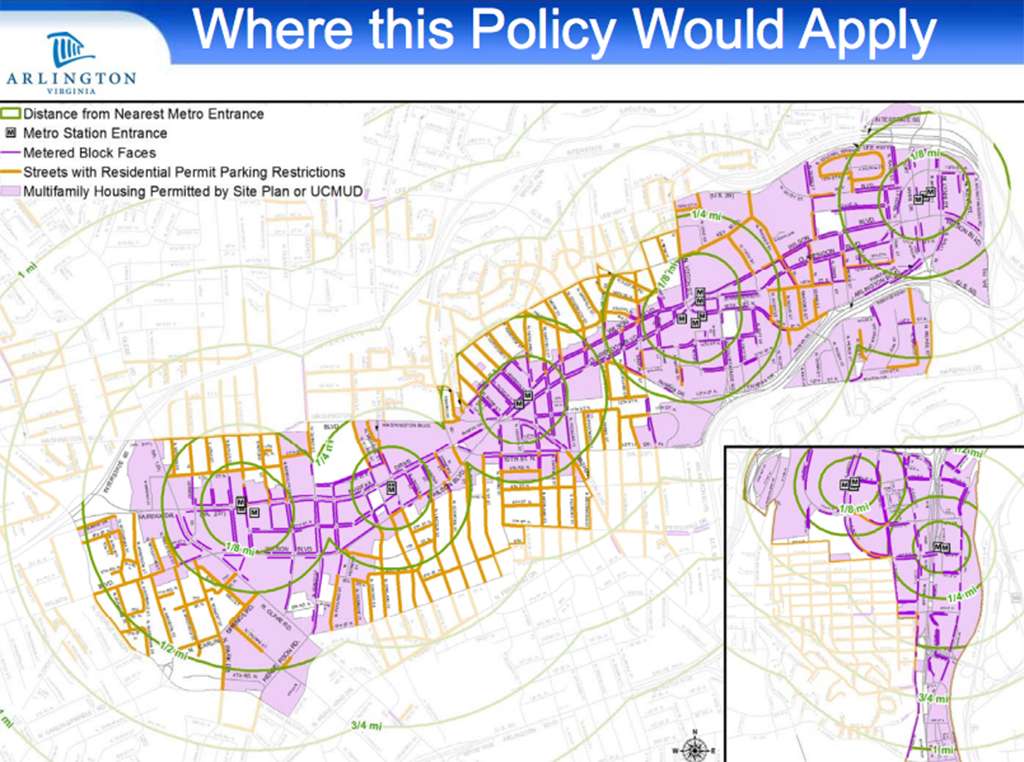
Among the other recommendations put forward by staff, developers could request fewer parking spaces the closer a property is to a Metro station, with some committed affordable housing units not being required to have any parking spaces if they are within an eighth of a mile of a station.

Board member John Vihstadt argued that orienting the changes in parking policy around Metro, which would allow developers to provide fewer spaces at new buildings if they are close to a station, might be misguided given the drop in ridership due to the system’s ongoing safety concerns and year-long SafeTrack rebuilding program.

Vihstadt said that drop in ridership was “casting a pall” over the discussion, but county transportation director Dennis Leach said it was important to attract residents to such buildings who “build a lifestyle” around Metro. Vihstadt requested further data on the county’s declining ridership, which Leach said has also been hampered by more teleworking and other factors.

A major addition by staff to a report in March, by a residential parking working group on the new parking policy, is a requirement that developers provide for dedicated visitor parking.

Stephen Crim, a parking planner in the county’s Department of Environmental Services, said that change came after concerns from nearby residents that cars would park on their residential streets, especially those of visitors who have few options.

Leach noted that the parking garages in neighborhoods like Crystal City and Pentagon City are under-utilized, especially by visitors, and that DES could do even more to promote use of those spaces alongside the various Business Improvement Districts in the county.

Staff and County Board members agreed that while the policy still needs work before approval, it is aspirational and designed to attract residents who would prefer to have minimal, if any, car use.

“We are all seeking to hasten a future that we are interested in, which is a more multimodal corridor especially with fewer cars and more people taking alternatives to the extent that it suits them and choices that allow them to do so,” said Board vice chair Katie Cristol.
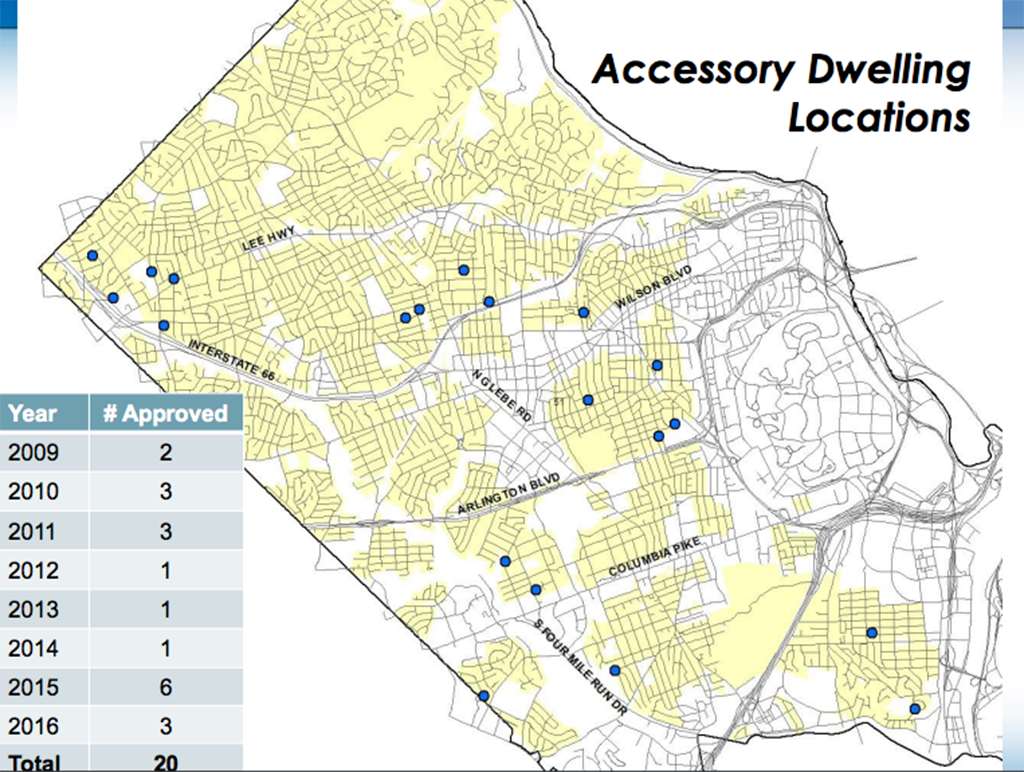
(Updated at 10:20 a.m.) Homeowners could find it considerably easier to add an “accessory dwelling unit” to their property under changes set to be made to the ordinance in the fall.

Only 20 ADUs — defined as a second living space with a kitchen, a bathroom and a separate entrance — have been approved in Arlington since the ordinance first came into effect in 2009. Advocates have said they can help ease the county’s lack of affordable housing.

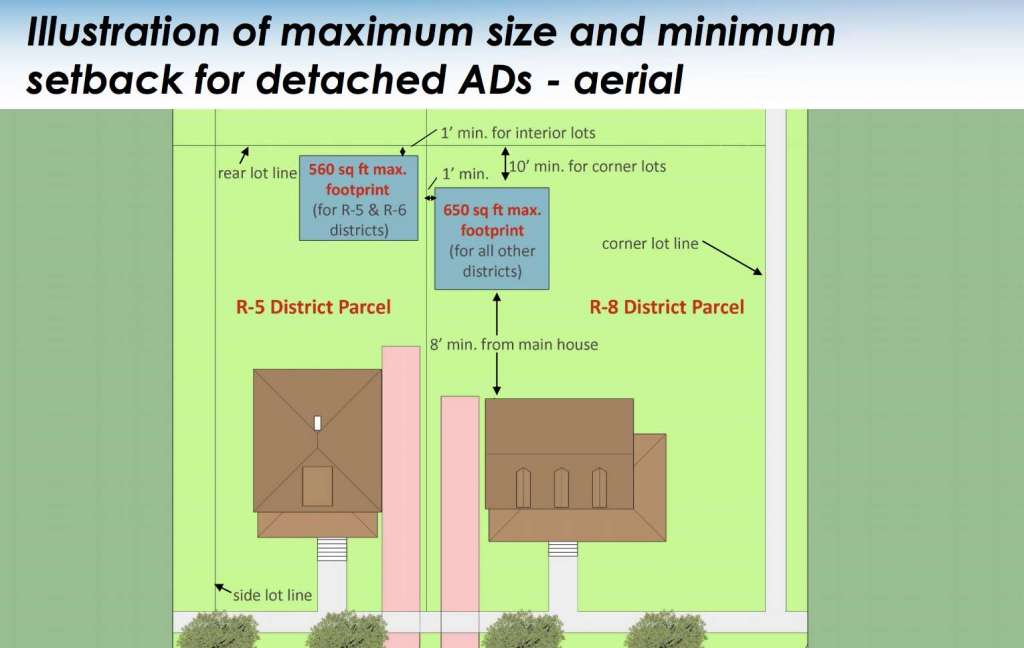
Staff is recommending that the Board allow detached ADUs, set back from the main house, and bump up the maximum occupancy from two to three. Currently in Arlington ADUs are only allowed within a single-family home.

At a work session Tuesday with county staff, Arlington County Board members debated various other recommendations, focusing in on a few.

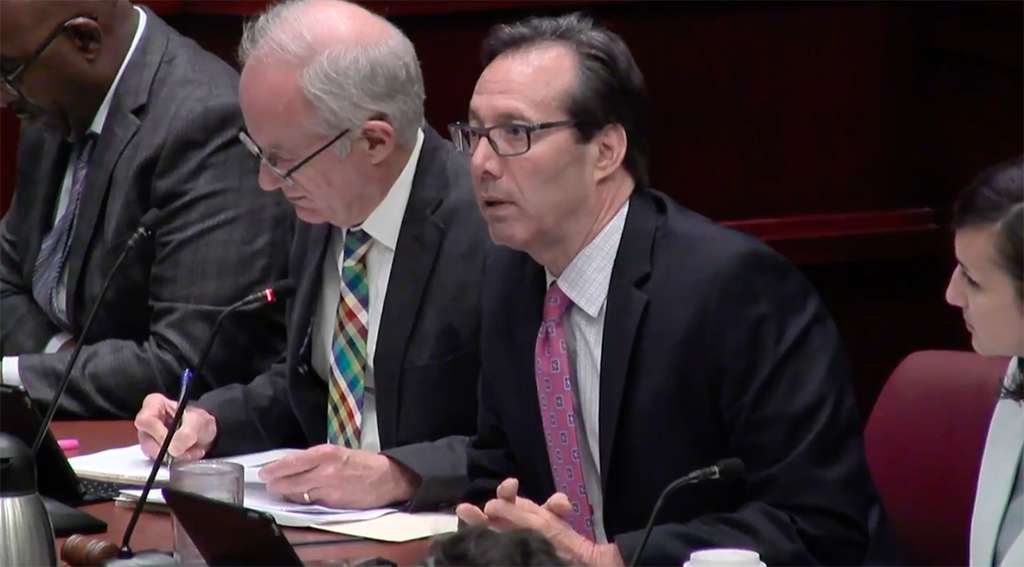
Board members discussed staff’s recommendation of maintaining the current cap of ADU approvals at 28 a year countywide. Chair Jay Fisette and member Christian Dorsey suggested removing the cap altogether.

“Even at the likely installation rates, we’re not talking about a big impact on our community,” said Dorsey. “And who’s to say that if the 29th application is really the ideal, textbook accessory dwelling location and circumstance, we have to say no because we’re going to cap it? … It just really seems insane.”

But others were not so sure about removing the cap. Board member John Vihstadt suggested looking into capping new ADUs by civic association or neighborhood to prevent a concentration in one place, something others were happy to go along with in lieu of abolishing the cap altogether.

Joel Franklin, a housing planner at the county department of Community, Planning, Housing and Development, added that staff will undertake an annual survey to try and find any issues that may arise.

The Board also explored raising the maximum number of people allowed to live in an ADU. The current maximum is two, with staff recommending that be increased to three, but several wanted more work to be done to explore whether that limit could be raised further.

Vice chair Katie Cristol said consistency is key, and that it becomes difficult when “governing the number of people in a bedroom.” But Vihstadt and Fisette were not so sure, and inclined to stick with the staff recommendation.

“It’s one thing to stay one or two nights in a crowded hotel room when you’re on vacation with the kids or friends or whatever,” Vihstadt said. “It’s another thing to have that crowded condition on a monthly or long-term basis.”

Staff suggested various rules for the units, including that their front doors can be on the same side as long as they do not face, and that exterior stairways must not face the street, among others.

Those rules are designed to protect the character of neighborhoods dominated by single-family homes. County staff members will continue to study the various policies governing aesthetics, they said.

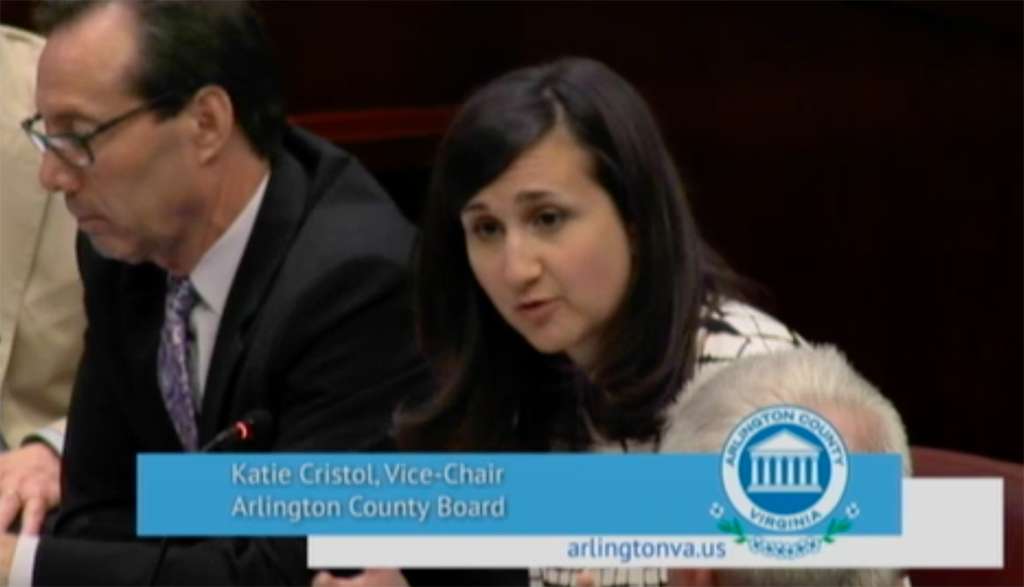
“This is really a significant body of work. This is a use that I think we should be welcoming in our community while being cognizant of impacts on neighborhoods and protecting and planning against them,” said Cristol. “I would hate to lose this opportunity in any house or lot because somebody’s front door is placed in the wrong place.”
A slight change to the parking requirements for properties with ADUs has also been proposed.

Staff will compile the results of the survey on accessory dwellings this month, then finalize its recommendations. The Zoning and Housing Commissions will examine staff’s plans, with the Planning Commission and County Board expected to take final action in November.


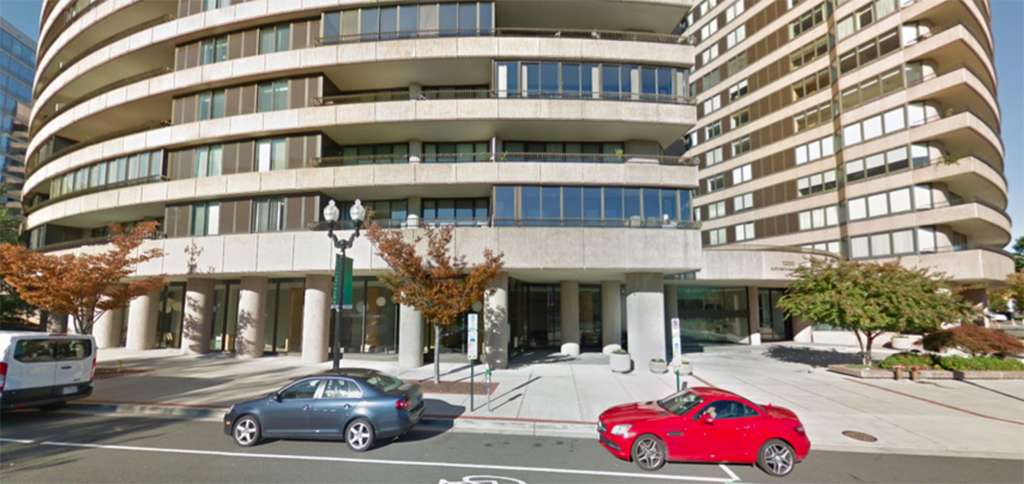
A plan to host a polling place at a condo building in Crystal City has been nixed, but elections officials said they are confident of finding a new location before November.

County staff had planned to move the polling station for the Crystal City 006 Precinct to the Crystal Gateway condo building at 1300 Crystal Drive from Crystal Place (1801 Crystal Drive) in time for November’s elections.

But a staff report on various changes to voting locations ahead of the elections said the Crystal Gateway “no longer wishes” to host a polling place. Likewise, the report notes that Crystal Place “no longer wished” to do the same.

Arlingtonians will go to the polls to elect a Governor, Lt. Governor, Attorney General and local members of the Virginia House of Delegates, as well as representatives on the Arlington County Board and School Board.

Gretchen Reinemeyer, the county’s deputy director of elections, said the building “did not provide any information on why they would not like to be a polling place.” Crystal Gateway’s property manager and a spokesman for Equity Apartments, which owns both the Crystal Gateway and Crystal Place, did not return calls requesting comment.

Reinemeyer said staff is “in the process” of finding a new polling place for the precinct, and they are “optimistic that we will have a new location soon.” She said that when looking for new polling places, staff try and find county-owned buildings in the precinct first before assessing other options.

“If there is not a suitable county facility available, we look at other buildings used by the community that have a ground level meeting room such as churches or community rooms in apartment or condo buildings,” she said. “Once we find a location that we think will work, we begin negotiating with the management of the space.”

The County Board will vote on the proposed voting changes at its meeting Saturday (July 15). Also on the table is a change for the Rosslyn Precinct to move its voting place to the 1800 Oak Apartments from the soon-to-be-redeveloped Fire Station 10, and a technical change for the Virginia Highlands Precinct to reflect that votes are cast at the recently reopened Aurora Hills Community Center.

Photo via Google Maps.


Replacement of the Carlin Springs Road bridge will be up for discussion at the Arlington County Board’s meeting Saturday.

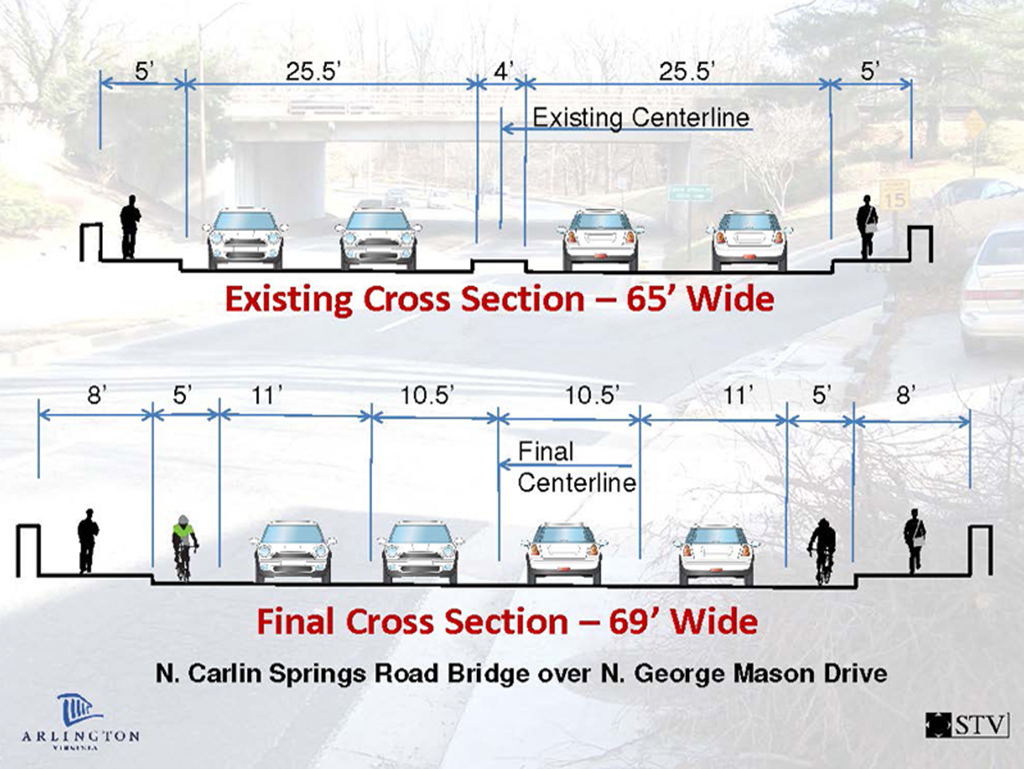
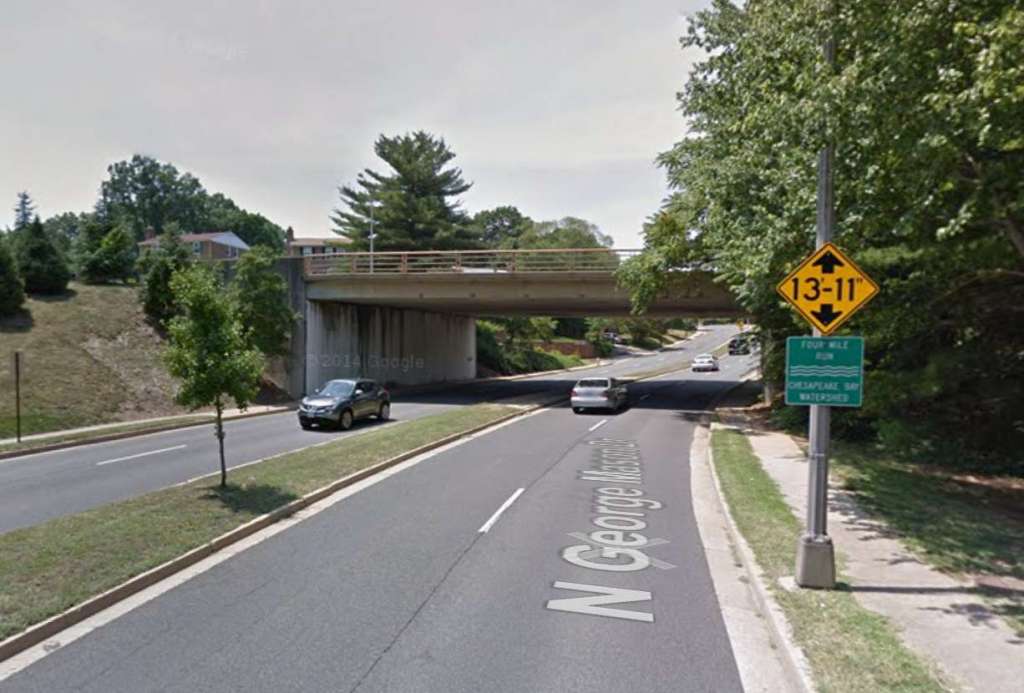
The Board will consider a construction project that would remove the 65-foot-wide bridge and replace it with a 69-foot-wide structure. The bridge takes N. Carlin Springs Road over N. George Mason Drive near Barrett Elementary School and Lubber Run Park on the border of the Arlington Forest and Bluemont neighborhoods.

In a report on the project, county staff said that while still structurally sound, the bridge was built in 1961 and is the most deteriorated county-owned bridge.

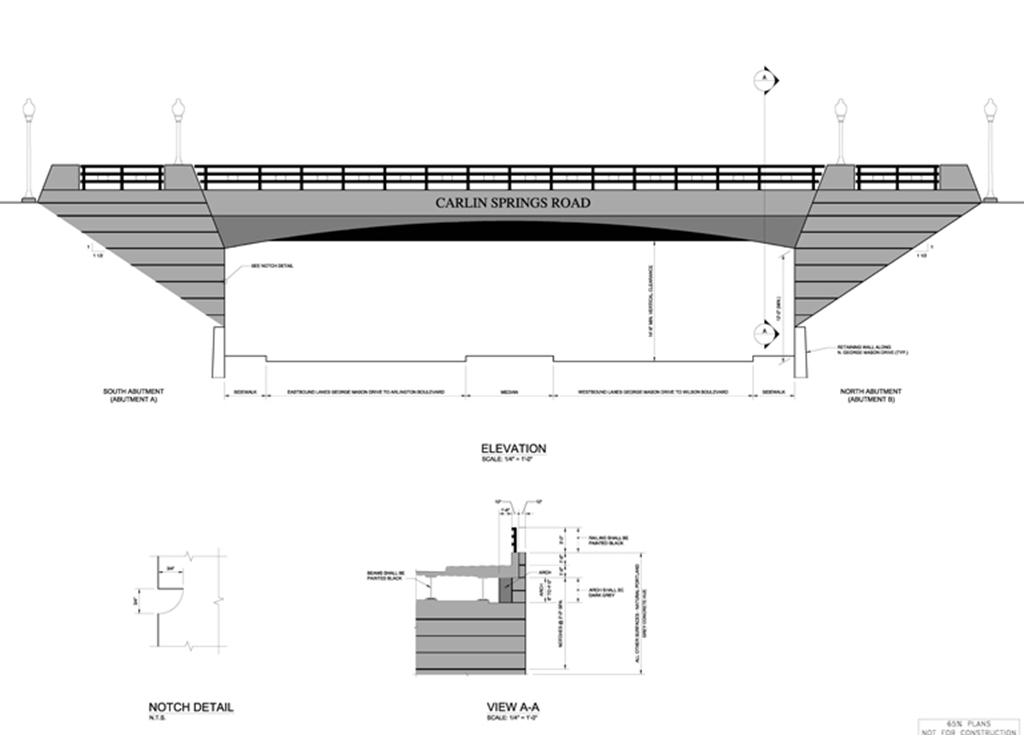
The Rustler Construction company submitted the winning bid on the project, which would combine the bridge replacement with a new sewer line along N. Carlin Springs Road between N. Abingdon Street and N. George Mason Drive. The bridge will also receive the following additions:

  • Wider sidewalks
  • Bike lanes
  • Four vehicular travel lanes
  • A facade arch and decorative railing
  • Enhanced lighting on and under the bridge
  • The street name on the bridge facade

Staff estimates the entire project will cost just over $5.8 million, with another $1.1 million set aside in contingency funds. The project for the bridge will be funded from the county’s capital improvement program, as well as with bonds, grant funding and money from the Northern Virginia Transportation Authority.

Additional bonds from the project to revamp the Shirlington Road Bridge will be used to make up a funding gap of $775,000, as that is progressing slower than expected, according to the staff report.

The sewer project will also be funded from the capital improvement program, and from funds carried over from another project in the Sanitary Sewer System improvement program that has been put on hold several times.


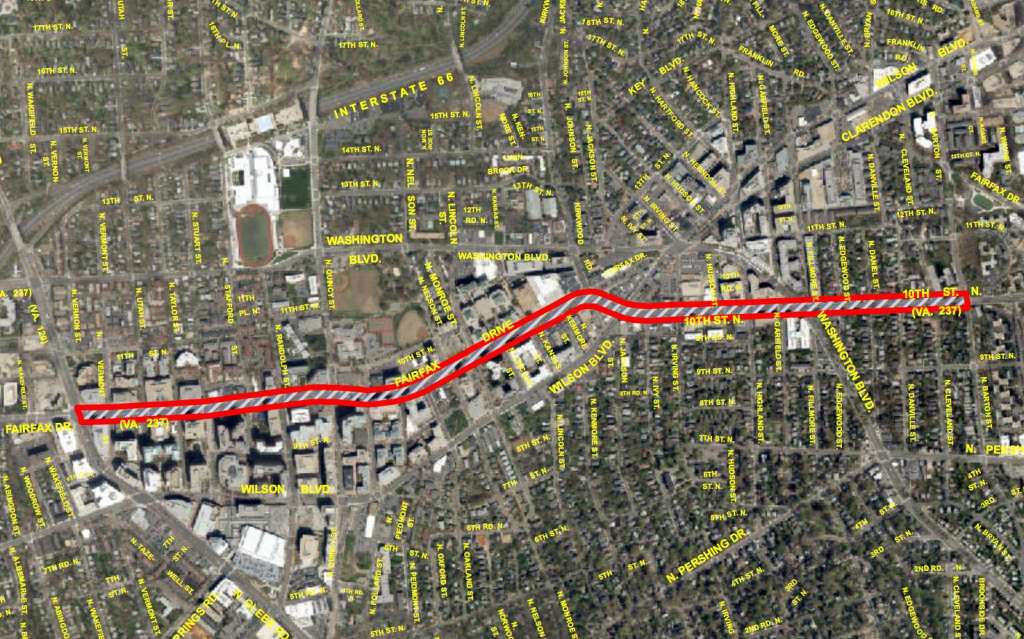
(Updated at 2:10 p.m.) The county could gain control of a section of Fairfax Drive under a plan before the Arlington County Board.

The Board will vote Saturday on whether to request that the Virginia Department of Transportation and Commonwealth Transportation Board transfer control of the road between its intersections with N. Glebe Road and N. Barton Street. Both bodies would then have to approve the transfer, but VDOT has already tentatively agreed to the deal.

If Arlington gains control of the section of Fairfax Drive and 10th Street N. between Ballston and Courthouse, also known as Route 237, it would limit VDOT’s involvement in construction projects.

Currently, roads under VDOT’s control require extensive review before any construction can be done. Making the portion of the roadway a part of Arlington’s local road system would streamline such reviews and give the county more flexibility to implement multimodal improvements.

“Since many of the County’s projects on Route 237 utilize urban standards that are not typical of VDOT plans, this often requires obtaining design exceptions in order to implement the project,” said a staff report. “This cumbersome design-exception process adds time and expense to each project.”

The report recommends the Board approve the proposal, arguing that added flexibility in managing several streets that run in parallel to Interstate 66, which is being widened under the “Transform 66” project, is worth the extra expense.

The move is expected to cost the county upwards of $60,000 a year, according to a fiscal impact statement.

Unlike many other counties in Virginia, Arlington County staff performs the full range of road maintenance functions on the 1,051 lane miles of road and would accept conveyance and responsibility for the maintenance of the additional 6.61 lane miles constituting this portion of Route 237. Per Section 33.2-366 of the Virginia Code, Arlington County receives a per lane-mile payment each fiscal year for the maintenance of its secondary road system. The Fiscal Year (FY) 2018 rate, approved by the CTB on June 20, 2017, is $18,515.71 per lane-mile; the rate typically escalates each year. Maintenance responsibilities include landscaping, sidewalk repair, street sweeping, paving, plowing, signage, and pavement markings, which cost the County roughly $28,000 per lane-mile of roadway, based on the County’s most recently reported average maintenance cost per lane-mile.

… This equates to $60,000 – $70,000 in additional net tax support to the County. The precise level of service for this portion of Route 237 and associated costs would be determined during the FY 2019 budget deliberations.

The CTB would likely vote on the transfer in September if it is approved by the County Board.


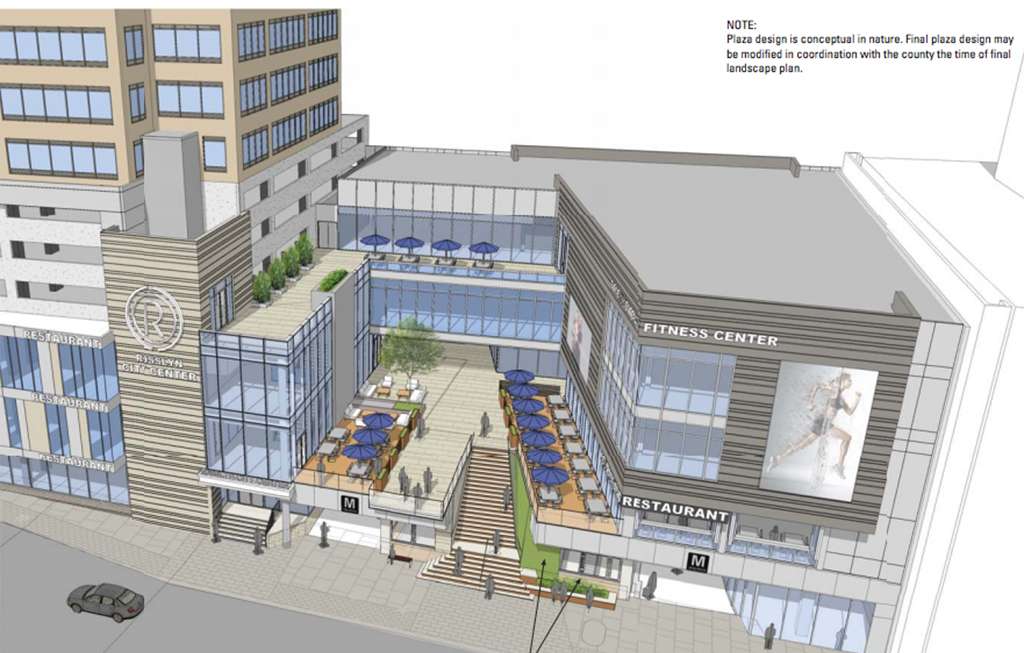
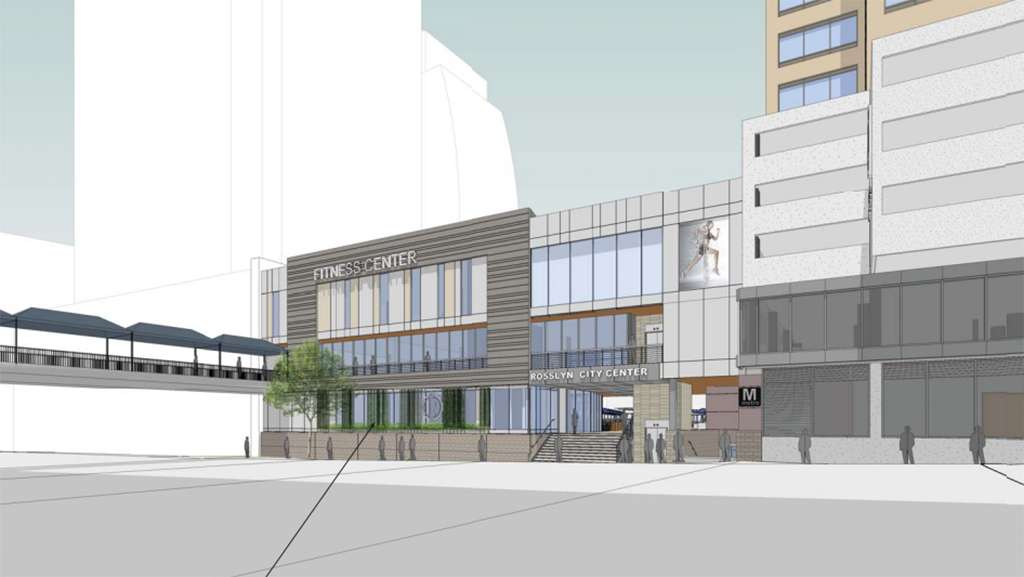
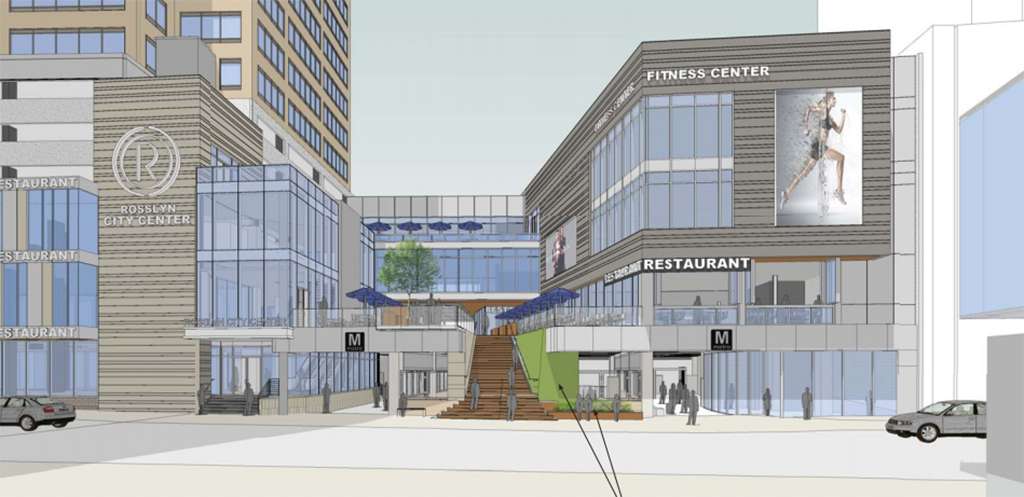
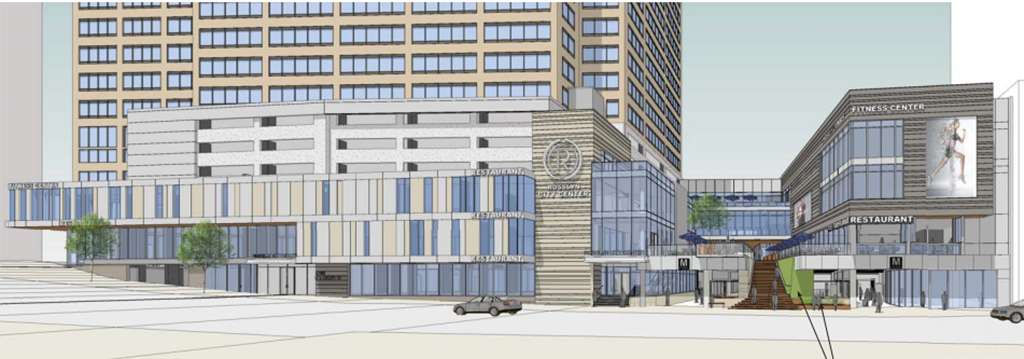
A plan to reconfigure the shopping mall above the Rosslyn Metro station could bring more retail space and add a public plaza on its second level, but its approval is in doubt.

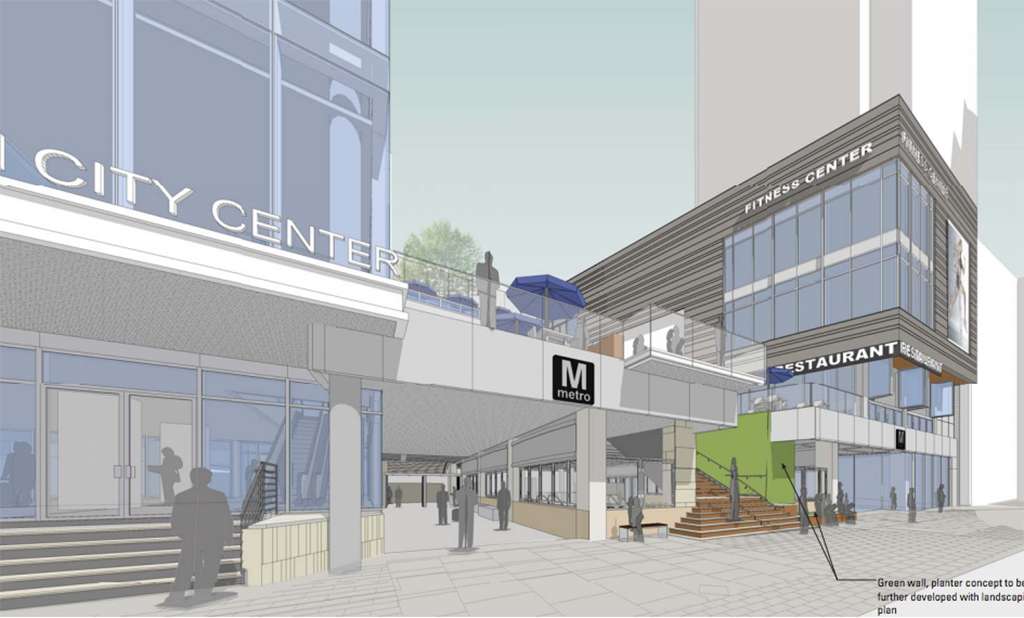
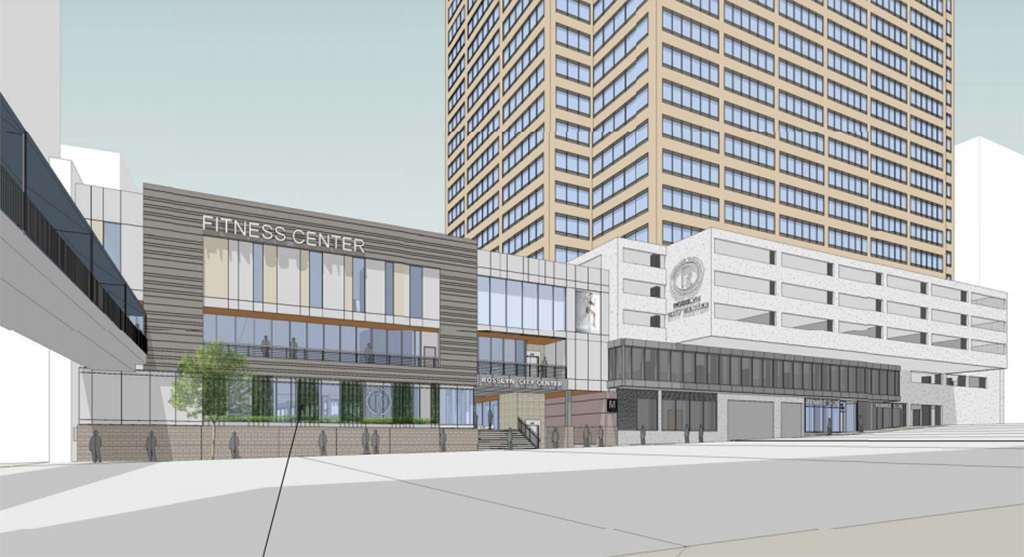
The proposal would add more than 17,000 square feet of additional space for retail at the three-story Rosslyn Metro Center, and redevelop its outside into a four-story building with a public plaza on the second level.

The mall and adjoining office building had been slated for a new 25-story tower directly above the Metro station, but the site plan amendment allowing the plan expired in 2007 before anything was built.

In a report recommending the Arlington County Board deny the project at its meeting Saturday (July 15), county staff said the plaza would “hinder achievement” of the plan to make 18th Street N. a new pedestrian priority corridor known as the 18th Street Corridor. The corridor would extend east to N. Arlington Ridge Road and have a pedestrian-only stretch to replace Rosslyn’s skywalk system.

Staff said the plaza and ground-floor retail would make it harder to access the Metro station from N. Moore Street, and that the extra retail space does not comply with the area’s current zoning. Staff also said the plaza’s 10-foot walkway, while allowing public access, is not wide enough and would create “narrowness and tunnel conditions.”

“The proposal will adversely impact access to Metro by increasing congestion at the North Moore Street frontage,” the report says.

Staff added that it does not conform with the Rosslyn Sector Plan‘s vision for the design and programming an open-air Metro station plaza after the site’s redevelopment.

“The proposed plaza width (approximately 60 feet on the North Moore Street side and approximately 20 feet on the North Fort Myer Drive side) and building mass proposed above the plaza will restrict connectivity and visibility along the 18th Street Corridor,” the report reads. “The plaza’s narrowness and tunnel conditions through the proposed building mass conflict with the Plan’s vision of a linear system of connected public spaces.”

Staff noted that the office building is “near fully leased for the medium term,” and that a timeline on any future development is uncertain.

Images via Arlington County


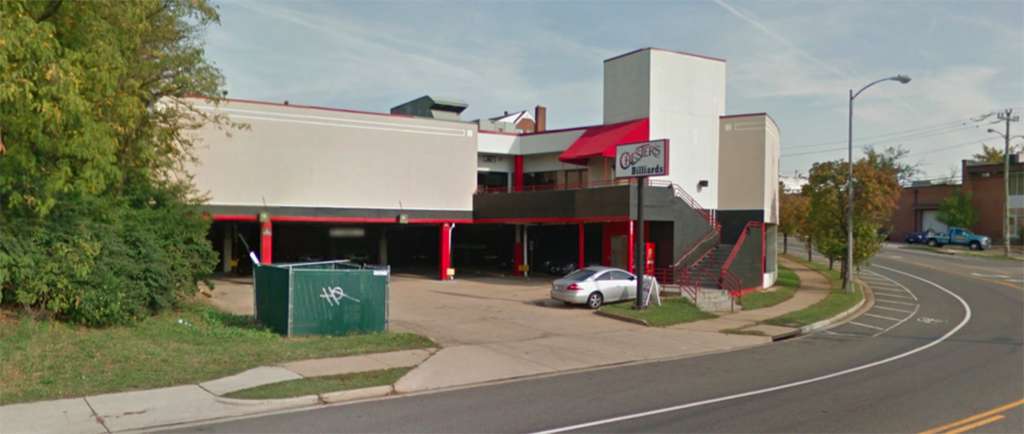
With a criminal case pending and various code violations, county staff is recommending the Arlington County Board not extend the live entertainment permit for Chester’s Billiards, Bar & Grill.

The billiards hall and neighborhood bar at 2620 S. Shirlington Road in Nauck has the annual review of its permit for live entertainment and dancing at the recessed County Board meeting on Tuesday, July 18.

But staff said the Board should not grant a renewal after a slew of problems this past year, for the bar that opened in 2015. The Arlington County Police Department said they were called 16 times during the past year, including during the bar’s live entertainment hours.

The report said several police calls involved “violent altercations or assaults, including incidents directly involving Chester’s manager and co-owner,” including disputes with employees and an accusation of vandalism on the phone lines of another nearby restaurant.

The Fire Marshal, Code and Zoning Enforcement all issued violation notices, while staff had not received required TIPS training for serving alcohol. The Virginia ABC also has pending charges that could result in Chester’s liquor license being suspended due to inadequate food sales and false figures for alcohol purchases, the report says.

The building’s elevator is under “active criminal investigation” for being unsafe, after a violation notice was first issued last August, according to the report. Since then, staff said it has not been corrected, with their report describing the elevator as “dangerous to the health, safety, and welfare of the building’s occupants.”

The report notes that the president of the Nauck Civic Association said the group had no “issues or concerns” with Chester’s, while the president of the nearby Shirlington Crest Homeowners’ Association did not respond to requests for comment.

The live entertainment permit allows Chester’s to host “a variety of live entertainment types, including music, comedy, and magicians.” The staff report says the elevator issue may also prompt the county’s building maintenance official to “seek revocation of the Certificate of Occupancy for disregard and/or refusal to correct violation.”

Chester’s is located in the building that formerly was home to Lucy’s ARL and Champion Billiards.

Hat tip to Chris Slatt. Photo via Google Maps.


Arlington’s Head Start program for low-income families could be getting a new home under a plan before the Arlington County Board this weekend.

Head Start, which provides early childhood education, health and nutrition services to low-income families, could be forced from its current building at 1800 N. George Mason Drive as early as next August. It currently leases space at the Edison Complex that previously housed behavioral health care offices in the county’s Department of Human Services.

The move is part of the terms of the county’s planned exchange of the Edison property for the Virginia Hospital Center site at 601 S. Carlin Springs Road, a plan endorsed by the Joint Facilities Advisory Commission.

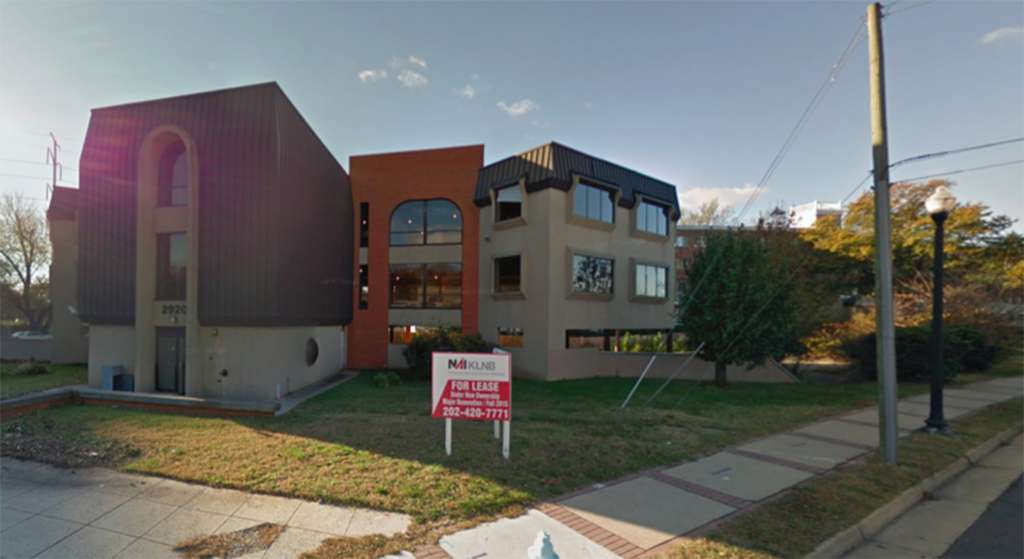
County staff proposed the program move to a 15,649-square-foot space at 2920 S. Glebe Road, which would be bought by the county for just over $3.8 million and leased to Northern Virginia Family Service, which was selected by the federal government to run the Head Start program in Arlington.

County staff noted in its report on the plan that the price tag is higher than the $2.4 million that the property is appraised at, but the owner, GCP South Glebe LLC, is “unwilling to accept less than the $3.885 million purchase price.”

Staff projected it would then cost another $6.6 million to build out the property for use by Head Start, and construction would take a year and a half.

In recommending buying the building, staff said it is big enough for Head Start, is located close enough to the majority of families who participate in Head Start and has enough parking, among other positives.

In their report, staff noted the problems the county faces in finding facilities for daycare use, including the need for parking, an outdoor play area and a pick-up/drop-off zone for cars and other vehicles. They added that office buildings are expensive to lease and are “typically not good fits” for daycares.

The county is set to explore ways to add new child care options under the FY 2018 budget, including a full-time employee being charged with suggesting changes to Arlington’s zoning ordinance that would help child care centers open.

Photo via Google Maps


County to Opt for VHC Land Acquisition — The Arlington County Board on Saturday is expected to affirm the county’s desire to acquire land along N. Carlin Springs Road from Virginia Hospital Center, in exchange for a parcel of county land near N. Edison Street, which will allow the hospital to expand. [InsideNova, Arlington County]

ART Discount for Elementary Students — As of June 25, elementary students can get the same student discount on ART bus fares — $1 vs. the regular $2 fare — as middle and high school students. [Arlington Transit]

SoberRide Sets July 4 Record — SoberRide served a record 559 riders on the Fourth of July this year, exceeding the previous July 4 record of 455 riders set in 2003. The regional service, which provides a free ride home on holidays to help prevent DUI crashes, recently began partnering with Lyft rather than offering rides via taxi services. [InsideNova]

Flickr pool photo by Erinn Shirley


A new name will appear on the ballot for November’s Arlington County Board election, as independent Charles McCullough II has thrown his hat in the ring.

The 10-year resident of Arlington Ridge and self-described progressive will join Democratic nominee Erik Gutshall and independent Audrey Clement on the ballot.

McCullough currently works as a consultant, having previously represented the Australian Embassy in D.C. on education policy in the United States and Canada, worked as an attorney for D.C. Public Schools and been part of the National Board for Professional Teaching Standards.

He said one of his main priorities is to ensure residents’ voices are heard. He said the so-called Arlington Way should be restored in their favor, rather than what he said he perceives as a bias towards developers and planning decisions that have already been made.

“What is this Arlington Way that drives these bargains that favor developers, that only call upon certain communities when it comes to decisions being made?” he said. “I hear people say, ‘We’re not actively consulted, we’re not meaningfully consulted.’ I hear from other folks in North Arlington, who say, ‘When I am consulted, the decision’s already been made. What Arlington Way is this?'”

McCullough was especially critical of the county’s decision to woo Nestle to Arlington with a package of incentive-based grants, and suggested instead that money could be invested to help grow and retain small businesses.

McCullough said one of his other major priorities is adding to the county’s stock of affordable housing, and ensuring more seniors can keep living in Arlington and are not priced out. He suggested following other communities’ lead by expanding the housing voucher program, and requiring that new developments have more affordable units than currently called for by county code.

He added that older citizens must be able to stay in the county, and added that maybe Arlington should look at providing more communities for seniors.

(more…)


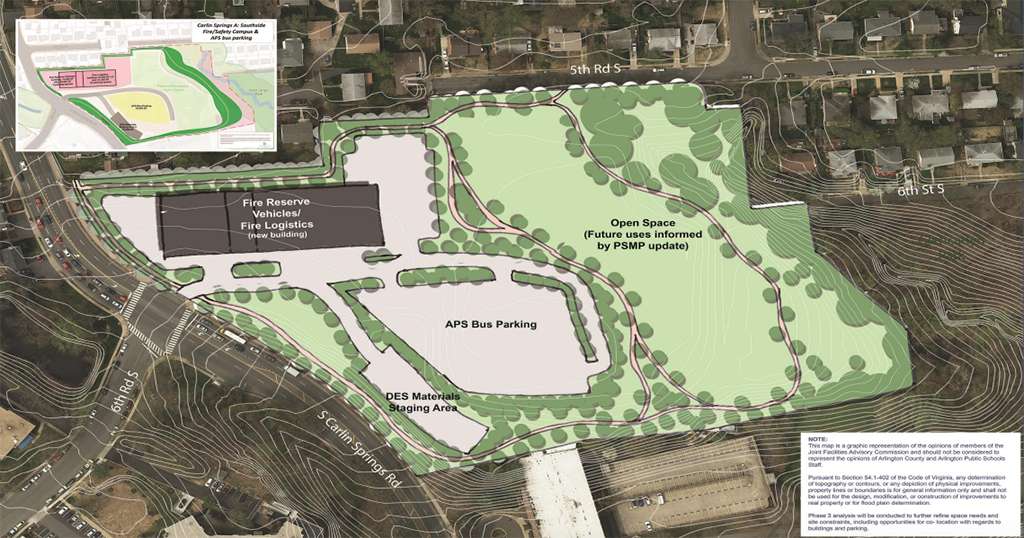
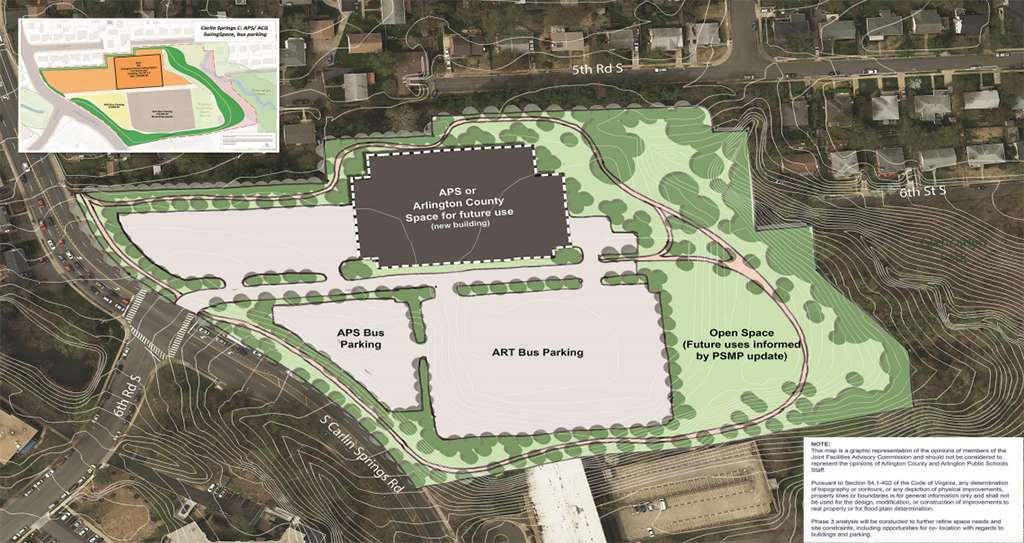
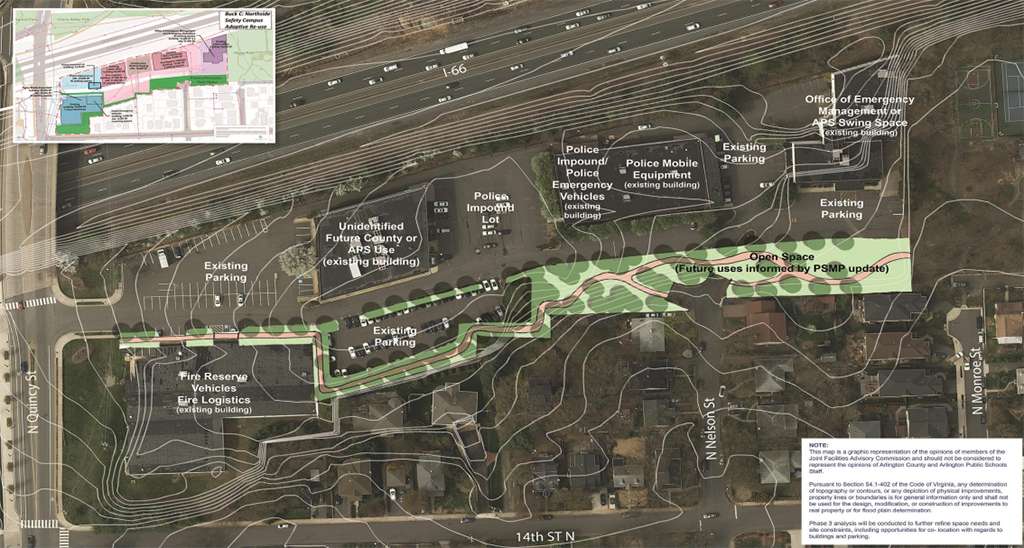
The Arlington County Board and school board agreed Tuesday night to further study three possible scenarios for the Buck and Virginia Hospital Center sites, as recommended by the county’s Joint Facilities Advisory Commission.

Of the options, whittled down from a list of 10, two could allow for a building to be used by Arlington Public Schools. They could also provide space for the Office of Emergency Management and other public safety agencies, while some offer bus parking for both APS and Arlington Transit (ART).

Two scenarios for the VHC property remain under consideration, while just one is now being examined for the Buck site.

JFAC also formally recommended that the county acquire both sites. The Buck property is located near Washington-Lee High School, while the VHC site is at 601 S. Carlin Springs Road, and the county holds options to either buy the land outright or swap for them.

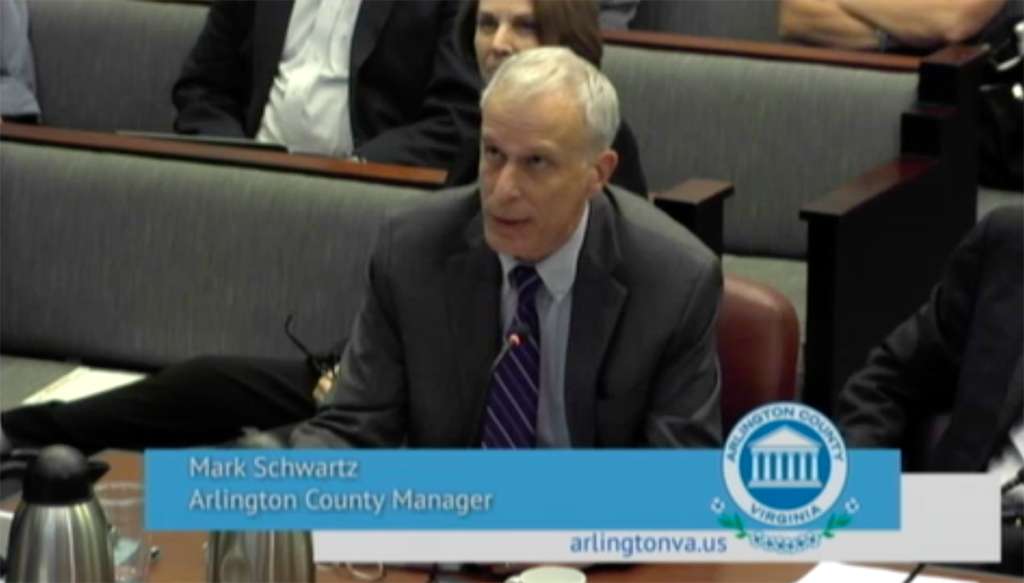
During the further study on the three remaining options, JFAC will explore how best to make the bus parking fit in. But County Manager Mark Schwartz said his preference would be for Arlington to purchase the current ART bus parking area at 2629 Shirlington Road given that bus dispatch is run from that location. Schwartz and staff will assess their options on that site too in a separate process.

JFAC chair Ginger Brown said residents had raised concerns about using one of the two properties for bus parking due to extra noise, traffic impacts and the need for security lights.

“Thank goodness buses don’t have feelings,” joked County Board chair Jay Fisette. Fellow County Board member Christian Dorsey said bus parking is necessary, and it can work within a community.

“These really can fit very well, but I don’t want to give anyone the impression that we’re looking to dump anything in the Nauck or Shirlington area,” Dorsey said. “This is something that can fit in well with a revitalizing area with planned future development…It’s not an evil thing that is going to disrupt how people live their life.”

The possible swap of a swath of industrial land owned by Arcland Property Company in Shirlington remains on the table, and will be studied for possible long-term uses.

“Maybe there’s some negotiations, some things that can make people more comfortable, but we need that land in Shirlington,” said County Board member Libby Garvey.

Members of both boards agreed that the Buck and VHC sites could be used to help ease APS’ capacity needs, with enrollment set to keep growing.

School Board chair Nancy Van Doren asked that staff from the county and APS work together closely to plan for the sites’ futures. But several urged caution as the schools review their enrollment projections. All agreed on the urgent need to manage the enrollment growth and provide a seat for every student.

“We really need to come to grips with how we’re growing as a community, where we’re going and when we’re growing and the criteria we’re growing and what we’re getting in return,” said County Board member John Vihstadt.

JFAC will now evaluate the short list of three remaining options, develop some rough cost estimates and go into finer detail on what can be done there. That next phase is set to begin as early as next month.


View More Stories