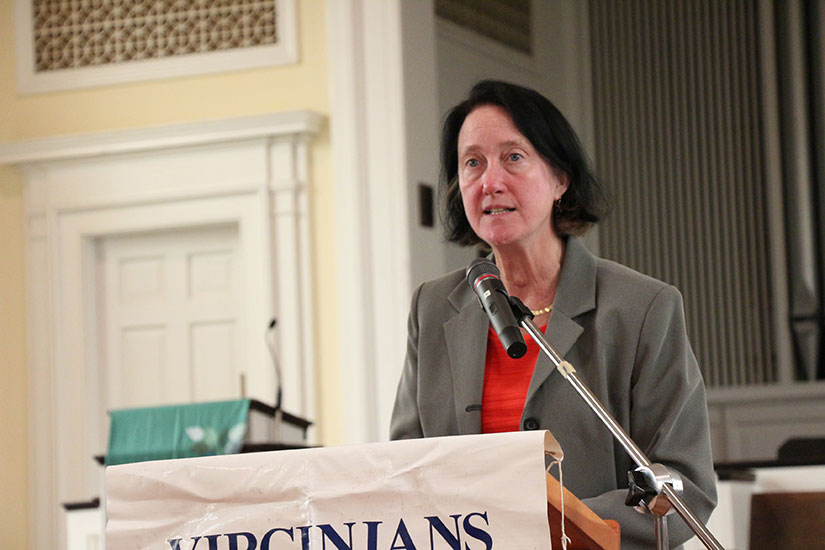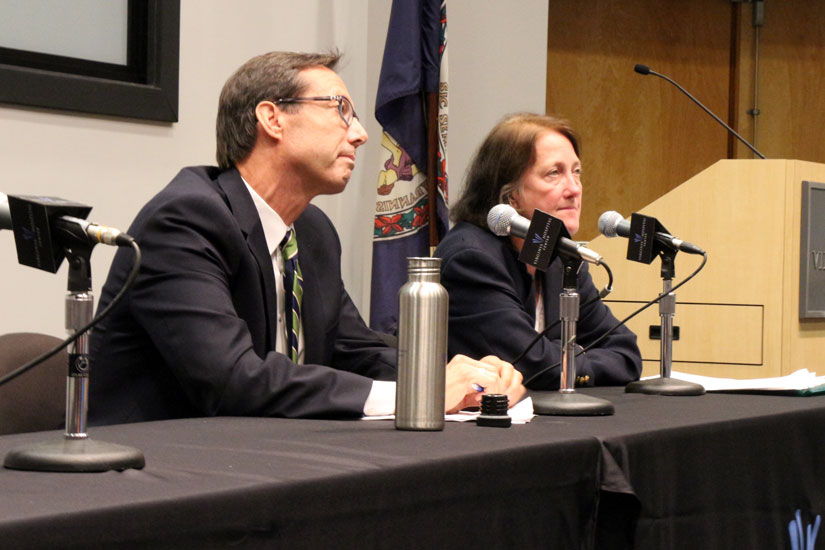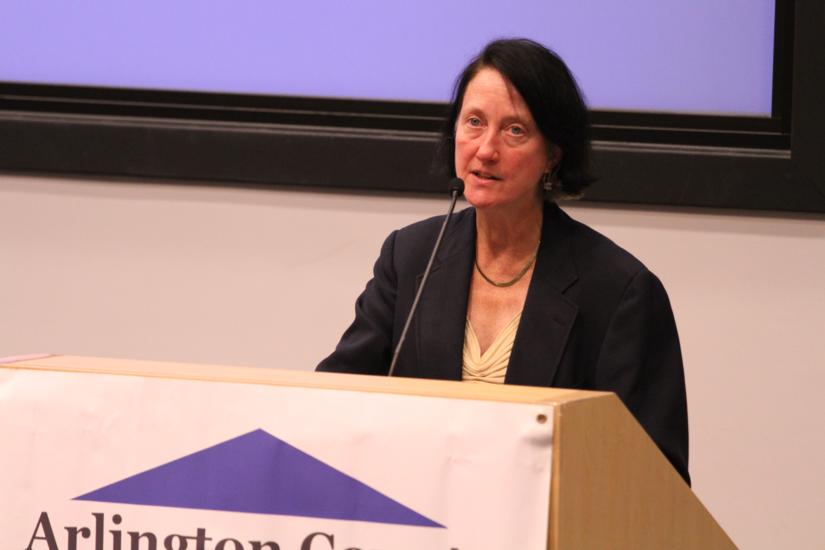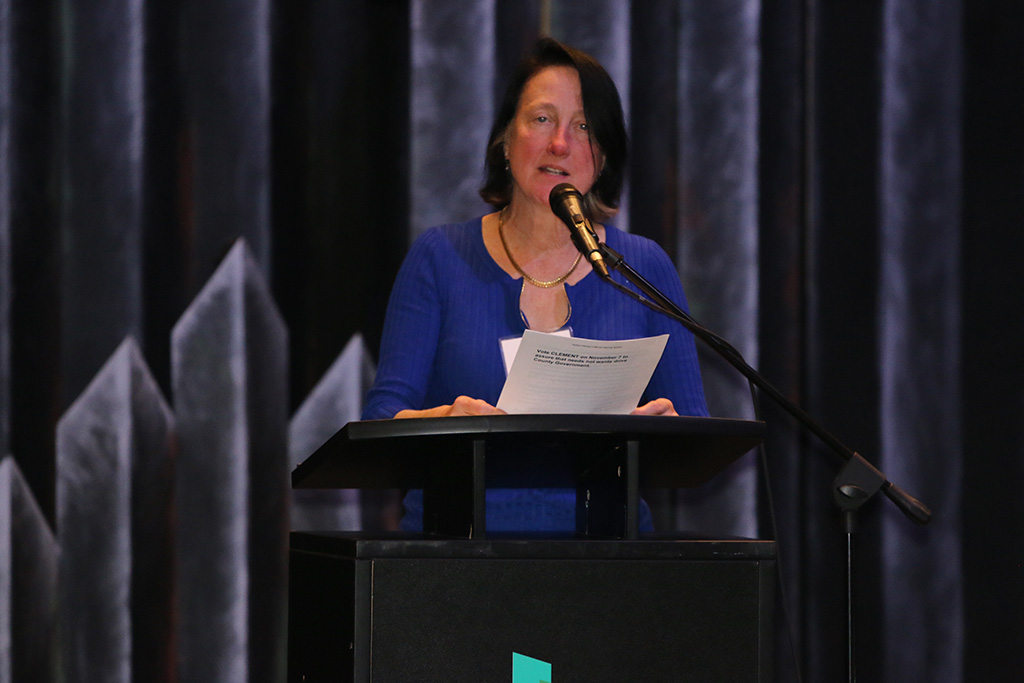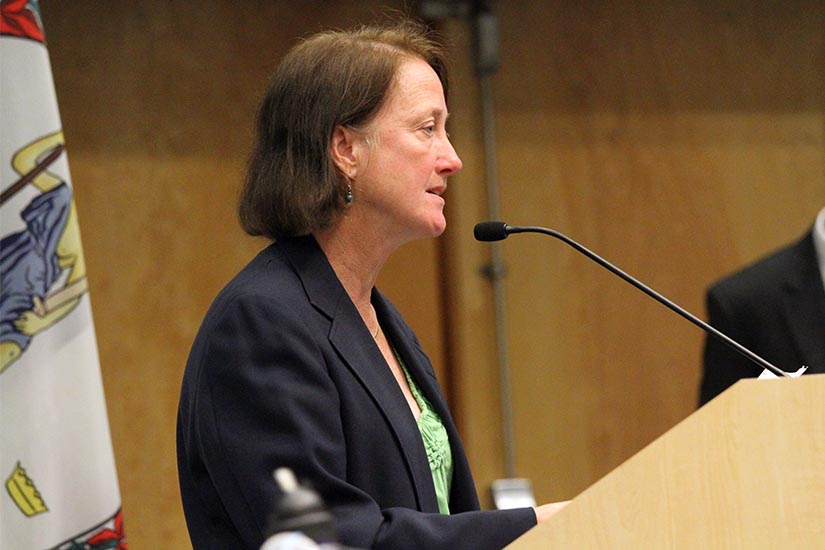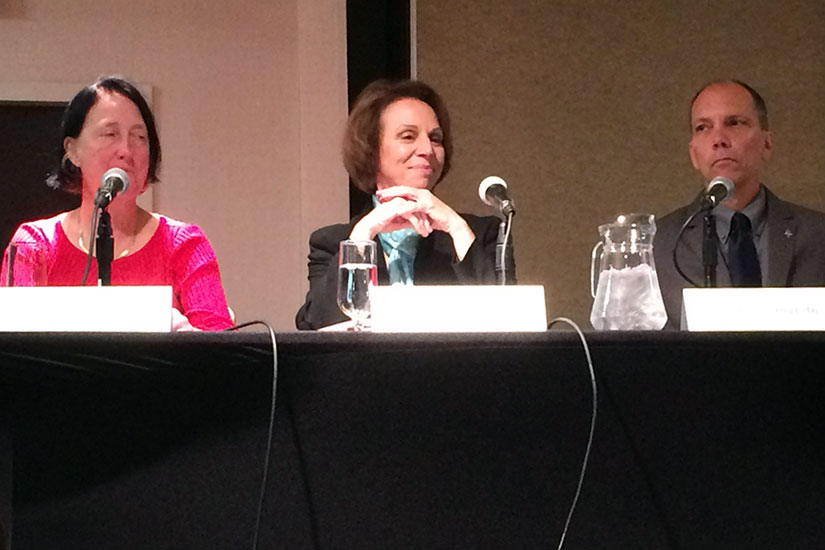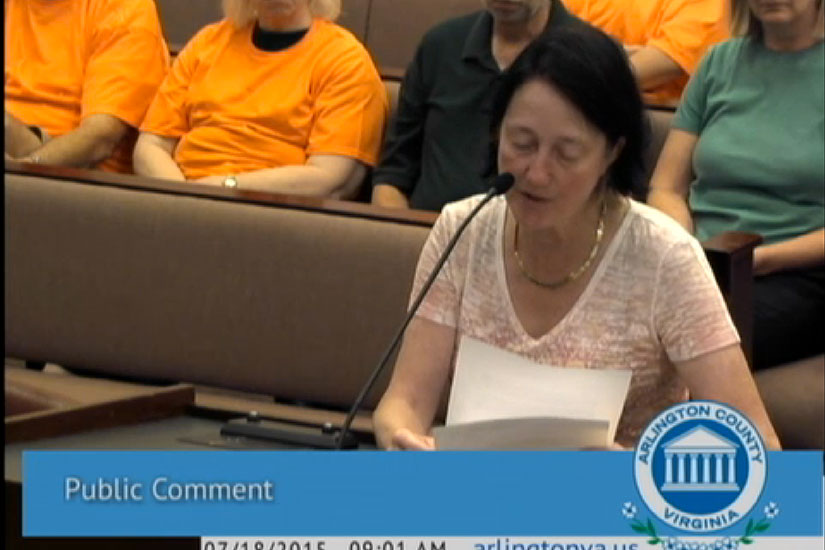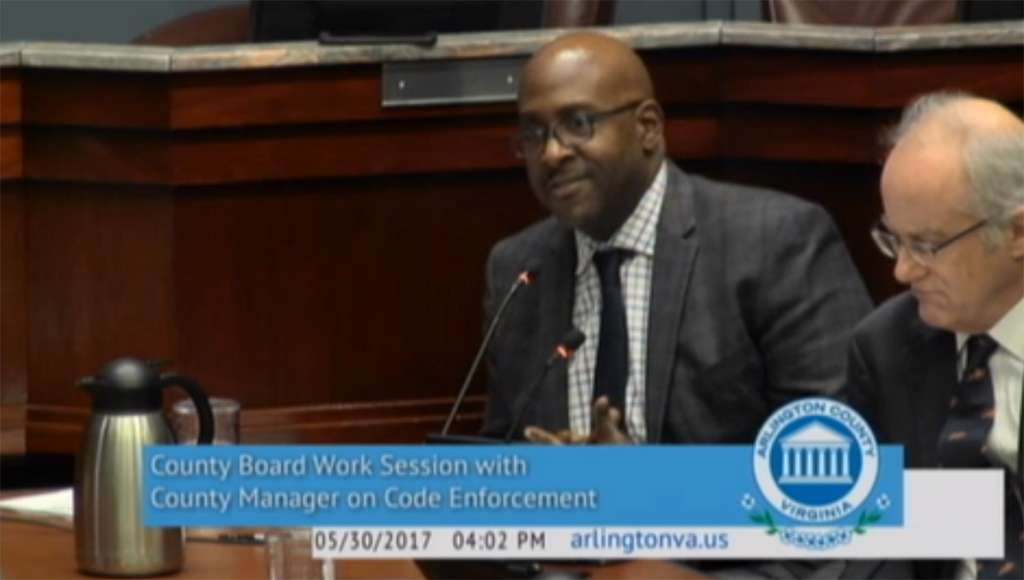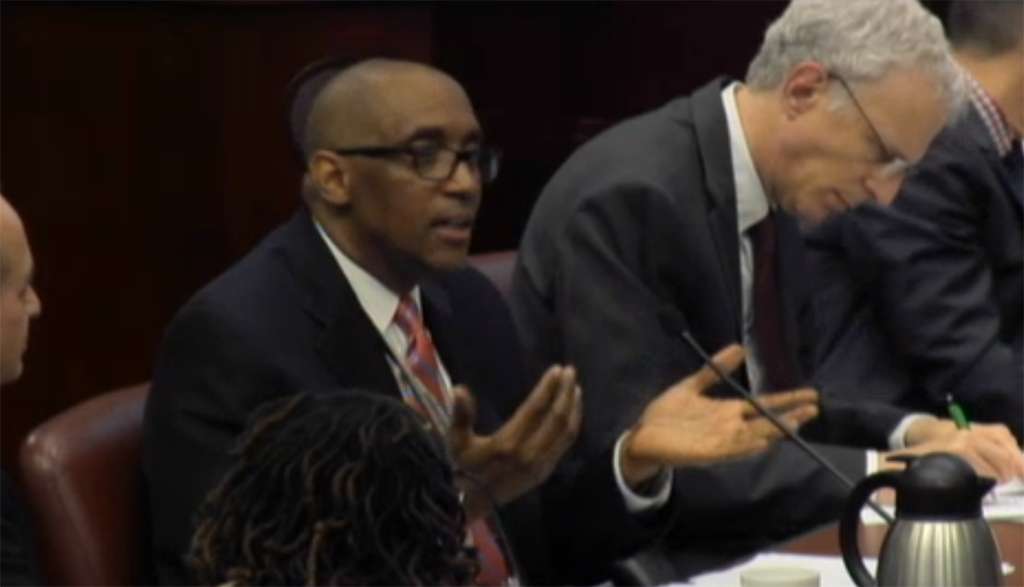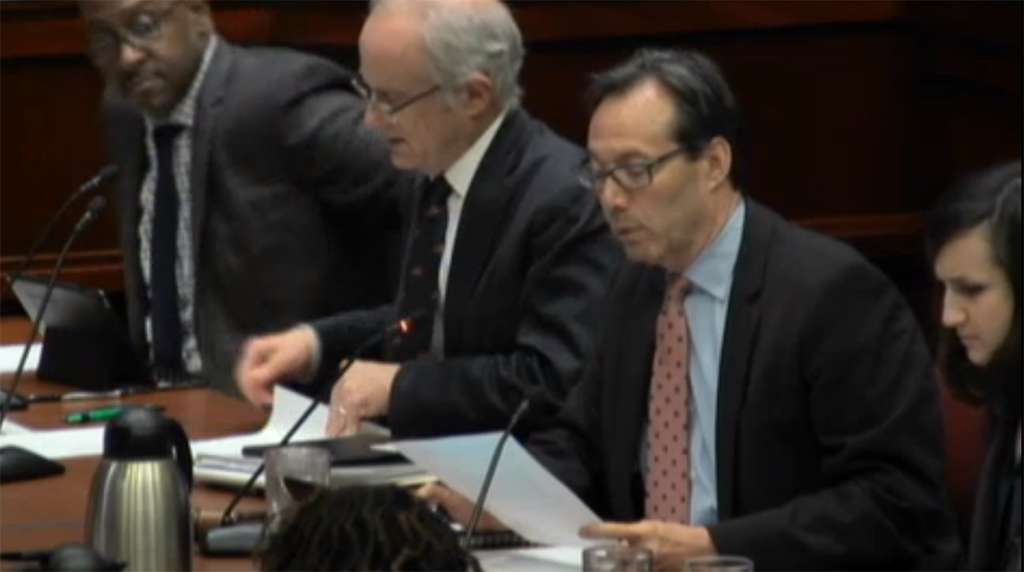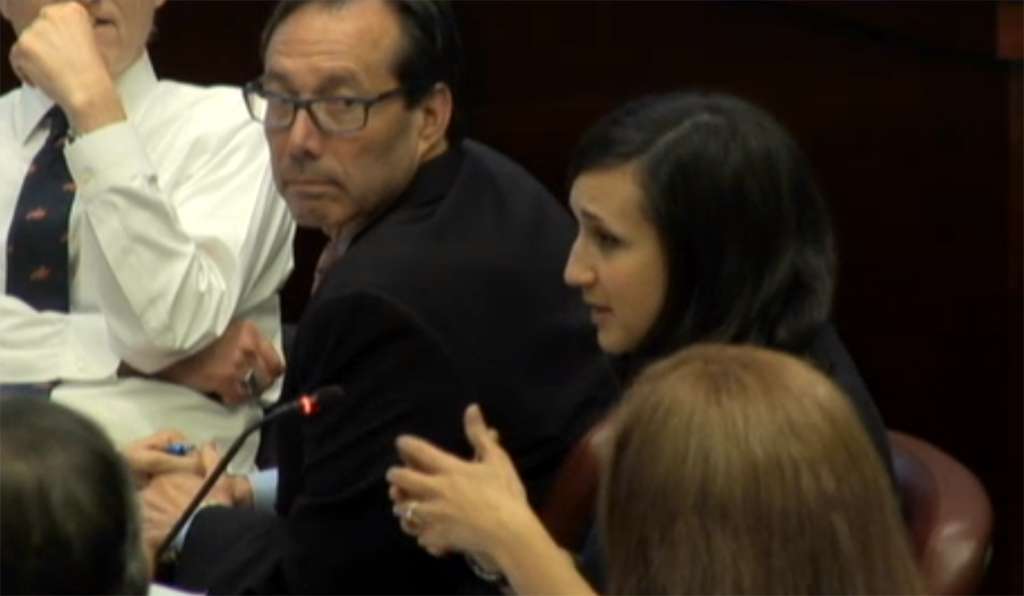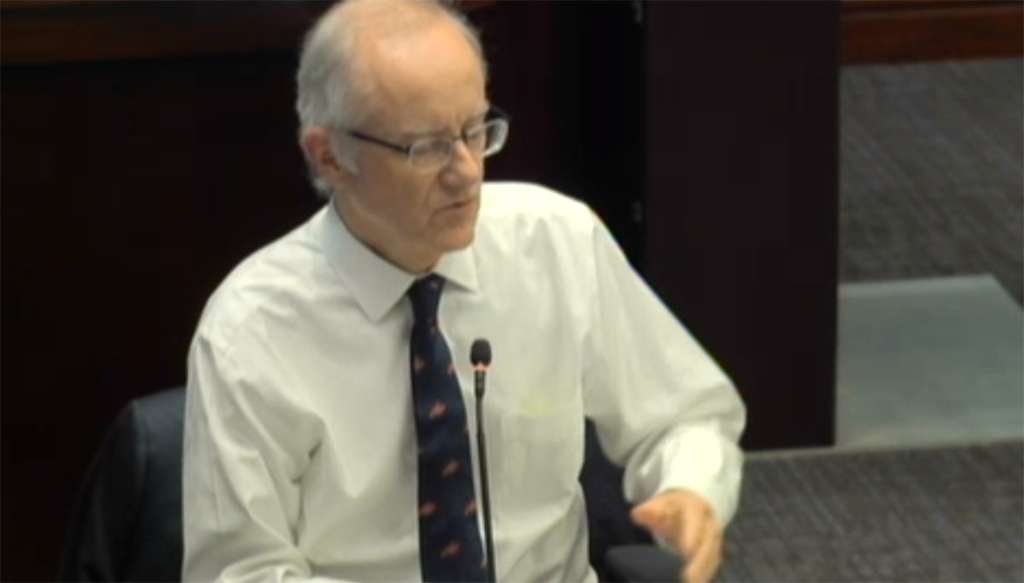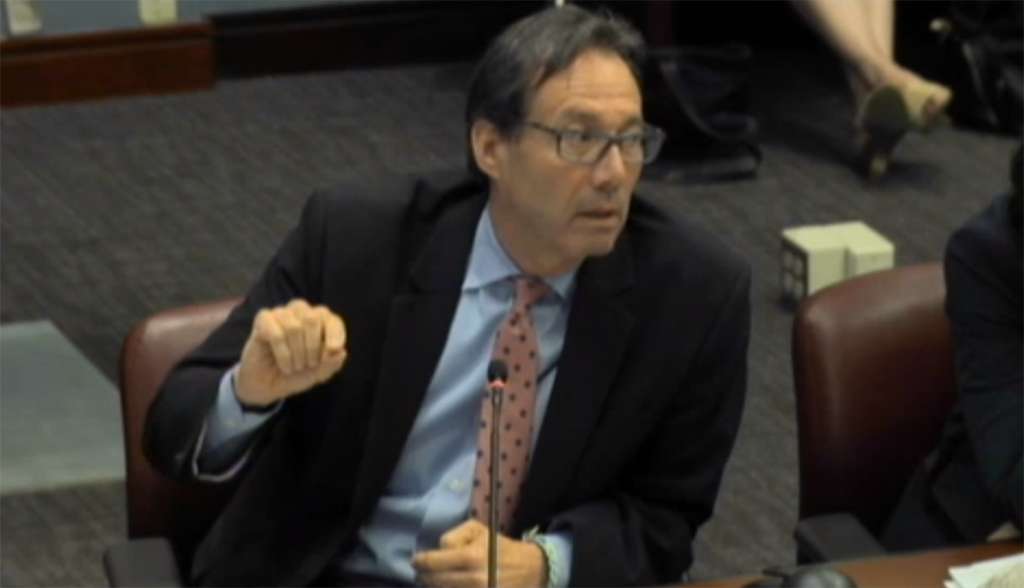
Christian Dorsey joined the County Board in 2016 and now also represents Arlington on the WMATA Board.

On this week’s 26 Square Miles podcast, we talked to Dorsey about whether SafeTrack and new train cars are improving Metro. We also discussed schools, parks, land use, development, the Shirlington Dog park controversy, issues with the Arlington Way, gentrification, affordable housing, and a proposed pedestrian walk from Crystal City to Reagan National Airport.

Listen below or subscribe to the podcast on iTunes, Google PlayStitcher or TuneIn.


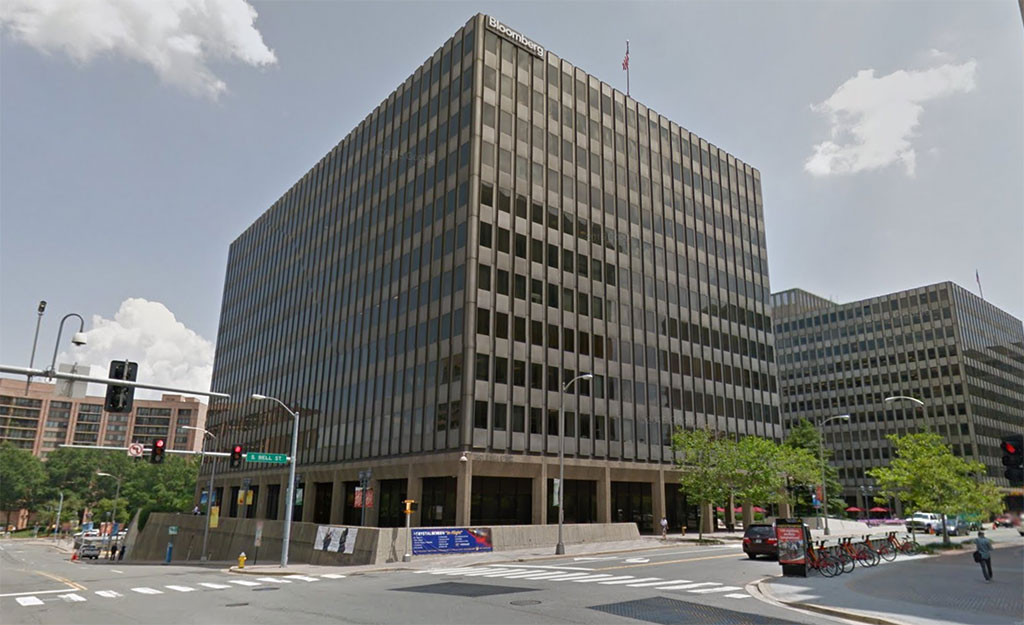
The Arlington County Board will discuss Saturday whether to move forward with a plan to extend a partial real estate tax exemption for Bloomberg BNA.

Bloomberg BNA is a major employer in the neighborhood with 972 employees and a 200,000 square foot office at 1801 S. Bell Street. It signed a deal earlier this year to stay in Arlington, invest $5.5 million and create up to 125 new jobs.

Under the proposal, Bloomberg BNA would be allowed to continue its partial property tax exemption, which expires at the end of this year, for another five years. Arlington first offered BNA an exemption in 2006 to lure it to Crystal City.

The company provides legal, tax, regulatory and business information to professionals who work in fields like the law, taxation and the environment among others.

Gov. Terry McAuliffe (D) approved a $500,000 grant from the Commonwealth’s Opportunity Fund to assist with the project, which came as Bloomberg BNA was looking to explore its options for future locations in the region. An extended tax exemption is part of the package of incentives.

The exemption took effect in 2008, and costs the county approximately $400,000 a year. Under the terms of the extension, BNA would need to keep at least its current staffing levels and occupied office space. If not, the County Board could withdraw from the exemption or reduce it.

If the County Board moves ahead with staff’s recommendation to advance the plan, a public hearing would be held in July.

Photo via Google Maps


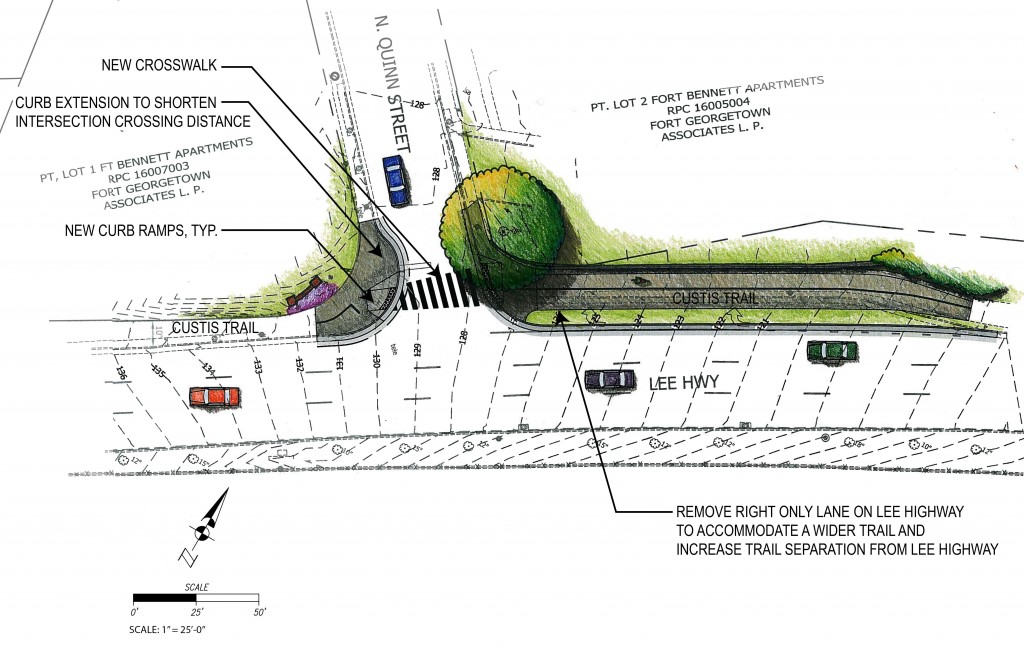
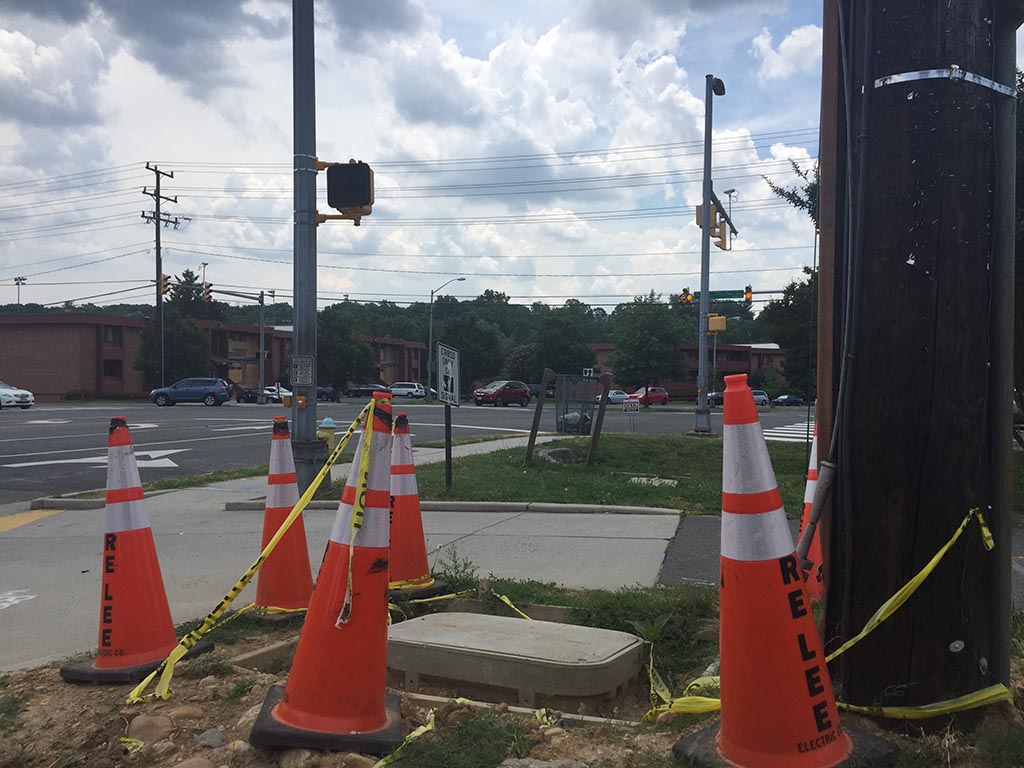
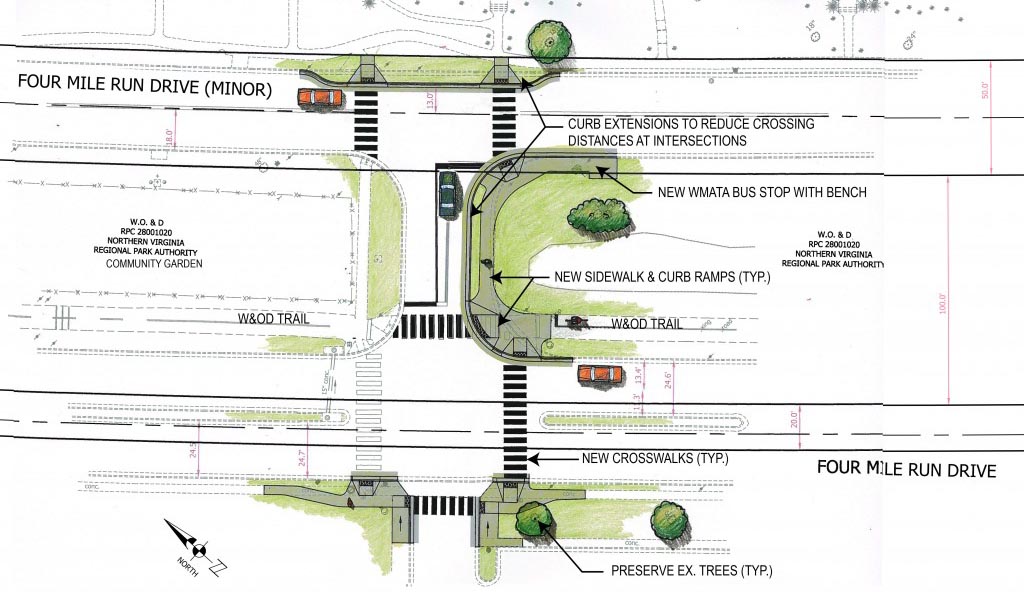
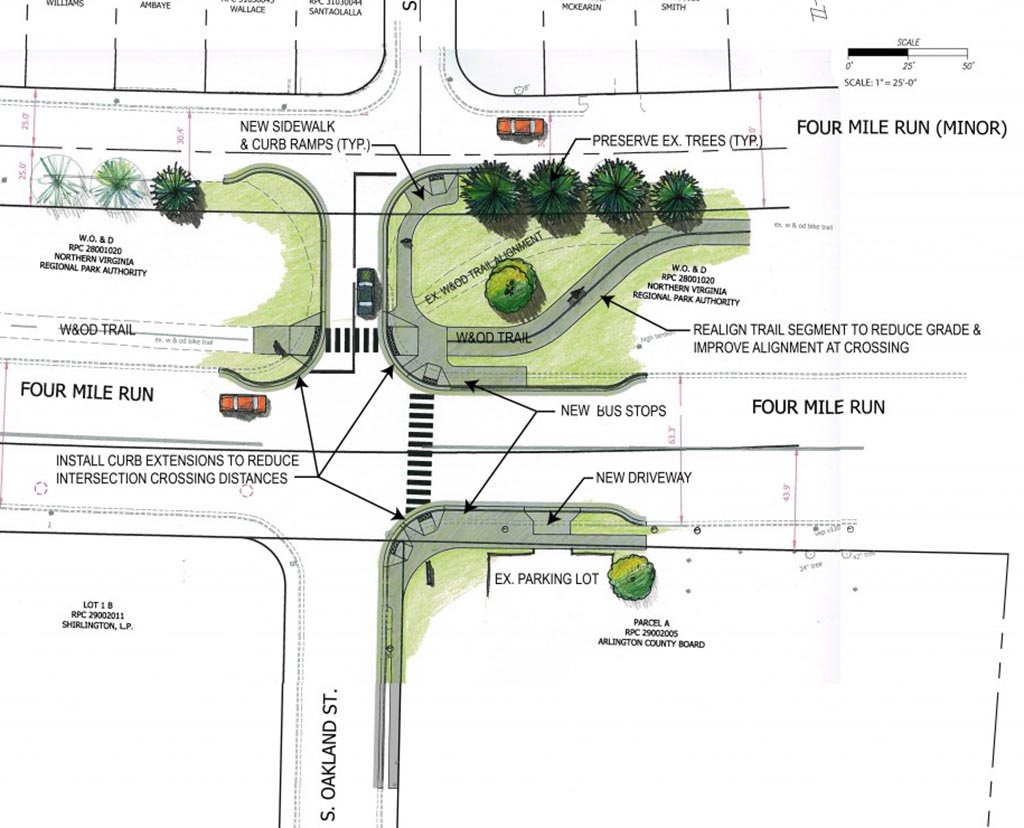
The Washington & Old Dominion and Custis trails are set for further construction this summer, with the hope of increasing safety for bicyclists, pedestrians and public transportation users.

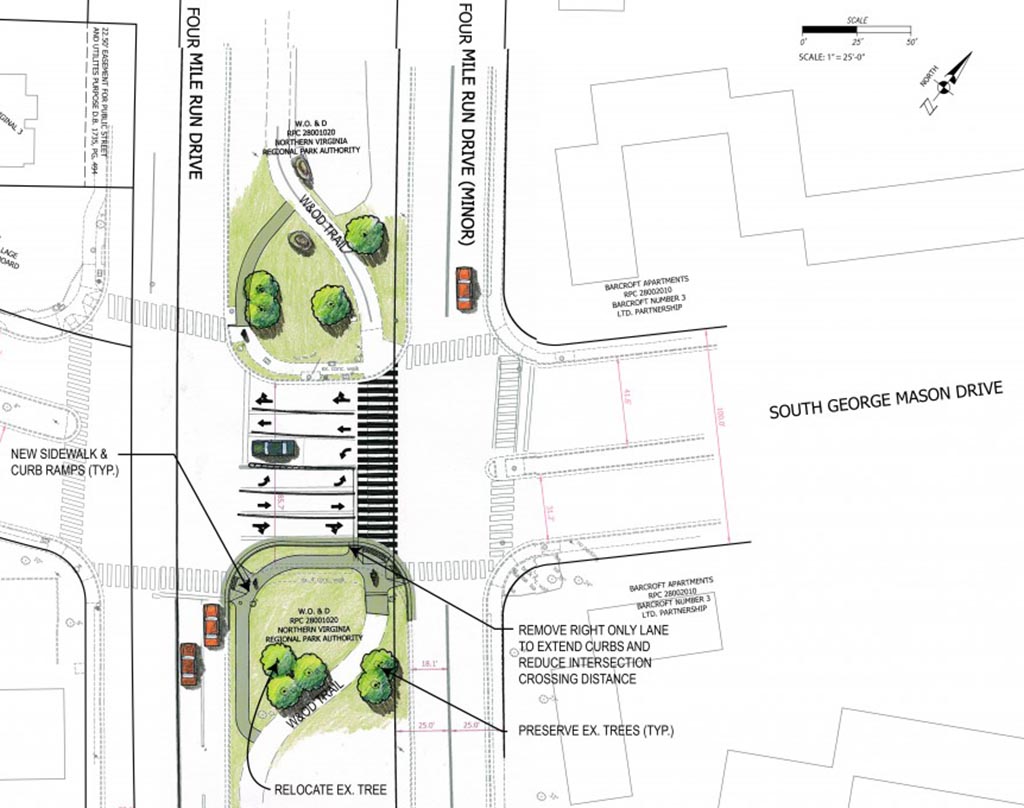
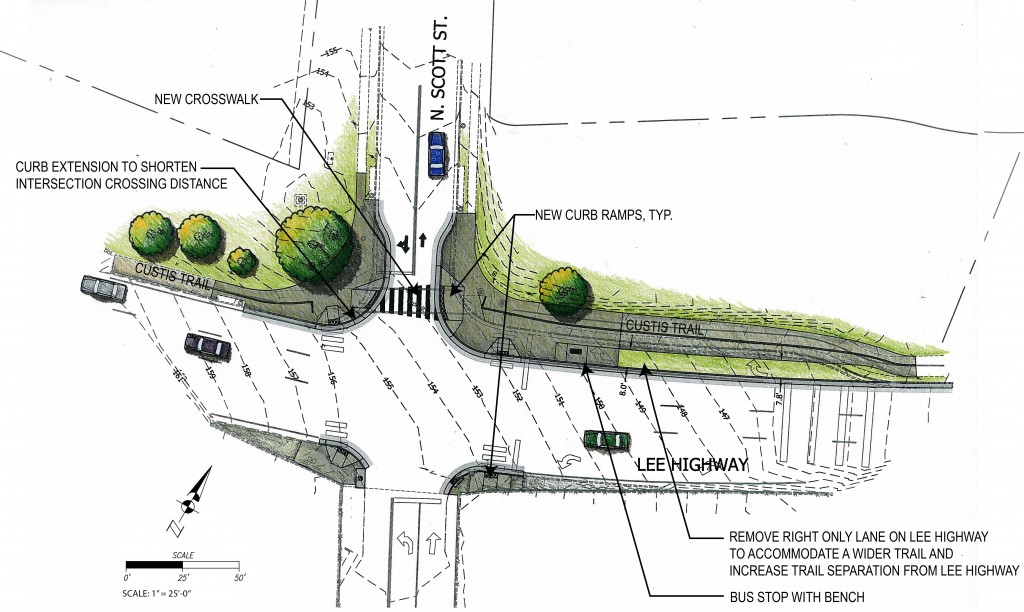
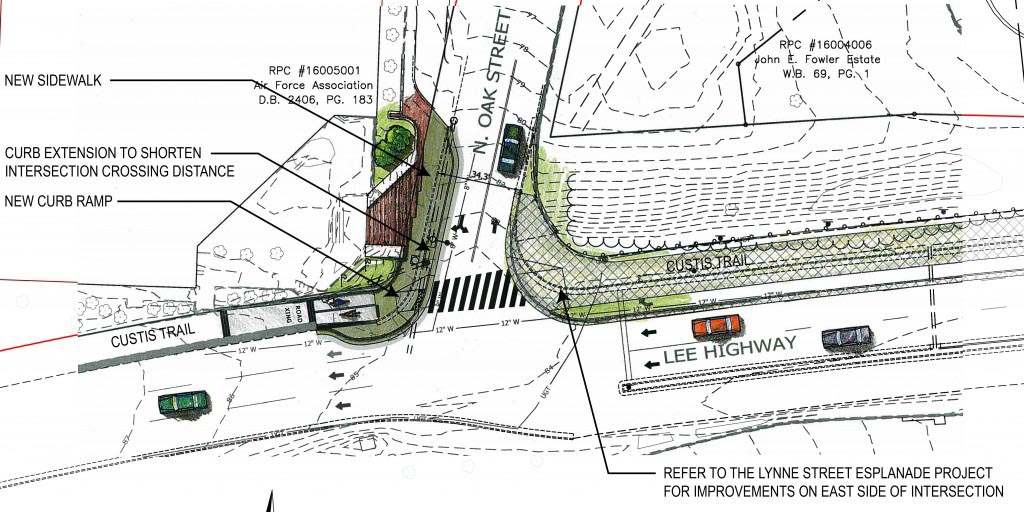
The improvements will reduce the distance of crossing some streets, upgrade curb ramps and bus stops, create high visibility crosswalks, improve trail crossing alignments and update traffic signals to meet Arlington County’s standards, among other changes.

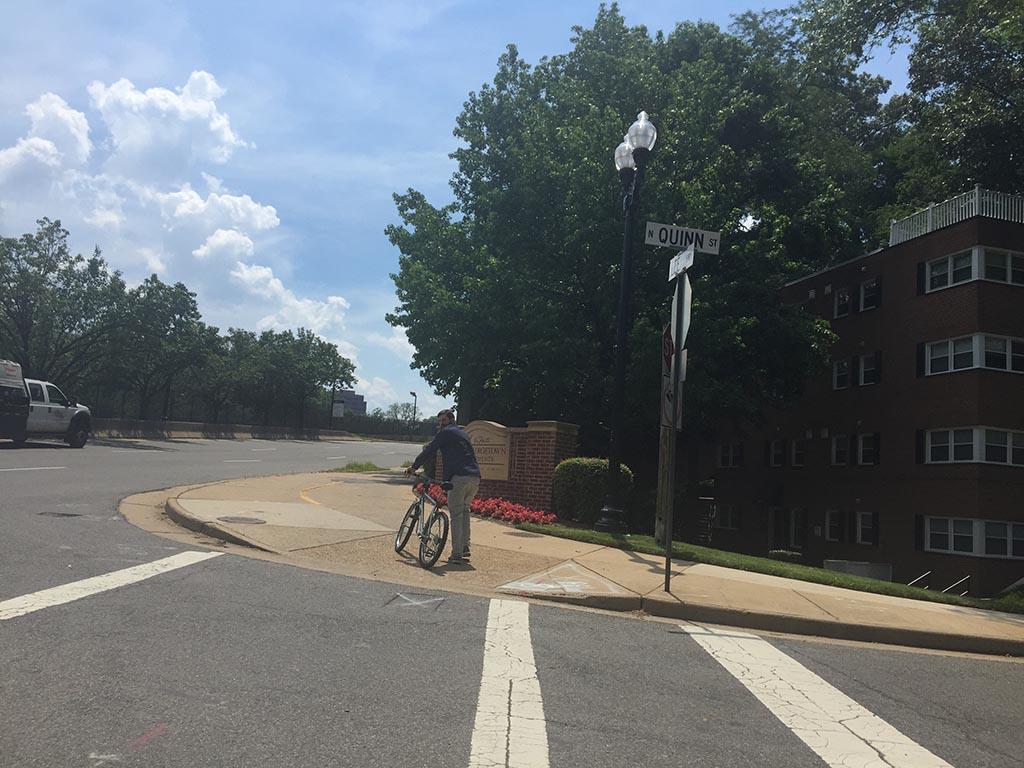
Lanes would also be reconfigured on the W&OD Trail at its crossing with S. George Mason Drive and on the Custis Trail at N. Quinn and N. Scott streets.

The changes that the trails would undergo were recommendations made in the county’s Shared Use Trail Traffic Control Study, completed in 2010.

Three sections along each trail are set for improvements. Along the W&OD Trail, the areas are:

  • The intersection of S. Four Mile Run Drive and S. George Mason Drive
  • S. Four Mile Run Drive at the Barcroft Sports Center (4200 S. Four Mile Run Drive)
  • The intersection of S. Four Mile Run Drive and S. Oakland Street

The sections set to be under construction along the Custis Trail are:

  • The intersection of Lee Highway and N. Scott Street
  • The intersection of Lee Highway and N. Quinn Street
  • The trail crossing at the intersection of Lee Highway and N. Oak Street

The Arlington County Board has approved the costs for the trail renovations, which will be funded primarily by the federal Highway Safety Improvement Program.

Under a timeline put forward by county staff, construction would begin this summer on both projects. A contract worth a combined $1.67 million has been proposed for both, with just over $335,000 in contingency for any cost overruns.


Audrey Clement isn’t going anywhere. This year, Clement is running for Arlington County Board for the sixth time.

Since 2011, Clement has aimed to break through the County Board’s Democratic majority to win a seat as either an independent or Green Party candidate. Since 2011, Clement has always lost. In 2014, she also ran for a position on the Arlington County School Board but lost by 18,327 votes to Barbara Kanninen.

So why does Clement keep coming back?

Clement said she is returning again because she cares. She’s been in the D.C. area since 1989 and has a Ph.D from Temple University in Political Science. Since 2005, Clement has been an environmental activist in Arlington County. She runs under a platform that calls for immediate environmental, housing and tax reforms.

Clement also refuses to give up on her goal of undoing the local Democratic Party’s traditional dominance of the County Board, with challenges from local Republicans fleeting at best. Current Board member John Vihstadt (I) was the most recent to break local Democrats’ dominance when he won in 2014, the first non-Democrat to win a County Board seat in a general election since 1983.

“I think that the two-party system is not serving the vast majority of the Arlington people. I have to make the case that there is the alternative and I have to make this case to the public,” Clement said in an interview this week. She said breaking through the system was what motivated her to run in 2011, and continues to motivate her each year.

If elected, Clement said she wants to redirect the Affordable Housing Investment Fund from its current system of apartment subsidies to a system that provides rental assistance for those who need it.

“I’m concerned with the affordable housing investment fund because the county has been putting its year-end surpluses into that fund,” she said. “I do not believe that the current affordable housing program is economical and sustainable, I would start cutting there. They’re spending way too much on each new unit of so-called affordable housing that they construct. They need to evaluate that program.”

In addition, Clement is determined to resolve what she sees as an impending budget crisis in Arlington.

“The biggest crisis is the anticipated budget cuts coming down from the Trump administration that will impact county residents,” Clement said. “It could be as many as 15,000 people get laid off and this will impact the county tax revenue. If I’m elected I will take a proactive position with regards to retaining businesses and trying to counteract the impact of the anticipated Trump administration budget cuts.”

As to why she hasn’t won a seat after six years of running, Clement blames the limits that come with a small campaign budget.

“Some of my opponents have spent in the range of $100,000 apiece in their elections,” she said. “They weren’t incumbents, so they came into the election with that as their handicap. In that regard, they overcame their handicap by spending a ton of money. I have rarely been able to muster more than $10,000 a race.”

To combat her lack of funding, Clement uses social media. She currently runs a Facebook page with 393 likes and 373 followers. She also runs Facebook advertisements for anyone who does not follow her page to see.

For anyone unfamiliar with Clement, she wants the one thing people to know most about her to be her credentials.

“I have a lot of untraditional political experience,” said Clement. She spent a year as a Congressional Fellow and is currently a government contractor. She also hopes that her time spent as an environmental activist will set her apart from her opponents as she approaches her seventh campaign for a seat on the County Board.

After all of these years, she still remains determined.

“Most political commentators would say, if you haven’t made it the first or second time then quit,” said Clement. “I’m not going to quit.”


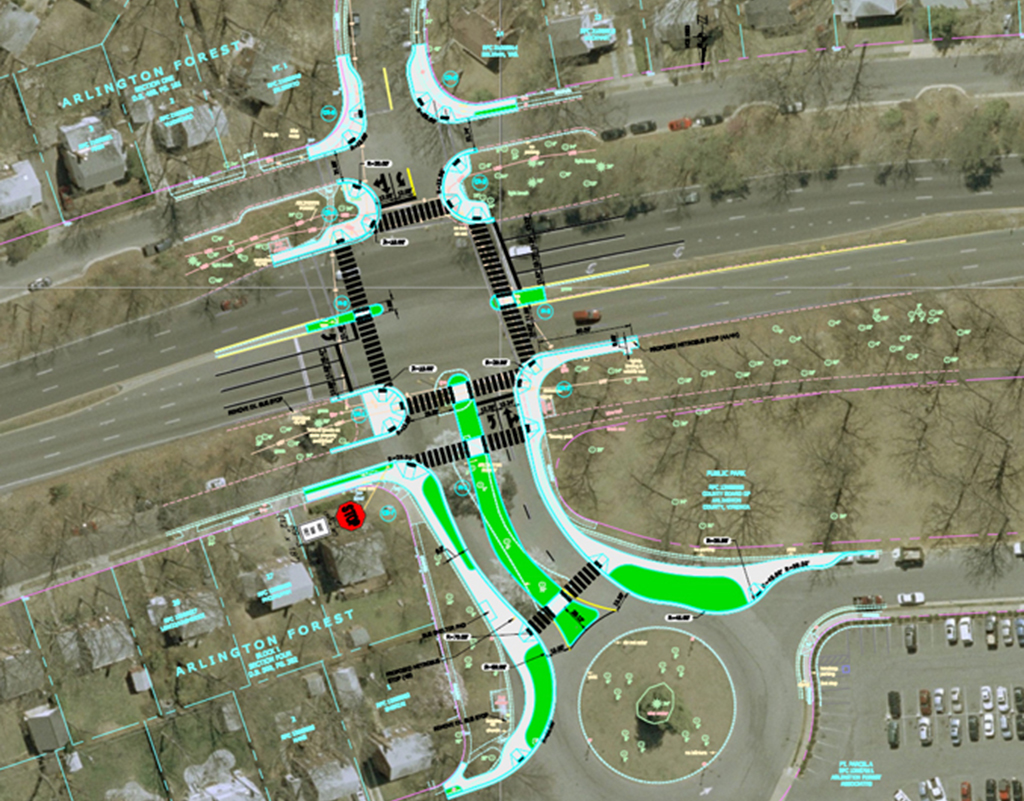
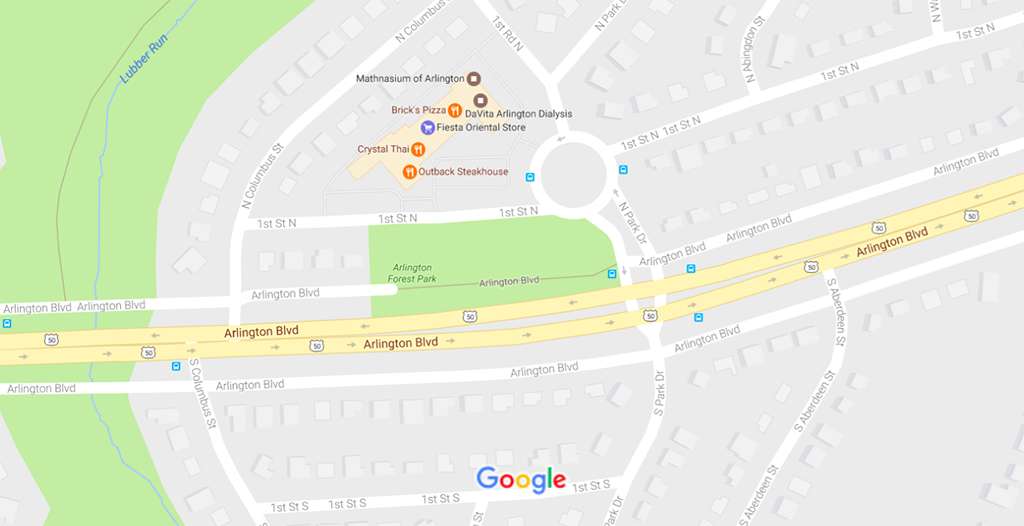
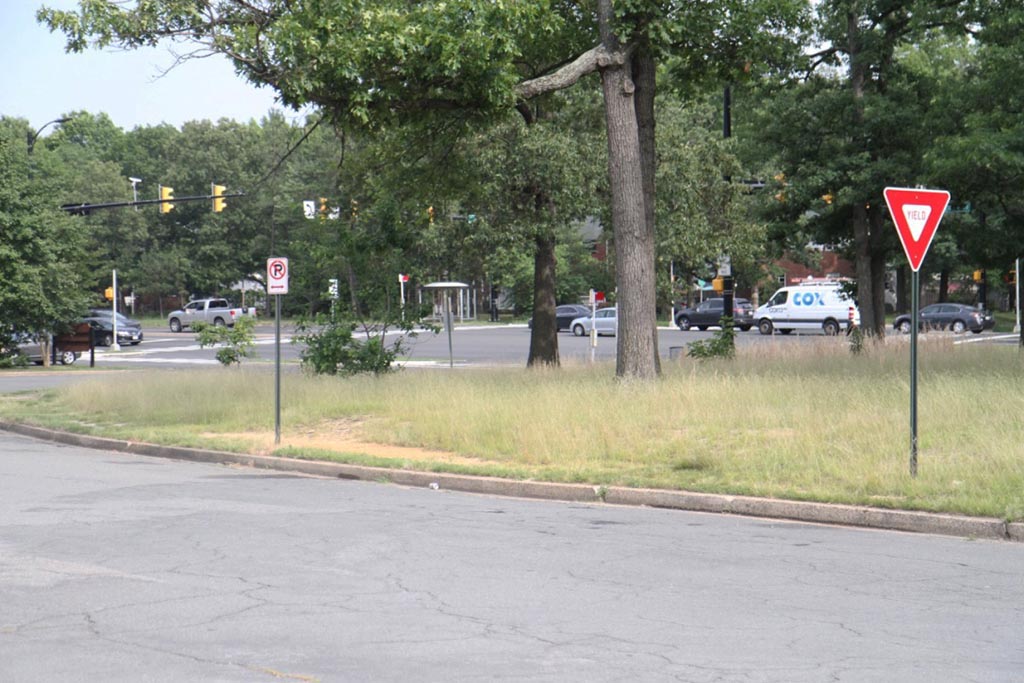
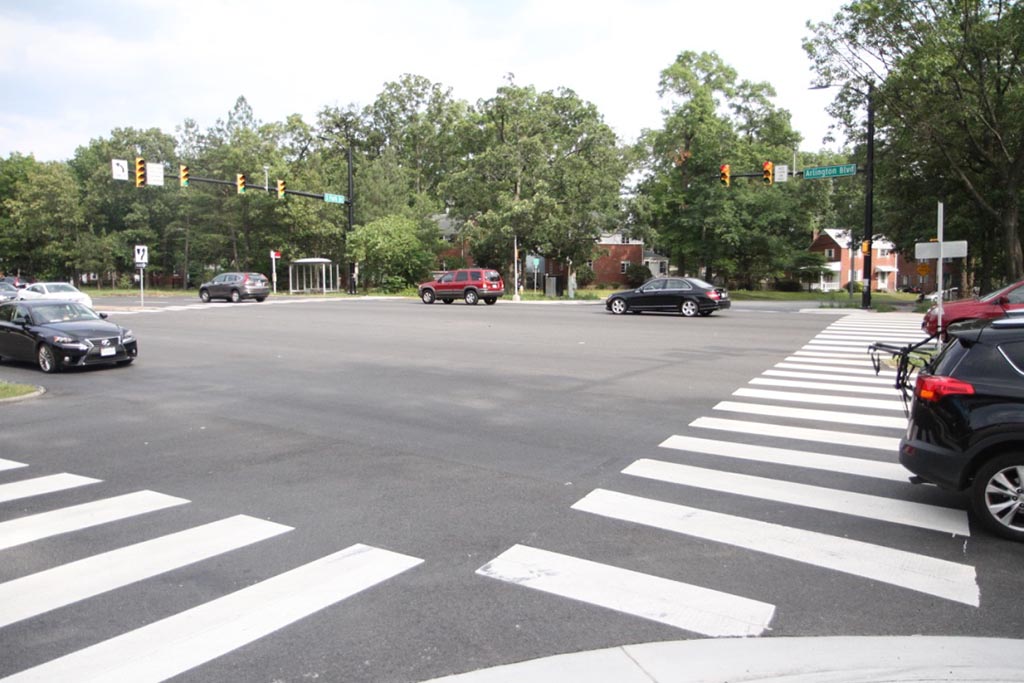
The busy intersection of Route 50 and Park Drive is set for improvements under a plan being considered Saturday by the Arlington County Board.

The intersection, in the Arlington Forest neighborhood, is slated for new sidewalks, upgraded traffic lights, high-visibility crosswalks and new trees, curbs and gutters.

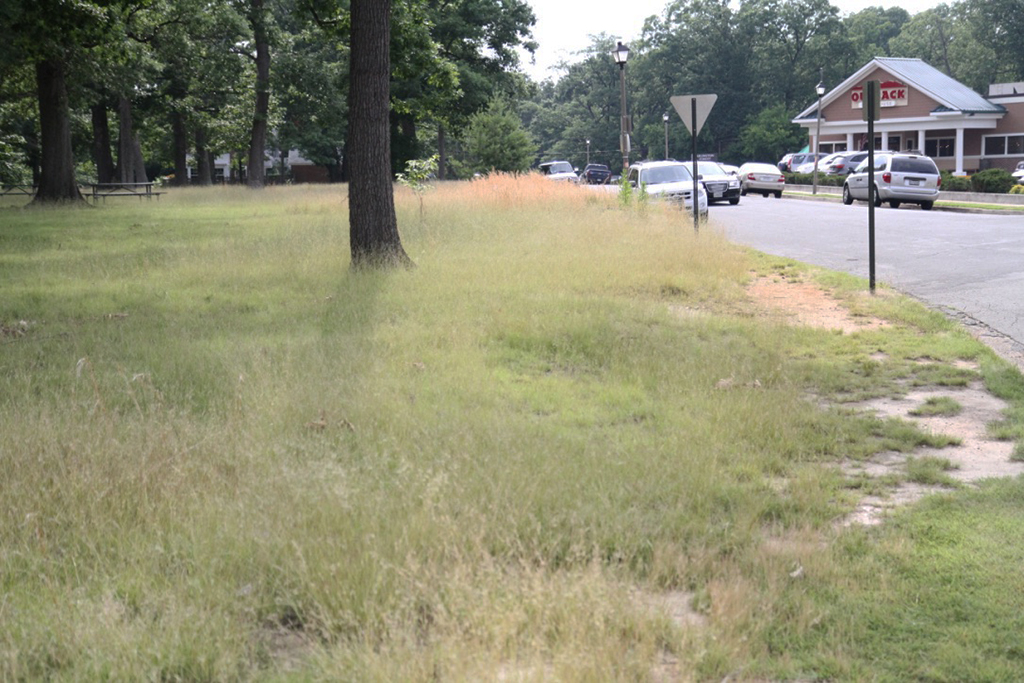
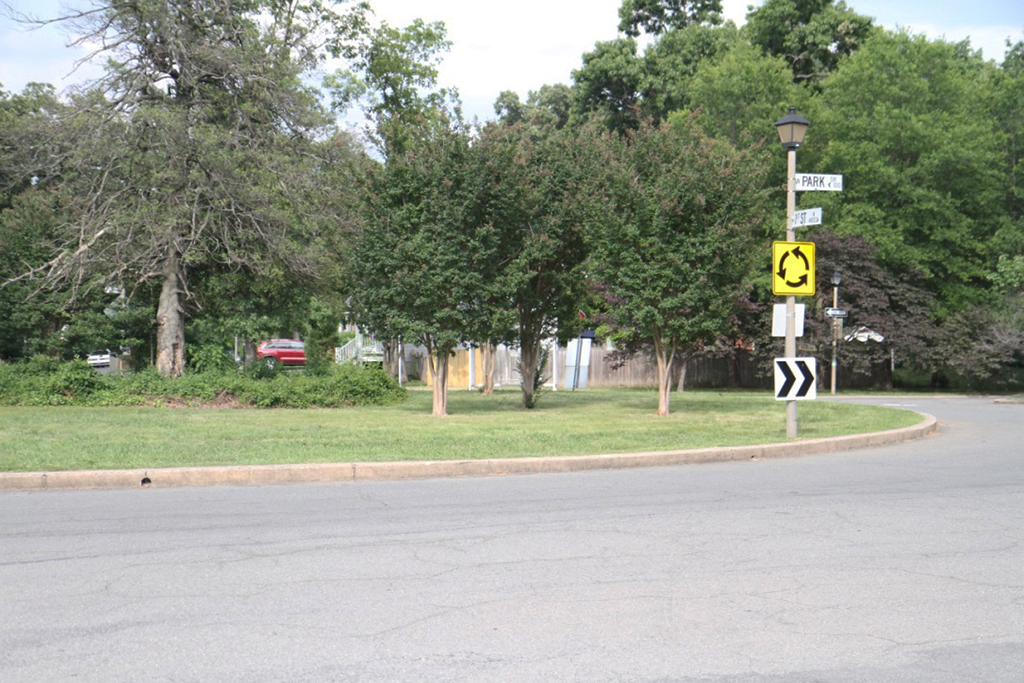
The majority of improvements are slated for the intersection and a small stretch of N. Park Drive between Route 50 and a traffic circle. That’s also near a small strip mall that includes an Outback Steakhouse restaurant.

County staff estimate that 64,000 cars travel through the intersection daily, and the traffic volume and speed can make life difficult for bicyclists, pedestrians and those getting on and off buses. The intersection has also been the scene of numerous crashes.

Staff said the plan creates an “urban-style intersection that will reduce speeding and the incidence of collisions, and ultimately improve safety for all.

“The project will create better access and crossings for pedestrians, transit users, bikers and those traveling on the shared-use paths parallel to Arlington Boulevard,” they continued.

The County Board is set to award a construction contract for the plan at its meeting Saturday. The contract is worth just under $1.5 million, with $224,000 as a contingency for rising costs. More than $1 million of funding is through the Virginia Department of Transportation’s Highway Safety Improvement Program, with the county adding $461,000 in general obligations bonds.

Under a timeline proposed by staff, construction would begin in August.


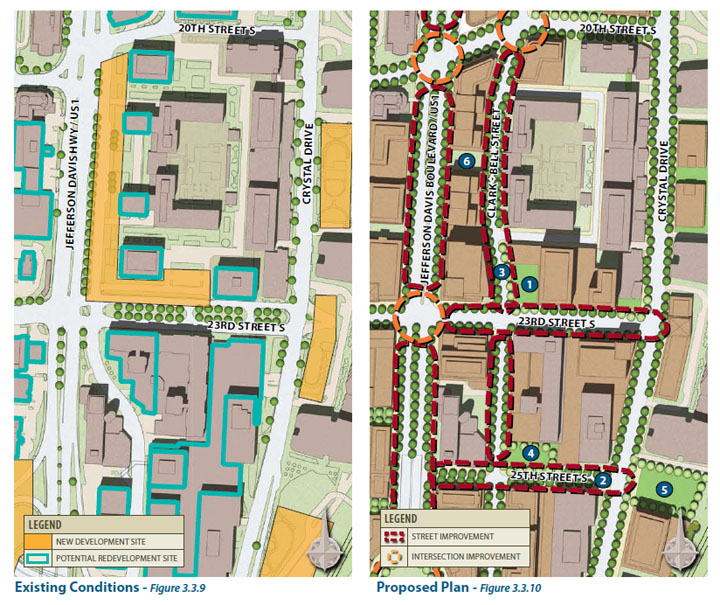
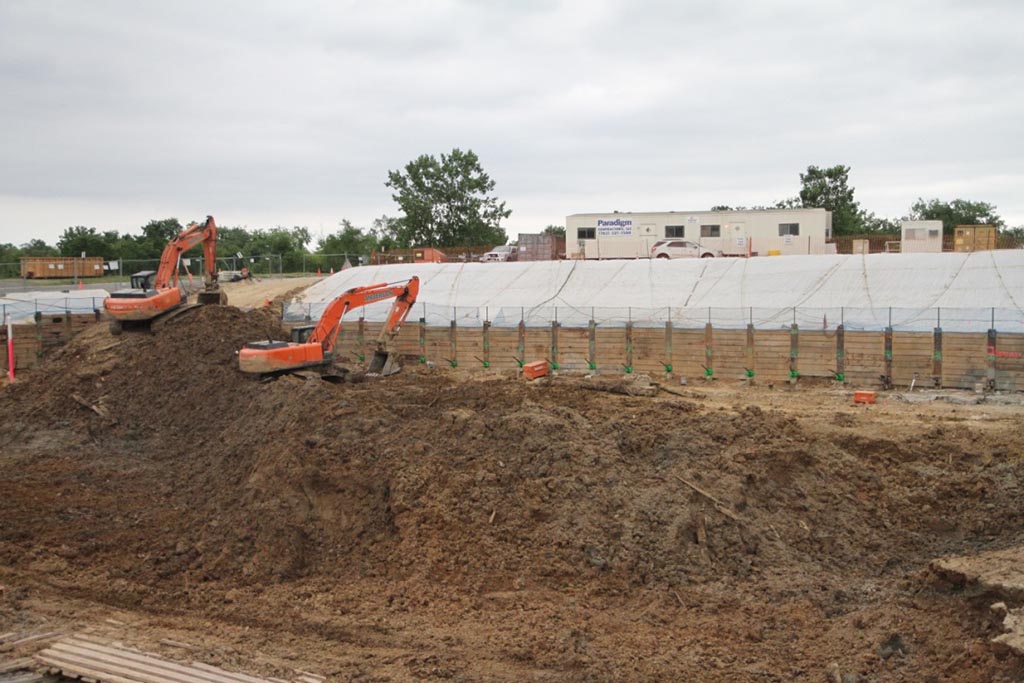
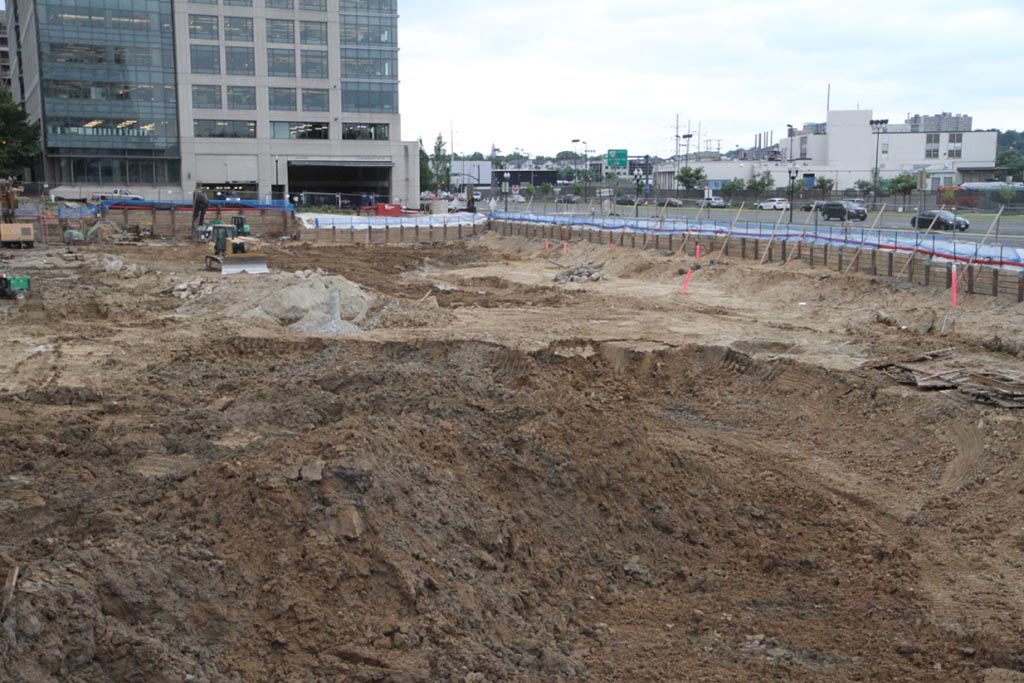
A key transportation goal of the Crystal City Sector Plan is close to becoming reality.

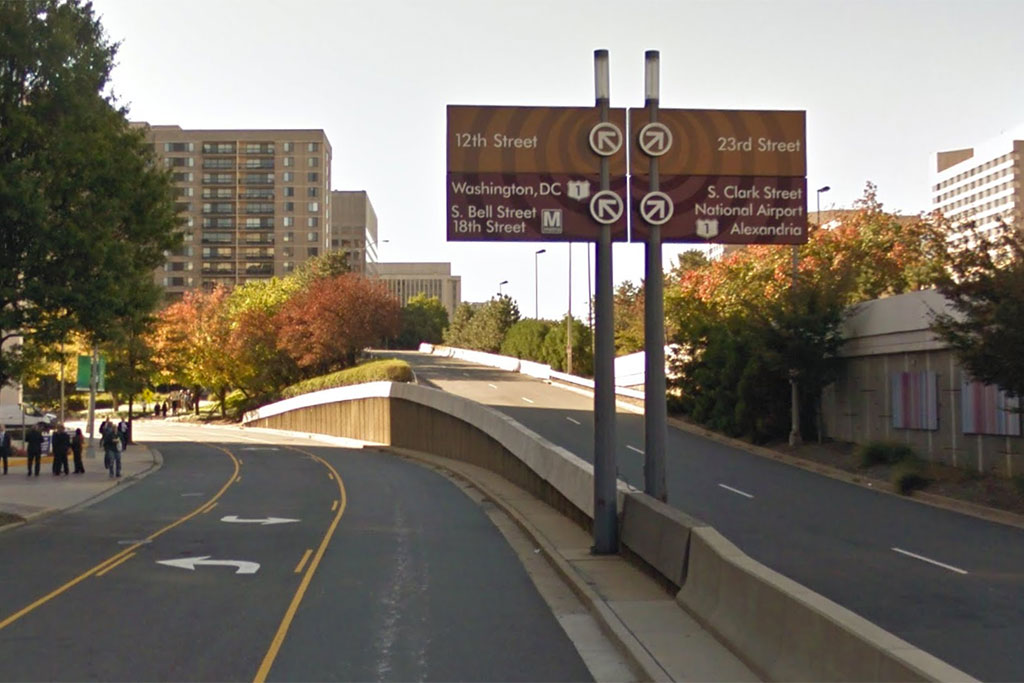
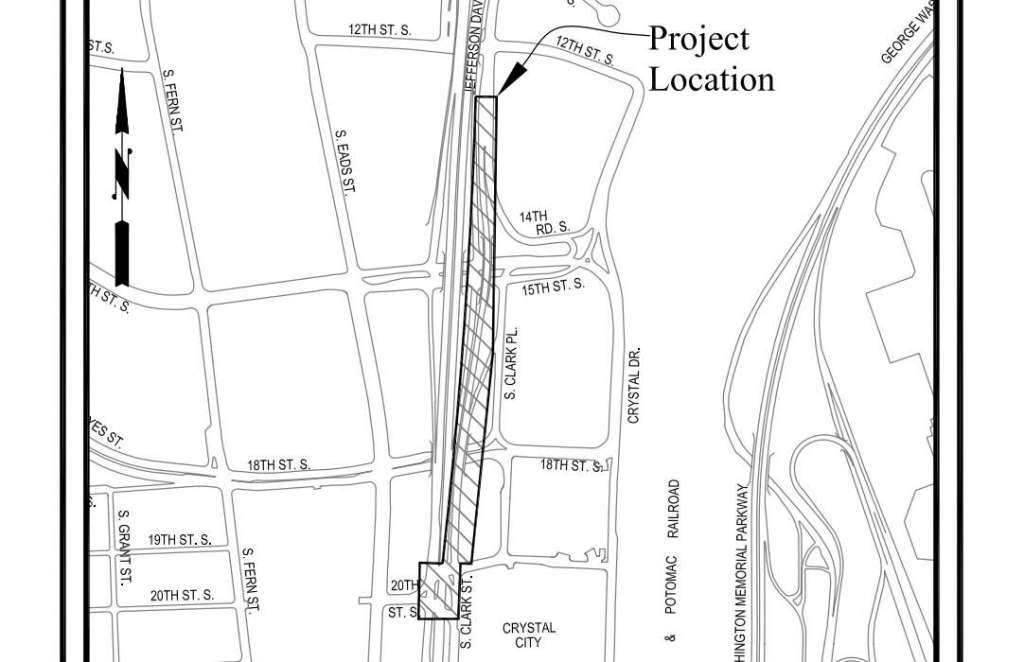
The Arlington County Board on Saturday is expected to consider a $6.3 million contract to demolish the elevated portion of S. Clark Street between 12th Street and 20th Street S.

While taking away a useful but relatively lightly used shortcut across Crystal City, the project will “normalize the street network and create more development space in the Crystal City area,” according to the county staff report.

More from the county’s webpage for the project:

The South Clark-Bell Street Demolition project is a goal of both the Crystal City Sector Plan and Crystal City Multimodal Transportation Study. It will improve safety for all modes of transportation and will establish the long-term street grid for the north and south portions of Crystal City along with the 15th Street South/South Clark-Bell Street Realignment project.

The elevated portions of South Clark-Bell Street will be demolished north of 18th Street South. South of 18th Street South, new open space will be created in the existing roadway right-of-way and new sidewalks, landscaping, and lighting along U.S. Route 1 will be provided. The project will also establish new building pad development sites for redevelopment of Crystal City, with the necessary infrastructure to transform the U.S. Route 1 corridor in Crystal City on the east side.

The project also includes traffic signal upgrades at 20th Street S. and Route 1.

The winning bid on the project was $6.3 million from Ardent Company, LLC, which was higher than the original $5.5 million county engineer’s estimate, but much lower than the only other bid published: $15 million from Fort Myer Construction Corporation.

If approved by the County Board, the contract would include a $1.3 million contingency for a total authorization of $7.6 million.

Construction is expected to begin this fall and wrap up in the summer of 2019.

Photo via Google Maps


Work at a new Potomac Yard apartment building set to include a new church is well underway.

The County Board approved the addition of a church to the first and second floors of the 12-story residential building in 2015. The building was originally approved in 2007 but went unbuilt for some time.

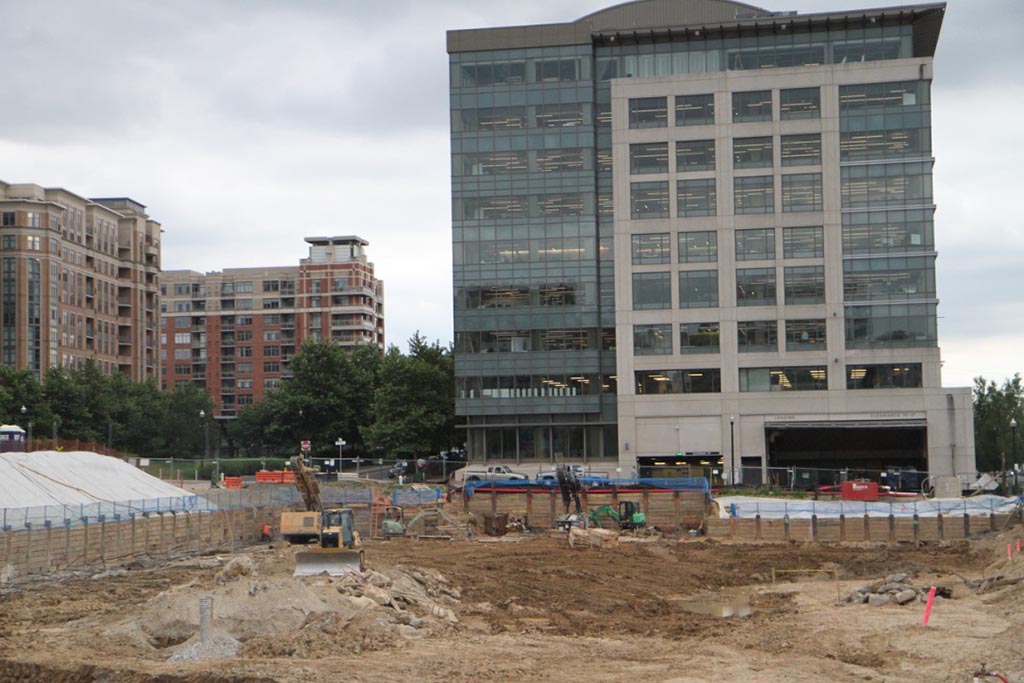
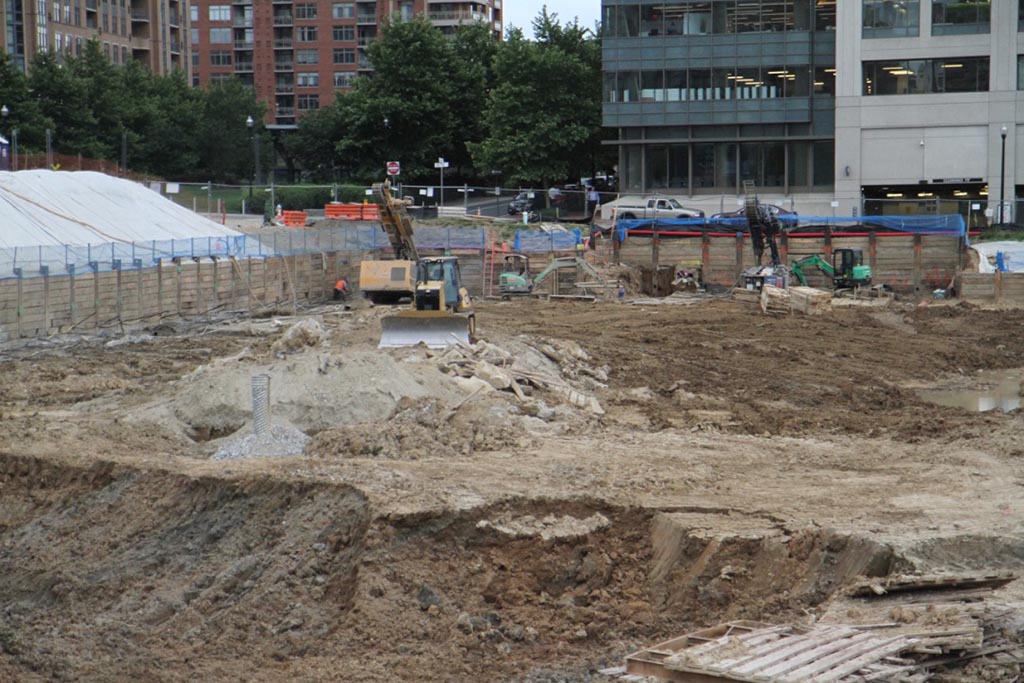
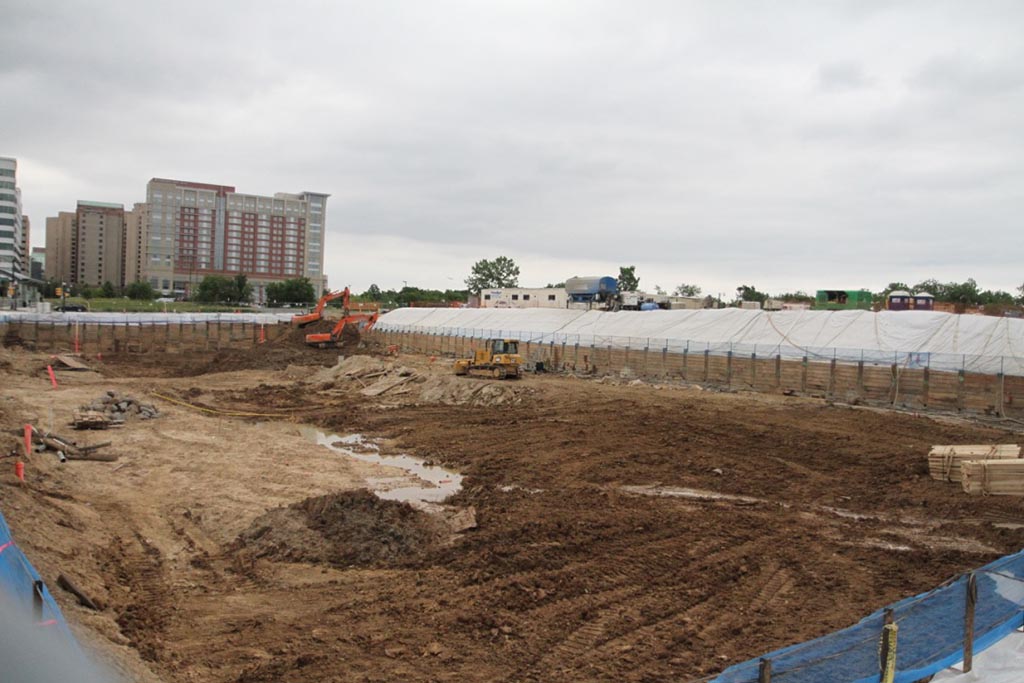
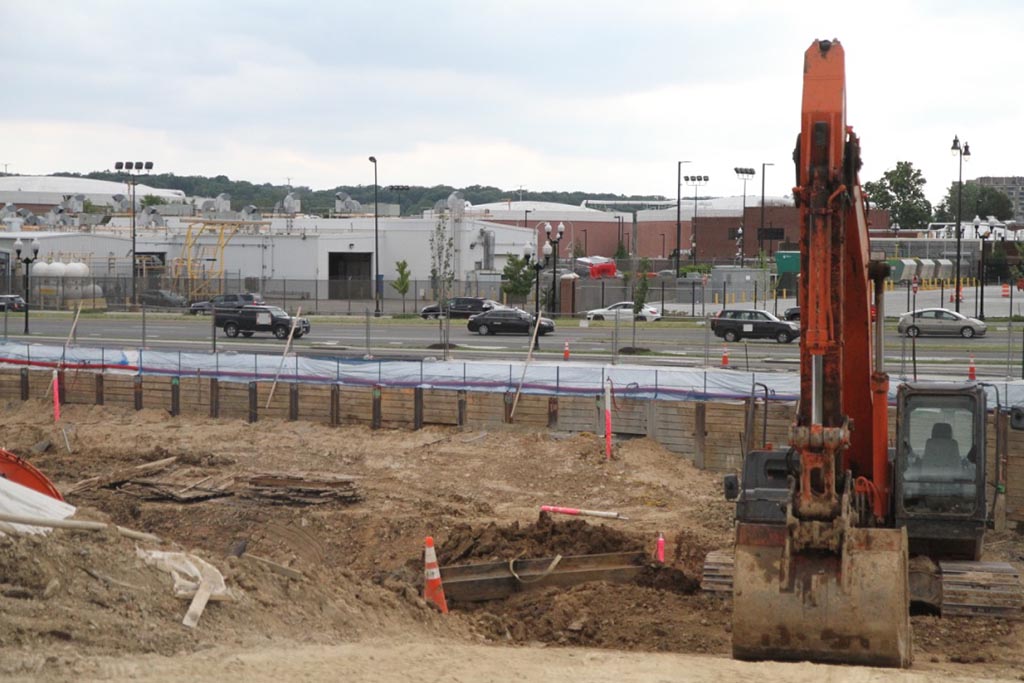
Now, however, the site between Jefferson Davis Highway, 33rd Street S., 35th Street S. and S. Ball Street has been cleared by construction crews, with foundations set to be lain soon.

The new church — known previously as the “Meetinghouse of Worship” — is planned for a portion of the first and second floors of the building. It will be occupy 23,906 square feet of space, with a 300-seat sanctuary, classrooms, administrative offices and a multipurpose room on the first and second floors.

The church will be on the left side of the building, next to 33rd Street S., while on the right side of the building, the apartment complex will have a lobby and retail space.

The apartment complex is set to have 342 units, having added 11 with the church’s approval. A brochure on the building by architects DCS Design touts its “ground floor retail, rooftop pool and a private exercise facility,” and its proximity to public transit options.

The building will be close to a Crystal City-Potomac Yard transitway stop on Crystal Drive, parallel to Route 1.

Representatives with developer The Praedium Group did not respond to requests for comment on a timeline for construction, or further details on the church that will move in.


(Updated at 3:20 p.m.) Arlington County just announced that it has joined other counties, cities, businesses and colleges in signing an open letter pledging to meet the goals of the Paris Climate Agreement.

President Trump announced last week he will withdraw the United States from the pact to help preserve American jobs and avoid placing heavy burdens on the country’s taxpayers. The decision brought swift condemnation from local elected officials.

County leaders joined on Monday (June 5) an open letter to the international community and parties to the Paris Agreement entitled, “We Are Still In.” The letter promises that efforts to reduce greenhouse gas emissions will continue, regardless of federal policy.

“Arlington stands with communities across our nation and around the globe who recognize that climate change is real and that we must, both on the local and on the global level, meet its adverse effects with strong, effective action,” said County Board chair Jay Fisette in a statement. “Just as we joined the Compact of Mayors in 2015 and agreed to set goals for reductions in greenhouse gases, so do we join the effort today of local communities that are pledging to uphold the Paris Agreement, even if the federal government does not.”

The District of Columbia has also signed on to the pact and Virginia joined a similar state effort this week.

In light of President Trump’s decision, the County Board will consider a resolution at its June 17 meeting reaffirming Arlington’s commitment to combating climate change.

In a press release, the county touted its efforts already in the fight against climate change:

Arlington County adopted a forward-thinking Community Energy Plan (CEP) in June 2013, as an element of our Comprehensive Plan. The award-winning plan is a long-term vision for transforming how Arlington generates, uses and distributes energy. Its goal-setting and methods of achievement are consistent with the Mayors National Climate Action Agenda and the Paris Accord. Arlington’s CEP aims to reduce greenhouse gas emissions by 75 percent by 2050, and greenhouse gas emissions already have fallen 18 percent in Arlington between 2007 and 2015.

In 2015, Arlington signed the Global Covenant of Mayors for Energy and Climate, sponsored by the Compact of Mayors – open to any city or town in the world willing to meet a series of requirements culminating in the creation of a full climate action and adaptation plan.

In 2012, Arlington exceeded our goal of reducing government-wide energy usage by 10 percent, using the year 2000 as a baseline. Currently, we’re competing in the U.S. Department of Energy’s Better Buildings Challenge to reduce municipal building energy usage by 20 percent by 2020.

Our Arlington Initiative to Rethink Energy (AIRE) helps our community make smart decisions about energy and supports individual actions that improve and sustain Arlington’s quality of life. County government buys more than 30 percent of its electricity as certified green power and buys carbon offsets against 100 percent of its natural gas use. Arlington is home to Discovery Elementary, the largest “net zero energy” elementary school east of the Mississippi River.

At its meeting in June, the County Board will consider a resolution reaffirming Arlington’s commitment to combating climate change and to the goals of our Community Energy Plan.

Arlington will continue to work to make our County more prosperous, healthful, safe and secure through its efforts to rethink energy and protect the environment.

For more information about Arlington’s environmental initiatives and efforts to reduce energy usage and energy costs, visit the County website.


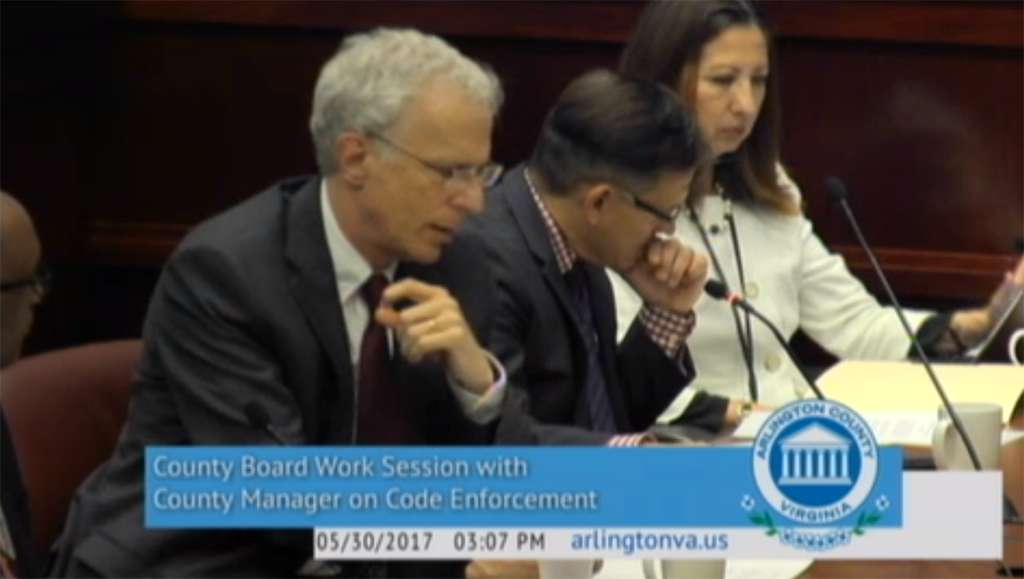
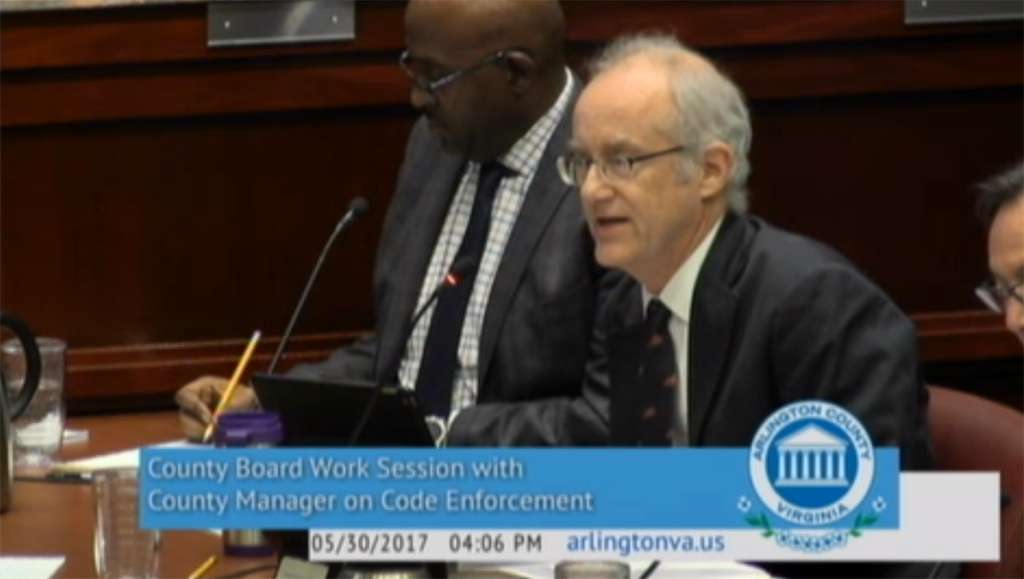
County Manager Mark Schwartz said he has noticed more residents calling code enforcement with complaints about their neighbors.

At a County Board work session Tuesday with the code enforcement staff, which enforces the county’s noise ordinance, maintenance code and other regulations, Schwartz said that anecdotally, people call to complain as they are unaware of other ways to resolve their issues.

Schwartz said that too often, code enforcement is used as a “cudgel” by some residents unwilling to take their complaints directly to their neighbors. He said that the county must step up to help resolve disputes in a better way.

“There may be room for a more mediation, community relations approach by us as a county and civic associations,” Schwartz said. “There’s a void there in the community.”

Schwartz’s pronouncement came after County Board member Christian Dorsey asked about the extent to which the county’s bureaucracy is used to “litigate personal disputes or issues that are better suited to other realms than the power of the state to enforce things.”

It also comes hot on the heels of the Westover Beer Garden’s continued disputes with the county over its outdoor seating and live entertainment. In 2010, the county stopped music there altogether because of complaints from two neighbors, and is now considering a law change so it can add more patio seats.

But the county’s code enforcement staff said they may have some solutions to help ease the problem, including educating the community on what the department does and what it can help with.

Code enforcement chief Gary Greene said the department has continued to engage in community outreach like attending civic association meetings voluntarily.

Dorsey went further and suggested code enforcement lead “cleanup days” for some of the topics that receive the most complaints, including snow and overgrown plants and vegetation that obstruct sidewalks and streets.

He said the time is right for “those sorts of things that are causing better outcomes in our community, so that we get the sense that code enforcement isn’t the state putting its thumb on the scale.”

Board members seemed impressed by the new initiatives for code enforcement.

“I hadn’t thought of code enforcement as a way to build community, but now I do,” said Board member Libby Garvey.

Brooke Giles contributed reporting.


After significant community push-back, the County Board rejected plans to dramatically shrink the Shirlington Dog Park and urged further study.

At a work session last night of the Four Mile Run Valley Working Group, Board members said that staff must return with new options that would either keep the 109,000 square foot dog park the same size or reduce it slightly.

Previous alternatives put forward by staff would have cut the park’s size by as much as 75 percent to comply with stormwater management requirements in the area of Four Mile Run.

But County Board members said more study is required on other possible options to comply with stormwater management and not lose what vice chair Katie Cristol said is a “well-loved” dog park.

“There is more that we don’t know about alternatives,” Cristol said. “Perhaps [staff] feel confident that you know them. I do not yet feel confident enough to recommend or approve or direct such significant changes to such a well-loved community amenity without a better sense of the alternatives for stormwater remediation.”

There was unanimous agreement among Board members on how to move forward. John Vihstadt said he wants it to stay “substantially as-is for the longest possible time,” while Christian Dorsey argued for a “programmatic approach” that ensures a community amenity is protected while complying with stormwater needs.

In a letter to the County Board ahead of the meeting obtained by ARLnow, Shirlington Civic Association president Edith Wilson and vice president Richard Adler said the Four Mile Run Valley working group needs subcommittees to deal with a slew of issues including the dog park. Not all options have been explored, they said.

The pair, who both sit on the working group, said the dog park has an economic benefit to the neighborhood as well as community and environmental value.

“The [May 17] proposals are remarkably insensitive to the economic and marketing value of the dog park — how could the county possibly think to make public a proposal to reduce it from 109,000 square feet to 27,000?” the pair wrote. “How would we replace the jobs, businesses and real estate sales this would affect?”

After the meeting, supporters were jubilant, including on a Facebook page dedicated to saving the Shirlington Dog Park.

“Our advocacy clearly made a difference as the Arlington County board members were all convinced of how deeply we love our dog park and how impassioned we are about saving it,” wrote one supporter. “All of us should feel a great deal of pride today that we successfully mobilized to save our beloved dog park!”


County residents will see their electricity and gas bills rise slightly as of July, while next month fares will increase on both Arlington Transit and Specialized Transportation for Arlington Residents.

And the County Board denied a request that the Education Center and adjacent planetarium be designated as a historic district, so that Arlington Public Schools can continue to keep the site as a contender for a fourth high school.

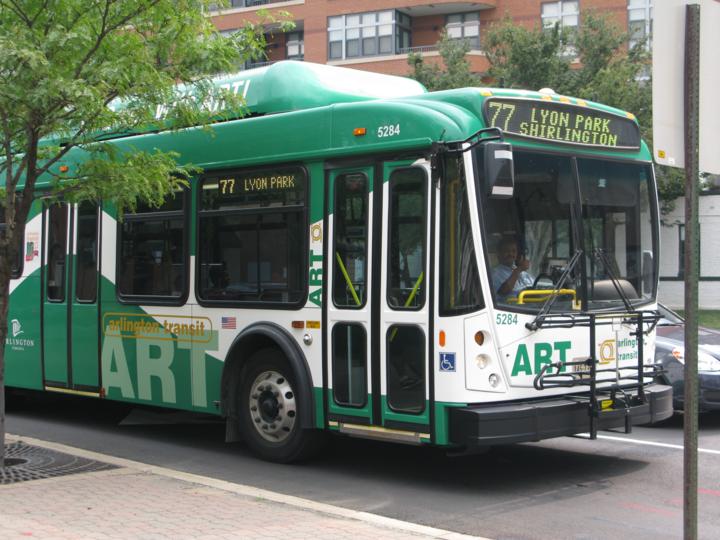
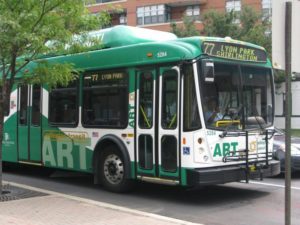
ART and STAR Fares To Go Up

Fares on ART and STAR will go up on June 25 to keep up with similar hikes for Metrobus and MetroAccess.

The ART adult bus fare will rise from $1.75 to $2 and the ART discount fare for seniors, students and people with disabilities goes from 85 cents to $1.

Local STAR trips will increase in cost from $3.50 to $4, while trips inside the Capital Beltway and trips beyond increase 50 cents each, from $5 to $5.50 and from $9 to $9.50, respectively.

ART’s iRide program offering discounts for teens would be extended to elementary school students, while the program allowing free use of ART by personal care attendants accompanying MetroAccess-certified riders would also be extended.

Board members said they have heard several complaints about the cleanliness and reliability of buses in the county, and urged transportation staff to keep on top of any problems. Board member Christian Dorsey, who also represents Arlington on Metro’s Board of Directors, drew a comparison between STAR and MetroAccess.

“I do think it’s essential with STAR that Arlington not accept the mediocrity that Metro has dealt with with MetroAccess,” he said. “It was once considered a shining star in the paratransit world, it needs to continue to do so.”

Education Center Historic District Denied
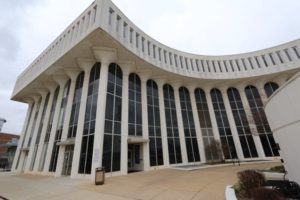
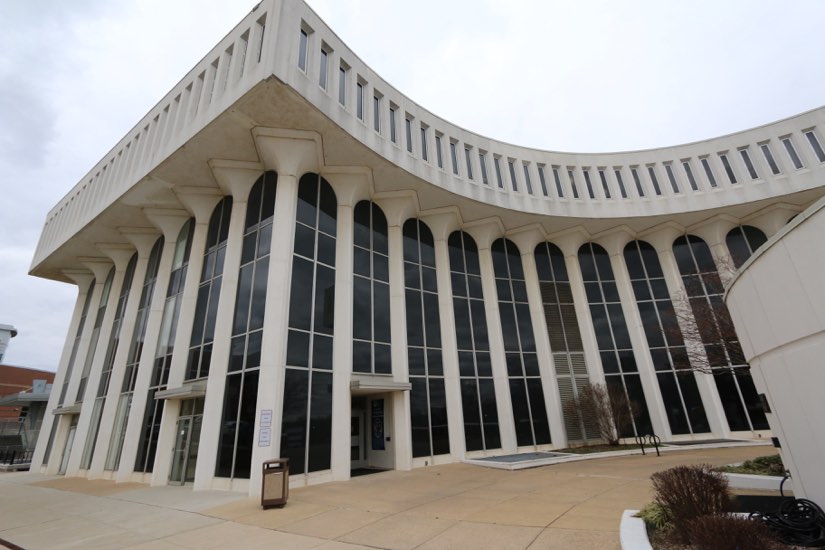
The Board voted to deny designating the Education Center and the adjacent David M. Brown Planetarium at 1426 N. Quincy Street as a historic district, in agreement with staff’s recommendation.

The center is one of three remaining options for the county’s next public high school not counting a new option involving the center, floated by superintendent Patrick Murphy.

County Board member John Vihstadt said that while he appreciates the 1960s-era architecture, Arlington Public Schools should not have its options cut down when it faces capacity issues.

The board asked staff to work with their APS counterparts to look at possible adaptive reuses of buildings built in the “New Formalist” style, which the center is an example of.

“The school system, I believe, needs certainty and clarity now,” Vihstadt said. “If we defer, it leaves a cloud over the building, it leaves doubt, it leaves conjecture. If we recommend designation, it potentially hamstrings APS as to cost, as to timeframe, as to process.”

Gas and Electricity Bills Set For Slight Hike

Residents will see a slight uptick in their gas and electricity bills, a plan county staff said will generate more than $650,000.

The electricity tax rate will increase to $0.005115 per kilowatt-hour (kWh) from $0.00341 per kWh, with the first 400 kWh per month excluded from taxation. The natural gas tax rate will increase to $0.045 per 100 cubic feet (CCF) from $0.030 per CCF, with the first 20 CCF per month excluded from taxation. The hike will be most keenly felt by those residents who use a lot gas and electricity.

A staff report on the plan notes that Arlington’s would still be among the lowest utility tax rates in Northern Virginia.

From the extra revenue, factored into the FY 2018 budget approved in April by the County Board, the cost of a full-time staff member will shift from the county’s General Fund to the Arlington Initiative to Rethink Energy, consultant costs are covered and more than $400,000 will go towards energy efficiency in county and APS buildings.

County Board chair Jay Fisette said the extra tax money is “all to do good things to move the community energy plan forward and meet the goals of that master plan.”


View More Stories