Clarendon Night Market location(Updated at 5:50 p.m.) The region’s first outdoor night market could be coming to Clarendon later this month.

The Arlington County Board is scheduled to consider a use permit for two new biweekly markets at its Saturday meeting. The outdoor markets would be held on alternating Saturdays and Sundays in the parking lot of the Wells Fargo Bank at 3140 Washington Blvd, a block and a half from the Clarendon Metro station.

Organized by the Clarendon Alliance, one of the biweekly markets will be called the Spark Market. It’s described as a “juried art market” for artists and designers. The market is being managed by Jessica Blaszczak, who ran the former Ballston Arts Market, and will be open on Sundays from 11:00 a.m. to 5:00 p.m. starting June 8, should the use permit be approved.

Clarendon Night Market logoThe second of the markets — which hopes to launch on Saturday, May 31 — will be called the Clarendon Night Market. Open, at least initially, from 3:00 to 9:00 p.m., the market could be the first of its kind in the D.C. area.

“We’re pretty sure this is the first night market in the region,” market organizer Michael Berman told ARLnow.com today. “We’re really looking forward to coming to the Clarendon area. We think it’s a pretty dynamic intersection right there and… we’ve been looking at night markets for awhile.”

The market will have lights to add illumination and ambiance after dark. Berman, whose management firm also runs the well-known Eastern Market flea market, expects to sign up vendors who will sell a mix of jewelry, photography, paintings, handmade crafts, collectibles, vintage items and furniture.

Also expected at the market, in keeping with the gastronomic focus of many Asian night markets: specialty food vendors selling take-home food like hand-baked pies, and perhaps grab-and-go food from local restaurants.

Not in the offing, even though it seems a natural fit: food trucks. Berman says he doesn’t want to drive away business from Clarendon restaurants.

Spark Market logoThe Clarendon Alliance plans a local marketing blitz to get the word out about the markets once the use permit is approved.

“We think it’s going to be cool,” Clarendon Alliance Executive Director Matt Hussman said. “It’s hard to start a brand new market, so it might be a bit slow to start, but we’re doing out best.”

The permit being considered by the Board would allow the markets to run from April to December. Should the markets prove popular, however, the Alliance may seek approval to operate the market year-round. Likewise, Hussman said, if the night market is successful organizers may seek permission to end a bit later than 9:00 p.m.

A white oak at 400 N. Manchester Street in Bluemont (photo via Arlington County)Arlington County added 18 trees to its list of “notable trees” this week, bringing its countywide total to 283 notable trees.

Thirteen of the trees are in North Arlington and five are in South Arlington. Most of them are on private property and owned by the residents, who are granted either a certificate or a plaque. The trees, according to the county’s Department of Parks and Recreation, “may be nominated for their size, age, species, historical interest or because they have a special significance to the neighborhood.”

“It is an honor to be a part of a culture that values and recognizes its tree canopy,” Arlington County Board Chair Jay Fisette said in a press release. “All of the nominees and winners should take great pride in their efforts and dedication to a flourishing environment.”

The notable trees designations coincide with Arbor Day. The county will hold an Arbor Day ceremony today (Thursday) at 2:00 p.m. at Barcroft Elementary School, 625 S. Wakefield Street, where it will receive its 18th consecutive “Tree City USA” designation from the National Arbor Day Foundation.

Below are the list of trees, and their locations, that are now known as Arlington notable trees. Photos of each winner can be found at DPR’s website:

2014 Certificate Winners:

  • Two Tulip Trees, 5249 26th Street N.
  • Two Red Maples, 5923 3rd Street N.
  • Willow Oak, 1700 S. Pollard Street
  • Pin Oak, 4919 33rd Road N.
  • Tulip Tree, 2320 N. Tuckahoe Street
  • Black Cherry, 3557 N. Abingdon Street
  • Eastern Red Cedar, 4814 3rd Street N.

2014 Plaque Winners:

  • Ohio Buckeye, 4863 28th Street N.
  • Loblolly Pine, 5331 32nd Street N.
  • Eastern Redcedar, 1718 S. Quincy Street
  • Black Oak, 1718 S. Quincy Street
  • Southern Red Oak, 1718 S. Quincy Street
  • White Oak, 400 N. Manchester Street (pictured)
  • White Oak, 315 N. Garfield Street
  • White Oak, 4508 8th Street S.
  • Deodar Cedar, 2223 N. Quantico Street

Photo via Arlington Dept. of Parks and Recreation


County Board 2014 budget hearingAs the Arlington County Board moves forward on an update to its noise ordinance, owners of high-rise condominiums in Ballston, members of private swimming clubs and economic development boosters are all upset with some of county staff’s recommendations.

Staff consulted an ad hoc committee of condo owners in Ballston who want police to issue citations whenever they can hear noise in their apartments that originates from at least 50 feet away. The condo owners want the enforcement period to start at 10:00 p.m. on weeknights, 11:00 p.m. on weekends and from noon to 6:00 p.m. on Sundays.

In voting to advertise changes to the noise ordinance on Tuesday night, the County Board gave itself the flexibility to decide whether to make the minimum distance 50, 100 or 200 feet, and to decide when the noise ordinance should be enforced.

Judson McIntire spoke for a more restrictive ordinance. He bought a condominium two years ago on the second floor of the Berkeley Condominiums, at the corner of Fairfax Drive and N. Randolph Street, which is directly across the street from A-Town Bar & Grill.

“Staff has recommended that protections start at midnight,” said McIntire, who insisted that he moved to Ballston for its “vibrant mixed use” and said he loves living in the neighborhood. “We believe this is too lenient and urge the board to accept stricter enforcement times. Many Arlington residents go to bed before midnight and they expect and deserve an uninterrupted night’s sleep.”

Business owners and economic development advocates worry that provisions in the noise ordinance that prohibit “yelling, wailing, shouting, or screaming” at night in Arlington’s mixed-use corridors, including areas near Metro stations, are overly restrictive. They’re also concerned about provisions that could hold business owners and managers personally responsible for such noise coming from their patrons when they’re outside on patios or rooftop bars.

Sally Duran, a member of the Arlington Economic Commission, countered the condo owners, saying the Board should discuss any noise ordinance changes with the business community, which pays half of all taxes in Arlington, and millennials — generally, those 25-34 years of age.

“These millennials, which make up 45 percent of our population, are the ones who are living and working in Arlington and they are the driving force of businesses’ desire to be located here,” Duran said. “Obviously that’s a blessing, but it’s also creating a little bit of noise… The county needs to holistically study the issues associated with the lively, energetic and sometimes messy environment created by the nightlife uses in urban and mixed-use environments.”

The Board hasn’t given any indication on which direction it prefers. It is advertising the noise ordinance for various enforcement times, to be as broad as possible. It can vote on later hours when it holds its public hearing and likely adopts the noise ordinance at its meeting next month.

One other sticking point among the public was proposed noise restrictions on private swimming clubs, which are located in residential neighborhoods and which hold swim meets during the warmer weather months. Swim club representatives have expressed concern that the new ordinance would make it illegal for fans to cheer on swimmers and divers, particularly on weekend mornings.

Staff recommended these clubs hold no more than 10 meets a year, submit an annual noise management plan and ensure “measures are in place to limit the extent to which noise sources used in the conduct of athletic contests and other activities are audible on properties at least 200 feet from the noise source. ”

“Swim and dive meets have been held at all these community pools for more than 50 years without an issue ever arising,” said Lander Allin, who lives in the Arlington Forest neighborhood. “The ordinance as proposed is so restrictive and burdensome that it puts us at risk of civil and criminal penalties for staging athletic events for our children. It would require us to take very expensive steps to fix a problem that does not exist.”

The Board is expected to vote on a final version of the revised noise ordinance as soon as next month.


Libby Garvey at the 4/22/14 recessed County Board meetingArlington County Board member Libby Garvey, an outspoken opponent of the planned Columbia Pike streetcar system, called for a truce yesterday on the language surrounding the bus alternative.

Garvey made a presentation during yesterday’s County Board meeting, challenging the return on investment (ROI) study a consultant performed on contract with the county and presented last month.

Garvey said the study makes faulty comparisons, disputed the $3.1 billion ROI claim, said that calling the streetcar a “seamless ride” is nonsensical since a bus would do the same, and claimed it ignored contrary analysis, among other assertions.

After Garvey’s presentation, County Board Chair Jay Fisette challenged streetcar opponents’ claims that bus rapid transit (BRT) would be a preferable solution since dedicated bus lines, widely considered a requirement of a BRT system, are not possible on Columbia Pike. In response, Garvey offered an olive branch of sorts on the language the two sides of the streetcar debate uses.

“On BRT, I’ll make a deal with you,” Garvey said. “We don’t ever talk about BRT here again, we just say ‘streetcar-like bus.’ That’s all we need to say. A streetcar-like bus will do much better on Columbia Pike than a streetcar. Let’s just forget about it. It’s just a canard, it’s silly to talk the way we have on what’s BRT and what’s not. That just gets away [from the point], and I share your frustration.”

Fisette quickly agreed to Garvey’s terms, replying “all right, let’s call a truce on that one.”

The bus system that is feasible on the Pike was referred to by the ROI consultants as “enhanced bus service,” which wouldn’t use a dedicated lane but would have many features of a streetcar, like greater ridership capacity, a sleeker appearance and off-board fare collection.

Garvey’s challenge to the consultant has been echoed by other streetcar critics, who say the study was biased from the start, and its methodology — comparing two streetcar systems and two enhanced bus systems in cities around the country — was lacking. Fisette said the consultants, HR&A Advisors, will be making presentations to several county commissions, and backed them on their claims.

“I’m not saying [the study’s detractors] don’t have some good points or couldn’t use clarifications to better understand how the consultants went about their work,” he said, “but I take issue with discrediting the work of these consultants overall.”


County Board 2014 budget adoptionThe Arlington County Board adopted a $1.15 billion budget Tuesday night.

The Fiscal Year 2015 budget trims one cent from the county’s real estate tax rate while — thanks to a rise in property assessments — adding funds for schools, road paving and high speed fiber optic infrastructure. It also maintains service levels in other areas of county government.

The real estate tax rate is now $0.996 per $100 in assessed value, bringing the annual county tax burden on the average Arlington homeowner to $7,327.

The budget includes merit pay raises for county employees, which the County Board added back into the budget after an outcry from police and firefighter employee associations.

The Board, including newly-elected member John Vihstadt, voted unanimously for the budget. Vihstadt, who was elected on a platform of fiscal responsibility, said he was pleased with the tax rate reduction and did not want “to let the perfect be the enemy of the good” in budget deliberations.

Two other Board members echoed that sentiment in voting for the budget. Libby Garvey said she didn’t approve of the budget’s cut to mental health services for prison inmates (a grant that funded an employee for that task had run out) and accused the Board of squirreling away transportation money in various funds with the intention of, at some point, using it for streetcar projects, which she opposes.

Walter Tejada spoke out against budget guidance that directs the county manager to study the possibility of privatization and outsourcing Volunteer Arlington, which promotes and coordinates volunteer opportunities.

Other budget guidance for the manager (which was added by the Board outside the normal public budget process) included:

  • A request for a report by the end of the year on the financial sustainability of Artisphere
  • Enhancement of the county’s internal audit functions and the establishment of a fraud and waste hotline
  • Improved parking ticket adjudication for tickets issued in error
  • A plan for a phased implementation of staffing increase for the county’s police, fire and other public safety departments

The county’s press release on the budget passage, after the jump.

(more…)


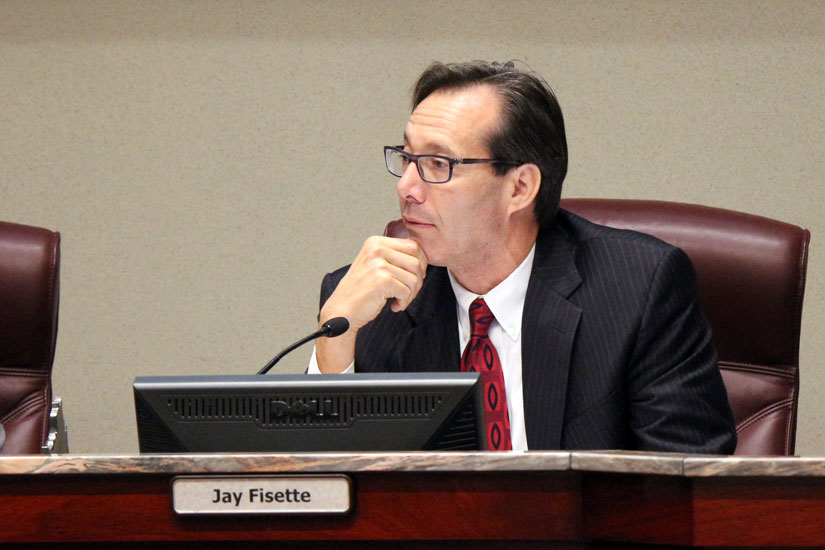
County Board Chair Jay Fisette(Updated at 4:40 p.m.) Two days after the Arlington County Board voted to offset a one-cent tax rate cut by eliminating a pay raise for county employees, the Board has changed course.

County Board Chair Jay Fisette told ARLnow.com Friday afternoon that, after the Board met with representatives from the police and firefighter unions this morning, it decided to cut from other areas to make up the $6.6 million gap in the budget the tax cut will create.

The Arlington County Police Union, the Arlington Police Beneficiary Association and the Arlington Professional Firefighters and Paramedics Association (Local 2800) each released statements denouncing the Board’s decision to go against County Manager Barbara Donnellan’s recommendation to keep the property tax rate at 2014’s level of $1.006 per $100 in assessed value — and to pay for it by eliminating pay raises in favor of a “modest” 1 percent Cost of Living Adjustment and a one-time $500 employee bonus.

The decision was made in the days leading up to Wednesday’s budget mark-up, leading the police and firefighters to question the process and transparency of the Board’s budget process.

“Throughout the budgetary process that started in September 2013, there were no discussions by the County Board that indicated that step increases would be eliminated,” Local 2800 said in a statement. “Only now, six days before the vote, have we been informed… We understand that there needs to be a balance and restraint in the current economic times but there also needs to be transparency.”

The APBA said the cut in step increases would have hit twice as hard because the county changed employees’ healthcare plans this year, resulting in increases in premiums as high as 7 percent for some employees.

“Not only is this budget cut targeting employees in one of the most expensive places to live in the U.S., it also was made at the 11th hour, outside of Arlington’s well-accepted and long-established budget process and after the last opportunity for public comment,” the APBA said in a statement.

“It is the opinion of the APBA and Union that this last minute decision is politically motivated as a newly elected County Board Member was just sworn into office,” APBA member Jim Tuomey said in a separate email. “We feel this is a last minute effort for the County Board to try and ‘win over’ the voters by saving a penny on the real estate tax rate at the expense of all County employees and we have no opportunity to be heard at future work sessions with the budget adoption next Tuesday night.”

Fisette said the Board unanimously decided to cut the tax rate “a few weeks ago,” before the April 8 special election that saw John Vihstadt became the first non-Democrat elected to the Board since 1999 by a 57-41 percent margin over Democrat Alan Howze.

The decision to do away with the step increase came as a shock to the employees because it hadn’t been mentioned in any public hearings or meetings. Moreover, Fisette said, it’s rare that the Board goes away from the county manager’s recommendations on compensation. It’s particularly rare that the Board lowers salaries or cuts pay raises, Fisette said. (more…)


County Board members Jay Fisette and Walter Tejada at a budget presentation on Feb. 20, 2013(Updated at 10:10 a.m.) Arlington’s property tax rate will drop by a one cent in the next fiscal year.

The County Board last night directed the County Manager to reduce the tax rate in its Fiscal Year 2015 budget from $1.006 per every $100 in assessed value to $0.996.

That penny corresponds to about $6.6 million in reduced revenue for the county. However, the tax and fee burden on the average Arlington taxpayer will still rise about 4.6 percent, thanks to an increase in property assessments and increases in solid waste and water-sewer fees.

The county plans to use the additional tax revenue on a variety of projects, but much of it will go to Arlington Public Schools and to a “modest” 1 percent cost-of-living adjustment and $500 bonus for county employees.

“The Board’s action provides $432.2 million to the Schools, an increase in base funding of $19.6 million, or 4.7% more than FY 2014, the county said in a press release. “With this budget, Arlington’s support of our students now exceeds $19,000 per pupil — more than any other school district in the region.”

The Board also funded three new School Resource Officers and $8 million for school construction. Other non-school projects the Board committed to funding yesterday include $200,000 in tourism marketing, $1.6 million for the county’s high-speed fiber optic network for businesses, $52,000 for a new sexual assault hotline, $72,606 for a mental health coordinator, $700,000 for costs associated with the opening of the new year-round homeless shelter early next year, and $300,000 for plowing snow from bike trails.

“The Board had to make some tough decisions,” County Board Chair Jay Fisette said in a statement. “In order to give some break to homeowners who have seen their assessments rise, we limited the growth of the County budget, launched no new major initiatives and focused on funding schools and maintaining our core services and existing infrastructure.”

The $200,00 for tourism came at the request of the county’s hotel businesses, which were doubly hurt by a quarter-cent drop in the Transient Occupancy Tax and the lack of business in the fall during the government shutdown.

“I’ve got to thank you for this,” County Manager Barbara Donnellan told the Board. “With the vacancies in the fall, I met with people in the hospitality industry and they were telling me, ‘It’s terrible, we’re going to have to lay people off.'”

At the end of the meeting, new Board member John Vihstadt made a motion to halt all funding that would directly or indirectly go to funding the planned streetcar network along Columbia Pike and in Crystal City for 2014 and 2015. The measure failed 2-3, with Vihstadt joined by Libby Garvey in voting for the motion.

The County Board will officially vote on the budget on Tuesday. The county’s press release on the budget decisions, after the jump.

(more…)


Shamrock crawl (photo via Groupon)The number and popularity of bar crawls in Arlington has increased, and it’s caught the attention of the Arlington County Police Department and county government.

At the Arlington County Board’s budget mark-up meeting this afternoon, the County Board approved an addition $42,000 to the police specifically for “pub crawl support.” Pub crawls in Clarendon, Courthouse and Ballston have drawn crowds close to 5,000-6,000 people, County Board Chair Jay Fisette said.

“I’m becoming a pub crawl expert, not by choice,” Arlington Police Chief Doug Scott told the Board Wednesday. “We are receiving crawl requests at a very escalated pace because they’ve been very popular. We thought we were going to have three, that went to nine, and it’s growing.”

Scott said he’s planning a meeting with the Clarendon-Courthouse Civic Association on April 30, but told ARLnow.com a time and a location have not been finalized yet. He and the Board discussed the potential for regulatory measures for potentially reining in the crawls, or requesting the restaurants and/or organizers provide the funds for the police support.

“There are a lot of legal issues around some of the choices the manager and board will have in terms of how we address these crawls in the future,” Scott said.

Board Member Libby Garvey asked Scott if the crawls were “a little like Mardi Gras except all year long.” Board Member Mary Hynes, who lives near Clarendon, said she has had a hard time wading through the revelers when she wants “to go to the grocery store.”

Lines for bars extend far down the sidewalk for many of the bar crawls, which include crawls on St. Patrick’s Day, Halloween and other holidays. A bar crawl in late June last year led to 13 alcohol-related arrests, and one reveler during this year’s Shamrock Crawl showed up naked to the Arlington County Jail while trying to visit her husband, who was arrested during the crawl.

“Our level of disorderliness really escalates on days where we have pub crawls,” said Scott, who told the Board he’s reached out to law enforcement in cities around the country to ask how they’ve handled bar crawls. “I just signed off today on a comprehensive ground response. I think there’s no aspect of the community, especially around some of these bar locations, that are not impacted.”

The April 30 meeting appears to be the first step toward the Board possibly setting new policies regarding pub crawls. Board member Walter Tejada, however, cautioned against taking too harsh a stance against the events.

“I want to be careful not to be the hardheaded government keeping people from having fun,” he said. “I want to strike that balance, but it’s an issue of safety. If you have data that it could be leading to bad things, then we can’t ignore it.”

Photo via Groupon


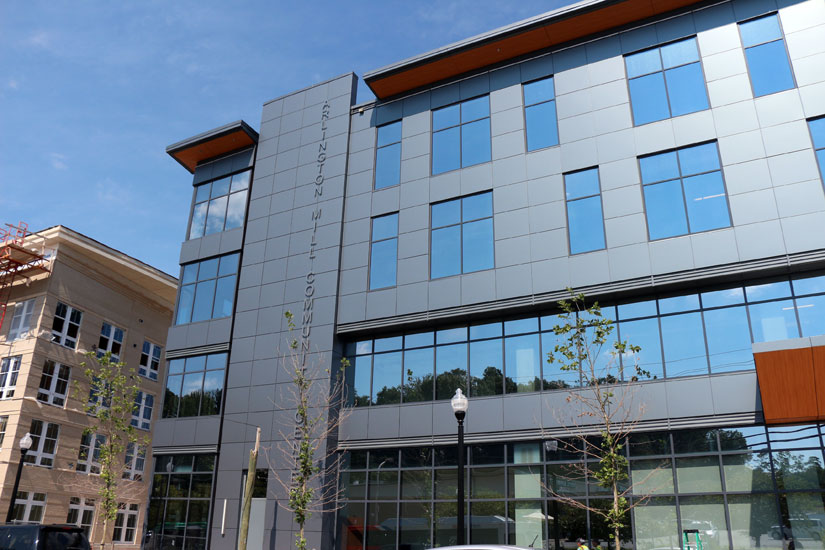
Arlington Mill Community Center sneak peekThe new Arlington Mill Community Center (909 S. Dinwiddie Street) will remain without a full-time food vendor for the foreseeable future.

The County Board on Saturday voted to release Pan American Bakery and Cafe from its seven-year lease at Arlington Mill. Rent on the 1,875 square foot retail location, on the ground floor of the community center, was to start at $56,250.00 per year and rise to $67,165.44 at the end of the seven year term.

The eatery was supposed to serve healthy fare, along with coffee, gelato and salteñas.

The owners of the restaurant, which has existing locations at 4113 Columbia Pike and at 650 S. Pickett Street in Alexandria, asked the county to terminate the lease “because of personal and family health problems.” One owner’s mother, who lives in Bolivia, was said to be seriously ill, and the other owner has been battling two serious illnesses, according to the staff report.

County staff “continues to pursue a replacement tenant,” but the county is not projecting any lease revenue in its Fiscal Year 2015 budget.


Rosslyn skyline at dusk(Updated at 12:00 p.m.) The Arlington County Board took a step forward in setting a vision for the future of Rosslyn on Saturday.

The Board approved the the framework for its planned Rosslyn Sector Plan Update. It’s an outline for a plan that when finished and approved, will help move Rosslyn from its auto-oriented, commercial feel to what the County Board hopes will be a mixed-use hub of street-level activity.

Among the components of the framework the Board approved this weekend were developing more housing in central Rosslyn, studying turning Ft. Myer Drive and N. Lynn Street into two-way streets, creating a full 18th Street corridor to remove the “superblocks” between 19th Street N. and Wilson Blvd, creating an “esplanade” and connecting the open spaces in the area.

The 18th Street alignment was the source of some dispute between Rosslyn property owners last month, and the framework left the final alignment of the pedestrian and bicycle corridor to be determined. Tad Lunger, a lawyer representing the owner of the Ames Center at 1820 N. Fort Myer Drive. Lunger, spoke at Saturday’s meeting.

“This process, which lasted for over a year, resulted in many of the framework plan’s issues to remain unresolved and a source of anxiety to many stakeholders in Rosslyn,” Lunger said. “As a result, most major issues were not really addressed until the past month’s public portion of the process.”

The plans to turn Lynn Street and Fort Myer Drive into two-way streets also concerned residents of the area, who feel it could have traffic implications for the neighborhoods.

“The change of Lynn Street and Ft. Myer Drive to two lanes going in each direction from their current four lanes is probably a benefit to Rosslyn,” said Radnor-Ft. Myer Heights Civic Assocation President Stan Karson, “but it could have unintended consequences to the residents of the nearby area because of the possible and probable backup in the area.”

Among other goals set by the framework:

  • Making Rosslyn a more walkable neighborhood
  • Adding building density — especially housing density — in central Rosslyn while maintaining “sensitive transitions” to lower density on the edges
  • Encouraging “more varied building facades”
  • Enhancing connectivity among Rosslyn’s parks and green space, including additional connections to the Potomac waterfront
  • Working with WMATA on plans for a second Rosslyn Metro station
  • “Preserving the potential” for connecting D.C.’s planned Georgetown-to-Union Station streetcar line to Rosslyn
  • Narrowing excessively wide streets by building wider sidewalks and more bike lanes

County staff will now take the framework and develop the specifics of the Rosslyn Sector Plan Update, which is expected to be complete by the end of 2014. The public will continue to have input through the Realize Rosslyn process, the county said.

File photo


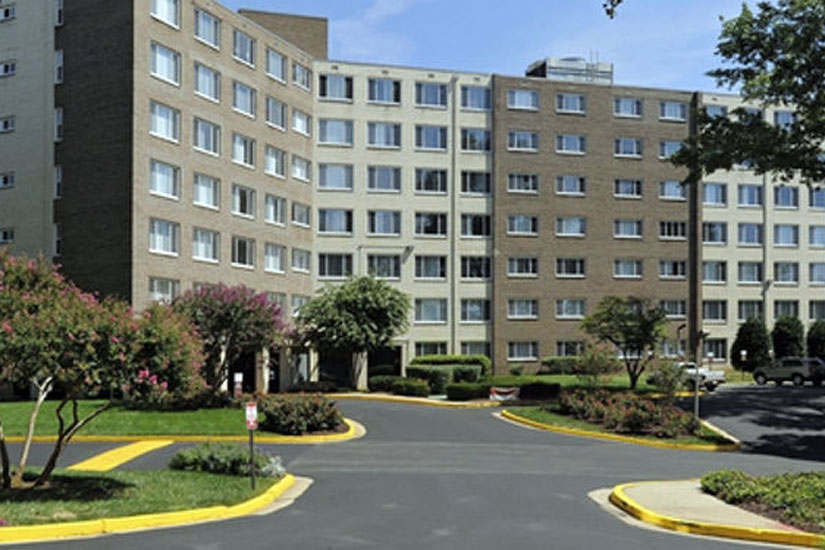
Serrano apartments on Columbia PikeThe Arlington County Board approved a $16.5 million loan to affordable housing developer AHC on Saturday to purchase a Columbia Pike apartment building.

The loan, which comes from the county’s dedicated Affordable Housing Investment Fund, will allow AHC to purchase the Serrano Apartments at 5535 Columbia Pike, which are currently owned by Carmel Partners.

The apartment building, in the Columbia Heights West neighborhood, has 280 units, 239 of which are currently considered affordable. The loan allows AHC to purchase the building and keep 196 units in the building as dedicated affordable housing for the next 60 years. The remainder will be offered at a market rate.

AHC will also purchase the 39,500 square feet of vacant land fronting the Pike, which Carmel has an application to subdivide, according to the county’s press release. That land could be developed into a complex with about 80 apartment units, according to the Columbia Pike Form Based Code.

“The County Board has committed to preserving affordable housing along Columbia Pike,” County Board Chair Jay Fisette said in the press release. “This loan to AHC is in keeping with our commitment. These units now will remain affordable for generations of Arlingtonians — and help preserve the Pike’s rich diversity as it is redeveloped into a more transit-oriented, walkable ‘Main Street.'”

Current tenants will not be displaced with the ownership change, the county said. The purchase follows through on the Columbia Pike Neighborhoods Area Plan, which calls for keeping 6,200 of the current affordable market-rate apartments affordable as the Pike develops and creating 400 new units affordable to families at 80 percent of the area median income on the western portion of the Pike.

Photo via Bozzuto


View More Stories