
Gavel (Flickr photo by Joe Gratz)A group of activists sued Arlington County on Friday over its fact sheet about the housing authority referendum on the ballot tomorrow, but a judge quickly dismissed the lawsuit.

As it has in previous years, the county distributed a “frequently asked questions” fact sheet with the stated goal of informing residents before voting on the measure. Members of the Arlington Committee to Save Affordable Housing, which supports the creation of a housing authority in Arlington, filed the lawsuit on Friday to protest the page, with treasurer John Reeder — who filed the suit on behalf of the committee — calling it “a biased fact sheet with bogus data slanted against  the housing authority, and misleading voters.”

Judge William Newman dismissed the suit without opinion the same day, prompting Reeder to send out a press release denouncing his decision. Newman is a former member of the Arlington County Board, whose members oppose the formation of a housing authority.

“Virginia Code section 24.2-687 requires that any statement on the referendum issued by Arlington County be no longer than 500 words, be neutral, and not use arguments either for or against the referendum,” the press release said. “The county FAQ statement of over 1,100 words made factual errors about the availability of Federal housing funds and other revenues… [and] included arguments and bogus claims cited by opponents including the Arlington Democratic Party.”

“Judge Newman dismissed the legal petition with no legal opinion issued late on November 1, and refused to grant even a public hearing on whether the state law on elections and referenda had been violated,” the press release continued.

The last time the referendum was on the ballot in 2008, the county distributed a similar flyer which also drew criticism, notably from the Arlington Green Party, of which Reeder is a member. The county has stood by that flyer and stands by this year’s version.

“Judge Newman’s action speaks for itself regarding the merits of the lawsuit on the housing referendum,” County Attorney Stephen MacIsaac said in an email. “It is within Judge Newman’s discretion to take the action that he took … The County put out a factual set of questions and answers, with neutral information about the referendum.”

The referendum, if passed, would create an independent housing authority, appointed by the County Board, focused on eliminating and redeveloping “blighted areas,” and promoting the availability of affordable housing.

Currently, the county handles affordable housing through its Housing Commission and through cooperation with local affordable housing nonprofits. The county draws funds from local taxes, developer contributions, federal and state grants and other affordable housing programs. The county says in its fact sheet that a new housing authority would have access to the same or similar funding sources.
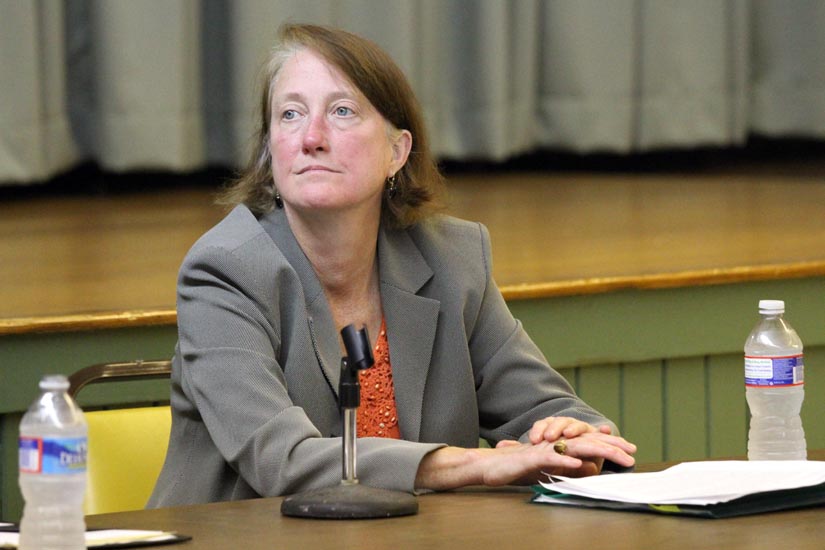

Audrey ClementThis week we asked the two candidates for Arlington County Board to write a sub-750 word essay describing why Arlington residents should vote for them on Election Day (Nov. 5).

Here is the unedited response from Audrey Clement (G):

I’m nine year resident of Arlington County with a doctorate in Political Science and service as a Congressional Fellow. As a long time Green Party leader and civic activist, I’ve worked hard to promote a better quality of life for Arlington residents. As treasurer of the Arlington Coalition for Sensible Transportation (ACST), I filed suit in 2009 to compel VDOT to assess alternatives to piecemeal widening of I-66 westbound.

In 2008 and 2013 I petitioned to place a referendum on the ballot to consolidate Arlington’s housing programs in one agency to leverage more money for affordable housing. I’ve also lobbied for a ban on plastic bags in supermarkets and chain drug stores and Styrofoam in food retail outlets. A ban bag is needed because all the bag tax bills introduced in the General Assembly to date have been defeated. Unlike a bag tax, which requires legislative approval, a bag ban is legal in Virginia right now, because the Virginia Waste Management Review Board calls the shots on waste reduction measures, not the legislature.

I think Arlington needs a change in leadership because County Board doesn’t understand that sustainable growth and so-called “Smart Growth” aren’t the same. As new office towers go up overnight, employers move into the county, spurring demand for housing that drives up rents and real estate assessments and promotes excessive infill development. Nevertheless County Board continues to award developers with more density—50% more in Crystal City and Pentagon City alone. As a result, the supply of affordable housing in this county has been cut by two-thirds in one decade. This isn’t sustainable.

To be sustainable, basic public infrastructure must keep pace with new residential and commercial construction. Sustainability also requires the County Board to create a housing authority to leverage more money for affordable housing, just like all the other jurisdictions in Northern Virginia. Otherwise those who move into the County are stuck in a never-ending cycle of tax and rent increases as others are recycled out. To be sustainable, we need to do more than accumulate LEED points. We need truly energy efficient buildings and on-site renewable energy. To be sustainable, we must appreciate the difference between needs and wants.

  • We don’t need an $80 million aquatic center, when Northern Va. is already drowning in public pools.
  • We don’t need a $310 million trolley when bus service can be upgraded at a fraction of the cost.
  • We may want a cultural center and a black box theater. But we must get the private sector to finance them, not the taxpayers.
  • We may like the already over capacity Taj Mahal high schools recently constructed in this county. But what we need is to expand classroom space at a reasonable cost even if that means building up or renovating rather than building new.

If elected to the County Board, I will promote fiscal responsibility without sacrificing the health and welfare of its residents.

I pledge to make developers pay their fair share of infrastructure costs. I also plan to fully fund libraries, schools, and programs for youth, seniors, and the disabled, emphasize recycling and renewable energy; and hire an Inspector General to audit the County’s budget. You can find out more about my Campaign for a Greener Arlington by visiting AudreyClement.com. Vote Clement for County Board on November 5th.


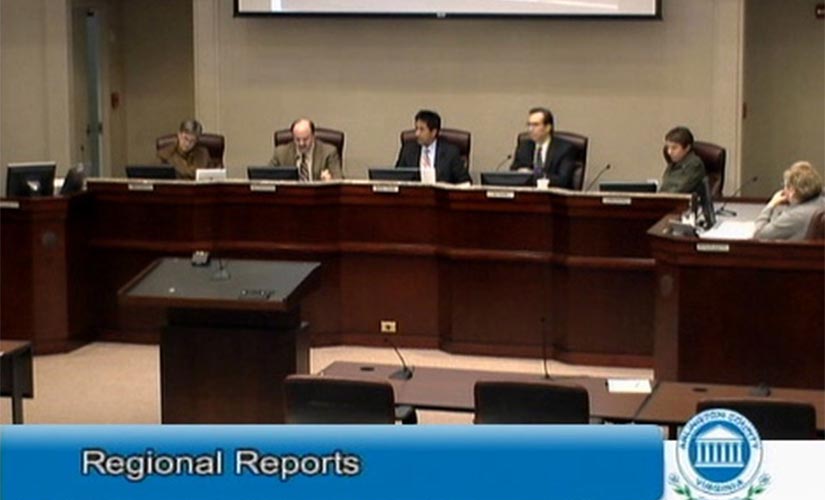
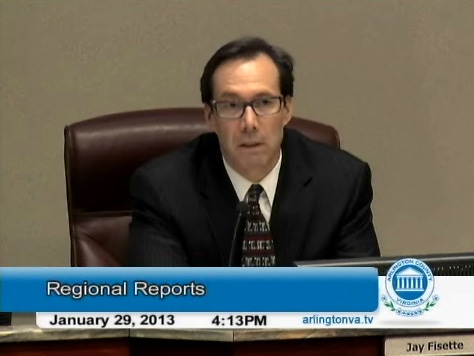
Screen grab of County Board member Jay Fisette discussing Gov. McDonnell's transporation planThis week we asked the two candidates for Arlington County Board to write a sub-750 word essay describing why Arlington residents should vote for them on Election Day (Nov. 5).

Here is the unedited response from Jay Fisette (D):

Dear Fellow Arlingtonians –

Arlington has evolved into a vibrant urban community that has retained our traditional sense of caring and connectedness. We boast top-notch services, outstanding public schools, a robust transportation system, low crime and the lowest unemployment rate in Virginia.

Many thoughtful people are responsible for today’s Arlington, and I am excited to continue to do my part to move our community forward. I am especially proud of my past efforts to maintain sound fiscal policies and support our public schools, and my leadership in developing our Community Energy Plan, Capital Bikeshare program, pedestrian safety improvements, affordable housing programs and e-government enhancements.

We face several challenges, including housing affordability, growing student enrollments, and the job losses resulting from the Base Realignment and Closure Commission and from dysfunction in Congress. With the first two of these, we are victims of our own success – as Arlington is a desirable community to many, including more families with young children. I am prepared to tackle these issues and find creative, smart solutions that build on our assets. I am committed to thoughtful long-term planning and collaborative problem solving.

Protecting our Triple AAA bond rating and fiscal integrity is a priority. As a former auditor with the Government Accountability Office, I hate waste and will seek value for every dollar spent. I will balance the short-term budget decisions with the long-term capital infrastructure investments that will ensure our vitality and competitiveness in the future.

I am driven to create a sustainable community on all fronts, thus will work to implement Arlington’s energy reduction strategy. In 2010, I established a Community Energy & Sustainability Task Force, to take up the challenge of developing goals and concrete targets for reducing our energy use. Arlington now has an aggressive and achievable energy reduction strategy that will advance our economic competitiveness, enhance energy reliability and protect our environment. We will save residents and businesses money while enhancing our community’s sustainability.

(more…)


Chicken (file photo)The next step in the county’s process toward establishing new urban agriculture policies — most notably the possibility of allowing backyard hen raising — will come next month.

County Manager Barbara Donnellan will present the county staff’s response to the Urban Agriculture Task Force’s recommendations during a work session Nov. 12.

The task force’s recommendations were presented to the County Board in June, and included these suggestions for backyard chickens:

  • Maximum of 4 hens
  • No roosters
  • Set back at least 20 feet from property lines
  • Must file plans for coop and its placement
  • Majority of adjacent property holders (within 50 feet of the coop) must consent
  • Coop inspection required before occupancy

UATF staff liaison Kimberly Haun said she is unsure when the County Board may take action on the Food Action Plan. Residents are encouraged to attend the public work session but will not be able to participate. Haun said additional specifics about the staff response would not be made available before the meeting.

The task force also made several other, less controversial recommendations:

  • Appoint a standing Commission on Urban Agriculture
  • Integrate urban agriculture into county planning documents
  • Create new community gardens and urban farms, utilizing rooftops and fallow land awaiting development if possible
  • Permitting federal SNAP benefits (food stamps) at all Arlington famers markets (currently only a couple accept SNAP)
  • Encourage the establishment of a “local food hub” to match up residential food producers with distributors and consumers
  • Encourage the creation of additional Community Supported Agriculture (CSA) programs
  • Support additional healthy eating and urban agriculture education in schools and libraries
  • Repurpose the historic Reeves farmhouse as a center for urban agriculture education for Arlington school students
  • Establish a municipal composting system

File photo


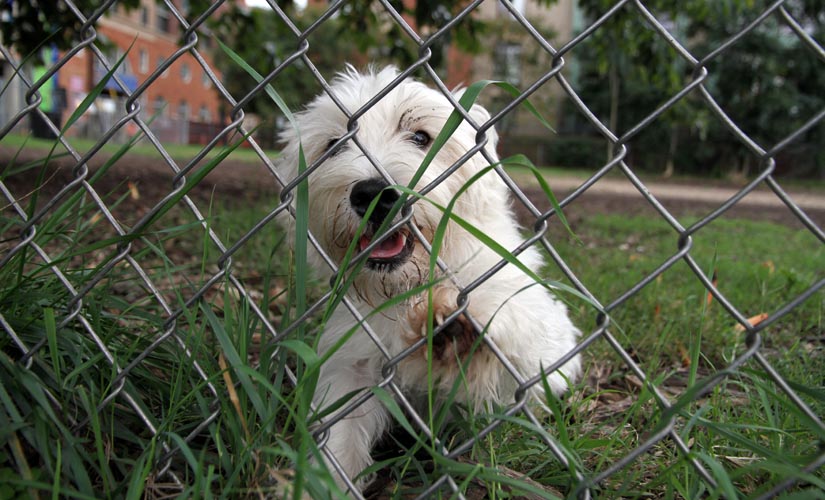
A Westie at Clarendon dog park (file photo)Dog owners must now adhere to new tethering regulations passed by the County Board on Saturday (October 19).

The Board voted unanimously to adopt changes to the Arlington County Code which went into effect immediately on Saturday. Previously, the Animals and Fowl ordinance did not specifically address dog tethering.

Under the new regulations, dog owners cannot leave their pet tethered unattended for more than three hours in a 24 hour time period. Dogs tied to running cables or trolley systems with access to water and shelter can be tethered for up to 12 hours in a 24 hour period. As previously reported, the rules only apply to dogs that are not within physical reach of their owners.

Regarding the running cables or trolley systems, the regulations state:

“A running cable line or trolley system is defined as one that is at least 20 feet in length and is mounted at least four (4) feet, but no more than seven (7) feet, above the ground. Under no circumstances shall a dog be attached to a running cable line or trolley system unless the tether attaching it to the running cable line or trolley system is at least ten (10) feet in length or three (3) times the length of the animal, as measured from the tip of its nose to the base of its tail, whichever is longer.”

The county staff report on the issue states that the regulations were suggested because tethering an animal for extended periods of time can put the animal’s life at risk.

“The Board’s action today is meant to protect dogs from abuse,” said Arlington County Board Chairman Walter Tejada. “Tethering can put dogs at risk if the tethered animal is unable to get to food, water or shelter. Dogs can also become aggressive if tethered too long. Animal control officers have long made it a practice to respond to reports of dogs being tethered for hours on end. The new rules help responsible dog owners by providing clarity on what’s acceptable and what isn’t.”

The ordinance amendment reads, in part:

“It shall be unlawful for any person to tether a dog to a chain, rope or line of any kind that is too short to enable the dog easily to stand, sit, lie down, turn about, and make all other normal body movements in a comfortable, normal position for the animal, and reach shade as necessary… When the same dog is observed to be tethered in the same location that it was in after an initial observation of the dog in that location, then there shall be a rebuttable presumption that the dog has been continuously tethered in that location since the initial observation.”

The staff report indicates the Animal Welfare League of Arlington supports the new rules. Animal control officers have already responded to resident complaints of dogs being tethered for too long, according to the report.

Violations are considered a misdemeanor and come with a fine of up to $100. Residents who wish to report a violation of the dog tethering rules are asked to call the Animal Welfare League of Arlington at 703-931-9241.


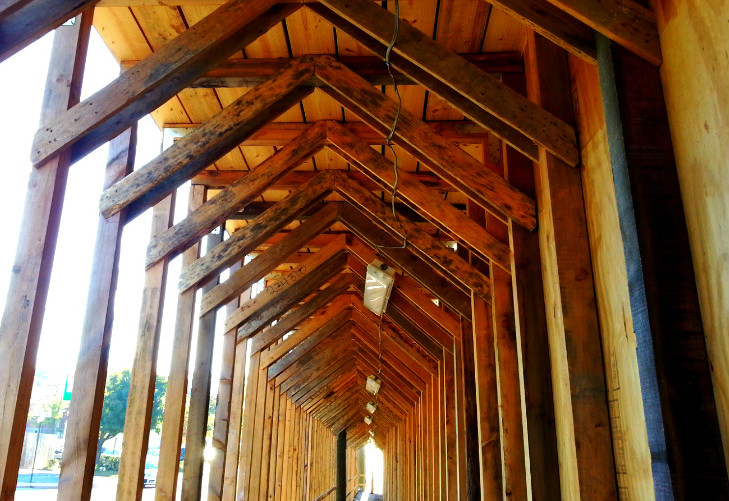
Virginia Square construction

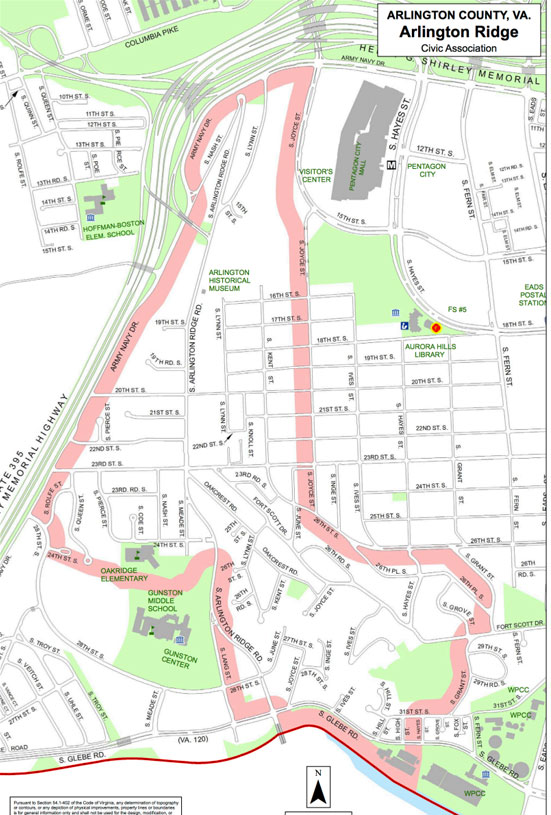
Board Accepts Arlington Ridge Neighborhood Conservation Plan — At its meeting on Saturday (October 19), the County Board voted unanimously to accept the first revision in 40 years to the Arlington Ridge Neighborhood Conservation Plan. The plan outlines residents’ vision for the neighborhood and names improvements residents most desire. The plan includes more than 100 recommendations, including a neighborhood “zoning freeze” in light of the area’s 37.5 percent increase in population from 2000 to 2010. [Arlington County]

$1.5 Million Approved for Neighborhood Improvement Projects — The County Board approved $1.5 million in funding for three street improvement projects.  In the Leeway neighborhood, along 24th St N from N. Illinois Street to N. Kensington Street, $781,082 was approved for sidewalk, curb, and gutter street improvements. Nearly $160,000 was approved for the installation of LED street lights in Columbia Forest, on S. Edison Street from George Mason Drive to 11th Street South. And more than $521,000 will go to improvements in the Williamsburg neighborhood, on N. Sycamore Street from 26th Street North to Williamsburg Blvd, for traffic lane reduction, bike lanes, ADA compliant ramps at intersections and landscaped medians. [Arlington County]

Survey Puts Metro Area on List of Best Apartment Kitchens — A survey by Apartment Guide magazine lists the D.C. metro region as number four on a list of rental properties with the best kitchen amenities. Chicago, San Antonio and Los Angeles were the top three. [Sun Gazette]


Arlington RidgeThe Arlington Ridge Civic Association is requesting the Arlington County Board institute a “zoning freeze” in its neighborhood.

ARCA is proposing an update to its Neighborhood Conservation Plan, its first since 1973, which the Board could approve during Saturday’s meeting. The civic association said the zoning freeze request is being made in light of the 22202 zip code’s 37.5 percent population increase between 2000 and 2010.

In its request to the county, submitted this spring, ARCA asks the County Board “to ‘freeze’ zoning within and outside the ARCA area until the full impact of present development plans in areas adjacent to us can be fully assessed in order ultimately to conserve the peaceful single-family character of our neighborhood and protect our quality of life and the air we breathe.”

County staff recommends the neighborhood plan be accepted by the Board, but with notes from county staff essentially denying the proposed halt to zoning. Helen Duong, spokeswoman for Arlington’s Department of Community Planning, Housing and Development, said there are no zoning freezes in place in Arlington, “nor have there ever been.”

“A neighborhood’s request for a zoning freeze is not a typical recommendation in Arlington County,” Duong told ARLnow.com. “More often we see communities asking that the County adhere to the General Land Use Plan and zoning plans and to not consider making changes without going through an inclusive neighborhood process.”

The neighborhood plan does not become codified upon its acceptance by the Board. Instead, the plan consists of recommendations which are then to be implemented by county staff, provided they are consistent with county policy.

There were several other recommendations in the plan that county staff expressed concern about, in terms of implementation, including:

  • Expansion and improvements to the Aurora Hills Library and Community Center
  • Proactive noise monitoring
  • Undergrounding of utilities on Arlington Ridge Road
  • Use of speed enforcement cameras
  • Erection of sound barriers on I-395

The speed cameras would require authorization from the state legislature, and ARCA requests that the county lobby the legislature for that permission.

Other neighborhood priorities identified by ARCA include maintaining its nine public parks, improving sidewalks and streetlights, “proactively limiting and managing traffic,” and designating Aurora Hills Library and Community Center the neighborhood’s “cultural hub,” despite the fact that the facility is in adjacent Aurora Highlands.

The Arlington Ridge neighborhood is located just west of Pentagon City. Many in the neighborhood vehemently opposed the 2 million square foot PenPlace development in Pentagon City, which was approved by the Arlington County Board in September.


Arlington County Board (file photo)The Arlington County Board will vote this Saturday on whether to allocate more than $1.4 million to fund three improvement projects in residential communities.

If passed, the motion would fund $781,082 for street improvements on 24th Street N. from Illinois Street to Kensington Street; $159,751 for new streetlights on S. Edison Street from George Mason Drive to 11th Street; and $521,409 for median and striping improvements on N. Sycamore Street from 26th Street to Williamsburg Blvd.

The three projects were recommended by the Neighborhood Conservation Action Committee. The money would come from the Neighborhood Conservation Program, an $11 million pot of money used for relatively small citizen-initiated projects. The three projects would be the third installment of the latest Neighborhood Conservation fund, approved by referendum last year. Four projects were funded last fall and five were funded this spring. If approved, the program would have $4,866,407 in funding left for future projects.

The projects were selected on a points-based system. They were the three highest-scoring projects out of the 25 proposals the NCAC reviews. County staff supported the NCAC’s recommendations in its report..

The item is on the Board’s consent agenda, which means unless a Board member or a citizen decides it warrants further analysis at the Board’s Tuesday meeting, it should pass without additional discussion on Saturday.

File photo


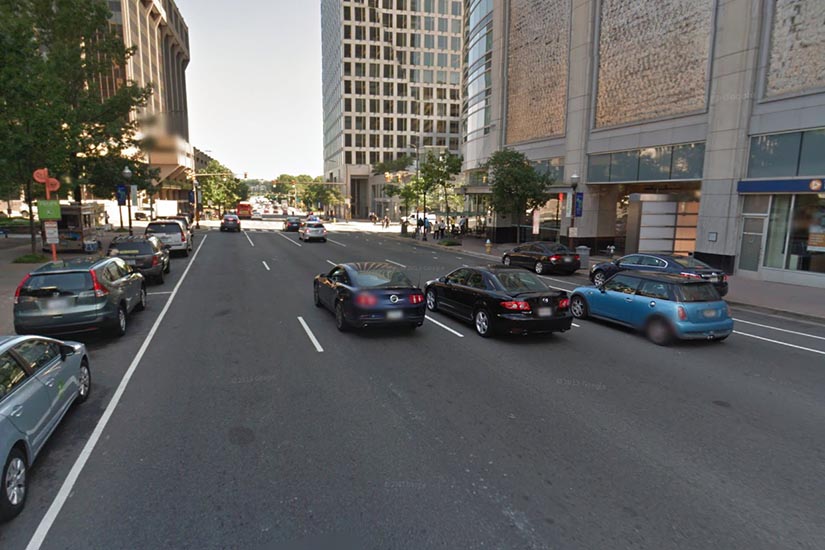
Lynn Street in Rosslyn (via Google Maps)The Arlington County Board is scheduled to consider a change to the speed limit on two Rosslyn arterial streets.

On Saturday, the Board is expected to approve a staff recommendation to lower the speed limit on N. Lynn Street and Fort Myer Drive from 30 to 25 mph. The change encompasses the stretch of each road between Arlington Blvd and Lee Highway.

According to a traffic engineering study, the change is not expected to lower the volume of traffic on the roads. Rather, it is hoped that lower speeds will improve safety, since Lynn and Fort Myer are heavily used by pedestrians.

Presently, the collision rate for both roads is “well below the statewide average rate,” according to the staff report. The average vehicle speed is at or below 25 mph on each.

It is Arlington’s stated transportation policy to lower speed limits on “downtown” arterial streets to 25 mph. The Board lowered the speed limit along Wilson and Clarendon Blvds from 30 to 25 mph in July.

The cost of installing new speed limit signs, should the change be made, is estimated at $2,000.

Photo via Google Maps


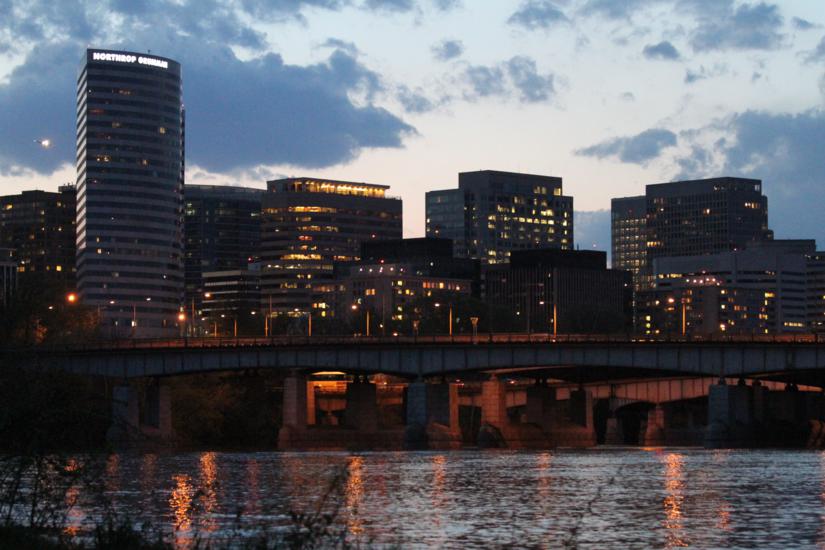
Rosslyn skyline at duskArlington County wants its residents to weigh in on the future of Rosslyn’s skyline, public spaces and transportation at a forum this Saturday.

The Arlington County Board is considering ways to update the Rosslyn Sector Plan, which determines the county’s policy in future development to the neighborhood. The Realize Rosslyn Community Workshop will run Saturday, Oct. 5, from 8:30 a.m. to 2:00 p.m., at the Artisphere Ballroom (1101 Wilson Blvd).

The formal presentation will begin at 9:00 a.m. with breakfast and lunch served. Those interested in attending can register online. There will also be an open house from 11:00 a.m. to 2:00 p.m. at the Rosslyn Business Improvement District office at 1911 N. Fort Myer Drive, LL-10.

From the county’s press release:

Arlington County is asking the public to weigh in on planning concepts that will transform Rosslyn’s future built environment, public spaces and transportation connections at a workshop on October 5.

“We want Arlingtonians to get involved in reinventing Rosslyn,” said Arlington County Board  Chairman J. Walter Tejada. “This is an exciting opportunity to help us create a Rosslyn that is more vibrant and walkable, that has great public spaces and a better mix of homes and offices.”

Participants will be able to engage with project team members and neighbors on the emerging alternatives for the Rosslyn Sector Plan, and to review preliminary proposals and draft alternatives. The County is looking for guidance on:

  • Key decisions to translate proposed design ideas into an action plan
  • Bold and compelling options for the future of Rosslyn, such as:
    • Potential shape of the skyline and preservation of key view corridors
    • Possibilities for a new 18th Street corridor through Rosslyn’s core
    • Transformation of Fort Myer Drive and Lynn Street
    • New destinations for outdoor events, including a re-imagined Gateway Park and an Esplanade that will connect Rosslyn to the Potomac River

The Right Note is a weekly opinion column published on Thursdays. The views and opinions expressed in the column are those of the author and do not necessarily reflect the views of ARLnow.com.

Mark KellyThe County Board announced it has awarded a $97,000 contract for yet another study of the Columbia Pike trolley. The study will look at data about the current trolley and bus plans versus bus-only alternatives.

In the past, the Board has ignored the data and input it does not believe fits the narrative that a trolley on Columbia Pike is, well, a big shiny ball of awesome. And, the consensus among people I talk to who are regular “Board watchers” is this study is a play to see if the Board can take another run at federal funding. As Chairman Tejada said, the trolley is “County Board policy.”

Not that you need reminding, but the trolley’s poster child thus far is a $1 million “super stop” that is so super, you cannot really stay dry under it when it rains. The “super stop” is for buses now, but is one of over 20 that will be used for the trolley as well.

One point about the not-so-super bus stop that is often missed in the debate is that it took 18 months to build. If you commute on Columbia Pike, imagine if it takes 18 months to install all the necessary infrastructure for the trolley. Worse, if you own a business along the Pike, imagine how many people will want to brave the construction to visit your store during the construction.

It is no secret that I have endorsed a bipartisan group of Arlingtonians who view this trolley project as a boondoggle. Arlingtonians for Sensible Transit not only opposes the trolley, but offers real insight into the alternatives. But, no cost estimates, usage data or public concerns have been able to move the Board from its position thus far.

Unfortunately, the Board’s ongoing “trolley at all costs” approach should not surprise us.

Thanks to Frank O’Leary, we know our Board has built up a record surplus after telling us for years that it was facing “tough choices” caused by “budget shortfalls”. After spending millions of dollars in excess revenues in the closeout process on non-budgeted items each fall, they have implored us to be OK with raising our taxes the next year because there was “just no way to avoid it.”

The average Board Member has 15 years of experience spending our money in this manner and are showing no signs of stopping. Until voters change a Board Member or two, it is safe to assume the Board will see no real incentive to change its behavior.

Mark Kelly is a former Arlington GOP Chairman and two-time Republican candidate for Arlington County Board.


View More Stories