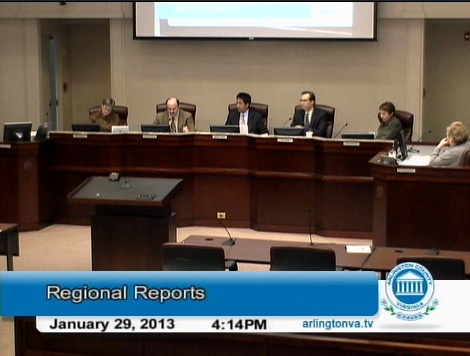
Screen grab of County Board discussing Gov. McDonnell's tranportation plan(Updated at 4:45 p.m.) County Board members spent a portion of Tuesday’s meeting expressing distaste with Governor McDonnell’s proposed transportation plan, namely the idea of eliminating Virginia’s gas tax.

The proposal would do away with the 17.5 cents per gallon gas tax, but would increase the state’s sales tax from five percent to 5.8 percent. The plan also would increase vehicle registration fees and add a yearly $100 charge for drivers with alternative fuel cars. McDonnell said that would raise about $3.1 billion over five years to fund road, transit and rail projects across the state.

County Board member Jay Fisette said that while it’s good to have some sort of proposal on the table in order to start a conversation about transportation funding, this plan is not the answer. He further stated that the plan was offered to the General Assembly at the last minute, without adequate time to review and understand it.

“Many people see this as a vehicle on which to find a better compromise or a more functional proposal,” he said. “This is hugely important to Arlington, to Northern Virginia and to the future of this state. I’m willing to give kudos for starting a conversation, but if this passed it would be a big mistake in the form it was proposed by the governor.”

Fisette believes eliminating the gas tax would incentivize driving and reduce the use of public transit.

“While it sounds good to eliminate a tax, they would be adding others. This is a user fee. There is a gas tax in every state in the United States. We would be the first to decouple the incentive to drive with the cost of driving,” said Fisette. “You’re still looking at a fee to ride transit, but you’re going to remove the gas fee for driving and spread that cost among everyone who buys something in Virginia. That doesn’t seem fair to people who choose to use transit.”

Several Board members worried that the proposal wouldn’t actually raise the additional money McDonnell says it will, but simply moves it over from a different area.
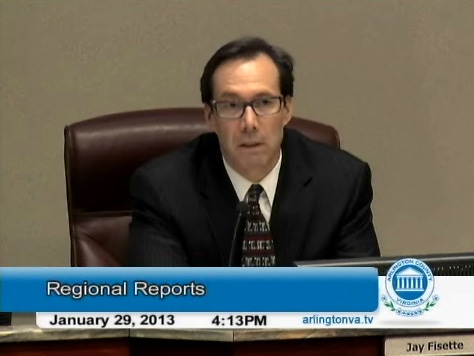
Screen grab of County Board member Jay Fisette discussing Gov. McDonnell's transporation plan“It shifts money from the general fund, which has been the basic source of funds for education, human services and public safety, and shifts those to transportation,” said Fisette. “So it’s robbing the basic source of funds for the rest of our needs to pay for transportation.”

Board member Mary Hynes echoed Fisette’s concern.

“We can talk about how poorly they’ve spent the money they have, but the reality of what the governor has proposed is it’s mostly smoke and mirrors,” she said. “It’s taking away with one hand and putting it in another place. The actual new money that’s involved in any near term frame is very small.”

Both Fisette and Hynes pointed out that nearly one-third of the proposed funds ($1 billion) would not be immediately available because it’s tied to pending legislation in Congress regarding internet sales tax revenue.

The transportation plan’s perceived dilution of local government’s authority and an increased role for state government proved to be another recurring topic of discussion. Board member Chris Zimmerman called it a “blatant power grab.”

“This is getting very frustrating to a lot of people in local government, that the administration has been not only not helpful in providing more funding, but essentially is continually distracting the conversation with these efforts to shift power away from people who have to pay the bills,” said Zimmerman.

A legislative committee approved the governor’s proposal today, and it’s expected to go before the full House and Senate in the Virginia General Assembly next week. The General Assembly is currently about halfway through its short 45 day session.


Peter’s Take is a weekly opinion column published on Tuesdays. The views and opinions expressed in this column are those of the author and do not necessarily reflect the views of ARLnow.com.

Peter RousselotWhen County Board member Mary Hynes launched a new initiative called PLACE (Participation, Leadership and Civic Engagement), ARLnow posted a video and wrote a capsule story. In the video, various people were asked what they thought the term “Arlington Way” meant.  The capsule story asked and answered the question:

“What is the ‘Arlington Way’ exactly? It is essentially an open conversation between the local government and the people who live and work in Arlington. But the Arlington Way can mean different things to different people, as the video … seems to prove.”

Has the Arlington Way lost its way?

Arlington has created an elaborate system of advisory commissions, committees and task forces to tap the wealth of talent in our community This system was supplemented in 2012 with the PLACE initiative. And, in 2013, the County Board has added Walter Tejada’s Neighborhood Town Halls.

Compared to every other community anywhere near its size, the variety of opportunities that Arlington affords for citizen engagement and participation is admirable.

But, the Arlington Way is losing its way because of a combination of:

  • whether, when and how the County Board frames the issues for community discussion
  • what the County Board does with the advice it gets

Example: the PPTA guidelines.

The Southern Environmental Law Center (SELC) issued a report last fall warning that the Public Private Transportation Act (PPTA) lacked adequate safeguards, often enabling private firms to negotiate sweetheart deals that earn them high profits while placing most or all of the risk on the public.

The County Board has at least 3 citizen advisory groups that should have been asked to meet, review the proposed PPTA guidelines, and report back to the community: the Transit Advisory Committee, the Transportation Commission, and the Fiscal Affairs Advisory Commission. The County Board never requested such meetings or reports. Why not? What was the rush to enact such far-reaching guidelines without the input of these advisory groups?

Other examples:

  • The County Board’s recent decision on what to do with its fiscal year closeout funds, totaling many millions of dollars, included no opportunity for significant community engagement.
  • The entire structure of County Board decision making is a question too:  an item can appear once on an agenda and be voted on the same night.  Compare this with the School Board’s process of an item appearing first for information, with an opportunity for public comment, and then not being voted on until the next meeting – two weeks later. For major decisions, the School Board has even more time between public notice and action (like what to do with its fiscal year closeout funds).

We are losing our way. We have created many commissions, PLACE, and Neighborhood Town Halls so it looks like there is a lot of input, and there may be on many decisions. But, too many of the big, important decisions are reached without following the process we have created.

When we do use the process, the County Board too often disregards the input.  Of course, it is naïve to believe that the Board should always follow the recommendations, but when at midnight Board members are making changes to staff proposals and voting that same night – that does not inspire sufficient confidence in the Board’s decisions.

Peter Rousselot is a member of the Central Committee of the Democratic Party of Virginia and former chair of the Arlington County Democratic Committee.


Blue jay in North Arlington

VA Senate Panel Advances “Love Shack” Bill — A state Senate panel unanimously advanced a bill proposed by Sen. Adam Ebbin (D) that would repeal the Virginia law making it illegal for unmarried couples to live together. Currently, cohabitation by unmarried couples is a misdemeanor under the law, which went into effect in 1877. [Washington Post]

Board Accepts Grant to Fight Childhood Obesity — The County Board has accepted a state grant worth $25,000 to fund a Healthy Meals for Healthy Families program at Carlin Springs Elementary School, intended to fight childhood obesity. The program will include weekly hands-on classes in healthy food preparation and healthy eating for at-risk third, fourth and fifth graders and their families. “[The grant] will fund a program at Carlin Springs Elementary that will not only educate our children and families – but ultimately change behaviors to promote life-long healthy eating and healthy living,” said Board Chairman Walter Tejada. [Arlington County]

APS Makes EPA’s Green Power Purchasers List — Arlington Public Schools has come in at number five on the Environmental Protection Agency’s list of the Top 20 K-12 green power purchasers. APS meets six percent of its electricity use by purchasing more than 3,000,000 kilowatt-hours (kWh) of green power each year. “Utilizing green power helps us become more sustainable, while also sending a message to others across the U.S. that supporting clean sources of electricity is a sound business decision and an important choice in reducing climate risk,” said APS Superintendent Dr. Pat Murphy. “Most importantly, this conveys to our students the important role and responsibility that all of us have in safeguarding our environment today and in the future.” [Arlington Public Schools]

Board Promises to Hear PenPlace Concerns — At its meeting on Saturday (January 26), the County Board assured concerned residents that their voices will be heard in regards to the proposed PenPlace development. Board member Chris Zimmerman refuted claims by opponents that there wouldn’t be a serious review of the Pentagon City project. The plan involves developing 10 acres of mostly vacant land into a complex of 12 to 22 story buildings. [Sun Gazette]


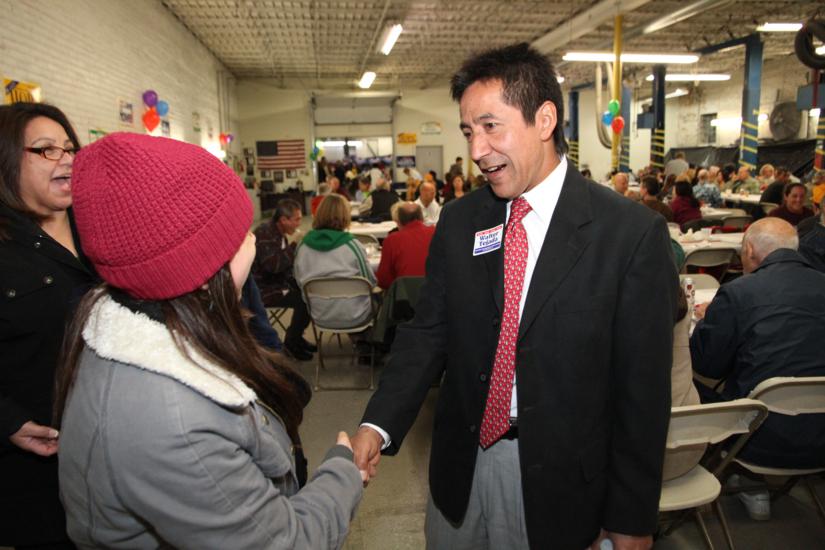
County Board member Walter TejadaThe first of the new-for-2013 neighborhood town hall meetings, an initiative of this year’s Arlington County Board chairman, Walter Tejada, will kick of on Wednesday, Jan. 30.

The first neighborhood town hall will be held at the Drew Community Center cafeteria, at 3500 23rd Street S. in Nauck. Residents will have an opportunity to voice their opinions or ask questions about any topic, while County Board members listen.

“As part of my ‘Moving Forward Together’ agenda, I am looking forward to hearing from the community in this informal setting, where people can speak their minds directly to County Board members, and get answers,” Tejada said in a statement. “Arlington is always at its best when we are listening to each other and sharing ideas.”

The town hall meetings will be held once a month, except August and December, in various locations around Arlington. The meetings will start at 6:46 p.m. and end at 9:00 p.m. The unique start time was chosen so “people would remember it better,” according to a county spokeswoman.

The February town hall will be held at the Lee Community Center (5722 Lee Highway) on Wednesday, Feb. 27. The March meeting will be held at Kenmore Middle School (200 S. Carlin Springs Road) on Wednesday, March 27, and will be focused on one topic: the proposed Columbia Pike and Crystal City streetcar systems.

“It is expected that all five Board members will participate,” the county said in a press release. “They will provide a detailed update on the planned streetcar system, respond to questions from the community and discuss next steps.”

“The Board decided several years ago, after a lengthy public process, to build a streetcar system that will help us handle expected growth, encourage high-quality development, and better connect us to the regional transit network,” Tejada said in a statement. “With streetcar planning now underway in earnest, this is a good time to update residents, business owners and anyone else who is interested, answer questions, and talk about next steps. This is a conversation meant to help us ‘Move Forward Together.'”

The schedule of town hall meetings for the rest of 2013 is available on the Arlington County web site.


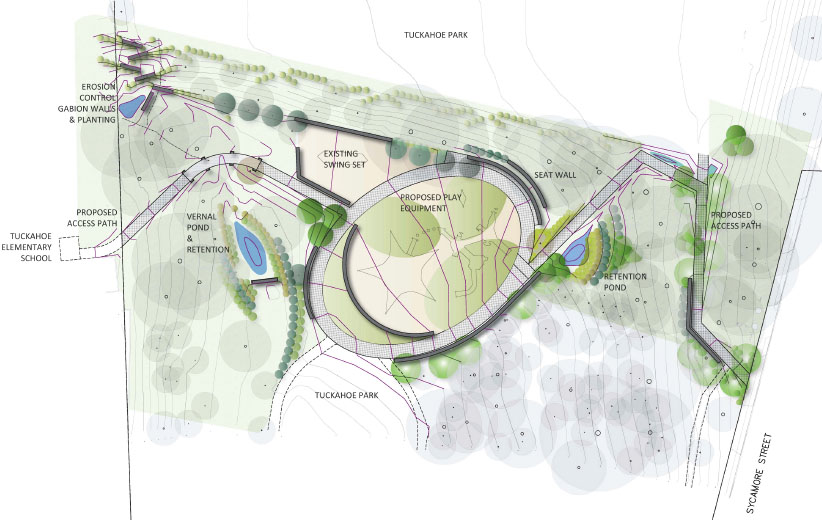
Plans for Tuckahoe ParkImprovements are coming to Tuckahoe Park and eight other county parks.

On Saturday, Jan. 26, the Arlington County Board approved a $733,315 contract (including contingency) for reconstruction of the Tuckahoe Park playground. Contractor Jeffrey Stack, Inc. will make improvements to the park, including an accessible entrance, new play equipment, accessible paths, site furnishings, synthetic turf safety surfacing, site drainage, bio-retention gardens and plantings.

The Board also approved eight Park Enhancement (PEG) Grants, for a total of $83,377. The grants include:

  • Removal of invasive plants at Hillside Park in Radnor-Ft. Myer Heights ($11,354)
  • New garden and tools for the Lubber Run Teen Program at Lubber Run Park ($5,500)
  • Small deck, tree protection and other improvements at the Fort Barnard Community Canine Area in Nauck ($15,000)
  • New benches and wood chip path at Thomas Jefferson Middle School ($13,718)
  • Five new benches, a picnic table and a grill at Fraser Park on Army Navy Drive ($10,400)
  • Improvements to the volleyball court at Alcova Heights Park ($5,523)
  • Four new benches and invasive plant control in a large traffic island on John Marshall Drive ($9,290)
  • New concrete path at Woodlawn Park, near Ballston ($12,592)

The Right Note is a weekly opinion column by published on Thursdays. The views and opinions expressed in the column are those of the author and do not necessarily reflect the views of ARLnow.com.

GOP county board candidate Mark KellyIf you like two hour debates on the placement of chairs for outdoor cafe seating, then get ready, because the Arlington County Board will conduct its first regular business meeting of the year this Saturday. While this month’s Board’s agenda itself may not produce big fireworks, there is one sub-plot that many of us will be watching.

Last January, Libby Garvey was not Chris Zimmerman’s choice to replace Barbara Favola on the Board. Melissa Bondi was. Now we may know why.

In December, Garvey rocked the boat by making public her concerns about the newly formed consulting arrangement between Zimmerman and AECOM East Canada. The company stands to benefit from work on the proposed Columbia Pike trolley.

When Garvey raised the issue in light of the vote to move forward under the Public-Private Transportation Act (PPTA), the other three Board Members quickly rallied to Zimmerman’s defense. However, they seemed more upset that Garvey aired the matter in public than the very real concern over any appearance of impropriety from the Zimmerman arrangement.

For his part, Zimmerman checked with the County Attorney who maintains there is no way for him to manipulate PPTA guidelines to benefit his new employer.

On its face, Zimmerman’s consulting contract is to only do work for the company in Canada, and none of us should begrudge our “part-time” Board Members having a day job. In fact, some rightly contend more Board Members with regular day jobs would bring much-needed perspective to the debate on Arlington issues. At the very least, people with day jobs might not carry on debates ‘til the wee hours of the morning.

That said, it is right for Garvey to question Zimmerman’s impartiality on issues that could impact his new employer. The arrangement, at the least, seems a little cozy and conveniently timed to the Board’s pressing forward on the trolley project. What should concern Arlingtonians is that only one Member of the Board appears to believe this contract should be subject to additional public scrutiny.

At the New Year’s Day meeting, Garvey continued the back and forth by using her time to call for a new community dialogue on the trolley. Zimmerman, the trolley’s chief backer for at least a decade, indicated that the decision had already been made and the Board would move forward.

Then last week, the new multi-partisan Arlingtonians for Sensible Transit launched. The group may give Arlingtonians a real platform to put pressure on the Board to revisit the issue in spite of Mr. Zimmerman’s pronouncement that the decision was final. (In the interest of full disclosure, while I was not asked to be an original member of this group, I am joining it.)

We can watch the meeting Saturday to see how the next scene in the Garvey-Zimmerman drama plays out. If nothing else, watch to learn a little more about how our local government works.

Mark Kelly is a former Arlington GOP Chairman and two-time Republican candidate for Arlington County Board.


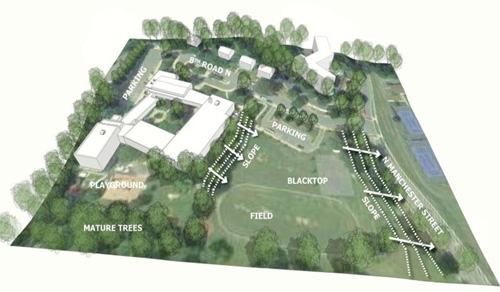
Ashlawn Elementary School addition site planCounty staff members are recommending adding amendments to the Arlington County Zoning Ordinance that would affect parking at public pools and at elementary and middle schools.

At its meeting on Saturday (January 26), the County Board is being asked to provide authorization for staff to advertise public hearings regarding the proposed amendments. The changes include revising parking standards for elementary and middle schools, permitting off-site vehicle parking at community swimming pools and allowing the County Board to modify parking standards.

The issue first arose during the public review process for the addition to Ashlawn Elementary School and the new school to be built on the Williamsburg campus. Arlington Public Schools felt that using the existing Zoning Ordinance for parking requirements would result in an excessive amount of parking. For instance, the addition to Ashlawn would require 228 parking spaces under the ordinance, when APS says it only needs about 100.

“That is way more than we need and it means we would lose open space and ball fields,” said John Chadwick, Director of Design and Construction for APS. “If we do that and we lose open space, ball fields and green space, that sort of counters what everyone is trying to do in Arlington.”

Another concern is that the ordinance requires all of the parking spaces to be on site. One of the proposed amendments would allow for off-site parking on the street or in other lots, like the lots of private swimming pools, which are typically open during the summer but closed during most of the school year. County staff offered the example of Ashlawn’s ongoing shared parking agreement with the Dominion Hills Pool.

Residents who live close to the affected schools haven’t all been supportive of the measure considering it would force more cars into neighborhood streets.

“We are having some push back from neighbors, but very few of our schools provide the number of spaces currently required under this ordinance,” Chadwick said.

The ordinance is not retroactive, so schools already in existence would not have to suddenly rework their parking situation; only new schools, such as at Williamsburg, or school expansions, such as Ashlawn, need to comply.

The changes would also alter the definition of “design capacity.” The new parking proposal suggests allotting one teacher parking spot for every 7.5 students, and one visitor spot for every 40 students.

“We’re very much in favor of the plan and the change and we’ve worked with them [the county] all the way. We really need to get this change approved so we can move forward with the Ashlawn campus and Williamsburg site,” Chadwick said. “This is all good from our point of view. I know it’s a bit complicated, but it actually makes sense.”

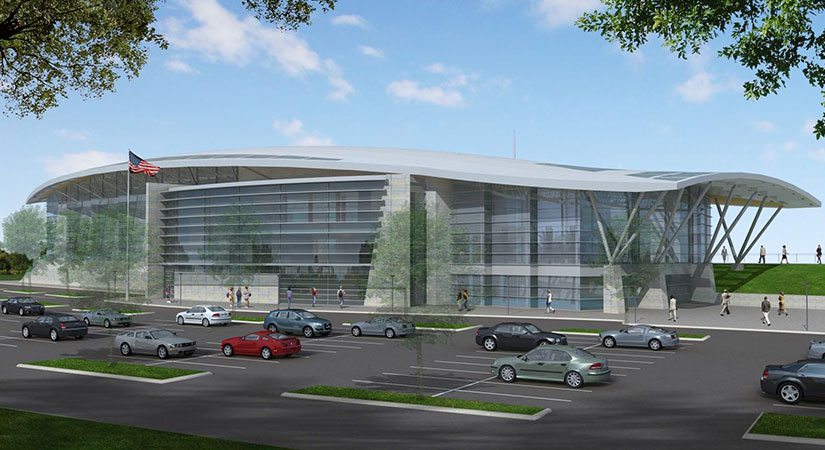
Renderings of the future Long Bridge Park Aquatics, Health & Fitness FacilitySimilar parking issues have been identified with the county’s planned aquatics facility at Long Bridge Park. That prompted County Manager Barbara Donnellan to ask staff to examine not only regulations covering school parking, but county recreational facilities as well. As with the schools, parking demand at the aquatics center site was deemed lower than the existing requirements in the Zoning Ordinance.

While some of the amendments deal specifically with parking either at schools or recreational facilities, there are also general provisions covering both categories. County staff recommends that one of the general principles should be to base parking requirements on average daily use and not peak facility uses. Additionally, it recommends sites be examined individually to determine parking needs instead of forcing all facilities to conform to the same regulations. Such a recommendation would be fulfilled by the proposed amendment allowing the County Board to grant special parking exceptions, which it currently cannot do.

The public hearing with the Planning Commission is scheduled for February 11 and the one with the County Board is scheduled for February 23.


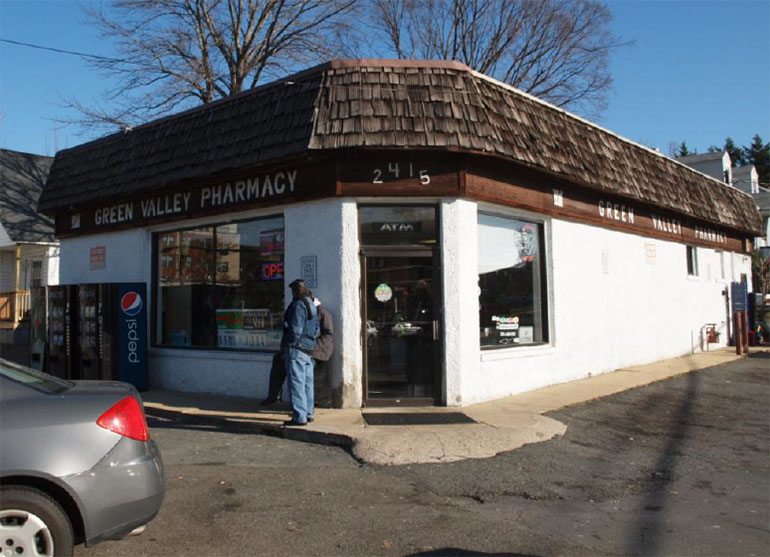
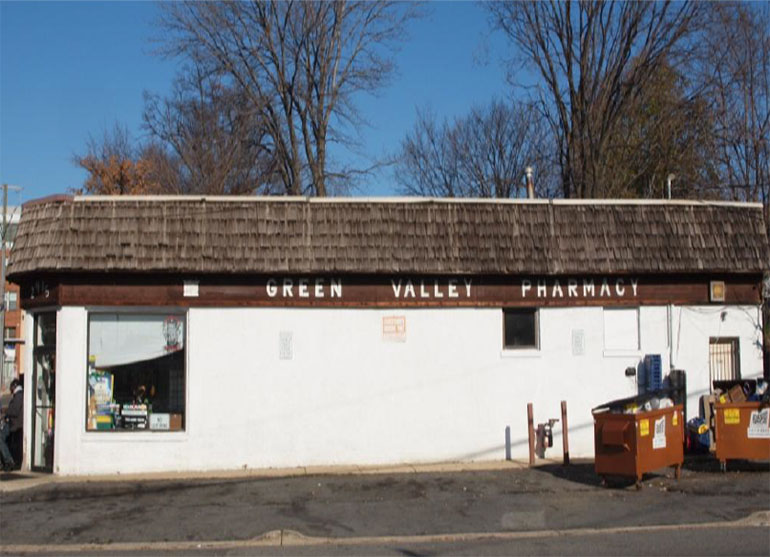
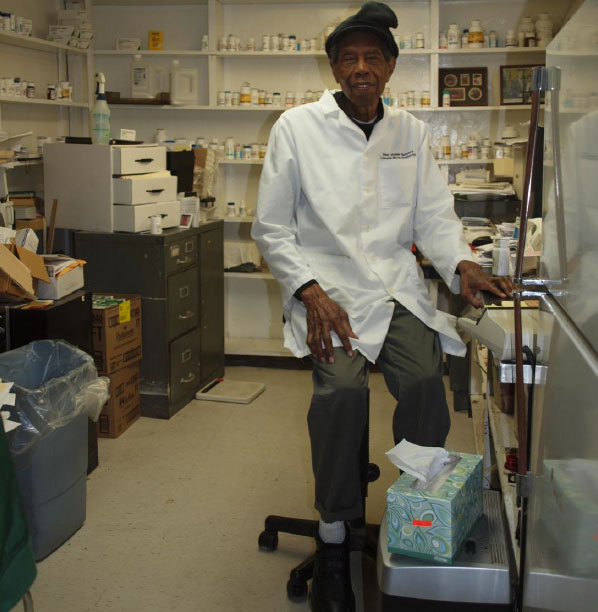
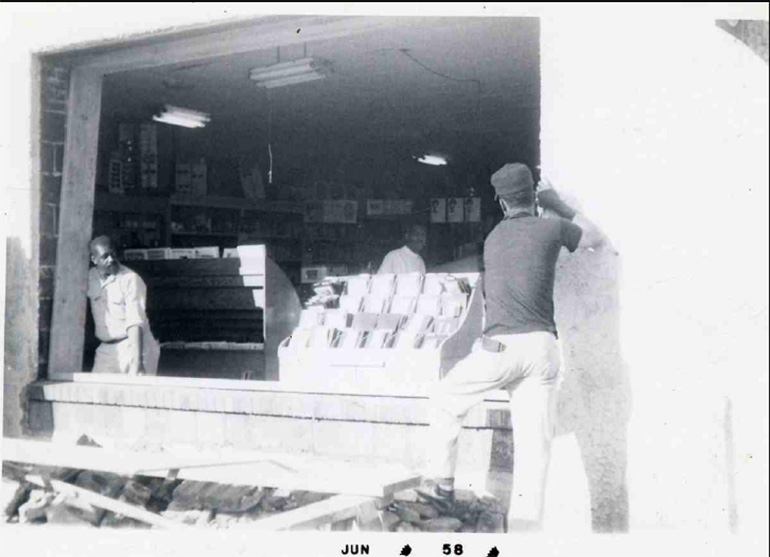
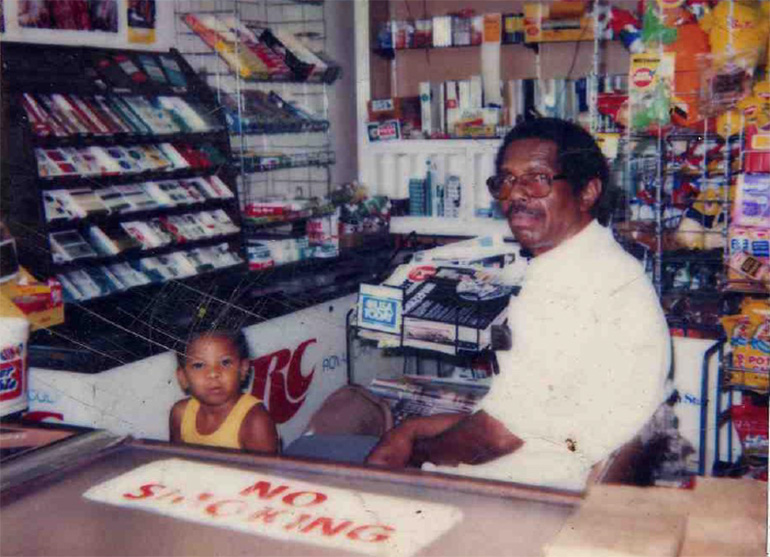
(Updated at 2:30 p.m.) The Green Valley Pharmacy (2415 Shirlington Road) property in Nauck is expected to earn a local designation as an Arlington Historic District. The measure was requested by long-time property owner Dr. Leonard Muse, and needs approval from the County Board at its meeting on Saturday (January 26).

Dr. Muse submitted a formal letter in 2009, in addition to a petition of support with 143 signatures, requesting the status. Since then, the county’s Historic Preservation Program staff has been working with Dr. Muse to conduct research on the building and on Dr. Muse’s contributions to the community.

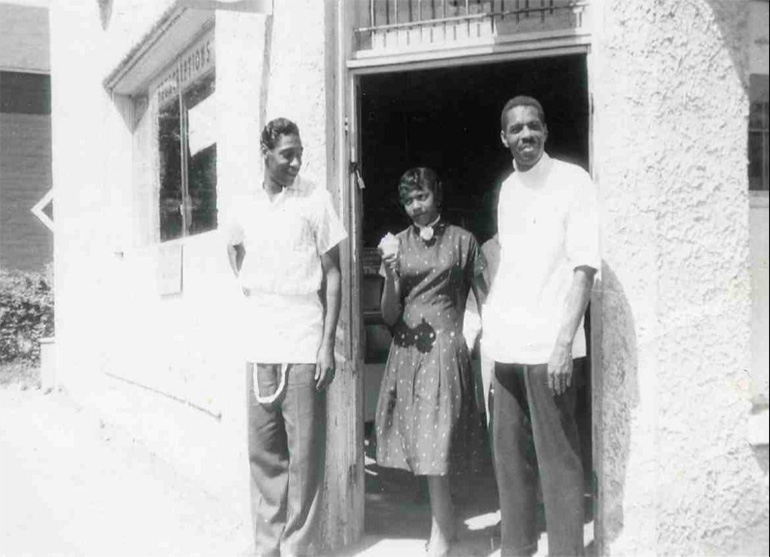
The structure originally was built as a grocery store in 1942, and Green Valley Pharmacy was established in 1952. The county staff report states that the site’s significance is not due to architectural history, but rather its cultural history. An excerpt from the report reads:

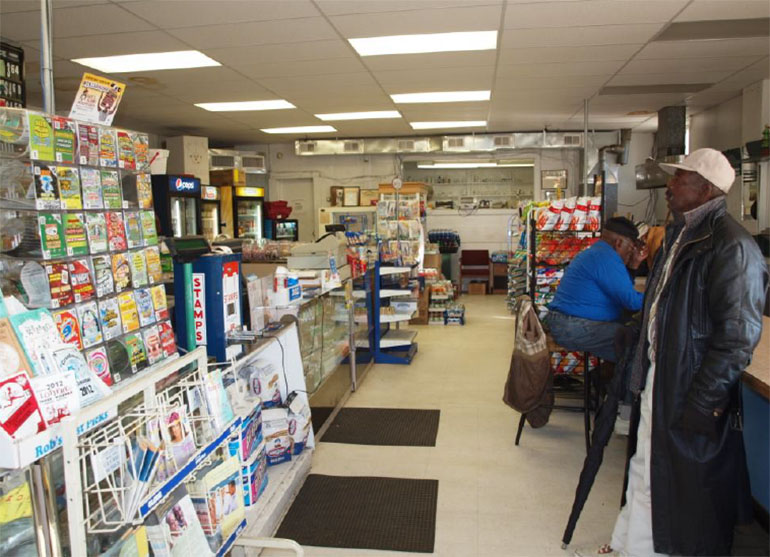
Although the building itself is of modest construction and has undergone some minor aesthetic alterations over time, it is Arlington’s only surviving example of an African American owned and operated pharmacy that has remained in continuous operation for 60 years. The pharmacy is the second oldest business in Nauck (the oldest by only a few months is the Friendly Cab Company) and has witnessed six decades worth of cultural and social history under management by the same owner. Into the 21st century, the Green Valley Pharmacy continues to be a popular community gathering place, serves as an important anchor of the Nauck neighborhood, and is an important physical reminder of both the impacts of racial segregation and Arlington’s mid-20th century African American commercial heritage.

The staff report also noted Dr. Muse’s accomplishment of becoming a registered pharmacist in Virginia in 1954, during “the challenging era of racial segregation and inequality.”

In order to receive historic designation, a site must meet at least two of eleven criteria listed in the Arlington County Zoning Ordinance. The Historical Affairs and Landmark Review Board (HALRB) found that the property in question meets three of the criteria, and therefore is worthy of historic status.

Through the designation, the pharmacy building would be preserved. New construction may still occur on the site adjacent to or on top of the current building, but first must be reviewed by the HALRB to make sure it would be compatible with the historic district.

The staff report notes that the County Manager has agreed to use $2,000 in county funds for a historic marker on the Green Valley Pharmacy site.

Currently there are 32 buildings, sites or multi-property districts that have been designated as Arlington Historic Districts. The most recent addition was the Calloway Cemetery last year.

Photos via Arlington County


Plans for Tuckahoe Park

At its meeting on Saturday (January 26), the County Board is expected to approve the award of a contract for the reconstruction of a playground at Tuckahoe Park (2400 N. Sycamore Street).

County staff recommends awarding the $666,650 contract to Jeffrey Stack, Inc. There would also be more than $66,000 approved for change orders, for a total contract authorization of more than $733,000.

The county received only two bids for the work but both came in above what had been budgeted for the project. County staff negotiated with the lowest bidder, Jeffrey Stack, Inc., to reduce the total cost.

The East Falls Church park was last renovated in 1994, and the Arlington East Falls Church Civic Association has been working with the county since late 2010 on revitalization plans.

Improvements include an accessible entrance, new play equipment, accessible paths, site furnishings, synthetic turf safety surfacing, site drainage, bio-retention gardens and plantings.


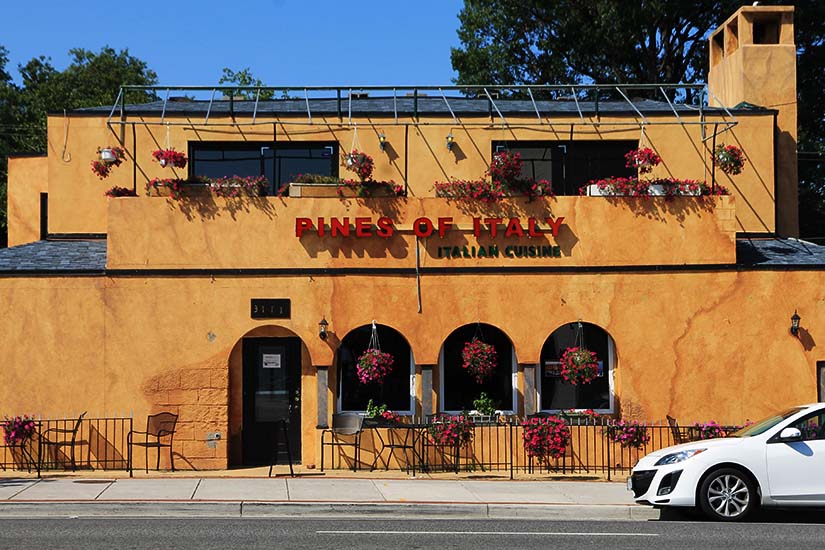
Pines of Italy at 3111 Columbia PikePines of Italy restaurant, at 3111 Columbia Pike, is heading toward a possible showdown at the upcoming Arlington County Board meeting on Saturday.

The restaurant has been seeking a live entertainment permit since last spring. The permit, which would allow live music and dancing, has proven controversial with neighbors, who cited problems with noise, violence and public drunkenness at the location in the past. The Board twice deferred consideration of the permit last year, each time asking the owners of Pines of Italy to do more outreach to neighbors.

According to county staff, that outreach has still not occurred. While staff is recommending another deferral, the restaurant is apparently asking for the Board to vote on the permit once and for all.

From the county staff report:

The County Board considered this request at their April and September 2012 meetings, at which the County Board deferred consideration of the use permit due to concerns about Police issues and insufficient outreach to the community. The applicant was directed to establish communication with the community and to work with them on addressing their concerns. The applicant requested a deferral from the December 8, 2012 County Board meeting to the January 26, 2013 meeting with the intent that additional meetings would be scheduled to continue to work to a resolution on issues related to noise and crime impacts. Sufficient outreach has not been completed by the applicant. The intent of scheduling a meeting in December was to organize a representative meeting in which nearby residents and civic association members could discuss specific mitigation measures by which the applicant could implement to address ongoing issues. This meeting did not occur. The applicant does not agree to defer and wishes to be heard by the County Board in January. Staff is recommending that the County Board defer this request for two (2) months to allow sufficient time for the applicant to hold a meeting, which has not been scheduled as of the date of this report, with the Arlington Heights Civic Association to work through ongoing issues. Staff further recommends deferral to allow sufficient time to evaluate the applicant’s outreach and to ensure that issues have been addressed to the extent possible.


Arlingtonians for Sensible Transit logoA citizens group has formed to push for more investigation into a proposed Columbia Pike streetcar system before the county moves forward with the plan.

The Arlingtonians for Sensible Transit (AST) website lists its goals as educating residents about the streetcar, offering a bus rapid transit (BRT) system as a streetcar alternative and encouraging community discussion about a BRT versus a streetcar system. The group contends the County Board didn’t hire “truly independent contractors” to do a cost-benefit analysis of the two systems, and didn’t engage in a community conversation about whether the streetcar is the best transit choice. It’s asking the Board to perform both of those tasks.

“The CP streetcar was conceived many years ago in a rosier economy. Since then, the CP streetcar’s price tag has soared,” AST spokesman Peter Rousselot said in a statement. “We now have substantial new experience and data regarding the relative economic and operating performance of both modern streetcars and modern BRT systems. In light of these changed circumstances, our community needs to examine and discuss this new information before making an irrevocable commitment to a project now estimated to cost over a quarter of a billion dollars.”

AST reports having the support of more than 125 citizens, business owners and community leaders from all points along the political spectrum.

“We are Democrats, Republicans, independents and those with no political affiliation,” Rousselot’s written statement said. “We are united by our desire to improve our community and to make sensible budget choices.”

County Board members participated in a work session last month to discuss the specifications of the streetcar design. At that time, it was noted that the county expects to initially purchase 13 streetcar vehicles to run along Columbia Pike. Each streetcar is expected to cost between $3.5 and $4 million, compared with $700,000 to $800,000 for a 40-foot, natural gas-powered Metrobus. Streetcars have an operating life expectancy between 30 and 35 years, compared to about 12 years for a bus.

The county is currently waiting to hear if it will receive up to $75 million in federal funding for the streetcar project. Some county staff members have suggested that a referendum may be necessary to fund the $250 million project.


View More Stories