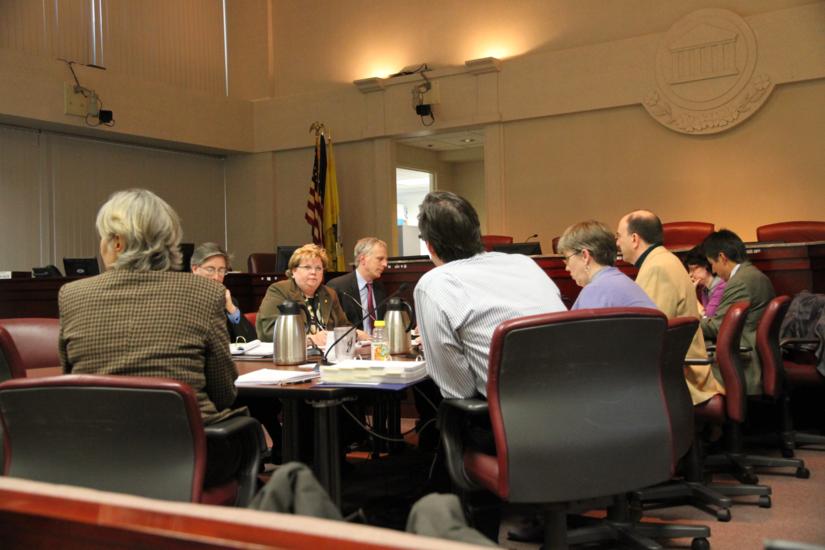
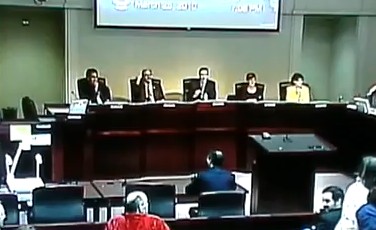
Officials from Arlington’s economic development office asked the county board to fund the county’s tourism promotion efforts now that the hotel tax surcharge that funded such efforts is being allowed to expire.

“I think we have a great program,” Arlington Economic Development Director Terry Holzheimer said at a board work session this afternoon. “The program has value.”

“This board has been put in a very difficult position,” said board member Jay Fisette, adding that he  hope to “come up with some way to share” the cost of tourism promotion with local hotels to save money from the already-stretched county budget.

Although Arlington has developed “much, much stronger ties to the local hotel industry,” Holzheimer told the board that he did not believe hotel operators could be persuaded to make a voluntary contribution to a tourism fund from their bottom line.

“Even if we got a few to do it, I don’t think the majority would do it,” he said.

With that in mind, Holzheimer asked the board to allocate $450,000 from the county’s budget to fund the Convention and Visitor service between between Jan. 1, 2012, when the current surcharge expires, and June 1, 2012, when the surcharge could be reinstated.

Holzheimer said he believes the Virginia General Assembly, which rejected the renewal of Arlington’s 0.25 percent hotel tax surcharge last month, might be persuaded to to pass it next year.

“I do believe we’ll mount an effort next year and be successful,” Holzheimer said.

Board member Barbara Favola, however, was skeptical of the General Assembly passing an Arlington-friendly tax measure.

“I don’t think that’s a realistic position,” she said.

The board will adopt a final FY 2012 budget in April.
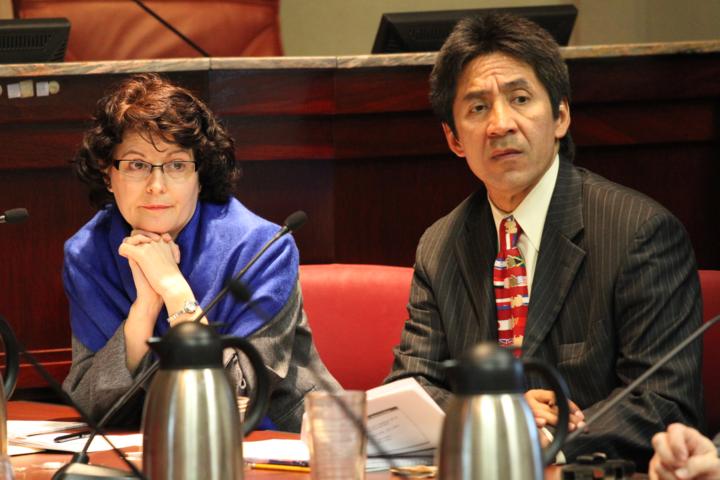

Arlington County Board members are still figuring out what to do now that much of the county’s tourism promotion budget has been effectively slashed by the Virginia General Assembly.

Last week a bill that would have renewed the county’s 0.25 percent tax surcharge on hotel rooms — a tax that had the support of the local hotel industry — failed in the House of Delegates. The defeat was attributed to Republicans retaliating against Arlington’s HOT lanes lawsuit.

The tax surcharge brings in nearly $1 million each year, which is used to promote Arlington’s $1 billion tourism industry. The surcharge will expire at the end of the year.

County board member and possible state Senate candidate Barbara Favola says the board hasn’t decided yet whether it will replace the lost revenue. If it does, the money will have to come from the county’s general budget.

“It doesn’t make much sense to me,” Favola said. “This tax is paid by out-of-state people… If Arlington is going to continue this level of marketing, we’re going to have to raise the tax rate on Virginia residents.”

“It really was extraordinarily irrational,” Favola added, noting that Arlington tourism generates $58 million in annual tax revenue for the state. “I would think that having a dedicated tax… is financially in the state’s best interest.”

The lost tourism revenue will now have to “compete with all other county budget priorities” when Arlington’s FY 2012 budget comes up for adoption in April.


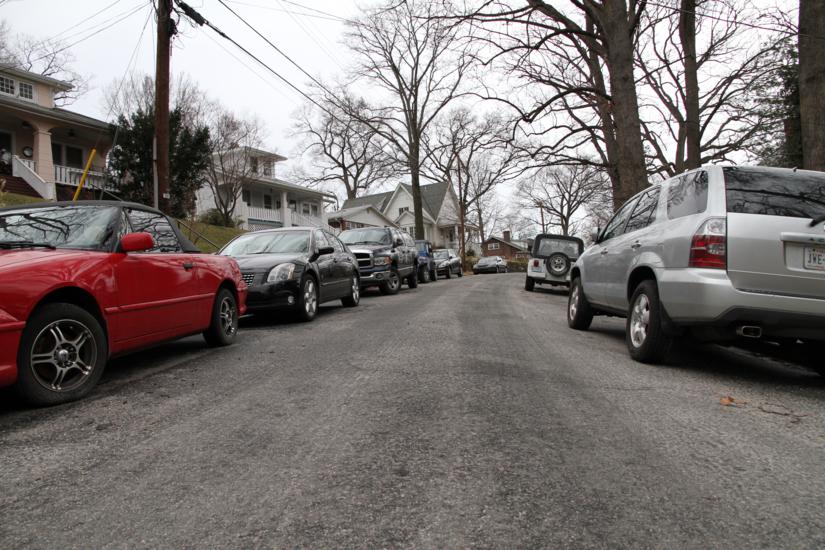
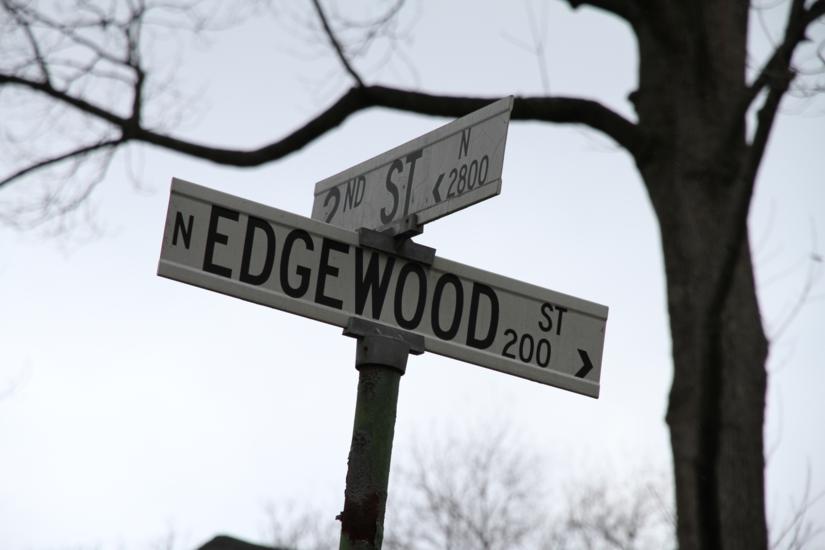
The Lyon Park Citizens Association is asking the county board to defer plans to restrict parking on part of Edgewood Street “pending a review of current County parking policy.”

County staff notified residents that they intended to restrict parking to one side Edgewood Street between 1st Road and 2nd Road after finding that some fire trucks are too wide to fit down the narrow street with cars parked on both sides. As we reported after the Feb. 12 board meeting, members of the board seemed sympathetic to the association’s request that the restrictions to be put on hold until the county and neighbors could come to a mutually agreeable solution.

In a letter to County Board Chairman Chris Zimmerman, LPCA President Natalie Roy makes it clear that the association views the parking question as an issue of county-wide importance. Roy says the group is worried about how the county plans to implement restrictions on other narrow streets.

“There are numerous streets similar to Edgewood in Arlington that are too narrow for a ladder truck – why single out Edgewood Street at this time?” she asks. “The parking policy should be reviewed immediately to arrive at a more objective, cohesive, defendable, and democratic approach to governing parking within the County.”

While acknowledging that Edgewood Street is indeed too narrow for a ladder truck to navigate, Roy suggested that the trucks may be less costly to change than the streets.

“To be clear, the LPCA is concerned about safety first,” Roy writes. “As opposed to re-engineering streets throughout the entire County, it might prove more cost-effective and less disruptive to explore acquisition of different emergency vehicle.”

See the full letter, after the jump.

(more…)


Arlington will have to find another way to fund its tourism promotion efforts.

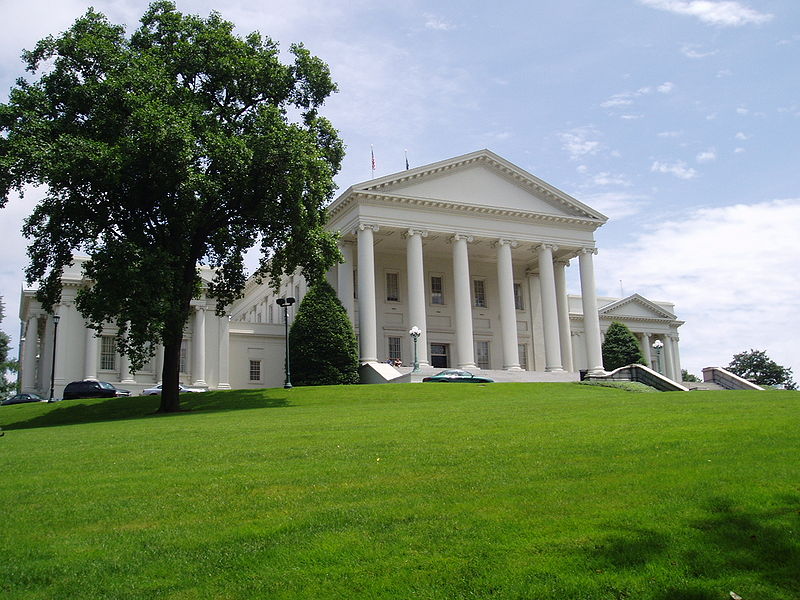
A bill that would have renewed Arlington’s 0.25 percent hotel tax surcharge failed in the Virginia House of Delegates yesterday. The bill, which was approved by the state Senate, did not get the necessary two-thirds vote to pass.

An earlier House version of the bill failed to get out of committee after it was blocked by Del. Tim Hugo. The Fairfax County Republican cited Arlington’s lawsuit against high occupancy toll lanes on I-395 as his reason for blocking the bill.

We’re awaiting word from the county on how they plan to make up for the loss of nearly $1 million in revenue. Arlington funds its Convention and Visitors Service largely through the revenue generated by the surcharge, which will expire at the end of the year.

Update at 5:15 p.m. — “I’m disappointed that it failed to pass,” said Arlington’s Del. Bob Brink (D), on the phone from Richmond. “[The surcharge] is beneficial to Arlington’s business community as they try to compete against the District and Maryland for tourism and tourism dollars.”


A draft copy of Arlington’s Community Energy Plan sets the ambitious goal of reducing annual greenhouse gas emissions from 13.4 metric tons per county resident today to 3 metric tons per resident by 2050. Getting there, however, will almost entirely rely on factors outside of the county’s regulatory control.

Residents and businesses will not be “required” by the county to do much of anything under the plan, which is now being finalized by the county’s Community Energy and Sustainability Task Force. Most of the savings are expected to come in the form of voluntary gains in building efficiency and from new federal and state mandates.

The plan calls for homes and commercial buildings undergoing “major renovation” past 2015 to be 30 and 50 percent more efficient, respectively, than current structures. By 2050, the efficiency standards will increase to 50 percent for homes and 70 percent for commercial buildings, compared to current averages.

While such requirements could eventually be built into Virginia’s building code, state law prevents Arlington from enacting requirements unilaterally.

“The recommendations we have here are essentially in recognition that we are in a Dillon Rule state,” said Richard Dooley, the county’s project manager for the Community Energy Plan. Barring action from the state, Dooley says the county will encourage adoption of its recommendations by “mak[ing] sure these things make good economic sense.”

The county will promote the energy cost savings of efficiency gains, Dooley said. Arlington will create a database of federal, state, foundation and local incentives for energy efficiency projects, making it easier for homeowners and business owners to find incentives that apply to them.

Another task force recommendation is to encourage Arlington homeowners to install renewable heating systems, including solar and geothermal water heaters.

“At least 50 percent of domestic hot water needs and 20 percent of space and pool heating needs should be provided by these renewable sources,” the draft report states. So far, the actual means for achieving the goal are not specified.

Among the other task force recommendations:

  • The creation of a net-zero energy “scale project” consisting of “a small mixed-use neighborhood at least 100 homes built to energy standards outlined by the Passive House Institute.”
  • A reduction of vehicle miles traveled by “developing walkable mixed-use neighborhoods” and encouraging “cylcing, walking, public transit and vehicle pooling.”
  • The creation of steam plants in high-density neighborhoods. The plants would provide a central source “heating, cooling, and hot water services” in areas like Crystal City/Pentagon City, Rosslyn/Courthouse, Ballston/Virginia Square and parts of Columbia Pike.
  • Increased use of solar panels on public and private buildings.
  • Increased use of biofuels.
  • “Supporting… federal efforts” to increase vehicle fuel efficiency standards.
  • Encouraging building owners to display “Energy Performance Labels” in building lobbies.
  • Providing public education and training about energy efficiency.

(more…)


(Updated at 4:10 p.m.) Arlington County wants to put residents on a car-free diet, but a spat over on-street parking in Lyon Park shows that residents with cars still have plenty of pull with the county board.

The county’s streets bureau, responding to a complaint from a trash collector, determined that a curvy, two-block stretch of North Edgewood Street is too narrow. With cars parked on either side, firefighters brought in to test the width did not have enough room to open the bins on either side of their fire engine.

Acting upon the results of the test, the streets bureau sent notice to residents that they were planning on restricting parking to one side of the street. But residents fought back and, this weekend, seemed to get some cover from the county board.

Lyon Park Civic Association President Natalie Roy spoke before the board and asked why the county has not found fault with the street’s width until now. She said that elderly residents whose houses lack driveways rely on street parking. Residents tried to create an alternative plan for dealing with the situation, she added, but that county staff made “Draconian” changes to it.

Most board members were sympathetic to the parking concerns.

“The fire truck can be a once in several year occurrence,” said County Board Vice Chair Mary Hynes. “I don’t want a solution for the once every five year event. I want solutions that make livability on this street reasonable.”

“If safety is such a priority, why do we wait until a complaint?” board member Jay Fisette asked, pointing out that there are plenty of other county streets that could potentially be considered too narrow.

(more…)


When county officials talk about the need for affordable housing, they often cite the example of such housing allowing school teachers to live in the communities they teach in.

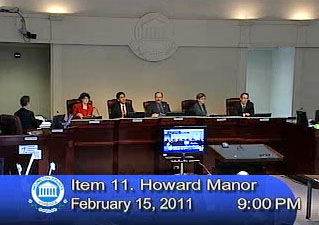
Why, then, did three self-identified teachers have to stand up before the county board last night to say that the affordable housing project the board was considering would result in them being forced from their already-affordable apartments? And why did the board unanimously approve a $6.38 million loan for the project anyway?

The answer is complex, but the practical implication is that because as single teachers they make just above the income limit for affordable housing, the board’s vote last night will most likely result in them being forced to move — perhaps even out of the county.

The loan in question will be made to the non-profit Community Preservation for Development Corporation, which specializes in affordable housing projects in the Washington region. CPDC will use the money to buy the 76-unit Howard Manner garden apartments, located at 2506 North 20th Road, just north of Clarendon. It’s one of the only market rate affordable housing complexes in the area.

What prompted more than a half dozen current residents to speak out last night was CPDC’s plan to renovate the 63-year-old apartments, convert most of the efficiencies into two-bedroom units, and impose income restrictions on residents.

“Howard Manor already is affordable housing,” one woman said. “The only thing you would achieve… is putting a salary cap on those who can live there.”

Another woman said that as a single mother working two jobs, she would be making too much to stay in her apartment, for which she currently pays $870 per month.

“I really appreciate the efforts to preserve affordable housing, but this is already affordable housing,” said one self-identified teacher, who added that residents had only just heard about the renovation plan. “We felt blindsided and I felt betrayed.”

Despite residents’ pleas, the board said, essentially, that converting the current market-rate affordable housing units to dedicated affordable housing is the lesser of two evils. Should CPDC’s plan be denied, County Board Chairman Chris Zimmerman said, nothing would stop a developer from buying the property and building more expensive apartments. Development rights on the property would allow such a move without the board’s approval.

(more…)


Despite County Manager Barbara Donnellan’s recommendation that the property tax rate be held steady, the county board voted last night to give itself the flexibility to raise the rate by a penny, if need be.

The board will now be able to set the FY 2012 property tax rate at or below 96.8 cents per $100 in assessed value. The current rate — the rate that Donnellan recommended in her proposed budget — is 95.8 cents per $100.

Last year, when the board set the property tax rate at 1.6 cents above Donnellan’s recommended figure, the advertised rate was 96.5 cents.

The county will hold two public hearings about the FY 2012 budget next month. The first, on the budget itself, will be held on March 22. The second, which will be about the tax rate and fees, will be held on March 24. Both meetings will be held at 7:00 p.m. in the county board room.

“Now that the County Manager has presented her proposal, in the next six weeks we will hear more from the public, and weigh the needs of the community,” County Board Chairman Chris Zimmerman said in a statement. “Our goal is to deliver a sustainable, balanced budget in April that spends tax dollars wisely, delivers core services efficiently and makes intelligent investments in the future.”

The county’s press release also laid out proposed changes to various fees.

According to the county: “The Board also voted to advertise proposed fee changes including: an increase in the water/sewer rate; a decrease in the residential solid waste fee; an increase in parking meter rates; and fee increases in several parks and recreation areas such as preschool, summer camps, senior adult registration, facility rentals, farmers’ markets, and community gardens.”

The final county budget and tax rate will be adopted in April.


The anti-Arlington sentiment in Richmond and on the pages of local publications continues to grow.

This time, Virginia Attorney General Ken Cuccinelli is taking a few pointed shots at the county for its lawsuit against High Occupancy Toll lanes on I-395.

Forget the fact that the county has agreed to withdraw the lawsuit and the state has, for now, decided not to move forward with the I-395 portion of the HOT lanes project. In a statement, Cuccinelli piled on and called the lawsuit “dirty,” “legal thuggery” and “wildly unfounded.”

Cuccinelli also lobbed a sports metaphor at the board.

“When that pitcher throws multiple bean balls in a game, it is downright dirty, and the crowd wants the umpire to take action,” Cuccinelli said. “The Arlington County board has thrown several bean balls aimed at [government] officials, but they are hitting northern Virginia commuters, too.”

To be fair, Arlington officials haven’t always had the nicest things to say about Cuccinelli, either.


The county board has approved an overhaul to its Master Transportation Plan that will provide new guidance for the design, construction and usage of streets in Arlington County.

The plan focuses on making sure that Arlington’s streets are safe and accommodating to a number of modes of transportation, including walking, biking, transit and driving.

“Arlington’s goal is to create ‘streets for people,'” County Board Chairman Chris Zimmerman said in a statement. “Today’s action is the culmination of years of work by citizens and staff to craft County policies that will achieve our vision for ‘complete streets,’ streets that will support sustainable development and encourage healthier lifestyles.”

Under the new plan, streets will be classified into ten subgroups of arterial and local streets based on adjacent land use. The plan calls for all types of arterial streets to have a bike lane, a designated shared bike and vehicle lane or an adjacent trail. It also calls for “urban center local” streets to include a shared lane.

To improve safety, the speed limit on “downtown” streets will be reduced to 25 miles per hour. Speed limits would also be reduced in work zones. Meanwhile, pedestrian walkways will be improved through enhanced signage and high-visibility markings.

Street repaving will be done more frequently (on a 15-year cycle) and the quality of street repairs will be improved. Major streets and streets in poor condition will receive repaving priority, while streets lacking maintenance-saving improvements like gutters and curbs will be repaired instead of repaved.

The board approved the plan by a vote of 5-0. See more details here and here.

Flickr pool photo by Chris Rief


(Updated at 4:25 p.m.) Arlington County Manager Barbara Donnellan’s proposed FY 2012 budget, revealed today during a county board work session, includes no real estate tax rate increase but, at the same time, no restoration of cuts from previous budgets.

Under the proposed budget, the real estate tax would remain steady at 95.8 cents per $100. The 95.8 cent rate was approved by the board last year after Donnellan, then the acting county manager, proposed a rate of 94.2 cents.

Arlington is benefiting from a 6.3 percent hike in assessed property values, which is expected to bring in an additional $30 million in tax revenue for the county. In September, when the county was expecting a smaller increase in assessments, then-County Manager Michael Brown warned that tax hikes and spending cuts might be necessary. Neither prediction is coming to fruition under the Donnellan’s proposed budget.

The budget does include a 25 cent per hour hike in parking rates. There will be no increase, however, in the personal property tax, the business tangible property tax, business and professional license fees or the commercial transportation tax.

Total county expenditures under the proposed budget will reach $985.2 million, a 3.1 percent increase over last year. The primary source of the increase is the budget transfer to the school system, which will rise 4.9 percent to $378.2 million.

If the proposed budget is adopted by the board as-is, the total tax and fee burden on Arlington households would increase $89, or 1.4 percent, to $6,487 per year.

Donnellan formulated her budget after holding a series of public budget meetings last year.

The proposed budget will be made available on the county’s web site on Saturday. The board will adopt the final FY 2012 budget in April.

View More Stories