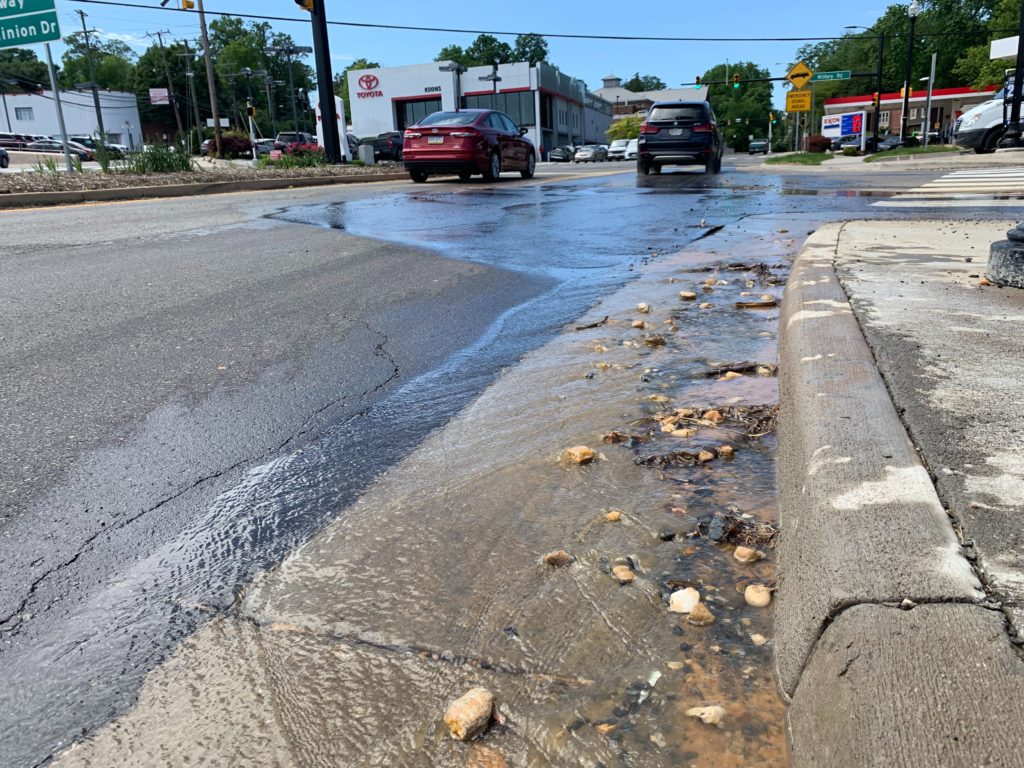
Water from a burst pipe along Lee Highway in the Cherrydale neighborhood in May 2019
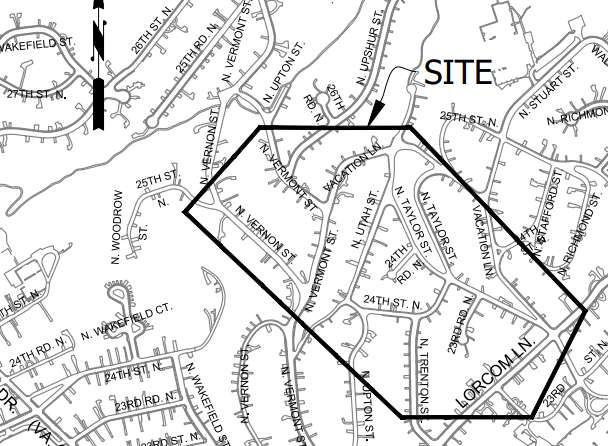
Gravity One Phase II water main installation (image via Arlington County)
(Updated at 9:25 p.m.) Arlington, Virginia is hoping to avoid the infrastructure pitfalls in Arlington, Texas — and other parts of the Lone Star State.
At Saturday’s County Board meeting, the Board approved a 24 inch water main project stretching from Lorcom Lane to 25th Street N. in the Donaldson Run neighborhood. The Board authorized $3.1 million for the project, with $2.6 million as the project cost and just over a half-million dollars in contingency funding.
According to the project summary:
This contract is for the construction of 24-inch water transmission main in the right-of-way of North Taylor Street, Vacation Lane, North Vermont and North Vernon streets between Lorcom Lane and 25th Street North. This contract also includes installation of a new 8- inch water main to replace existing 6-inch water main along North Vernon Street between 25th Street North and North Vermont Street. The proposed water main will increase required system redundancy and transmission capacity.
The water main replacement is called Gravity One Phase II, a follow up on a water infrastructure project started in 2017. The new water main will serve as a backup to the existing 30-inch main from 1957 that feeds into nearby storage tanks and a pump station, allowing the county to move forward with a full assessment of the state of that pipe and perform maintenance.
“The project is expected to begin in April 2021,” the project website says. “The anticipated completion time is spring 2023.
“The contractor will limit noise-generating work to the hours of 9 a.m. to 4 p.m.,” the website adds. “No weekend work is anticipated. Other tasks may be addressed during the hours immediately before and after that window. There may be water impacts to some customers throughout the project. Advance notice will be given to residents prior to any planned water shut offs.”
County Board chair Matt de Ferranti said the new pipe will hopefully help prevent future water main breaks and provide better water reliability.
“We hear from so many in the community that we must take care of infrastructure,” said de Ferranti. “There was a water main break at Chain Bridge. This was a continued priority before that and we are investing again in a contract of a little over $3 million for a water line transition main that will be a backup to help protect reliability, which we’ve seen just this week is an unthought of but critical item as we look at those in Texas without water.”
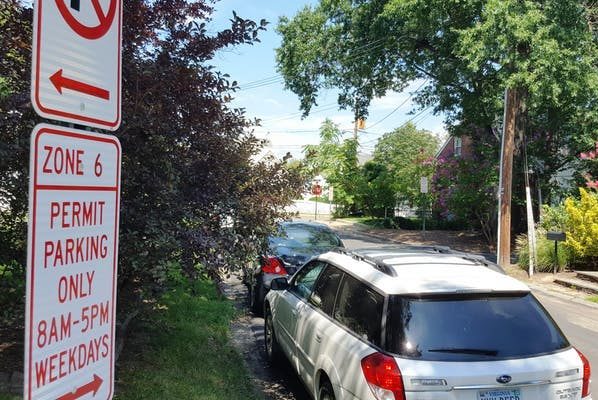
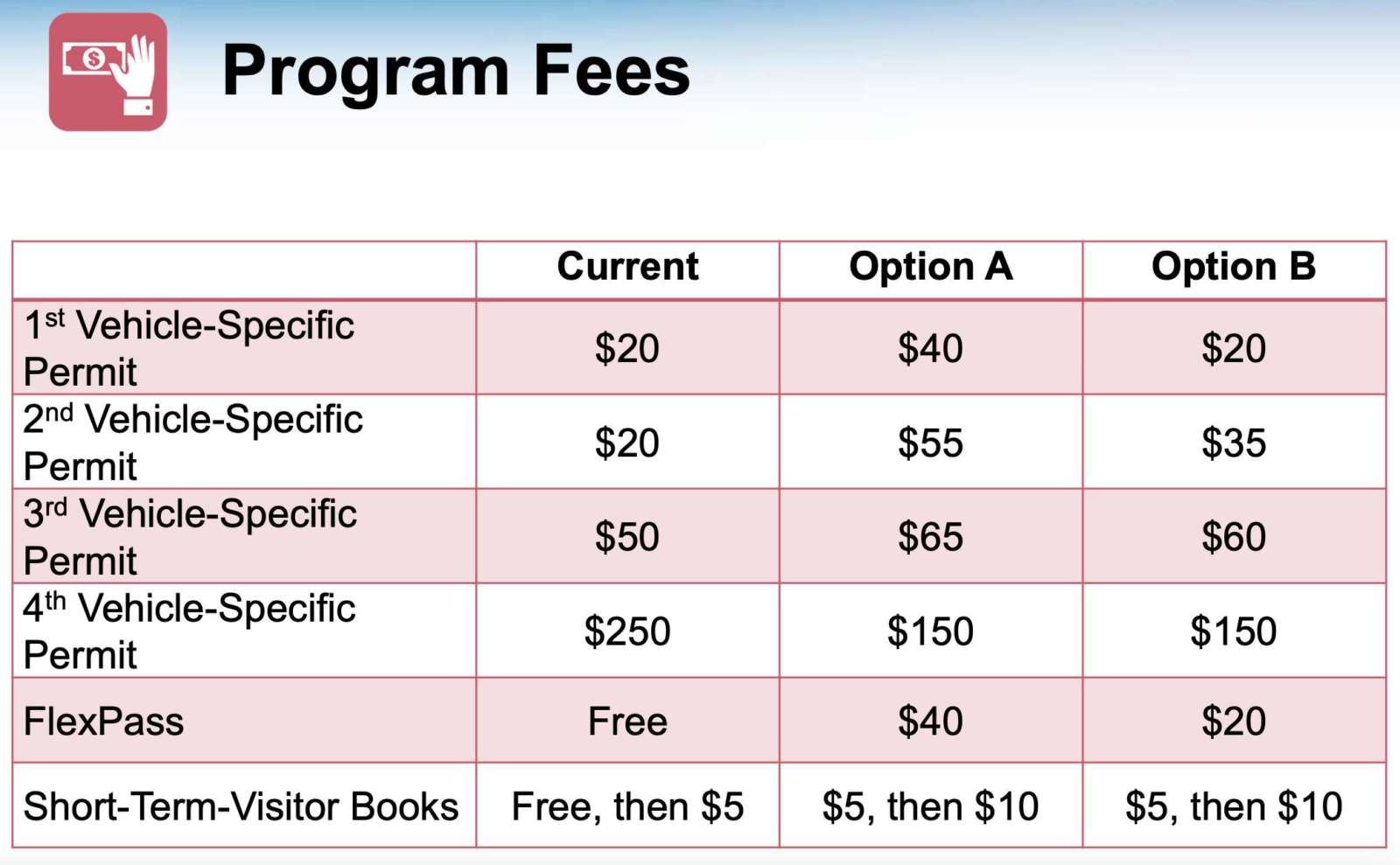
The new program expands RPP program eligibility to multi-family buildings — excluding those approved via site plan — and grants permits to households based on how much off-street parking they have. Residents will be charged for some previously free permits, which according to the county, will end support for the program from general tax funding.
The Board ended up nixing a county staff recommendation to allow those from outside a neighborhood to pay for limited-time parking in zoned areas.
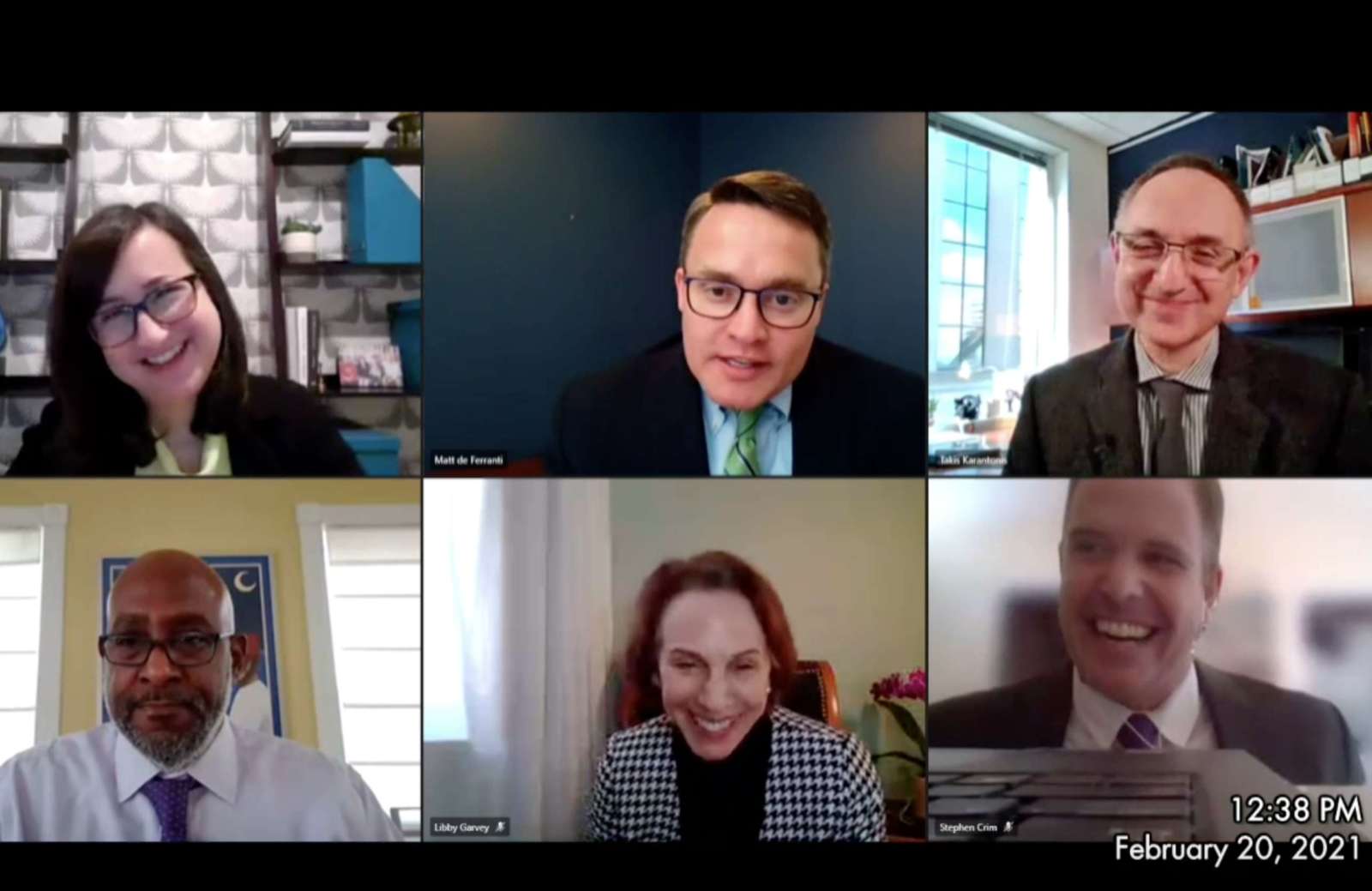
“Removing the two-hour [paid parking] is the big change that we have done,” Board Chair Matt de Ferranti said. “I was reading 196 pages of letters. We listened, and I think that is a big important step. Folks should hear that that is the biggest change.”
A county report and public letters indicate many residents pushed back on this specific proposal, which also divided members of the Planning Commission. County Board members cited enforcement challenges, given that vehicles without permits may actually be parked legally.
“Enforcement is too difficult right now,” Board member Libby Garvey said. Visitors will still be able to park in zoned parking if given a pass from an eligible resident.
While two-hour visitor parking was removed, Board members drew attention to the expansion of eligibility to multi-family buildings.
“One of the major reasons to reevaluate and reenact this program in Arlington [is] because it discriminates on the basis of housing types,” Board member Katie Cristol said. “I do feel confident that these amendments are going to make this program [fairer] and more consistent with our values in Arlington.”
She said the changes will leave the county better off than when the County Board repealed a RPP zone to put an end to a years-long dispute between Forest Glen and Arlington Mill residents, which pitted apartment dwellers over single-family home owners in an area with limited street parking.
The vote comes after a three year review of the program, during which new RPP applications were suspended. The program was originally established in 1972 to regulate parking in residential neighborhoods near Metro stations and commercial centers. Although the U.S. Supreme Court upheld the program in 1977, the program has been criticized recently for excluding people who live in apartments and condos.
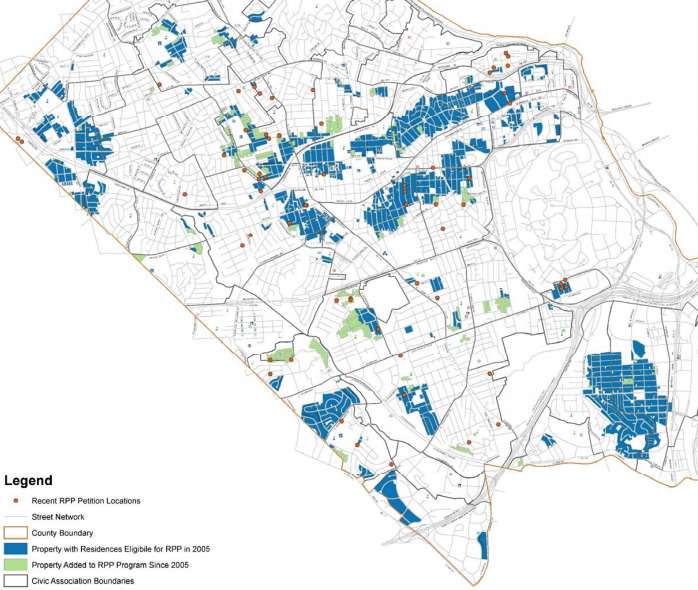
About 10% of Arlington households are in current RPP zones, according to the county.
Public forums set for last spring were canceled due to the pandemic. Rather than reschedule them virtually, county officials concluded the review, citing equity concerns. A new period of public engagement began as the county geared up to propose the changes to the County Board in January 2021.
In December, the County Board deferred a public hearing until February to allow residents more time to look at the proposal.
Under the newly adopted program, all housing types can petition. However, those who live in residential buildings approved via site plan — as well as certain other types of mixed-use developments, plus Form Based Code developments along Columbia Pike — will be ineligible to apply for permits or petition for the program.
The county will require 80% of neighbors on a block to support a RPP petition, up from 60%. The county no longer needs to find that at least one-quarter of on-street parking is occupied by people from outside the area. Instead, it would need to find that more than 85% of spots are occupied.
“It’s really hard to tell what is an out-of-area vehicle,” county transportation official Stephen Crim said. “This out-of-area test is what causes many petitions to fail.”
Households with off-street parking are eligible for two annual permits (down from four), and households without it can get four permits.
For one permit, households can stick with the annual permit or opt for a FlexPass — a dashboard placard that residents and their visitors can use. All households can get up to five short-term visitor passbooks, which provide up to 300 days of parking each year.
The county will be charging for the FlexPass and the first book of short-term visitor passes. The first vehicle-specific permit or FlexPass is $40. The second, third and fourth vehicle-specific permits will cost $55, $65, and $150 respectively.
Low-income households that qualify for state and federal assistance programs will receive a 50% discount on passes.
Board Advertises Property Tax Rates — “The Arlington County Board today voted unanimously to advertise no increase in the Calendar Year 2021 base real estate property tax rate, citing the toll the ongoing coronavirus pandemic is taking on residents. The Board also voted to advertise a proposed Stormwater tax rate of 1.7 cents per $100 of assessed real property value to fund the full cost of operations and planned capital improvements to the County’s stormwater infrastructure and flood mitigation… The estimated annual impact for the average household with an assessed home value of $724,400 is $123.” [Arlington County]
Snow Falling in Arlington — Updated at 9:10 a.m. — Snow is falling in Arlington, which is just outside of a newly-expanded expanded Winter Weather Advisory. Be careful out there! [Twitter]
Business Owners Talk About Burglaries — “Metry describes the Bluemont neighborhood where his business was burglarized as safe. He doesn’t understand why his business was targeted. ‘The whole register, the iPad, the square scan, all of this was missing,’ Metry said. Surveillance footage captured at neighboring restaurant La Union shows the burglars wearing dark clothing, hoodies, masks and gloves. Jose Zelaya has owned the Mexican restaurant La Union for 21 years. Aside from a random car break-in, he said he’s never experienced any crime like this.” [WUSA 9]
St. Patrick’s Pie at Clarendon Pizzeria — “Colony Grill, Clarendon’s new family-friendly tavern, known for its gracious hospitality and famous ‘hot oil’ bar-style pizzas, will serve a special corned beef & cabbage “Bar Pie”… [f]rom Friday, March 12 through Wednesday, March 17.” [Press Release]
Reminder: Trash Collection Delayed a Day — Due to ice and snow last week, Friday’s residential waste collection will be completed today, shifting this week’s collection schedule by one day. [ARLnow]
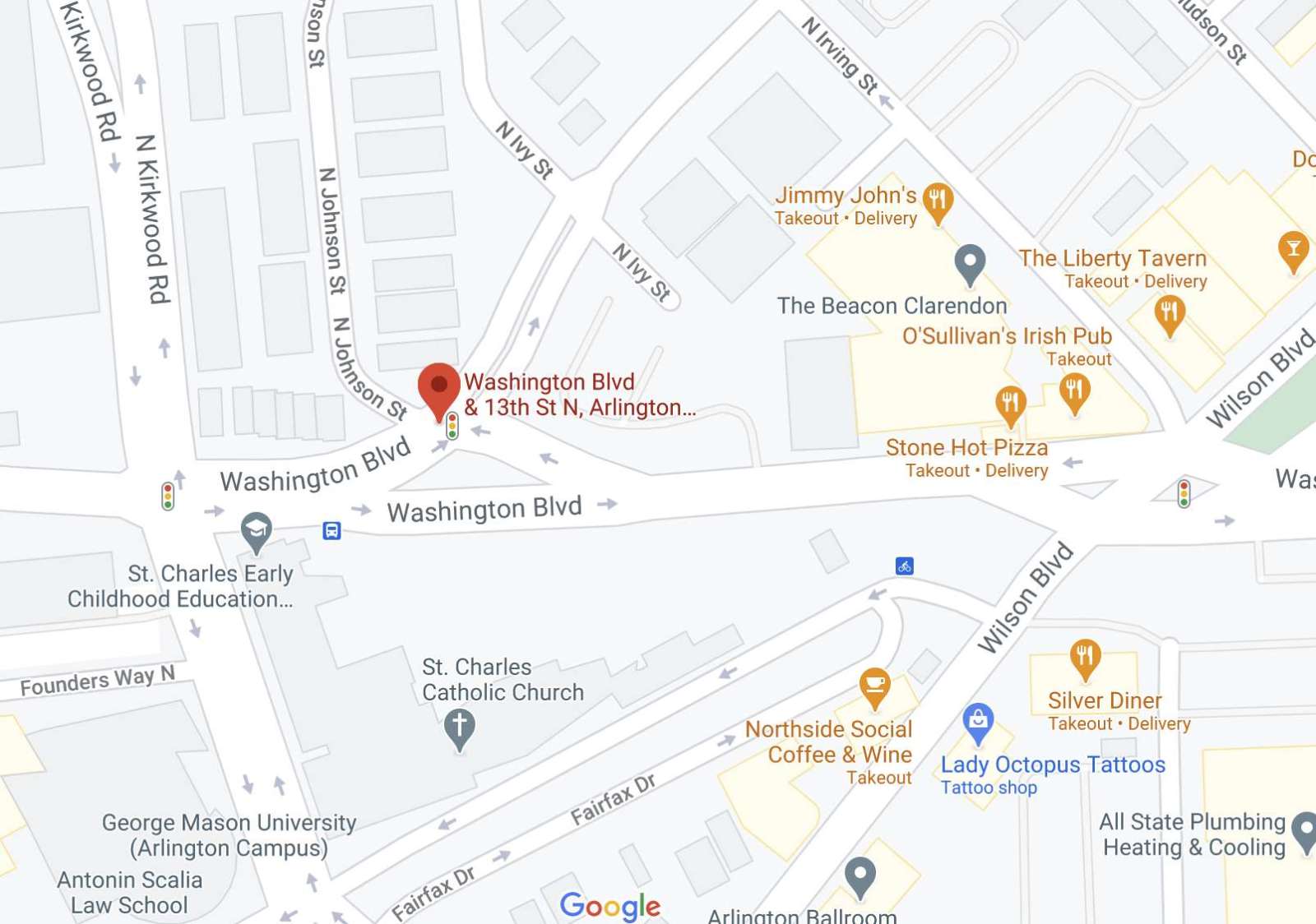
Washington Blvd and 13th Street N. (map via Google Maps)
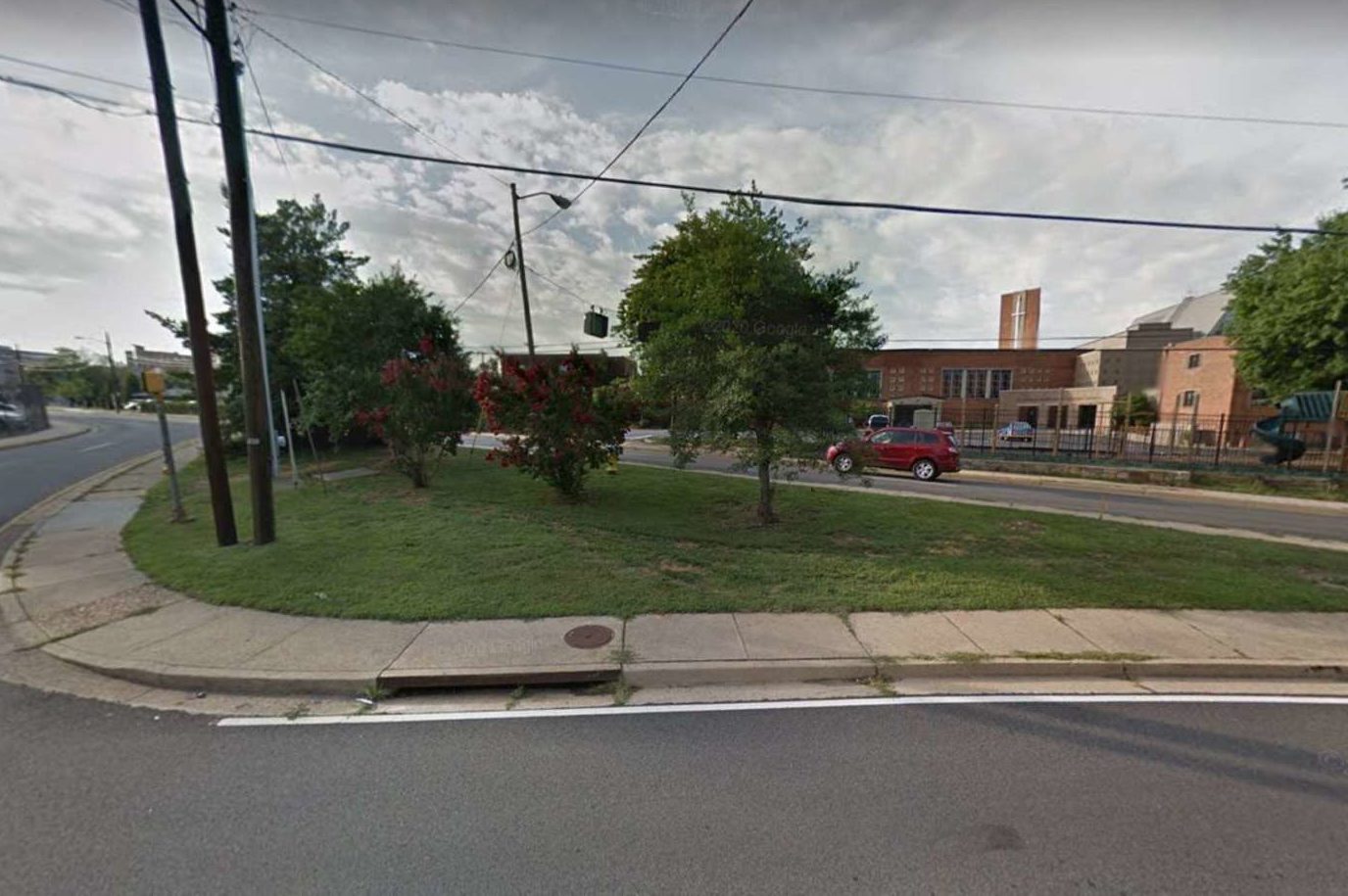
The “porkchop” at the intersection of Washington Blvd and 13th Street N. (Image via Google Maps)
Where Washington Blvd, 13 Street N. and N. Johnson Street intersect in Clarendon
Arlington County is looking to overhaul the reversible lanes and the triangle-shaped intersection at Washington Blvd and 13th Street N., near Clarendon.
Washington Blvd would be widened to create a four-lane road between Clarendon Circle and N. Kirkwood Road, while 13th Street N. would be realigned to form a “T” intersection with Washington Blvd, according to a county staff report.
“The project will improve pedestrian safety and accessibility along Washington Boulevard and 13th Street North to provide a safe, and practical pedestrian route,” staff said.
The County Board is slated to hear proposed changes to the traffic patterns and pedestrian infrastructure at this intersection — which staff call a “porkchop” — during its regular meeting on Saturday.
As a part of the project, utilities would be moved underground, and revamped sidewalks, Americans with Disabilities Act-compliant ramps, and other streetscape elements will be constructed to match improvements at Clarendon Circle.
The county’s Washington Blvd plans, made in conjunction with the Clarendon Circle work and the redevelopment of the nearby Red Top Cab properties, were delayed by more than a year.
“[The project] required coordination with Dominion Power on the utility undergrounding part of the project and staff work to improve the plans for walking pathways during construction, to make it safer for people walking around the construction area,” Arlington Dept. of Environmental Services spokesman Eric Balliet tells ARLnow. “Both of these items have been worked on for over a year, and needed to be completed before we issued the construction contract for bid in December.”
Arlington County has selected Sagres Construction — which bid just over $2.5 million, to which the county is adding $500,000 for contingency — as the contractor.
Taking the utilities underground means the project will take about 18 months, a timeline that, according to the county, concerned some stakeholders.
Still, “there is a general understanding of the technical difficulties associated with the undergrounding of utilities along Washington Boulevard” and “members of the community have expressed full support for the project,” staff said in the report.
This project is a part of the 2006 Clarendon Sector Plan. In the intervening years, Arlington County said it has acquired three lots at Washington Boulevard and N. Johnson Street needed to make the intersection a “T.”
These changes are moving forward amid a county-led review of the Clarendon Sector Plan to accommodate a handful of major redevelopment projects. One such project is to update the St. Charles Church campus, which also includes changes to the walking and biking experience along Fairfax Drive between Clarendon Circle and Kirkwood Road.
Last year started out as “a good budget year” for County Manager Mark Schwartz. But nearly a year after the pandemic hit Arlington, Schwartz’s new budget proposal is more austere.
Schwartz calls the upcoming Fiscal Year 2022 budget, which is being presented to the County Board Thursday afternoon, a “transition budget.” While modestly increasing spending, his proposal reflects big pandemic-era declines in some key revenue sources.
“This budget provides us a path forward, ensuring we have a strong, resilient County government when we emerge from this pandemic,” he said after a press briefing earlier today.
For starters, the proposed $1.36 billion budget — representing a 1.4% increase in spending — includes a $17.5 million coronavirus contingency fund. This will fund vaccine distribution and testing, eviction prevention, food assistance, and will go toward supporting local businesses.
Meanwhile, Schwartz has identified $16.4 million in cuts to help close what the county describes as a budget shortfall of $26 million, down from what was initially estimated last fall to be a $50 million shortfall. The rest will be made up through one-time funding sources, he said.
The bulk of the cuts come from eliminating 56 vacant positions, which resulted from a voluntary retirement package offered in January and a continuing hiring freeze from last year.
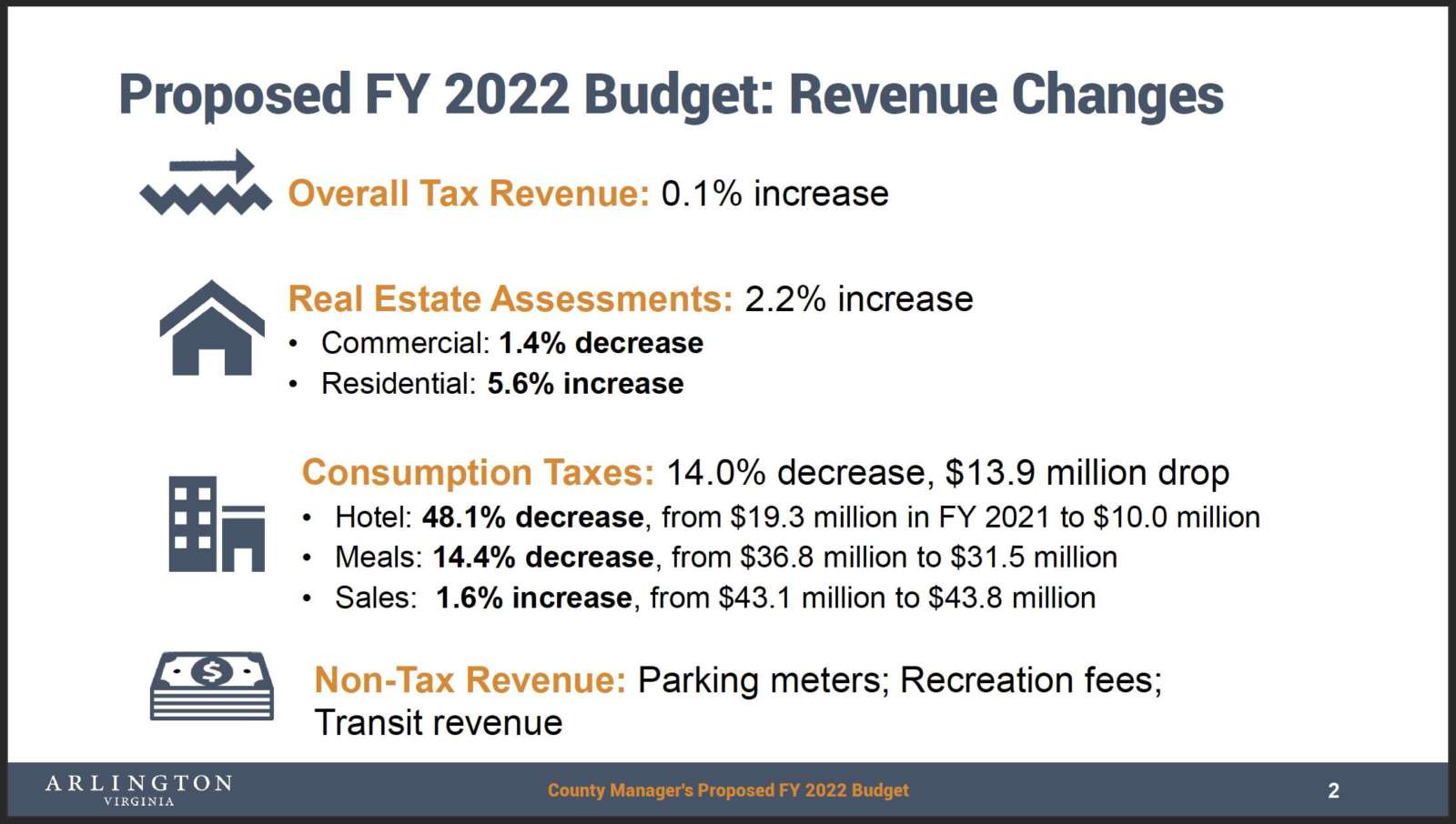
Schwartz proposes keeping the $1.013 per $100 property tax rate flat, as he did last year. Still, the average homeowner will see a tax bill that is 5-6% higher due to rising property values, Schwartz said. Commercial property assessments, by contrast, declined this year.
Homeowners will see an average increase of $29 in stormwater taxes, reflecting a rate hike of 1.3 to 1.7 cents per $100 in property value. The increase will help generate $15.1 million earmarked for stormwater improvements. Eventually, the county plans to eliminate the stormwater tax completely in favor of a fee based on how much impervious surface covers a given property, Schwartz said.
Schools will receive 47% of the tax revenue, or $529.7 million, an increase of $5.1 million over last year.
(Updated on 2/23/21) The pandemic has saved the county money through remote work and online services, which Schwartz said will help fund other programs and services. His budget includes a one-time, $500 bonus for county employees, who will be foregoing merit-based raises.
“Our employees have gone without raises — or a vacation day — for an entire year,” Schwartz said.
After the County Manager submits his proposed budget, the Arlington County Board will vote on an advertised tax rate this Saturday. The Board will be able to ultimately adopt a property tax rate equal to or less than, but not above, the advertised rate.
The Board will then review the budget proposal and conduct a series of work sessions with each county department beginning in March.
There will be two public hearings: Tuesday, April 6, and Thursday, April 8. The final vote on the FY 2022 operating budget is scheduled for Saturday, April 17.
Certain parts of the budget may be revisited, Schwartz said, should additional federal funding become available.
Other highlights from the budget proposal include:
More racial equity training, money for a Restorative Justice initiative, and more funding for probation, parole and the Public Defender’s Office.
About $1.5 million to implement several recommendations from the Police Practices Group, especially in transitioning mental health-related work from police officers to clinicians.
Allowing firefighters to work a shorter week, adding transportation safety officers to the police department, and multiple positions to support the new body-worn camera program.
Increasing the lowest base pay for county employees from $15 to $17 per hour
Adding Juneteenth as a County holiday
Delayed re-opening of Cherrydale and Glencarlyn libraries, saving $881,000
An additional $2.6 million in housing grants, plus $21 million in housing choice vouchers and $8.9 million for the Affordable Housing Investment Fund.
Schwartz’s budget proposal focuses affordable housing efforts on “eviction prevention and direct housing support,” but decreases county funding for Arlington’s affordable housing development fund, as the Washington Business Journal’s Alex Koma noted on Twitter (below).
“4.6% of the County’s operating budget is dedicated to housing and more than 15% is dedicated to safety net services and housing,” a slide from the budget presentation noted.
#ArlingtonVA officials are previewing the 2022 budget now, ahead of a full reveal Saturday.
Of note: the county contribution to its main affordable housing loan fund is getting halved, to $8 mil. Amazon, of course, is chipping in $20 mil on its own, but this is a notable change pic.twitter.com/xDrGoUbuDC
The county is calling on the community to submit their ideas for a new county logo and seal.
The logo will phase out the depiction of Arlington House, also known as the Robert E. Lee Memorial, on all county communications and materials starting this summer. Over time, the new logo will appear on signage for county amenities such as parks, community centers and buildings, the submissions webpage said.
“We are writing a brighter chapter in Arlington’s story, one that aligns with the County’s important focus on racial equity,” the website said. Submissions are due by Sunday, March 14.
According to submission guidelines, artists only can submit one idea and it must be new and original. The art should “look good” in black and white and in color, and when it is printed on something as small as a pen and as large as a billboard. Designs in any media — from digital to crayon — are accepted.
Proposed design ideas have included dogwood trees, the Potomac River, the Rosslyn skyline, and the Pentagon, as well as abstract concepts like peace and diversity.
“As you create your design, think about the images, symbols and feelings unique to Arlington and shared by people across neighborhoods,” the county website said.
A submission form is available on the county website. It asks people to submit a .jpg, .png or .pdf version of their design, to share whether they are a current or former resident or have some “other” affiliation with Arlington, and to briefly describe the art and what it depicts or represents.
The move to update the emblem began with a push from the Arlington branch of the NAACP last summer, which decried the current logo as a “racist plantation symbol” that honors a slave-owning Confederate general. County Board members expressed their support in September and approved a process for replacing it in December.
County Manager Mark Schwartz previously told the board that the earliest instance of the logo’s use by the county was in 1974.
When the March deadline passes, a panel of community members picked by Schwartz will choose three to five top contenders. A professional graphic designer will further develop the concepts through April. The community will then rank their picks in May and the County Board is expected to choose one in June.
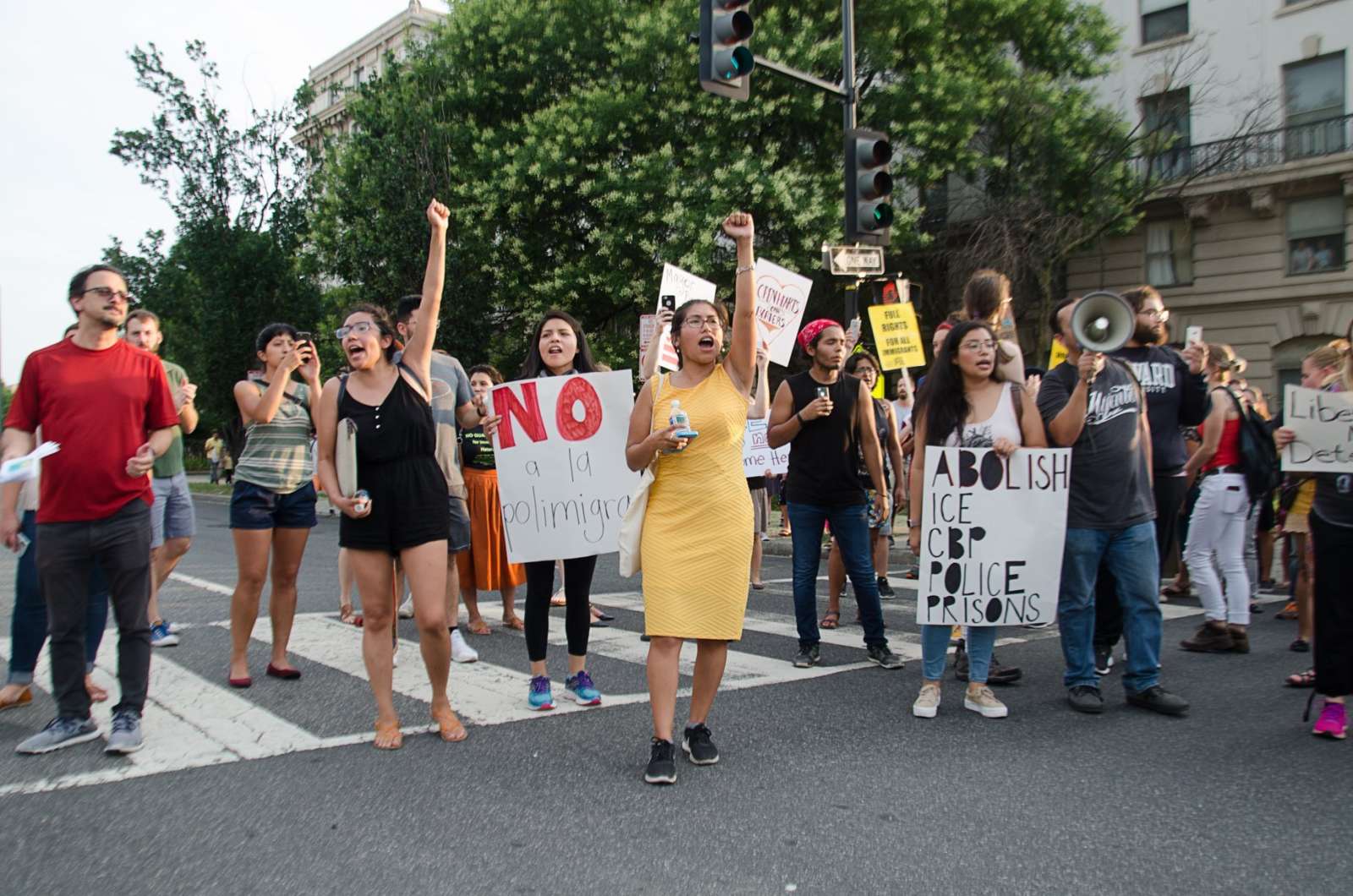
Virginia-based immigrant rights organization La ColectiVA is calling on Arlington County officials to put a stop to information-sharing between local law enforcement and U.S. Immigration and Customs Enforcement.
La ColectiVA said the effort comes after learning of multiple cases in which migrant community members have been arrested in Arlington and then transferred to ICE for deportation proceedings. Through public records requests, La ColectiVA found that the Arlington County Sheriff’s Office handed those in local law enforcement custody over to ICE more than 100 times in 22 months.
“This collaboration between violent state agencies violates the dignity of our loved ones and endangers our neighbors and families who are at risk,” the organization said in a statement.
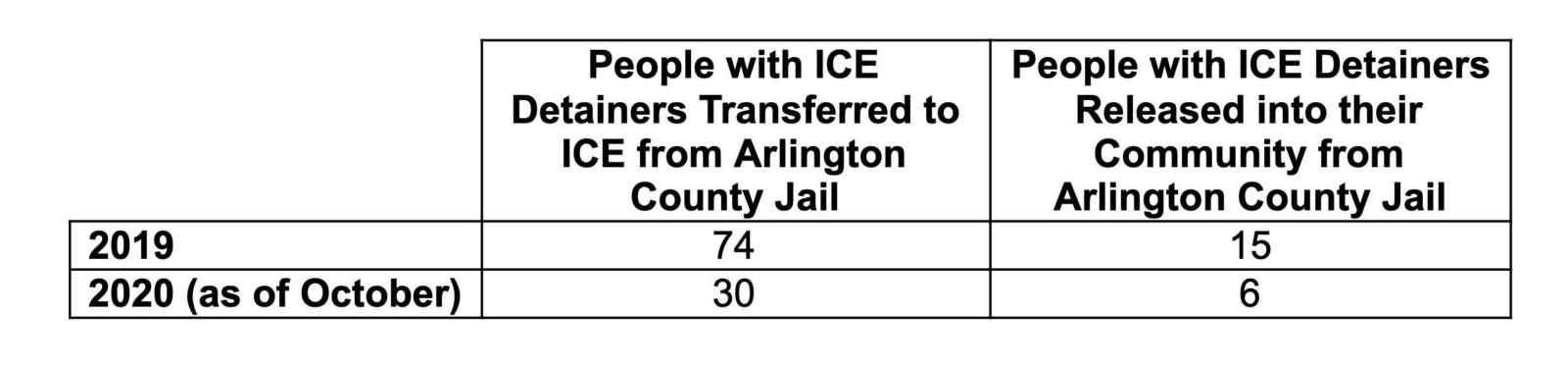
From January 2019 to October 2020, the sheriff’s office — which runs the county jail — turned 104 inmates over to ICE, upon the federal agency’s request, while releasing 21 people despite an ICE detainer. In a fact sheet providing an overview of the data, the organization highlighted local policies governing work with ICE.
The Arlington County Police Department and the sheriff’s office confirmed La ColectiVA’s findings and data with ARLnow.
The sheriff’s office does not honor ICE requests — to detain a person for up to 48 hours — unless the detainer is signed by a judge, ACSO spokeswoman Maj. Tara Johnson said. Sheriff’s office employees are instructed to notify ICE when someone with a signed detainer request is being released from jail.
“If the individual has a release date, we can typically give [ICE] 48 hours notice of the person’s release,” Johnson said in an email. “In a bond situation, we would notify ICE that the person has posted bond and they have two hours to pick them up or they will be released.”
La ColectiVA said in one instance, one person was transferred from the Arlington jail to ICE after their family had already paid bail for their release.
Without knowing the specific case, Johnson said “it’s hard to answer but this [scenario] is possible,” She said the office is reviewing its policies, including its ICE policy, as part of an annual review.
The police department also transfers people to ICE custody, including an instance when an officer called the agency after “a fender bender,” La ColectiVA said.
“These are only two examples of policies and practices that create a chilling effect on many community members, inflicting fear and deterring individuals from participating in many community and government functions,” the organization said.
Police spokeswoman Ashley Savage connected the incident LaColectiVA cited to one that occurred in August 2019. Police responded to a vehicle crash at Columbia Pike and S. Buchanan Street, where they found one of the drivers did not have a license. When he provided identifying documents, officers conducted a routine check because they suspected the documents looked fake, Savage said in an email.
The background check identified the person as a deported felon, so police contacted ICE and he was taken into custody, she said.
Police officers can only notify ICE of a possibly undocumented person under five circumstances, including if the department’s gang unit confirms the person is suspected of participating in criminal street gang activity, Savage said.
“We know that officers will abuse their discretion and put community members at risk,” La ColectiVA asserted.
In response, Savage said law enforcement “has not and will not monitor, detain, interview, or investigate a person solely for the purpose of determining their immigration status.” She said that the police department works with the community to ensure people know that they can utilize police services, including reporting crimes, without worrying about officers checking their immigration status.
In a statement, County Board Chair Matt de Ferranti said that over the last year the Board has discussed individual cases causing “real concern” with La ColectiVA and other organizations and community leaders.
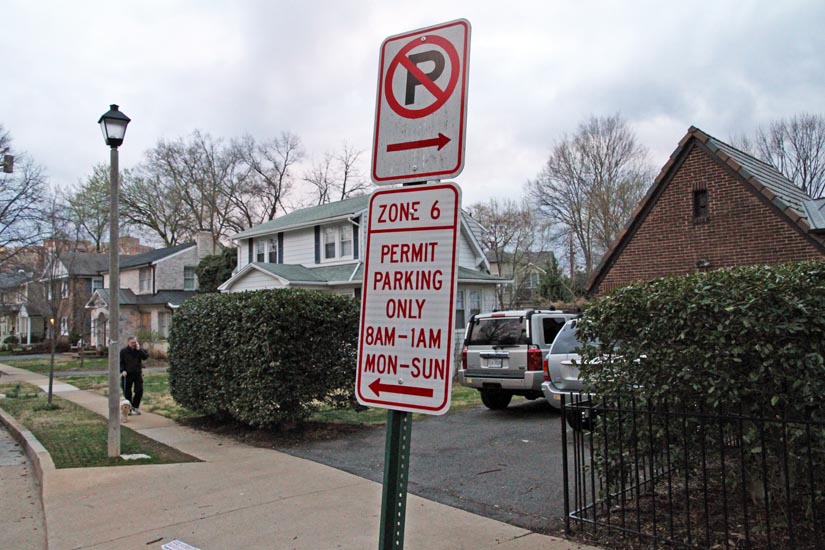
Proposed changes to Arlington’s Residential Permit Parking program, including a pay-to-park option for short-term visitors, will go before the County Board next week — with a caveat.
On Monday members of the Planning Commission hammered out the kinds of changes to the program that they want the County Board to consider. The matter is set to be taken up during the Board’s meeting on Saturday, Feb. 20.
The commission recommended a case-by-case approach to paid, short-term parking in neighborhoods — currently not an option in places where parking is restricted to residents and their guests only during certain hours — as members were divided on whether to include it at all. Some support it across all neighborhoods with RPP programs and others support the possibility of neighborhoods requesting it. A few oppose it full-stop.
“I can’t do this to my neighbors,” said Commissioner Denyse “Nia” Bagley, who opposes pay-to-park entirely.
Vice-Chair Daniel Weir said the two-hour parking meets “a whole host of needs” and unanticipated circumstances that “all fall under managing parking,” from when people go to nearby restaurants or visit friends. Short-term visitors would be able to legally park without a pass or permit and payments would be processed through the ParkMobile app or through the EasyPark device.
The RPP program was originally created as a response to commuters parking in residential neighborhoods near Arlington’s Metro stations and commercial centers. It survived a legal challenge that reached the U.S. Supreme Court in 1977, and later expanded to numerous neighborhoods around the county. Neighborhoods must petition for RPP zones, but in many cases those who live in apartments and condos are excluded from receiving permits, raising equity concerns.
The commission also recommended allotting on-street parking permits to household units based on whether they have off-street parking, such as driveways or garages. Households with off-street options can get up to two permits, one of which could be swapped for a FlexPass, a dashboard placard that can be used by residents or their visitors.
Residents without off-street parking are eligible for up to four on-street permits, one of which could be swapped for a FlexPass.
According to a county staff report presented to the commission, the cap is higher than what was previously proposed, “in response to concerns that unrelated adults (who may have more vehicles than a family household) sharing a home without off-street parking in an RPP zone could face an unnecessary hardship.” Still, it’s lower for those with off-street parking than the current program.
“The current program allows for up to four (4) permits, one (1) FlexPass and three (3) vehicle specific permit decals,” a previous staff report said. “Many households already in the RPP program would not be able to obtain as many permits as they do today Lowering the cap encourages households with multiple vehicles to use their off-street parking, leaving space on the street for others.”
The commission did not tweak the expansion of parking options and permits to employees of K-12 schools and group homes. In response to concerns about enforcing paid parking, commissioners unanimously voted to include language stipulating that parking enforcement should be on par with metered parking elsewhere in the county.
These potential changes come three years after a moratorium was placed on new parking restrictions so a review of the program could be conducted. The review concluded last fall, kicking off a new period of public engagement as the changes wound through county processes.
The changes went before the County Board for the first time in December, when Board members decided to delay a public hearing to give the community more time to digest the changes.
At the time, the County Board approved an amendment allowing residents to buy a third or fourth parking pass at a higher cost, after hearing from families who suddenly had adult children come home due to the pandemic, in addition to homeowners who said the program would force them to widen their driveways.
Arlington County is giving residents a chance to respond to proposed changes to the towing code ahead of a County Board vote.
People can share their thoughts in a short online survey before the issue is slated to go before the Board during its regular meeting on Saturday, Feb. 20.
The proposed changes are billed as getting the local code in line with the latest state law, protecting consumers and adjusting to rising costs in the towing industry, according to a staff presentation and additional materials.
Basic towing fee increases are being proposed, from $135 to $150, as well as an increase of the additional fees for night and/or weekend towing, from $25 to $30. That brings the maximum possible towing fee to $210, for a vehicle towed on a weekend night. The “drop fee” for discontinuing a tow in progress, however, will be lowered from $25 to $10.
The online survey has three questions. Among them:
“Do you support reconciling the County ordinance with state code for purposes of improving enforcement and making the ordinance easier to understand?”
“Do you support the consumer protection measures included in the proposal? These include enhancements to lighting, safety, accessibility and transparency.”
“Do you support towing fee increases given the provided financial justification?”
The survey gives the following justification for the fee increases:
In this provided justification, towing operators have indicated increased costs. Staff have included supported materials from towers and Consumer Price Index data has indicated an inflationary increase in our area. Given these economic factors and regulatory requirements that towers have to be within a 3.25 mile radius of Arlington to support private businesses, do you support raising the tow fees to the maximum fees as regulated by state?
These proposed changes come after the county determined, among other things, that some towing and pricing practices are unfair and predatory, signage about towing is inadequate, and people do not have many ways to fight back when their cars are improperly towed and stored, according to a staff report.
“The County Board has found that some members of the public and their property have been placed at risk in circumstances where their vehicles have been towed from private property without their consent and placed in storage,” the report said.
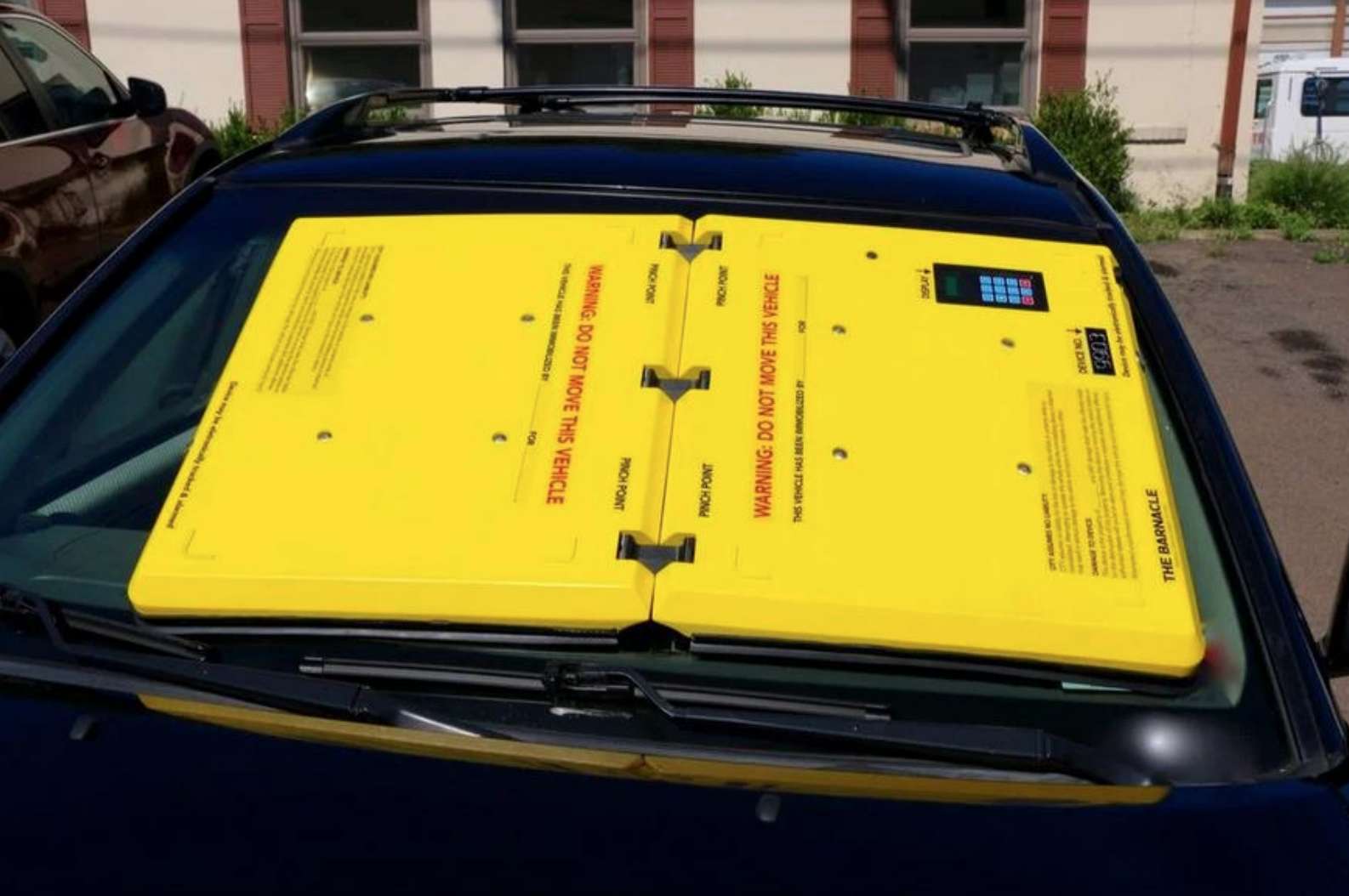
Included in the code would be an updated definition of “immobilization” to mean anything “that does not damage the vehicle,” including using barnacles.
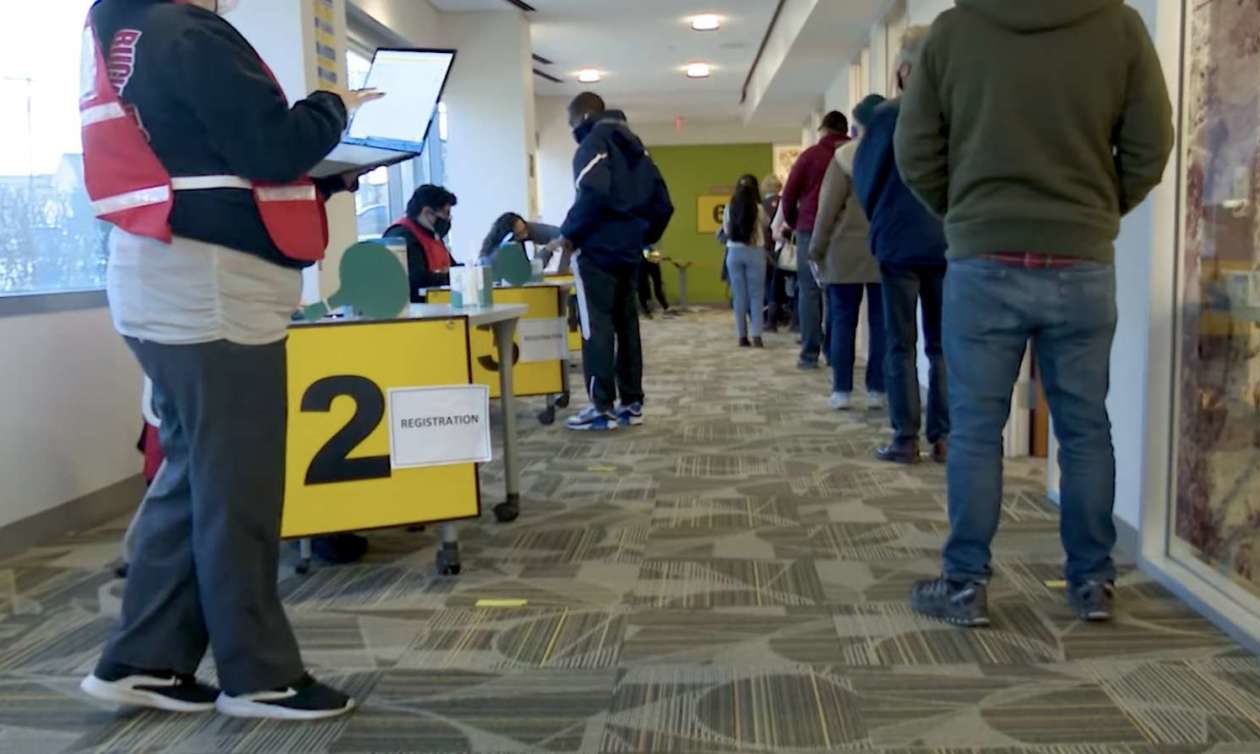
Arlington County vaccination clinic (via Arlington County/YouTube)
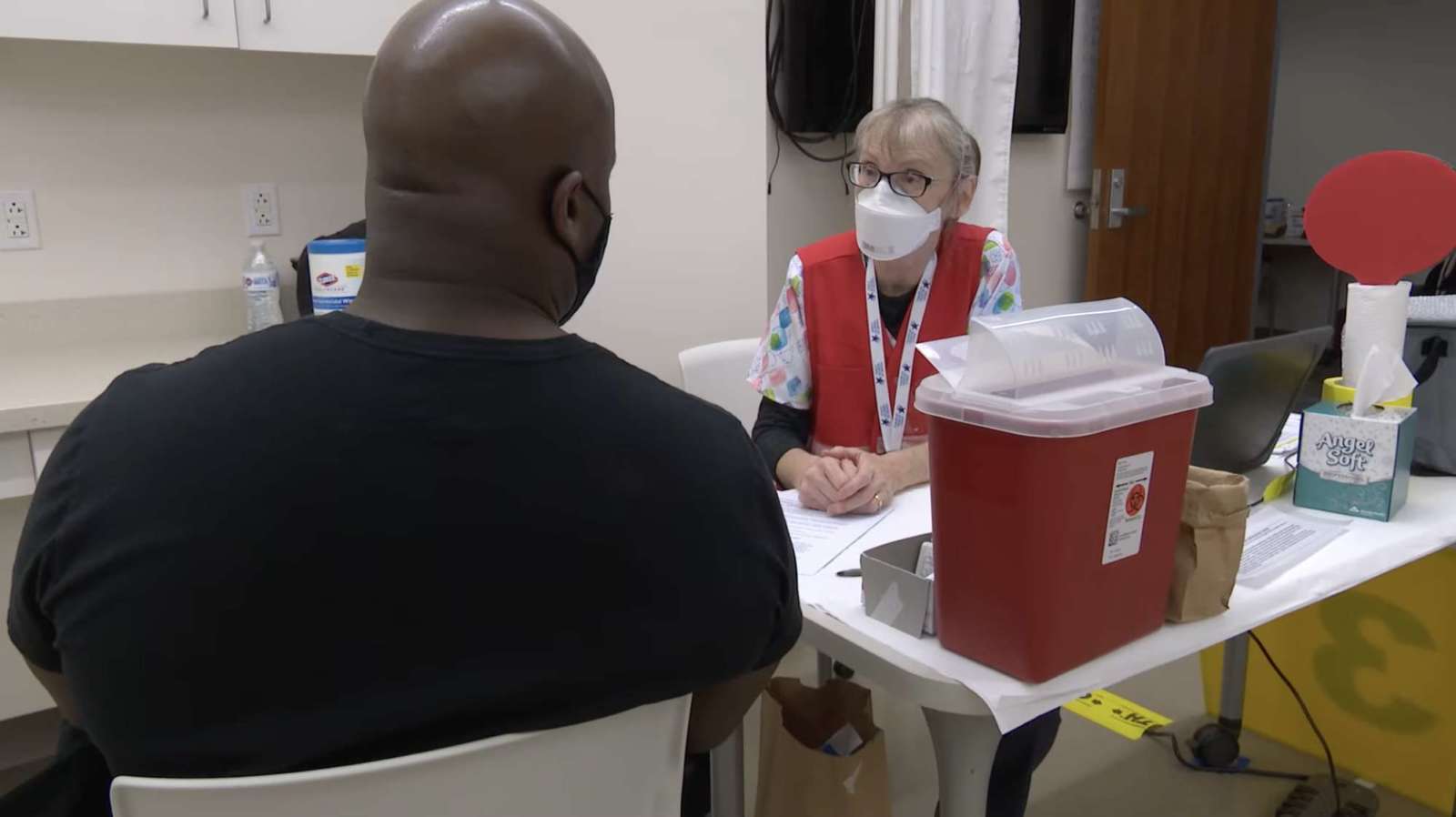
Vaccine being given at Arlington County vaccination clinic (via Arlington County/YouTube)
Arlington County vaccination clinic (via Arlington County/YouTube)
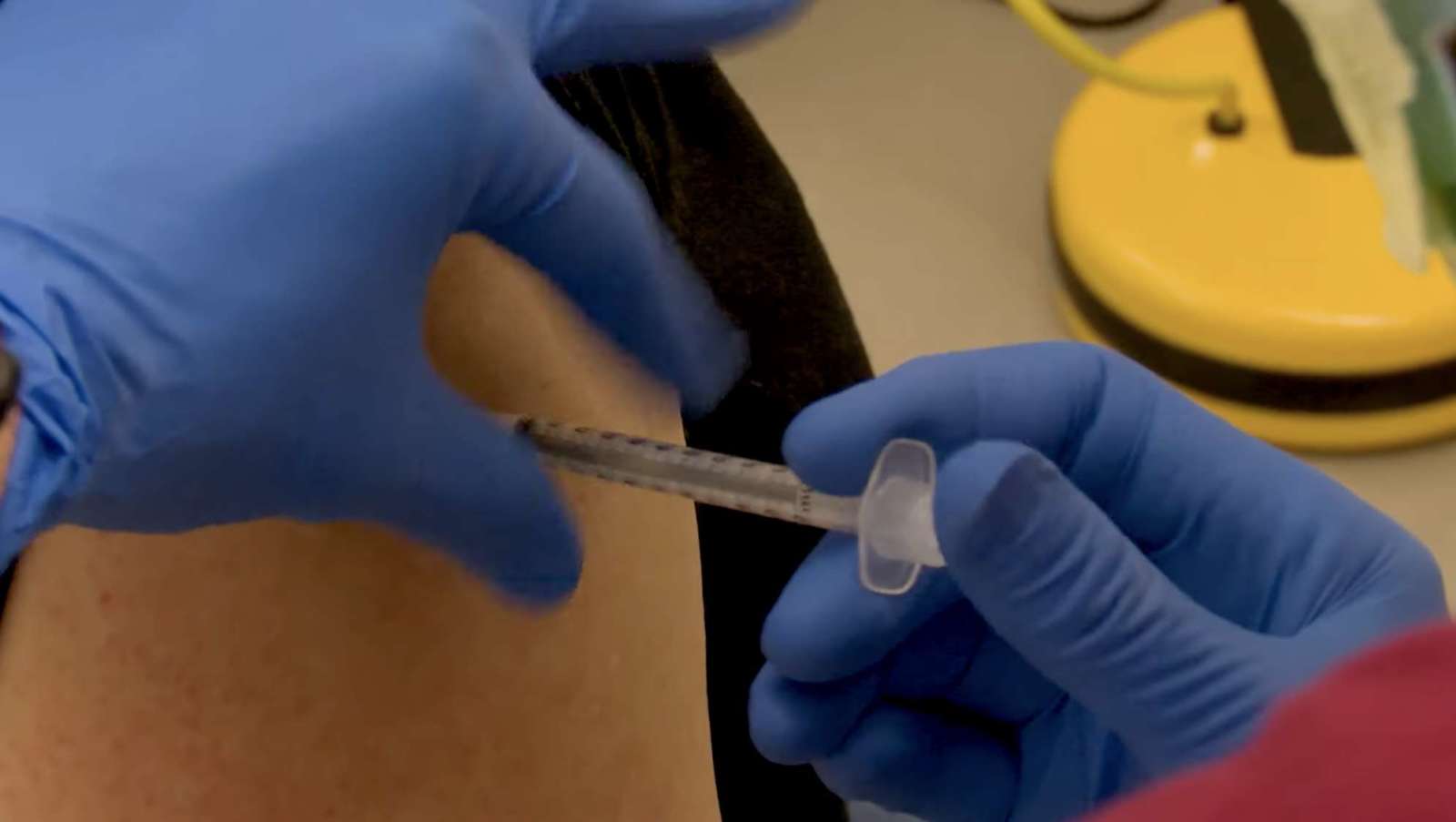
Vaccine dose being given at an Arlington County vaccination clinic (via Arlington County/YouTube)
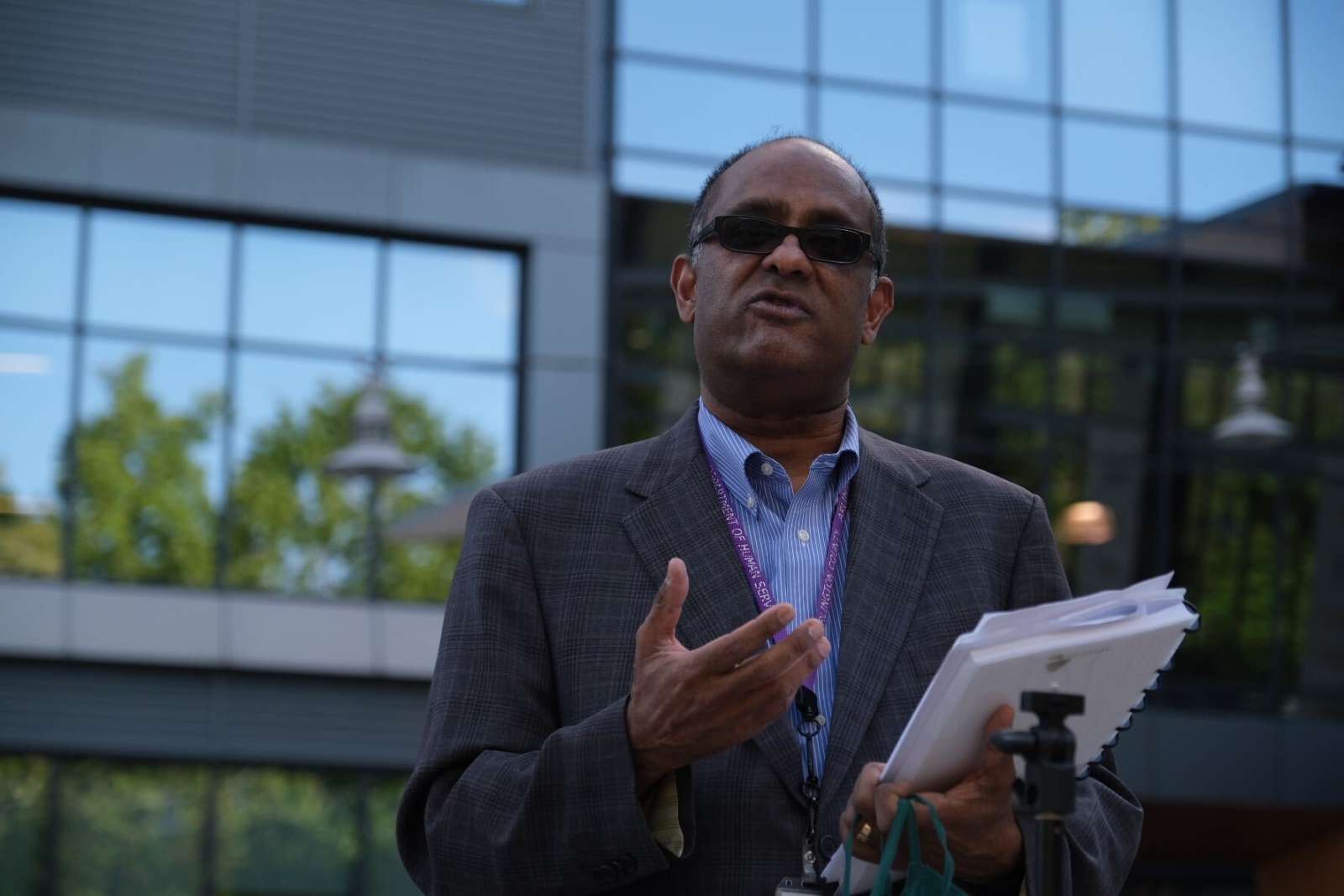
Arlington County Public Health Director Dr. Rubin Varghese at walk-up coronavirus testing center opening in May (staff photo by Jay Westcott)
(Updated 4 p.m.) Officials with Arlington County Public Health Division say they are not wasting coronavirus vaccine doses, but they also do not condone people getting vaccinated out of turn.
During a COVID-19 work session on Tuesday, County Board members told health division staff that their constituents frequently express concerns about line-jumping by those who do not currently qualify for vaccinations under Virginia Dept. of Health’s Phase 1b guidelines.
“Everyone knows someone who isn’t in the 75-plus category or the personnel identified yet but got vaccinated because their eye doctor, brother or psychiatrist,” Board member Katie Cristol said, listing the kinds of connections that people are allegedly using.
Arlington County Public Health Director Dr. Reuben Varghese acknowledged those fears but said that, amid everything else that’s going on, officials do not have the capacity to verify these claims. Staff members do remove people from vaccine appointments if they notice something unusual, he said.
“I have to believe that Americans as a whole and residents in Arlington are going to be truthful and not line-jump,” Varghese said. “I know people are going to say ‘you’re being naive,’ but we don’t chip people and we don’t have a national health system that we can track people. The vast majority of people have done the right thing, and because of what we’re doing in Arlington, we don’t have the conditions where I think line-jumping is going to be as likely as other places.”
Meanwhile, total confirmed COVID-19 cases in the county have reached 11,867, with 61 new cases and three new hospitalizations as of this morning (Wednesday). The seven-day trailing average of new cases has fallen over the past few days, and currently stands at about 65 cases per day, after peaking at nearly 125 daily cases three weeks ago.
“This [wave] has doubled, if not more than doubled, what we’ve been seeing in the past,” Varghese said.
Last week, Jan. 24-30, about 6,500 tests turned up 482 positive results, said Aaron Miller, the county’s emergency management director. The test positivity rate remains at 7.5%, which is high compared to most of the pandemic, he said.
According to the Virginia Department of Health, Arlington County has received 26,725 vaccine doses. The newest shipment of 2,700 doses came Monday, for a total of 9,775 doses to the health division, compared to the 16,675 total doses that have gone to Virginia Hospital Center, County Manager Mark Schwartz said. He added the online dashboard might be off by about 200 doses.
The county is also starting to prepare for a new distribution method: Yesterday, the federal government announced it will start sending vaccines to select pharmacies next week.
“Now our job is to go back to the state and figure out what it means for the state and for Arlington,” Miller said.
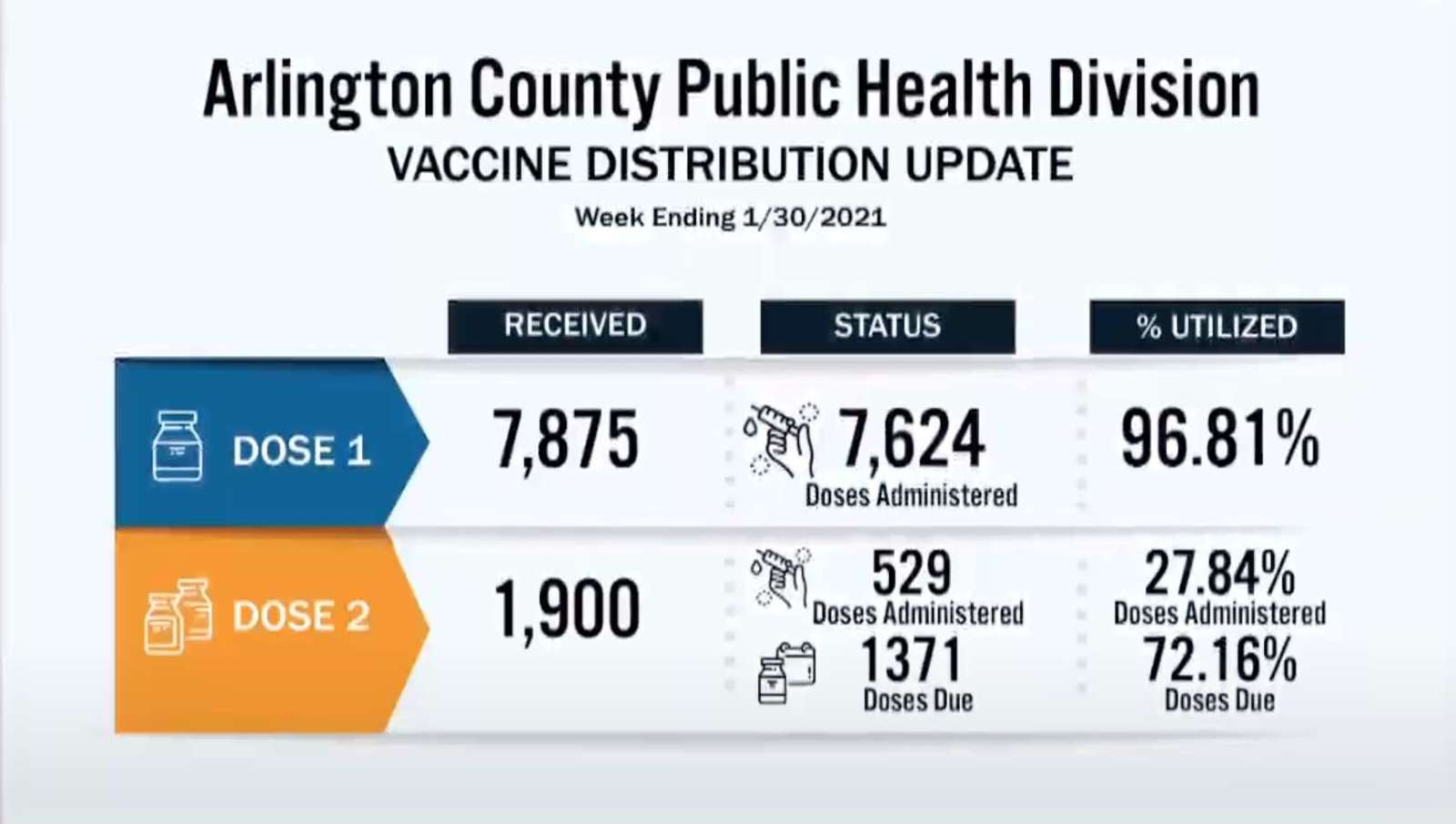
Varghese also refuted the claim of wasted doses. Last week’s use rate — shown in the graphic below — was so close to 100% that it “pushed the envelope,” he said. Currently, he tries to reserve 10% for the start of the next week, as new shipments come either on Monday or Tuesday.
He said if vaccines are close to expiring, the county picks groups lower down the 1B prioritization list to vaccinate. That way, the county does not encourage loitering outside the clinic at 2100 Washington Blvd. or near grocery stores for chance doses, which “creates other problems,” he said.
(The 1b group includes “Persons aged 75 and older; Police, Fire, and Hazmat; Corrections and homeless shelter workers; Childcare/K-12 Teachers/Staff; Food and Agriculture (including Veterinarians); Manufacturing; Grocery store workers; Public transit workers; Mail carriers (USPS and private); Officials needed to maintain continuity of government.”)
Meanwhile, staff members have scheduled around 1,900 appointments for those 75 and older who had their VHC appointments canceled. Of the 3,200 people in this category, about 3,000 have been contacted. They are also contacting people 75 and older who were not in the hospital’s system.
This is the only group for whom the county is rescheduling appointments at this time, Varghese said.
Those who are 65 to 74 years old or 18 to 64 years old with high-risk medical conditions should pre-register with the county, regardless of whether they had appointments with VHC.
Once people arrive at the county’s clinic, at the Sequoia Plaza office complex near Route 50 and Washington Blvd, they are greeted by a team of volunteers and nurses. According to a behind-the-scenes video from the county, between 50% and 75% of the staff manning the vaccine clinics are volunteers.
“I know there are frustrating things going on across the country and even in Arlington, but I promise once you get here you’ll have a great experience, and you’ll help end the pandemic just by getting a vaccine,” said Dallas Smith, the site director for the Arlington County Vaccination Pod, in the video.
The Mount Salvation Baptist Church cemetery — which served as the final resting place Black Arlingtonians denied access to white graveyards — could be granted a historic district designation by the Arlington County Board.
As part of the consent agenda at its Jan. 23 meeting, the County Board approved advertisement of public hearings to review the designation of the cemetery at 1961 N. Culpeper Street at the Monday, Feb. 8 Planning Commission meeting and at the Saturday, Feb. 20 County Board meeting.
“There are many community members in this church and I’ve been there to listen and pay respects,” said County Board Chair Matt de Ferranti. “This is historic preservation done well to help us remember our African-American community and history. The final resting places in this burial ground, it’s important for us to recognize this for historic preservation.”
The Mount Salvation Baptist Church congregation has gathered in the Halls Hill/High View Park neighborhood since the first church was constructed on the property in 1892. That church was later demolished with a replacement church build in 1975. The earliest marked burial at the cemetery was a woman named Helen Thompson in 1916, but a staff report on the cemetery said there are likely older, unmarked graves on the plot dating back to the church’s founding. There are a total of 89 confirmed burials at the site.
“There are two other historic African American cemeteries in Arlington County that are designated as local historic districts: most of Lomax African Methodist Episcopal (AME) Zion Cemetery in Green Valley and Calloway United Methodist Cemetery in Hall’s Hill,” a staff report said.
The report noted that Mount Salvation Baptist Church was as much of a social gathering place for Black Arlingtonians in the late 19th century and early 20th century as it was a religious institution.
Part of the designation could also open the way to a barrier around the cemetery to limit pedestrian through-traffic.
“Church trustees have expressed a desire to discourage casual pedestrian traffic through the cemetery,” the report said. “The installation of a permanent fence around the cemetery would deter such activity; recommendations for appropriate fencing types are included in the accompanying proposed Mount Salvation Baptist Cemetery Local Historic District Design Guidelines.”