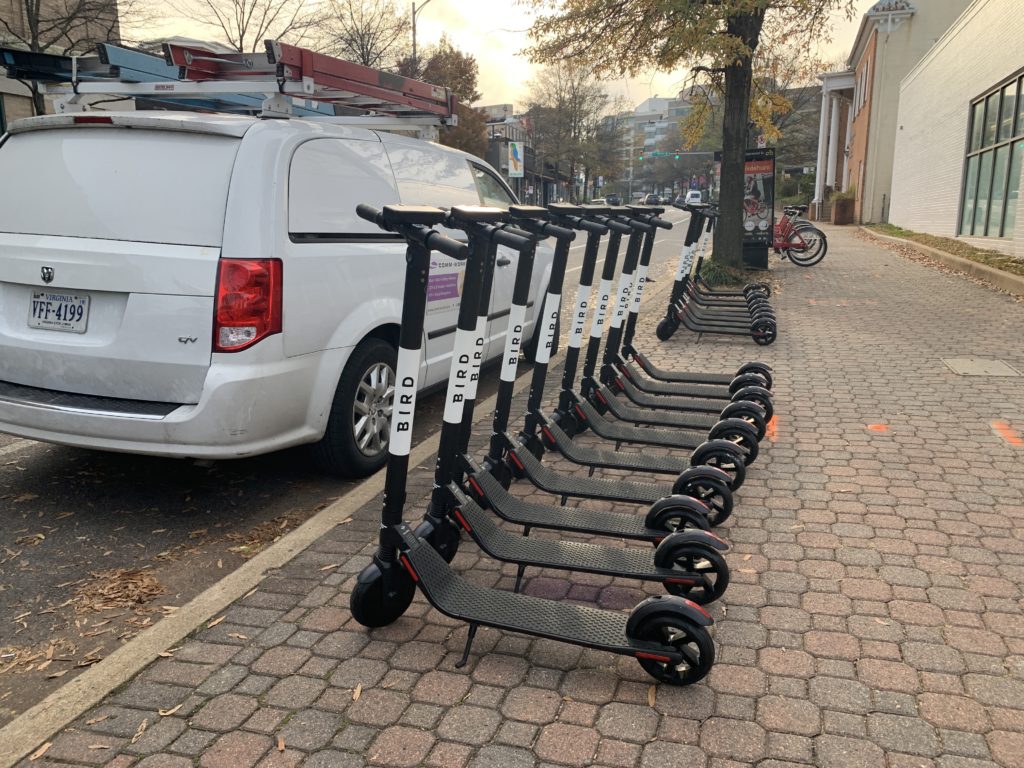
Arlington will soon see even more dockless electric scooters cropping up on its streets, but officials remain a bit vexed about the best way to keep underage riders off the vehicles.

While county transportation officials say they haven’t seen any major safety issues with the scooters beyond a handful of accidents, they also told the County Board Tuesday that the community response to the pilot program expanding the number of dockless vehicles in Arlington has been far from unanimously positive. In all, county commuter services bureau chief Jim Larsen told the Board that his department has received 550 scooter-related complaints from Oct. 1 through Nov. 19.

Most of those have centered around people riding scooters on county sidewalks or trails, a practice banned by the county’s pilot program, or teenagers riding scooters in violation of company rules. Both of the scooter companies currently operating in Arlington — Bird and Lime — ban anyone under the age of 18 from riding the vehicles, and require users to submit a photo of a driver’s license before riding.

Nevertheless, Larsen says the county isn’t quite sure how to tackle the latter issue, in particular.

The whole point of the pilot program, which is set to run through July, is to test out the best policies for the county to adopt surrounding the scooters. And nearly two months in, after the scooters recorded nearly 69,200 rides in the month of October alone, Larsen says there are still more questions than answers.

“Education is the key,” Larsen said. “But there are still challenges.”

Larsen noted that his staff is working with the dockless companies, county police, school officials and parents on educating kids that they should stay off scooters. Even still, he foresees it being a tough issue to fully resolve — he theorizes that parents are either unaware of the ban on young riders, and could be giving kids permission to use the scooters, or that teens have simply figured out ways to “hack the apps.”

“We fine people if they’re driving a car when they’re not supposed be,” said County Board member Libby Garvey. “Is there a way to fine somebody for this?”

But even when a police officer or teacher catches an underage rider on a scooter, Larsen noted that there’s not much they can do about it. After all, he points out that state law actually allows anyone 14 or over to ride a motorized scooter, though the definition of what constitutes a scooter has certainly changed drastically since the law was written.

“The commonwealth has a lot of work to do to bring their regulatory scheme forward a number of years,” said County Manager Mark Schwartz. “I won’t say what century it’s in.”

Yet, with so little of the pilot completed, county officials are hesitant to ask Arlington’s General Assembly delegation for too many changes just yet. They’re also wary of a repeat of the way the state chose to regulate ride-sharing companies, removing control from localities in favor of a light-touch regulatory scheme managed by state officials.

“Our goal is to craft common sense regulations coordinated across localities, but ones that preserve that ability to maintain that regulation on the local level,” said county transportation chief Dennis Leach.

Larsen would caution, however, that Bird and Lime have already both hired lobbyists in Richmond to make their case to lawmakers, so the county will need to have some answers by the time the legislature reconvenes in January. To that end, he suggested convening interested county staffers, including Arlington’s legislative liaisons, in a working group to focus on the issue.

There will certainly be plenty of pressure to act fast — Larsen says Lyft is nearly finished with the application process to offer its scooters in the county, and a dockless electric bike company could offer its wares on Arlington streets by January.

But policymakers do have one factor working in their favor as they work to craft solutions; it’s no longer the ideal temperature for scooter-riding.

“In winter months, as things get slow, we expect they won’t keep them all out there,” Larsen said. “Especially if we get bad weather, as we’re expecting.”
Shatner: Arlington E-Bike Rules ‘Barbaric’ — E-bike enthusiast and Priceline pitchman William Shatner, better known as Star Trek’s Captain James T. Kirk, said via Twitter yesterday — in response to a tweet from the sassy Arlington Dept. Environmental Services Twitter account — that Arlington’s prohibition on e-bikes on local trails is “barbaric.” [Twitter]

Kojo Coming to Crystal City — WAMU 88.5 is bringing the Kojo Nnamdi Show to Crystal City for “a town hall-style discussion about how local officials, businesses, and community members in Northern Virginia and the region are reacting to Amazon’s decision.” Those wishing to attend the taping can register online. [Kojo Nnamdi Show]

Upgrades for Ballston Senior Housing — “The Arlington County Board [Tuesday] approved a low-interest loan of $3.025 million in federal Community Development Block Grant funds to help renovate The Carlin, a 162-unit, 10-story building located at 4300 N. Carlin Springs Road. The Carlin serves low income elderly residents who are 55 years and older.” [Arlington County]

‘Arts District’ Near Crystal City? — “Even before the specter of Amazon’s second headquarters put stars in everyone’s eyes in Crystal City, Stratis Voutsas and Georgia Papadopoulos, managers of a trust that owns many buildings on the neighborhood’s ‘restaurant row,’ were dreaming up a plan to bring more people across U.S. Route 1 to the neighborhood… The trust wants to build an open-air park and plaza on a parking lot and site of a Greek restaurant the trust owns behind some of the 23rd Street restaurants. It would have artist spaces tucked below, facing onto 22nd Street.” [Washington Business Journal]

Amazon News Roundup — Amazon’s HQ2 search was about “selecting locations with specialized kinds of talent that meet certain needs,” and “Crystal City… puts Amazon closer to tech talent, but also to government leaders, cloud customers, and the U.S. Department of Defense.” Crystal City is built upon the former Abingdon Plantation and the new Amazon presence “affords us the opportunity to recognize and memorialize the lives of those enslaved there.” Meanwhile, a former JBG executive who left to help build a $3 billion development in Tampa is returning as the company prepares for Amazon’s arrival.

Nearby: New Wawa and New Restaurant — A new Wawa is coming to Vienna, making it the closest Northern Virginia location to Arlington for the beloved convenience store chain. And an acclaimed chef is planning to open a new Italian restaurant on N. Washington Street in the City of Falls Church.

Flickr pool photo by Kevin Wolf


Arlington leaders are now planning on hosting at least two Amazon-focused town halls to let residents share their concerns about the tech giant ahead of a planned February vote on the deal to bring the company’s new headquarters to the county.

County Board Chair Katie Cristol announced at the Board’s meeting yesterday (Tuesday) that the county will hold a pair of “community listening sessions” to give people the chance to talk directly with Arlington staffers and Board members alike about Amazon. She says the county is targeting Dec. 17 at 7 p.m. and Jan. 12 at 9:30 a.m. for those sessions, but has yet to settle on locations for either one.

“There have been a lot of questions about opportunities to engage or ask questions directly to County Board members as well as to learn about this opportunity and its impacts on our Arlington community,” Cristol said. “We’ve heard that people are very interested in an in-person opportunity to share their feedback and county staff.”

Cristol added that any Board vote on the proposed deal, largely sketched out by state officials, would come no sooner than Feb. 23. In the likely scenario that the deal wins the Board’s approval, the company would then face a whole variety of Board hearings as it looks to build new facilities in Pentagon City and Crystal City.

The county has also scheduled an array of online Amazon question-and-answer sessions on Facebook.

Arlington’s already held a pair of those, and will hold three more next month: a Dec. 6 session focused on transportation, a Dec. 19 discussion on schools and education and a Jan. 16 session on housing.

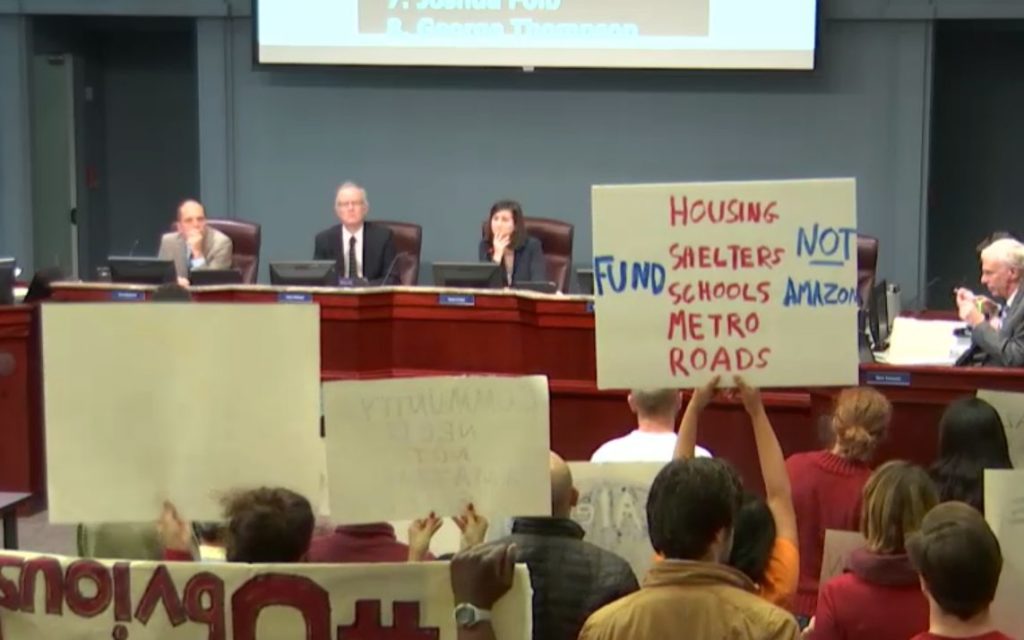
Skeptics of the tech giant’s impact on the area have accused the Board in the past of allowing too little community discussion on the issue, with many skeptics flooding a Board meeting earlier this month to raise the matter. Progressive groups like Our Revolution Arlington have also specifically called for a series of such listening sessions by Board members.


The Arlington County Board narrowly approved the Virginia Hospital Center’s expansion plans yesterday (Tuesday), clearing the way for the $250 million project to move ahead despite persistent concerns over its design and impact on the community.

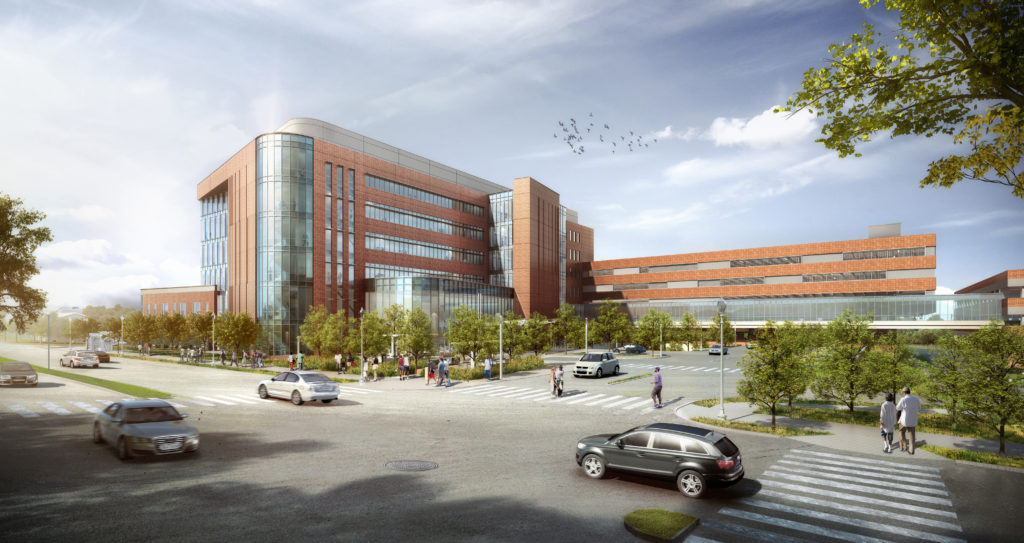
In a rare 3-2 vote, the Board signed off on designs for the county’s lone hospital to add a seven-story outpatient facility and a 10-story parking garage adjacent to its existing campus at 1701 N. George Mason Drive.

The additions will help the hospital add another 101 beds to its existing building, a move that VHC officials argued was urgently necessary to meet rising demand in the area. The Board will now send the hospital a piece of county-owned land on N. Edison Street to power the expansion, and receive a some hospital property on S. Carlin Springs Road in exchange.

“We are grateful to have constructively worked with community members to reach a positive solution, and we are committed to remaining good neighbors in the Arlington community,” Adrian Stanton, the hospital’s vice president for business development and community relations, wrote in a statement. “For 75 years, Virginia Hospital Center’s mission has been to act in the best interest of our patients. We continue to be thankful for our Board, physicians, staff and auxiliary members who are ready to serve for the next 75 years.”

The Board was previously set to approve the expansion plans in September, but opted for a delay instead to give the hospital a chance to tweak its designs a bit. A narrow majority of the Board felt that VHC’s planners managed to meet those standards over the last two months, while Board members Erik Gutshall and John Vihstadt argued that the hospital failed to meet the specific requests the Board previously laid out for design changes.

Others on the Board expressed similar concerns, but none of the other three members were willing join Gutshall and Vihstadt in delaying the project once more.

“I certainly remain troubled to not be able to fully achieve what we envisioned a couple of months ago,” said Vice Chair Christian Dorsey. “It’s better today than it was two months ago… We’re at a much better place where this facility interacts with the neighborhood in a way that is going to be a lot more respectful and pleasing for people who will choose to live there for decades to come.”

The Board had also urged VHC executives to do more outreach in the community and ease concerns about everything from traffic to the size of the new facilities. The hospital held several community meetings with nearby civic associations and other neighbors since the Board’s last vote, but the Board still expressed plenty of concern that the hospital didn’t do enough to fully engage the community.

“I’m really feeling frustrated and undernourished here,” Vihstadt said. “Too often, it was a matter of ‘Here’s what we’re going to do, we invite your comments, we invite your critique,’ not, ‘Here’s option A, here’s option B, what do you think works best?'”

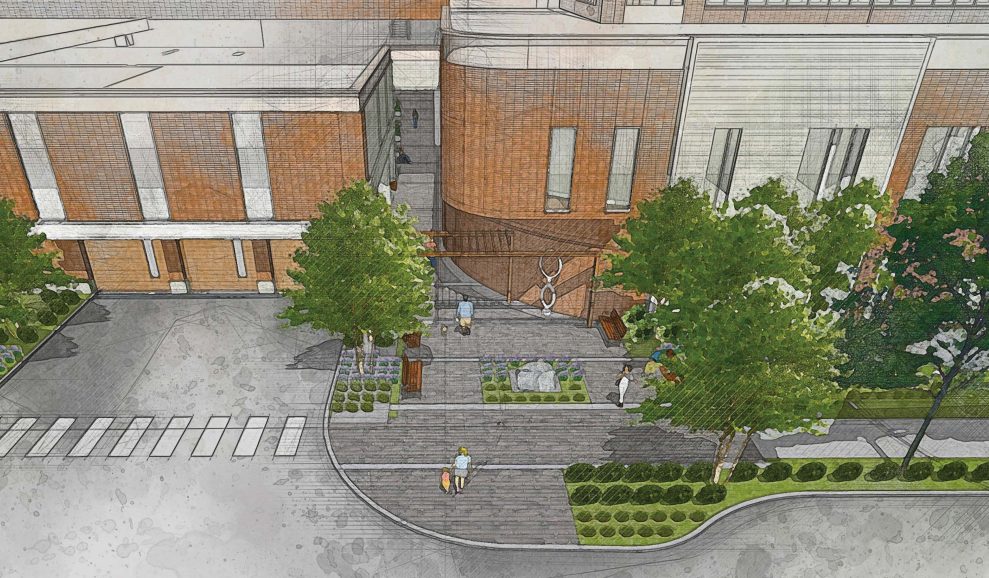
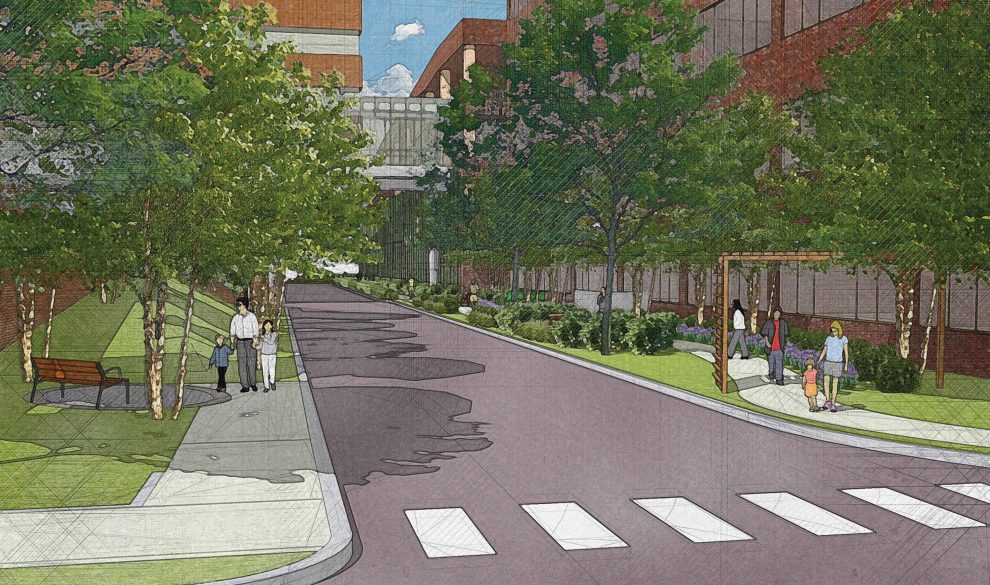
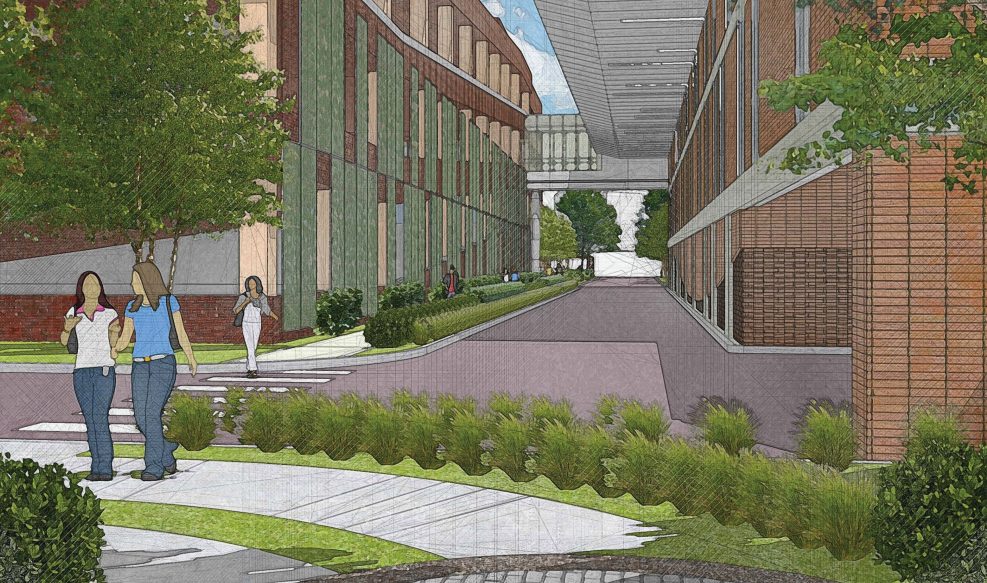
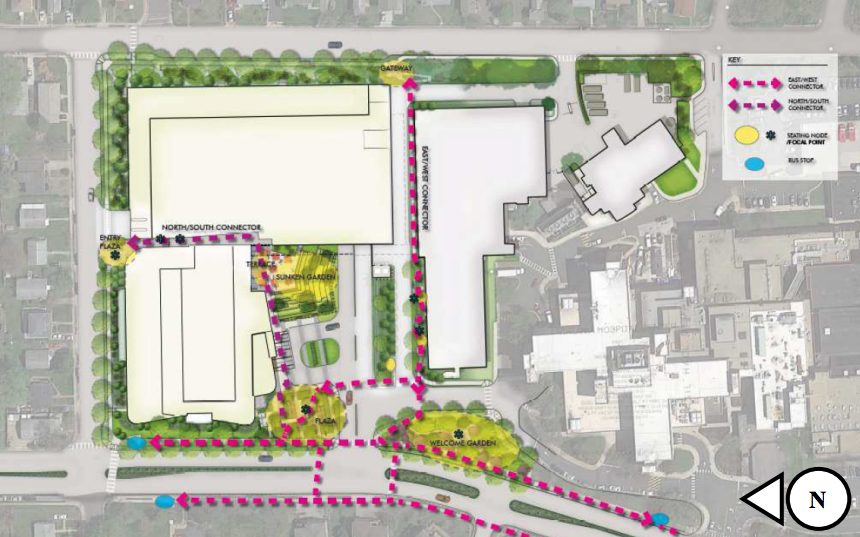
But some Board members had specific critiques of the design as well. Those primarily centered on a pedestrian walkway running from north-south through the site, starting at 19th Street N. and running toward 16th Street N., and the traffic pattern on N. George Mason Drive as it runs alongside the hospital.

The Board’s September motion specifically requested that the north-south walkway be at least 15 feet wide and two stories in height, in order to create a better flow of both pedestrians and light throughout the campus. Yet the revised design presented a path that wasn’t quite that wide, and had a pedestrian bridge running over top of it along one section to restrict the open air standard the Board laid out.

“It doesn’t seem to me that it really meets the gist and the intent of our motion,” Gutshall said.

Nan Walsh, an attorney for the hospital, argued that VHC’s architects did the best they could to meet the Board’s standards, but ran into a series of intractable problems.

Widening the pathway, for instance, could’ve forced the hospital to move its parking garage too close to neighboring homes, or forced the hospital to cut more than 200 spaces from the structure, Walsh said. The latter option was particularly unpalatable for VHC, as it had already removed hundreds of spaces to meet the concerns of transit advocates.

“We have sharpened our pencils for the last two weeks and we really feel we’ve gone about as far as we can go,” Walsh said.

County planner Matthew Ladd did reassure the Board that the walkway struck him as a “major improvement” over the hospital’s original design, and most members were inclined to agree.

“This is breaking up what felt like a superblock and creating a sense of flow of light and air between the two buildings,” said Board Chair Katie Cristol. “I know this leaves disappointment on the part of some of the neighbors… but I did not enter this phase with a lot of optimism that there will be peace in the land.”

Gutshall initially looked for a one-month deferral of the project, as the Board had originally planned to take up the new designs in December — the hospital, backed by its allies in the business community, pressed for the earlier consideration. Vihstadt was inclined to support him, dubbing the new plans “too much of a suburban campus, a suburban design.”

Yet Gutshall couldn’t find a third vote for the delay, and he relented. But he did warn the hospital that, as it considers the full redevelopment of its campus in the coming years now that this expansion has been approved, there may be more painful meetings in its future if it doesn’t change its approach.

“You continually throughout this process pushed the envelope every step of the way…but ultimately I think there’s a cost extracted for that,” Gutshall said. “And I’d strongly encourage you to look at what are the things that you can do to build a stronger relationship with the surrounding community to begin to lay the groundwork for the next time you come back for whatever the next phase of this is going to be.”


Arlington leaders now say they’re ready to start studying unpleasant budget measures from tax increases to staff layoffs, as they gear up to confront next year’s hefty budget gap.

The County Board is set to sign off today (Tuesday) on new budget guidance for County Manager Mark Schwartz, as he gets to work on a new spending plan for fiscal year 2020. The memo directs Schwartz to develop a range of possible options for the Board to evaluate next year, including “a range of potential tax increases” and “proposals for program and personnel reductions or eliminations” if Schwartz can’t develop a balanced budget while relying on the existing tax rates.

The Board made a handful of spending cuts in the budget for fiscal year 2019, but opted not to raise any of the county’s tax rates.

Since then, Schwartz has frequently called for the Board to give him the flexibility to pursue such budget measures, given the county’s gloomy near-term financial prospects. Though Amazon’s arrival in Arlington could well pour millions in new revenue into county coffers, officials project that their budget challenges won’t vanish overnight. In all, the county’s combined budget deficit could be as large as $78 million next year.

All on its own, Schwartz expects that the county will need to close a gap of anywhere from $20 million to $35 million, a gap driven by factors including Metro’s increasing expenses, the new raises for public safety workers the Board approved in the 2019 budget and new spending associated with the statewide Medicaid expansion.

But the county school system could tack on another $43 million in unmet needs, as it works feverishly to build new schools and keep pace with the county’s influx of new students. Without any tax rate hikes, staff currently projects that the county will be able to send about $7.7 million to Arlington Public Schools than it did last year. But that increase, driven by rising real estate assessments, likely won’t be enough to solve all of the school system’s funding woes — the School Board only narrowly avoided class size increases last year, and will face similar challenges this time around.

The Board’s budget guidance does identify one program that it hopes Schwartz will be able to protect from budget cuts: the Affordable Housing Investment Fund, a loan program designed to incentivize the construction of reasonably priced homes. The memo to the manager suggests that Schwartz craft a proposal to maintain the $14.3 million in funding the Board sent to the fund last year, and recommends making more of the funding “ongoing” rather than subject to the Board’s appropriation process each year.

The latter change was one championed by Board member John Vihstadt in his losing bid for re-election this year, and the entire Board has emphasized the importance of funding affordable housing programs to prepare for Amazon’s projected impacts on the housing market. As part of its deal to land the tech giant, the county even committed to directing about a third of the money it spends on affordable housing each year to specifically serve the areas around Amazon’s new headquarters in Crystal City and Pentagon City.

The Board is set to vote to approve the new budget guidance today, setting the stage for Schwartz to deliver his proposal to the Board in February. The County Board and School Board are also set to hold a joint work session next Tuesday (Dec. 4) to kick off their initial budget deliberations.


Virginia Hospital Center executives believe they’ve satisfied all the demands of Arlington officials in drawing up revised plans for the facility’s $250 million expansion, setting the stage for the project to move ahead as soon as this week.

The County Board is set to consider the matter once again tomorrow (Tuesday), after delaying a decision on the hospital’s expansion back in September. The Board laid out a series of specific changes it hoped to see from the hospital as it embarks on the project, which is designed to add 101 hospital beds and a new outpatient facility to match rising demand in the county, and urged VHC leaders to smooth over its rocky relationship with some people living near the existing campus at 1701 N. George Mason Drive.

The Board initially envisioned taking up the matter next month, but VHC leaders were enthusiastic enough about their progress that they pushed for a vote at Tuesday’s meeting instead.

Adrian Stanton, the hospital’s vice president for business development and community relations, says VHC officials have spent last few months convening “a series of public meetings with community members, as well as with neighborhood civic associations adjacent to the hospital,” to craft new designs for the expansion, leading to his renewed optimism for the project’s prospects.

“These discussions have been open, honest, and productive,” Stanton wrote in a statement. “As a result of this progress, we asked to present a revised plan to the Board during its scheduled Nov. 27 meeting. We are grateful that we have been granted that opportunity, and remain hopeful that we will be presenting a plan that is acceptable to all parties involved.”

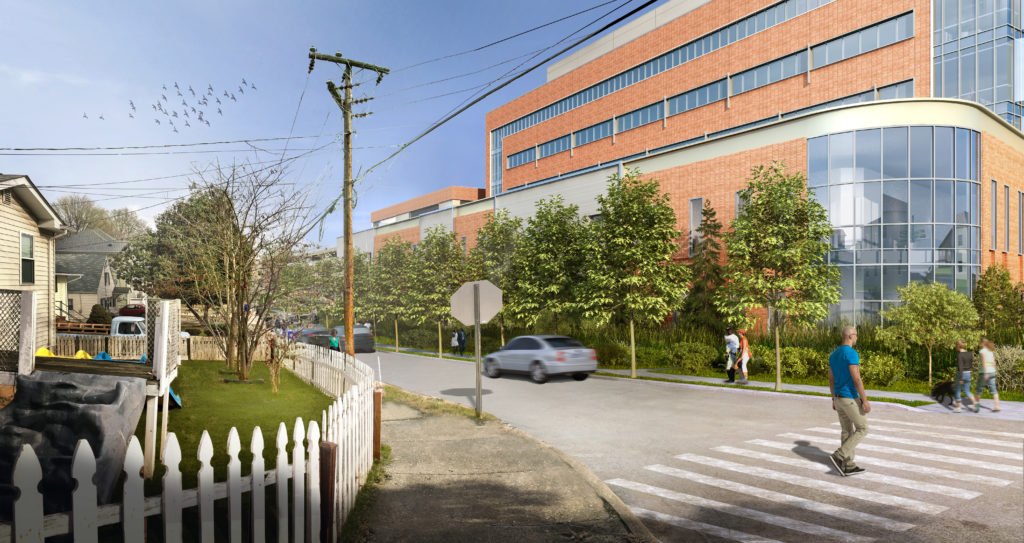
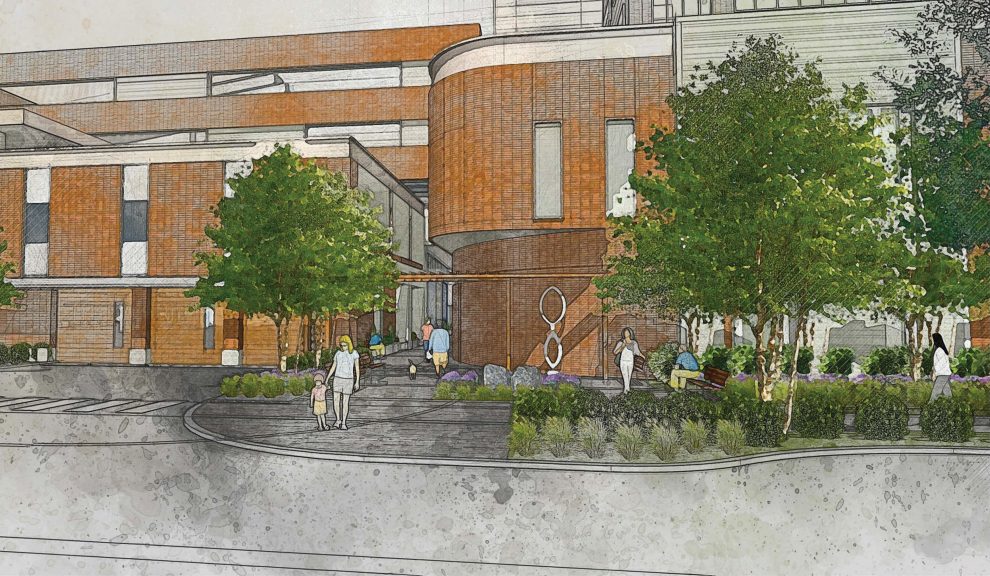
The chief concern of the hospital’s neighborhoods, county planners and Board members alike is how the VHC’s new buildings will fit into the community. The hospital is hoping to add a 230,000-square-foot, seven-story outpatient facility and a 10-story parking garage, and critics of the original design worried those additions would effectively wall off the hospital from the single-family homes surrounding it.

Accordingly, the Board’s requests for changes centered around improving the facade of the garage and adding more pedestrian connections to (and through) the site, to make it feel more accessible. And, per details laid out in a new report prepared by county staff, the hospital seems to have made all the tweaks the Board was envisioning.

For the new parking garage, the hospital now plans to add “vertical mesh screens” and vary its “brick colors and pattern to provide visual interest,” the report says. The hospital also will eliminate one of the garage’s entrances from along a service road running horizontally through the property, and relocate a sidewalk to the south side of that road to provide a more accessible “east-west” connection through the site.

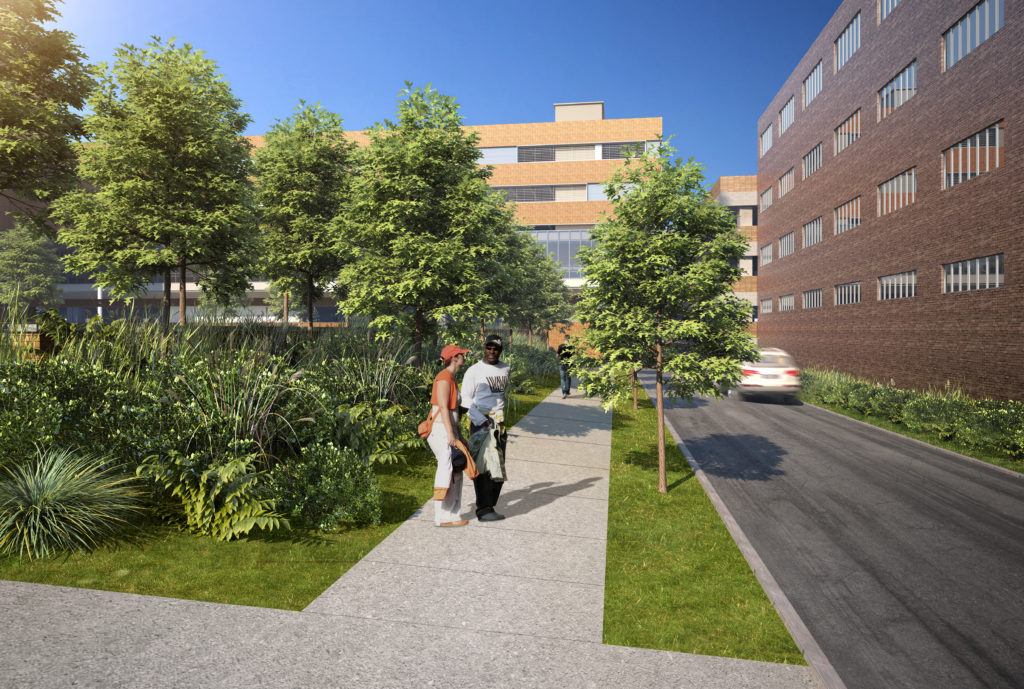
VHC officials also hope to provide a better north-south pedestrian walkway through the property, creating a corridor that runs from 19th Street N. to connect to both the garage and the new outpatient building. In tandem with that change, the hospital proposes “rounding the corner of the outpatient building to improve sight lines for pedestrians and to soften the edge of the building” so that there’s “no longer a continuous line of buildings for the entire length of 19th Street N.,” staff wrote.

According to the report, representatives with the John M. Langston Citizens Association initially expressed some concern that the walkway revisions still weren’t quite what the Board had requested, but the hospital altered its plans slightly to meet those worries.

Additionally, the hospital will add other features neighbors requested over the last few months of meetings, including new pedestrian safety devices like a rapid flashing beacon at the intersection of N. George Mason Drive and 19th Street N.

All of the hospital’s proposed changes will slightly reduce the capacity of the new parking garage, however, after it already agreed to a hefty cutback in spaces in a bid to ease the concerns of transit advocates. In all, the garage is set to see a reduction about 46 spaces if the Board signs off on these changes, for a total of about 1,694 spaces.

While the design changes may well meet the Board’s standards, they’re unlikely to satisfy all the hospital’s critics. Many neighbors remain concerned about the height of the new buildings, and county planners have urged the Board to require the hospital to adhere to a more robust long-range planning process — the hospital is planning a full redevelopment of its campus in the long term, but can only kick off those plans once it executes this expansion.

The Board will get a chance to have its final say on the matter Tuesday — the public hearing on the issue is closed, setting the stage for an up-or-down vote. Should the Board approve the plans, at long last, the county will sign over a parcel of land along N. Edison Street to power the expansion, and receive a coveted property on S. Carlin Springs Road from the hospital.

The Board will also review a $500,000 grant to set up a new pilot program and expand mental health services at the hospital. The program would empower a new specialist to divert kids and teens arriving at the hospital with behavioral health issues into treatment programs, in order to prevent them from experiencing more serious problems in the future or getting caught up in the criminal justice system.


Though Amazon skeptics fret that Arlington officials will offer them only limited opportunities to have their say on the new headquarters, county leaders stress that the complexity of the tech giant’s plans for the area means there will be plenty of chances for the public to weigh in.

Critics of the county and state’s proposal to Amazon have centered on the secrecy of the “HQ2” negotiations in the days following the company’s big announcement, arguing that it may well be an uphill battle for lawmakers to change the structure of the deal after Gov. Ralph Northam’s staff already hammered out most of the details with Amazon. Though both the General Assembly and the Arlington County Board will hold votes on the proposed headquarters agreement, opponents of Amazon’s arrival argue those will mainly be for show, and won’t include a robust community debate about the company’s impact on the region.

In Arlington, at least, officials say that such fears are unfounded. While Board members have pledged to hold a series of virtual town halls addressing all manner of Amazon issues in the months leading up to their planned February vote on the deal, they add that there will be a bevy of future hearings and discussions to guide the development of the headquarters in the (admittedly likely) event it wins the Board’s approval.

Officials note that, at first, Amazon workers will simply move into existing office space around Crystal City — JBG Smith, the area’s dominant property owner, plans to lease the company 500,000 square feet of space in three buildings, to start.

But the tech company also bought several Pentagon City properties from JBG that it plans to develop itself: the site of the planned “PenPlace” development near the intersection of S. Fern Street and Army Navy Drive and the planned “Metropolitan Park” development at 1400 S. Eads Street.

Amazon’s decision to buy the Met Park properties, in particular, raised eyebrows, as they’re zoned to become home to an apartment complex rather than office space.

County Board member Erik Gutshall replied to that tweet, noting that Amazon will ask for a change to allow the office construction, promising a “FULL public process” as part of that discussion to let the community guide the development. Gutshall subsequently told ARLnow that he expects that the company will need to secure a site plan amendment for the change, a step that requires the County Board’s approval, with deliberations to come should the February vote go Amazon’s way.

In an interview on the Kojo Nnamdi Show on WAMU 88.5 Friday, Board Chair Katie Cristol pointed out that there will likely be similar discussions around PenPlace “as that ramp up continues” by the company in the coming years. While Amazon opponents might not be able to block the company’s arrival as part of such land use discussions, Cristol pointed out that it will be a chance for the county to extract concessions from the tech firm, like new green space for the area or contributions to the county’s affordable housing loan fund.

“What’s exciting to me is not only the potential to see these buildings go up, but to realize some of these community benefits that have been envisioned,” Cristol said.

At Saturday’s Board meeting, Vice Chair Christian Dorsey added that “with each individual land use decision, we’ll have more data to figure out what the impacts are” of Amazon’s projects on the community, therefore further guiding how the county presses for mitigating resources from the company.

Of course, anti-Amazon activists are skeptical of how the county might manage that process. Tim Dempsey, a member of the steering committee for the progressive group Our Revolution Arlington, urged the Board Saturday to “turn these deals into a community wealth-building opportunity that would ensure more inclusive and regenerative economic development.”

“The county can wield the land-use approval process to support a coalition of citizens in reaching a private community benefits agreement with corporations and developers,” Dempsey said. “This a chance to give the community a voice. Please be a partner to us: your friends, neighbors and constituents.”

Board members repeatedly stressed that they do their best on that front, but also noted that state officials have taken much of the process out of their hands. Cristol said she only found out that Amazon would be coming to Arlington about eight hours before the news went public, and the bulk of the negotiations over the preliminary deal were handled by Northam’s staff (though state lawmakers were read into some of the details).

“There really wasn’t a whole lot coming to the Board on this,” Gutshall said Saturday. “It really was driven by the state.”

County attorney Steve MacIsaac pointed out that the state has handled so much of the process, in fact, that the county doesn’t even have all of the documents connected to the Amazon proposal. It all adds up to Board members promising transparency in their own Amazon decision-making, but urging skeptics to pay attention to state-level machinations in Richmond just as closely.

“If you have an issue with it, there is a venue to take that up,” Dorsey said Saturday. “It’s not in this room.”


Activists Speak Out Against Amazon — “Activists who believe the fix is in and the Arlington government already has rolled over for Amazon used what limited opportunities they had at the Nov. 17 County Board meeting to demand more accountability and transparency from elected officials… The confrontational stance taken Saturday by a coalition of left-leaning groups on the issue ended the five-day high Arlington officials had been on since” the Amazon HQ2 announcement last week. [InsideNova, YouTube]

Experts: Amazon Real Estate Boost May Take Awhile — “The arrival of Amazon is likely to help boost parts of the local real estate market… But pump the brakes on the enthusiasm just a bit — any growth regionwide in home sales due to Amazon will be a plus, but not so large that it overshadows overall market dynamics. ‘My sense is that Amazon’s arrival will not have an immediate noticeable impact, but will over time be a contributor to increased values in close-in Northern Virginia,’ said Carol Temple, a certified residential specialist with Coldwell Banker Residential Brokerage.” [InsideNova]

Op-ed: Build More Housing in Arlington — “New jobs don’t have to mean displacement. It comes down to a choice on the part of Arlington County policymakers: Revise local zoning rules to allow for new housing to accommodate new residents, or require a growing population to compete over a stagnant supply of housing.” [Washington Post]

Home Shopping in Arlington on a Tight Budget — “If you’re like my fiancée and me, with good jobs and ‘professional’ graduate degrees but attendant student loan debt and slightly delayed careers due to school and the recession, you probably can’t even buy into the ‘starter’ segment of the market without significant savings or a sudden gift or inheritance. However, we did manage to buy a home in Arlington for $425,000. Here’s how we did it.” [Greater Greater Washington]

How Virginia Sealed the HQ2 Deal — Amazon’s decision to split HQ2 between two different places actually helped convince some skeptical Virginia state lawmakers to support the deal. [Richmond Times-Dispatch]

Road Closures Planned for Thanksgiving 5K — “The 13th Annual Turkey Trot 5K will take place on Thursday, November 22, 2018. The Arlington County Police Department will conduct [a number of] road closures from 6:30 a.m. until approximately 10 a.m. to accommodate this event.” [Arlington County]


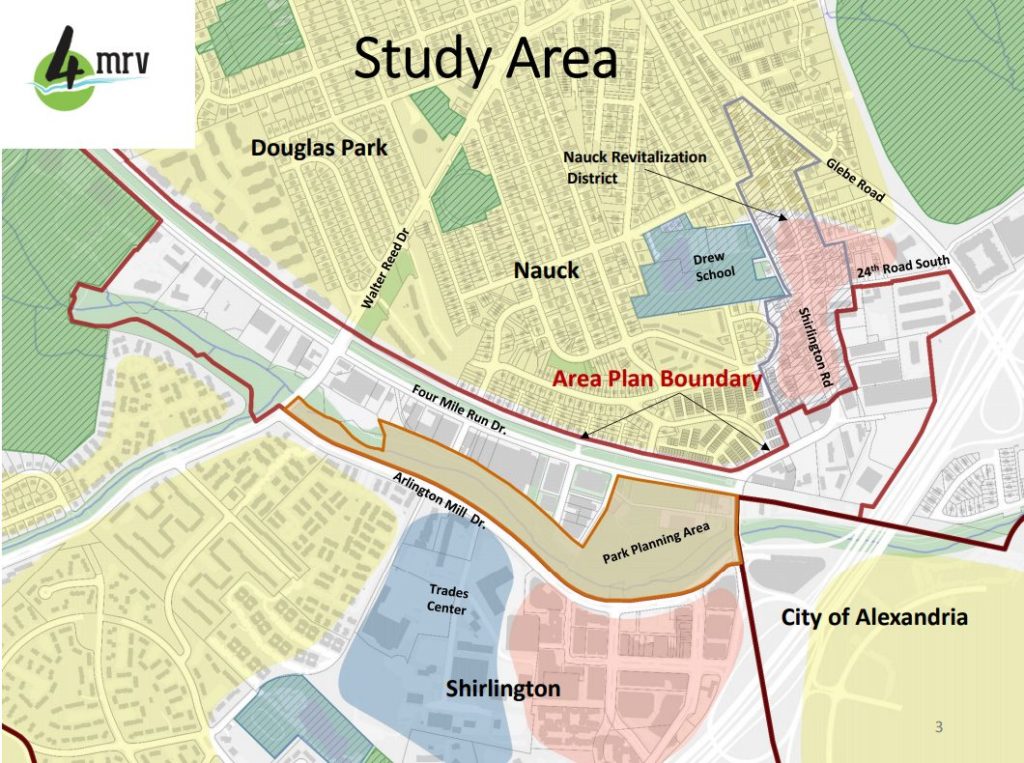
Arlington officials have, at long last, approved a new planning document to guide the Four Mile Run Valley’s future, one of the last remaining steps for the county to take in the years-long debate over the area’s development.

The County Board unanimously signed off on new “area plan” for the Nauck valley on Saturday (Nov. 17), sketching out the county’s strategies for fostering the preservation and growth of industrial and arts-focused businesses in the area.

The plan also lays out a series of potential road and parking changes in the area, which have prompted some community consternation even as the planning process wraps up. Some Nauck leaders have previously expressed grave concerns that county officials aren’t listening to their suggestions for the area’s development, and that includes fears about the road changes on the way for S. Four Mile Run Drive.

“An important element is missing: trust,” Nauck Civic Association President Portia Clark told the Board. “The county needs to work with us to repair the loss of trust… We were here before the planning process began, and we’ll be here long after.”

But Board members expressed broad satisfaction with the plan, despite those anxieties, arguing that the roughly three-year-long planning process delivered an outcome that will benefit the community for years to come.

“We’re going to all look back on this process, as occasionally challenging as it was, and see that this will be a true jewel for not only South Arlington, but the county as a whole,” said Board member John Vihstadt, the Board’s liaison to a working group convened to assemble the plan.

The Board previously adopted a broad “policy framework” guiding all manner of future changes to the area this spring. The working group and county staff then relied on that document to develop a parks master plan for the area, primarily focused on the overhaul of Jennie Dean Park, and then assembled the final area plan.

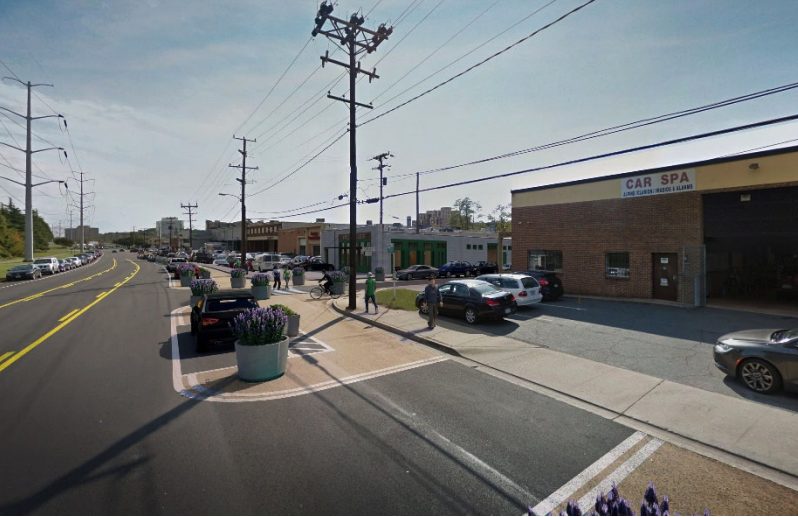
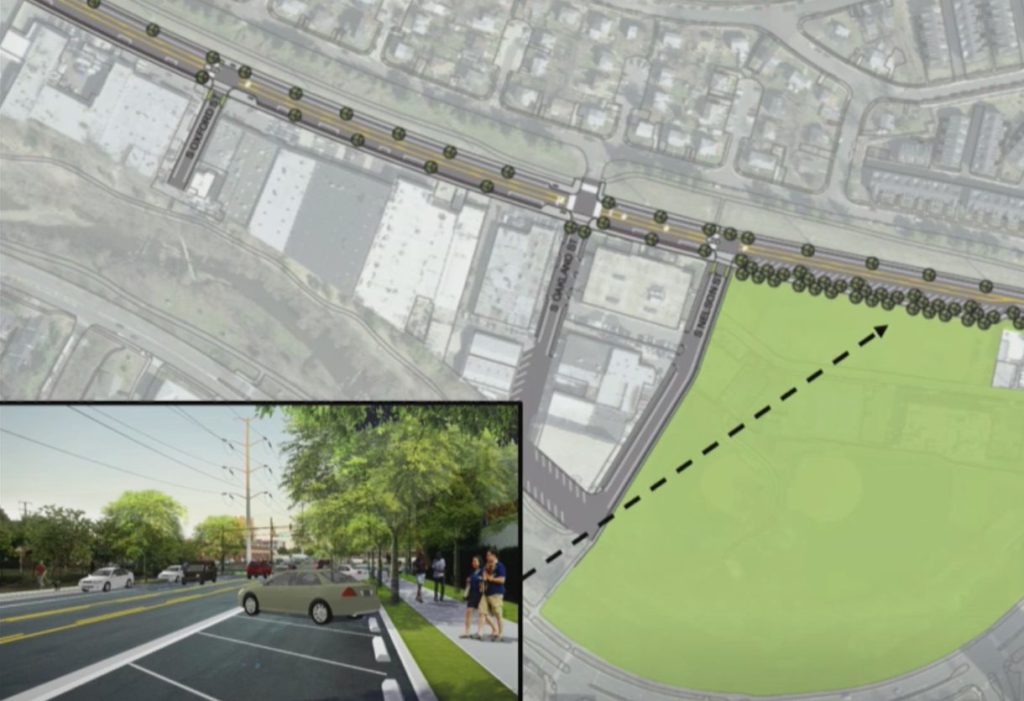
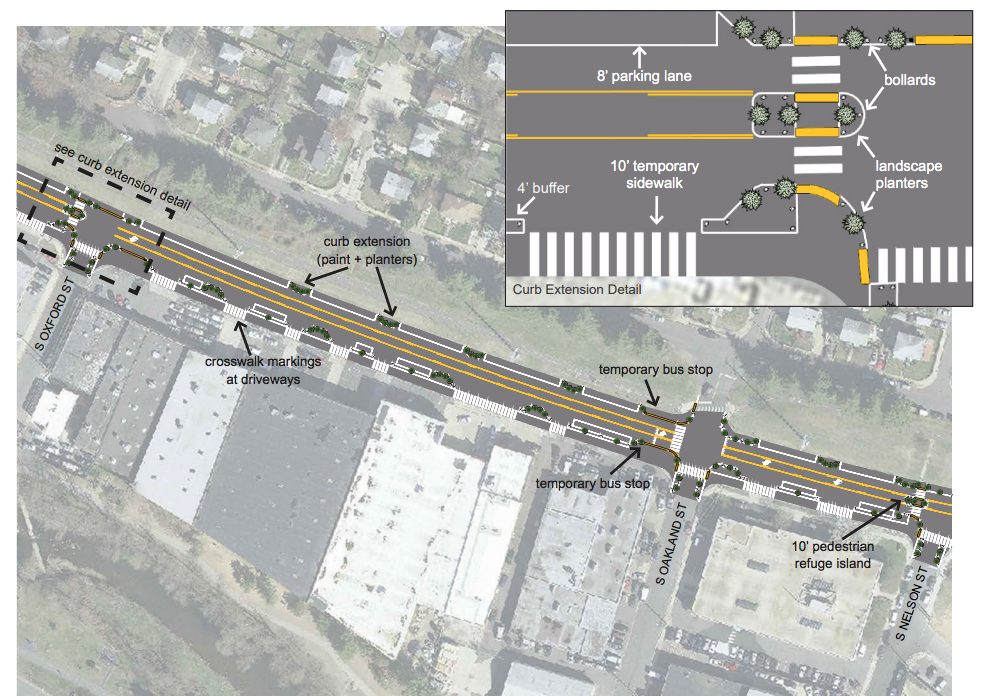
Among the document’s proposed changes are road alterations designed to make S. Four Mile Drive and some of its side streets more friendly for both cyclists and pedestrians, and free up more parking along the road. Changes will include new sections of sidewalk, a new pedestrian crossing island and curb extensions, as well as more robust parking restrictions and enforcement to encourage more turnover.

But those alterations will only be temporary, as the county examines whether they actually work. Officials could even initiate more dramatic changes going forward, like the addition of more angled spaces leading up to Jennie Dean Park and even the conversion of S. Four Mile Run Drive into a two-lane road with a dedicated middle turning lane.

“There are still some concerns on the road changes… but the community has accepted the ‘test first, build later’ strategy,” said Charles Monfort, chair of the Four Mile Run Valley Working Group.

Yet Monfort’s leadership of the group attracted a public rebuke from one of his fellow vice chairs in a Washington Post opinion piece, as Robin Stombler argued that the public engagement process on all manner of issues was flawed — Monfort insisted Saturday that “anyone’s who wanted to speak has had many opportunities to do so.”

But Stombler and other Nauck residents charged that the parking changes are simply the latest example of the community’s concerns being cast aside. Clark pointed out staffing challenges in the Arlington police department means officers have less time to dedicate to traffic enforcement, making any pledge to step up the policing of parking violations on S. Four Mile Run Drive a hollow one.

“It makes no sense to test parking restrictions that will not be enforced and will actually increase parking turnover problems,” said Anne Inman, one of the Nauck Civic Association’s representatives on the working group.

Vihstadt also expressed some trepidation that the county is “really engaging in real time” on these issues, worrying that officials might “prioritize beauty and aesthetics over operational, on-the-ground needs for businesses and people who inhabit and do commerce in the valley.”

But county planner Richard Tucker reassured concerned neighbors, however, that the county is “going to move forward with understanding we’ll come back on this and make changes” after a year or so, if the parking plans aren’t working as intended.

“We test a little bit, we see what we learn and then maybe we expand that to other areas,” said Board member Erik Gutshall.

Beyond the parking changes, Tucker added that there are still few elements left to the planning work for the valley. In January, the county will kick off discussions on potentially adding an arts district to the area (a controversial point in its own right) and then convene a broader discussion on land use and zoning a few months later.

By and large, though, Board members hope the area plan’s adoption signals a major step forward for the county in charting out the valley’s future.

“When I walk down to Four Mile Run 25 years from now, the built environment will not look fundamentally different,” said Board Chair Katie Cristol. “And that speaks to this effort and what we all value about this area.”


New Elementary School at Reed Site Approved — “The Arlington County Board today approved a new elementary school for up to 732 students at the Reed site, 1644 N. McKinley Road, in the Westover neighborhood. The Board voted unanimously to approve a use permit amendment for Arlington Public Schools to renovate and expand the existing Reed School/Westover Library to create a neighborhood elementary school.” [Arlington County]

Here’s Where Amazon is Coming, Exactly — Amazon will be leasing office space at three JBG Smith buildings in Crystal City: 241 18th Street S., 1800 S. Bell Street and 1770 Crystal Drive. Amazon also agreed to buy two JBG-owned land parcels in Pentagon City that are approved for development: PenPlace and the remaining portion of Metropolitan Park. [Washington Business Journal]

County Board Discusses Legislative Priorities — “A highlight of the County’s package is a call for ratification of the Equal Rights Amendment to the United States Constitution that was proposed by Congress in 1972. Both the Arlington League of Women Voters, and the Arlington Civic Federation have called on the General Assembly to ratify the ERA.” [Arlington County]

Arlington Projects Win at NAIOP Awards — Nine of the 29 real estate development projects lauded at the Best of NAIOP Northern Virginia Awards on Nov. 15 were Arlington projects. [NAIOP]

Neighborhood Conservation Projects Funded — “The Arlington County Board today approved $2.9 million in Neighborhood Conservation bond funds for projects in Cherrydale and Arlington Forest… The $1.84 million Cherrydale project will improve N. Monroe Street, between 17th Street North and 19th Street North… The $1.08 million Arlington Forest project will make improvements to Edison Park.” [Arlington County]

How DIRT Chose Ballston — “DIRT co-founders @jlatulip and @jamcdaniel visited many parts of D.C. and the greater DMV area before deciding to open in Ballston. ‘We noticed very quickly that this was a special community, one that we could call home and grow with. We love the energy of the neighborhood — Ballston is a young, active community, which fits DIRT perfectly.'” [Instagram]

Verizon FiOS Outage — Verizon’s FiOS service suffered a major outage in the D.C. area yesterday. [Twitter, Twitter]

Flickr pool photo by Tom Mockler


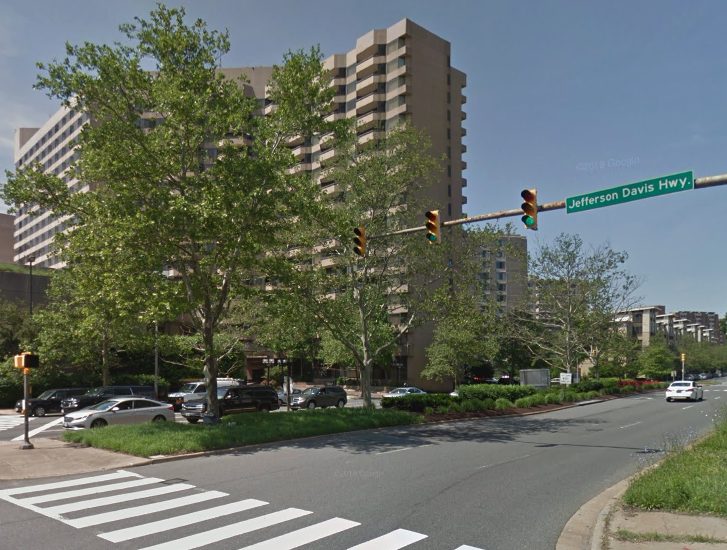
Arlington officials are gearing up once more to ask state lawmakers for permission to change the name of the county’s section of Jefferson Davis Highway, and adopt Alexandria’s new chosen moniker for the road.

The County Board will review its legislative agenda for the upcoming General Assembly session for the first time tomorrow (Nov. 17), sketching out a host of priorities they hope the county’s representatives in Richmond will fight for when the legislature reconvenes in January. The county has long hoped for the state’s permission to change the name of Route 1, but Alexandria’s move to rename its section of the road “Richmond Highway,” when combined with Amazon’s impending arrival in Crystal City, could well lend new urgency to the effort.

Virginia law bars localities from assuming powers that aren’t specifically ascribed to them by the state code — a principle commonly referred to as the “Dillon Rule” for a notable court case on the matter — and that means the county doesn’t have the ability to change the highway’s name without the General Assembly’s permission.

But Republicans have consistently blocked any efforts to give Arlington the authority it needs to strip the former Confederate president’s name from the highway. Most recently, State Sen. Barbara Favola (D-31st District) introduced a bill to do so earlier this year — that measure was killed on a party-line vote in a Senate committee.

This time around, Arlington could specifically ask lawmakers for permission to “rename the section of Jefferson Davis Highway that runs through the county with the same name adopted by an adjacent jurisdiction,” in a nod toward Alexandria’s June vote to rename the highway. As a city instead of a county, Alexandria has a bit more latitude on the matter.

Republicans still hold narrow majorities in both the House of Delegates and the Senate, however, meaning that any name-change effort will face an uphill battle once more. Amazon’s decision to locate its new headquarters in the exact section of Arlington that’s home to Jefferson Davis Highway could prove to be a complicating factor, though.

Gov. Ralph Northam frequently made the state’s “inclusivity” a key part of his pitch to the socially conscious tech giant, and many Arlingtonians have pointed out the incongruity of Amazon’s public positions on social issues with a new headquarters sitting in the shadow of signs tied to the state’s legacy of slavery.

The County Board is set to open up the legislative agenda for a public hearing at its Dec. 17 meeting, then sign off on the document soon afterward. Other notable proposals include a renewed push to issue driver’s licenses to non-citizens, the expansion of renewable energy initiatives and the maintenance of last year’s dedicated funding deal for Metro.

Photo via Google Maps


View More Stories