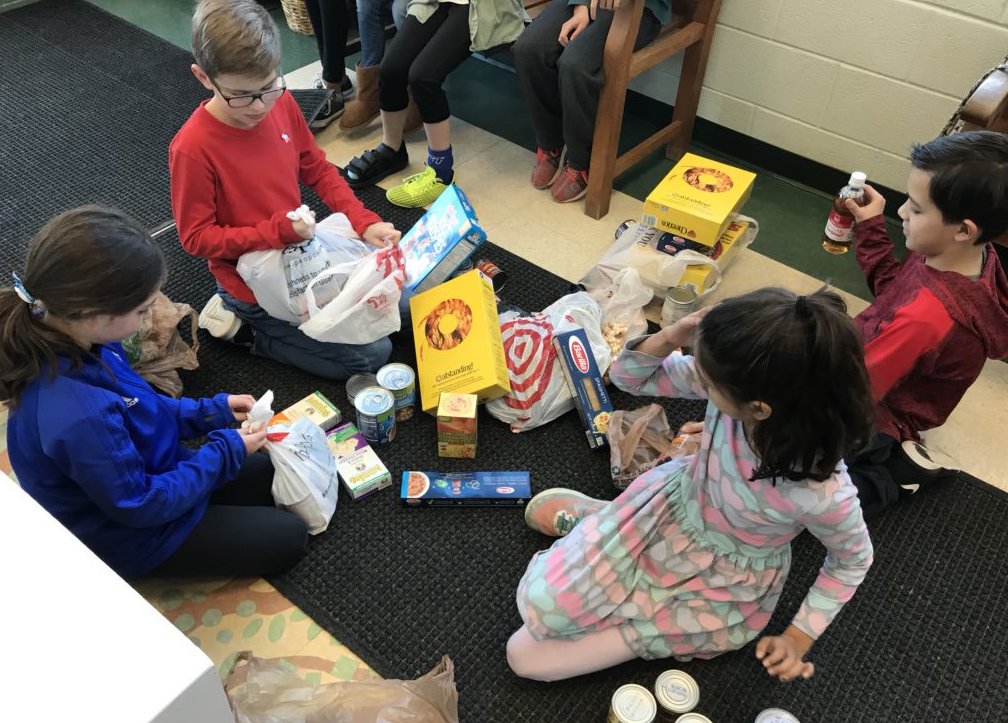
Democrat Matt de Ferranti wants to end child hunger in Arlington if he wins a spot on the County Board next week, and he says he can achieve that goal in the next four years.

In debates, campaign mailers, and his official platform, de Ferranti has pledged to ensure that no child in the county goes hungry by the time his first term on the Board would be up in 2022.

It’s a target that some observers think Arlington can meet, but gives others pause. And, crucially, it’s a key area of difference between de Ferranti and the man he’s hoping to unseat: independent John Vihstadt, the first non-Democrat to sit on the Board since 1999.

Both of the contenders for the lone Board seat on the ballot this fall want to reduce hunger in the county, of course. Yet the pair differs on how to achieve that goal, and how much the Board should prioritize it in the first place, providing a clear contrast between candidates who otherwise broadly agree on many of the pressing issues facing the county.

“The differences between me and my opponent are not always in votes, they’re often in agenda and focus,” de Ferranti told ARLnow. “I think we have to call Arlingtonians to be committed to this equity and be a caring, compassionate community on hunger in ways that we haven’t been called to until this point.”

Vihstadt and de Ferranti agree that the county could use more data on hunger and food insecurity in Arlington, and say they’d support a new study of the matter. The Arlington Food Assistance Center (AFAC) teamed up with Virginia Tech to release a paper on the matter back in 2012, and both Board contenders are eager for an update to that document.

Yet the incumbent admits to being a bit puzzled that de Ferranti is bringing up the issue so frequently in the first place, and would much rather wait for more information before acting.

“He is the only one who’s talking about critical gaps in child hunger,” Vihstadt said. “I haven’t heard an explanation of why we’re doing this by 2022 and why we’re only talking about child hunger versus senior hunger. He’s raised a good issue, but I would want to see more analysis on this.”

De Ferranti says he’s so focused on child hunger, specifically, because research links food insecurity to stunted development among children, and suggests that kids learn less if they come to school hungry. But he’s also relying on data from AFAC, the most prominent Arlington nonprofit focusing on hunger, claiming the numbers demand urgent attention to child hunger.

Charlie Meng, the executive director of AFAC, says de Ferranti is right to do so, and notes that he’s raised the issue with the County Board. In data Meng provided to ARLnow, AFAC has indeed seen a steady increase in the number of people requesting meals through the center, and an increase in the number of children served, specifically.

The numbers show that, in fiscal year 2014, AFAC served meals to 3,034 children. That number crept slowly upward over the years, and AFAC served 4,349 children in fiscal year 2018, an increase of about 43.3 percent over those four years.

“The question to the county is always: what’re your priorities?” Meng said. “It’s not always the government’s responsibility, but better support and coordination would go a long way to solving this issue.”

Meng believes that de Ferranti is absolutely correct that the county could effectively cut the number of hungry kids to zero within the next few years, “especially if the coordination and the desire to is there.

On that front, Meng thinks a good place to start would be sending AFAC more money each year.

The county currently allocates about $478,000 annually to help the nonprofit stay afloat, but Meng says AFAC largely depends on private donors to afford its roughly $7.5 million yearly operating budget. For the last two years, the county tacked on an extra $50,000 in one-time funds to send to the center, but the Board declined to do so this year amid a tight budget crunch.

Meng says he hasn’t needed to cut back on any of his programs after losing out on that money, but he has had to work a bit harder to fundraise to make up the difference. He believes that restoring that money, and even sending AFAC a bit more, would make a huge difference in helping the nonprofit identify hungry kids and reach them.

“They give me $478,000, and I give them $7 million in services,” Meng said. “The deal I give these guys is crazy. If you take money away, I can make it up, but it never makes anything easy.”

De Ferranti says he strongly disagreed with the Board’s decision not to send AFAC the additional funding. Even in a challenging budget environment, he argues “we should not be cutting back when the need in terms of the number of families per month has not decreased.”

Vihstadt is sympathetic to Meng’s case, but points out that AFAC already receives more county financial support than most nonprofits in Arlington. Similarly, he said the Board decided not to tack on any more funding in this year’s budget because members trusted in Meng’s fundraising prowess.

“There are nonprofits who are struggling and who do great work: AFAC is not one of them,” Vihstadt said. “I know he used that $50,000 reduction as an opportunity to raise money. I would love to know how much he raised as a result.”

Others working on the issue of child hunger across the state wonder if a focus on services in county schools might be the surer way for Arlington to reach de Ferranti’s goal.

Claire Mansfield, the director of No Kid Hungry Virginia, says her organization largely focuses on making sure schools offer “healthy, nutritious” meals for breakfast and lunch, as that’s generally the easiest way to reach kids who might not know where their next meal is coming from at home.

She’s particularly interested in making sure that schools not only serve a healthy breakfast, but do so as part of the regular school day, which can “remove the stigma” around students looking for a free or reduced price meal.

Mansfield points out that some, but not all of Arlington’s schools offer breakfast in the classroom — Arlington Public Schools spokesman Frank Bellavia says Randolph Elementary, Oakridge and Hoffman-Boston all do so, though Randolph only offers it to preschoolers and kindergarteners.

Mansfield says expanding such programs can have a huge impact, and that Oakridge has already seen a difference since starting breakfast in the classroom. According to her data, only 24 percent of students at the school eligible for free and reduced lunch ate breakfast in the 2014-15 school year; by last year, that number was up to 85 percent.

She added that schools can be key destinations for hungry kids looking to receive meals over the summer. Bellavia said the school system set up nine such “summer meal sites” this year, and Mansfield believes such options are a key way to fill in “gaps” in reaching families in need.

However, she’s a bit more hesitant than Meng to declare that simply following her prescriptions could definitively end child hunger in the county.

“I’m not one to put a timeline on that per se; if I could do it tomorrow I would do it tomorrow,” Mansfield said. “It’s just a case of making a commitment and saying, ‘We know how to solve this and we’re going to do what it takes.'”

Meng says he’s more than willing to do more work with county schools — in fact, one of his priorities is to expand AFAC’s “summer backpack program,” partnering with schools to reach hungry kids when class isn’t in session.

But to do so, he needs more money, and he says that’s where the County Board’s leadership matters on this question.

“We hear all the time, ‘Where are these people who need food?'” Meng said. “All you have to do is look around. Where do you think these people come from who are washing your dishes, doing your laundry, getting paid $7.25 an hour? We have them in this community. But we may not very long.”

Photo via @NottinghamSCA


Street Smart Campaign to Start Up Next Week — “As part of the Arlington County Police Department’s overall traffic safety program, the Special Operations Section is again participating in the Metropolitan Washington Council of Governments’ Fall Street Smart campaign. This region-wide public safety campaign, which runs from November 5 – December 2, 2018, aims to educate drivers, pedestrians, bicyclists, and scooter operators about existing traffic laws and how to safely share our roadways.” [Arlington County]

County Board Lauds County Staff — In a video posted on YouTube, County Board Chair Katie Cristol and Vice Chair Christian Dorsey said “thank you” to Arlington County staff for the hard work that helped propel the county to high resident satisfaction ratings. “We are really proud of you… of your commitment to excellence and the role you play in making Arlington a terrific community.” [YouTube]

Bicycling Meetups This Fall — “Fall has arrived in Arlington, leaves have started to change colors, and temperatures are dipping overnight… If you’re looking for a good excuse to ride bikes and drink coffee this fall, like I do, there are plenty of local opportunities to make that happen.” [BikeArlington]

Photo courtesy Dennis Dimick


(Updated Thursday at 3 p.m.) Metro leaders are hoping to increase service during the morning and evening rush hours next year, but they could well face an uphill battle in convincing Arlington officials to help fund the change.

WMATA General Manager Paul Wiedefeld proposed a budget for the new fiscal year that doesn’t include any fare increases, but does call for rush hour service to extend to 10 a.m. and 8:30 p.m. to better serve commuters. The budget, set to be reviewed for the first time by Metro’s Board of Directors tomorrow (Thursday), also beefs up service on the Yellow and Red lines and expands all trains to a maximum eight cars as part of a broader bid to win back riders for the struggling rail service.

The catch, of course, is that such service increases won’t come without a steep price tag. Even though Metro expects to bring in some new revenue with the added service, Wiedefeld expects that he’ll need an extra $20 million from Maryland, D.C. and Virginia to afford those changes.

Virginia relies on individual localities like Arlington to chip in for WMATA each year, and that means Wiedefeld’s proposed changes would increase the county’s annual funding obligation to Metro from $75 million each year to $83 million. That works out to a 9.8 percent increase, a number that is giving Arlington officials some real pause.

“It’s not that it’s a bad idea,” County Board Chair Katie Cristol told ARLnow. “It’s a question of, where does the money come from?”

Christian Dorsey, the County Board’s vice chair and Arlington’s representative on the Metro Board of Directors, agrees that he’d love to see some service increases, particularly as Metro wrestles with a thorny internal debate about how to boost ridership. Yet he’s concerned that Arlington won’t be able to afford all of Wiedefeld’s changes, at least all at once.

The county is already dealing with an intense funding squeeze, driven in part by falling revenues but also by the deal struck by state lawmakers to provide dedicated funding to Metro, which already put a larger burden on Arlington’s budget. This latest funding increase could make the county’s already grim financial picture even gloomier, Dorsey said.

“That’s a challenge, and there’s not the ability for any jurisdiction to just say, ‘Let’s take this budget and adopt it as is,'” Dorsey said. “I’ll be honest with you, this surprised me… I can’t quite come up with a rational reason why these service enhancement proposals were developed in this way.”

As Dorsey puts it, “something’s got to give, and something’s got to shift” in Wiedefeld’s proposal. He expects that some of the proposed changes to boost ridership “might need to wait until later,” due not only to Arlington’s specific budget challenges but one specific issue affecting all of Virginia’s localities.

A provision included in the dedicated funding deal prohibits the state from increasing its funding level to Metro by more than 3 percent each year, as part of a bid to control costs. Yet Wiedefeld’s proposal calls for an increase closer to 16 percent for the entire state, though that is largely driven by new construction costs for the second phase of the Silver Line, borne primarily by Loudoun County.

To Cristol, who doubles as the secretary-treasurer of the Northern Virginia Transportation Commission and argued forcefully for the dedicated funding legislation last year, fighting to exceed that 3 percent cap seems like a perilous decision for Metro.

(more…)


Independent County Board member John Vihstadt managed to pull in more cash contributions than Democratic challenger Matt de Ferranti over the final month of the race, but de Ferranti has kept his campaign afloat financially thanks to hefty loans from both himself and his mother.

Vihstadt, the first non-Democrat to win a seat on the Board since 1999, raised about $27,400 from Oct. 1 through Oct. 25, according to campaign finance documents released yesterday (Monday). De Ferranti pulled in about $21,100 over the same time period, after quite narrowly out-raising Vihstadt over the course of September.

But, in total, the Democrat reported raising about $66,100 over the course of the last month, thanks to $45,000 in loans. De Ferranti himself supplied $25,000, while his mother, Margot, lent the campaign $20,000. In the run-up to his primary win over Chanda Choun, de Ferranti and his mother both loaned the campaign $4,000 as well.

De Ferranti also donated $3,500 directly to his campaign, though that was far from his largest contribution for the fundraising period. The Leaders in Education Fund, the political giving arm of the advocacy group Leadership for Educational Equity, cut de Ferranti another $10,000 check after previously doing so last month.

None of Vihstadt’s contributions were more than $1,000 each. However, Steve Harris, the owner of the Arlington-based Mr. Wash Car Wash chain, did chip in a total of $2,000 to the campaign over the course of October, the documents show.

The incumbent, who’s seeking his second full term on the Board after winning a special election and then the general against Alan Howze in 2014, also bested de Ferranti when it came to small-dollar donations. Vihstadt notched 72 contributions of $100 or less, for a total of $4,425, while de Ferranti managed 55 for a total of $2,943.

The Democrat has also managed to spend down the bulk of his campaign account, shelling out nearly $124,500 in the last month alone. He now has about $10,850 left for the campaign’s remaining days.

Vihstadt’s spending was also in the six figures for the final month — he reported about $111,650 in expenses — but his larger campaign war chest means he still has about $58,300 left in the bank.

The independent incumbent has now marshaled just over $212,598 to support his re-election bid. De Ferranti’s total is slightly behind that at around $203,100, but that includes the $53,000 in loans he and his mother have provided to the campaign. Records do not show any loans made to Vihstadt’s campaign.

Voters will decide the lone County Board race on the ballot next Tuesday (Nov. 6).

Photo via Facebook


When Is Trick Or Treating in Arlington? — Wondering about tomorrow’s Halloween candy gathering? There are no official trick-or-treating hours in Arlington, but as in previous years you can expect to see the first little ghouls and goblins around 6 — sometimes a bit earlier — and the last door knocks should happen by 8 or 9 p.m.

Engagement Ring Found in Courthouse — “I found an engagement ring today on Wilson and N. Troy… Happy to reunite if owner can provide accurate description!” [Twitter]

ACPD Lieutenants to Split Settlement — “Lieutenants in the Arlington County Police Department will split a pot totaling $1.24 million and the county government would avoid the possibility of legal action under an agreement inked – without public notice – on Oct. 23. The agreement, tacked on without forewarning to the community at the end of a County Board meeting, brings the county government in line with changes in federal law regarding overtime payments through the Fair Labor Standards Act.” [InsideNova]

AWLA Fundraiser a Success — Via an email from the Animal Welfare League of Arlington: “We are thrilled to announce that $45,000 was raised for animals in need at our 3rd annual Pints4Paws Pet Fest! We are so grateful to the more than 800 guests that attended, and to all of the volunteers and sponsors that made this event possible.  Thanks to you, we are going to be able to continue saving thousands of lives every year!”

Emergency Exercise at Fort Myer — Joint Base Myer-Henderson Hill “will conduct a Full Scale Exercise today, Oct. 30. Community notifications will be delivered until 4 p.m. by text, email, and loudspeaker.” [Twitter]


Elections around Arlington may not attract the sort of expensive TV ads that have come to dominate local stations ahead of the midterm elections, but candidates around the county have shelled out thousands to bring their messages to Facebook.

An ARLnow analysis of the social media site’s political ad database shows that Arlington’s six candidates for Congress and local office on the ballot this fall have combined with the county’s party committees to buy 549 Facebook ads from Jan. 1 through today (Oct. 29).

Thomas Oh, the Republican mounting a longshot bid to unseat Rep. Don Beyer (D-8th District), led the way among the county’s candidates, buying 100 ads on the site since launching his campaign in February. According to campaign finance reports, he shelled out about $2,100 to pay for those posts.

But Oh was far from the bigger user of Facebook ads in Arlington — that distinction belongs to the Arlington Young Democrats, who have purchased 270 ads on the platform over the course of the year. The Arlington County Democratic Committee wasn’t far behind, buying 91 ads.

The county’s candidates for local office have relied on social media advertising a bit less, but have still used Facebook to reach thousands of potential voters.

In the lone race for a County Board seat this year, pitting independent incumbent John Vihstadt against Democrat Matt de Ferranti, the challenger has run a bit more Facebook ads so far.

According to Facebook’s database, de Ferranti has run 34 ads on the platform since launching his campaign in January. Records show he’s spent nearly $1,900 on Facebook ads in all, though campaign finance documents only detail spending through end of September — candidates will release their final reports of the campaign later this week.

Of the Democrat’s ads, 19 ran in the run-up to his primary victory over Chanda Choun in June, with 15 reserved for the general election contest with Vihstadt. In general, de Ferranti’s ad buys have each been less than $100 each, with only seven falling in the range of $100 to $500 — Facebook only provides ranges, not specific numbers, for spending and traffic figures.

Two of de Ferranti’s ads picked up between 50,000 and 100,000 impressions, while two others range between 10,000 and 50,000.

By contrast, Vihstadt has only run 10 ads on Facebook so far. His current campaign finance reports only show him spending about $100 on the posts, but he’s ramped up his activity on Facebook in October, meaning his spending will be reflected in the next set of reports.

However, Facebook’s database shows that the incumbent has recorded four ad buys of $100 or more, and one of more than $500, in all. He’s also had two ads reach between 50,000 and 100,000 impressions and two more range between 10,000 and 50,000.

Notably, Vihstadt has also turned to television advertising, and recently started running a single ad on local cable stations.

In the contest for the only School Board seat on the ballot, independent (and frequent candidate) Audrey Clement has outpaced incumbent Barbara Kanninen, who has the endorsement of local Democrats in the nominally nonpartisan race.

Clement has run 32 ads this year, spending about $1,520, according to campaign finance reports. She’s only spent more than $100 on three separate ad buys, but she’s still managed to reach plenty of people. Eight of her ads have secured between 5,000 and 10,000 and impressions, while two have managed between 10,000 and 50,000.

Kanninen has run just 12 ads, by comparison, sending about $241 to Facebook in all. Her ads have been viewed a bit less, with three ranging between 1,000 and 5,000 impressions and one making it to the 5,000 to 10,000 range.

Beyer appears not to have a run single ad on Facebook, despite raising more than $1.9 million over the course of his bid for a third term in Congress. However, he has benefitted from plenty of ads touting his candidacy from the local Democratic committee and the Young Democrats.

Oh faces quite the uphill battle to best Beyer, considering that the 8th (covering all of Arlington and parts of Alexandria) is among the safest districts for Democrats in the country. But the first-time candidate has managed to attract some attention to his Facebook ads at least, with four attracting between 10,000 and 50,000 impressions and seven attracting between 5,000 and 10,000. He’s spent more than $100 on seven different ad buys, which has surely helped boost those traffic numbers.

Facebook’s records don’t show any evidence of any ad spending from the county’s Republican committee, or its Green Party.

Disclosure: both Clement and Vihstadt have purchased ads on ARLnow.com. Flickr pool photo via wolfkann


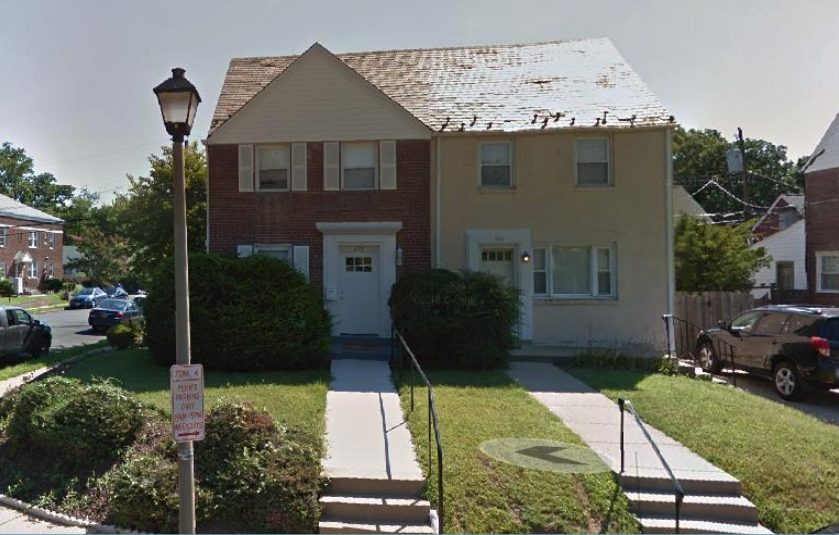
The Arlington County Board has signed off on some zoning changes to make it easier for the owners of older townhouses and duplexes to renovate or expand their homes.

The Board voted unanimously yesterday (Tuesday) to amend the county zoning ordinance to allow for more changes to “nonconforming homes” — structures built before the county’s zoning rules took effect back in 1942 that might not match current standards. The move will simultaneously remove some headaches for certain homeowners and help preserve affordable housing options for the county’s middle class.

The county’s old rules have frequently frustrated the owners of certain types of homes, who were previously barred from commissioning even simple renovations without enduring a lengthy county appeals process. That incentivized tear-downs over renovations, which in turn reduced the county’s stock of market rate affordable housing.

“This is the kind of stock we hope will age over time and become more affordable,” Board Chair Katie Cristol said Tuesday. “I feel so strongly that this is a move for the better, not only for these individual homeowners, but for the preservation of this stock, that will allow the current and next generation of Arlington’s middle class to move in and own a piece of this community, or rent a piece of this community.”

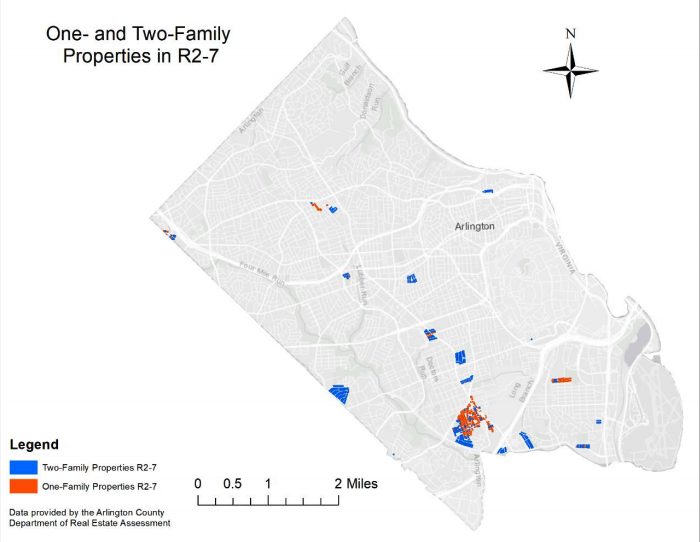
County planner Kellie Brown told the Board that the changes could allow for interior “by right” renovations at more than 600 homes, which won’t require extensive county review, and exterior additions or expansions at roughly 1,500 partially detached homes or townhouses. While the changes will impact all nonconforming homes in areas zoned “R2-7,” county staffers say that the bulk of the impacted houses are located along Lee Highway, Columbia Pike, Wilson Boulevard, and in Nauck.

John Quirk, who owns a duplex with his wife in the North Highlands neighborhood near Rosslyn, counts himself among the homeowners who plan to take advantage of the change. He launched a petition urging the Board to make just these sort of zoning changes last December, after the county’s Board of Zoning Appeals denied his family’s attempts to convert an unused attic into a third-story bedroom.

“At first we didn’t even know you were prevented from doing that, so we were really frustrated,” Quirk told ARLnow. “But this is just an example of the government working for people. The Board was very receptive to all this.”

Quirk says he worked with his neighbors and other homeowners to make the Board aware of these challenges, and he credits the county’s “measured approach” in studying the issue in more detail before moving ahead with the changes.

He also lauded the Board for living up to its stated goal of preserving affordable housing in the county, noting that he and his wife were considering moving elsewhere in Northern Virginia, as they “can’t afford a $1.1 million house in Lyon Village.” Quirk fully expects that plenty of others have faced the same problems maintaining a reasonable “work-life balance” of commuting into D.C. while coping with Arlington’s rising housing costs, and he looks forward to starting work on his own duplex sometime early next year.

“By living in these smaller homes, we’re a demographic that creates population density,” Quirk said. “And that makes Arlington the great, walkable community that it is.”

(more…)


A Nauck church now has the green light to redevelop a former YMCA center into a new community pool, after Arlington officials signed off on a host of new zoning changes designed to make the construction of such pool projects a bit less onerous.

In back-to-back unanimous votes yesterday (Tuesday), the County Board approved the pool zoning tweaks, then used those new rules to give Macedonia Baptist Church the go-ahead to build the new pool at 3440 22nd Street S.

The site has been home to a pool and bathhouse since the 1960s, but the YMCA’s closure back in the mid-2000s left the building empty. Yet, when Macedonia sought to redevelop the site into a new “family life center,” the church ran into some zoning restrictions that could’ve made the whole project impossible to complete.

The Board was unwilling to completely re-write its zoning rules, but it would agree to make community pool projects (which are backed by nonprofit groups and not limited to a specific neighborhood) eligible for “use permits” in order to give the Board discretion to review the projects on a case-by-case basis, rather than subjecting every pool to the same standards.

That mean that the Board could sign off on Macedonia project under the newly approved zoning ordinance, even though it would’ve previously run afoul of rules requiring larger setbacks from the neighborhood’s streets. Board member John Vihstadt even dubbed the twin votes “a double win” for the community, and the county.

“We are demonstrating some nimbleness and alacrity in making a needed change that responds to new trends,” Vihstadt said. “This is so important, not just for the youth and individuals in the Nauck community… but also for entire Nauck neighborhood.”

The Macedonia project will include a seven-lane pool, a “seasonal dome” to allow year-round swimming and an auxiliary community center to sit alongside the existing Funshine Preschool. The church also anticipates allowing the Arlington Water Polo Club to use the facility for practice and training, though church representatives stressed that the pool will be open to anyone.

“Years ago, when the pool was there, it was beneficial to children and adults as well,” Macedonia congregant Laverne Langhorne told the Board. “We really do miss the pool.”

But beyond the importance of the Macedonia project on the micro level, Board members said they view the changes as an important step for the whole county.

The county currently has only five other community pools, and with zoning rules last revised in the 1950s, Board member Erik Gutshall said it was reasonable to assume that the old regulations meant “we really were never going to get another pool again.”

“This is the recognition by the Board that large parts of the county are no longer suburban,” Gutshall said. “We had a suburban style zoning ordinance… and while there are still parts of the county that are more suburban than others, what we’re doing now is untying our hands. We won’t just look at this with a suburban zoning code again.”

Photo via Arlington County


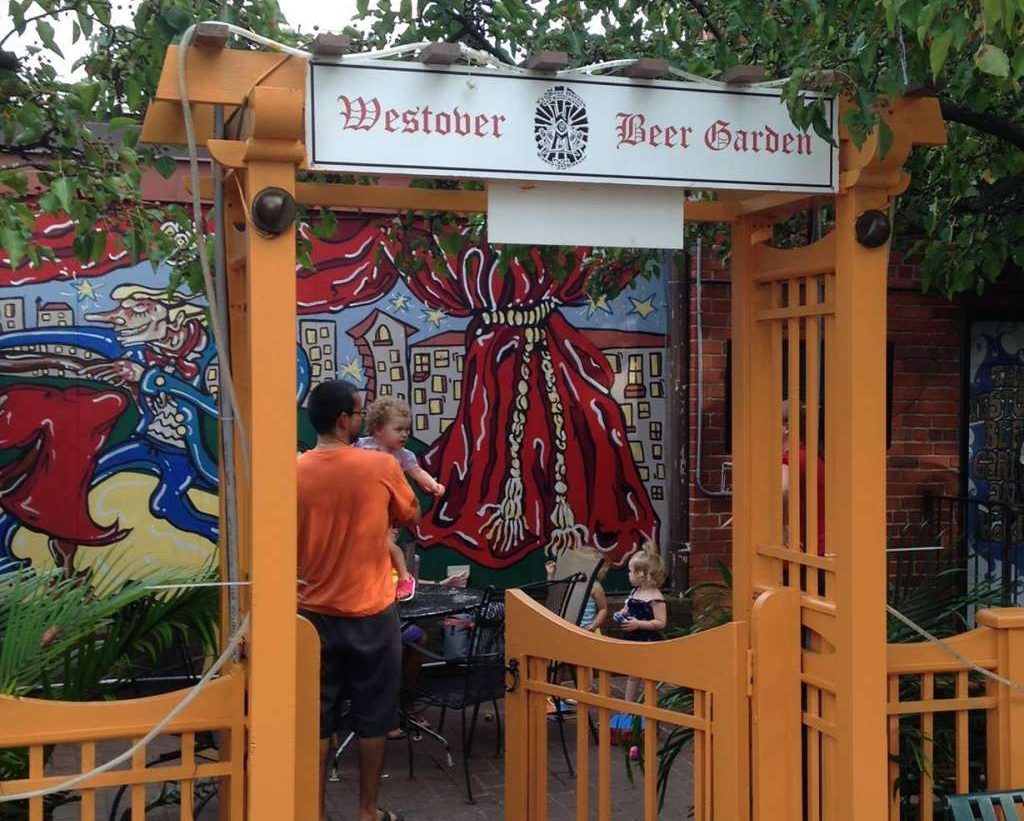
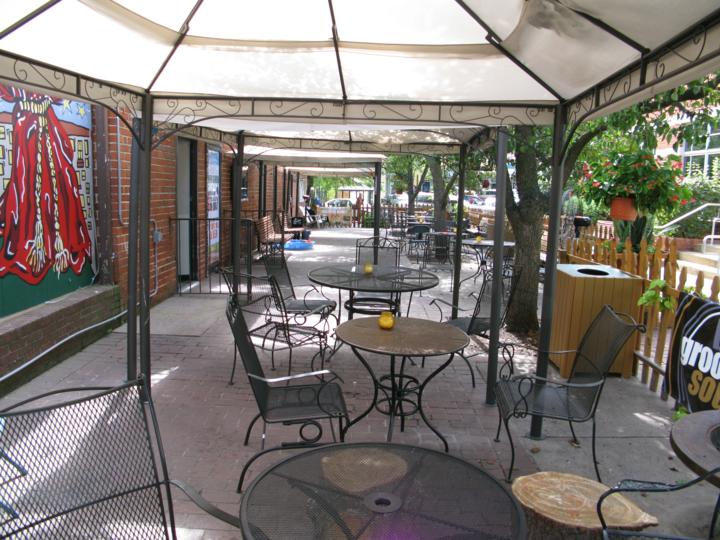
The Westover Market and Beer Garden will still be able to offer outdoor amplified music after striking a new deal with county officials, offering a compromise to placate neighbors who remain concerned about the noise emanating from the establishment.

The County Board unanimously agreed to revamped permit requirements for the popular beer garden Saturday (Oct. 20), stipulating that musicians at the restaurant will only be able to play amplified music outside until 9 p.m. on Fridays, one hour short of the current 10 p.m. limit. The Board is also requiring the restaurant to submit a modified “sound management plan” by this coming March.

County staff originally urged the Board to ban all amplified music at the beer garden, arguing that the restaurant had repeatedly violated its noise limits and elicited a number of complaints from people living in the residential neighbors surrounding the location at 5863 Washington Blvd. The beer garden has drawn all manner of county scrutiny in recent years, from its noise levels to its compliance with county permit regulations.

Yet the restaurant’s owners offered to limit outdoor music on the weekends as a middle-ground solution, and it was one the Board happily accepted.

“The Board recognizes that the Westover Beer Garden is a popular gathering spot for the neighborhood,” Board Chair Katie Cristol wrote in a statement. “But it also is close to homes. Arlington’s mixed-use neighborhoods, where we sometimes have commercial uses very close to homes, depend on everyone following the rules to work. By reducing the hours for amplified outdoor music, the Board is seeking to address the violation, while also giving the beer garden a path forward to comply with the conditions of its use permit.”

Several beer garden patrons spoke in support of the restaurant Saturday, noting that noise in the parking lot of the restaurant’s shopping center would often rise to the same level as the decibel limits set on the restaurant by the county. The beer garden has the distinction of being the only establishment in Arlington with an “outdoor live entertainment use permit,” according to the county, and its supporters argued that it’s generally abided by the permit’s strictures over the years.

“There are some things you have to accept as part of a big picture with wherever you live,” Dee Doyle told the Board. “There’s some noise, but that’s part of the bargain… The benefits of this business vastly outweigh any negatives.”

The Westover and Tara-Leeway Heights civic associations both urged the Board to maintain the beer garden’s live music permissions, and the restaurant’s backers argued that only a few disgruntled neighbors were complaining about the noise generated by the establishment. According to a new county staff report prepared for the meeting, county police received 12 calls about noise at the restaurant between April and October, but 75 percent of those calls came from the same two households.

But Thomas McCall, who lives near the restaurant, argued that people living on both sides of Washington Blvd have come together to protest the beer garden’s disruptions. He viewed the depiction of his fellow neighbors as “selfish” for complaining as a frustrating one, noting that he felt the neighborhood had tried to work with the restaurant in good faith on the issue.

“This permit modification allows the music to continues, allows the the patrons to continue to enjoy the beer garden, and alleviates the problems for nearby neighbors,” McCall told the Board.

Yet Bill Lawson, an attorney for the beer garden, argued that “if these guys can’t have amplified music, there’s just no point” in offering live entertainment outside at all.

“If you complain often enough and loud enough, you might succeed in shutting this business down,” Lawson said.

He offered the reduced hours as one way to address the issue, and added that owners David and Devin Hicks would also be willing to offer an independent “ombudsman” to monitor noise levels on a regular basis.

The Board was eager to sign off on that compromise, though many members expressed consternation that the issues at the beer garden have so frequently required their mediation.

“We want to build community, but at the same time, as we grow and change, if people have a nice home and a nice situation, we need to make sure they suddenly don’t hear a lot of music where they live,” said Board member Libby Garvey.

The Board will review the beer garden’s permits once more next October.


Major Crystal City Development Approved — “The Arlington County Board today approved a two-phase plan to redevelop a portion of Crystal Square, in the heart of Crystal City. The project will add 100,000 square feet of street-oriented retail businesses, including a new Alamo Drafthouse movie theater and a grocery store, to Crystal Drive, and upgrade an existing office building to ‘Class A’ office space.” [Arlington County]

Sunflower Restaurant Closed in Falls Church — Vegetarian restaurant Sunflower recently closed its location in Seven Corners. In its place, Bawadi Mediterranean restaurant has opened. Meanwhile, Sunflower has a location in Vienna that remains open. [Twitter]

HUD Grant to House Low-Income Arlingtonians — “The nearly $464,000 HUD Housing Choice Mainstream Voucher Grant is a specialized voucher program that will help non-elderly persons with disabilities who are transitioning out of institutional settings, at risk of institutionalization, homeless, or at risk of being homeless, rent housing in Arlington. The County’s Department of Human Services expects 40 Arlington residents to will be housed through the grant.” [Arlington County]

Another Arlington Money Diary — Another Arlington resident is the subject of a Refinery29 “money diary.” The latest profile subject is “an administrative assistant working in law who makes $57,000 per year and spends some of her money this week on candles for her daughter’s birthday cupcakes.” [Refinery29]

GW Unveils New Clubhouse at Barcroft Park — “[GW] Baseball’s first on-site clubhouse was unveiled at Tucker Field Saturday after more than a year of renovations. The Fassnacht Clubhouse and Training Facility is a 6,200-square-foot space that includes a locker room, coaches’ offices, a players lounge and an indoor turf training space. Each player received a customized locker, and the existing batting cages at the field were also enclosed, according to an athletics department release.” [GW Hatchet]

Fall Foliage Mostly MIA in Va. — “By the final third of October, fiery colors of fall are usually all over the place in the Mid-Atlantic and Northeast. Not this year. While we are still at least a week or two from typical peak fall foliage in the immediate D.C. area, this year’s delay in autumn color is unlike anything in recent memory.” [Washington Post]


Facing a combined budget gap of up to $75 million, Arlington County Manager Mark Schwartz is eschewing the usual divvying up of leftover funds from the last fiscal year and instead proposing to roll them over with an eye on next year’s budget.

Schwartz will recommend at Saturday’s County Board meeting that the $21.9 million in unspent funds available to the county remain primarily unallocated, with $16.5 million being set aside to give the Board more options going into the next budget process.

“Difficult choices will be required to balance the FY 2020 budget and will likely include service reductions, and consideration of a real estate tax increase,” says a county staff report. “Setting aside $16.5 million in undesignated funds from the close-out of FY 2018 will give the County Board some flexibility when weighing these choices.”

Schwartz is also recommending the county allocate $3.4 million (along with $3 million from Arlington Public School) to increase its General Fund Operating Reserve — important for maintaining the county’s triple-AAA bond rating — and $2 million for use by the County Manager “to address unforeseen needs that arise during the fiscal year without reprioritizing or cutting other programs.”

The county has funds left in its coffers at the end of almost every fiscal year, thanks to conservative budgeting practices intended to maintain the triple-AAA rating.

Often, the budget “close-out” process ends up funding a grab bag of county priorities, from law enforcement needs to affordable housing. Asked about that this week, Schwartz said his recommendation does not mean that affordable housing is being deprioritized.

“It doesn’t mean that some of that money going forward couldn’t be used for affordable housing,” Schwartz said at the town hall meeting. “I just think, given the hole we have to fill, I didn’t want to preordain what my priorities would be. We’ll see how the Board receives that.”

A number of civic activists have been pushing the county to reform the budget close-out process, which they see as a boondoggle meant to fund pet projects with minimal public scrutiny or discussion.


View More Stories