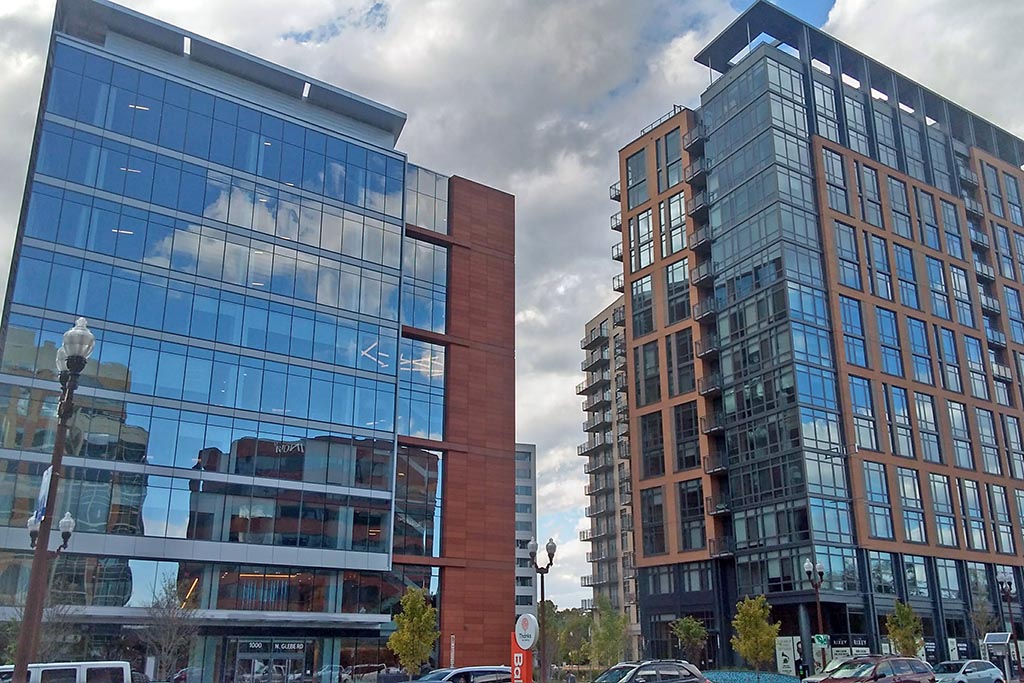
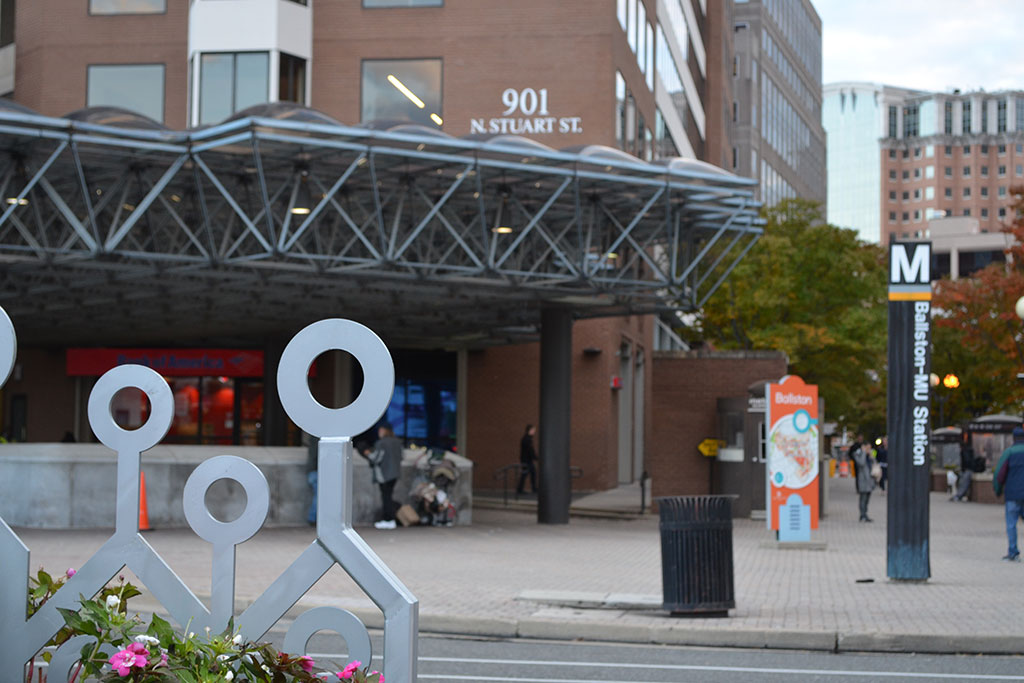
Some local developers are now set to hand over more than $6.8 million to help the county afford a second entrance to the Ballston Metro station, a project officials have hoped to finish for years in order to open up access to the subway stop for people living and working along N. Glebe Road.

The newfound cash stems from the long-stalled redevelopment of an office building at 4420 Fairfax Drive, which sits above the county’s planned spot for the new Metro entrance. The project’s backers are now offering up the money to help fund the entrance’s construction, in exchange for the County Board agreeing to extend deadlines for the redevelopment through end of 2022.

Originally, development firm JBG Smith was backing the project, known as “the Spire at Fairmont,” and it planned to build a new Metro entrance station at the same time as it constructed a new mixed-use building on the site. But that effort languished for close to a decade, and JBG sold the property to its current owners — Washington Capitol Partners, Kettler Development and Bognet Construction — in 2015.

That group has made little progress, however, and the “site plan” the county approved governing the redevelopment effort is rapidly nearing its July 2020 expiration date. Accordingly, the developers are looking for an extension, and negotiations with the county heated up earlier this year.

As part of that back-and-forth, Arlington officials told the developers that they weren’t interested in waiting for the new, 23-story structure to be built before moving ahead with the Metro entrance project. Instead, they asked for a simple cash contribution, and the companies eventually agreed, according to a staff report prepared for the County Board.

“The county has decided that it may be prudent to proceed on its own with the complete design and construction of the Ballston West Entrance… which would be more efficient considering differing time frames for completion of the developer’s project and transit improvement,” staff wrote.

Some of that urgency stems from the fact that Arlington previously won about $26 million in state funding for the project, but has yet to spend much of it. Officials don’t see any imminent threat that the funding could be “clawed back,” but are nonetheless anxious to show some progress on the project.

In general, it’s been tough sledding for the county to find any cash to power the construction in recent months.

Arlington was counting on regional transportation dollars to kickstart the project, asking for $72 million from the Northern Virginia Transportation Authority to wrap it up. But the group declined t0 hand out any cash for it — after losing out on tens of millions as part of the vagaries of the deal to provide dedicated funding to Metro — and Arlington was forced to push back its plans for the entrance by several years.

Any timeline for the project is still murky, however. The staff report notes that JBG paid an engineering firm to prepare some designs for the new entrance, but those plans were never “accepted by WMATA or the county.” The new developers have taken control of those plans, and if the county finds they’re up to snuff, Arlington officials could agree to reduce the cash payment they need to pony up.

The developers are also set to send the county just under $410,000 to secure some other zoning changes to allow construction to move ahead. Current plans call for 237 apartments and 9,200 square feet of retail space to be built on the site, in addition to a garage with 237 parking spaces.

The County Board is scheduled to sign off on the details of this deal at its meeting Saturday (March 16). The matter is slated to be considered as part of the Board’s consent agenda, which is largely reserved for noncontroversial items approved without debate.

File photo

Arlington officials have pitched Amazon on a program to help the company slash its business license tax burden when it sets up shop in Pentagon City and Crystal City — but the county is also admitting that Amazon could avoid that particular tax altogether.

Should an incentive package designed to bring the tech giant’s new headquarters to Arlington win county approval this weekend, Amazon will still be subject to all manner of local levies. In particular, officials are counting on real estate tax revenues from the company to generate an extra $342 million for county coffers over the next 16 years.

But it’s an open question how much in business license taxes — a levy known as the “Business, Professional and Occupational License” tax or “BPOL” — Amazon will actually need to pay. It’s an issue that’s fueled outrage from local Amazon critics, who argue that the county shouldn’t be offering tax breaks to an extremely valuable company owned by the world’s richest man, which has already successfully avoided paying federal taxes for the last few years.

Documents show that county officials have already marketed Arlington’s “Technology Zone” program to the company, an incentive program that could help Amazon slash its BPOL burden by as much as 72 percent for the next 10 years. It’s unclear whether Amazon might qualify for the tax break, but county staff say it’s also a possibility that the BPOL tax might not apply to the company at all.

In a report prepared for the County Board ahead of this weekend’s vote, staff wrote that Amazon “may be classified as a type of company that is not subject to BPOL at all, such as a retailer or wholesaler.” State law does indeed allow for a variety of exemptions to the tax, with organizations from banks to newspapers eligible to avoid the BPOL levy.

Or perhaps Amazon could avoid the BPOL tax because it’s levied on each company’s “gross receipts.” Staff write that “as a corporate headquarters and global company, Amazon may not have gross receipts attributable to the Arlington location,” largely due to where the sales in question might originate.

Christina Winn, director of business investment for Arlington Economic Development, says the county will examine “the point of sale” in making that determination. If the sales happen somewhere other than Arlington, the BPOL tax may not apply to Amazon.

“Taxes are very complicated, especially with these large companies where all their consultants are based in other places,” Winn said. “They’re based here, but they may be on site in some other state.”

Victor Hoskins, the head of Arlington Economic Development, previously told the Washington Post that other companies with large corporate headquarters in the county (like Nestle and Lidl) have avoided the tax for just that sort of reason. He said it “just hasn’t been the case for large global companies” that they’ve been subject to the BPOL rate.

Staff stressed in the report that they haven’t included any BPOL revenues in their projections of the company’s fiscal impact on Arlington, given the uncertainty over Amazon’s eligibility for the tax. Instead, the county has based its revenue assumptions on real and personal property taxes, hotel stay and meals taxes and sales taxes — Arlington is also counting on BPOL taxes from the company’s landlord in Crystal City, developer JBG Smith.

“Because it’s such a big company with many different lines of business, and they don’t know what businesses are coming into the Arlington facility, we just assumed zero for gross receipts,” Winn said. “We just felt like that was the most conservative and responsible way to model this project.”

Amazon will need to sort out these tax questions with county staff, likely involving the commissioner of revenue’s office.

If the company does qualify for the BPOL tax after all, it could still apply for the “Technology Zone” incentive, though that only applies for 10 years, and would slash (but not eliminate) Amazon’s BPOL tax payments.

If the county judges that the business units located at Amazon’s Arlington headquarters have “a primary function in the creation, design and/or research and development of technology hardware or software,” the company would qualify for the tax break. The program has gone relatively unused since it was last updated in 2014 — for full disclosure, ARLnow’s parent company applied for the tax break in 2015, but was rejected, despite approximately 20 percent of the company’s budget being devoted to web design, development and hosting.

“That incentive zone is there for any business, and Amazon can take advantage of it, if they want to,” County Board Vice Chair Libby Garvey said during an interview on WAMU 88.5’s Kojo Nnamdi Show Friday. “So, we’re really treating Amazon — as hard as it is to believe — basically, like any other business. So, we’re not telling them that every other business can make use of this tech zone incentive that we have and you can’t.”

The Board is set to vote on the incentive package at its meeting Saturday (March 16), including the heart of the proposed offer to Amazon: an estimated $23 million over the next 15 years, drawn from a projected increase in hotel tax revenues driven by the company’s arrival.

However, the county has recently conceded that number could go higher (or lower) depending on what sort of impact local hotels actually see in the coming years. Amazon will only be permitted to use that cash on building and furnishing its new headquarters.


A new senior living center, perhaps the first to be built in Arlington in decades, could soon be on the way for a property along Lee Highway.

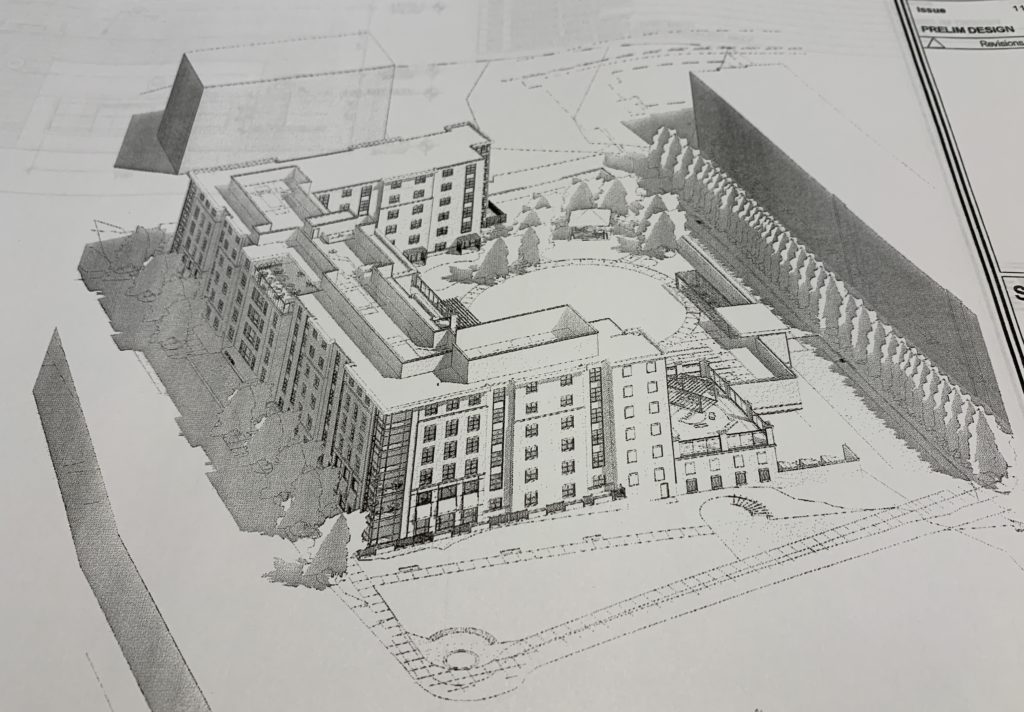
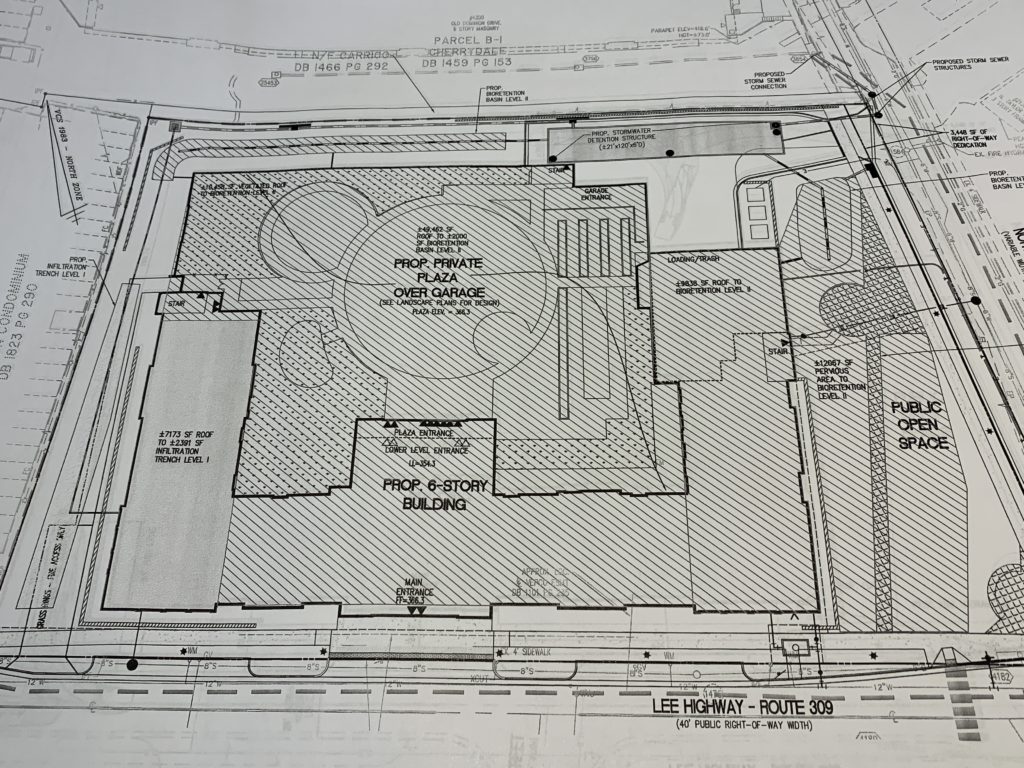
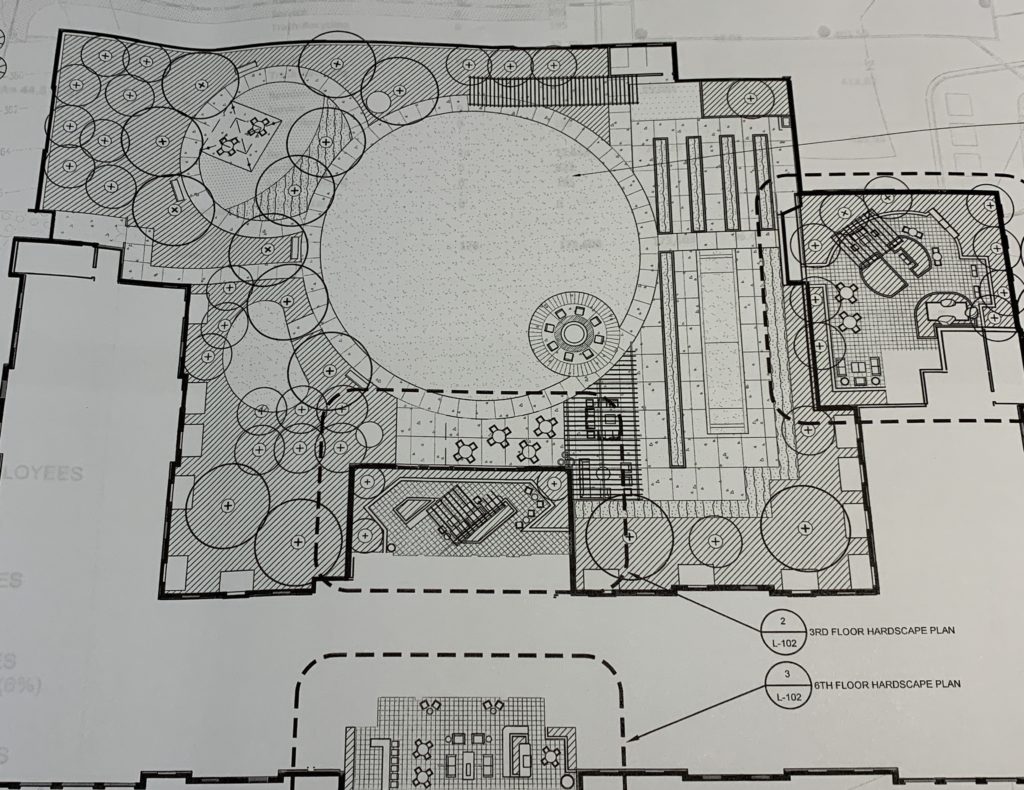
McLean-based Artis Senior Living has filed plans with the county to build a six-story facility with 175 units on a 2.79-acre property near Cherrydale. The building would be divided into two wings, surrounding a landscaped plaza and a new public park near the site, located at 2134 N. Taylor Street.

Artis has discussed the potential of bringing a senior living center to the property with neighbors in Cherrydale and Waverly Hills for close to a year now, but the company (which operates facilities across nine different states) only brought zoning applications to county officials in late November.

“The proposed facility would be the first new assisted living facility constructed in Arlington in almost 20 years,” Martin Walsh, an attorney representing Artis, wrote in a letter to zoning officials. “There is a sincere need for additional senior housing in Arlington. Currently, without sufficient capacity in the county, seniors are forced to look outside Arlington for assisted living. The proposed facility would allow Arlington’s seniors to ‘age in place’ and continue to call Arlington home.”

Artis’ plans call for one wing of the building to be about 173,600 square feet in size, with another at about 152,500 square feet. That would include room for 95 assisted living units, and another 80 specifically set aside for “memory care” patients.

The apartments would range in size from studios to one- or two-bedroom units. The buildings will overlook a plaza with green space for residents, which will sit over top of a partially buried parking garage. That will have about 108 spaces, under the company’s proposal, which Artis expects will be more than enough space for the center’s 50 employees.

The company also expects that close to 30 percent of its workforce will rely on nearby Metrobus and Arlington Transit routes to get to work, and a traffic analysis attached to the plans does not foresee the senior center impacting congestion on Lee Highway.

The new park, designed as a contribution from Artis to the county in order to benefit both the facility’s residents and neighbors, would be located at N. Taylor Street’s intersection with Lee Highway. Walsh noted in the application that a visioning study of the Lee Highway corridor completed in 2016 called for a new park on that site — the document was created ahead of a broader effort to draw up new plans for the entire corridor, which just began in earnest last month.

Once the county signs off this proposal, Artis plans to purchase the property, which is made up of several different parcels of land along the 4300 block of Lee Highway. They were owned for decades by the Courembis family, and neighbors have often debated what might become of them, though the homes on the land now sit empty, according to Arts’ application.

The company is asking for some zoning changes to allow for the construction of a senior center in the area, and submitted this application as a “site plan,” a process that will involve an additional layer of county scrutiny.

The Site Plan Review Committee will now hold meetings on the project and its design. Should it withstand that group’s review, it will need to advance to the Planning Commission and, ultimately the County Board for approval.


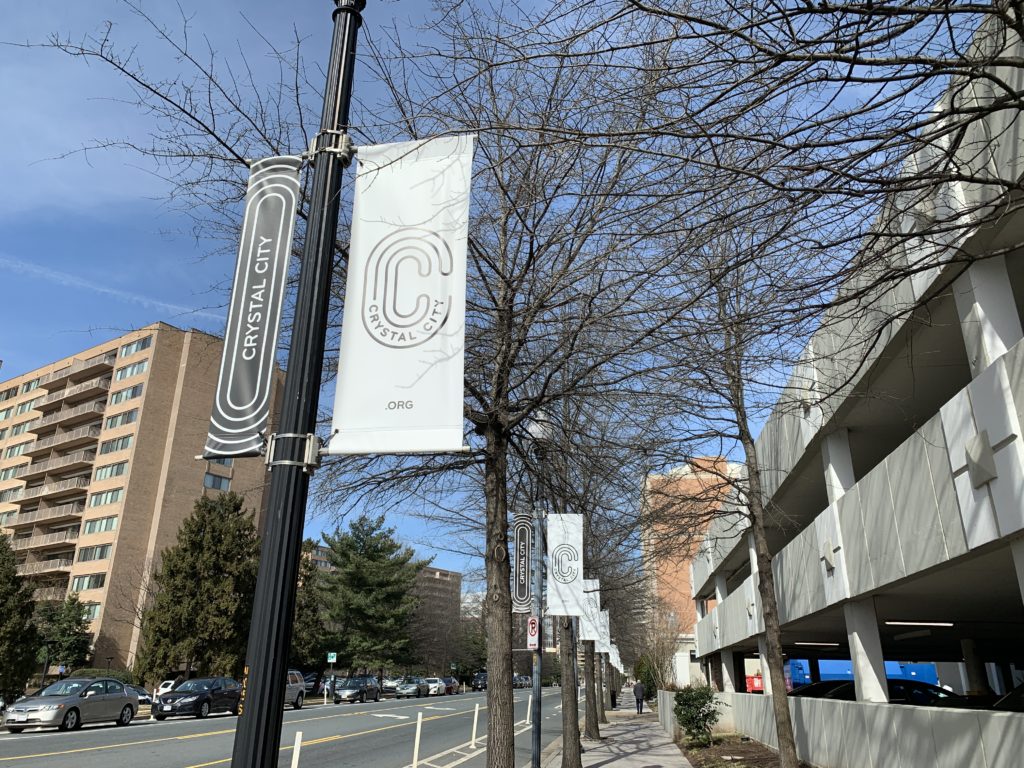
Some of Amazon’s future neighbors in Crystal City now say that they’re eager to see the County Board approve an incentive package to bring the company to Arlington.

The Crystal City Civic Association penned a letter of support Monday (March 4) for the company’s arrival in the neighborhood, encouraging the Board to give the green light to a plan to hand over $23 million in grant money to the tech giant over the next 15 years. The Board is set to consider the deal, publicly revealed for the first time this week, later this month.

Civic Association President Carol Fuller wrote that the citizens group still has “some concerns, obviously ‐‐ e.g., housing costs, traffic, schools.” But she says its members “look to the county to prepare adequately,” and trust that the neighborhood can handle the arrival of Amazon and its promised 25,000 workers.

“As the civic association to be most affected initially, we welcome the planned gradual arrival of Amazon to Crystal City,” Fuller wrote to the Board. “The $23 million in incentives from the county makes sense — they are paid only if/when Amazon creates the jobs it promised. Moreover, we expect the Amazon arrival to help increase hotel and restaurant business in Crystal City, which will increase county tax income and help pay for those incentives.”

In all, the county expects Amazon to generate $342 million in tax revenue over the 16 years the tech giant plans to spend setting up shop in the county — and that’s without the hefty tax break the company could soon earn from the county.

Fuller also cited the transportation improvements bound for the neighborhood as a major factor in her group’s support for the project, including the planned second entrance for the neighborhood’s Metro station and a pedestrian bridge connecting Crystal City to National Airport.

Some county officials and activists critical of the project have urged Amazon to better engage with its soon-to-be neighbors, and Fuller said the company has so far done a good job on that front. She pointed out that Holly Sullivan, the company’s worldwide economic development head who has begun appearing at some Arlington gatherings, stopped by the civic association’s Feb. 23 meeting and has been invited to return.

“We look to Amazon to fulfill its promise to be a ‘good neighbor,'” Fuller said. “We want them, both as a corporation and as individual residents, to be active participants in our community.”

Fuller’s support for the project echoes the broad sentiment of most county, and state, residents, who have said that they support the company’s arrival in both Crystal City and Pentagon City. The Arlington Chamber of Commerce, Crystal City Business Improvement District and the Crystal City Citizen Review Council have all issued recent statements similarly urging the Board to approve its incentive package for Amazon.

But some residents and activists remain fiercely opposed to the company, fearing its potential impacts on everything from housing prices to the region’s transportation networks.

The Board is currently planning a vote on the matter on March 16. In the likely event the incentives are approved, Amazon expects to begin submitting plans for new office buildings shortly afterward.


After months of work, Arlington officials are gearing up to advance a new round of regulatory changes designed to encourage the creation of accessory dwelling units around the county.

The county plans to hold an open house on the new regulations tonight (Tuesday), specifically on policies governing how far the homes can be set back from the street.

Commonly known as “ADUs,” or “mother-in-law suites,” the homes can include everything from basement apartments to those located above a house’s garage. The County Board passed a series of revisions to Arlington’s ADU regulations in 2017, in a bid to prompt more people to create those units and beef up the supply of reasonably priced homes in the county.

Those changes were primarily targeted at allowing homeowners to more easily create ADUs within existing structures, rather than building new ones. The rules changes also allowed property owners to create an ADU in an existing structure detached from a single-family home, like a garage, but they could not build any new structures on properties for such a purpose.

Still, the Board vowed to subsequently consider rules changes allowing people to build free-standing ADUs on properties. The homes are broadly seen as a key way to provide “missing middle” housing, or homes that fall in between luxury apartments and subsidized, affordable homes, and advocates have long championed additional ADU rules changes.

But, to allow for any new construction, officials would need to change the “setback” requirements, which stipulate how far the homes can be located from the street. County Manager Mark Schwartz has been developing proposals for such rules changes, but has yet to unveil them in a public setting.

That is set to change later this afternoon. The exact shape of the proposals remains unclear, however — a county spokeswoman could not immediately provide details on the proposed regulations. Michelle Winters, the executive director of the affordable housing advocacy group the Alliance for Housing Solutions, also said she was unsure when the county will release the details of the proposal publicly.

The ADU meeting is set for the Ellen M. Bozman Government Center (2100 Clarendon Blvd) in conference rooms C and D from 4-8 p.m. Any zoning changes discussed there would likely need to be scrutinized by both the Planning Commission and County Board before they go into effect.

Courtesy photo


When Amazon first started seriously considering Arlington for a new headquarters, the company went so far as to send employees out to local coffee shops and bars to gauge how people around here felt about the tech giant moving in.

The company’s head of worldwide economic development, Holly Sullivan, says Amazon employees were regularly surveying Crystal City locals about the prospect of becoming the neighborhood’s newest, and largest, occupant. And by the time the tech firm was ready to select Arlington for the project, she had full confidence that Amazon would be greeted with open arms.

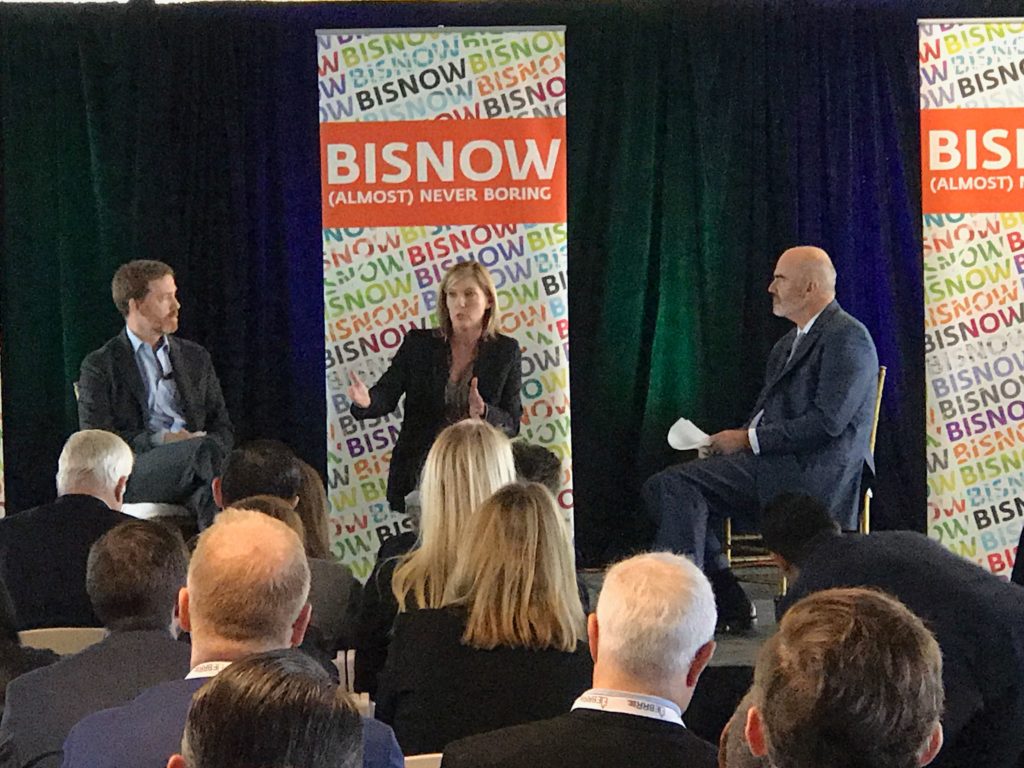
“We have a lot of that local knowledge now,” Sullivan assured a crowd of hundreds of business executives and government officials at Bisnow’s HQ2-Apalooza event today (Thursday) in Potomac Yard. “Even before we announced our Arlington plans we felt welcome here.”

That sort of confidence in the community’s response was critical to Sullivan and the rest of the company’s executives — after all, when Amazon officials feared that New York City leaders were insufficiently welcoming for the other half of the company’s headquarters, Jeff Bezos’ firm simply pulled the plug.

“We think we could’ve gotten New York done, but at a certain point you have to ask, at what cost?” Sullivan said. “We want to locate in a community that also supports us.”

The company certainly received a warm welcome at Thursday’s event. Billed as a chance for business leaders to learn “how you can benefit” from Amazon’s arrival in Arlington, the high-priced gathering of executives offered a largely rosy picture of how the company might change the D.C. region.

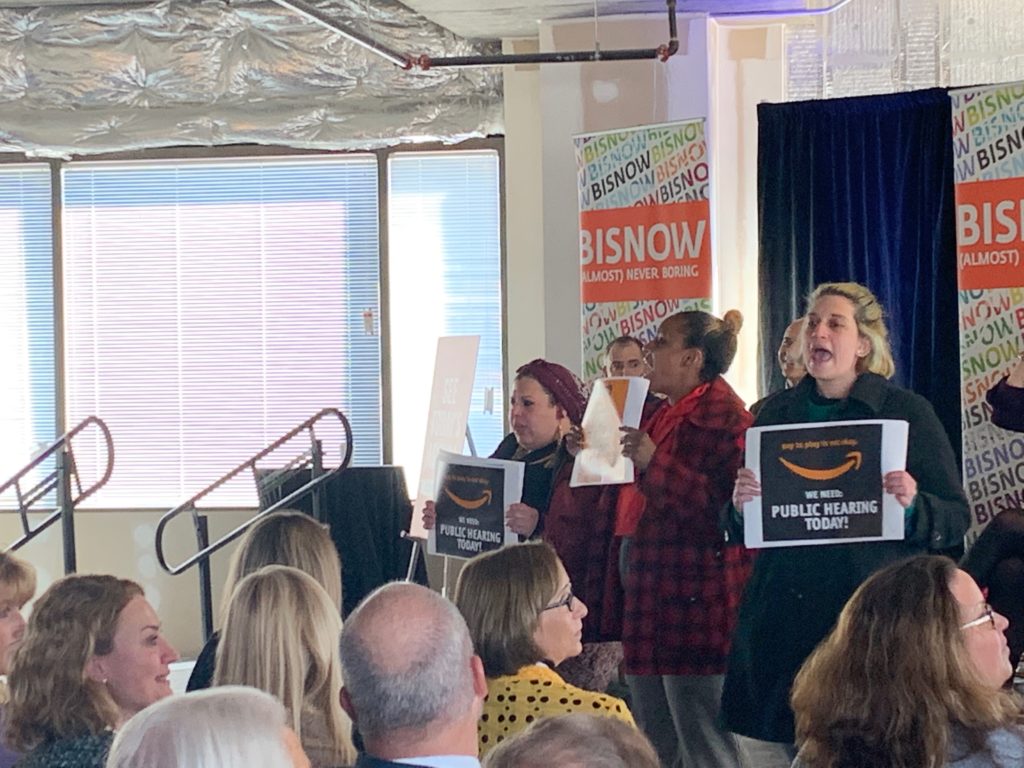
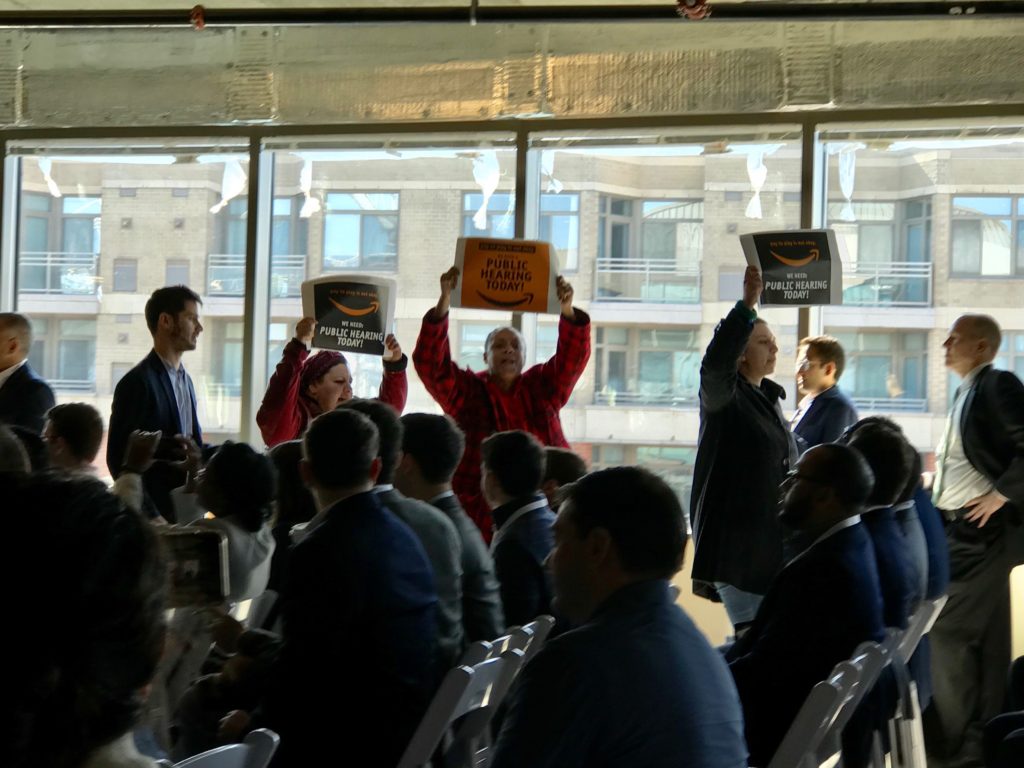
Of course, not everyone around the county is quite so eager to see Amazon move in, and some of the company’s critics made their presence felt at the otherwise chummy event. A handful of protesters with the “For Us, Not Amazon” coalition temporarily disrupted the proceedings, holding signs and chanting “Pay to play is not okay, we want a public hearing today.”

Sullivan joked that she was glad the event “welcomed some of our friends that like to follow me around the country,” but the demonstration was organized by local activists, who have grown frustrated with Amazon’s approach to engaging with the community.

This is now Sullivan’s second appearance in as many weeks at a ticketed event for local business leaders, and some critics (and even county officials) would rather see the company engage directly with the communities that might be most affected by Amazon’s impact on the region’s housing market.

Sullivan argues, however, that the company has indeed already done some of that outreach work and is committed to doing more. For starters, she says the company plans to create a “steering committee,” pulling together Amazon executives, local government officials and education leaders to discuss the future of the new headquarters and its impact on the region.

Considering that the company has yet to outline any plans for aiding affordable housing efforts in the area, or even what its exact plans for construction in Arlington might look like — the company is still waiting on the County Board to approve an incentive package for the the new headquarters to formalize many of its plans — advocates in the region are enthusiastic to hear that the company is ready to come to the table with local leaders.

“Amazon has an opportunity to create a model of a tech community that is inclusive, that’s different than what we’ve seen in Silicon Valley and Seattle,” said Nina Janopaul, the CEO of the Arlington Partnership for Affordable Housing.

For officials who have long struggled with working across jurisdictional lines, that sort of collaboration could also be quite meaningful, said Stephen Fuller, one of the region’s preeminent economic forecasters.

He argued during the event that Amazon’s promised 25,000 jobs may not put a strain on the region’s housing all on their own, but that the tens of thousands of additional jobs that flood into the area to support Amazon may well challenge the area.

For instance, Fuller’s researchers project that new companies moving into the region to support Amazon could induce demand for as much as 41 million square feet of new office space in the area — for context, Amazon plans to build anywhere from 4 million to 8 million on its own.

“The growth is really coming and we need to take a moment to think about this beyond Amazon,” Fuller said.


Amazon HQ2 Update — “JBG Smith Properties has begun design and pre-development on the first installment of Amazon.com Inc.’s new headquarters buildings in Arlington County, with the aim of starting construction on HQ2’s initial 2 million square feet of office space ‘within the next year.'” [Washington Business Journal]

Mosaic Park Contract Approved — “The Arlington County Board today approved a contract for slightly more than $6.08 million with Nastos Construction Inc. to build a new Mosaic Park in the heart of Ballston.” [Arlington County]

Amazon Spurs on Real Estate Investors — “After real estate agents reported ‘packs of investors’ at open houses in Virginia’s Arlington and Alexandria in December, the number of houses and condos on the market has been seriously depleted.” [WTOP]

Eden Center’s Past and Present — “The opening of the Clarendon Metro station in December 1979, made it far easier to get to Little Saigon. This wasn’t good news for everyone… Rents went up and shops closed. Luckily, only about three and a half miles down Wilson Boulevard, Eden Center was taking shape.” [DCist]

Clarendon Crash Causes Traffic WoesUpdated at 9 a.m. — A crash at the intersection of Wilson Blvd and 10th Street N. closed westbound 10th Street and blocked a lane of Wilson Blvd in each directions during the morning rush hour, leading to traffic congestion around the area. [Twitter]

We’re Seeking Story Pitches — Do you have an interesting, important and original story to tell about Arlington? Thanks to our Patreon community, we’re seeking pitches from local freelancers. Email us at [email protected] and tell us the story you’d like to tell.

Flickr pool photo by Kevin Wolf


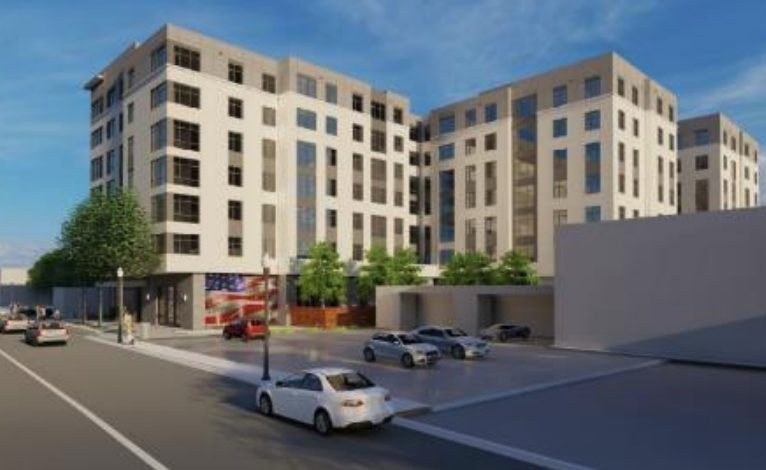
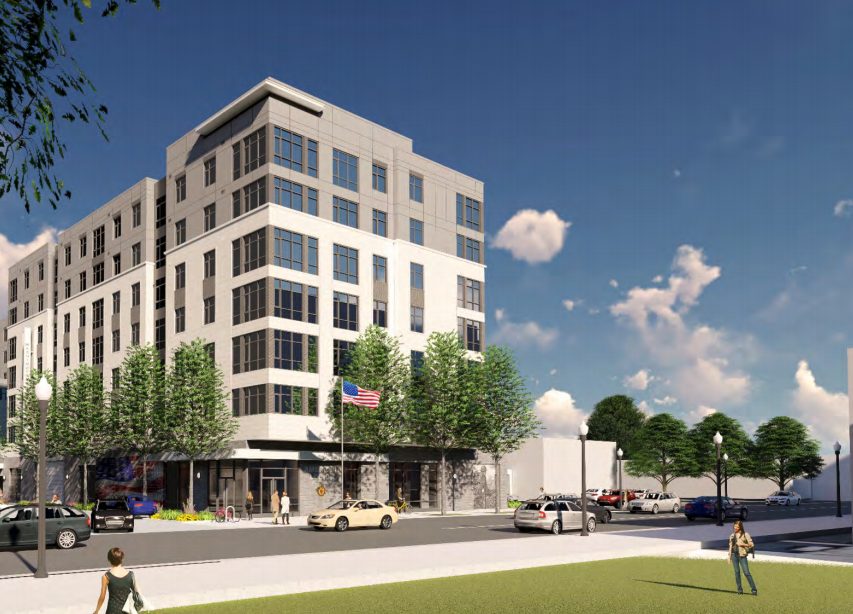
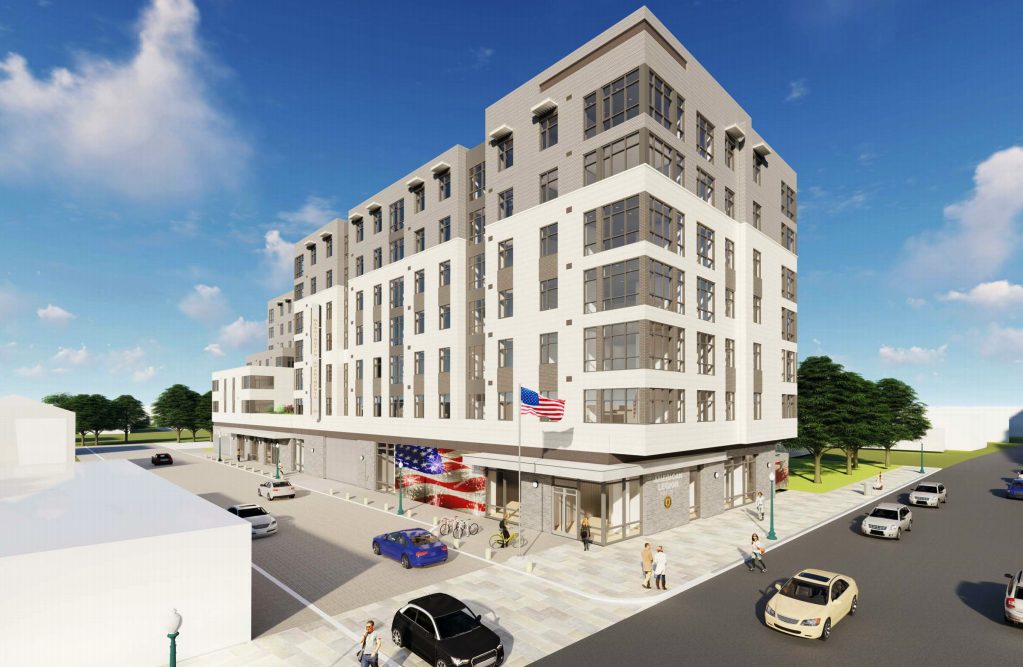
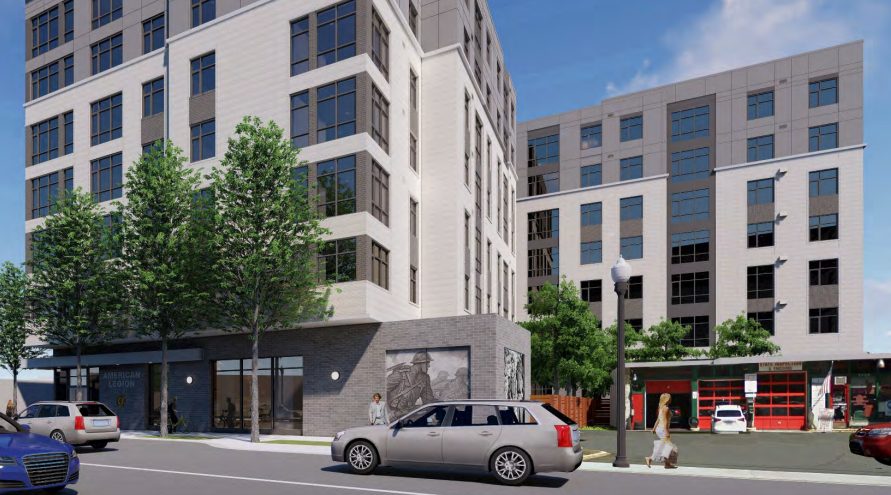
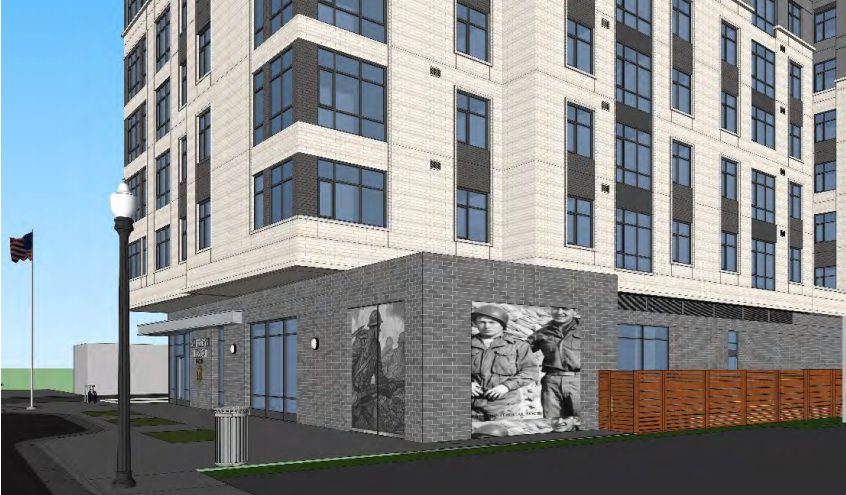
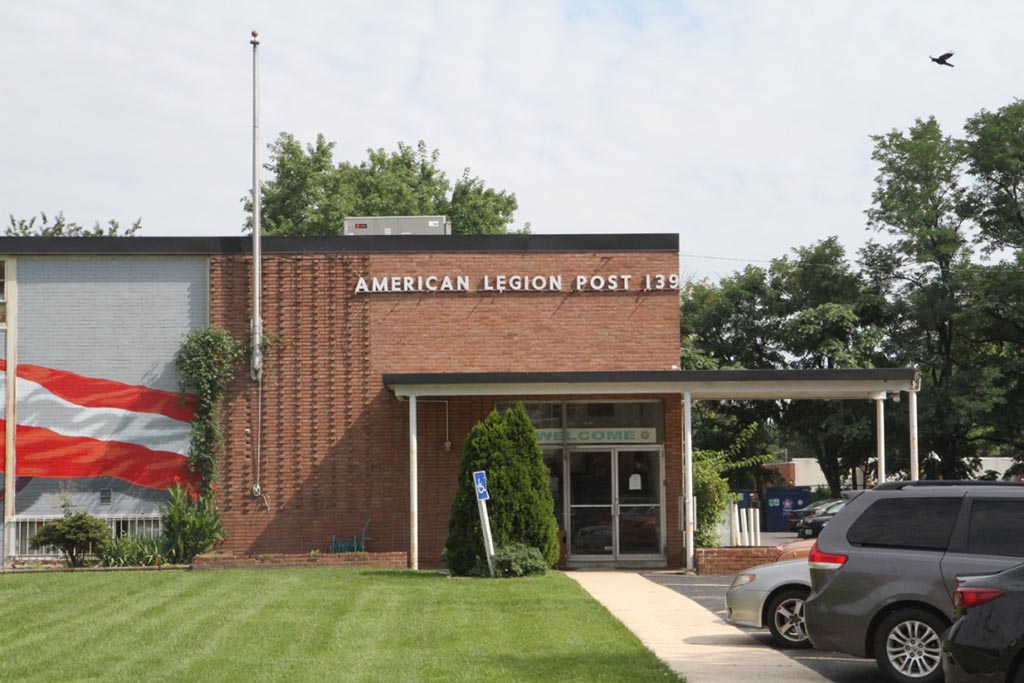
County leaders have now given the green light to plans to redevelop the American Legion post in Virginia Square into an affordable housing complex, a project widely hailed as an innovative effort to provide reasonably priced homes to veterans.

The County Board voted unanimously Saturday (Feb. 23) to approve plans from the Arlington Partnership for Affordable Housing (APAH) to replace the Legion’s current home with a new seven-story structure. The building will have room for 160 apartments — half will be set aside specifically for veterans, and all of them are guaranteed to be affordable to people of more modest means for the next 75 years.

The development, located at 3445 Washington Blvd, will also include 8,000 square feet on its ground floor for American Legion Post 139 to stay on the property. The Legion has owned the roughly 1.3-acre property since the 1930s, but opted to sell it to APAH in 2016 after the nonprofit sketched out plans for a new complex decided to helping local veterans.

“Unfortunately, the high cost of housing has put Arlington out of reach for many,” APAH Board of Directors member Rich Jordan wrote in a statement. “But we are excited that this project, the first collaboration of its kind, will welcome more veterans home to our community.”

The building will include a mix of one-, two- and three-bedroom apartments, all at varying levels of affordability. Most will be designed to be affordable to people making 60 percent or 80 percent of the area median income — that works out to a yearly annual salary of $49,260 and $65,680, respectively.

However, some will be set aside for people making 30 percent of the area median income, a level of affordability that projects around Arlington only rarely achieve. Someone would have to make around $30,000 a year to qualify for the homes.

“We are adding much-needed affordable units to our inventory, and many of them are large enough for families,” County Board Chair Christian Dorsey wrote in a statement.

The project will also include an underground parking garage for residents, with a total of 96 spaces. Of those, 20 would be set aside to serve the Legion post specifically.

That represents a smaller number of parking spaces that the county’s zoning laws would typically allow at a development of this size. But county officials opted to sign off on the plans anyway, reasoning that many people living at the building will likely rely on the area’s Metro station and bevy of available bus stops to get around.

Even still, parking was a key concern for some neighbors. Some local leaders worry that the building’s larger apartments will attract families, who will bring cars and take up street parking in the neighborhoods adjoining the development.

The Ballston-Virginia Square Civic Association and Lyon Village Citizens’ Association both floated the idea of tweaking zoned parking limits in the area — the streets surrounding the development, like N. Kansas Street and 12th Road N., are currently off-limits to people without permits from 8 a.m. to 5 p.m. each day. Some neighbors proposed a 9 a.m. to 11 p.m. limit instead, but county officials weren’t inclined to grant that request.

In a staff report, the county noted that it’s still in the middle of a lengthy review of the residential parking permit program, with a moratorium on most changes to parking zones while that review moves forward.

That’s now set to wrap up sometime early next year, and county staff told the Planning Commission that they’re hesitant to make any zoned parking changes in the area until then — the County Board did, however, roll back some contentious restrictions in the Forest Glen and Arlington Mill neighborhoods earlier this year.

“In the future, if parking increases along 12th Road N. by non-Zone 6 permit holders, the hours of the RPP restriction could be evaluated based on the program’s guidelines at that time,” staff wrote in the report.

APAH also plans to construct a new section of N. Kansas Street running north-to-south between 13th Street N. and Washington Blvd, a move that staff hope will break up the area’s “superblock” feel. The new road will include some dedicated space for pedestrians and cyclists, and the developer is also planning to widen Washington Blvd near the project.

Eventually, the county also hopes to see 12th Road N. extended to provide an “east-west” connection across the property as well, though that will likely be finished only once the adjacent YMCA redevelops that property to allow for a new recreational facility and some new apartments on the site. A developer is also hoping to add 255 new apartments near the intersection of Washington Blvd and N. Kirkwood Road in the coming years.

APAH expects to fund the bulk of the $78.4 million project with federal Low Income Housing Tax Credit cash, though the nonprofit will also work to raise $3 million in private financing.

The Board also approved a $5.79 million loan for the project Saturday from the county’s Affordable Housing Investment Fund, a key tool designed to spur affordable development in Arlington. APAH expects to ask for another $5.375 million loan from the fund next year.


High Wind Warning Today — Arlington is now under a High Wind Warning until 6 p.m. today. Gusty winds knocked out power in a number of areas overnight. As of 8 a.m., more than 250 Dominion customers in Arlington were still without power. [Twitter, Weather.gov]

American Legion Project Approved — “The Arlington County Board today approved a redevelopment plan to replace the aging American Legion Post 39 at 3445 Washington Blvd. with a seven-story building that will include 160 affordable units atop a new Post 139. In a related action, the Board allocated a $5.79 million loan from the County’s Affordable Housing Investment Fund to help build the project.” [Arlington County]

Amazon Development Boom Likely — “Arlington County could see the number of major development plans triple with the arrival of Amazon.com Inc.’s second headquarters. At least, that’s what County Manager Mark Schwartz wants to be ready for.” [Washington Business Journal]

Next Step for Child Care Initiative — “The Arlington County Board today ratified advertisements of public hearings on proposed changes to the Zoning Ordinance and local child care Codes aimed at improving the availability, accessibility, affordability and quality of child care in Arlington.” [Arlington County]

Overturned Vehicle on Residential Street — The driver of a Subaru somehow flipped the vehicle on the 2100 block of N. Quantico Street, in the Highland Park-Overlee Knolls neighborhood, Sunday morning. Another vehicle was damaged in the crash, according to photos sent by a passerby. The driver was extricated by firefighters but uninjured. [Twitter]

County Budget Includes Theater Cuts — “The spending plan calls for the closure of the Scenic Studio program and Costume Lab at Gunston…  Remarks range from ‘unbelievable’ and ‘terrible,’ to ‘this is very disturbing that Arlington County may actually be killing local arts programs.'” [WTOP]

Flickr pool photo by Dennis Dimick


Arlington’s top executive is calling for a real estate tax hike and some select staff cuts to meet rising expenses passed along by county schools.

However, County Manager Mark Schwartz’s proposed budget for the new fiscal year is not quite as unpalatable as he’d initially feared.

Schwartz offered a first glimpse at his budget proposal for fiscal year 2020 to the County Board at a work session today (Thursday). The headline number: a 1.5-cent tax increase.

Unlike last year, when the Board opted to keep the tax rate level, Schwartz is envisioning bumping the base real estate rate to $1.008 per $100 of assessed value.

That’s a 4 percent jump from last year, factoring in the increase in real estate assessments, generating an extra $11.7 million for the county on an annual basis and costing the average homeowner an extra $277 annually. Schwartz plans to leave most other tax rates and fee schedules untouched.

In all, the annual tax burden on the average homeowner would reach $8,890, including car taxes and fees, trash collection charges, and water and sewer fees.

Neighboring Fairfax County, meanwhile, is considering holding its tax rate level at $1.15 per $100, while Alexandria’s rate is also likely to be held steady at $1.13.

Schwartz hopes to save $5.2 million by slashing a total of 29 full-time staff positions and one part-time role from the budget. Eleven of those positions are currently unfilled, and Schwartz is characterizing those cuts as ways to reform inefficient programs rather than as painful losses for the county.

The county manager had originally projected doom and gloom for the new year’s budget, predicting that the county would need to close a gap of anywhere between $20-35 million on its own, with the school system tacking on a $43 million deficit too. But Schwartz told reporters today that the county’s budget picture has improved substantially since those initial estimates in the fall, giving him a bit more room to maneuver.

“This budget been a little bit more of a meandering trail than a straight line,” Schwartz said. “I thought I’d be coming to the community proposing a budget with reductions to fundamental services in the county. We’d be doing less maintenance, we’d have fewer programs. That’s not really the case.”

Schwartz chalks up the sudden change partially to property values ticking up a bit more than the county anticipated — assessments saw a 3.5 percent increase this year, while Schwartz says the county projected a 2 percent jump.

That’s not to say that the county is out of the woods, fiscally speaking.

Schwartz says he’s still not sure just how large the school system’s budget gap might be, and the extra $24.8 million he plans to send to Arlington Public Schools next year still likely won’t be enough to meet all their needs. APS is opening three new schools next year, prompting plenty of new expenses, and persistently rising enrollment projections means that the school system will need to keep adding new buildings going forward.

“They still have something of a gap that will require cuts,” Schwartz said. “I can’t really quantify what those cuts would be, but I’m sure we’ll hear from the schools community and the School Board when the [County Board] has to decide what to advertise that my penny [on the tax rate] for them wasn’t enough.”

That tone toward the school system could set off yet another round of wrangling between the county and the School Board, which has repeatedly argued for more cash to fund school construction. School leaders narrowly avoided class size increases last year, but the Board is already warning that they may not be able to do so this time around.

Another potential spot of trouble for the county is Metro. Schwartz plans to spend an additional $45.6 million to support the transit service in FY2020, with only a 3 percent increase in expenses to fund Metro operations specifically. That’s a key figure because the deal to provide dedicated funding to Metro mandates that Virginia localities can’t increase spending on the transit service by more than 3 percent each year, but WMATA General Manager Paul Wiedefeld is courting a bit of a dispute on the issue.

He’s proposing a Metro budget that calls for substantial changes aimed at boosting ridership, which would require localities to blow past that 3 percent spending cap. Wiedefeld argues that he’s crafted a way to avoid violating that stricture — Arlington officials disagree, and Schwartz said he had no desire to push the envelope on this front.

“We had a deal, this is the deal and to the extent that there’s more [money] that has to be added, we can talk about it,” Schwartz said. “But I wasn’t prepared to make the choices on my own right now to defund a county program in order to do something I think might be questionable.”

Aside from Metro, the rest of the budget includes raises of 3.25-3.5 percent for all county employees, including pay bumps of up to 5.5 percent for Arlington first responders, a key part of last year’s budget deliberations.

Schwartz also hopes to add four new staff positions geared around adapting to Amazon’s growing “HQ2” presence, assuming the Board signs off on an incentive package next month to bring the tech giant’s new headquarters to Crystal City and Pentagon City.

(more…)


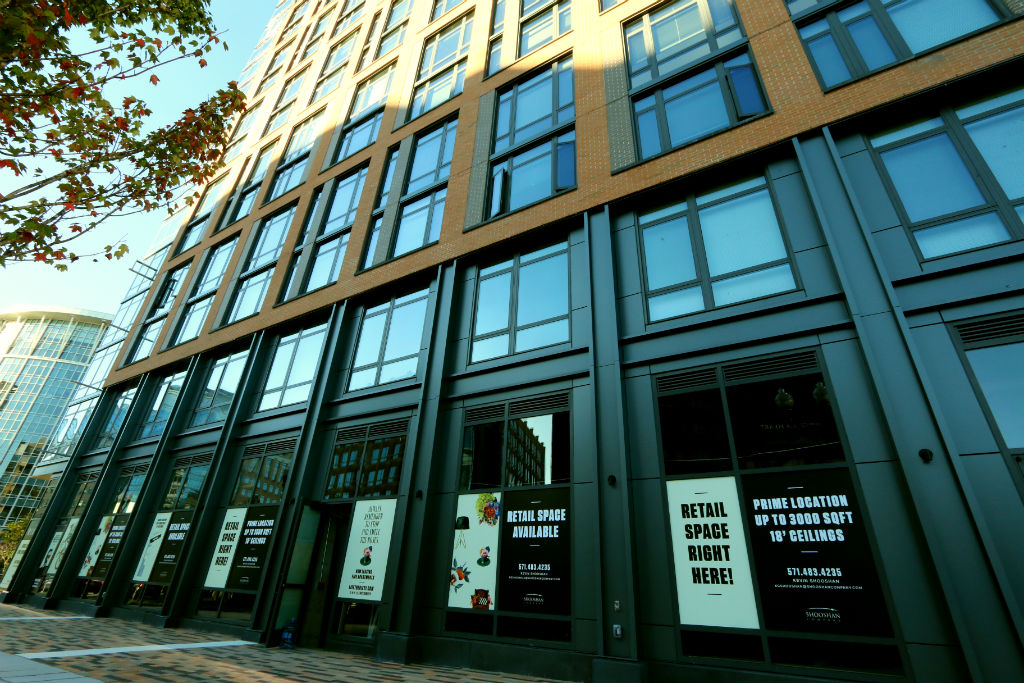
Janet Caputo and her husband thought they’d found just the right home for a new chapter in their lives when they moved into an apartment at “The Rixey” building in Ballston last month.

The couple had just sold their Cherrydale home of the last 22 years, looking to downsize now that their children are all heading off to college. Caputo says they spent months on the apartment search, touring buildings across Arlington multiple times before settling on The Rixey, located at 1008 N. Glebe Road.

Then came the news on Feb. 8 that Marymount University would be buying the building from its current owners, the prominent real estate developer The Shooshan Company, and converting it into housing for students, faculty and staff.

“I was not told the truth,” Caputo told ARLnow. “I wouldn’t have spent all this money to move in if we knew we could only stay for 14 months.”

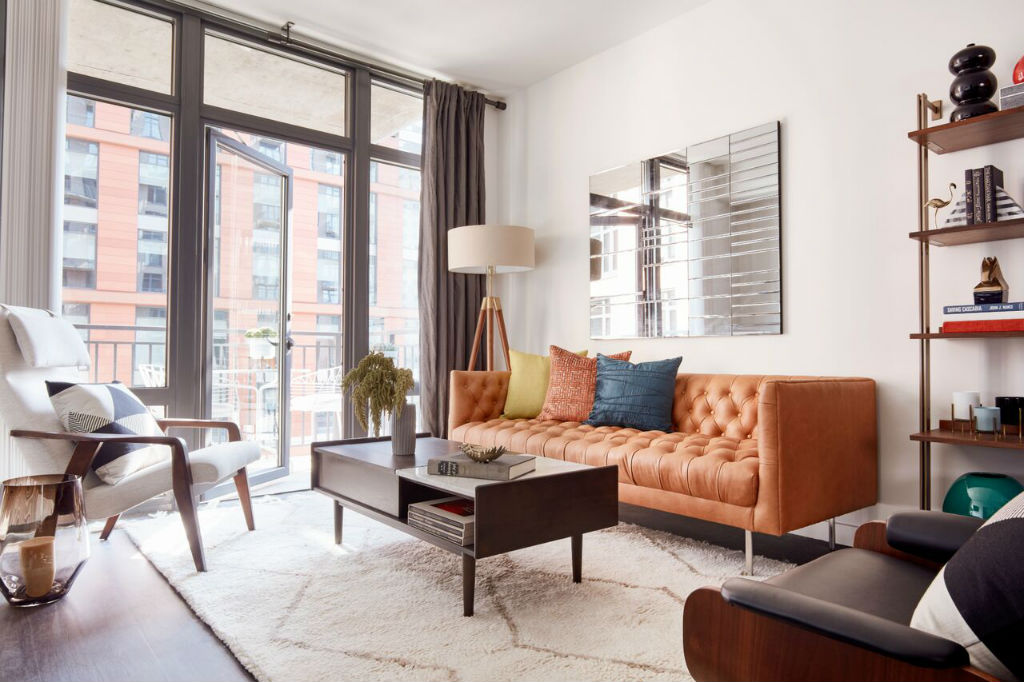
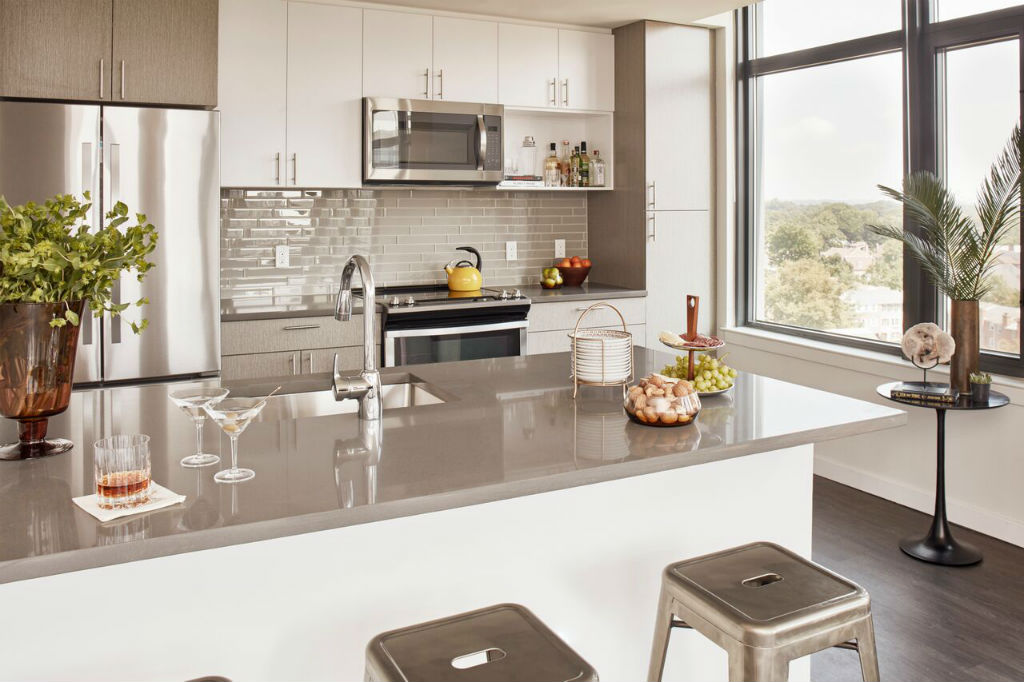
Indeed, Shooshan and Marymount are now working over the course of the next several months to manage the tricky process of converting what was once yet another luxury apartment building in Ballston into an upscale dorm.

Representatives for both the company and the university say they’ll honor all existing leases, and are committed to making the transition go smoothly. Still, residents like Caputo can’t help but feel that they were blindsided by the change.

“I don’t think millennials are out to wreck the world… I don’t mind living among them,” Caputo said. “What I don’t like is being told I can’t stay in this building after I put all this effort into moving here.”

Kelly Shooshan, the company’s chief operating officer and director of residential development, says she can’t speak to what people were or were not told about the building’s future when they signed their leases. She deferred questions on that to The Rixey’s management company, the Bozzuto Group — Jamie Gorski, Bozzuto’s chief marketing officer, declined comment for this article.

However, Shooshan says residents have long been aware that some Marymount graduate students have lived in the building since it opened in October 2017, making ties to the university quite clear.

“In fact, they were the first students to move in,” Shooshan wrote in an email.

She added that the sale shouldn’t have come as a complete surprise, considering how Marymount and Shooshan worked together to make the development happen.

Marymount built its new Ballston Center building right next door to the Rixey, leasing the adjacent land to Shooshan. But the university reserved the right to purchase the apartment building outright in the future, and that’s exactly what Marymount did earlier this month, using a mix of state funds and private financing to afford the $95 million price tag.

“The Rixey was my baby,” Shooshan said. “I worked on it for four-plus years, so no one will miss it more than me. But all that means is I have to go build another great project.”

But Caputo says she had no idea that such an option was ever a possibility, and thinks it’s unreasonable that this wasn’t explained to residents ahead of time — she fully expects that if she’d known about the option, she and her husband wouldn’t have chosen The Rixey, and they certainly wouldn’t have spent close to $7,000 installing upgrades to the apartment’s furnishings.

Caputo adds that many of her neighbors are in the same boat. She’s heard from some who signed leases just weeks ago, and even encountered one family that put pen to paper on a lease the day the sale was announced.

A letter provided to ARLnow from the building’s new management company (American Campus Communities) says staff have also heard “a number of residents express concern” and surprise about the change.

“It’s just house flipping on an enormous scale, without telling unsuspecting people who think they are signing a lease in a multifamily building,” Caputo said.

Yet Shooshan points out that it’s not as if current Rixey residents are being thrown out on the street overnight.

“All leases will be honored,” Marymount Chief Financial Officer Al Diaz wrote in a statement. “But we will only renew leases for qualifying students, faculty and staff.”

Diaz says the university won’t start moving in undergraduate students to The Rixey until this coming August, though he says it “may fill vacancies that develop with graduate students, faculty and staff.”

But for anyone looking for a more immediate change, Shooshan says her staff is already working to help them move to another one of the company’s residential properties.

“Hopefully, this will resolve some of the initial frustrations,” Shooshan said. “As you know, no one likes change.”

Caputo isn’t yet sure what she and her husband will do — they’ve already paid their first month’s rent, and aren’t sure whether they’ll get it back if they move out early.

And she’s adamant that she has no interest in living in another Shooshan-owned property, after her experience at The Rixey.

“My husband and I are beside ourselves,” she said.


View More Stories