Arlington’s business community is urging county leaders to approve the Virginia Hospital Center’s expansion plans, arguing the project’s delays have already cost the company dearly.

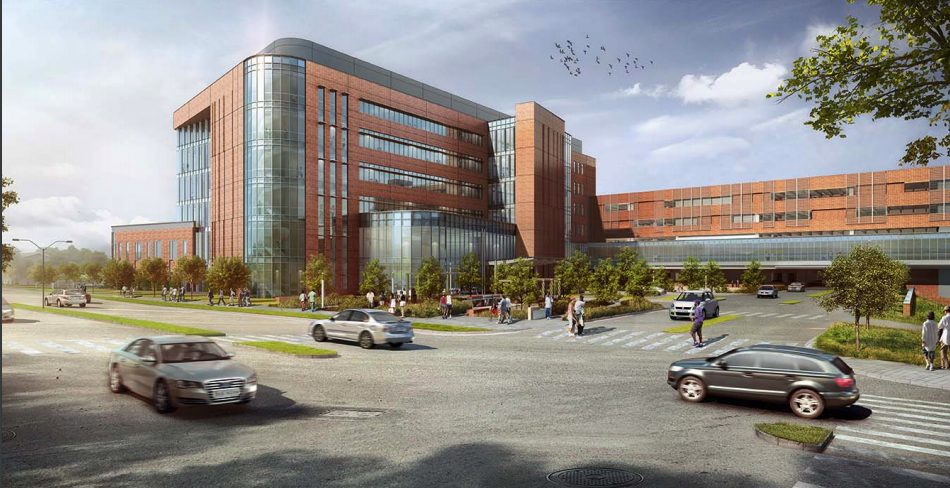
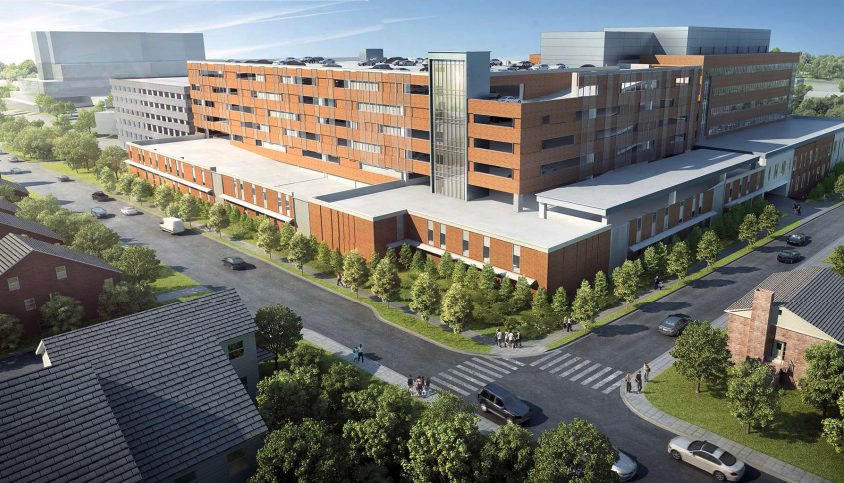
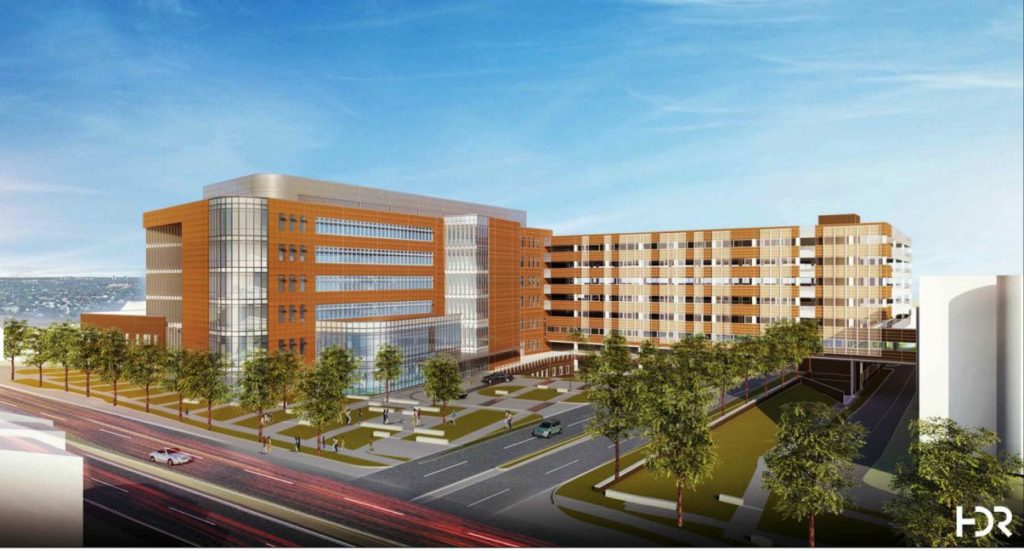
The county’s lone hospital rolled out plans last fall to add a seven-story outpatient facility and a 10-story parking garage next to its existing campus at 1701 N. George Mason Drive. The County Board approved a land swap last summer to make the expansion possible, trading a parcel of land near the hospital on N. Edison Street for a property along S. Carlin Springs Road, and VHC has spent the ensuing months hammering out designs for the new buildings.

Yet some of the hospital’s plans have drawn ire from neighbors and transit advocates alike, convincing the Board to push back any consideration of the expansion until the fall.

In a letter to the Board on July 23, Arlington Chamber of Commerce President Kate Bates called that decision “very disappointing,” and urged county leaders to lend the project an “expeditious approval.”

“The hospital is doing everything it can to accommodate the requests of neighbors and to honor good planning principles,” Bates wrote. “At this point, however, the cumulative effect of additional changes needs to be evaluated within the broader context of providing convenient, high-quality, patient-centered healthcare in a fiscally prudent way for the next 50 years.”

Bates argued in the letter that the hospital desperately needs the expansion to cope with Arlington’s growing population — VHC expects it’ll need an additional 85 hospital beds over the next five years to handle the county’s growth, and could use another 130 beds over the next 15 years. The hospital currently plans to convert around 120,000 square feet of existing outpatient space to 101 new beds once it can complete the proposed expansion.

Bates adds that “patients and visitors are frequently frustrated and unnecessarily delayed by current parking constraints” at the hospital, making the roughly 1,800 parking spaces in the new garage a key element of the plan as well. However, the garage has attracted some of the fiercest opposition of any element of the project, with neighbors worried about its size and staff and activists worried that it overly encourages driving at the expense of biking or transit options.

Yet Bates points out that VHC has already agreed to shrink the garage by about 200 spaces from its original proposal, bringing down its height to about 67 feet in all.

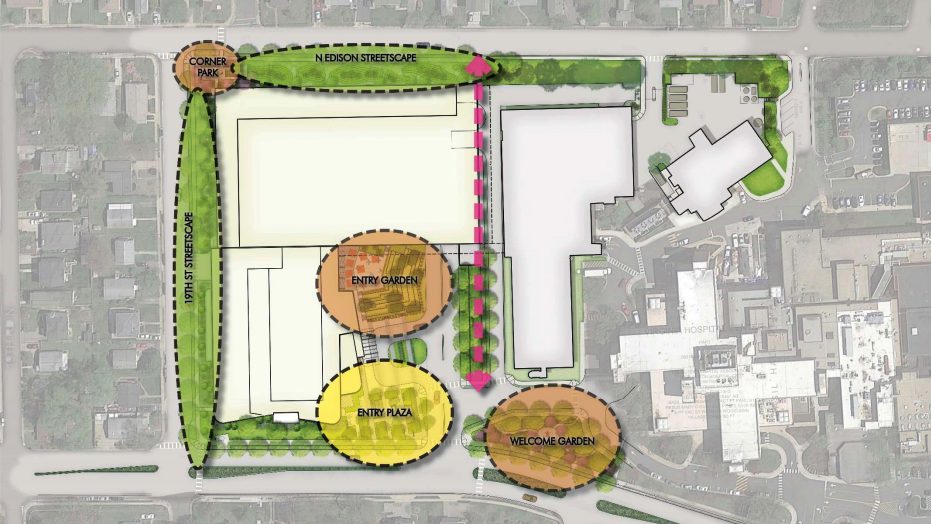
Furthermore, she wrote that the hospital has worked with the community to add more buffers and greenery to both 19th Street N. and N. Edison Street, demonstrating “a commitment to enhance the appearance and livability of the surrounding neighborhood.”

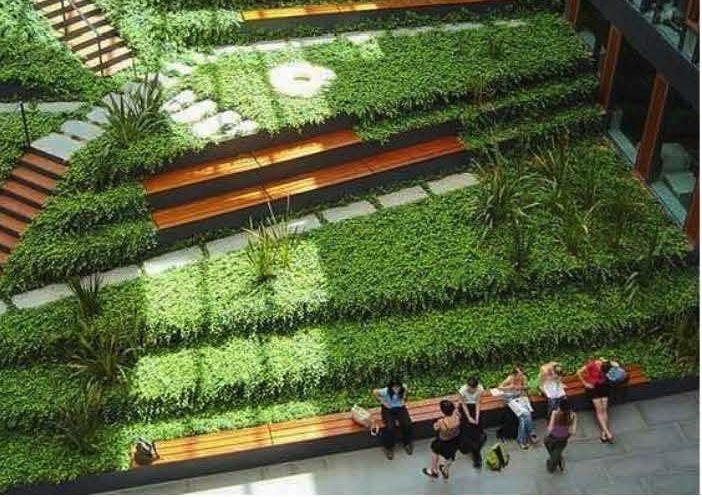
According to a VHC presentation at a May community meeting, the hospital is planning 27,000 square feet of buffers around the hospital’s perimeter, in addition to lots of green space on the property itself. In all, the hospital hopes to build a  11,000-square-foot entry plaza with a similarly sized “welcome garden” nearby, and a 9,000-square-foot courtyard complete with a “sunken garden” of tiered planters.

The hospital will also sketch out a “master plan” for the site to give the community a roadmap for its designs on future expansion efforts, including a push to someday buy more land for the redevelopment of its older buildings and the construction of a new “central power plant.”

In all, the Chamber sees this work as plenty of evidence that the Board shouldn’t press for any additional changes from the hospital and let the expansion move ahead quickly.

“Since the initial VHC project application, the hospital has made more than 100 modifications to the design in an effort to address issues raised by county staff and community stakeholders,” Bates wrote. “The Chamber respectfully requests that the Board prioritizes this effort and approves the VHC site plan application so this important project can move forward.”

Both the Planning Commission and the County Board are set to hold public hearings on the project in September.
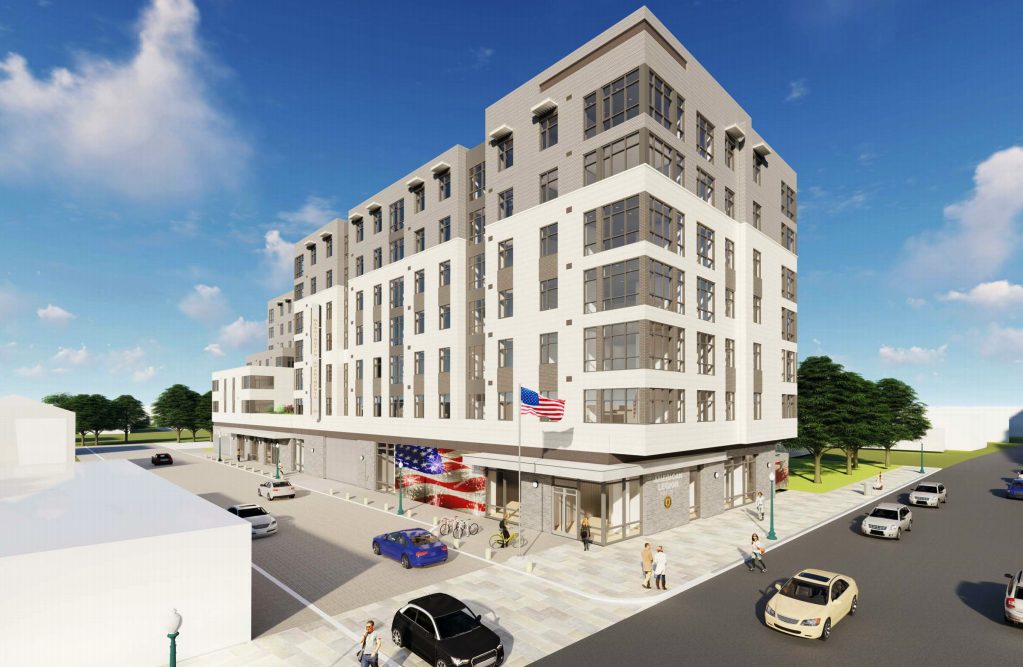
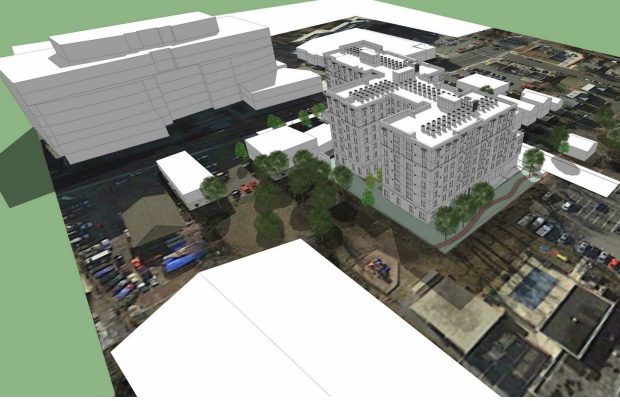
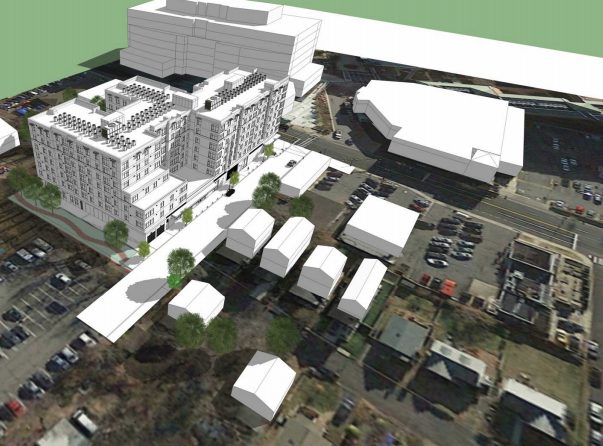
Plans to redevelop the American Legion post in Virginia Square into a seven-story affordable housing complex are inching forward.

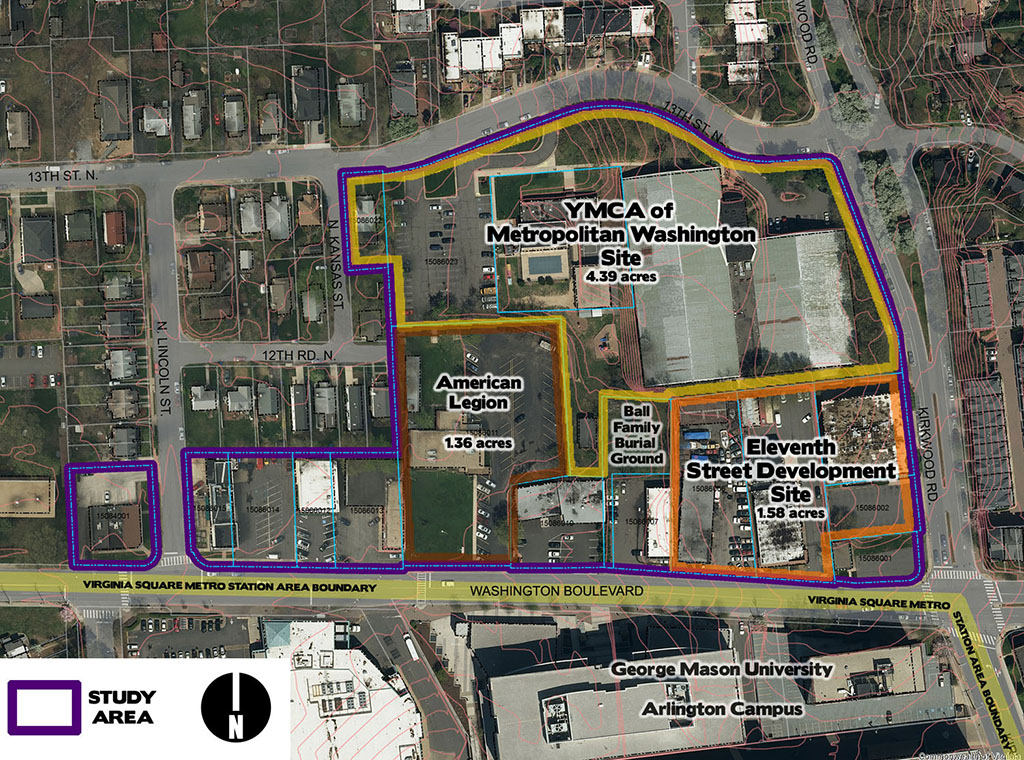
The Arlington Partnership for Affordable Housing has drawn up a preliminary proposal for the property at 3445 Washington Blvd, advancing plans to purchase the site and someday build 161 multifamily homes there. APAH would also include about 8,000-square-feet on the bottom floor of the building to let American Legion Post 139 stay on the property, which it’s called home for decades.

The proposal, which was submitted to the county last month according to the Ballston-Virginia Square Civic Association, also calls for an underground parking garage at the site, and a new alley to access the building off Washington Blvd.

County planners started preparing in earnest for big changes in the area starting last year, approving a handful of zoning changes to clear the way for changes at the properties along Washington Blvd.

The adjacent YMCA of Metropolitan Washington is planning to build a new, 100,000-square-foot facility on its property at 3422 13th Street N., while another developer hopes to build a six-story apartment building at the intersection of Washington Blvd and N. Kirkwood Road.

The Ballston-Virginia Square Civic Association plans to discuss the American Legion proposal in more detail at its monthly meeting tonight, at 900 N. Taylor Street starting at 7 p.m.


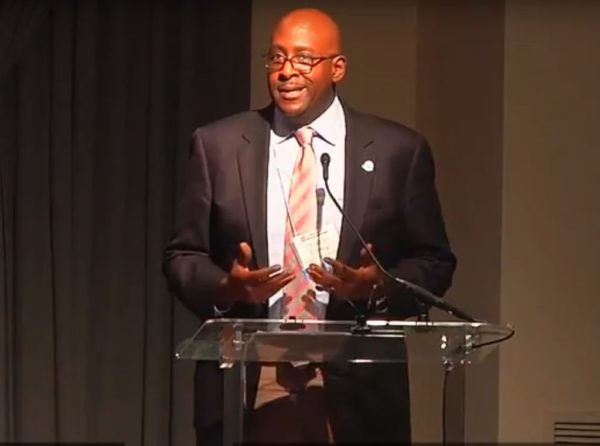
County Board Vice Chair Christian Dorsey is urging people around Arlington to embrace density in their communities and abandon the idea of “protecting” certain neighborhoods from development.

Without that sort of shift in mentality, Dorsey expects the county will never meet its stated goals of bringing down housing costs and making Arlington more accessible for people of all income levels.

“We have to look inward and look at ourselves and some of the things that are holding us back,” Dorsey told the audience at last month’s annual Leckey Forum put on by Arlington’s Alliance for Housing Solutions. “We can’t kid ourselves into thinking we can have it both ways, to tout our progressive bonafides with housing and affordability while also accepting the framework that certain neighborhoods need to be protected. Ask ourselves: protected from what?”

Dorsey would concede that he doesn’t want to “change in any way the notion that neighborhoods are for people who want to grow their families and stay in Arlington for generations.”

But he did challenge people in wealthier neighborhoods to consider that fighting against more dense development often amounts to “preserving a level of unaffordability and segregation” that already exists across the county.

“Often, you hear, ‘We want to mitigate density, we want to concentrate density in certain areas, we want density to be something that we don’t deal with,” Dorsey said. “If that’s our framework and our paradigm, we are losing a key tool to deal with affordability.”

In the past, some critics have charged that the county is facilitating the overdevelopment of affordable housing in places like the western end of Columbia Pike while exempting large swaths of affluent North Arlington from more affordable development.

Dorsey sees the constant churn of redevelopment of small, single-family homes into ever larger homes on the same property as helping to contribute to this problem, arguing that “the whole idea that we have one dwelling per lot and we allow for the increase in footprint on said lots, that absolutely factors into our affordability challenge.”

“It restricts housing supply and increases the pricing of housing on those parcels,” Dorsey said.

Dorsey acknowledges that forcing this sort of shift in attitudes won’t be easy, however, and he lamented that “the pursuit of effective public policies to achieve these outcomes are often thwarted by political considerations.”

Yet he also has hope that “these considerations… are not immutable,” and he believes people in the county will prove to be receptive to his arguments, if they’re framed correctly.

“What I hear as often as, ‘We want to protect our neighborhoods and mitigate density,’ is that ‘I want my neighborhood to be a place where I can interact with people of diverse backgrounds, I want my kids to go to school where they interact with people from diverse communities and diverse life experiences,'” Dorsey said. “We need to hold people to that, and engage them on those levels and expose them to tools to actually make that a reality.”


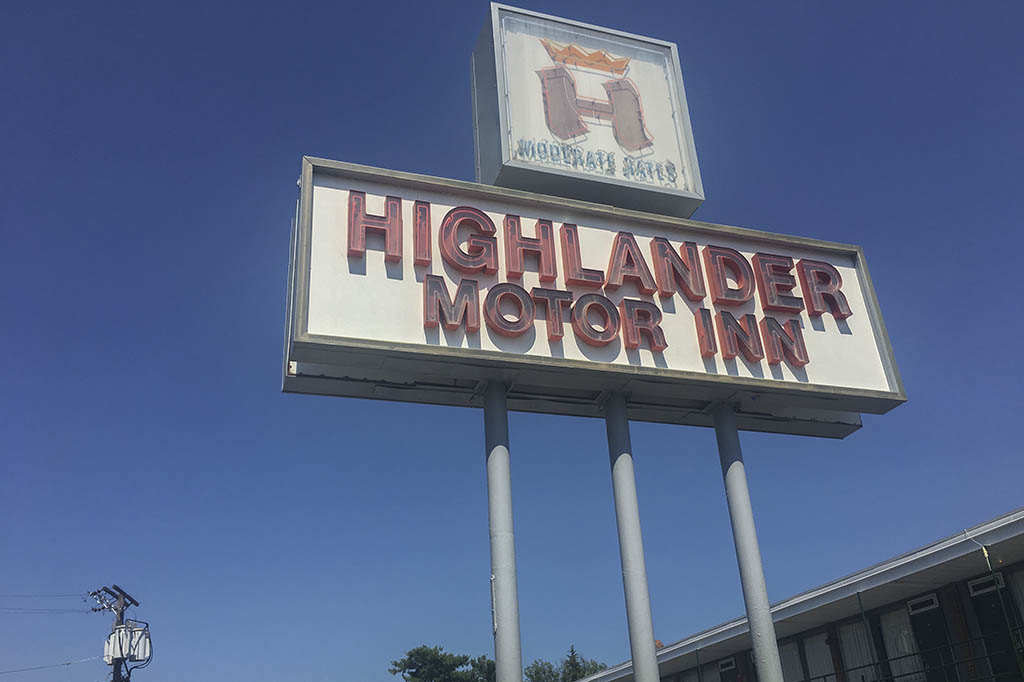
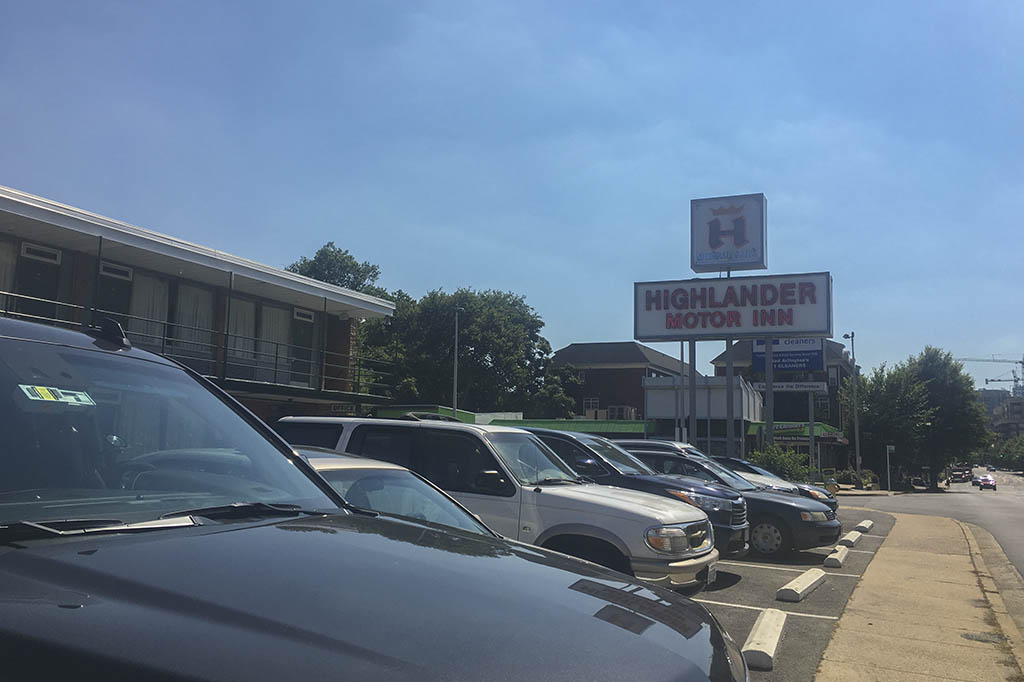
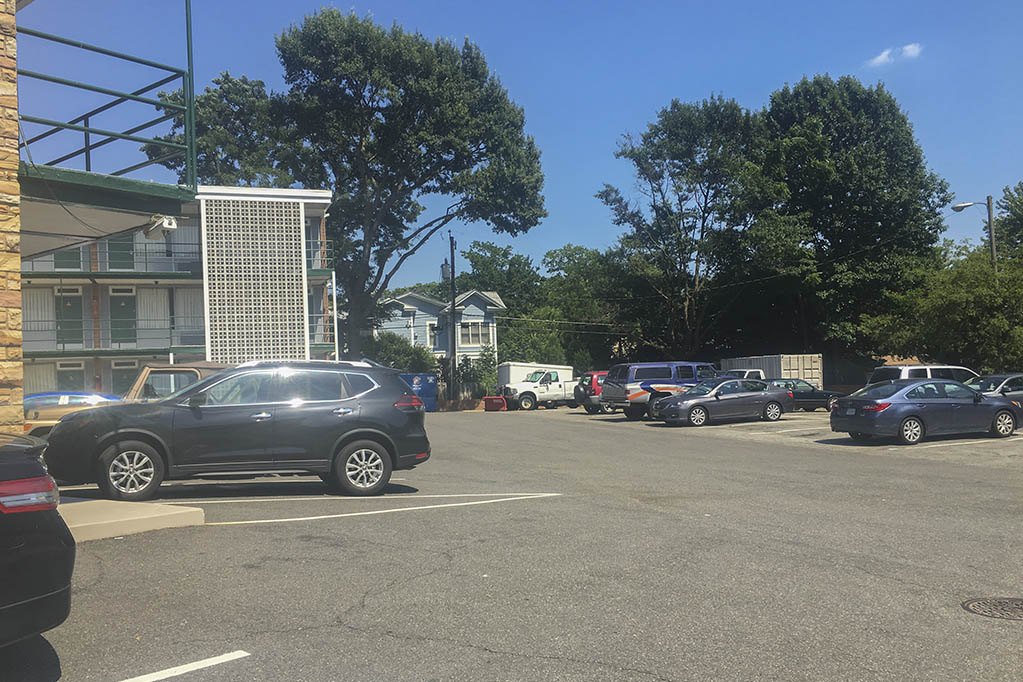
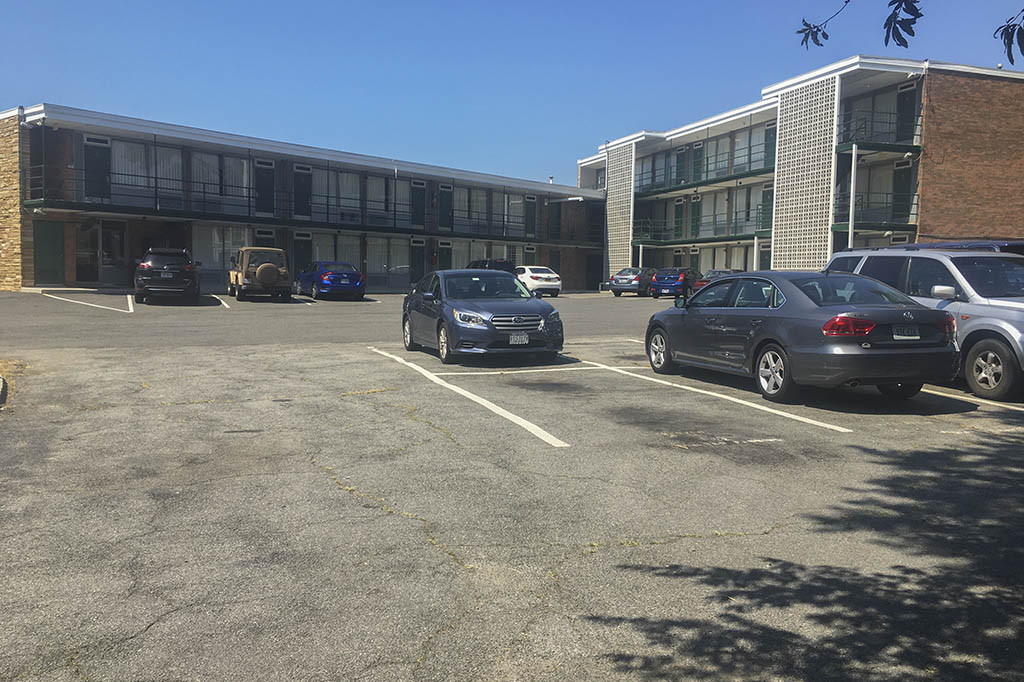
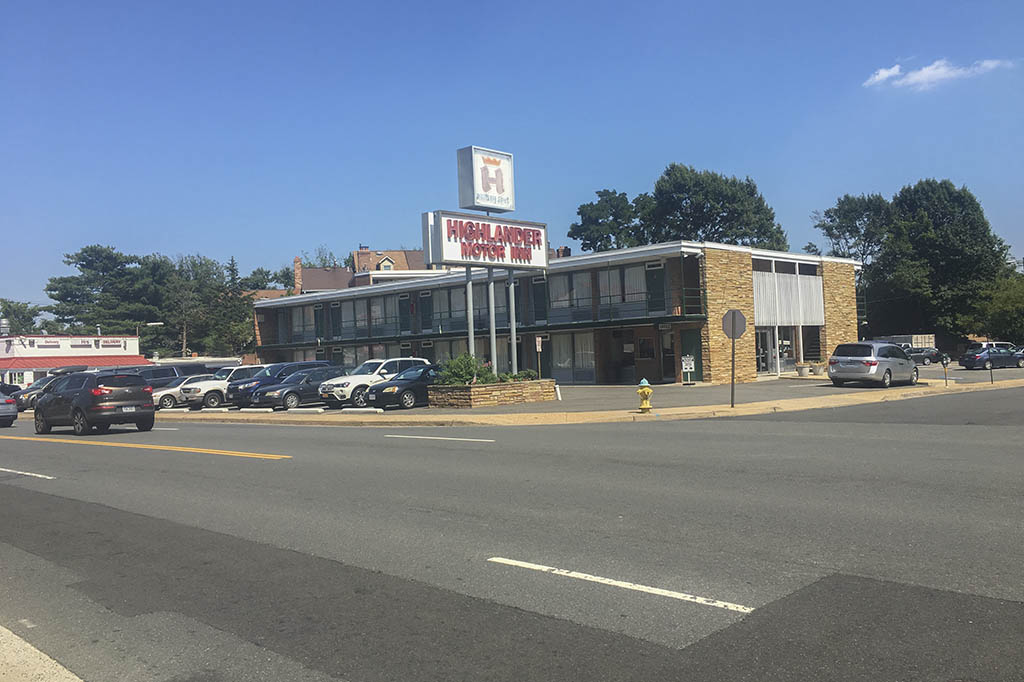
The Virginia Supreme Court could soon decide the fate of the Highlander Motel near Virginia Square, as the property’s owner continues to push to redevelop the site.

Arlington County has been locked in a legal battle with local businessman Bill Bayne for nearly two years now over the property at 3336 Wilson Blvd, arguing that Bayne shouldn’t be able to use an existing parking lot for the same purpose after replacing the 55-year-old motel with a CVS Pharmacy.

The matter went before the county’s Board of Zoning Appeals in July 2016, and was twice considered by Arlington’s circuit court, with a judge ultimately deciding last year that Bayne should be able to move ahead with his plans. But Bayne says the county is appealing that ruling to the state’s highest court, which could drag out any redevelopment of the property indefinitely.

“There is no reason for them to fight it,” said Bayne, who also owns the Crystal City Restaurant and co-owns Crystal City Sports Pub. “There’s no upside benefit for them… You’re dealing with an old, outdated property that’s behind its time. It’s much better for a neighborhood to have a CVS than an old, beat-up hotel.”

Bayne hopes the Supreme Court will decide by late August whether or not it will hear the county’s appeal. If the court takes the case, Bayne fears it could drag out the process for “another year” or more, further endangering his already damaged plans to redevelop the property.

But even if the court rejects Arlington’s appeal, Bayne worries his deal with CVS has already likely “fallen apart.” He was set to sign a 50-year lease to bring the pharmacy to the site, bringing him close to $45 million over the term of the lease, and believes he may never engineer a redevelopment of the lot even if he emerges successful in court.

“There would’ve already been a CVS built and open, but they’ve dragged me through a legal process that’s taken years,” Bayne said.

County Attorney Steve MacIsaac did not respond to requests for comment seeking clarity on why the county is appealing the court’s ruling.

The county’s legal filings over the years suggest Arlington officials were concerned with the size of the pharmacy Bayne hoped to build, particularly on a site bordering residential neighborhoods just on the edge of Clarendon, even though county lawyers challenged the project on the basis of some arcane zoning laws.

The legal spat over the Highlander began when Bayne asked for permission from the county to use a parking lot just behind the motel on N. Kenmore Street as parking for the proposed CVS.

A county zoning administrator pointed out that the hotel’s owners received permission when the motel was built back in 1963 to use that lot as “transitional” parking, and never sought any subsequent zoning change. That same lot would help Bayne’s company meet the county’s parking requirement for a retail building of the CVS’s size, a shop that would essentially replace the motel in its entirety.

(more…)


Motorcycle Crash Closes Columbia Pike — Columbia Pike was closed in both directions for just over two hours this morning while police investigated a serious accident. A motorcycle reportedly crashed into a minivan between S. Frederick and Dinwiddie street, near the Arlington Mill Community Center. The motorcycle rider was seriously hurt and two people in the van were also taken to the hospital. [WJLA, Twitter]

Man Arrested for Threatening FCC Chair’s Family — A California man has been arrested and charged with sending emails that threatened to murder FCC Chairman Ajit Pai’s family, over his support of the rollback of net neutrality rules. Pai has two children and lives in Arlington. Per an affidavit, one of the emails “listed the names and addresses of three preschools located in or around Arlington, Virginia, followed by the following sentence: ‘I will find your children and I will kill them.'” [Gizmodo, Washington Post]

Car Fire in Cherrydale — A car caught on fire in the garage of an apartment building in Cherrydale early this morning. No one was hurt. The cause of the fire is under investigation. [Twitter, Twitter]

Plane Evacuated on DCA Tarmac — “Passengers were forced to evacuate a United Airlines plane at Reagan National Airport on Sunday after smoke was reported in the cabin… The Metropolitan Washington Airports Authority said that about 1 p.m. Sunday, Houston-bound flight 6122 was taxiing for takeoff when emergency crews were called for a report of smoke in the cabin. The plane’s emergency slides were deployed, and all passengers and crew members exited ‘without incident.'” [Washington Post, Fox News]

Lee Highway Planning to Move Forward? — “It’s been delayed, delayed and delayed some more. But, Arlington’s top elected official promises, the long-awaited study of development options along the Lee Highway corridor will be up and running by the end of the year.” [InsideNova]

Photo courtesy R. Johnson


RCA Building Redevelopment Nixed — Plans to tear down the aging RCA office building at 1901 N. Moore Street in Rosslyn and replace it with a 24-story residential tower have been placed on hold “indefinitely.” Instead, owner Weissberg Investment Corp. is now seeking to lease up vacant spaces in the building. [Washington Business Journal]

New County Board Clerk Announced —  “The Arlington County Board today named Kendra M. Jacobs the Clerk to the County Board. She will join the County Board Office in her new role on Monday, July 9. Jacobs comes to Arlington County Government from the City of Alexandria, where she has managed the Department of Planning and Zoning’s Boards and Commission Unit since 2003.” [Arlington County]

LWV to Host Gerrymandering Forum — The Arlington League of Women Voters is hosting a forum entitled “Gerrymandering in America and the Future of Popular Sovereignty” on Thursday, July 12 at 7:30 p.m. at the Arlington Mill Community Center. [League of Women Voters, InsideNova]

More ART Mechanical Issues — The bus serving the ART 43 route today “died on [Route] 50 right before the Crystal City exit,” a rider reports. Per the transit agency, which has been plagued by problems recently: “Due to mechanical issues ART 43 to Court House Metro from Crystal City Metro at 8:51 AM will not operate. We apologize for your inconvenience.” [Twitter, Twitter]

Flickr pool photo by Eric


Tracy Gabriel, a D.C. urban planning official who formerly was a vice president of the New York City Economic Development Corporation, has been hired as the new president and executive director of the Crystal City Business Improvement District.

Gabriel joins the BID as Crystal City is poised for a “dynamic transformation.”

Though saddled with a high office vacancy rate following the loss of large government and military tenants, Crystal City is among the leading contenders for Amazon’s second headquarters, known as HQ2.

Even if Amazon goes elsewhere, Crystal City, Pentagon City and Potomac Yard are set for significant growth — plus $2 billion in private investment and $1.5 billion in public infrastructure projects over the next decade — which will help it become “the largest walkable downtown in Virginia and of similar scale to major U.S. downtowns such as Indianapolis and Austin,” according to a press release (below).

Meanwhile, an expansion of the Crystal City BID to include adjacent Pentagon City is under consideration.

More on Gabriel’s hiring, via a BID press release, after the jump.

(more…)


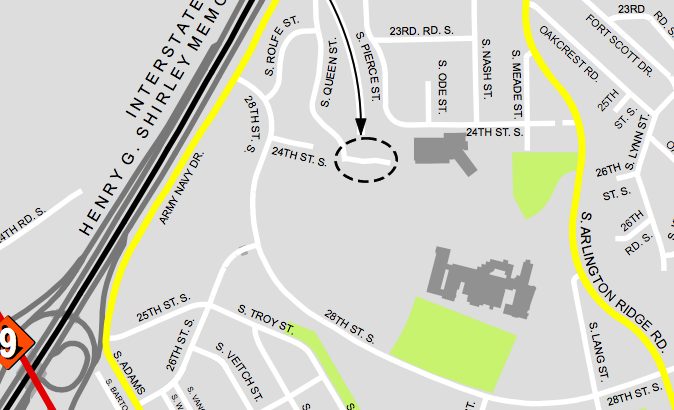
Some new condos could be on the way in the Arlington Ridge neighborhood, prompting county officials to weigh a proposal to extend S. Queen Street and make the new development possible.

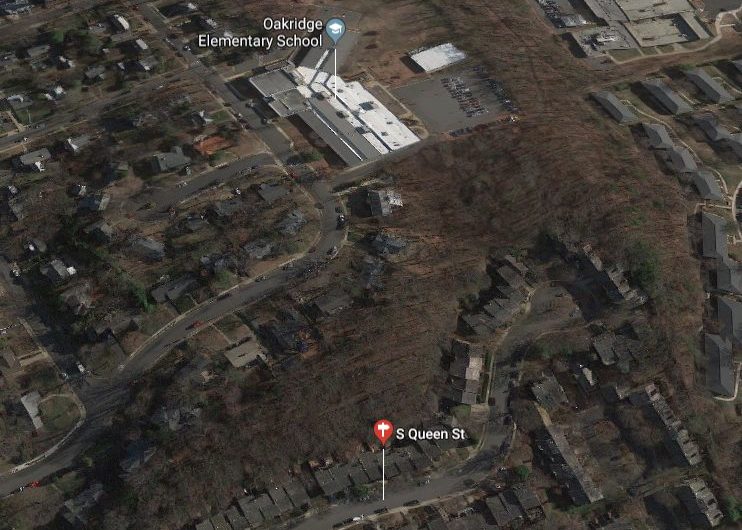
After branching off from 23rd Street S., the 2400 block of S. Queen Street currently ends in a cul-de-sac and is lined with a series of townhomes as part of the Forest Hills development. But according to a report prepared for the County Board, a developer approached county officials with plans to build 12 additional town homes on some vacant land behind the neighborhood early this year.

To do so, however, the developer needs to build a new road to reach those homes and they’re hoping to construct a 300-foot-long extension of S. Queen Street. The development would sit adjacent to the Club Manor Estates, along S. Pierce Street and 24th Street S., as well as Oak Ridge Elementary School and Haley Park.

Should those plans move forward, the developer would be responsible for constructing the new road, though county staff did note that some Forest Hills homeowners have expressed concerns about the project.

“The street construction will remove landscaped areas in the Forest Hills development that are currently utilized by the residents, and may also include modifications to the existing S. Queen Street roadway in order to accommodate anticipated traffic generated by the new development,” staff wrote in the Board report.

The Board is set to vote at its meeting Saturday (June 16) on whether the road extension can proceed. If Board members give it the green light, the county’s Planning Commission would hold a hearing on the matter July 2, with a County Board hearing set for July 14.


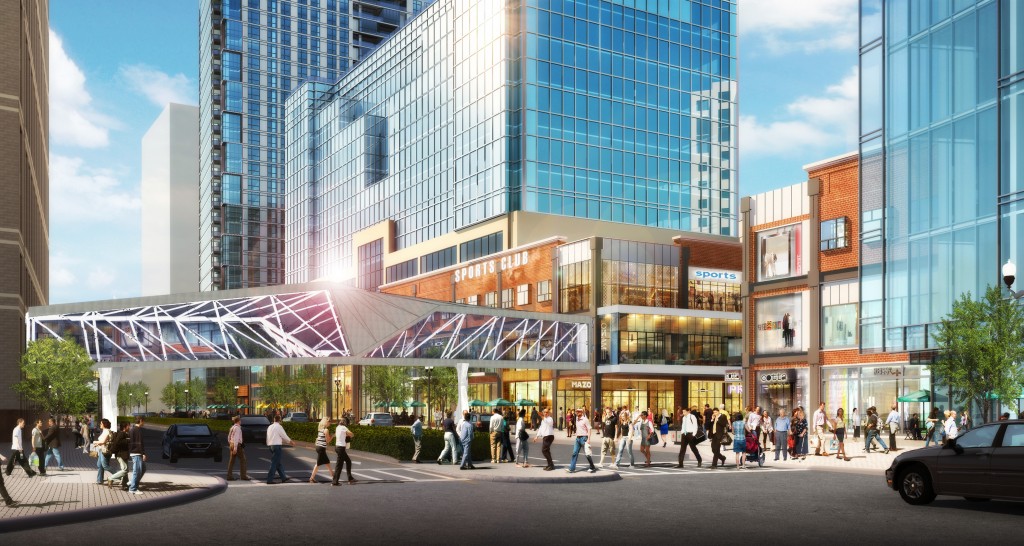
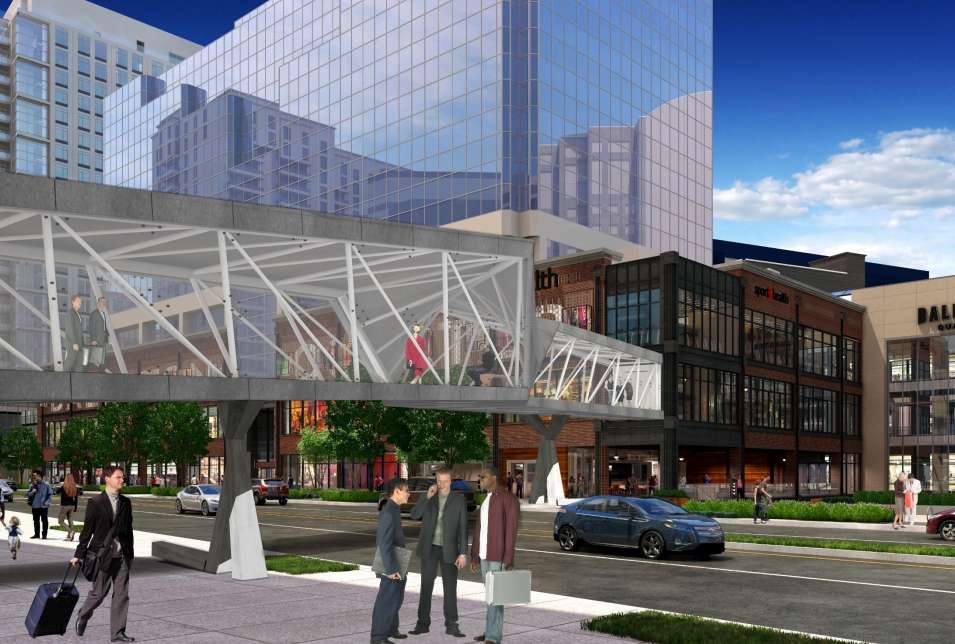
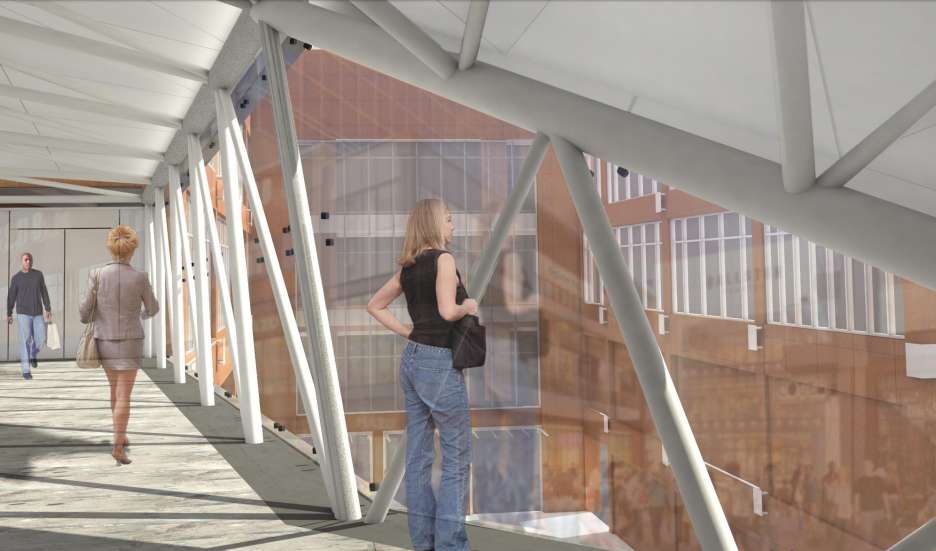
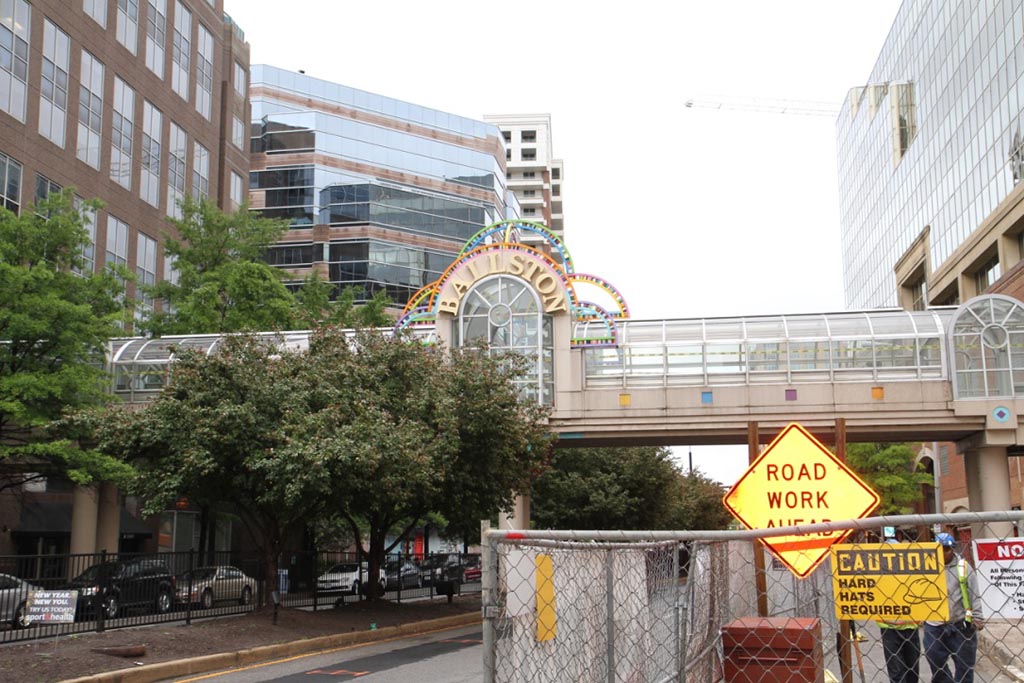
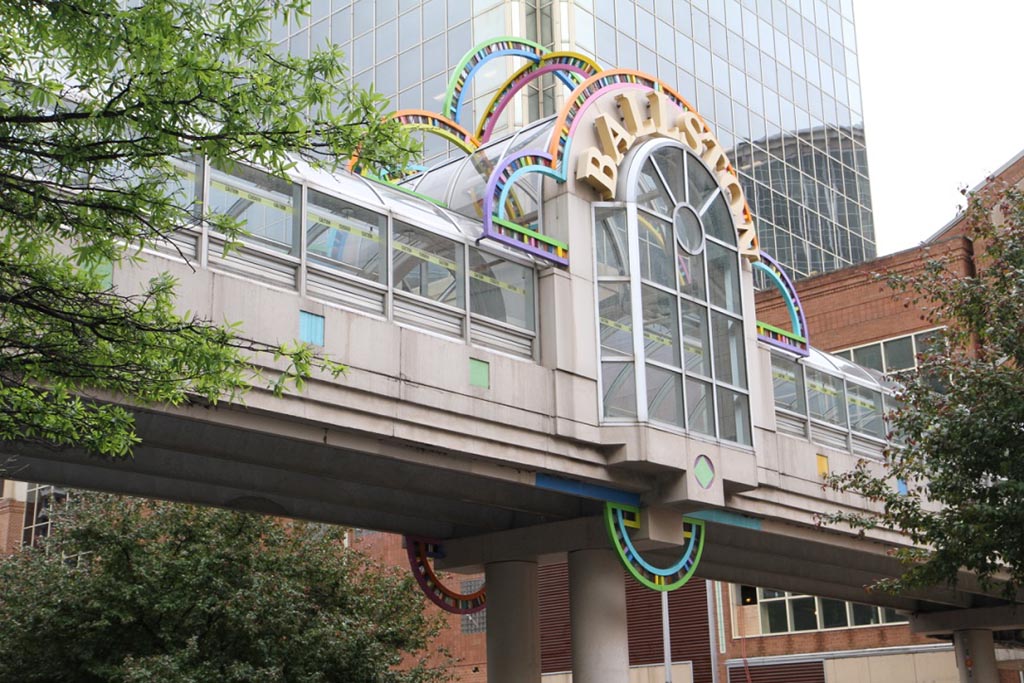
The developer behind the renovated Ballston Quarter mall is pushing back its plans to open a new pedestrian bridge over Wilson Blvd, as part of a host of proposed changes to the project.

Forest City had originally hoped to open the overhauled bridge connecting the mall to 4201 Wilson Blvd and the Metro station in time for stores to begin opening this fall. Yet work on the bridge is “currently behind schedule and is now expected to be completed in the winter or early spring of 2019,” according to a report prepared for the County Board.

Accordingly, Forest City is asking the Board to tweak some of the planning documents governing the project to account for the delay, which county staff believe will allow for “additional time for public engagement” around changes to the bridge’s renovation. Staff are recommending that the Board push off any consideration of that request until next month, though Board members won’t get a chance to vote on that recommendation until Saturday (June 16).

County staff also suggest that the Board wait until its July 14 meeting to consider a request from Forest City to add “large media screens” to the development. The big TV screens would face Wilson Blvd as part of Ballston Quarter’s west plaza. A spokeswoman for Forest City said “nothing is yet confirmed” when it comes to the purpose of the screens.

The Board could take some action related to the development on Saturday, however. Forest City is hoping to open six “outdoor cafes” as the mall welcomes back patrons in September, though construction plans originally called for some additional landscaping and construction work to be completed before those restaurants could open.

Staff noted that Forest City’s plans are “not ideal,” but they also didn’t see any “public safety risk” in letting the cafes open first. They’re recommending that the Board approve the request, then consider individual permits for each restaurant over the course of the next month.

The developer has already unveiled a variety of restaurants and retailers that will open at the mall, with plans to release more information in the coming months.


If large new developments are going to put a strain on Arlington’s schools or eat up more of the county’s green space, why doesn’t the county require developers to chip in some cash to offset those impacts?

It’s a question on the minds of many Arlingtonians, particularly as the county grapples with budget cuts and increasingly overcrowded classrooms. “Peter’s Take” columnist Peter Rousselot even addressed the issue in his May 3 opinion piece, urging county leaders to require that any developer looking to add density to a property through a zoning change first send Arlington money (or even land) for schools and parks.

But county attorney Steve MacIsaac says Arlington isn’t likely to adopt Rousselot’s recommendations any time soon. He believes there’s a lot of nuance that often gets missed in discussions of the issue, starting with the fact that Arlington generally secures money from developers for things like nearby transportation improvements during any negotiation over new construction.

“Think about widened sidewalks and streetscapes you see, new Metro station entrances, things of that nature,” MacIsaac told ARLnow. “The goal of Arlington has been to try to make great places, and that will cause businesses to want to locate here, and then they generate a large amount of tax revenues to offset the cost of other services it has to provide. So if we flipped things around, the county would have to pay more for creating the great place… Things developers pay for now, wouldn’t be paid for, and the county would have to pick up those costs.”

MacIsaac notes that state law limits local governments from exchanging cash or donated land for schools, roads or parks for zoning changes, a process commonly referred to as the “proffer system.” In fact, many other localities across Northern Virginia have chafed at the current state framework for proffers, after a 2016 change to state law set new strictures on what local governments can ask developers to pay for.

MacIsaac points out that Arlington has largely been immune from those headaches, as the law still allows local officials to extract various concessions from developers — from public art contributions to affordable housing commitments to transportation improvements — if they build through the site plan process. (The 2016 changes exempted projects in certain areas, including those around Metro stations.)

Yet MacIsaac believes the proffer law does illustrate the way state lawmakers in Richmond view this issue, and why the county remains broadly limited in how it dictates terms to developers.

“The General Assembly is very stingy in giving us authority to deal with these kinds of things,” MacIsaac said. “New development imposes costs on localities, and the General Assembly believes localities should pay for those costs with the tax revenues they raise from that development.”

Rousselot writes in his column that no state laws or county ordinances “expressly prohibit Arlington County from requesting a reasonable cash or in-kind contribution from a developer as a condition to address these kinds of schools and parks impacts,” and MacIsaac concedes that this point is largely accurate.

Yet he believes moving to such an approach would not only deprive the county of the contributions it currently wins from developers — MacIsaac points out that builders typically pay for everything from transit improvements to public art — but would also fail to make the sort of impact Rousselot and others envision.

(more…)


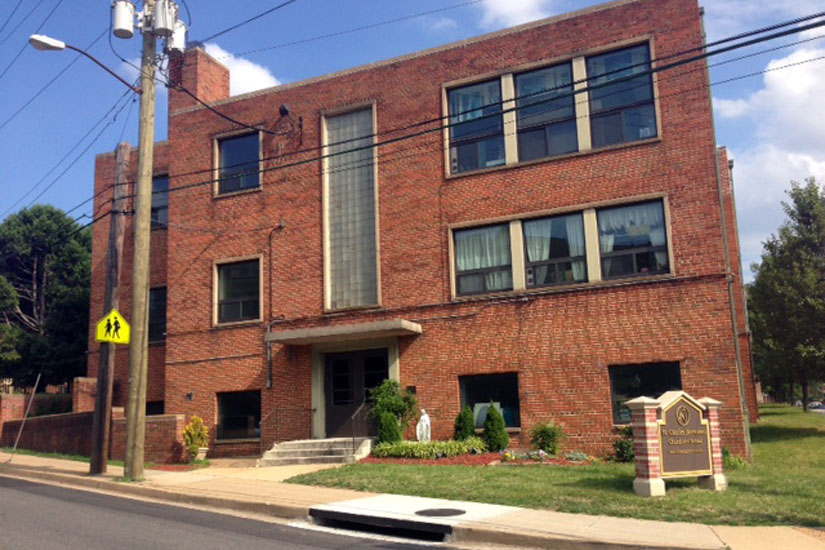
A push to overhaul Clarendon’s St. Charles Borromeo Catholic Church for the first time in nearly 30 years is gaining steam.

The church’s pastor, the Rev. Don Planty, wrote to parishioners in a newsletter Sunday (May 13) that St. Charles is moving forward with a proposal to “redevelop” the parish site, which is located on prime land at 3304 Washington Blvd. The next step is to get approval for a redevelopment from the diocese and Bishop Michael F. Burbidge.

Planty wrote that the parish has spent the last 10 months or so gathering feedback on the issue. One town hall meeting asked parishioners: “If our parish had an empty city block-if we could start from scratch — what structures would you envision that would best support our mission?”

Church leaders found a “consensus that a timely redevelopment of the St. Charles parish campus would better serve the church’s mission in general and the parish’s mission in particular.”

The church’s website says the building was last overhauled in 1990. More from Planty’s letter:

I am happy to report that the consultation phase regarding a potential parish site redevelopment has concluded and that I have submitted a report to Bishop Burbidge. The consultation process revealed a consensus that a timely redevelopment of the St. Charles Parish campus would better serve the Church’s mission in general and the parish’s mission in particular. A strong majority of parish stakeholders, and all diocesan stakeholders, are enthusiastic about the possibilities that a future redevelopment of the St. Charles campus could bring. Having spent ten months soliciting broad feedback from representative parishioners and diocesan officials, according to the plan approved by Bishop Burbidge, I am confident that there is a great desire to redevelop the St. Charles Parish site, and therefore have requested that Bishop Burbidge formally approve further redevelopment efforts.

Other churches in Arlington have funded new facilities through redevelopment of the church property, including Arlington Presbyterian along Columbia Pike and the Church at Clarendon in Clarendon, both of which approved affordable housing developments that were built on top of the new church spaces.

St. Charles leaders are interested in addressing “an aging parish infrastructure,” “the projected growth in the Rosslyn-Ballston corridor” and “the need for facilities which better support the parish mission now and in the future,” according to its website.

File photo


View More Stories