(Updated at 12:50 p.m.) Get ready for some changes in the way buses, cars and people move around Rosslyn.

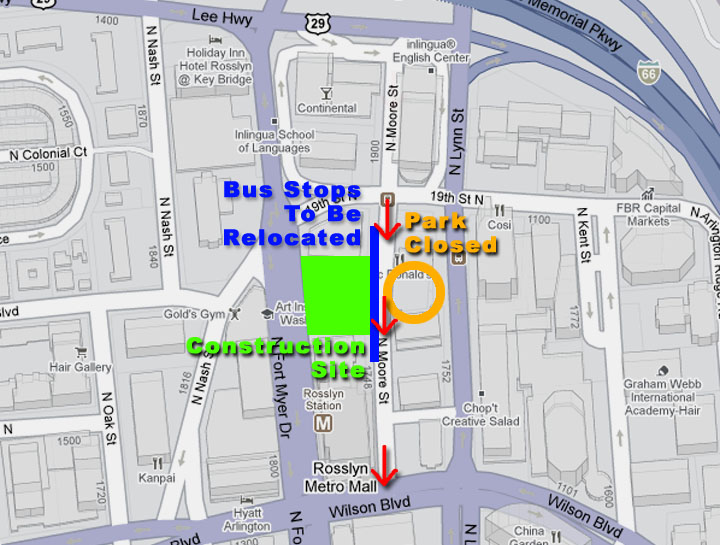
Thanks to the construction of a new Metro entrance and the 1812 North Moore Street office tower, traffic patterns are changing and won’t go back to normal for another three years.

Starting Saturday, North Moore Street will become a one-way street heading south from 19th Street North to Wilson Boulevard. North Moore will remain two-way north of 19th Street.

As a result, taxi stands and bus stops will be relocated to other parts of North Moore Street. Also, passenger pickup and drop-off will be prohibited on North Moore Street — it will only be allowed on the Fort Myer Drive side of the station.

To make way for the new Metro entrance between North Moore and North Lynn Streets, Annie’s Park, next to the McDonald’s, will be permanently closed later this month.


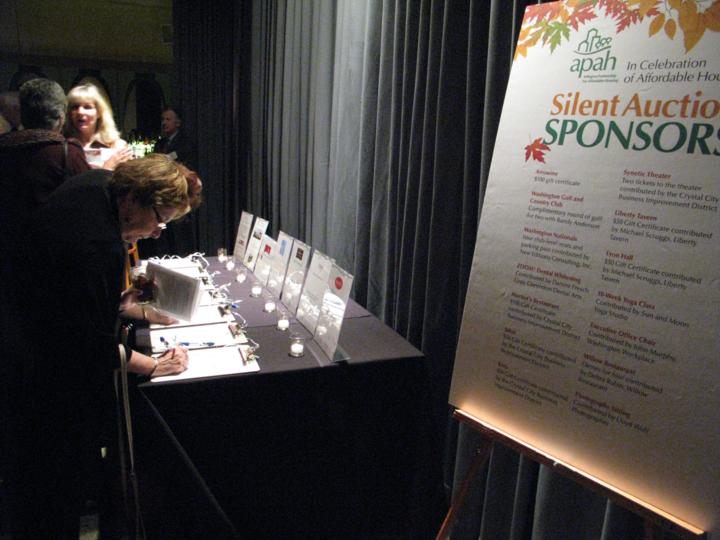
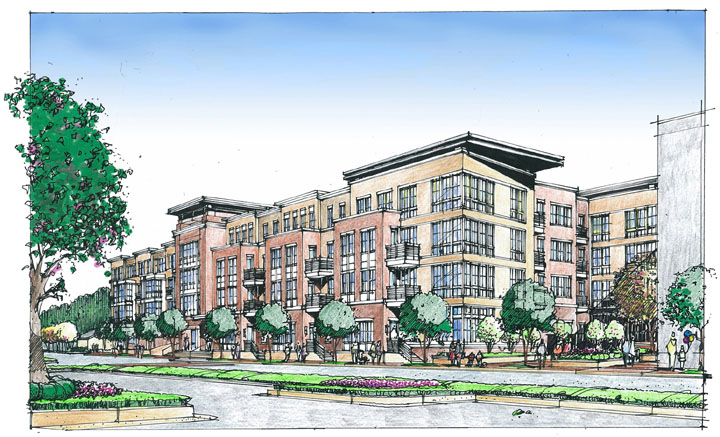
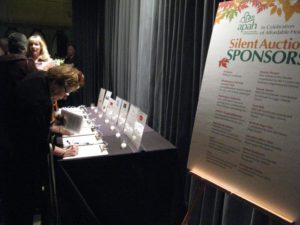
At a fundraiser last night at Clarendon Ballroom, the Arlington Partnership for Affordable Housing touted its major accomplishments from the past year. Among them: the completion of the Columbia Grove apartments, the purchase and planned renovation of the Buchanan Gardens apartments, and the just-announced deal to build 122 units of affordable housing behind the planned Arlington Mill Community Center.

What did those accomplishments have in common? They’re all along the Columbia Pike corridor.

APAH’s focus on the Pike reflects the county’s focus on preserving affordable housing and diversity along the Pike. With the area’s revitalization well-underway, the Pike’s 3,000 aging but affordable market rate apartments will inevitably be renovated, demolished or will simply get more expensive, forcing many lower-income families out.

“Affordable housing is one of our most important policy goals and one of the most difficult policy challenges,” said County Board Vice Chairman Chris Zimmerman. He called the Arlington Mill apartment deal “a good additional step” to achieving the county’s goal of increasing the Pike’s current stock of about 1,000 dedicated affordable housing units nearly five-fold in a span of 30 years.

One problem with that goal is the potential cost. The county simply doesn’t have the money to buy or build that many apartments. That, says APAH President Nina Janopaul, is why creative dealmaking is key to the Pike’s affordable housing future.
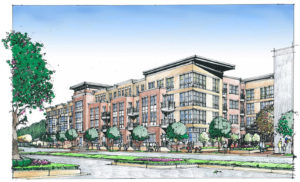
“The economics of this deal are great,” she said. “I think they have pioneered a new model of using existing vacant public land to turn it into affordable housing… by giving away that land initially, we have an opportunity to access other funding sources.”

But public land along the Pike is limited. Those 122 units at Arlington Mill will take up all the remaining county land on the site. Future affordable housing gains will likely be achieved in large part through density transfers — letting developers build taller buildings in exchange for footing the bill for a set number of affordable housing units.

If all works out, the county’s subsidy for the Arlington Mill apartments — aside from the land — could be zero. In fact, APAH’s proposal calls for making lease payments to the county. The $30 million in development costs are expected to be financed largely with low-income housing tax credits from the state.

Construction on the apartments is expected to begin in 2012 and wrap up by the end of 2013.


In due time, the big hole in the ground next to Ballston Common Mall will be filled with development and the view from the soon-to-open Rustico will be even less rustic.

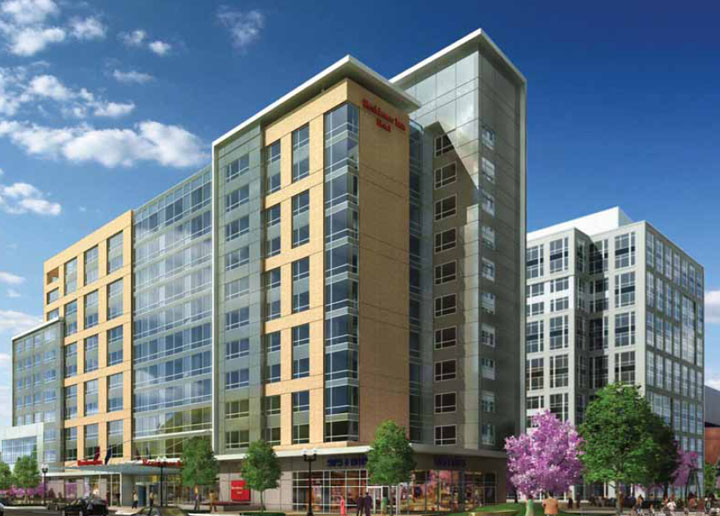
Founders Square, located across Wilson Boulevard from the Liberty Center development (also owned by the Shooshan Company), will consist of two high-rise office buildings, one high-rise residential building, a large hotel, and a smaller building reserved for retailers.

Among the Founders Square office towers, one will be a secure building with a single tenant: the Defense Advanced Research Projects agency, which is relocating from Virginia Square. DARPA signed its lease more than a year ago. The other office building is still leasing.

The hotel, meanwhile, is expected to be a Residence Inn, at least according to architectural sketches. It was originally intended to be a residential building, but its use has since been switched to a hotel by the developer. The change still needs to be approved by the county.

The county’s site plan review committee will discuss the hotel proposal at a meeting tonight in Rooms 109/111 at Courthouse Plaza (2100 Courthouse Road). The county board is expected to take up the site plan amendment necessary for the hotel’s approval in December.

Developers argue that the Ballston area is in need of more hotels.

All told, Founders Square will consist of 1.1 million square feet of office, residential, hotel and retail space. The development could be ready for occupancy as soon as 2012.


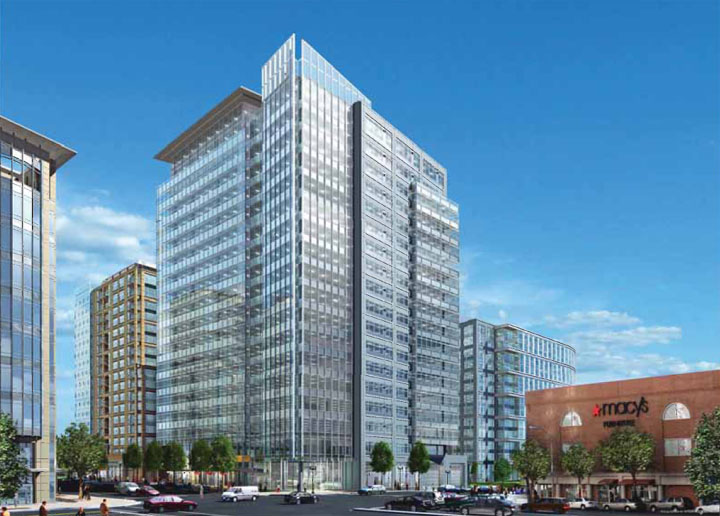
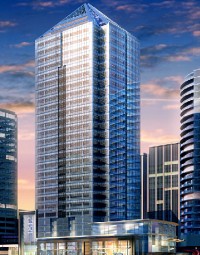
Originally approved by the county in 2007, the planned 35-story office tower at 1812 North Moore Street in Rosslyn is finally moving forward with construction. A groundbreaking ceremony has been scheduled for Thursday, Oct. 14.

Unable to sign a tenant or obtain financing for the building, owner Monday Properties is paying the first $30 million of the project’s estimated $300 million cost in cash, according to the Washington Post.

Once it’s built, the 390-foot building will be the tallest in the Washington area. It will offer expansive views of the DC skyline and surrounding areas.

Construction is expected to wrap up in early 2013.

“We’re of course very pleased to see it happen,” said Arlington Economic Development spokesperson Karen Vasquez. “[It is] a great addition for Rosslyn as well as for Arlington.”

Vasquez noted with a pinch of irony that with the 387-foot Central Place tower also moving forward, “we may see another Chrysler Building/Empire State Building competition right here in Arlington.”


It was a long night for the county board, which didn’t adjourn its recessed meeting until a few minutes after midnight. In addition to a controversial resolution regarding the Secure Communities program, a briefing on next year’s budget projections and the passage of the Crystal City Sector Plan, the board took a number of other significant actions.

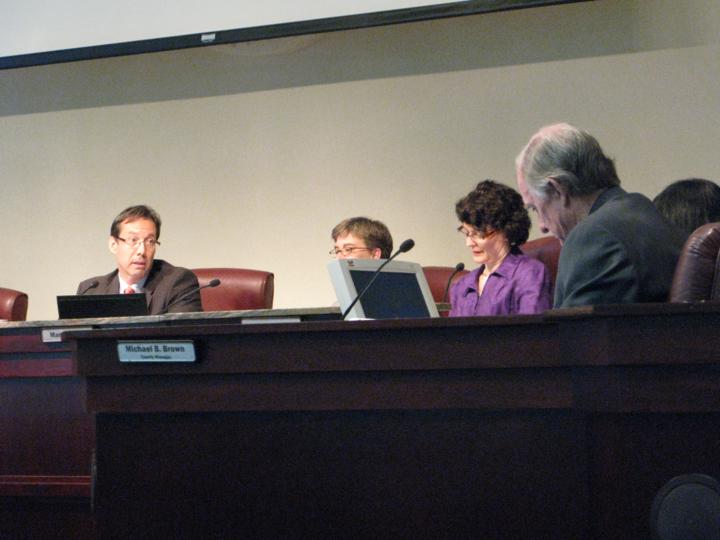
The board heard a presentation by County Manager Michael Brown regarding staff research into the proposed development plan for East Falls Church. Details are available on the county’s web site.

Funds for the design of a better Ballston beaver pond were approved unanimously. The $471,842 contract calls for a new design that will allow the pond to do a better job of treating stormwater while still providing a habitat for wildlife.

A plan to renovate 162 apartments in Colonial Village was approved unanimously. The board looked into concerns about parking and trash expressed by neighboring residents, but otherwise made no alterations.

After another somewhat lengthy discussion about outdoor patios, the board voted unanimously to renew Hard Times Cafe’s outdoor seating permit. The board specified an allowance of four tables and eight chairs on the North Highland Street sidewalk during dinner time.

The board voted 4-1 to advertise a steep fee increase for restaurant and food vendor licenses. The board was careful to emphasize that the fee hike, from $100 to $285, was mandated by the state and already in place in neighboring jurisdictions. The fee would apply evenly to brick and mortar restaurants and mobile food vendors.

At the very end, the board approved some sort of settlement with the owner of the long-delayed Bromptons development in Cherrydale. Update at 11:15 a.m. — The settlement deals with a dispute between the owner and the county over utility undergrounding. Under terms of the settlement, Bromptons owner R15, LLC will pay $255,000 to a utility fund.


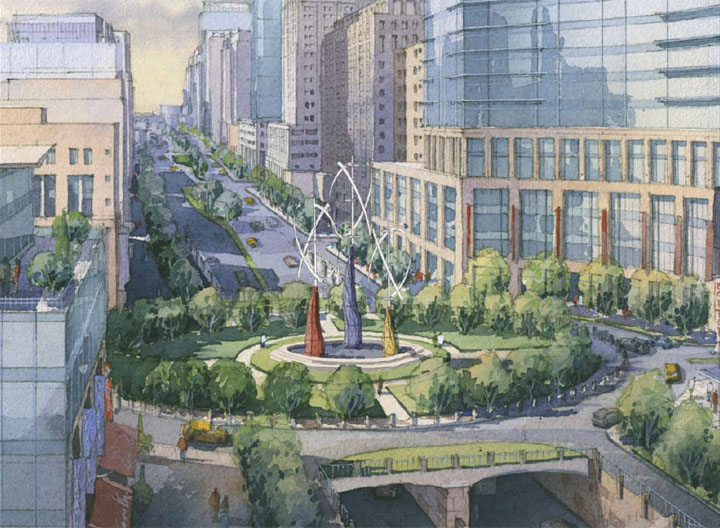
Just before the unanimous vote that would approve a sweeping plan to redevelop Crystal City, county board chairman Jay Fisette paused for reflection. Looking back at the four and a half year process of crafting the plan, Fisette remarked that it “an amazing moment and a startling success.”

Then, with five “ayes,” the board set in motion a 40-year development process that will transform the dated, hodgepodge apartments and office buildings in Crystal City into a gleaming, high-density, pedestrian-friendly urban district.

Initially conceived as a response to Crystal City’s impending loss of thousands of jobs as a result of BRAC, the Crystal City Sector Plan is meant to ensure a bright future for the oft-maligned but economically-crucial neighborhood. On numerous occasions last night, speakers pointed out that Crystal City currently produces the lion’s share of commercial tax revenues for Arlington County.

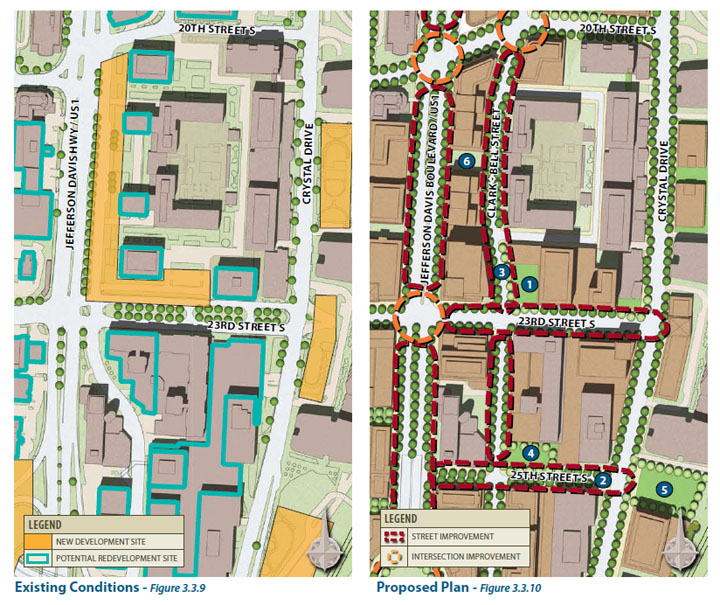
Among other alterations, the plan calls for the creation of a streetcar line, significant changes to the street grid, and an additional 15 million square feet of mixed use development through 2050.

Although some speakers compared last night’s vote to the 1970s-era growth plan that laid the groundwork for the now-vibrant Rosslyn-Ballston Metro corridor, others spoke of the hardships the Crystal City plan might inflict on surrounding neighborhoods.

Too much density, not enough open space and an increase in traffic through neighborhood streets were the most-repeated charges. Others complained that the plan did not provide enough of a transition from high-rise development to the single-family neighborhood.

Largely, those complaints were addressed by the final version of the plan, which included a traffic monitoring mechanism, a citizen advisory board, and a mandate to study ways to smooth the transition at the edge of development. The Aurora Highlands Civic Association unsuccessfully argued for a delay in the vote so those last-minute changes could be further reviewed by residents.

(more…)


The Aurora Highlands Civic Association is asking the Arlington County board to delay a scheduled vote on a sweeping, 40-year development plan for Crystal City, to allow more time for resident review.

The board is scheduled to vote on the Crystal City Sector Plan at its 6:30 p.m. meeting tonight. But Aurora Highlands urban planning committee chairman Ted Saks says the county was unable to deliver an updated version of the plan to the association’s emergency meeting last night, prompting the call for a delay.

Saks says a meeting with County Manager Michael Brown two weeks ago has produced positive changes, including pledges of a traffic monitoring plan, a citizen advisory board, and a study of ways to smooth the transition from the high-density development that will surround Route 1 and the single-family home neighborhood to the west.

However, since the county could not deliver a final version of the plan that includes those changes, the association is requesting more time for resident review.

It’s unclear whether the board will grant the request.

The Crystal City Sector Plan has been in the works for years, and includes such changes as a new entrance to the Crystal City Metro station, a streetcar line to run along Crystal Drive, dense mixed-use development with ground-floor retail, and changes to the street grid that could result in existing apartment buildings being torn down or significantly modified.


Columbia Pike is at a crossroads. On one hand, the corridor is still wonderfully diverse and affordable. On the other hand, new development is bringing luxury apartments and new retail options to the area.

The smart growth-oriented county board is thus stuck in a bit of a paradox. While it funds redevelopment and a new streetcar line, it’s also talking about spending to preserve affordable housing on the Pike.

The Pike certainly has its flaws — crime, lack of bike access, some undesirable land use — but it also has unique qualities that make it a great place to live — diversity, character-filled restaurants and shops, a strong sense of local identity.

With that in mind, we ask:


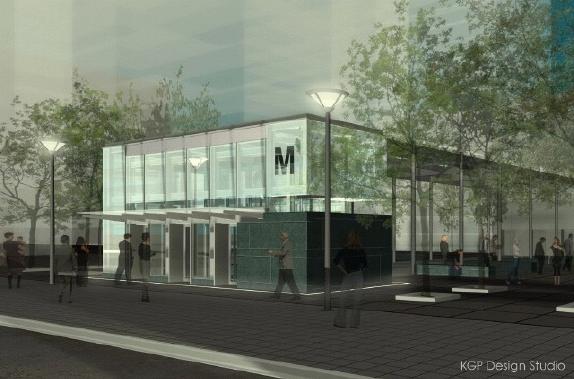
Two months ago the county board approved funding for construction of a second entrance to the heavily-used Rosslyn Metro Station. The new entrance will be built between North Moore Street and Lynn Street, across the street from the existing Metro entrance.

This week, the county released artist’s renderings of what the entrance will look like.

See more illustrations here.


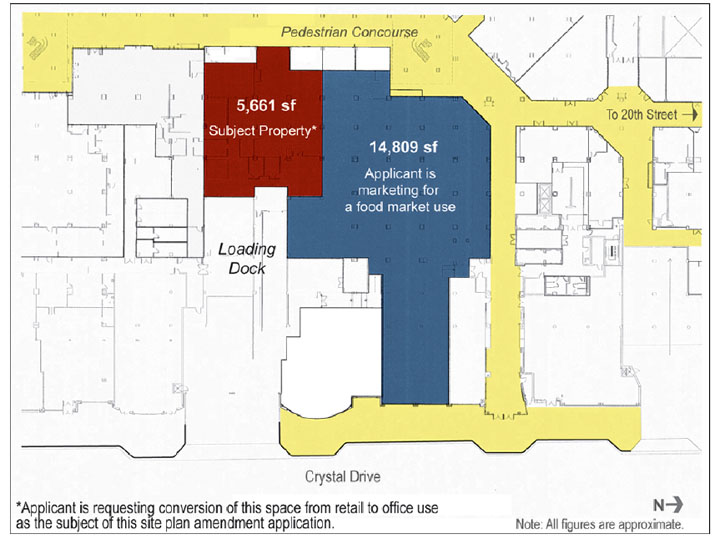
It’s a rather unglamorous item on Saturday’s county board agenda, but behind the mundane particulars of a site plan amendment to turn retail space into office space is an issue near and dear to the hearts of many Crystal City residents: the potential for a neighborhood grocery store.

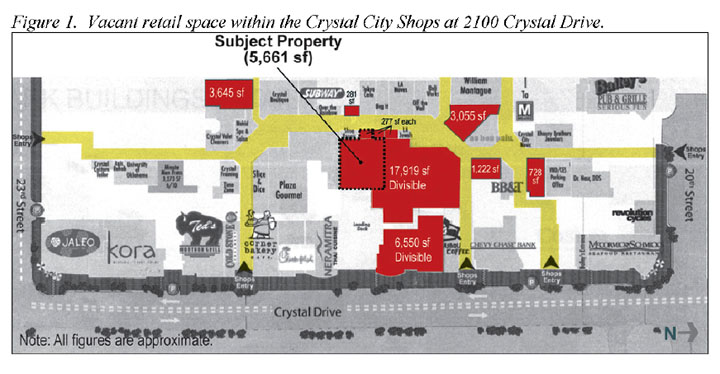
The firm that operates the underground shops at 2100 Crystal Drive wants to take 5,661 square feet of open retail space and convert it to office and storage use. But that would come at the expense of a vacant 17,919 square foot space that, until 2005, housed a Safeway store. The landlord has been trying to find another grocery tenant, but has been fighting a strong headwind caused by the weak national economy and the imminent departure of 13,000 jobs from the Crystal City area.

Essentially, the request to convert vacant space to an office use is a white flag — an admission that after five years of trying to market the space to grocery stores, leasing agents have come to the conclusion that no one wants to run a 17,919 square foot grocery store in the Crystal City underground at this time. While keeping open the possibility of a smaller, Trader Joe’s-sized market, the landlord is trying to find a way — any way — to productively fill some of the excess space.

But the county board may not allow that to happen. County staff is recommending that the site plan amendment be denied and that the space remain open for a potential grocery store. While acknowledging the difficulty in finding a suitable tenant, staff argues that it’s important to “retain the potential for a use that would activate the public realm and/or have a higher value to the community.”

County staff concludes that the space should be retained for retail or for “civic and culturally-oriented uses.” Besides, staff notes, BRAC will leave plenty of vacant office space for the landlord’s potential 5,661 square foot tenant.

The board is expected to take up the matter on Saturday. Then, on Tuesday, an item with far wider-reaching consequences will be considered: the 40-year Crystal City Sector Plan.


Say goodbye to Arlington Motorcar Service, Medical Service Corporation International and the Fashion Dreams tailor. The three small buildings on the 1700 block of Wilson Boulevard are expected to be torn down by the end of the year to make way for a new office building.

Last week Skanska USA applied for a demolition permit at the site. Barring any major obstacles, the buildings are expected to be gone by the end of the year.

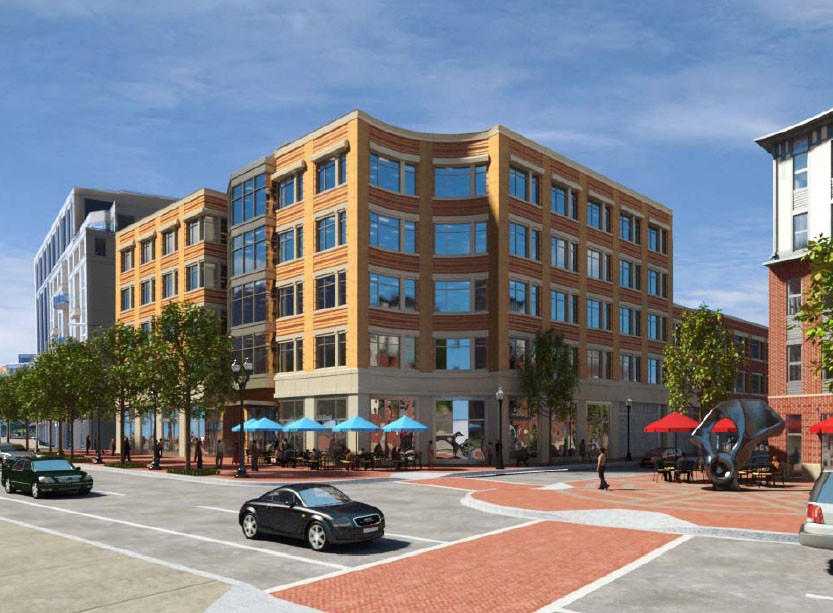
In its place, Skanska, the American division of the Swedish construction conglomerate, is building a five-story office building that will include ground-level retail and 230 underground parking spaces. The project will also include the construction of a new road — an extension of Quinn Street that will break up the long block and connect Wilson Blvd with Clarendon Blvd.

The original developer, who sold the project to Skanska this summer, had originally hoped to attract a small grocer and a restaurant or two. It’s not clear if a grocer would be interested in the space, but Skanska will have to fill 28,000 square feet of retail space somehow.

Skanska says the building should be completed by mid-2012. The company is trying to obtain a minimum of a LEED Gold environmental certification.

Despite challenging economic conditions nationwide, Skanska says it’s moving ahead with the project based on the strength of the Arlington market.

“We firmly believe in the strength and long-term value in Arlington,” Skanska regional manager Rob Ward said in a statement. “This area is one of the best sub markets in the country, with low vacancy rates and high demand.”


View More Stories