
(Updated at 11:00 a.m.) Should the Arlington School Board have a sixth, non-voting student representative?
One candidate for School Board thinks so. Angelo Cocchiaro argues it would give students a stronger voice and align Arlington with neighboring jurisdictions, including the cities of Falls Church, Fairfax and Alexandria, Prince George’s County in Maryland and D.C.
“So many of the challenges we face as we emerge from this pandemic center around student wellbeing. Especially given the scale of this moment, we need this generation of youth at the table in school policymaking,” says Cocchiaro in a recent statement published on his website. “Arlington should be leading the way on this, especially as we emerge as one of the ‘trendiest Gen Z hubs‘ in the country.”
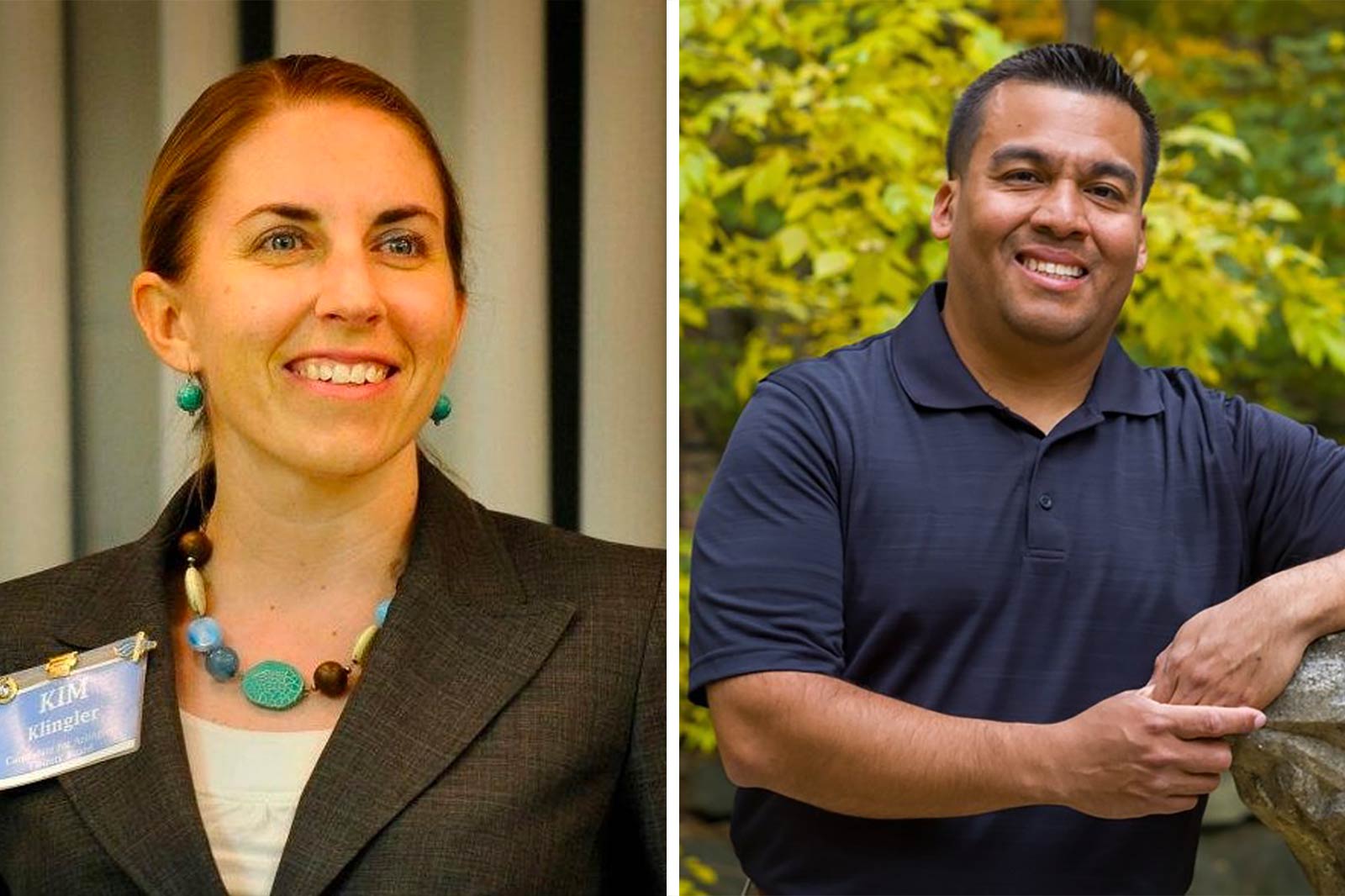
The issue has come up in previous School Board candidate forums and second-time candidate Miranda Turner told ARLnow she generally is in favor of the addition. She and Cocchiaro are vying for the endorsement of the Arlington County Democratic Committee this May to determine who will run as the defacto Democratic candidate in the November general election. (There are no partisan primaries for School Board elections, but parties can endorse candidates.)
“I’d start with seeking feedback from districts that have already implemented it both from the student and board perspective, and with feedback from students currently serving on our SAB as to whether that provides an effective and meaningful way to advance that student perspective,” Turner told ARLnow, shortly after publication.
In Virginia, having a student representative is left to local practice, similar to 30 other states, according to a 2020 survey by the National School Boards Association. A study it published in 2021 found 14% of the 495 largest school districts in the U.S. have at least one student member.
This past legislative session, Del. Alfonso Lopez introducing a bill that would have made a student representative to school boards a requirement in the Commonwealth, an idea he said came from student political advocacy groups Coalition for Virginia’s Future and the Virginia chapter of Voters of Tomorrow.
This was his first pass at such legislation and it failed in committee, despite, he says, the bill providing deferrance to localities for deciding if students would vote and how they are selected.
“Localities and their advocacy organizations expressed concerns about mandating the participation of a student representative, even with all of the flexibility we included in the legislation,” Lopez tells ARLnow. “Localities preferred to have the option to manage student input however they wished.”
The School Board has never had a non-voting student representative but, for 40 years, has solicited feedback from students through the Student Advisory Board (SAB), says Frank Bellavia, spokesman for Arlington Public Schools.
This is made of eight students from every high school, including H-B Woodlawn sophomore Naya Chopra. She says the SAB also meets with APS staff and other advisory councils to provide feedback on their priorities, such as screen time.
Students decide their top issues and form subcommittees annually that dig into these topics, such as the budget, mental health and sexual assault and harassment, and make recommendations to the School Board at the end of each school year. They do branch out to other topics, recently meeting about drug use, Chopra says.
“We have a direct line of communication and can give feedback on and discuss issues that affect us, and while I can’t speak for the School Board, the hope is that our advice is taken into account as at the end of the day, we are the ones who are directly impacted by the Board’s decisions,” she said.
Chopra says there would be interest in a non-voting position on the board, because “there are still some topics that we have no say in, and are not offered to give our input.”
The current School Board and a former member, however, say the SAB is sufficient.