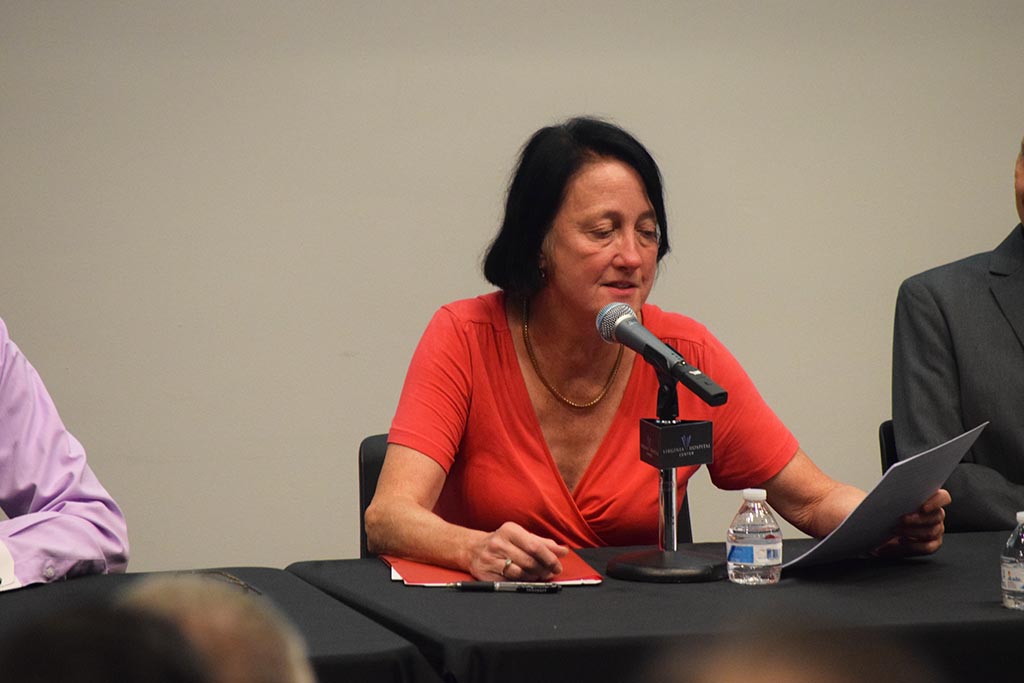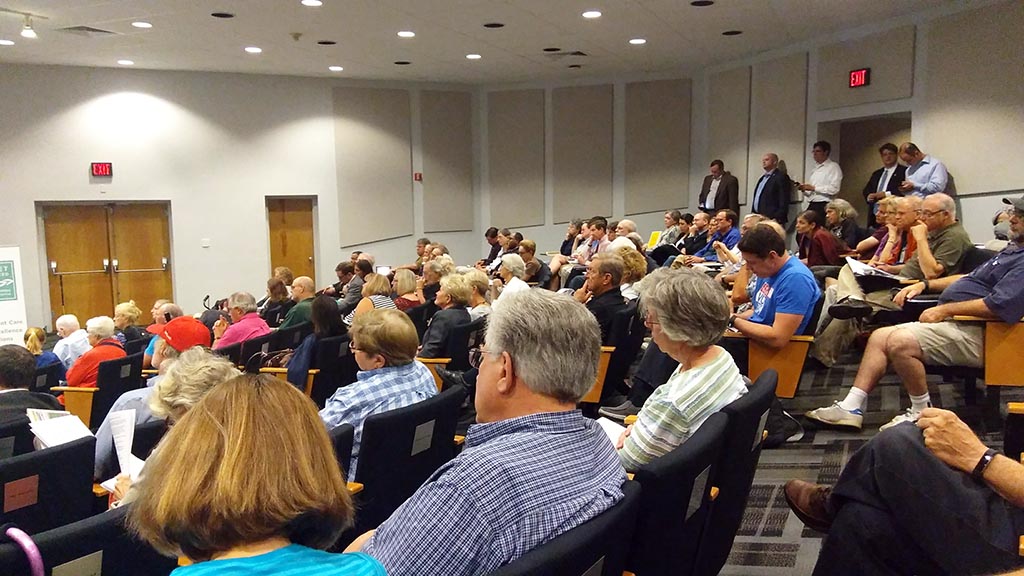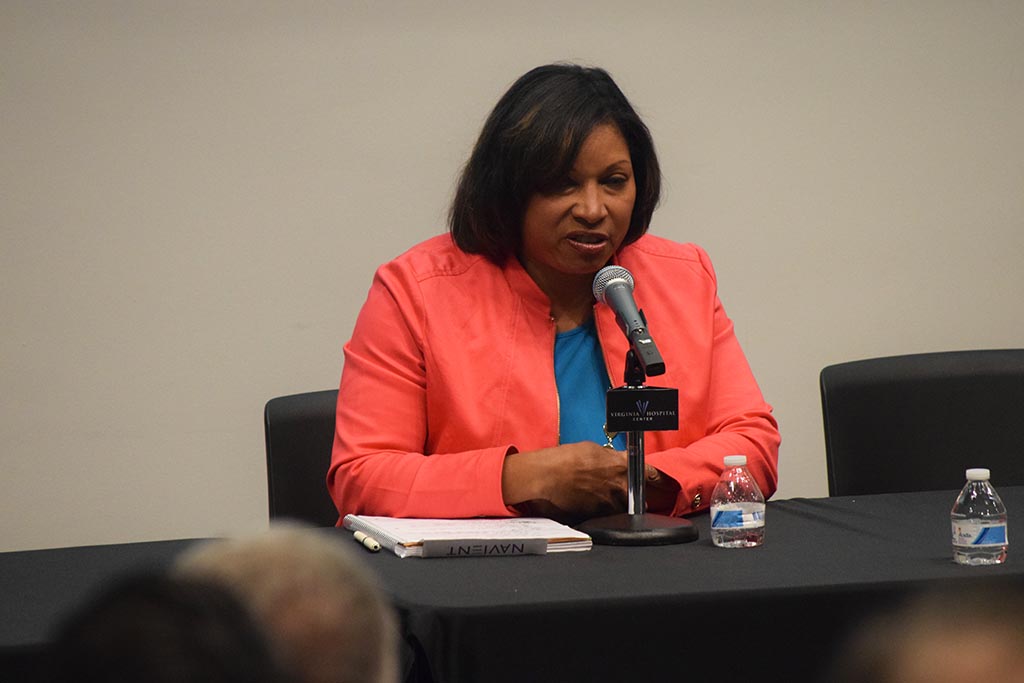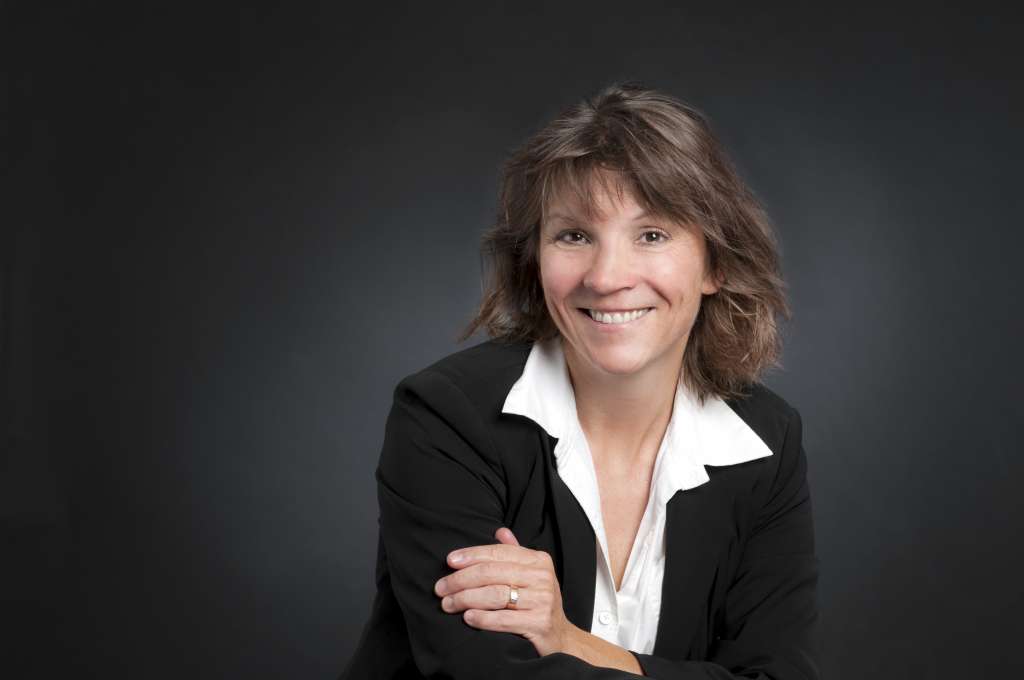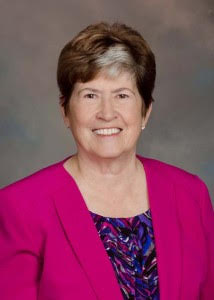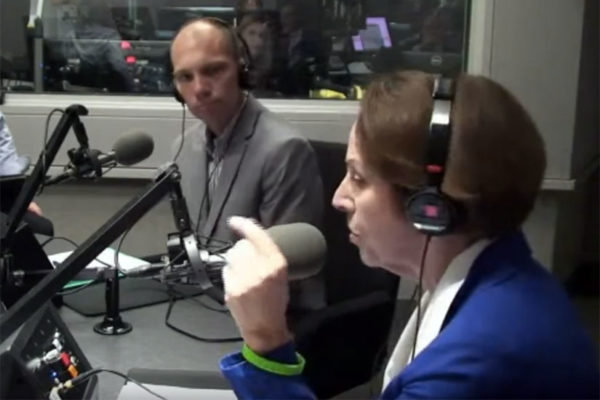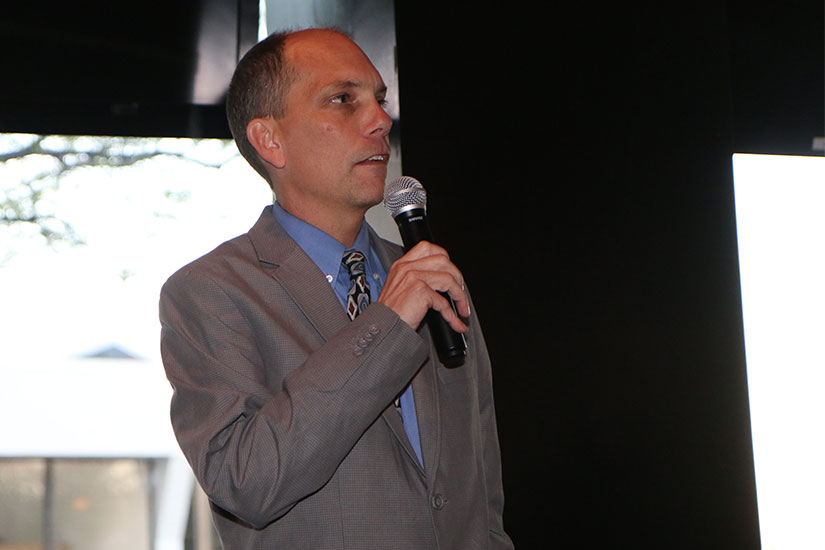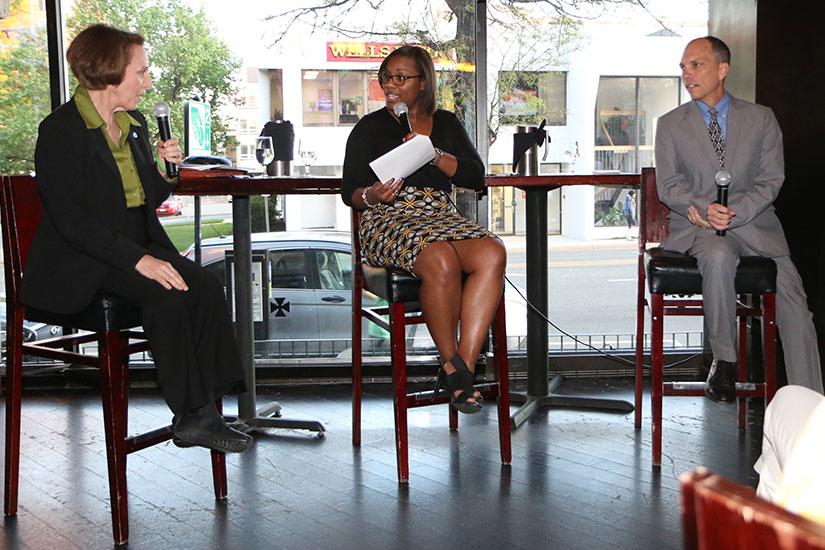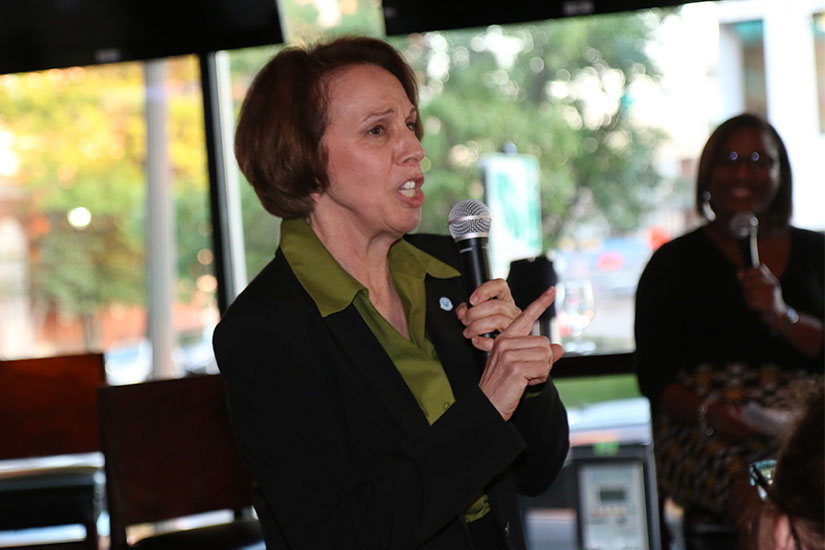
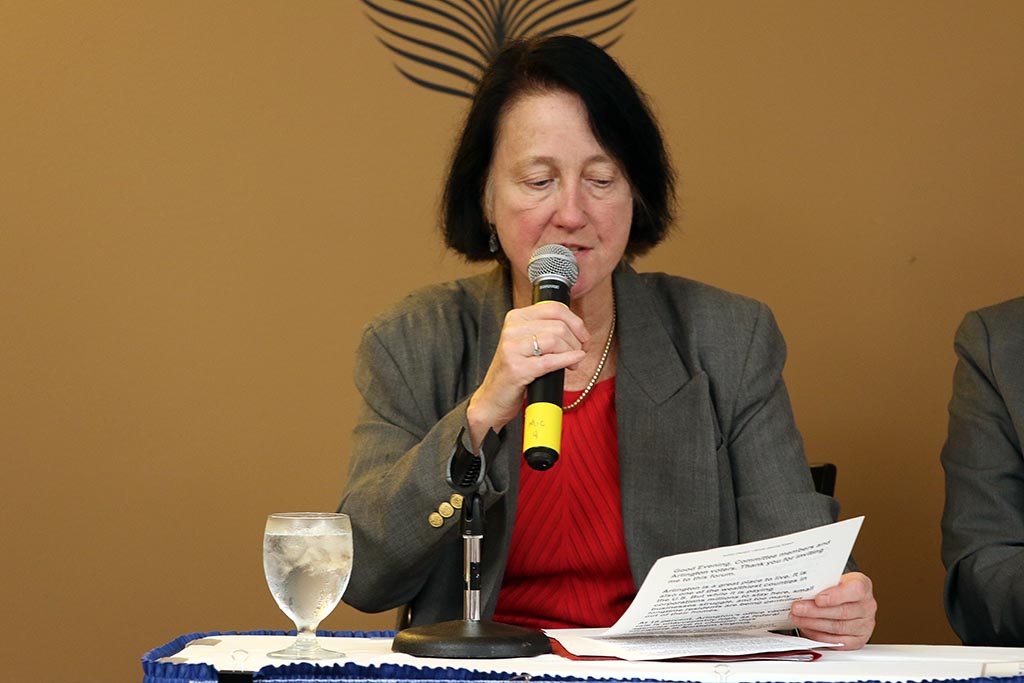
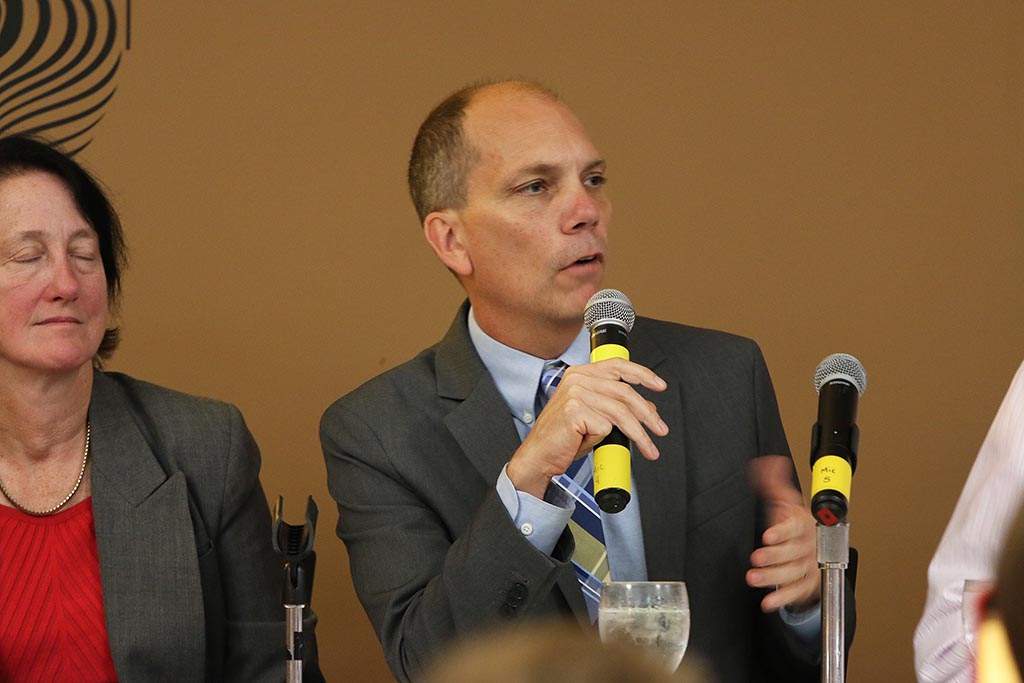
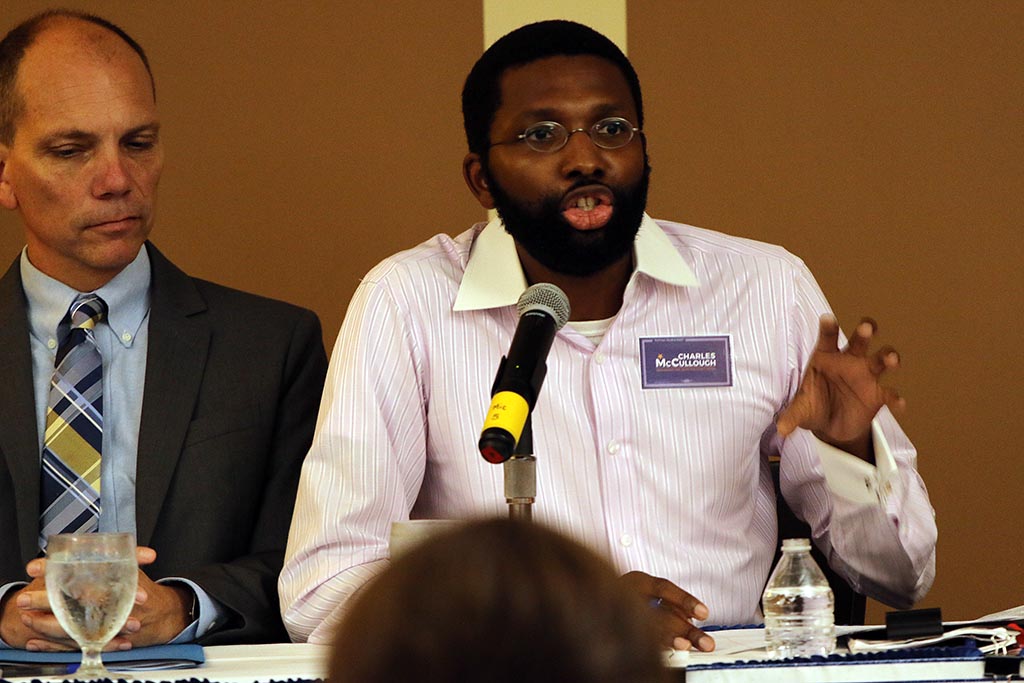
Earlier this month, the candidates for Arlington County Board faced a bevy of tough questions at a forum hosted by the Arlington Committee of 100.

But after the audience went home and the microphones were turned off, that wasn’t the end of the candidates’ work.

Attendees submitted written questions to the candidates throughout the evening, but due to time constraints, they could not all be answered. So with Election Day just two weeks away, ARLnow collated the unanswered questions and emailed the three County Board candidates for their responses.

(A similar article with responses to follow-up questions for the three School Board candidates will follow in the near future.)

Candidates’ unedited responses are below.

1. What are the challenges you would tackle in the area of affordable housing?

Audrey Clement: 

The biggest challenge would be to convince my fellow Board Members to:

1)  amend the tax code to create Housing Conservation Districts (HCDs) where landlords would be given incentives to rehab rather than tear down existing affordable housing; and

2) loosen accessory dwelling unit (ADU) regulations to allow renting space in private homes, while limiting the impacts of such rentals on residential neighborhoods.

Erik Gutshall:

While Arlington is a great place to live, it’s undeniably getting harder and harder to put down roots here and stay rooted if a smaller home is what you need as your family shrinks.  Housing affordability is a critical component of the progressive values I espouse; it is also an essential component of a strong middle class in Arlington.

As a County Board Member, I will follow a multi-point plan that includes: (1) the creation of medium density “missing middle” housing along our major commercial corridors, (2) modernization of the our zoning ordinance to enable home sharing and facilitate aging-in-place, (3) tireless support for the 2015 Affordable Housing Master Plan, and (4) continued annual funding for the Affordable Housing Investment Fund and Housing grants.  I will also continue the existing, strong partnerships with non-profit housing providers as well as others in the non-profit community who provide services to Arlington residents living in affordable housing.

As detailed in my “missing middle” housing proposal, Arlington cannot subsidize our way to mass affordability, instead we must unlock the potential of the market to deliver the housing we need.  The good news is that there is ample opportunity in Arlington for us to create the neighborhood-scale housing and retail areas known as “missing middle.”  The missing middle framework uses market forces to diversify our housing supply and responds to the needs of residents both young and old.  These modestly scaled lofts, stacked flats, co-ops, and micro units are designed to preserve neighborhood character and can fit into the edges of single-family neighborhoods and along commercial corridors, with ground floor retail and restaurants to serve adjacent homes.

Charles McCullough:

In the area of affordable housing, I would tackle these three main challenges:

Ensuring that developers pay their fair share:

  • Increase the zoning fee for apartment developers who forego affordable units, as it is currently just 1/3 of the fee allowed under state law.
  • Shift housing assistance funds to direct housing grants in order to support more residents earning less than 40% of the area median income.

Approaching certified and market rate housing with a multifaceted approach:

  • Incentivize the development of multifamily structures designed to address senior mobility needs, as well as co-living spaces designed to meet the needs of young professionals.
  • Ensure accessory dwellings become a viable option for housing while not contributing to parking and density concerns.
  • Explore Housing Conservation Districts as a way to maintain larger-scale areas of market rate affordability with careful caution not to unintentionally make these areas into suburban ghettos.

Providing housing affordability programs to address the needs of low- and middle-income Arlingtonians:

  • Develop new homeowner affordability programs to support community/developer partnership models like community land trusts and low-equity housing cooperatives.
  • Bolster existing homeowner assistance programs that enable our teachers and first responders to live in the communities where they serve.

As a progressive, independent voice on the Arlington County Board, I have the ability to advocate for a variety of reasonable housing affordability solutions that “Put People First” instead of defaulting to developers’ demands.
(more…)


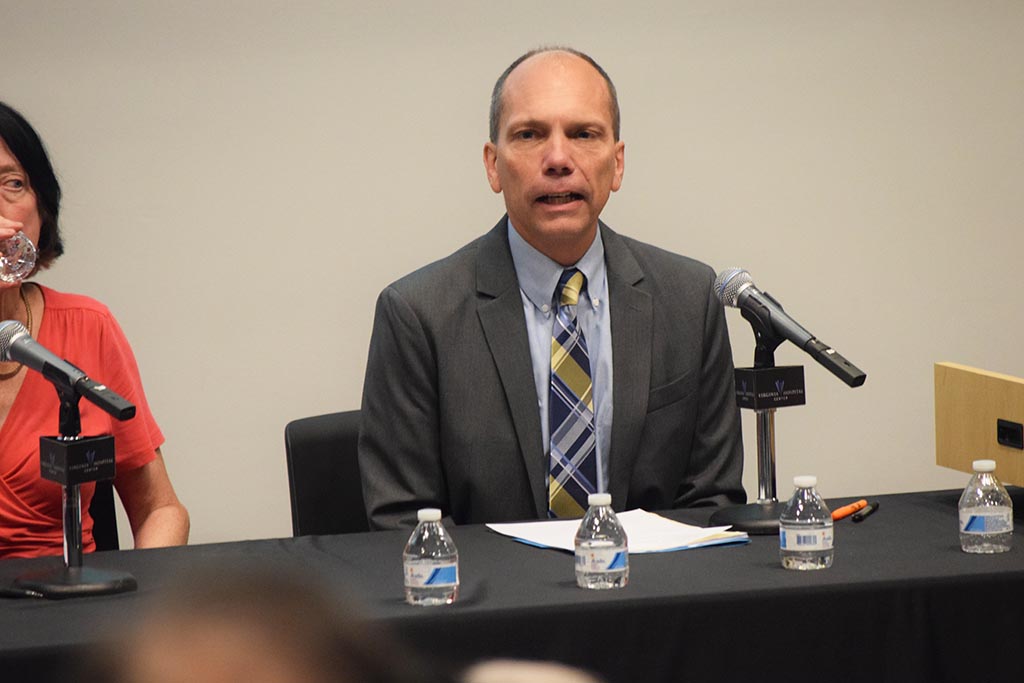
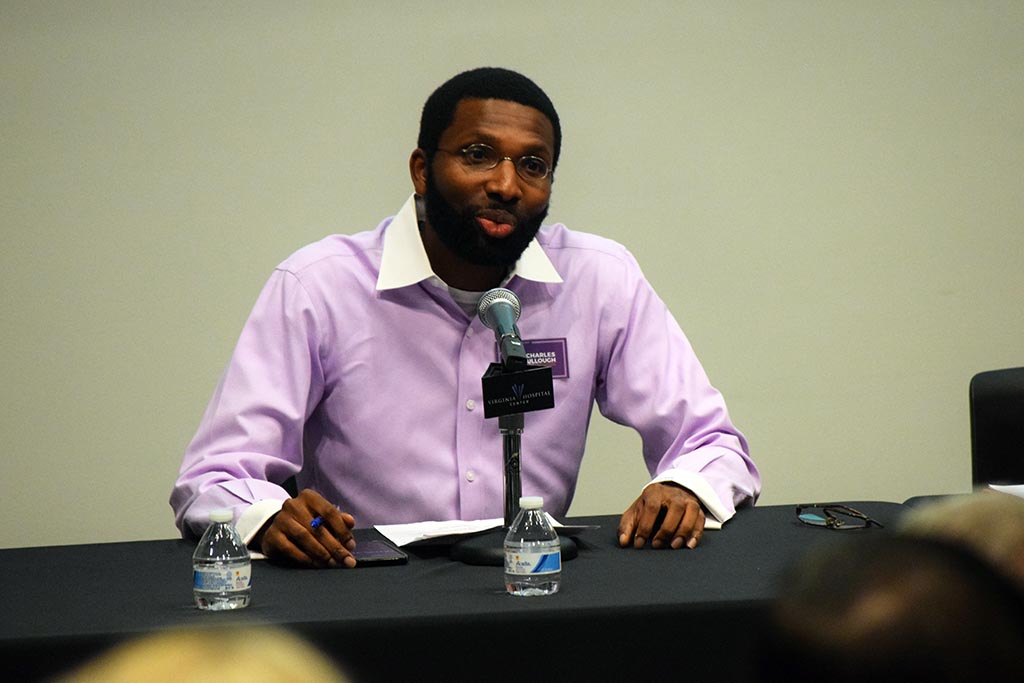
The three candidates for Arlington County Board agreed on the need for more affordable housing at a forum Tuesday night, but offered differing methods on how to achieve it.

Speaking at a forum hosted by the Arlington County Civic Federation at Virginia Hospital Center, the traditional kick-off for the fall campaign season, Audrey Clement, Erik Gutshall and Charles McCullough all argued more can be done.

McCullough, an independent endorsed by the Arlington Green Party, said the county must expand its use of rental assistance programs, especially for the likes of teachers and public safety workers like firefighters and police officers.

Democratic nominee Gutshall argued that the county should use its existing Affordable Housing Master Plan to create what he described as “missing middle housing” like apartments and townhouses for middle-income residents near Metro stations and along major thoroughfares.

“It’s a great formula to redefine our development paradigm and creates housing for the middle class,” he said.

Clement, another independent, argued against the “incredible boondoggle” of redeveloping garden-style apartments — in neighborhoods like Westover, where she lives — into luxury townhomes.

To help prevent continued losses of such housing, Clement said the county should designate more areas as Local Historic Districts to capture architectural heritage and be tougher on developers.

McCullough agreed that developers should be held to a higher standard and compelled to provide more affordable housing and other amenities.

“For too long, development has meant displacement,” McCullough said. “That should not be the way, but unfortunately that has become the Arlington Way.”

Talk of the so-called “Arlington Way” of engaging with residents and gathering extensive community feedback came up when the candidates discussed how to get more people involved in local issues.

Clement argued that the Democrat-dominated County Board deters participation, as does a sense that controversial agenda items are left to the end of monthly meetings.

“It is really an endurance contest and that is really what discourages public participation,” Clement said.

Another emphasis of Gutshall: helping more small businesses open and operate more easily in Arlington. That follows reports of businesses having difficulty navigating the county’s permitting and inspection bureaucracy.

Earlier in the forum, Gutshall argued that he would go beyond party politics, and that the county’s progress has been not down to Democratic values, but “Arlington values.”

Gutshall emphasized that he was not a “hand-picked choice” of his party, after Democrats’ use of a caucus to pick their nominee was criticized as undemocratic by Clement. Both independents argued they would be unencumbered by any need to play “party politics” if elected to the Board.

“I tend to believe the truth lies somewhere in the middle, and that’s where the voters are,” Clement said, noting that she previously was a member of the Greens but became “disillusioned” after it veered too far left.

“We need to be able to have an unencumbered voice for the issues we have right now,” McCullough added.

(more…)


Arlington’s Former Row House Ban — Responding to complaints from community leaders who “hoped to preserve Arlington’s then-suburban character,” Arlington County changed its zoning ordinance to ban row houses in 1938. That decision is one factor in the area’s “dramatic undersupply of missing middle housing.” [Greater Greater Washington]

Police Still Searching for Sex Assault Suspect — Arlington County Police are still looking for a man who posed as a maintenance worker and sexually assaulted a woman in her Rosslyn condominium on May 7. “This investigation remains a top priority of the department and detectives continue to follow-up on significant investigative leads,” ACPD said in a statement Wednesday afternoon. “Police continue to ask that anyone with information on the identity of the suspect or details surrounding this investigation call 703-228-5050.” [Arlington County]

Review of Synetic’s ‘Hunchback’ — “‘Hunchback of Notre Dame’ gives a hyper-creative Washington group a source for one of its most beautifully realized productions,” theater critic Peter Marks writes of the new Synetic Theater production in Crystal City, which runs through June 11. [Washington Post]

Flickr pool photo by Erinn Shirley


Last week we asked the four Democratic candidates for Arlington County Board to write a sub-750 word essay on why our readers should vote for them in the May 9, 11 and 13 caucus.

Here is the unedited response from Erik Gutshall:

I’m Erik Gutshall, I’m focused on the future, and I’m asking for your support to be the next member of the Arlington County Board.  There are four strong Democrats running for the board, but I believe that I have the perspective and experience that uniquely qualify me to get the job done.  When my wife and I moved to Lyon Park in 1995, we didn’t expect to stay long, but like many of you, we quickly fell in love with our new community.  Impressed by what Arlington and its schools had to offer, we put down roots, and are raising our three wonderful daughters here.  We learned that Arlington’s success story was written by ordinary citizens, with shared values, working together to tackle the challenges of their day.  Wanting to give back, I volunteered with my civic association, a local family shelter, and eventually our planning and transportation commissions.  I have met so many great people that I know we can tackle the challenges of tomorrow if we work together.

In 2003, I saw an opportunity, and took a risk to start my own business with only a supportive wife, a savings account, and my own determination to rely on.  Fourteen years later, I’m proud to say that with hard work, great employees, and more than a few sleepless nights, I’ve built an award winning small business that clients can depend on, and provides for my family and employees.  This experience is why I know down to my very core that if you don’t innovate, you stagnate.  Our values haven’t changed, but our solutions have to.

While my perspective will be unique on the board, my story is not.  It is shared by thousands in our County and if we are going to build an economy that works for all, we must empower our innovators and entrepreneurs to grow and thrive.  I will demand a “Get to Yes” customer service culture so that our small businesses – the heart and soul of our community – can spend more time on their customers and less time dealing with frustrating bureaucracy.  I know our county government can do this, but they need a leader on the board who will make it a priority.  I will be that leader.

As a parent of three APS students, I know how important solving the capacity crisis is to Arlington’s future.  Last year I lobbied for the Joint Facilities Advisory Commission (JAFC) because the School Board and County Board must work together to squeeze the most out of our limited space and dollars.  On the board, I will champion the JFAC’s work to develop creative solutions that consider every opportunity, whether school, county, or commercially-owned, to build the schools and multi-purpose facilities we need.

I also know the anxiety of a parent who wonders if his daughters will be able to afford to start their families here.  I will use my experience as Chair of the Planning Commission to create neighborhood-scale “Missing Middle” housing along our transportation corridors.  Modernizing our old-fashioned zoning code will allow private investors to create this housing without taxpayer money to help young families starting out, empty nesters, and everyone in between from being priced out of Arlington.

Being a part of Arlington’s civic dialog has been an honor and a privilege, and facilitating that conversation is a deep expression of my progressive values.  Ensuring that all parties have a seat at the table isn’t a box-checking exercise; it is the antidote to divisive issues that can pit neighbors against each other.  That consensus-building process is the only way we can hammer out a plan that balances the needs of schools, parks and open space, and community facilities while redeveloping our transportation corridors to provide “missing middle” housing.  I know we can stop bouncing from one ad-hoc decision to the next because I’ve been working with you to solve complex challenges for the last 15 years.  With your support, I’ll be honored to do it for the next four as your board member.  To learn more about what I’m focused on for the future of Arlington, visit Erik4Arlington.com and please vote on May 9, 11, or 13.


Progressive Voice is a weekly opinion column. The views and opinions expressed in the column are those of the individual authors and do not necessarily reflect the views of their organizations or ARLnow.com.

By Lisa Nisenson

In another example that transit system improvements don’t happen overnight, we now know that we will need to wait another year, at least, for promised Columbia Pike bus improvements.

To be fair, the delay is due largely to investments in Metro’s SafeTrack repairs. Moreover, on the positive side, Arlington is moving forward on 13 new ART buses, estimated to arrive either this year or next.

But new transit models around the world show that we can have service improvements without waiting for years. On-demand rides and real-time information only a few taps away on a mobile app create public expectations for innovation in all aspects of transportation, both public and private.

So in addition to what happens next with bus improvements on Columbia Pike, we need to ask:

  • Are there ways to quickly combine the best of on-demand rides and the regional power of Metro’s rail and bus service?
  • Can we extend the benefits of high performing transit throughout Arlington — not just transit stops and station areas?
  • What are other regions doing we can adopt or adapt quickly?

Last December, the U.S. Department of Transportation announced winners of their Mobility on Demand Sandbox. The sandbox reference suggests play, but the aim is research into “what works” for integrating personalized mobility features into transit programs. While there were no winners from our region, the 10 selected transit systems have features we can copy — especially for first/last mile service to Metro stations.

For example, Pima County, Ariz. is building the Adaptive Mobility with Reliability and Efficiency project that augments existing fixed route transit with Uber and Lyft-like on-demand, shared rides, integrated payment systems and advanced traveler information systems.

Los Angeles and Seattle are working directly with Lyft for a mobility on demand partnership for trips beginning and ending at select transit stops. Customers can use the Lyft app or call a dispatcher phone number, providing equity to lower income individuals.

San Francisco is building a carpool match program to link drivers with riders based on their transit destinations, including a seamless payment platform that assigns preferential parking for carpoolers while increasing transit ridership by improving access to BART stations.

Other programs are built around on-demand shuttles comparable to hotel shuttle service that circles Crystal City and Ronald Reagan Washington National Airport. One is a Boston-based company called Bridj. Ford Motors recently acquired a similar service called Chariot. These shuttles provide a “missing middle” in transit that can be more demand-responsive than larger buses.

Perhaps the boldest experiments are with autonomous (or driverless) cars and shuttles. Most trials are on private campuses, but Las Vegas recently launched a driverless shuttle and Local Motors has begun producing 3-D printed, autonomous shuttles at National Harbor in Maryland.

We can get started now on similar initiatives, but there are some key principles to keep in mind in dealing with emerging technologies:

Prioritize Metro: Some observers predict transit’s demise with new technology. However, our region cannot operate without high capacity Metro rail and buses. There is not enough road space to host hundreds of thousands of riders in small vehicles. Well-planned programs will feed riders to Metro and support innovation with ART vehicles and services.

Understand testing: With fast-changing technology, initial service runs are used to experiment with route selection, define target riders, test pricing models, and work through program bugs. In Kansas City, Bridj ridership fell far below expectations in early tests. But the tests revealed who was most likely to try and stick with the service, and it not surprisingly includes Millennials. Poor initial results aren’t always a reason to quit, because ridership can and does increase with continuous improvements via testing.

Mobility hubs: Premier transit access is no longer tied to locations within the first quarter mile walk from Metro stations. Arlington can create hubs that concentrate certain transportation options in key locations around the County. Locating and designing these hubs, differing from highly visible Metro stations, will require knowing where people need to go, how quickly they want to get there, when they want to travel, and the best marketing channels.

In building partnerships with transportation providers, regional transit agencies, universities, and neighborhoods, Arlington can take prompt and lower risk actions to test ways that can help people get from place to place quickly without relying on single occupancy vehicles — reducing congestion and filling service gaps until transit build out can be completed.

Lisa Nisenson leads Alta Planning + Design’s New Mobility groups and is founder of the award-winning start-up GreaterPlaces. She gave a 2015 TEDxArlington talk on building better transportation networks.


Mary Margaret WhippleProgressive Voice is a weekly opinion column. The views and opinions expressed in the column are those of the individual authors and do not necessarily reflect the views of their organizations or ARLnow.com.

By: Mary Margaret Whipple

Arlington has been making many “best of” lists lately: The Best City to Live in America, the second Best City for Millennials, fourth Best City Parks in the country. We can be proud of these notable achievements.

But Arlington also finds itself on lists that tell another side of the story: we have some of the highest home prices and rents in the D.C. area, and the D.C. area is among the least affordable metro areas in the country. The median price of single-family homes in Arlington increased 140 percent between 2000 and 2013, while the average rent increased by 91 percent.

Rising prices have resulted in a great loss of economic and other types of diversity for our community. Over the last few decades, Arlington’s demographics have become less diverse as many lower and middle-income households either decided to move or were forced to move out of the county. Arlington County was the only place in the D.C. area that lost Hispanic population between the year 2000 and 2012. And although the overall number of households in Arlington grew by only 10 percent during that time, the number of households earning more than $200,000 increased by almost 60 percent.

In the County’s work on housing affordability and in the Affordable Housing Master Plan adopted last year, a lot of attention has been placed on providing affordable housing for low-income families.

For example, most government housing subsidies are focused on meeting the housing needs of those earning below 60 percent of the Washington area’s median income. In the Washington area, this means housing programs serve those making less than around $65,000 per year, and the greatest subsidies are reserved for those earning much less. This makes sense, because the lowest income households are the most burdened by high housing costs and tend to live in the most vulnerable situations. Especially when subsidy dollars are scarce, most of us would agree that they should be focused on those most in need.

But the county’s three-year Affordable Housing Study Working Group process also pointed out that housing affordability concerns have reached the point where households higher and higher on the income scale are affected, particularly when it comes to purchasing a home.

In Arlington, this means that even those earning $80,000-$100,000 or more can find it difficult to buy homes in the County that meet their needs. Due to a lack of diversity in our housing stock, empty nesters and seniors with modest incomes who would like to downsize have limited choices if they want to stay in our area.

Employees of Arlington County government and businesses also struggle with housing costs. Many end up moving farther and farther away from their jobs. The longer commutes mean sacrificing time with their families in order to find an affordable place to live. Extended commutes also affect our area’s employers as well — making it more difficult to attract and retain talent willing to make the commute. And all of us are affected by the traffic and environmental impact caused by increasing numbers of long distance commutes.

Is there anything that can be done to help middle income households find suitable living situations in Arlington?

That’s the question that the Alliance for Housing Solutions is trying to answer in this year’s Thomas P. Leckey Forum addressing the concept of “Missing Middle Housing.” We’ll be talking about how to create housing options that could better meet the needs of middle-income households, including families and seniors.

Could duplexes, four-plexes and stacked townhomes be more affordable for middle income households than what’s currently available to them? Could backyard cottages provide a place for recent college graduates or aging grandparents to live near their family? At present, many of these possibilities are either not allowed in Arlington or become infeasible after layering on current zoning and related requirements.

We recognize that long-time Arlingtonians may be concerned about how well this kind of housing would fit into our community. To help provide some concrete examples and create a community conversation on this issue, AHS is holding two “Missing Middle” Design Galleries on October 15th and October 25th to showcase some examples of this kind of housing. Are you curious? If so, come take a look at the examples and let us know what you think.

Columnist Note: October is Affordable Housing Month in Arlington. Learn more about Affordable Housing Month activities on the County’s website: https://housing.arlingtonva.us/affordable-housing/month/.

Mary Margaret Whipple is president of the Board of Directors for the Alliance for Housing Solutions. She represented the 31st District in the Virginia State Senate from 1996 to 2012, served as a member of the Arlington County Board from 1983-1995, and was appointed to the Arlington County School Board in 1976. AHS is a nonprofit organization founded in 2003 that works to increase the supply of affordable housing in Arlington County through public education, facilitation and action.


With the Arlington County Board primary fast approaching, Democratic candidates Libby Garvey and Erik Gutshall took to the airwaves in their final debate before voters head to the polls on Tuesday.

The candidates went on Kojo Nnamdi’s WAMU-FM radio show, The Politics Hour, Friday afternoon.

Some of the topics covered included the capacity crunch in county schools, affordable housing and the ongoing battle with aircraft noise.

The full debate can be viewed above. Here are some highlights:

Garvey on what she wants voters to know about her time serving Arlington 

“I think over the past 20 years I’ve done a pretty good job serving Arlington. Fifteen years on the School Board help make our schools among the best in the country. And in my 4 years on the County Board I’ve done quite a bit to make our government more responsive and more transparent. One of the things we just started to do was video streaming our work sessions. Up until then if you wanted to watch the board actually getting work done at work sessions, you had to sit in the room and that was hard for a lot of people to do.”

Gutshall on why he’s running

“I’m running because I think I’m better qualified to make sure that we are meeting the challenges that we face today with solutions for tomorrow.

We’ve got to make long-term strategic investments. We have a capacity crisis in our school that’s in our sixth year and we still don’t have a plan for getting out in front of rising student enrollment. We have to make sure that we’re making investments in our transportation infrastructure and we’re dragging our feet in moving forward with the capital improvement plan for doing that.

We’ve got a major issue in Arlington County of housing affordability. It’s the issue that’s going to define our time, our day. We are not moving forward in the way that we need to and the way that I believe Arlingtonians want to in order to make sure that the middle class does not get squeezed out of Arlington.”

Garvey on her long-term plan for handling the school issue

“My long-term plan is to be supporting the School Board. I’ve been on the County Board for four years. That’s really the School Board’s job to come forward to us with plans.

I will say that little over a year ago, the School Board came to the County Board asking to build a school on the Thomas Jefferson site. Four of my colleagues unfortunately thought that it needed more of a community process. I was the one vote to go ahead and move forward with that. A year later, the whole board moved to move forward and we lost a whole year in the process. I have always been supportive of moving our schools forward and getting the work done.”

Gutshall on balancing the seat numbers with the growing student population

“I would hope it wouldn’t wait until I took office on January 1 to move forward with the implementation of the Community Facilities Study. Moving forward, what we need to do is we need to make sure that we’re having a conversation with the School Board and we’re going to miss the opportunity on this CIP now. We need to move forward on laying out a comprehensive plan where all seats, elementary, high school, middle school, all neighborhoods, north, south, east and west are accountable.”

Gutshall on housing and development

“What we have here is a problem that’s created by our success. Everybody wants to be here, that’s a good thing. Rising property values, that’s a good thing. But we need to make sure that we are keeping an eye on what we can do for the problem and risk of squeezing out the middle class. What I’ve been talking about is what’s called the missing middle: the idea where you have medium density, not the high rise density of our Metro corridors and not the low density in our single family neighborhoods, but in between that, the missing middle for example along Lee Highway and Glebe Road and other major arterials served by transit where right now you might see a lot of old strip malls, used car lots, basically underutilized land.

We can look at our zoning ordinances. We can open up opportunities for developers to come in and create different housing choices for young families just starting out, for seniors who want to age in the community.”

(more…)


Erik Gutshall debates at an Arlington Young Democrats eventLast month we asked the two Democratic candidates for Arlington County Board to write a sub-750 word essay on why our readers should vote for them in the June 14 primary

Here is the unedited response from Arlington Planning Commission Vice Chair Erik Gutshall:

As the June 14 Democratic Primary nears, I ask you for your support and your vote.

I am running for the future of Arlington, not for the past. I want Arlington to stay wonderfully diverse and inclusive. This campaign is about how we go forward together — about seriously getting ahead of our sky-rocketing student enrollment, about addressing housing affordability creatively with a focus on the “Missing Middle,” about providing more ways for people to move around our community, and about a commitment to ensure sufficient open spaces and access to nature — building on Arlington’s successes and our progressive vision to ensure a sustainable future for our kids.

I want to take this opportunity to share my vision, and in the process, hopefully dispel some things about me you may have heard!

On School Overcrowding: It’s time to get ahead of school overcrowding. Enough is enough! The Community Facility Study recommendations give us a blueprint for moving forward. We need to implement them yesterday. With three kids in APS, I am committed to working tirelessly with my School Board colleagues to get this done.

On Fiscal Responsibility: I would be the only small business owner on the County Board. I launched my business right here in Arlington and, in 2012, the Arlington Chamber of Commerce recognized us as the Small Service Business of the Year. I must balance budgets and make payroll and I know the difference between an expenditure and an investment. There will be no $1M bus stops on my watch! I will demand that every tax dollar be spent wisely while ensuring we make smart long-term investments focused on Arlington’s sustainability.

On the “Democratic Establishment”: A year ago, I thought ACDC was a rock band! Though a life-long Democrat, my prior partisan activities were knocking on doors for President Obama and hosting coffees for local candidates. My civic resume includes civic association president, soccer coach, board member for Doorways for Women and Families, and Transportation and Planning Commissioner. I am proud to have earned the support of Arlington leaders representing more than four decades of public service and as a member of the County Board I will answer only to Arlington voters.

On Transportation: The streetcar is dead. I have never proposed bringing it back. I’m not interested in re-litigating the past or dividing us further. I support forward-thinking transportation solutions. From Columbia Pike to I-66, we must invest in enhanced bus service, protected bike lanes, and pedestrian paths. Our focus has to be on moving people, not just vehicles. We must invest in our transportation network, the lifeblood of our economy, to ensure we do not lose our competitive advantage.

On Development: On the Planning Commission, I’ve pushed back against developers, fighting for community benefits like open space and parks to ensure that redevelopment adds value to surrounding neighborhoods. The Planning Commission is a voice for our residents, balancing our adopted policies/plans and the legitimate needs of businesses. We must be careful as we grow. I will ensure that physical changes to our community fabric add to, not degrade, our quality of life. I will make sure Lee Highway is an opportunity for smart planning where we get ahead of and guide development to create the future the surrounding community desires.

On My Mailings: Some have raised concerns with the tone and imagery of my seniors mail piece. I agree that the overall message could have been communicated without such emotional imagery. It’s become a distraction from our continued disagreement on this important policy issue. I remain confident that my mailing content is factual and encourage people to review the citations on arlingtonfacts.com. As 11 current and former elected leaders stated, “We believe that Erik’s well-documented discussion of the issues in the County Board race falls well within the bounds of robust healthy democratic debate.”

I’m proud to have earned endorsements from the Sierra Club, Arlington Educators, Take Action Virginia (a coalition of labor organizations), Greater Greater Washington and 22 current and former Arlington officials.

I am ready to engage with our community as we work collaboratively and creatively to address our challenges.

Arlington Democrats have a very clear choice for the future of Arlington. Let’s turn the page. I ask for your vote in the Democratic Primary for County Board on June 14th. Vote at your regular polling place between 6AM and 7PM.


A near-capacity crowd packed into Mad Rose Tavern in Clarendon Wednesday night for a Democratic showdown between County Board member Libby Garvey and primary challenger Erik Gutshall.

The Arlington Young Democrats-hosted debate was perhaps not the battle royale some were expecting, but there were a few pointed barbs from Gutshall and an assertive defense from Garvey of her record.

Gutshall started his line of attack before the debate even started, by CCing news outlets that morning on a letter to Garvey, questioning why former Republican Congressman Tom Davis donated $1,000 to her campaign. (In 2014, Davis also donated $1,000 to the campaign of independent County Board member John Vihstadt, who Garvey endorsed over Democrat Alan Howze.)

“I was shocked to learn that someone running to be the Democratic nominee would so openly solicit, and accept, campaign contributions from someone whose job and mission it was to defeat Democrats,” Gutshall wrote. He asked Garvey to sign a pledge to only support Democratic candidates and to reject campaign contributions from current or former Republican elected officials.

At the debate, Gutshall said it was “not acceptable” that Garvey had not signed the pledge, also citing her decision not to endorse Del. Rip Sullivan during his campaign.

“Absolutely, unequivocally, 100 percent I will support the Democrat, period,” Gutshall said.

Garvey, meanwhile, declined to make any absolute promises, saying she would make decisions based on “what is the right thing for Arlington… what is best for the people I serve.”

“Generally, that’s the Democrat,” she said. Her answer was followed by a couple loud boos from the crowd.

Gutshall attempted to re-litigate the streetcar battle, saying that Garvey “has sat on the sidelines” since she and Vihstadt helped to scuttle the project, which would have brought light rail transit to Columbia Pike. (The county has said an alternative transit plan will be coming this year.)

“We don’t have the transit that’s there to meet the needs of density” along Columbia Pike, said Gutshall. “We have the right to expect more and do better.”

Garvey said that until January, when she took over the County Board chairmanship, she “did not have the votes” to push a Bus Rapid Transit plan for the Pike. With the addition of like-minded Democrats Katie Cristol and Christian Dorsey this year, she said the County Board is functioning well as a team.

“Your board is a very exciting board right now,” she said. “I have done a lot since January. I would like to build on this experience and build on this work.”

Gutshall accused Garvey of abandoning the infrastructure investment mindset that led previous generations of local Democratic leaders to support, for instance, the building of the Metrorail system.

“Progress comes by investing in the future,” he said. “The main reason I’m running here is that I have heard rhetoric that we should turn and look inward and that we cannot afford to meet these challenges.”

(more…)


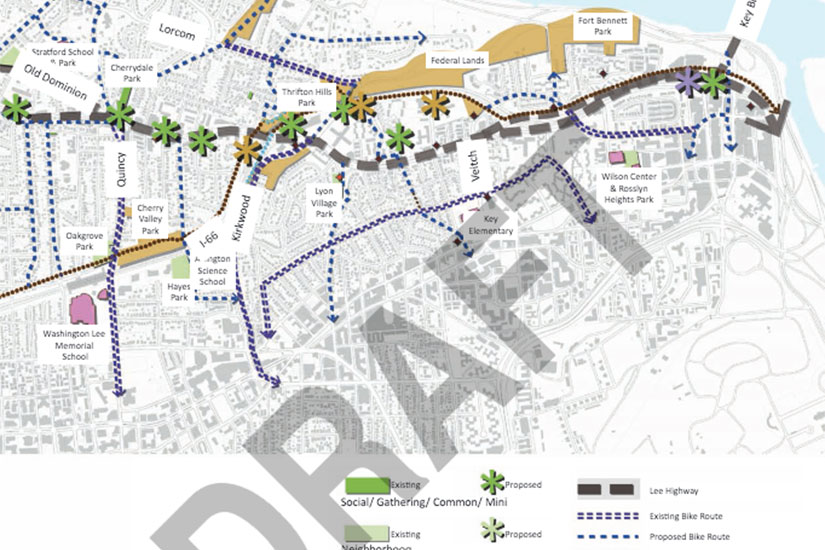
(Updated at 12:40 p.m.) The public comment period on a draft plan for the Lee Highway corridor is ending after Thursday.

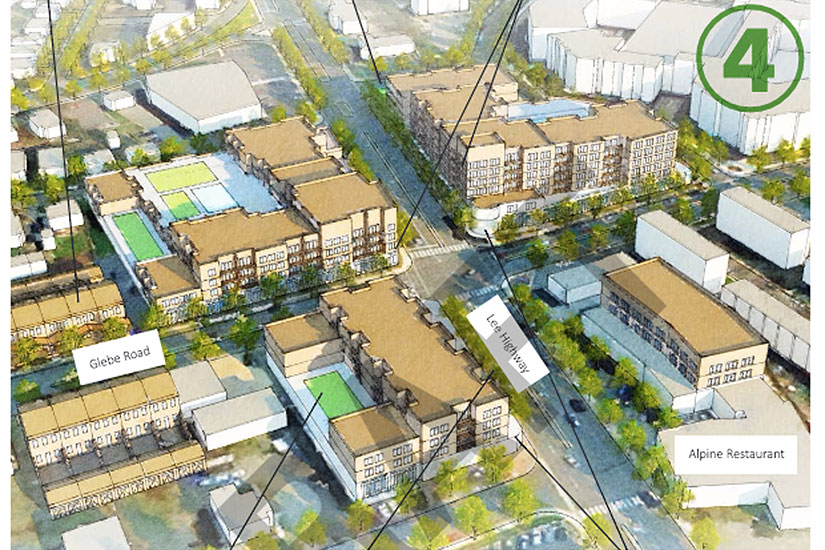
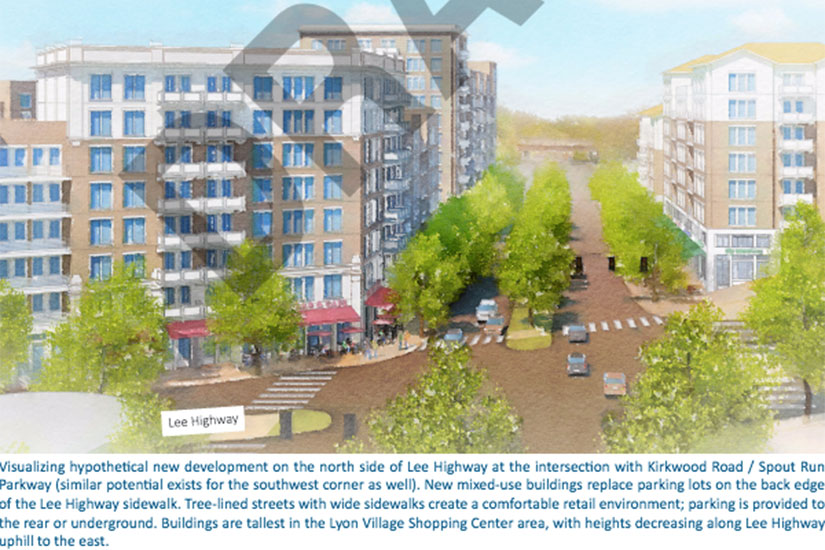
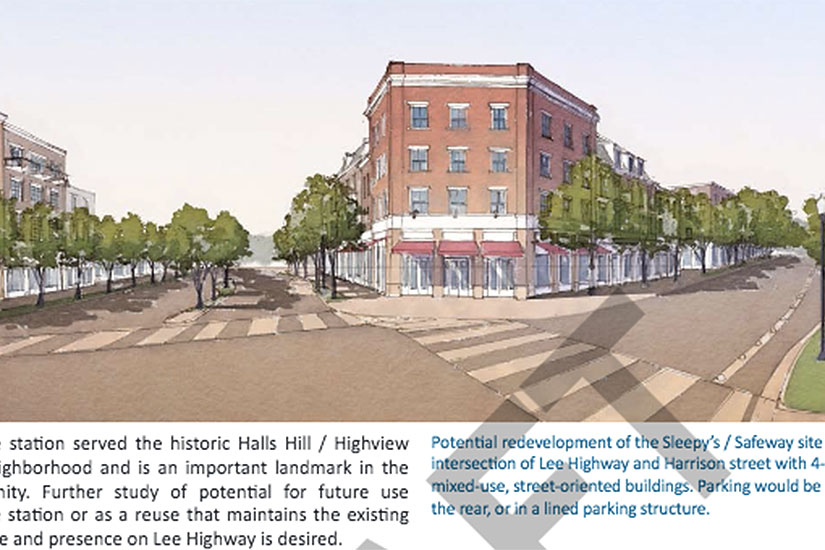
The draft, first published online last month after a public “charrette” planning process in 2015, outlines a sweeping vision for the corridor, which currently is a primarily car-oriented mish-mash of strip malls, aging apartment buildings and other assorted low-density businesses and infrastructure.

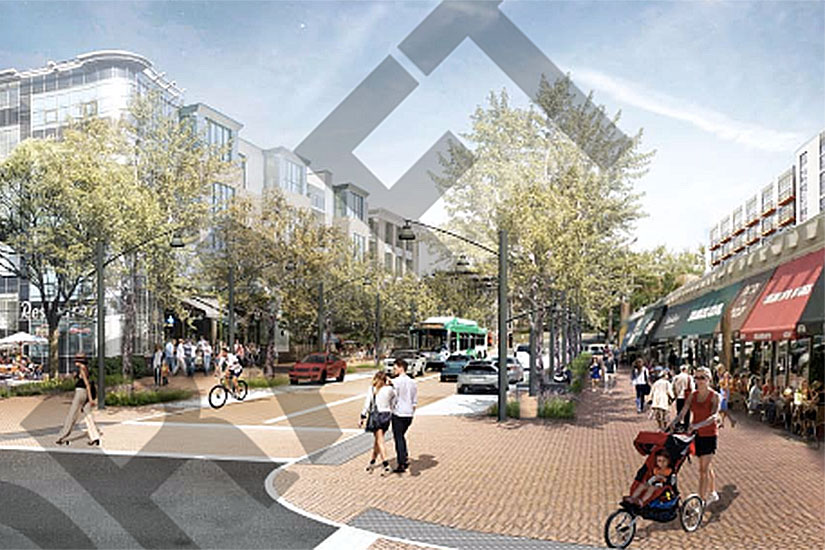
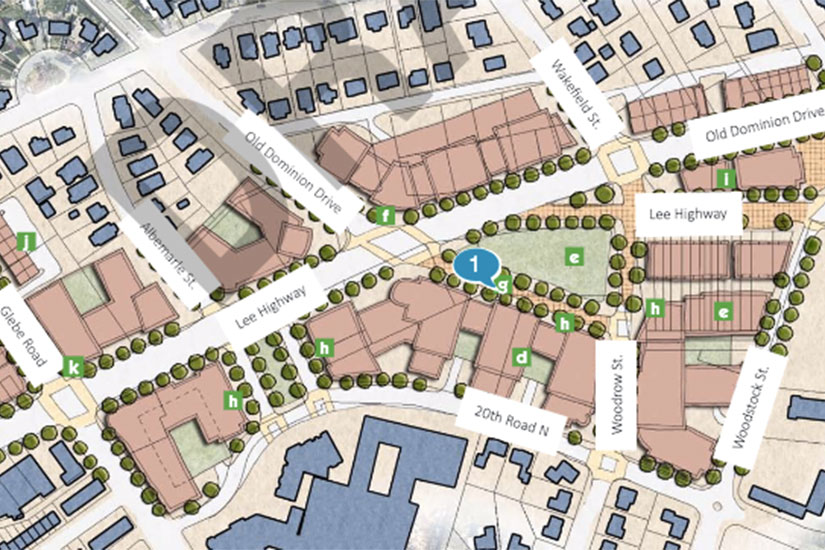
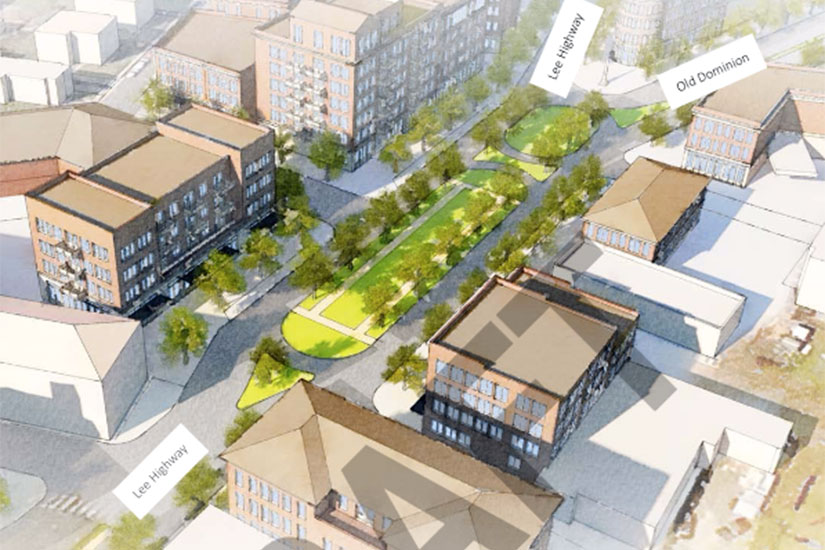
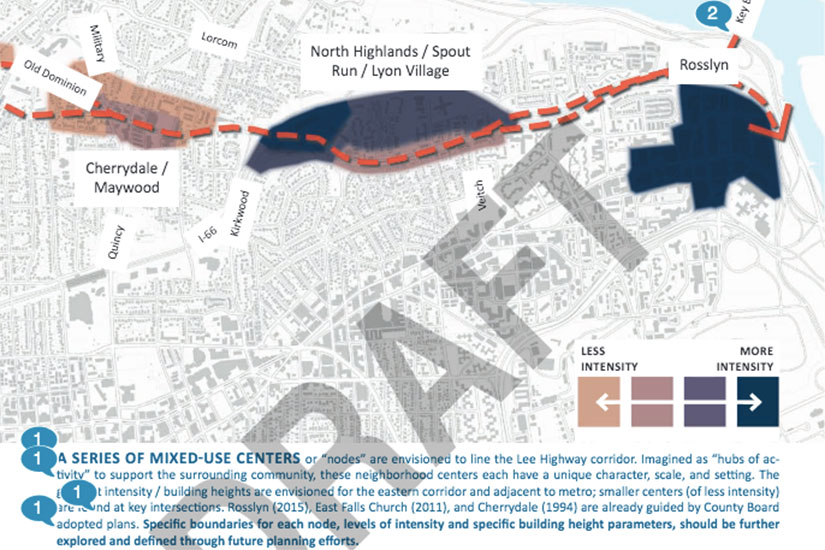
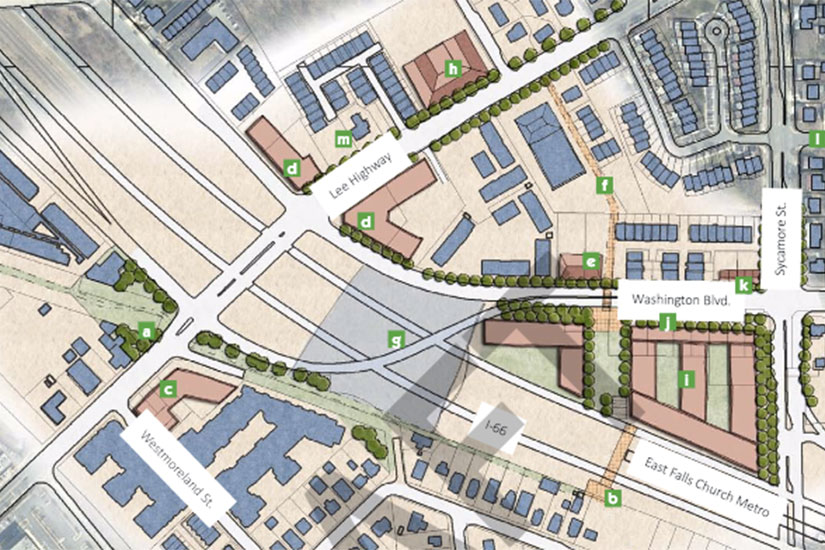
The plan envisions a tree-lined Lee Highway that’s more pedestrian- and bike-friendly, with mid-rise development concentrated in “mixed-use activity nodes.”

New apartment buildings, townhouses and retail hubs would be encouraged to spring up. New parks and bus service would be added. Building heights up to 12 stories are discussed, though 3-6 stories would be more common; the taller buildings would be along Lee Highway itself and “sensitive transitions to single family neighborhoods” would be emphasized.

The activity nodes along Lee Highway, which would be the focus of pedestrian-oriented development and placemaking, include:

  • Rosslyn
  • North Highlands / Spout Run / Lyon Village
  • Cherrydale / Maywood
  • Glebe Road / Lee Heights / Waverly Hills
  • Harrison / George Mason
  • East Falls Church

Changes are expected to be made to the plan based on feedback received online, before the County Board reviews it in May. Greater Greater Washington has more details about the Lee Highway plan and process.

Other notes and quotes from the draft plan, after the jump.

(more…)


Arlington County school busesSome north Arlington elementary school parents are asking the County Board to spur the Arlington School Board to action on a new middle school.

The Jamestown Elementary PTA wrote to County Board Chair Jay Fisette on Monday, asking him to work with the School Board on a middle school construction plan as part of the County Board’s 2015-2024 Capital Improvement Plan.

The PTA is peeved that APS waffled in its recently-passed CIP, punting a decision on the location for a new middle school to December and only including planning funds instead of construction funds. It comes at a time when the county’s student population — especially on the elementary level — is burgeoning, thanks to more young families moving to or staying in Arlington to raise their kids.

If a new middle school is not built soon, current kindergarteners could enter middle school in 2020 at a time when Arlington middle schools are over capacity by more than 1,000 students, with most of the overcrowding focused in north Arlington, the PTA said.

“The proposed CIP can only be regarded as an APS plan knowingly to overcrowd Williamsburg and other middle schools in north Arlington and degrade the learning environment for thousands of the county’s middle school students,” Jamestown PTA president Thomas Jensen wrote.

The School Board has eyed both the Wilson School site in Rosslyn and the building that currently houses the H-B Woodlawn Secondary Program as possible locations for a new 1,300 seat middle school. Both proposals have met community criticism.

The Wilson School and H-B Woodlawn options are still on the table, according to a school spokesman, and the School Board says it will make a decision no later than Dec. 31. But the PTA wants more decisive action and planning.

“Lack of unanimity about use of the Wilson site is not an adequate reason to allow Williamsburg and other middle schools to become even more overcrowded,” Jensen wrote.

The full letter, after the jump.

(more…)