Progressive Voice is a weekly opinion column. The views and opinions expressed in the column are those of the individual authors and do not necessarily reflect the views of their organizations or ARLnow.com

By Fatima Argun

Today, developments such as the Trump administration’s ban against immigrants from predominantly Muslim countries, the deadly violence at a Charlottesville protest rally and an uptick in hate speech are at sharp odds with America’s basic need for civility.

The need to stand up to intolerance and divisiveness is more important than ever. Even in a progressive community like Arlington, hate speech leaflets recently were distributed in some neighborhoods and a Nazi demonstration took place in a shopping center parking lot. These disturbing events underscore the necessity of taking direct action to protect progressive values that so many of us share.

It is encouraging that Arlington citizens are responding by forming alliances that build bridges to understanding between neighbors of diverse beliefs and backgrounds. For instance, as a proud co-leader of the Arlington chapter of the Sisterhood of Salaam Shalom (SOSS), I facilitate relationship building among my Muslim and Jewish women. We encourage collective action to combat hate, negative stereotyping and prejudice.

We seek to influence family, friends and the public about the strength in coming together to challenge discord and stereotypes. We identify with the message of Joseph Levin, co-founder of the Southern Poverty Law Center: “Whoever the ‘others’ may be, say something. Don’t let it go unanswered.”

With this in mind, let me tell you about a social justice journey I recently took with Muslim and Jewish friends to the Deep South. We wanted to be more directly exposed to the history, politics and activism of the civil rights movement launched more than 50 years ago — and to expose these communities to diverse groups not widely represented in these communities.

From Atlanta to Montgomery to Memphis, we heard first-hand accounts from those who experienced the struggle for a just society, such as Carolyn Maull McKinstry, who witnessed the Klan bombing of the 16th Street Baptist Church in Birmingham in 1963 that killed four little girls.

In addition to gaining a better understanding of the civil rights struggles of the past and present, we also walked across the Edmund Pettis Bridge in Selma, where members of the Student Nonviolent Coordinating Committee (SNCC) led by John Lewis (now a Congressman from Georgia), were beaten in 1965 in the marches from Selma to Montgomery. We facilitated meetings and cooperation among and learned from local members of the Muslim and Jewish communities, and worked together on a Habitat for Humanity renovation project. By putting faces and places to the American civil rights movement, I learned valuable lessons that help me stand up to intolerance.

Back home in Arlington, SoSS members also have been involved with community service projects like the MLK Day of Service, voiced our concerns about gun safety and supported efforts to help immigrants, refugees and most recently the children separated from their parents at our borders. Starting this week, SoSS will participate in a national voter registration drive to ensure that eligible citizens have the opportunity to make their voices heard.

While divisiveness continues in America, it is encouraging that people who model equality and respect through discussions, friendship and outreach are building resilience in our communities. And it is heartening that day-by-day community unity and action can be a powerful antidote to discord, intolerance and polarization.

Fatima Argun is a strategy consultant, visionary and advocate focusing on interfaith engagement, dialogue and women’s empowerment. She works with senior levels of government, corporations and NGOs to support leadership development, capacity building and corporate social responsibility. As a longtime Arlington resident, Fatima serves on numerous boards including the Mid-Atlantic Facilitators Network, the Center for Pluralism, and the Jewish-Islamic Dialogue Society (JIDS).
Progressive Voice is a weekly opinion column. The views and opinions expressed in the column are those of the individual authors and do not necessarily reflect the views of their organizations or ARLnow.com.

By Christian Dorsey

The state of Arlington’s economy as measured by job growth, unemployment and average wages is strong. Yet while average wages are high, wage growth has not been strong enough across many sectors of the economy to keep up with inflation. This dynamic can be seen most acutely in the service sector with leisure and hospitality jobs, but it also exists with higher earning professional services jobs.

Furthermore, public sector jobs, a significant component of Arlington’s economy, have seen sustained wage stagnation since the end of the Great Recession in 2009-10. And retirees — a fast growing age cohort — receive inflation adjustments to their fixed incomes that are insufficient to keep up with the costs of the goods and services they require.

So even in relatively well-off Arlington, many earners face a growing income insecurity. Combined with Arlington’s high housing and child care costs, this situation deepens the need for safety net services for some citizens, and protection of scarce dollars for all consumers.

Arlington County government alone cannot reverse these market forces, but we have not been doing all we can to support people facing growing income insecurity. So, in January 2018, I asked our County Manager to reinvigorate our county’s efforts to protect consumers who suffer income loss through unfair, deceptive, abusive and fraudulent practices (UDAFP).

While there are no comprehensive data on allegations of UDAFP, Arlington County government hears frequent complaints involving trespass towing, billing and service issues with cable and telecommunications companies, title and payday lenders, identity theft from credit card skimmers, hired transportation, rental housing and general contract enforcement.

A consumer seeking redress of an alleged violation was faced with navigating federal statutes with multiple agencies having jurisdiction, a state office with limited capacity and no clear point of contact at the local level. And, frustratingly, consumer protection laws leave the complaining parties to seek redress on their own. This can have a chilling effect on anyone who suffers an injury but does not have the time, English proficiency or resources to hire counsel to resolve the dispute.

The Commonwealth of Virginia has relatively weak protections against UDAFP, however, state law does allow for local jurisdictions to operate a consumer protection bureau. Arlington must fill the void by standing up a consumer protection bureau that consolidates our efforts at educating businesses and consumers about their rights and responsibilities; aggregating and investigating complaints about illegal and unfair practices; and providing guidance to those who seek redress of their complaints.

This spring, Arlington took an important step in utilizing this authority by creating a clearinghouse landing page for consumer protection resources.

It is here that people can learn more about their rights, how to prevent becoming a victim of UDAFP, how to connect with state and federal resources and, most important, file a complaint that will be investigated as necessary.

Over time and as warranted, I want these efforts to expand by having the bureau mediate disputes, sanction bad actors, provide outreach and education to Arlingtonians, and promote businesses that commit to fair practices. Properly organized, a consumer protection bureau will provide a clear benefit to consumers and also to businesses that value fair marketplaces.

My vision for this consumer protection office does not require an increase in bureaucracy or any substantial increases in funding. In fact, when we consolidate efforts that are currently spread across several departments, including the Arlington County Police Department, we may be able to deliver better services at lower costs.

If you or anyone you know have been the victim of an unfair, deceptive or fraudulent business practice, visit Arlington’s Consumer Protection Clearinghouse to see if help is available. If you have any suggestions for additional areas of focus, please contact [email protected].

All Arlingtonians can benefit from systems that encourage faith in businesses and promote engagement in commerce. Fair practices and consumer protection must be part of the essential toolkit in keeping Arlington’s local economy such a healthy one. 

Christian Dorsey is Vice-Chair of the Arlington County Board, a Member of the WMATA Board of Directors, a Commissioner on the Northern Virginia Transportation Commission, a Member of the Transportation Planning Board, and Member of the Board of Directors for the Metropolitan Washington Council of Governments.


Progressive Voice is a weekly opinion column. The views and opinions expressed in the column are those of the individual authors and do not necessarily reflect the views of their organizations or ARLnow.com.

By Takis Karantonis

Amazon’s public “beauty contest” about where it will locate a second headquarters has re-energized the discussion about investment incentives and responsible community benefit negotiations. Is competing for Amazon’s HQ2 a good thing for Arlington? What determines the acceptable balance of costs and benefits?

Skeptics fear that Arlington (and its partner Alexandria) may overestimate the ROI (return on investment) or underestimate its adverse impacts — and end up offering too sweet of a deal to Amazon.

Supporters see gains for the private and public dollars invested and an offset for many of the possible negative impacts.

This public discussion is taking place in the context of Arlington’s expensive housing market and chronic underinvestment in key infrastructure and critical public assets (transit, school capacity). How might a “good deal” overcome these obstacles?

If Amazon decides to come here, it intends to invest $5 billion over 10 years and would bring 50,000 jobs to our area, which currently has about 3.2 million jobs.

Amazon HQ2 and its employees would enlarge our local economy and the tax-base that supports our schools, services and community investments. Any incentives offered by the state and/or affected local jurisdictions are intended to attract investors and facilitate this virtuous cycle.

However, Arlington should be asking for reasonable investments from large corporations that are relocating here.

As one example, a good deal should emphasize Amazon’s use of public transit and disincentivize car-based commuting. Amazon should be invited to participate in public-private and direct investment in public transit in addition to its mandatory contributions to our transportation improvement fund.

Route 1 is as transit-efficient as it gets: two Metrorail lines, Virginia Railway Express, a bus rapid transit line and National Airport. Amazon HQ2, however, would require accelerating Metro and VRE improvements, and expanding Metroway-BRT. These improvements are compelling in their own right, and Amazon HQ2 should demonstrate how it would act as a catalyst for further improvements.

Another example: Arlington has plans to responsibly accommodate its share of growth along its urban corridors. However more needs to be done, including putting new housing supply policies to work, such as allowing for missing-middle land-use and gentle density, where appropriate. Amazon should demonstrate how it will contribute to wise land use, not exacerbate the current stresses that Arlington faces.

A third example: Amazon’s compliance with Arlington’s Community Energy Plan and Alexandria’s Eco-district planning should be expected as these plans support our community values and pay off for all involved: investors, community and the environment.

Fourth, the stresses for school space affect virtually all parts of Arlington. Amazon should participate actively in how projections of its arrival worsen this problem–and what it might do to ameliorate it in advance.

And what would Arlington bring to “a good deal” besides the obvious, but not trivial (location, well-educated population, etc.)?

The fact that Arlington teamed up with Alexandria for this project is a big step forward.

Amazon HQ2’s size and potential impact are well within what our region as a whole can handle. So we have met a prerequisite for a “good” Amazon deal–better regional cooperation.

So many new jobs and employees will unavoidably strain our tight housing market. In fact, investors see lack of housing availability and affordability–next to our infamous traffic problems–as the biggest drawbacks. Therefore, a good deal demands a regional commitment to increase housing supply and defend affordability. Arlington has such plans on the books, yet must better manage priorities and focus public investment.

Attracting major corporations makes our region economically more diverse and resilient. Big corporations often turn out to be fair and reliable long-term partners. Arlington is home to more than a few, to our mutual benefit. The key question is whether we are determined to maximize return on our hard-earned competitive advantages. Any incentives to an incoming corporation need to reflect credible and quantifiable current and future community benefits.

Amazon’s proposal would create quality jobs and makes the most of our key assets: our workforce, our brainpower, our infrastructure, our urbanism and our location. Its benefits should be welcome despite its notable adverse impacts. Yet the deal itself hinges on the all-important details, which will require a thorough and public debate in which our citizens should be engaging soon.

Takis Karantonis is an economist who has lived in Arlington for 12 years. He served earlier as the Executive Director of the Columbia Pike Revitalization Organization (CPRO), as well as on several advisory commissions, non-profit boards and the Board of his Columbia Heights Civic Association.


Progressive Voice is a weekly opinion column. The views and opinions expressed in the column are those of the individual authors and do not necessarily reflect the views of their organizations or ARLnow.

By Laura Saul Edwards

Decades of careful planning and an enviable location next to D.C make Arlington an award-winning and desirable place to work, live and learn. But years of high vacancy rates in commercial real estate, skyrocketing enrollment in the public school system and a rising population have created challenges to how the county and school system maintain Arlington’s quality facilities, schools and infrastructure in a land-starved county.

Today, as the Arlington County Board is poised to approve a 10-year, $1.1 billion Capital Improvement Plan, I wish they had scrubbed it harder. I keep thinking of my dad’s frugality. His advice to my siblings and me — “first make certain you’ve done all you can with what you’ve got” — is just as relevant to county spending.

The county and Arlington Public Schools have made a sensible start in their FY 2019-2028 CIP proposals by targeting some projects for cuts or delays and phasing in others. However, before the next CIP is voted on two years from now, both boards could also follow my dad’s advice–squeeze every possible use from existing resources before borrowing for new construction and other projects.

Creative work is already yielding positive results. The interior space in some Arlington schools has been redesigned to produce hundreds more seats. In high schools, enhanced staff space enables classrooms to be used for six or seven periods (6/7 and 7/7) of the school day for instruction instead of the former 5/7 – only classrooms that need set up time, e.g., laboratories, cannot be used continuously. APS has also converted computer labs to classrooms as keyboarding evolved to personal iPads and laptops.

APS is also testing a new way of busing students to summer school classes. Rather than being picked up at their neighborhood stops, students will be picked up and dropped off at central locations (schools, libraries). If this cuts down the time students ride the bus and generates savings, it should be expanded to more schools.

Other ideas: moving pre-K classes out of elementary schools to central locations (perhaps unused commercial space or community centers), joint school/public libraries at sites like Reed/Westover and the Career Center or co-locating libraries with community centers, reducing the yellow bus fleet for secondary students or further expanding the use of ART and Metro buses to transport secondary students to school. The county could explore such approaches to see if it is wringing the most function out of facilities and resources.

One way to get our ducks in a row would be for county staff to regularly analyze usage data for all of Arlington’s facilities to identify opportunities for even more use. In a “matchmaker” role, the county would link community needs with existing resources in new ways to a greater extent than now, resorting to new construction and major purchases after other options have been exhausted.

For example, in what new ways can existing transit options be combined to transport students, residents, workers and visitors in a safe, dependable and more affordable way than maintaining multiple fleets of buses? Could underutilized parks be repurposed to support field sports and school athletics? Could existing pools, athletic fields and performing arts spaces in schools be shared among schools in lieu of building more, without diminishing instruction and the student experience? Would it make sense to convert some community centers to pre-K centers or schools? Might some community programs move to new locations or be co-located with other programs to make capacity available where it is needed?

Establishing incentives to promote more commercial and private sector support for capacity should be actively pursued as well. In Seven Corners a five-story office building was converted into the Bailey’s Upper Elementary School for Arts and Sciences.  Zoning changes and other incentives could make redeveloping long vacant commercial space into schools, day care centers and seniors centers possible.

It will require planning, public engagement and some expenditure to repurpose and/or redesign existing facilities to make full use of untapped capacity and resources, but hopefully these changes will cost less than starting from scratch.

My dad was a creative penny pincher who found unused space in my childhood home and converted it into a craft room for my mom the quilter, instead of building a costly addition.

Granted, there will always be a need to borrow for major capital projects.  And, granted, it doesn’t make economic sense to be penny-wise and pound-foolish. But the potential for more use at less cost to taxpayers is enticing and a progressive value at its core.

Laura Saul Edwards has lived in Arlington County since 1994. She serves on the School Board’s Advisory Council on School Facilities and Capital Projects (FAC) and is an APS 2012 Honored Citizen.


Progressive Voice is a weekly opinion column. The views and opinions expressed in the column are those of the individual authors and do not necessarily reflect the views of their organizations or ARLnow.com.

By Lisa Nisenson

This year marked a breakthrough for transportation with a new regional deal for Metro funding. But transit options are only part of developing a mobility system to move people while reducing gridlock. Arlington should consider innovative options from other jurisdictions that would update the county’s longstanding “car-free diet” approach. As it so happens, some of the most exciting opportunities for mobility are rolling out, literally, on two wheels.

Perhaps you’ve seen, or even ridden, the new electric bikes and scooters in Washington. These new bike share systems are called dockless, or free floating. They don’t need to be parked at a station like Arlington’s Capital Bikeshare bikes. This is both a blessing (for riders) and a curse (chaotic sidewalks). Likewise, riders can pay by the trip rather than create a membership.

Some of the dockless bikes are also electric, pedal assist models. The power does not kick in unless the rider is pedaling. There are four companies operating electric scooters in Washington: Lime, Waybots, Bird and Skip. Both scooters and electric bike share are part of a pilot project for dockless systems in DC.

While not yet available in Arlington, the county is studying how Washington and other cities are managing systems to avoid “bike litter” (improperly parked or broken bikes and scooters).

These new systems represent something larger than a bike ride. Competition among providers like Uber and Lime to provide on-demand mobility means the rate of change is outpacing our traditional, deliberative processes. The technology companies’ “install now, study later” tactics reverse the usual process for transportation planning, which can take years. Cities are scrambling to adjust for one big reason: the electric scooters and bikes are wildly popular because they fill some of the most stubborn mobility gaps.

In Arlington, electric scooters and electric pedal assist bicycles can expand bike share to the hillier parts of the northern and southern parts of the county. These bikes and scooters can also expand access to Metro beyond our transit corridors.

We don’t have to wait to begin proper planning now. The key to success is incorporating electric bike and scooter share systems into our county transportation programs via a fast and nimble approach.

Testing ideas first: With new ideas and technology, demonstration and pilot projects let the community start small and experiment with design before making large investments. Demonstrations also let the community take a test drive (or ride) of new mobility and for new street designs. On June 28, for example, the Crystal City BID will host a demonstration of the new electric bike share options (JUMP and LimeBike) as part of Food Truck Thursday.

Nimble infrastructure: Many cities install temporary infrastructure like bike lanes to test demand and design. Others use portable amenities like bike parking to meet seasonal or event-based demand. Seattle used modular rails and planters to test a protected bike lane. Austin is painting designated parking areas for dockless bikes and scooters. Arlington needs to make sure it has access to the data to assess how people are using and parking scooters and bikes, and then use the data to target increased investment on routes with high demand.

Simpler permitting: Los Angeles’ People St program has streamlined permits for installing parklets and bike parking on streets and sidewalks. Making parking easy and accessible is one key to managing dockless systems.

Evolving support: One of the main challenges to the growth of dockless systems is charging the scooters and bikes. In fact, scooter companies pay “juicers” to charge and distribute their fleets in a designated area. Over the long term, integrated parking plus charging stations will become standard in buildings for all kinds of electric vehicles.

Perhaps the biggest challenge is going to be cultural. Car drivers and bike riders alike staunchly defend their mode. The new electric mobility models, though, will mean more options for more places that create more opportunities for Arlington residents to get out and about without adding to gridlock. Allowing the perfect to be the enemy of the good with planning in this case wouldn’t be progress; it’d be shifting into reverse gear.

Lisa Nisenson leads Alta Planning + Design’s New Mobility groups and is founder of the award-winning start-up GreaterPlaces. She gave a 2015 TEDxArlington talk on building better transportation networks.


Progressive Voice is a weekly opinion column. The views and opinions expressed in the column are those of the individual authors and do not necessarily reflect the views of their organizations or ARLnow.com.

By Lucy Theilheimer

When I moved in to my Arlington colonial 26 years ago, my neighbors ranged from young families to older residents, some of whom had been in their homes for over 40 years. Over time, I observed the changes that redefined their later lives, like the widow who had to move into assisted living. Having spent my career in the field of aging, health and long-term care, I was acutely aware of how supportive communities might make the difference in helping my neighbors to live their later years with health, dignity and independence.

No senior should have to live without the essential ingredients of a quality life–social relationships, housing, family support and sufficient income. Yet many do right here in our own community.

Can communities like Arlington be more purposeful and innovative in recognizing the need and helping to fill it?

Research has shown that 80% of the factors affecting someone’s overall health and well-being have nothing to do with the care one receives in a doctor’s office or in a hospital. It is those social determinants of health, such as housing and social networks, that are essential to quality of life.

Over time, social networks shrink. And it has become increasingly clear that social isolation is detrimental to one’s health–as risky as smoking 15 cigarettes a day, according to one study. Older people with fewer social connections often suffer from higher levels of stress and depression. Men without a spouse or cohabiting partner are more likely to suffer from loneliness than their unmarried counterparts. Age-related changes, such as decline in visual, sensory or cognitive abilities, all can impact social interaction. So can loss of mobility and limited transportation. Retirement can result in a change in income, as well as a loss of social interaction and professional identity.

In Arlington, 14 percent of all households have one or more members who are 65+ and 47 percent of older households are single member households, one of the key risk factors associated with social isolation. Of those, 25 percent are widows and another 25 percent are either divorced or single. Most are women (67.5 percent) and 10 percent have significant limitations with activities of daily living.

What I saw happening in my neighborhood with older people is happening across the U.S. Every day, 10,000 individuals are turning 65. While many are in good health today, over time they likely will be coping with an increasing number of chronic conditions, and experiencing difficulty in carrying out daily tasks like grocery shopping or bathing. They will lose lifelong friends and loved ones. And many will not have support systems to remain safely in their homes and communities.

Those most at-risk are the homebound, who can’t leave their homes to join in the opportunities in the community. Often, a Meals on Wheels delivery person is their only human contact. Community organizations like senior centers and religious groups do offer opportunities to bring people together. But the need is outpacing the response.

Today research is identifying and testing other kinds of interventions that can help to reduce social isolation. One example is using technology to facilitate connections between homebound seniors and their local senior centers — a senior center without walls. Another is expanding “friendly visitor” programs where trained volunteers are matched with an isolated senior to make regular visits and build a relationship that is meaningful to both. Unfortunately, even if we prove that these interventions work and are cost effective, who will pay to scale them?

Thinking about my neighbors, I am remembering one who lost her husband to cancer. She was able to remain in her home for a number of years until she started experiencing falls. With no family close by, she ultimately moved to an assisted living community.

Another neighbor lost his wife of more than 50 years. Thanks to an extensive family support system and some modifications to his house, he stayed in his home until the age of 94 and died with his family all around him.

I imagine that most of us would prefer this last scenario for ourselves. Can the Arlington that is home to entrepreneurs, innovation incubators and deep-pocket capital investors also be home to innovation projects that tackle problems like social isolation among older people?

Lucy Theilheimer is a long-time resident of Arlington and was an active participant in the Leadership Arlington program. She is Chief Strategy and Impact Officer for Meals on Wheels America.


Progressive Voice is a weekly opinion column. The views and opinions expressed in the column are those of the individual authors and do not necessarily reflect the views of their organizations or ARLnow.com.

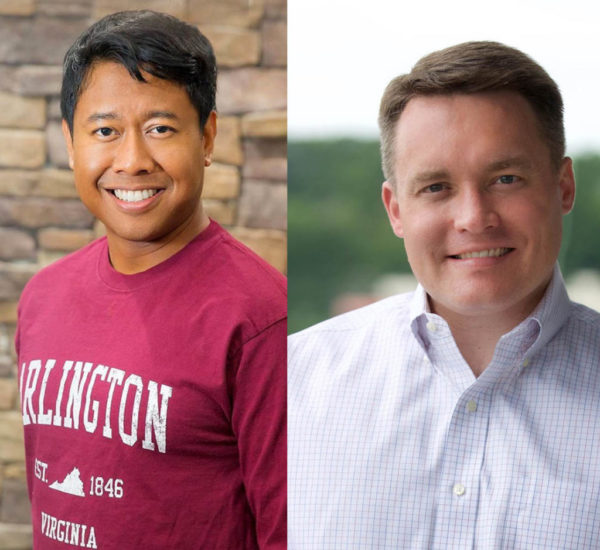
In the upcoming June 12 primary, the only local race in Arlington is for the Democrat who will run for the County Board. Progressive Voice asked each candidate “What does progressive leadership mean to you and give a concrete example of how you have shown such progressive leadership in Arlington.” Here are their responses.

Chanda Choun
I am Chanda Choun (CHAHN-duh CHOON) and running to be your next Arlington County Board Member. Actions speak louder than words. Being progressive and being a progressive leader should not be a partisan marker. Progressivism is a marker of being a good person. Everyone has the duty to advance their neighbors and themselves economically, socially and politically toward equality of opportunity.

Economic advancement is most impactful at the individual level. I work for a 300-person cybersecurity company. In tech, there is an underrepresentation of women and minorities. But as a manager with hiring authority, I have built a diverse team that is an outlier in my workplace and industry: well-paid engineers who are black, white, Asian, Hispanic, women.

Social advancement begins with hearts and minds. Society still suffers from the ills of racism, misogyny and other discriminations of body and person. There are protections against such violations, but gaps remain. We must foundationally do our part by understanding others’ experiences. I am a participant, member, donor and volunteer in organizations that force me to step in someone else’s shoes. Find me at Aspire Afterschool Learning, Arlington Food Assistance Center, Arlington Gay & Lesbian Alliance, Doorways for Women, El Bu-Gata or any other group that supports others needing assistance and acceptance.

Political advancement should not be associated with political party, though one party may be more aligned with progressive goals than the others. Many constituencies need help to exercise their freedom of voice and vote. For example, I served with the Arlington Young Democrats to get millennials to civically engage. I physically brought new peoples into activism with underrepresented minorities.

Everyone deserves an equal opportunity in life. Everything I do endeavors to get people to that stage economically, socially and politically. Showing up is half the battle. Join me. Be a progressive leader.

Matt de Ferranti
Progressive leadership means working to make a measurable difference in addressing the issues that have the biggest impact on people’s lives. It means taking on big challenges — often contentious ones — with fearless leadership. In my time in Arlington, I’ve tried to live out this vision of progressive leadership and I believe my experience is indicative of the leader I would be on the County Board.

I currently am Chair of Arlington Public School’s Budget Advisory Council (BAC), which advises the School Board on the annual operating budget and the Capital Improvement Plan. The work had been particularly difficult for the past two years, since we are facing increasing enrollment with a very tight budget.

Last year, Arlington as a whole faced the choice of cutting services or seeking out additional revenue. In my capacity as the BAC Vice Chair, I stood in support of advising the School Board to ask the County Board for additional revenue and I stand by that. As a result of that decision, APS was able to continue their plans to add school counselors and psychologists as well as increase pay for cafeteria workers and bus drivers. This year, as the Chair, I led the BAC in another round of difficult discussions, recommending reductions in spending areas that would serve the community without detrimentally impacting the student experience.

Throughout my time on the BAC, we have reaffirmed the importance of investing in our schools, voted to increase teacher pay and strengthened the rigor brought to the analysis of our school budget. I believe then, as I do now, that we need to invest strategically to create the county that we want to live in, even when it means making difficult choices. That’s the kind of progressive leadership that I will bring to the County Board.

Chanda Choun is a cybersecurity manager and part-time Army Reserve soldier who resides in central Arlington.

Matt de Ferranti works on Native American education issues, is Chair of the Budget Advisory Council to the Arlington Public School Board and is a member of the Joint Facilities and Housing Commissions.


Progressive Voice is a weekly opinion column. The views and opinions expressed in the column are those of the individual authors and do not necessarily reflect the views of their organizations or ARLnow.com.

By Richard Sine

For undocumented immigrants with nowhere else to turn, access to affordable legal help can make the difference between stability and self-sufficiency and a life spent in the shadows.

Hurricane Mitch destroyed José Alvarado’s home and workplace in Honduras in 1999. Leaving his wife and two children behind, Alvarado traversed mountains to cross the U.S.-Mexico border under cover of night. He settled in Arlington, where he rented a corner of a room, found work in construction and started sending money home to begin the slow process of rebuilding.

“When I first came to this country I had no intention of staying,” he says. Steady work as a carpenter in the U.S. enabled Alvarado to rent his own apartment. Then one night he was stabbed by an acquaintance. Injured and unable to work, he lost his job and almost his apartment. A social services agency referred him to Just Neighbors, a nonprofit providing immigration legal services to low-income people. Services are free after a $100 intake fee.

Attorney Sarah Selim Milad informed him of the “U” visa for immigrant victims of specified serious crimes who cooperate in the prosecution of those crimes. Intended to help police fight serious crime and crime in neighborhoods with high numbers of undocumented people, the visa seemed to offer Alvarado a chance at legal residency.

Homesick and dispirited, Alvarado almost returned to Honduras anyway. But gang violence there was on the rise. A gang even extorted money from Alvarado’s brother by threatening his son. “It’s dangerous even for kids to go to and from school,” said Alvarado’s wife, Myrna.

So Alvarado began the long process of acquiring a work permit and legal residency via the “U” visa application. “It took so long that at one point I told Sarah [his lawyer] just to leave my case,” Alvarado says. “I was too tired to continue. But Sarah said, ‘No no, your case is coming together. You can do this’… She lifted my spirits.”

Alvarado received his visa in 2010, but it took three more years before Jose’s family was allowed to immigrate. Alvarado had not seen his family in 13 years. He’d never even met his third child, because the couple didn’t know that Myrna was pregnant when he left.

Without legal assistance, Alvarado says, there was no way he would have even known about the “U” visa, much less made it through the application process. Immigrants often fall prey to scammers promising visas, which makes legitimate organizations like Just Neighbors all the more important.

As long as it took the Alvarados to gain legal status through a “U” visa, it takes even longer today, about 11 years. The number of “U” visas has remained capped at 10,000, even as the number of applicants has soared to more than 110,000. (Similar visas exist for victims of domestic violence by a U.S. citizen or permanent resident, and for victims of human trafficking.)

Meanwhile, U.S. Immigration and Customs Enforcement’s new tactic of arresting immigrants at courthouses is making immigrants more scared than ever to report crimes, according to a new ACLU report.

Today the Alvarados live in a two-bedroom basement apartment in a pleasant corner of Arlington. Jose works two jobs while Myrna is a housekeeper. The children, now older than 18, clean houses when they’re not in school. The oldest plans to attend college in the fall.

“I want [my children] to study so they can do what they want to do, so they don’t have to go through what I went through,” José tells me. “Instead of walking across the mountains, it’s better to be in the airplane looking down.”

Richard Sine is a writer and a volunteer for Just Neighbors.


Progressive Voice is a weekly opinion column. The views and opinions expressed in the column are those of the individual authors and do not necessarily reflect the views of their organizations or ARLnow.com.

By Jeff Joseph

A friend of mine recently passed away. Fifty-one years young. He had a sudden heart attack, leaving behind a wife and two teenage sons.

For me, this is the second friend I’ve lost in the last five months with several others bravely battling cancer.

Perhaps I’m reflecting on the fragility of life and appreciating and embracing each moment as a gift. And, perhaps, this reflection provides me a different lens through which to view the current state of our political divide, one that forces me to be gentler with my political opposites.

I know that despite our differences we both wrestle with life’s challenges, love our nation and in large part want the same things — relative health and happiness, a better life for our kids, reasonable pay for hard work, peace, a safe community, more good donut shops in Arlington. You know, the usual stuff.

But on the other hand, we have real differences. We have differing views of the limits of the Second Amendment. We have differing views on the role of government in addressing social ills and protecting those who live on life’s margins.

We have differing views on immigration, the right of a woman to make her own decisions about her body and pregnancy, our interpretation of President Donald Trump’s words and tweets, and, closer to home, the legacy and societal impact of public symbols honoring the so-called heroes of the Confederacy.

Can I listen thoughtfully to their legitimate concerns and policy views and remain in intellectual, spiritual and ethical alignment with my fundamental beliefs? What does it mean to be a progressive in an age of staunch division?

Oddly enough, that’s the thought that hit me as I read a recent story in ARLnow about the racial disparity in suspension rates among Arlington public schools. What struck me was the revelation that of the 1,733 students attending Yorktown High School — where my bi-racial daughter is a junior — a mere 5.6% are Black. African Americans account for just 3.5% of the student body at HB Woodlawn, the educational home to my other daughter.

These statistics made me reflect upon the importance of interacting with those who come from a different experience than our own. The more we interact with those who are “different,” the more likely we are to express empathy and compassion.

Numerous studies have found that diversity is critically important for us and our children. Researchers found that children’s exposure to students different from themselves leads to improved cognitive skills, including critical thinking and problem solving. These studies also demonstrated that students exposed to peers of another race or background show generally higher levels of empathy for other people.

Unfortunately, our lives too often facilitate separation. From the communities in which we choose to live to the churches we attend to the news programs we watch. Even technology — with its many benefits — has created walled communities. We are encouraged — even rewarded — for living within an echo chamber of targeted news programs and segmented social media.

(more…)


Progressive Voice is a weekly opinion column. The views and opinions expressed in the column are those of the individual authors and do not necessarily reflect the views of their organizations or ARLnow.com.

By Arlington Blue Families parents

The cloud that passed over this country on Nov. 8, 2016 has brought with it a decidedly silver lining in the form of an energized progressive movement.

Nowhere is this energy more indispensable than with parents and their children who are coming of age in the Age of Trump.

Family is where moral and civic values first are learned. The core progressive values of empathy, tolerance, openness to new ideas and reason are under assault from our own federal government, and we parents can resist this attack through this easy three-step program.

Step one: Let’s talk values!

We can teach progressive values by connecting what our kids are experiencing in their day-to-day lives with the daily news. This, in turn, can encourage our children to be smarter news consumers. For example:

  • The latest #MeToo moment can lead to a discussion of how our children interact with their peers, from cyber bullying to dating.
  • Recent extreme weather and the current administration’s denial of climate change can spark a discussion of scientific evidence and facts as a basis for making decisions.
  • The criticisms of immigrants can lead to a discussion of your own family’s heritage and the diverse backgrounds of your children’s friends.

If you don’t already have a paper or online newspaper subscription, get one. Encourage your kids to interrupt their Minecraft YouTube videos long enough to consume 20 minutes of genuine news each day. Just about any news event can be turned into an age-appropriate teachable moment at the dinner table. Such discussions create a safe space for debate, disagreement and critical thinking.

Step two: Let’s get engaged!

Being a good citizen is a proactive commitment, not a passive privilege. Now that we’ve started a dinner table conversation and connected national events to our core values and everyday lives, it’s time to look outward and model civic engagement.

We’re in the DC metro area, and every weekend a protest is likely to be a short Metro or Uber ride away. We still remember the pro-choice rallies that our parents took us to when we were kids.

Nothing inspires engagement quite like seeing thousands of people in the streets demanding change. We hope that decades from now, our own kids look back the same way on the Women’s March, March for Our Lives and Climate March.

But all the protests in the world won’t matter if we don’t vote, and it is never too early to show your kids that their votes count. We want people with progressive values to be elected to help put those very progressive values in place. So take kids into the voting booth with you, and not just for presidential elections. In Arlington, we have primaries every spring and important elections every November.

Read about the third step after the jump.

(more…)


Progressive Voice is a weekly opinion column. The views and opinions expressed in the column are those of the individual authors and do not necessarily reflect the views of their organizations or ARLnow.com.

By Elaine Furlow

When Dale and Janet Oak shifted into semi-retirement, they got ready to sell their big Arlington home of 25 years and find a space that better suited their needs.

“We looked at condos in Rosslyn, but they did not seem like ‘us,'” Janet Oak recalled.

Nor was the frenetic pace in Clarendon, or the dense cityscape in much of Ballston.

“We didn’t want to put all our equity into the next place, and it was hard to find that middle ground.” The Oaks wound up in a relatively new condo building in an area “that is walkable to shops, quiet and fits our lifestyle,” Janet Oak said.

It’s in Falls Church.

As comfortable middle-class baby boomer homeowners in Arlington get ready for their next stage, many are planning on 20+ years of active living ahead. After hard-charging careers, they have time, talents and money to keep investing in Arlington.

Some may want to downsize their homes, but often, it’s a matter of “right-sizing” — leaving behind aging brick colonials with stairs or 4-bedroom houses with too much upkeep.

Renovating one’s current home to age-in-place is not always feasible, yet options aren’t great. Small, quality houses with one-floor living are scarce. And most townhouses have many stairs, a big minus as boomers (those born between 1946 and 1964) think of aging knees and hips down the road.

“I know what’s out there, and it is bleak,” said Karen Close, a long-time real estate agent with Century 21. “Arlington doesn’t have a plan to deal with boomers.”

Arlington should be more alert to this need, so it doesn’t lose these successful contributors to our county. Non-boomers have a stake, too, since new solutions might free up our tight single-family housing stock. Can innovative builders/developers and far-sighted leaders envision a different, more livable type of home?

Older adults planning ahead are looking for one-floor living, a flat outside entry, quality construction, wide doorways, ample storage and features with the future in mind (like a large, walk-in shower with a bench).

Oh, and a reasonable price and attractive exterior.

“Wouldn’t you love something with the look of a townhouse, but built with single levels or with elevators, so you don’t have to do stairs,” Janet Oak said.

Yes, it’s tough to find the land. Yet we could repurpose (and likely rezone) certain commercial space. Imagine that attractive, well-built bank building, now empty, as the centerpiece of a modest-sized, innovative condo development.

Builders and developers could incorporate the desired features without drifting into “senior-only” territory since well-designed small-footprint homes will work for many ages. And most boomers also would like to keep interacting with a mix of neighbors, including school kids.

(more…)


View More Stories