
Progressive Voice is a weekly opinion column. The views and opinions expressed in the column are those of the individual authors and do not necessarily reflect the views of their organizations or ARLnow.com.

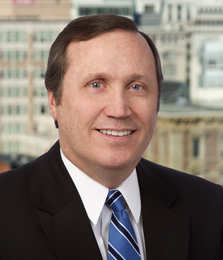
By Takis Karantonis

Four major corridors cut across Arlington — Columbia Pike, Crystal City-Route 1, the Rosslyn-Ballston (R-B) corridor and Lee Highway. “Corridor development” has been at the core of Arlington County’s growth strategy. Our “Main Streets” have merited dedicated policy focus and resources, starting with the development of Metro in the 1970s along the R-B corridor and Crystal City.

But it’s time to look anew at whether these corridors are all meeting their potential and all getting the resources they need. Corridors don’t occur “organically.” They emerge as products of community vision, policy, planning and timely public and private investment decisions.

Attention has been lavished on the corridors close to Metro, and understandably so, since Metro drove their commercial development. But it is time for Columbia Pike and Lee Highway to get the same kind of purposeful attention and long-term investment from the County.

Given the rising challenges in our local and regional economy, it is time to give our corridors a more urgent priority.

Twenty years ago, the Arlington County Board launched the Columbia Pike Initiative, a plan to revitalize Arlington’s most populous non-Metro corridor. A key aspect of that decision was the recognition that:

  • Corridors connect our neighborhoods and business districts, thus forming a county-wide network on which economic activity occurs. Arlington’s potential for a thriving economy will continue eluding us until the pockets of inequality that dot our community are addressed by effectively developing all our corridors.
  • Corridors are business-friendly and economically diverse. This is where small businesses start and often have the best chance for survival and growth. Big businesses prefer to locate here as they are optimally suited to make the most of a dense ecosystem of resources.
  • Corridors provide the environment to address scarcities, such as housing and transportation.

At this year’s 20th anniversary of the Columbia Pike Initiative, we can list accomplishments, such as jumpstarting development after a three-decades-long doldrums and upgrading transit, both of which bring us closer but still not near to our development goals.

Lee Highway has been languishing and despite citizen volunteer work through the Lee Highway Alliance for more than five years, the County-staff-led planning process has been rather slow in delivery.

In the upcoming County budget, let’s show renewed focus and commitment to our corridors.

Let us re-invest fully in our urban partnerships (CPRO, the Clarendon Alliance and the Lee Highway Alliance) in ways that give them actual agency and leverage to act as true partners in advancing already stated stakeholder and community goals.

These organizations are the glue that holds business, neighborhoods, residents and local government together. They have a proven record of steering and aligning, with beneficial and tangible results for public and private interests in their respective areas.
(more…)


Progressive Voice is a weekly opinion column. The views and opinions expressed in the column are those of the individual authors and do not necessarily reflect the views of their organizations or ARLnow.com.

By Steve Baker

Frederick Douglass said, “The limits of tyrants are prescribed by the endurance of those whom they oppose.” Last year, the Arlington Democrats reached their own limit and in response, sent volunteers beyond Arlington to House of Delegates’ districts around the Commonwealth.

Arlington, which is the smallest county in Virginia in square miles but one of the largest in terms of population, was in the highest Democratic performing congressional district in last November’s election.

Pleased with our own General Assembly delegation but eager to do better for Virginia and send a positive message of hope to the nation, we turned our focus to joining our neighbors and fellow Virginians in the burgeoning and ever more diverse suburbs and exurbs outside the beltway.

It wasn’t the first time we exported volunteers but in 2017 we elevated it to a grander scale, joining with many local groups, like WofA (We of Action), Arlington Indivisible and others. The Beyond Arlington program flourished in response to the confluence of our 2017 delegate races and a record number of 89 democratic candidates, with an enormous outpouring of volunteers due to the current administration in Washington.

The reasons for greater collaboration are clear. We have common goals: a growing need for schools, continued job growth and regional transportation solutions. We share many transit assets–Metro, VRE, our Interstates, toll roads and bike trails. We also have a need to protect the Potomac River watershed and our parks and open spaces.

Progress in these areas has often been difficult as an entrenched conservative General Assembly has, often by party-line votes, rejected progress or serious bipartisanship. Even after last year’s election, the 51% has refused to work with the other 49%, something Alexis de Tocqueville referred to as the “tyranny of the majority.”

This has been the case throughout our history. Conservatives in Virginia have fought federal authority vigorously, most notably over the abolition of slavery, women’s suffrage, school integration, the Civil Rights Act and the Voting Rights Act.

These same conservatives have no qualms exercising far greater authority over our local governments in Virginia through the Dillon Rule and state constitution, denying localities their own decision-making.

We saw this most recently in preventing localities from removing a statue from a local park or renaming stretches of state roads within their jurisdiction. As Governor Northam said last year on the campaign trail, “If we can’t change their minds, we need to change their seats.”

(more…)


Progressive Voice is a weekly opinion column. The views and opinions expressed in the column are those of the individual authors and do not necessarily reflect the views of their organizations or ARLnow.com.

By Janet Kopenhaver

As Arlington County updates our community development plans, the arts need to be emphasized and explicitly promoted in these discussions because of the positive impact they have on the economy and the people of our County.

Residents may be unaware that hundreds of individual artists and arts groups call Arlington County home. Indeed, with more than 6,000 employees, these artists and arts-related businesses represent 5.1 percent of Arlington businesses and 3 percent of the county’s workforce.

Non-profit art groups spend more than $170 million on operational expenses in Arlington County, which in turn generates tax revenue. Last year, arts audiences also spent more than $18 million above the cost of admission for such things as parking, meals, and local ground transportation in the County.

The arts go beyond this impressive economic impact, however, to also play an integral role in helping people. The arts do so by providing therapeutic support for veterans and residents with physical and mental challenges, for example, and also offering inspiration to and support for students.

A positive contribution of the arts is in helping veterans cope with depression, bipolar disorders, schizophrenia and post-traumatic stress disorder (PTSD). One combat medic who served in Vietnam was having difficulty emotionally after he came home to Arlington. After attending several art therapy classes and through working on paintings and collages, he was able to slowly deal with his PTSD.

“I could express the locked-in things that I was afraid to talk about,” he said.

Numerous studies show that art therapy helps veterans like him who are suffering PTSD, especially those who are having trouble talking about their combat experience.

People suffering from neurological disease (such as Parkinson’s disease) experience noticeable benefits from movement or dance classes. Arlington’s Bowen McCauley Dance runs a program for people suffering from Parkinson’s and several clients have asserted how much their lives have improved since starting lessons.

One Arlington resident noted, “My state of mind is vastly improved.” Another wrote, “It benefits my mood and physical capability.”

(more…)


Progressive Voice is a weekly opinion column. The views and opinions expressed in the column are those of the individual authors and do not necessarily reflect the views of their organizations or ARLnow.com.

By Larry Roberts

Nearly four years ago, I had the honor of taking on the role of editor of a new ARLnow column titled “Progressive Voice.”

I believed that weekly columns by Mark Kelly and Peter Rousselot, while well written and informative, were not fully representative of views many Arlingtonians had about their County, elected officials, and County government.

I believed that the best answers would not come from a more conservative direction, a desire to keep the status quo, or steady criticism of County government.

In my view, Arlington was going to be affected more and more by what happened at the federal level, in Richmond, and through heightened competition from jurisdictions in Northern Virginia as well as the District and Maryland.

I saw important trends that I believed Arlington needed to acknowledge and respond to in order to remain economically vibrant and competitive.

Some examples – then and now – included: 1) diminishing federal spending in the county and the impact of the Base Realignment and Closing process on Crystal City and Arlington more broadly; 2) the opening of the Silver Line to competitive centers such as Tysons, Reston, and Loudoun County; 3) changing demographics including an influx of millennials; 4) shifting trends in real estate toward mixed-use and transit-oriented development; 5) an increasing office vacancy rate; and 6) losing important tenants such as the National Science Foundation to other jurisdictions (in that case to Alexandria).

At the same time, Arlingtonians continued to want and press for high-quality services and more of them. Moreover, a rising school population required additional resources to maintain a school system regarded as among the best in the nation.

Because of the trends identified above, I believed it important to provide a voice for the proposed Crystal City-Columbia Pike-Baileys Crossroads streetcar system that was vitally important to the County’s competitiveness and maintenance of affordable housing.

I continue to believe that defeating the streetcar project – including turning down $285 million in dedicated funding from the Commonwealth – was a major policy mistake that will set back Arlington for generations to come. However, the voters chose a different path and left local elected officials with little choice but to move on to other items of importance.

The history buff in me wanted to ensure that we honored Arlingtonians living and no longer with us who shaped the County such as Ellen Bozman, Joe Wholey, Talmadge Williams and those who risked much so that Arlington (together with Norfolk) became the first jurisdictions in the Commonwealth to integrate their public schools.

Unlike the “Right Note” and “Peter’s Take” columns, ARLnow wanted the new Progressive Voice column to reflect a range of voices and, particularly, to give voice to women and persons of color. So rather than writing my own weekly column, I became a column editor.

At first, this seemed to put me at a competitive disadvantage, because I had to enlist a group of columnists and — to be expected — each columnist had their own perspective on what issues she or he wanted to address and how to approach those issues.

But I came to value very highly the process of identifying talented columnists and providing a platform to express diverse points of view from varying perspectives and life experiences.

I met or got to know better many outstanding Arlingtonians. I learned, re-learned, or gained valuable insight into a broad range of issues, programs, needs, goals, and services.

And I learned to think more broadly, deeply, and holistically about Arlington County and its place in the Commonwealth, region, and nation.

All of that reaffirmed for me how unique and special a place Arlington is, but also that Arlington must continue to progress – as it has progressed – and not seek to stay in place or shrink from new opportunities. Communities either grow and thrive or they wither and lose what made them great.

I want to thank the Progressive Voice columnists for their outstanding contributions and willingness to produce quality columns under deadline pressure, ARLnow for the opportunity to edit the column, and the new editors who will continue to ensure that a broad range of voices will be heard via the Progressive Voice column.

Finally, I want to thank the readers who gave us reason to write our columns. I can’t say I have enjoyed every online comment received, but it has been a pleasure to hear from so many people over the years that they appreciate the column.

Carry on and move forward!

Larry Roberts was recently named Chief of Staff to Lt. Governor Justin Fairfax. He has long been active in Arlington’s civic life, including serving as Chair of the Arlington Democratic Committee. He chaired five successful statewide campaigns, served as Counselor to Governor Tim Kaine, completed a successful term as Chair of the Board of the Virginia Public Access Project, and was named a 2017 Virginia Leader in the Law by Virginia Lawyers Weekly.


Progressive Voice is a weekly opinion column. The views and opinions expressed in the column are those of the individual authors and do not necessarily reflect the views of their organizations or ARLnow.com.

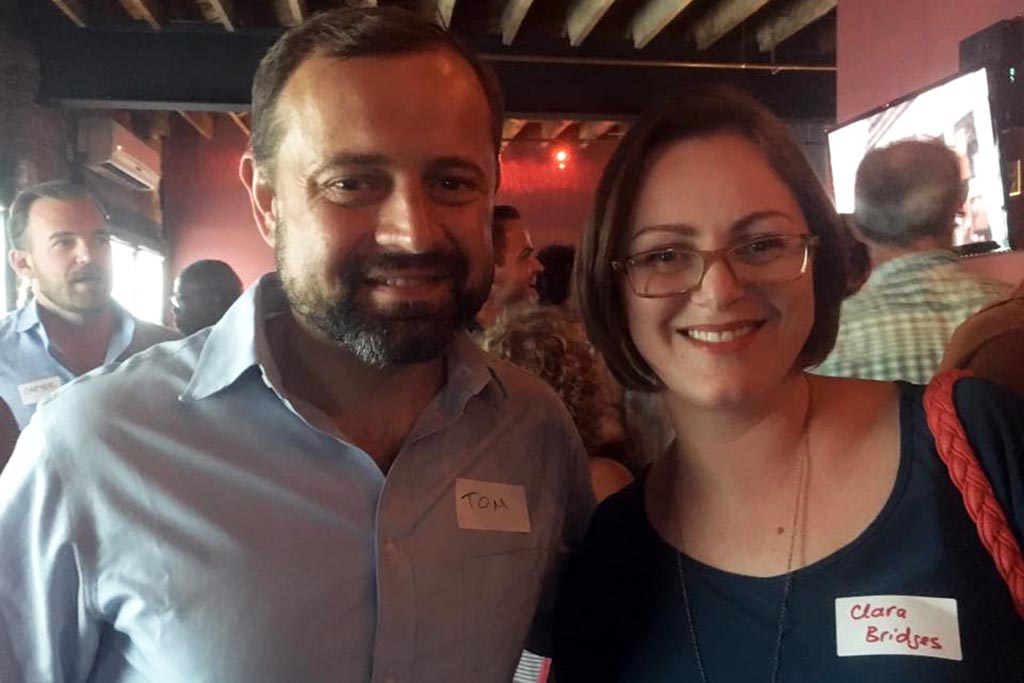
By Clara Bridges

If you lived in Arlington during the 2017 Virginia elections, you have probably been visited by canvassers a few times before the November 7 election who wanted to remind you to vote.

In fact, the number of those visits were likely closer to five than to just one. Getting out the vote volunteer numbers increased, in Arlington and beyond, as interest in local, state and federal politics has surged.

After last year’s presidential election, numerous grassroots groups sprung up throughout the country, and Arlington was no different. Whether they grew out of the call to huddle from the Women’s March on Washington, the Indivisible Guide, or a group of friends, these organizations have over the past year become a persistent facet of civic engagement and a steady source of activism.

In just the 8th Congressional District encompassing Arlington, Alexandria, Falls Church and parts of Fairfax County, these groups have members in excess of 7,000 people.

Although there were initial concerns about their expected longevity, most of the groups continue to flourish and improve their operations, focusing on a few items at a time and directing their group members to take action.

Although the primary focus continues to be the on the Trump administration and its appointees, as of mid-2017 most groups also developed a cohort of individuals focused on local politics with a specific target on getting out the vote activities such as calling, texting, and canvassing as well as registering voters.

Individuals in three Arlington groups that I am aware of and participate in — Indivisible Arlington, We of Action (WofA), and HEAR Arlington — “adopted” Virginia House of Delegates candidates not just in Arlington but all over the state.

The adopted candidates had grassroots group members canvassing for them and making calls in their districts to drum up support and ensure a good turnout. We believe these efforts were a key to victories in numerous House districts across the Commonwealth as well as the statewide races for Governor, Lt. Governor and Attorney General.

The 2017 election may be over, but the grassroots activists inspired to work so hard in 2017 show no sign of slowing down now that we are in 2018. Energized by the significant wins in the Virginia House of Delegates and motivated by all that has been learned, groups are mobilizing to watch and promote or oppose legislation being discussed in the 2018 Virginia legislative session.

Indivisible Arlington has hosted training sessions explaining the process by which bills become law and some of the inner workings of the committees and chambers in the General Assembly. VA PLAN (Virginia Progressive Legislative Action Network), a coalition of members from grassroots groups all over Virginia in which WofA plays an important role, has organized a legislative alert network to raise awareness of bills that promote or hurt progressive goals.

One can only assume that groups across Virginia will join those in Arlington to ensure that every bit of legislation passed in this General Assembly session will get the level of scrutiny this highly educated and well trained mass of volunteers can give.

The activism picture in Arlington is certainly a good example of what we are seeing all over the country. Groups formed primarily to fight against what they see as a Presidential Administration without respect for American values have dug their heels in and created coalitions that ensure the ongoing vitality of grassroots activism.

The focus continues to be on keeping the Trump Administration accountable and also fighting against the Administration’s policies that are hurting our County, our state, our country, and the international community.

The grassroots activists, with their electioneering and legislative work, are now on the offensive as well as playing defense. Expect to see Arlington activists pushing for or against legislation in Richmond and helping grassroots groups in other Virginia Congressional Districts with less progressive representation challenge the status quo looking toward the November 2018 elections.

If the elections in Virginia in 2017 have been any indication, this year is gearing up to be an exciting one for Arlington activists.

Clara Bridges is an Arlington resident and a member of multiple local activist groups. She works as a software architect for an Arlington based company.


Progressive Voice is a weekly opinion column. The views and opinions expressed in the column are those of the individual authors and do not necessarily reflect the views of their organizations or ARLnow.com.

By Emily Patton

The Women’s March in Washington and around the country on January 21, 2017, became the largest single-day protest in U.S. history. Those of us who marched that day can clearly recall the feelings of unity, drive and purpose. We came in buses, fresh off of planes, on foot, by car and by Metro. We waited in hours long traffic, some never even making it into the city, but we didn’t care.

Wherever we were, we made sure our message was heard. From the bleakness that was the early morning hours of November 9, 2016, this march became a ray of hope — a focused effort and rallying cry that my sisters and I could stand behind and announce that we would no longer accept the status quo. We would not be silenced.

Due to our proximity to the Nation’s Capital, the Virginia chapter of the women’s march quickly became a focal point for marchers from across the country. As the State Outreach Coordinator for the 2017 march, my goal was to mobilize Virginians — and all who came through our state — with grassroots level activism.

Volunteers from across the Commonwealth coordinated to distribute flyers, fundraise and welcome marchers into their homes. We helped visitors buy Metro cards and navigate our transit system. In doing so, we helped give rise to the record numbers attending the women’s march. At the pre-march rally at the National Carousel, hundreds of Virginians gathered to listen to several of our states elected officials speak. Our blue wave was only just beginning.

Heading into mid-2017, Virginia quickly became the national focus as one of only two states holding gubernatorial off-year elections. Virginia has been a competitively purple state for years; all eyes were on us. We did not disappoint. Virginians elected more women than ever and the most diverse class of state representatives in our history.

The collective actions by women, male allies and most especially by the African American, Latinx and Asian American communities, led Democrats to a resounding victory at the ballot box. Although we made historic gains in 2017, our work has just started.

On January 21, the anniversary of the 2017 Women’s March, people will gather for Power to the Polls in Las Vegas and around the country as part of a weekend of action to advance peaceful and positive progress in communities across the country. Our goal is to ensure that women and allies persist in critical civic engagement work. The past year featured historic numbers of women engaging in the political process. It is vital that women continue to take an active role in 2018 and future elections. A government that is of the people and by the people needs to look like the people it represents.

Locally, many of us will be participating in the Women’s March on Washington 2018 — March To The Polls on January 20. This year’s Women’s March on Washington is sponsored by March Forward Virginia. Comprised of the group of advocates who worked in Virginia for the 2017 Women’s March, we’ve banded together again to continue the movement. Our focus is to empower women to run for office, to learn and take action on the policies that affect our daily lives and to strengthen the progressive work already being done in our communities to register voters and encourage civic engagement.

I march this year for the women who experience domestic violence, for the women who can’t access basic reproductive healthcare such as abortion services, for all the girls who are shamed for what they wear and for all the women and girls who have been and will be sexually assaulted.

On January 20, 2018, I will march for the women who decide to run for office for the first time, for the girls who will strive to win their school’s science competition, for the women who will start their own businesses and for each and every person courageous enough to confront sexism.

If last year’s march was the rallying cry, this year brings the full weight of the movement forward to the polls!

You can RSVP on Facebook or Eventbrite.

Emily Patton is the Press Chair for the Women’s March on Washington 2018. She is a recent graduate of the Virginia Progressive Leadership Project, sits on the Board of NARAL Pro-Choice Virginia and is an active Democratic community organizer.


Progressive Voice is a weekly opinion column. The views and opinions expressed in the column are those of the individual authors and do not necessarily reflect the views of their organizations or ARLnow.com.

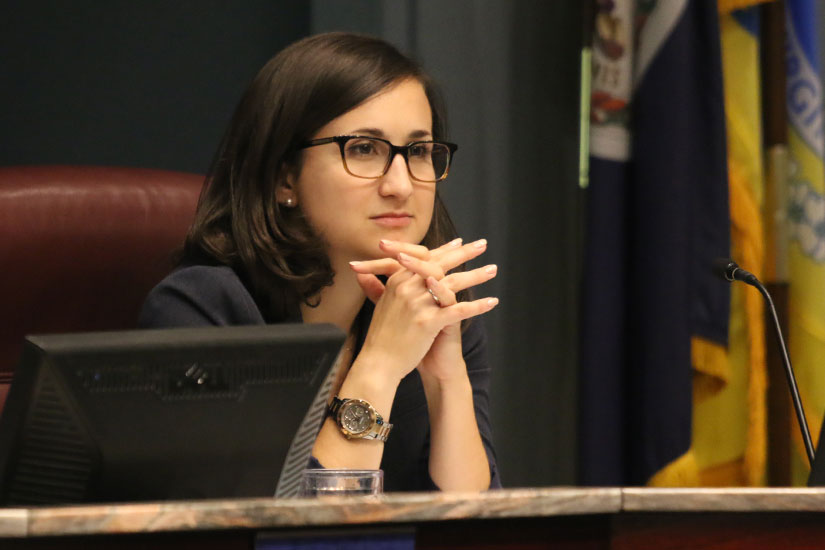
By Katie Cristol

The following is an abridged version of remarks delivered at the Arlington County Board’s January 2nd Organizational Meeting. The full text, with specific proposals and further details on each of these themes, is available online.

“Tell the old story for our modern times. Find the beginning.” 

(The Odyssey, in a new 2017 translation by Emily Wilson)  

In 2018, what does it mean to translate Arlington’s history, our community’s values, and even our foundational texts – planning documents, rather than literary – for our modern times?

For example, “to tell the old story” of Arlington is to tell of the fight for inclusion: Defiance of Massive Resistance and integrating our schools; waves of immigrants and refugees shaping the County’s culture and economy. In our current national political moment, Arlingtonians have risen to affirm that history, and those values. Inclusion is why housing affordability – an issue given structure and a policy agenda in the 2015 Affordable Housing Master Plan – continues to be such a bedrock issue for us all. What this community looks like, and who calls it home, is in part a function of the cost of its housing.

Last year, I described my hope that our 2017 Zoning Ordinance amendments regarding accessory dwellings could be a springboard to a broader community discussion about the themes of “Missing Middle Housing.”

My goal — building on and with the ideas advanced by our new colleague, Erik Gutshall, and other community leaders — is to more substantively and specifically engage this “Missing Middle” conversation in 2018, producing a few examples of what it means in Arlington. The Lee Highway Planning effort and the development of Housing Conservation District tools ahead both represent opportunities to explore these forms, and to translate our values of inclusion into housing policy.

Childcare accessibility similarly speaks to the foundational values of Arlington County.

On January 25, we will launch an Action Plan, drafted by a multi-agency partnership, with parents, providers and neighbors. As the action plan proceeds, I anticipate that long-awaited steps will be before the Board soon, such as a potential re-examination of our local codes for alignment with the Commonwealth’s; potential zoning changes to decrease barriers to entry of childcare centers; and new partnerships to increase the supply of trained childcare workers.

2018 is a critical year for restoring and supporting Metro, achieving a sustainable source of funding for Metro, and engaging constructively with the many reform proposals for its governance and operations. The regionalism of the 1950s and 1960s is our map here: Arlington will be most effective in partnership with our fellow Northern Virginia jurisdictions.

Christian Dorsey’s leadership on the Metro board will be essential to representing Arlington’s interests in any reforms adopted this year, and to establishing a more effective system. In collaboration with colleagues from Northern Virginia’s Metro jurisdictions, and from jurisdictions like Prince William, Fredericksburg, and Stafford, I will be leading legislative efforts on behalf of NVTC and the Virginia Railway Express.

We must present a common vision from the region to the General Assembly as they deliberate on dedicated transit funding in the biennial budget.

Returning Metro to sound footing is a necessary but not sufficient step to turning around our commercial vacancy rate, which will continue be a priority for 2018. We are wrestling with anticipated budget gaps: Significant ones in FY19, growing greater in the out years. The only way we get out of painful choices that pit our priorities – a moderate tax rate, quality schools, transportation, parks – against one another is growth in the commercial sector. This year, we must continue aggressive pursuit of expanded and new commercial tenants.

None of these objectives will be without controversy. So to translate the Arlington Way for our modern times, it’s time to return to these big conversations, and talk more directly to one another as neighbors. To do that, we need more citizen leadership of the public dialogue. I look forward to launching, with our Commissions, a series of “Big Idea Roundtables,” that will provide constructive venues for residents to discuss the big questions about the County’s future with each other.

I’m also looking forward to the implementation of County Board and County Manager efforts to improve the customer service experience of those interacting with their local government in 2018.

Finally, in 2018, we will need to be steady in the face of federal instability: Still-unknown implications of the new tax reform law; continued deportation threats to our young people if and as DACA expires; threatened cuts to the funding streams our safety net depends upon. Through it all, however, Arlington will be made sturdier by our proud history and by our striving to constantly live and evolve our values.

Katie Cristol was elected to the County Board in November 2015 and elected by her colleagues as County Board Chairman for 2018. She has been a community advocate and public policy professional during her time living in Arlington.


Progressive Voice is a weekly opinion column. The views and opinions expressed in the column are those of the individual authors and do not necessarily reflect the views of their organizations or ARLnow.com.

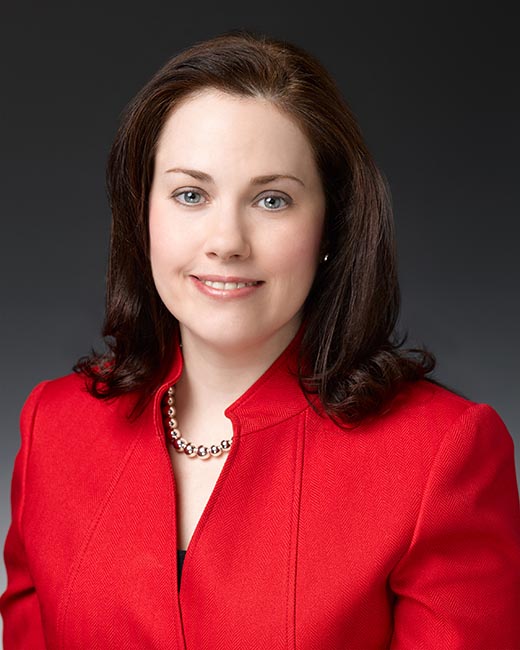
By Jill Caiazzo

With 2018 on the horizon, much of the political discussion is focused on the Congressional midterm elections. But the New Year brings another contest much closer to home: the 2018 Arlington County Board race featuring a Democratic challenger to incumbent John Vihstadt.

Assuming that more than one Democrat throws his or her hat into the ring (and three are already rumored), the voting members of the Arlington County Democratic Committee will select the method for nominating the Democratic candidate: a primary or a caucus. I plan to vote for a primary.

A primary has several key advantages over a caucus. Because a primary is run by the government, the full election apparatus of Arlington County applies to a County Board primary.

On Primary Day, all 54 polling locations in Arlington are open to voters for 13 hours. Absentee voting also is available to eligible voters, who can include military personnel stationed overseas, business travelers, the infirm, and their caregivers.

This well-run election apparatus greatly facilitates voter participation in a County Board primary. Even with the usual absolute best efforts, a caucus run by the local Democratic Party – with its limited voting hours, handful of locations, and lack of absentee voting – pales in comparison.

Equally important, voters also are more likely to know about a primary than a caucus, especially if the primary also features a contest for either Congressional midterm. This scenario is not far-fetched in 2018: members of Our Revolution (the offshoot of Bernie Sanders’ presidential campaign) and other progressive groups are apparently recruiting challengers to U.S. Sen. Tim Kaine  (D) and Rep. Don Beyer (D).

Such a challenge (if brought to fruition) likely would be well-publicized, drawing more voters to the polls than would be expected from a County Board race alone.

To be sure, this greater number of voters creates practical problems for potential Democratic candidates for the County Board. A far greater level of effort – and fundraising – is required to campaign on a truly county-wide basis (as necessitated by a primary) than to campaign among the much smaller subset of voters who frequent Democratic caucuses.

More than 15,000 voters cast ballots in the County Board primary held in 2016, whereas less than 6,000 voters cast ballots in the County Board Democratic caucus held in 2017. Doubling the effort required to secure the Democratic nomination potentially can leave the victorious candidate exhausted and underfunded as he or she heads into the general election.

This challenge is particularly acute for candidates historically underrepresented in politics and government, who may start with fewer resources than candidates drawn from more established circles. For example, younger candidates seeking to bring greater millennial representation to the County Board may face difficulties raising significant funds from their personal networks.

Less established in their careers, they also may struggle to make the time necessary for a county-wide campaign. Yet, despite this challenge, the Arlington Young Democrats have been some of the most outspoken advocates for the use of primaries versus caucuses to select Democratic candidates.

Far from youthful hubris, this position reflects a canny understanding of this singular political moment. As a candidate, President Donald Trump understood the moment as well. It comes down to this: Americans are tired of feeling like the system is rigged against them.

Rightly or wrongly, a Democratic caucus — with its smaller scale, limited publicity appeal, and resulting diminished voting pool — is seen by many as rigged in favor of the Democratic establishment. Even the most worthy and consensus candidate who emerges victorious from a Democratic caucus is destined to bear that taint in the current political environment.

Given the choice between such a candidate and a battle-weary (and battle-tested) Democratic primary victor, I choose the latter. Neither option is perfect — and there are some advantages to caucuses — but it is far easier in this moment to overcome candidate and donor fatigue than to motivate a disaffected electorate.

Democrats need more than anti-Trump backlash to earn a victory, particularly for a local race focused more on housing affordability than the latest tweet storm.

A candidate who wins a primary featuring a broader set of voters than a caucus by offering positive ideas for tackling housing and other issues stands the best chance of attracting general election voters in this moment. That candidate also stands the best chance of inspiring the progressive activists who proved so effective in the 2017 general election for Governor. I will take those odds any day.

Jill Caiazzo is an Arlington resident and recently completed successful service as Co-Chair of the 2017 Arlington Joint Democratic Campaign. She is a candidate for Arlington County Democratic Committee Chair in an election to be held in January 2018.


Progressive Voice is a weekly opinion column. The views and opinions expressed in the column are those of the individual authors and do not necessarily reflect the views of their organizations or ARLnow.com.

By Erik Gutshall

Progressive values of equality and justice for all have triumphed in 2017 elections in Alabama and in Virginia – buoyed by news that a recount in Newport News leaves us with a possibility that control of the Virginia House of Delegates will end up evenly divided between Democrats and Republicans.

Arlington’s legislative agenda will be addressed by many more open ears in Richmond than just a year ago.

Even as we celebrate these progressive electoral victories, however, Arlington must aggressively seek new solutions to a fundamental issue of our time – making sure that Arlington is a community that is accessible and affordable to all, particularly lower- and middle- income families.

Our 40-year commitment to smart growth, investments in great schools, compassion for the vulnerable, and economic prosperity is the foundation for Arlington’s Great Progressive Success Story. Not everyone has benefited equally from our success; yet our quest for a more perfect union should not be quelled by the challenges we face.

By resisting calls for austerity and misguided “tax reform” that starves good governance, Arlington can leverage our phenomenal assets to advance progressive solutions that provide next generation models for our state and nation. In a troubled world, our community can be proof that government can do good.

Key ingredients of our future success will be the fundamentals of good governance:

Core Values: Arlington’s core strength is derived from the foundational values embedded throughout all eleven elements of our County’s master plan – setting a course to sustainability in our Community Energy Plan; striving to preserve and create affordable housing units in our Affordable Housing Master Plan; and committing to a robust transit network in our Master Transportation Plan. Guided by the moral compass of our core values over the rhetoric of minimalist core services, our budget delivers quality schools, open space and parks, public safety, and a wide array of community services that Arlingtonians have supported broadly and repeatedly.

Honest Dialogue: Trust is an essential element of good governance. Neighbors treating each other with mutual respect leads to consensus. County leaders and staff engender trust through transparent motives, information, and deliberate action. Progressive policies are rooted in evidence-based deliberations; therefore, we should honor the wisdom that we are entitled to our own opinions but not our own facts. We cannot sacrifice the Arlington Way and follow the lead of chaotic federal leadership premised on the preposterous notion of alternative facts!

Long-term Planning: A visible and widely heralded aspect of our Great Progressive Success Story is our decades-long smart growth strategy concentrating development along our Metro corridors and thereby creating vibrant, walkable retail centers while preserving surrounding neighborhoods. Today, we must envision new opportunities for the market to create additional housing across the full spectrum of price points to ensure that Arlington is affordable to everyone. Solving this challenge will require the same level of steadfast dedication to long-term planning provided by Arlington’s progressive leaders of the past several generations.

Economic Engine: Long-term planning, honest dialogue, and core values would ring hollow if not for the incredible economic success and prosperity progressives have created in Arlington. Federal spending helped drive Arlington’s success, but we also successfully leveraged that spending to develop the places, amenities, excellent schools, and neighborhoods attractive to talented people who now drive our rapidly diversifying innovation economy. Thankfully, local employers are invested partners in search of housing solutions for their workforce and the clear majority of our business leaders support broader economic opportunity for all in our County.

This year’s elections give progressives renewed hope in the possibilities of good government and a more perfect union. We remain a proud model that successful progressive policy improves lives and communities. Honoring our past, while recognizing that complex problems require thoughtful and, at times, audacious solutions, we owe it to ourselves, and the nation, to bring forward the next generation of Arlington’s Great Progressive Success Story.

Erik Gutshall was recently elected to the Arlington County Board for a term beginning January 1, 2018. He previously served as Chair of the Arlington County Planning Commission. The founder of Clarendon Home Services, Erik lives with his wife and three daughters in Lyon Park.


Progressive Voice is a weekly opinion column. The views and opinions expressed in the column are those of the individual authors and do not necessarily reflect the views of their organizations or ARLnow.com.

By Matt de Ferranti

In August, I wrote a column outlining positive progressive ideas for our County to keep Arlington a great place to live.

In today’s column, I offer a second set of proposals to address our needs in transportation, for our parks and open space, and for energy efficiency policies to confront climate change.

For many Arlingtonians, location and accessible transportation brought us here. Generations came to Colonial Village or Lyon Park and stayed. Others remained in the County, but moved west from their apartments, condos, and homes along the Orange Line in Rosslyn or Ballston, or in Crystal City, or on Columbia Pike. To keep our transportation network strong, I suggest several actions.

A Dedicated Funding Stream for Metro: Metro has been at the heart of many decisions to move here. Because this service is indispensable for so many Arlingtonians and our economy, we should be steadfast in our commitment to a dedicated funding stream for Metro.

Data Driven, Common-Sense Transportation Decisions: As we make decisions on County transportation issues, such as improvements to bus service on Columbia Pike or Lee Highway, the relocation of the Virginia Rail Station stop near the Airport, and the balance between parking and bike lanes in Crystal City, we should base our decisions on data and common-sense analysis.

Arlington should also be willing to consider new ideas such as, for example, whether agreements with ride-services such as Lyft may be cost-effective on little used bus routes. We should always ask: What works and where are smart investments most needed?

Make Good on our Commitments to Columbia Pike Bus Service: Four years ago, we committed to improving bus service on Columbia Pike. Last month, the County Board approved funding to begin the work to make that happen. We should accelerate that work and look to off-board fares and multiple doors as ways to speed up the Pike’s bus service. Both would require investment and need further analysis, but neither implicates a dedicated lane and they show real potential.

Continue with I-66 Express Lanes, but Use Data to Adjust if Necessary: Tolls on I-66 have been controversial. Before we rush to judgment, let’s acknowledge that it is only in its first weeks. I agree with the The Washington Post‘s argument that we should stick with the toll system.

The funding for improvements that Arlington’s transportation system will receive through the toll revenue generated by the Northern Virginia Transportation Commission will include roads, bus service, and other multimodal transportation improvements. We need these improvements and should stick with the plan, while being ready to seek changes to the timing of rush hour, for example, if necessary.

The quality of our parks has been a hallmark of Arlington and a shared source of joy. From those who walk our trails, to bicyclists on the Loop, to the fields that so many Arlingtonians use to play their sport of choice, to open space in increasingly short supply, we care about our environment.

Balance All our Needs: Space is costly in Arlington, so we must invest wisely. The Public Spaces Master Plan (PSMP) currently under consideration has and will identify new needs and ideas, and will help clarify a big-picture sense of the competing needs we face – including lighted sports fields and the need for free open space.

Aquatics Center at Long Bridge Park: The County Board made the right decision late last month to fund a significantly more cost-effective proposal for a swimming facility and improvements at Long Bridge Park. Demand for a swimming facility has been widespread for a long time. Arlington voters have already approved the funding for construction via bond measures. We should fund operations for this facility that will benefit County residents for years to come.

Climate Change: Underlying our choices on open space and parks is a defining challenge of the 21st Century — climate change. Arlington’s energy plan was adopted in June 2013 to provide “a long-term vision for transforming how we generate, use, and distribute energy.” The plan calls for using locally generated alternative energy and energy efficiency to reduce greenhouse gases and the cost of energy. Its goal is a 75 percent lower carbon footprint by 2050. Significant progress has already been made. We should continue to work to meet our 2050 goal.

Conclusion

Arlington can and should be both fiscally sound and supportive of wise investments in transportation, parks and open space, and policies to address climate change.

Matt de Ferranti is a member of the Joint Facilities Advisory Commission, is Chair of the Budget Advisory Council to the Arlington School Board, and Vice Chair of the Housing Commission.


Progressive Voice is a weekly opinion column. The views and opinions expressed in the column are those of the individual authors and do not necessarily reflect the views of their organizations or ARLnow.com.

By Elaine Furlow

If we think national problems seem intractable, and national players so at odds that nothing positive will ever get done, let’s flash back to 1787 and the men who wrote the Constitution.

You think our problems today are complicated? Try creating a brand new system of government, when no colony had ever become independent. Try creating a presidency, when everyone else in the 18th century believed in monarchy. Try balancing a strong, unified national structure with prideful states large and small (“All use the same money? No way!”).

From May to September they kept at it, testing ideas, working compromises and concepts. After five months, still worried whether individual states would vote to ratify, they felt ready.

About now, the skeptics among you may be thinking, “Yes, but that was different. Those guys were hell-bent to work through the obstacles and somehow find a way. It’s not like that now.”

On a national level, perhaps not. But in Virginia and Arlington, we have an opportunity — an obligation, even — to lead in just that get-it-done way, despite the harmful policies some office-holders are pushing nationally. Democratic elected officials in Arlington hold the majority, Virginia’s new governor and newly-elected crop of state delegates have buoyed our spirits and options for problem-solving.

Our opportunity is listening to people on gut issues to help solve problems (in Arlington: transportation, housing costs, school space; in Virginia: health care, the economy and transportation, for starters). States and communities like ours can be a beacon of good governing right now.

One challenge is getting to answers more decisively – more like the five months for the Constitution instead of today’s five+ years deciding about lights at Williamsburg field. In 2018, when the interests of citizens or policy-makers diverge, can we somehow streamline the route to effective decisions?

Everybody can help on this – elected leaders, residents, professional staff. Parents and schools can look for ways to show students how constructive politics makes a difference.

I am recalling construction of the skateboard park on Wilson Blvd years ago, when fifth graders took an energetic part in debating regulations on wearing safety pads and helmets. (Students were dumbfounded when adults said it would take several more meetings to get that decided.) Can we keep people involved but find new ways to simplify decision-making?

Yes, “things are complicated, and take time.” So some Arlington activists and officials create more task forces, meetings and timelines that stretch patience thin. Instead, let’s innovate on encouraging more people to invest themselves in Arlington’s concerns, perhaps in simpler or different ways that make sense for them.

Lately national companies like Scotts (lawn care) and Home Depot have tried a new tack to reach millennials. The problem, they realized, was young people didn’t know the basics, like how to hang Christmas lights, or plant seedlings where the sun can reach them. Some companies developed simple online tutorials, like “how to use a tape measure.”

“Too condescending?” worried one Home Depot executive in a Wall Street Journal article. Apparently not. The short, basic messaging proved successful in attracting young people who had just grown up differently, much less familiar with gardening or home maintenance.

We civic leaders and politicians could take a cue. To attract people of all ages back to democracy on the ground, maybe we need to hew harder to the basics. Democrats believe democratic government is a good thing – we celebrate its role in ensuring clean air and water, good public education, health care, fairness, opportunity and more. Looking to 2018, we need to prove we can solve problems more resolutely, more quickly, while still respecting thoughts and cares from people on gut issues.

And for any who doubt big problems can be solved, and solved more quickly? Remember those determined people crafting the Constitution long ago. Five months of work, all day long, to slog through competing interests and find workable solutions, through even the dog days of August. And with no air conditioning.

Elaine Furlow served eight years as an Arlington School Board member. She was Director, Strategy and Planning for AARP until her recent retirement.


View More Stories