Progressive Voice is a weekly opinion column. The views and opinions expressed in this column are those of the individual author and do not necessarily reflect the views of ARLnow.com.
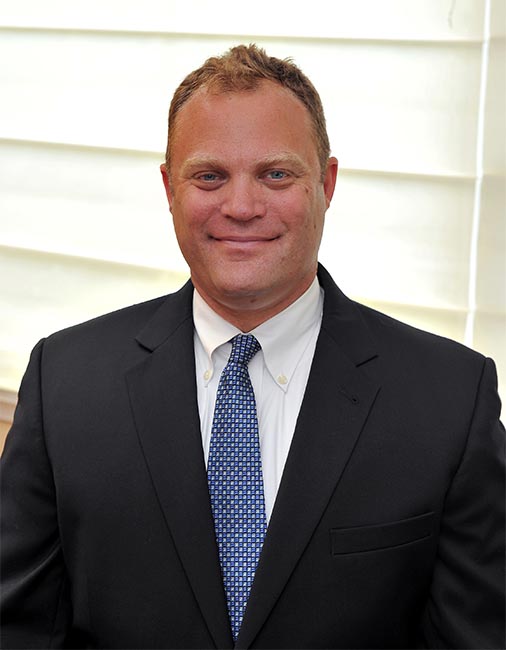
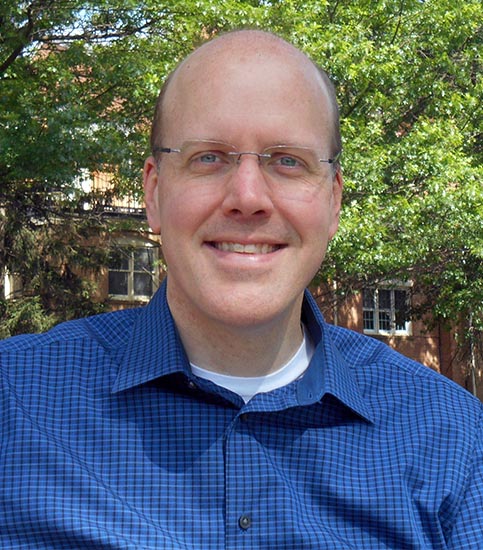
Andrew SchneiderArlington County Board candidate Alan Howze has announced a set of proposals to improve the streetcar system that would link Arlington with Alexandria and Fairfax and improve transit along one of the busiest corridors in the region.

The streetcar project will also provide significant financial returns to Arlington through economic development that, in turn, will generate revenues to help create needed schools while protecting neighborhoods and preserving affordable housing.

I support Alan’s campaign and his fundamental tenets of engaging Arlington’s voters and communities to improve on a project that has been the centerpiece of multi-year revitalization efforts for Columbia Pike and Crystal City. I applaud the many Arlingtonians who participated in those efforts.

In making his proposals, Alan has respected the long-standing and inclusive community planning process while looking for innovations to improve upon project implementation.

After talking to thousands of Arlington residents at their doors, he has made five proposals based on their suggestions:

  1. Timely construction should be a key contract requirement to minimize disruption, protect taxpayers, and accelerate streetcar benefits. Speed and accountability in government matters.
  2. Create a small business contingency plan to support small businesses affected by construction.
  3. Create a business and residents advisory council to ensure community issues arising during construction are dealt with promptly.
  4. Examine the feasibility of streetcars that run without wires for sections of the streetcar line to reduce use of overhead wires.
  5. Secure 100 percent renewable energy power supply for the streetcar to ensure a zero emissions system.

I have known and worked with Alan as a community leader. These proposals reflect his approach to meeting community challenges — thoughtful discussion, community input, considering needs of neighborhoods and the broader Arlington community, finding innovative solutions, looking to conserve community and taxpayer resources, addressing the vital imperative of climate change and environmental protection, and respecting community processes in order to encourage Arlingtonians to participate actively.

These attributes are important to me as a lifelong Arlingtonian dedicated to service making a difference.

More importantly, they are important to me as someone serving as President of the Yorktown Civic Association and taking a leadership role in the Lee Highway Revitalization project.

Formed in 2013, this project is a grassroots strategic partnership for re-visioning Lee Highway, involving the presidents and other interested members of the civic associations along Lee Highway. Moreover, this project has taken its template/lead from the thoughtful, inclusive, and deliberate Columbia Pike revitalization process that has been undertaken since the 1990s.

We anticipate developing a joint community vision for a more economically vibrant, walkable, attractive Lee Highway corridor to benefit neighborhoods and the business community. I expect that our vision will lead to a corridor that avoids disjointed development and that will support improved transit options as well.

We also anticipate that our joint community vision will be sent in 2015 to the County Manager’s office with a recommendation that the County Board appoint and fund a task force to develop a Lee Highway Sector Plan guiding future rezoning and development applications. (more…)

Progressive Voice is a weekly opinion column. The views and opinions expressed in this column are those of the individual author and do not necessarily reflect the views of ARLnow.com.

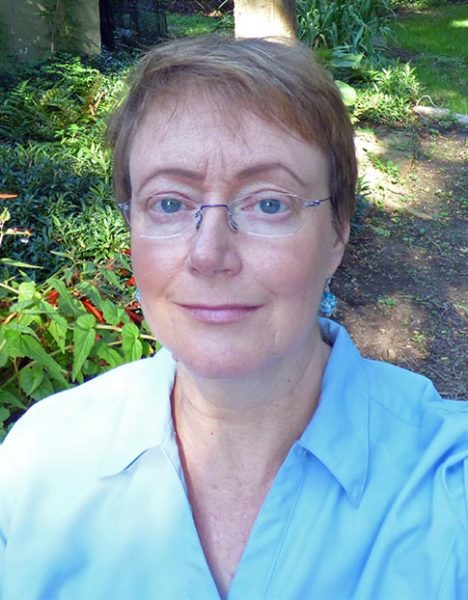
Terry SavelaThe concerns raised regarding Arlington’s streetcar program remind me of my own journey from streetcar skeptic to streetcar supporter.

As a planning commissioner for the County from 2002 and 2012 and as a transportation commissioner for part of that time, I participated in the development and review of the long-range plans for Columbia Pike and Crystal City and the eventual selection of the streetcar as the preferred option for improving transit services.

The County’s path to choosing the streetcar project rather than enhanced bus service was not a short, straight line. The process included:

  • a progression of public planning charrettes, community meetings, public task forces and public hearings supplemented by surveys and other forms of outreach to gather public opinions;
  • professional working groups involving state and local agencies, expert contractors and WMATA; and
  • both internal and contracted studies on financing options, economic development impacts, engineering options, right-of-way acquisitions, and impacts on neighborhoods, businesses, affordable housing, and historic resources.

At each step along the way, transportation and economic development experts, citizen advisory groups, and the County Board asked tough questions and identified gaps in information and analysis, leading to additional work and public review.

In keeping with “The Arlington Way,” the County Board listened to the questions and objections raised, weighed the merits of the arguments in support of each alternative, and unanimously agreed that the streetcar was the best method for achieving and balancing Arlington’s various goals.

While we can always identify more questions and raise more objections, we must eventually, on any major project, reach a point where the information gathered is deemed sufficient, a decision is made, and we move forward.

That said, here are a few of the criticisms I considered along the way to becoming a streetcar adherent.

First, the streetcar requires a fixed rail infrastructure that does not permit routes to be changed. I believe the benefits of a light rail approach offset this concern. The “guarantee” offered by fixed light rail is essential to building momentum for private investment according to economic development and real estate professionals. This private development will generate additional demand for the streetcar as well as tax revenue needed to support our schools, parks, libraries, human services programs, and maintenance of basic infrastructure. We can still add transit services as demand for additional routes materializes.

Second, a streetcar operating in a mixed-use travel lane is sub-optimal. Having separate dedicated lanes is optimal for any form of transit. However, the Columbia Pike community identified a range of goals that work to limit street width — wider sidewalks, traffic calming, and the preservation of historic buildings.

Combined with limitations imposed by private property lines and VDOT’s requirement that all travel lanes be maintained, widening Columbia Pike to accommodate dedicated lanes is not feasible. Planners and civil engineers will continue their work on ensuring success of the shared use approach. (more…)


Progressive Voice is a weekly opinion column. The views and opinions expressed in this column are those of the individual author and do not necessarily reflect the views of ARLnow.com.

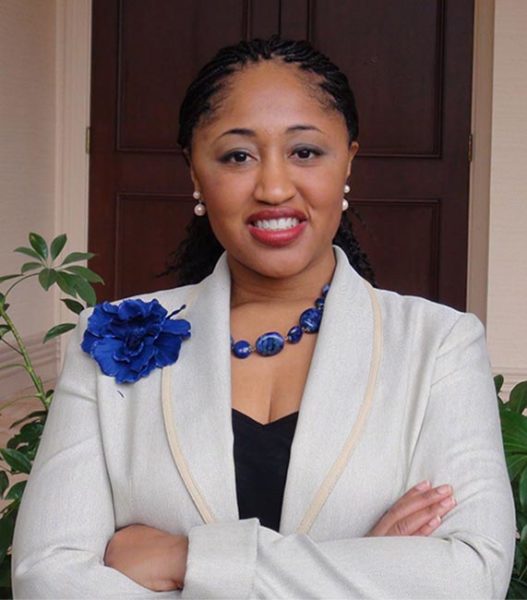
Krysta JonesAs we watch the events in Ferguson, Mo., unfold, I am thankful for the progress we have made in Arlington to create a more diverse and welcoming community. I am even more determined that we work together to foster civic engagement and leadership opportunities for African Americans and to honor the historic contributions of African Americans in Arlington and all Arlingtonians who have worked to eliminate discrimination and expand opportunity.

Since I was younger than I can remember, I have watched documentaries on the American civil rights movement. Growing up in the 1990s, my mother made sure I understood the struggles and accomplishments of African Americans in our country and also how far we had to go as a community and a country.

These early conversations and experiences shaped my philosophy about civic engagement. I have wanted to do everything I can to repay those who lost their lives and sacrificed so much for me to go to integrated schools, use the same bathrooms as everyone else, and live in any neighborhood I wanted to make my home.

Not long ago, things were very different.

In 1954 the Supreme Court ruled that American schools should be desegregated. In defiance of the Court, our state government in Richmond chose to work actively to prevent integrated schools.

In the midst of Virginia’s “massive resistance” efforts, the NAACP filed a suit on behalf of Arlington parents and students. Judge Albert V. Bryan ordered the Arlington schools to be desegregated. In 1959, four Black students entered Stratford Junior High School (now H.B. Woodlawn) with the protection of Arlington police officers, changing our history forever.

Since the 1950s, the struggle for full equality has changed. While our schools are legally desegregated, African Americans are still not fully represented in political leadership.

I founded Virginia Leadership Institute (VLI) in 2006 with the goal of increasing the number of African American elected officials in Virginia.

African Americans are 20 percent of the Virginia population and approximately 8 percent of the population in Arlington, yet only about 250 African Americans across the Commonwealth hold elected offices (county boards, constitutional officers, school boards, city councils, state legislature, Congress).

VLI believes that our elected and appointed officials should be diverse in age, gender, ethnicity, sexual orientation, and the like.

We believe that residents can be represented effectively by someone different than themselves, yet VLI also believes that one’s background, experiences and characteristics can provide different perspectives that are important as leaders seek to represent and discover solutions for growing and changing communities in Arlington, and throughout Virginia.

VLI, based in Arlington, focuses on teaching African Americans skills needed to win elections and govern successfully. VLI also provides personal leadership consultations to assist them on their life journeys.

In 2014, there are many who question why an organization would focus on helping one group of people get elected to office. Yet current events show us that diversity in leadership continues to be an important element of creating safe and healthy communities as well as addressing crises. (more…)


Progressive Voice is a weekly opinion column. The views and opinions expressed in this column are those of the author and do not necessarily reflect the views of ARLnow.com.

Mike LiebermanOn July 19, the Arlington County Board voted to send $219 million in bond funding to the public for approval on the November ballot.

The bond program this year runs the gamut — $105.78 million for education, $60.24 million for Metro and transportation, $39.9 million for community infrastructure, and $13 million for parks and recreation. These proposals represent the next step in a long Arlington tradition of community investment, and our world-class public infrastructure and well-managed growth in Arlington are the end result.

But often lost in the big numbers of these bond programs is what makes them so effective — the fact that Arlington is not only investing, but living within its means. This fact was validated again in May of this year when Arlington announced that Moody’s, Fitch, and Standard & Poor’s again issued Arlington a triple/AAA bond rating for the 14th year in a row.

These ratings assess the likelihood that a municipality will repay investors the debts it owes; a triple/AAA rating means that repayment is virtually assured. Arlington was one of only 39 counties nationwide to receive this highest bond rating from all three agencies.

The benefit of this rating is manifest each year in the market. In May of this year, for example, Arlington announced that it received a 2.8 percent interest rate for a $65 million general obligation bond sale. Counties with bond ratings of AA, A, or lower generally experience interest rates more than 3 or 4 percent, or even higher to secure the same amount of funding.

This is not rocket science. If a county has its budget in order, and a prudent planning process in place, investors want to invest in that county, and are willing to offer favorable financial terms for the opportunity.

But what does that mean in real terms?  It means that Arlington can spend far less of its tax dollars on debt service, and more on public programs than its peer jurisdictions. That means more dollars collected are actually spent on school construction, improved parks, transportation improvements, and the other public infrastructure we have come to expect in Arlington.

At a time when the news is peppered with examples of financial mismanagement — including a downgraded bond rating for the U.S. government — it should be reassuring to all Arlingtonians that we live in a community that stands as an exception to this trend.

Community investment is what made Arlington what it is, and the ability to continue to make investments at an affordable rate, and with responsible debt service, will help ensure Arlington’s continued success for many years to come.

Mike Lieberman is the Immediate Past Chair of the Arlington County Democratic Committee and a former member of the Arlington Fiscal Affairs Advisory Commission.


Progressive Voice is a weekly opinion column. The views and opinions expressed in this column are those of the author and do not necessarily reflect the views of ARLnow.com.

Max BurnsVirginia is — finally — for all lovers.

In a landmark decision handed down Monday, the Richmond-based U.S. Court of Appeals for the Fourth Circuit ruled that Virginia’s state ban on gay marriage is unconstitutional.

For those used to the challenges of reading through the language of many recent Supreme Court decisions, the Fourth Circuit offered a refreshing clarity and unexpected boldness in stating what an ever-increasing majority of Americans have come to know well: “We recognize that same-sex marriage makes some people deeply uncomfortable… However, inertia and apprehension are not legitimate bases for denying same-sex couples due process and equal protection of the laws.”

The Fourth Circuit judges understand that times and attitudes are changing. For young Americans soon to begin high school or college, even the phrase “gay marriage” seems clunky. They call it what it is: marriage, plain and simple. For this generation, gay and lesbian couples aren’t in some “other” category. They are friends and family, roommates and coworkers. They are people.

They are also the people who are bringing new energy to the institution of marriage.

It is sadly true that it has been the Republican-elected officials in Virginia who have fought hard against marriage equality and, indeed, many other rights for LGBT Virginians such as freedom from discrimination in the workplace. And, it is very unlikely that we will see many Republican-elected officials praise the Fourth Circuit’s decision.

It is also important to applaud the many Democrats who have promoted equal rights even when it was politically challenging to do so. Virtually every advancement of LGBT rights in Virginia has been initiated by Democrats and it was Democrats who fought hard, although unsuccessfully, against the Marshall-Newman amendment that for years banned marriage equality — and even civil unions — in Virginia.

As an Arlingtonian, I am proud that our Democratic County Board leaders have been at the forefront of efforts to extend workplace benefits and other civil rights to gay and lesbian Arlingtonians over the past 25 years.

While the institutional Republican Party may be reactionary and obstructionist on LGBT issues, the youngest adult members of the Grand Old Party are ready to acknowledge what our Founding Fathers saw as self evident: that all men — and women — are created equal.

It’s among younger voters that we see amazing progress on marriage equality, even in today’s hyper-polarized political environment. A Pew survey released in March showed that 61 percent of Republicans aged 18-29 support gay marriages. At the same time, over three-quarters of Democrats in the same age group support gay marriages.

What’s more, these young Republicans support gay marriage without feeling that it jeopardizes their credentials as “real” Republicans.

Fortunately, the vitriolic debate about whether gays and lesbians “deserve” marriage will soon belong to the past. Young leaders in both political parties are ready to move forward to economic and foreign policy issues. They know that we need the fully-engaged talents of all Americans to ensure our economic competitiveness, as well as security and a strong moral example in times of international conflict. We should all be encouraged.

(more…)


Progressive Voice is a weekly opinion column. The views and opinions expressed in this column are those of the author and do not necessarily reflect the views of ARLnow.com.

James LanderArlington’s progressive vision for its public schools has been longstanding and led to remarkable successes. When schools were segregated and Virginia was known for underinvesting in public schools, Arlingtonians organized to make sure that students could attend high-quality, well-constructed and integrated schools. As a result, Arlington became an education leader in the state and the nation.

Today, we continue to invest heavily in education, to have diverse schools and school offerings, and to see students achieve remarkable results.

With our success, and likely because of that success, we now face a dramatic increase in the number of students attending our schools. Families are moving to Arlington because of the reputation of our schools. Families are remaining in Arlington even as they grow because of the positive experiences provided by our schools.

In my time as a School Board member and now as Chair, I have seen the importance of the County Board’s continued investment in our schools and promotion of policies that make it possible for our schools to thrive.

The most recent example is the County Board’s July 19th approval of a 10-year Capital Improvement Plan. That plan would provide for a 2014 school bond that would deliver over $100 million toward construction and renovation of schools that are vitally needed to respond to dramatic school enrollment growth.

I am particularly pleased that the County CIP was the result of healthy collaboration between the County Board and the School Board.

When I was first elected to the School Board in January 2010, our student population was 20,200 and our operating budget was $438.6 million. Just five years later, our student population for the 2014-2015 school year has grown to over 24,000 with an approved operating budget of $539.4 million.

This student enrollment growth of approximately 800 students per year is the equivalent of one elementary school each year. Fortunately, the County Board has used County revenue growth in ways that ensure that the schools can meet instructional needs and address the facility needs of the rapidly increasing student population.

Like our student population, few things have remained constant during my School Board tenure. Colleagues have rotated on/off of the Board and we will soon have two new colleagues. Throughout this transition the County Board has been a steadfast partner.

The County Board’s unwavering support for high-quality public school educations has helped meet steadily increasing operating and capital demands, thereby allowing APS to remain one of the best school systems in the country. As Abby Raphael, my predecessor as Chair, noted recently: “The School Board appreciates the tremendous support that the County Board and the Arlington community provide to our students and our schools. Without this support, APS could not be as successful as it is.”

I am grateful that the County Board’s July 19 action will ensure the school community’s top priority projects for elementary and middle school facilities can move forward as soon as possible.

It was just a month before, on June 16, that the School Board adopted its own CIP for 2014-2015. The FY 2014 bond request — that the County Board fully funded — includes four vital capital projects: (more…)


Progressive Voice is a weekly opinion column. The views and opinions expressed in this column are those of the author and do not necessarily reflect the views of ARLnow.com.

Barbara FavolaFor decades, Arlington has been at the forefront of moving Virginia in a more progressive direction.

On key issues like school desegregation, rights of Virginians with disabilities, providing workplace benefits and protections for LGBT Virginians, mental health treatment, women’s equality, protecting reproductive rights, and advocating for environmental protections, Arlington’s General Assembly members have fought tirelessly and effectively to overcome conservative forces that have held Virginia back from achieving its potential.

Outstanding elected officials like Mary Marshall, Mary Margaret Whipple, Ed Holland, Judy Connally, and Bob Brink are among those who have achieved progressive victories in Richmond. They have also fought harmful legislation that conservative legislators — most recently in the Republican caucus — pushed forward in response to calls for party loyalty regardless of the interests of constituents at home.

As we approach the House of Delegates 48th District Special Election on Aug. 19, I hope we will follow the example set by legislators like Bob Brink and ensure that Arlington’s interests are not sacrificed to partisan conservative interests in Richmond.

We have two candidates for the 48th District who have been longtime residents of Northern Virginia and are known as being personable, professional, civically engaged, and respectful of others.

However, I hope voters recognize that these candidates have some major policy differences on issues that will come up on a regular basis in the General Assembly.

Given that the candidates will have only weeks to communicate their legislative platforms, ideas, and perspectives with voters in the 48th District, I thought it important to highlight a few of their policy differences.

Gun Control

Rip Sullivan believes we can and must fix the gun show loophole, which allows certain sellers to avoid running background checks on buyers. This is how some people who shouldn’t own guns acquire them. He will fight to close the gun show loophole. His opponent, Dave Foster, said in his 2009 attorney general’s race for the Republican nomination that the gun show loophole is not a loophole.

Rip believes our national parks, like Great Falls, are sacred grounds where we should be able to run, hike, swim, and picnic without the fear of a gun discharging. Dave has said he wants to eliminate the ban on carrying firearms in national parks.

Women’s Reproductive Rights

Rip believes that reproductive health decisions should be left to a woman and her doctor, and that the government has no business interfering. Dave has said he opposes abortion and that Roe v. Wade was a case of “judges imposing their will.”

Defending the Status Quo on Testing Requirements

While serving on the Virginia State Board of Education, Dave Foster resisted SOL reform that would have made common sense adjustments to state testing requirements. Rip Sullivan supported the 2014 law reducing the number of standardized tests and providing more flexibility to localities and teachers to determine how best to ensure that students are learning the necessary curriculum.

Supporting Conservative Politicians

Dave has called Ken Cuccinelli a “great legislator,” and supported Cuccinelli for attorney general in 2009 and governor in 2013. He has endorsed and financially supported Virginia Tea Party leaders and is former chair of GOPAC-Virginia, a fundraising arm of the Republican National Committee. (more…)


Progressive Voice is a weekly opinion column. The views and opinions expressed in this column are those of the author and do not necessarily reflect the views of ARLnow.com.

Paul HollandArlington’s recent trend of monthly elections will continue with a special election on August 19th to choose the successor to our retiring Delegate in the 48th District, Bob Brink.

Following an intense, week-long campaign, Democrats nominated Rip Sullivan as their candidate for the special election. Although I finished second in Sunday’s nominating caucus, I’m proud to give my endorsement and full support to Rip Sullivan.

Rip will be an outstanding candidate and he can be counted on to be the same kind of thoughtful and effective legislator as Bob Brink was during his 17 years of service as 48th District Delegate.

Rip will also be an important ally to Governor McAuliffe and work tirelessly to promote policies and values that align with the majority of the residents of the 48th District. He will focus on issues such as women’s health care, environmental protection, education funding, expanding access to health care, affordable housing, transportation solutions, and advancing the rights of LGBT Virginians. Rip will work against a House Republican agenda that is out of step with the 48th District.

Rip and his wife Beth met in high school here in Northern Virginia. They raised their four kids here, and they have all graduated from public schools. Rip and his wife used to live in Arlington, and they continue to spend lots of time here — professionally and socially.

Rip also has extensive experience serving Northern Virginia and the 48th District in a volunteer capacity as an appointed member on numerous local, regional, and statewide commissions. His local experience includes service on the Fairfax Transportation Advisory Commission, Consumer Protection Commission, Housing and Redevelopment Authority and Park Authority. He’s the former president of the non-profit Legal Services of Northern Virginia, and was appointed by Governor Tim Kaine to the Virginia Commission on Civics Education.

These experiences have given Rip a deep understanding of issues and policies that are important to residents of the 48th District.

On transportation, Rip understands that effective transportation and transit solutions can achieve multiple goals: reduce congestion, protect and create open space, preserve affordable housing, and promote economic development.

As the father of a special education teacher, Rip recognizes the importance of assessing progress, both for our students and our teachers, without creating additional hurdles and barriers to success. He is a strong supporter of SOL reforms that result in sensible testing requirements – requirements that measure our student’s achievements, identify achievement gaps, and provide our teachers with the flexibility to teach beyond the test.

Rip has worked to protect and expand affordable housing opportunities in our region. He understands how to leverage federal housing resources to meet identified housing needs at the community level.

On the environment, Rip is a strong advocate for increasing our investment in renewable energy. To address the impact of climate change, he supports a renewable portfolio standard and incentives. He also supports tax credits that would encourage individuals and small businesses to install solar panels or small wind systems. Rip understands the value of preserving our parks and open space resources and would work with the regional authorities to ensure these places remain open, accessible and undeveloped.

On human services, Rip supports raising the minimum wage and tipped wages, opposes efforts to reduce the social safety net, and is an advocate for expanding workforce training programs that will promote economic opportunity across the income spectrum. He is a strong supporter of Medicaid expansion and the benefits it would bring to the Commonwealth, including providing medical coverage to more than 400,000 uninsured Virginians.

Throughout this campaign, Rip has been open and accessible to the residents he hopes to represent, even giving out his cell phone number in his campaign literature. For more information on Rip and his experience working on important issues, you can visit his campaign website at www.RipSullivanForDelegate.com.

With vigorous debate in Richmond on Medicaid expansion, gun control, women’s reproductive health, and the environment, it is important voters know where Rip and his Republican opponent stand. The Sullivan campaign has already called for a candidate debate, and I look forward to hearing more about the differences between Rip and his Republican opponent.

Rip will be a champion for our Arlington values in Richmond, and if you live in the 48th District, I hope you’ll join me and cast your vote for Rip Sullivan for Delegate in the August 19th special election.

Paul Holland is a lifelong Arlington resident, former Chair of the Park and Recreation Commission, and former candidate for the 48th House of Delegates District.


Progressive Voice is a weekly opinion column. The views and opinions expressed in this column are those of the author and do not necessarily reflect the views of ARLnow.com.

Del. Bob Brink (D-48)This week, I stepped down after 17 years as the 48th District’s Delegate in Richmond. This milestone gave me a chance to reflect on how I arrived at this point, what lies ahead — and how much this unique community means to me.

Unlike some people who have adopted a coiled snake as their mascot, I believe in government and the important and sometimes essential role it plays in improving people’s lives. From that belief came an interest from an early age in politics as a means of ensuring that like-minded people would serve in government. (The fact that I grew up in Chicago, where politics is in the water system, may have had something to do with it as well.)

The politics/government connection drew me to this area and to Arlington some 40 years ago. Here we were absorbed into the Arlington Democratic family: some became surrogate grandparents; our kids grew up together; and I developed lifelong friendships with people who would become colleagues and co-workers in Arlington’s positive, person-to-person brand of politics. Then in 1997, when Judy Connally (whose first campaign I had managed) decided to retire as Delegate, my personal and professional circumstances made it possible for me to run to succeed her.

My 17 years in Richmond have reinforced how fortunate we are to be part of this community. We know the statistics: we’re well-educated; we’re affluent; we continue to have a dynamic, vibrant economy (our unemployment rate is consistently Virginia’s lowest).

We champion efforts that don’t necessarily benefit us directly. A prime example is K-12 funding. If there’s anything like a litmus test in Arlington, it’s support for our public schools. Yet, due to Virginia’s K-12 funding formula, Arlington receives relatively little state money for its world-class public schools — by and large, we pay for them through our local taxes.

But Arlington’s delegation in Richmond is united in defending K-12 funding in the state budget — it’s the right thing to do and makes us a better and stronger Commonwealth. (A tragic irony in the debate over Medicaid expansion is that some downstate members most vociferous in their opposition to expansion represent areas with disproportionate numbers of low-income uninsured people who desperately need access to health care.)

Unlike many other delegations in Richmond, we work well together — within the delegation and with our local elected officials.

We’re generally of the same political party and share the same political goals. But that’s not the complete answer: there are other one-party delegations that fight like cats and dogs, both among themselves and with their local officials. Rather, it’s based on mutual trust and respect within the General Assembly delegation and with our hometown boards and constitutional officers.

That’s paid off for Arlington. When the Defense Advanced Research Projects Agency (DARPA) was in danger of moving out of Arlington, we worked together at the federal, state and local levels to keep DARPA headquarters here. Through strong working relationships developed over time in Washington, Richmond, and Arlington, we were able to achieve that goal.

DARPA is an example of how government investments in research and development as well as infrastructure pay enormous dividends in terms of national security, private sector growth and productivity — most famously as the place where the Internet got its start. DARPA’s continued presence is vital to Arlington’s economy and reputation for innovation.

A good share of my time in Richmond has been spent on “Arlington issues.” It’s a duty I’ve taken on gladly, and it’s one my successor must be prepared to assume.

This Arlington unity will become even more important. In a Dillon Rule state, Arlington’s delegation in Richmond must defend programs and policies in transportation, human rights, and other areas that reflect Arlington’s values and priorities developed through the community-centered process we call the “Arlington Way.”

A few weeks ago a Washington Post columnist noted that officials from surrounding jurisdictions sometimes refer to us as “Perfect Arlington” because sometimes we seem to view ourselves that way. While we have every reason to be proud of our accomplishments as a forward-looking, inclusive community, we need to be vigilant that satisfaction doesn’t become smugness and self-righteousness. I’ve found that a bit of humor doesn’t hurt either.

This is not a farewell address. While I’m moving on to new challenges, Arlington will always be my home. I’ll always be grateful to people who gave me the opportunity to be their voice and champion their values in Richmond. You’ll forever be in my thoughts.

Bob Brink is the Deputy Commissioner for Aging Services in the Virginia Department for Aging and Rehabilitative Services. He represented Arlington in the Virginia House of Delegates from January 1998 to June 30, 2014.


Peter OwenProgressive Voice is a weekly opinion column. The views and opinions expressed in this column are those of the author and do not necessarily reflect the views of ARLnow.com.

Meeting the diverse interests of Arlington residents about how best to make use of available open space is not an easy challenge. The recent renovations at Rocky Run Park meet that challenge and are a tremendous success. Walk by any summer afternoon or evening and you will see Arlington’s residents out enjoying this newly updated park.

The park reopened in early April and the joy felt by park users is nearly palpable. Improvements to the 2.4 acre site include:

  • Playgrounds for both tots and school-age children
  • A new picnic shelter for birthday parties and social events
  • Two lighted hard-surface courts; one can be used for both basketball and volleyball
  • A lighted multi-use synthetic turf field for pick-up games
  • Exercise stations, benches and chess tables
  • Substantially improved ADA accessibility
  • Extensive landscaping, including additional planting near the adjacent substation

In addition, the county relocated the labyrinth previously located at Arlington’s Whitman Walker Clinic to provide a quiet and contemplative green space within the Rosslyn-Ballston Corridor.

How did these renovations occur? I credit the successful collaboration between the community and county government.

The Clarendon-Courthouse Civic Association’s Neighborhood Conservation Advisory Committee (NCAC) Plan adopted in 2007 pointed to the park and its oversubscribed and outdated equipment as an opportunity for improvement. Kristine Wood, our hardworking NCAC representative, brought neighbors together to request action. Responding to her leadership, county staff initiated a conversation with the CCCA to scope the redevelopment of Rocky Run as an NCAC project.

Following months of dialogue, NCAC citizen volunteers recommended the project to the County Board for funding, which was accomplished through a combination of pay as you go and park bond funding.

With the funding plan in place, Department of Parks and Recreation staff met with a CCCA work group comprised of active and interested members of varying ages. Neighborhood children were directly consulted on playground and other aspects of the park. Feedback was sought from elderly neighbors about making the park attractive and accessible.

By the spring of 2011, a collaborative, conceptual design for the park was in place. After our Civic Association unanimously approved the concepts, county staff worked with project engineers to refine and finalize a construction design that earned support from the county’s Park and Recreation Commission and Environment and Energy Conservation Commission.

When the plans were widely publicized on ARLnow.com, most residents were pleased, but some neighbors expressed concerns about certain parts of the plans and their understandable expectation for more direct notice than that provided mainly by civic association volunteers. (Since then, I have seen the county make improvements in how it provides similar notices.)

Even at this stage in the community planning process, County Board members and staff met with nearby neighbors in the summer of 2012, heard their concerns, and ultimately made additional refinements to the park design. In November 2012, the County Board unanimously approved a $2.95 million contract to fund the first stage of park improvements.

What do we have to show for this investment of time and resources? Living a block away from the park and walking by it daily, I see how popular the park is with Arlington’s parents, children, amateur ballplayers and other residents. (more…)


Progressive Voice is a weekly opinion column. The views and opinions expressed in this column are those of the individual author and do not necessarily reflect the views of ARLnow.com.

Nancy IacominiThe season to consider infrastructure and built amenities in Arlington is underway.

In May, the County Manager presented her draft Capital Improvement Plan (CIP). Neighborhood groups, organizations and individual residents have been weighing in on infrastructure projects cited in the CIP. This dialogue includes addressing the merits of projects that affect their visions of what Arlington County should be.

The CIP helps identify priorities based on funding projections that are necessarily estimates — we may see costs, revenues, and funding sources change over time. But the County Board does its best to fit residents’ priorities within the resources the County believes will be available.

We have already seen how the CIP process can sharpen thinking about our priorities and our investments. For example, the County found ways to redesign and dramatically lower the cost of transit stations. The County has put on hold a new aquatic center when bids came in well above budget projections.

This year’s CIP includes the streetcar system that will run from Skyline (yes, Fairfax County is a partner), along Columbia Pike to the Pentagon, and connect with a line through Crystal City and into Potomac Yard.

By looping together the Pike, Pentagon City, Crystal City, and Potomac Yard, the system will bring together the places where many live and work — single family areas, mid-rise residential and commercial areas, high rise buildings, grocery stores, community centers, libraries, coffee shops and much more.

It is a transportation system that will serve many thousands of people. It provides infrastructure that is not ephemeral. It will be tangible and fixed.

For a homeowner it means efficient and predictable public transportation will be a few blocks down the street come rain or shine and not be subject to a bus route changes. It tells commercial building owners there will be transportation for high rise office and residential tenants they attract to occupy revitalized structures in Crystal City. It also will provide one-ride transportation for employees who might work in Crystal City but live along the Pike.

The streetcar extends Arlington’s history as an excellent place to live and work because of intelligent and sustained investments in fixed public transportation infrastructure.

The CIP process has already helped sharpen the County’s focus on the streetcar investment. County Board members have committed themselves to finding ways to finance the system without any homeowner-financed general obligation bonds. The County has also hired a project management firm with a proven record of performance that has been tasked with finding ways to reduce system costs, speed up delivery, and minimize construction disruptions.

The CIP process has also brought into focus that the County cannot address the growing needs of schools and other core services without increasing economic growth in underdeveloped urban corridors like Columbia Pike and Crystal City. The recent streetcar return on investment study shows what has been demonstrated by other systems across the country — its creation will grow our economy far faster than any alternative system and will produce far more tax revenues to fund school expansion and the other key services that Arlingtonians want and expect.

Our willingness in Arlington to find ways to expand our commercial tax base fosters a thriving County that is an attractive place to live and work. Our County’s forward thinking earns confidence from financial experts and wins praise from planning and transportation experts.

Through fiscal responsibility, sound financial practices, and conservative financing policies, Arlington has maintained the highly coveted Triple-AAA bond rating for many years. The use of the CIP has been a key component of these good practices.

The CIP process is an appropriate place to consider our streetcar investment. The process allows us to bring in public input while respecting all of the planning that has already taken place as well as our long-term commitment to progressive policies in land use and transportation.

Because of my confidence in the CIP process, I support the decisions by County Board members Fisette, Hynes and Tejada to evaluate the streetcar within that process. The Chairman’s statement makes the case more eloquently that I can.

A referendum would be an ineffective way to evaluate a complex project. And, as far as I know, an advisory referendum would be contrary to law. Finally, there is no reason for a bond referendum where no general obligation bonds will be needed.

The current CIP process continues into July — all ideas are welcome and input encouraged as we work together to keep Arlington a great place.

Nancy Iacomini has resided in Arlington since 1980 and is currently a member of Arlington County’s Planning Commission. She is also a past member and chairman of WMATA’s Riders’ Advisory Council.


View More Stories