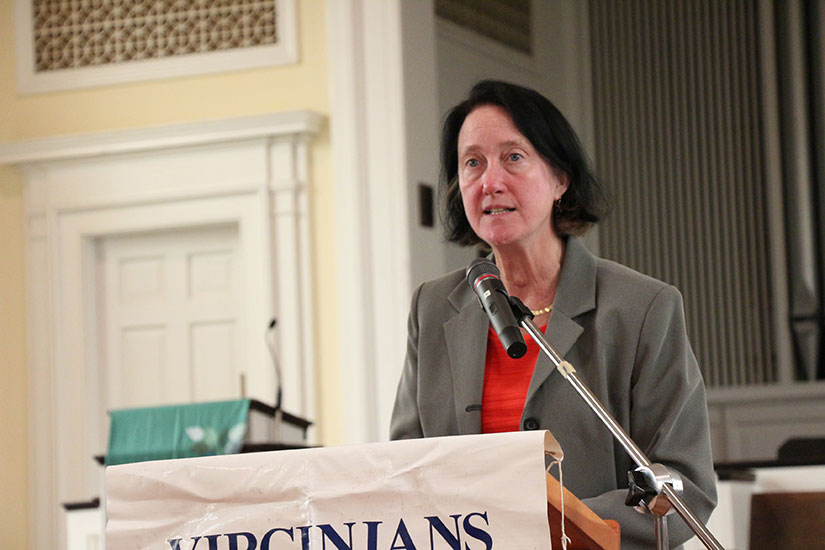
Last week, we asked the two candidates seeking a seat on the Arlington School Board to write a sub-750 word essay on why our readers should vote for them in the Nov. 6 elections. 

Here is the unedited response from independent Audrey Clement:

I’m Audrey Clement, the Independent candidate for Arlington School Board. As a 14-year Westover resident and civic activist-with a Ph.D. in Political Science and service as a Congressional Fellow-I’m running for School Board, because the County faces several crises that Arlington Public Schools (APS) has failed to address. These include:

  • excessive capital spending with millions wasted on schools that have insufficient capacity when built;
  • overcrowded schools with thousands of kids crammed into trailers;
  • declining high school test scores;
  • a persistent minority student achievement gap.

My opponent Barbara Kanninen has lost touch with the voters. As School Board chair, Kanninen recently rammed through a resolution to change the name of Washington-Lee High School with no public notice despite widespread opposition to the name change.

In addition state report card data indicate that during Ms. Kanninen’s tenure on the School Board, Arlington high school pass rates have declined. In fact W-L pass rates have declined from 2015 to 2018 in all 5 subjects measured, and Wakefield and Yorktown in 4. APS clearly needs new leadership to turn this situation around.

If elected, I pledge to:

  • Preserve the name: Washington-Lee High School.
  • Reverse declining high school test scores.
  • Close the minority student achievement gap.
  • Constrain School Board spending.
  • Build schools not trailers on time and on budget.
  • Listen to the concerns of all taxpayers on siting new schools.
  • Assign all kids except those opting into choice schools to the nearest neighborhood school.
  • Mainstream special needs students to the extent practicable.
  • End “teaching to the test”.
  • Install efficient renewable energy in all public schools.
  • Promote school safety with a focus on violence prevention.

As a long-time community activist and current member of the Arlington Transportation Commission, I am confident that I can deliver on my pledge.

If you share my agenda, then:

  • Spread the word about my candidacy.
  • Volunteer to help.
  • Donate to my campaign.

Together we can provide our children with a better education at less cost.


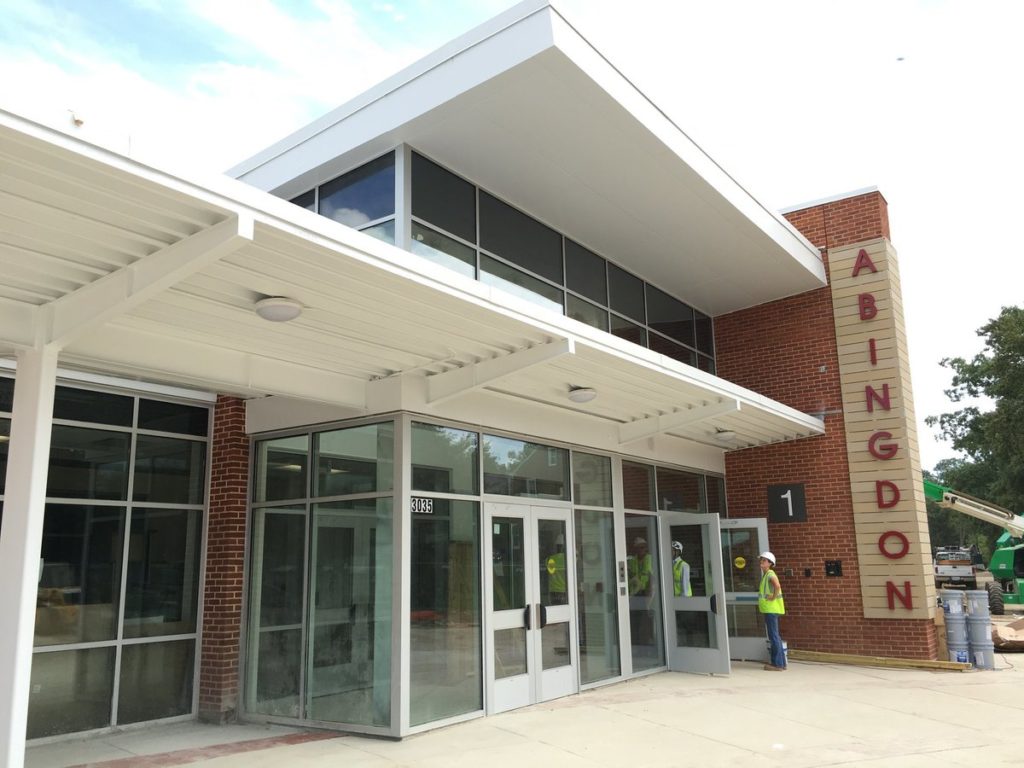
Arlington school officials are proposing a new boundary map that would keep South Fairlington students at Abingdon Elementary, answering the concerns of parents there who worried the school system’s process of drawing new attendance lines would break up the community.

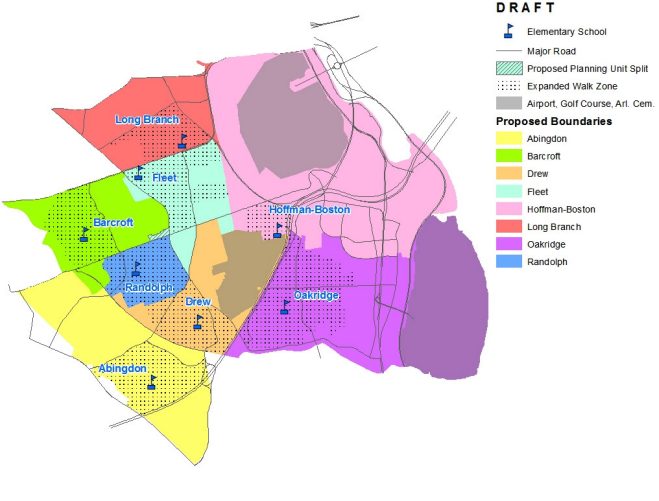
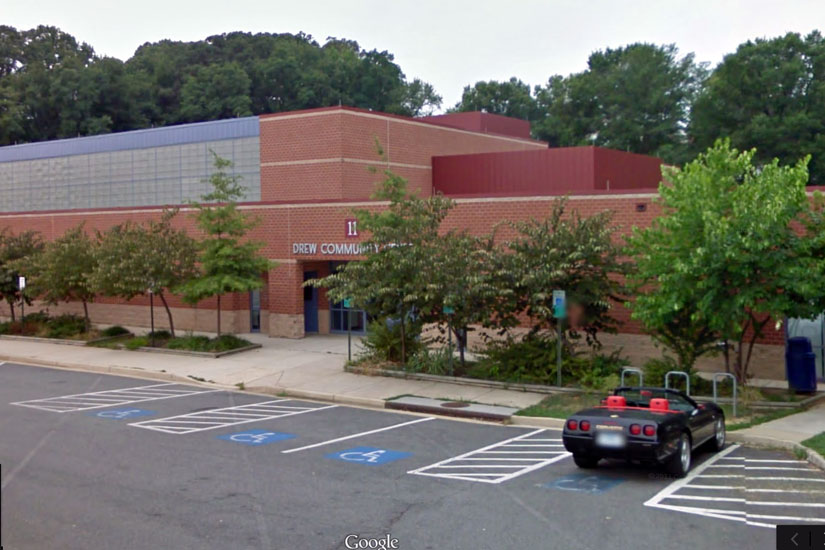
The school system has wrestled for months now with the thorny question of how to best tinker with the boundaries for eight South Arlington elementary schools, in order to address overcrowding concerns and prepare for the opening of Alice West Fleet Elementary next fall. Previous proposals for new maps initially irked parents at the Drew Model School, prompting Arlington Public Schools officials to propose an option moving some students in Fairlington neighborhoods from Abingdon to Drew to help address those worries.

But that proposal has touched off a fierce backlash of its own, with some in the community arguing it would force the unnecessary of busing of Fairlington students and damage the community’s strong ties. Now, APS leaders are offering up yet another new option, leaving all of Fairlington at Abingdon and moving some Columbia Heights and Alcova Heights neighborhoods to Drew instead.

Such a change would leave Abingdon substantially overcapacity, with Drew and Fleet still with plenty of space. Yet, in a work session last Wednesday (Oct. 24), school officials indicated it could end up being a workable solution for the county’s boundary conundrums.

“We can’t maintain everyone’s status quo, because we’re in a growth environment, so something has to give,” School Board Chair Reid Goldstein said at the meeting. “In our economic environment, we also need to ensure we fill school buildings, but the results aren’t going to be perfect.”

School system figures show that Abingdon will likely sit at 124 percent of its designed capacity by next year, and the latest proposal would bring that down to just 120 percent, a reduction of about 20 students. By contrast, the boundary map involving the disputed Fairlington changes would’ve dropped Abingdon to 98 percent.

Still, some Board members expressed uncertainty about the value of such a trade off, wondering if it could create problems at Abingdon down the line — APS projections show Abingdon reaching 131 percent of its capacity by 2021, under the latest boundary proposal. Meanwhile, Drew will be at just 74 percent capacity under that plan, and Fleet will open at 90 percent of its capacity.

“In the long run, we don’t want to have to build a new school because we’re not using these facilities well,” said Board member Barbara Kanninen.

Yet APS planning director Lisa Stengle pointed out that Abingdon, Barcroft and Long Branch will all be included in both this year’s boundary process and the redrawing of boundaries set for 2020, giving school officials a chance to address overcrowding at Abingdon in the coming years. She added that process will include more school’s in the county’s northern half as well, allowing for more possibilities in shifting around students.

Stengle also noted that the newest proposal would bring down the percentage of students eligible for free and reduced price lunch in Drew’s attendance boundaries compared to previous maps. Parents at Drew expressed concerns that previous efforts would’ve unfairly concentrated low-income students at the school, as the FRL rate is a proxy for the economic diversity of each community.

The newest proposal would mean that 57 percent of students eligible to attend Drew would qualify for free and reduced price lunch, down slightly from the 60 percent figure that initially concerned parents. As of now, about 52 percent of the school’s attendees are FRL-eligible.

“We still haven’t found that sweet spot yet where all the considerations are exactly where we want them to be,” Stengle said.

Board members indeed sought to stress that they were well aware that any boundary proposal is bound to make at least some people unhappy, and Goldstein was careful to note that all of the maps offered up by APS officials over the course of the process “are all still possibilities at this time.”

But Kanninen, in particular, called for a cooling of tempers among parents worried about their children changing schools, urging anyone anxious about a move to a new school to simply call up their prospective principal and learn more about the curriculum before worrying too much.

“We are creating new communities when we do this,” Kanninen said. “Please keep an open mind and get excited about the possibilities.”

Superintendent Patrick Murphy will offer up a final boundary map recommendation next Monday (Nov. 5), ahead of a planned Board vote on the matter in December.


Elections around Arlington may not attract the sort of expensive TV ads that have come to dominate local stations ahead of the midterm elections, but candidates around the county have shelled out thousands to bring their messages to Facebook.

An ARLnow analysis of the social media site’s political ad database shows that Arlington’s six candidates for Congress and local office on the ballot this fall have combined with the county’s party committees to buy 549 Facebook ads from Jan. 1 through today (Oct. 29).

Thomas Oh, the Republican mounting a longshot bid to unseat Rep. Don Beyer (D-8th District), led the way among the county’s candidates, buying 100 ads on the site since launching his campaign in February. According to campaign finance reports, he shelled out about $2,100 to pay for those posts.

But Oh was far from the bigger user of Facebook ads in Arlington — that distinction belongs to the Arlington Young Democrats, who have purchased 270 ads on the platform over the course of the year. The Arlington County Democratic Committee wasn’t far behind, buying 91 ads.

The county’s candidates for local office have relied on social media advertising a bit less, but have still used Facebook to reach thousands of potential voters.

In the lone race for a County Board seat this year, pitting independent incumbent John Vihstadt against Democrat Matt de Ferranti, the challenger has run a bit more Facebook ads so far.

According to Facebook’s database, de Ferranti has run 34 ads on the platform since launching his campaign in January. Records show he’s spent nearly $1,900 on Facebook ads in all, though campaign finance documents only detail spending through end of September — candidates will release their final reports of the campaign later this week.

Of the Democrat’s ads, 19 ran in the run-up to his primary victory over Chanda Choun in June, with 15 reserved for the general election contest with Vihstadt. In general, de Ferranti’s ad buys have each been less than $100 each, with only seven falling in the range of $100 to $500 — Facebook only provides ranges, not specific numbers, for spending and traffic figures.

Two of de Ferranti’s ads picked up between 50,000 and 100,000 impressions, while two others range between 10,000 and 50,000.

By contrast, Vihstadt has only run 10 ads on Facebook so far. His current campaign finance reports only show him spending about $100 on the posts, but he’s ramped up his activity on Facebook in October, meaning his spending will be reflected in the next set of reports.

However, Facebook’s database shows that the incumbent has recorded four ad buys of $100 or more, and one of more than $500, in all. He’s also had two ads reach between 50,000 and 100,000 impressions and two more range between 10,000 and 50,000.

Notably, Vihstadt has also turned to television advertising, and recently started running a single ad on local cable stations.

In the contest for the only School Board seat on the ballot, independent (and frequent candidate) Audrey Clement has outpaced incumbent Barbara Kanninen, who has the endorsement of local Democrats in the nominally nonpartisan race.

Clement has run 32 ads this year, spending about $1,520, according to campaign finance reports. She’s only spent more than $100 on three separate ad buys, but she’s still managed to reach plenty of people. Eight of her ads have secured between 5,000 and 10,000 and impressions, while two have managed between 10,000 and 50,000.

Kanninen has run just 12 ads, by comparison, sending about $241 to Facebook in all. Her ads have been viewed a bit less, with three ranging between 1,000 and 5,000 impressions and one making it to the 5,000 to 10,000 range.

Beyer appears not to have a run single ad on Facebook, despite raising more than $1.9 million over the course of his bid for a third term in Congress. However, he has benefitted from plenty of ads touting his candidacy from the local Democratic committee and the Young Democrats.

Oh faces quite the uphill battle to best Beyer, considering that the 8th (covering all of Arlington and parts of Alexandria) is among the safest districts for Democrats in the country. But the first-time candidate has managed to attract some attention to his Facebook ads at least, with four attracting between 10,000 and 50,000 impressions and seven attracting between 5,000 and 10,000. He’s spent more than $100 on seven different ad buys, which has surely helped boost those traffic numbers.

Facebook’s records don’t show any evidence of any ad spending from the county’s Republican committee, or its Green Party.

Disclosure: both Clement and Vihstadt have purchased ads on ARLnow.com. Flickr pool photo via wolfkann


Arlington school officials have hit a bit of a snag in the complex, contentious process of setting new boundaries for the county’s southern elementary schools — changes they’ve proposed to address concerns from Drew Model School parents have generated a new backlash from the Abingdon Elementary community.

Some parents living in the Nauck neighborhood initially raised concerns that proposed boundary tweaks at Drew would drastically change the school’s socioeconomic make-up, leading to a substantial boost in the number of students receiving “free and reduced lunch,” a measure of each family’s economic means, at the school. They feared such a shift would amount to packing poorer students into a single building, rather than maintaining a more balanced percentage at each South Arlington school.

Accordingly, Arlington Public Schools planners offered a change to the new boundary map, which is being crafted as the school system prepares to open Alice West Fleet Elementary School ahead of the 2019-2020 school year. The zoning change would send a few neighborhoods in the southernmost reaches of Fairlington, an area roughly bounded by N. Quaker Lane and King Street, to Drew instead of Abingdon in order to better balance out the “free and reduced lunch” population at each school.

However, that suggestion was immediately met with fierce criticism from the Fairlington community. A petition protesting the change launched on Friday (Oct. 12) has already garnered more than 1,000 signatures, and the Fairlington Citizens’ Association fired off a pointed letter to the School Board on Sunday (Oct. 14).

“Shifting South Fairlington students to another school will weaken the fabric of the community, diminish the cohesiveness of the community, and disrupt social and educational connections that currently exist,” Citizens’ Association President Guy Land wrote. “It runs counter to the community-centric focus Arlington has for years promoted.”

Beyond even that broad criticism, Land and the petition’s authors argue that the change would be an inefficient one from a transportation perspective, charging that it would increase the number of students forced to ride the bus to school instead of walk.

“Bus rides from Fairlington to Drew would significantly lengthen the ride for kids,” the petition reads. “This would put a greater strain on APS transportation, which is not a luxury APS has.”

Yet APS staff pointed out in a presentation to the Board last Wednesday (Oct. 10) that such a boundary change would have substantial benefits in balancing out the free and reduced lunch divide between Drew and Abingdon.

They noted that Abingdon had 41 percent of students living in its attendance boundary eligible for free and reduced lunch, as of last October. Meanwhile, Drew stands at 66 percent, a number that is a bit deceiving, as it reflects the move of the Montessori program to Patrick Henry Elementary next year, and the program generally includes kids from wealthier families. With Montessori students included, Drew’s free and reduced lunch percentage is closer to 52 percent.

The first boundary proposal would’ve dropped Abingdon’s free and reduced lunch percentage down to 34 percent, while moving Drew to 60 percent. The newly revised proposal would bump Abingdon up to 45 percent, compared to 49 percent for Drew. And, in a bid to ease some worries over the boundary change, APS could allow rising fifth grade students and their siblings to be exempt from the switch, with APS transportation provided.

The newest boundary map would also address the concerns of parents at Drew that students could be zoned to matriculate to one of three middle schools, instead of just one, under the first APS proposal. The new map would have Drew students eligible for two middle schools instead.

Parents and community members now have until Oct. 29 to offer comments on the latest boundary proposal. APS plans to release a final map on Nov. 5, with the School Board expected to take a final vote on the matter on Dec. 6.


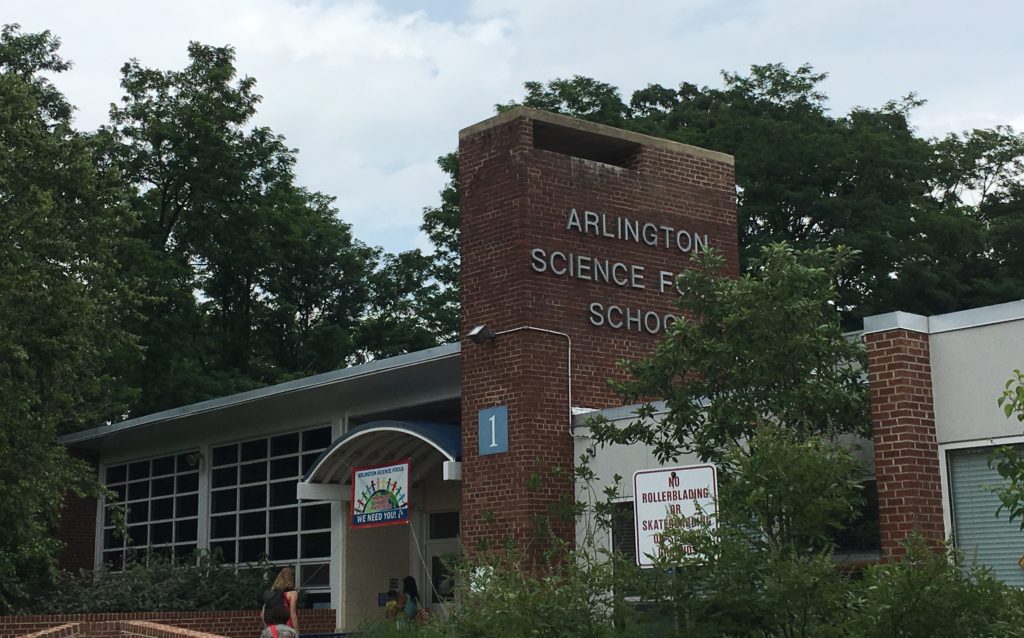
County school officials are reassuring nervous parents at Arlington Science Focus School that a state-of-the-art science lab, built thanks to nearly $200,000 in private funding, will be included as part of a controversial building swap with the Key Immersion School in the next few years.

Arlington Public Schools is still sorting out the logistics of the move, which is designed to ease overcrowding at both buildings and address the fact that ASFS is the only neighborhood school in the county to sit outside its own attendance boundaries. The school system has yet to even nail down an exact timetable for the swap, with the change on tap for either 2020 or 2021.

But the building swap is already prompting criticism from parents, including several who have spoken at recent School Board meetings to register their frustration with the process. Superintendent Patrick Murphy has said he does not intend to seek the Board’s approval for the change, arguing it’s within his power to authorize the change on his own.

Among the issues raised by parents is what will become of the ASFS “Investigation Station,” a science lab the school added in 2015. The school’s Parent-Teacher Association successfully raised more than $177,000 to fund the lab over the course of a year, and was described by the school system at the time as a tool for students to “explore the natural world with the aid of hands-on learning tools and cutting-edge technology.”

While there are plenty of details left to be worked out about the swap, APS spokesman Frank Bellavia told ARLnow that “Board members and administrators have assured ASFS staff and families that we recognize that moving equipment and other teaching materials will be inherent in any building move for both schools.”

It remains unclear, however, just how the process of swapping the buildings will actually work. APS has yet to work up a cost estimate for the process, and Bellavia said that “it’s still too far out” to know how much work on each building will be required to retrofit each school’s equipment to its new home.

“Questions about the building swap will be addressed as part of the community engagement plan that will be developed and shared with the community in January 2019,” Bellavia said.

In a memo from APS staff in response to School Board questions on the swap, staffers suggested that the school system could “refresh” each building ahead of the change, rather than shelling out for a full renovation.

Notably, Key’s current building has room for about 100 more students than ASFS, and school officials plan to add additional trailers at the Science Focus site to make up for the difference. The staff memo also notes that ASFS’ “two science classrooms will be converted back for regular classroom use” ahead of the swap.

Superintendent Patrick Murphy reassured parents at the Board’s meeting last Thursday (Oct. 4) that APS would continue to engage with the community about the issue. But the school system is also hoping to sort through its contentious elementary school boundary process first, meaning that more detailed discussions of the Key-ASFS swap will have to wait until next year.

“There still needs to be a lot more information and perhaps background around the rationale for the recommendation and I know staff will be doing that from late winter into the spring,” Murphy said.


The ever-contentious process of setting new elementary school boundaries is picking up steam in Arlington, with the school system spending the next few weeks collecting community feedback ahead of a School Board vote before the year is out.

Arlington Public Schools will hold an “open office hours” with planning staff tonight (Oct. 3) to let parents discuss the proposed boundary maps, and will accept online comments on the redrawn boundaries through next Wednesday (Oct. 10).

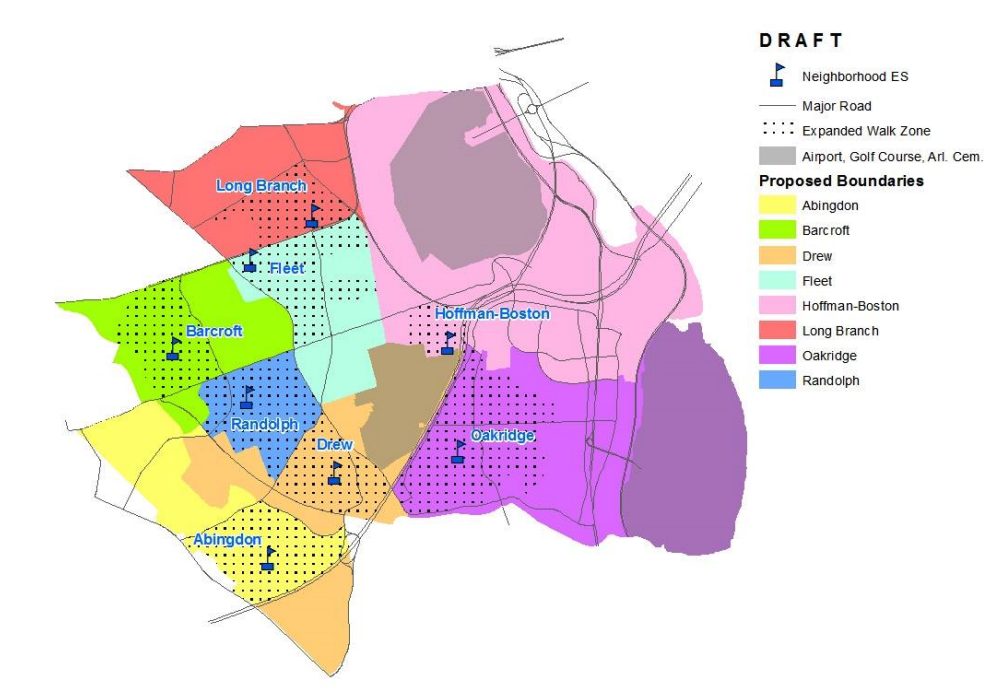
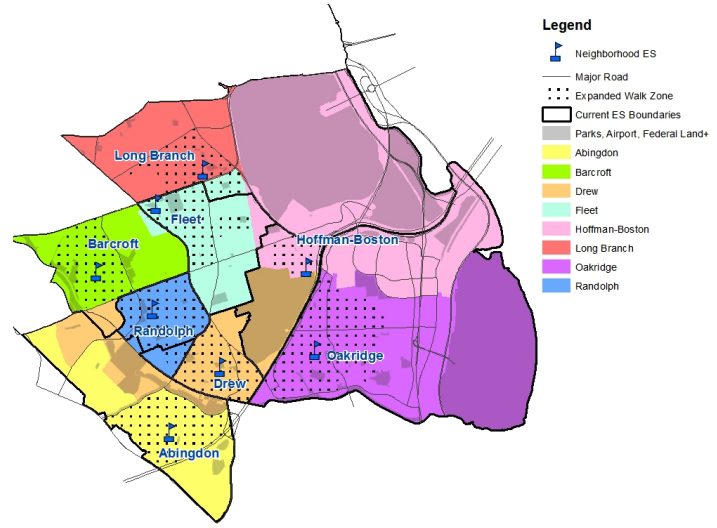
This latest boundary adjustment, designed to accommodate the opening of Alice West Fleet Elementary School ahead of the 2019-2020 school year, is set to impact a total of eight elementary schools in all. The current list proposed by staff includes:

  • Abingdon
  • Barcroft
  • Drew
  • Fleet
  • Hoffman-Boston
  • Long Branch
  • Oakridge
  • Randolph

Abingdon, Barcroft and Long Branch are also set to be impacted by boundary changes in the fall of 2020, as will 12 other schools.

But, in the meantime, school officials hope to sort how to best tweak boundaries around the South Arlington elementary schools, in order to equitably reduce overcrowding and move students into Fleet in an orderly way.

Current estimates show that five of the schools involved in the process will see substantial decreases in student populations as part of the change. Abingdon, Barcroft, Long Branch, Oakridge and Randolph are all currently over their designed capacities, and all will see population drops by anywhere from 13 percent to 40 percent.

Even still, some parents are wary of the proposed boundaries, particularly those with students at Drew Model School.

Miranda Turner, a parent who lives in Drew’s attendance zone in Nauck, told ARLnow that she was particularly concerned that the school “seems to get the short end of the stick” under the current proposal.

“It’s really complicated, and I get that… but, in a world that involves necessary trade-offs, it’s not clear to me that there are any tradeoffs here to make up for the negatives,” said Turner, who has two kids currently in the school’s Montessori program and a third who could someday attend the school.

Turner is primarily concerned that the proposed changes would mean that Drew students could advance to three different middle schools, instead of just one, which might separate students from classmates they’ve befriended over the years. She chalks up part of the problem to the way the new boundaries extend out a bit to grab areas that won’t be within walking distance of Drew, another disturbing factor to Turner.

She also notes that the school system’s data show that Drew would see its possible population of students eligible for “free and reduced price lunch,” a measure of their families’ economic means, jump up to 83 percent.

The school system presents figures show that 85 percent of students at the school are currently eligible, but Turner points out that’s only because APS staffers aren’t considering the demographics of the Montessori program, which features students from much wealthier backgrounds. Drew officials reported in October 2017 having just over 51 percent of its students eligible for free and reduced lunch, when considering the whole population.

With the Montessori program set to move to Patrick Henry Elementary School next year, Turner feels the current boundaries are a missed opportunity to keep the school’s current demographic mix a bit more like it looks currently.

“This change is going to make Drew one of the most low-income schools in Arlington, where it’s relatively balanced right now,” Turner said. “And that’s going to present real challenges when it comes to things like funding the PTA.”

APS planner Robert Ruiz isn’t sure that such a comparison is wholly appropriate, however. The figures APS staff are using in the boundary process represent the possible universe of students who are eligible to attend Drew by dint of living within its boundaries, but they could end up heading elsewhere. Meanwhile, the 51 percent figure Turner is pointing to is indicative of the students who actually attend Drew in practice, so it’s no guarantee that the change will be as drastic as the one Turner describes.

By the school system’s data, Drew’s attendance zone would actually see a 2 percent decline in the number of students eligible for a free and reduced price lunch. It’s a drop that Lisa Stengle, the APS director of planning and evaluation, points out is a small one, but could always change the more planners talk to the community and Board members.

“We’re really still working through and talking to the Board about: are there other options?” Stengle said.

Turner is hoping that school officials will listen to some of the Drew community’s concerns, perhaps by leaving some students in the Columbia Forest neighborhood set to be sent to Drew remain zoned for Abingdon instead. She’s well aware that tinkering with the current map in any way will prompt a domino effect for other neighborhoods, but she’s hoping that APS will be able to come up with a proposal that presents fewer problems for Drew, specifically.

“There is no answer that will make everybody happy, but we think there are improvements that can be made,” Turner said.

The open office hours are set to run from 7-8:30 p.m. tonight at Kenmore Middle School. The Board is also planning to hold a work session on the issue on Oct. 10, where APS officials are hoping to get a bit more insight into what the Board hopes to prioritize.

A public hearing on the boundaries is set for Nov. 27, then the Board plans to pass a new map on Dec. 6.


Arlington may spend slightly more on school construction than some of the county’s peers around the D.C. region, but a long-awaited audit report suggests that the school system has done a decent job holding costs down in recent years.

Prepared by an independent firm for the School Board’s internal auditor and released today (Monday), the new analysis commends Arlington Public Schools for matching other dense urban areas like Alexandria and D.C. when it comes to the cost of new school construction. The audit found that the county does tend to spend more on architectural and engineering work than some of its neighbors, but analysts chalked up that discrepancy to Arlington’s challenges finding space for new schools.

APS has earned plenty of criticism for its spending on construction projects in recent years, particularly after a state analysis showed that the school system spent significantly more on the new Wakefield High School than other counties around the state did on comparable projects. The Board hired an internal auditor, John Mickevice, in 2014 as debate raged across the county about the costs of major construction efforts of all sorts, and he commissioned this review of costs last October.

In general, the audit found that the school system is hardly perfect when it comes to managing big projects — for instance, the analysts note that Arlington’s lengthy public engagement process does inevitably tend to drive costs up — and includes some suggestions about how APS might streamline some of its design and acquisition practices. But it also does not contain any sweeping indictment of the school system’s methods, finding that Arlington has often paid less per seat for its elementary and high schools than its neighbors.

“Even with our challenges, this shows we’re still in the ballpark with everyone else,” School Board member Barbara Kanninen, the chair of the Board’s audit committee, told ARLnow. “This idea that somehow we’re too extravagant is simply not confirmed… and it is a little bit validating.”

In all, the audit found that the county’s high schools cost less to build than nine of the 14 other schools around the region that analysts examined. The firm, Bethesda-based O’Connor Construction Management, primarily focused on schools in Loudoun County, Fairfax County, D.C., Alexandria and Montgomery County, Maryland.

For instance, the group found that the new Wakefield High School, opened in 2013, cost a total of $118.6 million, or about $60,500 per seat. Meanwhile, the new Wilson building (set to open next year and house the H-B Woodlawn and Stratford programs) will cost around $101 million, or $130,300 per seat.

For comparison, similarly sized high schools in D.C. ranged in cost from $129,000 per seat to $248,000 per seat. High schools in Montgomery County ranged from costs close to $51,900 per seat to $76,500 per seat, while Loudoun’s cost hovered between $51,800 and $59,800 per seat.

Fairfax County had the lowest costs of the bunch, with prices ranging from $33,100 per seat to $40,400 for new high schools.

The audit found similar trends in elementary school construction costs.

Arlington paid about $64,000 per seat at the new Discovery Elementary School, and is set to finish the new Alice West Fleet Elementary at a cost of $62,500 per seat. D.C. schools ranged in cost from $100,000 to $124,000 per seat, while Montgomery came in at $41,400 to $65,100 per seat. Loudoun’s schools ranged from $27,900 to $34,300 per seat.

But the analysts noted that Fairfax, Loudoun and Montgomery all benefited from working with considerably more open space than similar projects in Arlington or D.C. Not only has that forced the county to pay significantly more to build underground parking structures at some schools, but APS can’t simply replicate the same school designs at each site.

“APS does not have the luxury of developing uniform design specifications, due to the dense urban location of its schools,” the analysts wrote. “Thus, each school is designed to meet the particular needs of the community’s students.”

As Kanninen puts it, the school system can’t simply take a design “off the shelf” and use it over again the exact same way — the audit estimates the additional design work can bump up the costs of Arlington’s projects by as much as 1.5 percent of the total construction cost, compared to the county’s neighbors.

That being said, the analysts found that “the increased staff involvement — in time and resources — during the community engagement process” does also tend to edge the county’s costs a bit higher. But they also awarded APS high marks for its energy efficiency standards, which should help generate savings in the long term.

The report recommends a whole host of new contracting practices for APS to adopt, and suggests that the school system tweak some of its methods for buying things like school furniture.

Kanninen says the Board plans to take a close look at all of those recommendations, particularly one suggesting that APS emphasize “value engineering” throughout the design process to keep costs down. She added that the Board specifically asked the analysts to include those recommendations for changes in the report, which delayed its release slightly.

School leaders had initially hoped to have the audit in hand this summer, prompting some grumbling about the report’s delay, but Kanninen wants to assure the community that were no ulterior motives at play.

“People think we were trying to figure out how to pitch this story, but that was not the case at all,” Kanninen said.

Kanninen, the Board’s lone member up for re-election this year, said she is acutely aware that the subject of school costs has become a hot-button political issue. Even though she expects the report won’t quiet all the school system’s critics, she hopes it reassures taxpayers that their money is being well spent.

“There are always going to be people who believe we’re spending too much… but I think it’s going to lend some confidence to the community that we’re spending wisely,” Kanninen said. “The School Board took this proactive step to look into this and it’s a positive thing. There’s a lot to be proud of here.”

Now, county and school leaders are trying to schedule a joint meeting of their respective audit committees to discuss the report in more detail, according to County Board member John Vihstadt. As co-chair of the county’s audit committee, he hopes to use that gathering to gain “a collective understanding of the audit findings and look to collaborative next steps to address them.”

Photo via Arlington Public Schools


(Updated at 4:15 p.m.) The Arlington Young Democrats are weighing a new push to convince the county school system to change its sex education policies, though state law could limit the scope of their advocacy.

The concern of some of the group’s members is that Arlington Public Schools still includes abstinence as part of its “family life education curriculum,” a focus that researchers believe does little to address teen pregnancy or the spread of sexually transmitted infections. Any eventual lobbying effort could center on urging the School Board and Superintendent Patrick Murphy to do away with any mention of abstinence in APS sex education, and concentrate primarily on contraceptives and sexual health instead.

The specifics of what changes the AYDs may ask for and how they might advocate for them is still unclear, however. Tania Bougebrayel, the group’s president, told ARLnow that “sex education policy is on our agenda of important issues this year” and members are still “gathering information” before launching a formal effort in the coming months.

Yet the group could well run into one important roadblock: the strictures set by state law.

Virginia’s “Standards of Learning” gives school systems some latitude to design their own sex education curricula, but it does come with basic requirements they all must meet — among them is an emphasis on “abstinence education” and “the value of postponing sexual activity.” And as school spokesman Frank Bellavia points out, “APS does not have the ability to change state SOL curriculum that is set by the commonwealth.”

“However, we do broaden the scope to be more open and to teach more comprehensively,” Bellavia said. “For example, when the SOL states, ‘abstaining until marriage,’ our instruction also references ‘mature/committed relationships,’ not just marriage. Families also receive a letter annually in the first day packet and have the ability to ‘opt-out’ of any part of the FLE curriculum.”

However, Graham Weinschenk, a Yorktown High School alum who has worked with the AYDs in the past, believes the school system may have more flexibility than it’s letting on.

He’s tracked the issue of sex education closely since working with local state lawmakers to introduce legislation on the subject, and he points out that the Board agreed to revise its FLE policies just this June. The Board agreed to remove a good many of the details from its old policy in favor of broad guidelines, giving Murphy the chance to create a new “policy implementation plan” and sketch out new specifics in the coming months.

“Arlington is kind of at a pivotal moment, and I think [the AYDs] can do a lot in shaping that policy,” Weinschenk said. “There’s more room to make changes now than there was under the old policy.”

Bellavia said staff are currently working on the policy specifics, and they “don’t have a timeline for when it will be completed.”

But Weinschenk is optimistic about the prospect of committed advocacy making a difference in bringing more “medically accurate sex ed” to Arlington. He fully expects that APS could remove any mention of abstinence from its curriculum as part of the policy revision process, noting that the state standards for sex education “are really just guidelines.”

Such a change would be well worth the effort, in Weinschenk’s mind. He points to research suggesting that even mentioning abstinence in sex education classes “undermines the entire process” by sending mixed messages to students” and can stigmatize students who are having sex.

“I totally understand that it makes complete logical sense to at least mention abstinence, I hear that from parents all the time,” Weinschenk said. “But if you look at the science and believe the science, then we shouldn’t have this in our program.”

That’s part of why Weinschenk worked with lawmakers to introduce bills last year to remove references to abstinence in the state guidelines. But with Republicans controlling both chambers of the General Assembly, that legislation has yet to make it out of committee.

Weinschenk is hopeful that he’ll have more success in next year’s legislative session, especially with Democrats just one seat short of a majority in both chambers, but he believes local action is the surest path toward progress in the near term.

Depending on the exact avenue the AYDs decide to pursue, such an effort could require the backing of the School Board, and there’s no telling how they might lean on the issue. For her part, Board member Barbara Kanninen, the lone member up for re-election this year, said through a spokesman that she supports “the Young Democrats’ advocacy at the state level for factual, inclusive, best practice teaching,” but wouldn’t address efforts at the local level.

Weinschenk acknowledges that these changes can be difficult, even in progressive communities like Arlington, but he expects politicians and parents alike could eventually be convinced.

“This problem seems solvable, so I’m trying to solve it,” Weinschenk said.

Photo via YouTube


Lubber Run Project Budget Boosted — “Arlington County Board members on Sept. 22 agreed to add about $1.4 million to the budget for rebuilding Lubber Run Community Center, which will push the construction cost to $41.14 million and the management fees to $4.11 million.” [InsideNova]

Clarendon Circle Construction Begins — “Things will start looking different in Clarendon and not because of too many cosmos at Don Tito’s. The long-awaited Circle intersection improvements project kicks off today.” [Twitter]

Neighborhoods Want in on W-L Name Discussion — “The president of the Buckingham Community Civic Association thinks Arlington school leaders may need some remedial work in geography. Bernie Berne used the Sept. 20 School Board meeting to complain that his community had been shut out of the committee set up to suggest new names for Washington-Lee High School, even though it is closer to the school than another civic association that has been included on the panel.” [InsideNova]

Fire at Columbia Pike Building — On the 5100 block of Columbia Pike: “First arriving units found a fire contained to an appliance. The fire was extinguished. All occupants are safe & accounted for.” [Twitter, Twitter]

Tree Advocates Increase Pressure — “Another month has brought another round in the ongoing dispute between tree activists and the Arlington County Board – and much of the give and take on both sides is beginning to sound familiar to the point of repetitious. Activists in support of expanding the county’s tree canopy were among a number of advocacy groups that descended on the Sept. 22 County Board meeting. Among their chief complaints: The county government hasn’t done anything to prevent the removal of trees during an upcoming expansion project at Upton Hill Regional Park.” [InsideNova, Twitter]

Fox News Highlights Lucky Dog — Arlington’s Lucky Dog Rescue continues to get national attention for its work rescuing dogs from areas flooded by Hurricane Florence. Over the weekend Fox News broadcast from Shirlington to bring attention to the dogs that are now available for adoption. [Yahoo]


The School Board is warning of more tough budget times ahead for the county’s school system.

In a memo to Superintendent Patrick Murphy to be discussed at the group’s meeting tonight (Thursday), the Board urges Murphy to be wary of the fact that the county’s planned revenue transfer to Arlington Public Schools “is not sufficient to meet our critical needs” as “cost pressures” for the system only continue to increase.

The school system only narrowly avoided class-size increases as it set its last budget, thanks to the County Board finding some additional money to keep classes at their current levels. But as APS gears up to start the budget process for fiscal year 2020, the Board expects that, as the school system opens five new schools and programs over the next two years, the change will “increase baseline operating costs significantly.”

“We anticipate that, as budget deliberations continue, additional funding for APS’s critical needs will be a top funding priority,” members wrote.

As Murphy works up his new budget, the Board is also directing him to “if possible” avoid additional class size increases, and find funding for other cuts the school system was prepared to make if the county hadn’t come through with the additional revenue last year.

“No new, major initiatives should be presented,” the Board wrote.

The Board expects that its decision this year to cut back on devices offered to second graders will save some money, and it’s also directing Murphy to “explore longer-term strategies for efficiencies, such as collaboration with the county on swimming pools reimbursement and Transportation Demand Management funding.”

County Board members have frequently spoken about their commitment to finding more money for schools, yet the county’s own tight budget picture, brought about by complications stemming from the Metro funding deal and persistently high office vacancy rates, will likely complicate the debate. County Manager Mark Schwartz has repeatedly warned that more tax hikes will likely be on the table in 2020 and beyond.


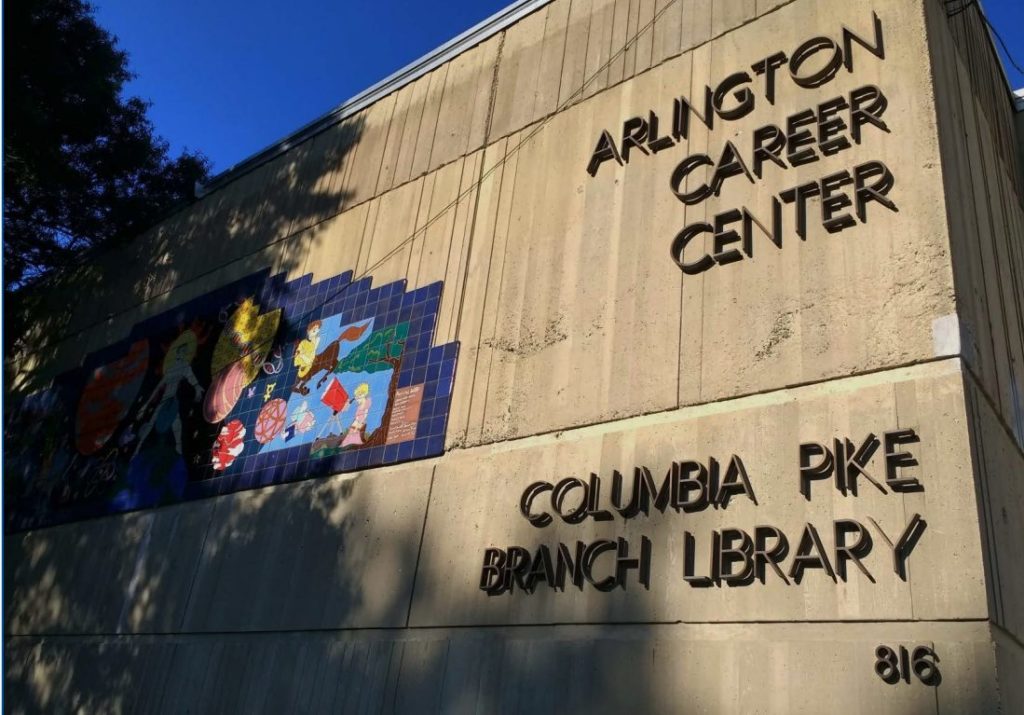
The Arlington Career Center could someday be home to more students than any of the county’s three comprehensive high schools, but a group studying the site is urging school leaders to keep the campus open to all students countywide for the foreseeable future.

Within the next decade, Arlington Public Schools plans to add 800 new high school seats at the site to meet the demands of an ever-growing student population — but there are still endless details to be worked out around how to accomplish that task, and what the center’s long-term future might hold. After nearly a year of deliberations, a working group convened by the School Board is attempting to provide some answers with a final report released last week.

Though the 35-member group can only offer recommendations to the Board, the report repeatedly reiterates the value of the center accepting students from across the county as an “option school,” at least until APS can build enough amenities on the site to match Arlington’s other three high schools.

“All Arlington students, regardless of the type of school they attend, deserve an educational experience that includes quality indoor and outdoor spaces, including access to (un-programmed) green space,” the group wrote.

The Board has yet to make any decision on the very thorny question of whether the Career Center will be open to students countywide or only draw in nearby students from set attendance boundaries. That’s prompted some fierce advocacy from local parents over the past few months, who argue that making the center a “neighborhood school” without a full complement of facilities and athletic fields would be unfair to South Arlington students.

As part of updating its 10-year construction plan in June, the Board did commit to constructing a multi-use gym, a “black box” theater, a performing arts wing, a synthetic athletic field and a parking garage at the site, all in time for 800 new students arrive in 2025. Yet the “lack of an on-site pool in the near-term” remained a “sticking point” for some members, the group said. The report recommends that APS build a pool on the site at some point, a feature backed by some county officials, but budget constraints make such an amenity unlikely, for now.

Most of all, however, the group expressed “frustration” about a lack of clarity on the option versus neighborhood question, noting that “the distinction in seats would have a direct impact on whether the Career Center site could become a de facto fourth neighborhood high school.”

Whatever the center’s ultimate status, the group repeatedly stressed that school leaders should see the site’s long-term future as a “high school campus.” While APS doesn’t yet know how many students it will need to educate at the center, the group expects anywhere from 2,200 to 2,800 could someday attend school there — for context, just over 2,200 students were enrolled at the county’s largest high school, Washington-Lee, as of this June.

Accordingly, the group recommended that the school system design any changes to the center in a way that “supports potential growth and maintains maximum adaptability.”

APS isn’t sure whether it will someday demolish the current structure in its entirety or simply renovate it to accommodate the new students, but the group wrote that staff repeatedly assured them that “utilizing the core structure of the Career Center is the most environmentally friendly approach and one which can lower construction costs by up to 20 percent through limiting the amount of demolition required.”

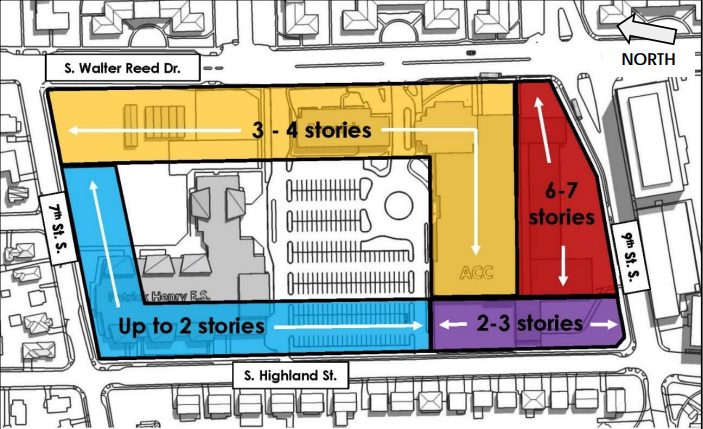
However, the group does suggest that APS knock down some structures currently used for career and technical education classes, in order to free up space for a new, six-to-seven story “multi-level education space” near 9th Street S. and S. Walter Reed Drive. Those classes would then be moved to a new structure built along S. Highland Street.

The report also recommends adding a third floor “on top of the existing Career Center building for classrooms,” which could then connect to the new S. Highland Street structure.

Looking a bit further into the future, the group also urged APS to someday relocate the Columbia Pike Branch Library from its current home within the Career Center.

To do so, it suggests that the county acquire some properties owned by the Ethiopian Community Development Council just behind the center, running along S. Highland Street from its intersection with 9th Street S. to where it meets the pike. The group wrote that the nonprofit has already “signaled an interest in selling to the county,” and the land could help Arlington to build an expanded library on the site that “fronts Columbia Pike” to increase its visibility.

Ultimately, the group envisions that such a change would be transformative for the area, and it reasons that Arlington Economic Development officials could take the lead in pulling in developers, local universities and even art groups to chart a new future for the property. And it helps that all of those entities “could provide financial support necessary to acquire and develop” the properties, which surely won’t come cheap.

Photos via Arlington Public Schools


View More Stories