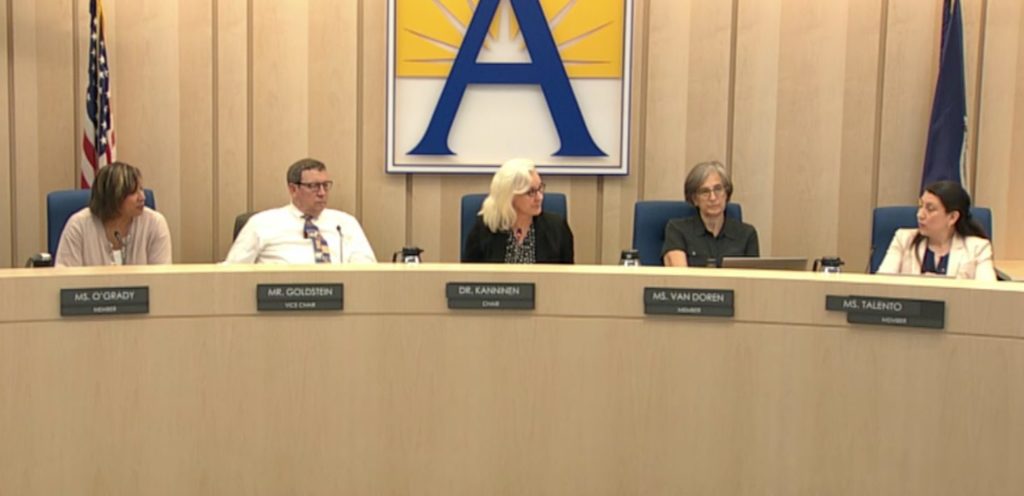
A new capital spending plan for Arlington’s burgeoning public school system calls for adding more than 4,200 seats through 2027.

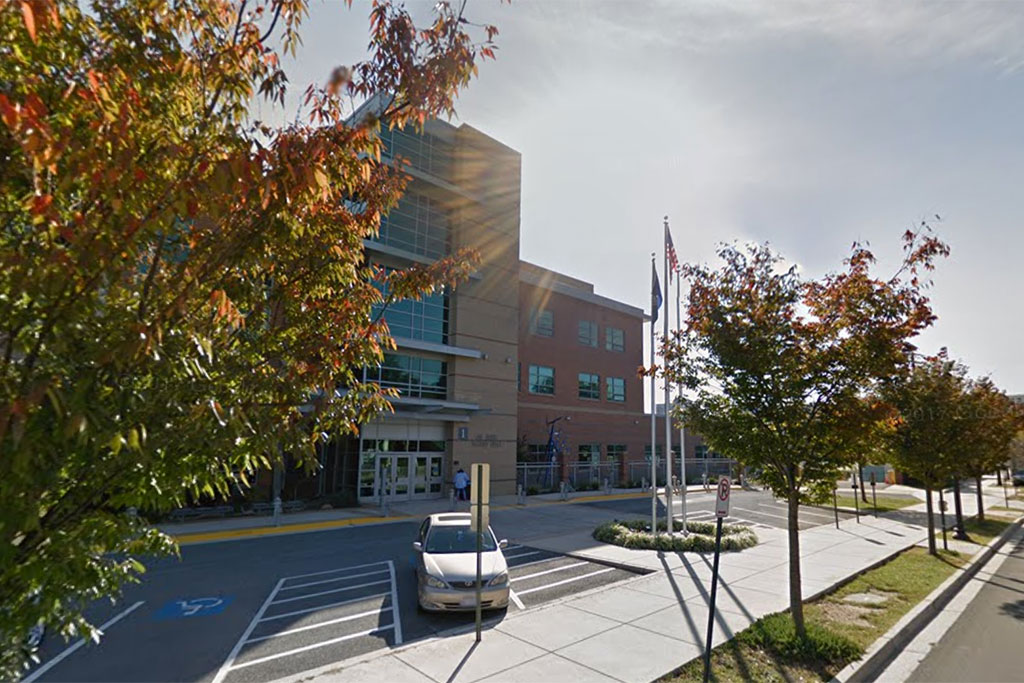
The $631 million construction plan includes a new elementary school at the Reed School site and 1,650 new seats for high schoolers split between the Education Center site and the Arlington Career Center.

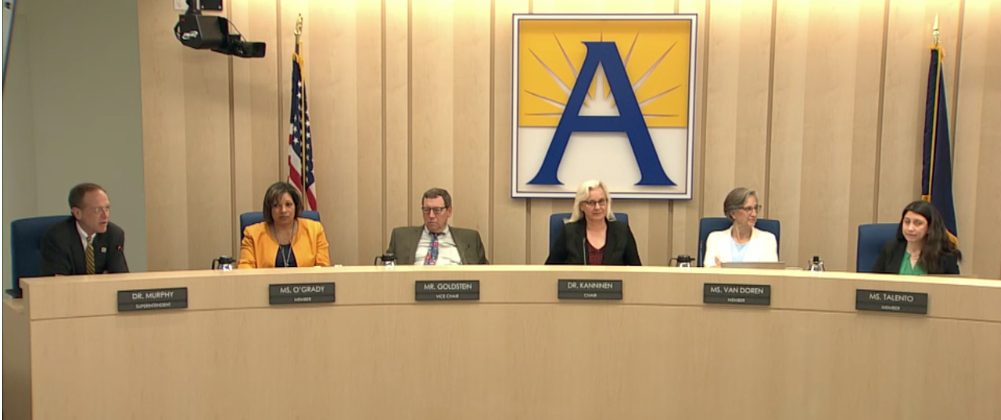
The Board has spent weeks working to strike a balance between the school system’s increasingly tight finances and its ever-rising enrollment figures, resulting in a new Capital Improvement Plan that left Board members optimistic, yet unsatisfied.

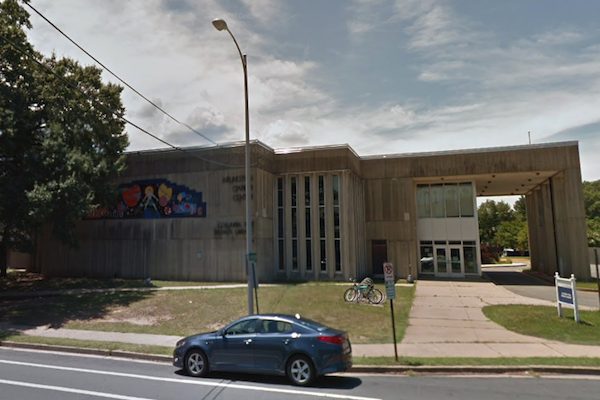
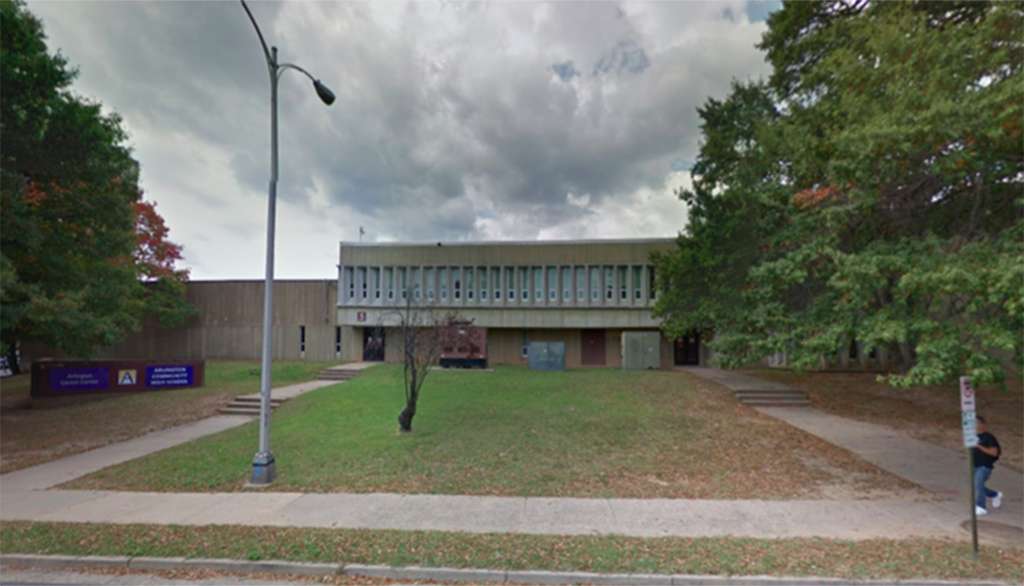
Debate over the plans at Career Center, in particular, dominated the Board’s discussions about the CIP. Parents living near the center, which is located just off Columbia Pike and will someday be home to another 1,050 high school students, raised frequent concerns that APS might not build the same amenities at the site as it has at its three comprehensive high schools.

“With all the pressures on the school system right now, some may say the plan is not perfect today,” said Board member Monique O’Grady. “But I believe it’s evolving in the right direction.”

The Board’s tight financial picture meant that it couldn’t quite meet all the parent requests, but members did work to speed up the construction of some features at the site by re-allocating some of the school system’s capital reserve money.

Under the version of the plan approved Thursday, the Career Center will now include a multi-use gym, a “black box” theater, a performing arts wing, a synthetic athletic field and a parking garage.

The field and parking garage will be constructed in 2o23 to make those features available to students as more high schoolers move to the site. APS will then simultaneously add an 800-seat expansion and the performing arts section in 2025.

That will address some of the concerns raised by local parents, including some who formed an advocacy group focused on the issue. But they remain wary of how the Board will ultimately decide which students attend the Career Center site high school — members have yet to decide if it will be a “neighborhood” school only for students who live nearby, or a countywide “option” school.

“No child should be zoned to this school described in this proposal,” said Christine Brittle, an organizer with Citizens for Arlington School Equality. “Arlington has never had a choice school of this size.”

Board members stress that such a decision is a long way off, and the county’s financial picture could someday improve and allow APS to add more amenities to the site. There’s broad hope among officials that tax revenues will rebound when it comes time for the next CIP update in 2020.

“When the inputs change, the plan will change,” said Vice Chair Reid Goldstein. “The CIP is a plan, not a promise.”

In the near term, the County Board still needs to sign off on the school system’s CIP as part of its own capital spending process.

County Manager Mark Schwartz has previously warned that the School Board was a bit too ambitious in its ask from the county, though at a work session Tuesday (June 19), he suggested the version of the CIP the Board passed “can work… with a few minor adjustments.”

The County Board is set to pass its CIP by July 14.
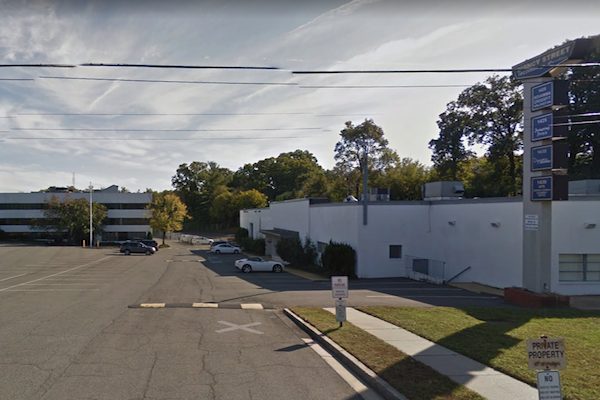

Someday, the Buck property near Ballston could be home to a new school, or for other county-owned facilities or offices — but for now, it’ll merely be used for parking for some school employees.

The County Board voted unanimously Saturday (June 16) to allow the school system to use 48 parking spaces at the site for at least the next two years. The School Board approved a similar initiative on May 30, clearing the way for Arlington Public Schools to park its “white fleet” at the site (1425 N. Quincy Street) and free up some space at the county’s Trades Center.

Arlington Public Schools struck a similar deal with the county last month to let some school bus drivers park their personal vehicles at the garage near Barcroft Park, as APS continues to buy more school buses and fill up its parking lots. This latest change would involve moving vans, SUVs and pickup trucks normally used by the school system’s maintenance workers over to the former Buck property, located just across from Washington-Lee High School.

“This is not a long-term vision,” said Board Vice Chair Christian Dorsey. “This is our management of a space that was always acquired with the purpose of being a piece of the puzzle in making sure the county can deal with its facility and infrastructure needs… How do we do something in the interim that’s reflective of using that investment wisely?”

The county agreed to shell out $30 million to buy the six-acre parcel back in 2015, and planners have spent months studying potential uses for the site. While officials have long hoped to use it for additional parking, the Joint Facilities Advisory Commission has considered a litany of other options as well, like building new APS office space, an additional 911 call center or even a new school on the property.

Yet County Manager Mark Schwartz revealed in his latest 10-year plan for construction spending that the county won’t have much money to spend on the Buck site. In all, his proposed Capital Improvement Plan calls for just $3 million in spending to make some minor improvements on the property, rather than moving ahead with any major changes.

Accordingly, that means the site will be open for APS parking, in the short term at least. The new lease agreement between the county and the school system will let APS use the site for the next two years, with the potential for six one-year renewals after that.

The move did meet with some community pushback. Some neighbors spoke at the County Board meeting and two different School Board meetings to express concerns about traffic noise at the site, particularly because workers will likely be arriving at the lot quite early — John Chadwick, the school system’s assistant superintendent for facilities and operations, noted Saturday that some employees will be at the parking lot as early as 3:30 a.m.

But Chadwick pledged to work with the community to mitigate any adverse impacts from this new arrangement. Additionally, School Board members stressed at their May 30 meeting that they hope the move is merely temporary, given the property’s potential to house a new school someday.

“Given the pressure on the school system to build new schools, I think there are many people that are hopeful that we’d begin exploring this site… to at least consider for a school,” said Board member Nancy Van Doren.

County staff noted Saturday that they’re currently conducting a technical and engineering analysis of the site, and that includes the property’s potential to someday serve as a home for new classroom space. They plan to wrap up that work this winter.

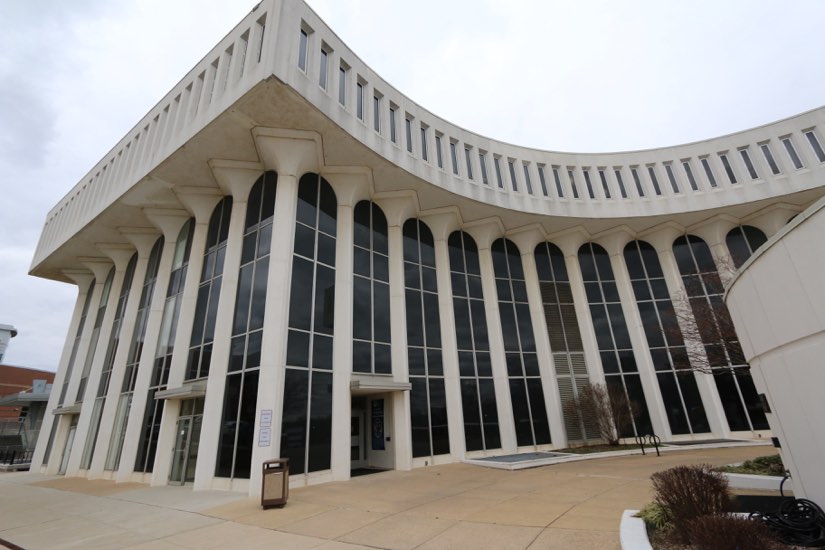
Photo via Google Maps


(Updated at 3:25 p.m.) There may be a way to satisfy parent demands for equitable amenities at a new high school program near Columbia Pike — but it comes at a cost.

The School Board is nearing a vote on a new Capital Improvement Plan, which will guide the next 10 years of school construction, and that means time is running out for officials to tinker with plans for the Arlington Career Center. The site will eventually be home to an additional 1,050 high school students, but the Board has yet to settle on just how it will move forward with building on the property.

Parents in the nearby Arlington Heights neighborhood, in particular, have expressed concerns about how many athletic fields and parking options will be available at the Career Center, particularly when compared to the county’s other high schools.

Under the version of the CIP the Board reviewed at its meeting last Thursday (June 7), the school system would build an underground parking lot at the site with a synthetic field on top — but that will only happen in 2026, two years after space for 800 students is set to open up at the Career Center.

For some parents, such a delay seemed worrisome, particularly as students search for open field space for sports. Accordingly, the Board reviewed a plan at a work session Tuesday (June 12) that would ensure the garage and field get built by 2023, pushing off the 800-seat expansion, and simultaneous construction of a performing arts wing, until 2025.

“The community really needs us to define what wrap-around supports we’re going to provide there to make it an equitable experience for high school students,” said Board member Nancy Van Doren.

The plan would also address some of the Board’s funding concerns. Initially, Arlington Public Schools was set to pay for all this construction using bonds, a process that would’ve piled up more debt than school budget minders are usually comfortable with. This revised proposal calls for APS to shell out $24 million from its capital reserve fund to help pay for the Career Center work, cutting down a bit on the school system’s debt load and shifting the reserve money from future elementary and middle school projects.

Board members did express some consternation about drawing down a reserve fund so substantially — Vice Chair Reid Goldstein suggested he had plenty of “heartburn” over the prospect that the Trump administration’s tariffs on steel and aluminum could jack up construction costs in the future, meaning those reserves could come in handy down the line. Yet most expressed a willingness to embrace the proposal, all the same.

“I see the tradeoffs,” Van Doren said. “But we need to fund as many seats as possible out of our own pocket right now.”

That’s because the County Board has its own money troubles to worry about, and likely won’t be able to help APS fund additional school construction.

(more…)


The Arlington School Board has kicked off a process to rename Washington-Lee High School, aiming to settle on a new moniker for the school before the year is out.

The School Board voted unanimously at its meeting last night (June 7) to approve a change to the school system’s approach to naming school buildings. Though the policy will apply to all current and future county schools, it specifically stipulates that the Board should select a new name for Washington-Lee, given Confederate Gen. Robert E. Lee’s legacy fighting for the cause of slavery.

The Board has been considering a name change at the school since last summer, when a violent white supremacist rally in Charlottesville sparked a national conversation about Confederate symbols and prompted calls in the community to change the name. Yet the Board opted to revise its whole policy around school names, rather than just change Washington-Lee’s moniker specifically.

But with the new policy passed, the Board will now move forward with a three-month long process of finding a new name for W-L, which has borne the same name since it opened in 1925. Board members are set to pick a committee to deliberate on the name in September, and could vote on a change by December.

“Celebrating your school pride should not mean having to wear a shirt like this one that honors a person who may not share your values,” said Board member Monique O’Grady, while holding up a W-L t-shirt. “As we become a more diverse community, we must become more open to the perspectives of many, and how holding onto some elements of our past can have an impact on our future.”

The decision will undoubtedly come as bad news for some W-L alums. A number of graduates from the school have publicly objected to the move, both at Board meetings and in community demonstrations. Corey Stewart, chairman of the Prince William Board of County Supervisors and a candidate for the Republican nomination for U.S. Senate, has even spoken out on the issue, in keeping with his defense of other Confederate symbols around the state over the last year or so.

“This implicitly would vilify virtually every southern family from the Civil War, in perpetuity,” said George Dodge, a W-L alum who spoke at the meeting.

But Board members stressed that they also heard frequently from parents interested in seeing the name change, fearing that Arlington Public Schools is sending the wrong message by so prominently honoring a man like Lee.

“If we continue to honor Lee the symbol, we continue to honor a set of values that has nothing to do with what Arlington is today,” Natalie Roy, a parent of APS students, told the Board.

(more…)


A group of parents who could someday send their kids to a new high school program at the Arlington Career Center remain frustrated by the school system’s plans for the site, and they’re planning a new effort to make their voices heard.

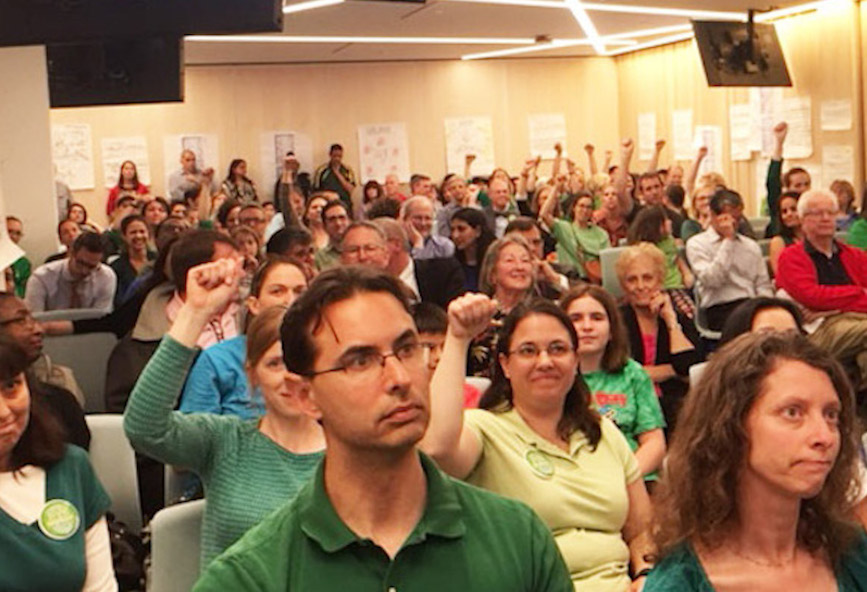
Concerned parents, largely hailing from the Arlington Heights neighborhood around Columbia Pike, are banding together to form a new nonprofit called “Citizens for Arlington School Equality.” The organization, which will lobby the School Board to include a broader range of amenities at the school site, is planning to kick off its efforts with a march from Patrick Henry Elementary School to the Board’s meeting tonight (June 7) at the Syphax Education Center (2110 Washington Blvd), with a rally to follow.

The Board has yet to finalize just how it will build 1,050 new high school seats at the Career Center, but it is nearing a consensus on a new Capital Improvement Plan that would dictate how the construction proceeds over the next decade. A final vote on the plan is set for June 21, but the Board seems to be nearing agreement on a proposal to build the seats by 2024. Under the proposal, amenities at the site would include a multi-use gym, a “black box” theater, a performing arts wing, a synthetic athletic field and a parking garage, all to be added by 2026.

Yet that plan has done little to satisfy some Arlington Heights parents, who are concerned that the Career Center site wouldn’t offer the same features as the county’s other comprehensive high schools. They’re particularly concerned that the Board’s proposed design would fundamentally disadvantage students who live near the Career Center in South Arlington and are most likely to attend the new program.

“I want this for my kids, but I want to make sure I live in a county that cares about the education of all kids equally,” Jennifer Milder, the parent of two students attending Henry right now and one of the new group’s organizers, told ARLnow. “And the needle has moved very little on the inequality spectrum so far. There are still not adequate fields, still not adequate parking, or an adequate gym.”

Board members have spent plenty of time wrestling with how they can beef up amenities at the site, and examined several plans that would’ve added more amenities to the program and sped up their construction so they were available as the facility opened its doors.

But all of those proposals would have put a serious strain on the school system’s finances and were ultimately cast aside. Even the Board’s current plans will strain Arlington Public Schools’ borrowing capacity, and the county’s similarly challenging financial picture means the County Board may not be able to help, either.

Yet Milder and some her fellow parents believe both boards should view fully funding amenities at the Career Center site as a priority important enough to force a re-ordering of the county’s long-term construction plans.

“The county is doing all these things to attract businesses and people to Arlington, then not backing it up by supporting students they’re bringing here,” said Megan Haydasz, another Arlington Heights parent involved with the new group.

(more…)


(Updated at 4:40 p.m.) Arlington school leaders believe they’ll need plenty of help from the County Board to build enough schools to keep pace with a rapidly growing student body over the next decade — but the county’s own financial pressures will likely limit just how much it can lend a hand.

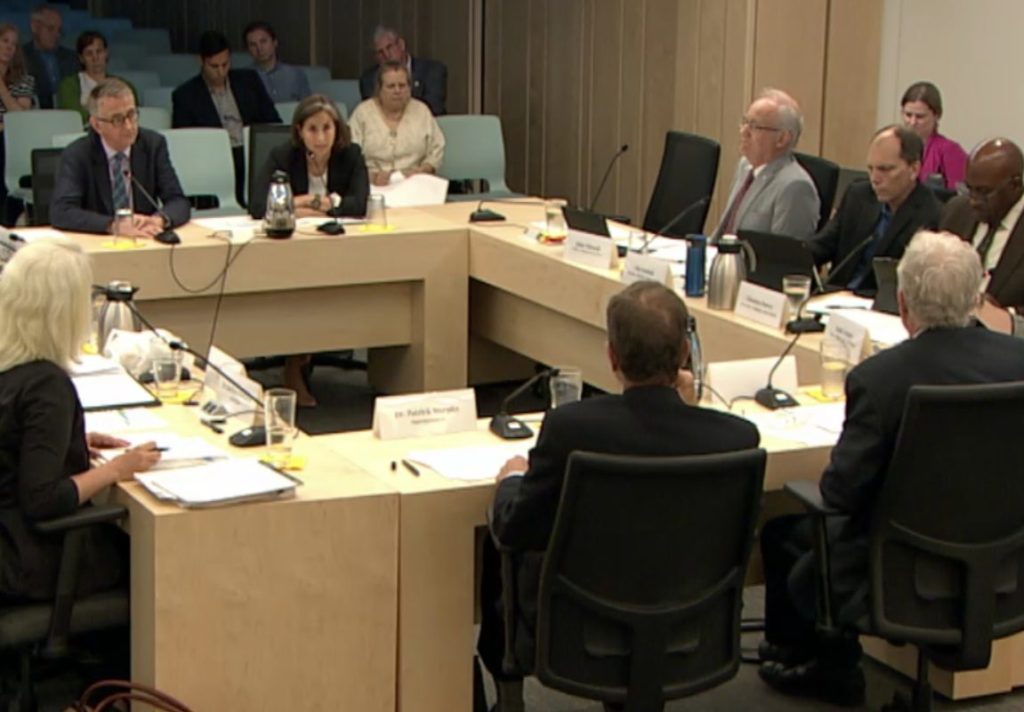
The School Board and County Board convened for a joint meeting on Tuesday (May 29) as officials pull together their respective capital improvement plans, documents outlining construction spending over the next 10 years, in order to better coordinate the process.

Though neither board has finalized its CIP, the School Board is a bit farther along in the process and is currently eyeing a roughly $631 million plan for approval. But to make that proposal more viable, the Board told their county counterparts that they’ll need help in a few key areas: finding off-site parking and athletic fields for high schoolers, taking on debt to build new schools and securing more land for school buildings.

“Given the constraints we have, we have to be very creative,” said School Board member Nancy Van Doren. “And we need help.”

While County Board members expressed a willingness to work on those issues, they’re facing their own problems. County Manager Mark Schwartz’s $2.7 billion proposal comes with hefty cuts to some transportation improvements and neighborhood infrastructure projects, as the county grapples with increased funding demands from Metro and a shrinking commercial tax base.

In all, Schwartz is envisioning sending $396 million to Arlington Public Schools for construction projects through 2028, but even that amount might not help the school system meet its planned building needs.

“The amount of money we have in there for schools does not match the amount of money the schools are asking for,” Schwartz said during a Wednesday (May 30) town hall on the CIP. “They’re asking for more.”

In part, that’s because the School Board has been working to find a way to add more space for high school students a bit sooner than they originally anticipated, and add more amenities for those students in the process.

Members have spent the last few weeks wrestling with how to implement a “hybrid” plan the Board approved last summer, avoiding the need for a fourth comprehensive high school by adding seats to the Arlington Career Center (816 S. Walter Reed Drive) and the “Education Center” site adjacent to Washington-Lee High School (1426 N. Quincy Street). They’ve been especially concerned with how to most efficiently add features like athletic fields and performing arts space to the Career Center site, over concerns from parents that building space for high schoolers without those amenities would present an equity issue.

As of now, the Board is nearing agreement on a plan to build out space for a total of 1,050 high schoolers at the Career Center by 2024, complete with a multi-use gym and “black box” theater. APS would add a synthetic field on top of an underground parking garage at the site two years later.

(more…)


(Updated at 3:25 p.m.) Washington-Lee High School could see its name changed by the end of the year under the terms of a policy change reviewed by the Arlington School Board Thursday night (May 31).

The Board has been mulling the possibility of stripping Confederate Gen. Robert E. Lee’s name from the school ever since last summer’s violent white supremacist rally in Charlottesville sparked a national conversation about Confederate symbols, but members asked school system staff to develop a more detailed policy framework to guide the naming of all buildings first.

Arlington Public Schools officials delivered that proposed change to the Board last night, and members are now set to take action on it by this coming Thursday (June 7).

“We said we’d seek to adopt naming criteria that reflect our values and allow us to judge every potential school name with objectivity,” said School Board Chair Barbara Kanninen. “We have kept these promises… and we’re in a good place. I really like what you’ve brought us. I think it’s going to be a model as other school communities grapple with this issue.”

The new policy, drafted over the course of the last nine months or so, is principally designed to guide Board members as they select new names for the bevy of new school facilities set to open in the coming the years.

It would recommend putting an emphasis on selecting geographical names with “historic or geographic significance to the Arlington community’s history. But if the Board is to name a school after an individual, that person’s “‘principal legacy’ (i.e. the key activity, advocacy or accomplishment for which the individual is most known)” needs to align with “the APS mission, vision, and core values and beliefs,” according to the proposal.

Yet, under those criteria, APS staff also suggested that the Board would need to rename Washington-Lee, given Lee’s legacy fighting for the Confederacy, which championed slavery.

“A lot of people don’t like change and we know that it’s difficult in all aspects,” said Linda Erdos, APS assistant superintendent for school and community relations and the facilitator of discussions around the naming policy. “But everybody kept saying, ‘Diversity should be on the minds of people, the diversity of the people served.'”

Such a change would certainly not be without controversy — some Washington-Lee alumni have been vocally protesting any change to the school’s name, over concerns that such move would tarnish a fixture of Arlington County. Washington-Lee has used that moniker since it opened in 1925, and some alums urged the Board to put the matter to a public referendum.

“The Arlington voters should make the decision, not five persons,” said Betsy Lockman, a W-L alum.

Corey Stewart, chairman of the Prince William Board of County Supervisors and a candidate for the Republican nomination for U.S. Senate, echoed that call in a press conference ahead of the meeting. Stewart made his opposition to the removal of statues of Confederate generals in Charlottesville a hallmark of his failed bid for governor last year, and he dubbed any consideration of renaming Washington-Lee as an example of “political correctness gone rampant.”

(more…)


(Updated at 1:45 p.m.) The Arlington School Board is nearing consensus on a plan to build 1,050 new seats for high schoolers at the county’s Career Center by 2024, with some, but not all, of the features community members want to see at the site.

At a May 22 work session, the Board expressed broad agreement on changes to Superintendent Patrick Murphy’s proposed 10-year construction plan, known as the capital improvement plan. School leaders have yet to finalize these decisions, but Board members signaled an increased willingness to embrace a plan that costs roughly $64 million more than the one Murphy proposed.

The Board has spent the last few weeks grappling with how, exactly, they’d execute a plan members agreed to last summer calling for Arlington Public Schools to add more capacity yet avoid building a fourth comprehensive high school, by adding seats to the Career Center (816 S. Walter Reed Drive) and the “Education Center” site adjacent to Washington-Lee High School (1426 N. Quincy Street).

Murphy originally suggested that APS add space for 600 high school students at the Education Center site and 250 at the Career Center by 2021, then tack on 800 more seats at the Career Center in 2026. That construction would also involve the addition of a multi-use gym and “black box” performing arts theater at the Career Center, but would not include the addition of other amenities parents in the area have been demanding.

The Board was previously considering more ambitious plans to outfit the Career Center site with a full complement of athletic fields and performing arts space. But the increased cost of those options, when combined with how the spending would strain APS’ capacity for taking on debt, seems to be scaring off Board members.

“I wanted to know how we could fast track seats and get all the amenities,” said Board member Monique O’Grady. “I think it’s clear that would put us in a situation where it wasn’t affordable.”

The Board is moving closer to embracing a plan that would bump up the construction of 800 additional seats at the Career Center to 2024, but also calls for the addition of a performing arts wing, a synthetic athletic field and a parking garage to the site.

“It’s very important that we add seats, but also that our seats be high quality,” said Board Chair Barbara Kanninen. “This would be what almost all of our high school students want to see in their school day.”

The Career Center would still not include every possible amenity the community might want to see, like a swimming pool or additional athletic fields, a point the Board repeatedly acknowledged. But Kanninen stressed that students at other county high schools have to travel elsewhere to participate in some sports or specialty classes, and she does not feel that building the Career Center school without those amenities would be inequitable for South Arlington residents.

(more…)


Arlington Public Schools is set to add seats for 850 high schoolers by 2021, but the key question for school leaders now is how, exactly, that construction might proceed.

The School Board is gearing up to award a $2.4 million contract for design work at the “Education Center” site adjacent to Washington-Lee High School (1426 N. Quincy Street), where the school system has planned to add space for up to 600 high school students three years from now. Rather than building a fourth comprehensive high school, the Board agreed last summer on a plan to split new seats between the Education Center and the Arlington Career Center just off Columbia Pike (816 S. Walter Reed Drive).

But the Board is also weighing a plan to use the Education Center site for elementary school use instead, while accelerating the construction of new high school seats at the Career Center. Another option would leave high schoolers at the Education Center, but still accelerate the Career Center seats.

Both plans would let APS build additional amenities at the Career Center site, a notable change as parents in the area raise concerns that students there wouldn’t have the same opportunities — a full complement of athletic fields, for instance — as other high schoolers under APS’s current plans.

“We feel like we’re being told we’re asking for too much by simply asking for equality,” Kristi Sawert, president of the Arlington Heights Civic Association, told ARLnow.

Superintendent Patrick Murphy is proposing a 10-year construction plan that broadly follows the outline of the deal the Board hammered out last summer — he’s suggesting that APS add space for 600 high school students at the Education Center site and 250 at the Career Center by 2021, then tack on 800 more seats at the Career Center in 2026.

That construction would also involve the addition of a multi-use gym and “black box” performing arts theater at the Career Center, with plans to build a new elementary school all the way out in 2029.

Yet, at a May 15 work session, county staff presented the Board with two alternatives.

One calls for moving the 800-seat expansion at the Career Center up to 2024, while simultaneously constructing an addition for performing arts programs. Then, a few years later, APS would add a synthetic athletic field on top of an underground parking garage at the site.

That option would reduce the school system’s reliance on trailers at the high school level a bit sooner, but force APS to delay plans to add more middle and elementary school seats, APS planner Robert Ruiz told the Board.

The other option APS staff developed calls for moving the Montessori program at Patrick Henry Elementary School to the Education Center instead, then sending 500 high schoolers to Henry by 2021.

By 2024, APS would add 800 seats at the Career Center, which would help replace the Henry seats. That option would also guarantee a full range of amenities at the Career Center by 2026, including two synthetic fields, an underground parking garage, a performing arts addition, a gym and a black box theater. Murphy’s current plan only calls for the gym and theater to be built.

However, it would also be about $10 million more expensive than Murphy’s plan, an unpleasant prospect for Board members after APS narrowly avoided class size increases in its last budget.

(more…)


Arlington Public Schools will not offer high school students beginner’s level Japanese and German classes this fall, and some parents and students are speaking out about it.

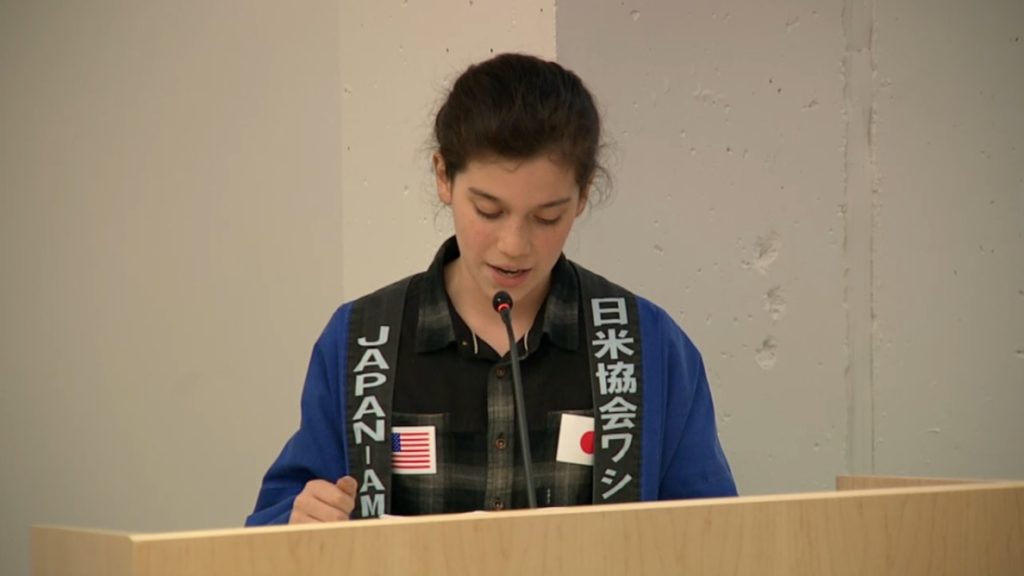
Much of the loudest advocacy has been geared toward supporting up the Japanese classes. Public comments after a world languages presentation at last week’s School Board meeting (May 3) focused on the ways that the Japanese classes have made an impact on students.

“It’s not just a language, it’s not just something people take because they want to get the advanced diploma,” said one student, Juliana Logan. “It’s not an easy language, we take it because we care and we want to learn more about it.”

Another student, Liam Mason, started a Change.org petition that, as of May 4 (Friday), had garnered more than 1,800 signatures over the past week. The petition isn’t clear as to how many of the signers are Arlington residents.

Mason spoke of his strong desire to learn the language, calling the news of the phase out “devastating.”

The demand for Japanese and German courses has shrunk in recent years, according to Arlington Public Schools spokesman Frank Bellavia.

In 2015-2016, 65 students signed up for German and 54 signed up for Japanese. By the next school year, 2016-2017, those numbers dropped to 42 and 37 students respectively.

Though the numbers rose by two students per language in 2017-2018, Bellavia said that the numbers for 2018-2019 German and Japanese enrollment were low. There were 33 requests for German, or six less than in 2017-2018, and 41 requests for Japanese.

Bellavia added in an email to ARLnow that the school system “often [has] attrition from level one to level two… that means that there are even smaller levels at the advanced language level.”

“Therefore, we have decided to use our resources for courses that have a greater level of interest throughout APS,” he said.

Supporters have noted that the reason for the relatively low requests, compared to much more popular languages like Spanish or French (with a respective 2,326 and 673 enrolled students in the last school year), is due to school counselors advising students to switch to Chinese and the lack of a Japanese and German option at the middle school level.

Mason described how many students tend to stick with their middle school language as they advance grade levels, and that German and Japanese are thus dealt an unfair hand during enrollment.

“Counselors have told children to disenroll and it’s not offered in middle school, [yet] numbers are increasing by a surprising margin,” said Mason. His comments continued, stating that he believed that the anticipated larger class sizes would add more students to the program.

According to Bellavia, the advice from counselors came after it was determined that there would be insufficient enrollment for the 2018-2019 school year:

APS counselors do not advocate for one world language course over another. Students were given the same opportunity to select Japanese and German as they were all world languages within APS.  Each year, students select those courses they are interested in taking. Once all of the course requests are approved, school staff review the requests and then determine the number of sections needed for each course.  Each year, there may be some courses for which there is not enough student interest to run the course. Once it was determined there was not enough interest to run Japanese and German for the 2018-19 school year with the current model, counselors advised students that another option would need to be selected.

We are in the process of determining other potential options for offering these languages to those students who are interested.

A committee, Save Japanese in Arlington Public Schools, has been formed by the parents and students, seeking a one year deferment of the decision to allow for community input.

(more…)


The Arlington School Board managed to avoid class size increases in its new budget, but the county’s worsening financial outlook has school leaders warning that future spending plans could include additional painful cuts.

The School Board voted unanimously Thursday to approve a roughly $637 million budget for fiscal year 2019, though board members expressed plenty of trepidation about the document.

“This was a very difficult year, and I think we’re going to have a few more difficult years,” said board member Tannia Talento. “The things we were able to save this year, we may not be able to save next year. We just need to be aware of that reality.”

Just as the County Board has been wrestling with challenges associated with a shrinking commercial tax base and ballooning Metro expenses, Arlington Public Schools officials have been forced to start doing some belt tightening as well. Superintendent Patrick Murphy proposed about $10 million in spending cuts in the budget he sent to the board, targeting areas like employee benefits and planned hires, and he warned that the rapid pace of student enrollment is likely to only make budget pressures more acute in the coming years.

However, the School Board was able to push off the impact of this year’s budget squeeze in some select areas, thanks to an extra $3.2 million in one-time funding the County Board opted to send to the school system as it finalized its budget on April 22.

The School Board decided Thursday to use the bulk of that money — roughly $2.6 million — to delay a bump in class sizes across every grade level for one year, saving 28 jobs from the chopping block in the process. Murphy had originally proposed upping average elementary school class sizes by one student each, with average increases of .75 pupils in each middle school class and .5 students in high school classes.

But using that money to avoid class size increases was not without controversy; it passed on a 3-2 vote, with Vice Chair Reid Goldstein and board member Monique O’Grady dissenting. While neither board member expressed any great satisfaction with those votes, both stressed that they’d rather see the school system save up now to prepare for choppy financial waters ahead.

“I don’t like taking cuts, but the reality is we must do so,” Goldstein said. “Tightening the belt means things are not going to be perfect all the way around.”

Yet board members like Chair Barbara Kanninen argued that keeping class sizes small is “a hallmark of our school system,” justifying the extra spending. Furthermore, she reasoned that the board could use the county’s one-time funding to support such a change because APS wouldn’t be adding any new positions with the money, merely supporting existing employees.

(more…)


View More Stories