

Sponsored by Monday Properties and written by ARLnow,  Startup Monday is a weekly column that profiles Arlington-based startups and their founders, plus other local technology happenings. Monday Properties remains firmly committed to the health, safety and well-being of its employees, tenants and community. This week, Monday Properties is proudly featuring 1000 and 1100 Wilson (The Rosslyn Towers).

One area of the economy that is being disrupted by the coronavirus pandemic, among many, is a group used to being the ones doing the disrupting: startups.

As COVID-19 results in widespread economic devastation, startup founders find themselves having gone almost overnight from a world with abundant funding and plenty of deep-pocketed potential customers, to one in which funding is likely to be scarce and customers — companies and individuals alike — are looking for ways to cut costs, not add new expenses.

Jonathan Aberman, Dean of the School of Business and Technology at Marymount University in Arlington and a long-time participant in the D.C. area startup ecosystem, said that tough times like these often result in a starker contrast between winners and losers.

“The first thing you have to understand is that not every company is going to be affected the same way, because some companies are going to benefit really well from the short term,” he said, citing certain healthcare startups as one example. “In the longer term the economy is going to be changed forever by COVID-19 and the aftermath, in ways we can’t really predict.”

“Uniformly, right now, every business is trying to figure out what the future looks like,” he said. “COVID-19 is such an enormous change agent for how our economy and our society functions.”

One major differentiation factor between winners and losers, according to Aberman, will be product/market fit: whether a given company offers something for which there is strong demand in the marketplace. Whereas prior to the pandemic founders with a bright idea and confidence-inspiring credentials could get funding for the latest Uber-for-something app before actual customers showed up, the new environment will favor scrappy founders who go out and build something people really want.

“With venture capital for the past few years, startups without product/market fit could raise money,” Aberman said. “But if you don’t have a product that is really attractive right now, if you aren’t in a sector of the economy that’s really hot right now, and you don’t have the possibility of being hot in the near term, you have to ask yourself: am I in a war of attrition?”

Startups with few customers and poor funding prospects are ill-fitted for such a world, where only the strong and well-capitalized survive. On the other hand, those making something that’s in need — robots and artificial intelligence that can help do work usually done by humans, for instance, or other products and services compatible with social distancing — should do fine.

“Businesses that don’t have something to sell will not do well, and the businesses that do will find a way,” Aberman said. But that doesn’t mean it will be easy.

“It’s appropriate to use the the ‘D’ word — depression,” for the current economic climate, Aberman said. “I think it will end when there’s a vaccine.”

Entrepreneurs who are in it for the long haul — those who grit it out and are less concerned about getting rich as they are building something great — will find lots of opportunity as the economy rebounds. And those who jump in now rather than waiting for the coast to be clear will have a valuable head start and a leg up when it comes to seeking funding, according to Aberman.

“I expect that there will be enormous entrepreneurial and social entrepreneurial opportunities at the other side of this,” he said.

Additionally, the D.C. area and its startup ecosystem — which is weighted toward less sexy but more reliably lucrative categories like cybersecurity, which get less attention than the latest buzzy consumer startup — is relatively well-positioned going forward, says Aberman.

“We didn’t really participate in all the frothiness of the national venture capital market,” he said. “We never really over-indexed to ‘Facebook-for-cats.'”

The local startup scene “is not just around government,” said Aberman. “It’s around a lot of established industries that will continue to have money.”

Sponsored by Monday Properties and written by ARLnow.com,  Startup Monday is a weekly column that profiles Arlington-based startups and their founders, plus other local technology happenings. Monday Properties is proudly featuring Shirlington Gateway. Say hello to the new 2800 Shirlington, which recently delivered a brand-new lobby and upgraded fitness center. Experience a prime location and enjoy being steps from Shirlington Village, a large retail hub with a variety of unique restaurants and shopping options. Spec suites with bright open plans and modern finishes are under construction and will deliver soon!

As unemployment figures skyrocket in Virginia, lawn care provider Lawn Love says that has translated to a dramatic uptick in Arlingtonians applying to work gigs to maintain an income.

Over the last three weeks, initial filing claims totaled 306,143 which is equal to all of the claims from that period in 2018, 2019, and 2020 combined.

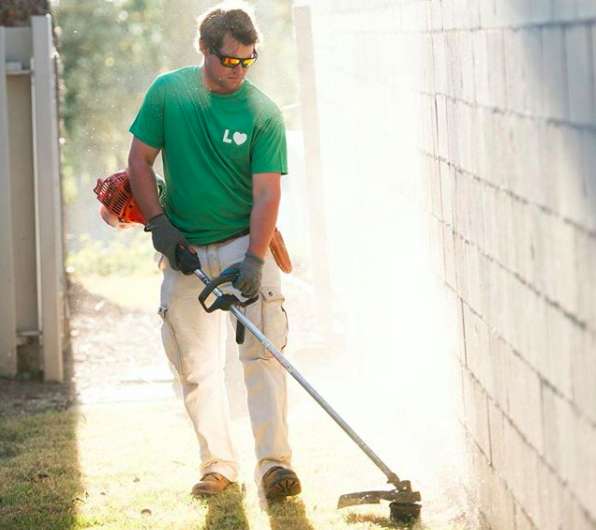
Lawn Love is a California-based on-demand lawn care service — forgive the cliche, but essentially Uber for lawn care. The company connects locals seeking lawn care with independent contractors in the area. The company said applications to work for the service had a dramatic increase in March as the pandemic, and related unemployment, set in.

“Lawn Love has reported a huge increase in applications,” the company said, “with 725% more Arlington residents applying to work with them in March compared to February.”

Lawn Love noted that lawn care services are classified as essential and the service operating entirely over smartphone or computer makes it social distancing friendly.

The average lawn care price listed for Arlington is $61, with the average lawn size being 5,367 square feet.

“If you have lawn care experience, there’s lots of high-paying work available on our platform,” CEO Jeremy Yamaguchi told ARLnow in an email. “We’re focused on helping our lawn care partners stay safe and continue providing for their families by providing a critical service in our communities.”

Photo via Lawn Love/Instagram


Sponsored by Monday Properties and written by ARLnow.com,  Startup Monday is a weekly column that profiles Arlington-based startups and their founders, plus other local technology happenings. Monday Properties is proudly featuring Shirlington Gateway. Say hello to the new 2800 Shirlington, which recently delivered a brand-new lobby and upgraded fitness center. Experience a prime location and enjoy being steps from Shirlington Village, a large retail hub with a variety of unique restaurants and shopping options. Spec suites with bright open plans and modern finishes are under construction and will deliver soon!

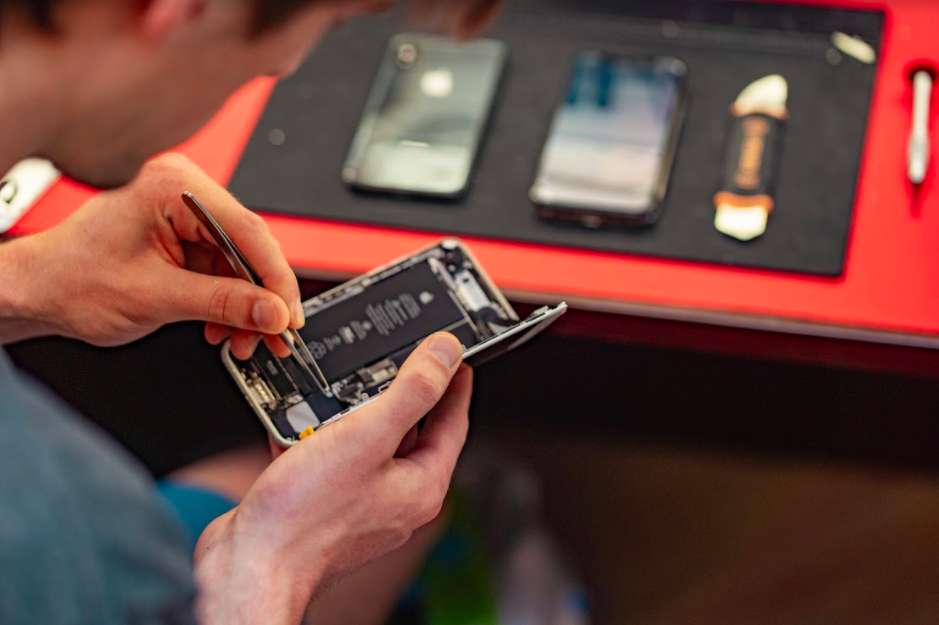
(Updated at 1:55 p.m.) For a while, things at Wireless Rxx (2340 Columbia Pike) were going okay. Owner James Sampson said there was a rush on getting smartphones and other devices fixed the first week of March, and he was able to pay his employees and get them a small bonus.

Like many businesses in Arlington, however, the swift spread of the pandemic and the subsequent social distancing measures caused a sharp downturn by the end of the month, and Sampson was the sole worker left at his technology repair shop.

“Things dipped down so quickly,” Sampson said. “At first I had to furlough one college kid. Others had to let go and show them how to sign up for unemployment.”

Sampson said some of the signs were there early on for him.

“It started a little earlier with problems with the supply chain,” Sampson said. “In China, where our distributors are, Chinese Lunar New Year is the first week of February. There will be a week where you don’t get any shipments. But right after that coronavirus hit and nothing was shipping. It’s been months now where nothing’s shipping.”

Sampson said he started having to tell people that the repair parts for their devices were being held up at a warehouse in New York as impacts rippled down the supply chain. That increased prices too, with Sampson saying he had to raise prices $15 to $20 because of price increased sent down to him.

“I was getting letters from wholesale distributors saying they’re operating at 30 or 40% capacity,” Sampson said. “Because how how globalized economy and world is, it didn’t take too long to affect businesses in the U.S.”

Wireless Rxx is considered an essential business in Virginia and is open. But the store was briefly closed because Sampson didn’t feel comfortable making employees face possible exposure to COVID-19.

Today, it’s just Sampson. Before the pandemic, he said there were usually between 20-30 people walking into the store per day. It’s by appointment only, for now, with a sign in front of the store telling customers to call and set something up. Sampson also does on-the-go repairs now, traveling around Arlington to make fixes. Where he’d have 15-20 repairs a day, though, Sampson said he’s now doing between one and three.

(more…)


Sponsored by Monday Properties and written by ARLnow.comStartup Monday is a weekly column that profiles Arlington-based startups and their founders, plus other local technology happenings. Monday Properties is proudly featuring a rare leasing opportunity at 1101 Wilson Blvd: 5 contiguous floors with exceptional views, building signage opportunity and brand new amenities. Enjoy all the perks of easy access and ample parking; a variety of food trucks at your front door; and enviable walkable amenities. Join YEXT and other leading tech companies at this vibrant location.14

The international coronavirus pandemic has put a brick on the gas pedal for one Ballston startup called GoTab, which was facilitating social distancing before it went mainstream.

GoTab locates nearby eateries and pulls up the menu, allowing customers to place their own orders directly into the business’s system and schedule a pickup. It’s more efficient than phone orders and is less costly to restaurants than delivery services like GrubHub.

“We do think the world is going to more online, it just went more online a lot faster,” said Tim McLaughlin, CEO of GoTab.

McLaughlin said the original design for GoTab was use in-restaurant for things like placing orders on your phone rather than waiting in line. It’s an idea that McLaughlin said is increasingly popular, pointing to Starbucks’ mobile order program. GoTab also benefits from having no need to create a profile or download an app.

Placing orders for takeout and delivery (by the restaurant’s own drivers) was just a side feature of GoTab, but COVID-19 changed that. McLaughlin said while the eventual goal is to get back to in-restaurant use, takeout and delivery orders have taken the spotlight.

“It had always been a feature but not something we sold by itself,” McLaughlin said. “Takeout was not usually the majority of the revenue, it was always something that was bundled along with on-premises. Now that’s changed. Because it’s cost-effective, we just kind of said ‘let’s help restaurants get online quickly and easily.'”

As also reported by Washingtonian, the company is offering its tool for free to restaurants, taprooms, breweries and others that have been affected by COVID-19 related shutdowns.

Seeing heavier use than normal, the website had some technical bumps last week, but McLaughlin said they’ve been worked out. The main struggle has been adapting the tool even further to the extremes of social distancing.

“There’s things that are different now that we’ve had to implement quickly,” McLaughlin said. “People used to come in and talk to the host, but now people are standing outside the restaurant. People might bring [food] out and never exchange cards. It’s clean and low-to-no contact, but in order for that to work, need a way to communicate without face to face.”

McLaughlin said the company took the texting tools utilized already for the hotel side of GoTab and repurposed those for restaurant use.

Even once the pandemic is over, McLaughlin said he thinks there will be an permanent impact on the restaurant industry, and more mobile ordering is going to be a part of that.

“We’re not going back,” McLaughlin said. “There’s a population shift towards using your phone to do that for a whole host of reasons, one of them is that you know your order is right because you put it in. People also don’t want to stand in line… I think this is just going to push it a lot further in that direction. People are going to be fearful for a while about germs and it’s just convenient.”

Photo via GoTab/Facebook


Sponsored by Monday Properties and written by ARLnow.comStartup Monday is a weekly column that profiles Arlington-based startups and their founders, plus other local technology happenings. Monday Properties is proudly featuring a rare leasing opportunity at 1101 Wilson Blvd: 5 contiguous floors with exceptional views, building signage opportunity and brand new amenities. Enjoy all the perks of easy access and ample parking; a variety of food trucks at your front door; and enviable walkable amenities. Join YEXT and other leading tech companies at this vibrant location.

Ballston-based web development startup OpenWater Software has put together a guide for other businesses to replace physical meetings and conferences with virtual ones.

OpenWater CTO Kunal Johar said in the guide that while in-person meetings are invaluable and irreplaceable, a good online meeting can salvage some of what is lost.

“The rising impact of health concerns around the coronavirus is forcing organizations to reconsider, cancel or postpone their annual gatherings,” the company said in a press release. “Because a majority of OpenWater’s customers rely on annual meetings, conferences and summits, they created a downloadable guide and instructional video that shows step-by-step how to transition your physical event into a virtual event using Zoom, or similar meeting tools like GoToMeeting. OpenWater is not affiliated or being paid by either company.”

Johar suggested having one meeting URL per physical room that you would have had at a conference. A spreadsheet can keep track of which host will be running which room with permissions to manage that room on Zoom. These URLs can be published on a company’s site through a link.

In the guide, Johar said to make sure in settings you allow people to join before the host and to auto-mute everyone as they log in and disable sounds.

“As opposed to increasing risks to physical health or completely canceling an event or meeting, virtual conferences ensure that attendees can still benefit and view recordings from any session while keeping their sponsors happy by allowing them to have dedicated virtual sessions or incorporating them in the beginning or middle of a session,” the company said in the press release. “By following this guide, event managers can transition their event to be virtual in one day with ease and without prior tech experience.”

Johar also suggested, in communications with attendees, to include links to how attendees can access refunds from travel and booking companies.

Image via OpenWater


Sponsored by Monday Properties and written by ARLnow.comStartup Monday is a weekly column that profiles Arlington-based startups and their founders, plus other local technology happenings. Monday Properties is proudly featuring a rare leasing opportunity at 1101 Wilson Blvd: 5 contiguous floors with exceptional views, building signage opportunity and brand new amenities. Enjoy all the perks of easy access and ample parking; a variety of food trucks at your front door; and enviable walkable amenities. Join YEXT and other leading tech companies at this vibrant location.

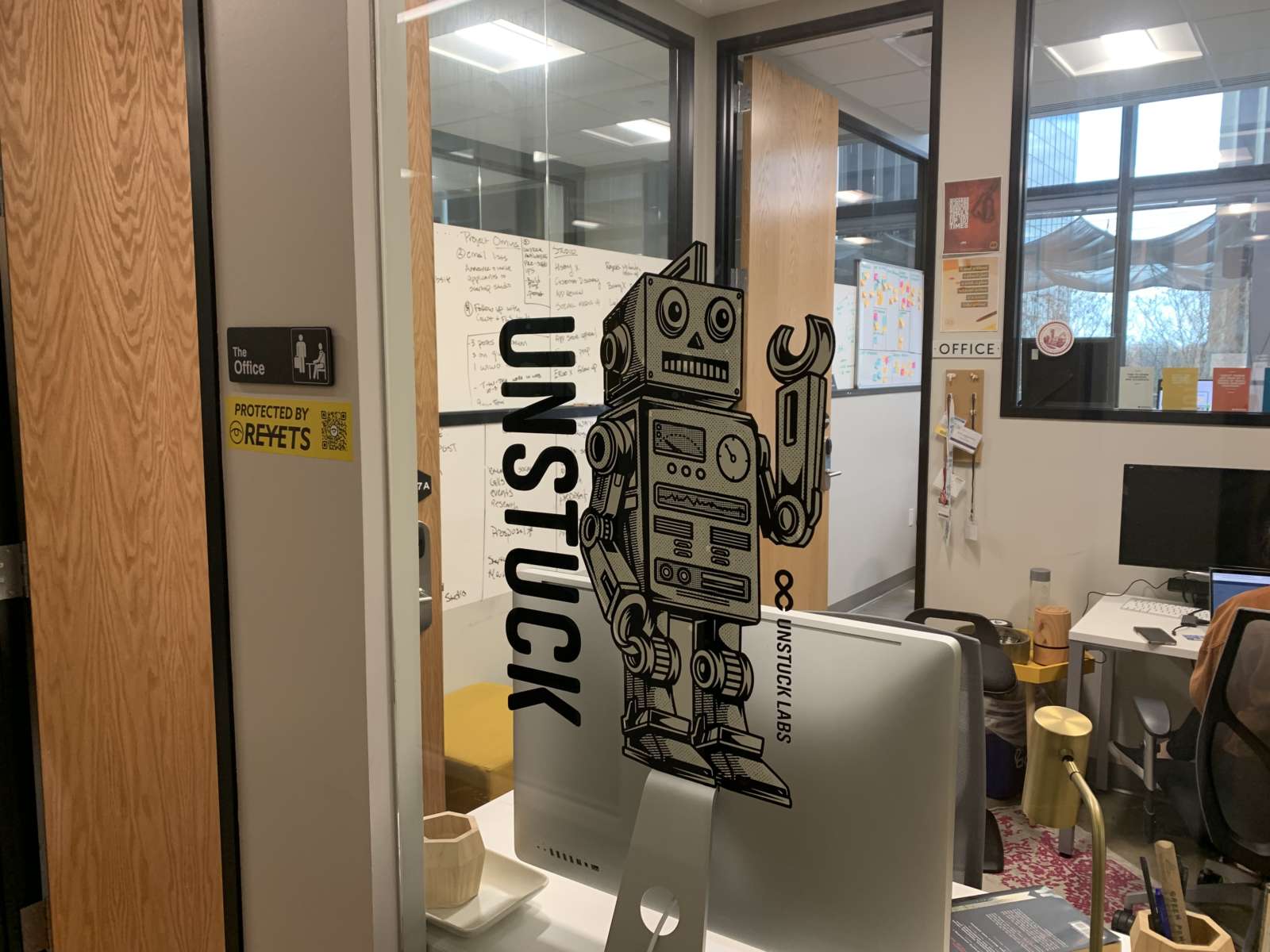
There are a lot of ways not to launch a startup. Unstuck Labs, a small company in Rosslyn, aims to help entrepreneurs avoid the early pitfalls of a new company with a course aimed to walk small companies through the process.

“We’re sort of Yoda for startups,” CEO Wa’il Ashshowwaf said. “Most days, the team here is helping people with modules and helping guide people.”

The company guides startups in a 12-week program. Ten startups have gone through the program and Ashshowwaf said 100% have raised some kind of seed funding and 60% have generated revenue.

The company is based out of Spaces (1101 Wilson Blvd) in what was once the Artisphere. Ashshowwaf said the Rosslyn location means they have good access to bigger companies like defense contractors, small entrepreneurs, and a variety of academic resources.

The course works in 18 building blocks that take entrepreneurs through the methodology of building a company. For the more technically-inclined, the focus might be on marketing, for those with a marketing background the focus might be on how to build a business model.

Ashshowwaf said the entrepreneurs that come to them are generally people who are just getting started or people who have launched a company but have struggled with growth. The startups are typically smaller in scale — Ashshowwaf said there’s a lot of “Uber for something” type companies and startups that bring chefs to people’s houses — while others are people like engineers and doctors who have big solutions for a problem but don’t know how to take that to market.

The number one mistake most new startups make, Ashshowwaf said, is starting with a solution in search of a problem.

“They build an app for tech that they like, but they don’t talk to customers,” Ashshowwaf said. “It’s Thor’s hammer. It’s a product just for you and no one else can use it.”

Unstuck Labs walks entrepreneurs through the technical side of starting up an app or a website, but Ashshowwaf said they also guide them through the business side, like reaching out to potential customers to get feedback and looking at how to scale a project.

Ashshowwaf said Unstuck Labs is different because instead of just giving out tools and reviewing work, the company is very hands-on with helping guide each person through the process.

The course is $9,470 with Unstuck Labs having the rights to invest early, after graduation.

Unstuck Labs is taking applicants for their startup studio. Ashshowwaf said the ideal applicant is someone who is about to lift up the phone and call an app developer.

“They should call us instead,” Ashshowwaf said. “Somebody called us today after they went straight to building a $40,000 website. They should have called us.”


Sponsored by Monday Properties and written by ARLnow.comStartup Monday is a weekly column that profiles Arlington-based startups and their founders, plus other local technology happenings. Monday Properties is proudly featuring a rare leasing opportunity at 1101 Wilson Blvd: 5 contiguous floors with exceptional views, building signage opportunity and brand new amenities. Enjoy all the perks of easy access and ample parking; a variety of food trucks at your front door; and enviable walkable amenities. Join YEXT and other leading tech companies at this vibrant location.

Rosslyn-based tech startup DeepSig recently raised $5 million to help develop artificial intelligence that can effectively integrate with 5G wireless systems.

“The additional funding will accelerate DeepSig’s AI and machine learning (ML) software development and deployment to improve performance and security while reducing power consumption and cost in 5G and other wireless systems,” the company said in a press release.

The company aims to build its AI from the ground up to focus around 5G coverage, rather than adapting decades-old algorithms. DeepSig says its software will be able to detect the local coverage conditions and “improve user data rates and dramatically reduce the amount of hardware and hence power.”

The new funding also shows that the company has caught the eye of some local military contractors, with some of the investment coming from Lockheed Martin Ventures, the venture arm of aerospace contractor Lockheed Martin.

“The advanced technology developed by DeepSig can optimize communications within a wide spectrum environment,” said Chris Moran, vice president and general manager of Lockheed Martin Ventures. “Applying deep learning and artificial intelligence to the application of real-time signal processing is an impressive capability. We are pleased to be a part of this endeavor and work to integrate the software into programs.”

Photo via @deepsignl/Twitter


Startup Monday header

Sponsored by Monday Properties and written by ARLnow.comStartup Monday is a weekly column that profiles Arlington-based startups and their founders, plus other local technology happenings.

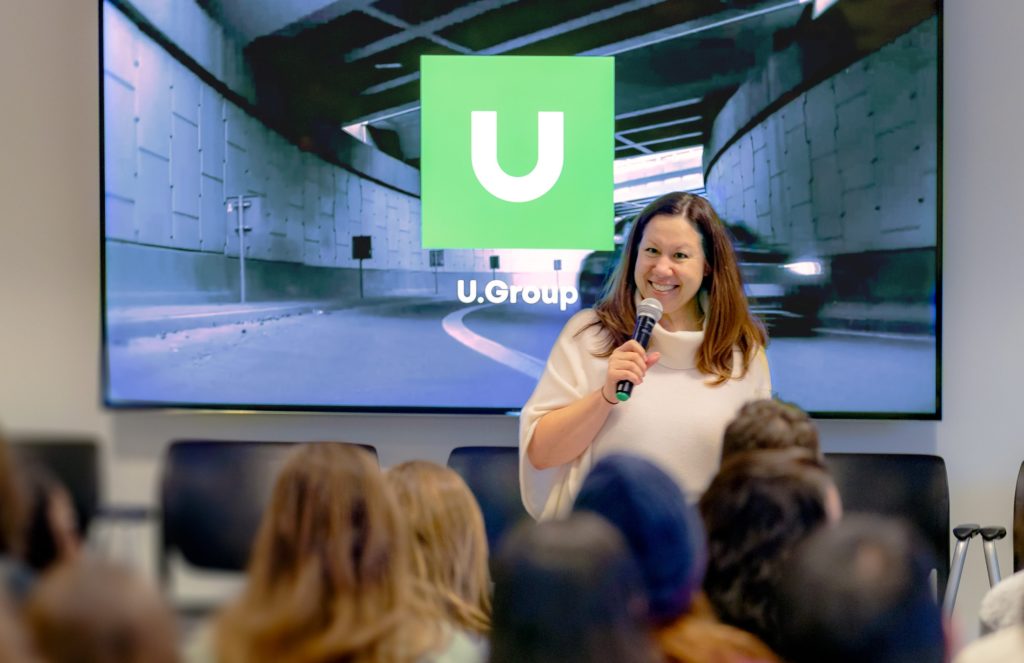
Crystal City-based U.Group (2231 Crystal Drive) is expanding to the midwest with a plan to open an Indianapolis office for over 100 people by the end of the year.

The expansion comes one year after the companies ByteCubed, a consulting business, and digital marketing agency CHIEF merged to create U.Group. The company bills itself as a “digital transformation partner,” which mostly means technology-driven marketing for both private companies and the federal government.

Past projects have included redesigning the National Parks website and designing augmented reality programs for the NFL.

“2019 has been an incredible year for us, and we don’t plan on slowing down anytime soon,” CEO Lena Trudeau said in a press release. “Expanding our operations to a new city enables us to further accelerate our momentum — it will allow us to deliver broader capabilities, deepen existing customer relationships as well as forge new ones, and amplify the impact we create for our customers.”

The plan is to hire 12 people initially with over 100 high-skilled positions opening by the end of 2020, according to the press release.

Another company executive said in the press release that the company was drawn to the mix of tech startups and mature corporations in Indianapolis.

The company is headquartered in Arlington, with a satellite office in Portland, Oregon, and a total workforce of around 280 employees.

Photo via U.Group


Startup Monday header

Sponsored by Monday Properties and written by ARLnow.comStartup Monday is a weekly column that profiles Arlington-based startups and their founders, plus other local technology happenings.

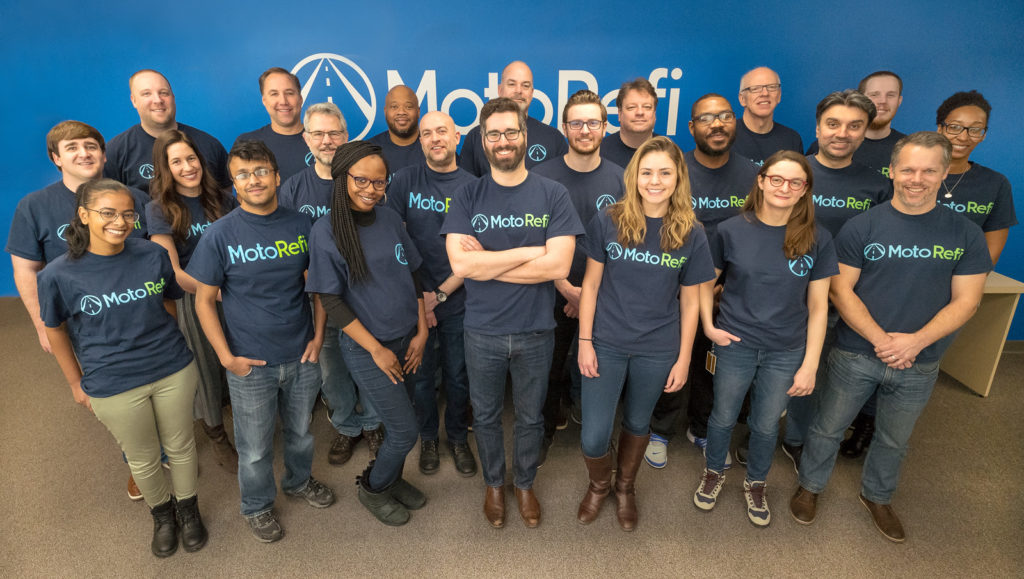
MotoRefi, a Ballston-based car refinancing company, has fueled up with a new batch of funding and welcomed a former Uber executive along for the ride.

The company just raised $8.6 million in Series A funding, an announcement that was paired with news that former Uber executive and D.C.-based venture capitalist Rachel Holt is joining the company’s Board of Directors. Holt was an early investor in MotoRefi but joined the company in an official capacity this month.

“I’m eager to bring my experience building Uber to MotoRefi’s Board,” Holt said in a press release. “MotoRefi is transforming the world of auto financing. I’m proud to have been an early investor and am extremely excited about the team they’ve built.”

The press release noted that the new funding will allow the company to scale up with new lenders and partners.

MotoRefi checks your auto loan interest rate and tries to offer a better rate than what is provided by the dealership, factoring in things like improved credit scores.

“You make payments every month, but do you ever wonder if you could be paying less?” the company said on its website. “That’s where MotorRefi comes in.”

The company, started in 2017, aims to simplify the refinancing process to make it more accessible for the average driver still making payments on their car.

Photo courtesy MotoRefi


Startup Monday header

Sponsored by Monday Properties and written by ARLnow.comStartup Monday is a weekly column that profiles Arlington-based startups and their founders, plus other local technology happenings.

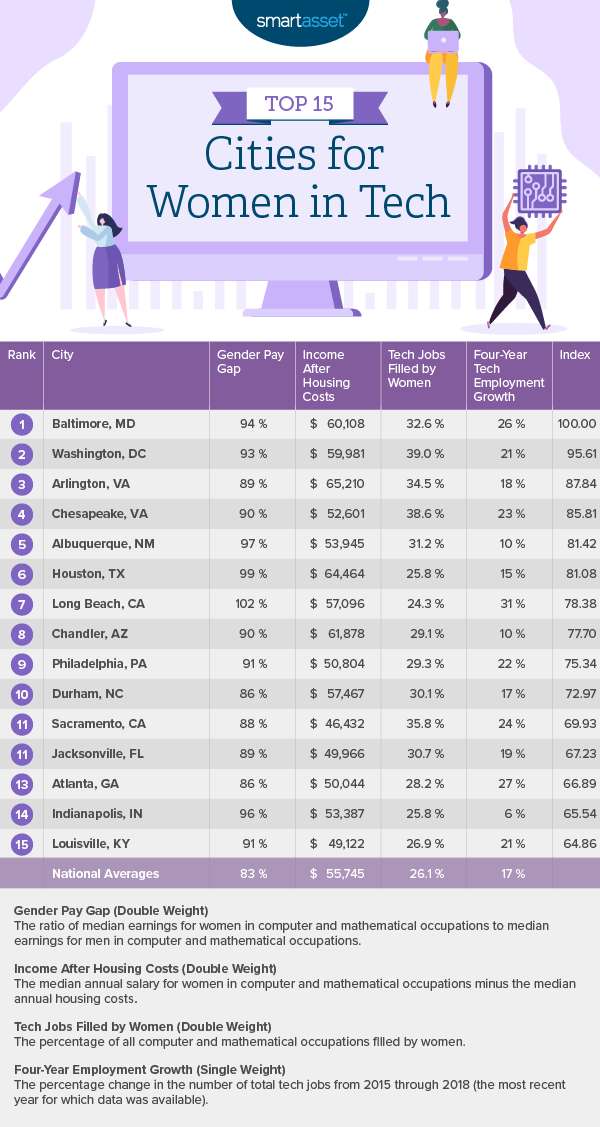
Arlington is the third-best place for women who work in tech, according to a new study.

The website SmartAsset ranked local jurisdictions by looking at a number of factors — including income relative to housing costs, the gender pay gap, percentage of tech jobs filled by women, and the four-year rate of tech employment growth.

Arlington placed No. 3, while D.C. ranked No. 2 and Baltimore ranked No. 1, according to SmartAsset’s methodology. Per the website:

Arlington, Virginia has consistently ranked as one of the most livable cities in the U.S., partially due to its affordable housing costs as compared to income. In this study, we found that average earnings after housing costs for women working in tech were $65,210 in 2018, the sixth-highest amount for this metric across all 59 cities. Additionally, women constitute 34% of the tech workforce in Arlington, which is the sixth-largest percentage in the study for this metric.

In all, 59 of the largest U.S. cities were ranked.

Arlington ranked highly compared to San Jose, California, in the heart of Silicon Valley, mostly due to lower relative tech employment among women and a larger gender pay gap there. San Jose’s gender pay gap of 83% compared to Arlington’s 89%, while 34.5% of tech jobs in Arlington were filled by women, compared to only 21.5% in San Jose.

Sarah Eastman, a co-founder of Boolean Girl Tech in Arlington, said the county’s recognition is “well-deserved.” The company has earned national recognition for its classroom kits and camps aimed at getting young women interested in coding as part of an effort to combat the gender disparity in the tech industry.

“At Boolean Girl, we see it firsthand in our Ambassador Network, a robust community of local women in STEM who volunteer at our summer camps and Clubhouse, providing role modeling and mentorship for our girls as they learn coding, engineering and other STEM skills,” said Eastman. “These women are emblematic of the impressive talent-level in Arlington, as well as the community’s focus on giving back to the next generation, helping girls learn about STEM in a collaborative and welcoming environment.”

There are a number of resources for women in technology in Arlington and the region. Arlington Economic Development has held a number of events focused on helping female entrepreneurs, for instance, while the groups Women Who Tech and Women in Technology are active in the region and hold occasional events.


Startup Monday header

Sponsored by Monday Properties and written by ARLnow.comStartup Monday is a weekly column that profiles Arlington-based startups and their founders, plus other local technology happenings. The Ground Floor, Monday’s office space for young companies in Rosslyn, is now open. The Metro-accessible space features a 5,000-square-foot common area that includes a kitchen, lounge area, collaborative meeting spaces, and a stage for formal presentations.

A Crystal City-based startup that works to integrate energy generated at home with the electrical grid is looking to scale up operations and create a better product, thanks to new some new funding.

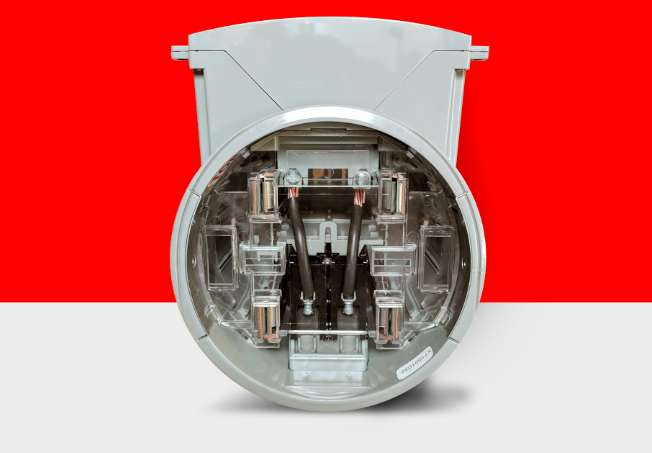
Increasing adoption if electric vehicles and home solar panels have made houses a viable energy generator. Called distributed energy resources (DER), these community-generated energy sources create a two-way power flow and are generally renewable. ConnectDER, based out of Crystal City (2001 Richmond Highway), aims to make becoming a DER more accessible for homeowners.

The Simple ConnectDER is a collar that connects to a home’s circuit. Solar panels can be connected to the collar and the output moderated by the system, which operates parallel to the home’s utility grid.

According to the company website:

The Simple ConnectDER enables three key innovations in the DER installation process: it reduces the time that an electrician or utility representative must be onsite to interconnect the system to less than 10 minutes, it removes the need for installers to enter the residence (in the case of externally mounted electric meters), and it enables easy “swap-in” of future distributed generation resources as they are introduced to the market.  To date, over 5,000 ConnectDERs have been deployed to tie [solar photovoltaic] systems into the US electric grid.

The company also offers over versions of the connector with more advanced features, like an ethernet bridge and cloud accessibility.

ConnectDER recently closed on $7 million in financing.

“The growth of residential-scale DERs such as solar and storage presents an enormous challenge for utilities tasked with integrating them into the grid cost-effectively and with an outstanding customer experience,” Whitman Fulton, CEO of ConnectDER, said in a press release. “At ConnectDER, we’re delivering technologies that can connect and transform these traditionally unmanaged resources — solar, storage, and EV charging–into grid-supporting assets at a fraction of the cost of current practices.”

“This funding underscores the market recognition that ConnectDER offers what utilities need to maximize the value of residential-scale technologies for the 21st century,” Fulton added.

The company will use the new funding to scale up operations and its supply chain, the company said in the release. The company is also looking to enhance the energy storage of the collar. A new version of the ConnectDER device that launched last week.


View More Stories