
Sponsored by Monday Properties and written by ARLnow.com, Startup Monday is a weekly column that profiles Arlington-based startups and their founders, plus other local technology happenings. The Ground Floor, Monday’s office space for young companies in Rosslyn, is now open. The Metro-accessible space features a 5,000-square-foot common area that includes a kitchen, lounge area, collaborative meeting spaces, and a stage for formal presentations.

Andrew Fribush, CEO of Cameral, found through his work on political campaigns in Indiana and Ohio that local races run archaically compared to the way the corporate world functions.

Presidential campaigns have the millions of dollars necessary to hire full tech teams, but local politicians can rarely afford the same luxury, Fribush says. That’s where his Crystal City-based startup comes in.

“You should have the ability to run with the same tools that businesses use to sell perfume,” Fribush said. “Who decides your taxes, who decides your water, who decides everything is far more important than what Walmart is doing. Why don’t they have the same tools Walmart does?”

Fribush says Cameral will help anyone looking to run for office, from the local level to Congress. The company is available to help would-be candidates petition to get on the ballot, and then provides a database with information on every voter in the candidate’s area. Candidates can pay for additional, more in-depth data on those voters if he or she wants to, Fribush said.

Cameral also offers an outreach service, which helps candidates post on social media and send out emails. The company even runs a “marketplace,” where Fribush and his team act as a middle man to help candidates purchase yard signs, even advertising spots. Fribush says he charges a percentage of the candidate’s fundraising generated by those ads, ranging from 5-20 percent of the total depending the size of the campaign.

“Because taking 20 percent of a senator doesn’t bother them, taking 20 percent from a local candidate can really take the lights out from under them,” Fribush said.

Even though Cameral is focused on local candidates, Frisbush says he does have one U.S. senator as a client, in addition to a host of mayors and other local politicians. Fribush says he can’t identify which candidates he’s working with, due to non-disclosure agreements he’s signed with his clients.

Fribush says most of his clients are Republicans, a fact he attributes to the GOP’s recent dominance in state and local politics nationwide, but he represents independents and Democrats as well.

Cameral only launched in 2017 and is still in beta mode, meaning it’s only accepting 25 clients, followed by a wait list. Fribush said he’s debating fully launching the services in time for the 2018 elections, but as the election grows closer he said he’s leaning toward launching it in 2020, where there will be a huge market.

Regardless of when he launches in full, Fribush hopes his company can ignite renaissance of interest in local politics by lowering the barrier to entry.

“My dream is a world where anyone who wants to run for office, whether it’s in Arlington County or anywhere, can just do it,” Fribush said. “The importance of local government cannot be overstated. Local governments in the United States are actually larger than the federal government, if you take them collectively.”

Screenshot via Cameral’s website

Sponsored by Monday Properties and written by ARLnow.com, Startup Monday is a weekly column that profiles Arlington-based startups and their founders, plus other local technology happenings. The Ground Floor, Monday’s office space for young companies in Rosslyn, is now open. The Metro-accessible space features a 5,000-square-foot common area that includes a kitchen, lounge area, collaborative meeting spaces, and a stage for formal presentations.

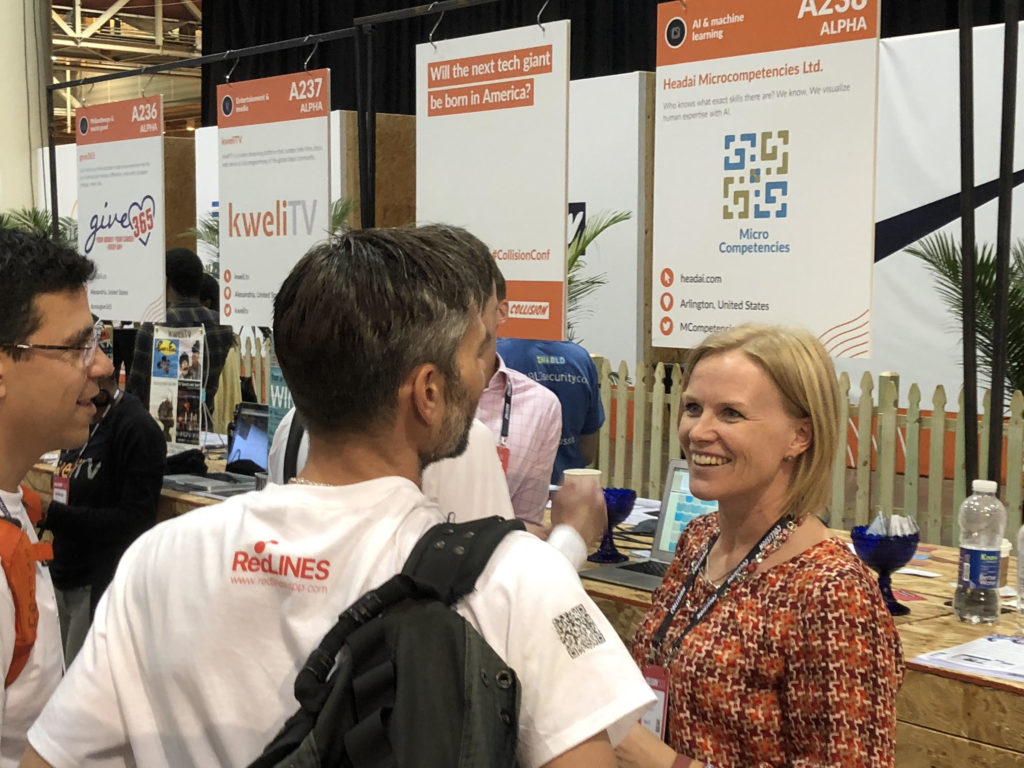
Though based in Finland, HeadAI, an artificial intelligence startup founded in 2015, also has had a commercial base in Arlington since 2017.

“Arlington is a vibrant area. There are new, innovative hubs in the U.S. and Arlington is one of those areas,” said Anu Passi-Rauste, the startup’s head of U.S. business development.

One of the key taglines on HeadAI’s website is to “create artificial labor.” This artificial labor is made possible through teachable software robots that can do everyday knowledge-based jobs. One bot can act as personal assistant learning about a subject of the owner’s choosing while another may use a bot for insights into data.

HeadAI offers multiple services whether through apps or consulting for businesses on the best way to use AI for their companies.

With any new technology, there are questions of about the future — for instance, will AI replace everyday jobs and tasks?

Passi-Rauste said AI will only create new jobs. In fact, she added that AI has only brought on new and better jobs that have helped HeadAI’s customer create more profit.

“Even when we had the hammer, it changed how we do the work, but it always also brought new work and new jobs,” Passi-Rauste said. “AI is actually not killing jobs.”

Besides consulting, HeadAI has two free apps, NewsAI and ExamineAI. NewsAI is a bot that collects news catered to subjects of the user’s interests, while ExamineAI is an AI training course on economics.

Then there’s another service HeadAI offers called Microcompetencies, which uses artificial intelligence to visualize data with maps regarding the supply and demand of job skills within a city, company or region.

“We are creating data and extracting that information needed to create these visualizations how to construct skills, what are the job skills that are high in demand in that area, in the region in the city or in the company level,” Passi-Rauste sa

Within five years, HeadAI wants to automate one billion tasks across multiple industries. But for now, Passi-Rauste just wants to see its services become a scalable model that anyone can use in the U.S.


Sponsored by Monday Properties and written by ARLnow.com, Startup Monday is a weekly column that profiles Arlington-based startups and their founders, plus other local technology happenings. The Ground Floor, Monday’s office space for young companies in Rosslyn, is now open. The Metro-accessible space features a 5,000-square-foot common area that includes a kitchen, lounge area, collaborative meeting spaces, and a stage for formal presentations.

For the last few months, Gymaze has worked to provide Arlington gym-goers the chance to work out at a host of exercise clubs around the region without paying membership fees; now, the company has big plans to encourage people to work out together.

One of the reasons Hakan Yurt says he created the Glebewood-based Gymaze was because he was paying for a gym membership, but he wasn’t going. Similar to New York’s ClassPass, people can use the service to get access to a network of participating gyms without getting tied down.

“Why should I not create a platform that allows me to go to any studio at any time?” Yurt said.

The current model of Gymaze allows users to buy one, five, 10 or unlimited passes to a studio each month.

In a few weeks, Yurt plans to change that model so a single pass to a gym will cost $5, a pass to a class will be $12 and a pass for a session with a personal trainer will cost $50.

Yurt says there will also be a “pool” model, where users can get up to 50 percent off their workout if they bring a friend to any gym or class.

Yurt also wants to address a problem he sees in the workout industry, which is a lack of motivation for gym and class users.

His solution is to partner with local nonprofits, so people can work out for a good cause. For every purchase of a pass, Gymaze plans to allow users to send some of the proceeds to one of a select group of charities.

Some of the non-profits partnering with Gymaze include: Thrive DC, Special Olympics Virginia, Global Giving and Back on My Feet DC chapter.

“We are not here purely for money or profit,” Yurt said.

Beyond that nonprofit partnership, Yurt believes Gymaze’s business model will help it stand out from its competitors. Namely, he notes that (unlike ClassPass) Gymaze doesn’t require users to pay for a recurring subscription, which Yurt said can get costly if a user forgets to cancel.

With the new “pool” model, Yurt also hopes that Gymaze will become the most affordable option on the market.


Sponsored by Monday Properties and written by ARLnow.com, Startup Monday is a weekly column that profiles Arlington-based startups and their founders, plus other local technology happenings. The Ground Floor, Monday’s office space for young companies in Rosslyn, is now open. The Metro-accessible space features a 5,000-square-foot common area that includes a kitchen, lounge area, collaborative meeting spaces, and a stage for formal presentations.

When Sharmi Albrechtsen’s daughter was struggling in math, she tried using robotic toys that taught coding to help.

It was a complete failure.

“I was out $300 and she wasn’t interested in it, said Albrechtsen. “It was difficult to build, difficult to code, and I thought ‘there should be an easier way to get to the coding part of things without building and also something that would engage her.”

Albrechtsen noticed all the female dolls laying around her daughter’s room, and the idea came to her: why not combine a robot and doll together?

In 2016, she created SmartGurlz, later moving the company from Bethesda, Md., to Crystal City in 2017.

SmartGurlz has earned more than $1 million in sales since its inception.

Currently, there are five different female dolls with their own stories. Each character rides a scooter controlled by the user, who codes through the Sugarcoded app. Another SmartGurlz development, the app can be downloaded from various app stores.

The company intends to release a new male doll later this year, around the holiday season, Albrechtsen added.

Though Albrechtsen’s daughter is a little too old to appreciate the doll, she does work for SmartGurlz, goes to coding workshops, and holds in-store demonstrations on the weekends.

“She’s really thrilled about the product and working with us when she can, when she’s not studying,” Albrechtsen said.

Last November, SmartGurlz landed a $200,000 investment with FUBU founder Daymond John, on ABC’s Shark Tank, in exchange for 25 percent ownership of the business. It was a tough eight months, she said, while competing against 40,000 other companies trying to get on the show.

“There were times we didn’t think we were going to be on, then we finally got chosen [it] was amazing,” she said.

After the show, SmartGurlz made between $100,000-200,000 in sales within 24 hours. Customers can buy SmartGurlz on its website, Amazon.com or Walmart.com. Albrechtsen added that she’s working on a special project with Walmart for 2019.

But while strong sales and a Shark Tank spot have been great for business, it’s been tough for SmartGurlz to support its own growth.

“The whole financing game is difficult,” Albrechtsen said. “We have major growth and you have to order products and I would say you get into this difficult area where you’re not able to support your own growth and then you lose opportunities and that’s painful.”

In the future, Albrechtsen wants to brand SmartGurlz as an educational tool, using it in after school programs. SmartGurlz is working with Girl Scouts of America and Black Girls Code with their programs, but the company wants to do more. The company is piloting programs in New Jersey and California and, hopefully, she said, eventually to the rest of the country.

“You’ll see more of an educational side from SmartGurlz in the future, where we’ll be more dedicated to curriculums,” said Albrechtsen. “That’s really the way to make change instead of having something that maybe you play with maybe you don’t.”

Photos courtesy of SmartGurlz and ABC


Sponsored by Monday Properties and written by ARLnow.com, Startup Monday is a weekly column that profiles Arlington-based startups and their founders, plus other local technology happenings. The Ground Floor, Monday’s office space for young companies in Rosslyn, is now open. The Metro-accessible space features a 5,000-square-foot common area that includes a kitchen, lounge area, collaborative meeting spaces, and a stage for formal presentations.

The most difficult part of starting up Lovelytics was coming up with a name, according to its founder, Scott Love.

“You can’t do anything until you come up with a name. You can’t file for an LLC, you can’t create a website, you can’t buy a domain. That honestly took forever, it sounds silly,” Love said.

Luckily, his girlfriend came up with the name “Lovelytics,” and Love was able to begin building his Rosslyn-based business intelligence service after two years working in the industry.

Lovelytics crafts data visualizations for companies to help them to better understand their metrics, and thus make smarter business decisions.

Its customers range from Fortune 100 companies to local D.C. startups and non-profits.

“We can work with anyone who collects data and has a desire to better understand it,” said Love, who serves as CEO.

With a wide range of clientele comes a range of data-driven projects, including a donor and donation tracking service generated for a Virginia non-profit.

The non-profit was then able to reduce the time needed to manage its donations and more quickly gain insights about donation data.

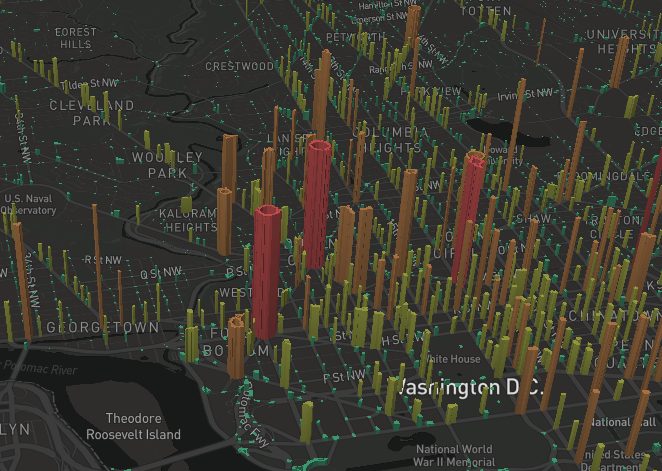
Other Lovelytics projects include an interactive map created with D.C. Open Data that shows which intersections have the most traffic crashes. An example of the map is also pictured below.

Lovelytics will be one of several Arlington startups attending the Collision 2018 Tech Conference in New Orleans.

“It’s a great conference for us because we can be in front of both investors [and] a lot of prospective clients,” Love said.

At the conference, Lovelytics intends to present an interactive map to show conference attendees how far they traveled to arrive at the event, with a scoreboard showing who traveled the furthest.

In the future, Love said he hopes he can work with more government clients and continue building new products and solutions with tools like Mapbox and Tableau.


Sponsored by Monday Properties and written by ARLnow.com, Startup Monday is a weekly column that profiles Arlington-based startups and their founders, plus other local technology happenings. The Ground Floor, Monday’s office space for young companies in Rosslyn, is now open. The Metro-accessible space features a 5,000-square-foot common area that includes a kitchen, lounge area, collaborative meeting spaces, and a stage for formal presentations.

“A robust end-to-end technology platform for financial planning and investments” is being built in Crystal City.

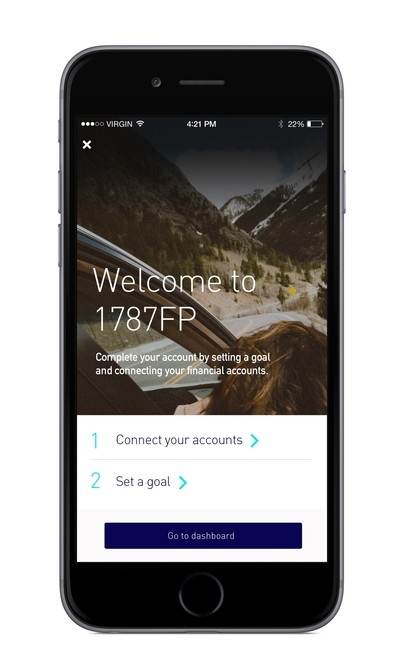
The app, 1787fp, is mobile software that lets the everyday investor manage their finances and work toward financial independence.

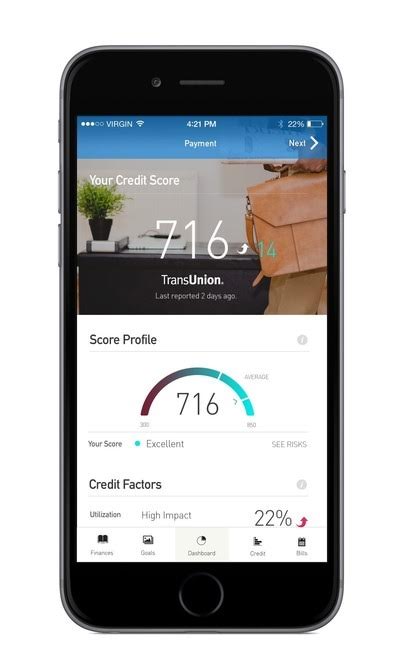
The app contains three components. The first is a free financial planning and budgeting tool. The second, a premium feature, helps users manage and create a financial portfolio. The third is a free service for users to check their credit score.

The premium investment feature will cost users less than what they would pay at a big brokerage firm such as Wells Fargo or Goldman Sachs, but will be more expensive than the lowest cost providers in the financial advisory space.

“We really want to position ourselves as a premium player in helping people plan and work toward financial independence,” said 1787fp founder and CEO Jean Jacques Borno.

Borno said that he hopes his customers are able to build up enough wealth through the app that they only work because they want to, not because they have to.

After collecting research on the average user of financial planning services, Borno found that people were going to seven to eight different websites for their financial planning needs. He hopes 1787fp will become an app that streamlines all those services.

The idea for 1787fp grew out of Borno’s 15 years of working as a financial adviser at Morgan Stanley and Merrill Lynch. At each of the firms, Borno normally worked with clients with at least $1 million in assets. But on the weekends, he began working with clients that were coming out of law school or were engineers — people who had a steady income but definitely not $1 million in assets. Over time he was able to help them build their portfolios.

“I really thought the large companies were really missing a boat,” he said. 

With 1787fp, users will be able diversify their portfolio like a millionaire, Borno said.

“The thing that’s really cool is that the way that we set up the proposals,” he said. “In the traditional world a person would need a million dollars in order to properly diversify but we can give them the same portfolio that the so called ‘billionaire’ would have for their first $5,000 or $10,000.”

Borno got his certified financial planner license and went to the Darden School of Business at the University of Virginia, where he created 1787fp in February 2016.

The name for the app came in two parts. 1787 was inspired by the year the constitution was created, Borno said. And “fp” stands for financial planner.

“I just wanted to get something that kind of paid tribute to the world’s greatest startup — the United States,” Borno said.

The app is not out yet, but a beta version should be released shortly. Then once Borno reviews feedback from the beta version he will make adjustments and then release final version in the summer.


Sponsored by Monday Properties and written by ARLnow.com, Startup Monday is a weekly column that profiles Arlington-based startups and their founders, plus other local technology happenings. The Ground Floor, Monday’s office space for young companies in Rosslyn, is now open. The Metro-accessible space features a 5,000-square-foot common area that includes a kitchen, lounge area, collaborative meeting spaces, and a stage for formal presentations.

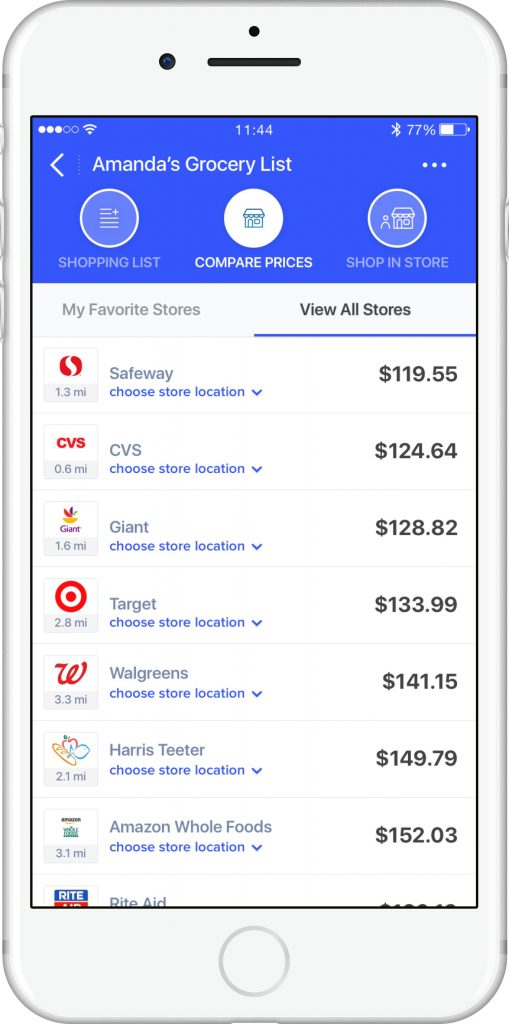
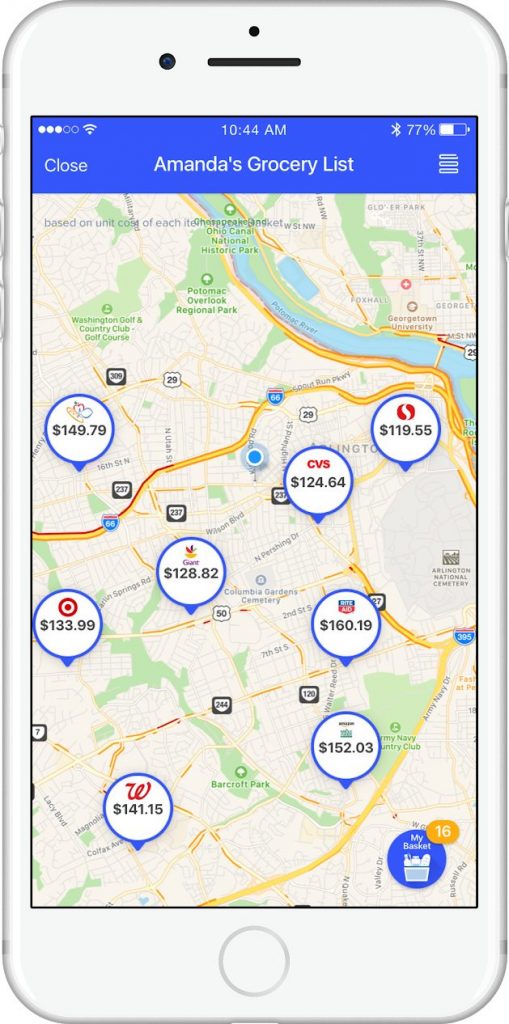
The idea for Basket, a grocery shopping app that compares prices across stores, came to Neil Kataria, the startup’s co-founder, when he was just 9 years old.

Growing up, Kataria would clip coupons with his dad and compare his grocery list across the five stores local to him.

“I just loved doing it. It’s just part of my DNA,” Kataria said. “Why are people overpaying when that information is available? Just takes time to aggregate it and do it right.”

Fast forward to when Kataria moved to D.C. and had his second child in 2013. He comes home late from a trip and lugs in two boxes from Amazon holding 24 items of groceries and baby supplies. The price? $400, he said.

He went to local stores with his Amazon receipt and found that he could have saved 40 percent shopping at those local shops instead. The only problem was that this price comparison process took 12 hours.

At first, Kataria says that five retailers kicked him and his co-founder, Andy Ellwood, out of their stores when the two pitched Basket, Kataria said. Instead, the co-founers turned to user generated content, and created a game to get people to add prices from stores into the app.

“We spent the last three years building that community and being able to collect prices from every grocery store in the US,” Kataria said. “The community piece just started to kick off, to a point where we hit 1 million, 10 million, 100 million so fast.”

Food brands and retailers have now started approaching Basket for its content, which is a way the company can make money since the app does not require a fee to download nor does it have advertising.

Since March, the app now alerts users about sales going on in the store and compares prices with online retailers too. 

The startup began in 2014 in D.C. and then moved to Clarendon in 2016. The company raised raised $12 million in capital and has amassed 600,000 users since the app launched.

In the future, Basket wants to be able to incorporate recipes into the app, with which it could automatically tell users where to buy ingredients across various stores.

Kataria added that Basket wants to transform its in-store shopping experience by creating a list that can cross off items, and possibly be able to pay with Basket and get a 5 percent rebate.

“Seventy percent of people still use a paper shopping list or a text list,” Kataria said. “Our goal is to move that 70 percent and incrementally over to Basket over the next few years and, if we can do just 10 percent of that, we’re going to be really successful.”


Sponsored by Monday Properties and written by ARLnow.com, Startup Monday is a weekly column that profiles Arlington-based startups and their founders, plus other local technology happenings. The Ground Floor, Monday’s office space for young companies in Rosslyn, is now open. The Metro-accessible space features a 5,000-square-foot common area that includes a kitchen, lounge area, collaborative meeting spaces, and a stage for formal presentations.

Arlington-based Storyblocks began its startup journey when founder Joel Holland was just in high school in Northern Virginia working on a web series.

Holland was interviewing prominent business leaders, including former California Gov. Arnold Schwarzenegger, for the series asking what teenagers should choose to do after graduating high school.

“He was sitting down with then Governor Schwarzenegger and did this really insightful interview but the cinematography, if you will, was rather bland. It was just a camera pointed at a tripod pointed at the side of two people’s heads. Not exactly must see TV,” Storyblocks CEO TJ Leonard said.

That’s when Holland researched how companies like the Smithsonian, Discovery and National Geographic produce such high quality documentaries, and the answer was stock video and images. So when Holland went to purchase his own stock video the total rounded up to $1,500.

“Of course for a high school student with no budget that was a total nonstarter,” Leonard said. “So that was the moment Joel said to himself ‘Wow there have got to be more people like me who want access to high quality creative content that’s affordable and I bet in the future there are going to be even more people like me.”’

Storyblocks’ current mission is to empower digital storytellers through high quality affordable stock media, said Leonard. The company has three subscription plans: $49 per month, $149 per year and $198 per year for a premium subscription that allows you to manage up to five “submembers” for free.

The regular monthly and annual plan allow unlimited downloads and usage of content from the member library and a discount on a marketplace of millions of other videos. The free member library has $10 million worth of content across video, audio and images, according to the company.

More than 40,000 people contribute to Storyblocks’ global network of content creators, Leonard said.

Storyblocks has gone through several transformations and one move since its inception in 2009. The startup moved last July from Reston to Courthouse, because it needed more space and wanted to be more accessible to its employees by being so close to the Metro, Leonard said.

Storyblocks began as Footage Firm, which shipped stock footage through the mail via DVDs. Leonard said once the startup realized that DVDs were a “dying medium” it digitized its entire archive in 2012 and changed the name to Videoblocks with an online subscription model.

The company rebranded again in 2017 to Storyblocks when it launched stock services for photos and audio as well.

“So many artists today don’t think of themselves as a videographer per se. They think of themselves as a storyteller. They’ll use skills, they’ll use motion, they’ll use music. They’ll use whatever they need to in order to communicate their vision,” Leonard said.

Photos courtesy Storyblocks


Sponsored by Monday Properties and written by ARLnow.com, Startup Monday is a weekly column that profiles Arlington-based startups and their founders, plus other local technology happenings. The Ground Floor, Monday’s office space for young companies in Rosslyn, is now open. The Metro-accessible space features a 5,000-square-foot common area that includes a kitchen, lounge area, collaborative meeting spaces, and a stage for formal presentations.

Several Arlington startups, including Clarendon-based Adlumin, attended the SXSW conference on technology, music culture and film more than a week ago in Austin, Texas.

Adlumin, a cybersecurity company that uses machine learning to track client behavior and sends alerts for suspicious activity, participated in an AED-organized panel called “War Games: From Battlefield to Ballot Box.” The discussion touched on innovations and changes in the industry.

The discussion touched on innovations and changes in the industry, including trends in how cyber attacks are being perpetrated that panelists have encountered. Adlumin’s CEO Robert Johnston was on the panel for his experience dealing with the cyber attacks in 2016 on the Democratic National Committee.

“[Rob’s] seen it go from really a complete use of malware to get into a network to now it’s really on more stealing credentials,” said Timothy Evans, co-founder and VP of business development of Adlumin. “It’s more along the lines of what nation states are doing to hack into networks. Your regular criminal hacker is acting much more like a nation state,”

 “That is a real question — I think the U.S. citizens, we’re really concerned about what we’re doing to stop interference next year or this year in 2018,” he said, adding that there were at least six questions regarding efforts to prevent Russia from meddling in the 2018 midterms.

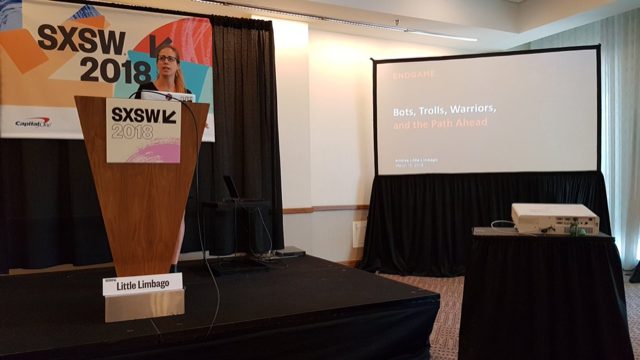
Andrea Limbago, chief social scientist at Endgame, a different cybersecurity company for enterprises also based in Clarendon, held a talk called “Bots, Trolls, Warriors & The Path Ahead” at SXSW. She discussed the intersection of policy and innovation needed to fight the bots and trolls.

Limbago said that the audience at her talk was engaging, which is something that she doesn’t always experience at tech conferences.

“It’s great having a growing tech community in Arlington, and then representing that out here [in Austin],” Limbago said.

Several other Arlington businesses were at SXSW, including Axios, Trustify, and Fortalice, said Cara O’Donnell, Arlington Economic Development’s public relations director.

Photo courtesy of Endgame


Startup Monday header

Sponsored by Monday Properties and written by ARLnow.com, Startup Monday is a weekly column that profiles Arlington-based startups and their founders, plus other local technology happenings. The Ground Floor, Monday’s office space for young companies in Rosslyn, is now open. The Metro-accessible space features a 5,000-square-foot common area that includes a kitchen, lounge area, collaborative meeting spaces, and a stage for formal presentations.

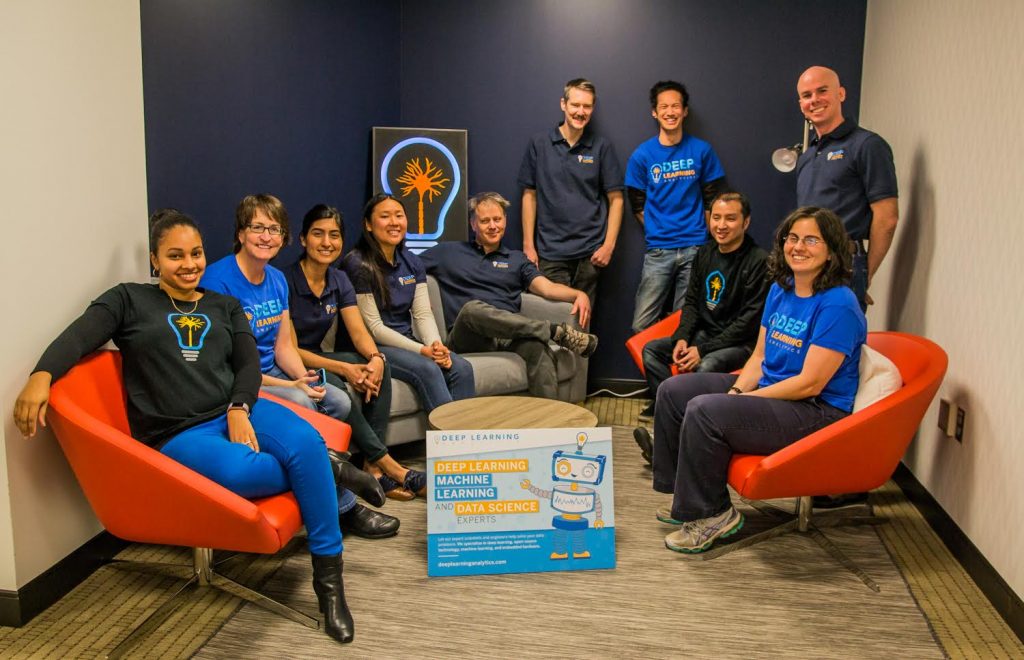
(Updated at 12:05 p.m.) John Kaufhold had been working at NIH doing deep learning research, but realized he’d be better off working on his own.

So he quit his job in May of 2013 and began Deep Learning Analytics, which is currently based in Rosslyn, just a month later.

Deep learning finds patterns in data. Some examples of deep learning and artificial intelligence are Siri, when the technology learns a user’s voice and transcribes his or her words, and self-driving cars that learn roads and driving patterns over time.

At Deep Learning Analytics, data scientists specifically focus on the content of images, Kaufhold said. In other words, they find things in images and say what they are.

“You can do that in medical, supply chain management, you can do that in biology, you can do that in defense applications. So there are plenty of applications where you can get a lot of economic value from you have an image and then you have to say what’s in it,” Kaufhold said.

Some of the first projects Deep Learning Analytics worked on included analyzing combat casualty care and predicting school dropouts for Arlington Public Schools.

One of the biggest and most surprising projects the startup won was a government program by the Defense Advanced Research Projects Agency (DARPA) on analyzing radar images. DARPA was having a problem looking at radar images and could not get past a longstanding benchmark. Research into the problem had been abandoned for years. But then Kaufhold approached the project manager at DARPA proposing that deep learning could help.

So Deep Learning Analytics sent a proposal and within six weeks they were significantly outperforming the state of the art. As a result, they were awarded $6 million for the project and had beat out major government contractors such as Boeing, Raytheon, Northrop Grumman and Lockheed Martin and only two people including Kaufhold worked on the proposal.

“It was really unusual that two people could write a proposal for a $6 million program and win it,” Kaufhold said. “It’s also crazy that not only did we win that we then won the next phase while competing the companies that should have been able to outperform us.”

In July 2017, Deep Learning Analytics was awarded another $6 million for the second phase of the project. Now the startup has gone from 2 employees in 2014 to 12 today.

In November, for the third year in a row, the startup was named the one of the county’s “Fast Four” fastest growing companies by Arlington Economic Development.

“It’s great to be recognized for our growth and it also speaks to Arlington as a place to grow a small business like ours especially in a space that’s really hard to recruit in, it’s really hard to find good data scientists and talent that can do things like deep learning and artificial intelligence,” Kaufhold said.

While Kaufhold said he’s honored by the recognition, he said there isn’t enough credit given to Deep Learning Analytics for its diversity. The startup currently has six men and six women on its team.

“That’s something I wish were recognized more in the Washington, D.C. area. I think we could be a better public beacon of that kind of leadership of women in this region,” he said.


Startup Monday header

Sponsored by Monday Properties and written by ARLnow.com, Startup Monday is a weekly column that profiles Arlington-based startups and their founders, plus other local technology happenings. The Ground Floor, Monday’s office space for young companies in Rosslyn, is now open. The Metro-accessible space features a 5,000-square-foot common area that includes a kitchen, lounge area, collaborative meeting spaces, and a stage for formal presentations.

Bo Davis, CEO and co-founder of MarginEdge, has been in the restaurant business since 2005, when he opened a sushi conveyor belt restaurant called Wasabi in the Tysons Corner mall.

But Davis is also familiar with the technology sector, as he started a software company called Prometheus that was later sold in 2002. In his experience running a restaurant, Davis had to deal with tons of paperwork involving lots of purchasing information. He also struggled with getting all the purchasing information into his account system while keeping all inventory and recipes up to date.

“It’s just a bit of a nightmare, honestly. That inspired it,” Davis said.

Then MarginEdge, a software application designed to help restaurants with their back office accounting processes, was launched by Davis and a group of co-founders in 2015.

The web-based platform comes with a phone app that allows restaurant employees to take a pictures of invoices and receipts. From there a team in India does the data processing from the invoices and within 24 hours all item-level detail is in MarginEdge’s system.

The software also ties into a restaurant’s point of sales, allowing MarginEdge to pull from the restaurant’s sales data by gathering the cost of things bought and sold. Then MarginEdge can compile reports on food costs, spending and other points of interest, Davis said.

Basically, MarginEdge simplifies accounting procedures and makes things more transparent for restaurants, he added.

For the first couple years of MarginEdge, Davis said the Arlington-based startup only had 20 restaurants for customers that were friends of the co-founders. It’s only within the past year that the company began taking on more customers and now has 200 clients, growing 400 percent in the process.

Most of the clients are local restaurants including District Taco, Buffalo Wing Factory and Glory Days Grill.

“We’re pretty conservative people so we spent two years making sure it was robust, it was strong enough,” Davis said. “And so it was more of a question taking our time to make sure we got it right, and then once we felt like it was really working then we were ready to take it out.”

On MarginEdge’s website, Greg Casten owner of Ivy City Smokehouse, Tony & Joe’s and Nick’s River Place, said the software has “so dramatically improved the way we process invoices and monitor critical costs that we credit it for producing the most profits we’ve ever achieved period after period.”

Restaurants have told Davis that they’ve saved 10-20 hours a week in data entry since using the product.

“I’m most proud of the fact that restaurateurs are enjoying what they get out of it and it’s making their lives easier,” Davis said.

Some clients have also decided to invest into MarginEdge. The company announced last month that it had raised $3 million to take its service national.

“It’s exciting to think that customers that we didn’t know liked it so much they invested in the company,” Davis said.

Photos via MarginEdge


View More Stories