
Startup Monday header

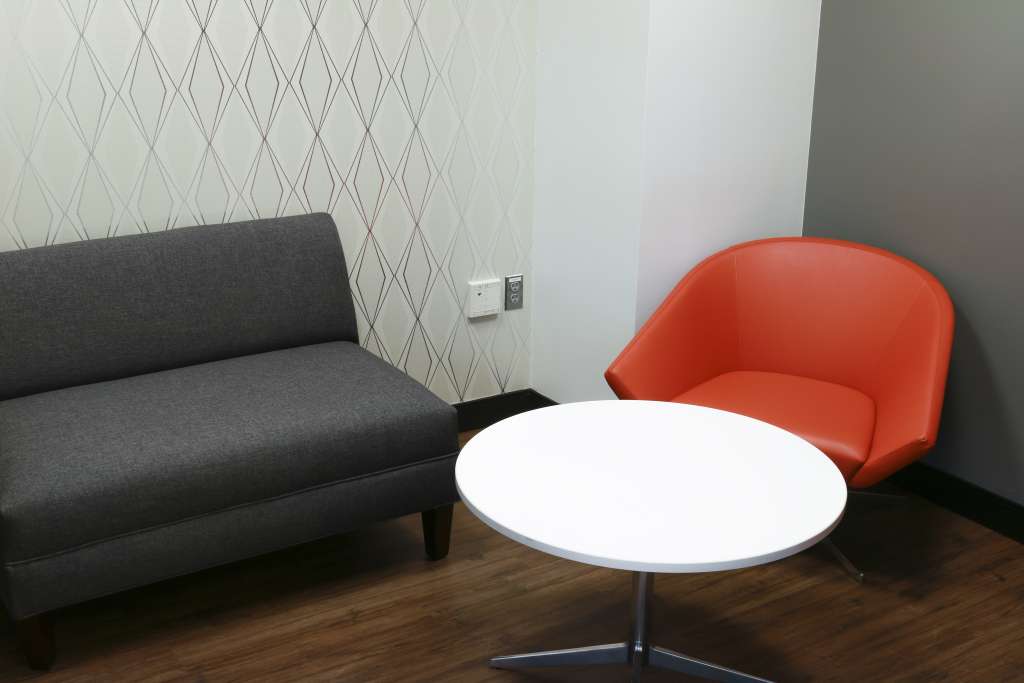
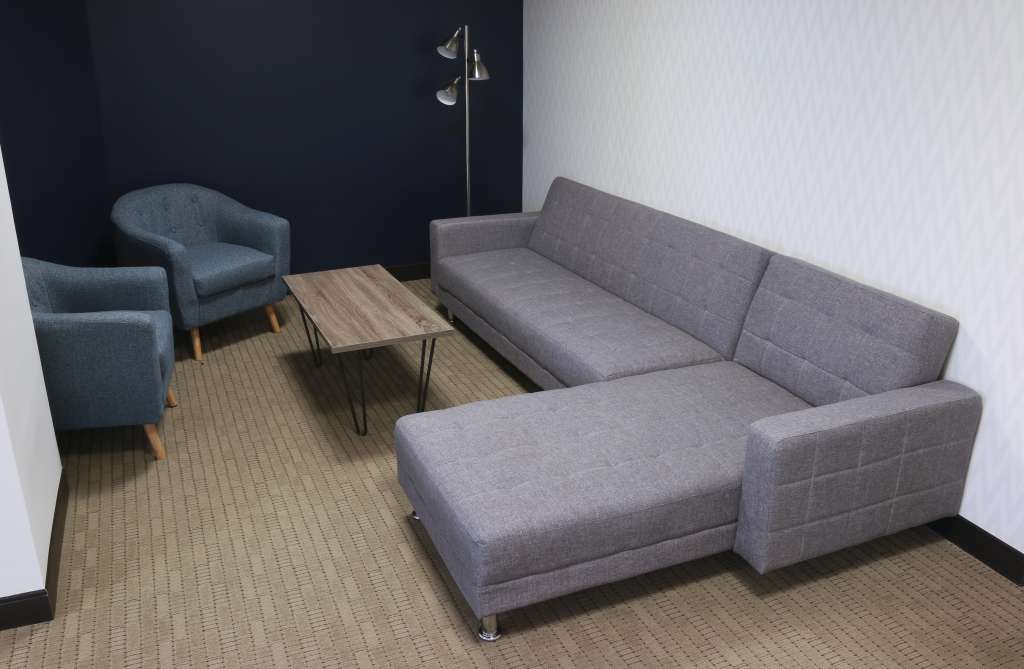
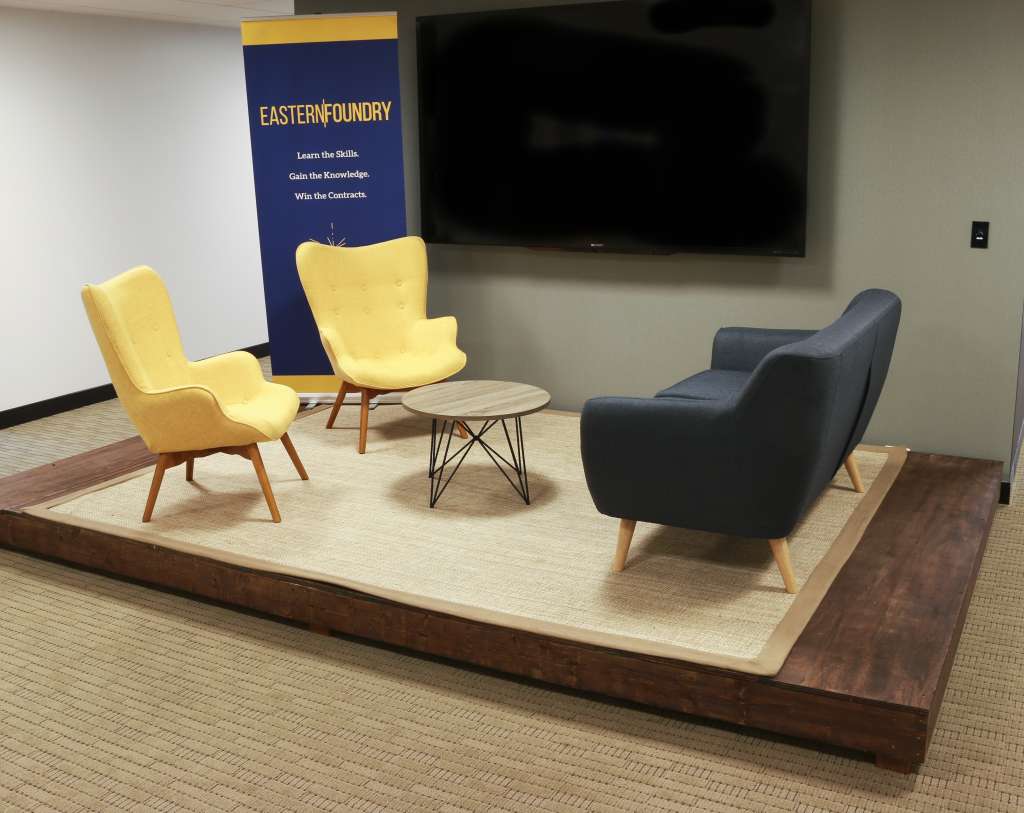
Sponsored by Monday Properties and written by ARLnow.com, Startup Monday is a weekly column that profiles Arlington-based startups and their founders, plus other local technology happenings. The Ground Floor, Monday’s office space for young companies in Rosslyn, is now open. The Metro-accessible space features a 5,000-square-foot common area that includes a kitchen, lounge area, collaborative meeting spaces, and a stage for formal presentations.

Boston-based GreenSight Agronomics won this year’s annual Startup Arlington competition, Arlington Economic Development announced last week.

Selected from 129 applicants from 18 states and six international locations, GreenSight uses automated drones to take daily aerial images. Its stated mission is to become a go-to source for aerial information.

GreenSight logoThe company’s platform transforms that imagery into actionable information that can optimize businesses, drive automated decision systems and future autonomous robots.

The company already has contracts with Arlington-based agencies like the Defense Advanced Research Projects Agency and the Office of Naval Research as well as the Air Force Research Lab, the U.S. Army and the University of Maryland.

GreenSight Agronomics will move two employees to start its operations in the county next month.

“GreenSight is exactly the type of technology company that can truly succeed here in Arlington,” said Christina Winn, Arlington Economic Development’s director of business investment, in a statement. “GreenSight’s ability to easily connect with federal agencies and other top research institutions, many of which are already working with the company, will really position the company to be able to grow and succeed quickly. It’s the ideal company to be selected as the Startup Arlington winner.”

GreenSight will receive up to $25,000 from the private equity firm Kiddar Capital, plus get three months of complimentary office space in 1776 in Crystal City and complimentary living space for that time at the nearby WhyHotel, courtesy of developer Vornado.

It also will receive complimentary Metro passes and a Capital Bikeshare membership, provided by Arlington Transportation Partners, and a package of lifestyle amenities and restaurant offers from the Crystal City Business Improvement District.

“GreenSight has customers, investors and collaborators in the D.C. area,” said GreenSight founder James Peverill in a statement. “An office in the Arlington is a great opportunity to engage these partners more effectively and take advantage of the rich and growing ecosystem in the area.”

Startup Arlington applicants were evaluated on criteria ranging from how the company would benefit from locating in Arlington to growth potential and business plans. To be eligible, applicants must have been from outside the greater capital region and the application made under the direction of a founder and/or CEO of a technology-based company.
Startup Monday header

Sponsored by Monday Properties and written by ARLnow.com, Startup Monday is a weekly column that profiles Arlington-based startups and their founders, plus other local technology happenings. The Ground Floor, Monday’s office space for young companies in Rosslyn, is now open. The Metro-accessible space features a 5,000-square-foot common area that includes a kitchen, lounge area, collaborative meeting spaces, and a stage for formal presentations.

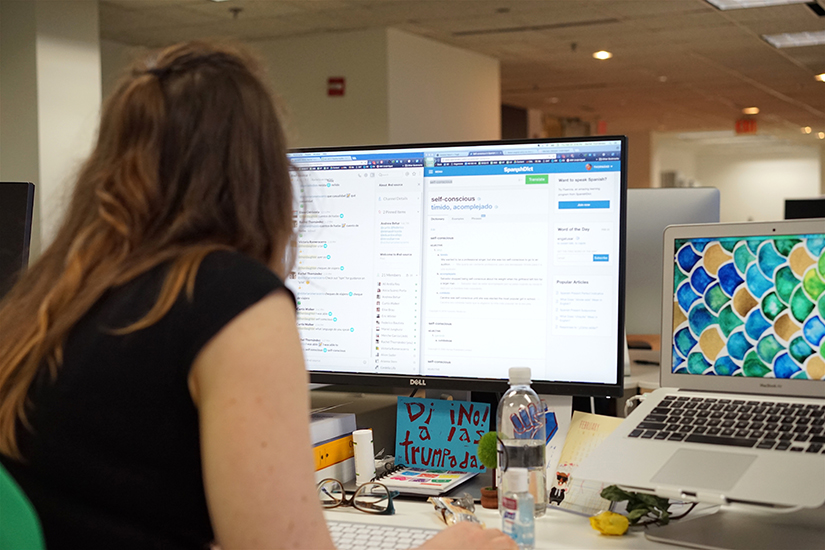
Worker in office, photo courtesy of Curiosity MediaWhen online dictionary SpanishDict.com hit the web in 1999, its primary audience was English speakers looking to learn Spanish. The idea was simple: to create an easy-to-use resource for students and learners that would serve as the definitive guide for translating Spanish words into English.

Nearly 20 years later, the tables have turned. Today, a good chunk of the site’s 14 million monthly users are native Spanish speakers who want to learn English. And that number is growing, said Chris Cummings, CEO of the Rosslyn-based startup behind SpanishDict, Curiosity Media

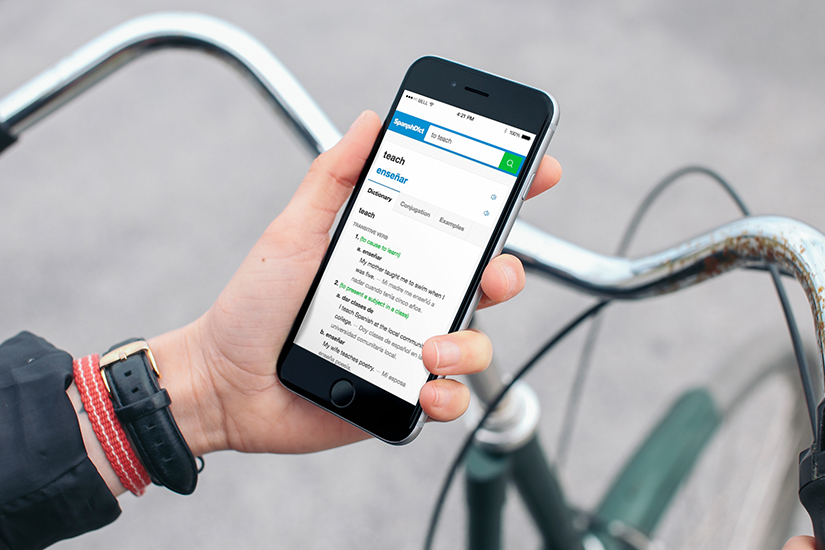
SpanishDict on a phone, photo courtesy of Curiosity Media.jpg“People ask us all the time if we’ve considered going into other languages,” Cummings said. “The answer is that we are going into a new audience, but it’s actually the same language pair.”

Cummings is no stranger to finding new audiences. In 2013, he helped launch Fluencia, a subscription-based Spanish learning program. The software course features an “adaptive pace” and an automated tutoring system to help users become more fluent. Since its launch, Fluencia has grown its monthly user base to around 800,000 learners from across the world.

Though Fluencia continues to expand, Cummings said his company’s dictionary services are growing at an even quicker pace.

Worker in office another angle, photo courtesy of Curiosity Media.jpg“We’re adding thousands and thousands of new Spanish speakers every week,” he said. “We already have millions on the site.”

Cummings added that there could even come a day where there’s just as many native Spanish speakers using SpanishDict as there are native English speakers, if not more.

“For every English speaker that’s interested in communicating in Spanish, there’s about three or four Spanish speakers that are interested in communicating in English,” he said. “It’s a much, much bigger market.”

Part of the reason for such a steep rate of user growth is the sheer number of “bells and whistles” that SpanishDict offers, Cummings said. People who might otherwise use a “quick and dirty” translation service like Google Translate are drawn to SpanishDict’s many features.

“If you want native audio pronunciation of a word, we got that. If you want to know how to conjugate verbs, we got that. If you want to see the word in real life example sentences, we got that,” Cummings said. “For all these reasons, it just becomes a better way to be a first stop for translating a word than maybe what you see on Google Translate.”

Workers in the Curiosity Media office, photo courtesy of Curiosity Media.jpgHe continued, “We’re able to go so deep on this language pair is because there are more than 800 million native English and Spanish speakers in the world. That’s what enables us to go so deep and provide such high value content in this language pair.”

In 2013, Curiosity Media had just a handful of employees. Now, it has 17 in its office in Rosslyn, and it’s still growing.

The company currently is hiring for engineering and product management positions.


Startup Monday header

Sponsored by Monday Properties and written by ARLnow.com, Startup Monday is a weekly column that profiles Arlington-based startups and their founders, plus other local technology happenings. The Ground Floor, Monday’s office space for young companies in Rosslyn, is now open. The Metro-accessible space features a 5,000-square-foot common area that includes a kitchen, lounge area, collaborative meeting spaces, and a stage for formal presentations.

Imagine you’ve just set up a state-of-the-art home security system with all the bells and whistles. The alarms are set. The motion detectors are on. The cameras are live. But there’s a problem: You don’t know how to use any of that equipment. Are you really any safer than before?

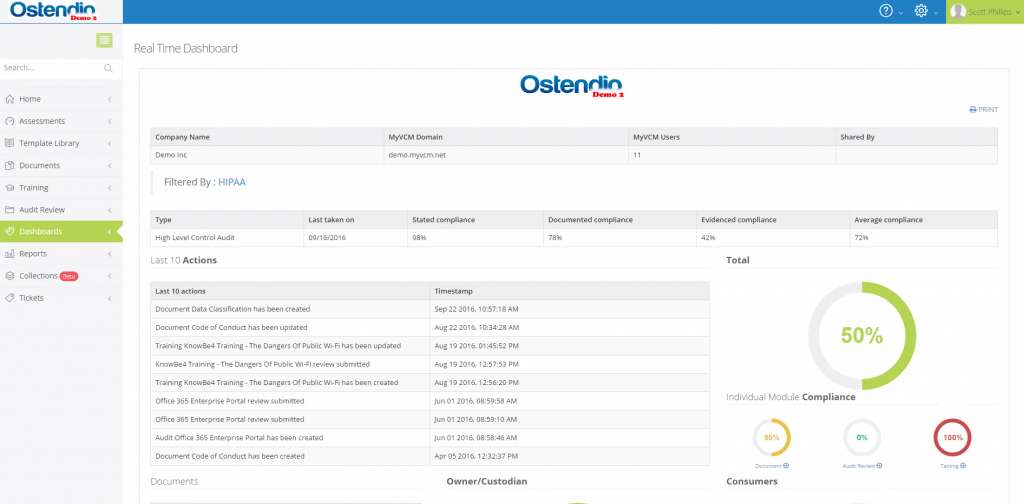
MyVCM screenshot, real-time dataThat’s an analogy from Grant Elliott, Founder and CEO of Rosslyn-based Ostendio, a company that focuses on I.T. compliance and security. Ostendio’s main product is My Virtual Compliance Manager (MyVCM), a platform that helps companies manage risk and bring their employees into compliance with standards and policies.

It’s common knowledge that the concept of cybersecurity is more relevant than ever before. Words and phrases like “cybercriminal,” “phishing” and “data breach” are now part of the public lexicon. Companies that handle sensitive information and data are increasingly beefing up their online defenses, and part of that process means getting employees up to speed.

“People are the weakest link,” Elliott said. “You can encrypt data to the highest degree possible … but if your people are being careless, information is going to get out and intruders are going to get in.”

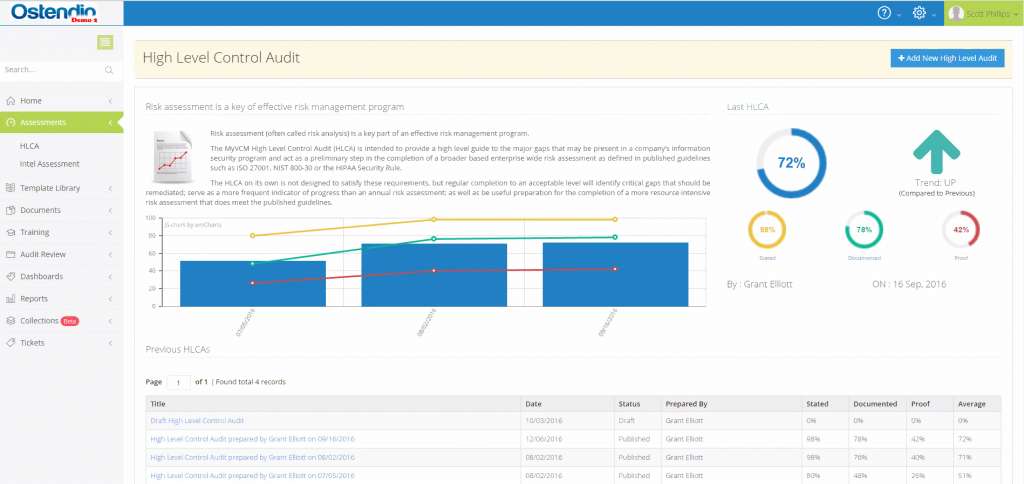
MyVCM screenshot, High Level Control AuditUsing MyVCM, organizations can build out workflows that hold their employees accountable for keeping up-to-date with industry standards, training regimens and security regulations. The platform assigns employees individual scores that illustrate how close they are to full compliance, for instance. Those scores can then be checked against other employees or the company as a whole, and employees are given clear instructions on what they can do to improve.

Elliott started Ostendio with two other co-founders in 2014. In the years since they founded the company, Ostendio has grown from a handful of employees in a shared workspace to more than a dozen people in a dedicated office space. The company has also cultivated a list of clients that includes more than 60 companies in the U.S., Canada, the U.K., Australia and Israel.

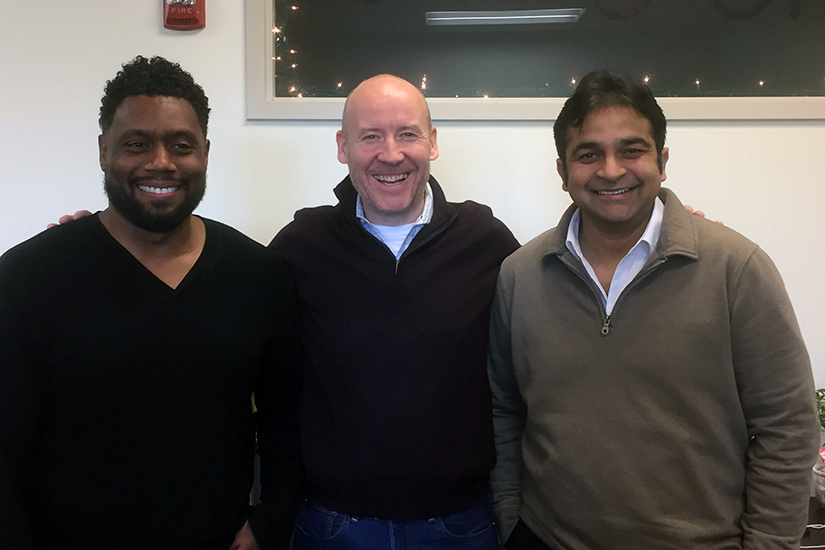
Ostendio founders left to right: Jermaine Jones, COO; Grant Elliott, CEO; Rohit Johri CTO“We’ve continued to expand,” Elliott said. “We’ve evolved and grown in a number of different dimensions.”

Though the company was founded with the healthcare industry in mind, it now services businesses that operate in a multitude of industries.

“We’re not doing anything that’s specifically healthcare,” Elliott said. “Critical infrastructure, retail, finance, aerospace, all of these industries have a complex ecosystem with a requirement to protect and share sensitive data.”

And it’s not just about cybersecurity and risk management, either. Companies can use MyVCM to make sure employees are compliant in topics like sexual discrimination, company policy and product documents, as well.

With all those different uses for the product, Elliott said there’s plenty of room for more growth.

“Do I see us doubling in size over the next year or so? Sure,” Elliott said. “I think we can get to become a $100 million company.”

Above all else, Elliott said it’s the Ostendio team’s passion for building a great product that drives the company’s expanding operations.

“Regardless of how opportune how the market might be, it still comes from a relentless focus on delivery and execution,” he said. “For me, that relentless, driven execution is what’s helping us grow.”


Startup Monday header

Sponsored by Monday Properties and written by ARLnow.com, Startup Monday is a weekly column that profiles Arlington-based startups and their founders, plus other local technology happenings. The Ground Floor, Monday’s office space for young companies in Rosslyn, is now open. The Metro-accessible space features a 5,000-square-foot common area that includes a kitchen, lounge area, collaborative meeting spaces, and a stage for formal presentations.

(Updated at 12:48 p.m.) Up-and-coming tech companies that cater to the U.S. government now have a refuge in Rosslyn.

Government contracting startup accelerator Eastern Foundry threw a party last week to celebrate the opening of its new office on the 10th floor of 1100 Wilson Blvd. It first announced the expansion last June.

Though the 19,237-square-foot space is slightly smaller than Eastern Foundry’s first office in Crystal City, it still offers plenty of room for government-focused startups.

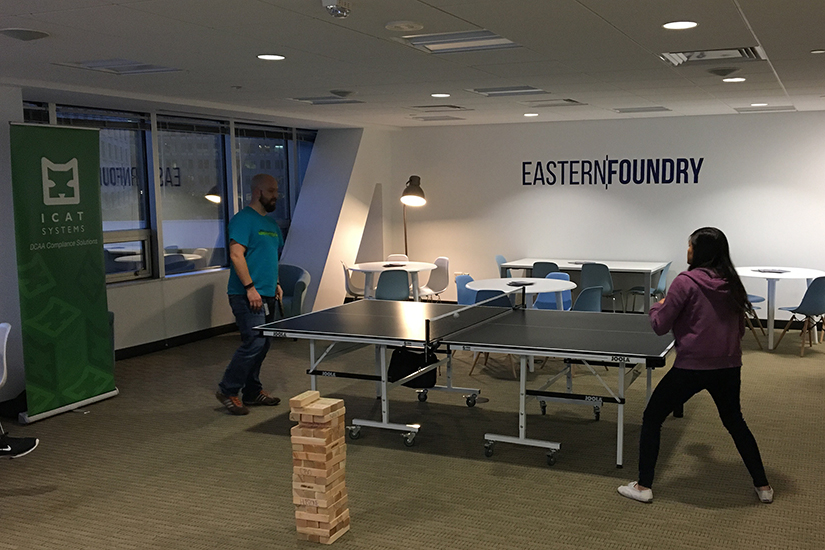
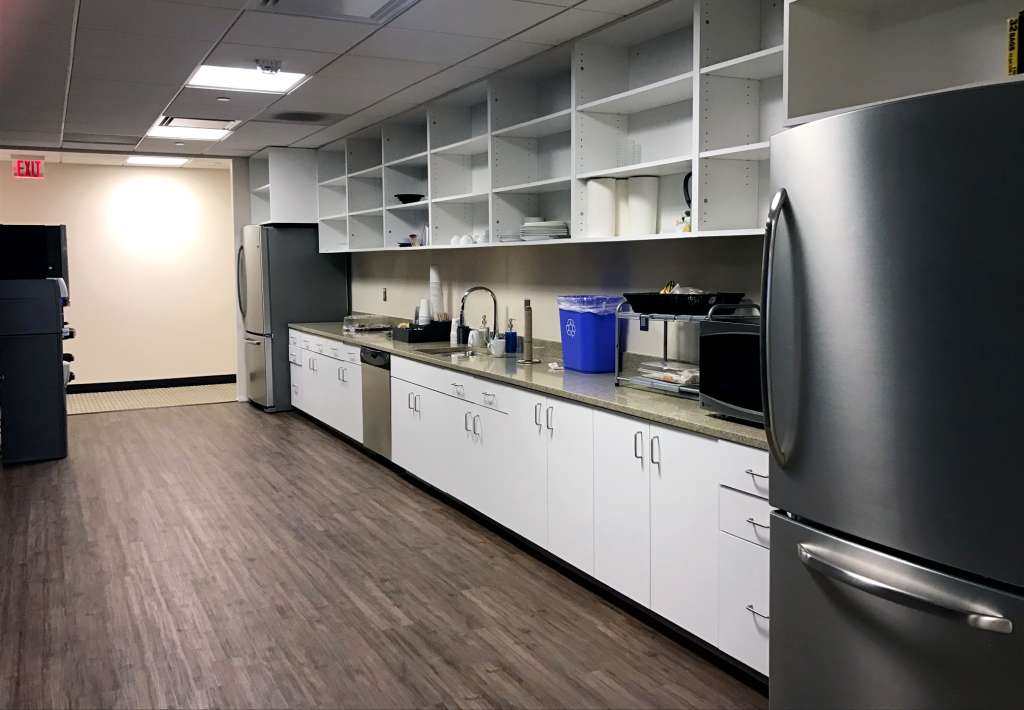
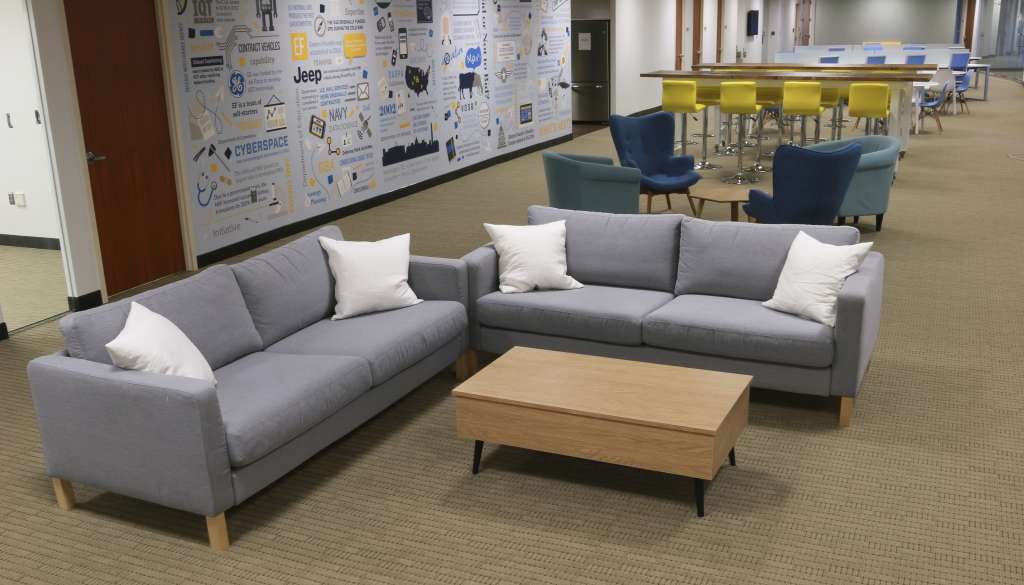
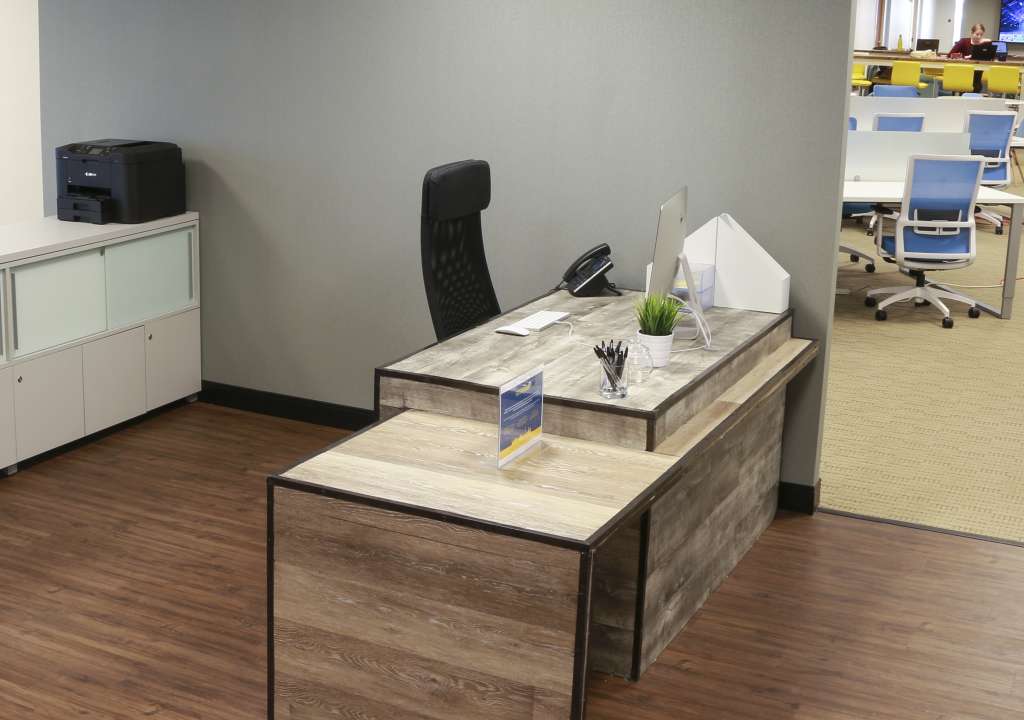
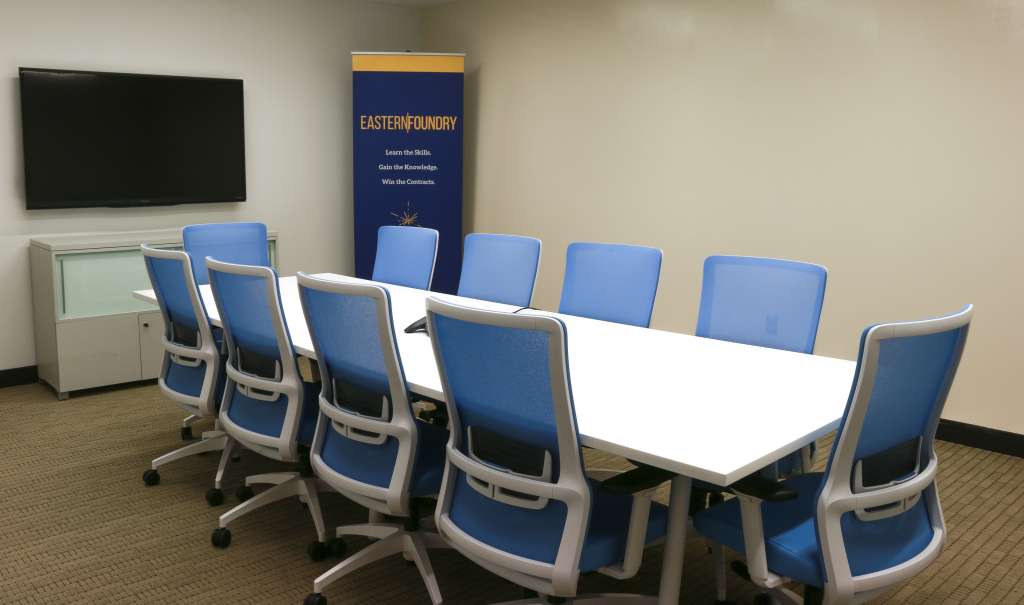
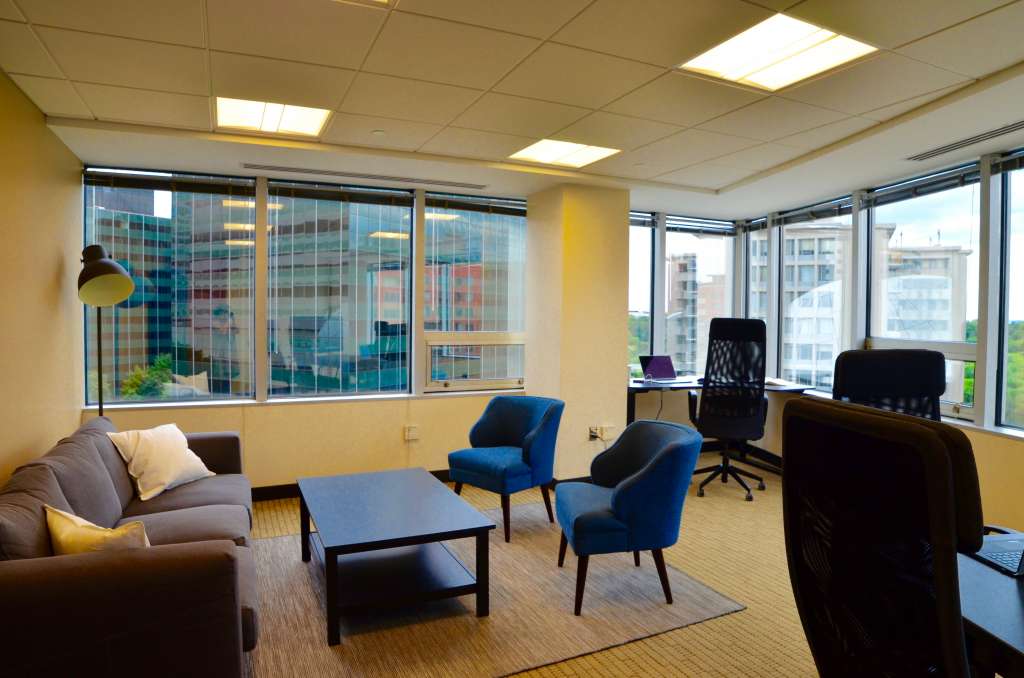
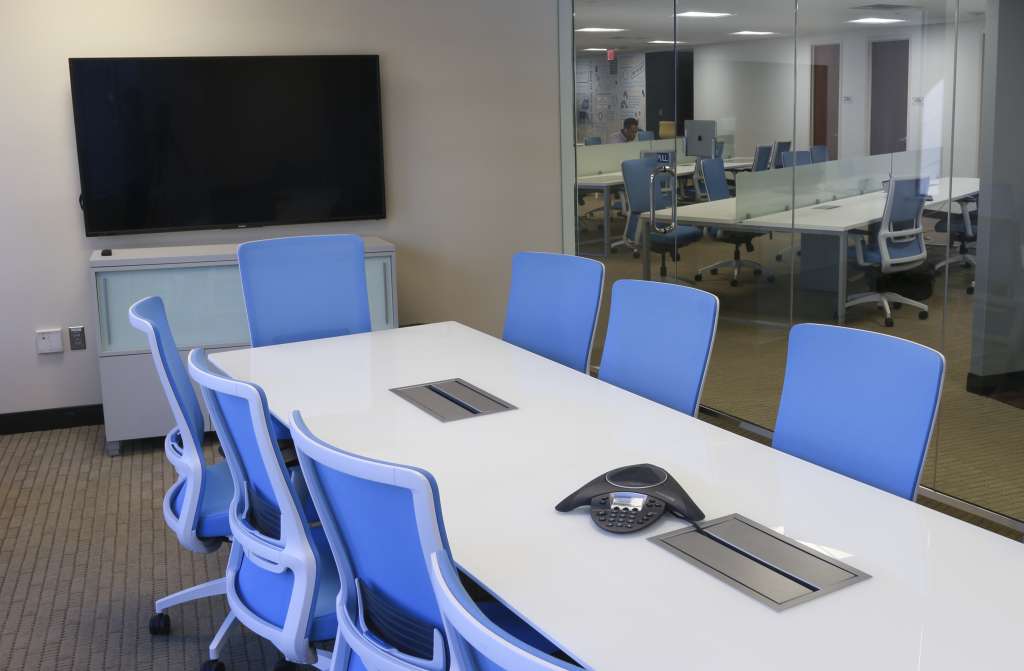
People playing table tennis at Eastern FoundryThe new Rosslyn office features an open layout and is geared more toward tenants that work with civilian government agencies, said Eastern Foundry co-founder Andrew Chang. The space features 43 private offices, three conference rooms, a training room and a shared common area with couches, chairs, tables and games.

“It’s two very different vibes, and that’s what we’re going for,” Chang said. “Crystal City is Pentagon-focused. It’s more office intensive. Here, we’re kind of pushing a more innovative, younger crowd.”

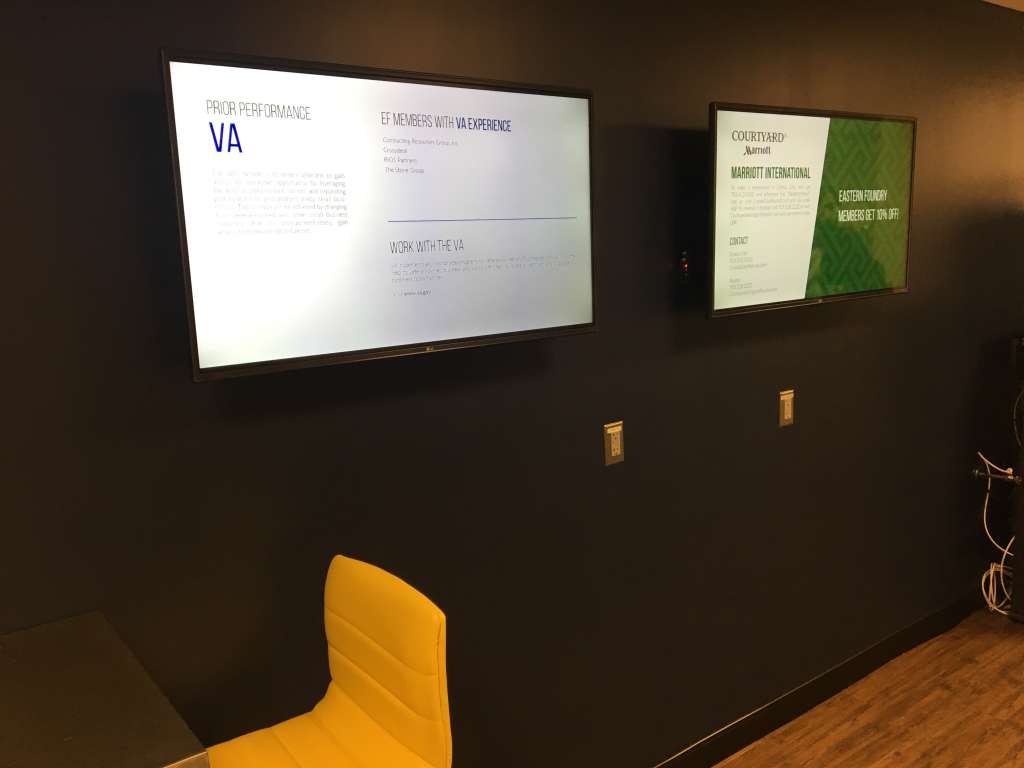
In Crystal City, many of Eastern Foundry’s tenants work with sensitive government defense contracts and therefore need a little more privacy, he explained. In contrast, the Rosslyn office is suited for collaboration and open discussion. Job opportunities and announcements are beamed onto two televisions in the office’s kitchen each day, for instance.

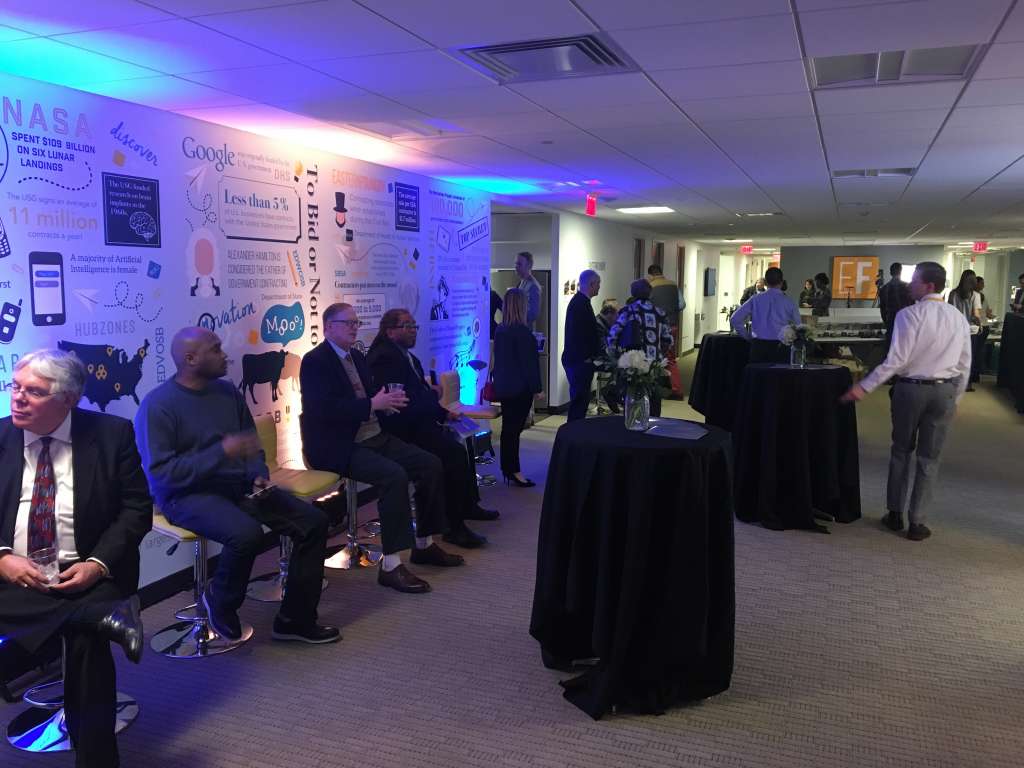
Eastern Foundry party on Thursday, Feb. 2Representatives from dozens of small businesses mingled over food and drinks during the company’s grand opening party last Thursday. Though the new office has been open for less than a week, it’s already about 30 percent full, Chang said. Eastern Foundry expects that number will grow quickly.

“Virginia is all about business,” Chang said. “It’s very small business friendly and it works for our member companies.”

But it’s not just Eastern Foundry’s tenants that stand to benefit from the new office. Rosslyn itself could also see an economic boost from all the new tech companies setting up shop there.

“Eastern Foundry is a unique and important addition to our business community because they are cultivating the next generation of government-focused technology companies,” said Mary-Claire Burick, president of the Rosslyn BID. “These companies, and the investment capital and young talent they attract, stand to have a major impact in Rosslyn for years to come.”

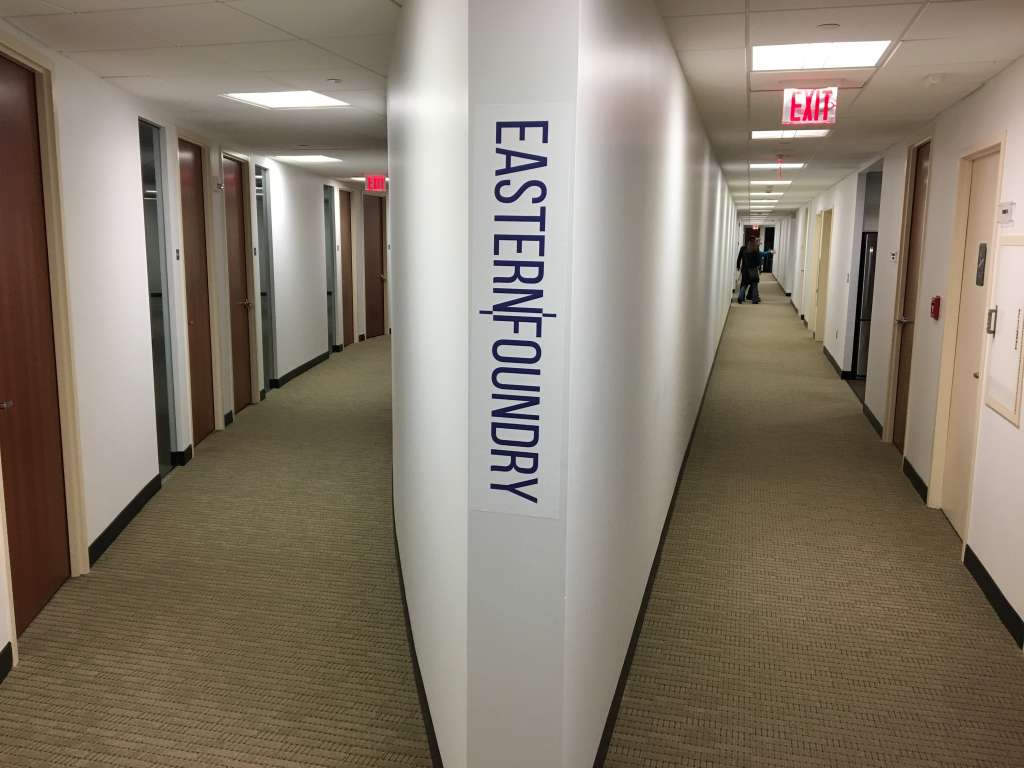
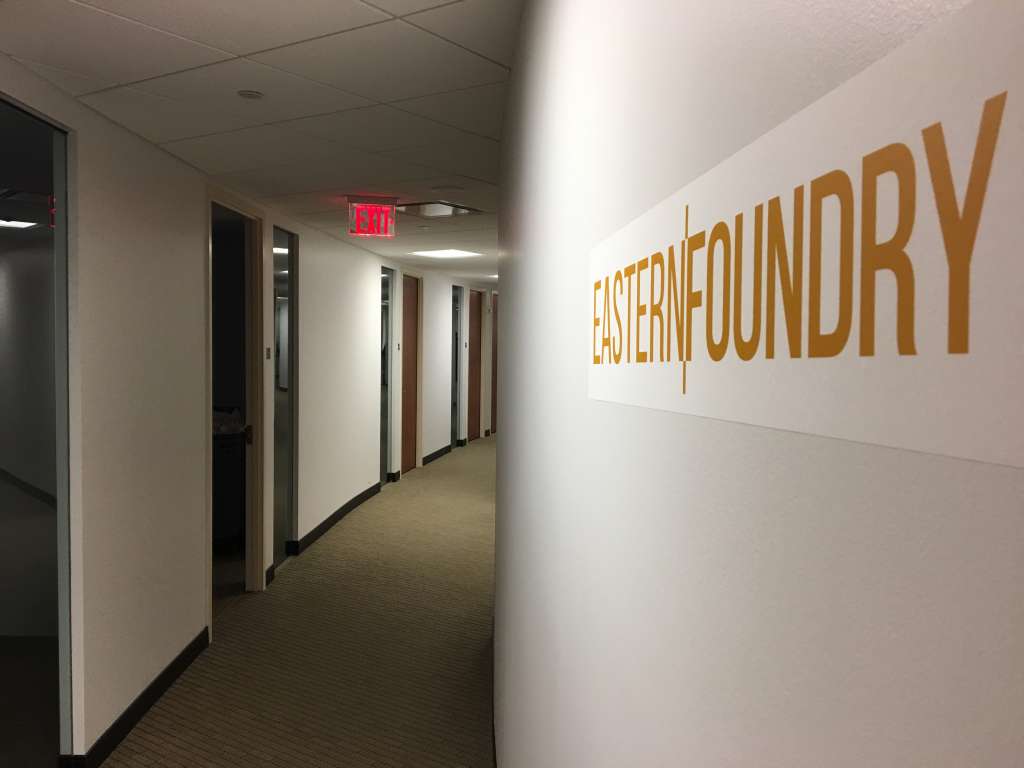
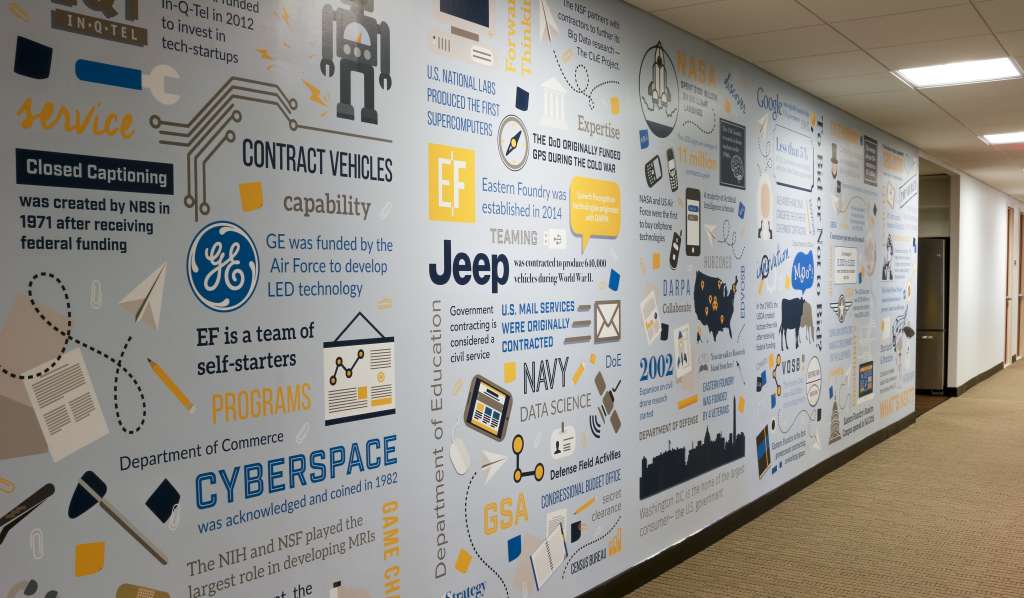
Check out some more photos of Eastern Foundry’s new offices below.


Startup Monday header

Sponsored by Monday Properties and written by ARLnow.com, Startup Monday is a weekly column that profiles Arlington-based startups and their founders, plus other local technology happenings. The Ground Floor, Monday’s office space for young companies in Rosslyn, is now open. The Metro-accessible space features a 5,000-square-foot common area that includes a kitchen, lounge area, collaborative meeting spaces, and a stage for formal presentations.

A startup based in Ballston is growing fast thanks in part to the rising success of mobile news companies.

Another photo via Mobile PosseThe startup, Mobile Posse, licenses content from a variety of websites like ESPN, the Associated Press and Mashable and packages it into an “aggregated content feed.”

Users can download the company’s app and configure their preferences to see the kind of stories they like. A typical user might sign up to see new sports scores, news, horoscopes, trivia, weather and other conent on their phone’s home screen.

“It is literally on the home screen of my device when I unlock it in the morning,” explained Mobile Posse CEO and founder Jon Jackson. “You can schedule pieces and components of it to be proactively delivered to you.”

The company plugs into ad networks and uses ad exchanges to monetize the service. Millions of people currently get updates from Mobile Posse, meaning lots of potential revenue, Jackson said.

Last year, Mobile Posse expanded its total revenue by about 77 percent, Jackson said. It’s also hiring at a quickening pace. Though the company only moved into its Ballston offices less than two years ago, it’s already looking for a newer, bigger space to hold all of its new employees.

And, if all goes according to plan, Mobile Posse will continue to grow rapidly in the year ahead.

“Twitter and Facebook and Google are really focusing on mobile. That helps a business like ours,” Jackson explained. “It really brings buyers. The amount of time spent on a phone has really taken off. We’re really a function of that. It’s where people’s eyeballs are.”


Startup Monday header

Sponsored by Monday Properties and written by ARLnow.com, Startup Monday is a weekly column that profiles Arlington-based startups and their founders, plus other local technology happenings. The Ground Floor, Monday’s office space for young companies in Rosslyn, is now open. The Metro-accessible space features a 5,000-square-foot common area that includes a kitchen, lounge area, collaborative meeting spaces, and a stage for formal presentations.

(Updated at 9 a.m. Tuesday) A local tech company wants to make it easier for people to connect with their elected representatives.

That company, Phone2Action, turns people into “citizen advocates” by helping them engage with lawmakers over the phone, in emails and on social media, according to co-founders Jeb Ory and Ximena Hartsock.

Jeb and Ximena, photo by Tony Powell“We created Phone2Action to solve a very large but very simple problem,” Ory said. “Connecting people to policymakers so they can be part of the civic process.”

Say you run an organization or business that wants to rally supporters behind a specific cause. Using
Phone2Action’s subscription “digital grassroots platform,” you can urge people to get in touch with their state or local officials without having to step away from their computer or put down their smartphone.

“Our clients use the tools to engage their supporters and let lawmakers know about how they feel about certain things,” Hartsock added.

The company started in 2012 with just 15 employees, but quickly outgrew its location in the District. Now at 40 staffers, Phone2Action operates out of an office building in Rosslyn.

“We have about 20 open positions now,” said Hartsock. “We will be 60 [employees] pretty soon. We’re already outgrowing our space.”

When the company finally does outgrow its space, it will move to a larger office, likely elsewhere in Arlington, Hartsock added.

In the future, Ory said the Phone2Action will continue to invest in working with new platforms. For instance, the company is looking to integrate its platform with Alexa, Amazon’s voice-activated service.

“Today, it’s Facebook, Twitter, Snapchat and Instagram, but where is it going to be tomorrow?” he said. “We’re committed to being at the forefront.”

Phone2Action also has plans to expand its service to other places across the globe, like Chile and countries in Western Europe.

“There’s a huge opportunity to help people across the world weigh in and talk about matters that are important to them,” Ory added.

Ory and Hartsock photo by Tony Powell


Startup Monday header
Sponsored by Monday Properties and written by ARLnow.com, Startup Monday is a weekly column that profiles Arlington-based startups and their founders, plus other local technology happenings. The Ground Floor, Monday’s office space for young companies in Rosslyn, is now open. The Metro-accessible space features a 5,000-square-foot common area that includes a kitchen, lounge area, collaborative meeting spaces, and a stage for formal presentations.

Cybersecurity currently is a frequently discussed but often misunderstood field. At Adlumin, though, it’s a well-understood topic that’s more than just a buzzword. The employees design solutions to identify and prevent potential breaches in clients’ networks.

Adlumin logoCybersecurity is a broad term, but the Adlumin team targets what co-founder and VP of business development Timothy Evans calls “the Edward Snowden problem,” when a seemingly authorized user enters part of the network they’re not allowed to access.

“I realized that corporate breaches were continuing to succeed because attackers were able to steal the identities of employees and use that identity to attack the infrastructure as if they were that person,” said Adlumin president and CEO Robert Johnston. “The problem we set out to solve is the identity access and management piece.”

A small breach such as a user figuring out a computer password can compromise an entire business structure because the illegitimate user often gains access to other accounts with locally-saved passwords, such as Gmail or Twitter.

“Eventually [an intruder can] end up with the keys to the entire kingdom and they can literally access any system or cloud resource they want,” Johnston said.

That’s what happened during the Democratic National Committee hack last year when more than 100 users’ private email accounts were accessed, Johnston said. He led the response effort to the DNC breach and said those hackers “were able to access the system as if they were a user.”

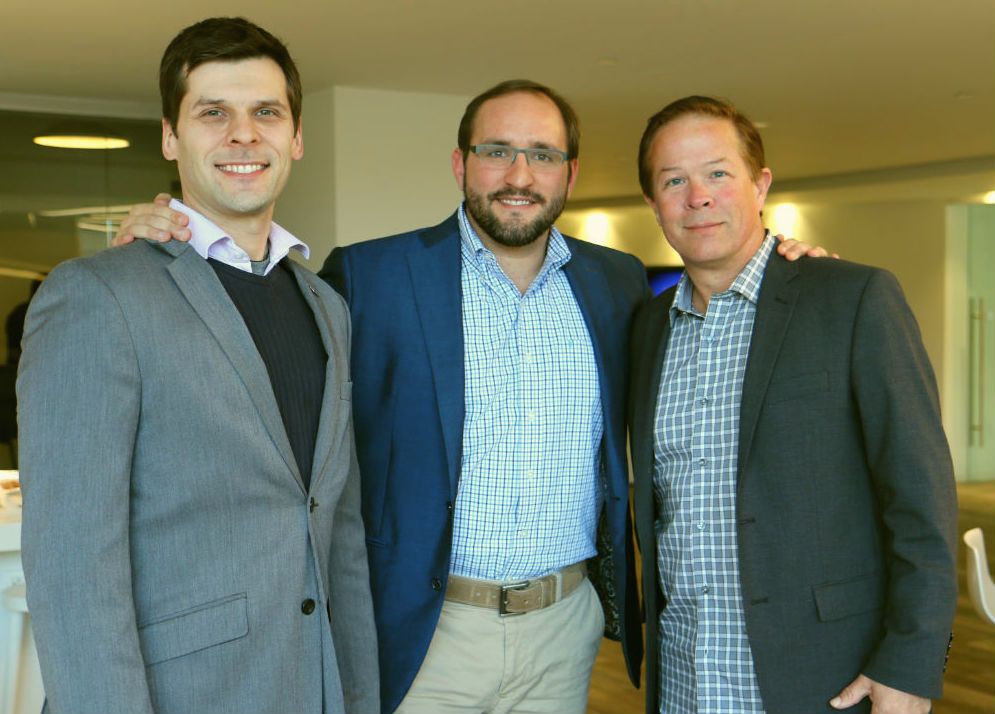
Adlumin team membersAdlumin’s software can “see” and monitor every single user on a client’s network, even on a global scale. It incorporates user behavior analytics — which Johnston said not all cybersecurity companies deal with — to determine if a network is in danger.

“Rob decided we needed to solve a hard problem, which is to find intruders in a network. They don’t use things like malware or ransomware, they’re in the network and they look like your legitimate users,” Evans said. “There’s only one way to find them and that’s based on their behavior patterns to determine whether they’re a real user or a fake user.”

Adlumin’s software monitors a business’ network 24/7 to detect changes in user behaviors. Evans explained that it uses artificial intelligence and machine learning to continuously update information about user habits. If the software detects a potential anomaly, it sends an alert. Think of it like a credit card company tracking a card user’s spending habits and sending a warning notification when an odd purchase occurs.

In addition to providing the monitoring software, Adlumin manages customers’ cyber infrastructure and training.

Clarendon-based Adlumin incorporated in June 2016 and was assisted by the Herndon-based Mach37 cybersecurity business incubator. It now has five full-time employees and plans further expansion this year.

“The Washington, D.C. metro area, and specifically Arlington, is an awesome place to do this business,” Evans said.

Noting the proximity to the country’s top intelligence agencies, Johnston said there’s “a lot of untapped human capital in this area” for cybersecurity.

As far as what’s in store for the future, Johnston said the Adlumin team will continue updating its software algorithms and wants to “dominate the identity and access management piece” of cybersecurity.


Startup Monday header

Sponsored by Monday Properties and written by ARLnow.com, Startup Monday is a weekly column that profiles Arlington-based startups and their founders, plus other local technology happenings. The Ground Floor, Monday’s office space for young companies in Rosslyn, is now open. The Metro-accessible space features a 5,000-square-foot common area that includes a kitchen, lounge area, collaborative meeting spaces, and a stage for formal presentations.

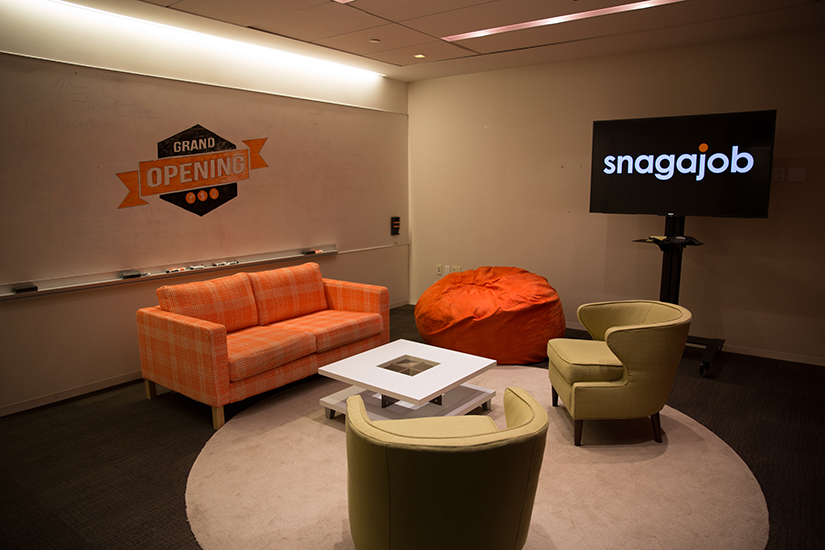
Snagajob offices in Rosslyn (photo courtesy of Snagajob)A fast-growing Arlington tech company has moved its operations to a much larger office in Rosslyn.

Snagajob, a company that helps employers find hourly workers and vice versa, announced last week it had moved into a spacious new office in the Waterview building on N. Lynn Street.

The new business hub spans about 32,000 square feet, which is more than four times as big as Snagajob’s old office in Ballston. The office also features such amenities as free beer and popcorn, several game tables and a stunning view of Georgetown.

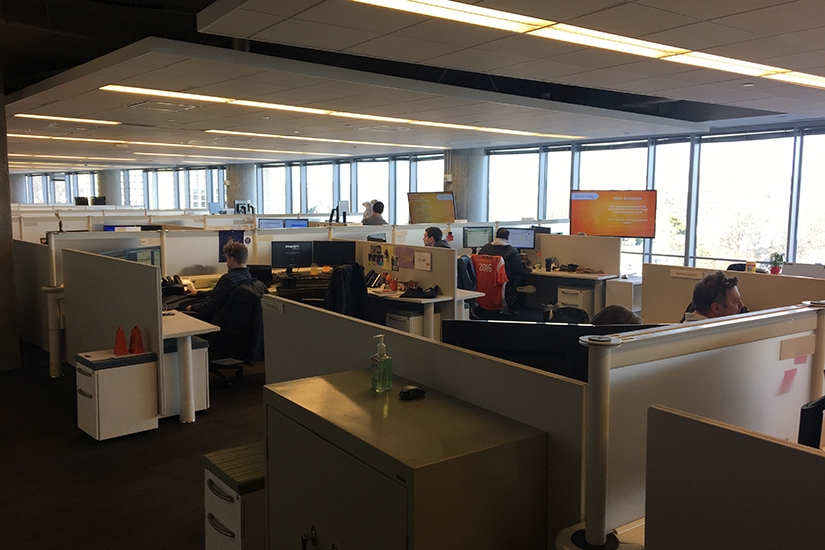
Cubicles at Snagajob offices in RosslynBut all that new space is necessary for the quickly expanding firm. Last year, Snagajob grew its employee base by about 60 percent. Some of that growth came from its acquisition of PeopleMatter, an HR software business that aided employers in hiring, screening and managing employees.

This year, Snagajob is planning to grow its D.C.-area staff by about 50 percent. Many of those new employees will work in sales and sales management, account management, marketing and data science, the company said.

Currently, the tech firm employs about 450 “Snaggers” across its offices in Rosslyn; Richmond; Oakland, California and Charleston, South Carolina.

“Selecting an office location is really about choosing a community to be a part of,” said Viyas Sundaram, Snagajob’s Chief Revenue Officer, in a statement. “Arlington, and the larger D.C. metro area, has a thriving startup and tech community that we are excited to be a part of and support. I am looking forward to aggressively growing our team here to complement our other offices as we expand our footprint nationally.”

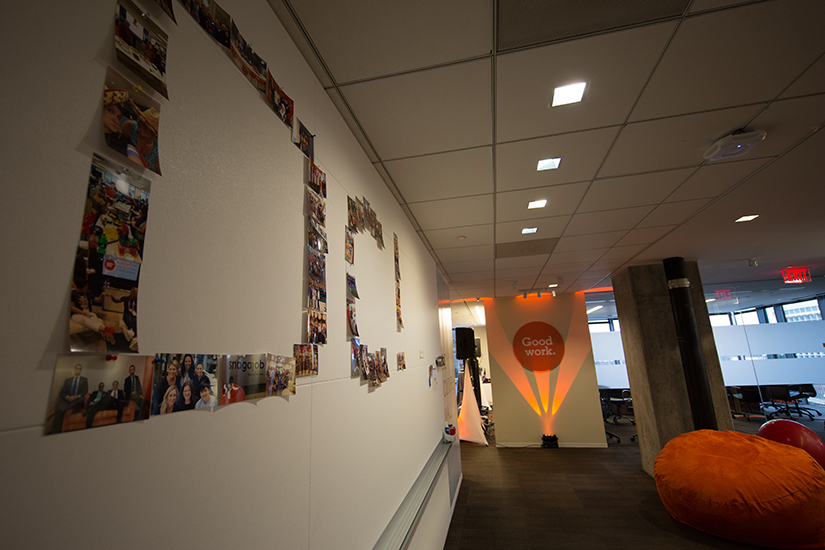
Check out some more photos of Snagajob’s new Rosslyn offices below.


Startup Monday header

Sponsored by Monday Properties and written by ARLnow.com, Startup Monday is a weekly column that profiles Arlington-based startups and their founders, plus other local technology happenings. The Ground Floor, Monday’s office space for young companies in Rosslyn, is now open. The Metro-accessible space features a 5,000-square-foot common area that includes a kitchen, lounge area, collaborative meeting spaces, and a stage for formal presentations.

When and if more manufacturing jobs start returning to the U.S., MicroBenefits will be on hand to provide “front-line workers” with a useful tool that helps them work safer and more efficiently, provides training and a pathway for advancement, and creates powerful communication capabilities between the workers and management.

MicroBenefits US staffThe Arlington-based startup, with U.S. operations headquartered in Crystal City’s 1776 business incubator, is already in operation in factories in China. Vietnam is coming online soon; factories in the Philippines are slated for early 2017.

“We’re making English and Spanish versions of the app and we’ll enter different markets [in those languages] as we have opportunities with different brands,” said Mason Chenn, director of business development.

So what does MicroBenefits do for those front-line workers? But first, what is a front-line worker?

“A front-line worker is the person who is assembling your smartphone or your speakers, or is sewing the shirts you are buying from a brand that you know,” he said. “They’re the person putting the stitches together or screwing the screws into the device.”

Photo courtesy MicroBenefitsIf you’ve ever been a front-line worker you know that it’s an isolating position, even though you may be surrounded by coworkers and supervisors. You punch the clock when you come in, do your job and punch out. In some management structures, the only time you get to communicate common problems is over a beverage with coworkers after hours. And visiting with human resources or upper management is a big, tension-filled deal.

Smart companies know they operate more efficiently when they receive feedback from their employees. What MicroBenefits does is give those front-line workers access to a number of channels they never had before via smartphones.

“We offer a mobile technology platform that helps empower front line workers,” Chenn said, bravely attempting to summarize. “The elevator speech gets very complicated after that.”

MicroBenefits deals with multiple stakeholders — the brands that employ the suppliers and the suppliers that employ the front-line workers. “Our technology is enabling change in supply chains around the world,” Chenn said, catching the elevator again.

“We’re trying to solve compliance issues around environmental health and safety. We help to qualify workers for advancement within their organizations with training opportunities. And we provide feedback channels so workers have a voice in the factor to talk about the issues they’re experiencing.”

(more…)


Startup Monday header

Sponsored by Monday Properties and written by ARLnow.com, Startup Monday is a weekly column that profiles Arlington-based startups and their founders, plus other local technology happenings. The Ground Floor, Monday’s office space for young companies in Rosslyn, is now open. The Metro-accessible space features a 5,000-square-foot common area that includes a kitchen, lounge area, collaborative meeting spaces, and a stage for formal presentations.

College students fall asleep in class. It’s an age-old issue. But a new solution to the problem is what prompted the launch of Sunniva, an Arlington-based “super coffee” beverage business.

A couple of years ago Jordan DeCicco was that guy who kept falling asleep in his classes at Philadelphia University. The freshman tried to stay awake using the energy drinks or pre-made coffee beverages available at convenience stores, but he didn’t like all the sugar, fat, caffeine, and calories that accompanied the beverages.

He learned about Bulletproof Coffee — a blended mixture of coffee, grass-fed butter, and MCT oil — and found that it definitely gave the energy boost he needed to stay awake through class. He tried making it in his dorm room but that wasn’t really practical for a few reasons. First, making it ahead of time and trying to chill it resulted in the butter going back to its solid form. Second, it was loaded with fat from the butter. Finally, Jordan just wasn’t a fan of the taste.

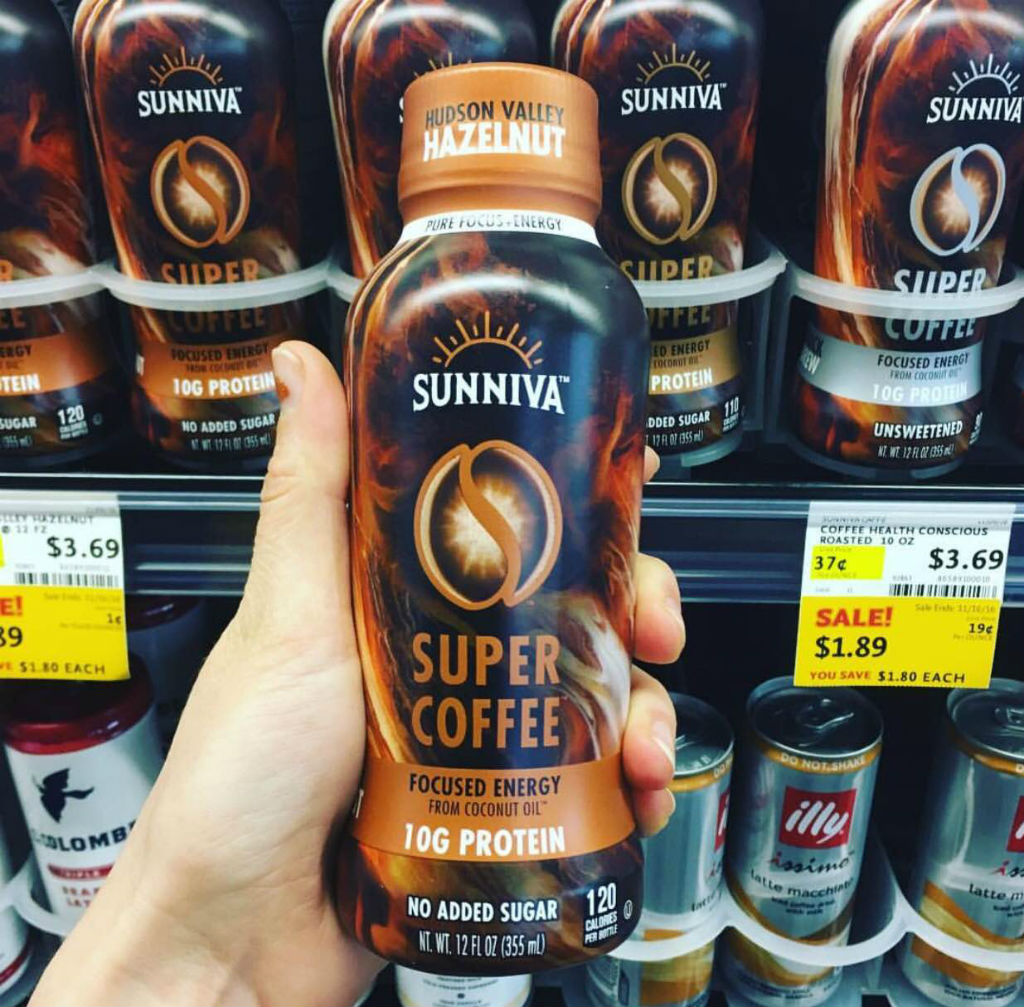
Sunniva "super coffee" beverageThat’s when he started making his own coffee drink and it seemed to be a winner. So much so that other students took notice and DeCicco began selling the drink out of his dorm room. He felt like he was onto something and enlisted help from older brother Jake, who at the time was in business school at Georgetown University.

“We’re very much accidental entrepreneurs,” Jake says. “We were just tired college students who needed an energy boost.”

Sunniva’s combination of Colombian coffee, coconut oil, and a lactose-free milk protein is a low-fat, low-cal beverage that, according to Jake, offers a longer-term energy boost compared to other products that often provide an energy spike and a crash later. Each bottle has 90mg of caffeine, which is pretty standard for an 8 oz. cup of coffee.

Sunniva is now about a year old and based out of the WeWork space in Crystal City. Oldest brother Jim is now the CEO and joins middle brother Jake in running the business, while youngest brother Jordan has gone back to school after taking a year off following his freshman year.

The business is coming full circle and targeting the very audience from which the original idea sprouted: Sunniva has found a substantial niche market on college campuses. It therefore relies heavily on digital marketing channels that younger audiences use: Facebook, Twitter, Instagram, blogs, and vlogs, to name a few.

“Being started by tired college kids for tired college kids, we really take advantage of this digital age,” Jake says.

The DeCicco brothers, who launched Arlington-based SunnivaThe brothers often are featured in the various social media posts. “We definitely have a personality behind the brand,” Jake says. He laughs as he points out how they often go by “oldest brother, middle brother, and youngest brother” instead of by formal titles like CEO, COO, or founder.

In addition to a growing market on college campuses, Sunniva also has found a home in the cold beverage section of 32 Whole Foods stores in the Mid-Atlantic region, as well as on Amazon.

The product is processed at an aseptic facility in Buffalo, New York. The business tried out different manufacturers and different modes of pasteurization before landing at the current facility. “We had to scale our business appropriately to get there,” Jake says.

Sunniva currently processes about 200,000 bottles per batch. The product now is made in such a way that it doesn’t require refrigeration before opening; it’s shelf-stable for nine months.

Sunniva’s business plan involves further expansion into other Mid-Atlantic and northern East Coast markets up to Boston, with a longer-term goal of becoming a national brand. But the goal for early 2017 is to work on more local market penetration. The brothers want Sunniva to be the “premier bottled coffee in the Washington, D.C. area.”

“Reaching profitability is not a metric we use right now,” Jake says. “Right now we’re really focused on our philosophy of ‘win where you live’ and being hyperlocal.”


Startup Monday header

Sponsored by Monday Properties and written by ARLnow.com, Startup Monday is a weekly column that profiles Arlington-based startups and their founders, plus other local technology happenings. The Ground Floor, Monday’s office space for young companies in Rosslyn, is now open. The Metro-accessible space features a 5,000-square-foot common area that includes a kitchen, lounge area, collaborative meeting spaces, and a stage for formal presentations.

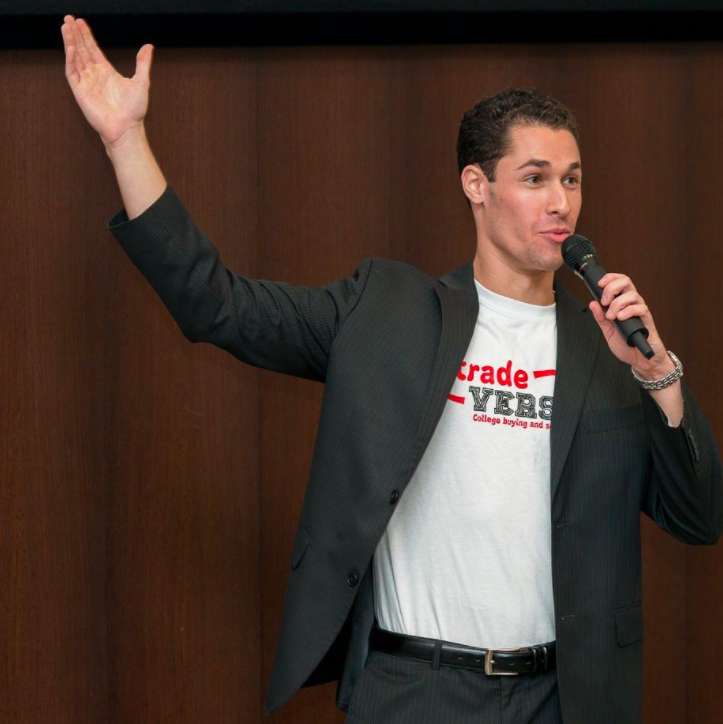
Michael MeyersLike a lot of college students, Michael Meyers was strapped for cash. Like, really strapped for cash, even gas money. He was not, however, short on ambition, ingeniousness or energy. Put those together — the need for funds plus the determination to earn it — and you get a new business.

In this case, it’s the Arlington-based sharing economy platform called Tradeversity.

“The problem I had wasn’t revolutionary by any means,” Meyers admitted. “As a student covering my college expenses I was just trying to sell items around my apartment.”

At the time, in 2013, Meyers was studying marketing and finance at the University of South Carolina in Columbia. The Northern Virginia native was unfamiliar with neighborhoods off campus so he eschewed posting on Craigslist and Facebook Marketplace which might have him delivering to sketchy or distant neighborhoods, and Marketplace listings tend to get buried quickly. He also learned that shipping costs incurred with a sale on eBay posts were prohibitive.

His inventory at the time included textbooks, furniture and especially backpacks — his father is a rep for Jansport. In short, he needed an efficient way to list his merchandise to a specific market, ideally those nearby with an SC.edu address.

“I discovered there was no simple, effective, safe way to sell my stuff,” he said.

And when you find a niche, what’s an ambitious marketing and finance major to do but to fill it?

thunderclap2Things moved fast for Meyers, who credits a superb support system for innovators and entrepreneurs at his university: Incubators, mentors and others who “helped me embrace the idea of starting a business in school. You have so many resources surrounding you.”

A beta test at USC was a strong indicator that he was onto something. Not only did it catch on with his own cohort, suddenly students at other universities were asking, When is Tradeversity coming to our school?

The timeline: Inception in 2013; developing the concept immediately after graduating in December 2014; launching the platform in 2015.

He is finding similar entrepreneurial support at his new offices at Crystal City’s 1776 startup incubator. In the last month or so since signing on, Meyers said he’s found new mentors “who have been very generous with their time. They have a strong understanding of how to build a technology company.”

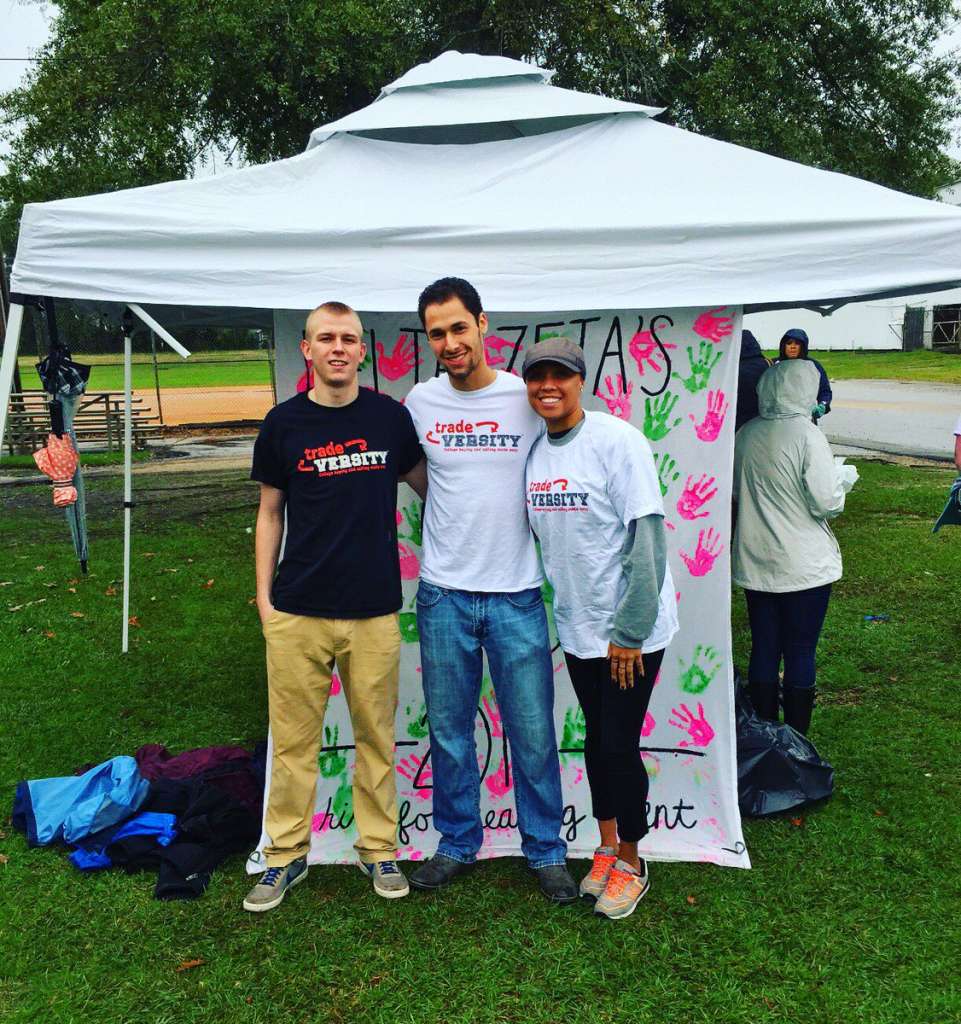
TradeversityThe experience has been similar at Crystal City’s WeLive/WeWork innovation hub. Those are the locations, in addition to an office at the USC/Cola Technology Incubator, where the staff of three full-time employees and the various part-time and contract employees work on perfecting the platform.

The Arlington locations, he said, “have been extremely supportive and helpful and opened us up to a vast network of mentors, educational opportunities and talent. We’ve also been working with Tara Silver and her [marketing] group SilverStrategy as well.”

Meyers said he developed the idea on a bootstrap basis. “I put everything I had into the company,” he said. “You can imagine that if I was trying to sell backpacks to cover the cost of college, my [investment] wasn’t very much.”

A huge financial and inspirational windfall arrived when Tradeversity won the Proving Ground 2014 “big pitch” competition at USC, with a $20,000 prize. That and a few grants got them through and recently Meyers closed his first angel round, raising, he said, more than $400,000.

That funding will go into all the elements of the business, from design and coding to marketing and hiring more staff. He hopes to fill five to eight full-time spots in the next 12 months.

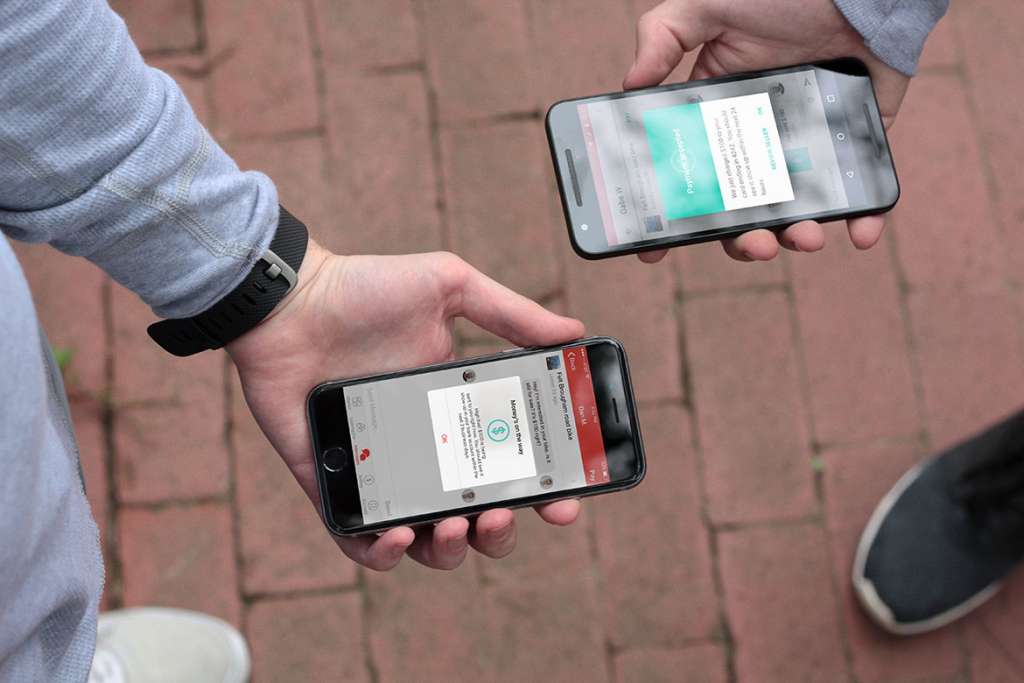
TradeversityThe service is live and open at 20 universities — an .edu address is required to open an account — but he said there are clients at “more than 200 additional schools” who have opened accounts. “That’s our roadmap for future launches,” he said. “We launch based on where the orders are coming from anyway.”

Tradeversity avoids the cumbersome paperwork involved in becoming an official school vendor — the school usually wants a cut of sales — but some university officials have expressed branding Tradeversity’s service in their own name, a private label as it were, and Meyers is in talks with representatives about that concept.

Licensing may be a viable revenue stream in the future. Meyers is exploring other monetization opportunities that take advantage of cash sales going down in college residence halls. “It’s very difficult when you have a hyper-localized marketplace unless you control the transaction from start to finish,” he said.

But he’ll figure it out. He did it once, he can do it again.


View More Stories