For all of the problems caused by the government shutdown across the D.C. region so far, Sen. Mark Warner (D-Va.) fears things could get “exponentially worse” as soon as next week if federal employees are still going without paychecks.

Warner, like the rest of his Democratic colleagues in Congress, already sees the standoff over border wall funding engineered by President Trump as “outrageous” and a “disgrace.” Thousands of federal workers in the D.C. area alone missed their first paychecks of the shutdown last week, putting a severe strain on their finances and the whole region’s economy.

But Warner foresees government employees reaching a crisis point should they miss another paycheck in the coming days, which looks like a sure bet as Trump refuses to give an inch in discussions with congressional Democrats.

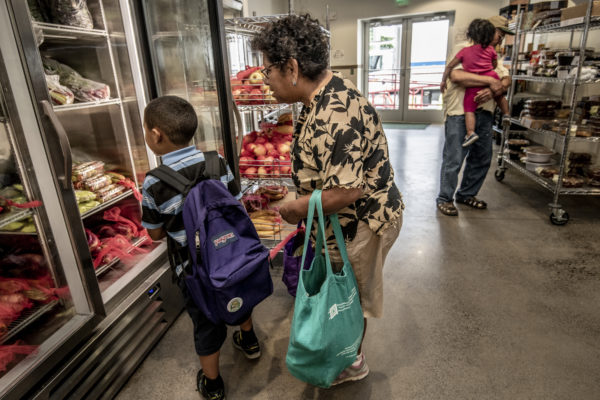
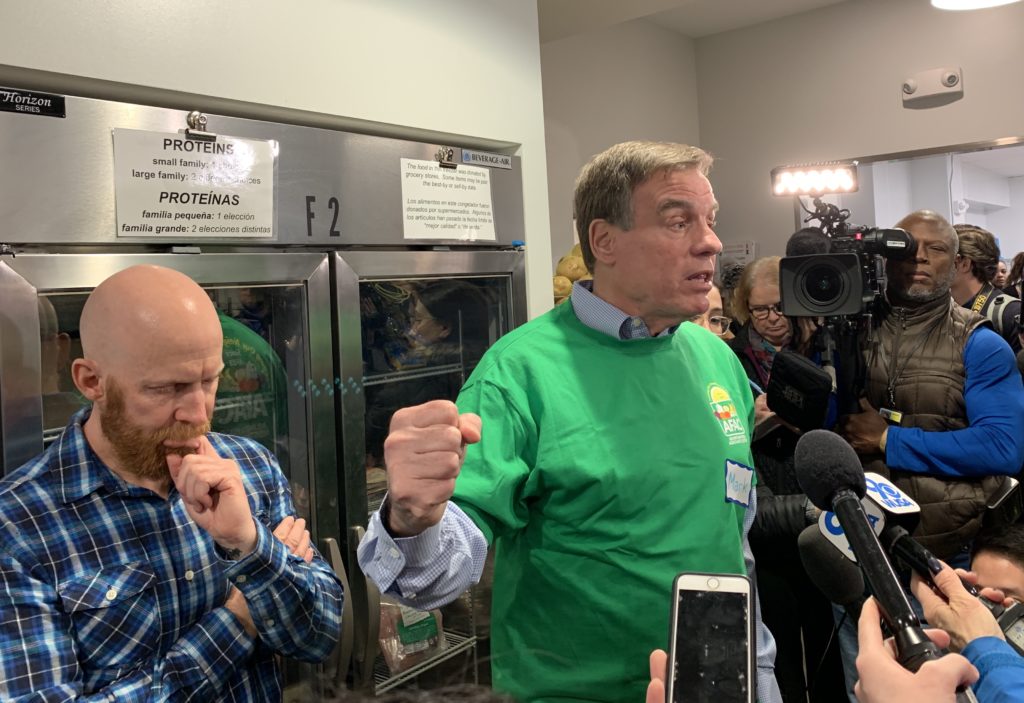
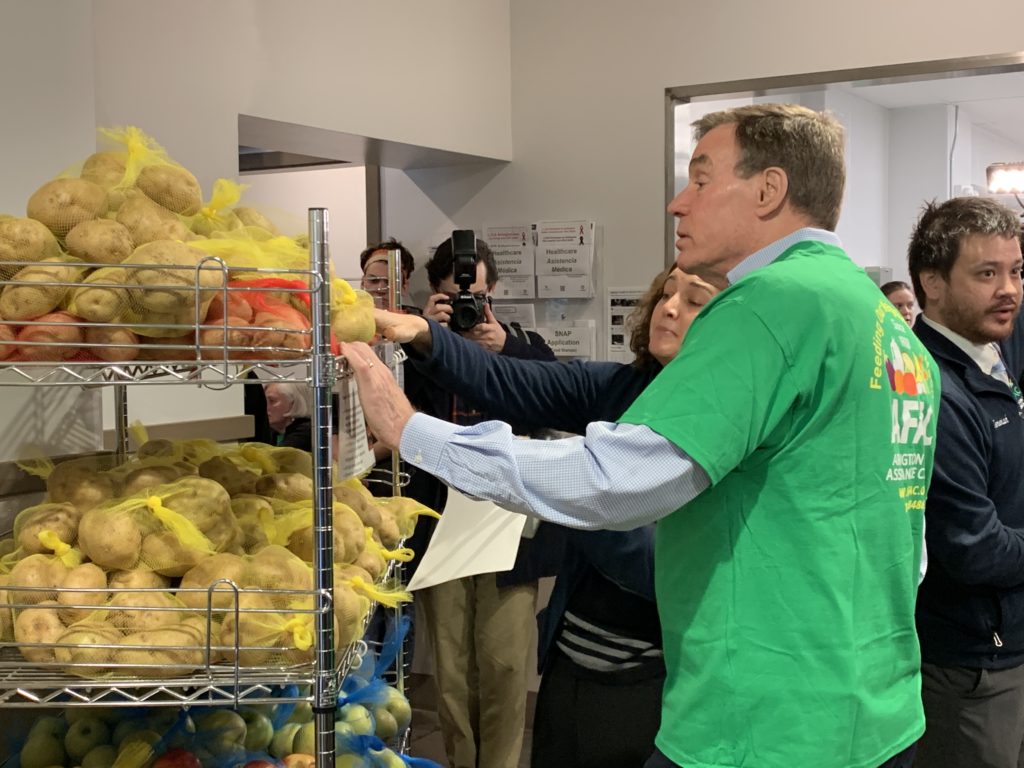
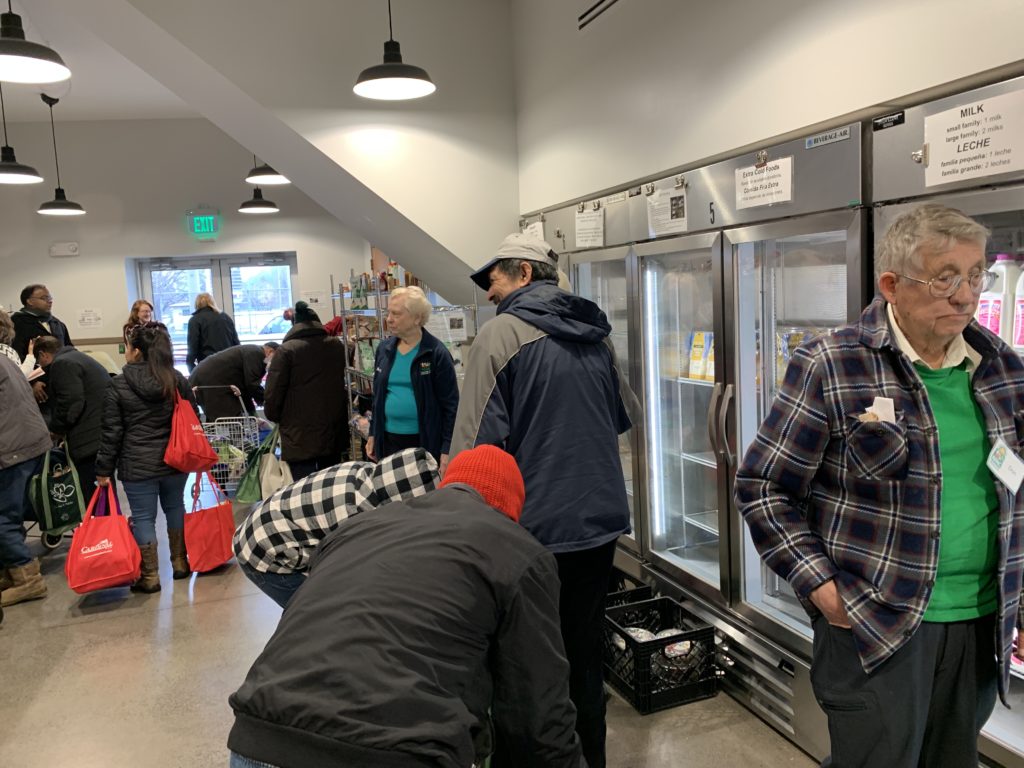
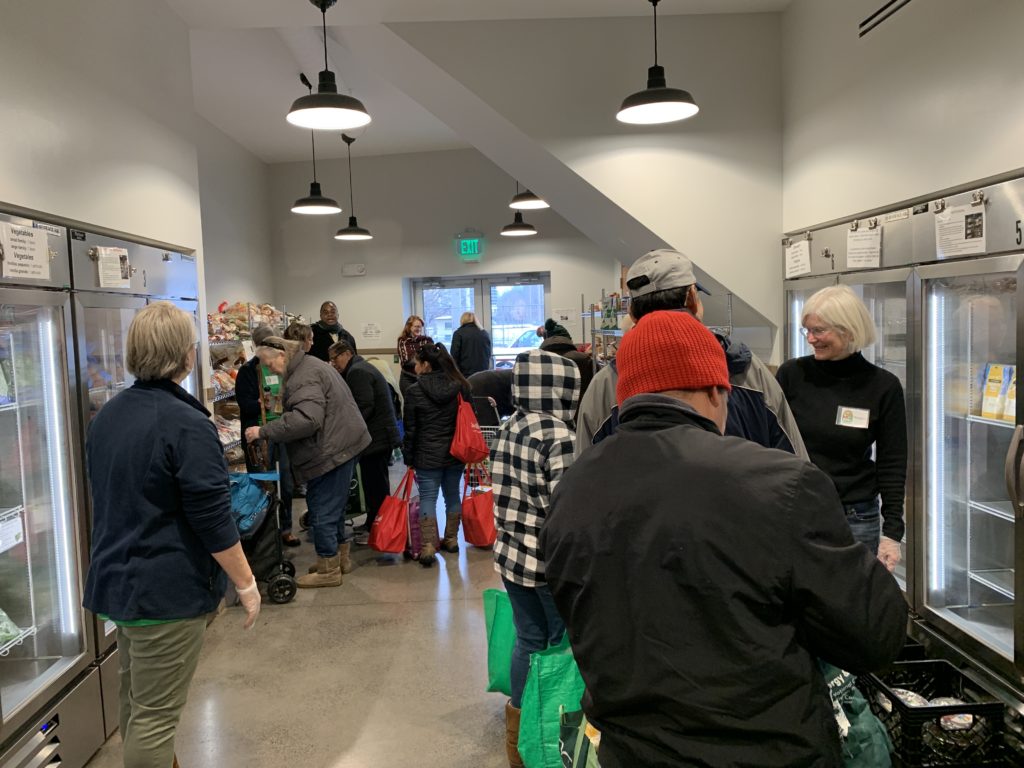
“When people go without a second paycheck, which is coming next Thursday, and they hit the beginning of the month of February, there are mortgages due, their rent is due, other bills are due,” Warner told reporters during a visit to the Arlington Food Assistance Center’s food distribution center in Nauck today (Friday). “That’s when things get really bad… And what’s happening in our region, it’s already a crisis. But this is going to be a crisis that spreads all across the country. ”

Warner pointed out that Congress and Trump could at least agree to provide back pay for furloughed workers, but he warned that restitution alone “doesn’t make you whole.” He’s already heard stories from people taking out loans to make it through the shutdown, or missing payments and seeing their credit scores take a hit.

And he’s especially concerned about federal contractors, which include not only high-priced tech workers but people working in cafeterias or custodial services, who may not make much money.

Charlie Meng, the executive director of AFAC, told ARLnow that “many of the contractors who are most affected are our clients already.” He says the food bank has seen a “slight uptick” in interest since the shutdown started, and it began urging federal employees to swing by for free groceries, but he said that people who are already struggling to get by are the ones hardest hit by missing out on paychecks.

“We serve the working poor, and that includes many of the people who work for the government indirectly but are just hanging on,” Meng said. “Something like this happens, and it really hurts them.”

Warner notes that the shutdown will likely spell big trouble for Metro the longer it drags on. WMATA General Manager Paul Wiedefeld told the D.C.’s regions senators yesterday (Thursday) that keeping federal workers at home is prompting a steep drop in ridership, costing the rail service about $400,000 per day.

It doesn’t help matters either that federal officials haven’t been able to reimburse Metro for about $33 million in expenses it has incurred over the course of the shutdown, an amount Wiedefeld estimates could balloon to $50 million by the end of the month. He warned that Metro would need to start relying on its line of credit to afford major capital improvements soon enough, or simply delay badly needed projects.

“In a way, it’s like Metro can’t catch a break,” Warner said. “Finally, the region stepped up, Virginia, Maryland, the District to provide additional, dedicated funding for Metro. Now we’ve got this crisis, not due to Metro’s performance but due to the government shutdown. It’s going to put Metro even further behind.”

Warner says Democrats are “absolutely” willing to negotiate on increased border security measures with the White House to end this standoff — but only if Trump agrees to open the government back up first.

“If you reward this bad behavior, he will try this again, he will try this again with spending bills going forward,” Warner said. “You don’t reward a bully.”

Warner points out that a bipartisan group of senators wrote a letter to Trump, urging him to fund the government for three weeks to let negotiations to start back up. But that effort fizzled, and he says it was “disappointing” to discover that the White House was actively pressuring Republicans not to sign on to that push.

“It’s tough if you’re a Republican senator to sign onto a letter, even a reasonable letter, when you’ve got folks like Jared Kushner and others lobbying against it,” Warner said.

Broadly, he believes Trump is hanging over the whole debate. Even though the Senate already voted unanimously to fund the government before Trump started demanding money for a border wall, Warner feels his Republican colleagues haven’t been willing to take action for straightforward political reasons: “You’ve got a lot of Republicans who are afraid of upsetting the president.”

So even as Republicans privately tell Warner that they’d like to end the shutdown, he doesn’t see much hope for any resolution soon. And that, he says, sits squarely on Trump’s shoulders.

“The president has said he was proud to own this shutdown,” Warner said. “This will be part of his legacy, which is already the worst legacy in modern American history.”


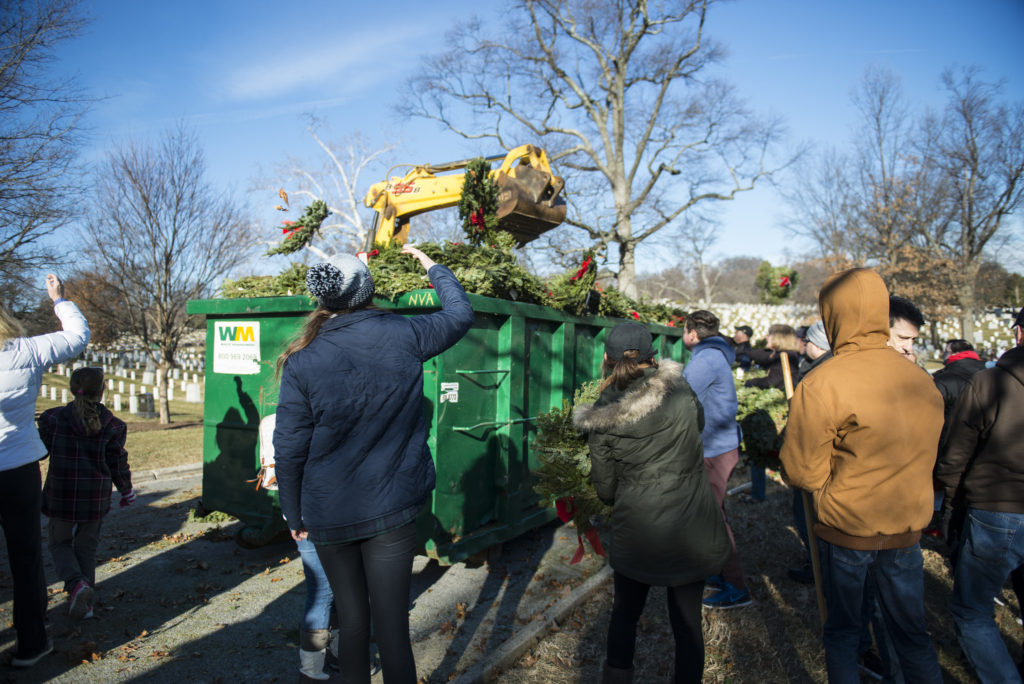
Arlington National Cemetery is preparing to welcome thousands of volunteers tomorrow (Saturday) for its annual wreath removal event, and officials are urging participants to prepare for the big crowds.

Starting at 8 a.m., cemetery officials are expecting “traffic congestion and delays on nearby streets and at the cemetery’s entrances” for the “Wreaths Out” event, according to a news release.

Volunteers will be charged with disposing of the more than 245,000 wreaths distributed at headstones for the “Wreaths Across America” event last month.

“This is a special day where the wreaths placed at these hallowed grounds during the holiday season in remembrance and honor of our nation’s fallen service members and their families will be respectfully removed by volunteers,” Arlington National Cemetery Operations Director Micheal Migliara wrote in a statement. “We encourage volunteers to use all four entrances to access the cemetery which include Memorial Avenue, Ord and Weitzel gate, South gate and for DoD cardholders, the Old Post Chapel gate.”

Much like the wreath-laying event, the cemetery will block off all vehicle access to the grounds until 3 p.m. Saturday.

Family pass holders and volunteers with handicapped passes will be allowed to park in the ANC’s parking garage starting at 7 a.m., on a first-come, first-served basis. Anyone arriving by car should stay in their vehicle until the cemetery opens at 8 a.m.

People arriving via rideshare or taxi should plan on exiting somewhere adjacent to the Arlington Cemetery Metro stop. Officials also highly encourage people taking Metro to reach the event.

The cemetery also issued the following tips for volunteers:

  • Give vehicles and heavy equipment the right of way and let them pass in roadways.
  • Remove only WAA wreaths. Leave all other wreaths or decorations in place.
  • Place wreaths in dumpsters positioned throughout the cemetery and pack them tightly.
  • When dumpsters are filled, do not pile wreaths next to them. Carry wreaths to unfilled dumpsters.
  • Refrain from jumping or climbing on wreaths in dumpsters to compress them.

Flickr photos via Arlington National Cemetery


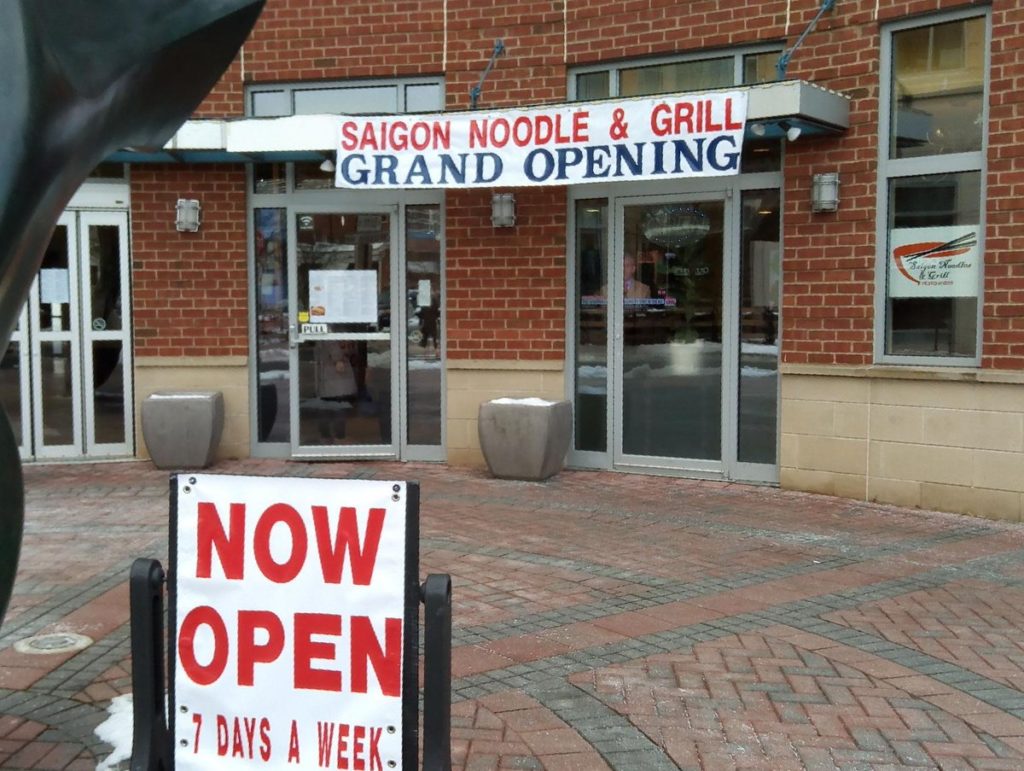
A new Vietnamese restaurant is now open in Rosslyn.

Saigon Noodles and Grill, located at 1800 Wilson Blvd, has posted banners proclaiming the eatery’s “grand opening.”

The restaurant first put up signs at the space last month. The eatery replaces Bistro 360, a wine shop and eatery that closed last May after about four years in Business.

According to its website, Saigon Noodles and Grill will be open all seven days a week, from 10 a.m.-10 p.m.

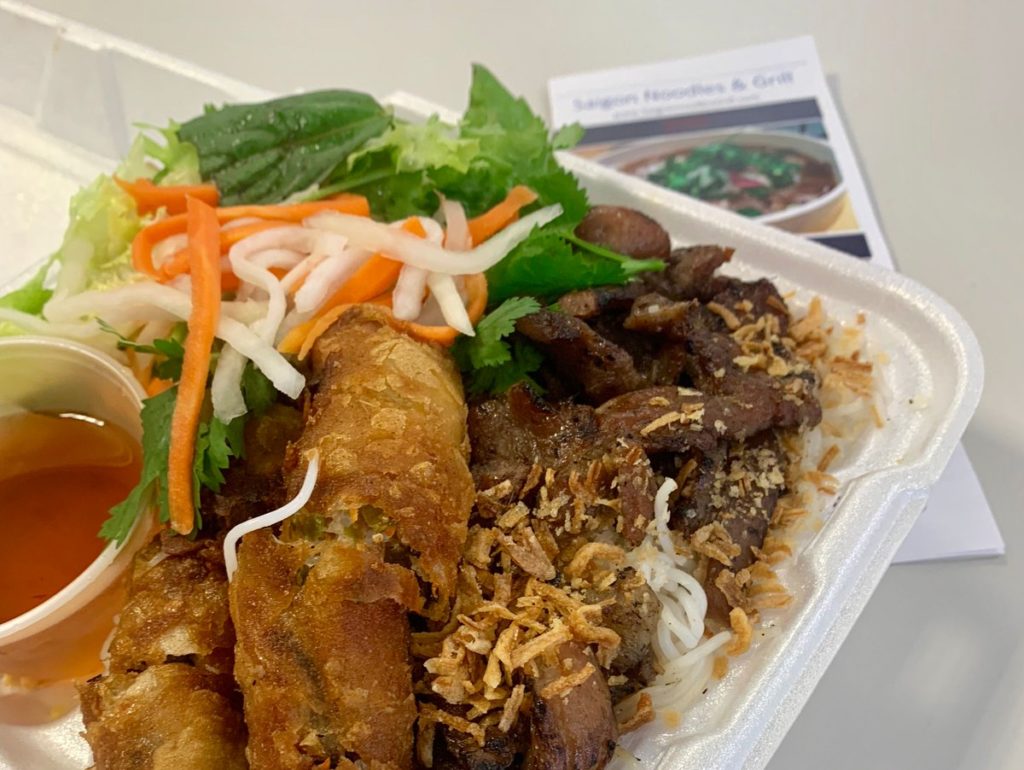
Its menu includes pho, banh mi and a whole host of other Vietnamese dishes.


(Updated at 8:25 p.m.) When many Arlingtonians take a look at the sort of impact Amazon has had on Seattle since setting up shop in the city, they can’t help but feel nervous about how the tech giant might transform the county when it arrives.

The city has seen everything from skyrocketing housing prices to nightmarish traffic congestion stemming from Amazon’s rapid growth into one of the largest companies in the world, and leaders there have felt compelled to take new steps to bridge the growing inequality between the city’s tech workers and the rest of its residents.

It all provides plenty of reason to be wary of what lies ahead for Arlington once the company starts bringing its new headquarters to Crystal City and Pentagon City. But local leaders and regional planners are trying to deliver a clear message to quell those concerns — Seattle and D.C. could not possibly be more different.

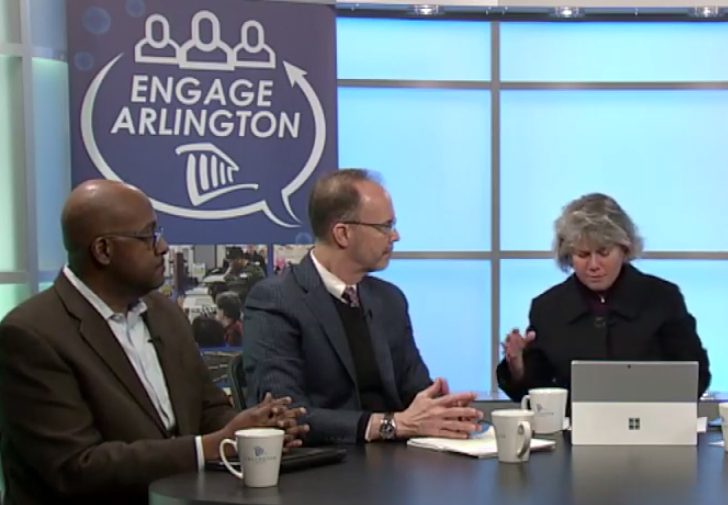
“A lot of people are influenced by the Seattle example… and they think, ‘We don’t want to end up like that, our problems are already bad,'” County Board Chair Christian Dorsey said during an Amazon discussion yesterday (Wednesday) live-streamed on the county’s Facebook page. “But some of these fundamental economics are very different. I’m not saying we’ll have no problems, but I’m pretty confident we won’t have Seattle’s problems.”

For one thing, it helps that the D.C. region is quite a bit larger than Seattle and its suburbs. Chuck Bean, the executive director of the Metropolitan Washington Council of Governments, estimates that the D.C. metro area is “about 40 percent bigger” than Seattle’s, so there’s “a lot more absorptive capacity” for the workers Amazon will bring here.

It doesn’t hurt either that Bean believes has the region has “an advanced, mature transit system that Seattle didn’t have,” giving people the ability to live a bit further away from the headquarters without necessarily relying on a car.

“Perhaps it’s a bit too mature, but we’re working on that,” Bean said, in a reference to the lengthy efforts by local leaders to get Metro working properly again.

Amazon has pledged to deliver 25,000 new jobs at its new headquarters, but officials have consistently reiterated that only a small portion will likely live in Arlington itself, and many already live elsewhere in the region. The way Dorsey sees it, the county is only likely to see about 20 percent of Amazon’s workers live in Arlington, equivalent to about 5,000 people in all.

In a county of 230,000 people or so and a broader region of millions more, he hopes that such an addition won’t be nearly as disruptive as it was in Seattle. Bean also points out that Amazon’s 25,000 jobs is just a drop in the bucket compared to the 1.1 million jobs his group believes the region will add over the next 20 years.

“Their population grew by 40 percent from when Amazon was founded to about two years ago,” Dorsey said. “That’s a tremendous amount of growth in a short period of time for any community to sustain. They’re not going to have anywhere near that impact, based on that path of growth here.”

Dorsey also notes that Amazon’s employees “earned significantly more than other Seattle workers,” especially when the company was first growing in size. Based on the tech firm’s projections, Dorsey expects that Amazon’s workers will earn “about what the typical higher wage employees in this area already earn” — as a condition of the state’s deal with Amazon, the average salary of the company’s workers needs to be at least $150,000 per year, with that amount increasing each year.

Dorsey acknowledges that there is the chance that adding more wealthy workers will drive up prices around the region, particularly for rent. But Eric Brescia, a member of Arlington’s Citizens Advisory Commission on Housing, says it’s not that simple.

“Intuitively, when you bring more high-income people in, it creates more demand to drive up prices,” Brescia said. “But the price of housing is not only just a function of what the demand is, it’s how does the supply compare to the demand.”

To demonstrate the difference, Brescia drew a comparison between how San Jose managed the explosive growth of Silicon Valley and Charlotte shepherded growth in its financial services sector.

Brescia, an economist for his day job, pointed out that Charlotte has since a 40 percent boost in jobs over the last two decades, while San Jose saw just a 17 percent bump. Nevertheless, home prices in Charlotte only rose by 18 percent in that same period, while they rose by 160 percent in San Jose — adjusted for inflation.

In his mind, the difference comes down to housing production — Charlotte and its suburbs added 400,000 new homes over the last 20 years, while San Jose managed just 100,000.

“This is an illustration that the presence of high-paying jobs does not inherently make housing unaffordable if we’re nimble enough to build housing to accommodate that,” Brescia said. “And I think this region as a whole is really going to have to be thinking of land use policy, transportation policy to determine where these homes are going to go.”

For Dorsey, who once drew headlines for proclaiming that the county should not “protect” certain neighborhoods from density, that illustrates the County Board’s challenge in the coming years.

He points out that Arlington is currently dominated by large swaths of neighborhoods with only single-family homes, particularly in the areas outside of Arlington’s Metro corridors. As county Housing Director David Cristeal noted, the majority of the homes in Arlington are apartments, but the majority of the square footage is occupied by single-family homes.

As more Amazon workers move in, Dorsey expects that officials will need to do something to confront that trend and avoid “inefficient sprawl.”

“Our community has to embrace a conversation about what it really means to grow the supply,” Dorsey said. “Our community in Arlington, and our region in general, devotes a lot of its housing to one house per lot. And if we think about equitable growth, growth that’s diverse and inclusive, that can’t be the sole way we do it.”

That could mean everything from expanding the county’s previous efforts to allow more “accessory dwelling units” on single-family lots, or encouraging the redevelopment of some single-family homes into duplexes.

But Dorsey also admitted that some more drastic changes could be necessary in terms of increasing density throughout the county. If officials don’t embrace that mindset, Brescia fears Arlington could wind up facing some of those Seattle-sized problems it hopes to avoid.

“If some more flexibility isn’t gradually allowed in more regions of the county, we’re increasingly going to be single-family neighborhoods with $2 million dollar homes versus people in very small apartments near the transit corridors, and really nothing in between,” Brescia said. “Some people get scared when you talk about those things, but the question is how to gradually grow so you don’t have that divide.”

Photo via Facebook


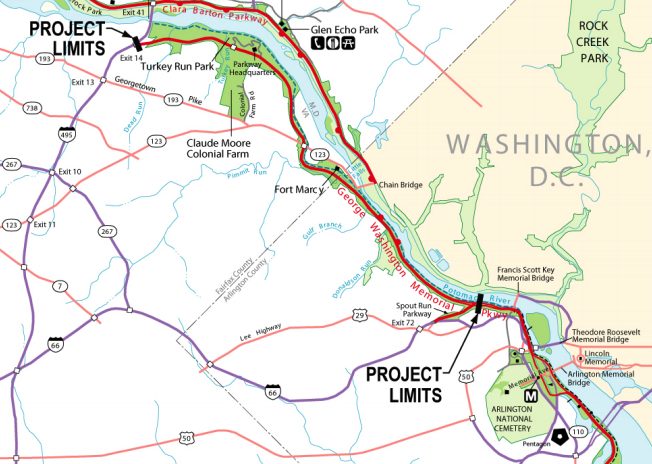
Federal officials think they have a good shot at winning $126 million in grant funds to make a series of badly needed repairs on a long section of the GW Parkway, and Northern Virginia’s congressional delegation is throwing its weight behind the effort.

The National Park Service, which maintains the road, is currently applying for a hefty U.S. Department of Transportation grant to fund rehabilitation work on a roughly eight-mile-long stretch of the parkway, as it runs between the Spout Run Parkway in Rosslyn and I-495. Now, both of Virginia’s senators and three local members of Congress are lending their support to the funding push, in a bid to finally afford some changes on the aging roadway.

“The proposed project will address serious deterioration of the GWMP and implement significant safety improvements,” the lawmakers wrote in a Jan. 8 letter to Transportation Secretary Elaine Chao. “This project will improve a critical link in the National Capital Region’s transportation network while preserving the historical and cultural characteristics that make the parkway one of the most scenic roadways in the country. These proposed improvements will increase the safety of visitors while significantly extending the life of the parkway.”

Sens. Tim Kaine and Mark Warner (both D-Va.) both signed the letter, as did Virginia Reps. Don Beyer (D-8th District) and Jennifer Wexton (D-10th District). Rep. Eleanor Holmes Norton, D.C.’s lone, non-voting representative in Congress also added her support.

The NPS says the construction work, set to cost about $150 million in all, will start at the parkway’s Spout Run Parkway exit and include:

  • Making drives smoother by replacing the asphalt pavement
  • Replacing guardrails and repairing walls
  • Repairing stormwater management systems to keep excess water from damaging the road
  • Constructing new concrete curbs
  • Rehabilitating parts of two historic, scenic overlooks
  • Lengthening entrance and exit lanes at some interchanges

Officials also hope to use the cash to replace the stormwater drainage grates that line the parkway, which have long made for a bumpy ride for drivers. They’re also envisioning adding four “emergency turnarounds,” in order to allow police to more easily redirect drivers who stop on the road due to a crash or inclement weather.

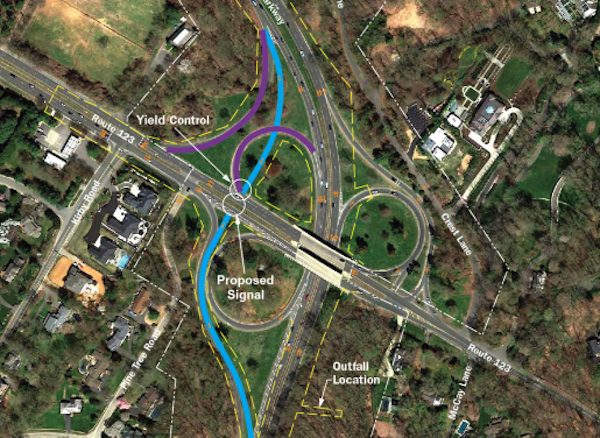
The construction would also include improvements at the parkway’s interchange with Chain Bridge Road in McLean, like adding a new traffic signal to the area.

The lawmakers note in the letter that this northern stretch of the parkway was first built in 1962, and with more than 33 million vehicles using the road each year, it’s badly deteriorated in the decades since.

The NPS is hoping to win the funding through the Department of Transportation’s “Nationally Significant Federal Land and Tribal Projects” program. In a release, park service officials said they believe the project “will compete well” for cash through that program, given the parkway’s “significance” and the fact that the NPS has already wrapped up schematic design work for the construction.

If all goes well, officials hope to kick off construction sometime next year.


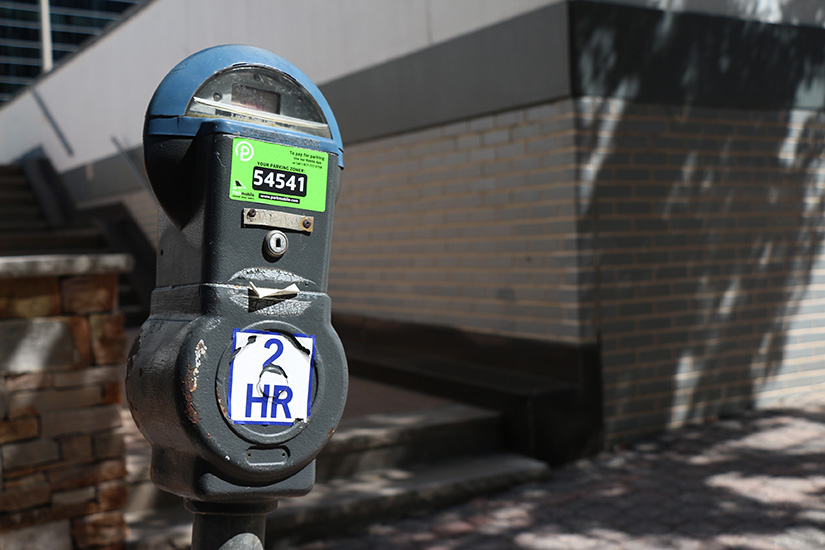
(Updated Friday at 12:45 p.m.) New legislation working its way through the General Assembly could soon let Arlington, and other large Northern Virginia localities, start hiring private contractors to ticket parked cars for minor violations like expired license plates — but the lawmakers backing the bill say they introduced it for a slightly different purpose.

Currently, only county police can hand out such violations. But identical bills just introduced down in Richmond by state Sen. Dick Black (R-13th District) and Del. Karrie Delaney (D-67th District) could allow private parking enforcement staffers in large counties like Arlington to hand out those tickets too — if the localities opt in for the change.

At least, that’s how Arlington County Attorney Steve MacIsaac reads the bill, according to a county spokeswoman. Specifically, he believes that the legislation “would allow Arlington to enforce expired plates and other such violations on parked vehicles, and to hire non-law-enforcement uniformed personnel to carry out such enforcement.”

“It would be up to the County Board, should this bill become state law, to decide whether it wants to take advantage of this broadening of the county’s authority,” Board spokeswoman Mary Curtius told ARLnow.

But the bill’s backers say they introduced the legislation for to make a difference far outside of Arlington. Black and Delaney both represent portions of Loudoun County, where they’re targeting the change.

The legislation specifies that any locality with more than 40,000 residents has the power to hire contracted workers to enforce parking violations, rather than relying on police officers for that purpose. Current law only gives cities with more than 40,000 people that authority, leaving Loudoun and other large counties a bit stuck.

“This bars counties from contracting out enforcement services, forcing members of their already overworked police offices and other uniformed personnel to use their working hours checking parking hours and enforcing parking meters,” Delaney said during a House of Delegates subcommittee meeting last Thursday (Jan. 10).

As Loudoun prepares to welcome its first Metro stations in the coming years, with the Silver Line gradually expanding out to Dulles International Airport, county officials want to hire some extra help to enforce parking around the new stations. Jeffrey Gore, a lobbyist hired to represent Loudoun in the legislature this year, assured the Senate’s transportation committee yesterday (Wednesday) that plenty of other cities have made such a change, without incident.

“It’s not traffic violations, it’s just parking ordinances,” Gore told lawmakers. “Richmond does this, Virginia Beach does this. But Loudoun can’t do this, Fairfax can’t do this.”

But one outspoken political observer in Northern Virginia, political strategist Ben Tribbett, is blasting the bills as a “huge revenue grab” and compares them to another program in Fairfax County meant to step up the enforcement of car registration fee evasion.

An aide for Delaney did not respond to a request for an interview to discuss her bill, or Tribbett’s criticisms. However, county police spokeswoman Ashley Savage stresses that it wouldn’t have such an impact in Arlington, where police can already enforce such violations on parked cars.

Regardless of those claims, both bills are steadily advancing.

Black’s bill passed the Senate’s transportation committee on an 8-3 vote, and could soon head for a floor vote. Meanwhile, a House transportation subcommittee unanimously voted to advance Delaney’s bill, sending it to the full committee for review.


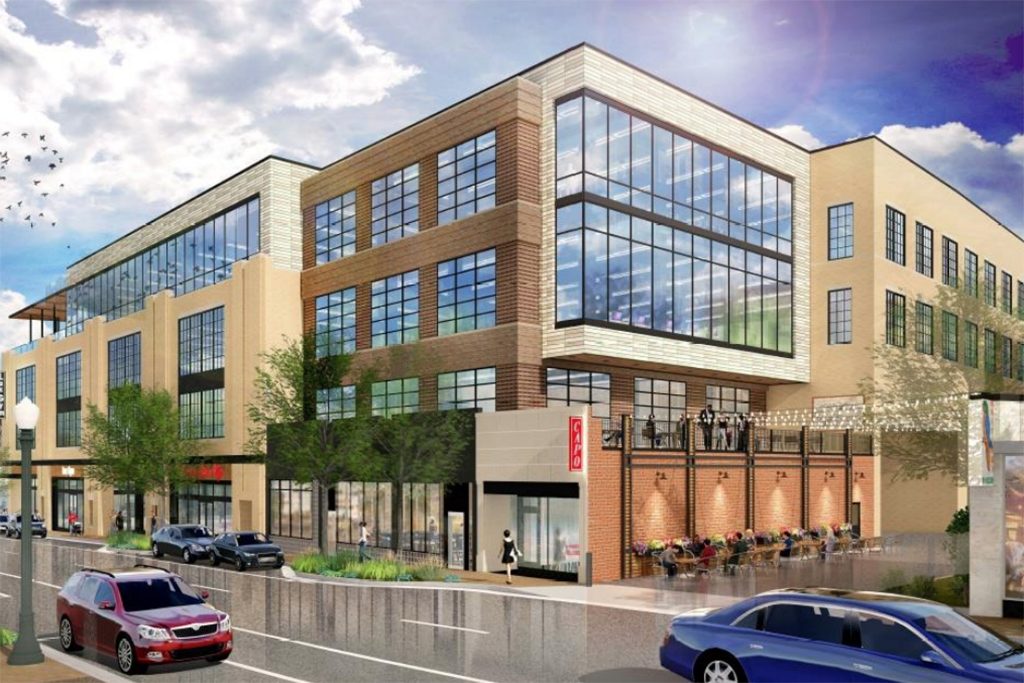
Work is now set to kick off on a major redevelopment project in Clarendon, with a “luxury fitness club” set to become the first tenant to move into the new, Whole Foods-adjacent building.

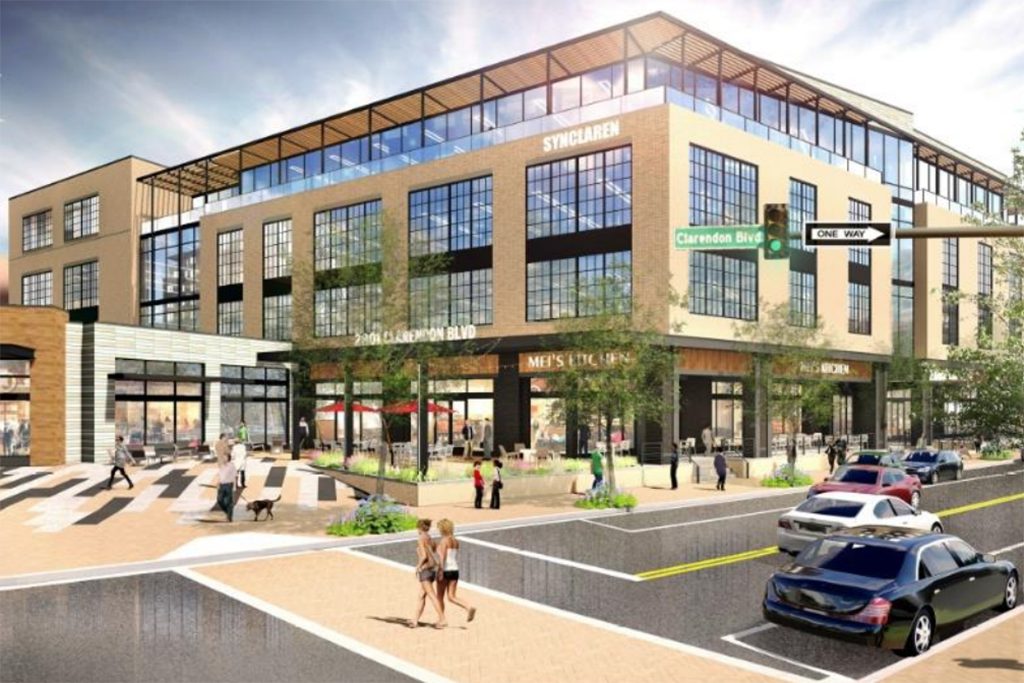
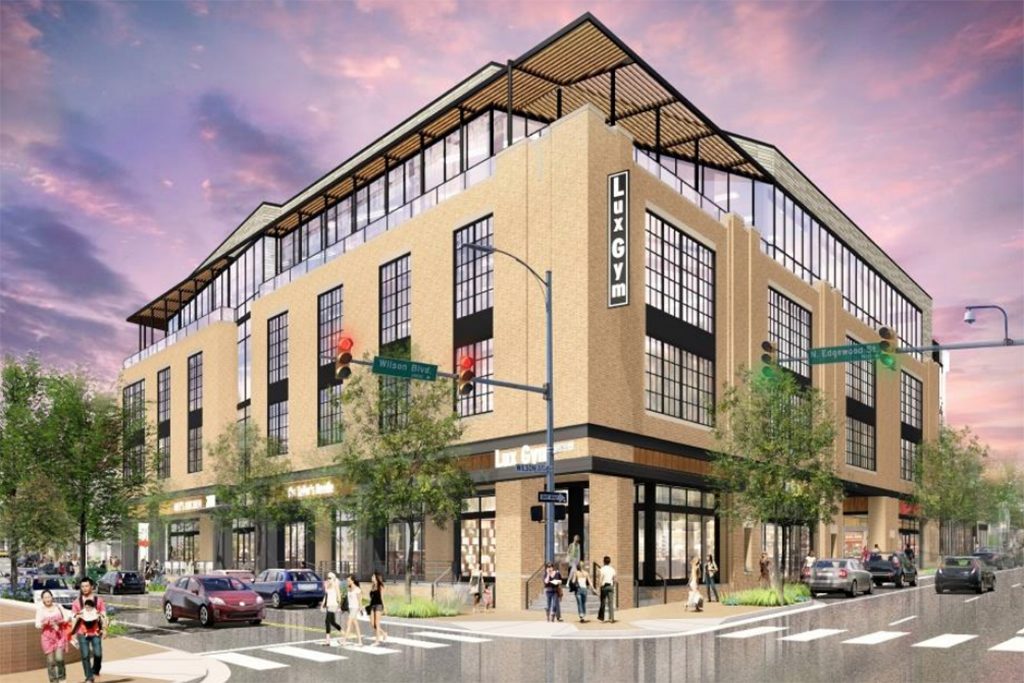
The developers controlling the Market Common Clarendon properties, located along the 2700 and 2800 blocks of Clarendon Blvd, announced yesterday (Wednesday) that they’re ready to start construction on an at-times controversial project transforming the old Clarendon Education Center into new office and retail space.

Eventually, Regency Centers plans to add a fourth floor and outdoor terrace to the current building at 2801 Clarendon Blvd, expanding it over an adjacent structure and adding more space in the process. The company is dubbing the building the “Loft Office at Market Common,” with plans to lease out about 145,000 square feet of space in the coming years.

The new development, located across Clarendon Blvd from Market Common’s other property known as “The Loop,” has attracted plenty of criticism over the years.

The building set to be revamped was once home to the popular live music venue the IOTA Club, and many people around the county’s arts scene have lamented the club’s closure as a result of this redevelopment effort, which was approved by the County Board last January.

But the project’s backers are marketing the work as a potentially transformative effort for the entire neighborhood.

“Our team is transforming an obsolete office building into a cutting-edge, mixed use destination by combining best-in-class retail and dining options on the street level, the nation’s premier luxury fitness club on the second level, and two levels of loft-style office space across from the only Whole Foods in the corridor,” Jason Yanushonis, Regency Center’s manager of investments, said in a statement. “Repositioning this building is a critical component to our overall investment strategy at Market Common. We feel like we are hitting the market at the right time with this truly unique space offering.”

The company said in a release that the aforementioned “luxury fitness” company will lease 5,000 square feet of space on the building’s first floor, and the entire, 26,000-square-foot second floor. However, Regency Centers is staying mum on which fitness studio, exactly, is on the way.

“We can’t say specifically just yet, but we are very much looking forward to being able to share that in the future,” spokesman Eric Davidson told ARLnow.

Permit applications from late last year appear to show cycling studio SoulCycle targeting the development for its first Virginia expansion, though those seemed to indicate it would be located in the Market Common retail space across the street from the new building —  Davidson would not address whether SoulCycle is the tenant in question for the new space.

As for the rest of the building, the company says there’s another 23,000 square feet of retail space available on its first floor and “86,000 square feet of creative office space available on the lower level, third and fourth floors.”

The company “primarily” hopes to attract “tech firms, IT firms and government contractors” for that space, the release said.

Regency Centers hasn’t settled on a firm opening date just yet, but is currently targeting the second quarter of 2020 to finish work on the project.

Just last month, the Baja Fresh restaurant adjacent to the soon-to-be redeveloped building abruptly shut down. However, it’s unclear if that was connected to this project or not.


Arlington’s local food bank is urging furloughed federal workers to swing by for free groceries, should times be getting tough as the government shutdown drags on.

The Arlington Food Assistance Center is reminding all Arlingtonians that anyone having trouble making ends meet is eligible to pick up a bag of groceries from the food bank on a one-time basis.

All you have to do is provide a government-issued photo ID and proof of your address (either on an ID or a bill mailed to your home). AFAC stresses that it has “does not impose income limits — ever,” making one-time assistance available to any furloughed fed missing out on paychecks these days.

“If your bills are high, your paychecks are withheld, or you just need something to get you through the week, AFAC is available to you,” the food bank wrote on its website.

Anyone looking for some more extensive help can also apply for three months of food, with a referral from the county’s Department of Human Services or an Arlington Public Schools social worker.

The food bank works to provide families, at a minimum, with staples like milk, fruit, vegetables, cereal, canned goods and other dry goods. AFAC operates three food distribution centers around the county, at the following places and times:

AFAC Nelson: 2708 S. Nelson Street, Arlington 22206
Monday to Friday:  10:00 AM – 12:00 PM
Tuesday and Thursday evenings:  7:00 – 8:00 PM
Saturday morning: 9:00 – 11:00 AM

Gunston Community Center: 2700 S. Lang Street, Arlington 22206
Thursday evening: 7:00 – 8:00 PM

Clarendon United Methodist Church: 606 N. Irving Street, lower level, Arlington 22201
Saturday morning: 9:30 – 10:30 AM

As the shutdown smashes records for the longest of any kind in the nation’s history, county officials have also been offering payment plans and fee forgiveness for some services.

Arlington’s also planned a variety of hiring events and financial management workshops for federal workers.


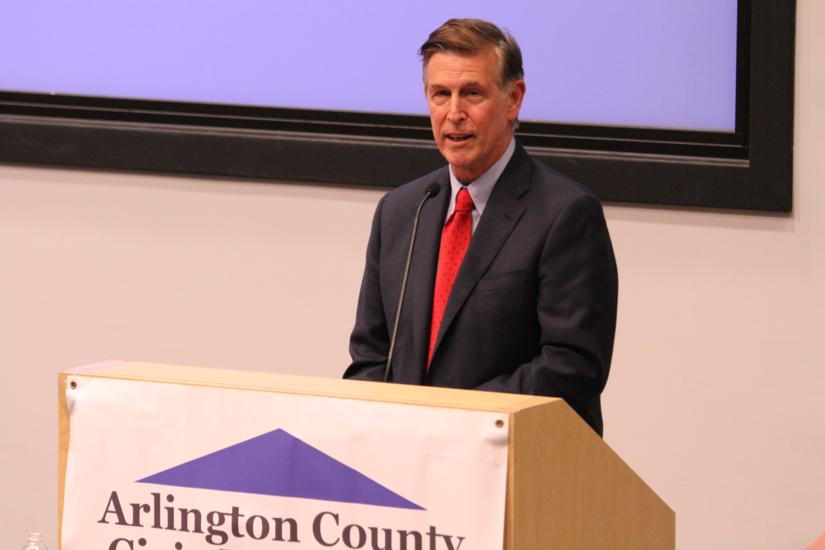
(Updated at 12:15 p.m.) Rep. Don Beyer (D-8th District) is planning a town hall in Arlington tonight (Thursday), in order to collect feedback on everything from the government shutdown to his plans for the new Congress.

Beyer’s set to hold the gathering at Yorktown High School (5200 Yorktown Blvd) tonight, running from 7-8:30 p.m. Though Arlington Public Schools have since canceled all after-school activities due to the threat of winter weather tonight, a spokesman for Beyer says the event is still on.

The county’s lone congressman convened the gathering to “discuss the issues on your mind, and what I’m doing in Congress,” according to an event posting.

The shutdown, now the longest in the country’s history, will likely be a prime topic of discussion, especially considering the adverse economic impacts it has had on so many federal workers in the district. A recent study found that the 8th, which covers Arlington and parts of Alexandria, has the largest number of federal employees in the country.

Beyer will also be able to use the town hall as a chance to solicit feedback on his plans in Congress for the next two years, as Democrats assume control of the House for the first time since Beyer won office in 2014.

He previously told ARLnow that he broadly hopes to focus on environmental issues, particularly oversight of President Trump’s picks to head the Environmental Protection Agency, and on securing new funding to combat aircraft noise around Arlington.

File photo


A D.C.-based rowing fitness studio is expanding to Ballston sometime later this year.

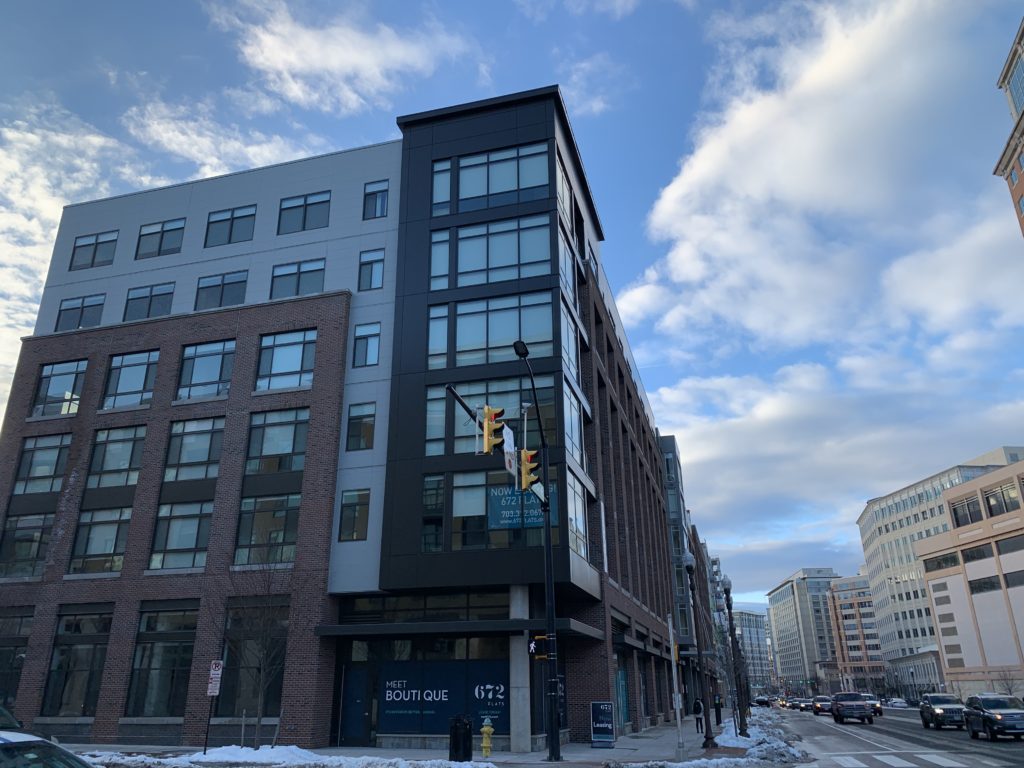
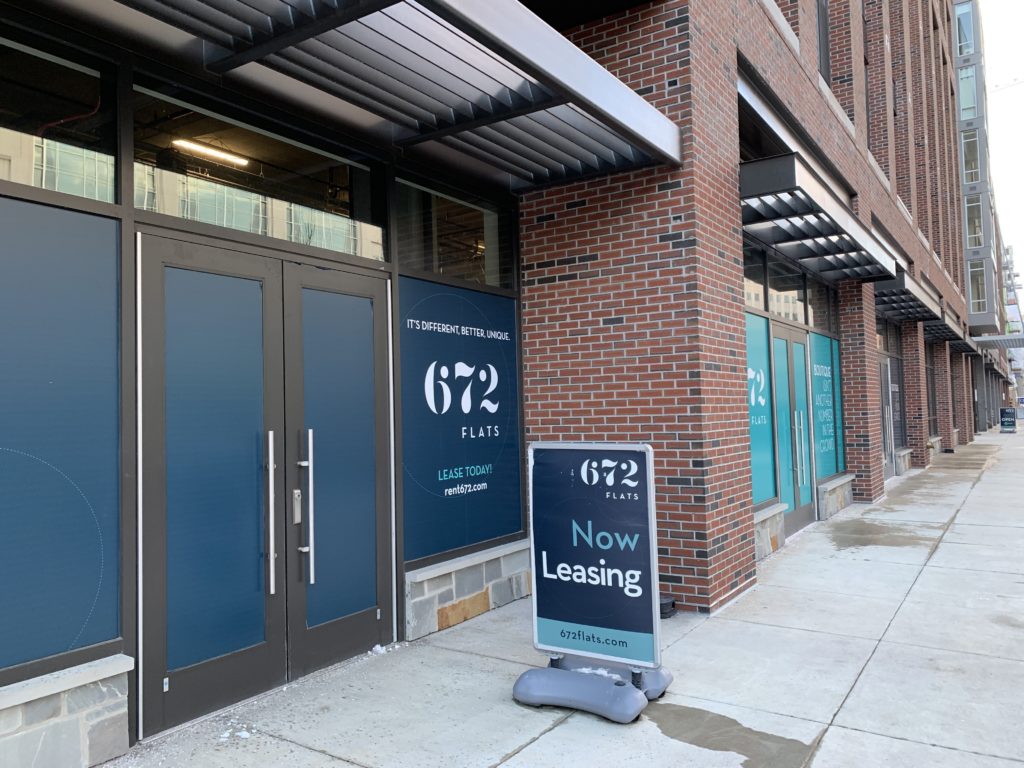
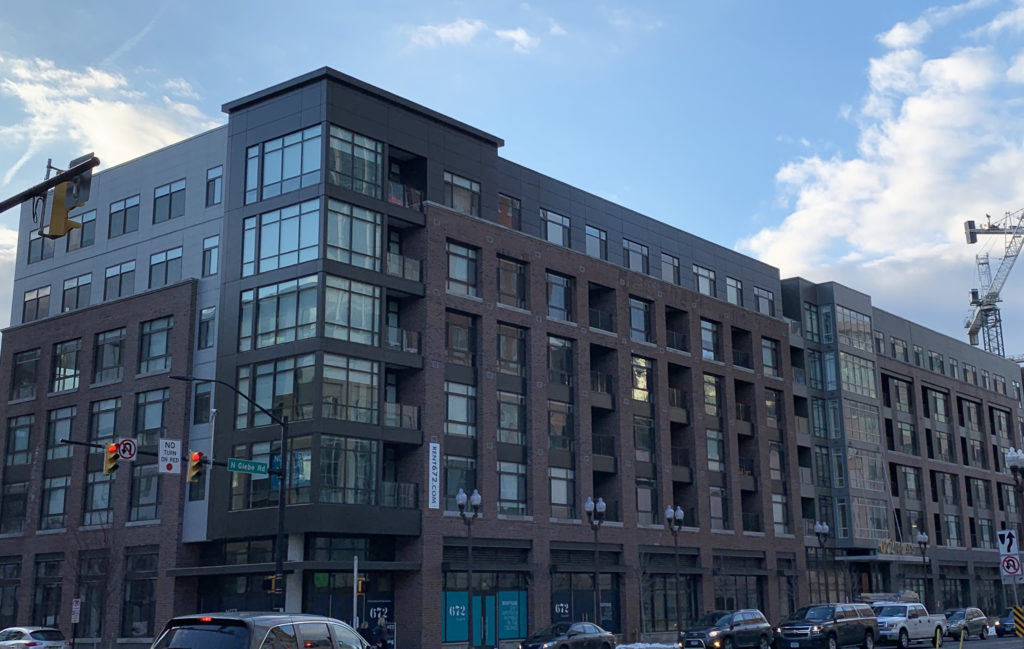
DC Row plans to set up shop in the base of the 672 Flats apartment building at 672 N. Glebe Road, according to Jordan Newsome, one of the studio’s executives. The new, mixed-use building is located just across Glebe Road from the Ballston Quarter development.

The studio opened its first location at The Wharf in Southwest D.C. last May, and Newsome dubs it the region’s “first and only boutique strictly rowing studio.”

“What that means is that all of our workouts focus on rowing as the main component, with 10 minutes of floor exercise and ‘getting to know your rower’ worked in the mix,” Newsome wrote in an email.

Newsome added that the studio also offers “free classes to seniors, military and first responders once a month,” and plans to launch a “youth program with partners such as the local Boys & Girls Club to introduce rowing to at-risk youth” later this spring.

As for an opening date, Newsome says DC Row is targeting “mid-2019” to start welcoming fitness enthusiasts.

“We look forward to being a new addition to the community,” Newsome said.

The six-story 672 Flats development opened this past summer, and also managed to attract a new doughnut shop to its ground floor this fall.


Amazon has now chipped in campaign cash to every one of Arlington’s representatives in Richmond, kicking in the relatively small total of $3,500 to the seven state lawmakers representing the future home of one of its new headquarters.

The tech company spread out the contributions over the course of last November and December, according to new campaign finance reports released yesterday (Tuesday), starting to wade into Virginia politics in the immediate aftermath of its big announcement that it would soon bring 25,000 workers to offices in Pentagon City and Crystal City.

All but one of Amazon’s donations to Arlington’s legislative delegation were either $250 or $500 in size, generally a pretty small sum in even the largely sleepy world of statehouse elections. For instance, none of the contributions were anything close to the largest sums county lawmakers received in the six-month period measured in the new reports, running from July through December 2018.

But the contributions do signal that the tech company is ready to start stepping up its involvement in state politics as it prepares to massively expand its presence in Virginia, particularly as the General Assembly gears up to approve an incentive package for Amazon that could send the company as much as $750 million in grants over the next two decades. Jeff Bezos’ firm has generally not chipped much money for state lawmakers in the past, but did start to ramp up some of its political giving early last year.

The tech firm was considerably more generous to Virginia’s statewide leaders. Amazon chipped in $4,000 for Gov. Ralph Northam’s political action committee last month, and sent $1,000 to Attorney General Mark Herring, who’s announced a bid for governor in 2021. The company also sent $4,000 to a PAC supporting Lt. Gov. Justin Fairfax, who is broadly rumored to be mulling his own bid for governor, and another $1,000 to House Speaker Kirk Cox’s PAC.

The cash from the company also comes as Democrats are increasingly viewing corporate donations with intense skepticism. Northam and other Democrats in the legislature are currently backing a ban on corporate cash in state elections, and Del. Alfonso Lopez (D-49th District) went so far as to return the $1,000 check Amazon sent to his campaign to avoid any appearance of political favoritism.

That check was the largest one the company sent to any local lawmaker — Lopez represents a collection of South Arlington neighborhoods immediately surrounding Amazon’s planned “National Landing” offices.

The company sent $500 checks to state Sens. Adam Ebbin (D-30th District), Barbara Favola (D-31st District) and Janet Howell (D-32nd District), and one to Del. Rip Sullivan (D-48th District). Dels. Patrick Hope (D-47th District) and Mark Levine (D-45th District) each received $250 contributions from the company. Notably, Amazon does not appear to have given any money to any of Arlington’s five County Board members last year.

While Amazon may attract the most attention these days, it was political action committees, generally controlled by corporations, that sent Arlington’s lawmakers the most cash in the second half of 2018.

Ebbin raised the most cash of any county legislator for the six-month period, pulling nearly $119,000 in all and assembling a campaign war chest of about $101,000. Of that haul, $8,500 came courtesy of PACs.

Arlington’s other senators pulled in quite a bit more from those committees. Howell, who placed second in the cash race among county lawmakers, raised about $76,000 over the last six months and now has nearly $267,000 socked away in her campaign account.

She scored about $29,000 of that amount from PACs, including $2,000 from Dominion Energy’s political giving arm — many Democrats, including the bulk of Arlington’s delegation, have pledged to refuse money from the utility company, arguing it would be inappropriate to accept cash from one of the state’s few regulated monopolies.

Favola finished third for the cycle, raising about $58,000 and racking up a war chest of about $185,000. She accepted about $22,650 in PAC money, including $1,000 from Dominion. Advanced Towing, the company made infamous for its run-in with TV personality Britt McHenry back in 2015, also sent her a $1,000 check.

Favola is one of just two Arlington lawmakers facing a primary challenge so far this year, with local activist Nicole Merlene challenging her for the Democratic nomination. Merlene has yet to report any fundraising activity, as she declared her candidacy just a few weeks ago.

The same goes for Julius “J.D.” Spain, the head of Arlington’s chapter of the NAACP, who is challenging Lopez.

As for Lopez himself, he reported raising about $50,100 for the cycle, and has about $63,300 in the bank. He took about $9,750 in PAC money, but his biggest contributors were generally environmental groups, as he’s also refused Dominion cash.

Michael Bills, a Charlottesville investor focused on environmental issues, sent him $10,000. The group he founded dedicated to fighting Dominion’s influence in Richmond, Clean Virginia, added another $5,000.

The group also sent $2,500 to Levine, as part of his nearly $29,700 haul. He has about $13,400 in the bank, and reported accepting just $4,250 in PAC money.

Hope also earned $2,500 from the environmental advocates, adding to his total of more than $32,000. He reported having about $29,300 in his campaign account, and took about $5,900 in PAC cash.

Finally, Sullivan reported raising about $37,200 for the cycle, and now has more than $55,600 in the bank. He accepted $6,750 in PAC money.

In the county’s local races, the Democratic primary pitting Commonwealth’s Attorney Theo Stamos against former public defender Parisa Tafti is shaping up to be competitive on the cash front.

Tafti reported pulling in more than $30,500 since launching her campaign against the county’s top prosecutor, while Stamos managed just over $5,900 over the last six months. Tafti now has about $18,000 in her campaign account, compared to Stamos’ $24,300.

Neither of the two incumbent County Board members up for re-election this year — Katie Cristol and Chair Christian Dorsey — have formally announced campaigns thus far, but both did take in some campaign cash in the back of 2018.

Cristol reported raising just over $5,400, and has more than $14,000 saved up should she run for a second term. Dorsey managed to pull in just $1,600, and has only $542 left in his campaign account.

School Board Chair Reid Goldstein, the lone member of that body running for re-election this year, reported raising just $15 to support his bid for the cycle. But he still has $4,400 left in the bank.

A June 11 primary will decide the Democratic nominations in the primary races, while all 140 state lawmakers and many county officeholders will face voters this November.

File photo


View More Stories