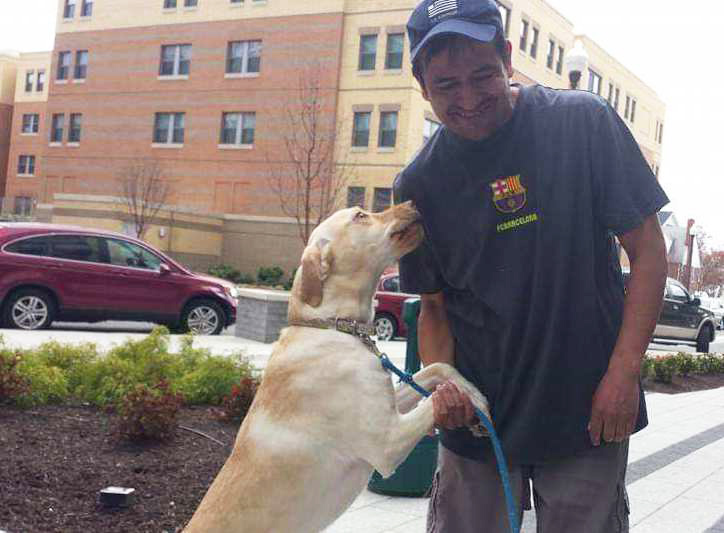
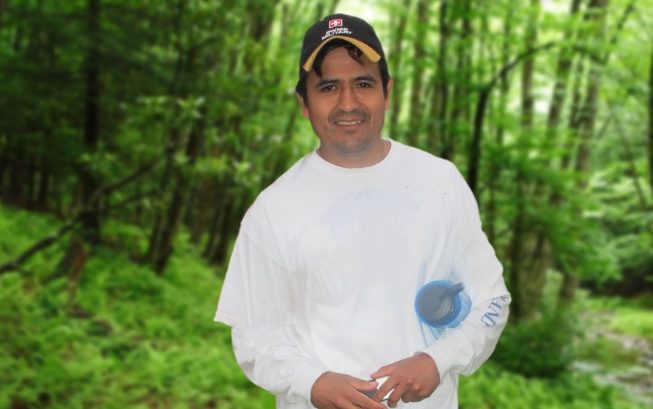
Friends and family of the Arlington man killed as he tried to stop a sexual assault plan to celebrate his life this weekend, remembering him as a kind, generous and “decidedly decent” person.

Arlington police say 54-year-old Patricio Salazar attempted to intervene when he saw another man, 27-year-old Michael Nash, sexually assaulting a woman near Doctor’s Run Park last Thursday (Oct. 18). Investigators claim that Nash struck Salazar and ultimately knocked him unconscious. Salazar died from his injuries a short time later.

Salazar’s family has organized a memorial service this Saturday (Oct. 27) at a local funeral home. In lieu of flowers, his family is asking people to donate to an online fundraiser that will benefit survivors of sexual assault and gender-based violence, with plans to divide the money between a local charity and an organization in Salazar’s hometown of La Paz, Bolivia.

“My brother was very smart, funny, unassuming and humble about his gifts and talents,” Loty Salazar, Patricio’s sister, wrote in a description accompanying the GoFundMe page. “And, as he showed by his final act of great courage, he was a man of integrity and character, who believed in doing the right thing no matter what the cost. My family and I are at a loss to describe the depth of pain we are feeling. He has left us — and this world — far too soon, because we — and the world — really need heroes like him.”

Salazar’s sister declined a request for an interview, but his family did write in an online obituary that he attended college in Bolivia before transfering to the University of North Dakota, and eventually settling in Arlington.

Will Rubens, a Ballston resident and one of Salazar’s friends, told ARLnow that Salazar had lived in the county for close to 15 years. He first met Salazar at the old Greene Turtle bar in Ballston a few years ago, where they bonded over a shared love of sports, and the occasional beer.

“He was just a really warm, friendly, kind of goofy guy,” Rubens said. “He just had such a goofy lightness about him that immediately put a smile on your face. Most of our interactions were just joking around, and it always kind of made my day. You never knew exactly when you would run into him, so it was always a nice surprise.”

Rubens says Salazar had a passion for international soccer, the San Jose Sharks and the Oakland Raiders. But he was also a guitarist in his spare time, and loved attending local concerts, Rubens said.

His family added in the obituary that Salazar, known to his friends as “Pat,” had a passion for nature and animals and “was an avid walker and always longed for Bolivia and his Andean mountains.”

Rubens says that Salazar would return to La Paz fairly regularly to visit his family there, though he did also have some family around the D.C. area. In fact, Rubens says Salazar had offered to bring him back a memento after his next trip back home, in order to help Rubens complete his collection of fridge magnets from places he’s traveled for work.

“He was supposed to visit his family for Christmas and now that’s not to be, which is really sad… but I think it shows just what kind of guy Pat was,” Rubens said.

Rubens says he “felt like a freight train hit me” when he learned of Salazar’s death, as the two had just crossed paths a few days before his killing.

“I’m not surprised at all that he got involved, I think it was very brave of him,” Rubens said. “But Pat was not the kind of guy where he would’ve rushed in, guns blazing… he had no illusions of grandeur, he was not that kind of guy. But he always would’ve stopped if he saw somebody in need.”

Police arrested Nash this past Friday (Oct. 19), charging him with several counts related to the alleged sexual assault. He has yet to be charged in connection with Salazar’s death, but police say additional charges are likely forthcoming.

Nash is set for his first hearing in Arlington General District Court on Jan. 16.

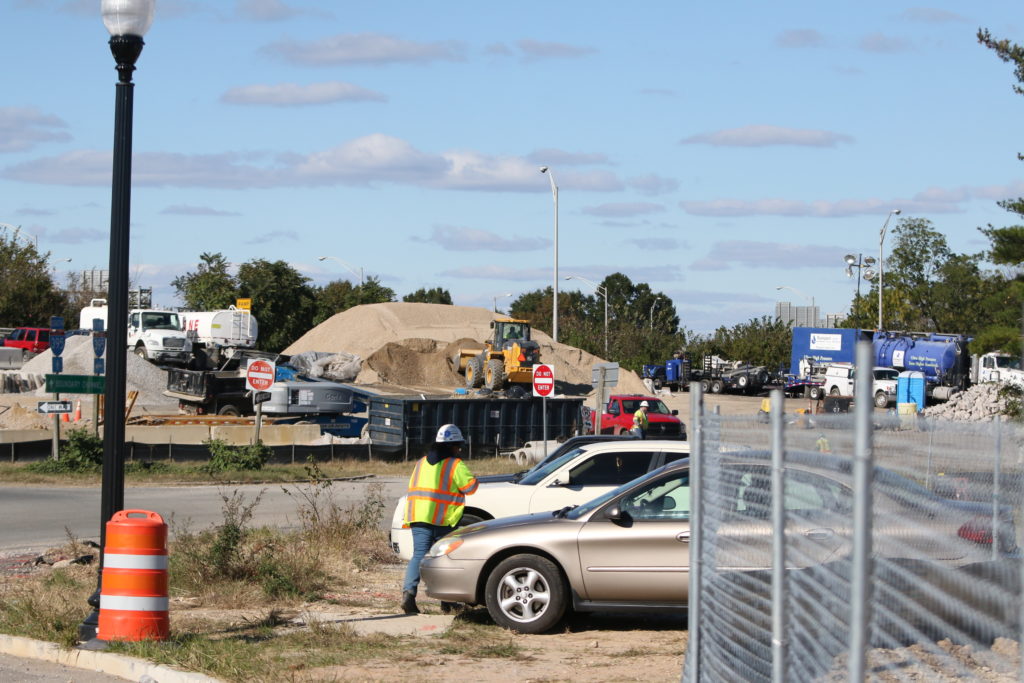
With work kicking off on the long-awaited, hotly debated Long Bridge Park aquatics and fitness center, Arlington officials are looking for some feedback on what programs and services they should offer at the new facility.

After years of wrangling over the exact design and cost of the facility, county leaders expect the $60 million project will include a 50-meter pool, room for diving at a variety of heights, and a family pool, complete with elements including “a lazy river, splash pad for tots, basketball, volleyball, lap lanes and a water slide.” The project will also include a new fitness center, billed as the largest one operated by the county, and an expansion of the adjacent park and its walkways.

However, a working group is still trying to get a sense for how Arlingtonians expect to use the space, and what programs staffers should offer at the facility. The county even released a new survey this week to help inform that group’s work.

Its areas of focus include questions on what days of the week and times of day residents envision attending the aquatics center, and queries about what sort of membership options the county should offer for people looking to use the center on a regular basis.

The survey also asks respondents for their opinions on what sort of equipment the county should offer in its fitness center — with options ranging from free weights to cardio machines — and what classes it should convene at both the pool and fitness center. Potential classes could focus on Crossfit, yoga, martial arts, scuba diving, lifeguard certification and a host of other areas.

The questionnaire also includes space for people to weigh in on exactly which features they want to see at the family-focused “leisure pool,” and seeks to gauge interest on aquatic activities like diving and water polo.

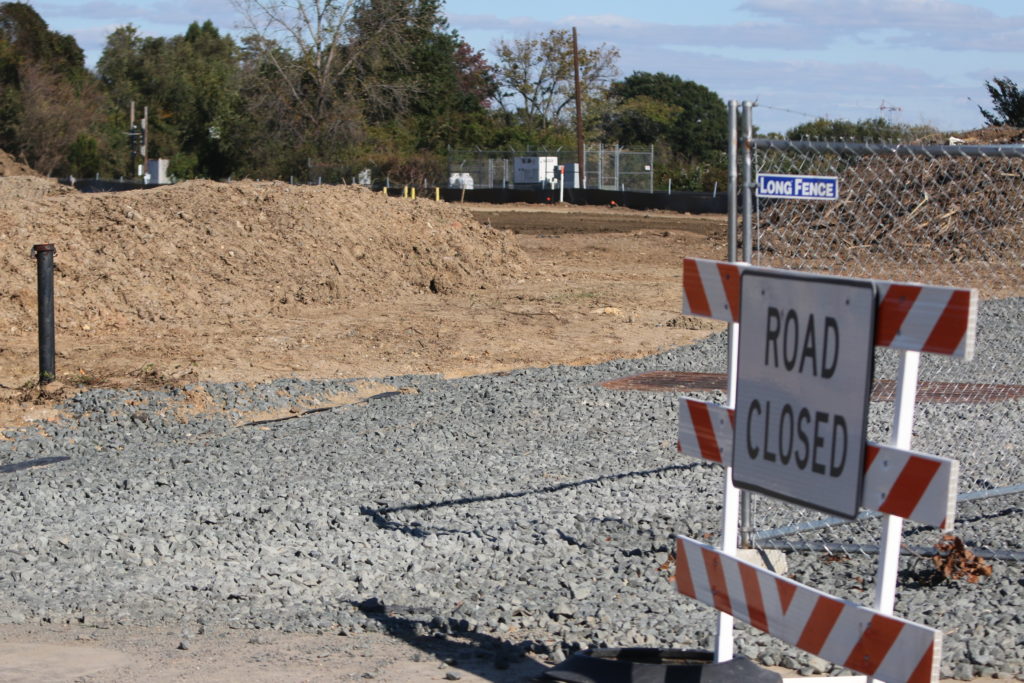
The working group is set to deliver its recommendations to the County Board by spring 2019. The county held a formal groundbreaking ceremony for the project back in July, and workers are currently in the process of clearing the site. The county hopes to open the center by 2021.


A bevy of new public art looks to be on the way for Crystal City, just a few weeks after the neighborhood’s largest property owner commissioned a series of art projects around the area.

The Crystal City Business Improvement District has put out a call yesterday (Wednesday) to local artists looking to bring some temporary public art to the neighborhood, as part of an effort to “activate vacant and open spaces” and “enliven and connect the public realm.” The BID is offering up to hand out up to $50,000 for each project, and is inviting professional public artists, “art consultant organizations and curators” to apply.

The BID says it’s looking for applicants who can “show a proven history of successfully managing and completing publicly-funded projects with budgets of equivalent scale.” It plans to evaluate projects on how each one:

  • Expands cultural experience
  • Promotes community dialogue
  • Promotes place-making and interaction
  • Supports visual beautification
  • Drives visitorship and media attention

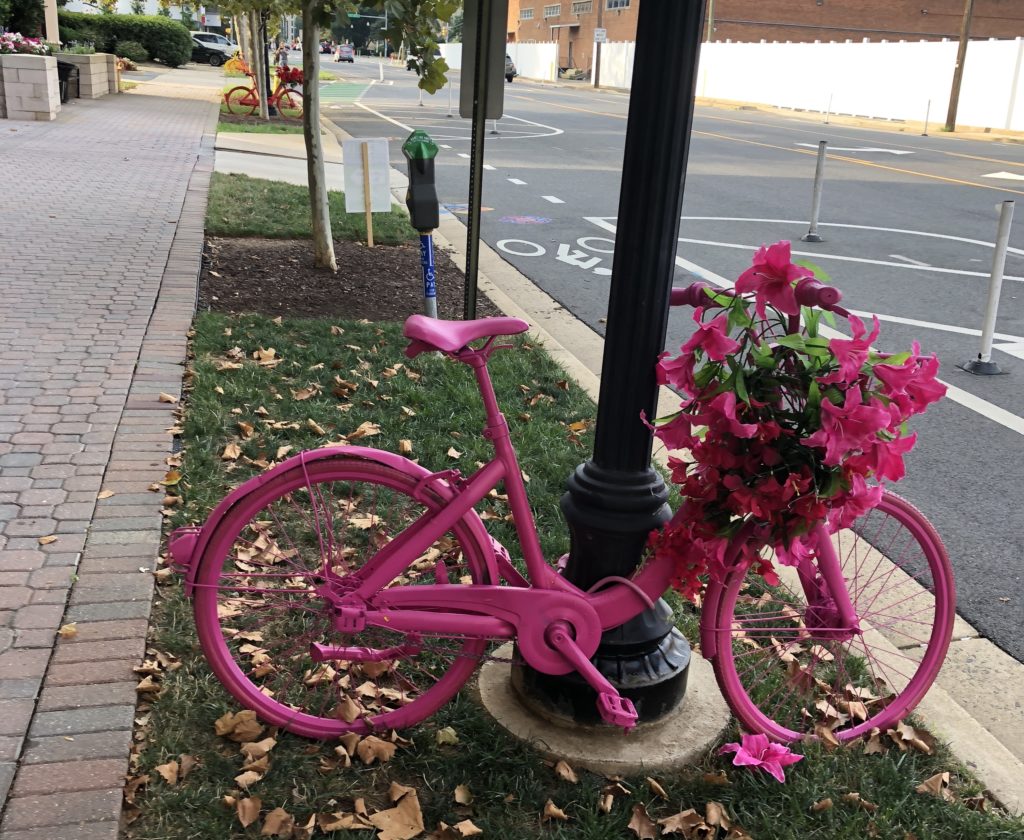
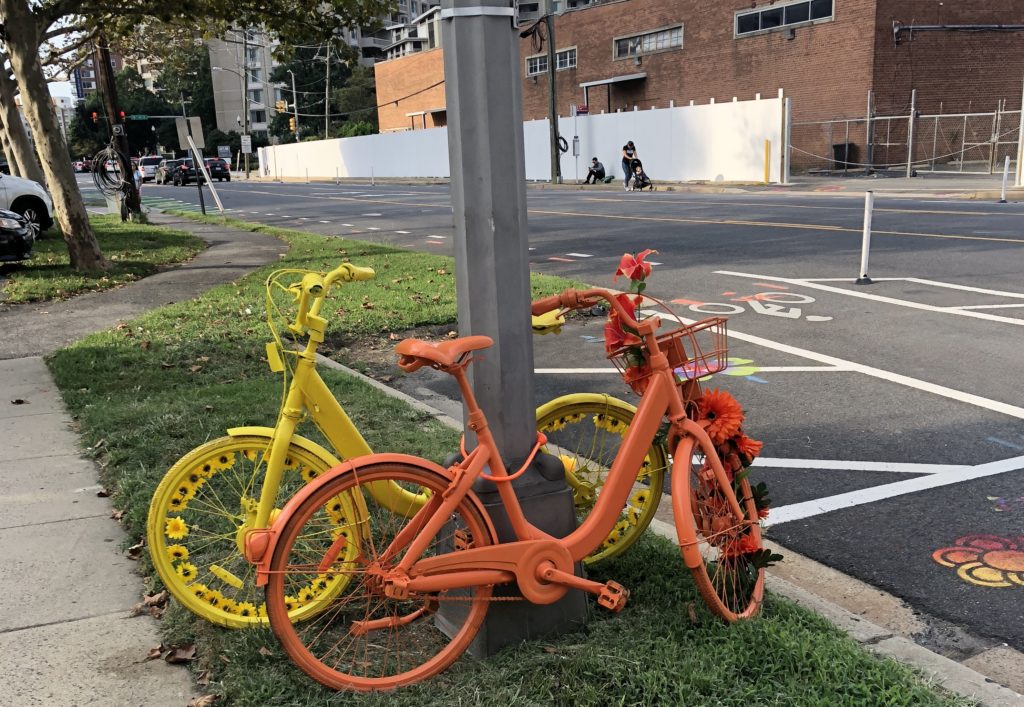
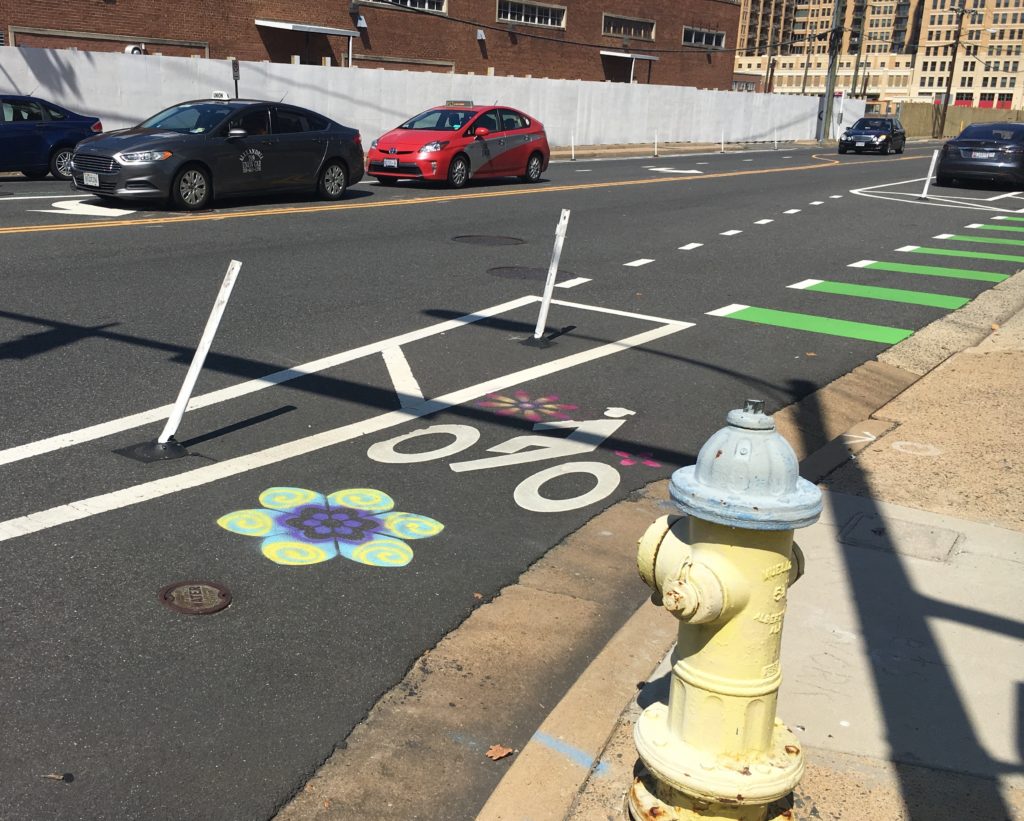
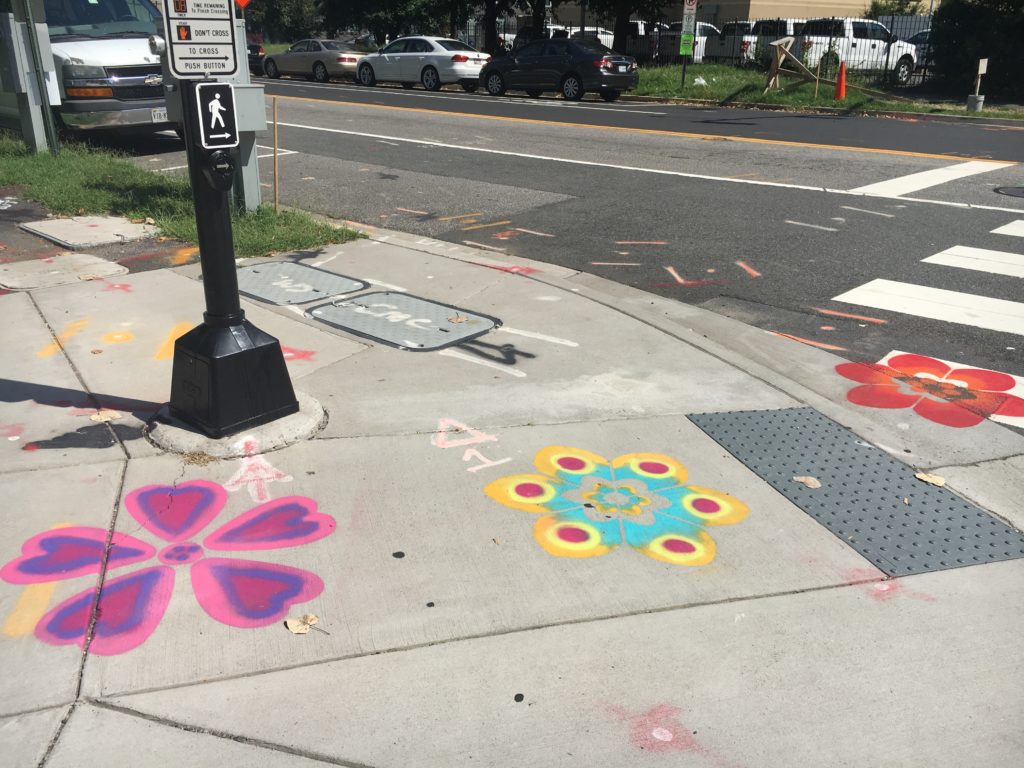
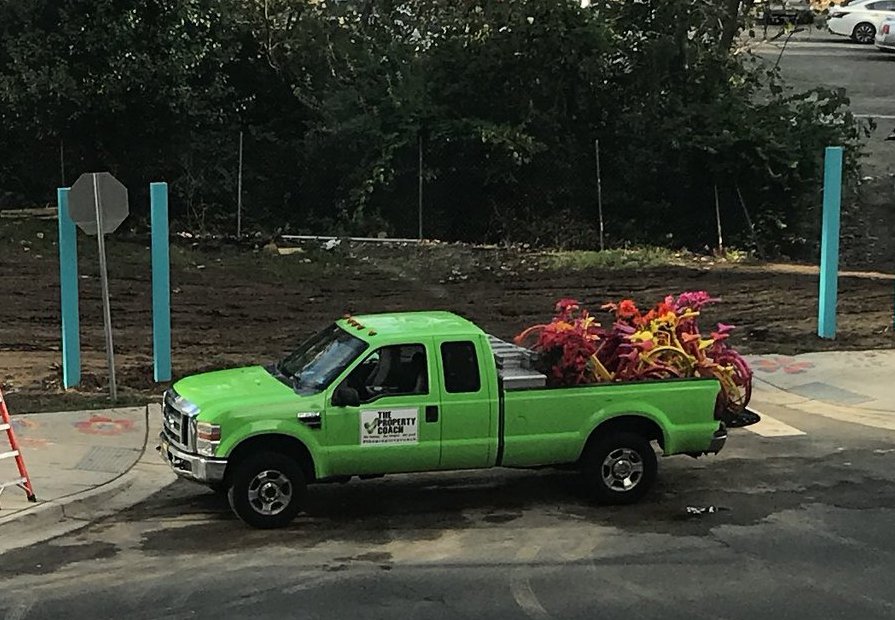
The BID did not lay out how many art projects it plans to accept, or when it hopes to have the art installed. But any project will inevitably invite comparisons to JBG Smith’s efforts to add some visual flair to the area, starting with building wraps for some Crystal City structures soon after it took over ownership of the properties and continuing through its latest work to bring colorful spray-painted flowers and bikes to streets between Pentagon City and Crystal City.

The latter effort attracted quite a bit of attention in recent weeks, as JBG didn’t immediately reveal that it was behind the artwork, leaving residents a bit puzzled.

Sources around the company have even speculated to the Washington Business Journal that the whole project was an effort to impress Amazon executives visiting as part of their HQ2 deliberations. JBG, however, says it was merely an effort to tie Crystal City and Pentagon City together, and brighten up an area experiencing quite a bit of construction at the moment.

Applications for the BID’s newest public art effort are due by Friday, Nov. 2.


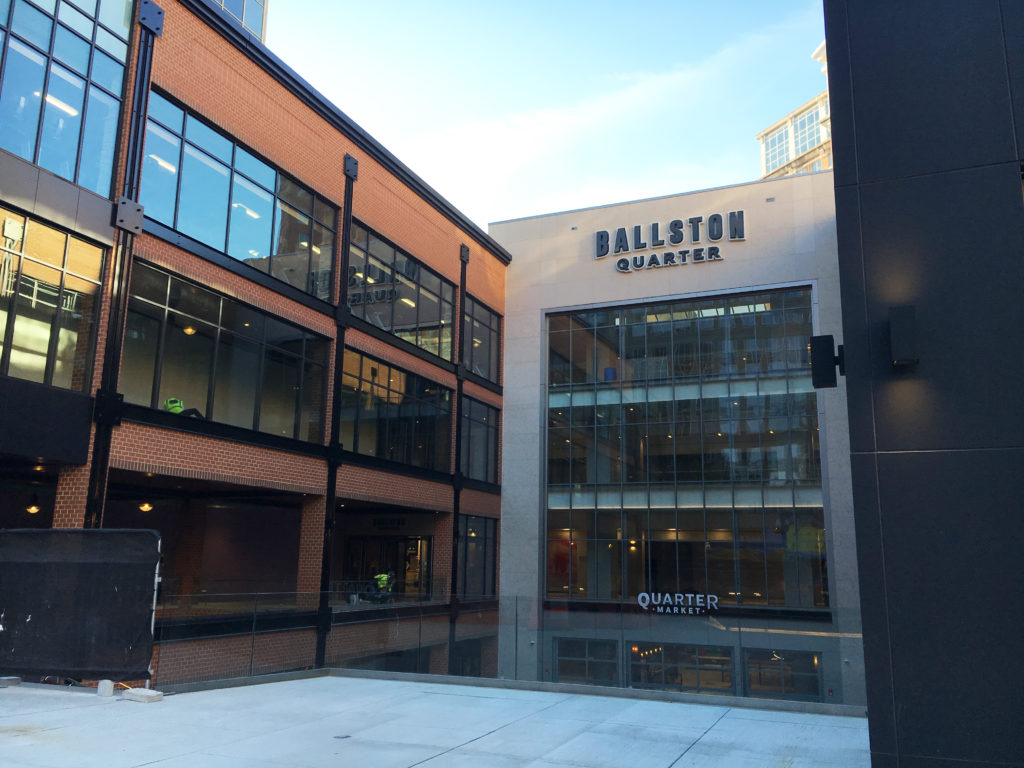
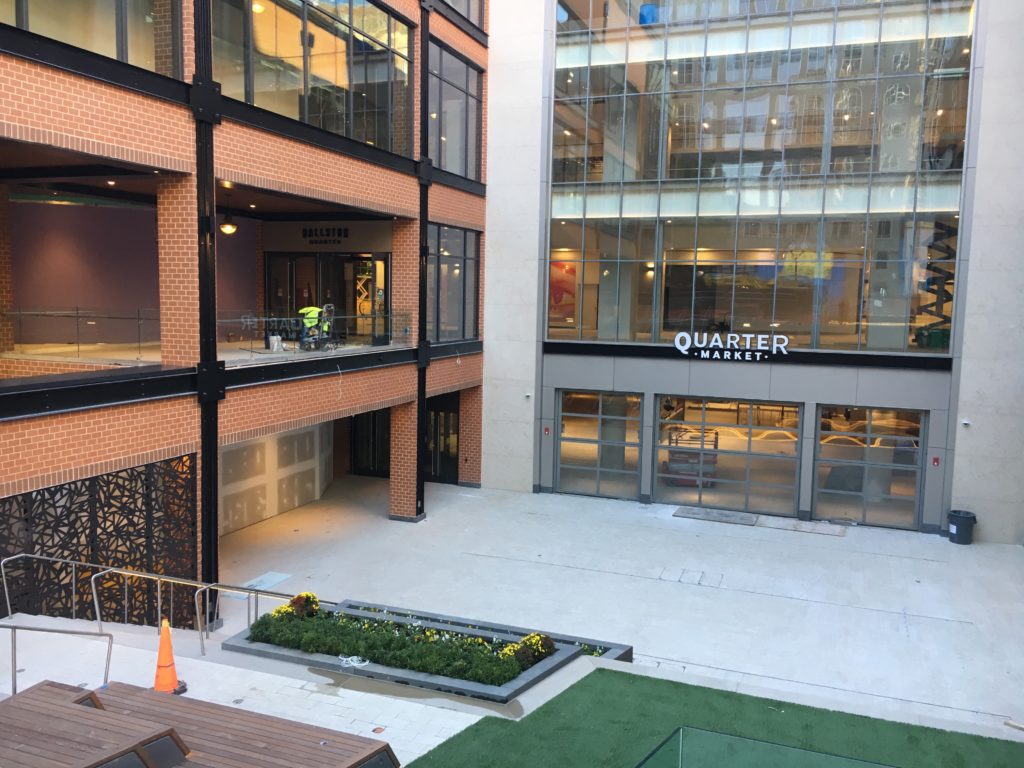
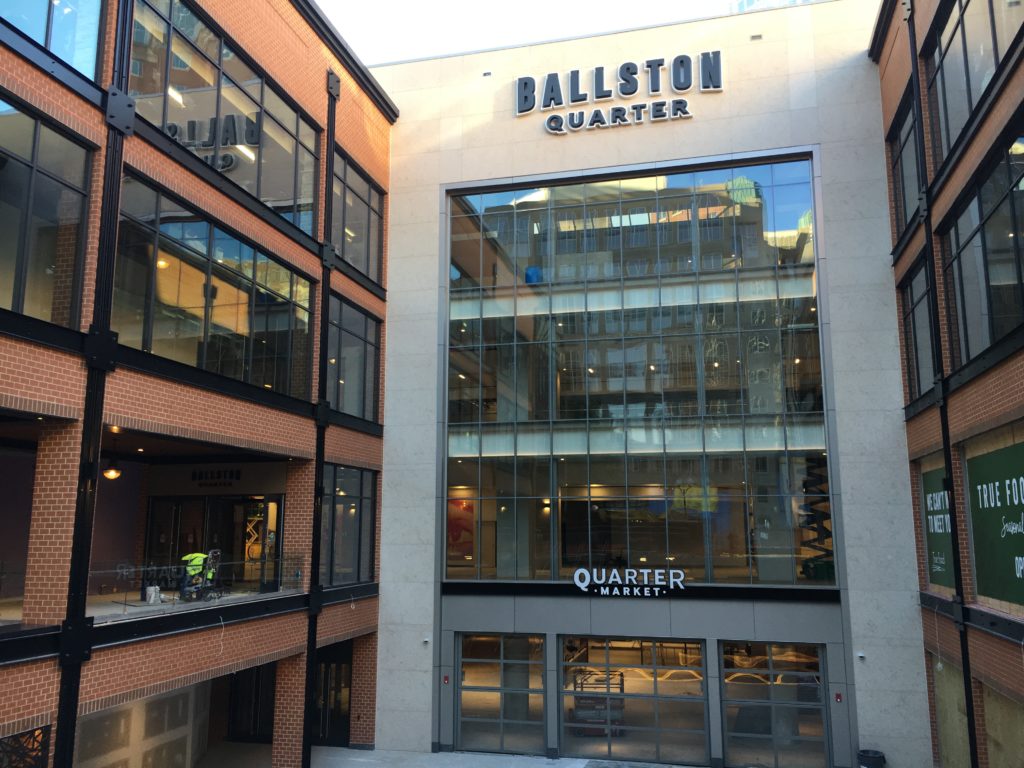
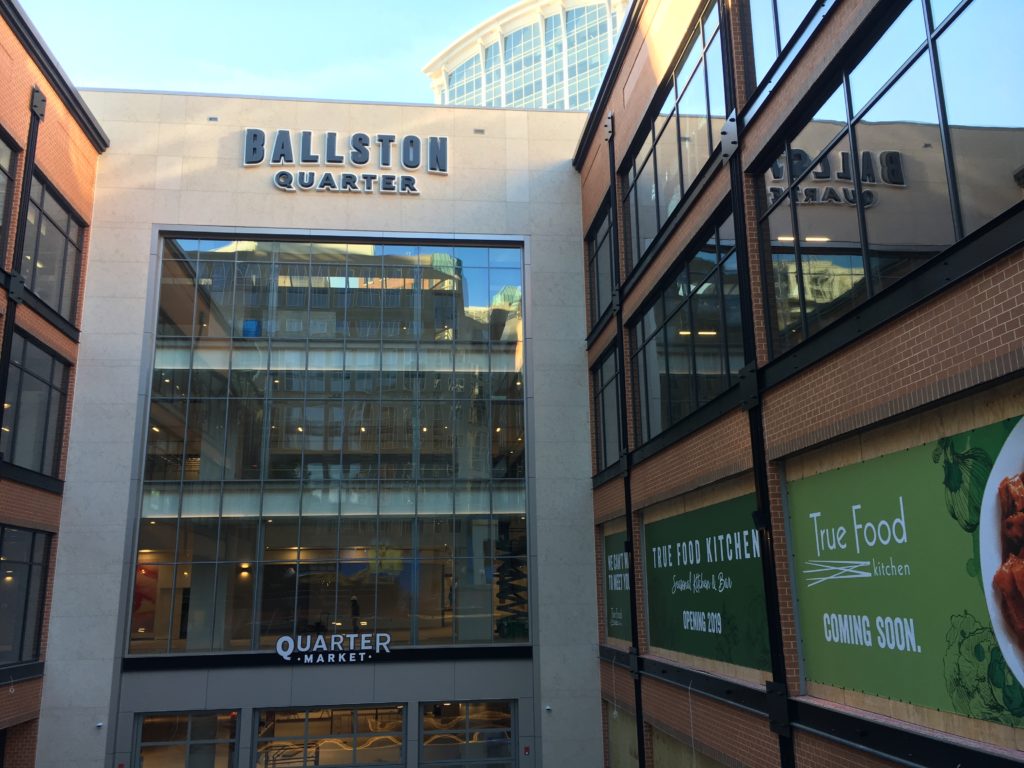
The day of Ballston Quarter’s planned opening has arrived, but the revamped mall doesn’t seem ready for customers quite yet.

Forest City, the developer engineering the complete overhaul of the former Ballston Common mall, initially hoped to open some stores up by September. But a few weeks back, the company revealed that it was pushing the open date, targeting today (Thursday) instead to have at least some sections of the development open for business.

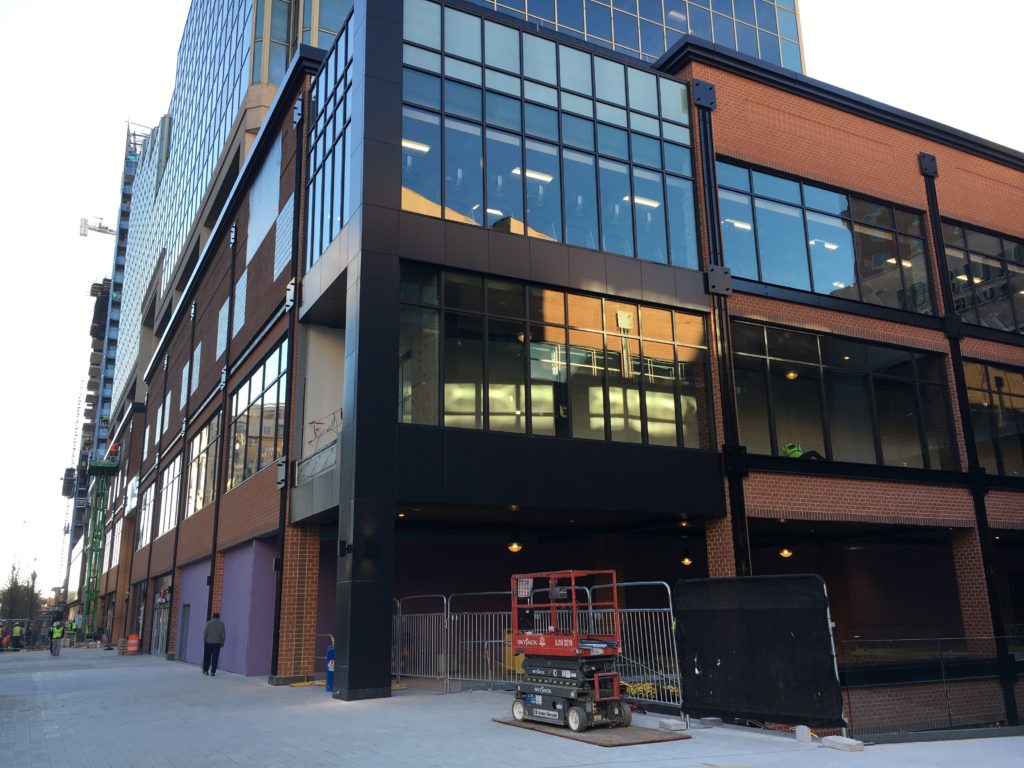
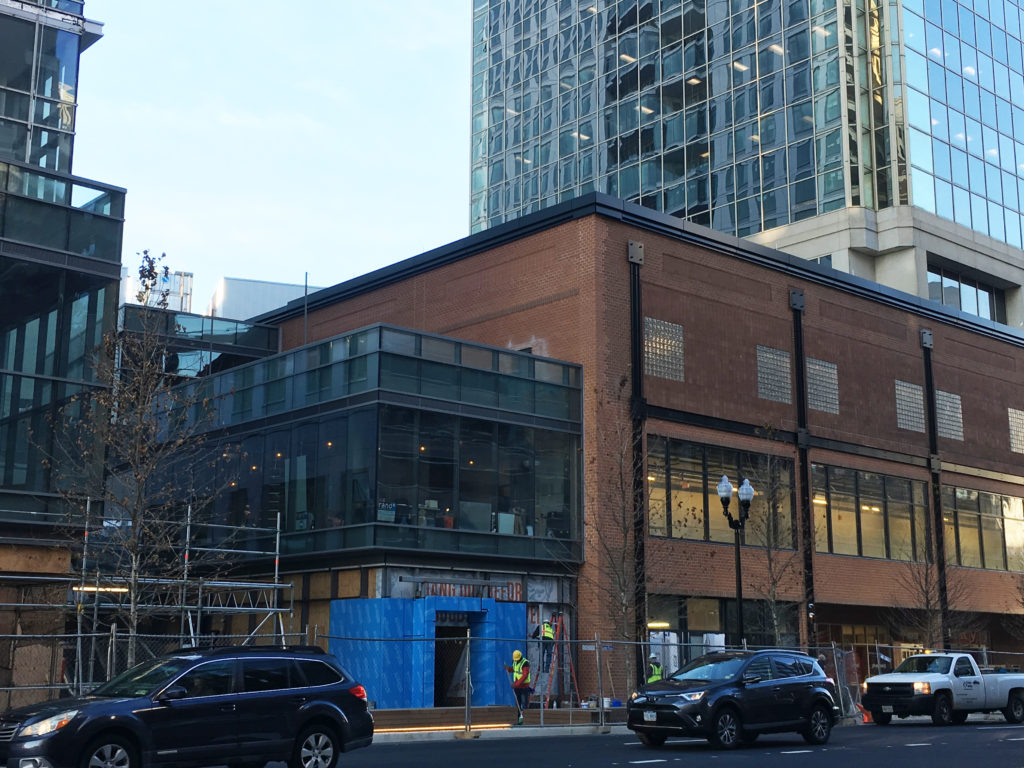
But, as of this morning, the mall is still very much an active construction zone.

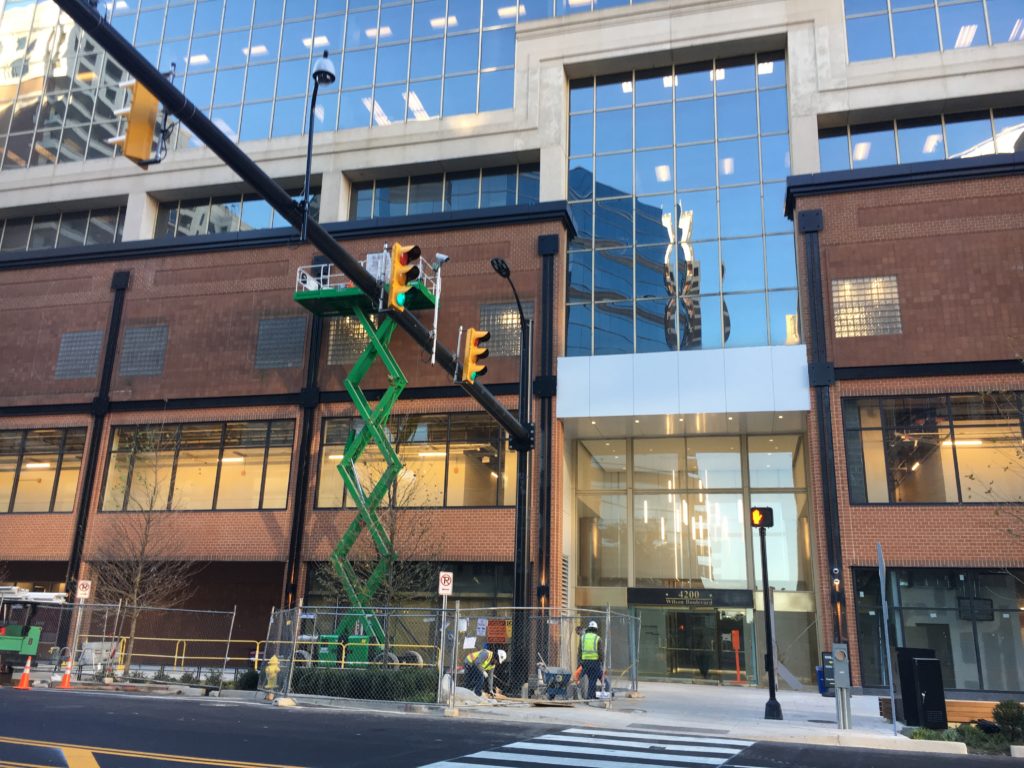
Some sections of the sidewalk along Wilson Blvd previously closed to pedestrians have reopened, revealing portions of the Ballston Quarter plaza that were once obscured from view. Yet the development’s doors are still locked, accessible only to people with key cards.

A spokeswoman for Forest City says the developer plans to offer more details soon, but did not immediately provide an update on any revised opening date.

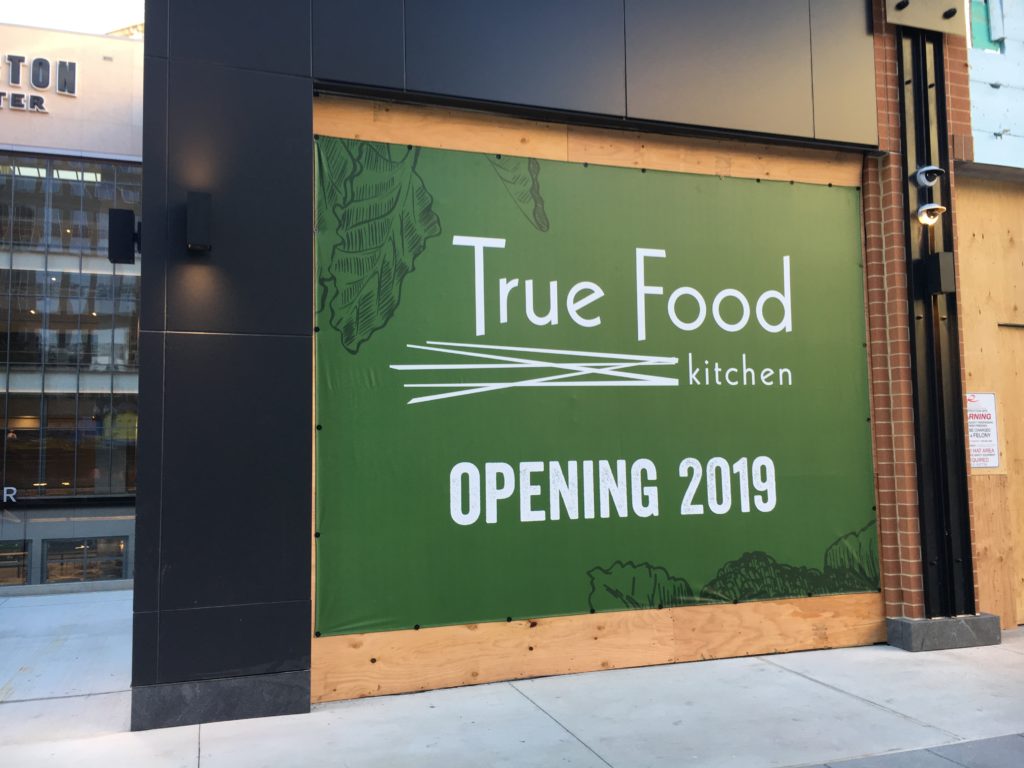
The company originally reported a few construction delays to county officials this summer, though those were associated with the overhaul of the pedestrian bridge connecting Ballston Quarter to 4201 Wilson Blvd and the Ballston Metro station. However, Forest City also recently secured the county’s approval for outdoor seating at six restaurants in its outdoor plaza, and plans to make that area (as well as several other sections of the mall) accessible to customers as the development’s various stores open.

Forest City is aiming to have its full range of restaurants, retailers and other offerings open by spring 2019 or so.


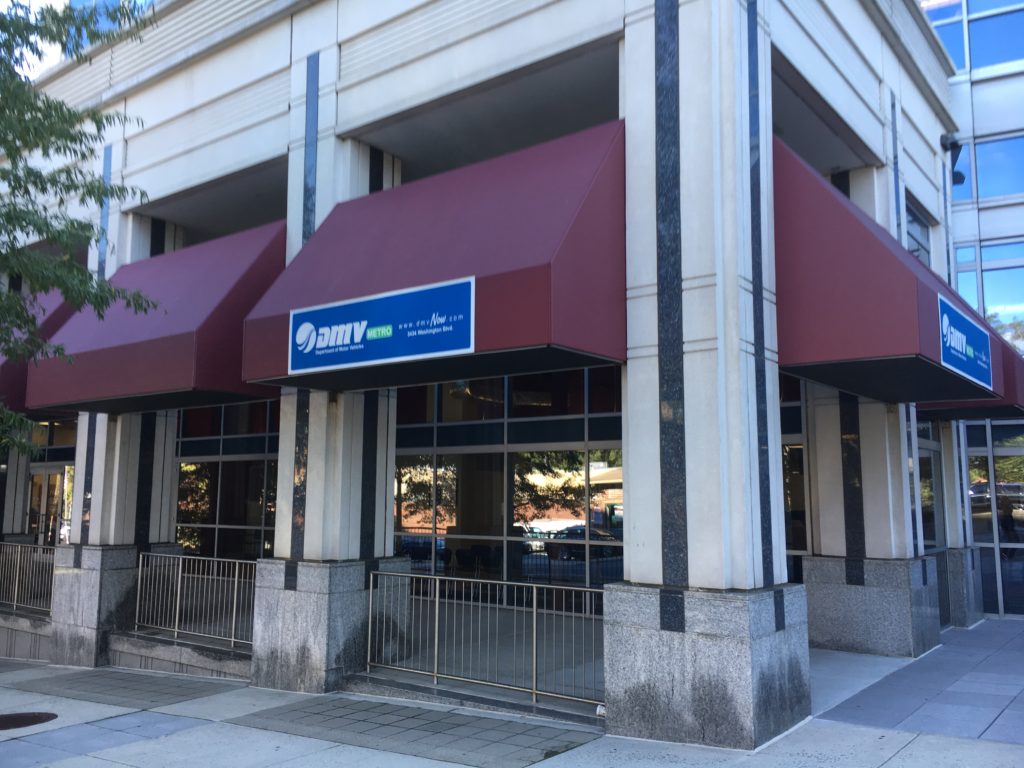
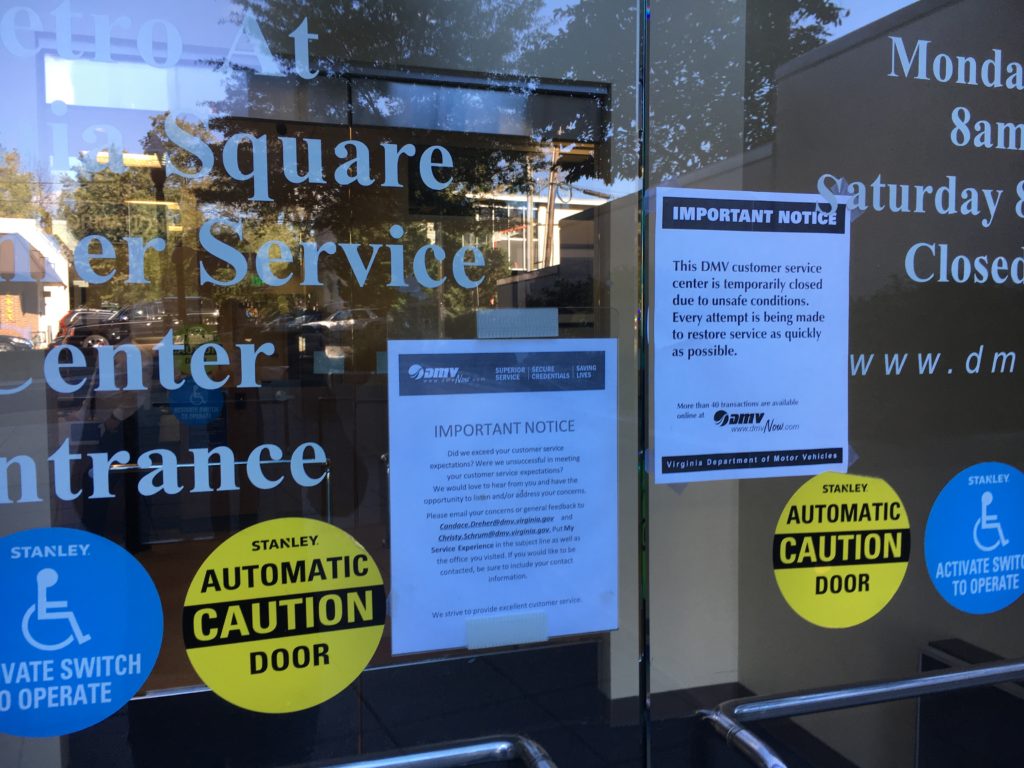
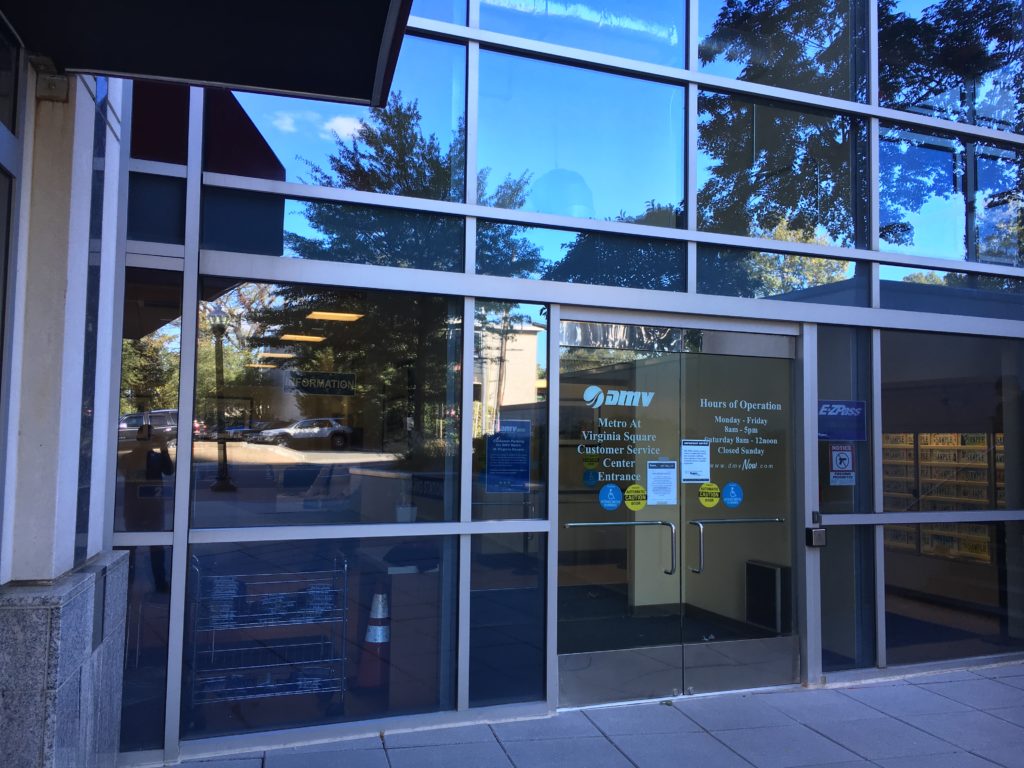
The Virginia DMV customer service center in Virginia Square is currently closed, due to some emergency duct work in its office building.

A sign on the door of the location at 3434 Washington Blvd says the temporary closure is due to “unsafe conditions” and that “every attempt is being made to restore service as quickly as possible.”

DMV spokeswoman Brandy Brubaker says staff arrived at the building this morning to discover the office was badly in need of duct repairs. Accordingly, they decided to shutter it temporarily “out of an abundance of caution,” she said.

Staff expects the office will reopen by Friday, but Brubaker said that anyone looking to visit should consult the DMV’s website before swinging by.

The DMV also operates customer service centers along S. Four Mile Run Drive and near the Pentagon, as well as in Alexandria and Tysons Corner.


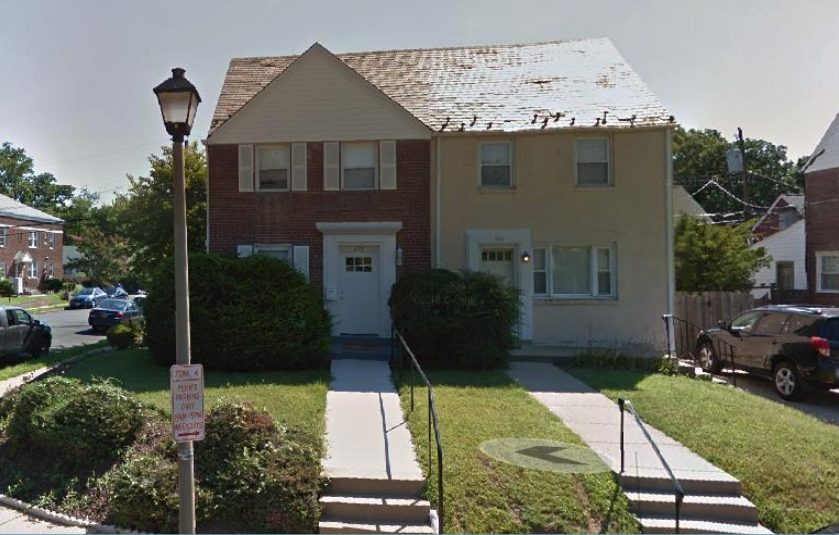
The Arlington County Board has signed off on some zoning changes to make it easier for the owners of older townhouses and duplexes to renovate or expand their homes.

The Board voted unanimously yesterday (Tuesday) to amend the county zoning ordinance to allow for more changes to “nonconforming homes” — structures built before the county’s zoning rules took effect back in 1942 that might not match current standards. The move will simultaneously remove some headaches for certain homeowners and help preserve affordable housing options for the county’s middle class.

The county’s old rules have frequently frustrated the owners of certain types of homes, who were previously barred from commissioning even simple renovations without enduring a lengthy county appeals process. That incentivized tear-downs over renovations, which in turn reduced the county’s stock of market rate affordable housing.

“This is the kind of stock we hope will age over time and become more affordable,” Board Chair Katie Cristol said Tuesday. “I feel so strongly that this is a move for the better, not only for these individual homeowners, but for the preservation of this stock, that will allow the current and next generation of Arlington’s middle class to move in and own a piece of this community, or rent a piece of this community.”

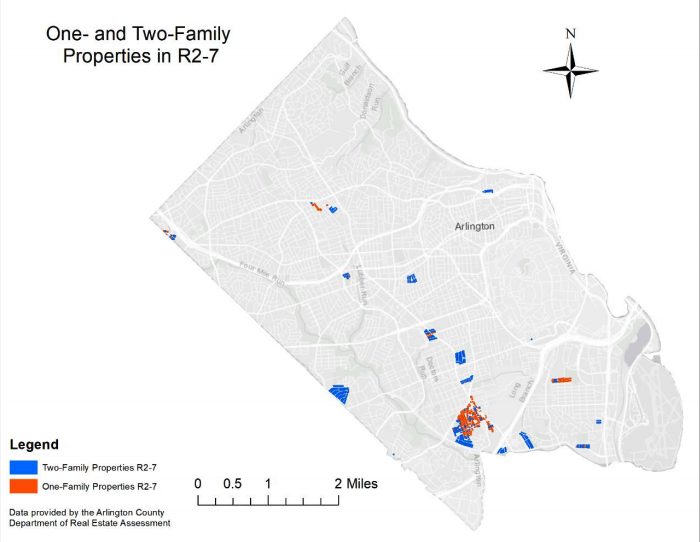
County planner Kellie Brown told the Board that the changes could allow for interior “by right” renovations at more than 600 homes, which won’t require extensive county review, and exterior additions or expansions at roughly 1,500 partially detached homes or townhouses. While the changes will impact all nonconforming homes in areas zoned “R2-7,” county staffers say that the bulk of the impacted houses are located along Lee Highway, Columbia Pike, Wilson Boulevard, and in Nauck.

John Quirk, who owns a duplex with his wife in the North Highlands neighborhood near Rosslyn, counts himself among the homeowners who plan to take advantage of the change. He launched a petition urging the Board to make just these sort of zoning changes last December, after the county’s Board of Zoning Appeals denied his family’s attempts to convert an unused attic into a third-story bedroom.

“At first we didn’t even know you were prevented from doing that, so we were really frustrated,” Quirk told ARLnow. “But this is just an example of the government working for people. The Board was very receptive to all this.”

Quirk says he worked with his neighbors and other homeowners to make the Board aware of these challenges, and he credits the county’s “measured approach” in studying the issue in more detail before moving ahead with the changes.

He also lauded the Board for living up to its stated goal of preserving affordable housing in the county, noting that he and his wife were considering moving elsewhere in Northern Virginia, as they “can’t afford a $1.1 million house in Lyon Village.” Quirk fully expects that plenty of others have faced the same problems maintaining a reasonable “work-life balance” of commuting into D.C. while coping with Arlington’s rising housing costs, and he looks forward to starting work on his own duplex sometime early next year.

“By living in these smaller homes, we’re a demographic that creates population density,” Quirk said. “And that makes Arlington the great, walkable community that it is.”

(more…)


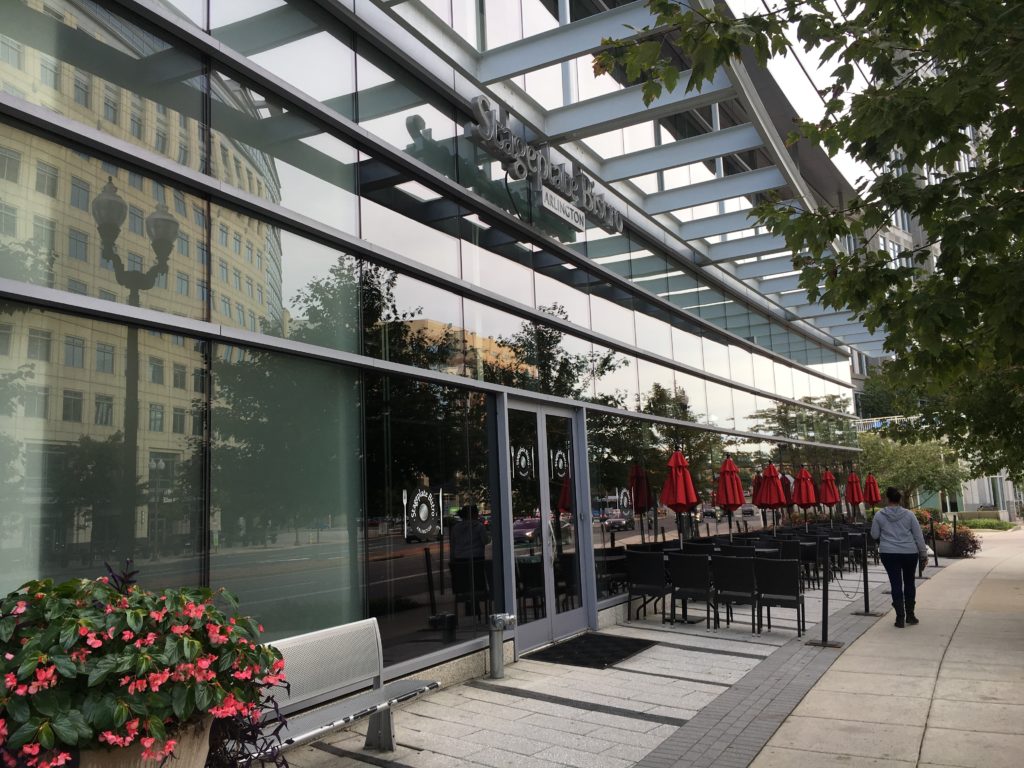
(Updated at 4:15 p.m.) Stageplate Bistro in Ballston still plans to reopen following a summer hiatus, though it likely won’t welcome diners once more until late next month.

The restaurant, located at 900 N. Glebe Road, shut its doors back in August, as its owners hoped to take a pause from some lengthy work weeks and revamp the eatery’s web presence. Originally, its proprietors had planned to reopen by Sept. 1, but that date came and went without any news from the restaurant.

General Manager Mary Marchetti told ARLnow that Stageplate is now “shooting for” Nov. 26, the day after Thanksgiving, for a grand reopening. She says she and the restaurant’s executive chef — her husband, Nelly Gonzalez — have spent the last few months working to “take a breath and take stock” of how Stageplate could expand its menu offerings going forward.

The pair opened the restaurant, which primarily serves American cuisine, late last summer on the first floor of the Virginia Tech Research Center. Since then, Marchetti compares the process to one long soft opening, as Stageplate has been primarily focused on lunch. When the restaurant reopens, she plans to focus on dinner, brunch, happy hour and even catering for local businesses.

That will include some additions, like pizza and the Turkish flatbread “pide” to the menu, though she stressed that “all the favorite everyone loved before” will remain on offer. That includes Stageplate’s sangria wine slushies, which she said was a big hit in the restaurant’s first year.

“We just can’t wait to throw open the doors again,” Marchetti said. “Our regulars and the whole community has been so unbelievable and so encouraging.”

Stageplate’s new website is now active as well and Marchetti plans to make full details about the reopening available on that page in the coming weeks.


A Nauck church now has the green light to redevelop a former YMCA center into a new community pool, after Arlington officials signed off on a host of new zoning changes designed to make the construction of such pool projects a bit less onerous.

In back-to-back unanimous votes yesterday (Tuesday), the County Board approved the pool zoning tweaks, then used those new rules to give Macedonia Baptist Church the go-ahead to build the new pool at 3440 22nd Street S.

The site has been home to a pool and bathhouse since the 1960s, but the YMCA’s closure back in the mid-2000s left the building empty. Yet, when Macedonia sought to redevelop the site into a new “family life center,” the church ran into some zoning restrictions that could’ve made the whole project impossible to complete.

The Board was unwilling to completely re-write its zoning rules, but it would agree to make community pool projects (which are backed by nonprofit groups and not limited to a specific neighborhood) eligible for “use permits” in order to give the Board discretion to review the projects on a case-by-case basis, rather than subjecting every pool to the same standards.

That mean that the Board could sign off on Macedonia project under the newly approved zoning ordinance, even though it would’ve previously run afoul of rules requiring larger setbacks from the neighborhood’s streets. Board member John Vihstadt even dubbed the twin votes “a double win” for the community, and the county.

“We are demonstrating some nimbleness and alacrity in making a needed change that responds to new trends,” Vihstadt said. “This is so important, not just for the youth and individuals in the Nauck community… but also for entire Nauck neighborhood.”

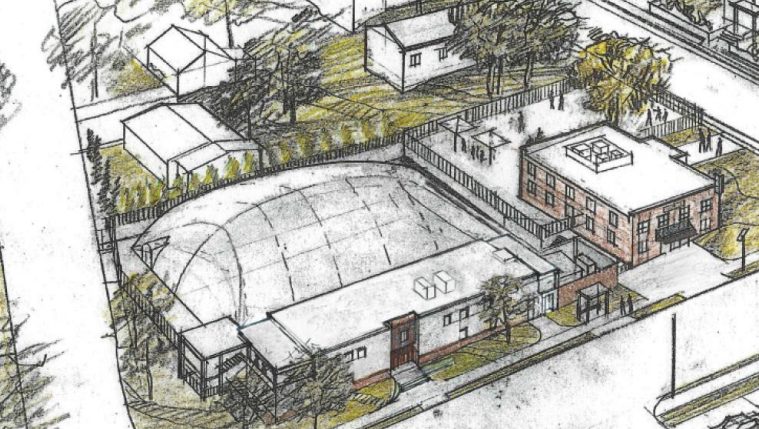
The Macedonia project will include a seven-lane pool, a “seasonal dome” to allow year-round swimming and an auxiliary community center to sit alongside the existing Funshine Preschool. The church also anticipates allowing the Arlington Water Polo Club to use the facility for practice and training, though church representatives stressed that the pool will be open to anyone.

“Years ago, when the pool was there, it was beneficial to children and adults as well,” Macedonia congregant Laverne Langhorne told the Board. “We really do miss the pool.”

But beyond the importance of the Macedonia project on the micro level, Board members said they view the changes as an important step for the whole county.

The county currently has only five other community pools, and with zoning rules last revised in the 1950s, Board member Erik Gutshall said it was reasonable to assume that the old regulations meant “we really were never going to get another pool again.”

“This is the recognition by the Board that large parts of the county are no longer suburban,” Gutshall said. “We had a suburban style zoning ordinance… and while there are still parts of the county that are more suburban than others, what we’re doing now is untying our hands. We won’t just look at this with a suburban zoning code again.”

Photo via Arlington County


(Updated Wednesday at 4:10 p.m.) As the heated process of setting new boundaries for eight South Arlington elementary schools lurches forward, parents at Patrick Henry Elementary are trying to deliver a single message to school officials: don’t break up the community in the move to Alice West Fleet Elementary.

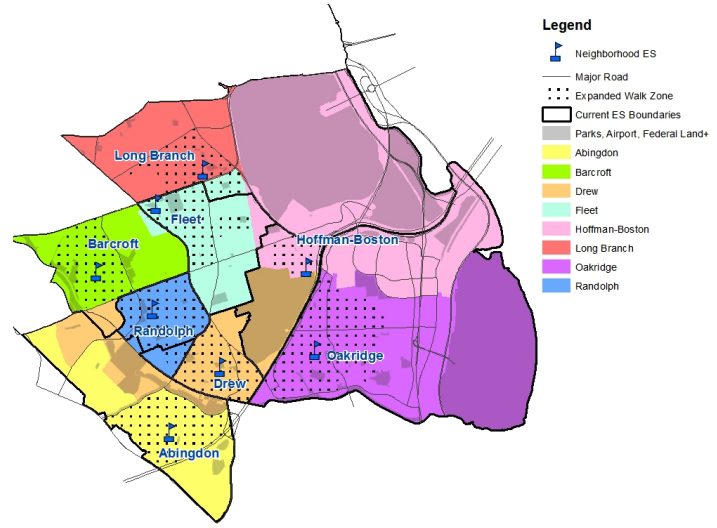
Fleet’s planned opening next fall precipitated this process of drawing new boundary lines for the schools in the first place, with most Henry students set to move to the new school and the Montessori program currently housed at Drew Model School will move to Henry’s building.

Parents at Henry have long sought reassurances from Arlington Public Schools officials that the community would move as one to Fleet, without any neighborhoods being redirected elsewhere. The school system has released two different maps for public scrutiny over the last few months, and both have so far stuck firm to that request.

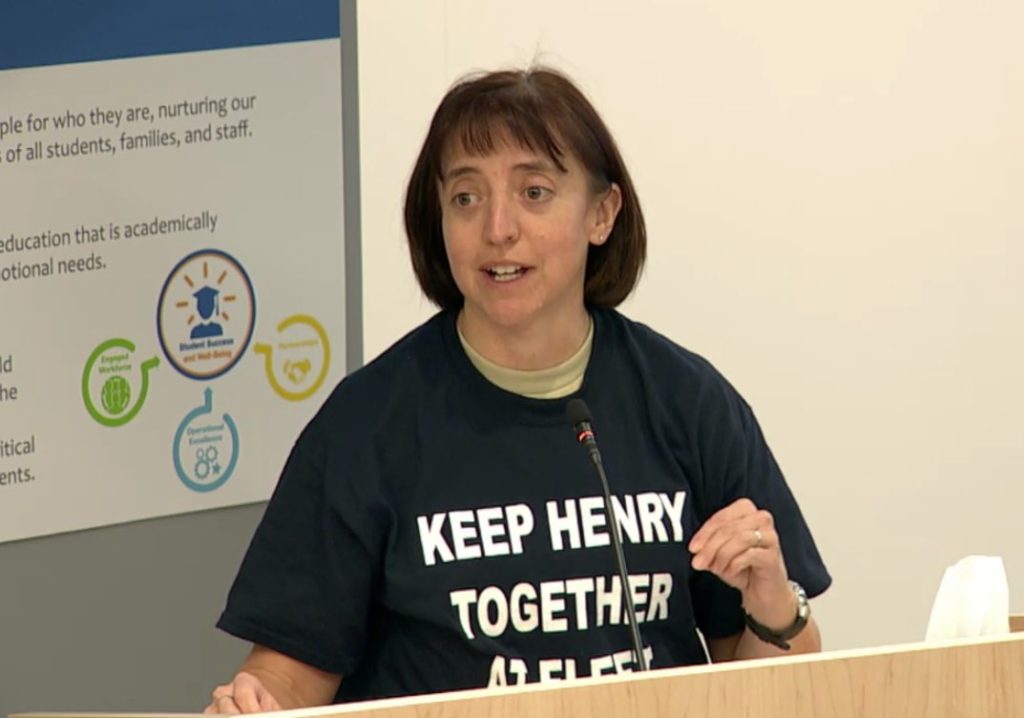
That fact was not lost on roughly a dozen parents who testified at the School Board’s meeting last Thursday (Oct. 18). Though the new boundary proposals have stoked outrage among families at Drew and Abingdon alike, they’ve largely satisfied parents with kids set to make the move from Henry, who are urging school leaders to stay the course throughout the remainder of the boundary process.

“We are a community that lives on Columbia Pike,” Melanie Devoe told the Board. “This will keep our students together, as we’ll have students who are learning together in elementary school all stay on the same campus through middle school.”

Erin Wasiak, co-president of the Henry Parent-Teacher Association, similarly praised the Board for keeping families along the Pike together, noting that the road acts as “our ‘Main Street’ and our town square.” Even still, she would note that the school system’s latest proposal would divert a few neighborhoods on the east side of S. Courthouse Road to Hoffman-Boston instead, a change that would only affect a relatively small number of students, but still struck Wasiak as a bit concerning.

“We’re as close or closer to Fleet as we are to the school you want to put us in,” Nicole Hallahan, a parent of a current Henry student set to move to Hoffman-Boston, told the Board.

APS spokesman Frank Bellavia stressed that officials are working to focus on contiguity as part of the process, though he noted that the school system “cannot guarantee that any individual school community will stay together.” As Lisa Stengle, the APS director of planning and evaluation, put it at an Oct. 17 community meeting, “We don’t want islands in places.”

“Boundary proposals align with the policy considerations, reflect what serves all students, and explore how changes to one school affect other schools,” Bellavia wrote in an email. “Change will be continual within APS due to ongoing enrollment growth, and APS is responsible for ensuring equity for all students across schools and programs.”

Nevertheless, between the changes with the Henry boundaries and the proposal to send some South Fairlington students to Drew instead of Abingdon, parents say the county hasn’t always managed to meet that particular goal.

“You just have to look at the map to see it’s oddly gerrymandered,” Claire Kenny, a parent of an Abingdon student, told the Board. “Please don’t punish our children to fix past redistricting efforts, or to fulfill promises to other communities.”

APS planners only proposed those Fairlington changes in the first place to create a more even spread of students eligible for free and reduced price lunch, a measure of their families’ economic means, at schools across South Arlington. Some parents worried too many economically disadvantaged students were being lumped in at Drew, and Henry parents also urged the Board to keep the issue as a prime focus throughout the rest of the boundary-setting process.

“It’s important to have racially and culturally diverse schools that prepare our students to effectively relate with others,” said Megan Haydasz, a parent of a Henry student who’s been active on other school equity issues in South Arlington in the past. “Yet high concentrations of poverty limit a school community’s resources and may unconsciously limit student outcomes compared to other schools.”


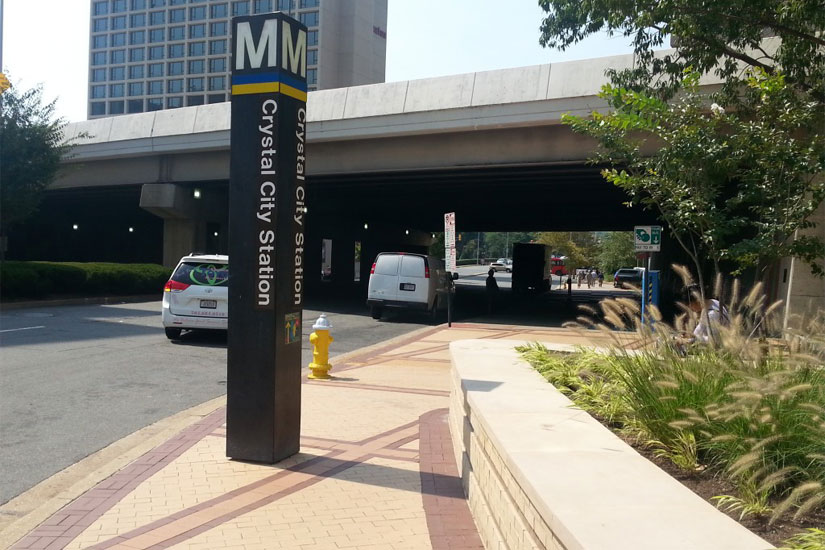
A major funder of transportation projects across Northern Virginia isn’t giving up on Arlington’s long-stymied efforts to build second entrances for the Crystal City and Ballston Metro stations, though any substantial progress remains elusive.

For years, the county has planned on paying for the new entrances by pairing its own money with some funding from the Northern Virginia Transportation Authority, a group that doles out sales tax revenues to transportation projects around the region.

Transportation planners view second entrances at the stations as crucial to encouraging Metro ridership in each neighborhood, and coping with the rapid pace of development in both areas.

However, Arlington’s plans have come under some serious pressure along two fronts in recent months. The county’s declining revenues and rising expenses have forced officials to pare back funding for some long-range construction projects, and that’s included the second entrances at Ballston, Crystal City and East Falls Church.

Meanwhile, the NVTA took a major funding hit when the landmark deal struck by state lawmakers to provide dedicated funding for Metro diverted tens of millions away from the group each year, a move condemned by Democrats but insisted upon by Republicans as a way to fund Metro without raising taxes.

That’s prevented the NVTA from funding all the projects it might like, including the second entrances. Even still, Monica Backmon, NVTA’s executive director, says that the county remains well positioned to earn the cash it needs to complete the projects from her organization — though, perhaps, not as quickly as its leaders might like.

“When we’ve already invested in projects like these, we want to see them come to fruition,” Backmon told ARLnow. “We still believe in them.”

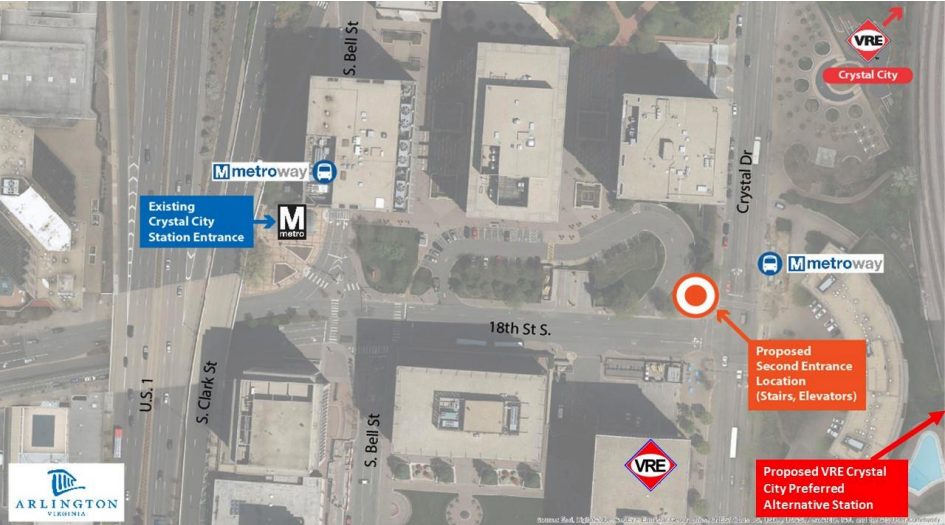
The second entrance in Crystal City seems particularly likely to earn a bit more cash from the NVTA in the near term, Backmon said. Her group could only hand out about $5 million for the effort in its most recent round of awarding funding for projects, which she expects will fund about “half of the design costs” for the effort.

The county is still settling on the specifics around the second entrance, though it will likely sit at the intersection of Crystal Drive and 18th Street S. Given the substantial new development JBG Smith is already plotting for that location, when combined with the close proximity of the Virginia Railway Express station, Backmon said the NVTA remains quite bullish on the project going forward.

“There’s a lot of development going on in the area, so we know there’s a need,” Backmon said. “Provided they’re advancing on the design work, they can come back and reapply for more funds.”

Backmon even expects that the NVTA could send the county the other half of that design funding as soon as next year. She plans to wait a bit to see what state officials might do — the county has applied for $78 million of the project’s $91 million price tag as part of the state’s “SmartScale” funding program, and the Commonwealth Transportation Board is set to make a decision on that cash by next June.

Then, in July, the NVTA will start its own funding process, allowing Backmon to see whether or not her group needs to step in to give Arlington a boost. By then, officials will also likely know whether they also need to prepare for Amazon’s arrival in Crystal City or not, another key variable in the discussion.

“The density in Arlington really is different than in the outside the Beltway localities,” Backmon said. “That project is important to relieve bottlenecks, on Metro and on roads.”

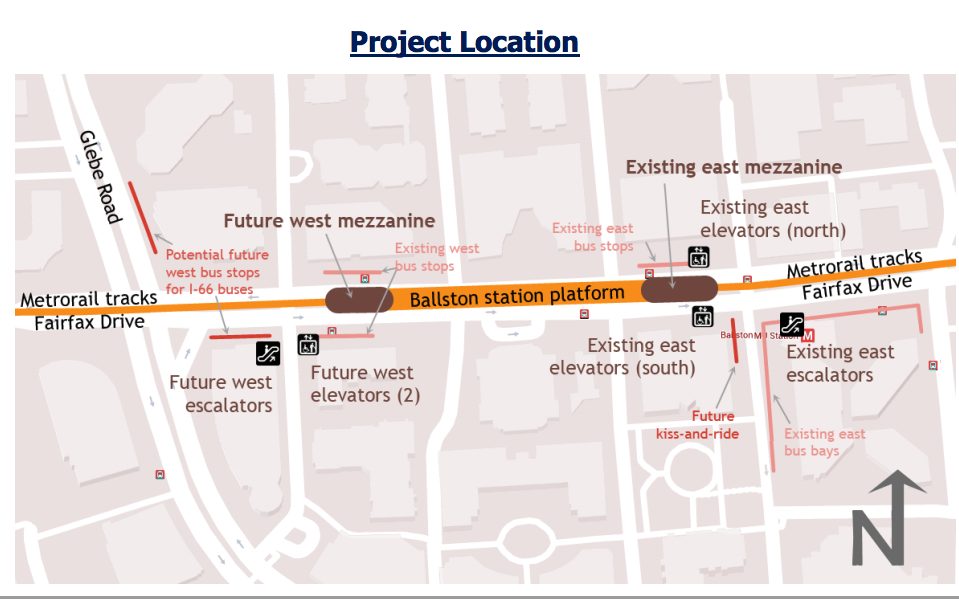
The process for finding funding for the Ballston second entrance is a bit murkier. The NVTA has already sent the county $12 million to fund a western entrance to the station, though that’s far short of the $72 million Arlington officials hoped to receive for the effort.

Backmon’s group declined to devote any additional cash to the Ballston project this summer, and she notes that the NVTA saw needs elsewhere that were “a little more pressing.” But county officials have been anxious to show some progress on the effort, not only to better prepare to cope with the slew of new developments on N. Glebe Road, but also to ensure that Arlington doesn’t lose out on the state funding it’s already received for the project.

Backmon says she can’t be sure whether the Ballston project will be a strong candidate to earn more NVTA money next year, but she is confident that the existing cash isn’t going anywhere.

“We haven’t given up on the project and still think it’s important,” Backmon said. “The fact that we’ve already invested $12 million in it speaks for itself… so we’re comfortable we’re in a place that the project is advancing. We’re not looking to take away any funds.”

Of course, it wouldn’t hurt the project’s chances either if state lawmakers acted early next year to restore the NVTA to its former funding levels.

She pegs the group’s current annual loss from the Metro funding deal at close to $102 million, a bit up from earlier estimates, and is desperately hoping that the General Assembly follows through on Gov. Ralph Northam’s proposal to bump up a few Northern Virginia tax rates to make the math work for the NVTA.

Northam and his fellow Democrats have already pledged to reexamine the issue next year, though, as Backmon acknowledges, any such effort “in an election year” for the General Assembly will be a tricky one.

“Our statewide funding pots are shrinking, but our needs are growing,” Backmon said. “We want to make sure this is on everyone’s radar, and that people understand that, while we made adjustments, we definitely want to be restored to where we were before.”


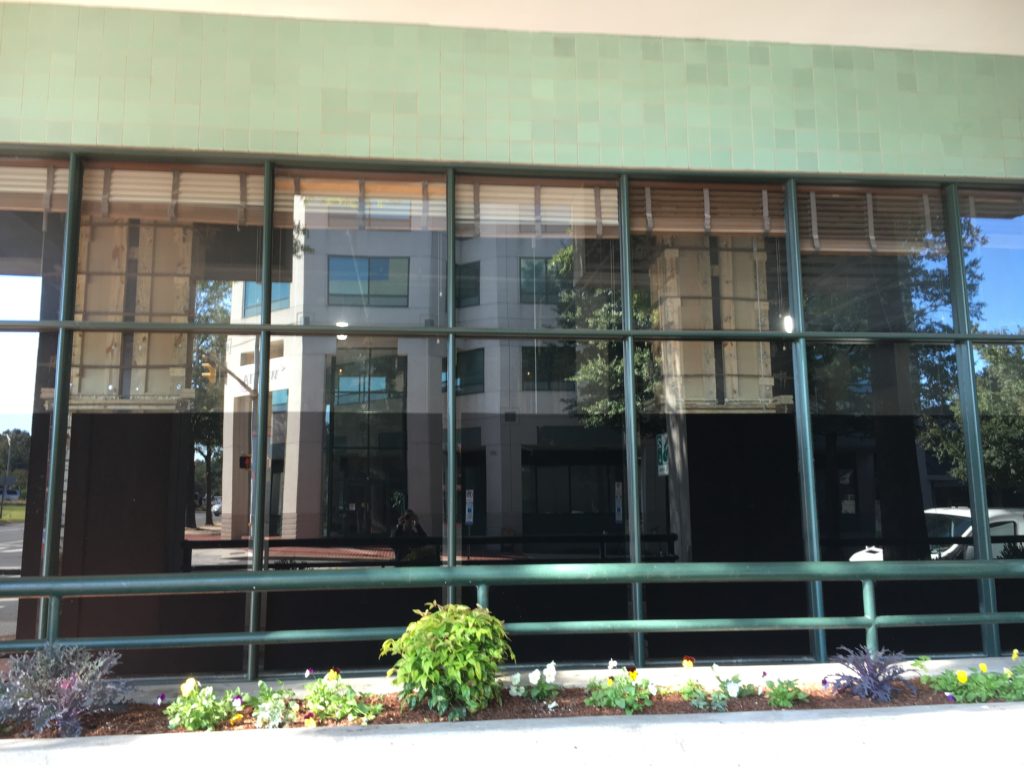
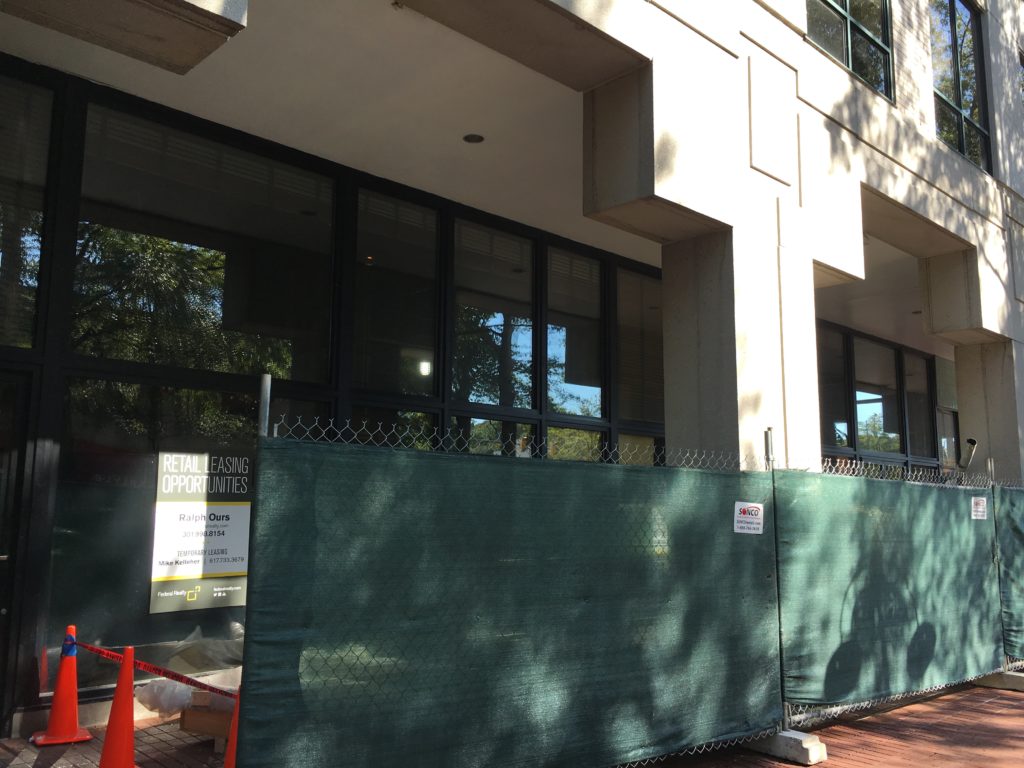
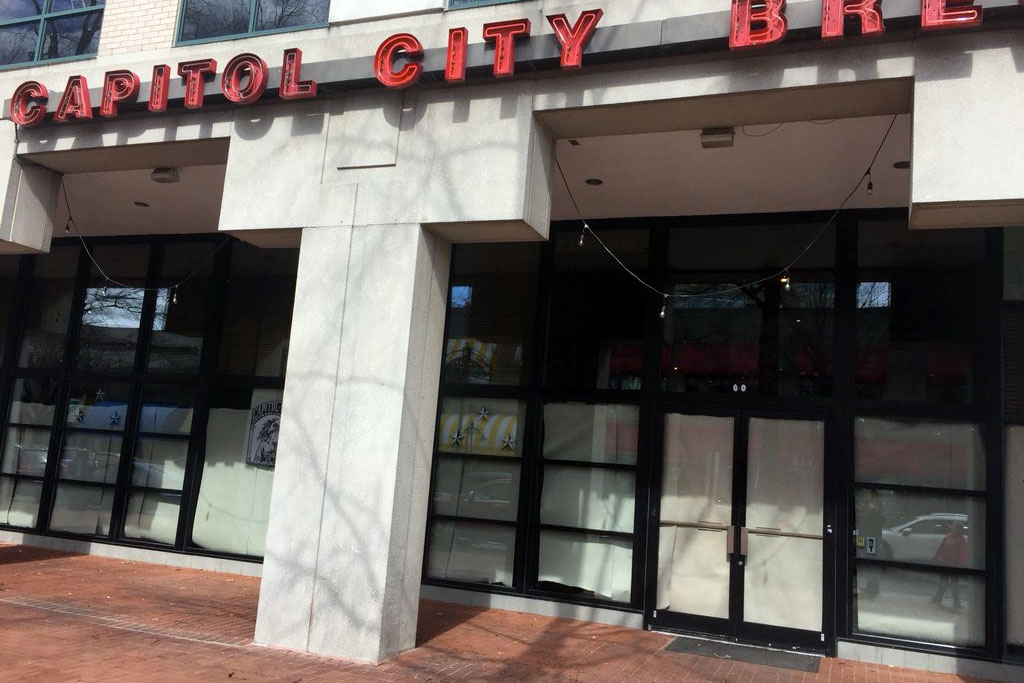
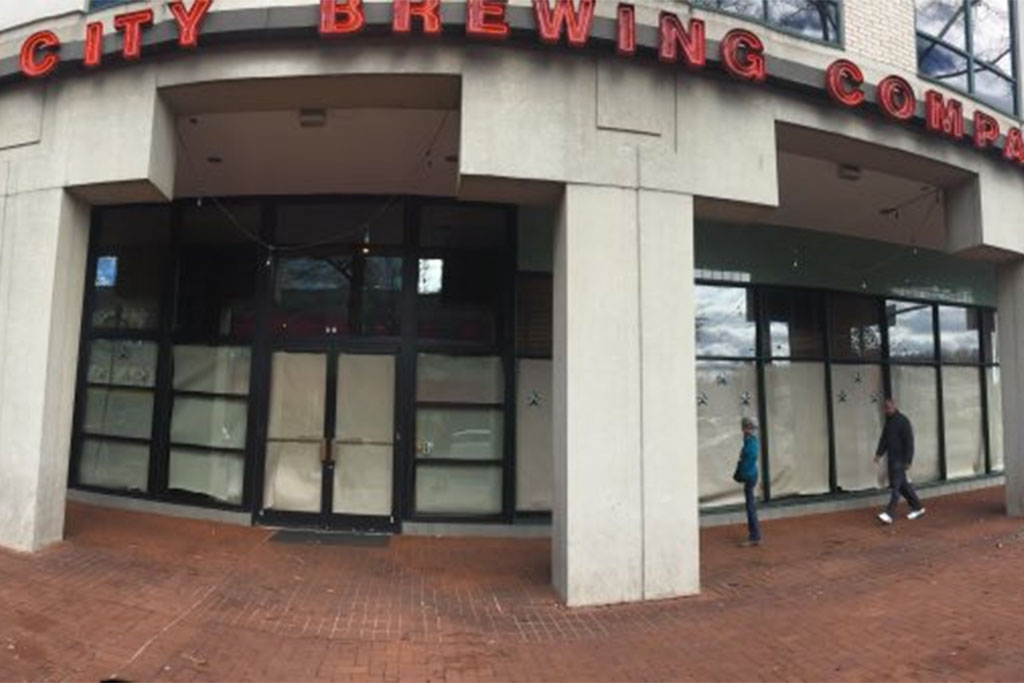
There’s some renovation work on the way for the space once occupied by Capitol City Brewing in Shirlington, though the location’s long-term future remains unclear.

Sterling-based construction company Cypress Contracting secured permits in August to make “interior alterations” to the space at 2700 S. Quincy Street, part of the Village at Shirlington shopping center, county records show.

However, the permits do not make clear whether the changes are coming ahead of a new tenant moving into the space, with the documents noting that the changes are designed for “portions of an existing restaurant space” that will slightly reduce its square footage and involve a new “partition that creates a common service space.”

A spokeswoman for Federal Realty Investment Trust, the company that owns the shopping center, didn’t immediately respond to a request for comment on the location’s future.

Signs listing the space for lease still adorn its facade, as of Tuesday morning, and a small construction fence sits outside its storefront along Campbell Avenue.

Capitol City closed its Shirlington location back in March, after serving up brews there for the past 22 years. The chain’s D.C. location remains open, though the company filed for bankruptcy shortly after closing the Shirlington restaurant.


View More Stories