Arlington Transit could soon add a new bus route to better connect Ballston to Shirlington, as part of a host of route and schedule changes on tap for this winter.
The county’s bus service is currently collecting community feedback on the service tweaks, with plans to finalize any changes by mid-December.
The most substantial of the proposed options would be the creation of a new ART route 72, running from N. Glebe Road’s intersection with Old Dominion Drive in Rock Spring to the intersection of S. Quincy Street and S. Randolph Street near the Village at Shirlington.
The route would run through the Ballston Metro station, via both directions of George Mason Drive, and offer buses once every 20 minutes during peak hours. ART hopes that the new route would work in conjunction with Metrobus’ 22A/C routes to “bring more frequent service between Ballston and Shirlington.”
The 72 route require the creation of eight new bus stops along N. Glebe Road, at the following intersections:
Proposed Northbound Bus Stops
Stop 1 – N. Glebe Road and in front of the Marymount Admissions Building
Stop 2 – N. Glebe Road and 32nd Street N.
Stop 3 – N. Glebe Road and N. Albermarle Street
Stop 4 – N. Glebe Road and N. Abingdon Street
Proposed Southbound Bus Stops
Stop 5 – N. Glebe Road and 35th Road N.
Stop 6 – N. Glebe Road and 33rd Road N.
Stop 7 – N. Glebe Road and Rock Spring Road
Stop 8 – N. Glebe Road and Old Dominion Drive
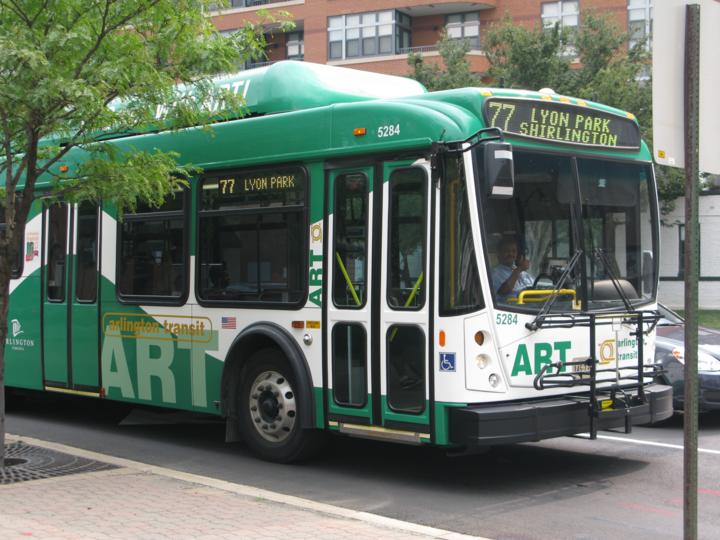
Other proposed service tweaks include running buses more frequently along the 45 route during peak hours, and reducing some service on the 52, 55 and 77 lines. ART would also tweak the schedules of 74, 84, and 87 routes to create better spacing between various buses and endure buses run on time more frequently.
The county is currently collecting feedback via an online survey, and will also hold a pair of public meetings on the subject this month.
One is set for this coming Tuesday, Oct. 9, at the Arlington Mill Community Center (909 S. Dinwiddie Street), while the other is scheduled for the Langston Brown Community Center (2121 N. Culpeper Street) on Oct. 11. Both will run from 6:30-8 p.m.
As Metro’s leaders wrestle anew with the question of how to bring riders back to the troubled transit service, Northern Virginia officials are offering their own suggestions: focus on reliability, and create new fare card plans to entice riders.
In a new report to Gov. Ralph Northam and the General Assembly set to be considered tonight (Thursday), the Northern Virginia Transportation Commission plans to urge Metro to use those strategies to boost ridership, and put WMATA on sounder financial footing in the process.
The document is the first such set of recommendations delivered to state lawmakers from the regional transportation planners at the NVTC, as part of the new oversight powers the group won through legislation to provide Metro with dedicated state funding.
Notably, however, it does not include any recommendation that Metro increase service to bring back riders. The push for service boosts, long backed by transit advocates, has become a particularly hot topic in recent days, after the Washington Post uncovered an internal Metro report insisting that service changes are the surest way for reversing WMATA’s declining ridership.
Members of Metro’s Board of Directors, including Arlington County Board Vice Chair Christian Dorsey, expressed no such certainty on a path forward when questioned by the Post, and said they had no knowledge of the internal report on service increases. But the NVTC report represents a chance for regional leaders — including NVTC commissioners like Dorsey, County Board Chair Katie Cristol and Board member Libby Garvey — to offer some of their own thoughts on the matter to Metro and its overseers.
The group’s “2018 Report on the Performance and Condition of Metro” notes that just 79 percent of trains arrived at stations “at or close” to their scheduled times in fiscal year 2017, underscoring the NVTC’s recommendation that improving reliability should be WMATA’s prime long-term focus in bringing riders back to the service. To do so, NVTC expects the system will need to devote plenty of cash to capital projects.
The report deems the $500 million in annual dedicated funding that Metro will now receive from D.C., Maryland and Virginia “an invaluable tool” in achieving its maintenance goals. Even still, the group notes that Metro reported an “unconstrained capital need” of $25 billion in projects in 2016, and will need to focus on the area for years to come to catch up on many years worth of work.
In the short term, however, the NVTC recommends developing “new fare-pass products” to “ease the transit riding experience.”
Examples could include the expansion of passes designed for college students, or new partnerships with hotels and conventions “to provide fare products directly to visitors as a part of hotel and/or convention registration.” Metro’s internal report also cites the importance of developing new fare pass options, recommending strategies like offering shorter term passes and making all passes useable on both Metro trains and buses, but those options are listed firmly below the priority of increasing service.
Yet the NVTC expects that exploring those fare pass strategies would also improve fare collection and boost Metro’s coffers, another key point of emphasis of the NVTC report. The document suggests that Metro “develop the next generation of fare collection technology” in the long term, and test methods for “off-vehicle fare collection” on Metrobus routes to juice revenues.
The report also includes recommendations on how Metro can control costs, with a special focus on labor costs. With a new Government Accountability Office analysis of WMATA’s pension liabilities igniting new debates on Metro’s relationship with its unions, the NVTC is urging Metro’s board to consider private contracting in select situations and other collective bargaining tactics to keep labor costs down.
Metro only recently cooled tensions with its largest union, which briefly threatened a strike this summer.
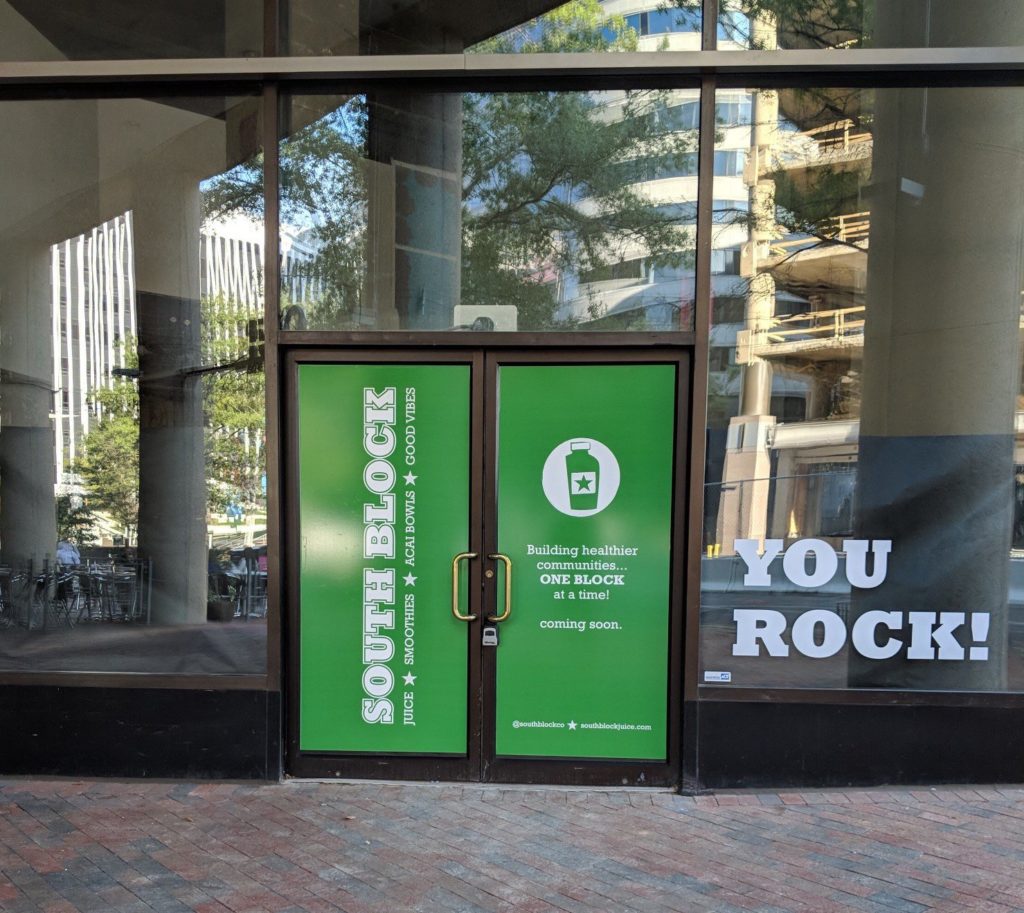
South Block will soon bring its array of juices, smoothies and acai bowls to Rosslyn.
The Arlington-based chain is planning its fourth location in the county for the former Cafe Asia space (1550 Wilson Blvd), next to the forthcoming Bash Boxing workout studio, according to founder and CEO Amir Mostafavi.
“Our Clarendon spot has turned into such a busy location, and we’re growing as a company, it just seemed like it was needed for us in that area,” he told ARLnow. “Regulars can attest that if you come in on a Saturday in Clarendon, it’s just packed. So now we can spread out a bit and help the serve community better.”
Mostafavi expects that the Rosslyn location will open in the late spring of 2019, just a few months after South Block opens its third Arlington store in the new Ballston Quarter development. He says both new locations will offer the same line-up as the rest of its shops, including the toast options he’s recently added to his menus.
In an unusual twist of fate, both the new locations will be located next to Bash Boxing’s gyms, with the fitness studio also planning a Ballston Quarter location.
Though Scott Parker, one of the studio’s co-founders, says the pairings were largely a “coincidence,” Mostafavi expects the businesses will easily compliment each other.
“We’re calling it a one-two punch,” Mostafavi said.
Mostafavi says his real estate broker first showed him the Cafe Asia space a few months back as he eyed an expansion. When he subsequently heard from Bash’s backers that they too were eyeing the space, he figured opening up a juice bar right next to fitness studio would make a good bit of sense.
“We’ve always had a really strong relationship with Arlington’s fitness community, so this is just a really good fit,” Mostafavi said.
By the time South Block opens its two new Arlington locations, Mostafavi says he’ll have 10 shops running across the region.
According to an email sent to Wakefield parents and forward to ARLnow, the building currently has “no power, running water or phone service.” Students will be dismissed as bus service becomes available, the email said.
APS added in the announcement that power outages are impacting surrounding homes as well. A Dominion Energy outage map only shows three outages in the area, with two along nearby S. Carlin Springs Road.
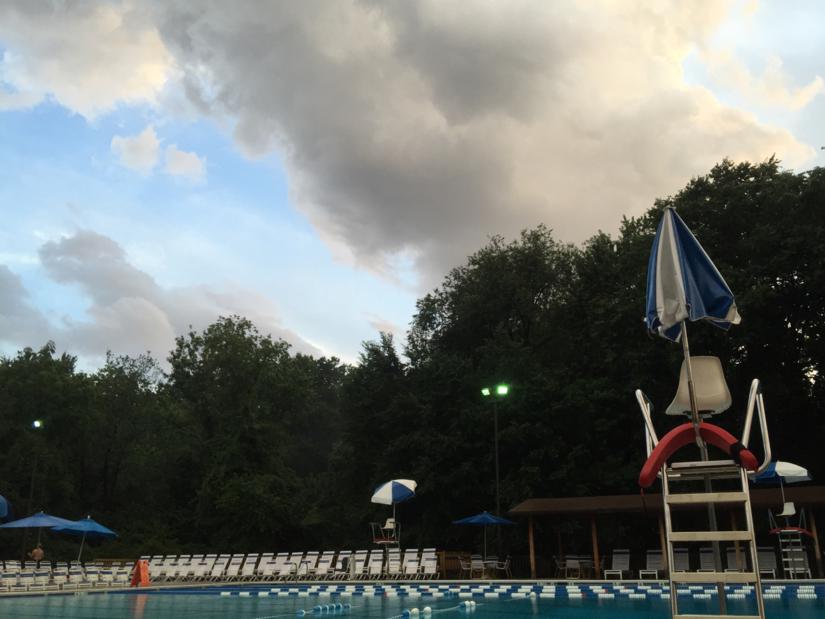
Arlington officials are gearing up to loosen some of the zoning rules governing community swimming pools, in a bid to make it easier for organizations to build or renovate pools across the county.
The Planning Commission is set to hold a public hearing on the zoning tweaks this coming Wednesday (Oct. 10), with the County Board considering the changes soon afterward.
Primarily, the changes would give the Board more latitude to hand out “use permits” for the pools, giving officials the chance to review standards for things like fencing and setbacks on a case-by-case basis, rather than subjecting every pool to the same rigid standard.
The county doesn’t currently boast a large number of community pools, by any stretch of the imagination — there are just five pools around Arlington that aren’t owned by the county or restricted for a specific neighborhood or development’s use — but the zoning changes have sped through the county’s engagement process, nonetheless.
That’s largely due to the fact that the Macedonia Baptist Church is currently hoping to redevelop a former YMCA community center in Nauck, located at 3440 22nd Street S., into a community pool, and has been pressing the county for changes to the zoning standards.
Most of those documents haven’t changed since the mid-1950s, according to a county staff report, when many of the original community pools were first built. Staff notes that those standards “were originally intended to buffer residential communities adjacent to community swimming pools from the impacts of the use, and to ensure that the pool provided ample parking on site that did not congest nearby on street parking or other off-site parking facilities.”
But as Arlington has urbanized over the years, staff believes those standards have become increasingly out of date.
For instance, the zoning ordinance currently requires pools to be built with a 100-foot setback from a residential street, a standard designed to “minimize the audible and visual impacts of the pool on nearby neighbors,” staff wrote. But with space in Arlington increasingly at a premium, county officials believe “a combination of opaque fencing and landscaping” can accomplish the same goal without requiring quite so many design headaches.
County staff don’t want to see the Board do away with that sort of limit entirely, noting that there could be plenty of future instances where the “100-foot setback requirement could be warranted to prevent mechanical equipment, storage buildings, and other pool-related facilities from being located too close to an adjacent neighborhood or property.”
By changing zoning rules to give the Board the chance to review future community pool designs, however, staffers believe members would be able to examine each application on its own and evaluate “the specific circumstances of individual properties,” making the whole process a bit less rigid.
After the Planning Commission gets a chance to offer a recommendation on the zoning changes next week, the Board is set to consider them at its Oct. 20 meeting.
A new cafe will soon offer up handmade doughnuts, coffee and more in Ballston.
Good Company Doughnuts and Cafe plans to move into a space at 670 N. Glebe Road, just under the 672 Flats apartments, according to co-founder Charles Kachadoorian.
Kachadoorian told ARLnow that the restaurant is targeting an “early 2019” opening date, after signing a lease at the new building this summer.
While the Ballston location will be the first for Good Company, Kachadoorian says his family is no stranger to the doughnut business. His sister, Kate Murphy, spent decades whipping up her own doughnuts at a shop in New Hampshire before moving to Arlington to join Kachadoorian, and he says they “decided to partner up and open a new cafe that’s a little more innovative than the old one.”
He expects the cafe will offer a full range of soups, salads, sandwiches and other “light fare,” with some limited dinner options as well. Kachadoorian added that the cafe struck a deal with Chicago-based Intelligentsia Coffee for its brews, and will even someday offer craft beer, wine and cocktails for thirsty customers.
That being said, however, Kachadoorian says “there is no upstaging these doughnuts.”
“They’re made fresh every night in the shop, by hand, by experienced bakers,” Kachadoorian said. “My sister and her husband probably have about 60 years of making doughnuts between them.”
The cafe will offer up both cake donuts and yeast-raised donuts, with “traditional flavors and also a few of the more funky ones,” Kachadoorian said. He isn’t ready to set a firm opening date quite yet, but expects to start construction in the “near future.”
“We’re a family business, and we’re really excited about bringing the food we’re passionate about to the community,” said Kachadoorian.
Depending on when Good Company opens its doors, it could become the first retailer to set up shop in the new 672 Flats building, located just across from the Ballston Quarter development.
The apartments have space set aside for several other businesses on its ground floor, though Kachadoorian was unsure if others will join Good Company in the near future. A spokeswoman for the Chevy Chase Land Company, which purchased the development last week, said they have yet to announce any additional retailers at the site.
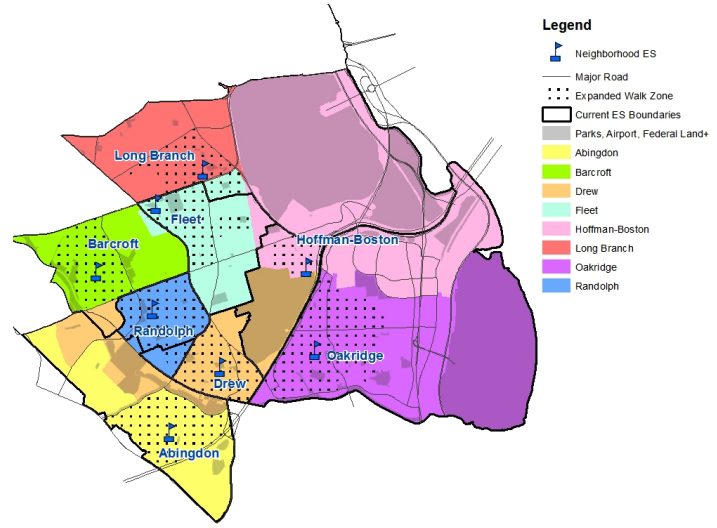
A new boundary proposal for the 2019-20 school year (via Arlington Public Schools)
The ever-contentious process of setting new elementary school boundaries is picking up steam in Arlington, with the school system spending the next few weeks collecting community feedback ahead of a School Board vote before the year is out.
Arlington Public Schools will hold an “open office hours” with planning staff tonight (Oct. 3) to let parents discuss the proposed boundary maps, and will accept online comments on the redrawn boundaries through next Wednesday (Oct. 10).
This latest boundary adjustment, designed to accommodate the opening of Alice West Fleet Elementary School ahead of the 2019-2020 school year, is set to impact a total of eight elementary schools in all. The current list proposed by staff includes:
Abingdon
Barcroft
Drew
Fleet
Hoffman-Boston
Long Branch
Oakridge
Randolph
Abingdon, Barcroft and Long Branch are also set to be impacted by boundary changes in the fall of 2020, as will 12 other schools.
But, in the meantime, school officials hope to sort how to best tweak boundaries around the South Arlington elementary schools, in order to equitably reduce overcrowding and move students into Fleet in an orderly way.
Current estimates show that five of the schools involved in the process will see substantial decreases in student populations as part of the change. Abingdon, Barcroft, Long Branch, Oakridge and Randolph are all currently over their designed capacities, and all will see population drops by anywhere from 13 percent to 40 percent.
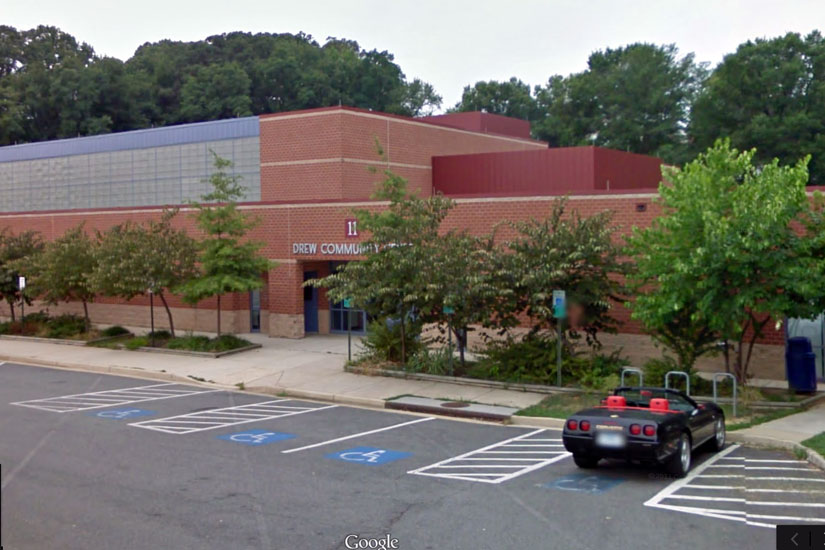
Even still, some parents are wary of the proposed boundaries, particularly those with students at Drew Model School.
Miranda Turner, a parent who lives in Drew’s attendance zone in Nauck, told ARLnow that she was particularly concerned that the school “seems to get the short end of the stick” under the current proposal.
“It’s really complicated, and I get that… but, in a world that involves necessary trade-offs, it’s not clear to me that there are any tradeoffs here to make up for the negatives,” said Turner, who has two kids currently in the school’s Montessori program and a third who could someday attend the school.
Turner is primarily concerned that the proposed changes would mean that Drew students could advance to three different middle schools, instead of just one, which might separate students from classmates they’ve befriended over the years. She chalks up part of the problem to the way the new boundaries extend out a bit to grab areas that won’t be within walking distance of Drew, another disturbing factor to Turner.
She also notes that the school system’s data show that Drew would see its possible population of students eligible for “free and reduced price lunch,” a measure of their families’ economic means, jump up to 83 percent.
The school system presents figures show that 85 percent of students at the school are currently eligible, but Turner points out that’s only because APS staffers aren’t considering the demographics of the Montessori program, which features students from much wealthier backgrounds. Drew officials reported in October 2017 having just over 51 percent of its students eligible for free and reduced lunch, when considering the whole population.
With the Montessori program set to move to Patrick Henry Elementary School next year, Turner feels the current boundaries are a missed opportunity to keep the school’s current demographic mix a bit more like it looks currently.
“This change is going to make Drew one of the most low-income schools in Arlington, where it’s relatively balanced right now,” Turner said. “And that’s going to present real challenges when it comes to things like funding the PTA.”
APS planner Robert Ruiz isn’t sure that such a comparison is wholly appropriate, however. The figures APS staff are using in the boundary process represent the possible universe of students who are eligible to attend Drew by dint of living within its boundaries, but they could end up heading elsewhere. Meanwhile, the 51 percent figure Turner is pointing to is indicative of the students who actually attend Drew in practice, so it’s no guarantee that the change will be as drastic as the one Turner describes.
By the school system’s data, Drew’s attendance zone would actually see a 2 percent decline in the number of students eligible for a free and reduced price lunch. It’s a drop that Lisa Stengle, the APS director of planning and evaluation, points out is a small one, but could always change the more planners talk to the community and Board members.
“We’re really still working through and talking to the Board about: are there other options?” Stengle said.
Turner is hoping that school officials will listen to some of the Drew community’s concerns, perhaps by leaving some students in the Columbia Forest neighborhood set to be sent to Drew remain zoned for Abingdon instead. She’s well aware that tinkering with the current map in any way will prompt a domino effect for other neighborhoods, but she’s hoping that APS will be able to come up with a proposal that presents fewer problems for Drew, specifically.
“There is no answer that will make everybody happy, but we think there are improvements that can be made,” Turner said.
The open office hours are set to run from 7-8:30 p.m. tonight at Kenmore Middle School. The Board is also planning to hold a work session on the issue on Oct. 10, where APS officials are hoping to get a bit more insight into what the Board hopes to prioritize.
A public hearing on the boundaries is set for Nov. 27, then the Board plans to pass a new map on Dec. 6.
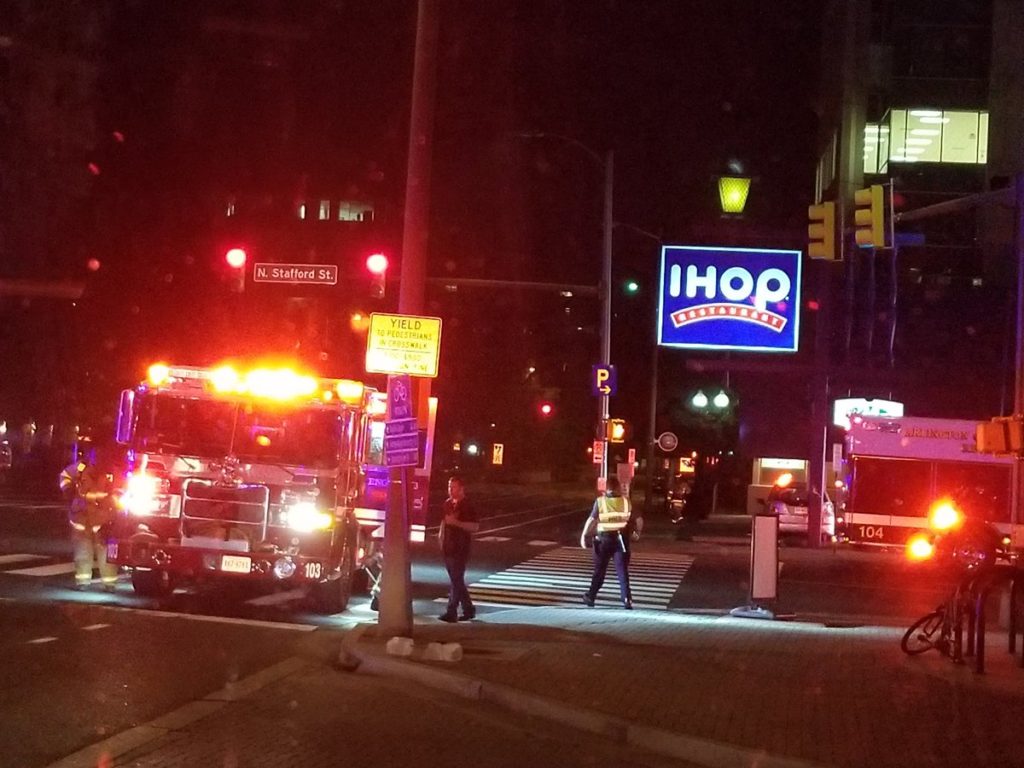
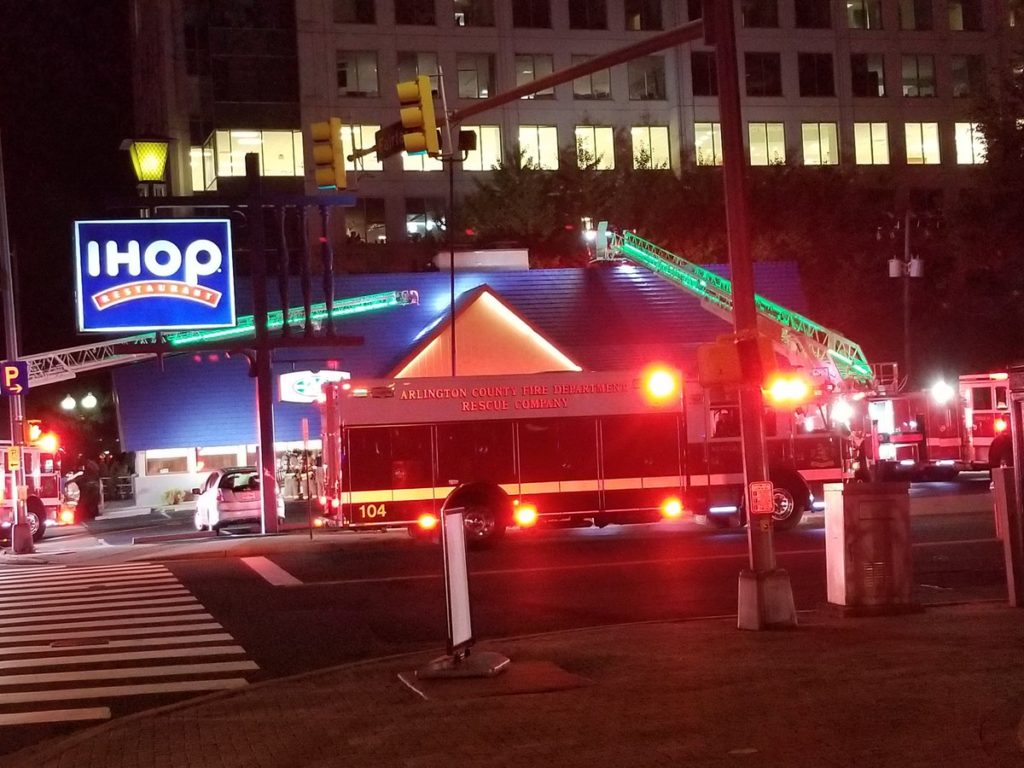
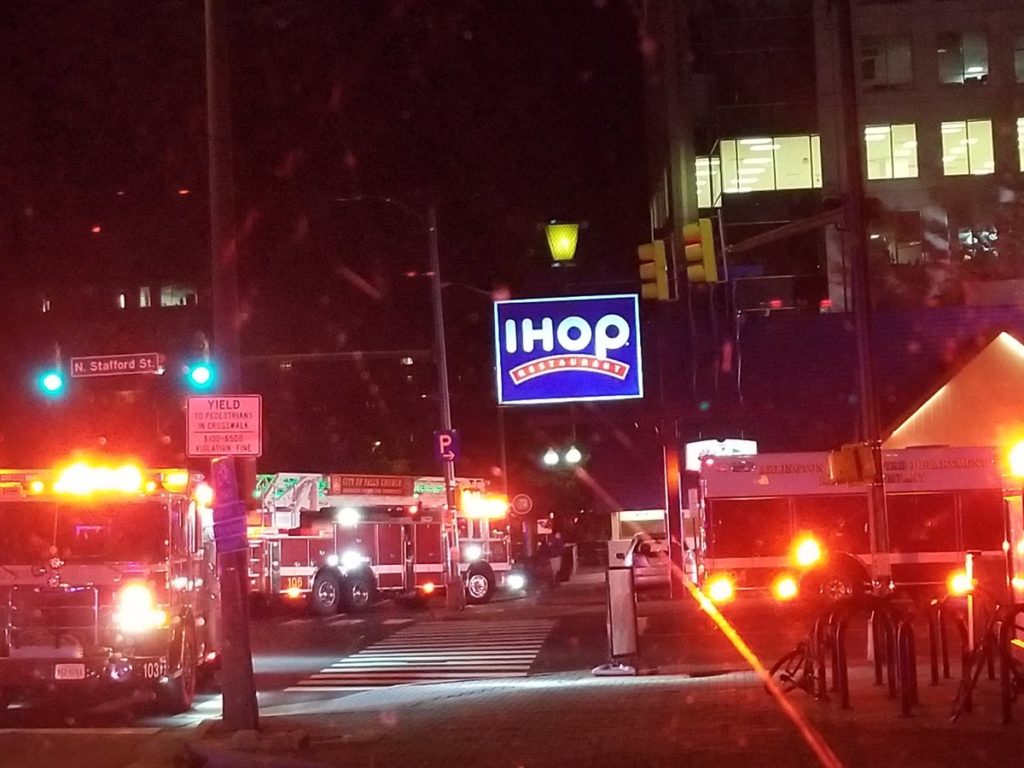
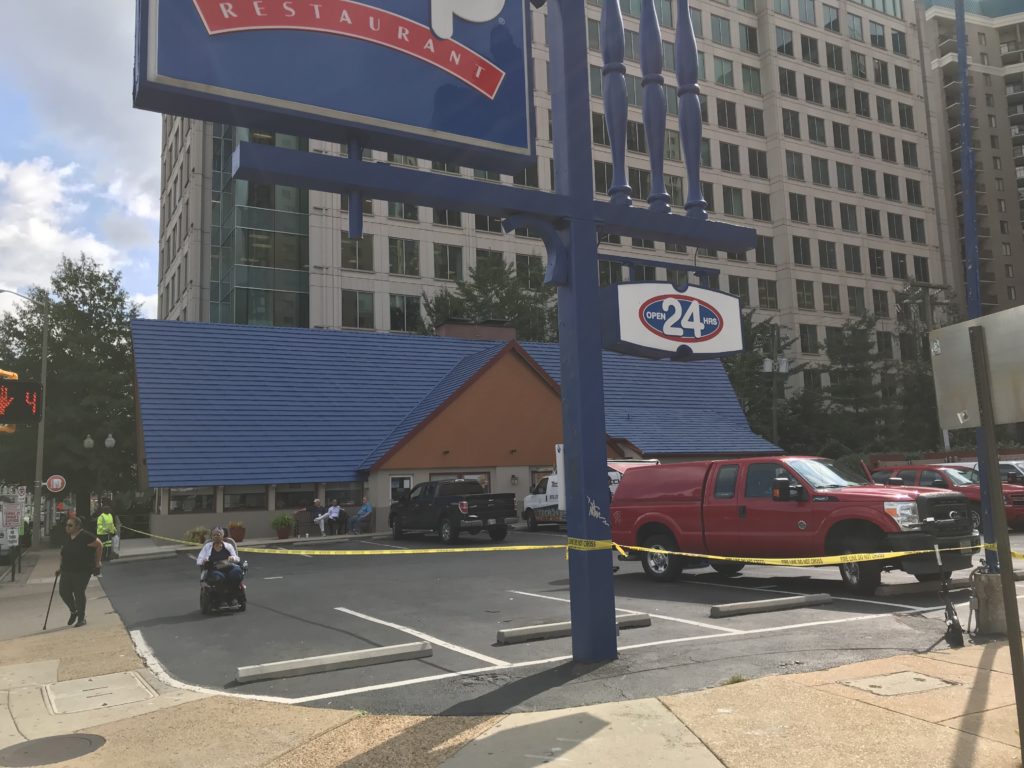
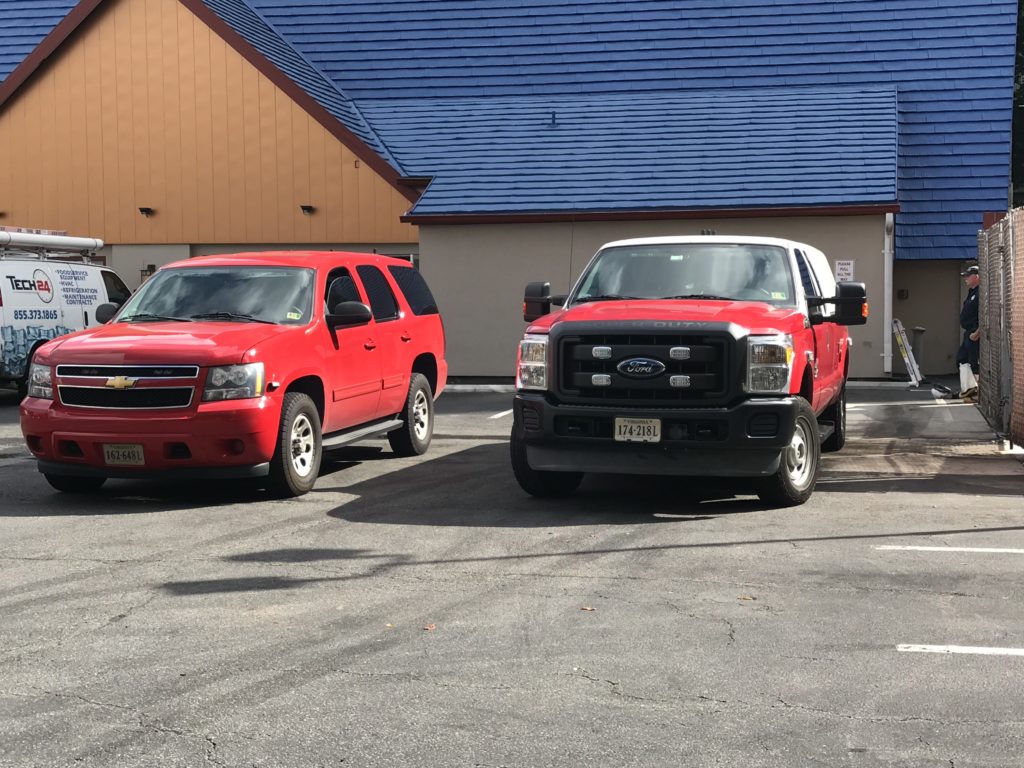
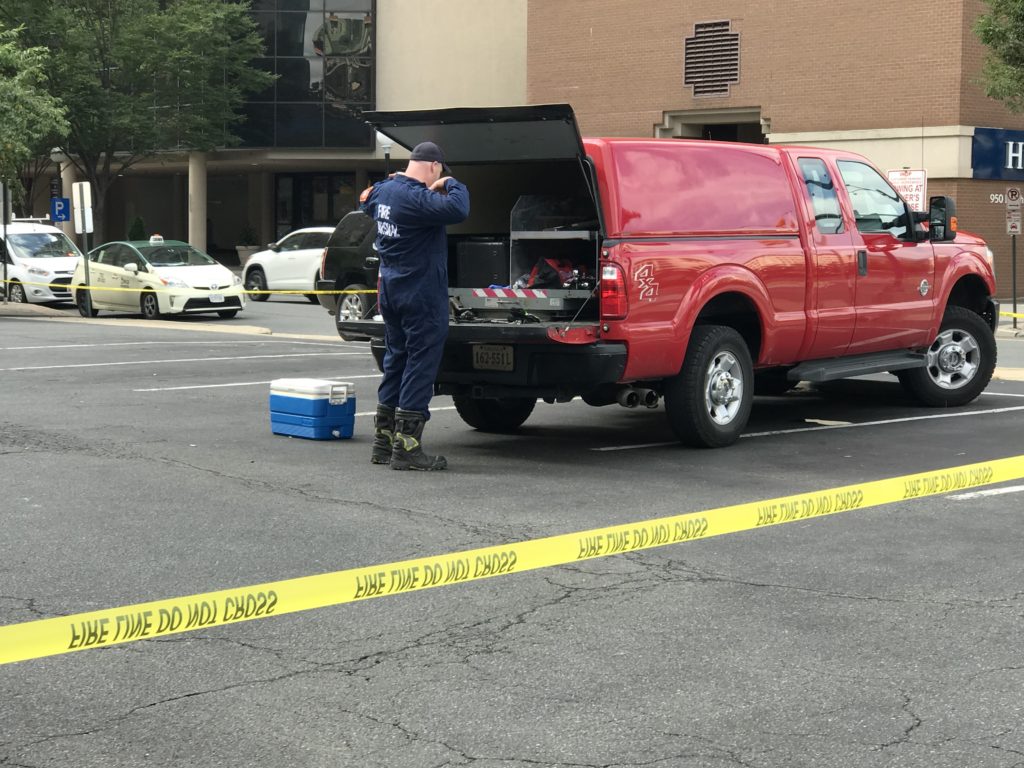
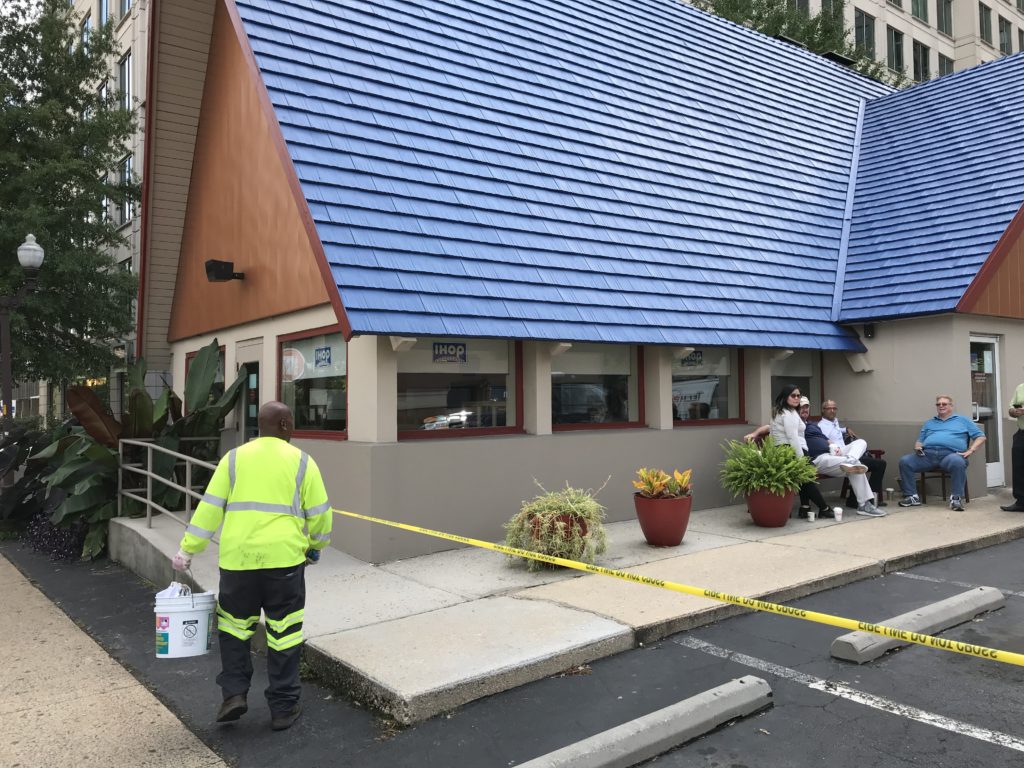
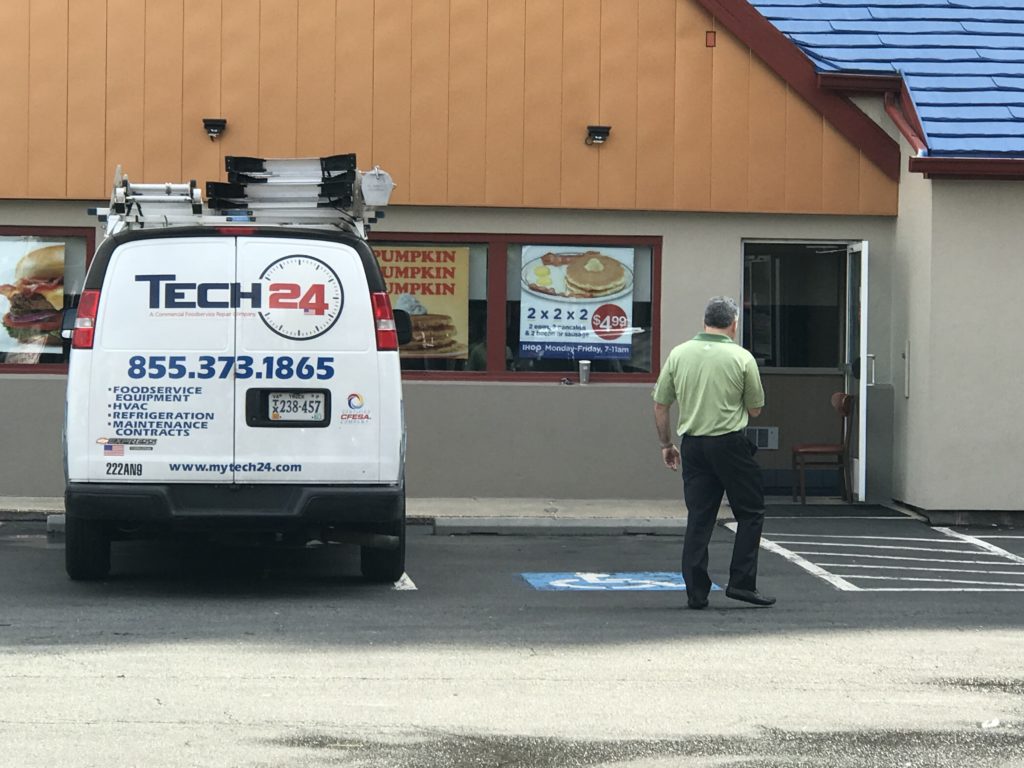
The aftermath of a fire at the Ballston IHOP restaurant.
(Updated at 3:30 p.m.) Firefighters extinguished a blaze at the Ballston IHOP restaurant early this morning (Wednesday).
The fire started around 2 a.m. at the eatery, located at 935 N. Stafford Street. No one was hurt as a result of the blaze, which crews were able to put out within half an hour of arriving on scene.
The fire marshal’s office is still investigating what started the fire, but smoke initially was seen coming from the roof of the restaurant.
The restaurant was closed as of 3 p.m. today and fire department investigators were still on scene. No one answered IHOP’s phone line Wednesday morning.
Photos from the scene at the 900blk of N. Stafford St. Fire has been located by crews and is currently being extinguished. Fairfax Drive is shut down at N. Stafford St. Stay clear of the area. pic.twitter.com/uaMCzxYcrD
Fire has been extinguished. Units are checking the restaurant and attic for hotspots. No injuries to civilians or firefighters. Units are remaining on scene for clean up. pic.twitter.com/bC86XzDzA5
An Arlington man has pleaded guilty to federal sex crime charges, admitting to downloading child pornography through a website on the “dark web.”
Ammar Atef Alahdali, a 22-year-old Saudi Arabian national living in Arlington, pleaded guilty to one count of receipt of child pornography in federal court yesterday (Tuesday), according to a release from the Department of Justice.
Federal prosecutors say Alahdali used cryptocurrency to register on a dark web site, which could only be accessed via special software masking his IP address, back in April 2017.
They believe he then downloaded “more than 20 videos depicting the sexual abuse of children, including at least one video depicting sadistic sexual conduct” from the website over the subsequent months.
According to documents filed in federal court, federal agents searched Alahdali’s home in July, where they discovered evidence of child pornography on his laptop. He also admitted to downloading the pornography in an interview with federal agents.
Alahdali is currently being held in the Alexandria Detention Center and is set to be sentenced on Jan. 18.
A Maryland man is now behind bars after he allegedly picked up four passengers in D.C., refused to let one out of his car and then assaulted that person while he or she tried to escape.
County police say 34-year-old Rick Ramey of Bryans Road, Maryland wasn’t working as a rideshare or taxi driver when he managed to convince four people to get into his car around 3 a.m. Friday night (Sept. 28).
Police spokeswoman Ashley Savage says it’s unclear how Ramey met his passengers, or if he was posing as a rideshare driver, but she said “they appear unknown to each other prior to the incident.”
Ramey drove three of his passengers to their intended destination, but refused to let the final one out at their home, police say. From there, the pair started arguing, and the confrontation “escalated and become physical.”
“The victim and suspect exited the vehicle and the suspect struck the victim in the head, causing a laceration,” police said.
Ramey is now facing charges of both abduction and malicious wounding, with a hearing in Arlington General District Court set for Dec. 3. He’s currently being held in the county jail without bond.
Savage says the whole incident underscores the need for people to “take advantage of safeguards in place to keep them safe and never accept rides from drivers who are not operating in an official for-hire capacity.”
“For rideshares, this includes checking that the license plate, driver photo, and driver name all match what’s listed in the app,” she said. “For taxicabs, this includes checking that the driver’s hack license and identity of which company they are affiliated with are prominently displayed.”
MALICIOUS WOUNDING, 2018-09280030, 1200 block of S. Arlington Ridge Road. At approximately 2:58 a.m. on September 28, police were dispatched to the report of a fight in progress. Upon arrival, it was determined that the suspect, who was not working as a rideshare or taxi driver, picked up the victim and three friends in Washington, D.C. After stopping to drop off the victim’s friends, the suspect continued, but refused to stop at the victim’s address or let the victim exit the vehicle. A verbal altercation ensued, which escalated and became physical. The victim and suspect exited the vehicle and the suspect struck the victim in the head, causing a laceration. Rick Ramey, 34, of Bryans Road, Md., was arrested and charged with Abduction and Malicious Wounding. He was held on no bond.
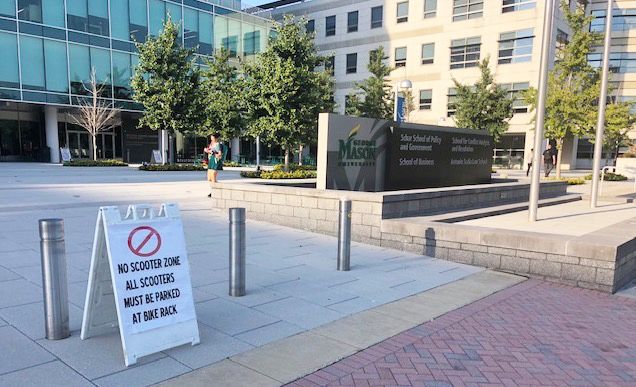
Signs advertise a “no scooter zone” in front of George Mason University’s Virginia Square campus (photo courtesy Chaz Papa)
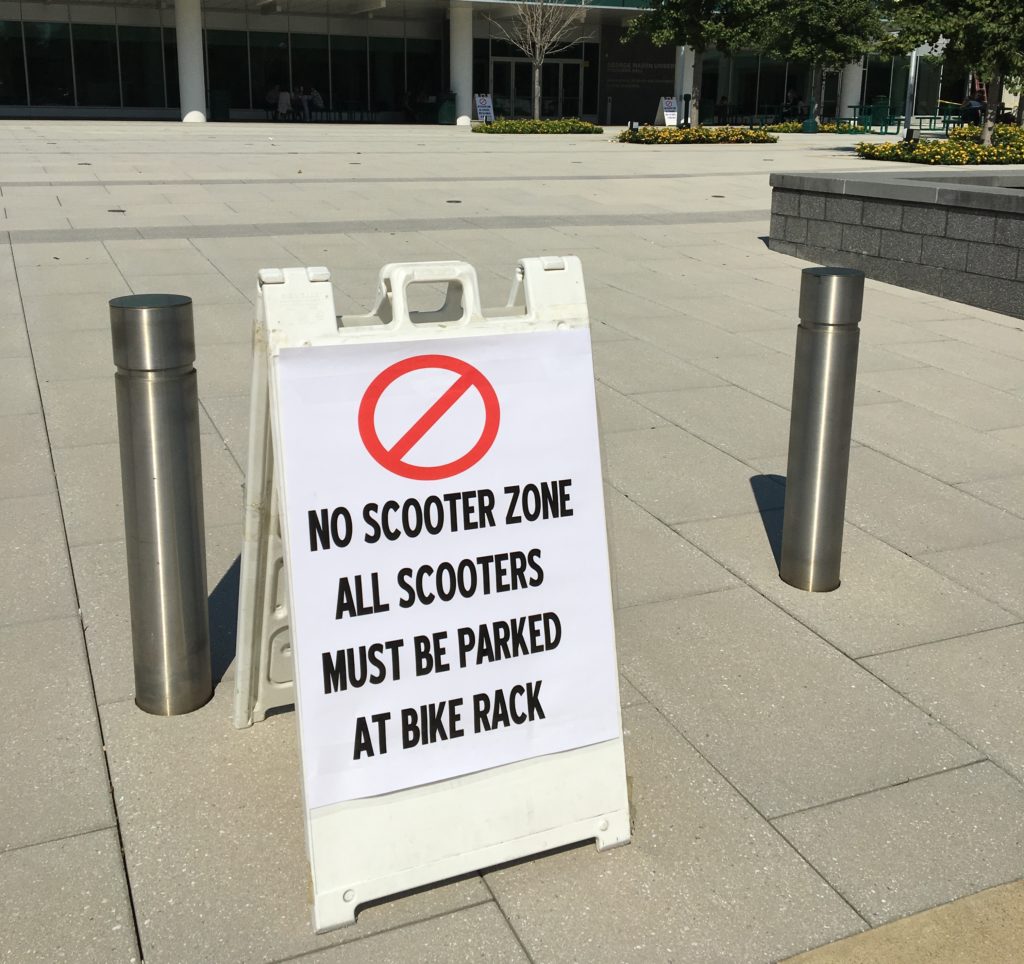
Signs advertise a “no scooter zone” in front of George Mason University’s Virginia Square campus (courtesy photo)
George Mason University has cordoned off a “no scooter zone” in front of its Arlington campus in Virginia Square.
Readers alerted ARLnow to the signs yesterday (Monday), which are located in front of the university’s Founders Hall plaza on Fairfax Drive.
The signs direct dockless electric scooter riders to park the vehicles at a nearby bike rack, rather than abandoning them at random. Ever since Bird became the first company to bring the dockless scooters to Arlington this June, the county’s sidewalks and yards have increasingly been littered with the vehicles.
Buzz McClain, a spokesman for the Schar School of Policy and Government (which is located at Mason’s Arlington campus), told ARLnow that university officials believe the signs are necessary to keep the parked Birds out of harm’s way in the highly trafficked plaza. He noted that signs are simply designed to provide a little clarity about where the vehicles belong, “just as we do with bikes.”
Mason’s decision comes as the county prepares for an influx of hundreds of dockless bikes and scooters, thanks to a new pilot program approved by the County Board last week.
The nine-month pilot also sets some restrictions on the dockless vehicles to give the county more control about where the scooters end up, given growing community consternation about the sudden proliferation of the vehicles.
The new program bans riders from using the scooters on sidewalks and trails, and will also require any company to move an improperly parked vehicle within one hour of receiving a complaint, between the hours of 8 a.m. and 9 p.m.
County staff are also considering a similar tactic to Mason’s chosen option, and could soon establish “on-street corrals” at Metro stations for dockless bikes and scooters.
Staff believe such an addition would “encourage orderly parking and on-street riding” and has proven effective in cities across the globe, according to a presentation delivered to the Board.