Though it comes with some painful cuts and delays a variety of anticipated projects, a 10-year, $3.4 billion construction spending plan won the County Board’s approval this weekend.

The Board unanimously signed off on a new Capital Improvement Plan, commonly known as the CIP, at its meeting Saturday (July 14), marking an end to its months-long work to wrestle with the county’s budget pressures and lay out a new blueprint for major construction projects through 2028.

Ultimately, Board members made relatively few changes to County Manager Mark Schwartz’s proposed CIP, but did manage to find an extra $1 million for the Neighborhood Conservation program.

That means the program, designed to fund local infrastructure projects like sidewalk improvements or new landscaping, will have $37 million to work with over the next decade instead of $36 million, even though community leaders still fear the $23 million funding cut will imperil Neighborhood Conservation’s future. The Board also formalized plans to study potential reforms to the program, in order to ensure its long-term survival.

By and large, however, the Board didn’t have much leeway to pump much additional money into the CIP, considering that the county remains constrained by challenging factors like a decrease in commercial tax revenues and an increase in the amount of cash it needs to send to Metro as part of a deal to provide the service with dedicated annual funding.

“It’s kind of a carrots and peas CIP, rather than a steak and asparagus CIP,” said Board member John Vihstadt. “It’s a realistic one for where we are at this point in time, given our economic circumstances and near-term challenges ahead.”

Board generally members struck an optimistic tone about the CIP Saturday, but there is little doubt that they’re already looking ahead anxiously to 2020, when the Board will revise the spending plan once more. By then, the county’s revenue picture could improve, or lawmakers in Richmond could answer Arlington’s pleas and tinker with the Metro funding deal to free up more money for Northern Virginia transportation projects.

“In two years, we’re either going to have a lot more money or we’re going to have a lot less,” said Board member Libby Garvey.

That’s why Board Vice Chair Christian Dorsey stressed that he looks at the CIP as “a two-year document and an eight-year math exercise.” He was particularly adamant that parents concerned about school funding shouldn’t view this spending plan with trepidation, even as debate simmers over how the school system builds new space for high schoolers at the Arlington Career Center.

The Board’s CIP includes $614 million to fund the school system’s own construction plan, and the county wasn’t able to find much in the way of additional money to fund some of the more ambitious construction plans the School Board considered. Yet Dorsey is broadly optimistic that this new, limited CIP is far from the end of Career Center discussions.

“When our needs become more clear in the coming years, whether it’s schools or county facilities as well, and we’re able to price them out more, we’ll figure out how to pay for it,” Dorsey said.

There are certainly plenty of other cuts in the CIP the Board hopes to someday revisit. For instance, the plan pushes out the construction of second entrances at the Ballston, Crystal City and East Falls Church Metro stations far into the future, and cuts funding for improvements on some of the county’s arterial roads.

The CIP also contains only limited funding for planning at the Buck and Carlin Springs Road properties, a pair of sites officials have long eyed as potential homes for new schools or county facilities someday.

However, the plan does maintain funding for previously approved capital projects like a new Lubber Run Community Center and a replacement for Fire Station 8 on Lee Highway.

Board members were also eager to reiterate their support for the Long Bridge Park aquatics center. The project isn’t funded as part of this CIP, yet the county’s strained financial picture has nonetheless convinced some in the community to agitate for the pool’s delay or cancellation, in favor of sending its funding elsewhere.

“To try to cancel the contract now is not reevaluating past decisions in light of new information,” said Board Chair Katie Cristol. “To cancel a contract that breaks ground in a week would be setting a toxic precedent.”

Vihstadt, the lone Board member to vote against a slimmed-down version of the project last fall, reiterated his belief Saturday that the project should be delayed. Yet he also signalled that he was willing to let the matter go, for now.

“We had a vote last December, I was in the minority, I acknowledge it and I accept it,” Vihstadt said. “But I have no doubt if this process were going forward today, or if there were a vote on this particular issue today by the voters of Arlington, it would fail.”
Arlington is shelling out $23.9 million to buy land that will someday become home to a new bus “operations center” in Nauck, marking an end to years-long negotiations over the property’s future.

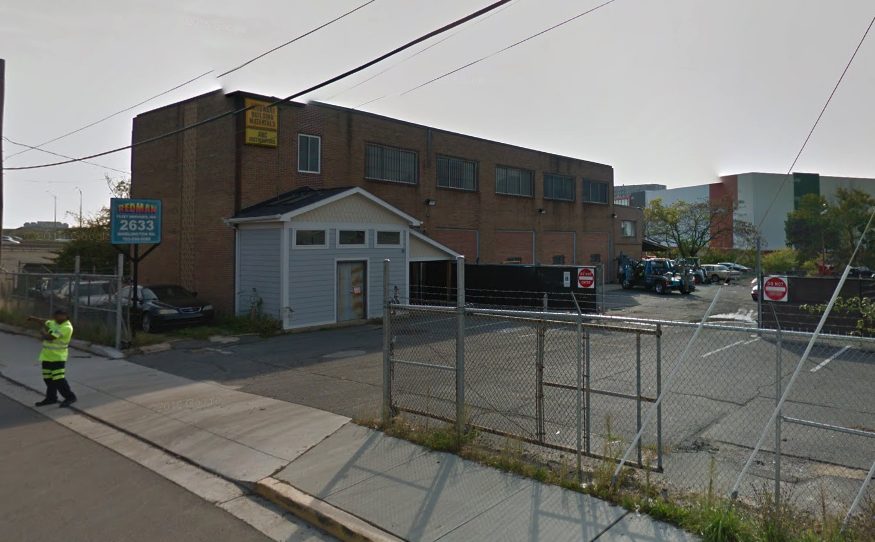
The County Board voted Saturday (July 14) to purchase the site, located at 2629 and 2633 Shirlington Road. Arlington Transit plans to eventually store about 90 buses on the property, and eventually develop the space “as a base for ART operations,” according to a county staff report.

The county already leases about 2.5 acres of the roughly 3.5-acre property to use as bus storage, but it was paying $60,000 a year for the privilege. The remaining section of the land was once used as storage by the towing company Redman Fleet Services.

County leaders have eyed the property as an ideal site for additional bus storage for several years now, and considered acquiring it as part of a swap involving another in-demand piece of land: the Buck property near Washington-Lee High School.

The Arcland Property Company proposed trading its Shirlington Road property for a portion of the Buck site, which the county bought for $30 million several years ago, in order to build a self-storage facility on the property. But that proposal attracted pushback from the community, particularly as the county eyed the Buck site as one that could become home to a school someday.

Arlington’s budget pressures means officials still haven’t been able to plot out a long-term plan for the property, though the county did recently agree to allow some school system employees to use it for parking. The county plans to wrap a study of the property’s suitability for some sort of school building this winter.

Yet the Board was able to afford the Shirlington Road site without giving up any of the Buck property thanks to a mix of state and regional funding. Some state grants will pay for nearly $7 million of the $23.9 million price tag, with some recently awarded money from the Northern Virginia Transportation Authority adding another $2.7 million or so.

The NVTA doled out $39 million to help pay for the operations center’s construction as well, in addition to a new “heavy maintenance facility” in Springfield. ART recently opened a new “light maintenance” facility in Crystal City.

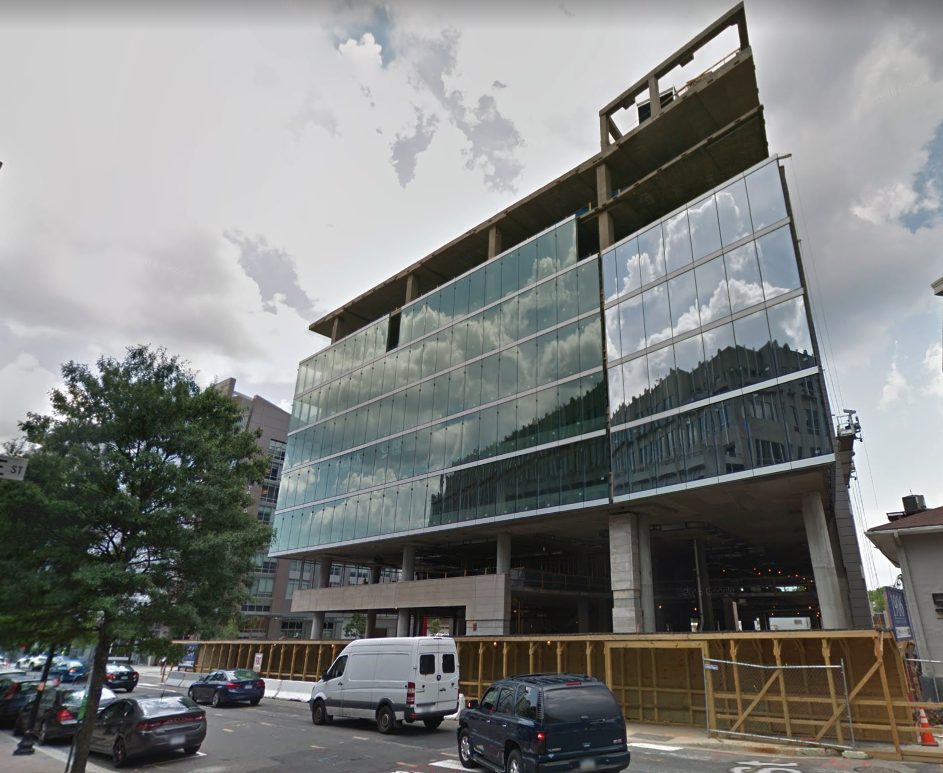
Photo via Google Maps


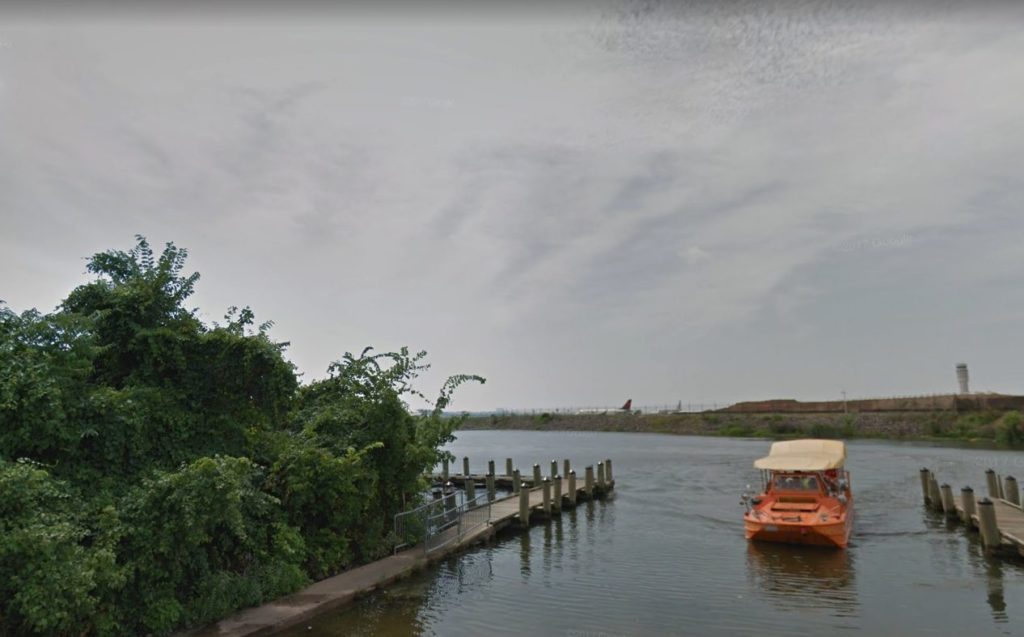
Police discovered a body in the Potomac River just off Gravelly Point this afternoon (Monday).

A D.C. police spokeswoman says the department’s Harbor Patrol made the discovery, but did not have any additional details on the incident. Arlington County police spokeswoman Ashley Savage added that her department is assisting in the investigation, as are the U.S. Park Police.

The area is located just off the G.W. Parkway and sits across the river from Reagan National Airport.

Photo via Google Maps


Construction around one of the Pentagon’s parking lots kicking off this week could produce some big headaches for drivers and bus riders alike.

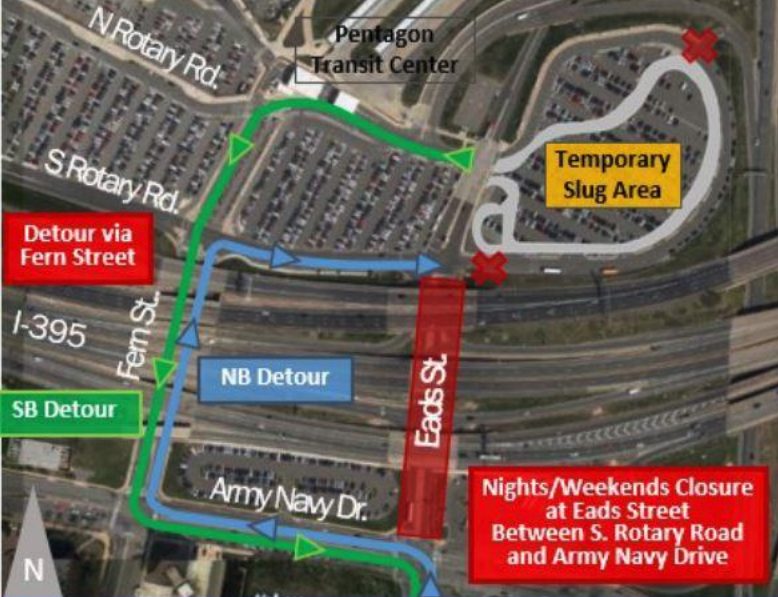
Starting this morning (Monday), work will shut down the west side of S. Eads Street from Army Navy Drive to where it nears the Pentagon’s south parking lot at S. Rotary Road.

That will shift both northbound and southbound traffic to the east side of the street. In the mornings, from 6 a.m. to 9 a.m., that will cut off access to I-395’s northbound HOV lanes and Army Navy Drive from S. Rotary Road. Crews will post a detour and drivers should follow signs. In the same time period, access to northbound S. Eads Street from the right lane of S. Rotary Road will be reserved for anyone heading for I-395’s southbound HOV lanes.

Construction will include “median reconfiguration, road widening, pavement and drainage work,” according to VDOT, prompting some major traffic snarls.

“As current traffic volume along Eads Street is near capacity during peak periods, we expect significant traffic congestion and delays along Eads Street,” VDOT wrote in an advisory. “Periodic nighttime/weekend closures may also take place to complete the construction activities.”

VDOT is recommending that drivers looking to reach the I-395 HOV lanes during the construction to use the ramps near the Pentagon’s north parking lots at Boundary Channel Drive instead.

Arlington Transit is also warning bus riders looking to reach the Pentagon to expect “significant delays for ART buses entering and exiting” the facility’s lots. ART plans to issue service advisories as needed.

VDOT says work will shift to the east side of S. Eads Street sometime this fall, then last for an additional two months. The construction is included as part of the broader project focused on the I-395 express lanes.

Photo via VDOT


Metro Workers’ Union Threatens Strike — The rail service’s largest union could launch a three-day strike, as it continues to tangle with GM Paul Wiedefeld. The union provided no timeline for when the strike might occur, but workers have launched two previous actions in recent weeks. [Washington Post]

School Board Candidate Levels Racism Accusations — Independent Audrey Clement, a frequent candidate for Arlington offices, accused the School Board of using the debate over the renaming of Washington-Lee High School to “dredge up Civil War history to divert attention” from the school system’s other problems. She’s squaring off against incumbent Democrat Barbara Kanninen this fall. [InsideNova]

Arlington Democrats Honor Longtime Activist — The county’s Democratic committee plans to name Herschel Kanter as the “senior Democrat of the year” on Sept. 30. His fellow Democrats say the move was a “no-brainer.” [InsideNova]

Nearby: Alexandria High-Rise Fire Hospitalizes Three — A blaze broke out at a high-rise along the 5000 block of Holmes Run Parkway around 2 a.m. this morning. [WTOP]

Photo via @thelastfc


Hey now, All-Star Week starts today, so keep your eyes peeled for MLB’s glitterati around Arlington and D.C. this weekend.

The weather should be pretty hospitable to guests arriving for baseball’s midsummer break, though things are set to get hot and steamy soon enough.

If you’re looking for things to do, swing on by Rosslyn’s newest public art installation, or check out our full event calendar.

You can also catch up on our most popular stories from the past week:

  1. Police Searching for Stabbing Suspect in Westover
  2. Report: Arlington Will Add 24,000 New Homes Through 2040
  3. State Supreme Court Could Decide Fate of Highlander Motel Redevelopment
  4. Arlington’s Car Decal Program Could Soon End, Though Its Fees Would Stick Around
  5. Chemical Leak at Fairlington Dry Cleaners Prompts Neighborhood Worries

Head down to the comments to discuss these stories, your weekend plans or anything else local.

Flickr pool photo via John Sonderman


A new daycare center could soon be open for business for Courthouse.

The Merit School nearly has the final approval it needs to open up a new facility in an office building at 2311 Wilson Blvd.

The County Board is reviewing a use permit to allow the daycare company, an offshoot of a similar school in Woodbridge, to start operating in the space, and has approved several other child care facilities in the area in recent months. The Board has made the availability of child care in the county a particular focus over the last few years, and is still working on an overhaul of Arlington’s policies governing the facilities.

The 7,600-square-foot space could someday serve as many as 103 children, and includes a nearly 3,000-square-foot playground around the rear of the building.

According to a letter to county staff from the company’s managers, the facility “will be designed with separate areas designated for children by age,” serving kids from toddlers up to 12-year-olds.

The daycare center will have eight parking spaces reserved for its employees in a nearby underground garage, with another six saved for pick-up and drop-offs by parents along N. Adams Street.

The Lyon Village Civic Association raised a few “concerns about potential increased traffic and parking issues in the neighborhood,” according to a county staff report. But county staff ultimately decided to simply require the daycare center to make its parking rules clear to parents in advance, rather than forcing the company to make any significant changes.

The County Board is set to vote on the permit for the new facility at its meeting Saturday (July 14). Board members are planning to unveil their childcare changes in a July 24 work session.


Amid concerns about deep cuts on the way for the Neighborhood Conservation program, the County Board is kicking off a new effort to identify some potential reforms.

The Board decided Tuesday (July 10) to direct County Manager Mark Schwartz to draw up a process for studying the program in more depth over the next two years or so, in order to better understand how it can become more efficient and see where it might overlap with other county efforts.

“By adopting this, we’re saying, no, we’re not looking for a slow, or any kind of, death [for the program],” said Board member Erik Gutshall. “But we’re taking a moment here to hit the reset button and double down on the program, to invest the time and staff resources to study remaking the program to meet its original goals.”

Neighborhood Conservation was formed in 1964 as a way for communities to lobby for money to complete modest infrastructure projects, like new sidewalks or landscaping, but Schwartz targeted it for hefty cuts in his proposed 10-year Capital Improvement Plan.

In all, the program is set to lose $24 million over the next decade, leaving $36 million in its coffers to finish out existing projects selected for funding between now and 2028. Some civic association leaders have charged that such a steep cut amounts to killing the program in its entirety.

Others in the community have countered that the program may very well need to end, considering that the cost of projects funded through Neighborhood Conservation have shot up in recent years.

Tuesday’s decision by the Board essentially represents a middle ground between those two positions. The county’s tight financial position means it likely won’t be able to avoid some steep cuts to the program, but Board members also believe they can pursue some changes to Neighborhood Conservation to ensure its long-term viability.

“Hopefully, this keeps faith with the communities, while at the same time acknowledging the reality that the program has had some challenges,” said Board member John Vihstadt.

Vihstadt hopes the review of the program will provide a “holistic, countywide perspective,” including whether the county might be better served by directing Neighborhood Conservation funding to its “Complete Streets” program instead.

Schwartz is set to establish a working group and lay out a timeline for a review process by Sept. 30, with the ultimate goal of having results in hand by the time the Board reviews its next CIP in 2020.

In the near term, Board Chair Katie Cristol suggested sending a smidge more money to the program as “a show of faith.” County staff managed to earn an unexpected $1 million in state funding for some construction at one of Arlington’s group homes for adults with disabilities, and Cristol suggested using the savings to fund one additional Neighborhood Conservation project.

Yet the Board has plenty of other pressing needs left unaddressed by a challenging CIP, and Cristol’s colleagues didn’t immediately sign off on such a change.

The Board is set to finalize the CIP when it reconvenes Saturday (July 14).


County officials seem to have found some money to speed up design work on an access road to link the Arlington View neighborhood to Army Navy Drive.

County Manager Mark Schwartz initially proposed some hefty delays for the project, which is set to stretch across a section of the Army Navy Country Club, in his proposed 10-year plan for county construction efforts. Under his proposal, design work on the effort wouldn’t even start until fiscal year 2027, with construction set for 2029.

The county’s budget challenges have ensured that Arlington officials haven’t suddenly found enough money to build the road, and its accompanying bike and pedestrian trails, right away. But county staff did manage to track down about $230,000 to pay for design and engineering work starting in fiscal year 2020, officials told the County Board during a work session Tuesday (July 10).

That news is quite welcome for Board members and residents alike, considering that the county has been working to build the 30-foot-wide road since 2010, in order to better connect Columbia Pike to Crystal City.

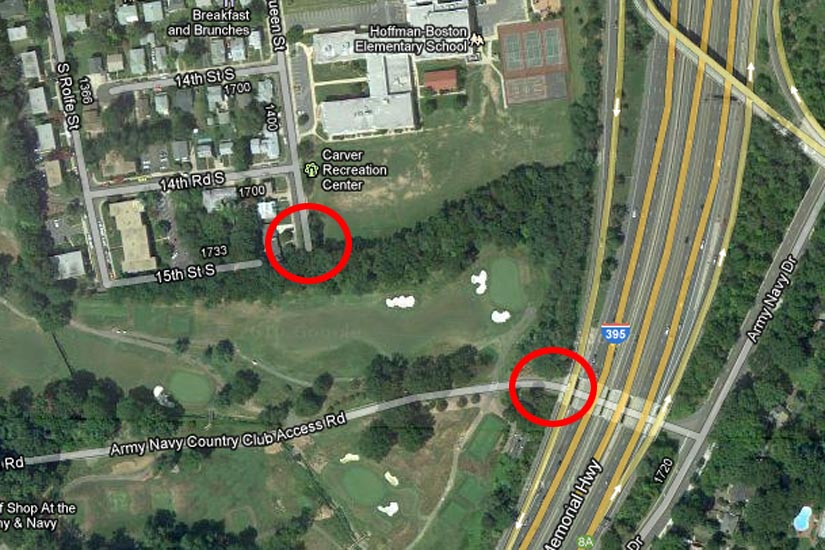
The road would run from S. Queen Street, near Hoffman-Boston Elementary, to the I-395 underpass, where a country club access road meets up with Army Navy Drive. The process of securing an easement to even cross the country club in the first place was a challenging one for the county, but the two sides ultimately struck a deal after the county agreed to allow the club to build a larger clubhouse than county zoning rules would ordinarily permit.

Staff cautioned the Board that reallocating this money for design work won’t do anything to change when the project gets built, at least for the time being. But members supported the change all the same as a way to provide some more detailed plans for the Board to consider a few years from now, when the county’s fiscal picture could improve.

“At least it’s getting us somewhere,” said Board member Erik Gutshall. “We’ve got to move the ball forward.”

In order to get that design work moving, the Board would need to pull $105,000 away from some minor arterial road projects over the next two fiscal years, and another $125,000 away from the “Walk Arlington” program for pedestrian-centric projects. The latter move will leave just $50,000 available for the program in 2020 and 2021.

But Board members seem to believe the funding shake-up is well worth it, particularly as bicycling advocates stress the importance of the project.

“There is a compelling case to be made that this will allow one of our largest growing population centers, Columbia Pike, to have more access to one of our major commercial and office centers of Crystal City,” Board Chair Katie Cristol said. “The most important thing is we get the scope of this proiect to the point where we can have those conversations about feasibility.”

County transportation director Dennis Leach cautioned that additional examinations of the project could reveal that it’s too challenging for the county to pursue. He noted that the “steep grades” in the area, combined with its proximity to woodlands and I-395, could all combine to make the effort “extremely expensive.”

Initial estimates pegged construction costs around $5.2 million, but the county hasn’t updated that figure in years.

Cristol added that there are also “big questions” about whether the county can afford to bring the project into compliance with federal accessibility laws. However, she did suggest that one avenue for addressing those cost concerns might be redirecting some revenue generated by the commercial and industrial property tax on Crystal City businesses, as the area would potentially stand to benefit from the project.

“I look forward to the prospect of a taking a better scoped project and having a conversation with the business community about whether it’s a proper use of that tax money,” Cristol said.

The Board will make the reallocation of money for the access road official when it votes to approve a final Capital Improvement Plan on Saturday (July 14).

Photo via Google Maps


Arlington is now gearing up to officially embrace dockless bikes and scooters, even though some scooters have already arrived in the county.

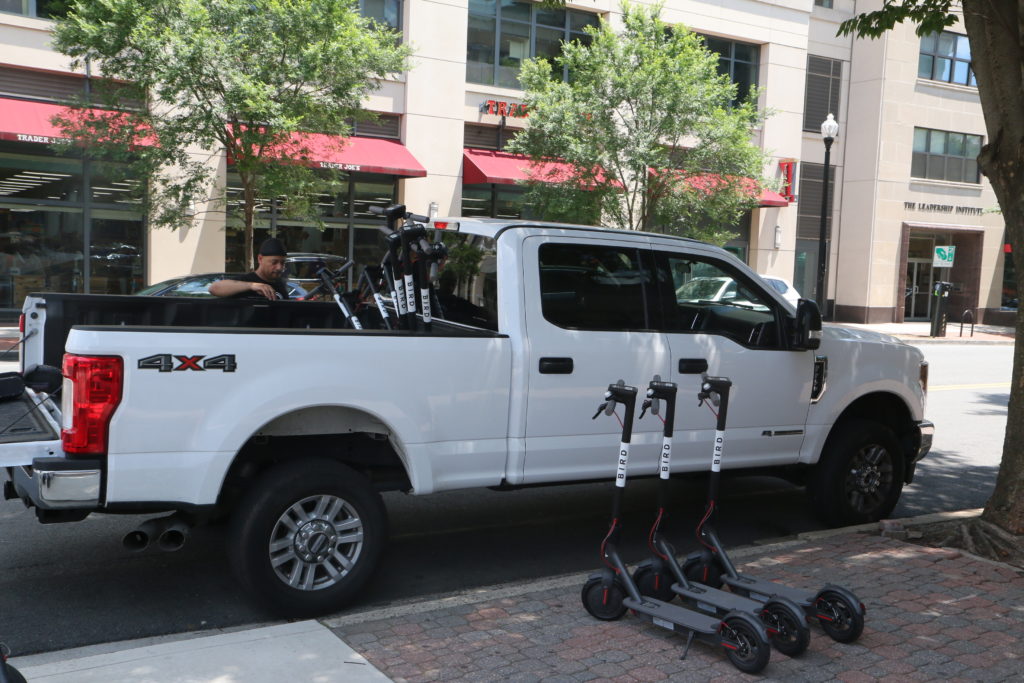
County officials have spent the last few weeks mulling how to respond to the sudden appearance of dozens of Bird’s dockless scooters around Arlington in late June. Though the county did receive some advance warning from the company that it planned to start operating in Arlington, County Manager Mark Schwartz and the county’s legal team weren’t sure exactly how to react to Bird’s arrival.

Some communities have even chosen to take legal action against dockless vehicle companies that start operating without the local government’s consent, but the county announced in a statement today (Thursday) that staff determined there “are no regulations currently in place that would prohibit the operation and use of these devices in Arlington.” The county doesn’t have any regulation prohibiting the scooters on sidewalks, but it does ban “motorized vehicles” from county bike paths, which would include the scooters.

Moving forward, county transportation spokesman Eric Balliet told ARLnow that officials are planning to unveil a “pilot demonstration project” to test out all manner of dockless vehicles this fall.

Much like D.C.’s current pilot program, Balliet says he envisions the effort helping to “provide structure to the deployment, operation and use of scooters and dockless bikes within the county and to evaluate the overall performance and gauge the impacts of these mobility devices.” He says the current plan is to deliver a framework for that effort to Schwartz and the County Board for approval this September.

Should the county design a program similar to the District’s efforts, dockless companies like Bird would be able to partner with the county to participate in the pilot. Lime Bike has already been working with the Crystal City BID, as it eyes the county for expansion. Skip’s CEO also says his company, the third dockless scooter outfit operating in D.C., is interested in Arlington.

Balliet did not immediately provide details on what form the pilot program might take, but County Board member John Vihstadt says he’d be broadly receptive to clearing the way for more dockless vehicles to become available around Arlington.

“New methods of mobility are something we need to embrace,” Vihstadt said. “Some people will say, with the greater consumer choice one has with mobility, is that undercutting the Metro system or our bus system… but I think they can work together. If people have to get to to the Metro, or get to the bus stop, we can utilize these other modes of personal transportation.”

In the meantime, the county is urging anyone using dockless vehicles around Arlington to be considerate of other drivers and bike riders. The county also released a new tip sheet today with suggestions on the best ways to use the scooters, while officials hammer out a more detailed policy.

Between Bird and the other dockless companies currently operating in D.C. and Maryland, the county estimates that roughly 100 dockless vehicles pop up in Arlington each day.


Arlington County police are planning a new round of community outreach meetings starting tonight (Thursday), the first quarterly gatherings under a restructuring plan designed to roll back some of the department’s services.

Communities in the northern half of the county will get a chance to meet with a police outreach team at the Bozman Government Center (2100 Clarendon Blvd) at 7 p.m. Thursday night. Anyone living in the southern sections of Arlington will have a similar opportunity this coming Wednesday (July 18) at the Fairlington Community Center (3308 S. Stafford Street).

The county once had enough officers to attend regular meetings with individual civic associations to discuss community concerns. But the department’s staffing challenges have forced Chief M. Jay Farr to cut back on some services as he tries to recruit new officers, and, starting in mid-May, Farr is devoting officers only to squads covering the northern and southern halves of the county.

They’ll now hold quarterly meetings with community members, like the ones planned for this month, instead of the more frequent check-ins. In a release, the department said the July meetings will also include a presentation on fraud prevention and “how you can protect yourself as a consumer.”

Police have contact information for the outreach teams available on the county’s website.

If you’re unsure about which meeting to attend, the county also has a tool available where you can enter your address and see if you should speak with the northern or southern outreach team.

Photo courtesy of Blake Tippens


View More Stories