Rep. Don Beyer (D-Va.) and some of his Democratic colleagues believe most children up for a hearing at Arlington’s immigration court are being treated fairly — but they worry that could soon change.

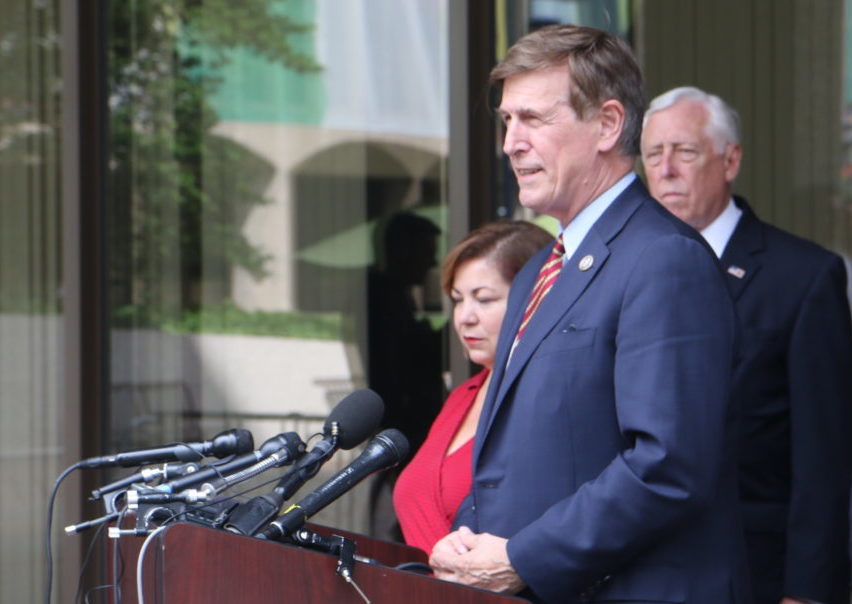
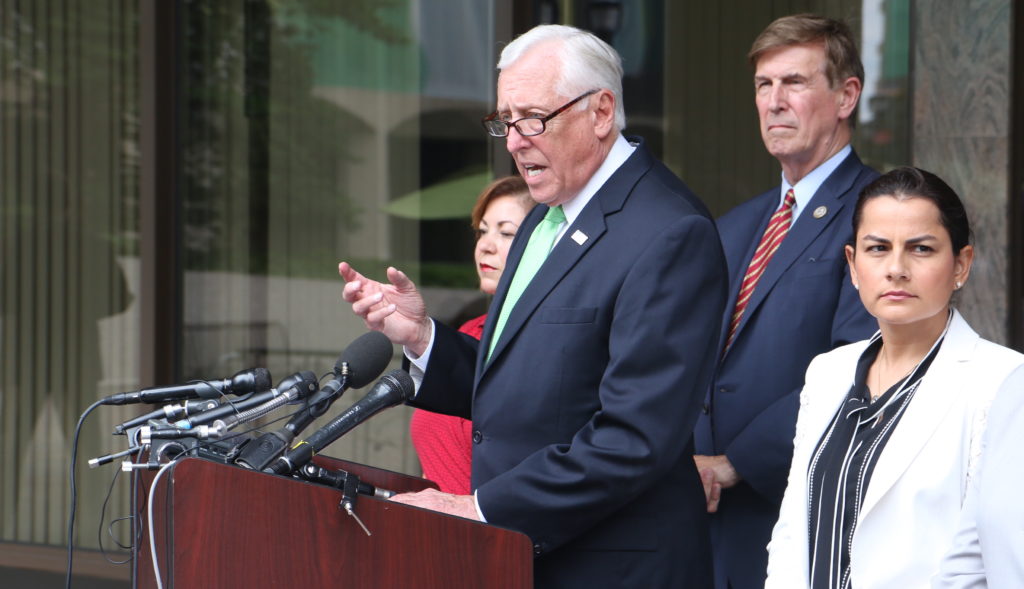
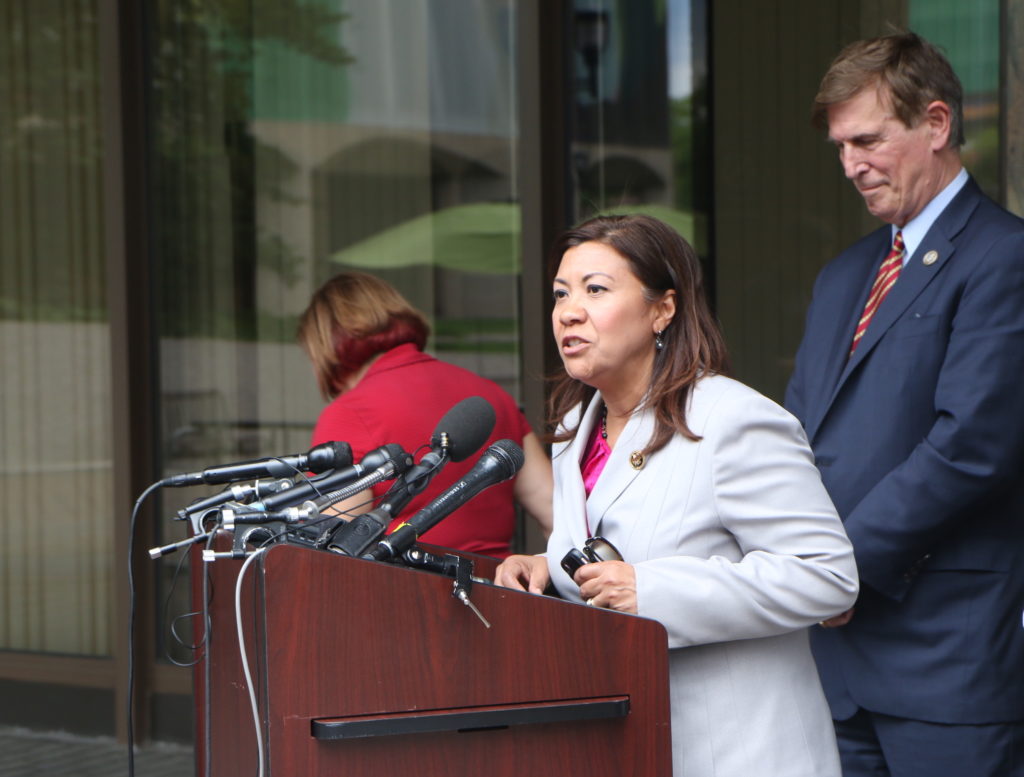
Beyer, House Minority Whip Steny Hoyer (D-Md.) and several other members of Congress sat in for some hearings at the federal immigration court in Crystal City today (Thursday), and broadly came away pleased with what they saw, despite the chaos surrounding the Trump administration’s recent practice of separating children from families at the Mexican border.

Yet Beyer and his fellow Democrats fear what might happen should leadership at the court change. They’ve heard rumors that Jack Weil, a longtime immigration judge at the Department of Justice, could soon start hearing cases in Arlington, and they’re disturbed by his history.

Weil attracted nationwide attention after testifying that he believes children as young as 3 years old can represent themselves in immigration proceedings. Though all of the kids the members of Congress saw Thursday had legal representation, the Democrats expressed disbelief that any judge would decide whether a toddler should be deported without a lawyer present.

“It’s really disturbing, especially because we understand [Weil] is training other judges,” Beyer told reporters. “Look at all the conversations we have about the poor decisions of our 20-year-olds… The thought that even a 12-year-old, 13-year-old can make good decisions in court is silly.”

Rep. Nanette Barragan (D-Calif.) noted that many of the cases the congressional delegation observed involved complex asylum applications, underscoring just how complicated an immigration hearing could be even for adults who speak English. She believes it would be “insane” to ask a child to attempt to navigate the process.

Rep. Norma Torres (D-Calif.) felt Arlington’s courthouse generally represented “the best process possible” for kids seeking asylum. But she added that even this court only had Spanish translation services available, when people coming from somewhere like Guatemala could speak one of the country’s other 22 languages instead.

Beyer said Congress should act to provide funding for lawyers for immigrant children, given that that nonprofits stepping up to help can only provide representation for a small fraction of kids making their way through the system. With President Trump tweeting that immigrants should be deported “with no judges or court cases,” the Democrats said they realized the odds were long, but said it would be worth the effort.

“We can do this if we have the will and compassion to do this,” Hoyer said. “This is America. We believe in due process.”
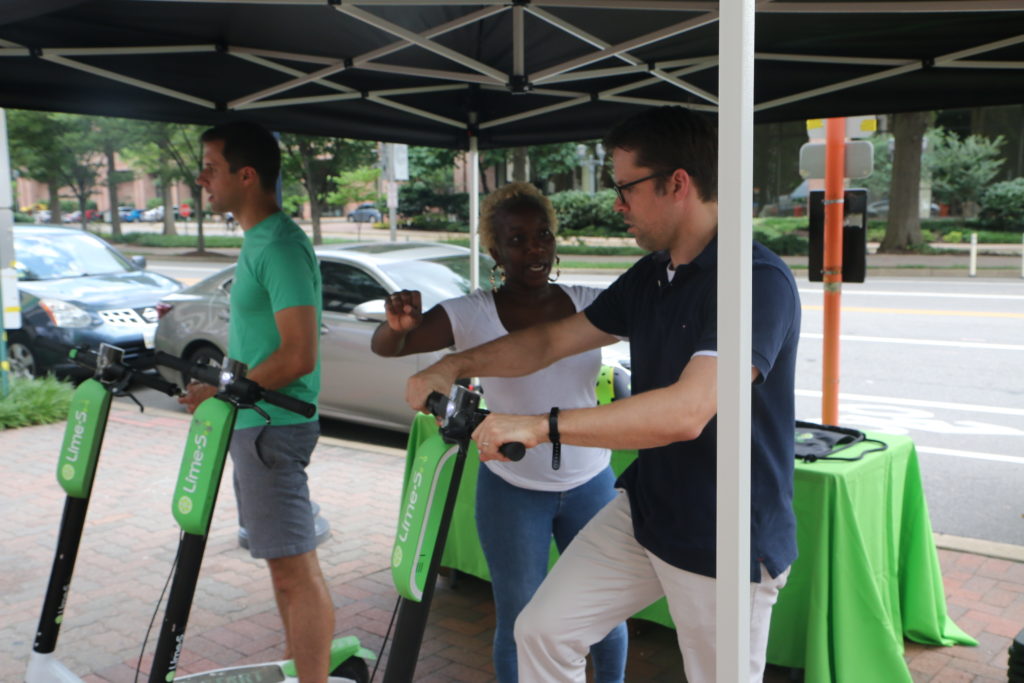
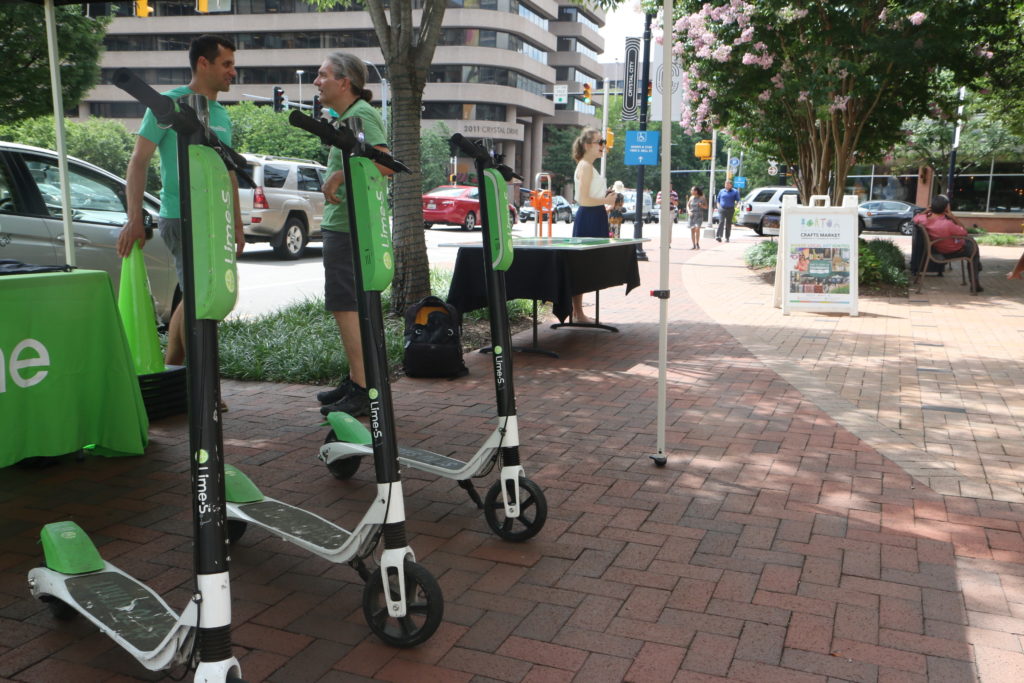
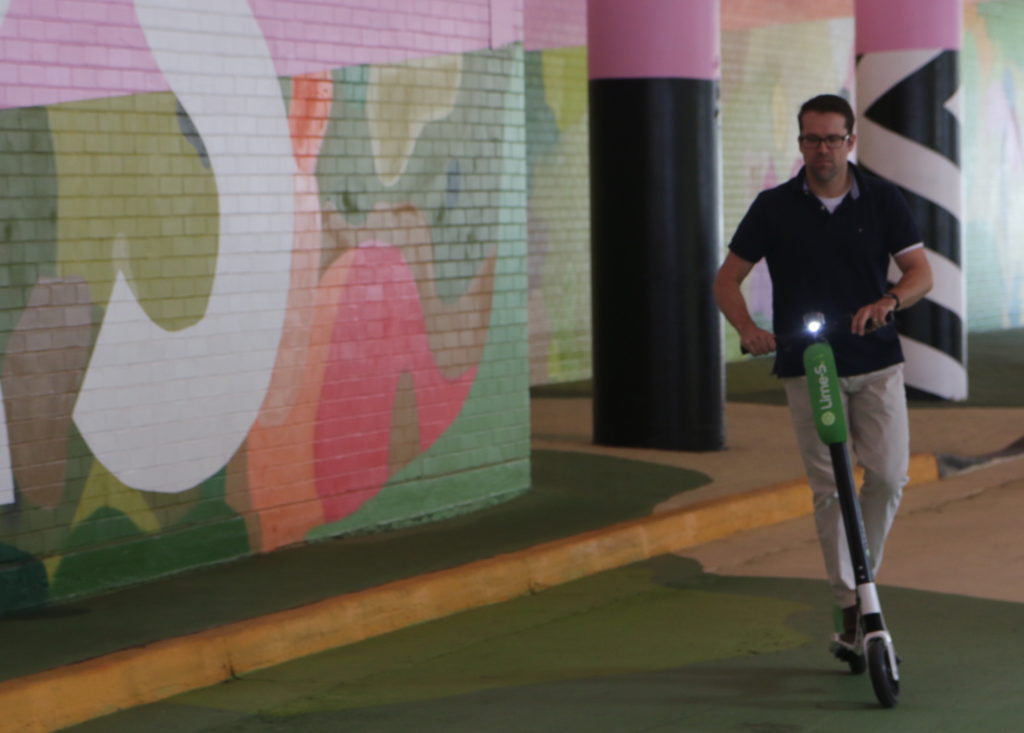
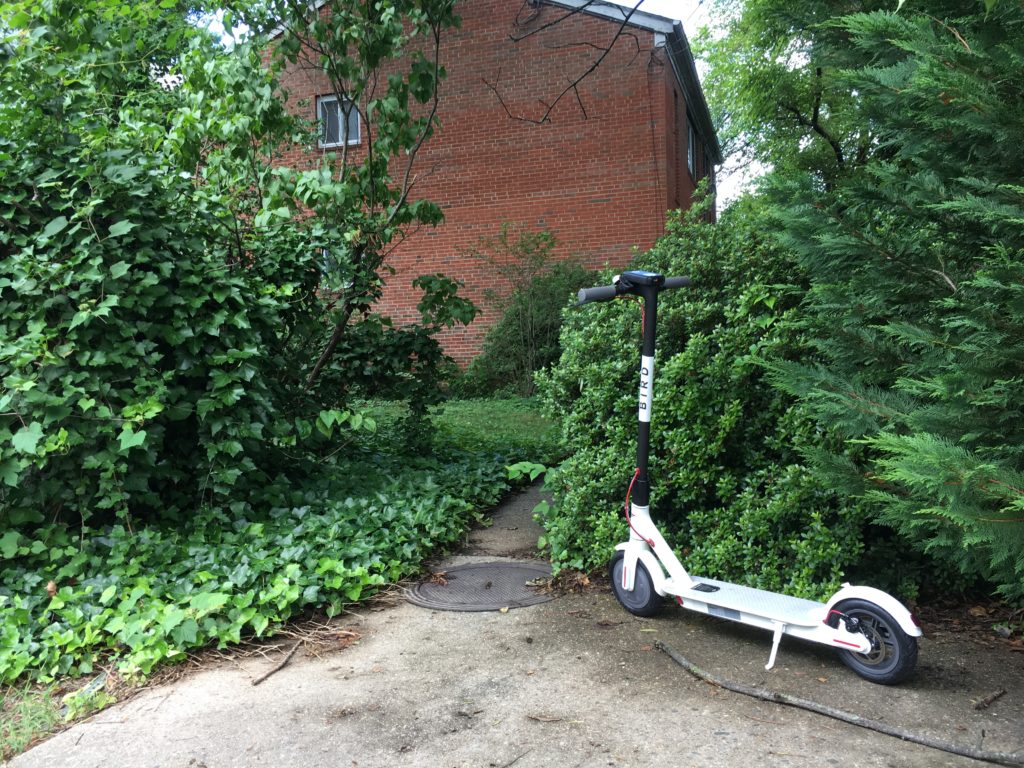
Dockless electric scooters only popped up in Arlington for the first time last weekend, but it seems like a sure bet that more are on the way.

Lime Bike is eyeing the county for its next expansion of its dockless scooter service, after starting up operations in D.C. last fall. The company even teamed up with the Crystal City Business Improvement District to offer free scooter rides for people walking along Crystal Drive today (Thursday), as part of a bid to build community support ahead of an eventual rollout in Arlington.

“You can’t just serve the District and expect to offer a transportation solution for the entire region,” Jason Starr, Lime’s D.C. general manager, told ARLnow. “But we don’t just want to operate without some good will and support from residents and businesses alike… While, yes, we do want to operate in Arlington, one thing we really pride ourselves on as a company is working with jurisdictions to create a viable source of support for this.”

Starr makes this point, in part, to draw a contrast with Bird, another dockless company in D.C., which first deployed its scooters in Arlington on Sunday. County transportation spokesman Eric Balliet says that county officials “did receive a heads-up” from Bird about its plans, at least, but he added that the county is very much weighing how to react to Bird’s sudden arrival.

“We will be having discussions with the county manager and the county attorney’s office on how to respond to their deployment in Arlington,” Balliet wrote in an email.

Some cities have chosen to take legal action in response to such tactics by the scooter companies. For instance, Santa Monica sued Bird over its failure to secure necessary business licenses and permits, while San Francisco has temporarily banned all electric scooters in the city as it hammers out a new permitting process.

Balliet says county officials have “met informally” with the various dockless vehicle companies in the region, in part to avoid any such conflict. In fact, Balliet says the county’s commuter services bureau is crafting a draft policy to govern how all manner of dockless vehicles can be used around Arlington.

He’s hoping that will be ready for presentation to County Manager Mark Schwartz and Transportation Director Dennis Leach by September, who will then be able to provide “guidance on next steps,” such as deciding whether the County Board will need to review the document.

Starr suggested that part of the county’s reticence to take action on a more formal policy just yet could be that officials are waiting to see how D.C. handles its ongoing pilot program with dockless vehicles, which is set to run through August. However, he stressed that he doesn’t think that’s “totally necessary,” considering the willingness of companies like Lime to work with the county.

Even with Bird’s arrival in Arlington, Starr doesn’t expect to change the company’s plans to work hand-in-hand with Arlington and its business community, however.

“There’s naturally a reason to act quickly, but I don’t want to do that at the expense of making sure we have a relationship with everyone here,” Starr said. “If we get the sense that this is something people are in favor of, that will be a natural time to approach Arlington and say, ‘We want to start operating the service now,’ but right now we’re still in the early phase.”

Yet it seems competition in the county is only set to increase in the coming weeks.

(more…)


Arlington officials plan to unveil their long-awaited overhaul of the county’s childcare policies next month.

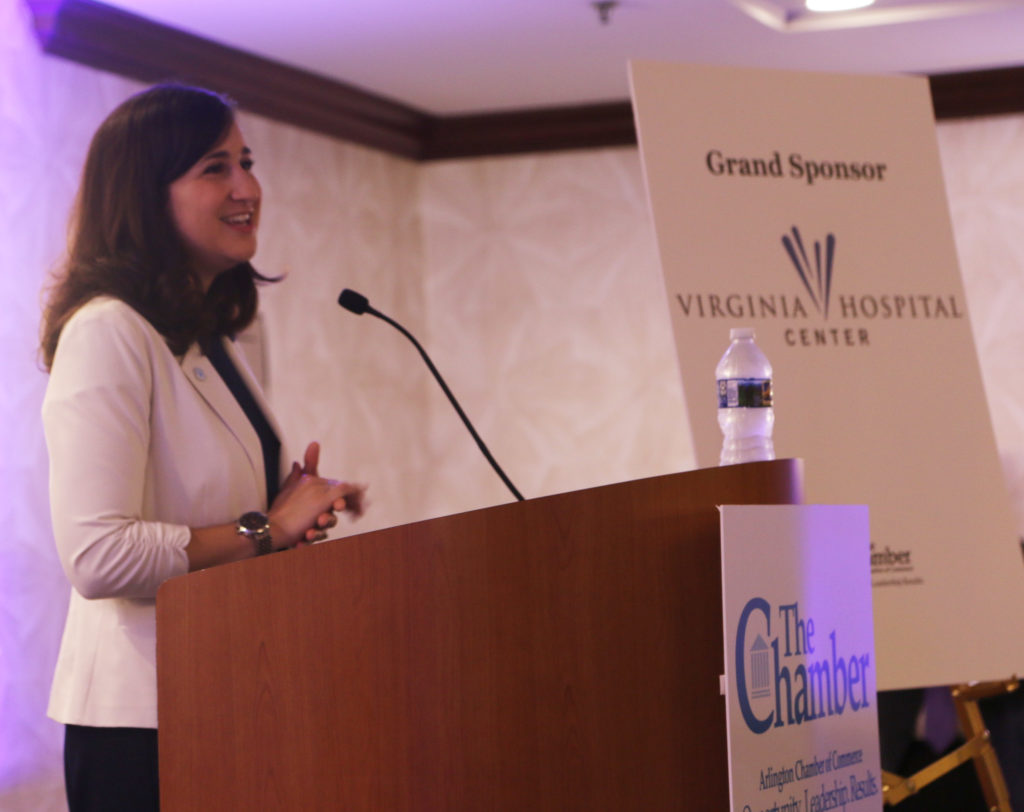
County Board Chair Katie Cristol announced those plans her first “State of the County” address today (Thursday) while speaking to the Arlington Chamber of Commerce in Crystal City. The overhaul is a substantial step forward in the debate over how to improve the availability and affordability of daycare in the county.

While Cristol said she was broadly “optimistic” about the county’s future, she stressed that the Board needs to take action to bring down the cost of childcare and ease the financial burden on working families. County leaders have been examining a “draft action plan” to tackle the issue since December, and Cristol says the Board plans to unveil a final product and debate it in full at a July 24 work session.

“For many families, child care can cost more than rent,” Cristol said. “In just a few weeks time, the Board will consider a detailed plan to address this… including a new set of land-use strategies, public-private partnerships and more.”

She noted that county staff and a host of community partners have been studying the issue since early last year, and will finally be able to present a path forward in some “granularity” next month.

Some items will be able to put into motion immediately, while others will require more Board debate, particularly if they involve zoning changes.

Cristol also stressed the childcare plan would be just one of the Board’s priorities as it moves into the back half of 2018. Following the “Big Idea Roundtables” the county convened to spark conversations among county residents, Cristol said she’s newly hopeful that the Board will be able to revisit its zoning policies to increase Arlington’s supply of market rate affordable housing.

Specifically, she’s interested in tackling the problem of the county’s “missing middle,” or homes available for county residents who might make too much money to qualify for dedicated affordable housing but still can’t afford detached single-family homes or high-priced luxury condos.

Cristol is hoping to find new ways to encourage the development of duplexes, moderately-priced townhouses or even “accessory” homes small enough to fit on another single-family home’s property. The county has already loosened its rules for such construction, known as “accessory dwelling units,” but she believes there’s more work still to do.

“We cannot lose sight of affordability as the fundamental challenge of Arlington’s future,” Cristol said.

She expects that the “overdue” kickoff of planning along the Lee Highway corridor, which the Board found new funding for this year and will start in earnest in the coming months, will have some role to play in that conversation.

Cristol would acknowledge, however, that the specter of Amazon’s arrival in Arlington hovers over any discussion of affordable housing or any other pressing issue in the county.

She declined to “break any news” on that front, but would say that she felt the county’s pursuit of the tech giant’s HQ2 “will make the county stronger.”

“Whatever choice Amazon makes on HQ2, it means the national spotlight has found our county,” Cristol said.


Arlington has one of the highest median rent prices in the entire country, yet the county still ranks among the top places people can afford to live alone.

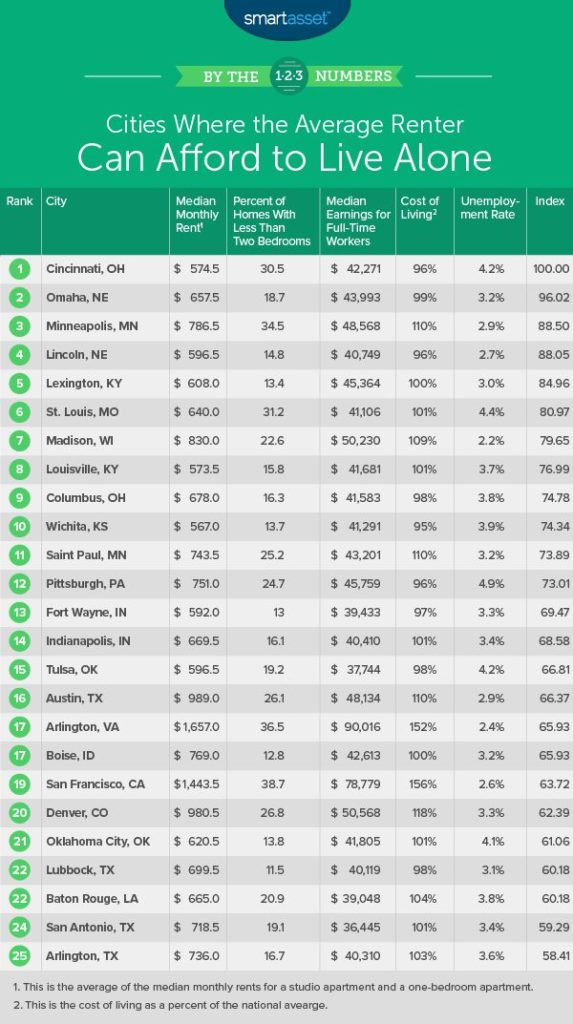
That’s according to a new study of 100 of the nation’s largest cities and counties by the financial data research firm SmartAsset. The company ranked Arlington 17th among that group for places where renters have the financial wherewithal live alone, largely because of the robust median income level of the county’s workers.

SmartAsset found that full-time employees in Arlington have a median income of just over $90,000 a year, putting the county at the top of the list among the firm’s top 25 places where renters can afford to go solo.

The county’s median monthly rent of $1,657 was also the most expensive of any other city on the company’s top 25 list, yet Arlington still ranked ahead of other large cities for renters looking to live alone, including San Francisco and Denver.

For context, the median income in D.C. is just over $75,500 a year. SmartAsset didn’t immediately have median rent prices available for the District, but real estate listing firm Zillow found that the median rent in the city was about $2,146 a month last year.

Arlington also scored high marks in SmartAsset’s rankings for its stock of homes with less than two bedrooms. In all, the company found that 36.5 percent of homes for rent in the county have one bedroom or are studio apartments.

Cincinnati, Omaha and Minneapolis ranked as the firm’s top three cities where renters can live alone. The full rankings are available on the company’s website.


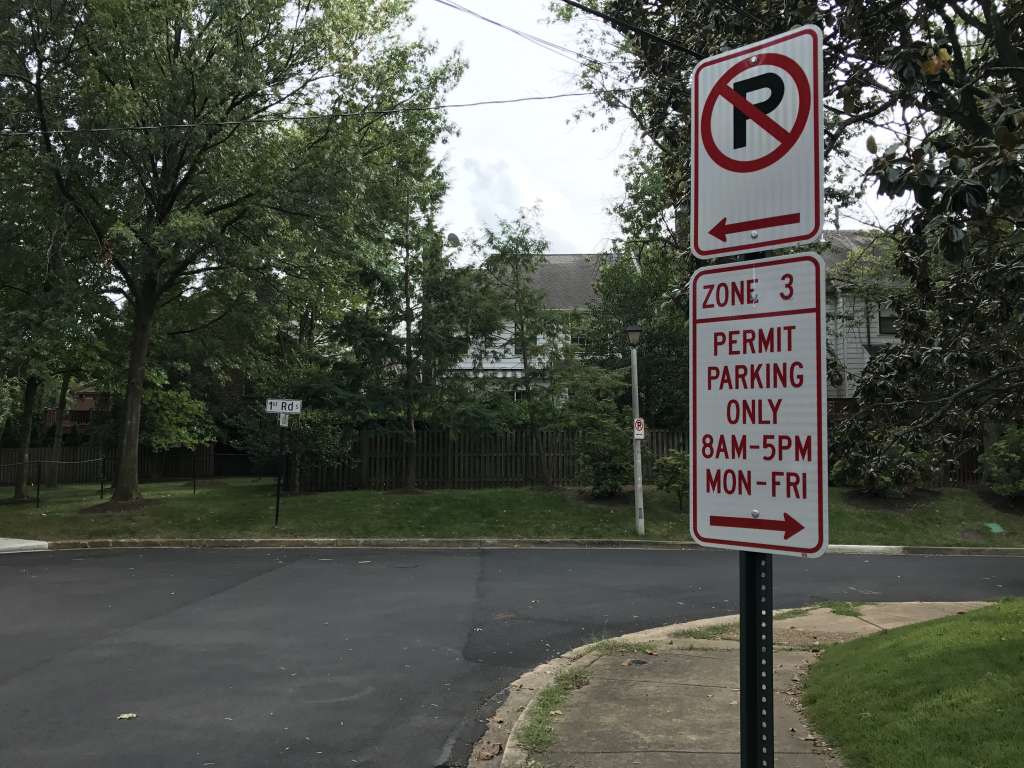
Should Arlington open up more of its on-street parking to shoppers, commuters and other visitors, or continue to use a permit system to protect neighborhood parking spots?

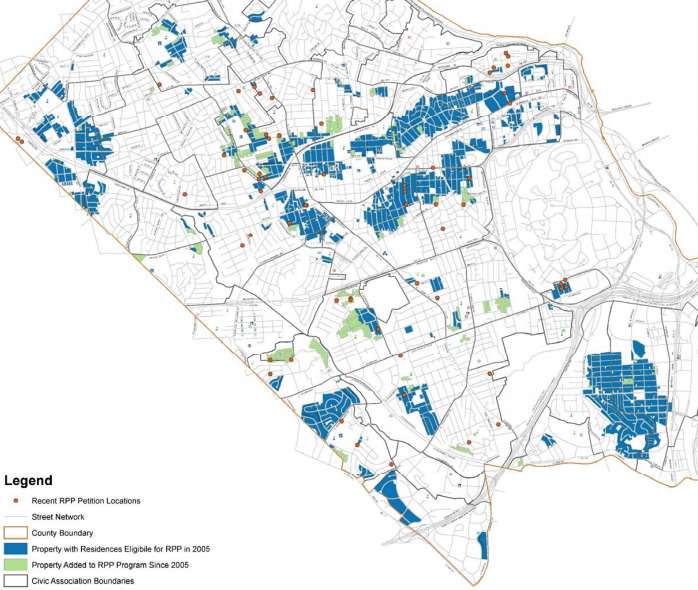
That’s the sort of question county officials are asking as they collect feedback on how Arlington’s residential permit parking system is working. County staff are about halfway through a two-year review of Arlington’s residential parking practices, and they’ve opened up an online survey on the subject through July 16.

The zoned parking program is intended to ensure that residents can park near their houses in neighborhoods near business districts, employment centers and Metro stations. Residents were previously able to petition the county to have their street zoned, pending an analysis by county staff.

The County Board is planning to hold a work session on residential parking in the coming months and establish a working group to study the matter, after voting last August to put a moratorium on any additions or changes to the county’s 24 zones where parking permits are required.

The moratorium sparked complaints from some residents. There were 16 active petitions at the time from people looking to add new permit parking zones or change existing ones.

Among those worried about changes to the program is Penrose Neighborhood Association co-president Pete Durgan, who thinks the survey is tilted toward the goal of scaling back parking restrictions.

“Can you imagine what would happen to the single family areas near Ballston, Clarendon and Columbia Pike?” she asked, in an email to ARLnow.com.

County staff last reviewed Arlington’s parking program back in 2003, and the Board has since wrestled with the question of how to balance the concerns of residents looking to keep cars off their crowded streets with the frustrations of people hoping to find a place to park near the county’s burgeoning business districts.

The Board has also increasingly encouraged developers to move away from building off-street parking options in Metro corridors, in favor of adding new bike or car-sharing options, a policy change some worry will push residents to park on the street instead.

The survey asks respondents to rank the importance of the availability of on-street parking versus other factors, like the availability of public transit and open public space. The county also wants to hear what people think about how easy it should be for commuters or other visitors to park in their neighborhoods, and to evaluate whether “parking on public streets is a shared resource that should be open to all.”

The county first started its residential permit program in 1973 to keep commuters to Crystal City and D.C. out of residential areas. A series of court challenges to the program ultimately advanced to the U.S. Supreme Court, and the justices unanimously upheld the program’s legality in a 1977 decision.

County staff are hoping to wrap up this latest review of the program by the summer of 2019, when they could once again start considering petitions for changes to permit zones.

File photo


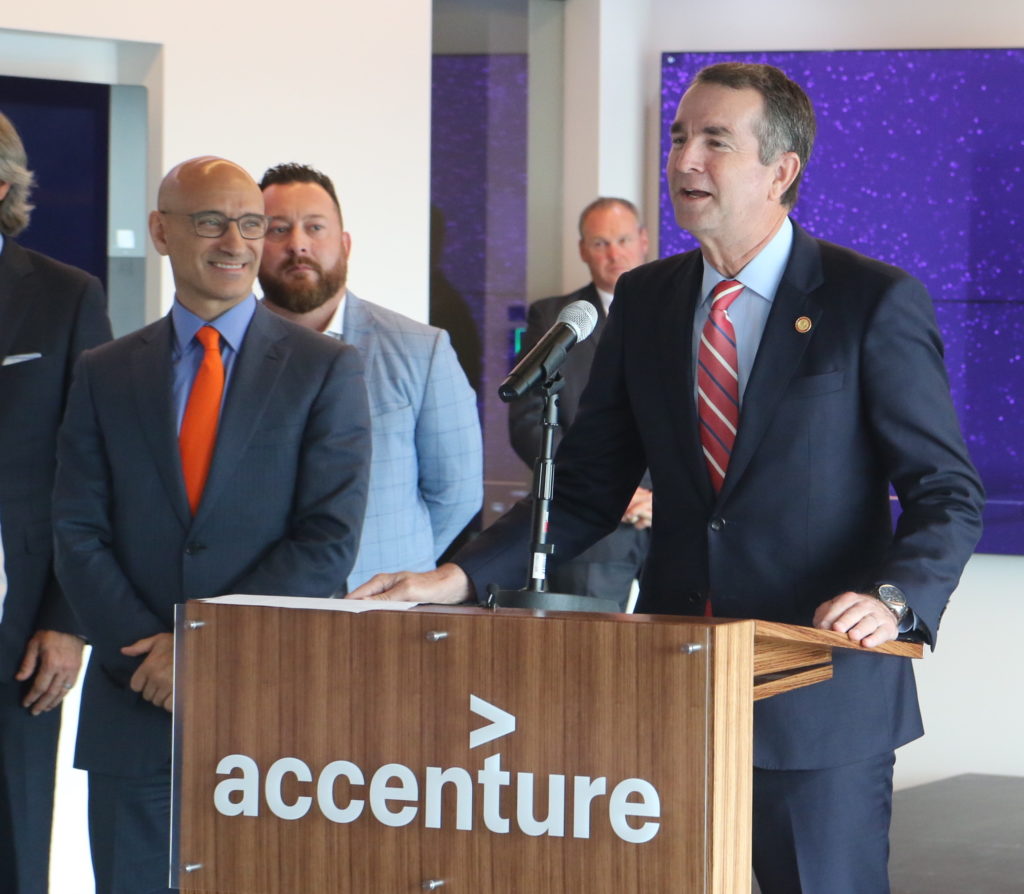
Gov. Ralph Northam (D) says he’ll renew his push for a set of Northern Virginia tax increases to fund Metro next year, a move that could help Arlington win back some critical transportation dollars.

Republicans in the General Assembly narrowly defeated Northam’s efforts to add the tax hikes to legislation providing the first source of dedicated funding for the rail service earlier this year.

The tax increases would’ve been relatively modest, bumping up levies on real estate transactions and some hotel stays, but they could’ve helped the state avoid pulling roughly $80 million in annual funding away from the Northern Virginia Transportation Authority. The group uses regional tax revenue to fund transportation improvements across Northern Virginia, and the NVTA has already had to scale back its plans to help Arlington pay for construction projects like second entrances at the Ballston and Crystal City Metro stations.

That’s why Northam says he plans to propose the tax hikes once again when lawmakers reconvene in Richmond in January, setting up another tussle over the issue several months ahead of an election where all 140 state legislators will be on the ballot.

“We’ve got to be so careful pulling resources out of the [NVTA],” Northam told ARLnow in a brief interview in Rosslyn. “It threatens other projects we were working on. It also makes Northern Virginia compete with other parts of Virginia. It was a bad idea, and that’s why I amended [the original bill]. We’re going to continue to work on that.”

There’s no guarantee that Northam’s second effort will be any more successful than his first, however. Republicans still hold a slim, 51-49 majority in the House of Delegates where GOP leaders, particularly Del. Tim Hugo (R-40th District), have pledged to beat back any tax increase to fund Metro.

But Democrats are eager to take up the fight once again, especially with other contentious issues, like Medicaid expansion or the freeze on state utility rates, off the table.

“It’s worth coming back and doing this right,” said Del. Patrick Hope (D-47th District). “The way we funded this thing was clearly shortsighted.”

Neither Hugo nor a spokesman for House Speaker Kirk Cox responded to a request for comment on Northam’s Metro plans. But Hope believes Republican lawmakers, particularly those outside of Northern Virginia, will come around on the tax hikes as they begin to feel the impacts of the funding deal’s structure.

Specifically, he points out that without seeing all the money they’d like from the NVTA, Northern Virginia localities like Arlington have already started applying for more funds from statewide entities. That will put Northern Virginia projects in competition with applications from cities and counties without the same level of traffic congestion as the D.C. region, meaning places like Arlington could end up winning out in plenty of cases.

“Everyone else is going to get less money,” Hope said. “Nobody likes to be stuck in traffic and nobody wants to get blamed for causing that.”

(more…)


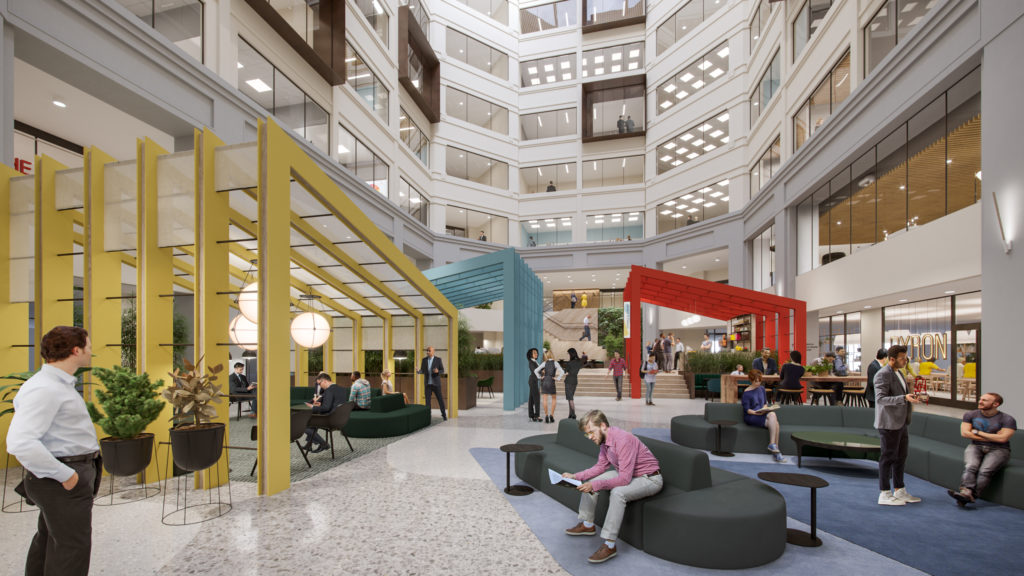
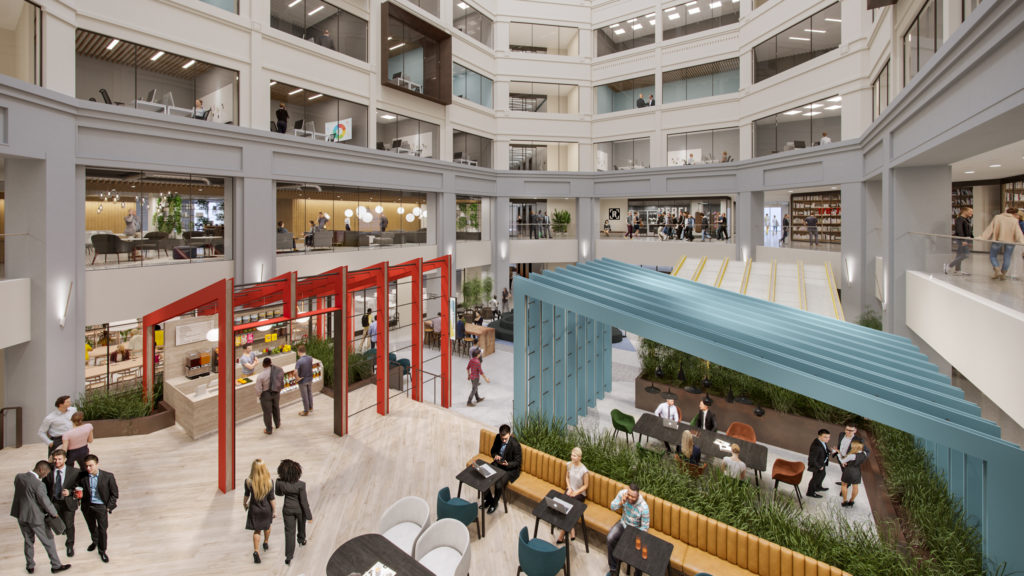
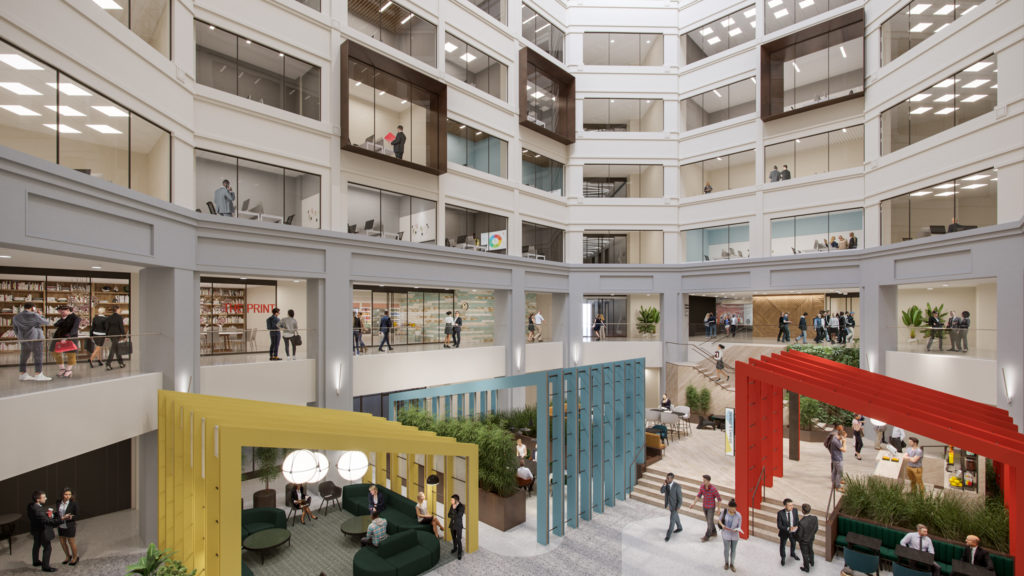
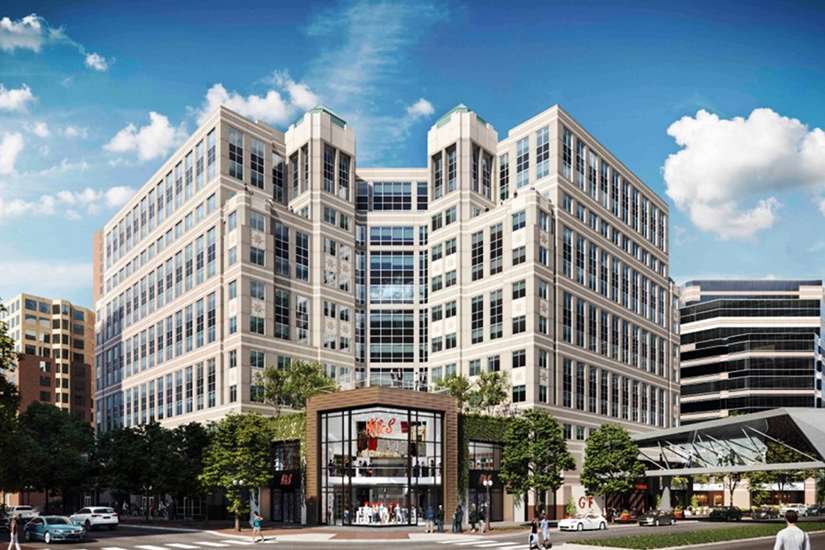
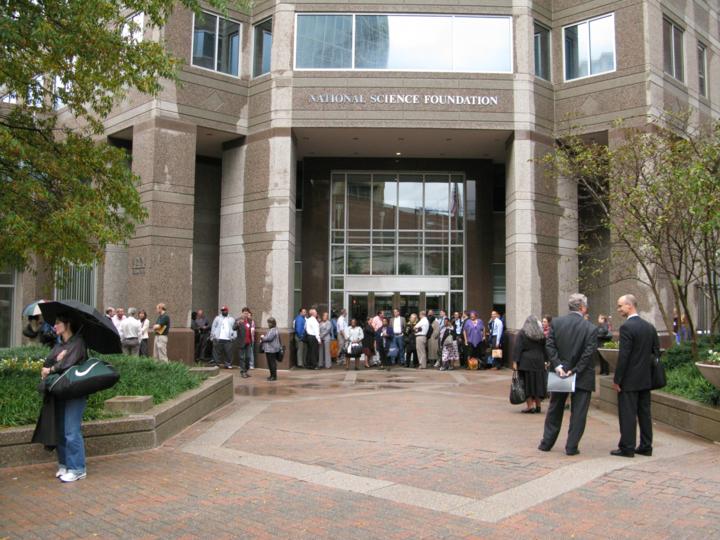
A Brooklyn-based coworking space will become the first office tenant in the former home of the National Science Foundation’s headquarters, now known as the Ballston Exchange.

Industrious will open its third location in the D.C. area on the third floor of 4201 Wilson Blvd, according to a news release from the building’s owner, Jamestown LLP. The coworking space signed a 10-year lease at the location in a 24,795-square-foot suite.

Jamestown bought the building, as well as the adjacent 4121 Wilson Blvd, for a combined $300 million in 2015. But the NSF decided to relocate its headquarters to Alexandria last fall, spurring the property owner to kick off $140 million in renovation work at the buildings and go on the hunt for new tenants.

“The addition of Industrious shows our commitment to providing Ballston residents, workers and commuters alike with premier business and lifestyle opportunities,” Jamestown President Michael Phillips wrote in a statement.

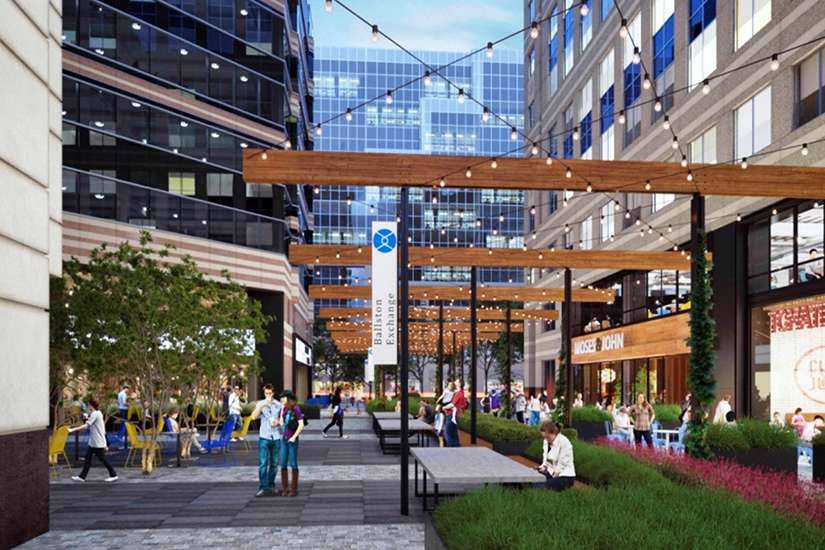
Jamestown has already lured several restaurants to the development, with Shake Shack, We The Pizza, Philz Coffee and Cava setting up shop in recent months.

Those stores and others will line a shared courtyard between the two buildings, set to open in full by the end of the year. A pedestrian bridge will eventually connect 4201 Wilson to the newly revamped Ballston Quarter mall, but that project has encountered some delays recently.

As for Industrious, the company hopes to open its Ballston location by early 2019. It operates more than 40 coworking spaces across the country, including locations in downtown Bethesda and in D.C. near Logan Circle.


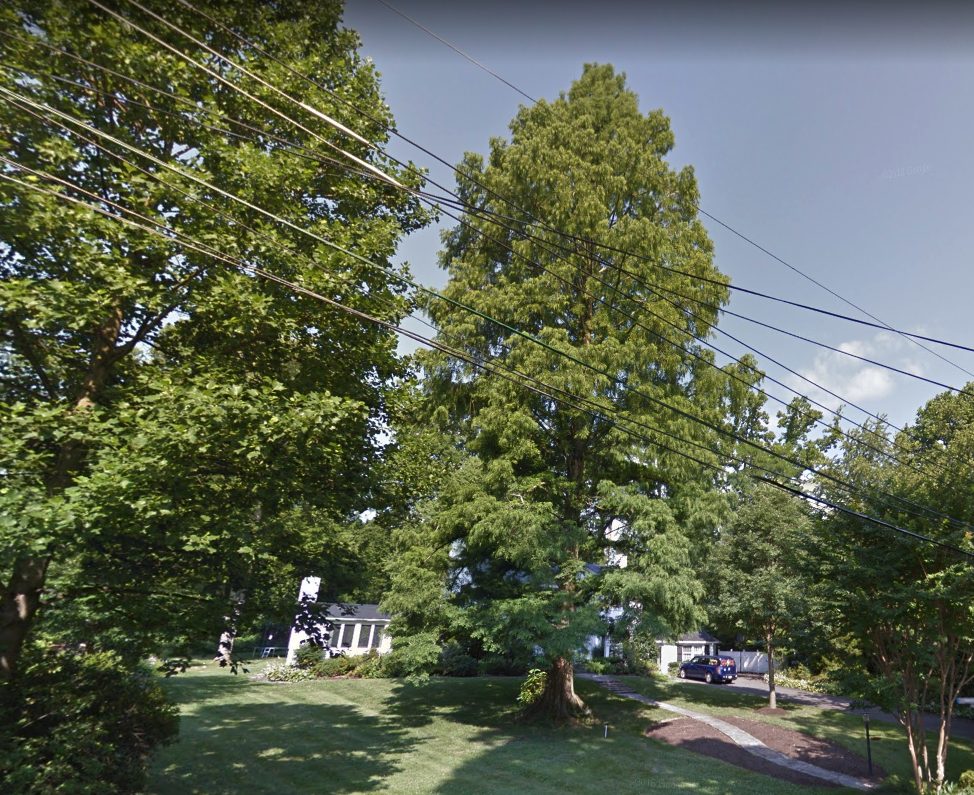
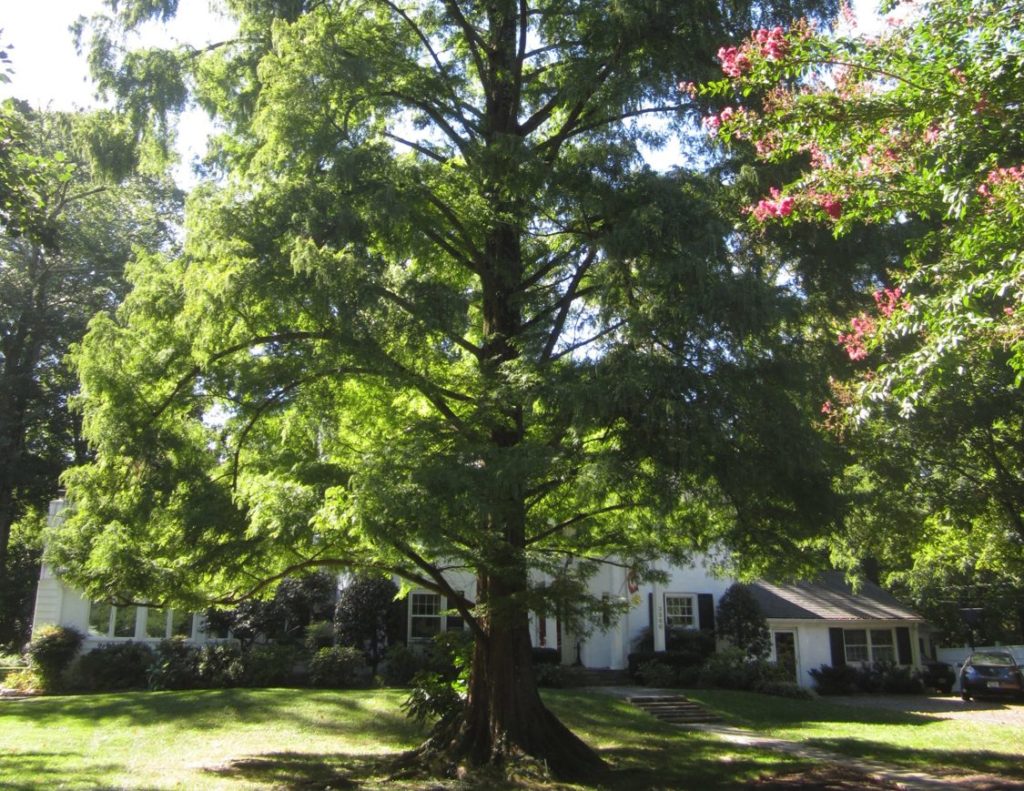
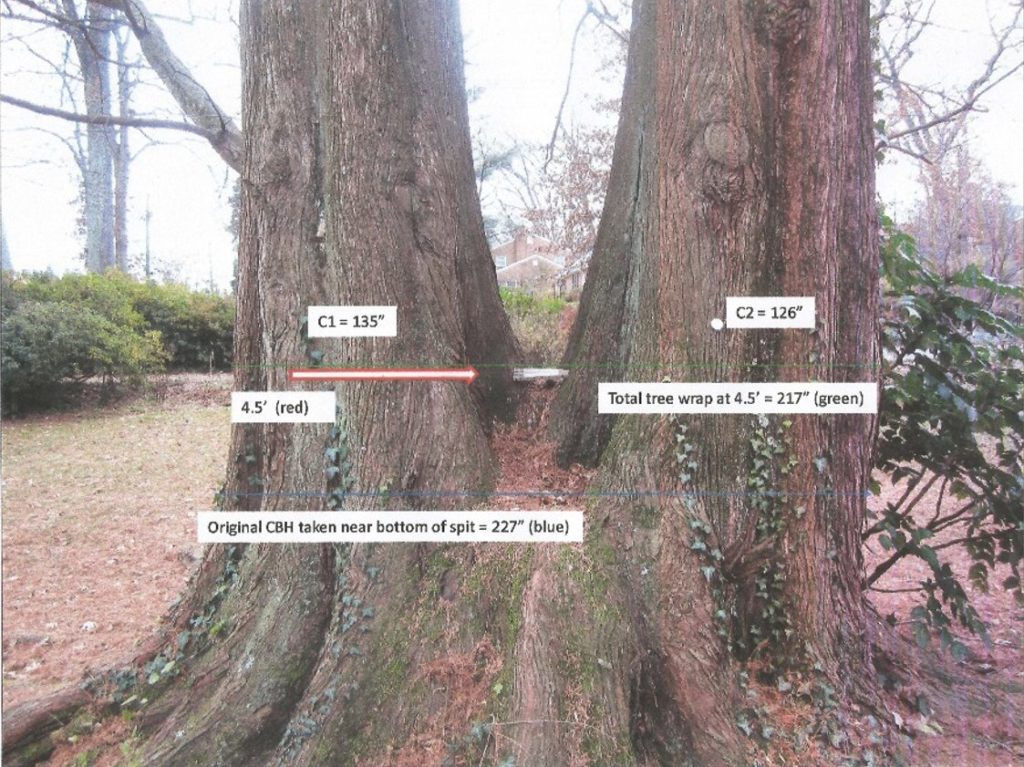
Conservationists and neighbors are teaming up to push back against plans to chop down a 114-foot-tall dawn redwood tree in Northwest Arlington.

A developer is currently hoping to demolish a single-family home along the 3200 block of N. Ohio Street, subdivide the lot and build two homes in its place, according to county permit applications.

As part of that process, Richmond Custom Homes could eventually remove several trees in the area, including the large dawn redwood tree in the center of the Williamsburg property.

But an online petition to protect the tree has already garnered more than 800 signatures, and the neighborhood’s civic association is pleading with county leaders to protect the redwood. Not only is the tree recognized as one of the largest of its species by both county and state officials, but it sits within a “Resource Protection Area,” giving the county the chance to scrutinize these construction plans quite closely.

“The tree is stately, thriving and establishes a sense of place and continuity in a rapidly changing county,” Ruth Shearer, the president of the Williamsburg Civic Association, wrote in a letter to the County Board. “The loss of such a prized and recognized tree would be a tragedy, not only to this community but also to Arlington and to Virginia.”

The developer didn’t immediately respond to a request for comment on its plans for the property. But Shearer points out in her letter that county and state law generally prevents the removal of large trees in Resource Protection Areas, zones near streams that feed into the Chesapeake Bay.

She argues that Richmond Custom Homes likely won’t be able to prove that their plans meet the narrow exceptions allowing the removal of trees in these areas, a claim echoed by the advocates with the Arlington Tree Action Group.

“Both this tree and this RPA are important for protecting the air and water quality not just of the immediate neighborhood and Arlington County at large, but of the Bay watershed,” the group wrote in a news release. “The loss of either would call into question the enforcement of the [Chesapeake Bay Protection Ordinance].”

The action group added that this tree is likely one of the largest dawn redwoods in the entire country, and could live to be up to 600 years old if left undisturbed.

Jessica Baxter, a spokeswoman for the county’s Department of Environmental Services, noted that the redwood is not necessarily guaranteed protection under Arlington’s tree ordinance, however. She points out that the tree would need to be designated as a “specimen or heritage tree,” a designation the county can only grant following a request from the property’s owner, and the homeowners have yet to ask for such a change.

“The county is reviewing the [developer’s permit] applications and its options for preserving the tree,” Baxter told ARLnow via email. “We’ll keep the community informed of the outcome.”

Read the entire statement on the redwood from the tree action group, after the jump.

(more…)


Brick crosswalks in Arlington are a thing of the past — as the county works to make crossings easier to maintain and to see.

The county said today, via press release, that it plans to start replacing any crosswalks featuring brick or “street print,” an asphalt pavement designed to look like brick, as it kicks off a new paving effort over the coming weeks.

Workers will now install reflective, “high-visibility white thermoplastic markings” instead at crosswalks. The county found that the cost of maintaining brick crosswalks was “prohibitive,” particularly considering that they weren’t especially effective.

“Paver and street-print markings — often in dark, clay-like hues — also failed to generate significant reductions in traffic speeds and demonstrated poor visibility in low light and during precipitation,” the county wrote in the release. “They also often lost their quaint appearance when street and underground repairs were necessary.”

A full map of county paving projects getting underway this year is available on the county’s website.


Rent prices on more than 14,500 homes in Arlington have surged past rates deemed “market affordable” since 2000, according to a new report.

In an evaluation of affordable housing around the region, the Northern Virginia Housing Alliance found that the county has seen steep declines in the number of homes affordable for people making 60 percent of the area’s median income. In Arlington, federal officials set those levels at $49,260 a year for a one-person household and $70,320 for a four-person household.

The county had only 2,245 homes on the market affordable for people at those income levels through the end of 2017, the group wrote. The affordable housing advocacy group also determined that the county lost 335 homes affordable for people at those income levels over the course of 2017 alone.

At the same time, the county added 276 homes with rent prices specifically “committed” to remain affordable last year, “despite significant expenditures of local resources,” the group’s researchers found. In all, the county had 7,729 committed affordable units last year, or “approximately half of what has been lost in the last 17 years.”

County officials have long eyed this issue, and Arlington is hardly alone among its Northern Virginia neighbors when it comes to dealing with spiking rent prices. The group found that Alexandria and Fairfax County are dealing with similar trends, particularly as the D.C. region’s population continues to grow.

But with the potential arrival of tech giants like Amazon and Apple, the researchers warn that Arlington officials need to take a hard look at these numbers and put a focus on preserving the affordable homes already available.

“Preventing the further loss of rental units available to low- and moderate-income households is critical to expanding economic opportunity and supporting the region’s growth,” the group wrote. “In a resource-constrained environment, bridging the affordability gap requires stemming the loss of the existing stock of affordable homes.”

The researchers awarded the county government high marks for how it approaches the issue generally, but it also urged leaders to move ahead with plans to provide additional incentives for developers to both build and renovate affordable homes.

Additionally, the group urged local officials to work with “non-traditional, mission-driven developers” to help them acquire properties that might otherwise be used for high-priced apartments or condos.

“As budgets remain constrained and competing priorities emerge, it is important now more than ever that the region’s leaders work together to develop a range of creative solutions to create mixed-income communities that provide a range of housing choices,” the researchers wrote.


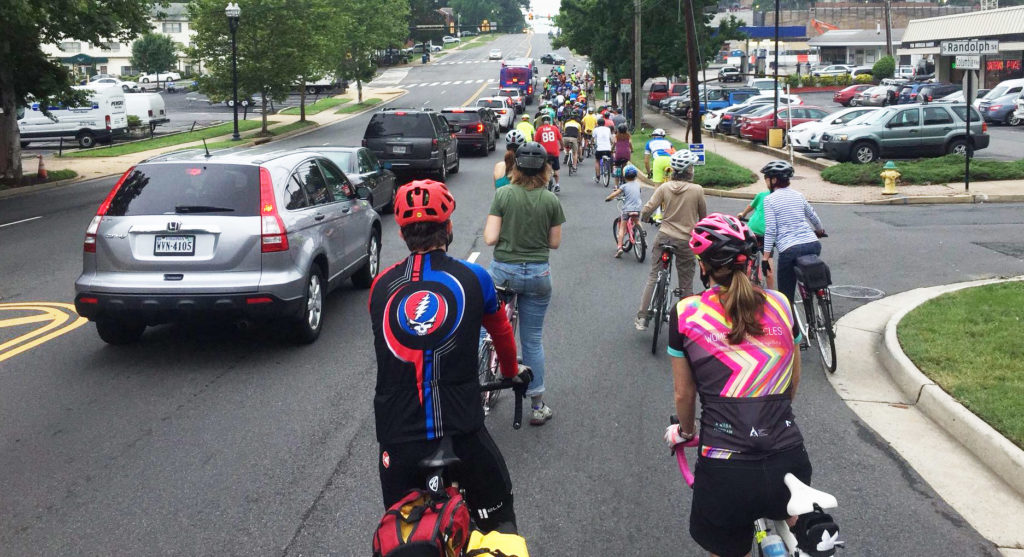
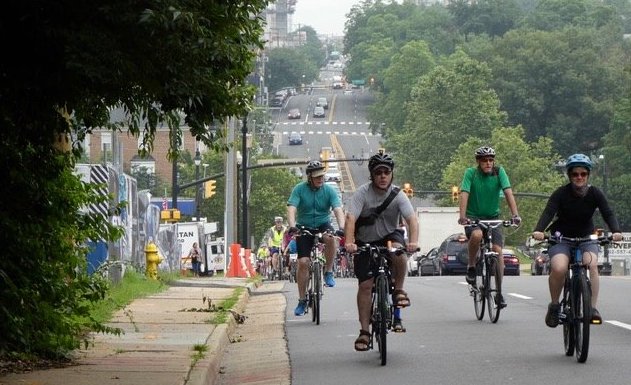
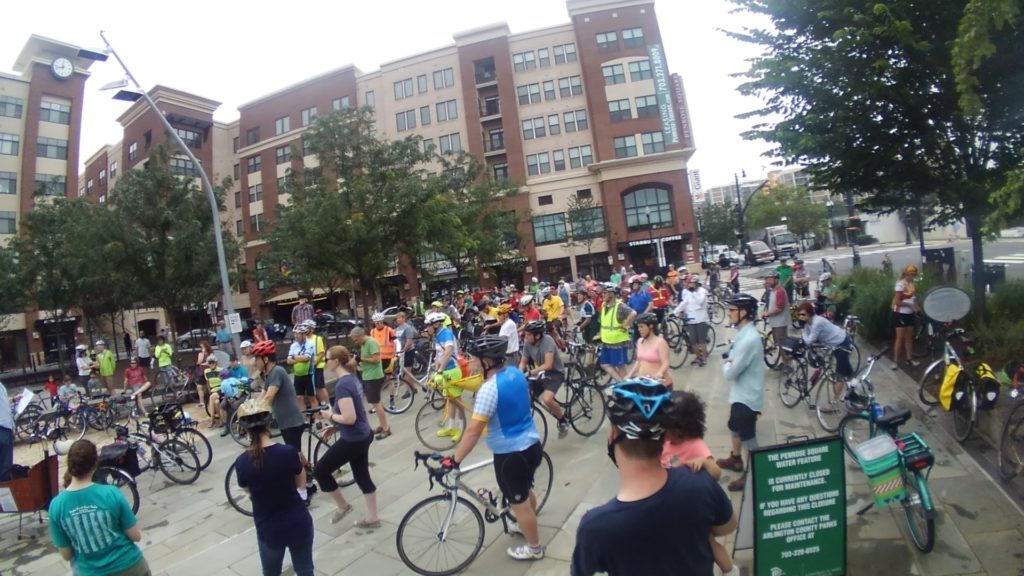
More than 100 bicyclists hit Columbia Pike on Saturday (June 23) to draw attention to a new push to improve bike routes along the road.

The newly-formed advocacy group Sustainable Mobility for Arlington County organized the roughly two-mile-long “Bike for the Pike” protest ride, which ran down Columbia Pike from the Penrose Square Park to the intersection with with S. Four Mile Run Drive.

The group is lobbying county leaders to consider a slew of improvements to make the Pike corridor easier on cyclists, arguing that large sections of the road remain unsafe. County Board members Libby Garvey and Erik Gutshall attended Saturday to lend their support to the effort.

“Despite budgeting over $100 million in the current adopted capital plan to make Columbia Pike a complete street, the county’s current plans wouldn’t even provide a complete bike facility that runs the full length of the Pike, let alone one that is safe, direct and low-stress,” Chris Slatt, the group’s founder and a transit-focused blogger, wrote in a statement. “#Bike4ThePike was a chance to say ‘We’re here, we ride, we pay taxes, we deserve safe, direct, low-stress routes.'”

The county has indeed made efforts to improving transit options along the Pike, with long-awaited changes to Metrobus service along the corridor starting yesterday (June 24). But Slatt’s organization is pressing for a variety of new roadway improvements and policy revisions to make the Pike even more hospitable to cyclists.

In the near term, Slatt wants to see the county conduct a “comprehensive safety review” of the Pike’s intersection with Washington Blvd. In a news release, the group notes that the area “has been the site of numerous bicycle and pedestrian crashes” since VDOT finished a major overhaul of the interchange a few years ago, and Slatt wants to see the county commission a study of the area within the next year.

His group is also advocating for the construction of a parallel bike and pedestrian bridge over Four Mile Run in the next three years, arguing that the current bridge is “dangerously narrow and lacks any sort of buffer from speeding traffic.”

They’re also pushing for traffic signal changes to make 9th Street S. friendlier for bicyclists as it intersects with both S. Glebe Road and S. Walter Reed Drive, as well as the construction of an access road connecting the Arlington View neighborhood to Army Navy Drive within the next five years — the county likely won’t start work on the latter project until 2027.

Slatt’s group plans to hold additional advocacy events focused on bicycling, walking and public transit around the county in the coming weeks.


View More Stories