Address: 1805 Crystal Drive #317S Neighborhood: Crystal City Listed: $580,000
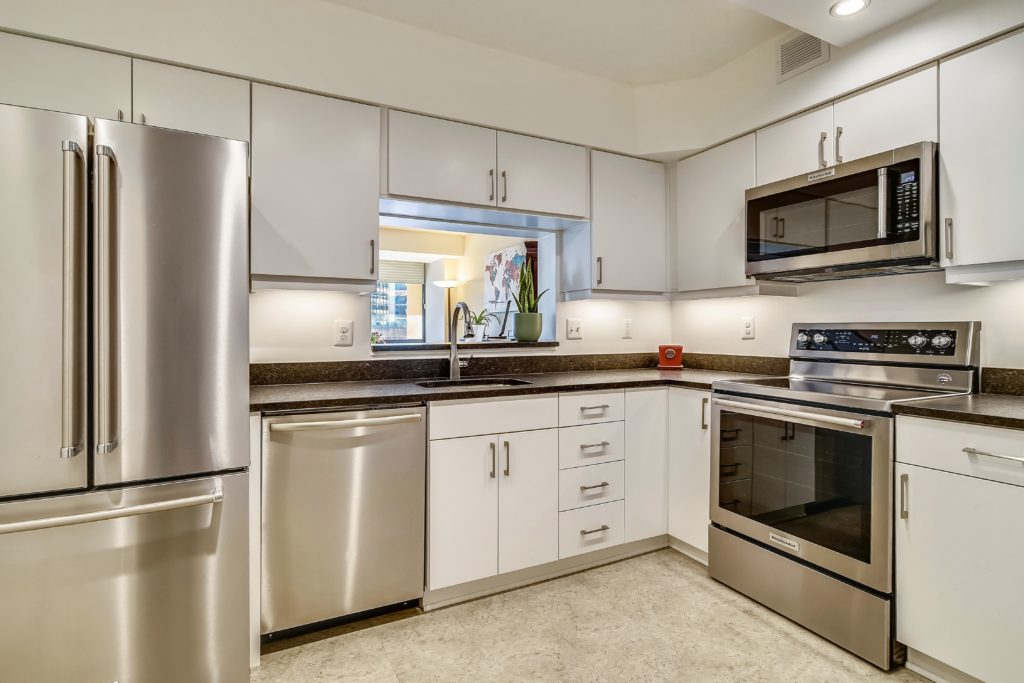
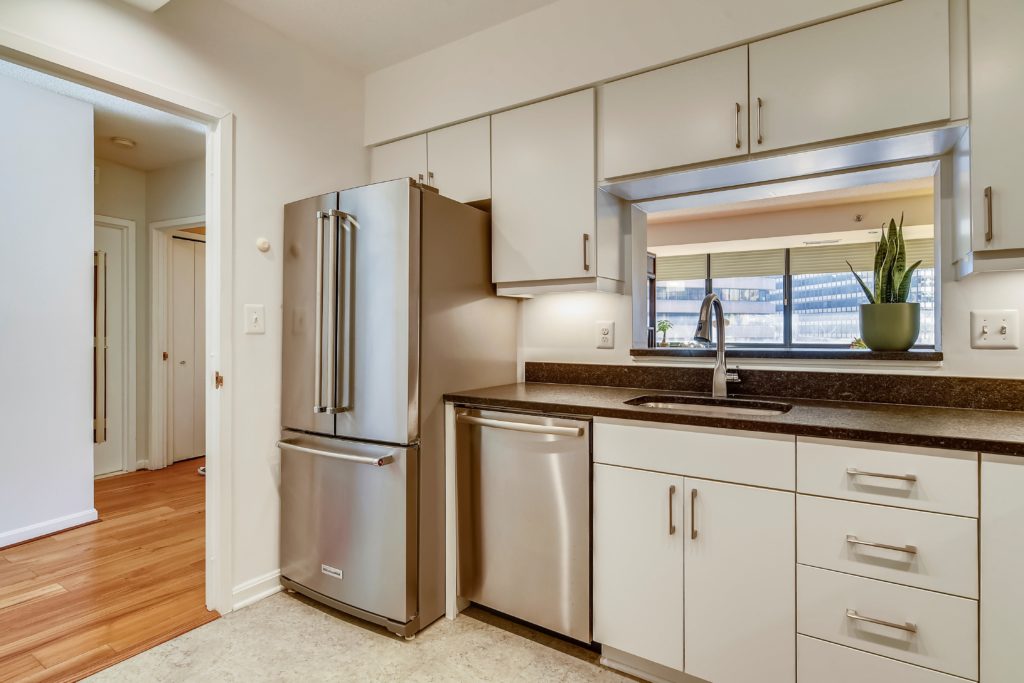
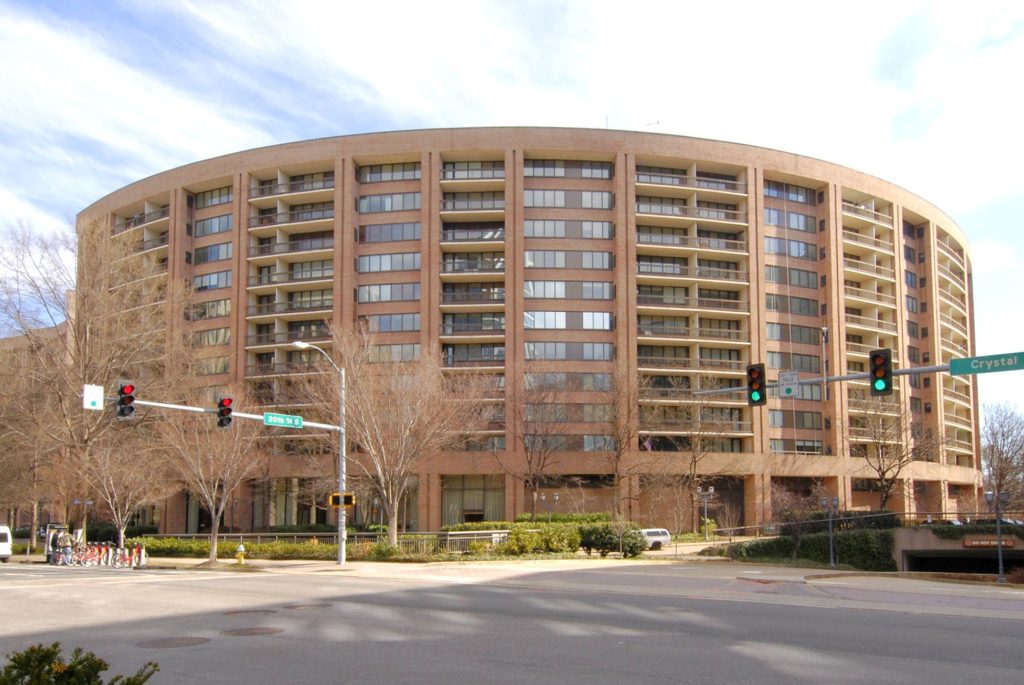
Located in the heart of Amazon’s National Landing, this tastefully renovated 855 square foot one bedroom, one bath condo has two garage parking spaces and extra storage.
The Kitchen features Crystal Current cabinets in “Simply White,” and “Black Pearl,” leathered granite countertops, KitchenAid, Bosch and Miele appliances. Handscraped, engineered teak wood floors are in the living areas and complement the fresh, neutral decor. The appealing bathroom has a deep tub, crisp white tile with accent banding and exceptional storage in the vanity and two cabinets.
No new condos are in the plans for Crystal City’s redevelopment, and Crystal Park will continue as the premiere condominium in National Landing. The well-managed, pet free Crystal Park offers a concierge front desk, gathering space, gym and an outdoor pool surrounded by a sundeck with grills for al fresco dining.
Blocks to Crystal City Metro, shops, restaurants, services along Crystal Drive and 23rd Street. The nearby Mount Vernon trail and planned recreation and aquatics center at Long Bridge Park will enhance the neighborhood.
A pristine home in an enviable location awaits the savvy buyer.
Listed by: Betsy Twigg
Associate Broker, Licensed in Virginia
McEnearney Associates
4720 Lee Highway
Arlington, Va 22207
703-967-4391 [email protected] betsytwigg.com
Editor’s Note: Healthy Paws is a column sponsored and written by the owners of Clarendon Animal Care, a full-service, general practice veterinary clinic and winner of a 2017 Arlington Chamber of Commerce Best Business Award. The clinic is located 3000 10th Street N., Suite B. and can be reached at 703-997-9776.
Can I catch that from my pet? This is a common question we hear as veterinarians, and as such have made this a recurring topic. This week we debunk some myths and talk about stuff pets are sometimes blamed for — but are highly unlikely to have been obtained from your pet.
Zoonotic diseases are infectious illnesses — think viruses, bacterial infections, fungal infections, or parasites — that can be spread between animals and humans. Zoonotic diseases can be spread both ways, from animal to person AND from person to animal.
In veterinary medicine, we take zoonotic diseases very seriously to keep both the pets we care for and their humans healthy! That said, we have had, at times needed to field questions about diseases that perhaps a misinformed friend, “Dr. Google” and on occasion human medical doctors have blamed on the pets.
Pinworms & Head Lice
Pinworms is an intestinal worm that is commonly found in young school-aged children. The primary symptom is having an itchy rear-end and they are passed easily from child to child — mostly because children don’t think to wash their hands after scratching their bums.
Sandboxes can also be common places for pinworms to pass between children. The important thing to know is that pinworms do not infect dogs and cats, so your pets are innocent.
Head Lice are tiny insects that love to live on human heads and hair, feeding on human blood. They often cause an itchy scalp and the lice or eggs may be visible on close inspection. There are many types of lice that exist, but the human head louse only wants to live on people. You won’t find these lice on other animals, so no need to inspect Fluffy.
Strep Throat
Streptococcal pharyngitis or “strep throat” is caused by a bacterial infection from Streptococcus pyogenes (group A strep). The natural host for this bacteria is humans. Some people even carry this bacteria as part of their normal flora without having symptoms. This bacteria is not found on our pets, except very transiently — i.e. for a day or two, but it doesn’t truly colonize in dogs.
The reality is that if you catch strep throat, you got it from another human. Some human doctors will request that dogs in the household be treated in family situations where people are repeatedly getting infected. The only time this remotely almost makes sense is if all the humans are also treated at the same time — but even then, the human carrier in the family will likely continue to be a carrier and continue to be a source of repeated infections.
Lyme disease can infect both dogs and humans, but you can’t catch it directly from Fido. Lyme disease is a tick-borne disease, meaning that ticks carry this disease transmit it to a dog or person that they bite for a blood-meal. This is one of the many reasons we recommend year-round flea and tick prevention and annual screening for Lyme disease for all dogs!
It’s also why people should check themselves thoroughly for ticks after spending time in the woods… ticks are very skilled at crawling up under a pant leg or sleeve.
Estate planning is important, but it also becomes very challenging when certain factors are present.
In January, TD Wealth held their 53rd Annual Heckerling Institute on Estate Planning. Attorneys, trust officers, insurance experts and accountants were in attendance. Of these, 105 were asked about the biggest issues that can crop up during estate planning. The three factors these professionals identified included family conflict, market volatility and tax reform.
“These are definitely some of the biggest issues we see in our office,” says Steve Novak of Estate & Probate Legal Group. “It is for these reasons, and more, that it is so important to have an attorney by your side when estate planning. An attorney can help settle all of these issues swiftly, and ensure an estate plan is enforceable, and properly represents the individual’s best interests.”
Among all the many factors the respondents stated could present problems during estate planning, family conflict was number one. The most common type of this conflict is designating beneficiaries.
Some family members may be unhappy with who was chosen, or how much of a share they were gifted. While this may tempt some not to tell their family about their estate plan, failing to communicate the plan with family members was another form of family conflict the participants stated could cause a problem with estate planning.
Somewhat surprisingly, volatile markets can also bring complications to estate planning. Some want to gift beneficiaries with something that will be long-lasting, but short-term fluctuations can cause those making the plan real cause for concern.
Lastly, the major overhaul to tax law in 2017 is now playing a major role in estate planning. With increases in the federal gift and estate tax exemption, more people are starting to place assets they would like to gift into trusts.
This allows the gift to be considered the beneficiary’s and theirs alone. If a child goes through a divorce later in life, a trust will make it clear that it was separate property and so, protect that family member in the future.
Unfortunately, these are just the three main issues that arise most often during estate planning. They are also the biggest reasons anyone creating an estate plan should speak with an attorney that can help.
Joining the latest and greatest at Ballston Quarter, 5 Wits officially opened for business earlier last month, bringing its unique style of interactive entertainment to the Arlington area.
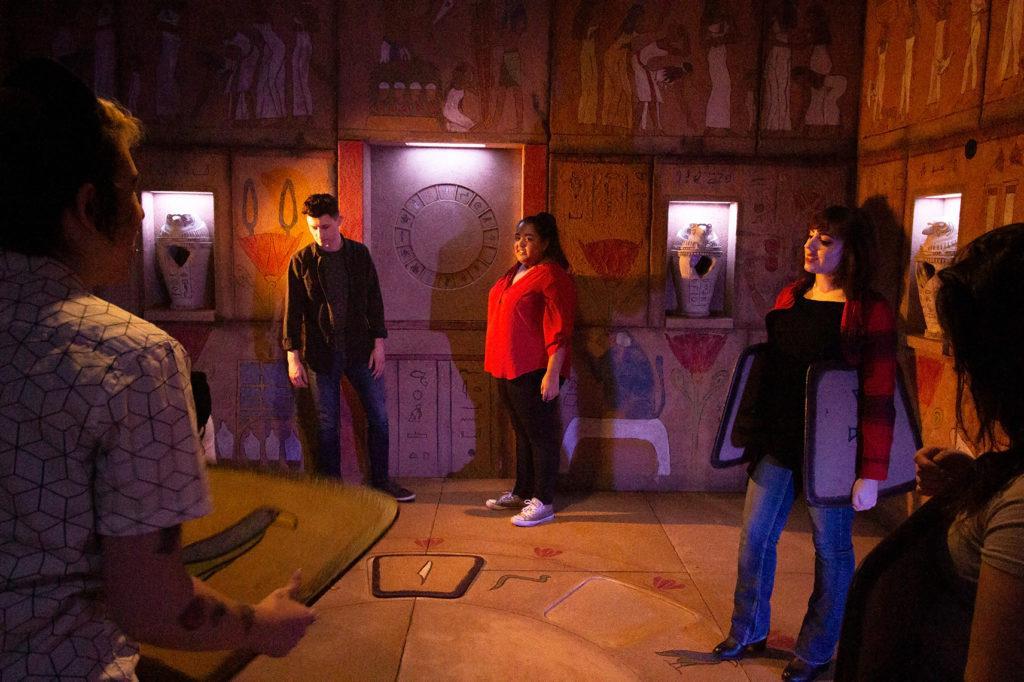
Located in a 15,000 square foot facility within the mall, 5 Wits creates deeply immersive, theme park-style adventure experiences. Guests travel through real, physical environments, interacting with their surroundings through challenges, puzzles and elaborate special effects.
Each adventure tells its own story, with its guests’ performance deciding the outcome: the ending actually changes depending on how well its participants perform.
While the technology that runs this massive $2 million venue is cutting edge, the company behind it isn’t exactly new — in fact, 5 Wits is celebrating its 15th year in business. Its arrival in Ballston Quarter signals a shift toward entertainment-based offerings that set the redeveloped center apart as a destination.
“5 Wits is excited to bring our adventures to the Arlington area in such a unique and dynamic project. Ballston Quarter is curating an experience that the community is going to love,” says Frank Cerio, the company’s COO.
As Nothern Virginia’s newest dining, shopping and entertainment destination, the revitalized Ballston Quarter’s focus on experiential entertainment retailers continues well beyond 5 Wits. Offerings like play space Nook, entertainment complex Punch Social Bowl and Onelife Fitness compliment new expansive gathering spaces and fresh retail and culinary brands.
Community members and visitors are invited to experience the new heart of Ballston with continued openings, spring and summer holiday celebrations and seasonal programming that make Ballston Quarter a year-round community experience.
Ready to get down to business with your artistic endeavors?
Arlington Cultural Affairs, in partnership with Washington Area Lawyers for the Arts (WALA) announces the Creative Entrepreneurs Series @Arlington Arts. The six sessions (all presentations with Q&A) will be held on consecutive Wednesdays, from March 27 through May 1, from 7-9 p.m. at Theatre on the Run in Shirlington.
WALA’s Creative Entrepreneurs Series (CES) is designed to help creatives of all kinds take the next step in their professional career by creating their own business. Explore the basics of forming a business for your creative endeavors, from deciding whether to incorporate as a non-profit or for-profit entity, to understanding copyrights and trademarks, to contract and negotiation skills, and finally to taxes and understanding the grants process.
The Series offers tips on every skill you need to help you bring your best and most creative self to the community.
The Series constitutes the official launch of the Arts Enterprise Institute, a program of Arlington Arts to provide resources for artists so they can make a living as artists. Artists teaching artists is a cornerstone of our programs, which have been well received during the last year. The complete series is as follows:
Session 1: Tax Strategies — March 27
Benjamin Takis (founder, Tax-Exempt Solutions PLLC), Benjamin Grosz (partner, Ivins Phillips & Barker) and Jonathan Holbrook (associate, Ivins, Phillips & Barker)
Session 2: Business Entities Formation — April 3
Hardeep Grover (attorney, Tresquire)
Session 3: Copyright/Trademark Protection & Use — April 10
John D. Mason (Copyright Counselors, LLC) Arts/Ent. and intellectual property attorney
Session 4: Contracts & Licensing — April 17
Karl Means (Miles & Stockbridge, & fmr. Shareholder, Shulman Rogers)
Session 5: Negotiation Strategies — April 24
Facilitator TBA. Learn tips and tools for being a successful negotiator and collaborator.
Session 6: Grants — May 1
Paul Marengo (CEO, Promethean Fundraising; Volunteer Coordinator, FilmFestDC)
Since 1983, Washington Area Lawyers for the Arts has supported artistic expression and creative innovation by serving the legal needs of the Washington D.C., Virginia and Maryland arts and cultural communities. A 501(c)(3) not-for-profit organization, WALA provides access to education, advocacy, and legal services through workshops and seminars, legal clinics and pro bono legal referral services.
The series is free for WALA members, and $20 per workshop for non-members (registration for each individual workshop is required). For more detailed information on the sessions and the presenters, and to register, visit Eventbrite at this link.
Each week, “Just Reduced” spotlights properties in Arlington County whose price have been cut over the previous week. The market summary is crafted by licensed broker Aaron Seekford of Arlington Realty, Inc. GET MORE out of your real estate investment with Aaron and his team by visiting www.arlingtonrealtyinc.com or calling 703-836-6116 today!
Please note: While Aaron Seekford provides this information for the community, he may not be the listing agent of these homes.
Who out there is ready to “spring forward” this weekend?
That’s right, Daylight Saving Time officially begins at 2 a.m. on Sunday, so get those clocks ready to be adjusted one big ole hour ahead. On the plus side, you get an extra hour of daylight. Woo! On the down side, you lose an hour of sleep. Boo! Oh well.
Speaking of springing forward, we’re seeing more listings spring onto the market (see this week’s numbers below). With our freezing temps ending (hopefully today… for a while at least), it’s a wonderful time to get out and about to find that home of your dreams.
And, when you’re ready to embark on your journey, our team is ready to spring into action on your behalf. Together, we can GET MORE out of your transaction.
As of March 4, there are 135 detached homes, 18 townhouses and 84 condos for sale throughout Arlington County. In total, 12 homes experienced a price reduction in the past week:
Please note that this is solely a selection of Just Reduced properties available in Arlington County. For a complete list of properties within your target budget and specifications, contact Aaron Seekford.
This regularly-scheduled sponsored Q&A column is written by Eli Tucker, Arlington-based Realtor and Rosslyn resident. Please submit your questions to him via email for response in future columns. Enjoy!
Question: I am interested in making an offer on a home, but the asking price is nearly $80,000 higher than the county’s tax value. Will I be overpaying if I offer over the tax assessment? Can I use the tax assessment to negotiate a lower purchase price?
Answer: This is one of the most common questions I’m asked by clients early in the buying process. The fact is that the majority of homes are assessed below market value (sold price) and you should not rely on the county’s assessment to determine how much you’re willing to pay for a home.
Negotiate Away, But Don’t Expect Them To Listen
As for using it in negotiations, you should find any angle you can to negotiate a better deal for yourself so if pointing out the tax assessment helps you get a better deal, by all means go for it! However, don’t be surprised when the seller or the seller’s agent quickly dismiss it, especially if they’ve seen the data presented in this column (sorry).
2018 Tax Assessment vs 2018 Sold Prices
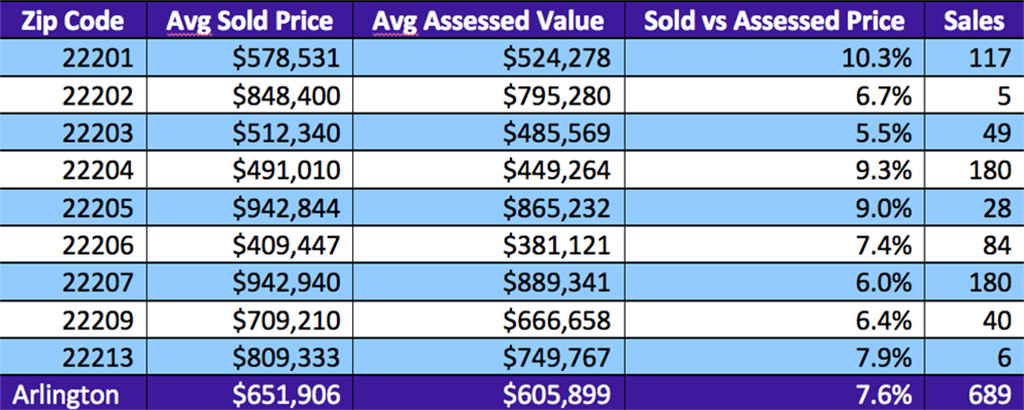
Let’s take a look at how Arlington county’s 2018 Tax Assessment Values compared to the actual purchase price of homes that sold in 2018. The table below is based on 689 of the ~3,000 total sales in Arlington from 2018.
For some reason, the MLS doesn’t have updated 2018 tax assessments for most of the transactions hence a limited data set, but 689 data points are plenty.
In 2018, homes in Arlington sold an average of 7.6% higher than their assessed value. By comparison, Zillow claims that their Zestimates have just a 3.3% margin of error in Arlington. Just 17.1% of homes sold for less than their 2018 tax assessment and only 8.3% sold for 5% or less than the assessed value.
Appealing Your Tax Assessment
If you’re an Arlington homeowner, you should be happy to hear that you’re most likely paying taxes (.996% rate) on a value that represents less than what your home is worth.
For those of you who are not happy with the assessed value of your home, every year you have an opportunity to appeal your assessment, but the burden of proof is on you, not the county, and it’s not easy even if you have solid data. Arlington provides an informative website on the appeal process.
Quick hits on that process:
Your first appeal with the Dept. of Real Estate Assessments must be filed by March 1 of that year.
Step 1: Call 703-228-3920 for information on how your assessment was determined.
Step 2: File your appeal online here (First Level).
Step 3: An assessor will visit your home and you can provide relevant info to make your case.
Step 4: If you’re not satisfied with the decision or have not received written notice by April 1, file your second appeal with the Board of Equalization online here (Second Level) by April 15.
Step 5: If you’re not satisfied with the decision, your final option for appeal is with the Circuit Court, which will likely require you to hire an attorney.
If you’d like a question answered in my weekly column, please send an email to [email protected]. To read any of my older posts, visit the blog section of my website at www.EliResidential.com. Call me directly at (703) 539-2529.
Eli Tucker is a licensed Realtor in Virginia, Washington DC, and Maryland with Real Living At Home, 2420 Wilson Blvd #101 Arlington, VA 22201, (202) 518-8781.
The numbers are in and it is now official. Virginia has a distracted driving problem.
A study was conducted by road safety company, ZenDrive, places Virginia at the top of the list for the most distracted drivers in the entire country. Maryland was tenth while the District of Columbia came in at 17. So, what is the problem in Virginia? Why does this state have so many distracted drivers?
“Our laws are too loose on the matter. It’s just that simple,” says John M. Cooper of Cooper Hurley Injury Lawyers. “When police officers essentially cannot enforce a law, it is a useless law and people will not abide by it. This is a main reason there are so many distracted drivers on Virginia’s roads.”
How could a law be the problem when Virginia actually does ban texting and driving? It is because that is all the law bans. In Virginia, people can do whatever they want with their phones while they are behind the wheel, as long as they do not text or email. They can still use their GPS, watch videos, browse social media and even play games.
This makes enforcing the ban on texting and driving extremely difficult. Officers can pull a driver over if they see them on their phone, but those drivers can simply claim they were using their phone for another purpose. Without a new law banning all use of handheld devices, the problem is only going to grow.
That is just one problem surrounding distracted driving in Virginia. The other, perhaps much bigger problem, is that many drivers do not fully understand just how dangerous their behavior is. Without that realization, particularly if the law remains as it is, there is no reason for these ‘phone addicts’ to put the phone down while they are driving.
Unfortunately, that means more car accidents, and more lives taken on Virginia’s roads. Clearly, the Commonwealth needs a new law that will save those lives and reduce the number of crashes that are seen year after year.
The following bi-weekly column is written and sponsored by Bark + Boarding, which provides a heart-centered and safe environment for your pets. Conveniently located at 5818-C Seminary Road in Bailey’s Crossroads, Bark & Boarding offers doggy daycare, boarding, grooming, walking and training services, plus in-home pet care.
By Chelsea Pennington, Bark + Boarding Writer and Animal Enthusiast
Going for a run is a great way for both dogs and their owners to stay in shape.
Bringing your pup on a run has a unique set of challenges to overcome, but with a few tips, you and your furry friend will be up and running in no time!
Do talk to your vet first
Before you start running with your dog, take them to have a check-up with your vet. Let them know you plan on starting to exercise your dog more, so they can pay extra attention to your pet’s heart, lungs and joints. This ensures you don’t do more harm than good by encouraging your pet to run if they aren’t physically fit enough.
Don’t start off too hard
Just like humans, dogs need time to build up their stamina and energy, so beginning your new routine with a ten mile run isn’t a good idea. Start slowly with short distances, and alternate between running and walking. Dogs’ paws are also sensitive, and need to grow tougher gradually as you increase the distance.
Give the leash gentle tugs to keep your dog focused on moving forward and not constantly stopping to pee or sniff something. You want them running at your side within a few feet of you, and a three-to six-foot leash is usually the right length for running with a dog. Reinforce good behavior with a small treat.
Don’t start too young
Puppies’ joints are more prone to injury, so they shouldn’t be taken on long runs until their bones have stopped growing, about 9 months in small dogs and up to 16 months for larger dogs. Until then, keep them fit by going on short walks and playing in the backyard or dog park.
Do pay attention to paws
While you may have sturdy shoes to run in, your dog doesn’t. Pay attention to the type of surface you’re leading your dog over. During hot months, blacktop and concrete heat up quickly, while jagged ice in the winter can also pose a threat. Keep an eye out for glass and other roadside debris.
Inspect your dog’s paws for any cuts before and after your workout, and wipe down their paws with a warm, soapy rag afterward to clean out salt, dirt and any other irritants.
Don’t underestimate staying hydrated
For both you and your dog, be sure you drink enough water! Hydrate before and after the run, and if it’s going to be a longer distance it’s important to bring water with you. When your pup gets thirsty, they’ll likely try to drink from puddles and other sources of standing water. Don’t let your dog do this, as they’re often contaminated and can make your dog sick.
Do listen to your dog
Your dog can’t speak up when they don’t feel good, but you can still listen to them. Signs that your dog needs a break include foaming at the mouth, heavy panting, glazed eyes and slowing down. If your dog starts to limp or lick the pads of its paw, you should stop the run immediately and return home.
If your dog doesn’t seem to be cooling down, place ice bags or cool cloths in their “arm pits” where their legs connect to the rest of their body, and take them to the vet or an emergency clinic, as they might be overheating.
Don’t forget the right equipment
The number one thing you need on a run is doggy bags! Just because you’re moving faster than your normal walk doesn’t mean you don’t need to pick up after your dog. If you’re running longer distances, a collapsible bowl to pour water into can be a good investment. There are a variety of hands-free leashes that clip around your waist, so you don’t have to worry about holding onto the leash.
Looking for more tips, interested in adorable pet pics or just want to get more information on what we do? Stay connected with Bark + Boarding on Facebook, Instagram and our website.
Mention this article for a free evaluation and click here to sign up for one today. If you have a question about your pet, feel free to come in or email [email protected] any time.
This sponsored column is written by Nick Anderson, beermonger at Arrowine (4508 Lee Highway).
Last time, we looked at Hazy or New England-style IPAs, and how they’re attracting new drinkers, and why that might be the case.
This week, I wanted to drill down on one of the most important techniques used in making those beers: dry hopping. The science of brewing is starting to catch up with the effects techniques like dry hopping can have — some of which run counter to everything we thought we knew about how hops worked.
First, let’s knock out some basics. Like, really basic — I’m not a scientist. Not officially, anyway. Hops impart different characteristics in a beer depending on when they’re added and how much are added.
Hops are usually added to the wort — the sugary liquid made when you soak your grains in hot water — while boiling it. Hops added earlier contribute bitterness, as their alpha acids stay at temperature long enough to isomerize. The later in the boil hops are added the less bitterness they impart, and the more their unique flavor/aromatic qualities emerge.
Dry hopping is used colloquially to refer hops added once the wort is cooled, whether during primary, secondary or post fermentation (prior to packaging or in keg). The idea is to punch up the hop aroma and flavor notes, and because they aren’t boiling, you get all that flavor and aroma without making the beer more bitter.
Dry hopping has been used in big IPAs to offset increasingly intense bittering additions, and as tastes changed, became the dominant — in some cases only — method by which hops were added, in the grand American tradition of “some is good; therefore, more is better.”
Scientific advancements over the past couple of years are refining our knowledge of dry hopping’s effects. A 2016 study found that dry hopping can, in fact, contribute bitterness to beer: Sapwood Cellars co-founder Scott Janish breaks down the study well on his blog, but the TL;DR version is that there are specific oxidized alpha acids in hops called humulinones.
These humulinones are much more soluble in beer than the major alpha acids, but, being about 66% as bitter, can contribute a “smoother” bitterness than that of isomerized alpha acids.
In a later post, Janish digs into findings that reveal how beers rated under 20 IBU (International Bittering Units) can become more bitter through dry hopping, while those over 30 IBU can become less bitter. The wildest finding to me is that because dry hopping increases a beer’s pH, it can boost the perceived bitterness of the beer even if it doesn’t increase its IBU.
That brings me to a piece I read over the weekend recounting the keynote address from the recent Ohio Craft Brewer’s conference by Tom Shellhammer, Norwester Professor of Fermentation Science at Oregon State University. Shellhammer reiterated findings of those earlier studies, but added analysis of a phenomenon known as “hop creep.”
Hop creep is when dry hopping triggers additional fermentation in a beer. That can happen because enzymes in the hops “can break down the unfermentable long-chain sugars to simple sugars”, which can trigger fermentation if any yeasts remain present and active in the beer.
So, wondering how a “zero IBU” NEIPA still has some bitterness to it? Wondering why that Hazy IPA you like can be inconsistent, a little stronger some times than others? Look to the science, friends. We still have much to learn.