Like Turbotax for selling your home, Homezen saves you thousands by making it easy to sell your home without an agent.

homezen logo

Last year, Justin was finally ready to sell his condo, but it hadn’t appreciated in value enough for him to pull his money out after paying the 6 percent commission to real estate agents.

He says the idea of paying a 6 percent commission drove him nuts. “I thought I could probably sell without an agent, but I was little nervous to take the risk without having knowledgeable support during the process.”

Enter homezen, which provides online tools and support to help owners of condos, townhouses and single family homes sell without an agent, at a flat fee.

How low? For $499-$699, homezen helps you set your listing price, has professional photographers take photos of your home, lists your home on the MLS and takes care of the paperwork.

They’ve helped sellers in the Palisades, Glover Park, Logan Circle, Shaw, Arlington, Alexandria, Rockville and beyond save an average of $20,000 per sale — and Justin is now one of them.

“They helped me price, prep, list my home, and they gave me the paperwork I needed,” says Justin. “They were there for me whenever I had questions, and they gave me the confidence I needed to sell my own home without an agent.”

How much did he save? $10,000 — which he’s now using to bankroll his travel around the world, including stops in Argentina, Patagonia, Switzerland, Paris, Italy, Egypt, Dubai and beyond. “It’s life changing,” he says, “and I can’t recommend it enough.”

For more information on how homezen can change your life, check out the homezen website.


Ask Eli banner

This regularly-scheduled sponsored Q&A column is written by Eli Tucker, Arlington-based Realtor and Rosslyn resident. Please submit your questions to him via email for response in future columns. Enjoy!

Question: I’m planning to sell my single family home in North Arlington this year and it seems that in my neighborhood, homes with great landscaping sell for top dollar. Our sale price justifies an investment in our lot, so I’m curious what the Arlington home-buyer demand from landscaping and if there are certain types of landscaping that offer the best Return on Investment.

Answer: Every spring I get a lot of landscaping questions and like to bring in my friend Jeff Minnich of Jeff Minnich Garden Designs to update Arlingtonians on what homeowners are doing in their yards and provide cost-effective tips for investing in your exterior for resale. If you’d like to continue the conversation with Jeff, you can reach him at [email protected] or 703-525-4540.

Enjoy Jeff’s expert response to this week’s question:

In Arlington, homeowners take great pride in their gardens. Our temperate climate is such that we can enjoy our gardens for the majority of the year. Over the last 15 years, there has been a trend toward extending the interior living space seamlessly into the outdoor living space–outdoor rooms, kitchens, fire pits, play areas, fencing, to name a few.  The desirability of a well-designed garden space is a solid investment, and attractive to potential Arlington homebuyers.

Most people involved in the landscape industry have seen a surge in business the last few years, as the economy recovers. This year is particularly busy.

There are really two kinds of investment in a home and garden: doing what will bring pleasure, enjoyment, and ease to day-to-day life in the home; and doing what might add value to the property, if resale is in the cards.

When preparing to sell a home in Arlington, it is important to remember that many buyers have the means and desire to put their own personal stamps on their new homes and gardens. Therefore, I always recommend concentrating on safety items, tidiness, and color.

Fix that uneven sidewalk or replace rotten wood on the deck. Fix gates. Replace the burnt out bulbs in your outdoor lighting system (lots of potential buyers drive by and have a look at night, too). Have the windows cleaned and check the exterior paint job, particularly the front door (yes, these items are part of the outdoor landscape, too). Power wash the house, sidewalks, patio, deck, driveway…make sure your hardscapes sparkle.

Weed, re-edge and mulch the planting beds. Remove old/dead shrubs and trim existing ones. Look up into your trees–does a tree or branch look dead or precarious? Have a tree professional look at it. Potential homebuyers do notice these things. Cut the grass and make sure your lawn is not full of blooming dandelions! This one item can be a big turn-off.

Finally, finish the job by adding some flowers to windowboxes, pots, and beds. Remember, you cannot take back that first impression–the outside of your home is the first thing potential buyers see before walking through the front door, and it can often make or break a sale.

(more…)


Berry & Berry column banner

This is a sponsored column by attorneys John Berry and Kimberly Berry of Berry & Berry, PLLC, an employment and labor law firm located in Northern Virginia that specializes in federal employee, security clearance, retirement, and private sector employee matters.

By Kimberly Berry

In the Commonwealth of Virginia, most employees are considered “at will,” which means they can resign or be terminated at any time. When employment ends, an employer may offer severance to an employee in exchange for the employee’s waiver of his or her rights, including the right to sue for any work-related issues.

In Virginia, in the absence of an employment contract, an employer usually has no obligation to provide an employee severance pay. If severance pay is offered, an employer will provide the employee with a severance agreement.

What Is A Severance Agreement?

A severance agreement is a contract between an employee and an employer that specifies the terms of an employment departure. Severance agreements can be offered in cases of terminations, resignations, layoffs and/or retirement.

In order for a severance agreement to be valid, it must usually provide something to the employee to which the employee is not already entitled. For example, in most cases, a certain financial sum is provided to the departing employee by an employer in exchange for a waiver of rights, usually referred to as a general release, by the employee.

In addition, in Virginia and many other states, employers are generally required to provide an employee time to consider a severance agreement before signing. The Older Workers Benefit Protection Act, in part, requires that an employer provide employees over 40 years of age with a 21-day consideration period, or a 45-day consideration period in the case of a large reduction-in-force, and at least a seven-day revocation period.

Oftentimes, employers rush employees to sign a severance agreement and do not adhere to the procedures for severance agreements.

The terms of a severance agreement are generally negotiable between the employer and employee. However, an employee will not necessarily be told this when the employer offers the severance agreement.

Potential Considerations With Severance Agreements

Some of the issues to consider in advance of signing a severance agreement may include, but are not limited to, the following:

  • Financial terms and timing of severance payments
  • Tax issues
  • Continuation of employment benefits
  • Ability to claim unemployment compensation
  • What claims are waived
  • Confidentiality terms
  • Non-disparagement
  • Re-employment/re-hiring possibilities for departing employee
  • Scope of non-competition after leaving employment
  • Preservation of trade secrets
  • References and points of contact
  • Recommendation letters
  • Consequences of violating the severance agreement

Each case is different and an employee may need legal representation in negotiating a severance agreement. Before an employee signs a severance agreement, he or she should consult with an attorney to discuss the rights that he or she may be waiving and the terms of the severance agreement.

If you need assistance with negotiating a severance agreement in Virginia, please contact our office at 703-668-0070 or at www.berrylegal.com to schedule a consultation. Please also like and visit us on Facebook at www.facebook.com/BerryBerryPllc.


This regularly-scheduled sponsored Q&A column is written by the Arlington Initiative to Rethink Energy team (AIRE). This county program helps you make smart energy decisions that save you money and leaves a lighter footprint on the environment. Got a question? Email us at [email protected]!

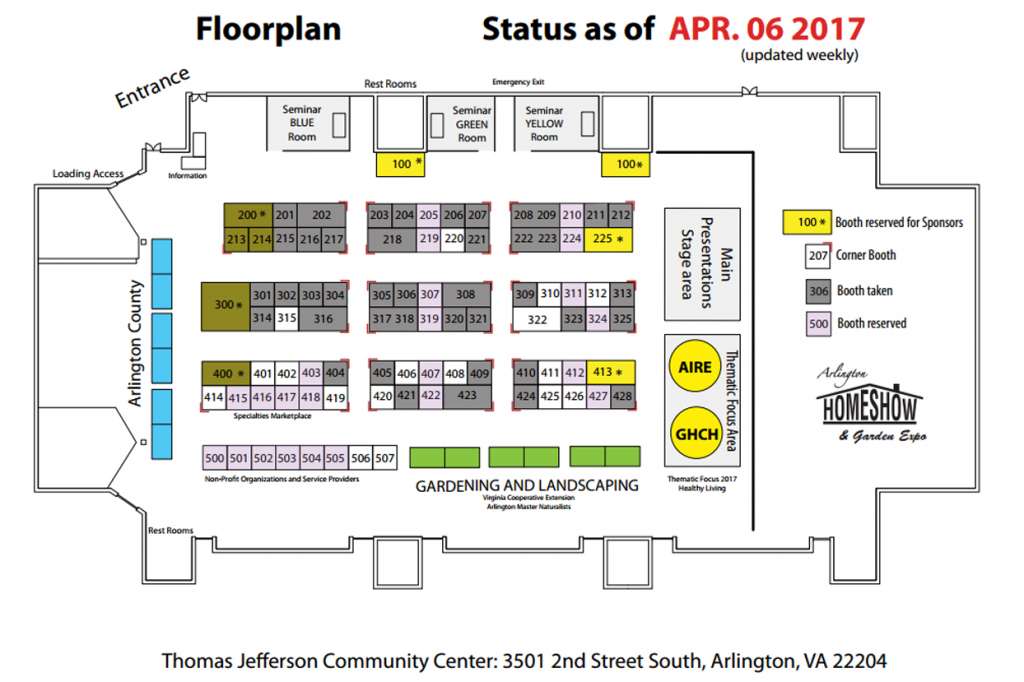
There is no better place in Arlington to get started on your home project or move it forward faster than at Arlington’s Home Show and Garden Expo. For many Arlingtonians, a home renovation is almost a rite of passage.

Arlington’s largest Home Show & Garden Expo will return this month on April 22. The Home Show will feature dozens of home builders, contractors, vendors, architects, inspectors, real estate agents, gardeners, lenders and nonprofits, as well as housing, zoning and inspection representatives from Arlington County.

Classes and seminars at the Home Show cover many topics including:

  • Move or remodel? Which is right for me?
  • Kitchen and bath remodeling
  • How to choose and work with contractors
  • How to finance your remodeling project
  • Green remodeling, solar co-op, green home certification
  • Downsizing and aging in place
  • Gardening and urban landscaping

Stop by and check it out.  Arlington’s Rethink Energy team will be there all day.  We’d love to see you and answer your energy questions!

The Expo is being held from 10 a.m. to 5 p.m. on Saturday, April 22, at the Thomas Jefferson Community Center (3501 2nd Street S).

For more information, visit: www.arlingtonhomeshow.org


Weekend Wine and Beer Guide logo

Editor’s Note: This biweekly column is sponsored by Dominion Wine and Beer (107 Rowell Court, Falls Church). It is written by Garrett Cruce, a Cicerone Program Certified Beer Server.

I’ve been listening to the soundtrack to the musical “Hamilton” on repeat for the last two weeks. In the third song, “My Shot,” Alexander Hamilton’s friend John Laurens boasts that he’s on his third Sam Adams. Then I listened to Samuel Adams founder Jim Koch tell his own story on NPR’s How I Built This podcast.

It made me start thinking that maybe I should take another look at this venerable craft brewery. Samuel Adams’ Boston Beer Company may not have existed before the mid-80s — that’s 1980s of course — but they were among the founding fathers of modern craft brewing.

I know what you’re thinking: Sam Adams feels ubiquitous — often they are the only craft beer option on tap at national chains. For the craft beer connoisseur, there’s little to be excited about in their unsurprising offerings. Despite their forays into West Coast IPAs (a bit behind the curve) with the Rebel series of IPAs, their beers are seen as also-ran.

And they don’t seem terribly small. At nearly 4.5 million barrels of production across seven brands, Boston Beer Company ranks second among the more than 5,200 craft breweries, behind Pennsylvania’s D.G. Yuengling & Son. The Brewers Association limits craft breweries to 6 million barrels annually.

Another key stipulation of being a craft brewery is that less than 25 percent of the craft brewery can be owned by a company that is not a craft brewery. Samuel Adams’ parent company, Boston Beer Company, meets all the basic criteria. To put this in perspective, Anheuser-Busch brews more than 100 brands in the U.S. alone.

Sam Adams may be the second largest craft brewery in America now, but they were one of the first craft breweries to capture the imagination of American beer drinkers. The origin story, which Jim Koch vividly recounts on the podcast, sounds like the story of American craft beer.

So, I started thinking: What if I’m wrong about Sam Adams? What if we all are? For instance, I’d recently written about their Oktoberfest and how it’s exemplary of the style. I decided I had to try again and see for myself. I selected three recent releases and gave them a fresh look. I wasn’t disappointed.

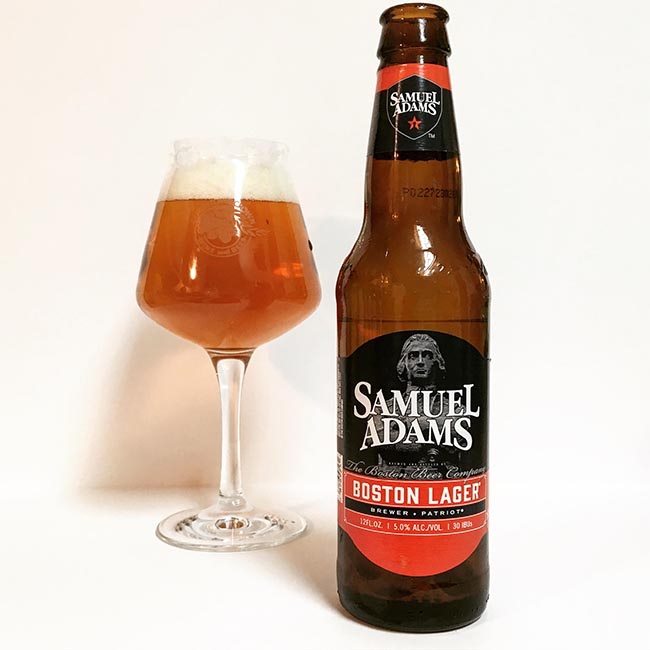
First up: Samuel Adams Boston Lager (5.0% ABV)

This is a classic, a relic of another time. Boston Lager won the Best Beer in America at the 1985 Great American Beer Festival. It’s easy to see how. Today, in a sea of local nano brews rather than macro brews, it might seem less adventurous.

Sometimes a beer is an experience, but sometimes it’s just a beer. That’s when a simple, tasty brew like this really hits the spot.

Amber in color — more like a Munich lager than the more common pilsner style — it smells like honey and Wheaties. Each sip is sweet and malt-balanced, definitely a beer from a time when hops were an accent and not main contenders. In fact, the use of old world noble hops from Germany suggests a nod to tradition rather than a reach into the future.

Even if this isn’t where the hottest beers are going, it’s refreshing to know that there’s still a solid and delicious lager just about anywhere you buy beer.

Next: Samuel Adams Fresh as Helles Lager (5.4% ABV)

This lager looks and tastes more like the beer that Americans have known as lager. Inhaling deep, I got soda crackers dipped in clover honey. In the mouth it’s crisp and honey flavored without being too sweet.

Typical of a light colored lager, the sip is brief but full flavored. I didn’t get much of anything from the orange blossom, but this beer was so enjoyable that I was fine with that. This a great one to have in your beer fridge when the days get warmer and you just want to chill.

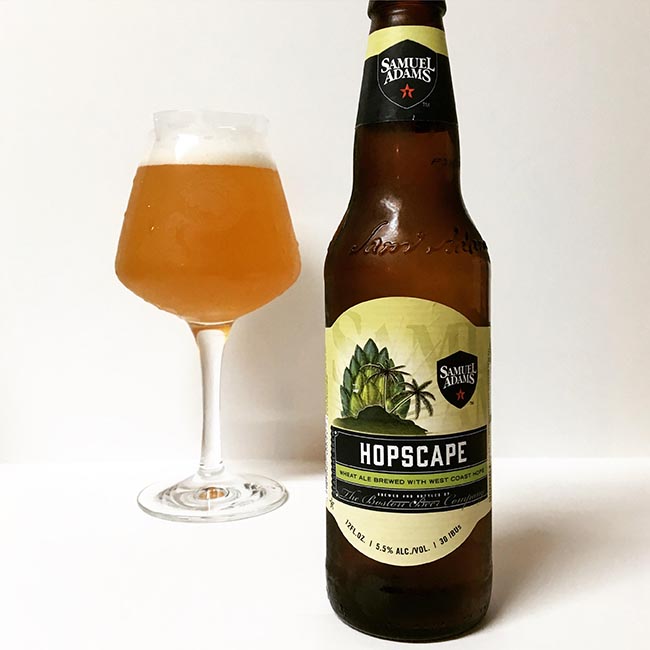
Last, but not least: Samuel Adams Hopscape Wheat Ale (5.5% ABV)

I’ve had this twice now. Once on tap — I think that bar might want to clean their lines — and once from the bottle. The bottle wins, hands down.

Hopscape was the most complex beer I tasted from Samuel Adams and it’s very tasty. The aroma was an enticing blend of roses, honeydew melon and biscuits.

That melon carries through in the flavor — more musky cantaloupe than honeydew — along with a slight sweetness and a subtle malt backbone.

Though not a wheat beer in the style of a hefeweizen, Hopscape has a typically effervescent mouthfeel. Altogether, this fragrant, flavorful beer satisfies. It’s just subtle enough to feel like it belongs in the Samuel Adams lineup without being too old fashioned.

Do you have a secret (or not-so-secret) favorite from Sam Adams?


Just Listed banner

Just Listed highlights Arlington properties that just came on the market within the past week. This feature is written and sponsored by Team Cathell, “Your Orange Line Specialists.”

Finally, the inventory floodgates opened this week in Arlington with 90 new listings.

That’s the biggest weekly gain so far this year. But buyers were close behind with 83 ratified contracts. Even with this week’s surge of fresh listings, Arlington’s inventory level hasn’t been this low since the hay days of 2004-2005. There are 494 active homes for sale right now. With current absorption rate of 332 homes sold per month, Arlington has only 1.48 months of inventory. That’s a horrendously brutal market for buyers. And it probably won’t get better until summer.

Interest rates jiggled up and down this week ending up virtually unchanged at about 4.25% for a 30-yr fixed rate. When shopping for a mortgage, consider other factors than just lowest rate. Lenders charge a variety of processing fees and origination points. A “point” is 1% of loan amount. You might get a great quoted rate, but they neglected to mention the origination points.

When comparing, ask all lenders to quote you a rate based on zero origination points so you are comparing apples to apples. And ask for full list of their fees. Look at the total cost of each quoted loan. As an option, you can also pay “discount points” up front to lower your interest rate. This is a smart tactic if you plan on holding the property for five years or more.  Also, work only with reputable lenders preferably who come recommended by your agent or someone you trust. Good communication with your loan officer is essential to matching up your unique needs with the right mortgage product.

Click to see all the fresh new inventory in MRIS and call Team Cathell (703-975-2500) when you find a home you like.


Healthy Paws

Editor’s Note: Healthy Paws is a column sponsored and written by the owners of Clarendon Animal Care, a full-service, general practice veterinary clinic. The clinic is located 3000 10th Street N., Suite B. and can be reached at 703-997-9776.

Cats love to hunt! Their instinct to display predatory behaviors is incredibly strong. In the wild, cats are mentally occupied by the constant activity of obtaining their next meal. Only 25-50 percent of a wild cat’s hunting attempts are successful and they eat 10-20 small prey per day, which averaging 20-30 calories each. That can mean up to 80 hunts every day.

House cats, on the other hand, are usually offered canned food once or twice a day and have a bowl of dry food nearby that is kept full, at the cat’s insistence. So that’s three really easy “hunts” — it doesn’t require much mental gymnastics to sneak up on a bowl of kibble.

No wonder your kitty is asking for more food as soon as she finishes her meal – -it’s just too easy! Letting cats outside would give them opportunities to hunt, but puts them at risk for picking up infectious diseases and car accidents, and can have deleterious effects on wildlife populations.

Without adequate opportunities to hunt, cats tend to have more anxiety, struggle with obesity, frustration, and are prone to stress-related diseases. Luckily, we can use food and play indoors to provide cats opportunities to engage in pseudo-predatory play and feeding behaviors.

Uses of dry food (kibble):

  • Hide small amounts of food in multiple locations throughout the house. This works best in single cat homes, but can work for multi-cat homes as well. If you have one cat who is much more assertive about getting food and another who is more laid back about food, you may need to do a combination of separate bowl feeding and food scattered around the house. Use the bowl feeding to balance out hunting differences.
  • Your average cat kibble has between two and three calories in each piece, which means to mimic hunting behavior, each “kill” should be about 10 pieces of kibble.
  • Food toys or puzzle feeders greatly increase the mental and physical effort that goes into mealtimes. There are many products you can buy online or in stores, but homemade puzzle feeders are also great and very low cost.
  • Cat Amazing is a cardboard treat maze that many cats love
  • Videos of DIY toys made from common household materials

Uses of wet food:

  • Feed a very small amount of wet food at regular intervals, between two and five times per day depending on your schedule
  • Instead of putting the wet food in a bowl, fill a shallow cardboard box with empty yogurt cups (open side up) and put a teaspoon of wet food in just a couple of the cups

Uses of non-food toys:

  • “Kill the bear” — This is a game to play with your cat to allow them to go through all the motions of hunting and killing prey in a safe way. Designate a plush toy that is only for this game. Get on the ground, get your cat’s attention by shaking the toy rapidly at ground level, then throw it across the floor in front of your cat. The goal is for your cat to pounce on the bear, sink her teeth in and grab it with both front feet — this is a full hunting sequence. Play this game once every other day with your cat for a great emotional outlet.

With changes in feeding strategies, it’s important to watch out of weight loss or gain. Many indoor cats can stand to lose a couple pounds, and feeding in a way that encourages movement around the house can help with this weight loss. We don’t want more than 1 percent weight loss a week, about 0.1 pound a week for the average cat) If you think over/under eating will be a problem in our household, bring everyone by for a weight check before changing feeding strategies and then reweigh them a month later.

For best results, include both dry and wet food in your cat’s daily routine and use as many of the above strategies as you and your kitty have energy for. Happy Hunting!


By Karyn Ewart, PhD.

Stressed out, overwhelmed, anxious. Sound familiar?

I’m not talking about you, I’m talking about your kids!

As families prepare to take a much needed spring break next week, now is a good time to talk about why our kids are more burnt out than some corporate executives, and how parents can help their kids chill out on spring break, and even when they return to school.

Middle and high school students are under pressure:

  • Social pressure is high and social acceptance can now be measured by social media stats. Worse yet, kids never get a break from the social pressure, even after their school day is over. The Sycamore School is addressing social issues by giving students a place to talk about socialization as well as adolescent development and explicitly teaching students skills to increase self-awareness, self-regulation and effective communication skills.
  • Extracurricular pressure is mounting. Particularly in our highly competitive region, our kids are pushed to do more, do better and distinguish themselves. Kids are expected to not only be on teams, in clubs, service organizations, or enrichment, but if they want to get into a good college, they need to demonstrate leadership now.
  • Academic pressure is intense. Northern Virginia and the greater D.C. region are home to amazing schools — but with them comes expectations of high performance. From a very young age, our kids are grouped, labeled and tracked; if our students aren’t on the accelerated learning track, we feel they are falling behind. Our middle schoolers are pushed to start preparing for college starting in sixth grade; by eighth grade our kids are getting high school credit; by 10th grade they are earning college credits. For many kids, earning average grades triggers tutoring or supplemental instruction (god forbid a C!) while with others, they fall through the cracks, get lost in large classes and are unable to get the help they need to reach their potential. As a community, we don’t accept average, and that creates incredible stress for our children. The Sycamore School’s small classes coupled with experiential learning and student choice of assignments and assessments will support students at all levels of their academic journey, and allow students to recognize how they learn best. By providing a supportive environment, students can advance at their own pace, without the pressure of a standardized system.

Our culture of more-better-faster has created an academic environment that is unhealthy for children’s development; kids are not able to be kids. The impact of stress on adolescents can be seen in the rise of depression, anxiety, alcohol and drug use and abuse.

So what is the alternative? Parents have choices, but first they have to own that it is a choice to perpetuate the culture of pressure that is suffocating our kids.

  1. Let kids make their own choices — it’s ok if they don’t want to take 4 AP classes, or to take accelerated English, or join the science team. Let your kids develop their own interests: that is what will spark a love of learning.
  2. Lay off the “if you don’t do this now you’ll be shutting doors for later” language. That is your own anxiety talking and it’s not fair to put that pressure on your kids.
  3. Explore alternative education options. I founded The Sycamore School for the purpose of flipping education priorities upside down to let kids be kids, and develop learners who are problem solvers, independent thinkers and team players.
  4. Say “no” to our culture of acceleration. If you let your kid be the age they are and the developmental level they are, they will experience NOW instead of living for a maybe-one-day future.
  5. Be present for your kids. Slow down your own frenetic drive and take time to listen, observe and enjoy the moments you have with your children now.
  6. Play for the sake of playing. It’s OK if the game is silly and doesn’t reinforce a skill or developmental milestone. Laugh.

You can learn more about how The Sycamore School is turning education upside down in Arlington by attending an interactive open house, or subscribe to our newsletter for more insights into education and adolescent development.

Karyn Ewart, PhD. is Founder and Head of School at The Sycamore School in Arlington and is a licensed clinical psychologist who has worked in public and private schools for over 15 years. Dr. Ewart has a doctorate in clinical psychology from the California School of Professional Psychology. She has extensive experience working with adolescents in schools, including students with learning differences. She believes that engaging students to be active members of a community, within a school setting, serves as a catalyst for developing positive relationships, facilitating growth and effecting change.

The preceding was sponsored by The Sycamore School.


Just Reduced banner

Each week, “Just Reduced” spotlights properties in Arlington County whose price have been cut over the previous week. The market summary is crafted by licensed broker Aaron Seekford of Arlington Realty, Inc. GET MORE out of your real estate investment with Aaron and his team by visiting www.arlingtonrealtyinc.com or calling 703-836-6116 today!

Please note: While Aaron Seekford provides this information for the community, he is not the listing agent of these homes.

Spring has sprung… and we’re starting to see some local real estate deals sprout up as well.

This week’s batch of “Just Reduced” homes features more than $400,000 in total reductions, providing a snapshot of everything that’s available here in Arlington County.

Each week, we try to give a broad overview of everything that’s available within our confines – from the perfect starter homes to luxury estates. There is truly something for everyone in Arlington County.

When you’re ready to embark on your journey to find the perfect home, my team has all the tools and knowledge needed to help you GET MORE out of your purchase! There are options galore available and we’re ready to help your future blossom.

As of April 3 there are 218 detached homes, 44 townhouses and 215 condos for sale throughout Arlington County. In total, 36 homes experienced a price reduction in the past week.

Here is this week’s selection of Just Reduced properties:

Please note that this is solely a selection of Just Reduced properties available in Arlington County. For a complete list of properties within your target budget and specifications, contact Aaron Seekford.


Ask Eli banner

This regularly-scheduled sponsored Q&A column is written by Eli Tucker, Arlington-based Realtor and Rosslyn resident. Please submit your questions to him via email for response in future columns. Enjoy!

Question: The best time for me to purchase a home is over the next few months, but I’ve heard from friends that the spring is highly competitive. Do you have any tips for being more competitive in the spring market without overpaying?

Answer: In a couple of weeks I’ll publish a summary of real estate data for the first quarter of 2017 in Arlington, but I can tell you that this year is off to an explosive start and the “spring market” started early. Warmer weather brings more buyers to the market and more competition over our limited housing inventory. Here are some tips on how you can improve your chances submitting a winning offer without exposing yourself to unnecessary risk or overpaying:

Take Your Time, Do Your Homework

I always tell clients that a home has two values — market value and personal value. Personal value will drive how you structure your offer and what you’re willing to pay relative to market value. Hopefully you’ve spent time over the last couple of months sharpening your criteria and understanding how it fits within your budget. If you’ve put in the right prep work upfront, you’ll be able to recognize personal value quickly and make strong offers with confidence.

Settle Faster

One way to make your offer stand out is by settling in three weeks instead of the more common 30-40 days. The settlement period is the time between the contract being signed (ratification) and the home purchase. It’s dictated by the time your lender needs to prepare your loan, so talk to your lender early on about ways to reduce your settlement period. Most sellers want to close on a property as soon as possible.

Contingencies

Most offers in Arlington include contingencies (protective terms for a buyer) for financing, appraisal and a home inspection. The shorter you can make each contingency, the more attractive your offer will look to a seller. Talk to your lender about how long they need for the financing and appraisal contingencies and don’t add unnecessary time to them.  Home inspections are valuable steps in the buying process, but also carry significant risk to the seller.

There are a number of ways to improve the “normal” 7-10 home inspection contingency to make your offer more attractive such as reducing the length of the contingency to five days with a short negotiation period, using a Pass/Fail contingency by removing the right to negotiate, making the inspection for informational purposes by removing the contingency all together (do not make this decision without considerable discussion), or getting approval from the seller to conduct a pre-inspection before making your offer.

Seller Preferences

Before making your offer, find out if the seller has any preferred terms such as a post-settlement occupancy (aka rent-back), home purchase contingency, or timing of settlement (Virginia loans should close end of month).

Watch Days on Market

The number of days a property has been on the market will help you decide how to structure your offer. You should be prepared to make your strongest offer within the first week of a listing and adjust your terms with each week a property sits.

The spring market can be a great time for buyers who are prepared for the additional competition because you’ll see a significant increase in inventory, so that illusive two bedroom + den or half-acre yard with a deck is more likely to appear. If you’re not prepared to make a strong offer, the spring can be frustrating and defeating because you may watch your dream home(s) go to other buyers who have made smarter, but not necessarily higher, offers.

If you’d like a question answered in my weekly column, please send an email to [email protected]. To read any of my older posts, visit the blog section of my website at http://www.RealtyDCMetro.com.

Eli Tucker is a licensed Realtor in Virginia, Washington DC, and Maryland with Real Living At Home, 2420 Wilson Blvd #101 Arlington, VA 22201, (202) 518-8781.


The following bi-weekly column is written and sponsored by Bark & Boarding, which provides a heart-centered and safe environment for your pets. Conveniently located at 5818-C Seminary Road in Bailey’s Crossroads, Bark & Boarding offers doggy daycare, boarding, grooming, walking and training services, plus in-home pet care.

I first met Saphy, Vega and Boudreau on an in-home registration. It was hard not to fall in love. Saphy, the oldest of the three dogs, is blind and follows you with her nose. Vega is light brown and small. She wears a constant look of concern on her face. Boudreau is the largest dog with dark patches on his white fur and the attention hog of this Pit-bull crew. They’re three of the most wonderful dogs I’ve known and the first I’ve cared for whose meals are based on the trendy raw diet, specifically, Primal Pet Food.

The first thing I noticed about these dogs is how healthy they are. Each is the perfect weight for their frame. All of them have the shiniest fur I’ve ever seen. They’re strong and athletic. Although she can’t see, Saphy jumps around like a puppy at playtime. Their feces are small and compact with no odor. Did their raw diet have anything to do with it?

Raw Diet Theory

The theory behind the raw diet is to feed your cat or dog food closest to what they would be eating if they were still in the wild. All proteins, usually muscle meat often still on the bone and organ meats such as kidneys and livers are 100 percent human grade, meaning the product is legally suitable and approved as nourishment for humans, as well as antibiotic and steroid free. All fruits and veggies, for example, kale, carrots, squash, broccoli and apples are certified organic with no preservatives added.

Benefits for dogs and cats include better intestinal health, healthier teeth and gums, shinier coats, weight loss, smaller amounts of feces with less offensive odors, urinary tract health and increased energy. Using a ready-made product saves you time in preparing meals from scratch and they are complete diets containing all the essential vitamins and minerals your pet needs. The feeding amount is usually smaller per meal meaning less food is needed.

The Decision

Thinking of my pets, I wondered if a raw diet could help one of my cats that’s overweight as well as my beefy dog? Would it improve the overall health of all three of my cats and dog?

When I was told one of the new products our retail store would be carrying was Primal Pet Food, I decided to make the change. Before trying a raw diet with your pet it’s important to first discuss this dietary change with your vet. My own vet was very supportive of my decision, especially for my dog. Your vet can guide you on how to ensure your pet will receive a balanced diet and remain healthy through the transition.

Transitioning to a Raw Diet

It’s important to start your pets off slowly when moving to the raw diet. Read the transition instructions the company provides on the back of the packaging. Each pet’s needs will vary depending on size and how much he or she normally eats. Gradually increase the amount of raw food until your pet is eating a full diet of raw products. Take as much time as your pet needs. The Primal Pet Food website has a great feeding calculator to determine the amount your pet should be fed. If your pet has a sensitive stomach, you may want to give him a digestive enzyme. Speak with your vet about recommended dosage.

Future Results

I begin the transition this week and will keep a journal to report any changes in my pets from their raw food diet. I will share my results over the next few weeks.

If you already use Primal Pet Food products or would like more information, we sell them at competitive prices in our retail store and Bark + Boarding (formerly Dog Paws n Cat Claws) staff will be happy to answer any questions you may have.


Sara Schabach
In-Home Pet Sitting Manager and Company Writer


View More Stories