A new farmers market in Cherrydale will open in a few weeks following a vote by the County Board last night (Tuesday).

Ahead of the vote, some residents — chiefly worried about noise early in the morning — told Board members the market will be a rotten deal for their neighborhood. The issue drew 14 speakers for and against the proposal and the discussion lasted one hour, prompting some Board members to hasten to a vote and move on.

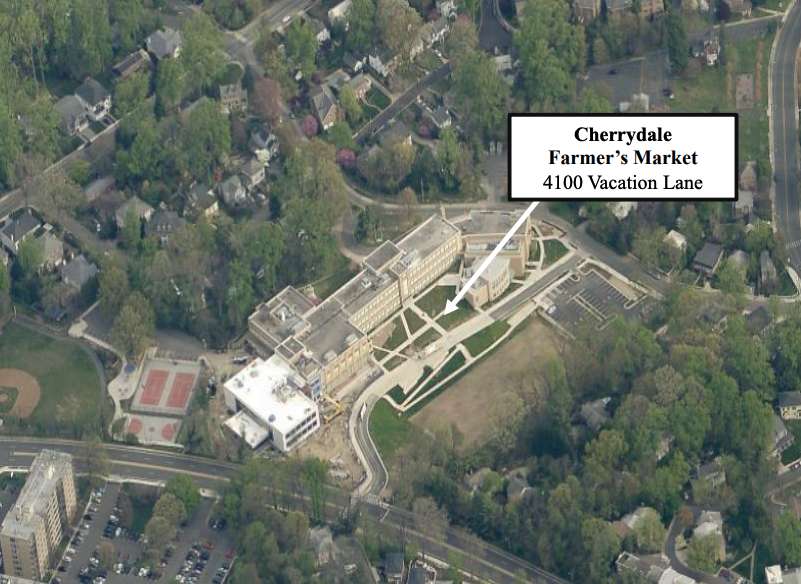
The new market will attract up to 20 vendors to its location at Dorothy Hamm Middle School (4100 Vacation Lane). Its first day is expected to be Saturday, July 3; starting next year, the market will operate from April through November. Field to Table, an Arlington-based nonprofit that facilitates the markets at Lubber Run, Fairlington and Westover, will manage the market.

Sales will start at 8 a.m. and end at noon. The School Board is set to approve an agreement during its Thursday, June 24 meeting.

Concerned residents asked for a 9 a.m. start time to allow for more quiet time in the morning. While the County Board ultimately sided with an 8 a.m. start time, proposed by staff and requested by Field to Table, they did extend an olive branch to residents in the form of a County Board review of the market in six months.

“Having lived through this with my Fairlington community, there was a lot of concerns about noise, and I would hear about it on walks,” Board member Libby Garvey said. “I have not been hearing about complaints since, and I’m fairly confident that this will work out fine.”

Local resident Joan Perry predicted that with this level of concern over the impact on the neighborhood, the market will not succeed, just like a community-supported agriculture program in the neighborhood failed.

“The farmers market is supposed to serve the immediate community surrounding the school, the very people opposed to the market who did not support the CSA,” she said.

Neighbor Simone Acha asked for a later start time so her Saturday mornings would not be unduly disturbed.

“We know from having lived through almost four years of construction at Dorothy Hamm Middle School that noise is very disruptive,” she said.

Others were excited at the prospect of a walkable market.

“I can’t think of a better place to hold the farmers market,” said Marcy Gessel.

Neighboring civic associations advocated for starting at 9 a.m. and ending at 1 p.m. The Donaldson Run Civic Association conditioned its support on — among other requests — this start time.

“A farmers market located in this kind of neighborhood setting, such substantial disruption of nearby DRCA residents on a weekend morning is unreasonable,” wrote Bill Richardson, the president of the Donaldson Run Civic Association. “For those living near Hamm Middle School, who have already had to endure many years of construction activity, this burden is particularly distressing.”

In response to the concerns, ahead of the Tuesday Board meeting, staff added language governing noise levels, limiting vendor parking to one road, and suggested both a staff and County Board review.

Attempting to wrap up the discussion and propose a resolution that would work for everyone, Board member Katie Cristol nodded to some mothers and children in the audience of the County Board meeting. They were waiting to speak about a later agenda item: county attempts to improve conditions at the Serrano Apartments, an affordable housing complex in Columbia Pike.

“I’m cognizant that we have some really important items, as I know our chair feels acutely — and it’s bedtime in some cases — so I think we should try to be moving forward,” Cristol said.

By the time the Serrano discussion started, however, those families had to leave, according to Rev. Pete Nunnally, the assistant rector at St. Mary’s Episcopal Church.

“I wonder what the conversation was between the mothers who brought their kids here but had to wait so long, so long that they had to go home, while white people argued about a farmers market,” he said.

Fewer COVID-19 cases. Lower unemployment. Higher hotel occupancy rates. These and other signs point to Arlington County’s continued recovery, according to Board Chair Matt de Ferranti.

During the annual State of the County address, the chair said Arlington County is well on the road to economic recovery but it has a ways to go before it enters into a period of renewal. The event was hosted virtually yesterday morning (Tuesday) by the Arlington Chamber of Commerce, with a Q&A moderated by ARLnow founder Scott Brodbeck.

“We’re growing, but not as fast as at the start of 2020, before the pandemic, when our prospects seemed truly bright,” he said. “If we’re honest, recovery is not all we’re looking for at this moment. The state that we have not reached — that we must create — is renewal.”

Reaching renewal will mean supporting small businesses, working to eliminate inequities and increasing housing options, he said.

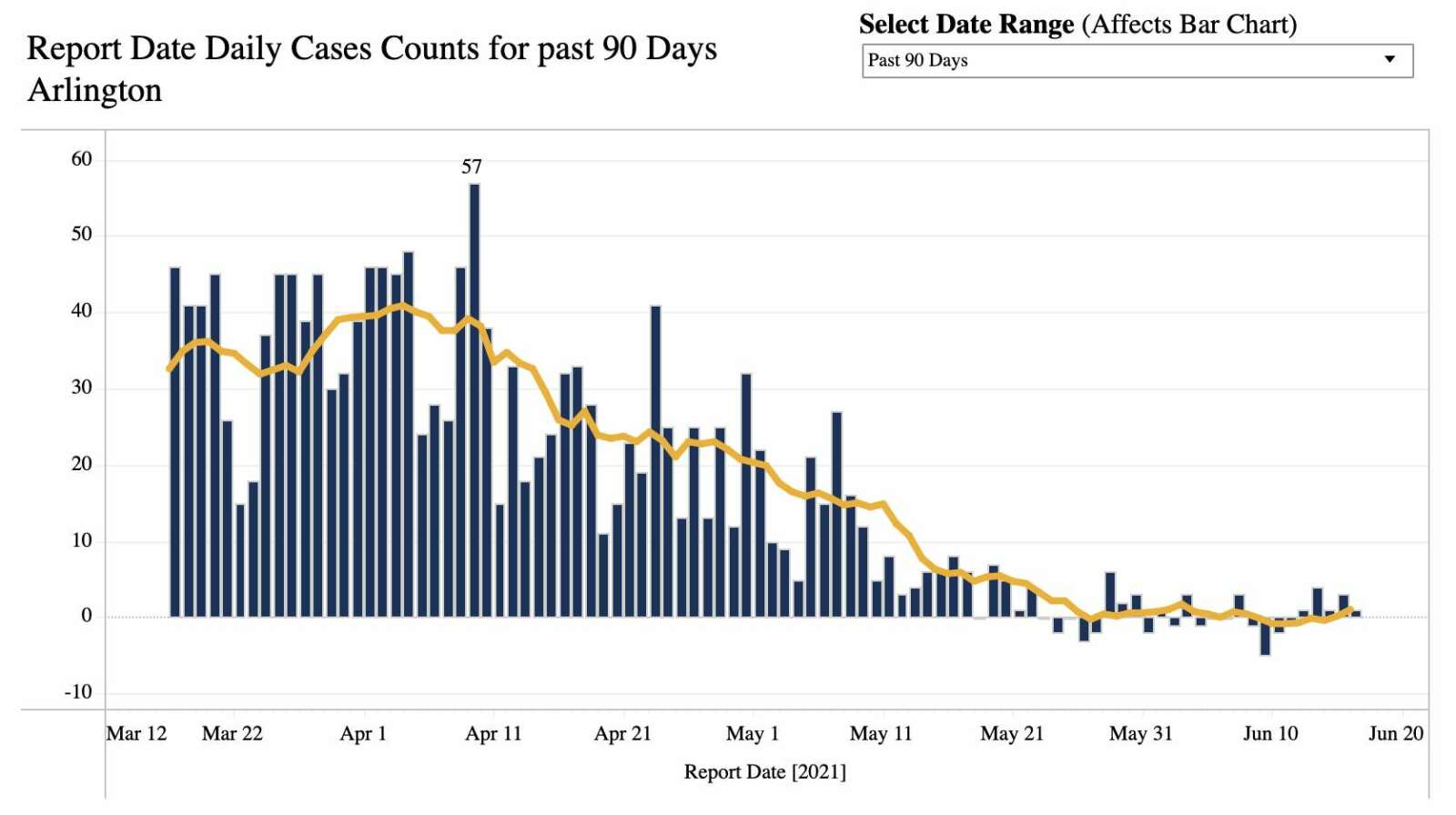
Recent data show the health of Arlington County residents has stabilized, with a 0.6% COVID-19 test positivity rate and about one case per day over the last two weeks. Unemployment is down, as well, from 7.2% this time last year to 3% today, he said. As vaccination rates rise, tourism is recovering, with hotel occupancy rates up to 40% from a low of 20%.

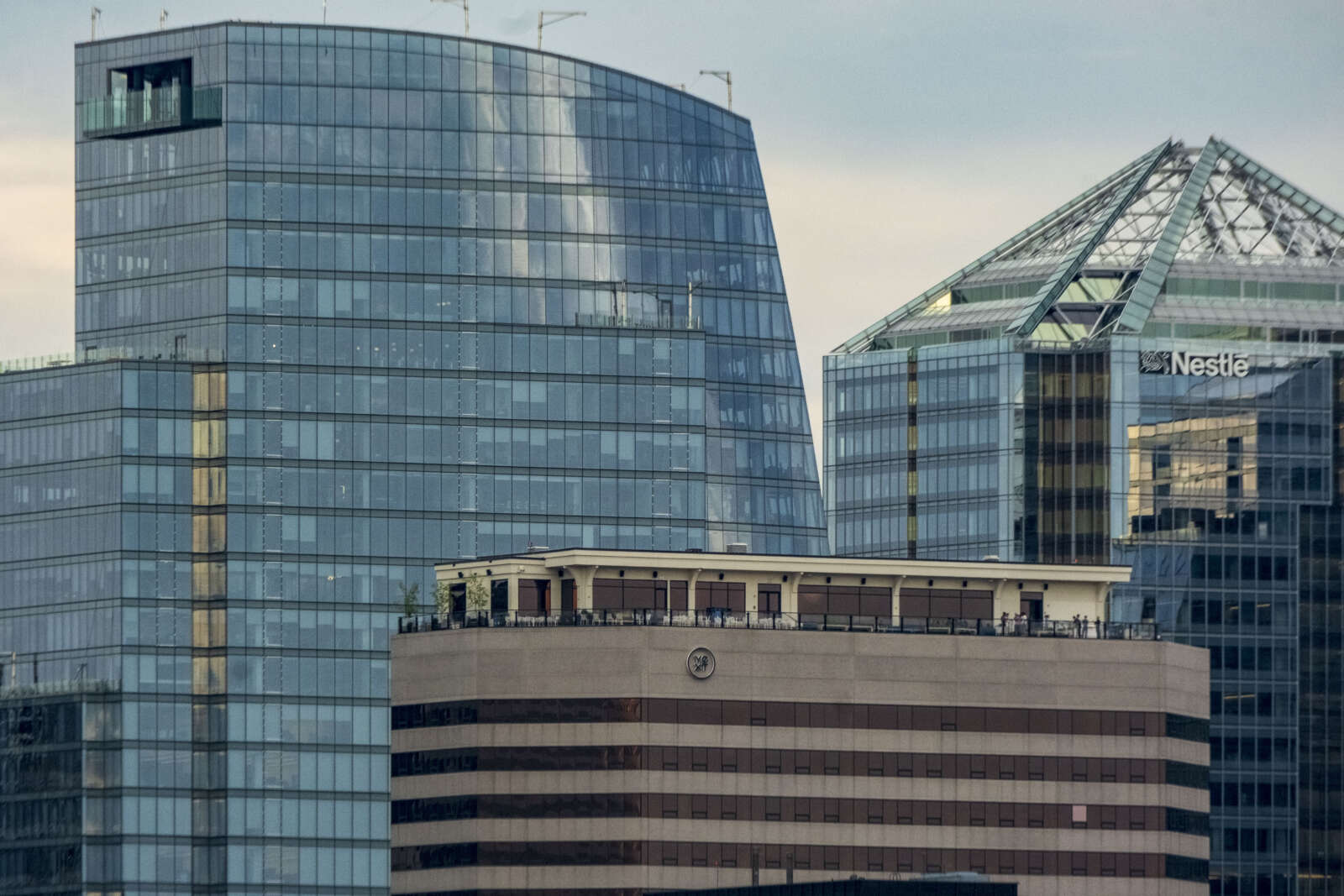
The county has also retained organizations with an Arlington footprint, including the State Department, while attracting new companies, from Microsoft to shipping company ZeBox‘s startup incubator. All along, Amazon continues to meet its occupancy and hiring goals while supporting businesses, he said, and will present its second phase of its HQ2 to the Board later this year.

Plus, new development is continuing.

“The County Board has approved numerous office and residential projects that will drive economic growth… and strengthen our economy in Arlington,” de Ferranti said. “We’re hearing from commercial real estate brokers that there is significant pent-up demand from [office] tenants who delayed real estate decisions in the pandemic. We expect to see these deals come forward in the fall of this year.”

Still, the office vacancy rate is a lingering concern for de Ferranti, who noted that it was 18.7% in the first quarter, up 2.1% from the same time last year.

“Part of the reason I sought this office was to bring down the vacancy rate so that we could invest in schools, housing, transit, transportation and the things that make Arlington a great place to live,” he said. “Our economic development projects show promise, our pipeline is strong, so I’m confident we can bring down the rate over the coming years.”

The county will need to engage with companies already here and those eyeing Arlington while adapting to 21st-century office needs through measures such as office-to-apartment conversions, he said.

“We saw before Amazon that there was a time when we got a touch complacent working on our office vacancy rate,” he said. “That’s no one’s fault but we do need to stay focused on it.”

While it’s mostly larger companies that help to fill Arlington’s office towers, small businesses in Arlington need help, de Ferranti said, so Arlington Economic Development is preparing a grant program using American Rescue Plan funds. It follows up on a similar program last year that helped 393 businesses.

The county still has work to do to fix bugs with the online permit system and improve the customer service experience for businesses — lessons learned from the roll-out of temporary outdoor seating areas, or TOSAs, the chair admitted.

(more…)


(Updated 12:45 p.m. on 6/16/21) The Arlington County Board adopted a master plan and design guidelines for a new park and open space in Crystal City on Tuesday.

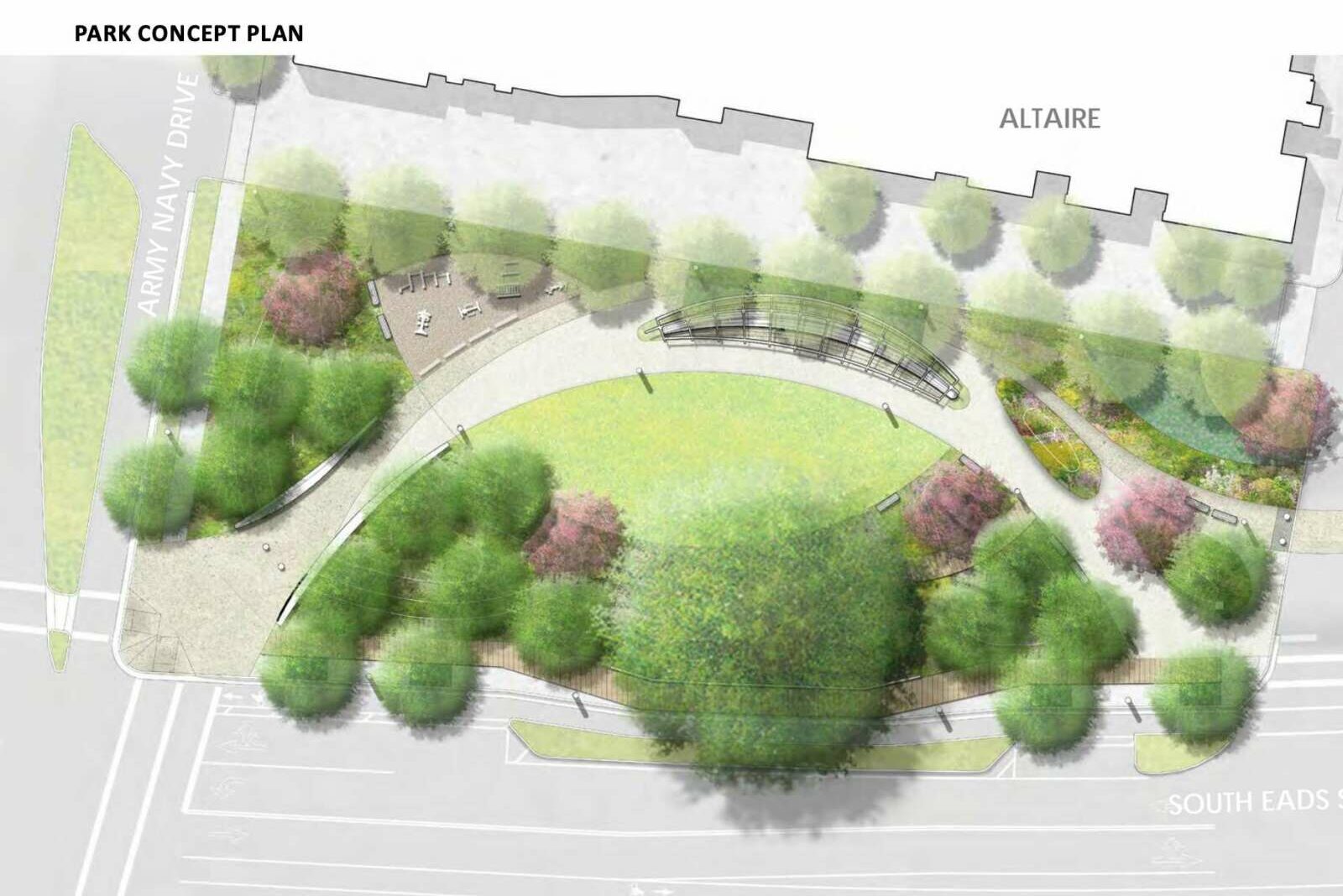
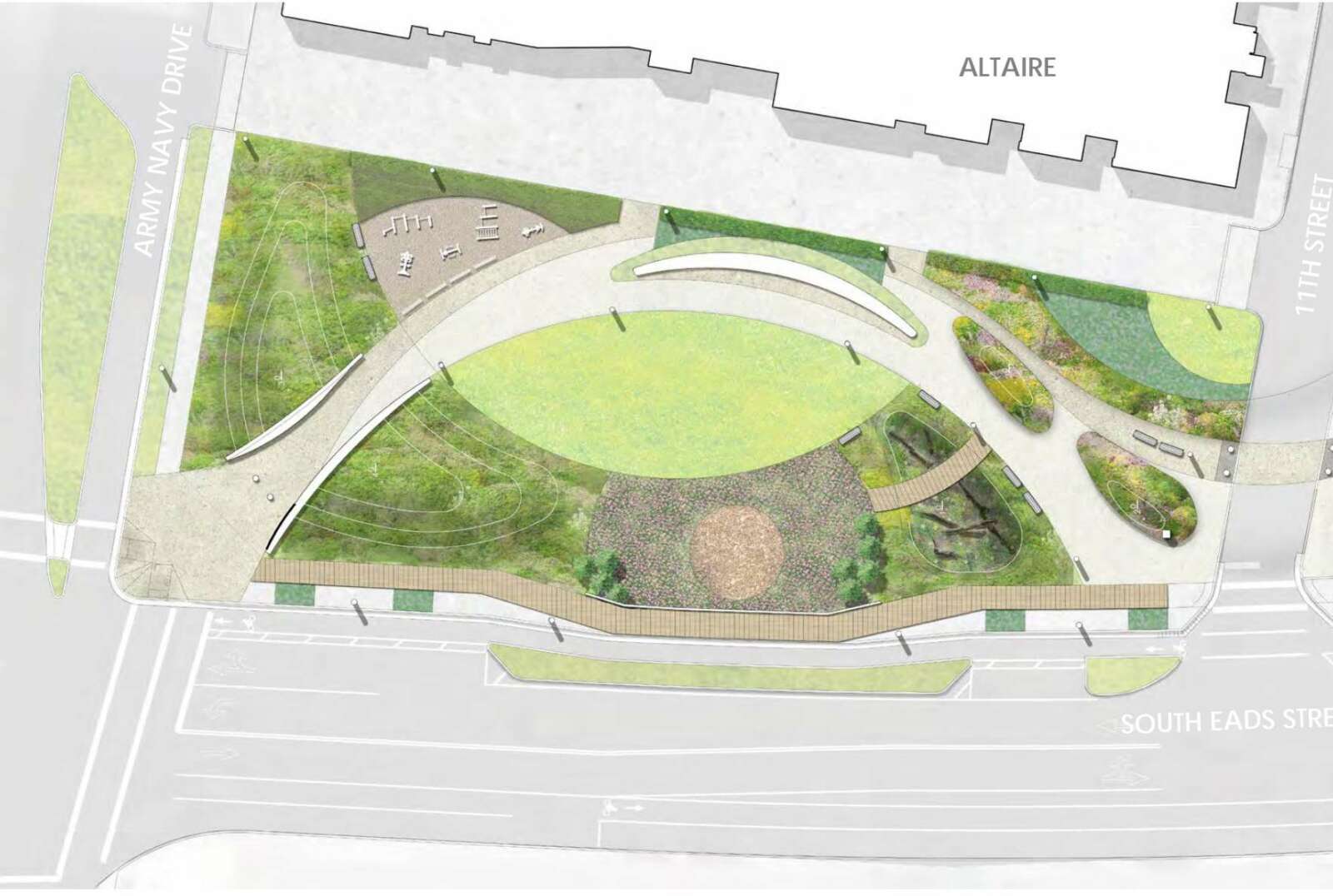
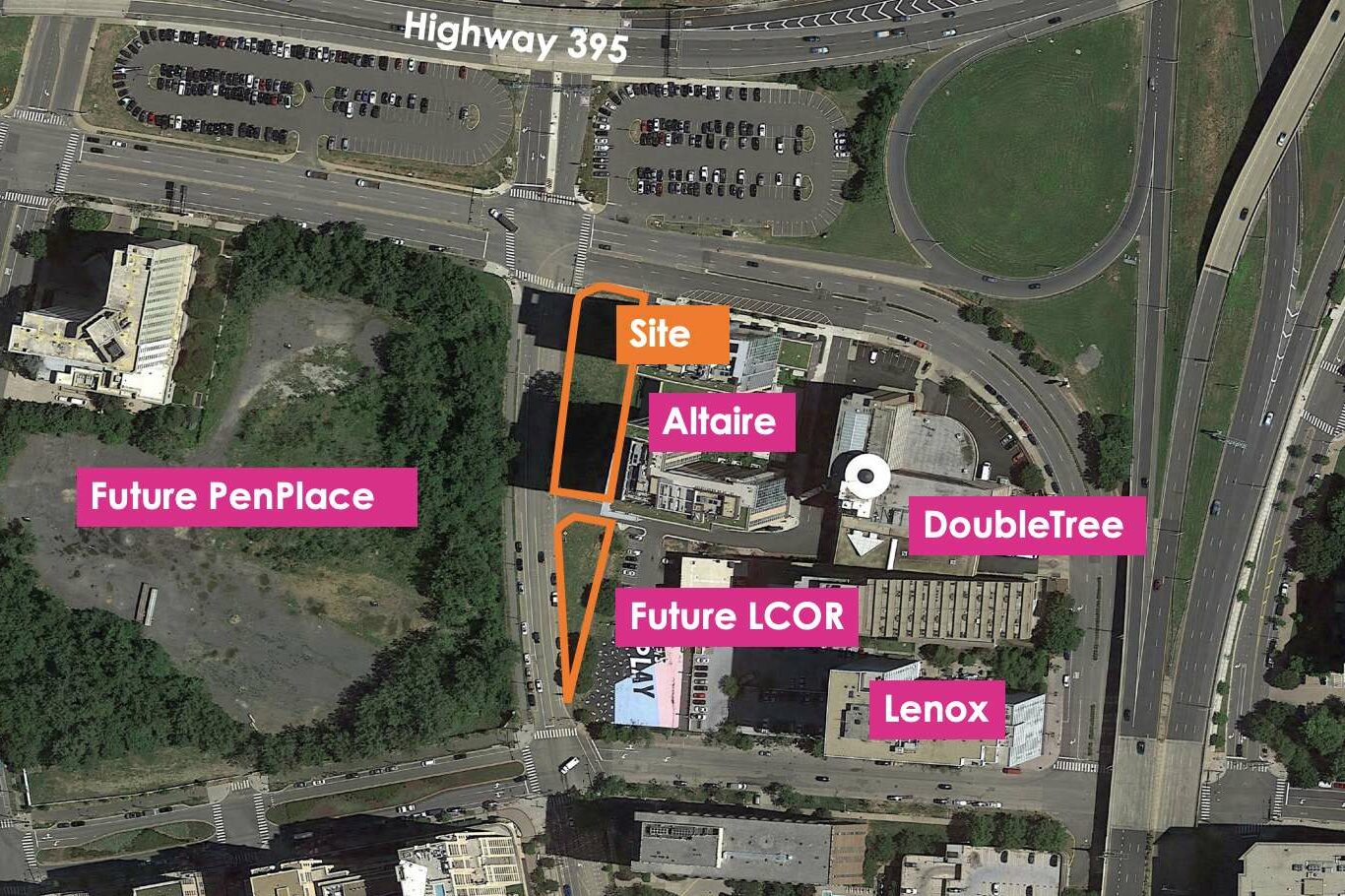
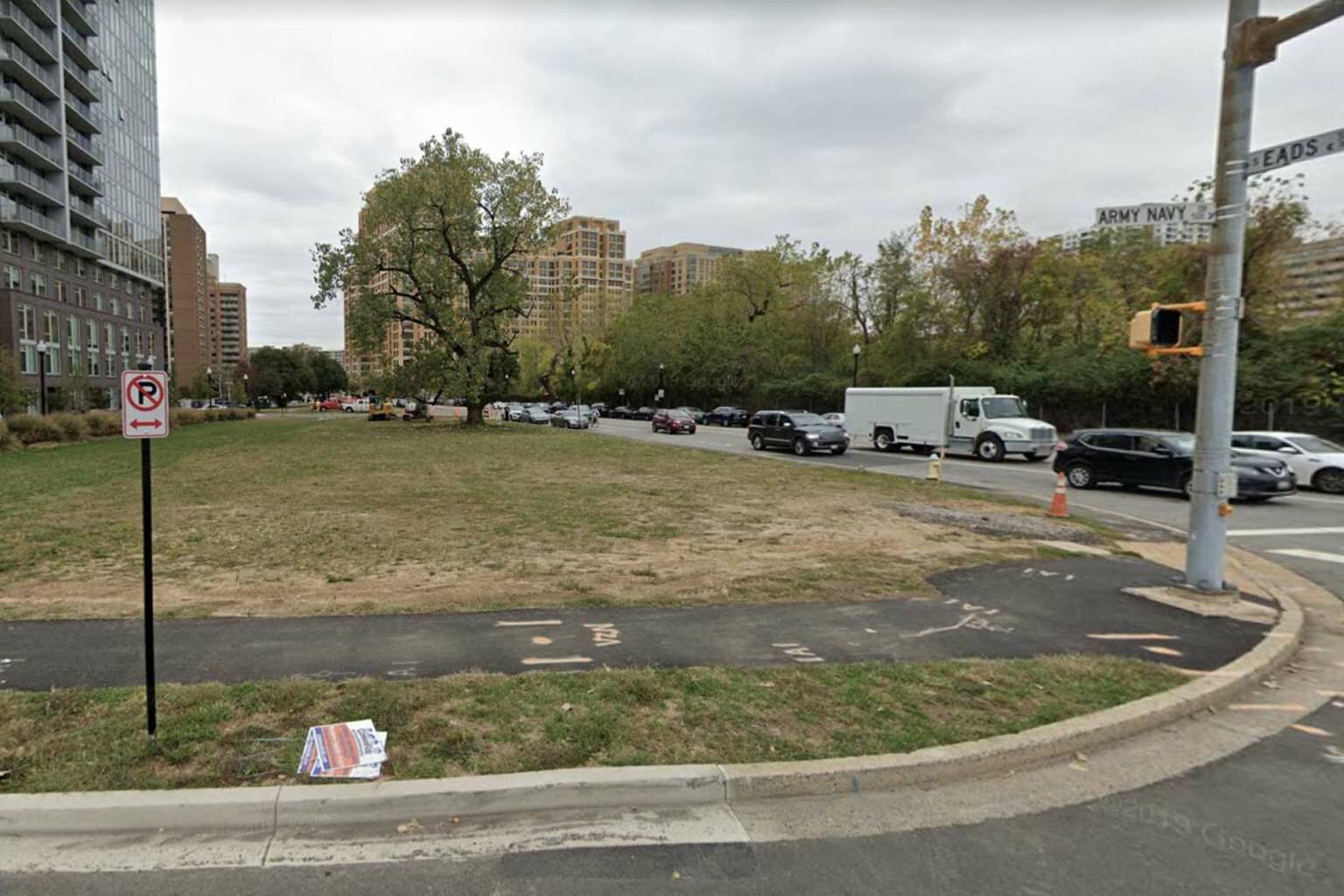
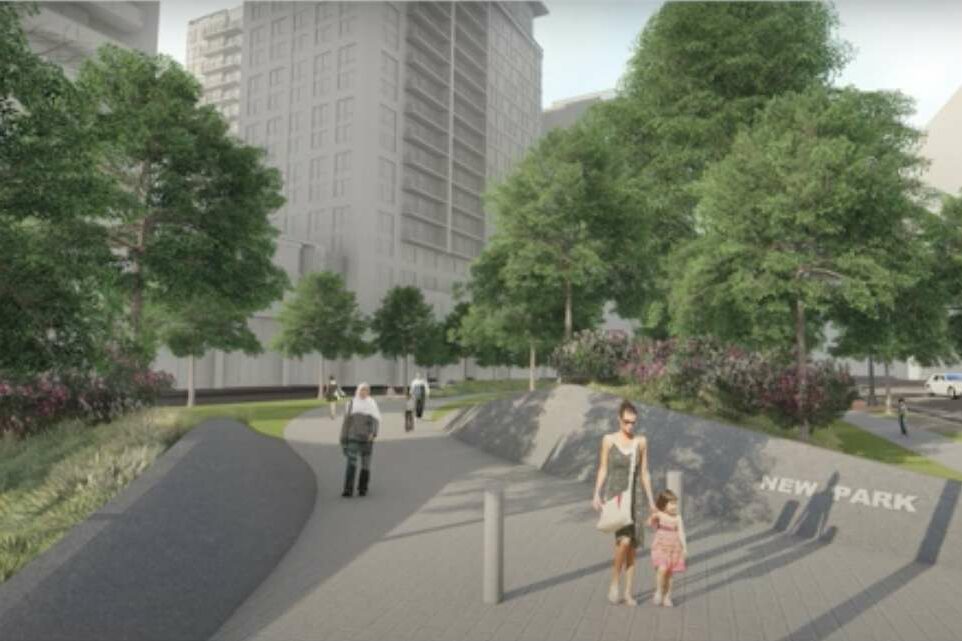
This document will guide the construction of a new, 0.9-acre park, which is scheduled to kick off next year. The open space, also known as the “Teardrop Parcel,” borders Pentagon City and is located at the intersection of S. Eads Street and Army Navy Drive.

The park “will serve as a contemplative green oasis in a densely developed urban context,” according to the master plan document.

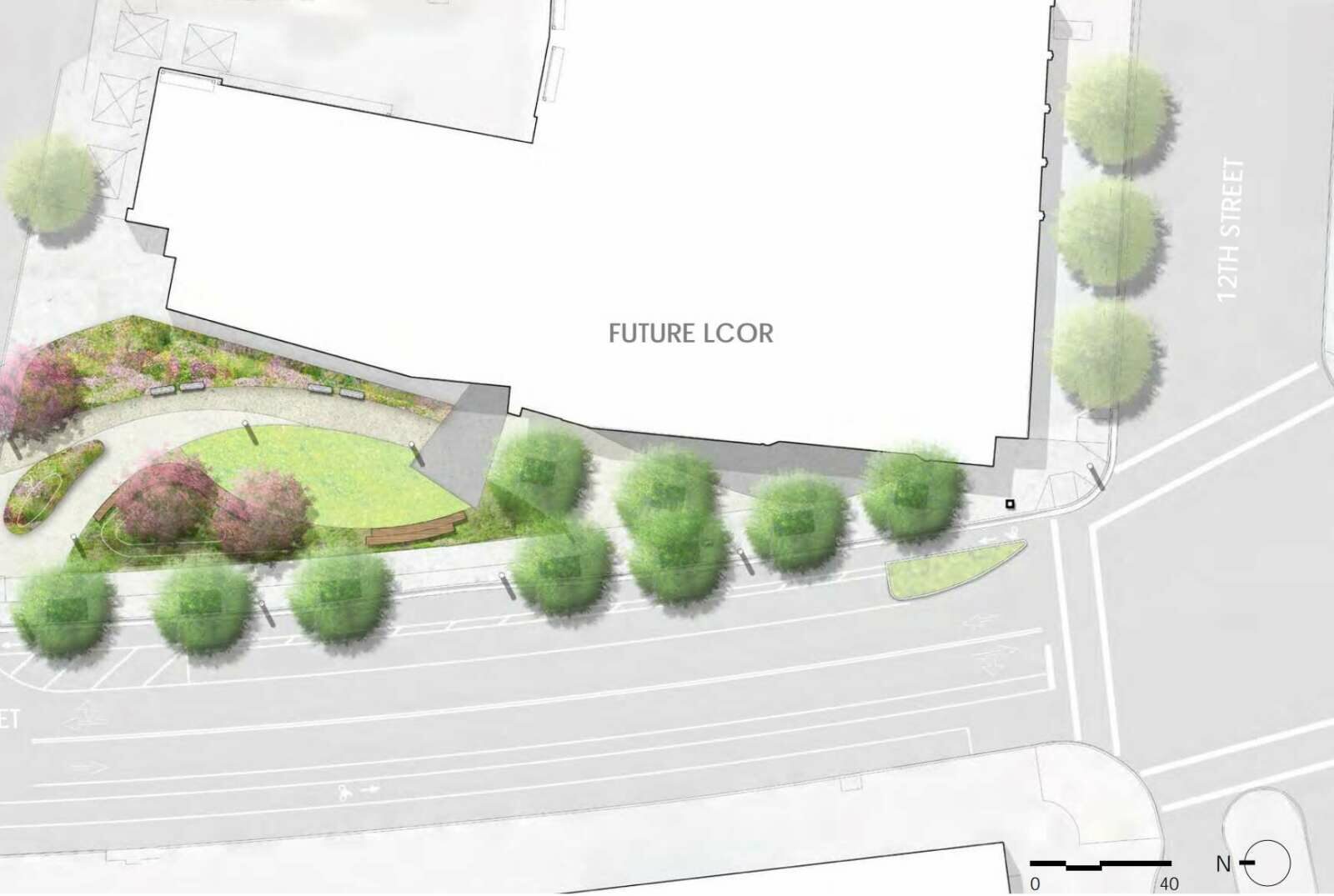
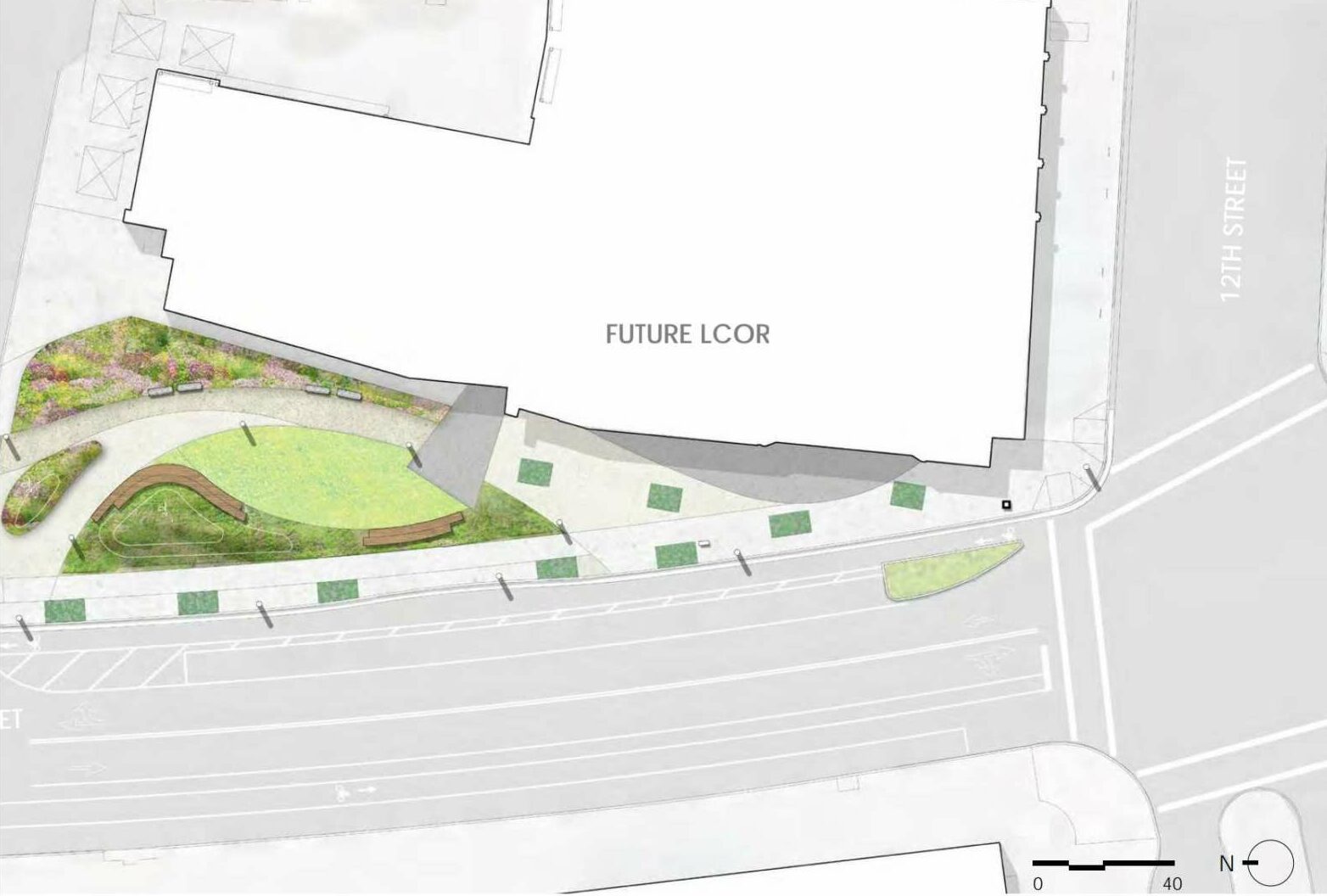
The green space is located by the Verizon telecommunications facility (400 11th Street S.) and the construction site for a new, 19-story residential building. It’s adjacent to the recently-built Altaire apartments and across the street from the second phase of Amazon’s permanent HQ2. The park project, with a $3 million budget, is funded by developer contributions.

According to a county report, the plans have support from the community, which had multiple virtual public engagement opportunities — from September 2020 to March 2021.

The plan said “people value the park space as a natural green refuge [and] want a space where they can come and feel connected with nature, to take a break, and to relax by themselves or with others.”

In particular, community members indicated they were keen to preserve a 40-year-old cottonwood tree on the north parcel.

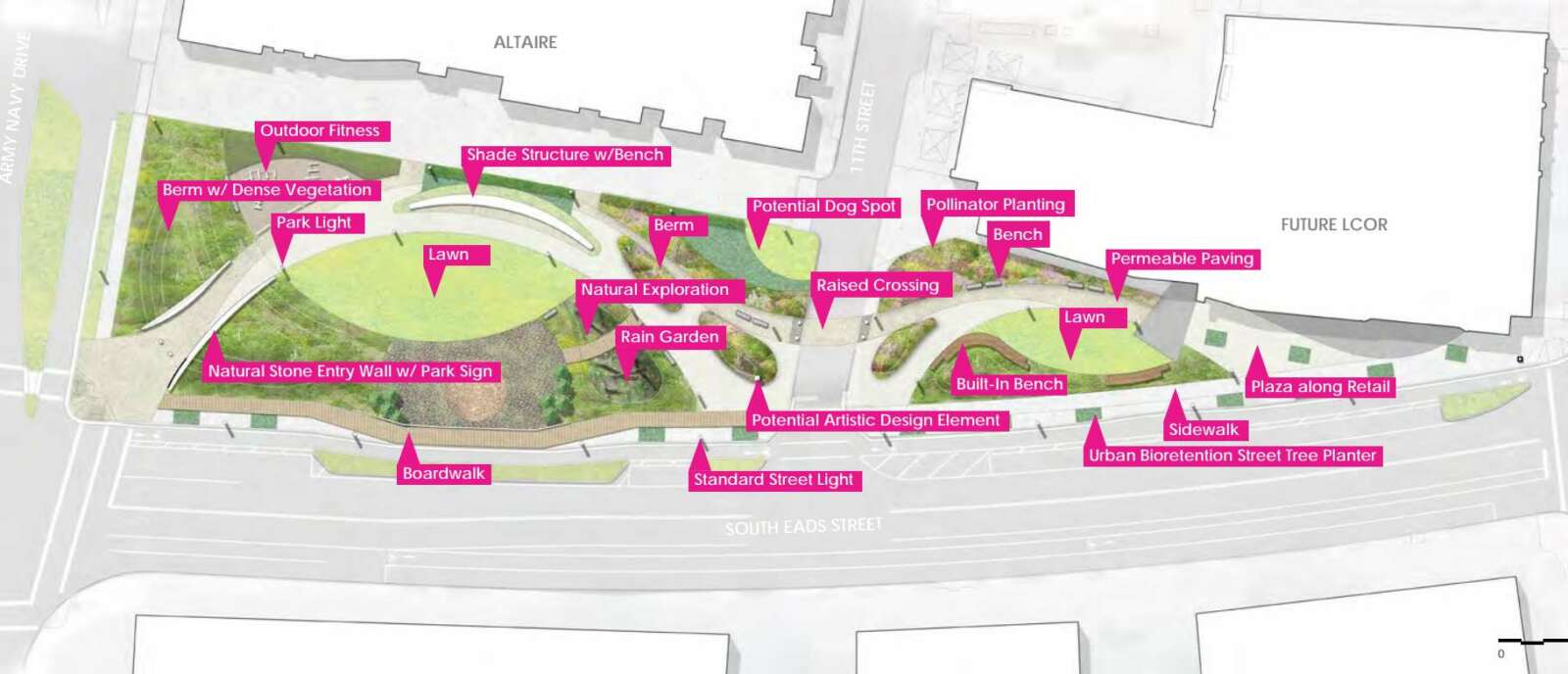
One engagement opportunity this year asked community members to indicate their preference for one of three design concepts. Respondents and committees settled on one called “The Meander,” which features a central promenade bordered by planted berms.

“Berms with pollinator meadows and a rain garden bring visual, tactile and temporal experiences of nature into the urban environment,” the planning document said.

Other berms will be planted densely with trees to provide a “green buffer” between the park and Army Navy Drive.

In addition to the promenade, users can traverse via a boardwalk. There will be an outdoor fitness area with exercise stations, built-in benches, a “dog spot” and two lawns for gatherings.

Amenities to be included in the new park along S. Eads Street in Crystal City (via Arlington County)

The master plan with design guidelines has the support of the Park and Recreation and the Forestry and Natural Resources commissions.

“The park appears to provide the promise of a casual use oasis in this part of Crystal City that is supportive and respectful of the need for more natural plantings,” said PRC Chair William Ross in a letter to the county.

Forestry commission chair Chair Phil Klingelhofer said that members believe the community “will be well served by walking along the non-linear, curvy path shaded by trees.”

Klingelhofer noted in his letter to the county that the community was excited to see the cottonwood tree preserved and the proposed level of planting.

“This shows, once again, the demand for enhanced natural resources, and a level of satisfaction that community needs are being met,” he said.
Construction is slated to begin in the third quarter of 2022 and end one year later, in the third quarter of 2023, according to the county webpage on the new park.

The Board approved the item at its Tuesday meeting, after a request to remove it from Saturday’s consent agenda, which is used to approve items deemed non-controversial with one vote.

(An earlier version of this article incorrectly stated the date in which the County Board approved the plan.)


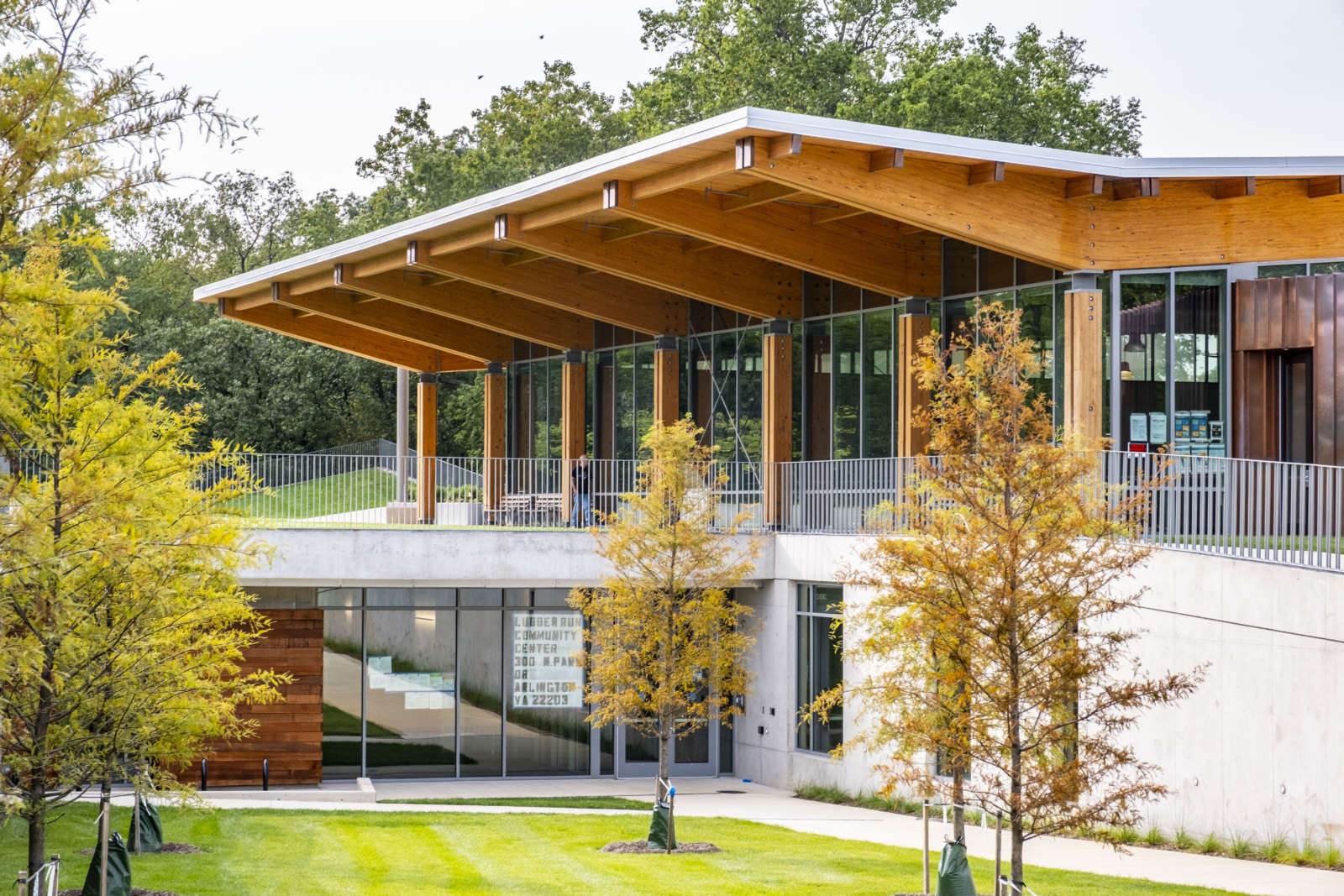
The new Lubber Run Community Center, which operated as a vaccination clinic this spring, will open for its intended purpose on Tuesday, July 6.

“After opening the park in fall 2020, and now that the vaccination clinic has ended, it’s time to prepare to open the new center,” the Department of Parks and Recreation said in an email. “Come by the gym, fitness center and indoor track.”

Fitness memberships are required for those working out at the center.

Construction started on the new community center in 2018. It was set to open in late 2020, but due to budget cuts the opening of the community center lagged behind that of the park’s playgrounds and courts, which made their debut last September.

At the time, the county said the community center would open “sometime after July 2021, which is the start of the County’s next fiscal year.”

Before the official opening, the customer service desk will be open from 8 a.m. to 5 p.m. starting next Monday (June 21). Staff will be available to accept forms for in-person summer camp, fee reductions, facility rentals and program and class registrations.

“Shortly after the facility opens, we will host a ribbon-cutting and community celebration,” according to the email, which added that more information on this event will be announced later.

The parks department did not hold a ribbon-cutting for the playground and courts when they opened in September due to the pandemic, Arlington County Dept. of Parks and Recreation spokeswoman Susan Kalish previously said.

This summer, the hours for the center will be 8 a.m. to 8 p.m. Monday through Friday, and 8 a.m. to 5 p.m. on Saturday. Those operating hours are set to be extended later this year.

“This fall, the center will be open later, and on Sundays too,” the email said. “Indoor programming, such as the senior center and preschool, will return this fall.”

The community center and park at the intersection of N. George Mason Drive and N. Park Drive is across the street from Barrett Elementary School and is walkable from Ballston. Parking is also available.


The Arlington County Board unanimously approved a major redevelopment project in Rosslyn on Saturday.

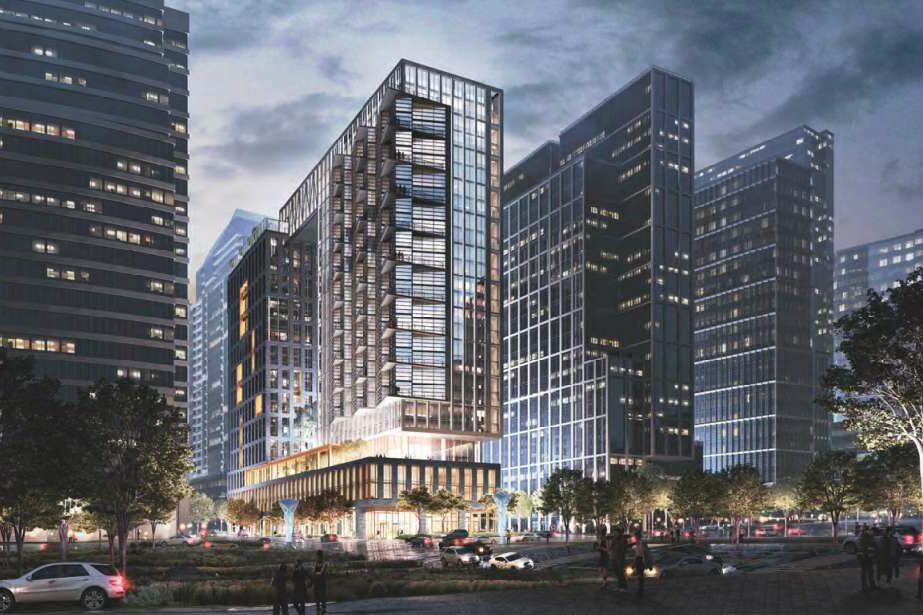
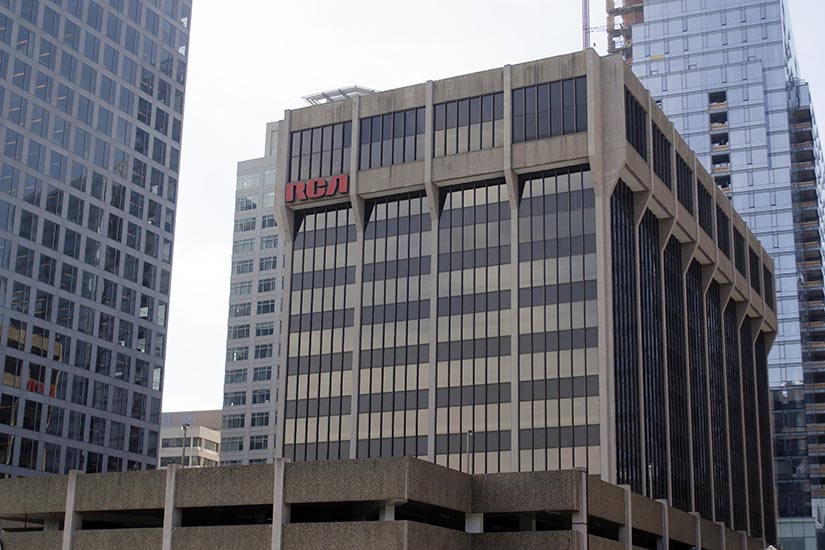
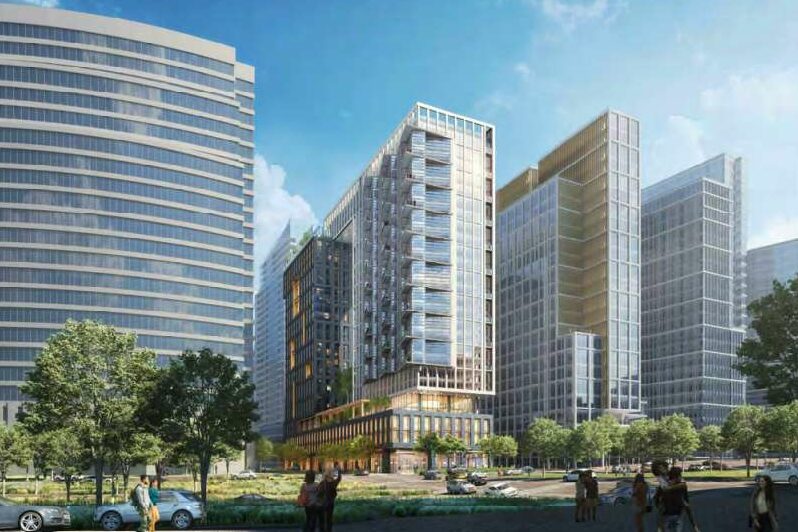
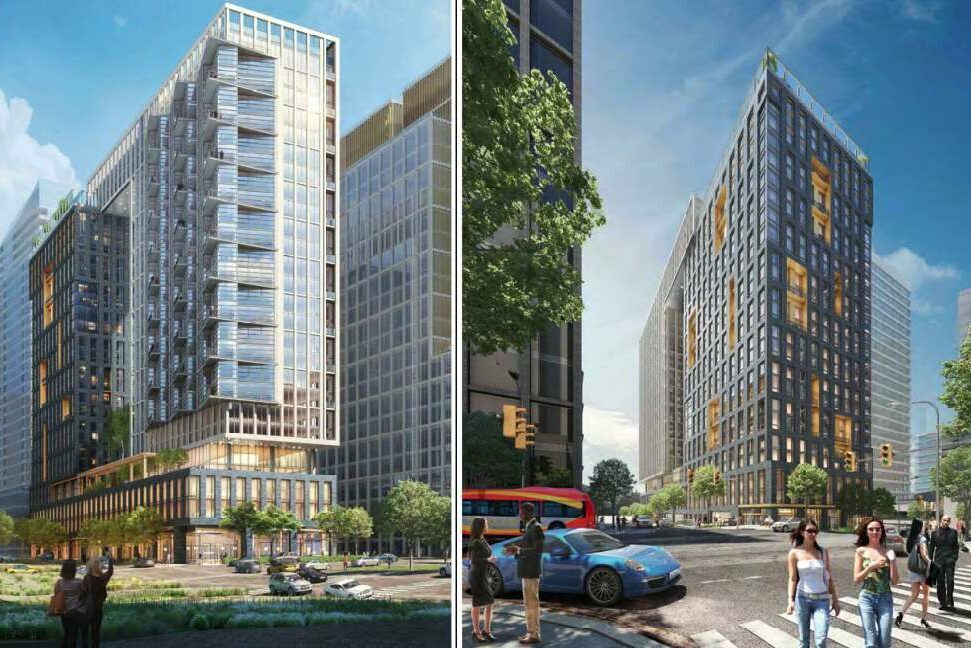
McLean-based developer Jefferson Apartment Group now has the green light to demolish the 13-story, 1960s-era RCA building at 1901 N. Moore Street and build a 27-story, 423-unit apartment building in its place. The structure will feature two levels of retail and 286 parking spaces spread across parking on the third and fourth floors and underground.

“It is a beautiful project,” Board member Katie Cristol said. “I am very excited about this number of units. To site more housing so proximate to transit and in a neighborhood that could really use and be enlivened by residential as well as office [uses], it is the right place to put this number of residential units.”

The aging office building is about one block from the Rosslyn Metro station. As part of an agreement with the county, the developer will remove inner loop roads around it, as well as the skywalk connection between the RCA building and the Rosslyn Gateway building.

The developer will also donate $2.2 million toward improvements within Rosslyn, such as for Gateway Park, and dedicate 4% of its spots for electric vehicles. Another 18% of the spots will be “electric-capable,” meaning they could be converted down the road if demand increases.

The planned 260-foot tall building is composed of a north and a south tower joined at the base and at the rooftop with an “amenity bridge.” The fourth floor will feature a landscaped terrace and the roof will also have garden elements.

JAG is agreeing to provide $1.5 million to the county’s Affordable Housing Investment Fund as well as 12 on-site committed affordable units. It will also make a number of transportation improvements, some of which responded to pushback from cycling and pedestrian advocates, including:

  • Buffered bike lanes on 19th Street N.
  • Protected bike lanes on N. Lynn Street
  • Bike lanes on Lee Highway
  • Colorized asphalt for bus lanes in the travel lane of N. Moore Street
  • A new intersection where 19th Street N. and N Lynn Street meet
  • A new intersection where 19th Street N. and N. Moore Street meet
  • Relocation of the red-light camera at N. Lynn Street and Lee Highway
  • A new Capital Bikeshare station, including the costs to maintain it for two years

Advisory commissions that provided feedback along the way generally supported the newest version of the project. Representatives did mention a number of environmental issues that Board members latched onto as possible, larger-scale conversations needed for future projects: more assurances regarding bird-friendly glass, more electric vehicle charging stations and the possibility of electric-powered HVAC.

“The need for bird-friendly glass comes up all the time, the need to electrify buildings comes up all the time, and the need for more electric vehicle charging stations comes up all the time,” Board member Libby Garvey said. “That’s a larger conversation I’d love for us to figure out how to work through a little more as a government.”

Jefferson could increase the percentage of spots for electric vehicles beyond 22% if need be, representatives said.

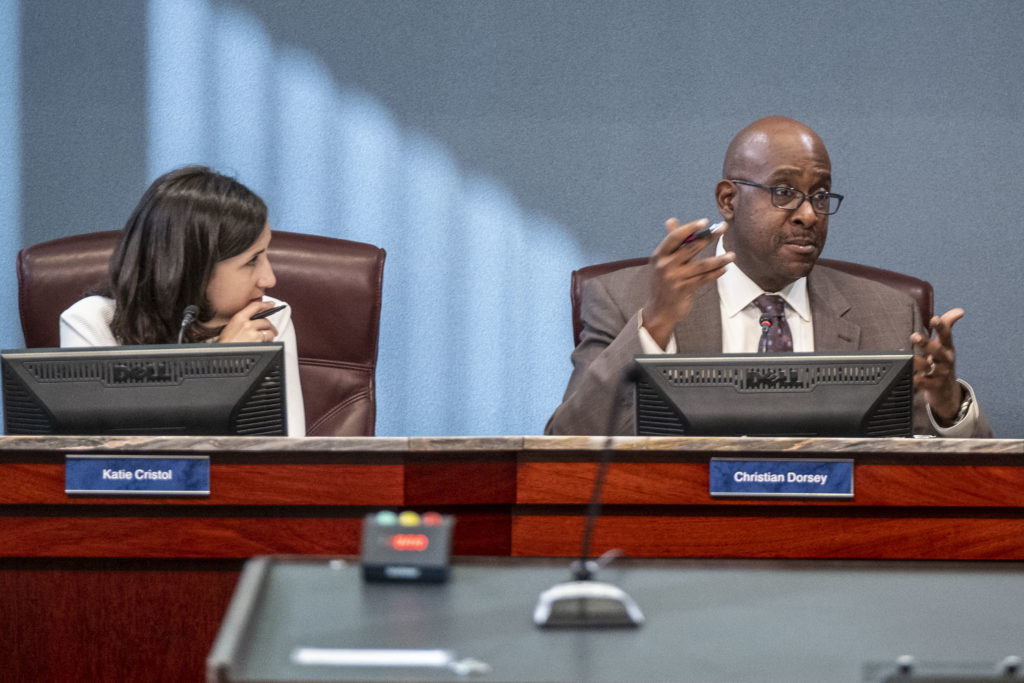
Board member Christian Dorsey said that is good news, but the county should avoid pushing developers to make commitments exceeding market demand.

“On balance, this is pushing the ball forward in a lot of ways which we can all be thankful for and support, and I’m pleased to vote for it,” he said.

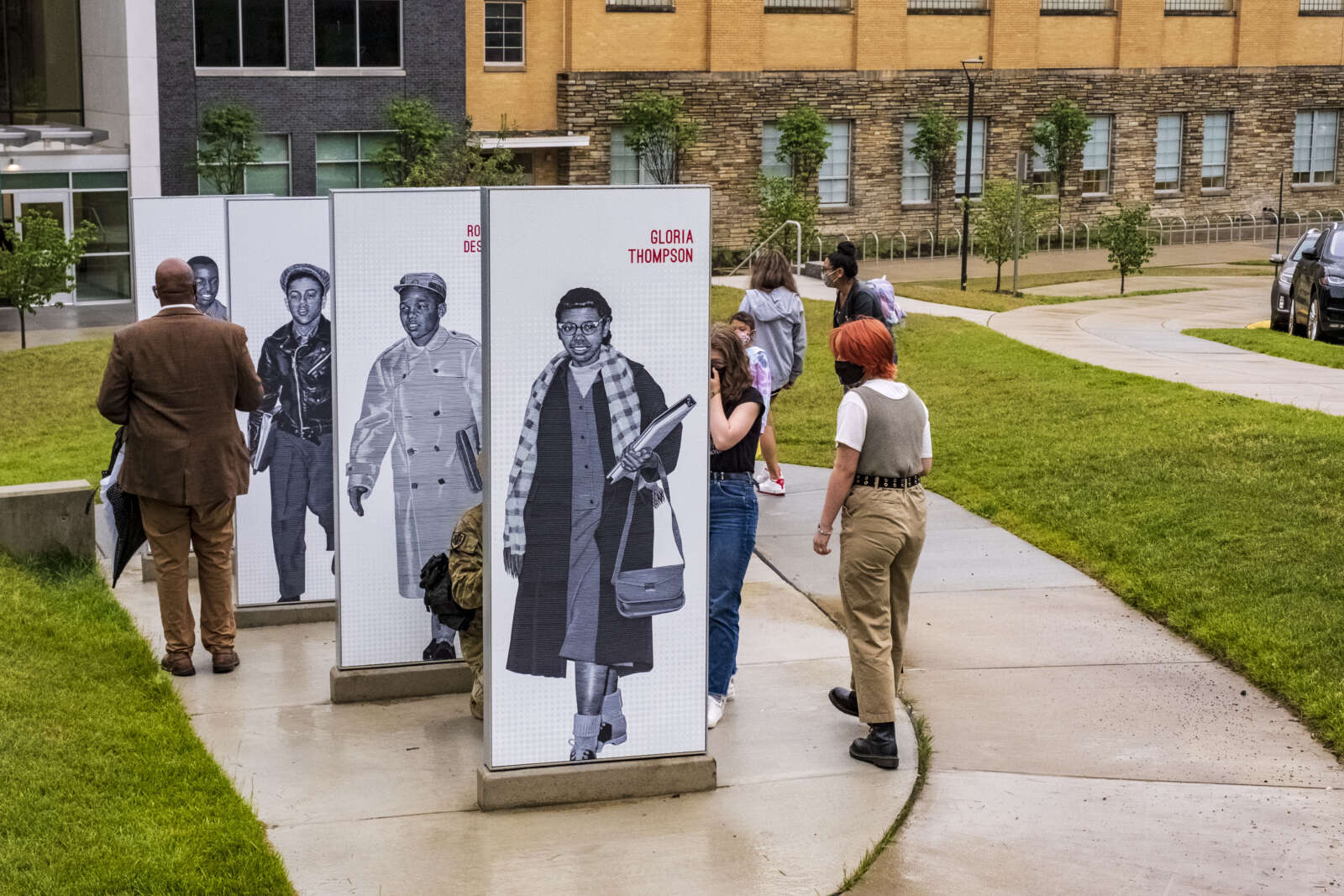
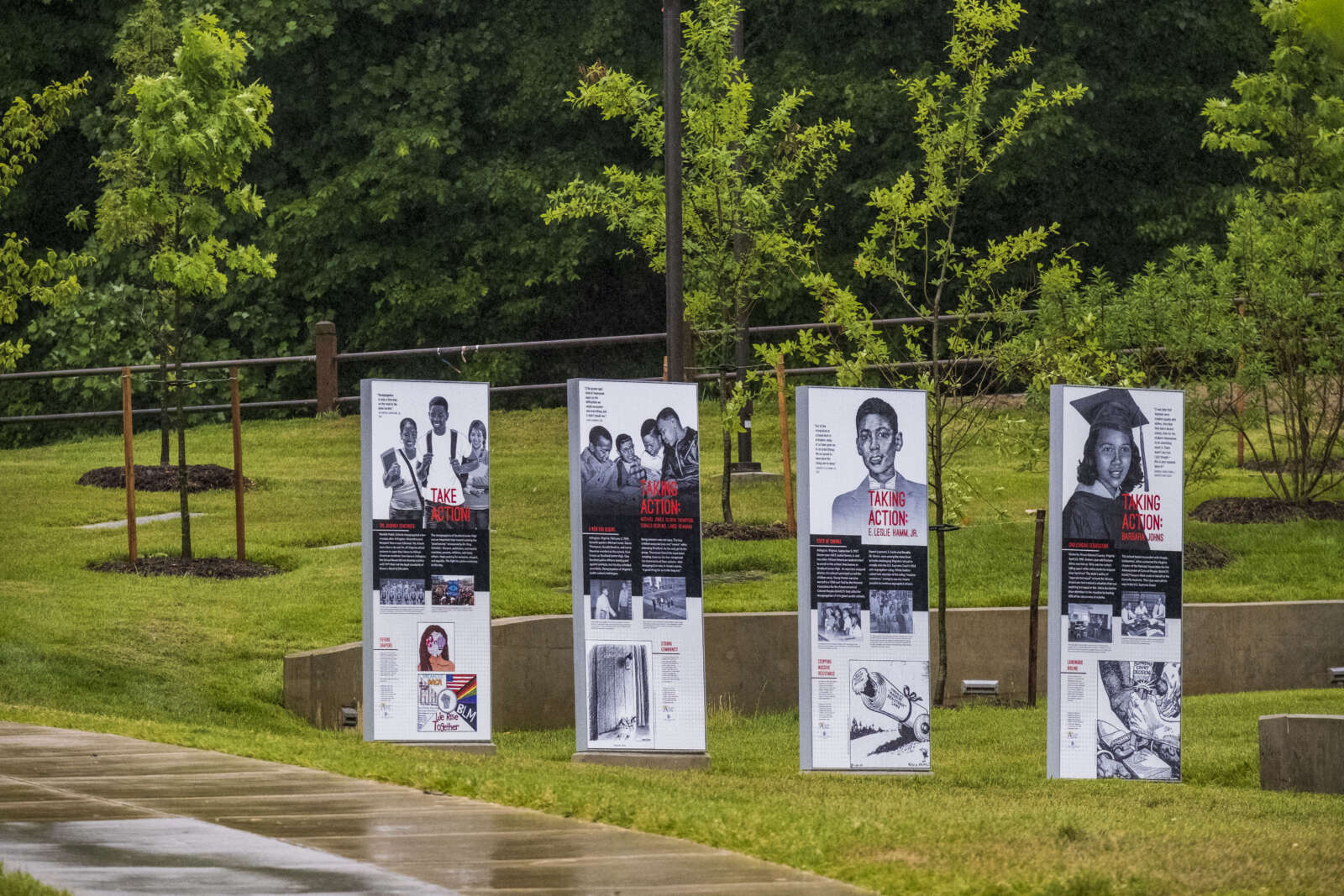
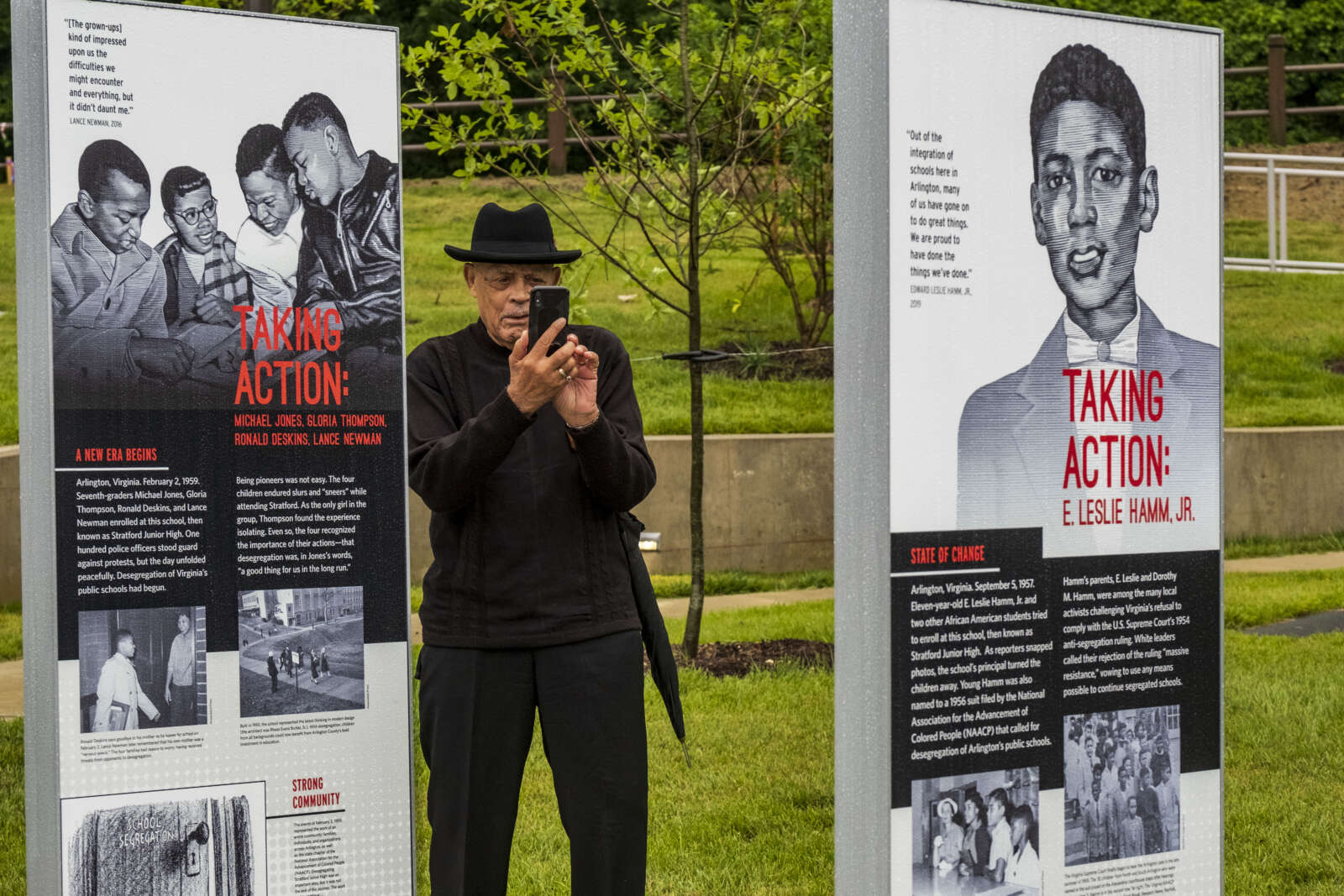
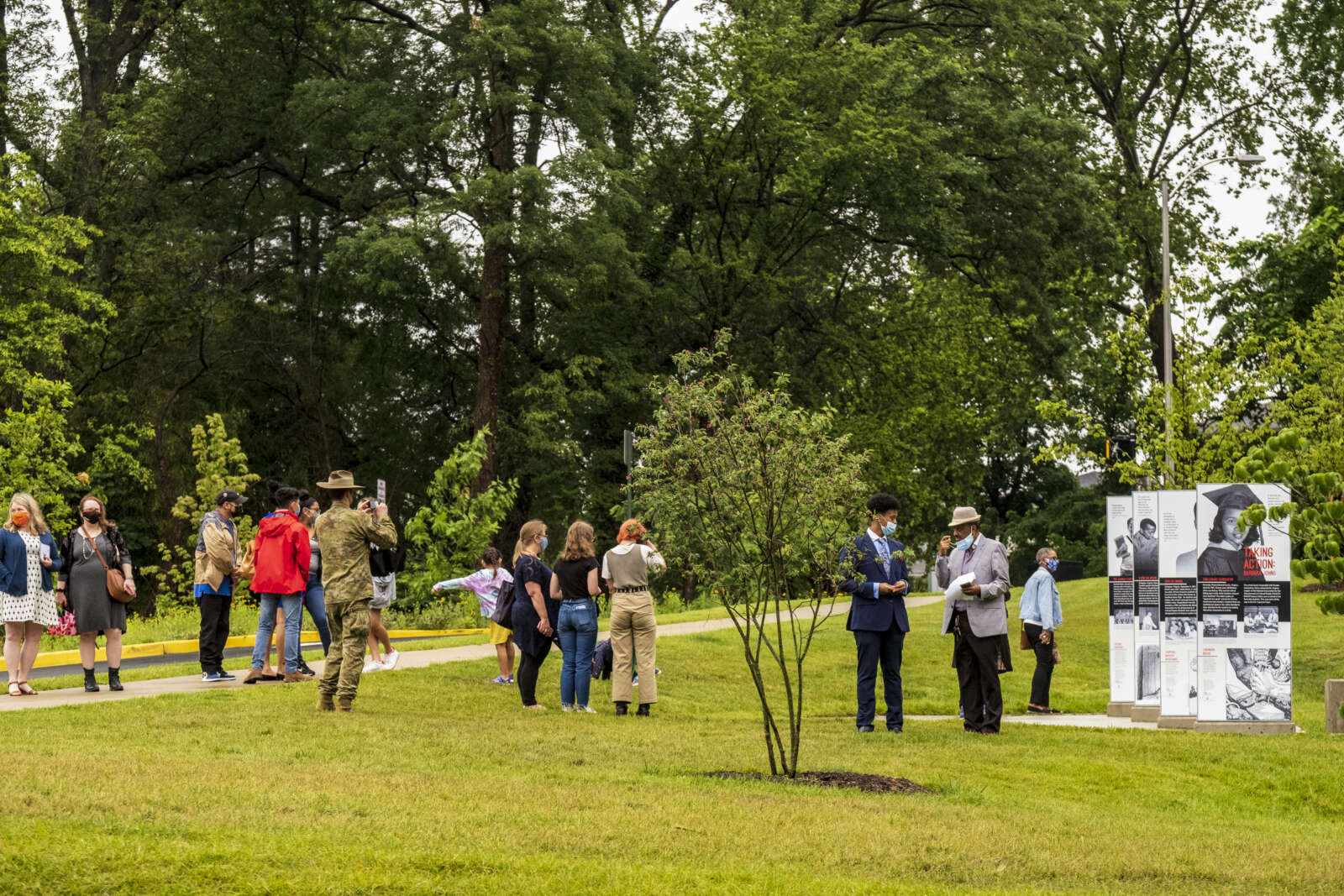
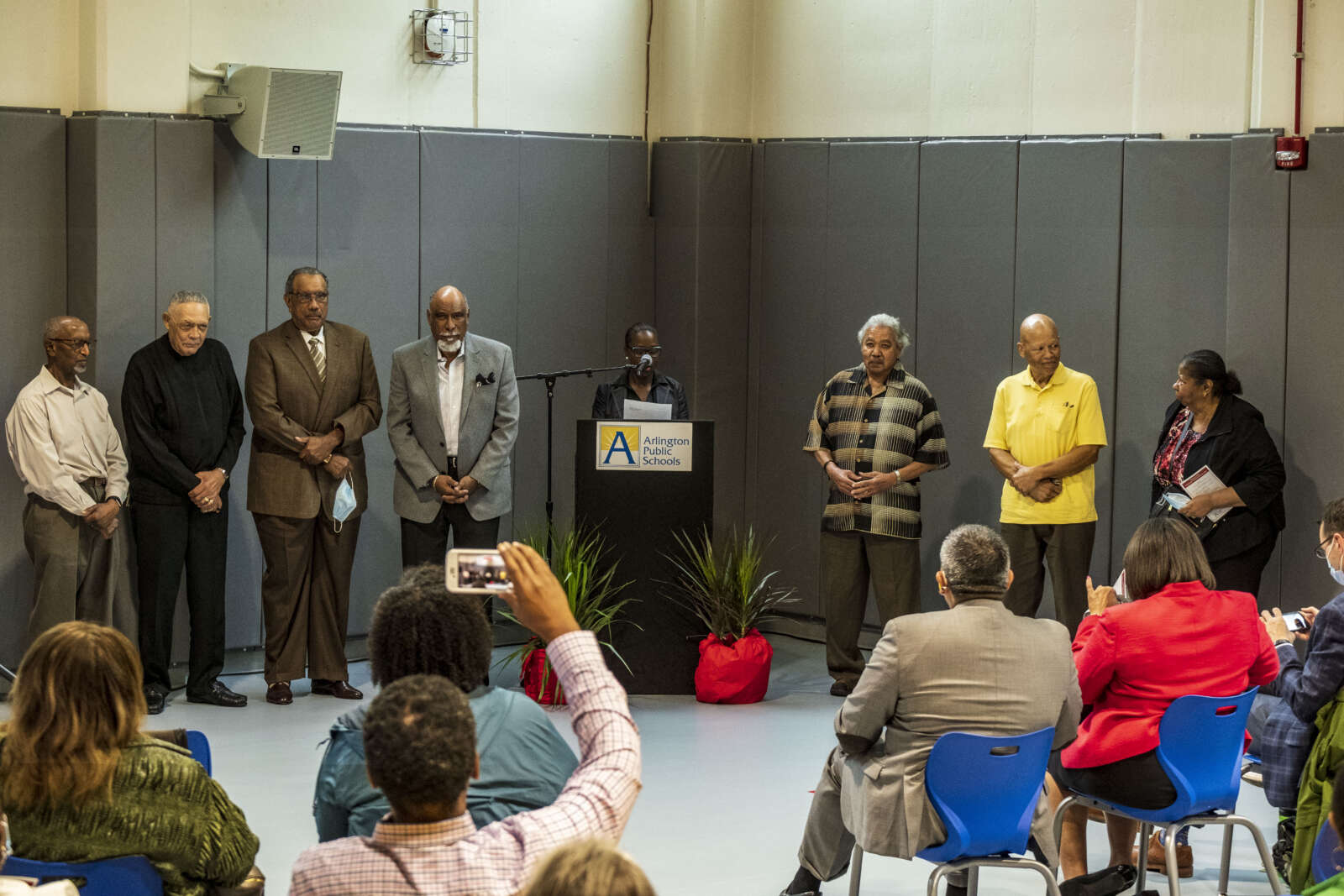
A new installation outside Dorothy Hamm Middle School tells the story of the four students who integrated the building, formerly Stratford Junior High School, six decades ago.

Four free-standing panels and a wall-mounted panel, connected by a trail, depict Gloria Thompson, Ronald Deskins, Lance Newman and Michael Jones — the four students who desegregated the building on Feb. 2, 1959 — as well as Dorothy Hamm, the new school’s namesake and prominent civil rights activist in Arlington, and Barbara Johns, who at 16 led a student strike for equal education at a high school in Farmville, Virginia.

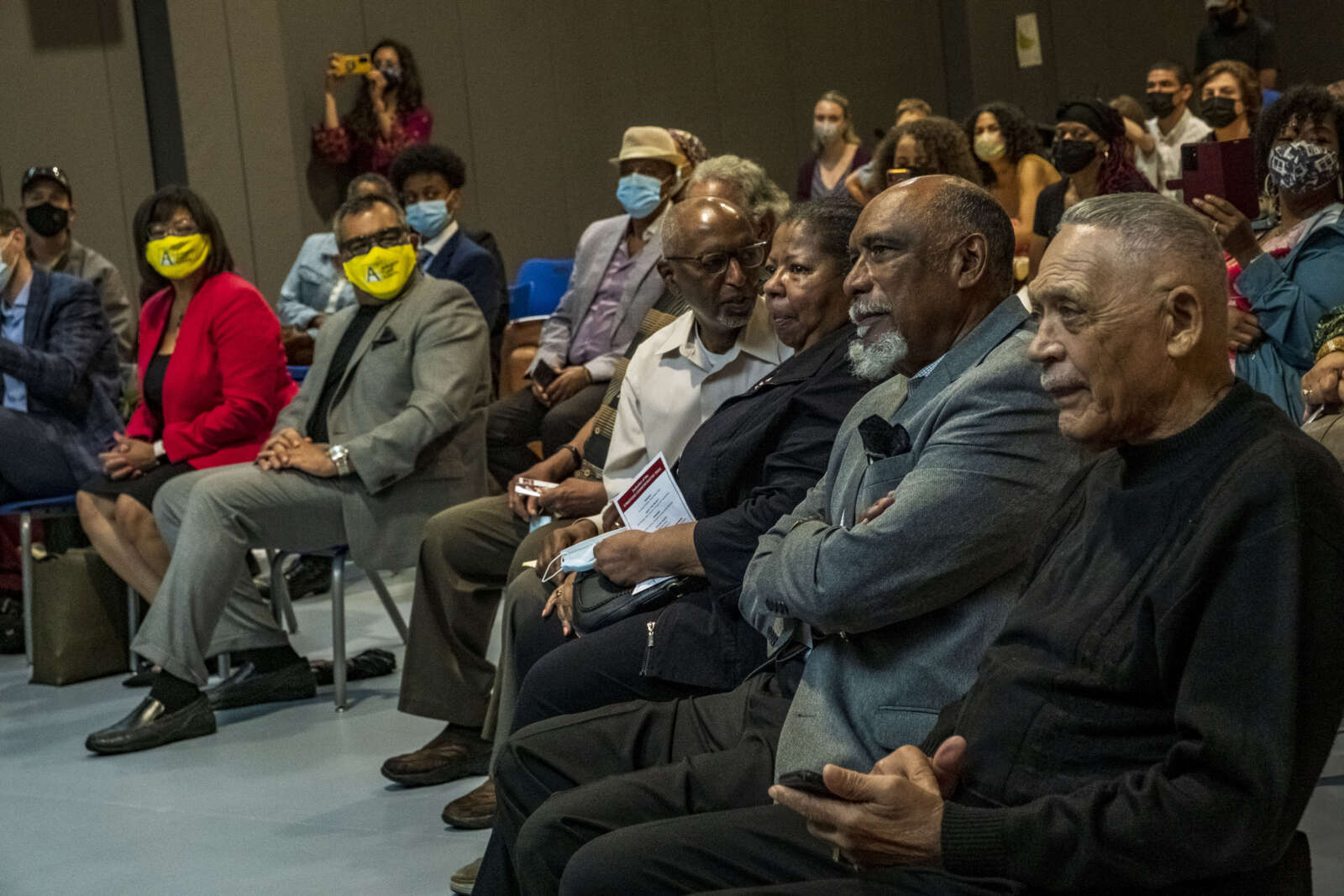
During a dedication ceremony for the new Stratford Commemorative Trail on Friday, several speakers said the installation equally inspires children to achieve greatness and charges Arlington Public Schools to continue making history.

“Rest assured that every child will leave this school knowing the civil rights history that happened here, understanding that while four students did begin the desegregation process in 1959, many others were denied that opportunity, and it came later,” school Principal Ellen Smith said. “Our students must know that as citizens of our school, our county, our state and our nation, they have the responsibility to speak up, to say something and make good trouble, as [former Rep.] John Lewis so aptly stated.”

The panels challenge those who walk the trail to take action and remind middle schoolers can make a difference at their age, she added.

In 2016, the school was designated a local historic district and APS convened a committee to find a way to honor its history. Soon after, APS embarked on a process to convert the school at 4100 Vacation Lane from a building housing the H-B Woodlawn and Stratford programs to a neighborhood middle school. It was renamed for Hamm and reopened to students in 2019. Final touches were finished during the 2020-21 school year.

(more…)


Sponsored by Monday Properties and written by ARLnow, Startup Monday is a weekly column that profiles Arlington-based startups, founders, and other local technology news. Monday Properties is proudly featuring 1812 N. Moore Street in Rosslyn.

There is a new skipper offering cruises of the Potomac River that launch from Gravelly Point in Arlington.

Jerry Lee is a South Korean immigrant and a lawyer-turned-captain who started chartering boat tours this spring through his new company, Reflections DC. He offers two-hour powerboat cruises of the Potomac from Gravelly Point and three-and-a-half to five-hour sailing excursions of the Chesapeake Bay from Shadyside, Maryland.

His launch coincided with cherry blossom season and he was fully booked during that time.

“That was really encouraging,” said Lee, who lived for a number of years in Clarendon.

Bookings continue to fill up: His weekends are almost fully booked and he takes tourists on the water about two to three times a week. Many find out about his company through his Airbnb experiences page, which drives up to 40% of his bookings. His most popular offering is the powerboat cruise but he is working to promote his sailing excursions, which range from trips for pleasure to instructional courses.

“It’s very quickly been enough to earn a living,” he said. “It’s going faster than I expected. As the weather gets warmer, people are booking more and more.”
He got the idea for Reflections DC from a friend who owns a charter business in Baltimore. He started the company last year and then set out to obtain the necessary business licenses and build up the online presence needed to get started.

Lee is trying to carve out a niche for Reflections DC as a private, small boating company offering “engaging, conversation-driven and personalized experiences” — with complimentary beer, seltzers and sodas — amid big competitors running dinner cruises.

“I really do want to get people inspired to learn to sail and to buy a boat, to do all that stuff safely,” he said.
The skipper, who came to the U.S. when he was 16, discovered sailing in college while teaching martial arts to support himself. One of his students became a good friend and took him sailing for the first time. Throughout the rest of college and during law school, Lee rented little dinghies and kept improving his sailing skills. He finished law school in 2011, did corporate litigation for two years and started taking on cases as a private-practice attorney in 2013.

While he has kept his day job for now, one day Lee hopes to make Reflections DC a full-time pursuit.

“When people see me as a lawyer, they have a problem they want me to solve, and that’s fulfilling, but people are upset when people see me,” he said. “On the boat, people are happy, and if they aren’t, they will be when they’re done.”
Lee aims to expand and run more than one boat at a time but he doesn’t want it to get so big that Reflections DC loses its essential offering — “a more pure experience” of the river and the sights surrounding it.

“I feel like I shouldn’t be able to make a living doing something so much fun,” he said.

The County Board will consider tomorrow whether to advertise public hearings for two amendments that could impact labor negotiations and wages.

One will determine whether the county code should allow employee associations to enter into collective bargaining with the county over compensation, benefits, working conditions and other issues. The other would add prevailing wage provisions — increasing compensation for construction workers — for contracts of $1.5 million or more, starting this October.

Both of these changes respond to state laws passed by the General Assembly in 2020 and went into effect last month. One law allows municipal employees to join unions and negotiate employment conditions for the first time since the 1970s. The other gives local governments the option to implement prevailing wage programs for public works contracts exceeding $250,000.

Collective bargaining is slated to go first on Saturday.

“Consistent with Arlington’s values, the proposal to allow employees to organize and collectively bargain in good faith is intended to promote constructive relationships between the County and its employees,” a county report said.

The county anticipates that the initial collective bargaining agreements will go into effect in the 2023-24 fiscal year. Nearly 2,540 employees are eligible to join one of five collective bargaining units proposed in the ordinance.

These five units are police; fire and emergency medical services; service, labor and trades; office, professional and technical; and general government.

Some employee associations representing these categories already exist, but “the advent of collective bargaining will offer employees the choice to more formally organize their views through professional representatives,” the report said. Currently, associations for employees like police officers and firefighters are limited to publicly advocating for raises and other changes, as opposed to being able to directly negotiate with county officials.

This ordinance also would determine what topics are on- and off-limits for negotiation.

“While the County and the employee associations have reached consensus for the bulk of the ordinance, there remains a difference of approach on a few key areas, particularly focused on the scope of bargaining and how disagreements would be resolved,” the report said.

For example, Schwartz and unions disagree over how much of the process for challenging disciplinary actions can be negotiated.

About 1,590 employees — including managers and supervisors and temporary employees — are ineligible.

According to the report, the county budgeted $350,000 for legal services and a new position for the first phase of implementation, as more staff were needed to write contracts and determine bargaining units. But the county anticipates “substantial additional resources will be needed” beyond that.

It cited the City of Alexandria, which is spending $850,000 on the first phase, and Loudoun County, which has estimated it will need $1.4 million to get started.

In Arlington, the collective bargaining measure is supported at least by County Board Chair Matt de Ferranti and Vice-Chair Katie Cristol, according to Blue Virginia.

Next, the Board is set to consider a policy that would possibly increase wages for tradespeople working on government-contracted projects.

“Prevailing wage policies are founded on the idea that public contracts should not decrease the average wage rates for construction laborers and tradespeople in a locality but should either maintain the average or improve it,” according to a county report. “In areas where racial and gender pay and benefit gaps exist, prevailing wage policies can also help close these gaps.”

Some — but not all — workers can expect a boost in their pay from the new policy.

“Certain labor classes will see improvement while others are unlikely to be impacted,” the report said.

The policy will come with a cost, in the form of making construction more expensive.

“The standard assumption in the construction industry is that prevailing wage policies add approximately 15% to construction contract costs, although actual impacts can vary depending on the region, the type of construction, and percentage of the labor component of the specific contract,” the report to the County Board says. “Staff expects the actual impact in the Northern Virginia construction market to be less than this given the level of competition and the influence of existing prevailing wage policies in Washington, D.C. and Maryland.”

“If these contract costs increased by 5-10% that could mean additional construction costs of $3 million to $6 million each year and could require reprioritization of the capital program,” the report said. “Staff will carefully study these impacts and will adjust future cost estimates and capital plans accordingly.”

Both ordinances would be scheduled for public hearings and possible adoption on July 17.


Tomorrow (Saturday), the County Board is slated to extend an agreement it has with Verizon so the company can continue providing its fiber optic-based TV and internet service in Arlington.

The current franchise agreement with Verizon — called a Certificate of Public Convenience and Necessity — expires on Tuesday, June 22. According to the county, the pandemic derailed its efforts to negotiate a new agreement with Verizon and this one-year extension would maintain Verizon’s services through that renegotiating process.

Arlingtonians can watch the county’s public programming, which includes announcements, COVID-19 education and certain public meetings, by tuning into the stations hosted by the two local TV providers — Comcast and Verizon — or by streaming online. During the pandemic, more people have relied on televised meetings, as they could not attend in-person meetings.

The franchise agreements grant Verizon and Comcast a duopoly on wired TV and internet service to Arlington homes, in exchange for certain service standards and public benefits, like local access channels.

Before the county can consider its renewal request, it “must assess its needs for public, educational and government television facilities, institutional network, technology, and other general requirements,” according to a county staff report.

When the pandemic hit in March 2020, it “significantly impacted the county’s ability to commence good-faith face-to-face negotiations,” the report said.

“Accordingly, the proposed resolution extends the period available for negotiation beyond the expected duration of the pandemic,” the report said. If approved by the Board, the Certificate will be extended to June 22, 2022.

Verizon has provided cable television services within the county since June 2006.


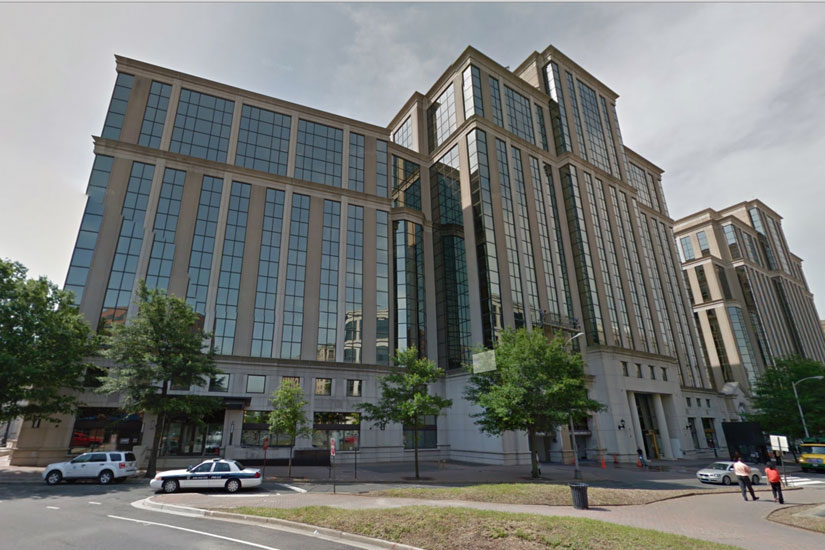
(Updated at 8:40 a.m.) Some federal agencies are looking to continue remote and hybrid working options for employees post-pandemic — a shift with potential impacts on Arlington’s office and residential real estate markets.

The Biden administration expects White House staff to return for full-time, in-person work in July, but on Thursday federal agencies were told that they will be able to offer increased work-from-home flexibility, even after the pandemic. Remote work may become a permanent option for some federal workers, just as is happening for many private-sector workers.

“I think the office market will cool as companies continue to assess what the remote work shift means for their workforce and space needs in the next few years,” said Eric Maribojoc, the executive director of the Center for Real Estate Entrepreneurship at George Mason University.

Arlington has a sizable federal presence despite the Base Realignment and Closure Act, which saw the relocation of military-occupied office space. The experience taught the county some lessons about diversifying its economic base, meaning Arlington today, preparing for more telework, is in a different boat than in 2005 facing BRAC.

Those familiar with the county’s market trends say there will be impacts but they will likely be tempered by a more diverse economy, a trend toward hybrid options that involve some time in offices, and a continued need for in-person work among certain agencies and large tech companies.

“Many companies are just beginning to plan for their potential return to the office and discussing a fully remote future is still largely speculative,” Arlington Economic Development spokeswoman Kirby Clark said. “We anticipate companies will continue to offer telework flexibility during this next stage of recovery. However, we hear from many of our major employers that there is no substitute for in-person collaboration in the office, especially for knowledge-based science and technology industries.”

Arlington’s federal workforce   

Although it took a while, Arlington did experience a significant drop in federally-occupied office space.

From 2003 to April 2021, Arlington’s federal office space dropped from 11.4 million square feet to 6.3 million square feet, according to an AED report and the GSA.gov Lease Inventory.

Today Arlington has 29,200 federal employees — excluding military personnel — and is home to the offices of a number of agencies, including the State Department, U.S. Marshals Service, the Environmental Protection Agency and the Drug Enforcement Agency, Clark said.

Some former government tenants have been replaced with corporate, tech and research anchors and a lot more housing, however. Between 2016 and 2020, Arlington added 5,193 housing units, with 3,175 units under construction and 5,907 units planned for future construction, she said.
“Over the last ten years, the landscape of Arlington’s Urban Villages transformed, becoming more economically diverse and land-use balanced, with residential development replacing old, obsolete office spaces formerly occupied by federal tenants,” said Clark.

As a region, D.C. has the nation’s second-largest pool of potential remote workers, at 49%, behind the San Francisco Bay Area, at 50%, according to a February report from the Greater Washington Partnership. The northern half of Arlington has one of the highest concentrations of remote-capable workers, alongside portions of Northwest D.C. and the Bethesda and Potomac areas of Montgomery County.

The report, which came out before the news of the changing federal work-from-home guidelines was first reported, predicted that some of the largest gains in remote work post-pandemic will likely be among government jobs.

“Two in five federal government workers may spend some time at home, with smaller shares of state and local public-sector professionals working remotely,” the report said.
Among government employees, according to Clark and Maribojoc, these options will likely be expanded for those who perform individual tasks that require focus but not high levels of security clearance.

“Due to the presence of the Pentagon and other defense and security agencies in Arlington, many federal-supporting tenants have security requirements that may require physical office spaces or proximity to major government and defense anchors,” Clark noted.

If more federal government employees go fully remote — a conversation that Clark said is still largely speculative — she predicted that it would be “a challenge not limited to Arlington and has the potential for broader regional impacts in the future.”

(more…)


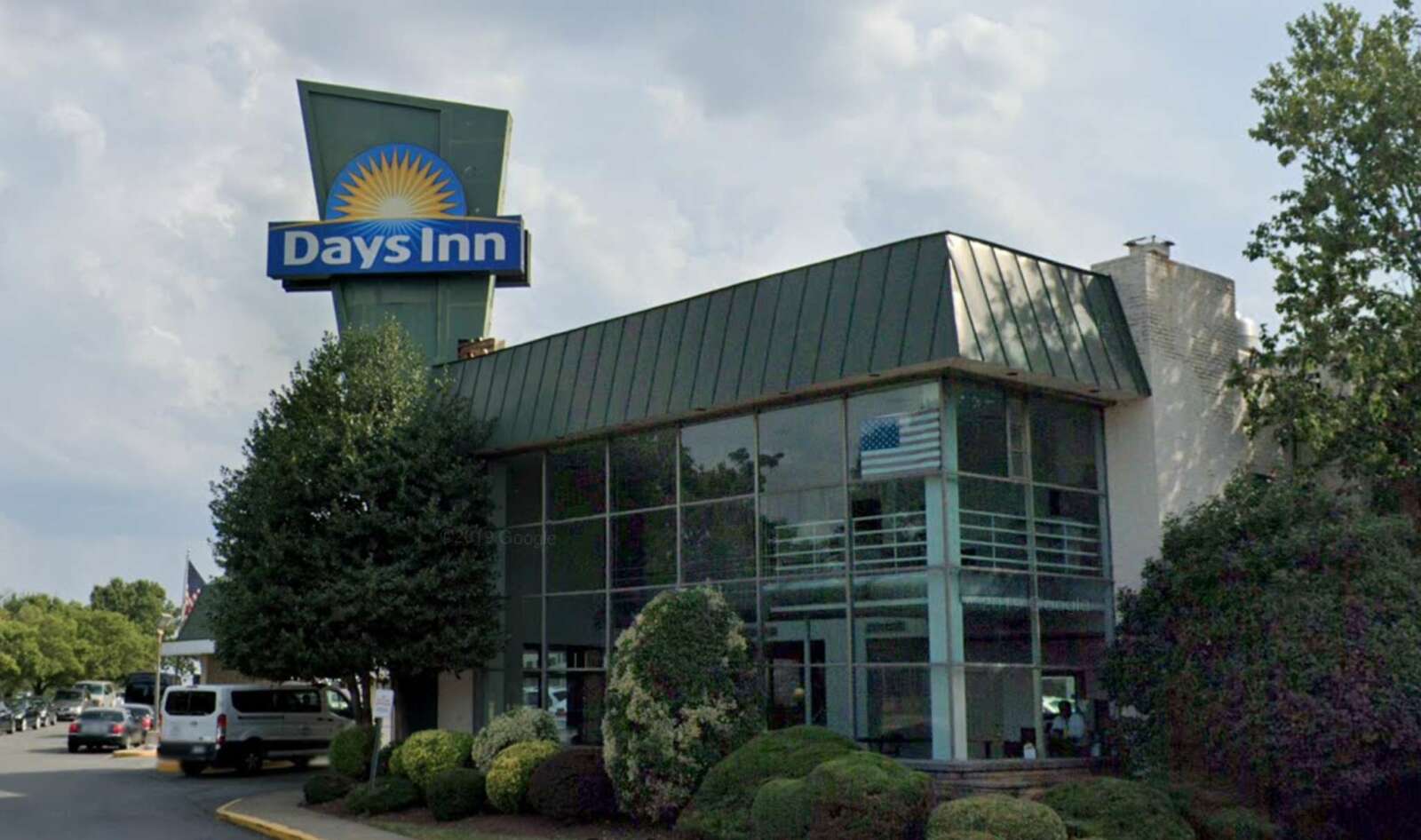
Arlington-based Shooshan Company is looking to redevelop the mid-century Days Inn Motel across the street from the Joint Base Myer-Henderson Hall.

The site, at the intersection Arlington Blvd and N. Pershing Drive, has development potential as “the de facto neighborhood gateway,” wrote Jonathan Kinney and Matthew Roberts, land-use lawyers representing Shooshan, in a letter to the county.

Shooshan set its sights on the motel in 2019.

“The hotel is nearing the end of its useful life and is increasingly becoming functionally obsolete,” the lawyers said.
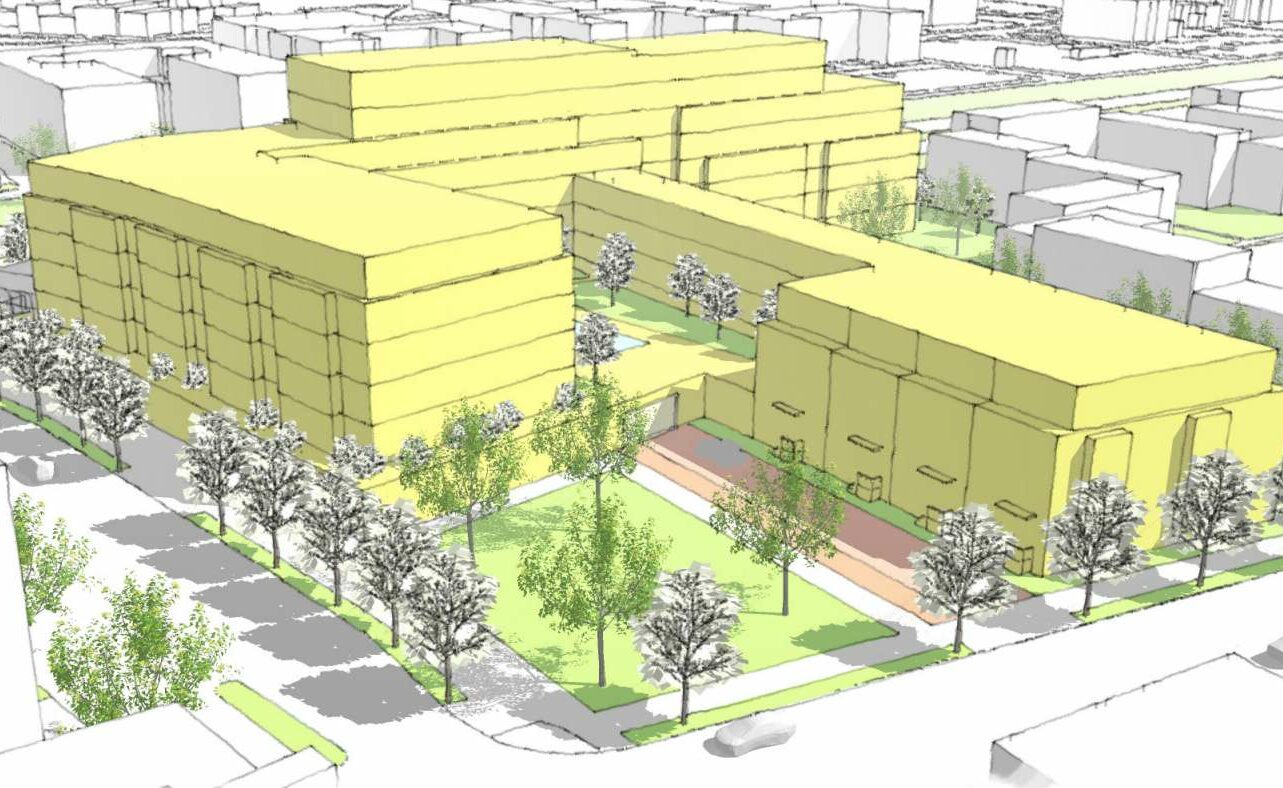
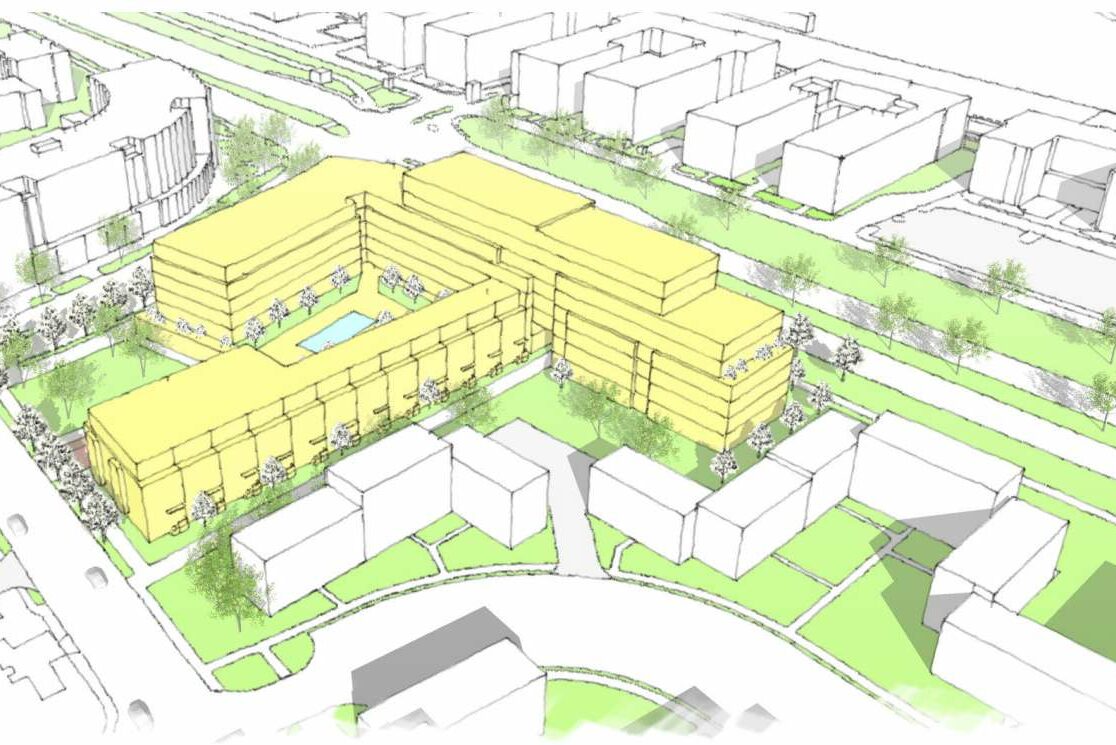
If redeveloped, most of the hotel would be torn down to make way for a mixed-use development that will likely include apartments, townhouses and retail, with open space and underground parking

But making these changes require a study of the site and surroundings to see what level of development would be appropriate, a study that just concluded. The resulting Pershing Drive Special General Land Use Plan study views the land as a “highly visible gateway node” that can support higher density and provide needed open space and trail connections, meaning Shooshan may soon be able to take the next steps toward redevelopment.

“The amendment is critically important to the effective redevelopment of the site and completion of the ‘gateway’ entrance into the Lyon Park neighborhood,” a report on the study said.

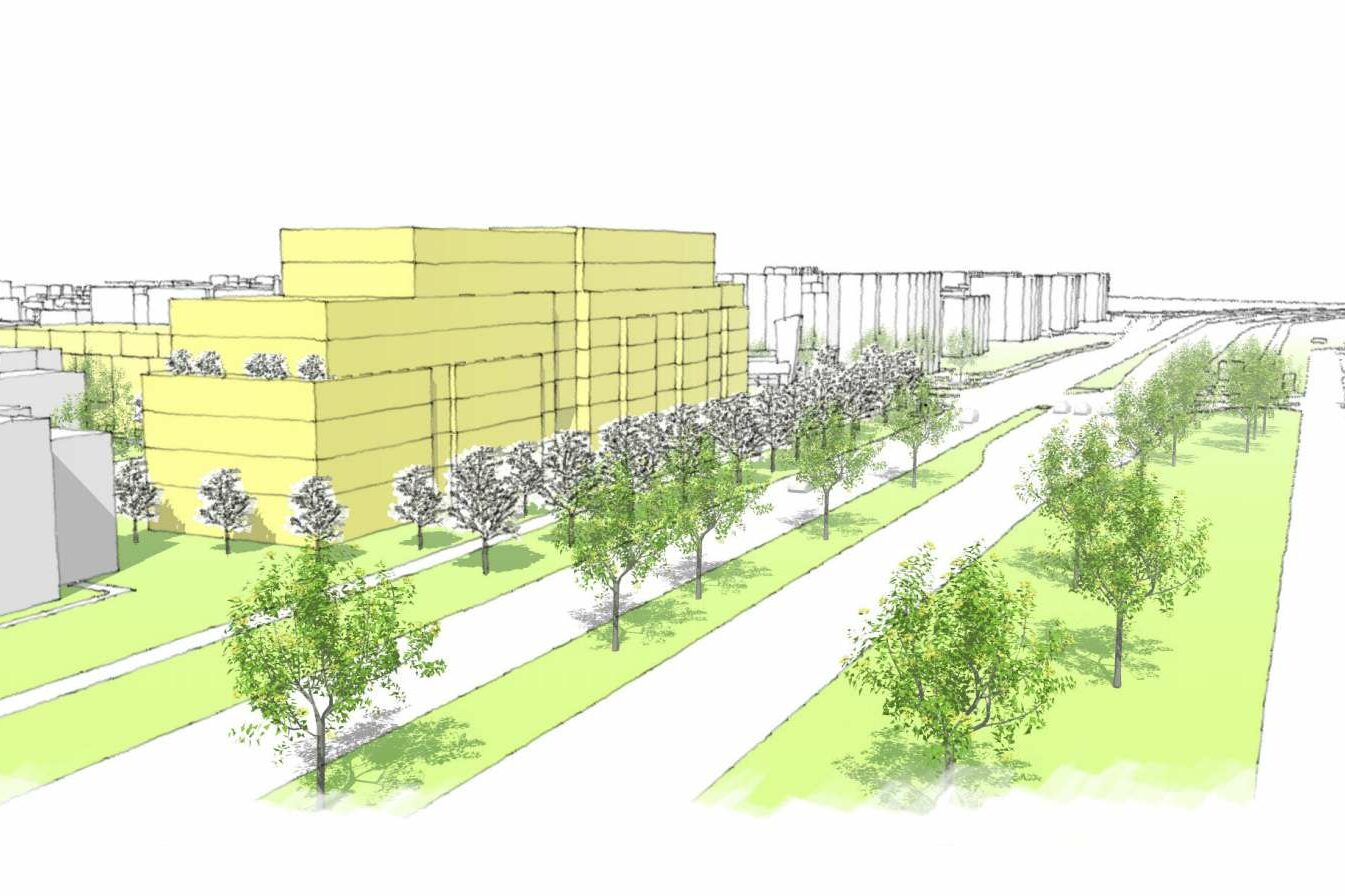
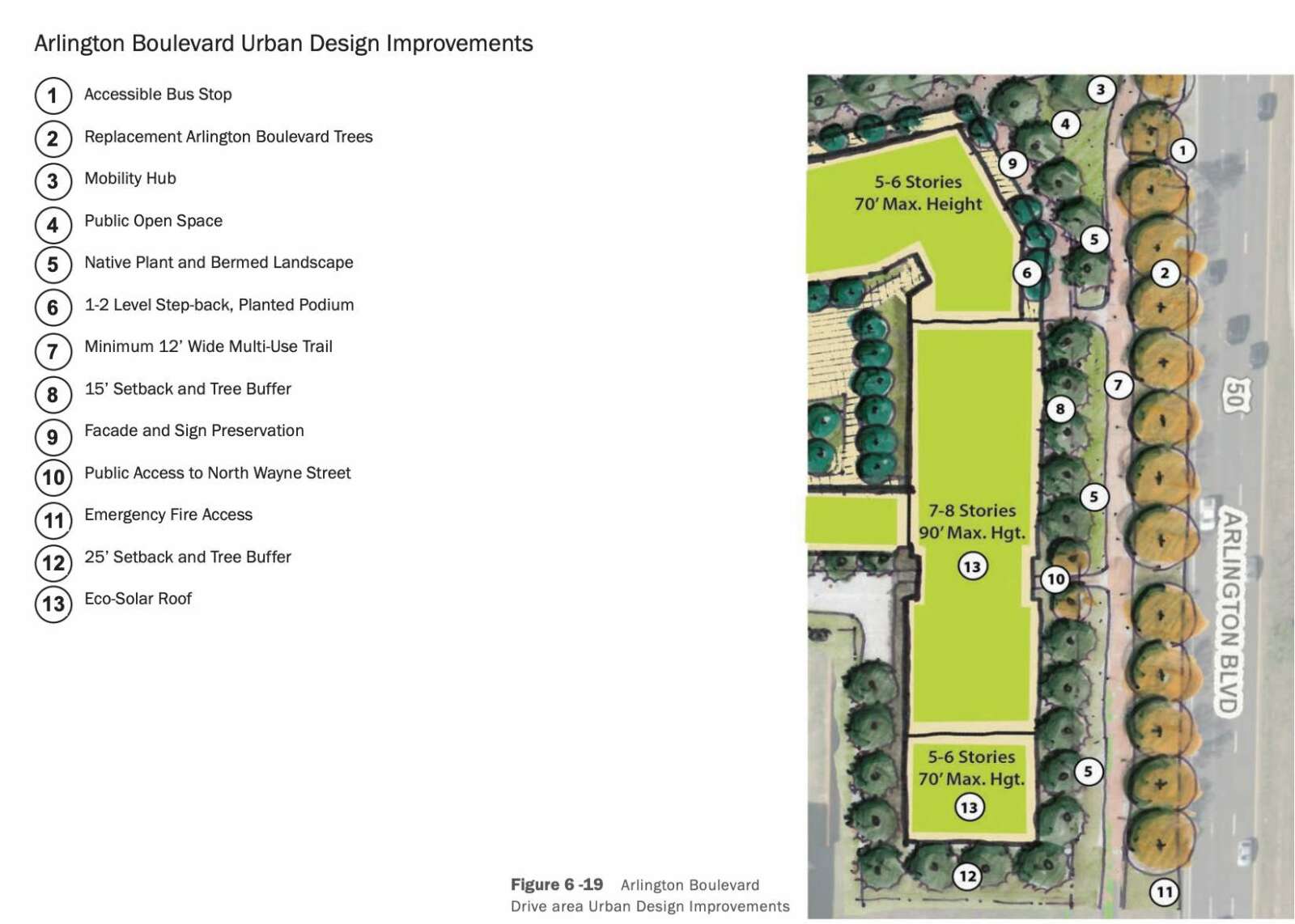
This study recommends rezoning the land for office, apartment and hotel use with a maximum height of eight stories or 90 feet along Arlington Blvd, with shorter maximum heights of three to six stories, or maximums of 50 to 70 feet, where the building transitions into nearby apartments and single-family homes. The document envisions a building with all-underground parking, “welcoming” ground floor retail and open space.

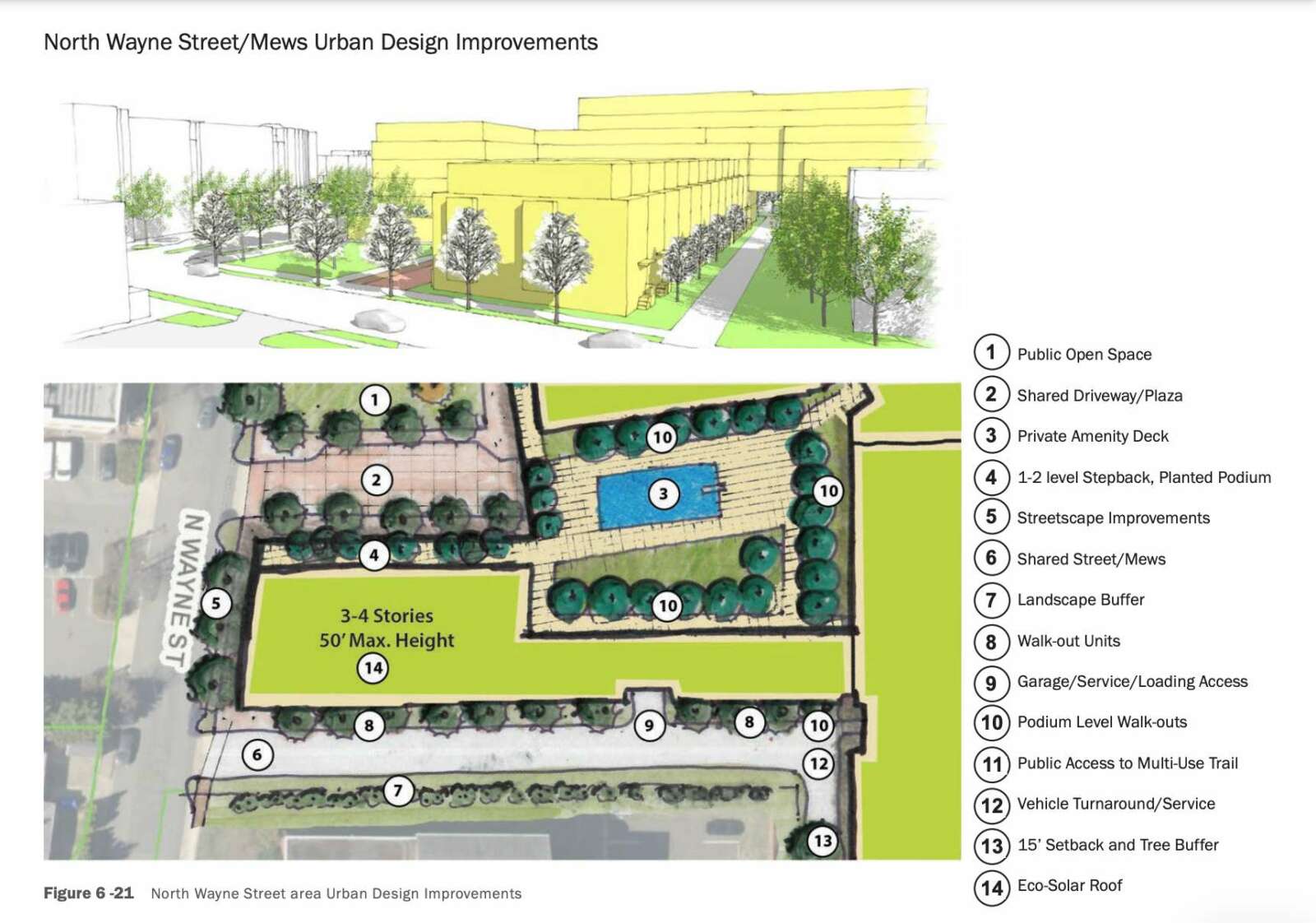
The open space would be on the northwest corner, along N. Pershing Drive. Along the southern edge, where the hotel faces the Washington & Lee Apartments, the document recommends the site should “present an inviting façade with three to four-story buildings, individual entrances, trees and landscaping…rather than turning its back on its neighbors.”

This area will have a shared street that pedestrians and bicyclists can use to access the Arlington Blvd Trail.

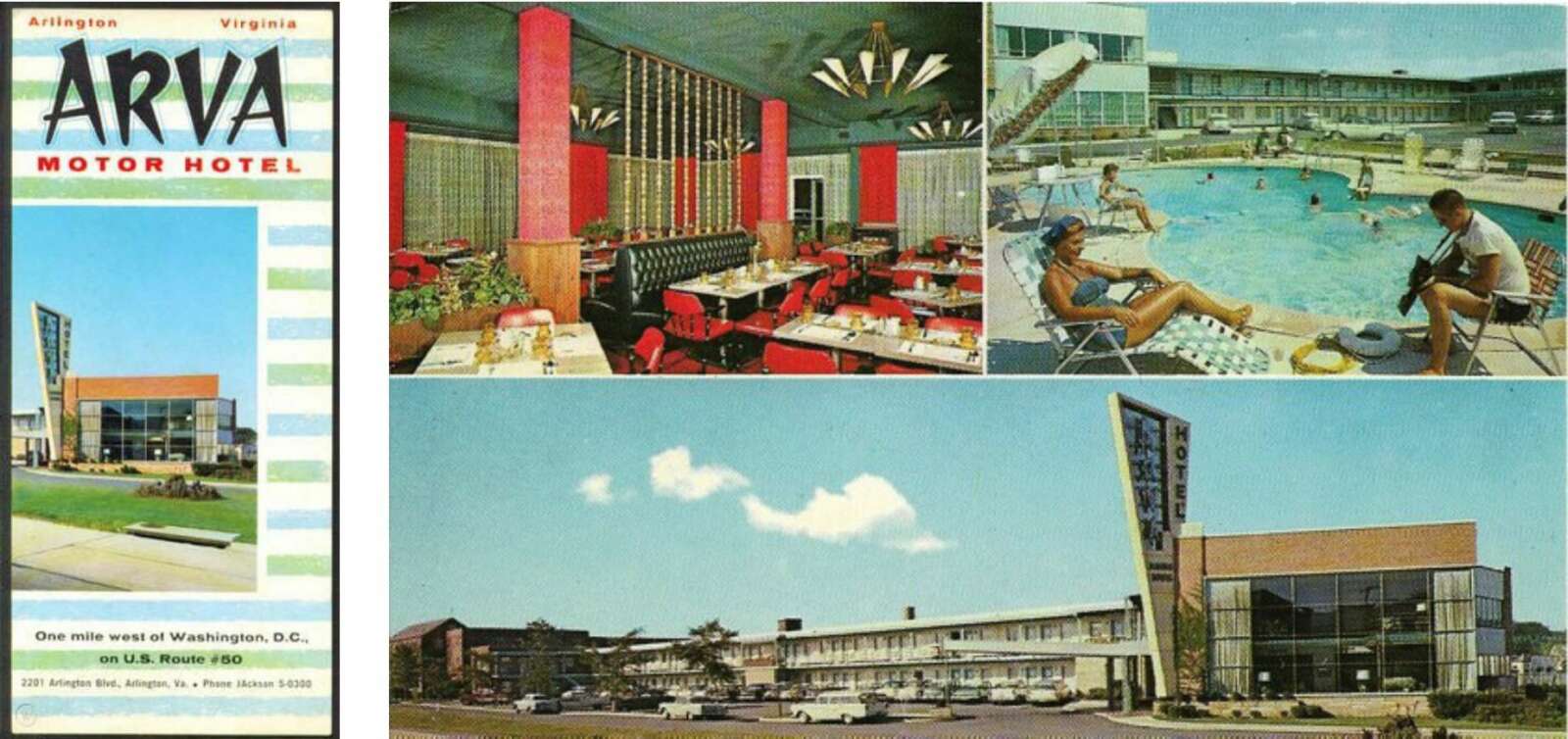
The study also recommends preserving the sign and lobby, described as iconic examples of mid-century modern design, and incorporating them somehow into the redevelopment. Before becoming a Days Inn, the hotel was called ARVA Motor Hotel, a name created by blending together “Arlington” and “Virginia.”

“The original shape and design of the blade sign should be rehabilitated to capitalize on this unique community landmark, while allowing for the sign to be reused to advertise the name of the new development, business, etc.,” the document said. “The lobby area could, in fact, serve as a trail-oriented retail space or cafe.”

The motel used to be the ARVA Motel, a portmanteau of Arlington, Virginia (Via Arlington County)

Overall, according to the staff report, participants during a community engagement process — mostly neighbors — said they are in favor of redevelopment and reinvestment along this segment of Arlington Blvd, preferably with new apartments, restaurants and retail. Respondents to a survey stressed the importance of a casual-use open space, connections to the Arlington Blvd Trail nearby, more tree canopy and better sidewalks.

“There is general support for the recommendations outlined in the Study Document among Long Range Planning Committee and community members,” the report said.

This Saturday, the County Board is set to decide whether to approve future public hearings to consider adopting the special study and to consider changing the zoning of the site, per the study’s recommendations. The adoption of the document could come on July 17 or 20.


View More Stories