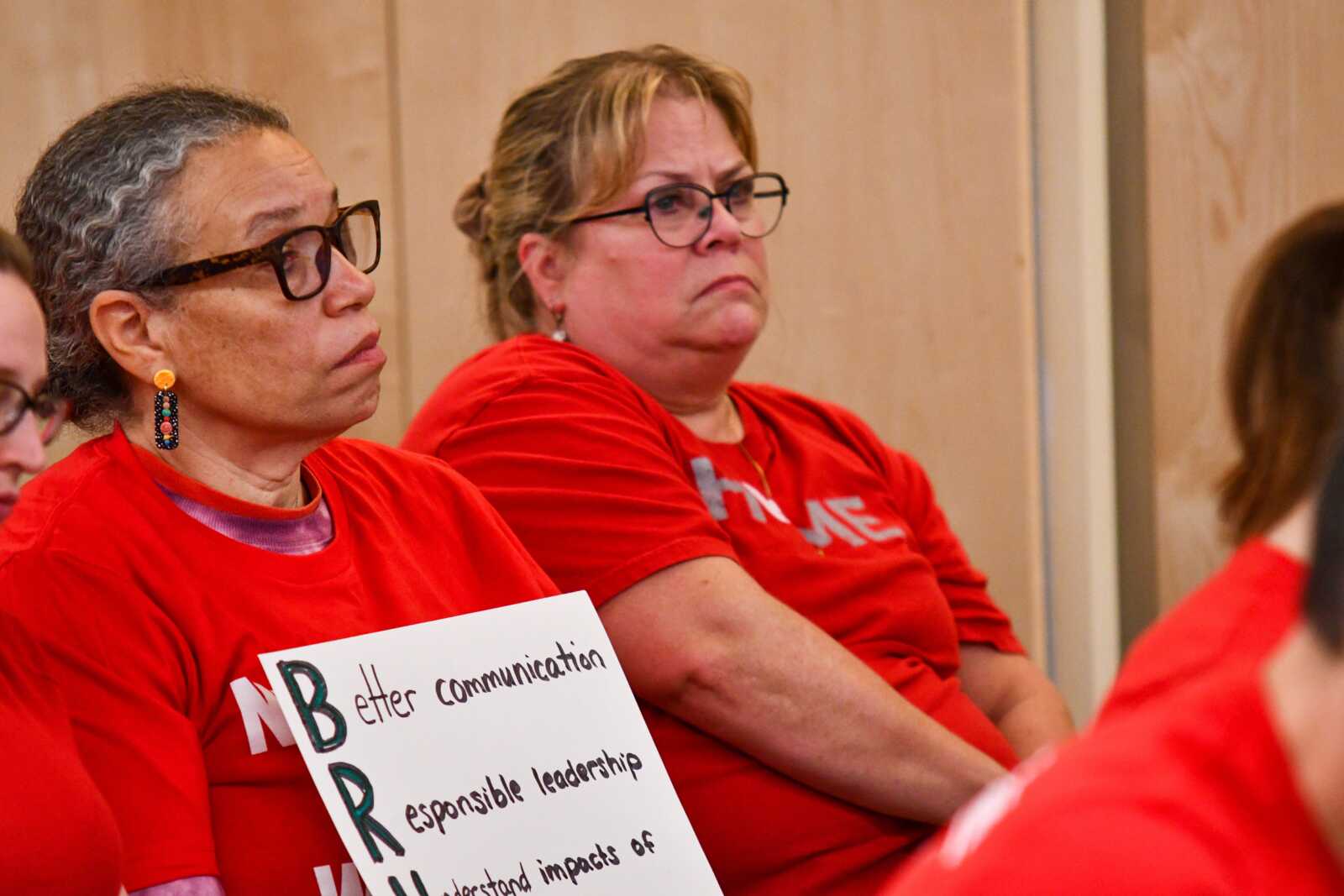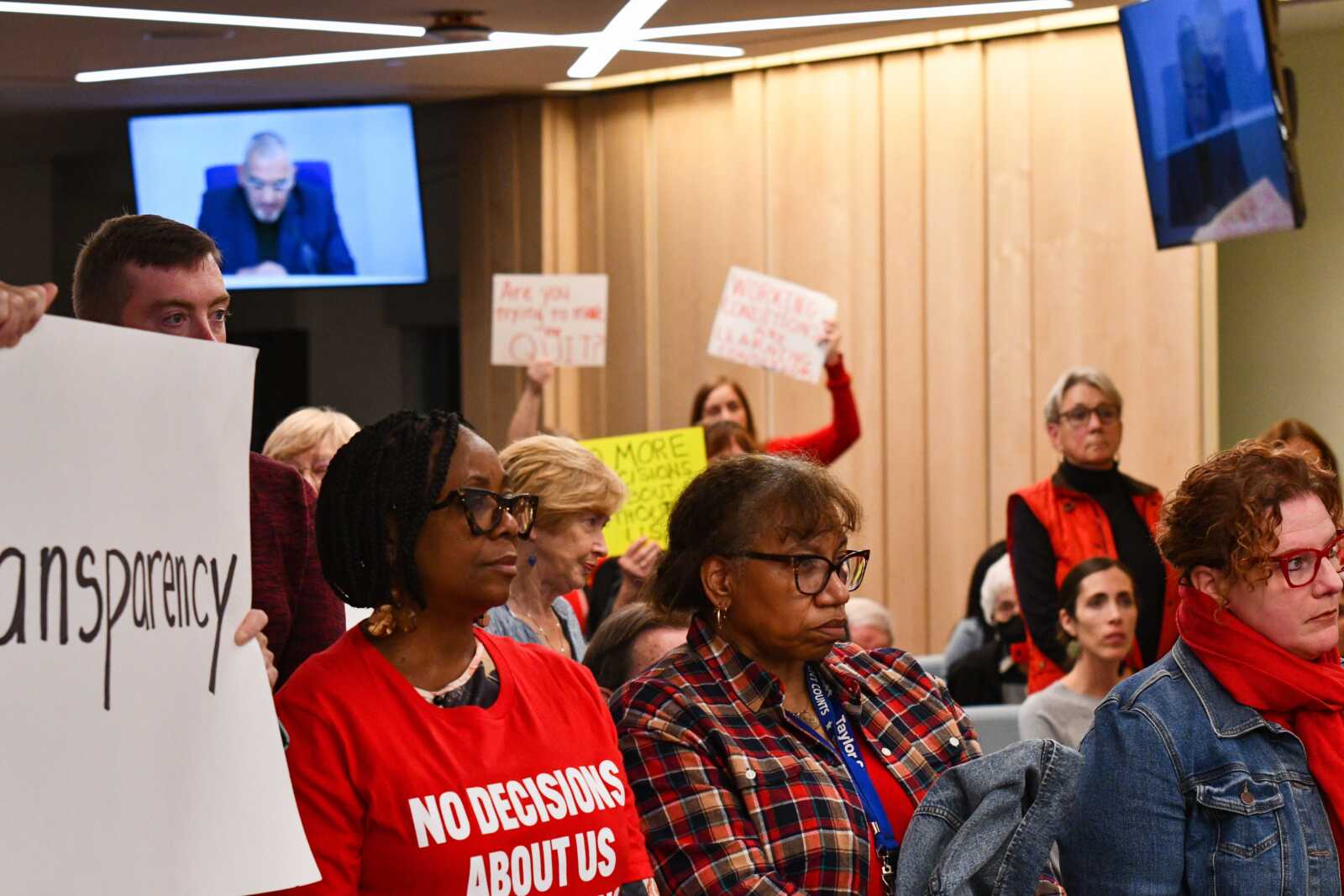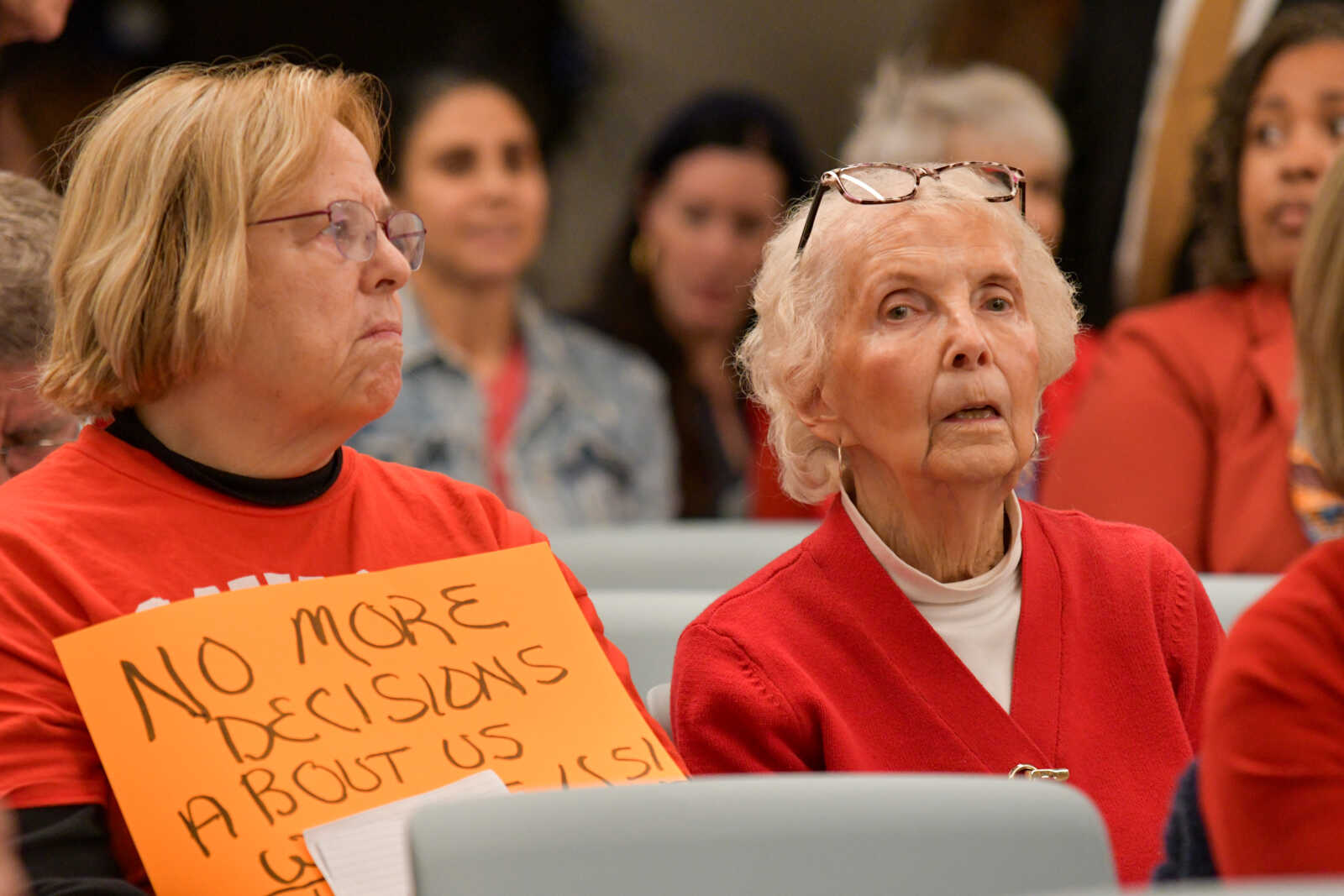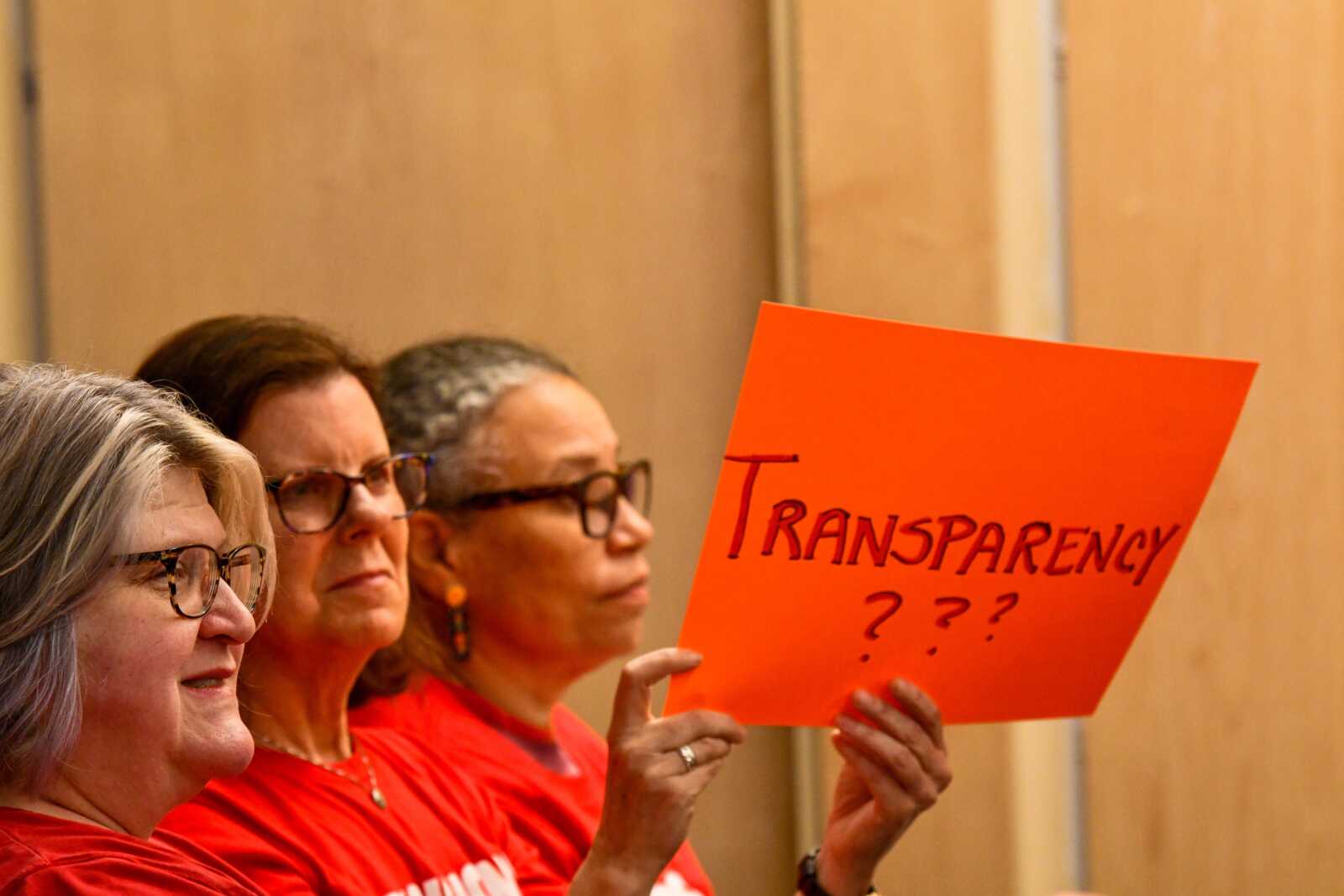

Some members of two Arlington advisory bodies are unhappy with changes being imposed on their groups’ responsibilities.

A joint meeting of the Bicycle Advisory Committee and Pedestrian Advisory Committee last week offered a chance for the groups reporting to County Manager Mark Schwartz to lay out the new ground rules that Schwartz has requested. But the general sentiment on those advisory groups was that the  changes could be costly to transportation planning in the long run.

Among the switches: The panels will no longer receive briefings or be asked to weigh in on specific projects. Instead, they will be asked to send representatives to and monitor the broader community-engagement efforts for those projects.

That proposal drew particular flak from members of the Bicycle Advisory Committee.

“It doesn’t sound like there’s any specific desire or system [by county leaders] to get advice from us other than ‘hey, go participate in the public process,'” said BAC member Mike Hanna.

“We’re not the general public. We’re the committee that was specifically appointed by the county manager to provide this kind of advice,” Hanna said.

Dana Bres, vice chair of the BAC, said forcing that group’s participation into the general community-engagement effort makes little sense.

“My gripe, for lack of a better term, with the engagement process is, it’s at some level trivial,” Bres said. “The public says ‘you should do something here’ and then you go from there to an almost full-fledged project” without needed vetting in between.

The result? “We end up getting something that is three-quarters done that doesn’t work,” Bres said.

Cynthia Palmer, who chairs the BAC, said eliminating the advisory panels from a significant review role results in “a resource that is not being used.”

“Sometimes a five-minute conversation with our committees … can save you resources and money and everything else,” Palmer said.

BAC member Gillian Burgess argued that it would go against the groups’ charters to follow county staff’s request to serve more as advocates for transportation planning and funding.

“We don’t advocate. We don’t advise anyone else. We advise the county manager,” she said. “He has been very clear he does not want the advisory committees going outside of him. It’s 100% clear. That’s what the charter is.”

Trying to calm the waters were Hui Wang, the newly promoted chief deputy director of the Department of Environmental Services, and Valerie Mosley, bureau chief of transportation planning and capital projects.

“I get the sentiment. I totally get it. You want us to be more intentionally seeking your advice,” Wang said.

She suggested the possibility of reaching a middle ground.

“We’re going to go back and think through what additional things, what intentional communication, we can do so you feel your opinion is not being thrown in a black hole,” Wang said.

The process changes being sought would bring transportation planning into line with a six-step public-engagement process enacted by county leaders in 2018.

Wang said it was necessary to “make sure we are going through the proper process for every project.”

“It does come at a cost,” she said. “The cost is while we are doing all that engagement and trying to capture the larger community, we do not have the same amount of attention and specific conversation with the committees and commissions. It really comes down to resources and how to use them the best way.”

Under the six-step engagement process, “we are trying to reach everyone we can who has an interest and wants their voice to be heard,” Mosley said.

Eric Goodman, acting chair of the Pedestrian Advisory Committee, said there could be a middle ground.

One step would be for planning staff to provide the committees with direct notification when new community-engagement processes start up. That way, the bodies could designate a member or members to keep track of them.

As for the litany of concerns raised at the meeting? Wang said staff had heard them “loud and clear,” but are not the ones with final authority to address them.

At his meeting with the pedestrian and bicycle groups in the spring, Schwartz suggested combining the two bodies, but has not moved forward on that.

The county manager’s concerns about the Bicycle Advisory Committee date back years. In 2018, Schwartz removed a number of its members and installed a new chair to make the group “more fully representative” of the biking community.
Missing Middle’s critics are launching another round of opposition as Arlington County returns to accepting permit applications for this kind of construction.

Plaintiffs in the lawsuit over Arlington’s Expanded Housing Option filed an emergency motion yesterday (Monday) in the Supreme Court of Virginia. They’re seeking to block a Virginia Court of Appeals order that allows the county to resume issuing permits for multifamily construction in previously single-family-only neighborhoods.

“A stay in the Supreme Court of Virginia putting Missing Middle Housing (MMH) on hold will protect homeowners, homebuyers, renters, and developers in Arlington,” Dan Creedon, a member of the anti-Missing Middle group Neighbors for Neighborhoods, said in a press release. “If the Supreme Court reverses the Court of Appeals and MMH is again invalid — a decision that could take up to a year — illegal MMH housing will be spread across the County. Then what?”

In tandem with the emergency motion, Neighbors for Neighborhoods released a video underscoring the cost of Missing Middle housing that has already been built in Arlington and the concerns of some homeowners who live near it.

One man who lives near a six-unit building under construction in Virginia Square raised concerns about how the project at 3802 14th Street N., which is taller and has a much larger footprint than its neighbors, will impact the surrounding area.

“This is out of scale with the neighborhood,” the neighbor said in the video. “The infrastructure wasn’t designed for this, and it just doesn’t belong right here.”

Both opponents and advocates of Missing Middle housing have much to say about the cost of homes already built under the zoning change approved in March 2023. One unit of a new duplex on N. Troy Street is currently for sale for $1.6 million, at the site of single-family home that sold for about $860,000 in 2023.

Critics argue that the price tag illustrates how little this new type of housing will help middle-income people. They contrast this with the impact of affordable housing projects like the one currently underway at the Goodwill on S. Glebe Road.

“The County Board has dug in its heels on a failed MMH policy that has produced more housing units for upper-income households, but not a single one for those who need affordable housing,” Creedon said.

But Jane Green — co-founder of YIMBYs of Northern Virginia, which supports Missing Middle — noted that the Troy Street home’s price is less than the $1.8 million average sales price for detached single-family homes in Arlington last month. And it’s significantly lower than the $2.4 million average price of all newly built single-family homes in the county last year.

“The opponents of Missing Middle like to tout the relatively low price of the older home that was torn down in order to build the duplex on N. Troy, but the reality is that almost no homes selling for under $1 million in Arlington are marketable without substantial renovation,” Green told ARLnow. “Most will be torn down and if they aren’t lucky enough to become a duplex or a sixplex, they will end up as $2.4 million homes that are even less affordable.”

An opinion piece published on Greater Greater Washington last month called the six-unit project in Virginia Square “one of the most promising EHO examples under construction.” Guest contributor Jason Schwartz argued that the century-old home that this replaces, which sold for $913,000 in 2022, is “completely obsolete in the housing market.”

“These homes will be perfect for families looking for something larger than a typical apartment, but much smaller than the existing inventory of new single-family homes,” Schwartz wrote. “They will also be great options for empty-nesters or other households looking to downsize.”

This week’s anti-Missing Middle video sought more donations for the privately funded lawsuit, which will likely have to go back to a lower court for a retrial if the Virginia Supreme Court rules in favor of the defendants. A GoFundMe for the litigation has raised about $150,000, compared to the county’s legal tab of about $1.4 million, according to Neighbors for Neighborhoods.

Creedon told ARLnow that his organization hasn’t set a specific fundraising goal, since “that amount is totally dependent on what the County does on appeal and how the homeowners have to respond.”

“Imagine how many low and moderate-income households could benefit from $1.4 million — the amount of taxpayer funds that the County has spent on its outside lawyers, not to mention the huge amounts it will continue to spend defending MMH,” Creedon wrote.

Green, meanwhile, agreed that Missing Middle won’t solve affordability issues in Northern Virginia, but argued that it will help.

“YIMBYs of NoVA recognize the continued need to increase the supply of attainable homes for families at all income levels,” she said. “Missing Middle is one small piece, and we are committed to finding more solutions. A future without EHO housing is not a viable option to increase the middle-income housing supply.”


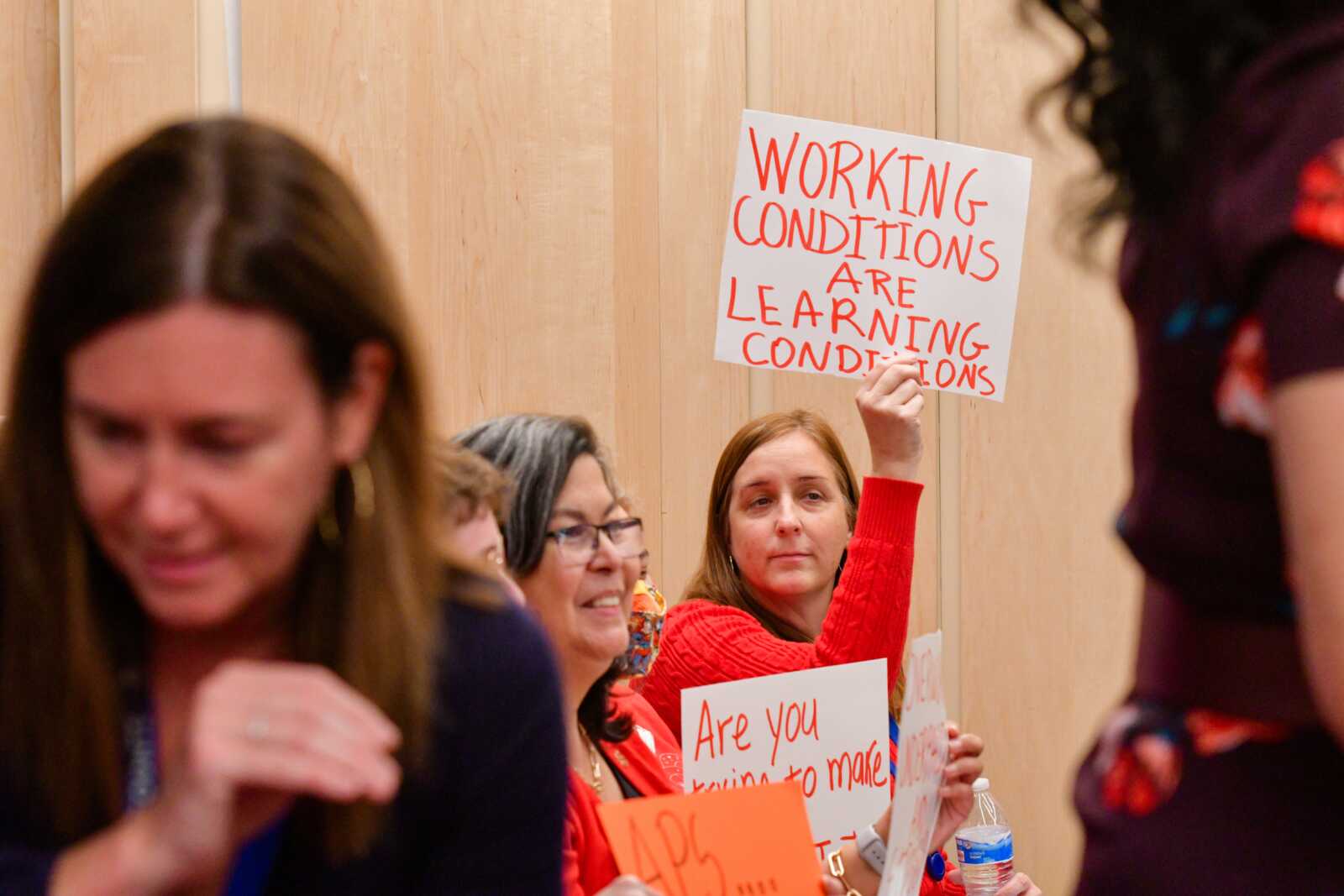
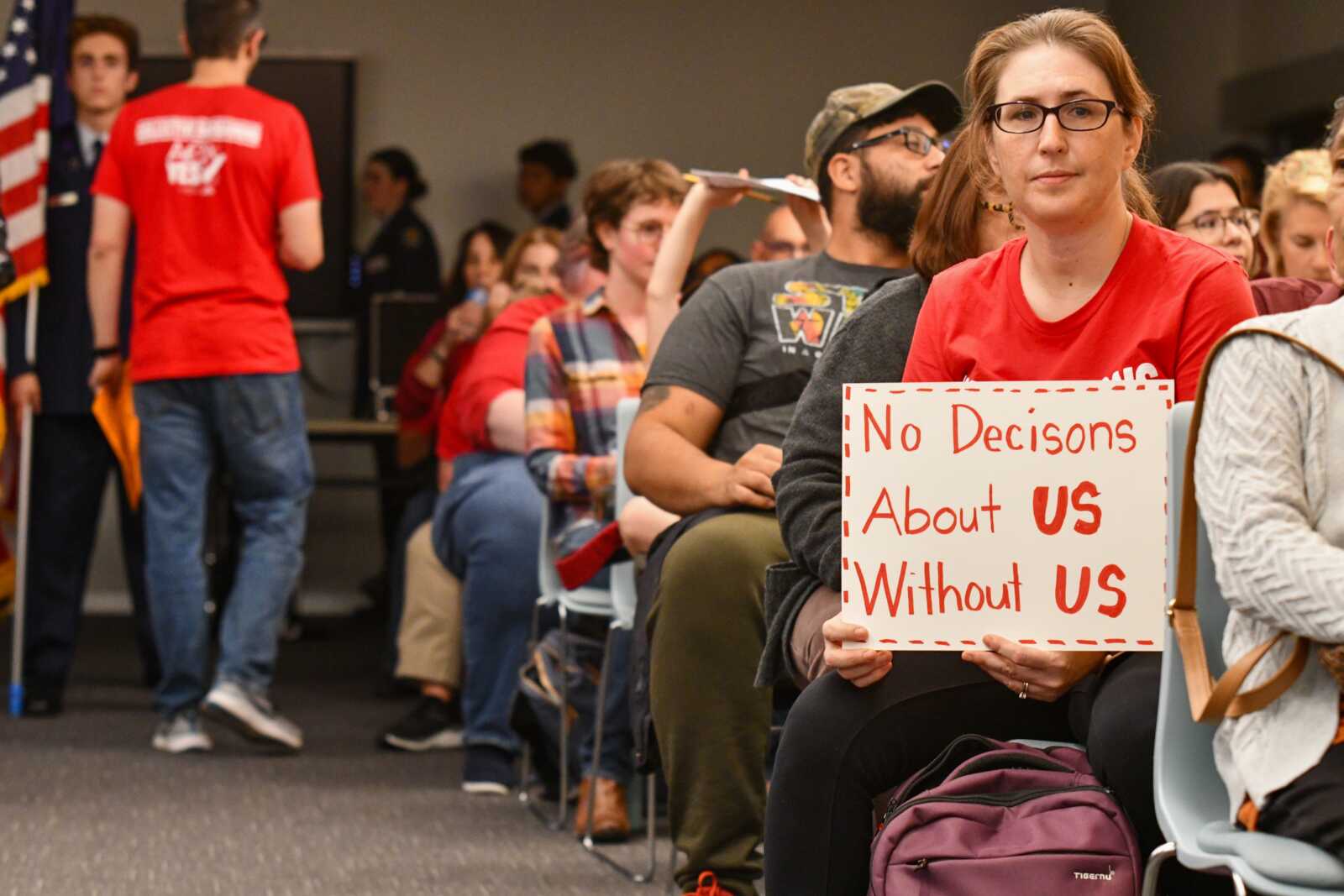
AEA members protest the Kaiser contract termination during the Thursday, Oct. 12 School Board meeting (staff photo by James Jarvis)

Threads from the decision to change insurance providers for Arlington Public Schools staff continue to unravel.

When APS entered a new contract with CareFirst Blue Cross Blue Shield this year, ending a 36-year relationship with Kaiser Permanente this September, it drew the ire of teachers, retired and active.

Stressed by having to find new providers mid-year, some criticized APS leadership for being opaque and disrespectful. APS apologized to staff for how it went about providing this information.

The most recent revelation is that APS says it has no record of a formal contract with Kaiser Permanente, with whom it instead had yearly extension agreements.

The healthcare provider, however, says it was under the impression it had a continuously operating contract since 1986 but ultimately conceded to APS that it “dropped the ball,” according to correspondence between the school system and the company, provided to ARLnow.

“The traditional way of entering into an agreement for the services provided by Kaiser would be for the two parties to sign an agreement,” a school system spokesman said. “However, there is no record of this happening. Instead, the services were renewed annually through a renewal rate sheet provided by Kaiser.”

Kaiser does not see it that way, though. The provider says it has operated “under a sole source contract” continuously since 1986 and that this contract was amended in 2022 to include three one-year extensions, according to a September letter from Kaiser to APS, provided to ARLnow. The letter requests APS reverse course on its decision.

APS submitted Requests for Proposals in December and again in January because its annual extension with Kaiser was coming to a close, as was a concurrent agreement with Cigna. It initially sought one provider but rewrote the RFP to allow for two contracts and extend the deadline.

APS ultimately awarded the deal to CareFirst and did not receive a bid from Kaiser. Citing procurement rules, it maintains it could not reach out to Kaiser directly for a bid during this time.

APS also disputes Kaiser’s characterization that the agreement was a “sole source contract,” or, one that is issued outside a competitive bidding process because only one company is able to provide the requested services.

The argument that Kaiser could enjoy this privilege is that, unlike traditional health insurers, it provides the bulk of the healthcare services itself. APS, however, says “it would be impossible” to recommend a sole source contract with Kaiser because there is competition, as evinced by the several proposals it received.

In its plea to APS to reverse course, Kaiser points out the school system did not mention a forthcoming termination when it confirmed services would extend through 2023. This confirmation letter, provided to ARLnow, is sparse, informing Kaiser of the renewal through Dec. 31, 2023 and noting “all other terms and conditions shall remain unchanged,” with no mention of available extensions.

In response, APS told the company it has no record of a two-way agreement and that it cannot reverse course.

“APS is not able to show that a two-way agreement was issued between APS and Kaiser for the Services,” the letter said. “In an attempt to provide a more formal structure to the renewal process, a two-party amendment was introduced in 2023… There is no mention of it being a second extension.”

In a follow-up email, the provider noted its team “dropped the ball” and requested further conversations to understand what went wrong.

(more…)


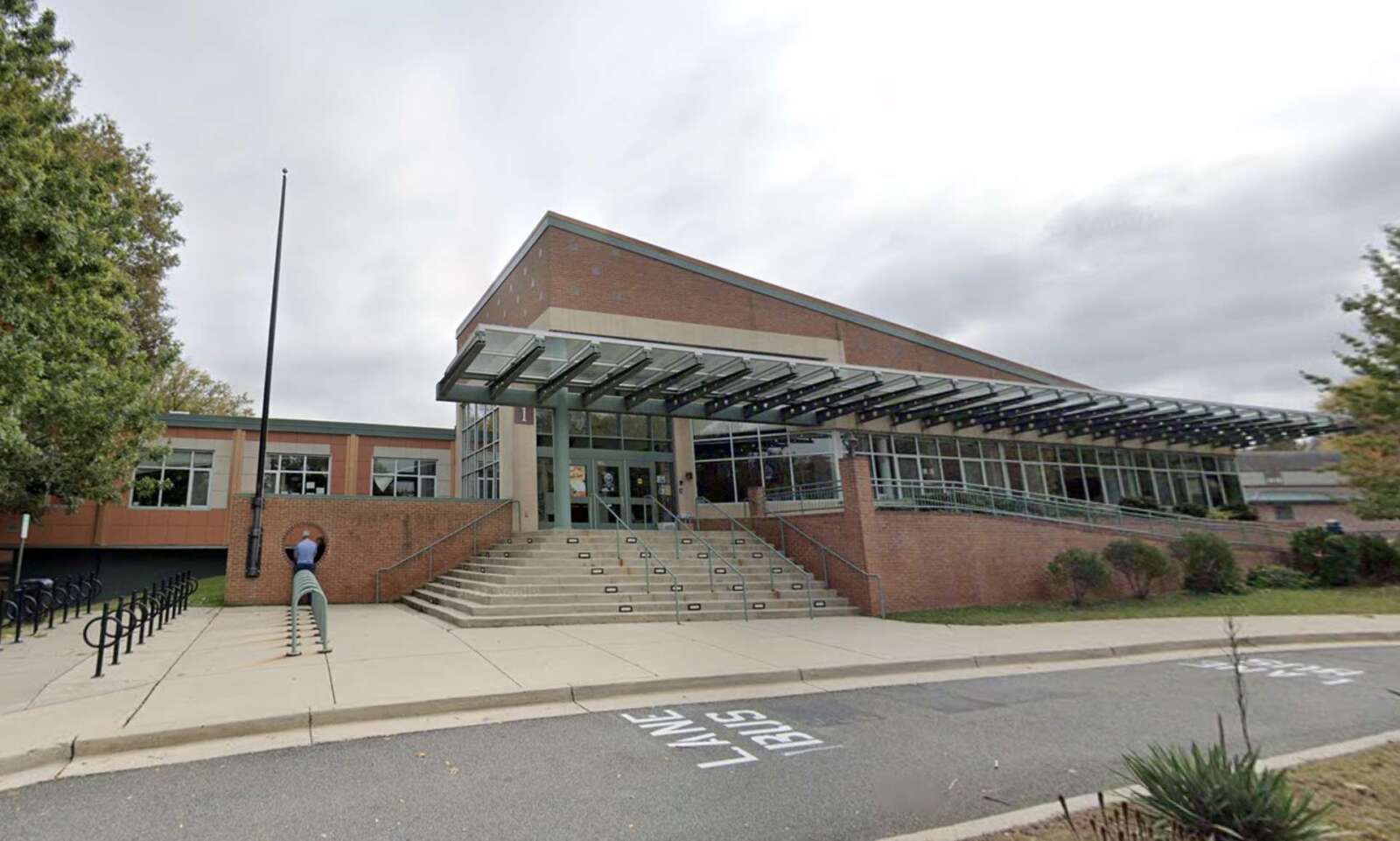
Nottingham Elementary School (via Google Maps)

Nottingham Elementary School will not become a swing space for other schools slated for renovations, according to Arlington Public Schools.

The administration came to this conclusion last night in a “Committee of the Whole” meeting during a preview of a forthcoming report outlining the schools in need of extensive renovations.

This report found none of the schools recommended for renovations need Nottingham to become a swing space “at this time,” per an email sent to families this morning, Wednesday, and shared with ARLnow. The email assured families the swing space proposal will not be included in the Capital Improvement Plan for 2025-34.

“There may be a need for swing space for future projects, and any swing space proposals will be communicated well in advance,” the email said. “Moving forward, a more in-depth feasibility study of any school needing major construction or renovation will be completed prior to determining when and if swing space will be needed, or if there are alternative ways to manage the project.”

This decision closes a chapter of heartache for Nottingham families and staff, opened this spring when APS proposed closing Nottingham, in the Williamsburg neighborhood at 5900 Little Falls Road, and making it a swing space as early as 2026.

APS said it chose this school because it would cost the least to retrofit compared to other schools, county facilities or commercial buildings, and because this approach would be more fiscally responsible than building a new school.

The backlash from current and future Nottingham parents was swift. Some argued APS made the decision on faulty projections of falling enrollment and criticized the system for releasing this information before a renovation plan was ready.

“This entire fiasco could have been avoided if they had waited to get the results of this report,” parent Kiera Jones told ARLnow today. “A ton of time, energy, and stress for nothing.”

“The process was completely out of order,” parent Malini Silva added.

Jones called on APS to “rehaul… their approach to projects and how they treat their stakeholders.”

This includes how APS treats teachers, according to parent Jennifer Loeb and June Prakash, the president of the teachers union, Arlington Education Association.

Teachers felt demoralized and angry after a meeting last month with administrators about the swing space proposal, Loeb told ARLnow. Prakash told the School Board the same thing earlier this month.

“The actions of the current cabinet over the past few weeks highlight exactly why one joins the union,” Prakash said, citing how teachers felt after the “botched informational session” about Nottingham and pending healthcare changes that roiled current and retired teachers.

Prior to the forthcoming report, the Arlington County Council of PTAs predicted APS would not have sufficient funding for the large-scale renovations that would require a swing space.

This was confirmed during the discussion of the renovations report, which found APS has funding for five large-scale projects, Jones said.

During the meeting last night, Loeb said administrators discussed how APS would not know if it truly needs a swing space until it conducts deeper studies of buildings set for renovations and contractors weigh in.

These studies take a year and would not begin until next fall, meaning APS would not know if a swing space were necessary until two years from now.

“You’re talking about work that is happening years from now, but they told Nottingham six months ago ‘It’ll be you,’ when they had none of the necessary data,” she said.

This morning, when parents were walking their kids to school, Loeb said everyone “looked relieved.”

“We can get back to being a community now. We can get back to building our school and really investing in our school community again,” she said. “We have space and breathing room to do that now.”


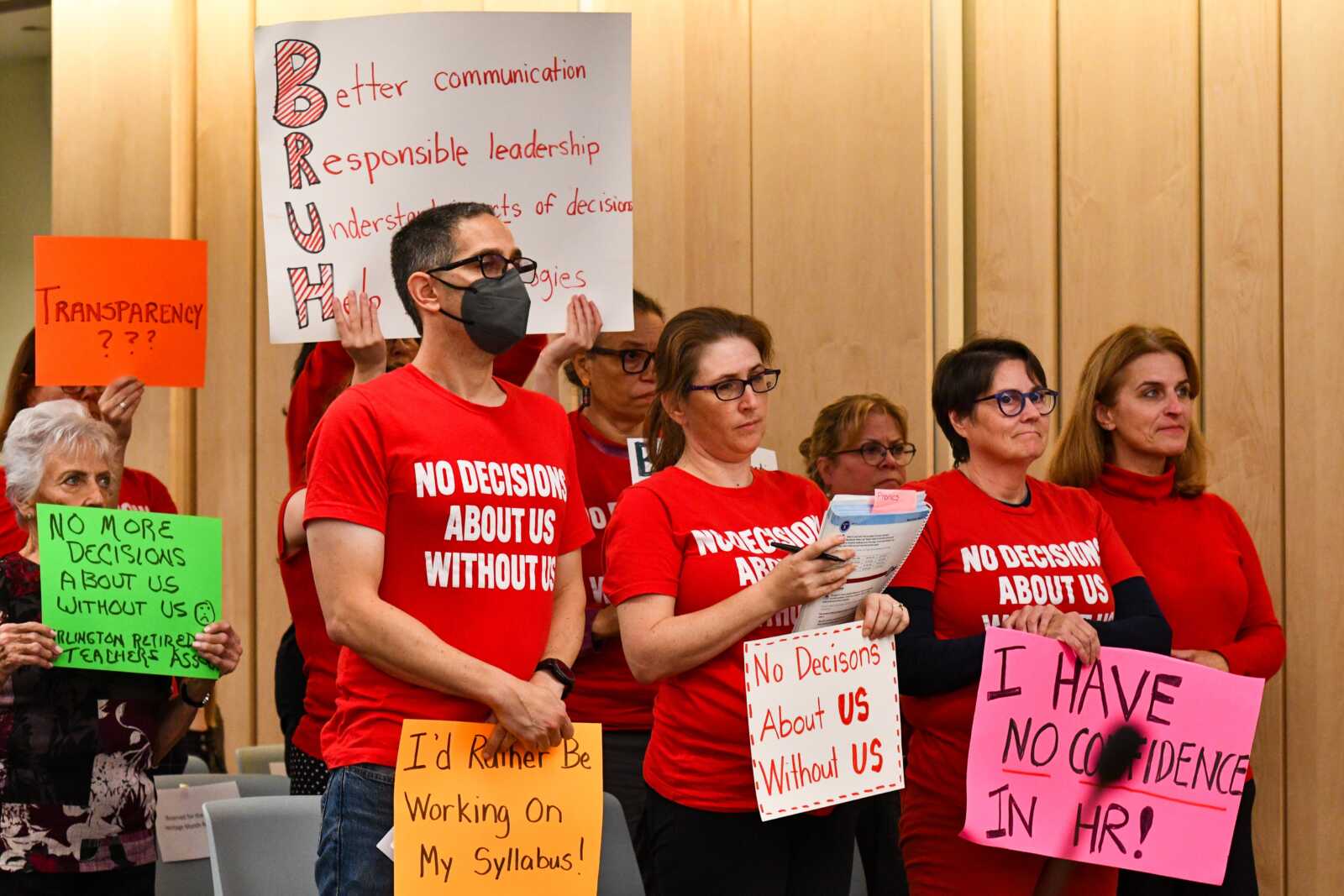
Over the course of an hour last night, Arlington Public Schools teachers excoriated the School Board and central administration for how they are handling what some call a healthcare catastrophe.

On Dec. 31, APS staff will lose the healthcare they receive from Kaiser Permanente and Cigna through APS, to be replaced in January by CareFirst BlueCross BlueShield.

Many current and retired staff say this change will upend the Kaiser healthcare teams they have built for themselves and their families over several years and in some cases, decades.

APS says it solicited bids from healthcare vendors and received four proposals, including CareFirst, the vendor it ultimately selected — but not Kaiser.

The school system first announced the change on Sept. 20 and the response was swift. Teachers spoke up at the subsequent September School Board meeting and ARLnow received at least a dozen emails from staff who were upset and confused by the change.

These feelings reached a boiling point on Thursday despite efforts from APS to smooth things over. APS held a “resource fair” with CareFirst representatives and Human Resources staff to help understand their benefits and enroll but according to the teachers union, the Arlington Education Association, this did not ease the anxiety of the nearly 400 people who showed up — some of whom were turned away.

“This disrespectful treatment of staff, lack of response and inappropriate responses from HR and lack of transparency on issues that not only affect staff but students and families, is disheartening,” says teacher Tricia Zipfel.

When teacher Marnie Lewis took the microphone at the School Board meeting, she began crying but eventually rallied to encouragement from colleagues in attendance.

“This [change] really took me to my knees,” she said. “I can’t believe I’m here. I’m here because this is how upset I am. I used to love working here, I was proud to work here and I’m not feeling that anymore… I would just like it if someone could answer my emails and questions. That would be great.”

Teacher Heidi Haretos, who recently moved from North Carolina to Arlington, asked central office and the School Board: “If your wife, daughter, husband or son had a serious health condition, and had a trusted medical team supporting them through Kaiser, would you have made this decision?”
(more…)


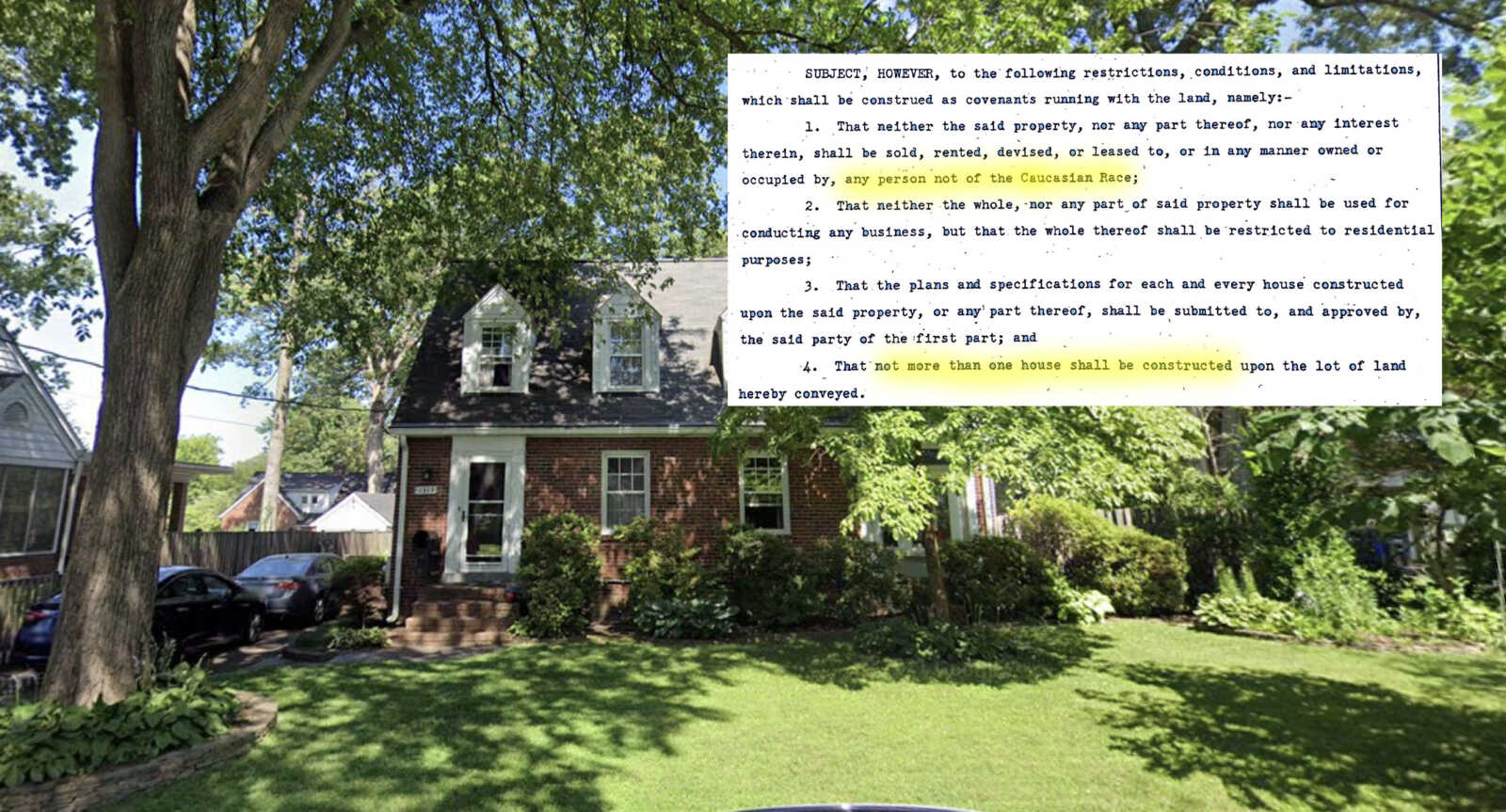
1313 N. Harrison Street frontage, with an excerpt of restrictive covenants from its 1938 deed (by ARLnow)

Using a restrictive covenant in a 1938 deed, neighbors in the Tara-Leeway Heights neighborhood convinced a developer to build a single-family home instead of a duplex.

The home, 1313 N. Harrison Street, is not far from a wall that separated the historically Black neighborhood of Hall’s Hill from single-family-home subdivisions originally built exclusively for white people.  In addition to specifying that only one home can be built on the lot, a second provision in the deed bars owners from selling to people who are not white.

This second provision came to light this week after ARLnow and Patch reported on the neighbors convincing the developer to back down from building a two-family home. A copy of the deed circulated on social media shortly after and ARLnow obtained a copy from Arlington County Land Records Division to confirm its authenticity. 
While racially restrictive covenants were rendered unenforceable by a 1948 U.S. Supreme Court ruling and illegal by the Fair Housing Act of 1968, many homeowners never scrubbed them from their deeds, according to local researchers who are mapping racially restrictive covenants in Arlington. Thus, in some cases, they exist alongside separate covenants restricting multifamily construction.

Using the covenant against multifamily housing appears to be a valid workaround for neighbors and Arlington County says it has no legal role in how these covenants are used between private parties. The county began approving 2-6 unit homes in previously single-family-only neighborhoods two months ago, but this is the first instance ARLnow knows of where such a document was used in this way. 

Their use, however, resituates one of the initial reasons Arlington County said it embarked on the housing policy changes in the first place: to right historical wrongs caused by racism. It provoked the ire of some Missing Middle advocates, including the Arlington branch of the NAACP, which is calling on the county to address the issue.

“The whites-only restriction can’t be disentangled from the one-house restriction; they were meant to work together, with the purpose and effect of excluding people of color,” said Wells Harrell, the chair of the housing committee of the NAACP, in a statement. “It is profoundly disappointing to see restrictive covenants from the Jim Crow era being invoked to block new housing and exclude families today.” 

Several months ago, Arlington resident Stephanie Derrig identified these covenants as a way property owners could block Missing Middle-type housing from being built in their neighborhood.

She told ARLnow this week that she does not support the racist elements of restrictive covenants. At the same time, she sticks by her belief that a “restricted deed is a land use tool… to protect your largest investment, in many cases.” 

YIMBYs of Northern Virginia leader Jane Green and Former Planning Commissioner Daniel Weir, both supportive of Missing Middle, take the view of the local NAACP that the two restrictions are part of one legal document, written with exclusionary intent. 

Whether these provisions can be separated is a legal question — and a thorny one, at that, according to Venable land-use attorney Kedrick Whitmore. 

When a court rules part of an agreement is unenforceable, the court does not rewrite the agreement to be legal, he said. This principle might affirm the initial view of the developer, BeaconCrest, which argued — before backing down and deciding to build a single-family home — that the document seems unenforceable. 

On the other hand, courts do not want to remove other rights and obligations for which two parties negotiated. This means the court could uphold the rest of the agreement, giving credence to the arguments made by the neighbors. 

“This is not exactly cut and dry,” Whitmore said. “You could make arguments either way. If you went to court, the stronger argument is for the non-racially restrictive elements to remain valid. But again, that’s a question.” 

(more…)


Arlington County government headquarters (staff photo by Jay Westcott)

Arlington County has filed a response to the Missing Middle lawsuit against it.

Ten residents are suing the county, arguing that the recently-passed zoning changes known as Missing Middle were approved illegally and would allow development that harms their lives.

In a response shared with ARLnow, dated last Tuesday, May 23, the county argues that the plaintiffs did not prove they, in particular, will be harmed by any new development. It also disputes the claims that the county broke specific provisions in Virginia law related to zoning deliberations and meeting procedures.

Now that both sides have made their cases in writing, a hearing in the civil division of Arlington County Circuit Court is set for July 11 at 10 a.m. In other recent zoning battles in Virginia courts, the lower courts ruled in favor of the county government, while the state Supreme Court overturned those decisions.

The complaint against the county was filed in April, about a month after the Arlington County Board ratified zoning changes that allow the construction of 2-6 unit homes on lots previously zoned for single-family homes.

The plaintiffs complained their property values will be hurt and their quality of life diminished by any new “Expanded Housing Option” or EHO development.

They also said the Arlington County Board failed to properly advertise what was being considered and did not do the due diligence needed to understand the impact of increased density on the neighborhood level.

Arlington County is challenging the legitimacy of the lawsuit, asking the court to rule that the facts of the Missing Middle saga invalidate the claims and dismiss the case so it cannot come before the court again.

On substantive grounds, the county challenges the 10 residents, saying they failed to show the zoning changes will burden them such that the county must provide relief.

For instance, the plaintiffs predicted several negative impacts as a result of the change: increased flooding, sewage backups, school overcrowding and difficulty driving on narrow streets cramped with cars parked on the street. Arlington County says that is speculative at best.

“No property has been developed under the terms of the Zoning Amendment, and any allegations of harm are pure speculation,” the county said in its lawsuit. “The court cannot be asked to issue an advisory opinion based on hypothetical facts.”

The 10 residents also say the Arlington County Board did not consider a long list of societal impacts of which state code requires consideration prior to zoning code changes.

Just because it did not conduct the “special studies or investigations” the plaintiffs claimed were necessary does not mean the factors were not considered at all, Arlington County argues.

“The Board Report, the testimony of the County’s professional staff, and the testimony of the members of the County’s Planning Commission, Housing Commission, Transportation Commission and other advisory commissions and public speakers shows that the County Board adequately considered the factors in [state code],” the suit says.

The plaintiffs also claim the county exceeded its authority when it instituted tree canopy requirements tied to the number of units on a property. They said it violates the Dillon Rule to require more than what is required in the Chesapeake Bay Preservation Ordinance.
Arlington County sees it differently.

“The county amended its zoning ordinance to create an incentive for tree plantings in exchange for increased density, as permitted through its power to administer incentive zoning,” it says.

(more…)


Buy Nothing project banner (via Buy Nothing Arlington (Northwest), VA/Facebook)

Thursday morning, Marsea Nelson woke up to a foreboding text from a friend.

He told her “he didn’t have ‘My Buy Nothing Facebook group got too political’ on his 2023 Bingo card,” she tells ARLnow.

Arguing that a local Facebook group for giving and receiving free stuff had gotten too big to be effective, the page’s volunteer admins have embarked on a process to splinter into smaller, more neighborhood-specific groups. The group currently serves a number of northern Arlington neighborhoods, plus some just outside of Arlington’s borders.

Just as they were about to launch the new groups and archive the legacy one, the group founder, Kayla Owen, stepped in and put a stop to it. She revoked their admin privileges, alleging that they had silenced people who disagreed with the plan while intentionally excluded her from the decision making.

She muted other posts and created a poll: split up or stay together? The admins would be reinstated if a majority wanted to move forward with the breakup.

“I can picture reading this in ARLnow,” said a Dominion Hills participant, who requested anonymity. “I think this is the kind of drama the rest of Arlington should read.”

Buy Nothing is a worldwide movement to help people befriend their neighbors while giving away stuff that cannot be sold or donated to a nonprofit. There are thousands of neighborhood-specific Facebook groups and millions of members, including several groups in Arlington.

Buy Nothing Arlington (Northwest), VA” was experiencing growing pains. The 3,000-member group had boundaries spanning from north of Route 50, all the way to McLean and then over to I-66 and Glebe Road. Some felt that competing for and picking up free stuff was becoming too difficult and theorized that was why some had stopped participating altogether.

While the admins decided four smaller groups were necessary, Owen’s poll found that 75% of respondents did not want to be divided up this way. Poll results in-hand, she decided “Buy Nothing Arlington (Northwest), VA” will remain and discussions of boundary changes will be shelved for now.

“After reading emotional outpourings from members about their sense of loss, I decided that I had to intervene so the community could determine its future direction,” Owen tells ARLnow.

Nelson says she respects this position but sympathizes with the admins, who worked hard on the smaller groups, called “sprouts.”

“It’s so sad, and so silly, that this community people held so dear got so ugly,” she said. “The majority of people wanted the group to stay together so they’re happy to ignore how this all went down.”

ARLnow reached out to some of the affected admins but did not hear back before deadline. Screenshots ARLnow reviewed indicate admins had supporters who criticised Owen’s maneuver and Owen herself for stepping in even though she left Arlington to move elsewhere in Northern Virginia. (For her part, she says Buy Nothing permits out-of-area admins as a “check” on the system.)

“I’m sure [the admins] are pissed,” the Dominion Hills member said. “They probably feel like there’s been a coup.”

On Facebook, one user said Owen’s tactics will turn off people from responding honestly.

“I think people who are turned off by drama will not respond,” the comment said. “Like others, the first word that came to mind was ‘coup.'”

(more…)


One person’s vacant building is another’s future pickleball facility.

Not to be topped by a County Board candidate’s suggestion to put pickleball facilities at the condemned Key Bridge Marriott, Board Vice-Chair Libbey Garvey mulled whether vacant office buildings could be retrofitted for courts.

“We’ve got these office buildings that are kind of empty, and we’re trying to figure out what to do with them,” she asked at the Board’s Tuesday meeting. “Is that a possibility?”

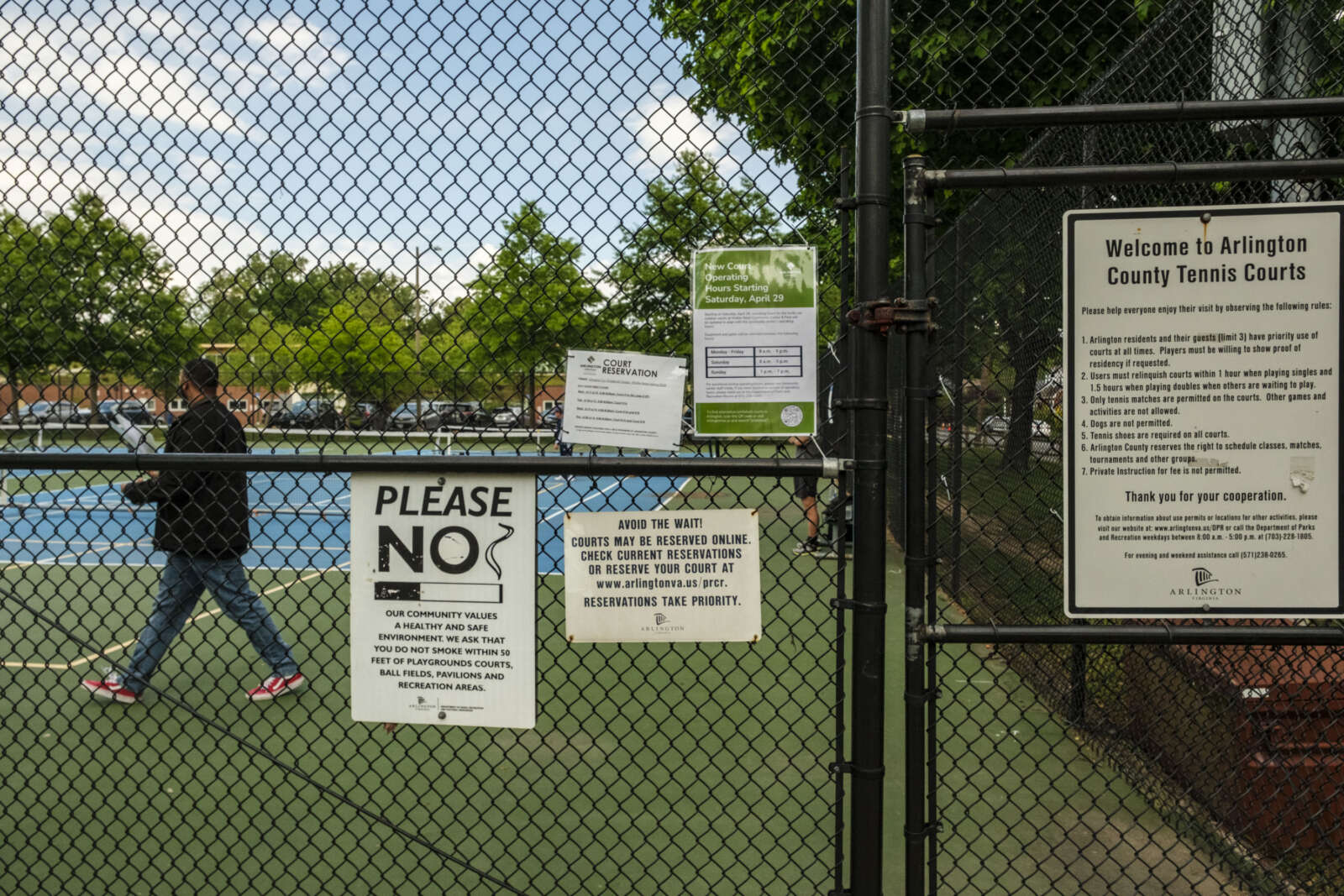
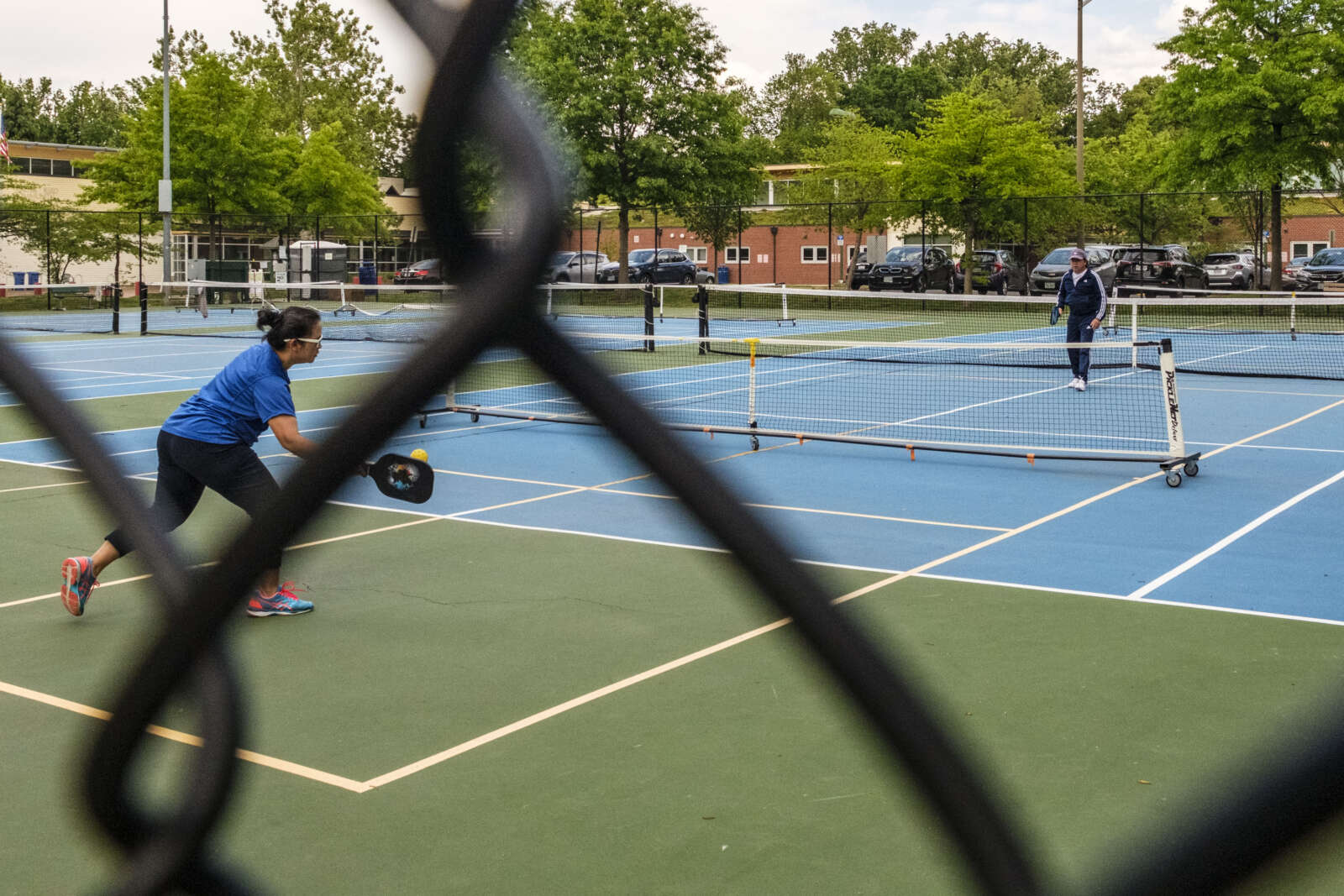
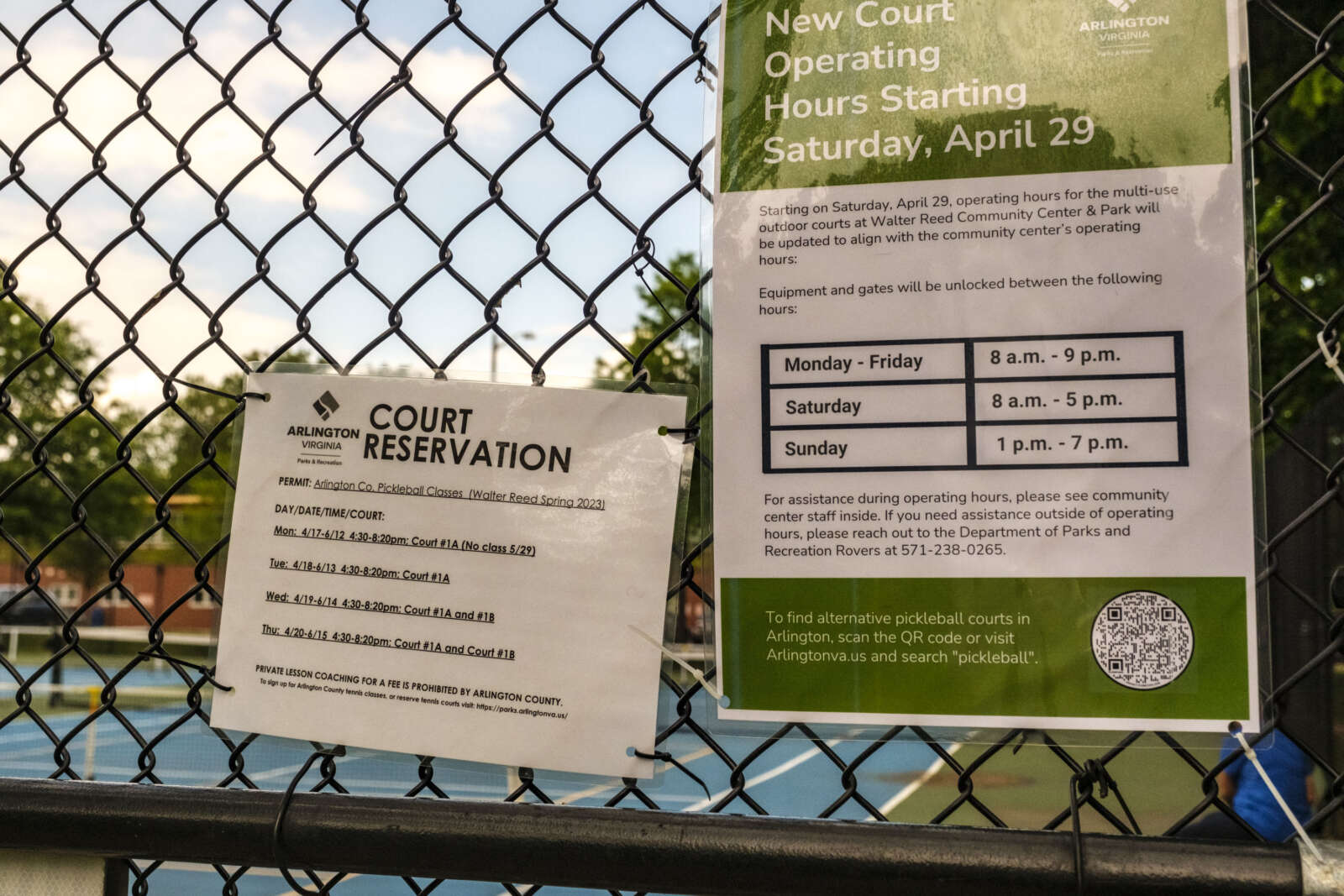
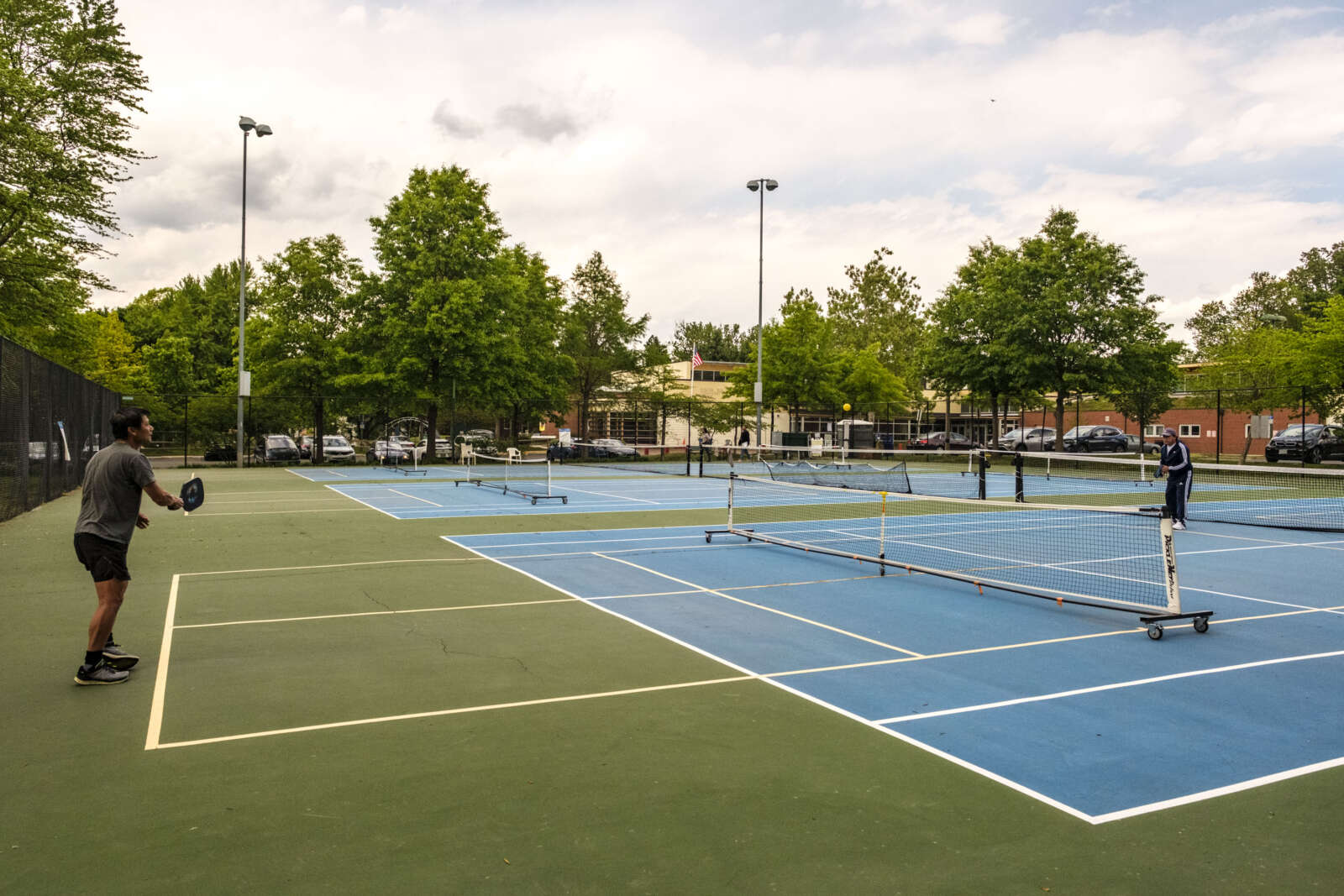
Already recognized in some rankings as a great place to play pickleball, Arlington County is looking to add more courts in response to the sport’s booming popularity. But it has found itself in a pickle, balancing pressure to add courts with pressure to address pickleball-related noise and land use concerns from some neighbors.

During the Arlington County Board conversation with the Dept. of Parks and Recreation, members took a diplomatic approach, in contrast to the threats of legal action, accusations of bullying and public urination, and late night TV lampooning that have characterized the ongoing local pickleball battle.

In addition to Garvey’s vision for pickleball taking over vacant office buildings, others floated nudging private clubs to get in on the fun. They said private courts could ease the burden on the local government to add facilities, mute the “pop” the paddles emit and help address the stubborn office vacancy rate.

Such possibilities would require working with Arlington Economic Development, said Dept. of Parks and Recreation Director Jane Rudolph.

“There’d have to be an evaluation with others who understand layouts of office building and warehouses and things and with [Arlington Economic Development] colleagues about what we could be doing in existing private spaces and if they could be built out,” she said.

Arlington Economic Development’s Director of Real Estate Development Marc McCauley told ARLnow that zoning changes the Arlington County Board approved on Saturday do open up opportunities for private pickleball facilities in vacant retail and commercial spaces.

“These private facilities, such as national operator Chicken N Pickle” — a sport, restaurant and event space — “are emerging concepts that could theoretically relieve some demand pressure on use of pickleball courts in public facilities,” McCauley said. “Challenges may include ceiling height, floor plate size and noise attenuation, but those issues would need to be studied by a property owner and potential tenant on a case by case basis.”

Another example is Kraken Kourts, with two locations in D.C. that offer pickleball, axe throwing, roller skating and a rage room — a place to break things to let off steam.

Board Chair Christian Dorsey asked whether DPR has considered how the the county could “encourage some operators to set up some pickleball facilities so that this doesn’t become solely a government responsibility.”

In communities known for their pickleball amenities, Dorsey observed there are major, private indoor-outdoor facilities which sometimes have “really substantial membership costs or drop-in fee costs.”

This includes, Board member Takis Karantonis noted, “some very private places with a lot of tennis courts — a lot of new tennis courts, actually.”

(more…)


A sign along Washington Blvd in Westover, in a neighborhood with duplexes (staff photo by Jay Westcott)

(Updated at 1:35 p.m. on 4/26/23) A group of residents has filed a lawsuit in Arlington Circuit Court alleging the zoning changes called Missing Middle are illegal.

The residents say Arlington County ran afoul of state law by rushing through the changes without considering impacts on infrastructure and community resources — a frequent criticism of the years-long policy discussion.

Last month, the Arlington County Board approved changes to the zoning code allowing up to six-unit dwellings on lots previously zoned only for single-family homes. The Board did approve a set of limitations intended to control the pace and impact of development, including parking minimums, permit caps and tree planting requirements.

According to “Arlington Neighbors for Neighborhoods,” a group that issued a press release on behalf of the plaintiffs, that was not enough.

“State law requires that zoning ordinances consider needs for transportation, schools, parks, recreation, and public spaces, as well as the conservation of natural resources,” the statement said. “The law also requires consideration of a locality’s comprehensive plan, which addresses stormwater, sanitary sewer, water distribution and more.”

The group said the lawsuit claims Missing Middle — also referred to by the county as “Expanded Housing Options” or EHO — is “arbitrary and capricious and bears no reasonable relationship to public health, safety, morals or the general welfare, as required by state law.”

(In addition to issuing a press release, Arlington Neighbors for Neighborhoods “has raised funds to support the litigation,” an attorney for the plaintiffs told ARLnow.)

Their lawsuit says the county also violated state law the following ways:

  • The zoning amendment process was not initiated by a proper Planning Commission motion or County Board resolution
  • The zoning amendment was not properly advertised
  • The EHO cap is a special exception to the zoning regulations and requires County Board review of applications
  • The County Board failed to share with the public documents that were furnished to it about EHO
  • The county violated the Dillon rule by knowingly requiring a number of shade trees that exceeds what Virginia allows localities to impose

Their petition asks the Circuit Court to declare that the zoning amendments violate state law and prevent the county from issuing EHO permits.

The allegations that the County Board violated Virginia Freedom of Information Act laws may require a hearing in the coming days, said another anti-Missing Middle group, Arlingtonians for Our Sustainable Future (ASF), in an email newsletter today.

“There will likely be other hearings in the coming months,” ASF said. “Then, of course, there may be appeals. Any complaint in a lawsuit consists of allegations which must be proven in court, and challenging zoning is surely an uphill battle.”

ASF noted that the FOIA allegation resembles a successful lawsuit against Fairfax County that led to the overturn of zoning changes it made two years ago. Last month, the Virginia Supreme Court declared the county’s 2021 zoning modifications void because the new code was adopted at a mostly virtual meeting.

One of the Fairfax County plaintiffs even advised Arlington residents in a post on Nextdoor to file a lawsuit.

“Sue them,” she said in response to a post musing about recalling the Arlington County Board. “We just won our lawsuit… it took two years, but it was worth it.”

In response, two residents pointed out that her victory was on procedural grounds due to how the meeting was conducted.

“It will likely pass again, with in-person public hearings and votes,” said one Donaldson Run resident. “Congratulations, you’ve succeeded in wasting taxpayer dollars and time.”

(more…)


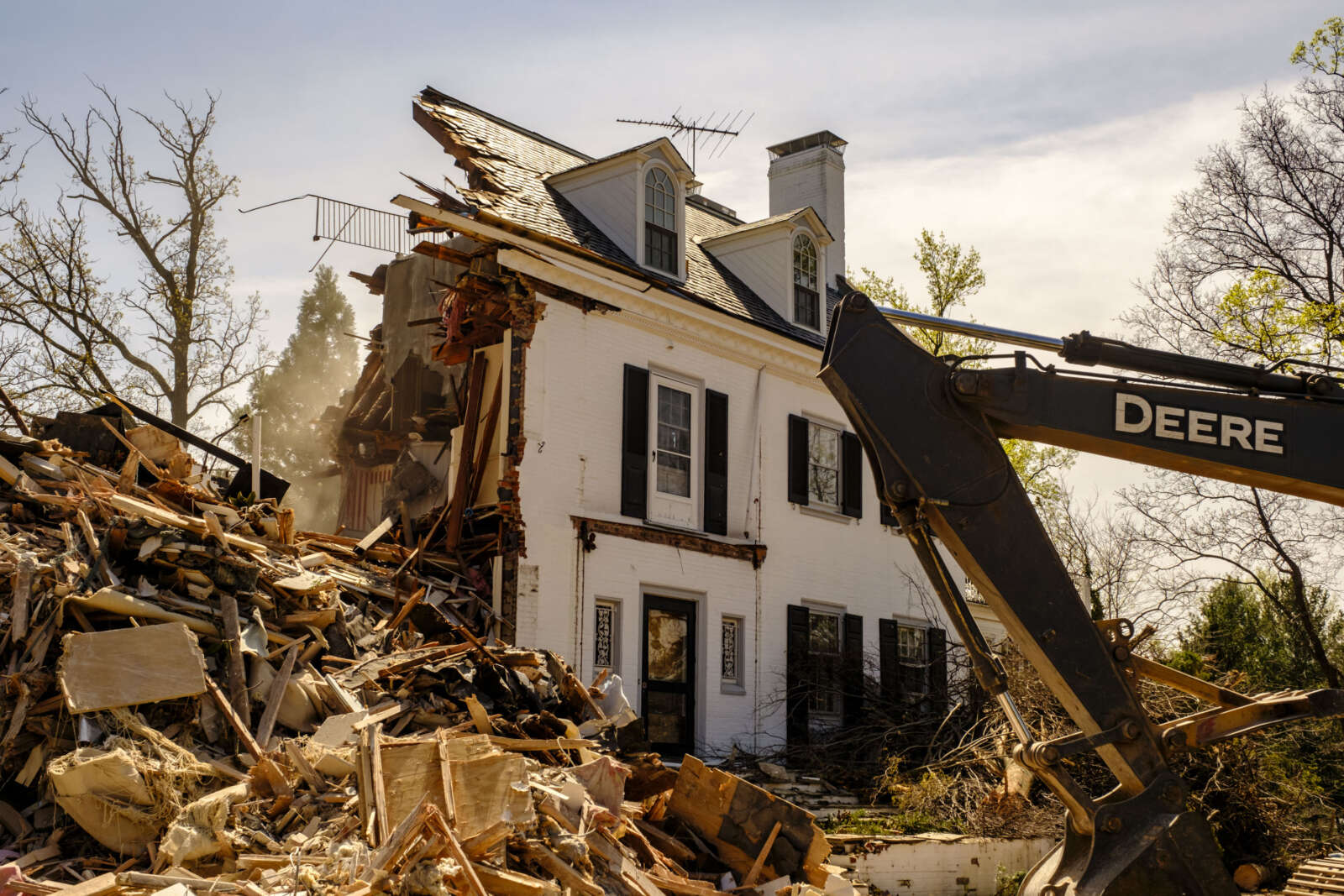
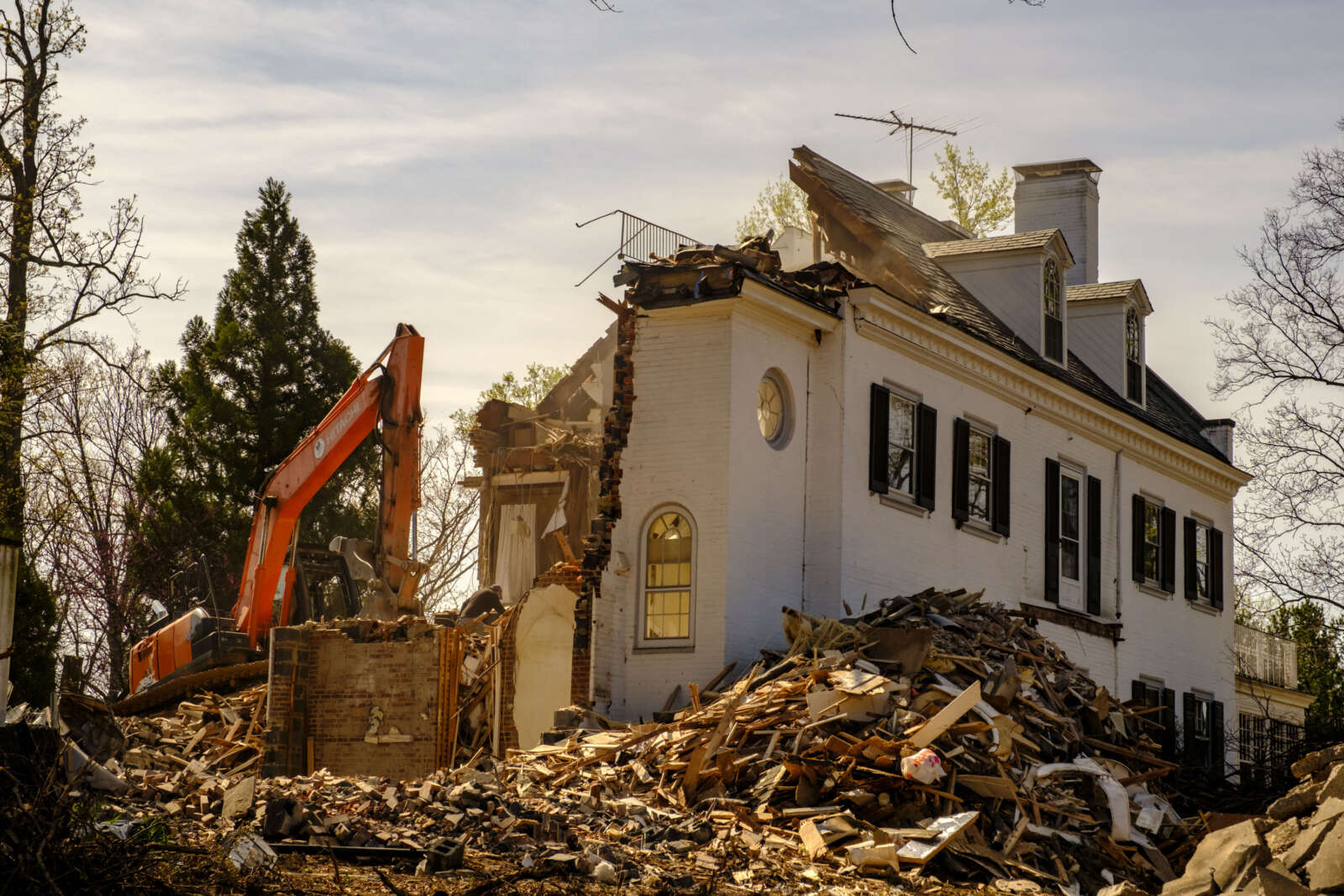
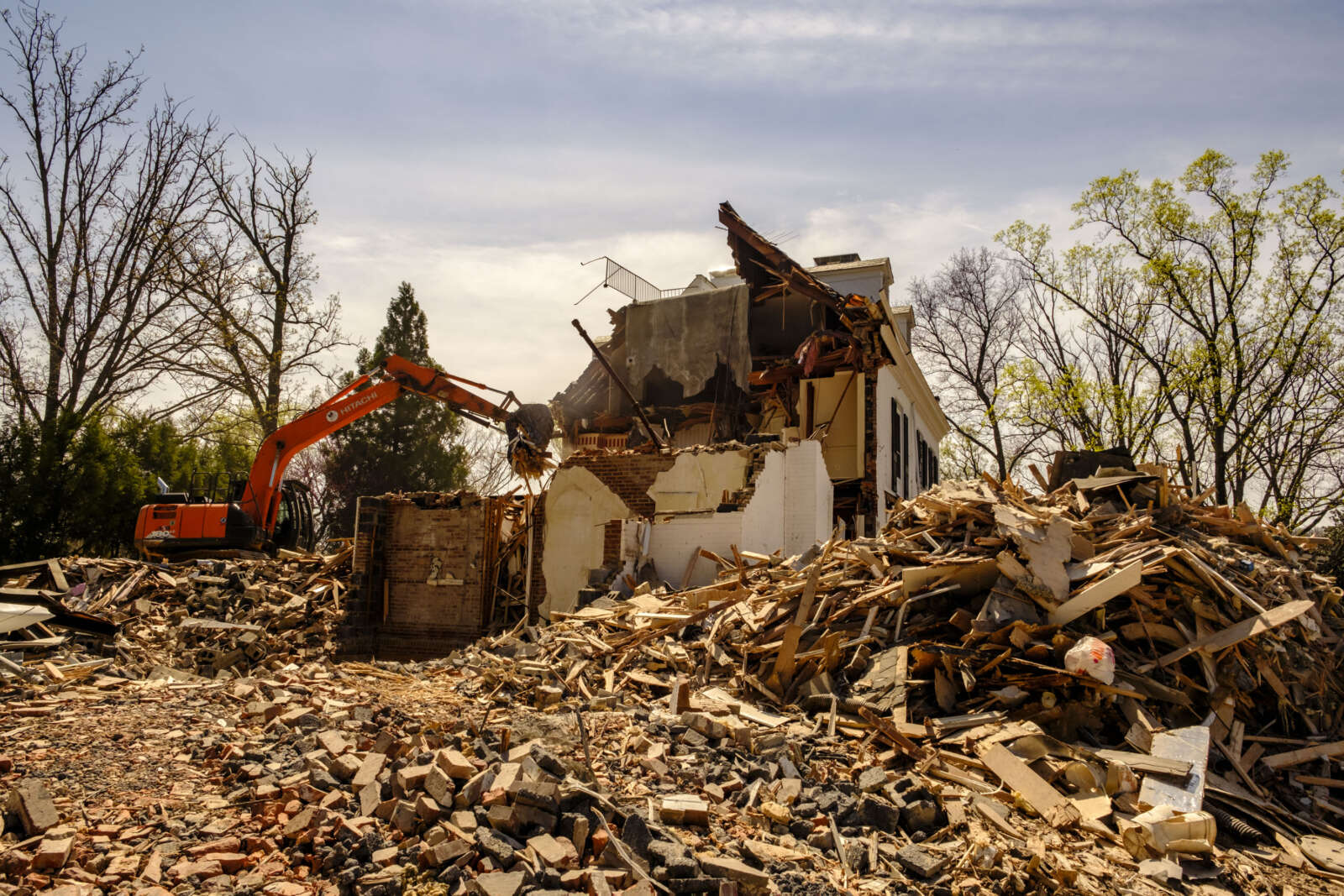
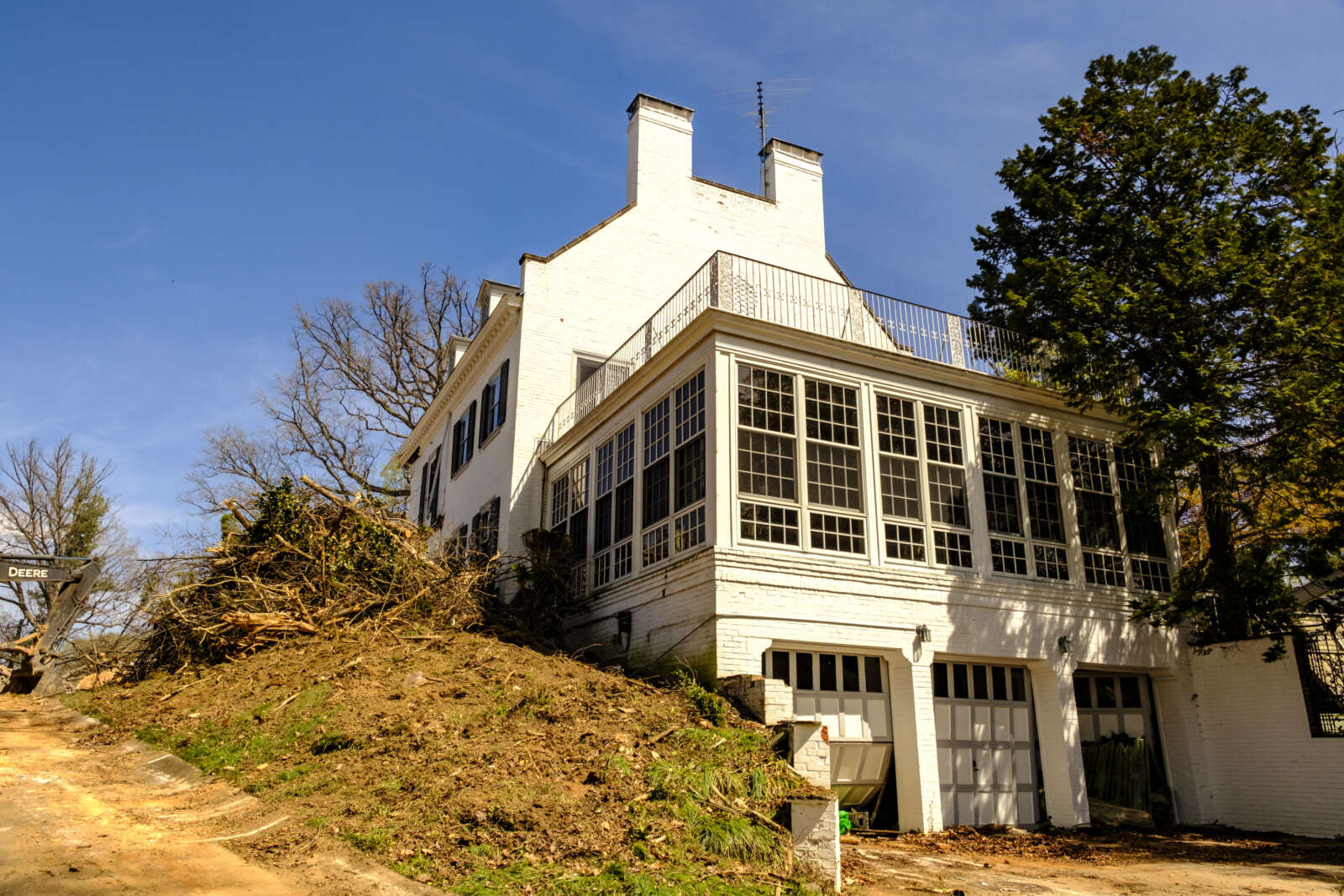
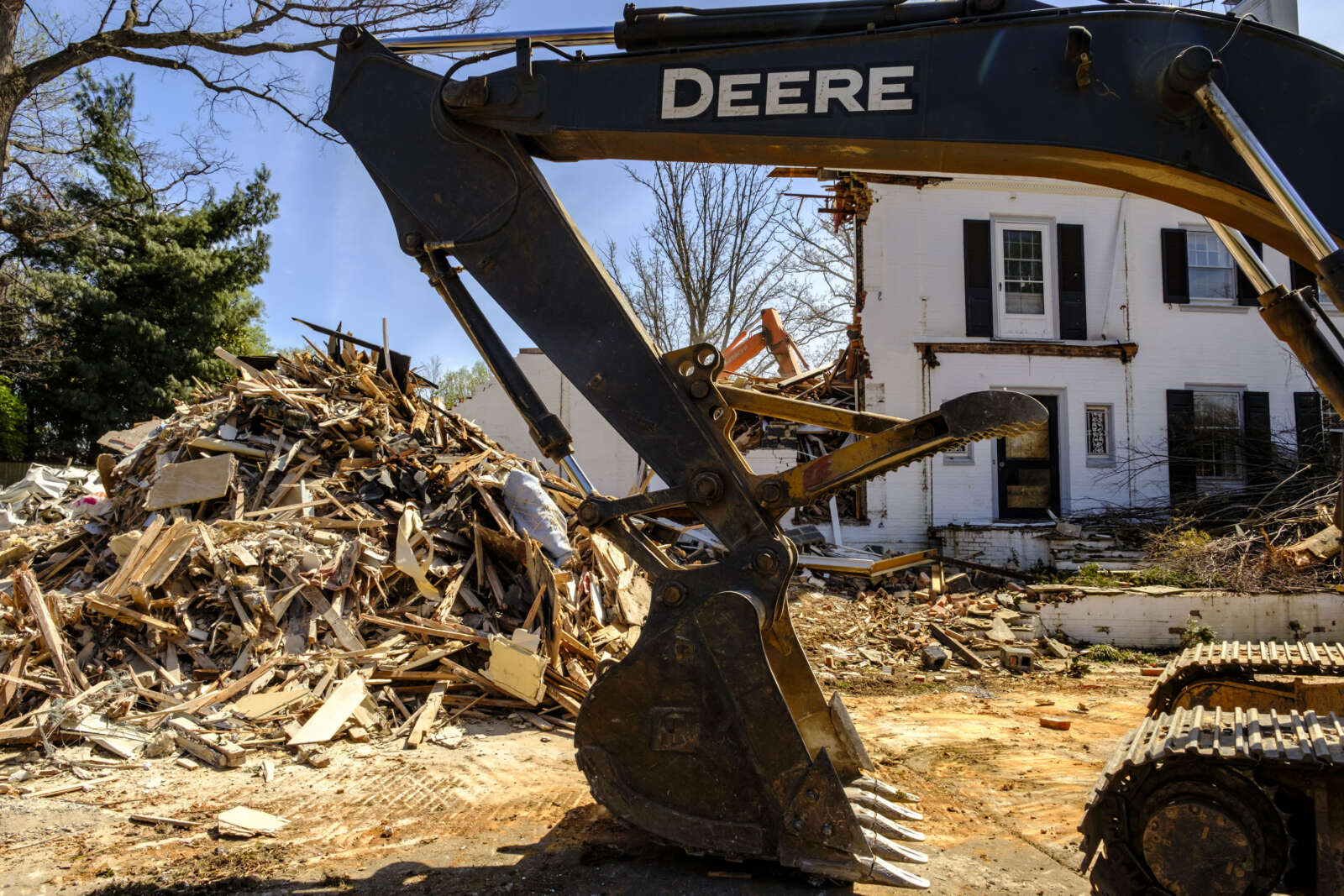
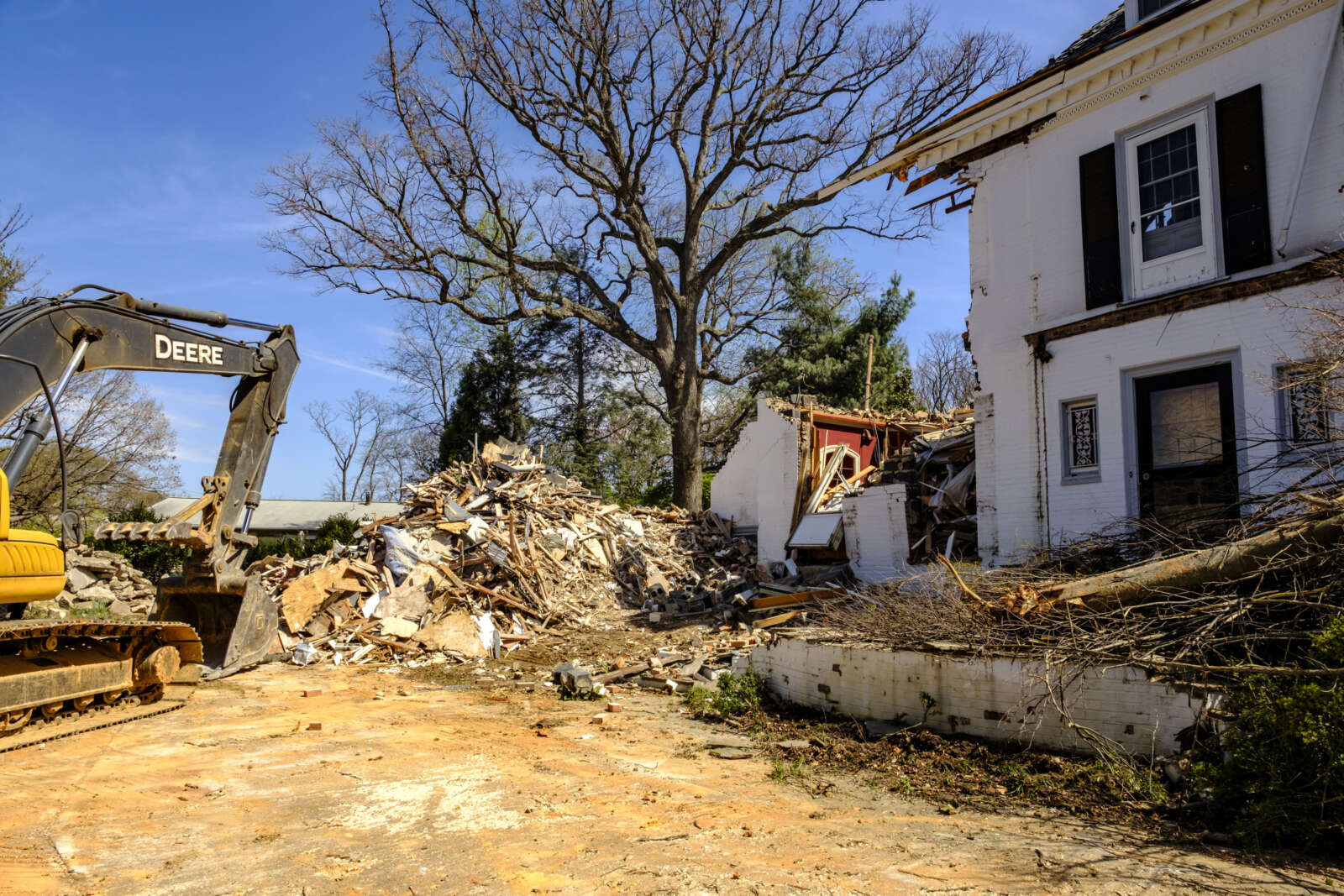
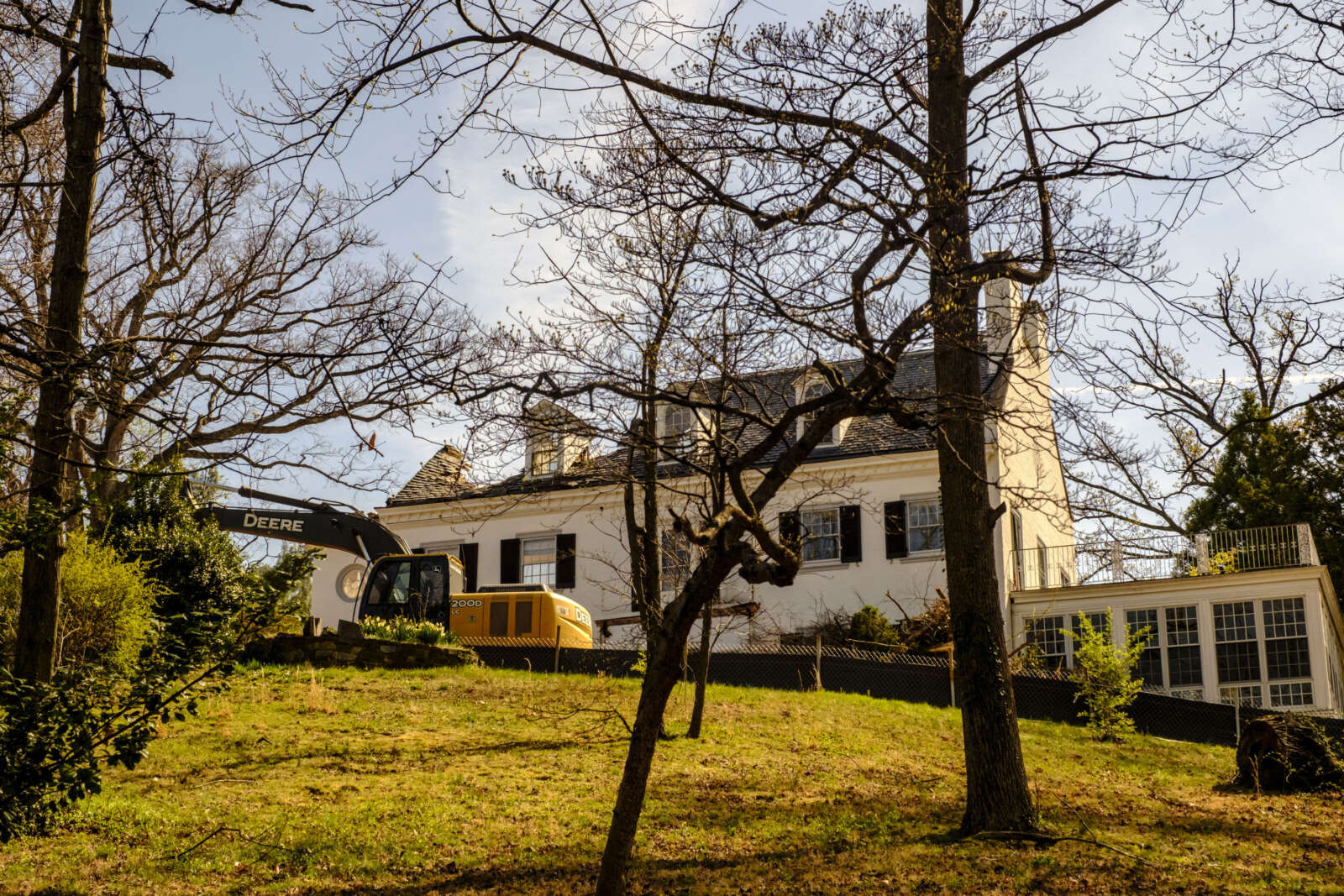
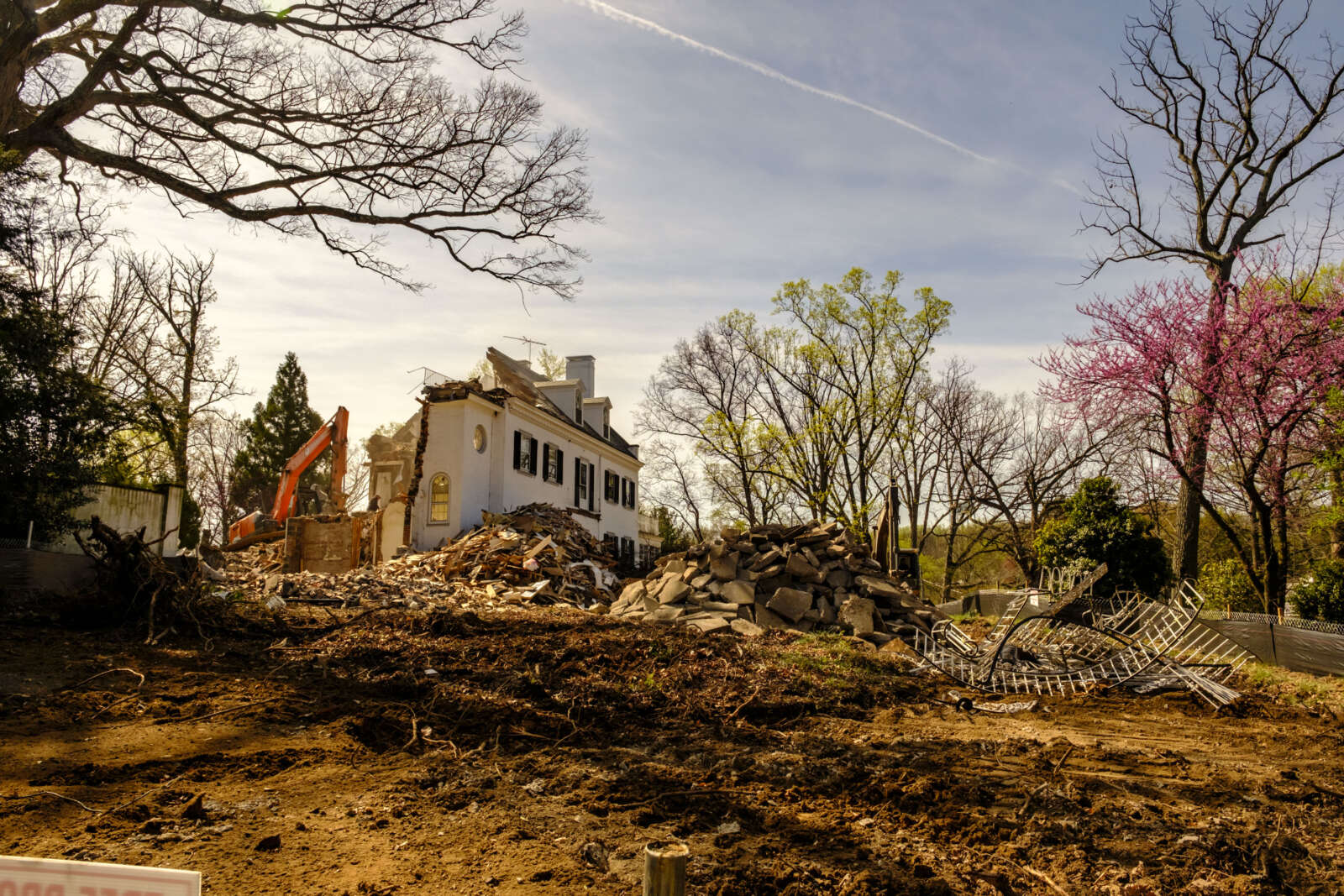
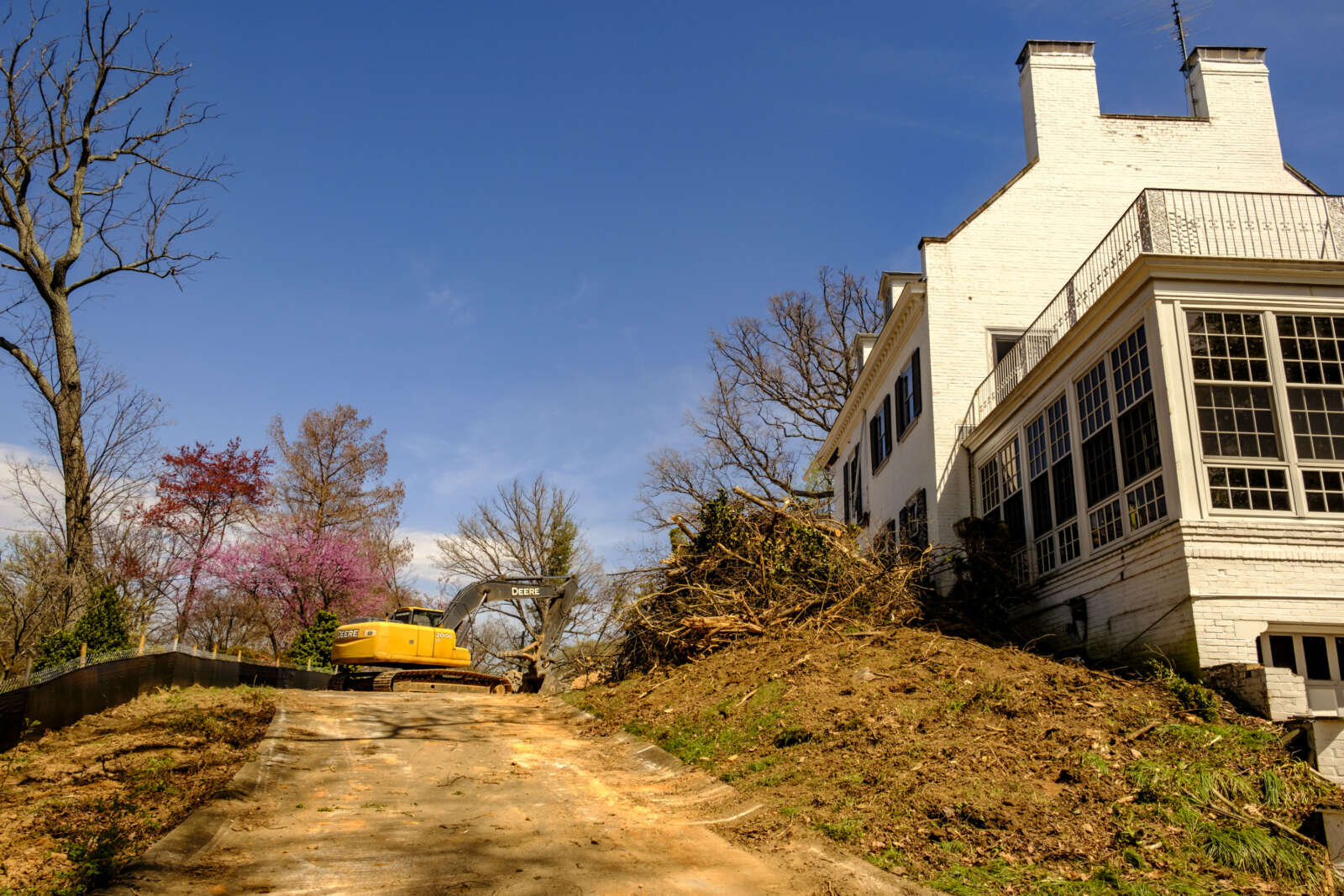
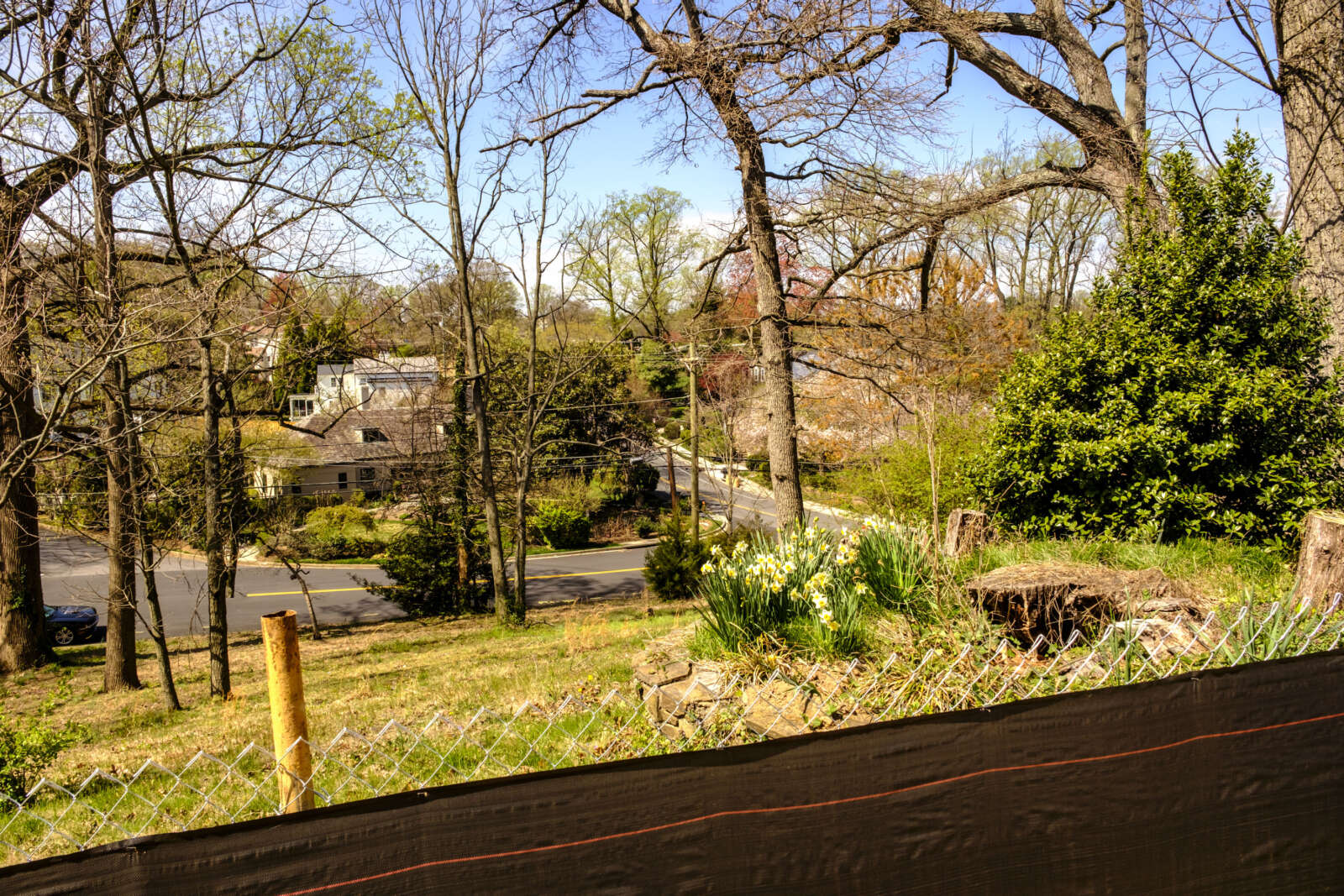
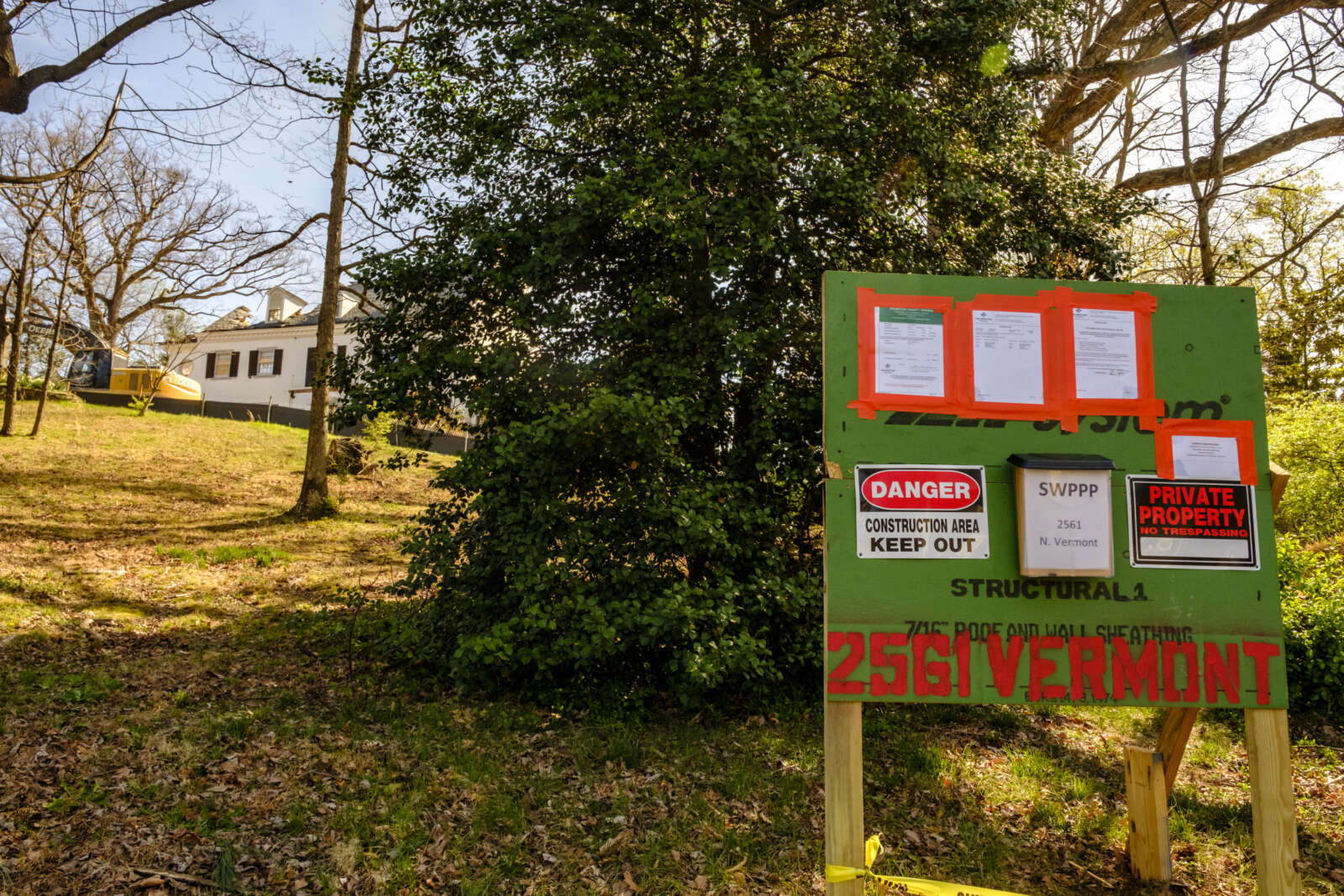
Demolition began this weekend on the 70-year-old Broyhill mansion in the Donaldson Run neighborhood.

The lengths to which some have gone to oppose it, including allegedly impersonating a photographer and stealing tile today (Monday), has left a bitter taste in the mouths of the owners.

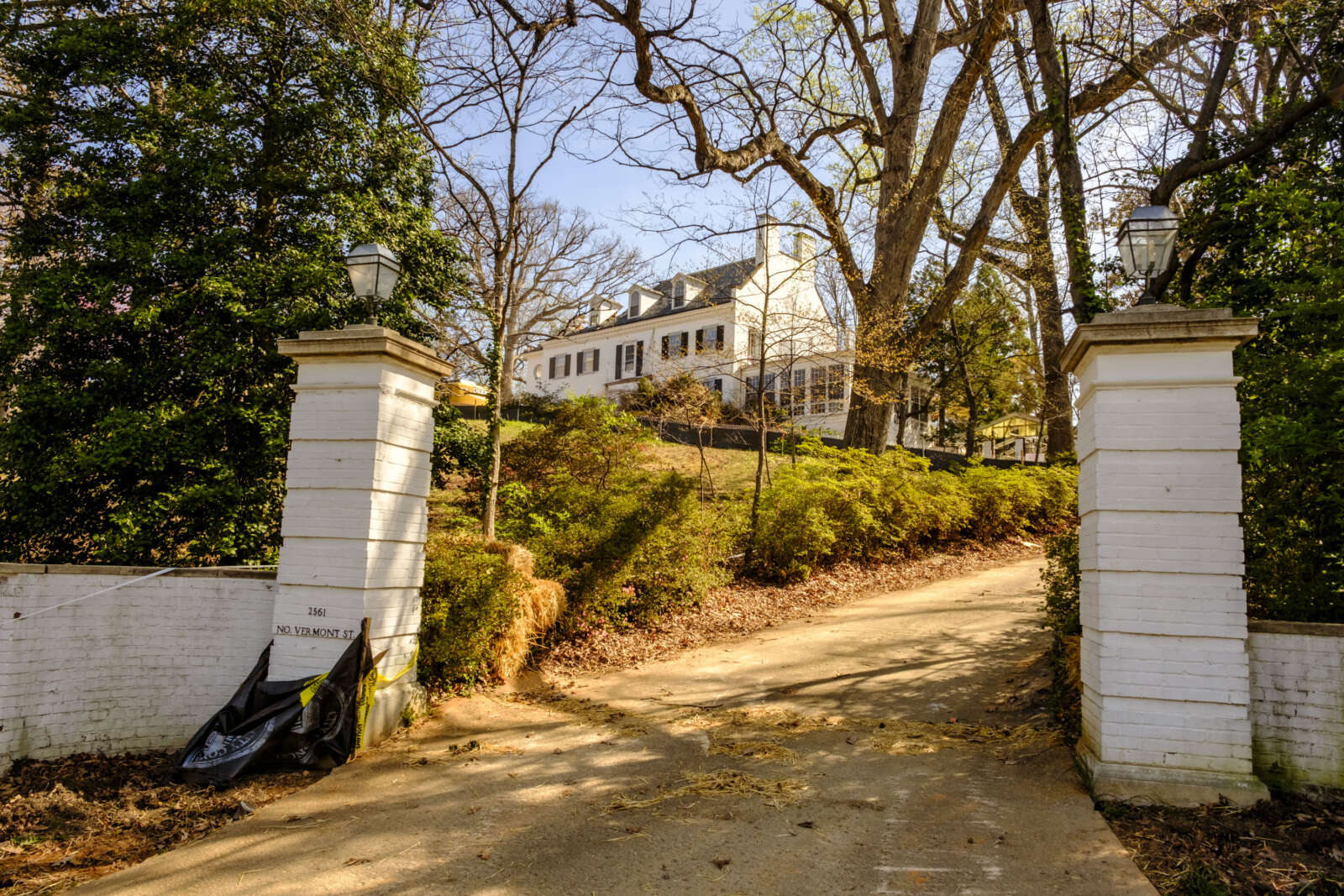
The 10-bedroom home at 2561 N. Vermont, near the Washington Golf and Country Club, went on the market last November for $3.6 million after the previous owner died and the beneficiary, the Catholic Prelature of Opus Dei, decided to sell it to a residential buyer, the Falls Church News-Press reported.

As of January, the only interested buyers were husband-and-wife duo Mustaq Hamza and Amanda Maldonado. They purchased the home — described on Redfin as a “jewel [that] unfolds like a diamond necklace” — f0r more than $1 million under asking price, with the intention of knocking it down and building something more suitable for family life.

“The house was built for entertaining, not for raising a family,” Maldonado told ARLnow this morning.

Some however, are upset to see it go. On Saturday, Hamza said people shouted profanities and walked onto the property and demanded materials be set aside.

“That’s not what we expected when we were trying to plan,” he said, adding that now, he and his wife are doing some “soul-searching.”

“Our intention coming here to build the house for our family seems predicated on the fact that this was a nice neighborhood to raise our children in and stay forever,” he said. “It seems not to be the case, and disappointed as we are, we’re open to having been wrong.”

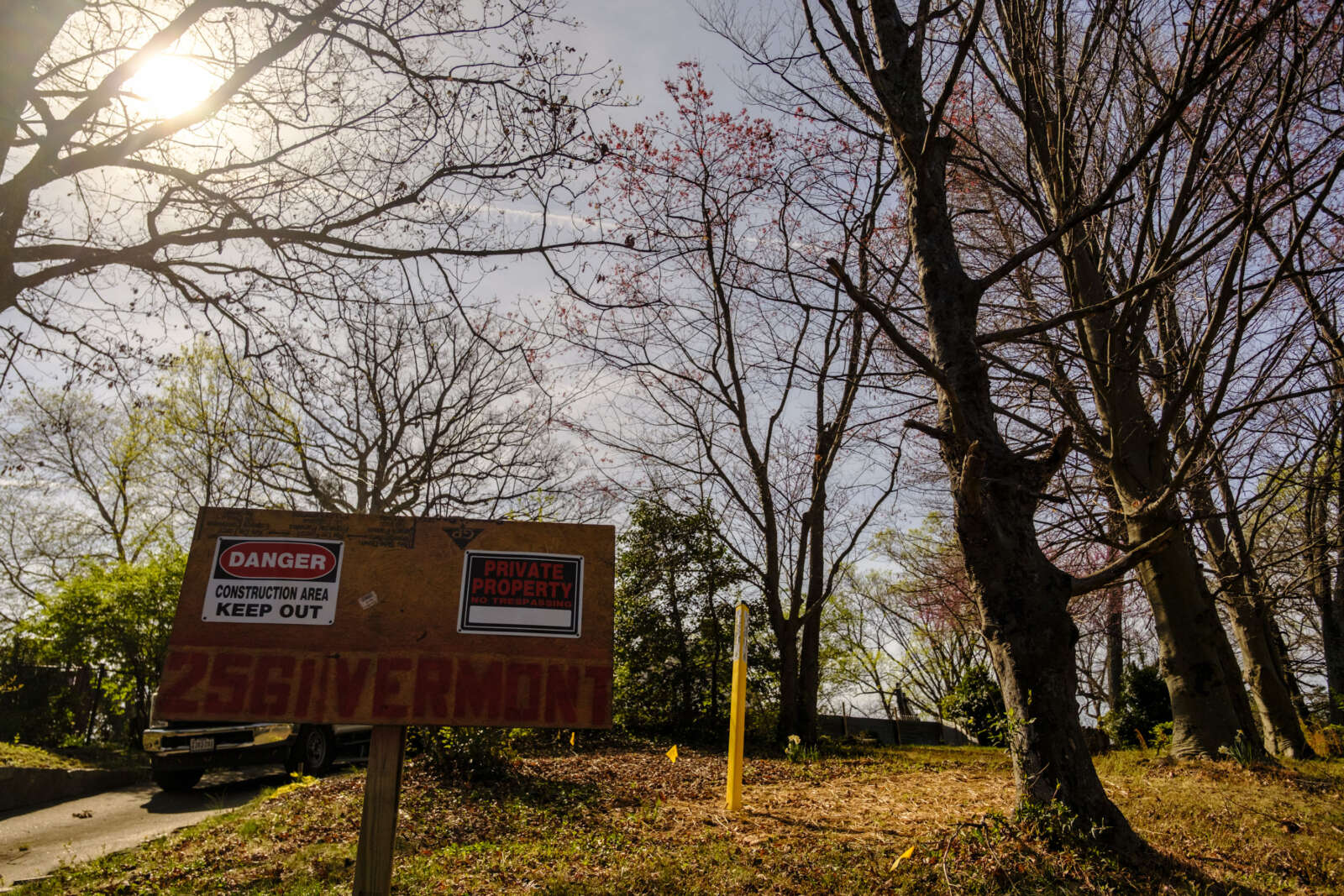
Unwanted visitors — flouting signs saying “private property” and “danger” — continued on Monday afternoon, when ARLnow photographer Jay Westcott was taking photos of the demolition.

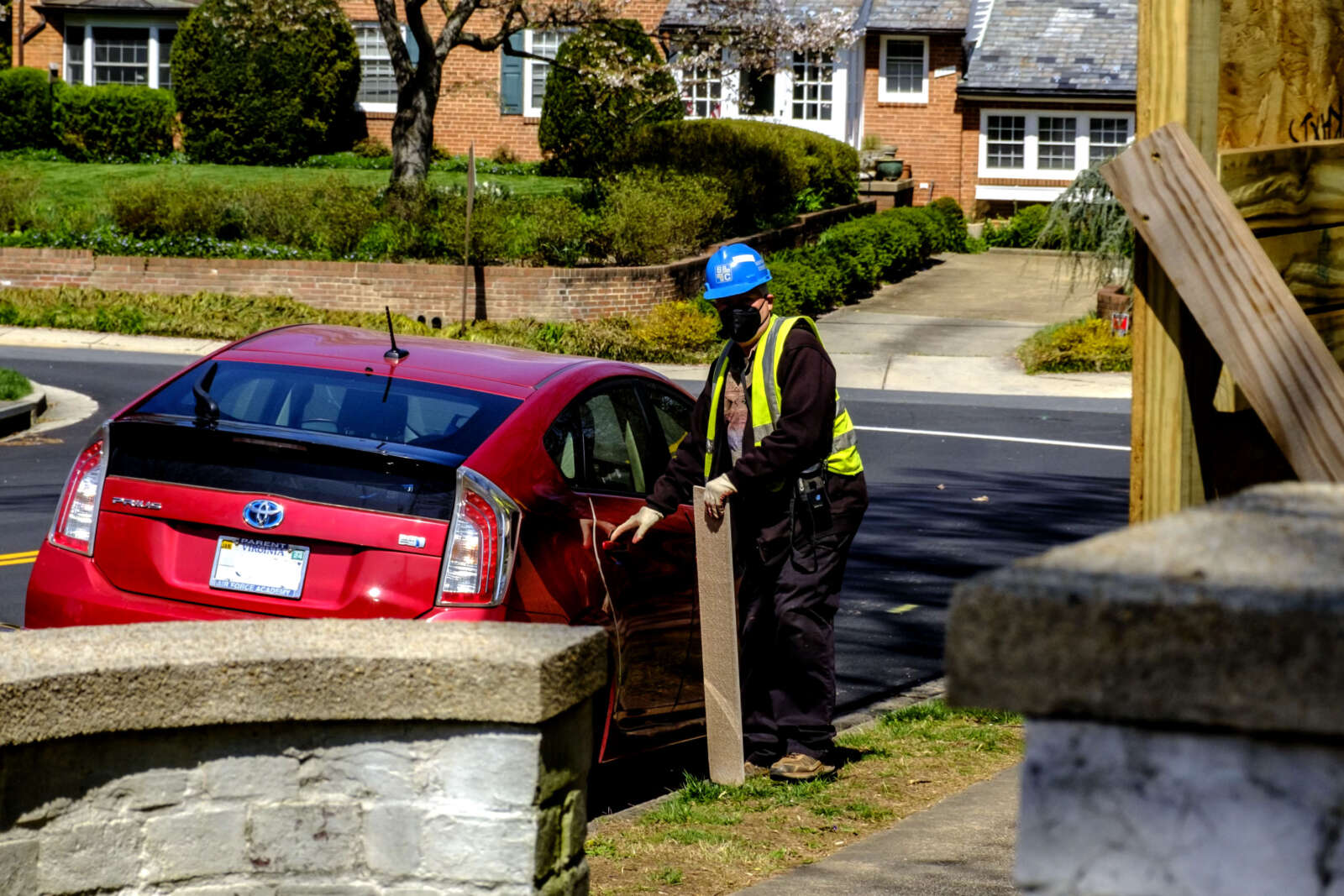
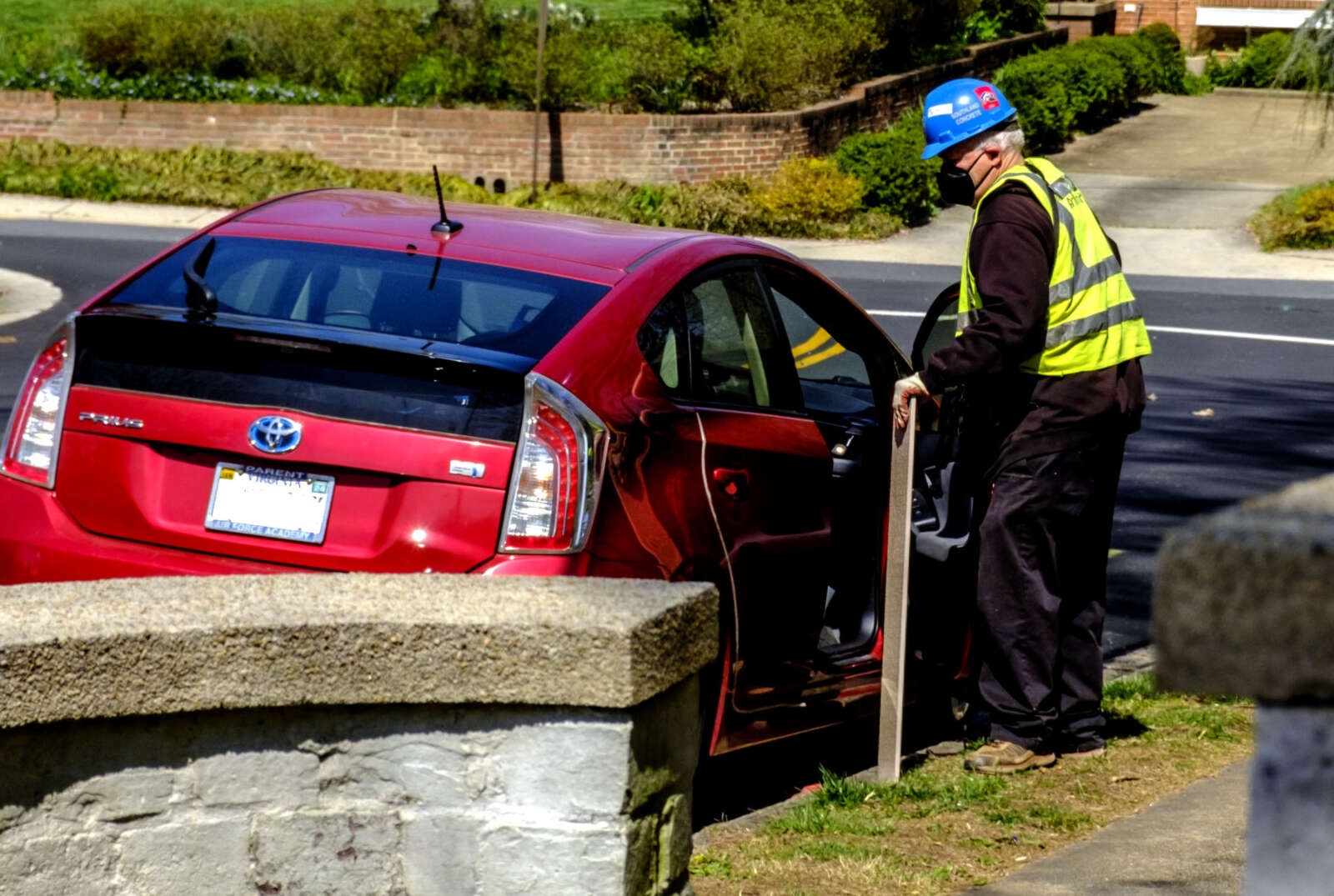
When Westcott arrived, he met a man impersonating a photographer, who announced he was “here to take the pictures.” In addition to a camera, he wore a fluorescent vest, a hard hat and a K95 mask, and left in his red Prius with, Hamza says, historically unremarkable tiles and air filters. He says he is considering filing a police report.

The couple insists that the home is not the historical marvel it has been made out to be. They have preserved items inside and given them away if people requested them, the couple said.

“There’s nothing architecturally stunning about the house — it’s a 1950s replica,” Maldonado said. “There’s nothing in the house that can’t be purchased today. We looked to see if there was anything worth preserving and anything that there was, we saved.”

Northern Virginia home builder Marvin T. Broyhill Sr. built the mansion in 1950 after making his fortune building the classic 3-bedroom brick homes that could be bought for $20,000 during the post-World War II housing boom, according to the neighborhood conservation plan for Donaldson Run.

(more…)


View More Stories