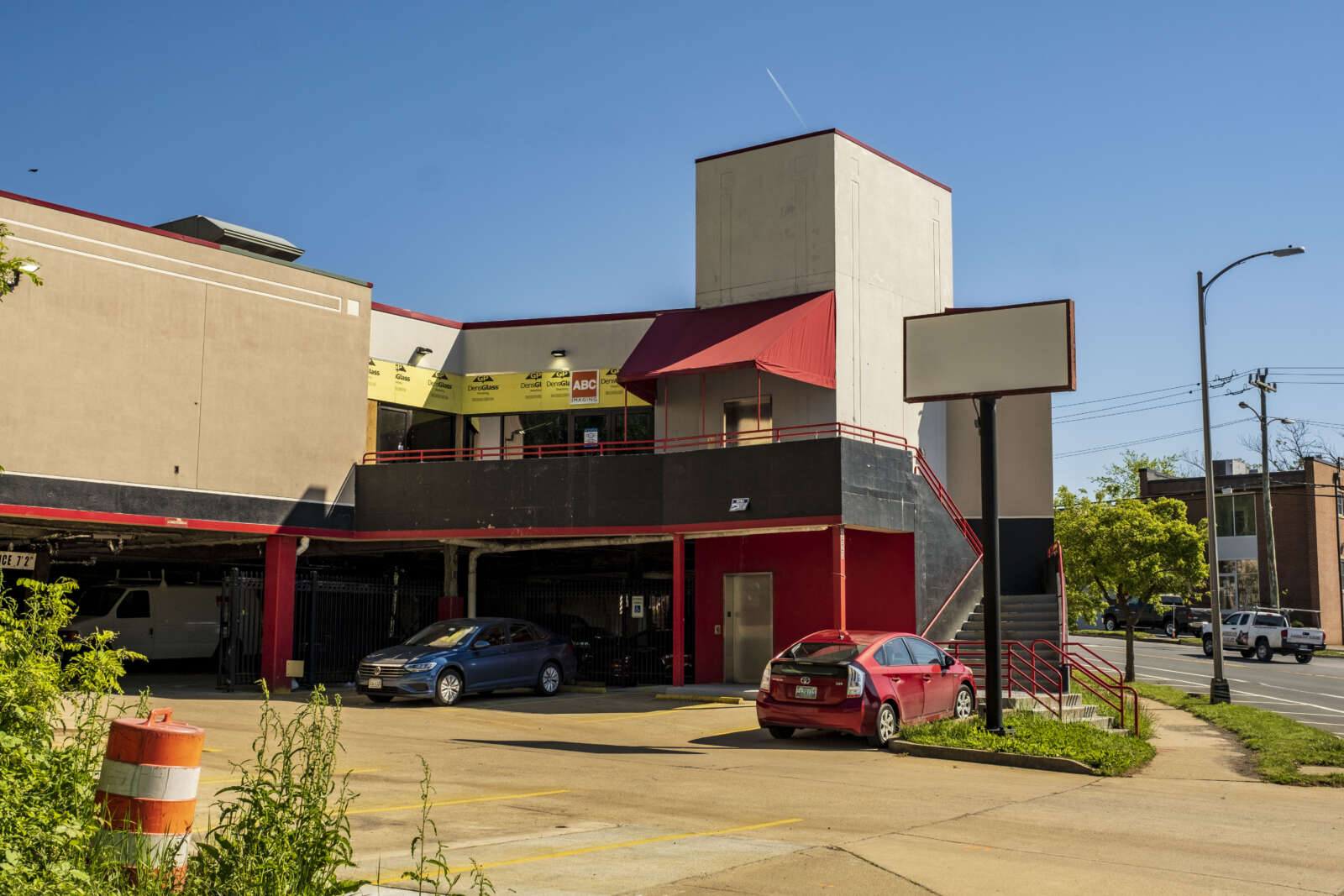
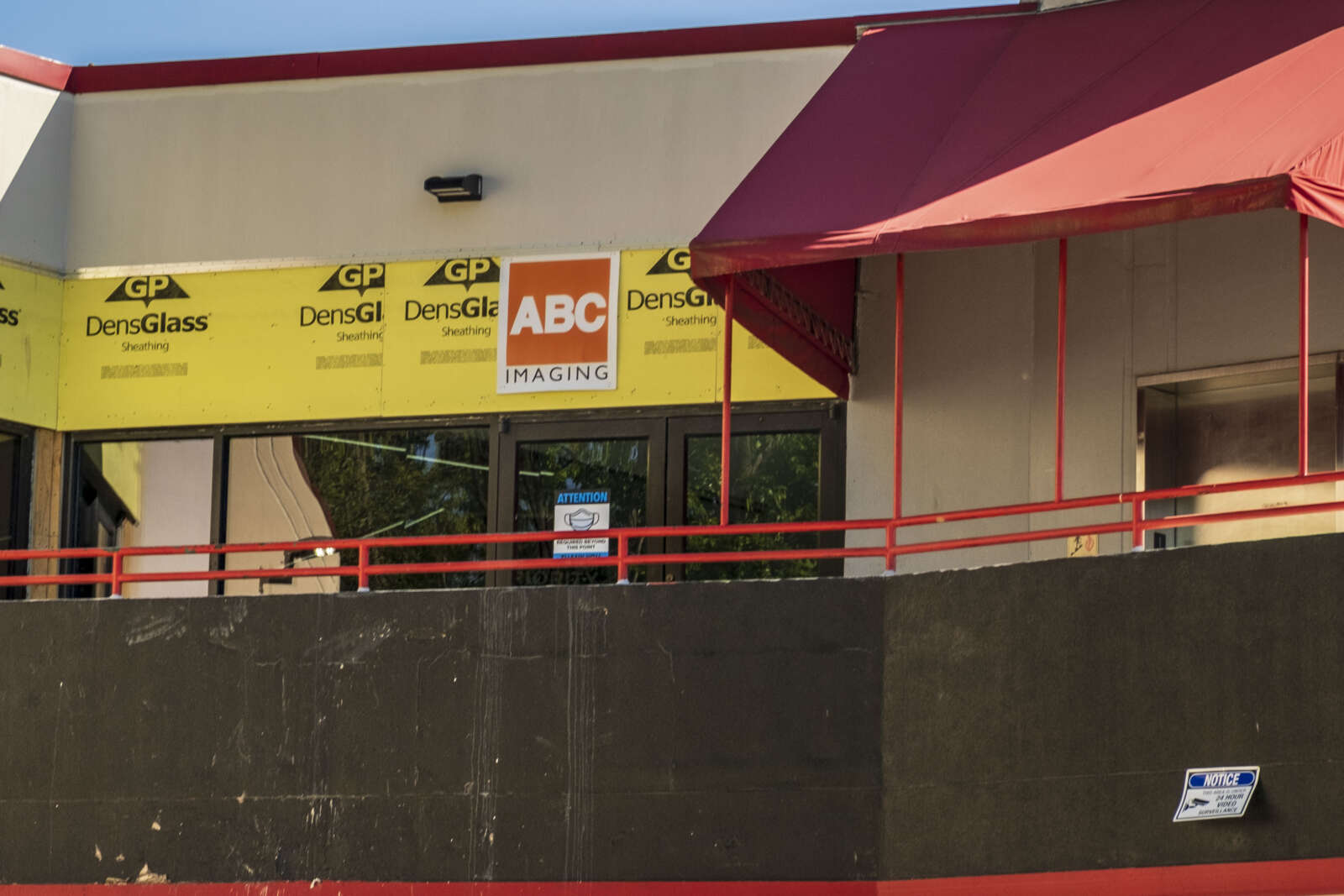
A new print shop, ABC Imaging, is open at 2620 Shirlington Road (Staff photo by Jay Westcott)
A new print shop, ABC Imaging, is open at 2620 Shirlington Road (Staff photo by Jay Westcott)
A new print shop has taken over a building in Green Valley that has housed a revolving door of bar and lounge spots.
An employee confirmed that ABC Imaging opened at 2620 Shirlington Road two weeks ago on April 12. ABC Imaging is headquartered in nearby Fairfax County, and the new Arlington location joins a roster of nearly 30 outposts across the U.S., in addition to four global hubs.
The opening marks a hard restart for 2620 Shirlington Road, which is across the street from a concrete plant and a self-storage facility.
Over the last 10 years, folks have tried and failed to establish a local watering hole at the quirky building that would replace Champion Billiards. The billiards spot had a two-decade run but struggled to stay on top of taxes in its later years.
Since 2011, three variations on the theme of a bar and lounge have come and gone in quick succession.
Attempting to give the building a new reputation as a more family-friendly place, new owners opened Sydney’s Bar and Lounge in September 2019. Sydney’s had a brief run but the owners appear to have moved the restaurant to Delaware last year.
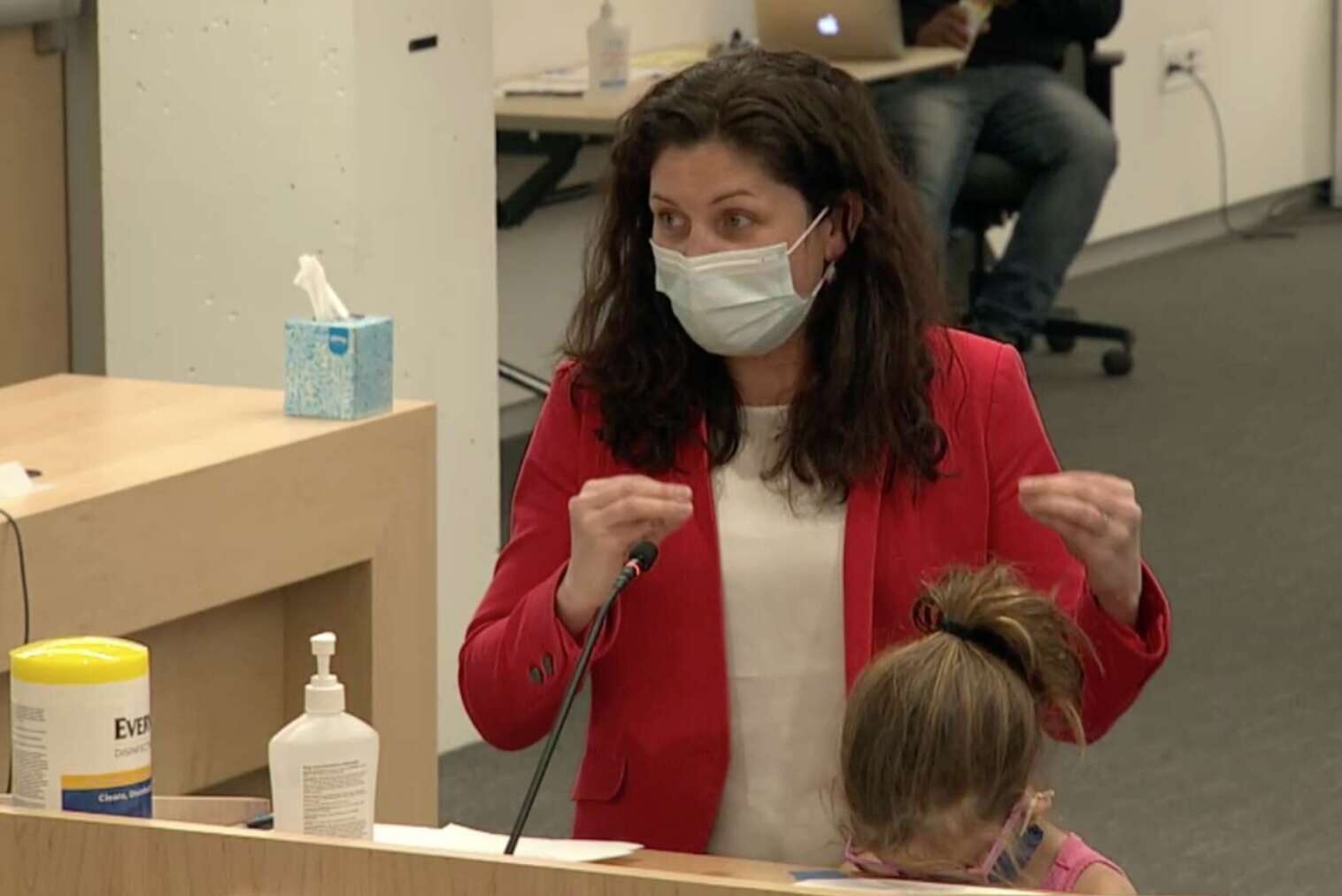
Sheila Leonard address the Arlington School Board with her daughter (Image via APS)
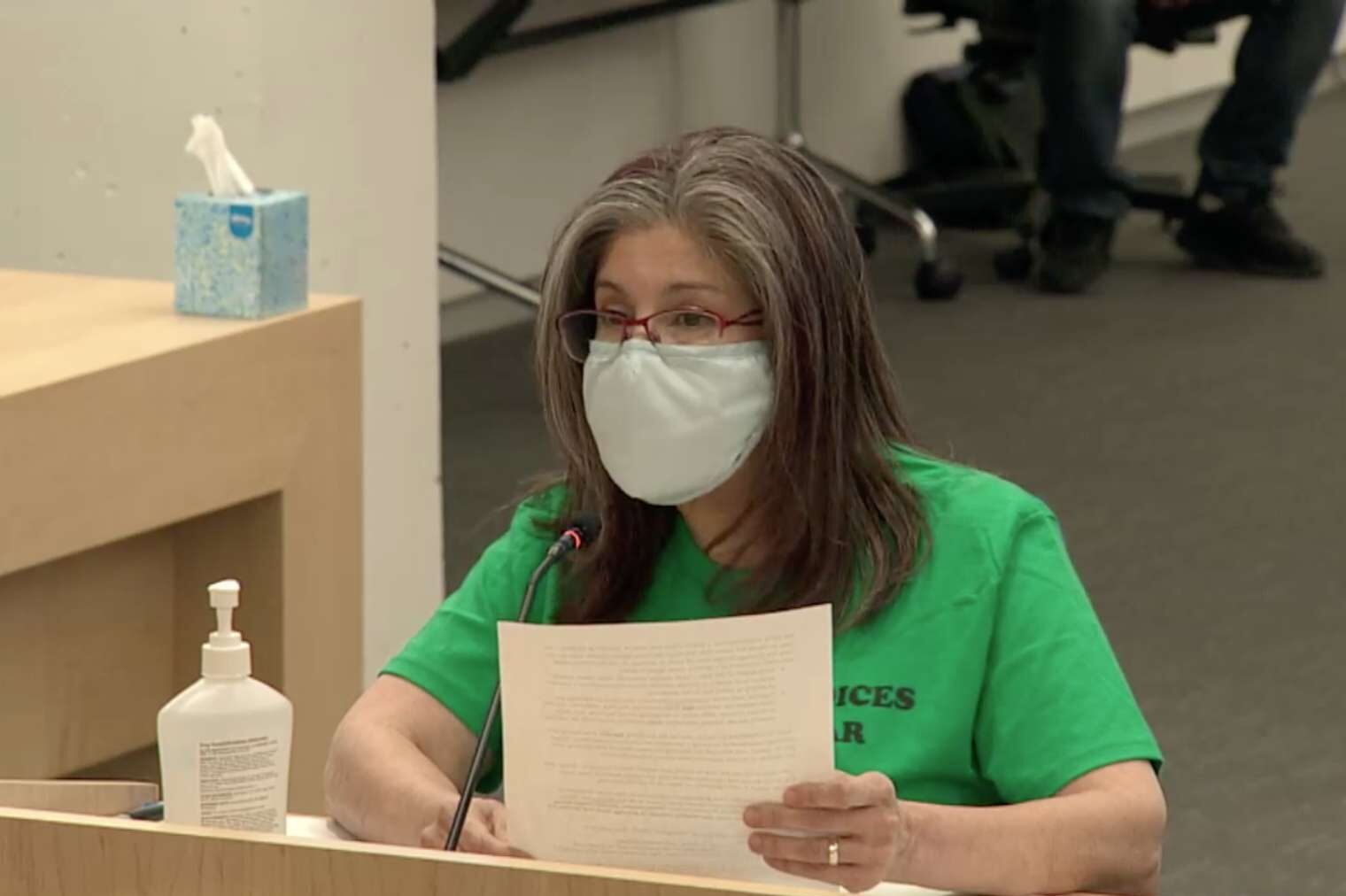
Gabriela Uro address the Arlington School Board (Image via APS)
Thursday night was not a typical Arlington School Board meeting.
A contentious public comment period, during which Board Chair Monique O’Grady called for order multiple times, preceded news that Arlington Public Schools has launched school-based COVID-19 testing and preschoolers will gain access to four days of in-person instruction.
Six times, O’Grady addressed violations of the comment period, which included clapping, direct appeals to school board members, and an unseen man shouting down a speaker. She even threatened to “take other measures” if people kept disrupting the proceedings.
“We do appreciate hearing from all families, whether you’re happy or not, but we ask you that when you come into our board room that you please respect our rules and one another,” she said later in the meeting, which was preceded by a rally pushing for schools to add more in-person learning days this spring.
Tensions came to a head last night among parents who are asking APS to open schools fully, school board members and administrators, and other parents and advocates who want the school system to retain a virtual option.
Last night, administrators announced some new developments.
APS is rolling out on-site COVID-19 testing, which could allow some students exposed to COVID-19 in class to return sooner, said Zachary Pope, the director of emergency planning for APS. This new approach will be tested in the summer and could be implemented this fall.
Additionally, Superintendent Francisco Durán said preschool students can be in-person four days a week starting Monday, May 3 due to the federal guidance shortening social distancing from six feet to three feet. Students in certain special education programs are the only ones currently in person four days a week.
But many parents want to see four-day schedules for all students, not just those enrolled in specialized programs. They call for APS to follow the lead of Fairfax County Public Schools.
In Northern Virginia, the superintendents of Arlington Public Schools and Alexandria City Public Schools are sticking with two days a week of in-person students for the remainder of the semester, while Fairfax and Loudoun County public schools have allowed some students to access in-person education four days a week.
A spokeswoman for FCPS tells ARLnow the first students to get four days of in-person learning were those in most need of it, who may or may not have been in-person before. After they returned on April 6, wherever additional spots remained, school personnel reached out to students attending school in person twice a week and gave them the option of four-day, in-person schedules, depending on the number of staff and the size of each classroom.
APS is taking a different approach, Durán said. Rather than expand schedules to four days of in-person school for a limited number of students, he decided to expand access to two days of in-person education. Over the last month, nearly 1,800 students who were virtual started attending school two days a week where space allows.
Last night, parents calling for fully in-person schedules picked up where they left off earlier this month, calling for more days as well as the resignation of APS leaders.
Standing with her daughter, Sheila Leonard pleaded with the school board to allow hands-on arts, music and physical education experiences on in-person school days, and to open schools fully.
“Since July, Gov. Ralph Northam and the American College of Pediatrics have prioritized [special-education, English-language learners and K-2 students] but not APS. When will you stand up for our neediest children?” she said.
Next, Brittany Kitchen wondered whom the school board members are protecting in avoiding a full return.
“It’s not for the kids. It’s not for the teachers — they’re vaccinated. Who is it for, then? You, so you can sleep at night knowing you didn’t make a decision, so if something goes wrong, it’s not on you?” Kitchen said. “That’s not leadership, it’s cowardice.”
People clapped. O’Grady instructed attendees to wave their hands silently. Two more parents’ speeches are met with applause and O’Grady reiterated the rules.
Next, Aaron Asimakopoulos called for the removal of school board members and administrators.
“Who among you can honestly say you have fought to get our children back in school?” he said. “Your departure from APS would have absolutely zero effect on the outcome of a student’s outcome, except to remove a barrier.”
After O’Grady rebuked him for addressing her specifically, he told other board members to “show some spine.”
Eventually, Latina advocates Gabriela Uro and former school board member Tannia Talento came forward. They said the immigrant and Latino families they work with are more cautious about school since they have experienced disproportionate rates of financial burden, sickness and death during the pandemic.
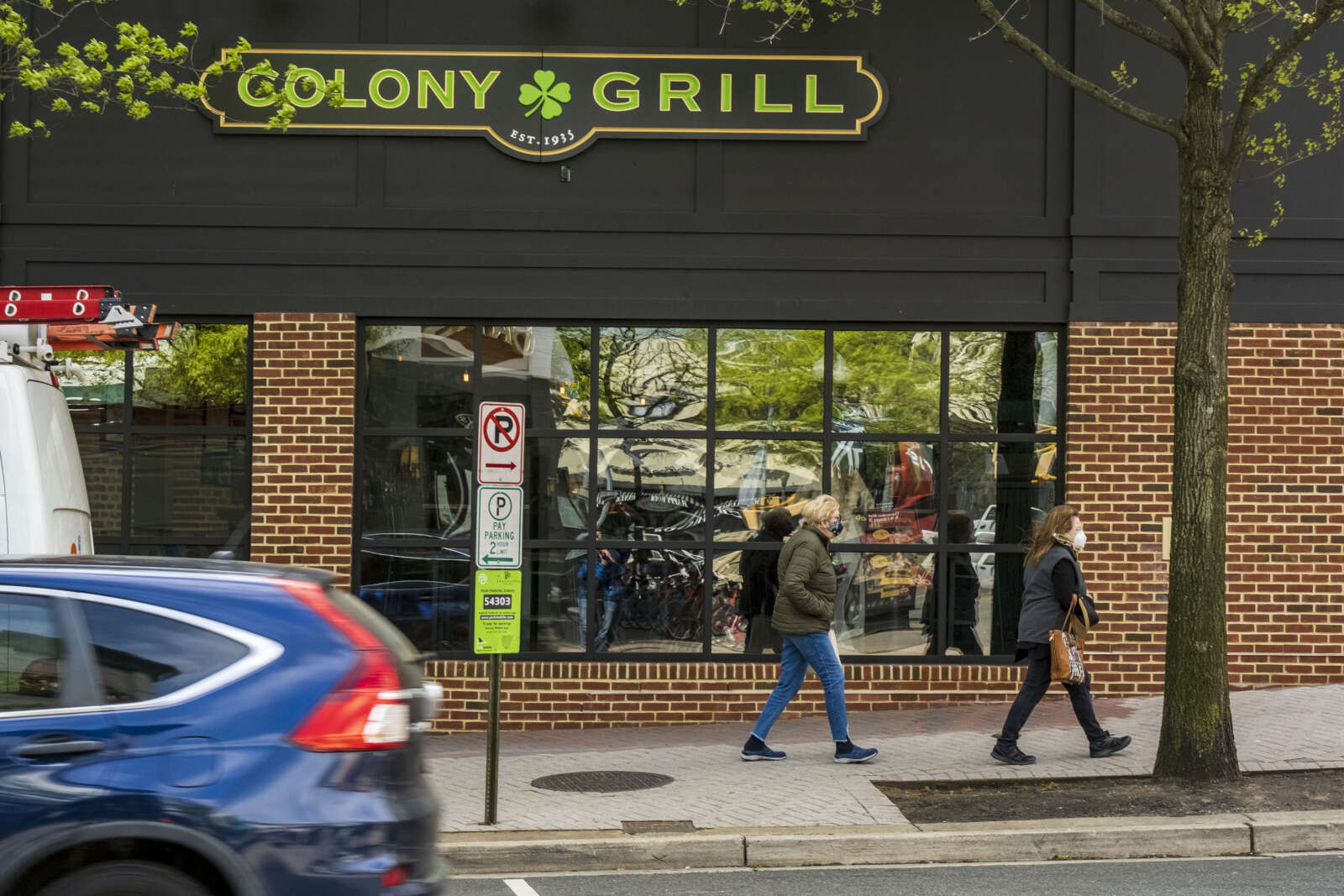
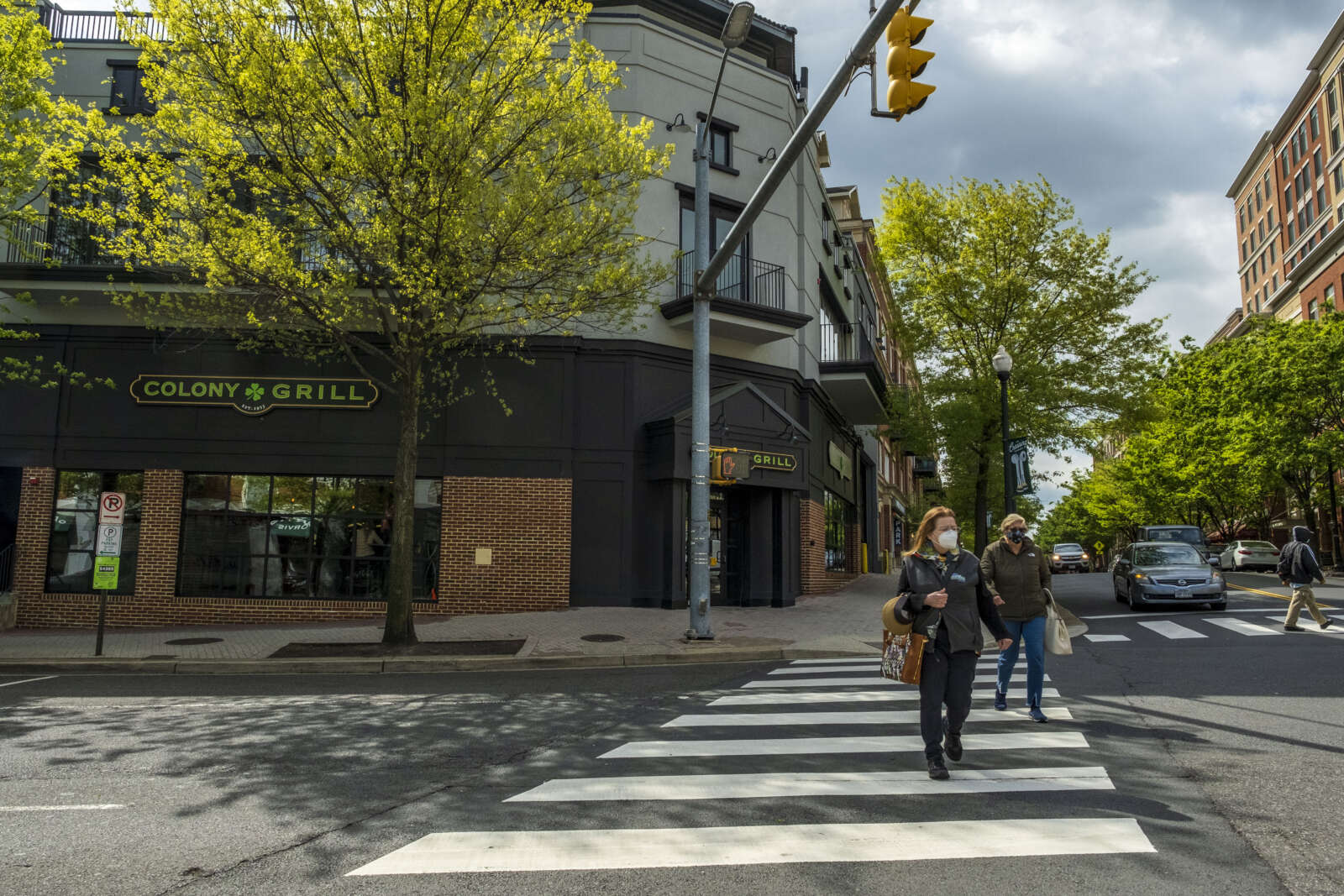
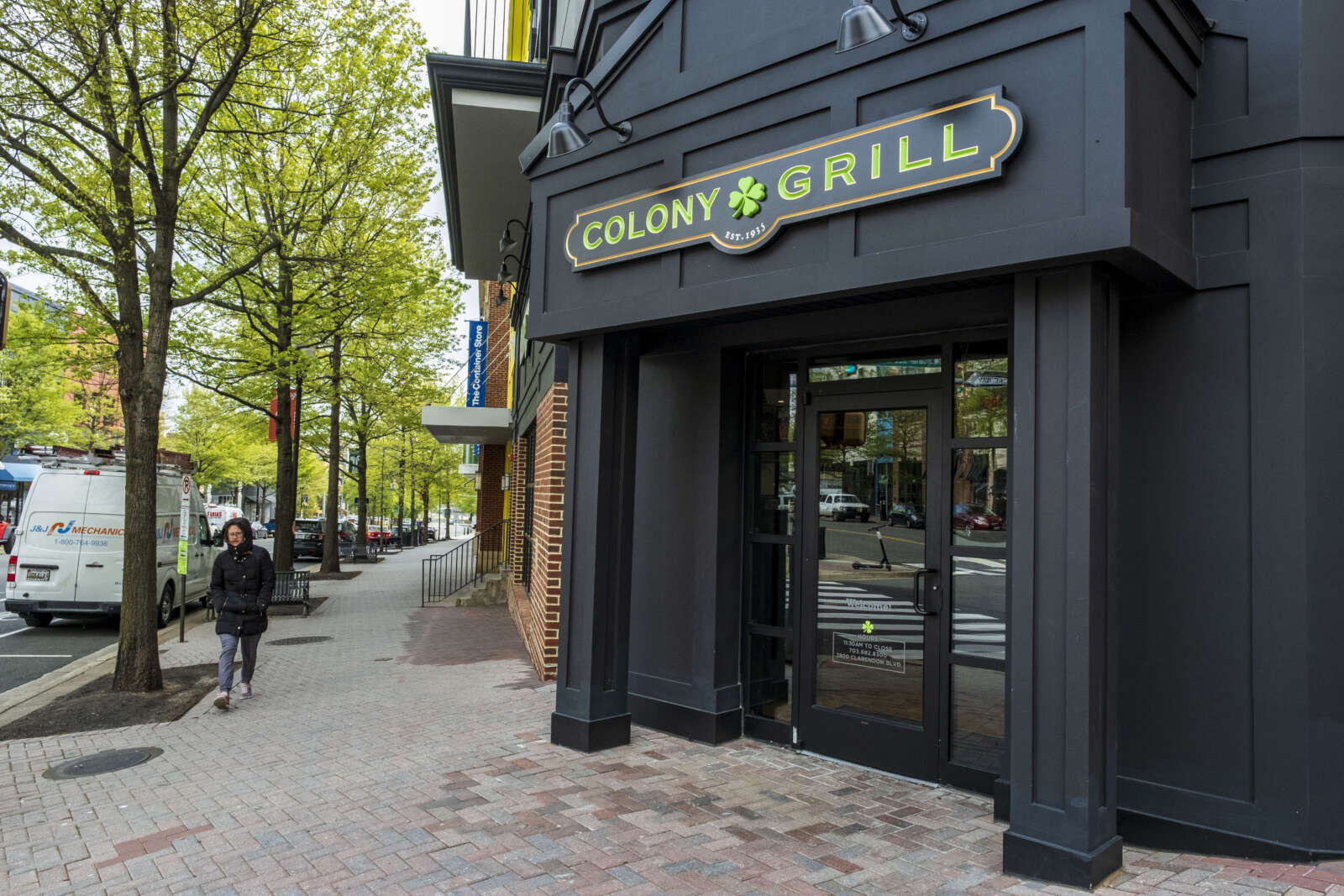
Colony Grill in Clarendon (Staff Photo by Jay Westcott)
Colony Grill in Clarendon (Staff Photo by Jay Westcott)
Colony Grill in Clarendon (Staff Photo by Jay Westcott)
In the short time that Colony Grill has been in Clarendon, the pizza place has garnered a lot of love.
The spot opened last October at 2800 Clarendon Blvd in The Crossing Clarendon (formerly known as Market Common). Colony Grill, a small Connecticut-based chain, is known for its short menu featuring one innovation to pizza: the thin-crust, hot-oil bar pie. On weekends, it becomes a breakfast pizza best served with a mimosa or Bloody Mary.
Co-owner Ken Martin tells ARLnow that the company is as excited to be in Arlington now as it was a month before the opening.
“I think we’ve been well-received by local guests and the community, which has been great,” he said.
Small, out-of-town restaurant chains setting up shop in Arlington have not always found the county to be a fruitful place to pursue an expansion. What worked in one place often does not work here, for one reason or another.
But reviewers on Google and Yelp seem to agree with Martin that Colony Grill has found a good fit: “Finally a solid pizza place right in the heart of Clarendon! Place looks amazing on the inside,” said one.
A Stamford native who now lives in Arlington said she “had high expectations for this location,” given its Connecticut provenance, and was not disappointed, praising the service and the local addition of “a down-to-earth, inexpensive, quality pizza joint.”
But business could be better, Martin said. Back in the Constitution State, most sales are inside rather than take-out. In Clarendon, most sales are inside too, but Colony Grill is limited by booth spacing. Restrictions have been lifted faster in New York and Connecticut, allowing customers to be seated back-to-back in booths so long as a barrier is in place, he said.
“We certainly need more capacity,” Martin said.
Martin observed that people in Virginia seem more reluctant to dine out than those in Connecticut and New York, where the original restaurant and its four outposts are located.
“It seems like some of our guests in Virginia, they just want to be given permission to leave their house — they’ve tried to follow the rules and do their best,” he said. “We want to get through this. We’ve been fairly healthy because of the type of restaurant we are, but we’re so desperate to get more bodies into the restaurant.”
He said he hopes to see some additional restrictions lifted in the coming weeks and months, which Colony Grill will need “to remain healthy as a business.”
“Our dine-in business has been very strong but within a context that’s a bit limited,” he said. “Takeout has been okay, but typically, takeout business lags for a year or two until we establish ourselves.”
The pizza joint is still working to establish itself as a member of the community. A “Wall of Heroes” features photos of those who have served in uniform as first responders or members of the military. For Veteran’s Day, Colony Grill offered free pizza to current and former military members.
This year, Colony Grill is sponsoring the Armed Forces Cycling Classic, which was canceled last year. The races through Crystal City and Clarendon are set to take place on Saturday and Sunday, June 5-6, respectively — pending final permit approval and an easing of restrictions on outdoor gatherings.
“We’ve tried to be a good partner for our size of business,” he said of the sponsorship.
Although uncertainty exists, Martin said his restaurant will continue its focus on its thin-crust pizza, hospitality and a wecoming atmosphere.
“That’s going to get us returning customers over the long haul,” he said.
Remember the Stamford native? She later updated her review to say she’s “been going consistently once a week.” Her one pro-tip: “Ask for your pizza on the well-done side, it’s my favorite.”
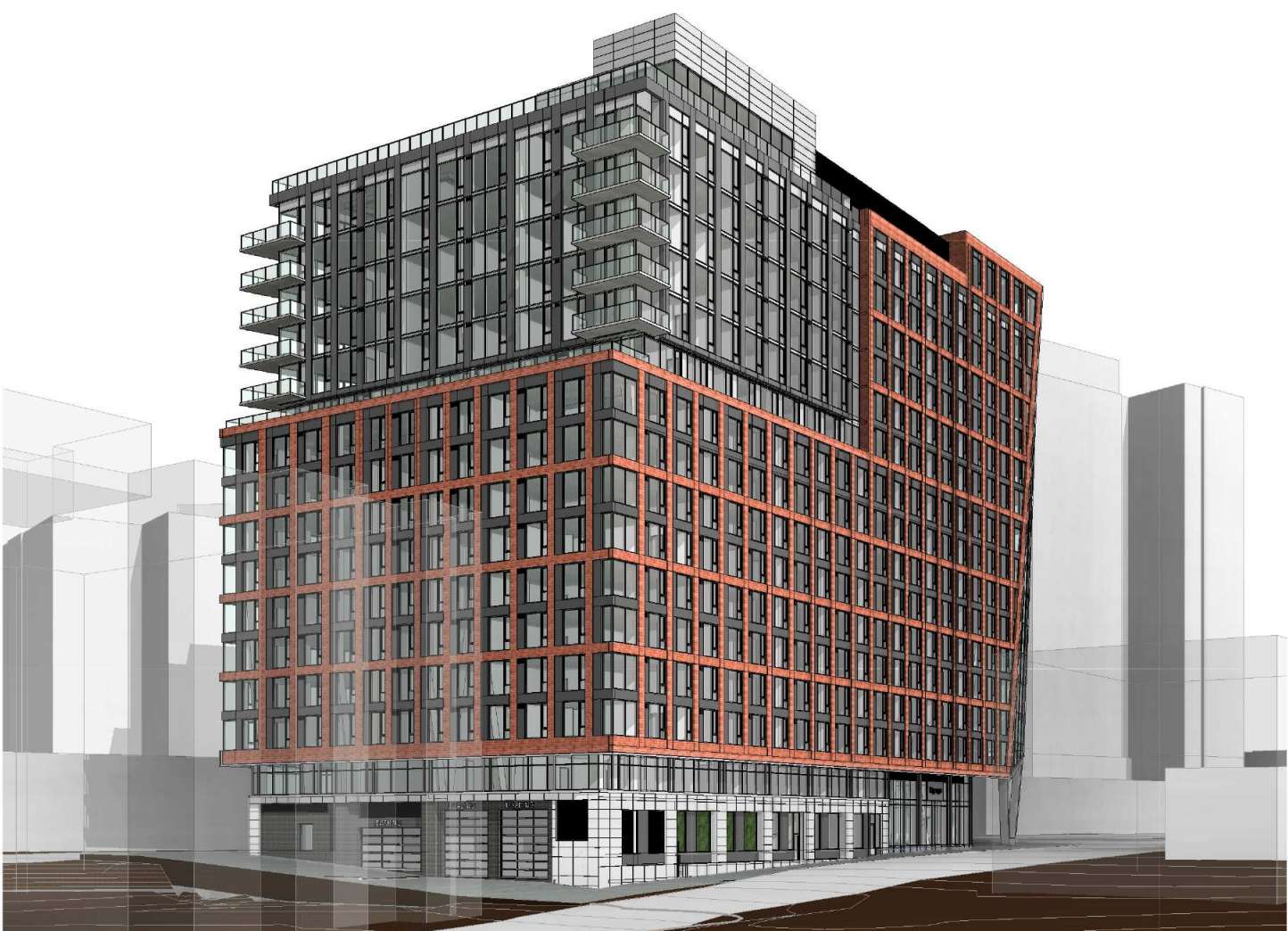
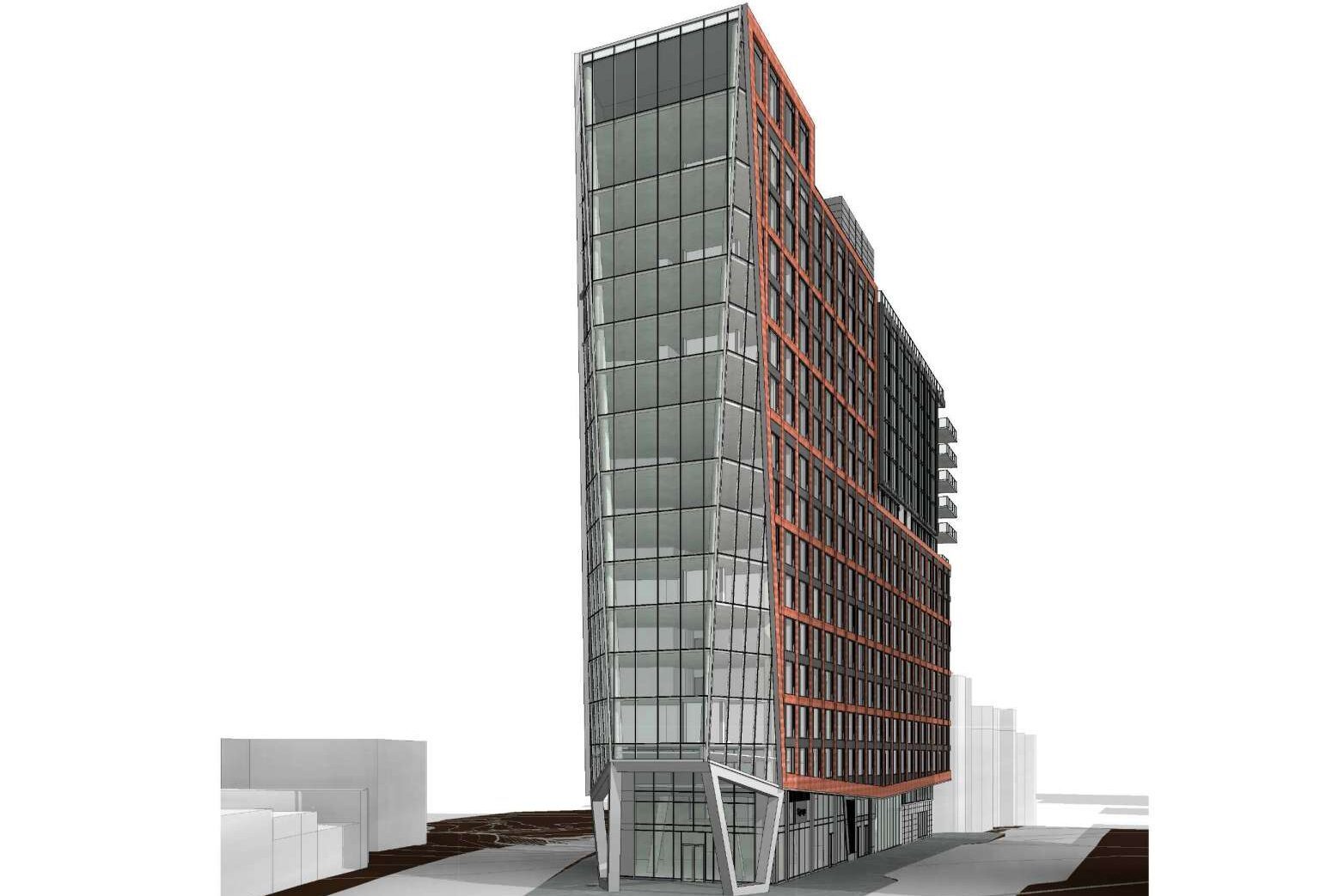
Rendering of a proposed apartment building for the former Wendy’s lot in Courthouse (Image via Arlington County)
Rendering of a proposed apartment building for the former Wendy’s lot in Courthouse (Image via Arlington County)
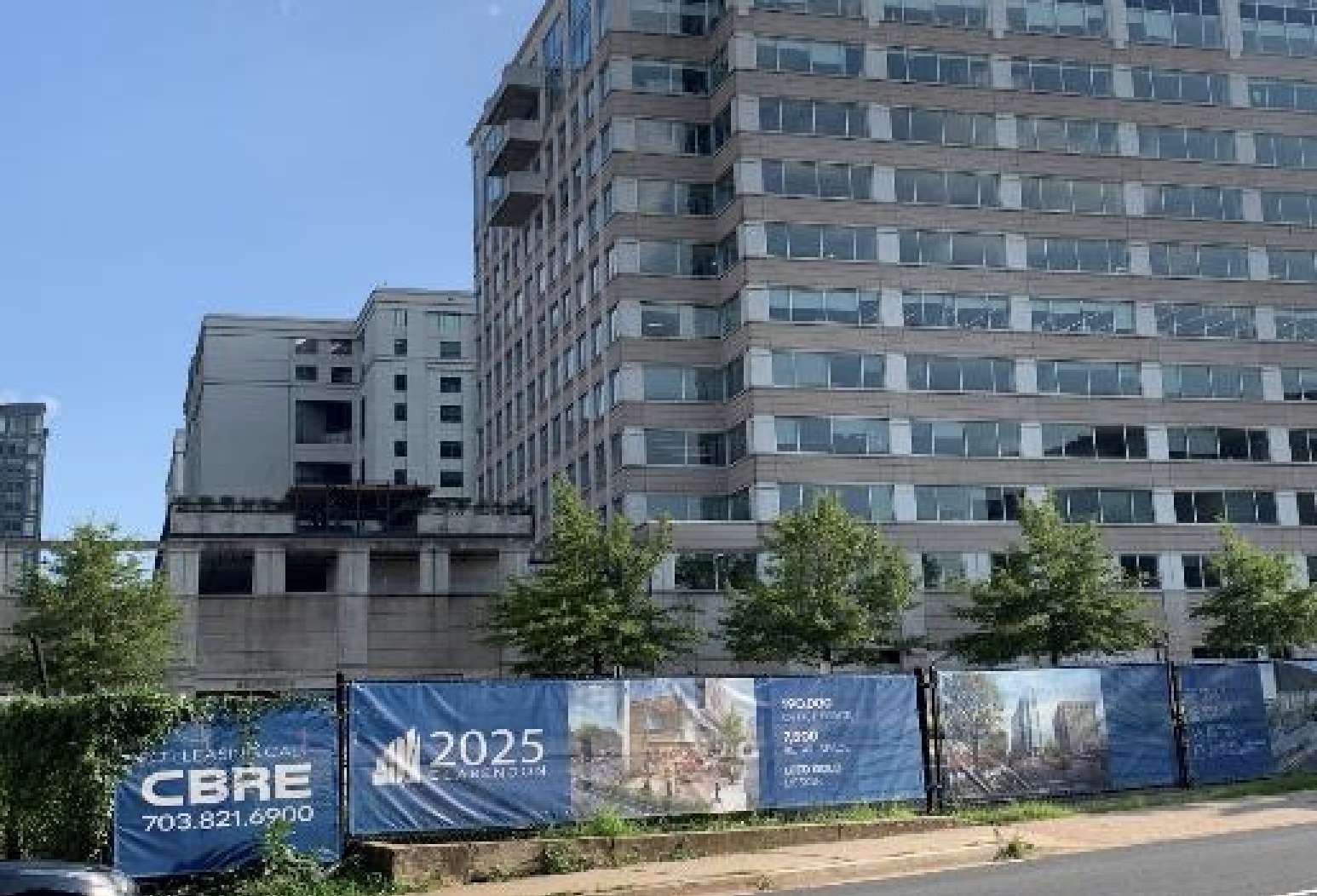
Construction staging at Wendy’s site in Courthouse in September (via Arlington County)
The old Wendy’s lot in Courthouse, demolished in 2016 for an office building that never came, could be the site of a new development.
For almost five years, the triangle lot at the corner of Wilson Blvd and N. Courthouse Road has sat vacant. Construction crews working on 2000 Clarendon, a condo project across the street, have used it as a staging area for the last two years.
But now a project is taking shape. Last week, Greystar Real Estate Partners filed a site plan application with Arlington County proposing a high-rise apartment building with ground-floor retail at 2026 Wilson Blvd.
The proposed building, which is 16 stories tall and has 231 units, 74 residential parking spaces and some bicycle parking, is expected to achieve LEED Gold certification. The developer is also proposing a public plaza where Wilson and Clarendon Blvd meet.
“Recognizing the property’s location, topography and prominence in Courthouse, the applicant proposes … to redevelop the property with a high-rise residential building with ground-floor retail and iconic architectural features,” said Nan Walsh and Andrew Painter, attorneys for the land use law firm Walsh, Colucci, Lubeley & Walsh, in a letter to the county.
The filing comes four months after the company purchased the lot for $19 million from Carr Properties, according to real estate company Jones Lang LaSalle. Back in 2015, Carr was approved to move forward with plans for a 12-story office building.
Greystar made its intentions known in October 2020, when it filedconceptual plans for 2026 Wilson Blvd.
“The building, which will serve as an iconic architectural feature for the Courthouse neighborhood, will retain many of the same architectural design elements of the previously approved office building, including its glass curtain wall design,” the attorneys’ letter said.
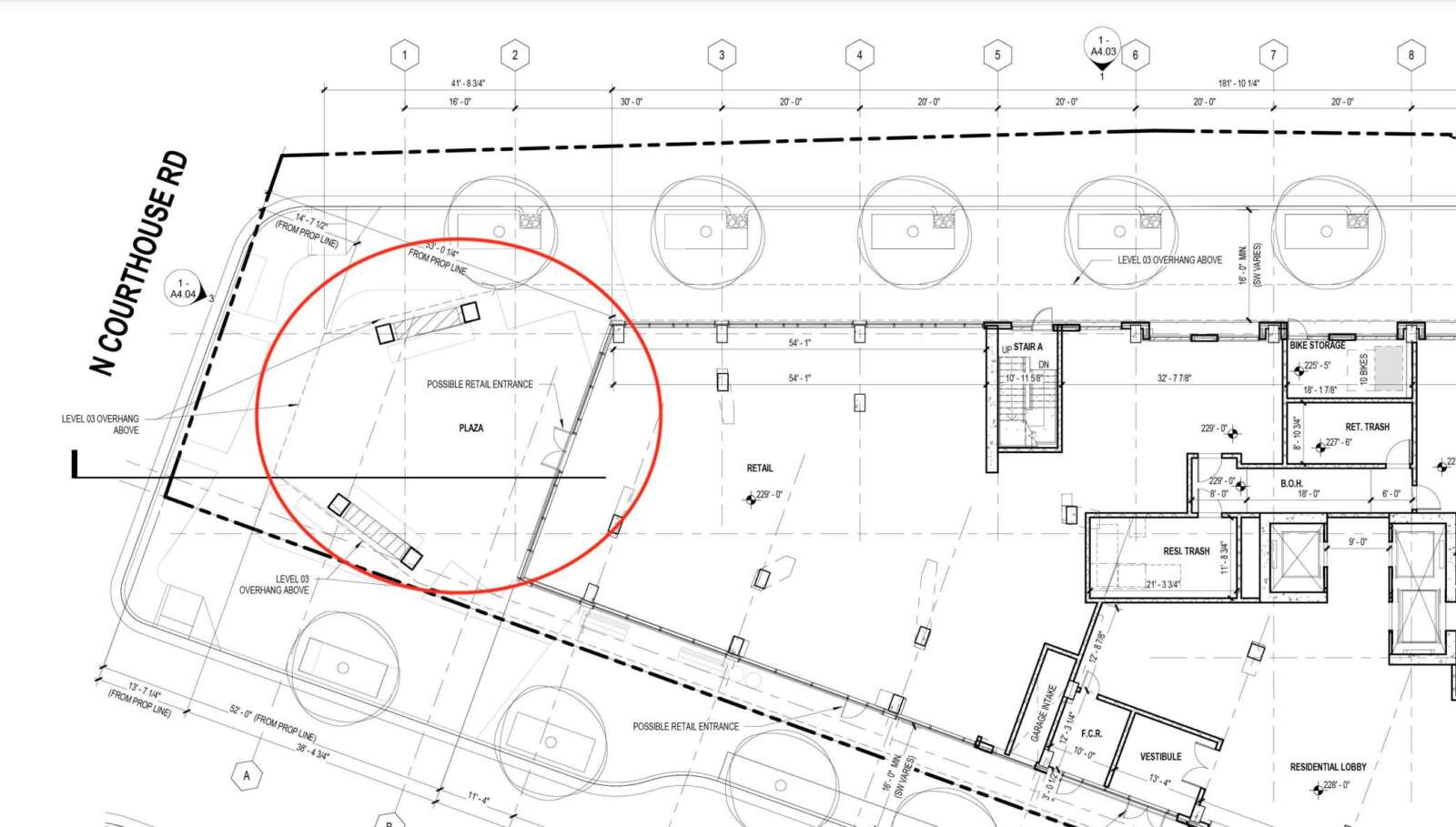
The plaza would surround a possible retail entrance at the tip of the Wendy’s site, facing N. Courthouse Road. The Rosslyn to Courthouse Urban Design Study recommends an “activity-based, pedestrian-oriented urban plaza” at that same location.
According to the Walsh Colucci team, the proposed public pedestrian plaza will be approximately 3,279 square feet with movable tables and chairs and space for temporary vendors.
The urban design study also recommends buildings do not exceed 10 stories — unless they accommodate affordable housing or community benefits. This proposal clocks in at 16 stories and 166 feet tall.
Greystar “is open to the provision of on-site affordable housing to further justify the increase in height,” Walsh and Painter said.
The applications offered no further specifics but Greystar’s legal representation said the company “will work with staff throughout the site plan process to develop an affordable housing plan.”
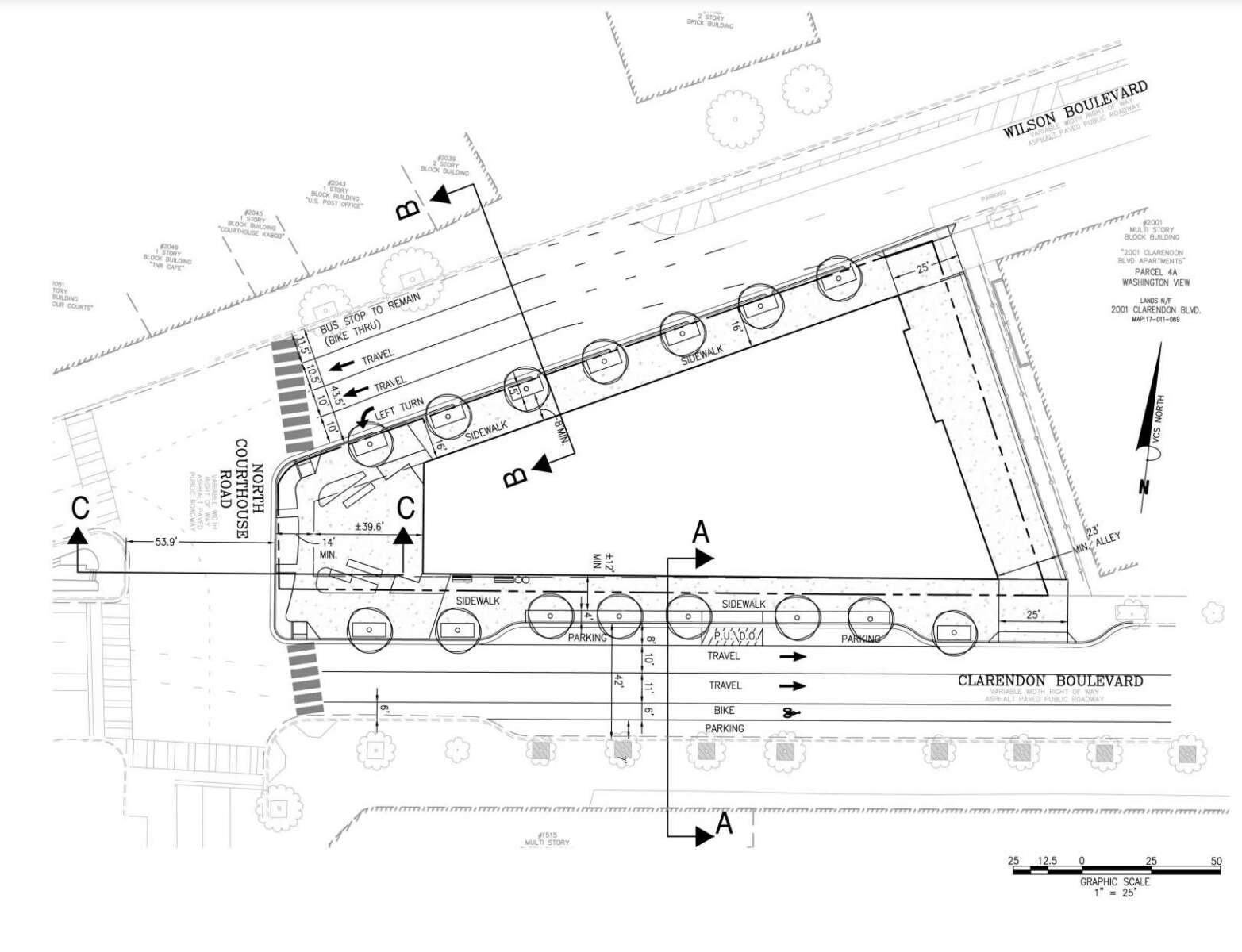
Greystar proposes, generally, to maintain the existing street, sidewalk and bicycle configuration that the County Board approved with Carr Properties’ office building.
There will be no retail parking as a part of the project but Greystar’s development across the street will provide “ample retail parking to support both projects,” the attorney said, referring to the Landmark Block development, which the County Board approved last month.
Images via Arlington County. Hat tip to @CarFreeHQ2.
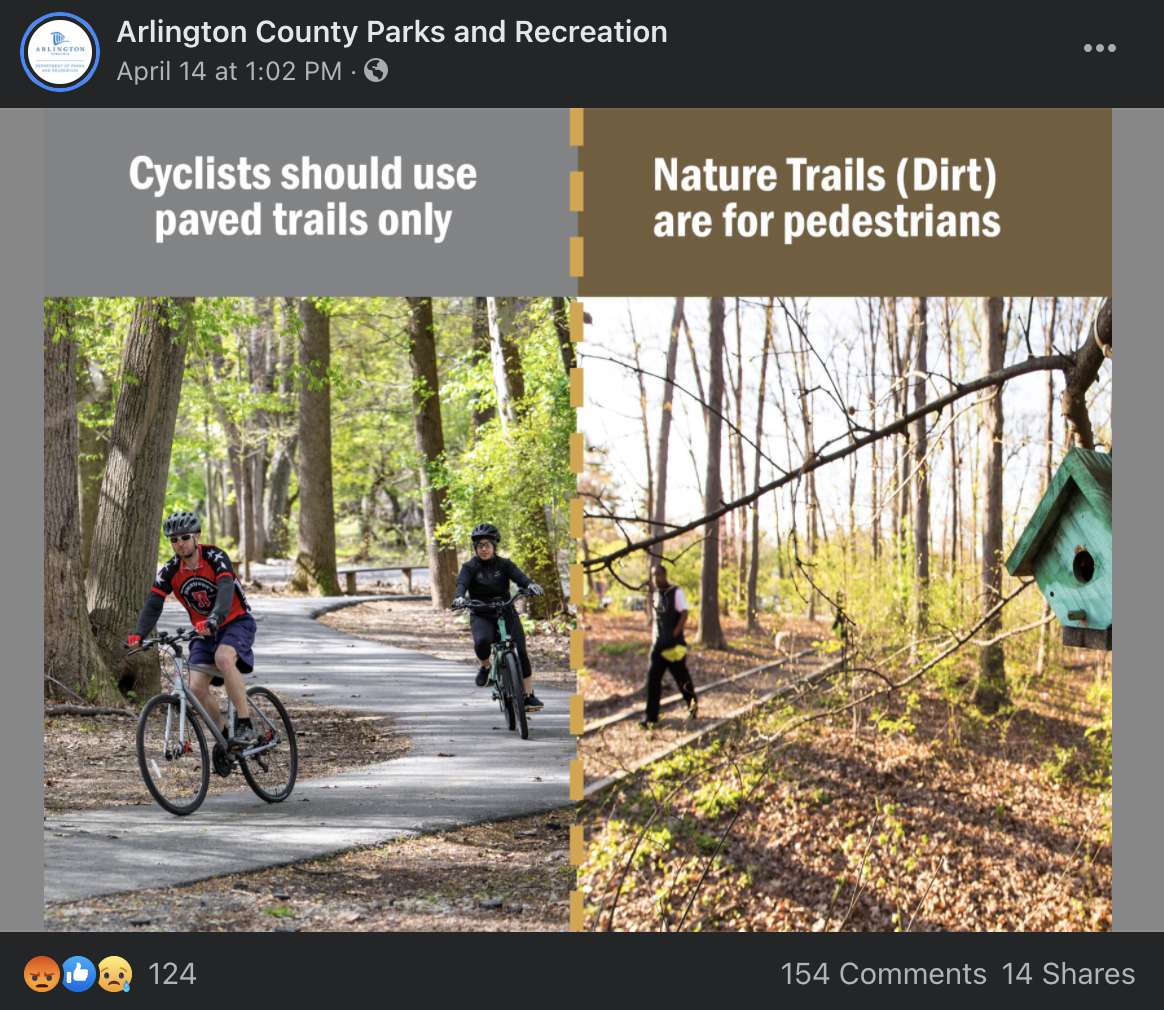
(Updated at 5:20 p.m.) A recent Facebook post has hit a sore spot with some Arlington cyclists and mountain bikers.
The Arlington Department of Parks and Recreation recently reiterated its policy on reserving natural surface “dirt” trails to walkers and hikers while allowing cyclists on paved trails.
The post drew the consternation of mountain bikers who have called on the county to let them use dirt trails for the past couple of years.
“I continue to be disappointed with the refusal of Arlington County Parks and Recreation to listen to the community and the County Board on this,” said one poster. “In both the Bicycle Element of the Master Transportation Plan and in the Public Open Spaces Master Plan, the Board said that Arlington would work towards opportunities for biking on natural surface trails. But 2 years later, DPR has been silent on the issue.”
There are some indications that the department could consider providing natural trail options for cyclists in the future, however. The county has started developing a Forestry and Natural Resources Plan, which examines the impact of humans on Arlington’s natural resources, parks department spokeswoman Susan Kalish said.
“As we develop the Forestry and Natural Resources Plan, the county will look into ways we can include mountain biking in Arlington parks,” she said.
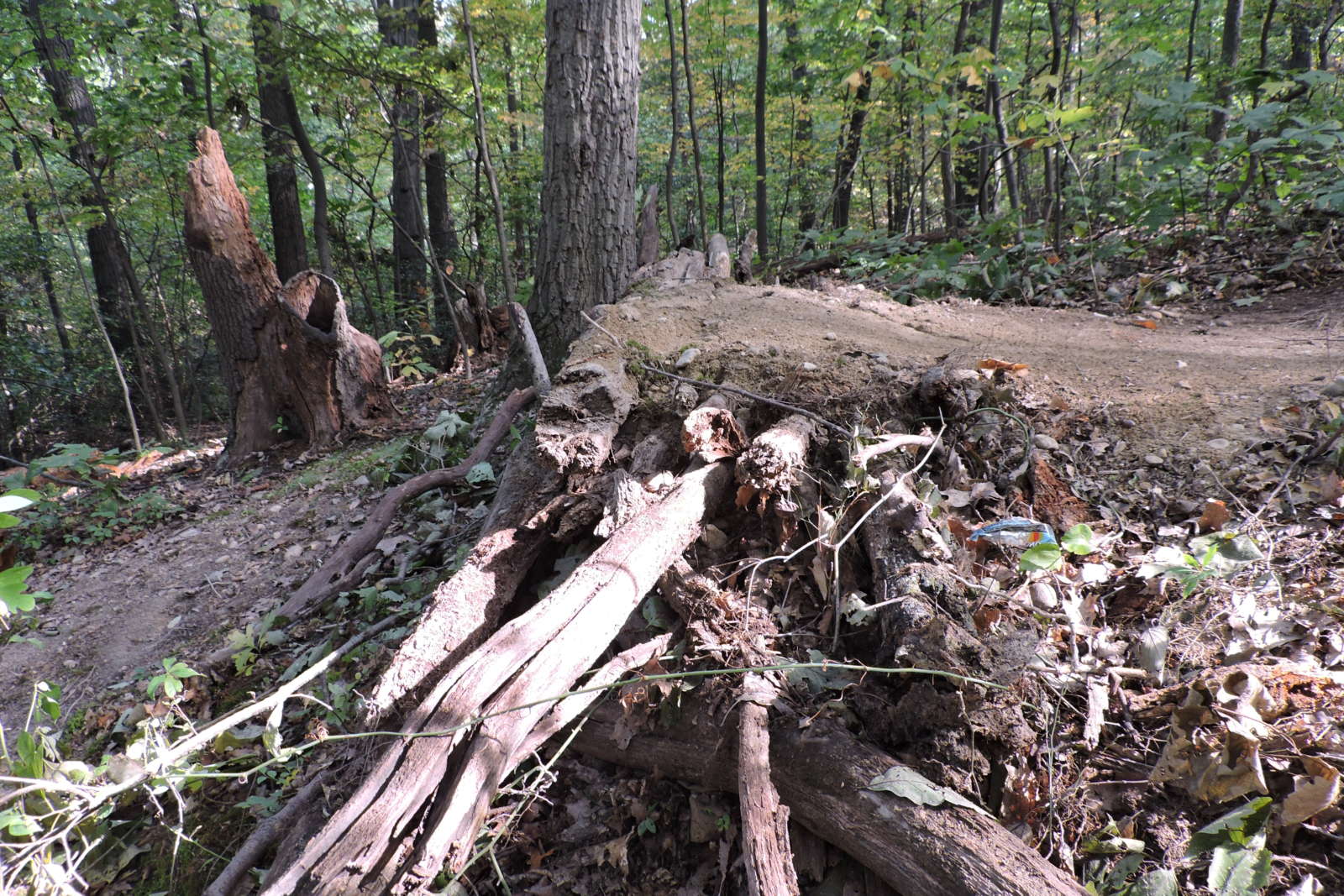
Currently, mountain bikers have to leave the county to ride any trails, said Matthew Levine, who founded Arlington Trails, a group that advocates for a system of managed, multi-use trails in the county. If they want to ride in Arlington, they forge informal trails, also known as “goat” or “social” trails.
The reaction to the Facebook post, combined with the informal trails and Arlington Trails’ advocacy, all signify that “people want to use their bikes on trails in the county,” he tells ARLnow.
“The real problem is that there is not a managed, multi-use natural trail system,” he said, pointing to Montgomery and Fairfax counties, which have miles of shared-use dirt paths.
That these exploratory paths exist “reveals the need for more trails,” he said, adding that his group is willing to help design and maintain them.
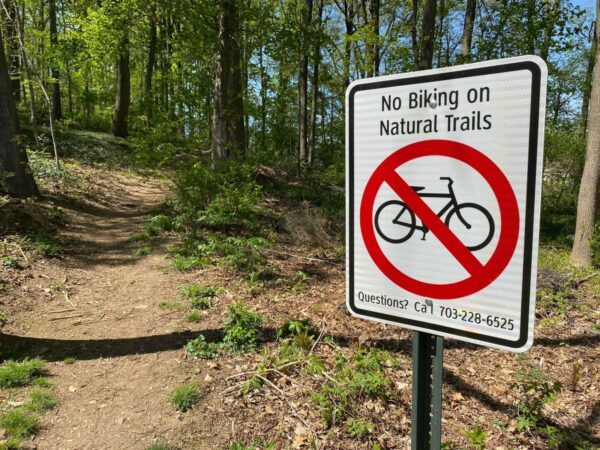
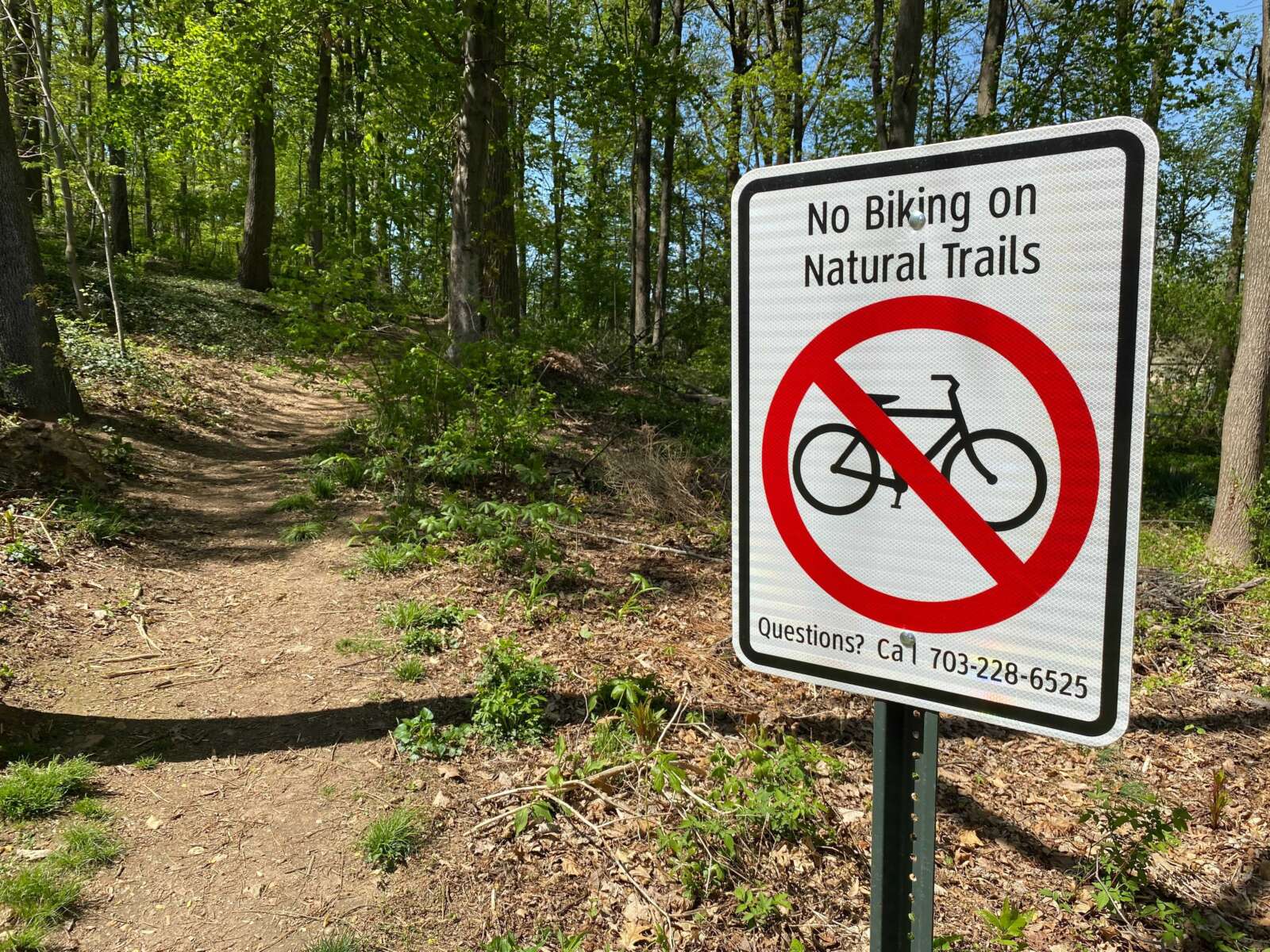
Not everyone is on board with the idea of mountain bike trails. Last spring, in response to concerns from the Bluemont Civic Association about unauthorized bike trails and jumps in Lacey Woods and Mary Carlin Woods, the parks department upped its enforcement and posted “no biking” signs. Similar complaints about rogue mountain bikers in other wooded areas of the county have been lodged on Nextdoor.
The county only maintains official trails in Arlington because of the negative impact the informal trails could have, Kalish said.
“In cases where damage is persistent, staff makes every effort to close, reclaim, and restore these areas to a natural state,” she said. “At the beginning of the pandemic, there was an increase in the development of social trails, including ones developed by mountain bikers who built ramps and cut down trees.”
In the past, staff have stopped youth who were found carrying shovels and hoes, removing plants and realigning trails, she said.
But Levine said it seems like cyclists are unfairly targeted as culprits of harming these natural areas — despite somestudiesconcluding that if mountain bikers and hikers use trails at about the same rate, mountain bikers do not contribute more to environmental degradation.
Kalish indicated a path forward for mountain bikers on natural trails could come if a balance is struck between use and impact. Other, larger communities have done it, she said.
“We understand that placing signs and closing social trails are only pieces of the puzzle for successfully managing our trail system; so we will be looking at holistic solutions as we develop the Forestry and Natural Resources Plan,” Kalish said. “We look forward to working with the public as we move forward.”
But Levine is a little more cynical, describing past experiences when the group has been sidelined.
“The message is to work with stakeholders in the issue, but we have been rebuffed by the Urban Forest Commission and political leadership,” he said.
Arlington Public Schools families will have two prospects for school in the fall: five days a week of in-person learning or a fully remote K-12 learning program.
This week, APS opened up a two-week window during which families can choose how their children will attend school. Families have until Friday, April 30 to make their choice.
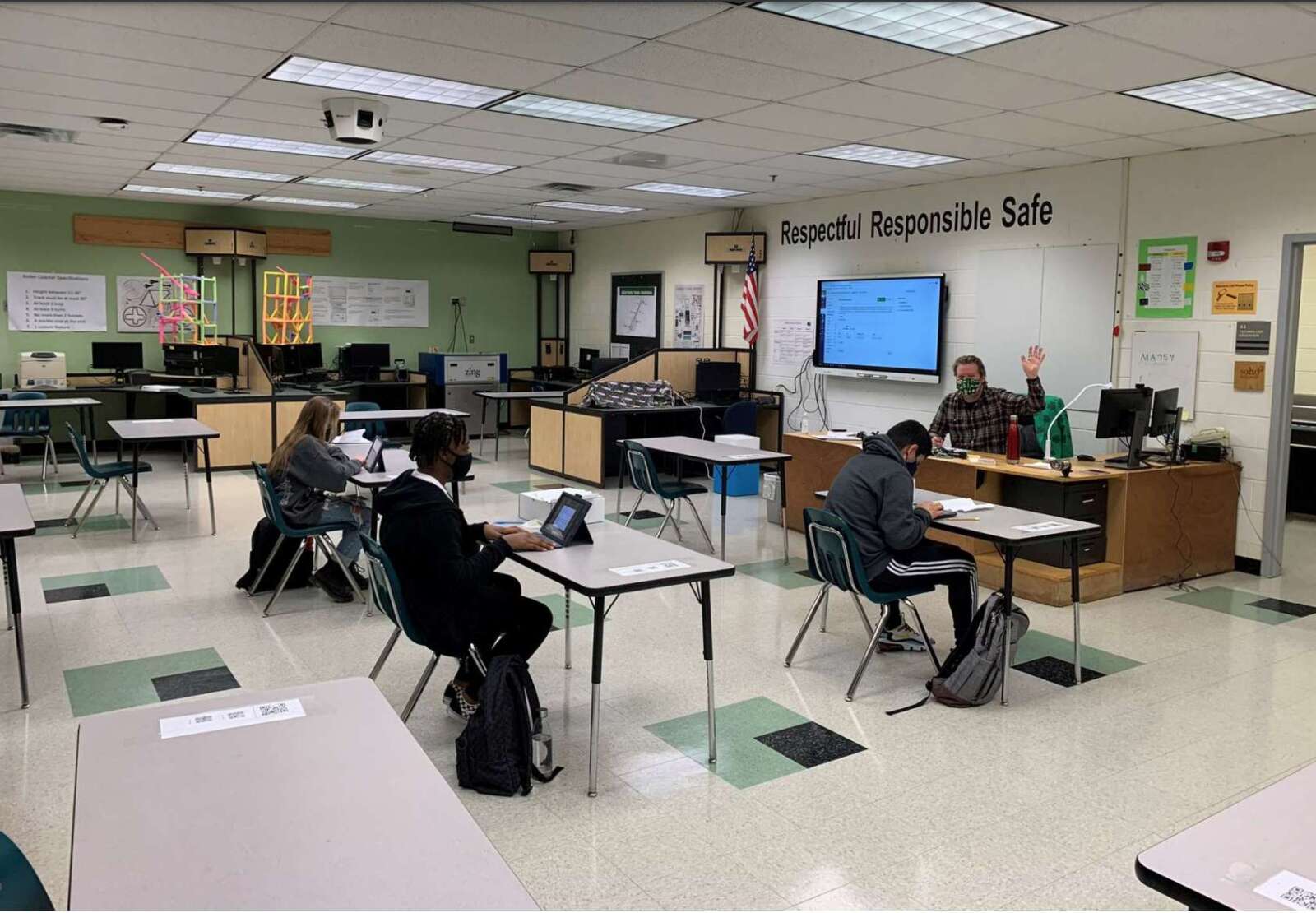
Over the last few months, students have returned to school in phases, with most returning in March for two days of in-person instruction a week across all grade levels. Although APS is sticking to the “hybrid” model for the rest of this semester, the school system said it will provide a full five-day in-person option this fall, in addition to in-person summer school.
Superintendent Francisco Durán reiterated this commitment two weeks ago.
“We are absolutely doing that in the fall,” Durán assured Arlington School Board members during a recent meeting. “We are headed to five days in-person in the fall. All of our planning now until then will be dedicated to that. That will be the sole plan we are working on.”
The push coincides with a Virginia law that Gov. Ralph Northam signed on April 1 requiring school systems to provide a full five days of in-person learning, with a virtual option. The new law will take effect July 1.
APS is encouraging in-person learning in the fall, but providing a remote option for those with health and other concerns.
“We encourage all students to return for in-person instruction and remain committed to providing safe learning environments in all schools; however, we know there are a variety of reasons why some families and students may need to continue learning remotely,” the APS website says.
If parents and guardians miss the Friday, April 30 deadline, APS will automatically place children in the in-person instructional model.
“Elementary school families will be able to change their decision after the first, second and third quarters of the school year,” the website said. “Middle and high school families will be able to change their decision after the first semester in January.”
A group of administrators, teachers and staff are developing a separate K-12 Distance Learning Program and APS will hire an administrator for the developing program this May. Eventually, this temporary option could become a permanent program for students who prefer learning at home.
Families and students who choose to continue in distance learning will be asked to provide reasons for their choice, according to the website.
“It is important to understand if students are not returning due to health and safety concerns, preference for the model, or if they will not return until their student and/or immediate family is vaccinated,” the school system says. “APS is committed to providing safe school environments so that all students feel comfortable and confident returning in person in the fall; however, we know there are a variety of reasons why families choose distance. We hope to gain more insight from those families.”
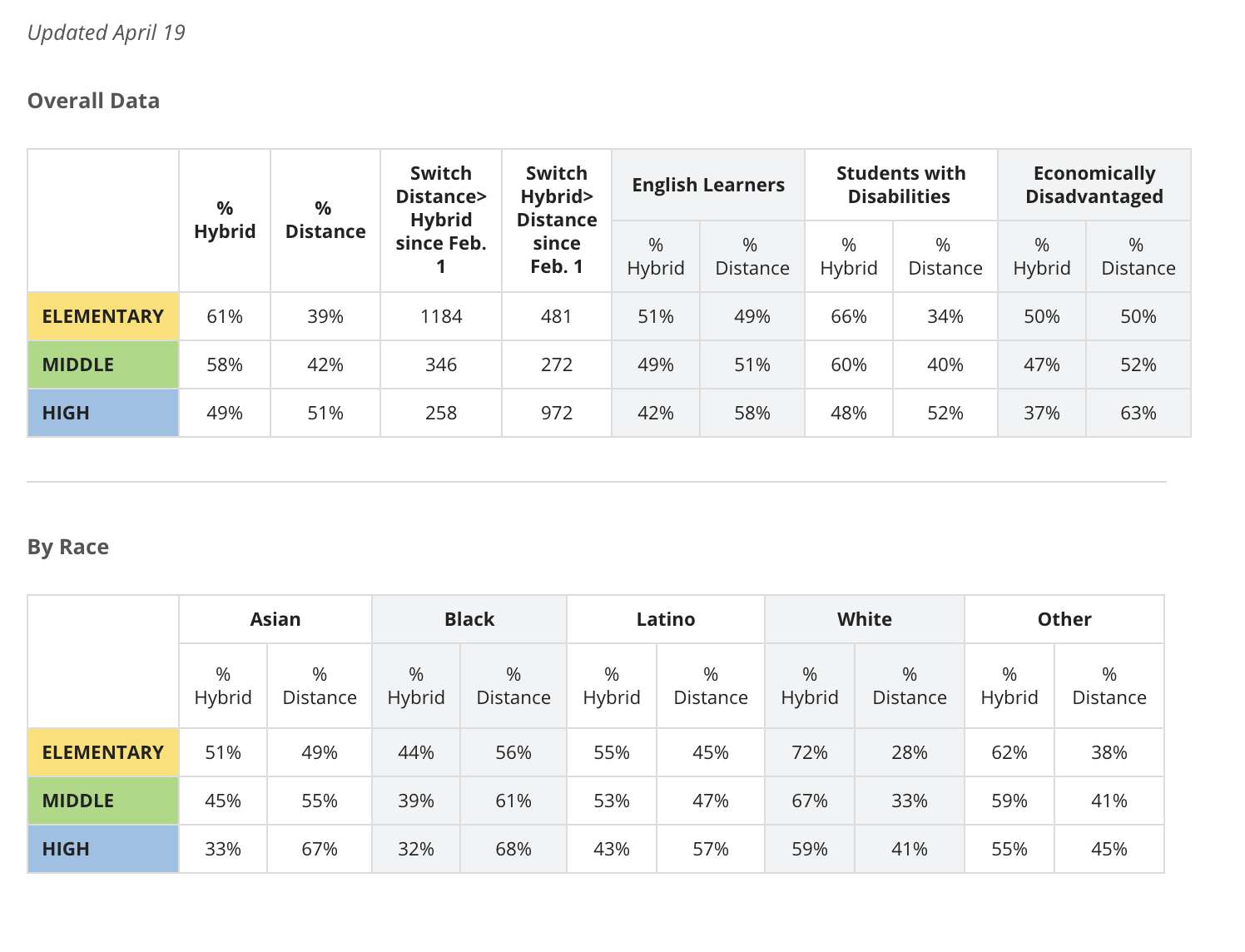
Data compiled by APS, below, shows that white students are most likely to have opted for hybrid in-person learning this semester, on average, while students of color, English learners, and economically disadvantaged students are more likely to have opted for distance learning.
During the April 8 School Board meeting, Vice Chair Barbara Kanninen called on APS to “be more proactive” reaching out to families about the school system’s mitigation measures and the safety of in-person education.
“I’m very worried about how we’re going to get them either to opt-in by the summer or fall, and how we’re going to encourage them,” Kanninen said.
Durán told the board that preferences may change now that the vaccine is more widely available.
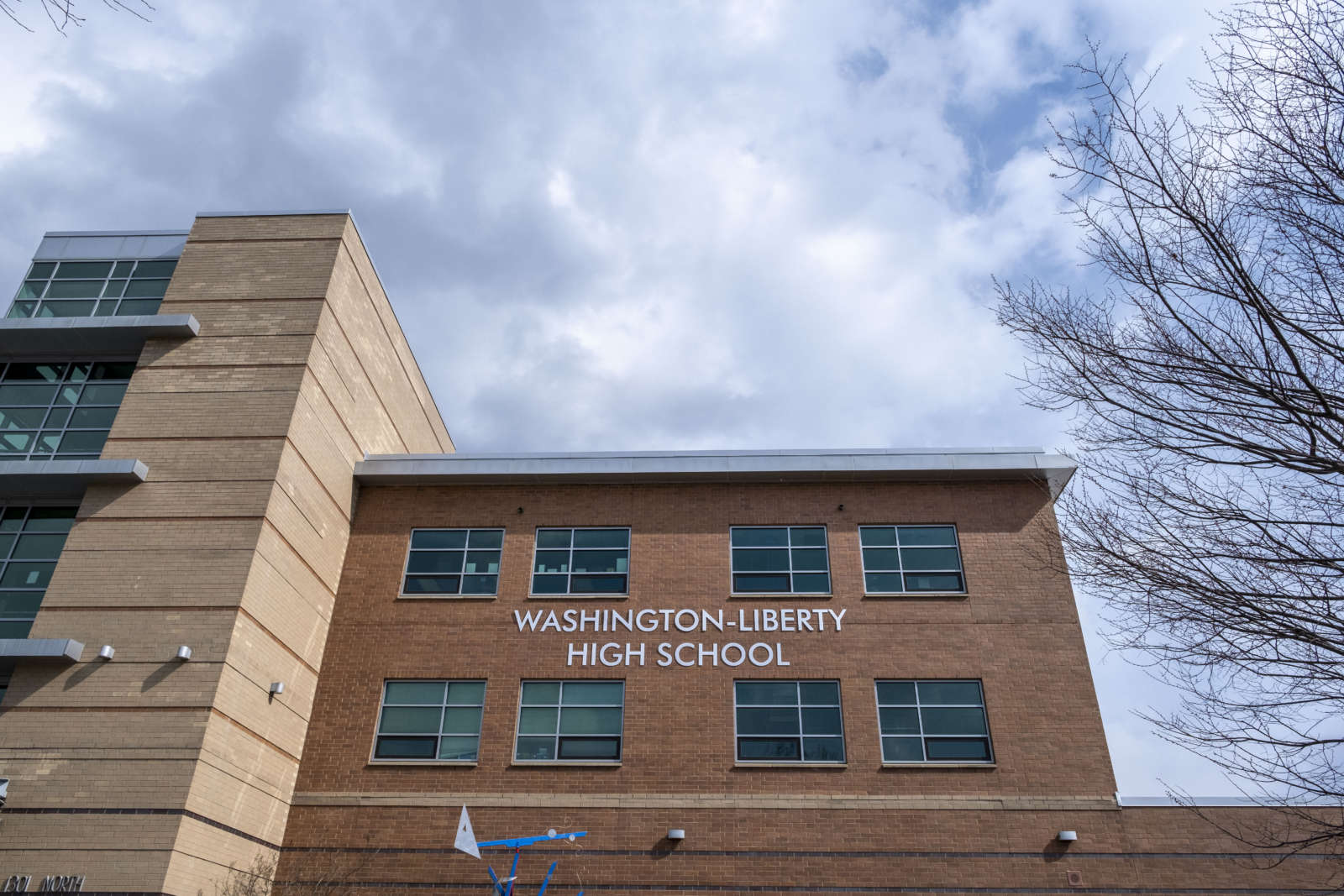
COVID-19 outbreak investigations are currently ongoing at Washington-Liberty High School and another unnamed Arlington public school.
The W-L investigation started after four students tested positive between March 23-31.
“Based on guidance from the [Arlington County Public Health Department], we quarantined all students and staff who were in close contact with any of the individuals who tested positive,” said a letter to families from Zachary Pope, APS’s director of emergency management, and Principal Tony Hall. “All health and safety protocols were being followed at school, which allowed W-L staff to respond quickly with ACPHD to prevent further transmission,” they said.
Arlington County Public Health Department spokeswoman Jessica Baxter confirmed that investigations were underway at two schools, but declined to name them.
Over the last couple of months, Arlington Public Schools expanded access to two days of in-person instruction a week across all grade levels. In that time, the school system has reported 84 COVID-19 cases among students and staff.
APS declined to answer questions about COVID-19 cases because “it is private health-related information,” according to spokesperson Frank Bellavia.
But once one case is confirmed in a classroom, the entire class is sent home for up to two weeks of virtual learning while contact tracing is conducted, according to APS guidelines. Deciding whether an entire school should go virtual requires working closely with ACPHD, the guidance says.
This approach to identifying and quarantining students and staff — much like the reopening discussion thus far — has drawn support from some and frustration from others, who see the policy affecting too many students on the periphery of a case.
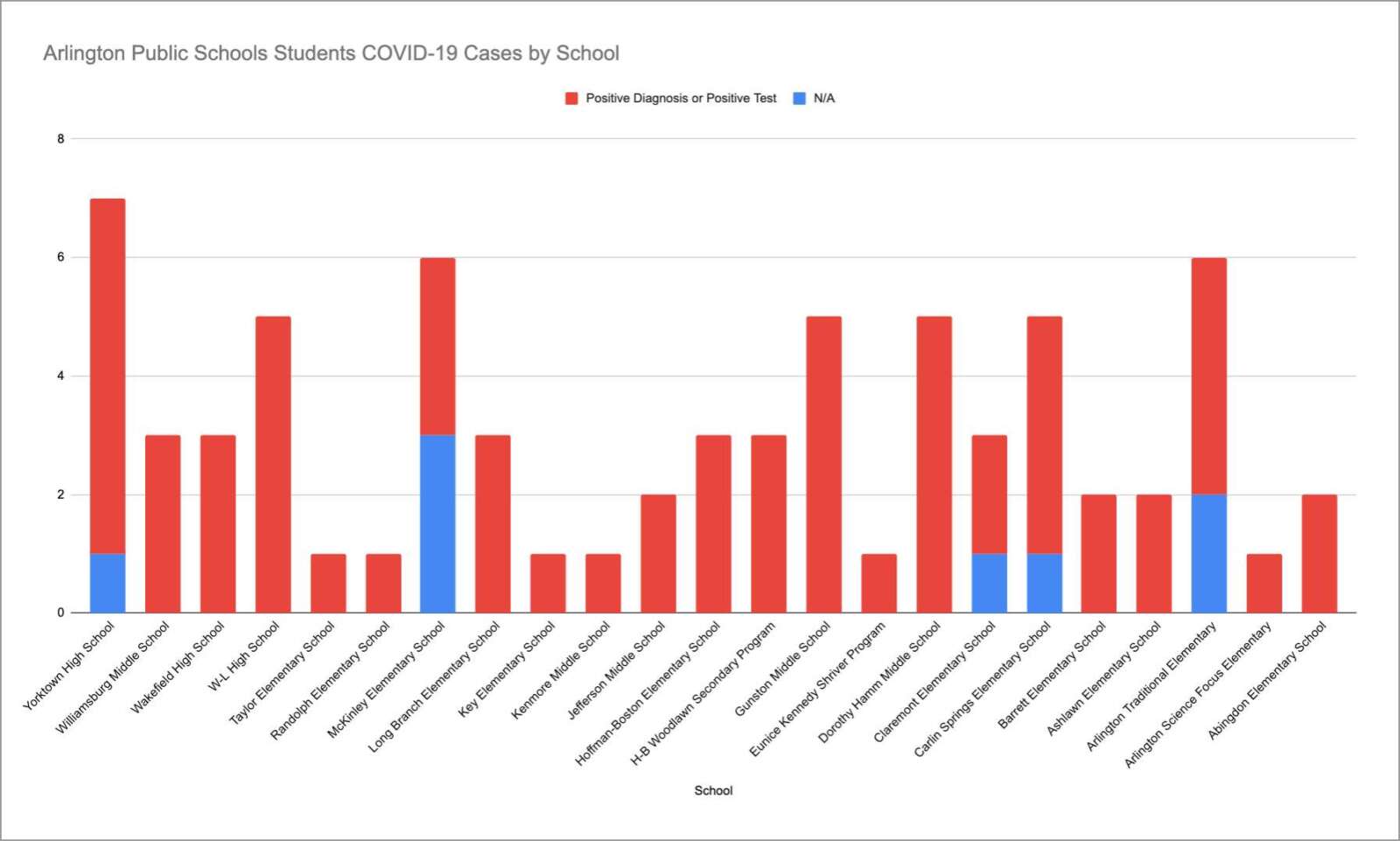
Across the school system, APS has reported 63 positive cases and eight cases where information is “not available” among students since March, when most started returning to classrooms.
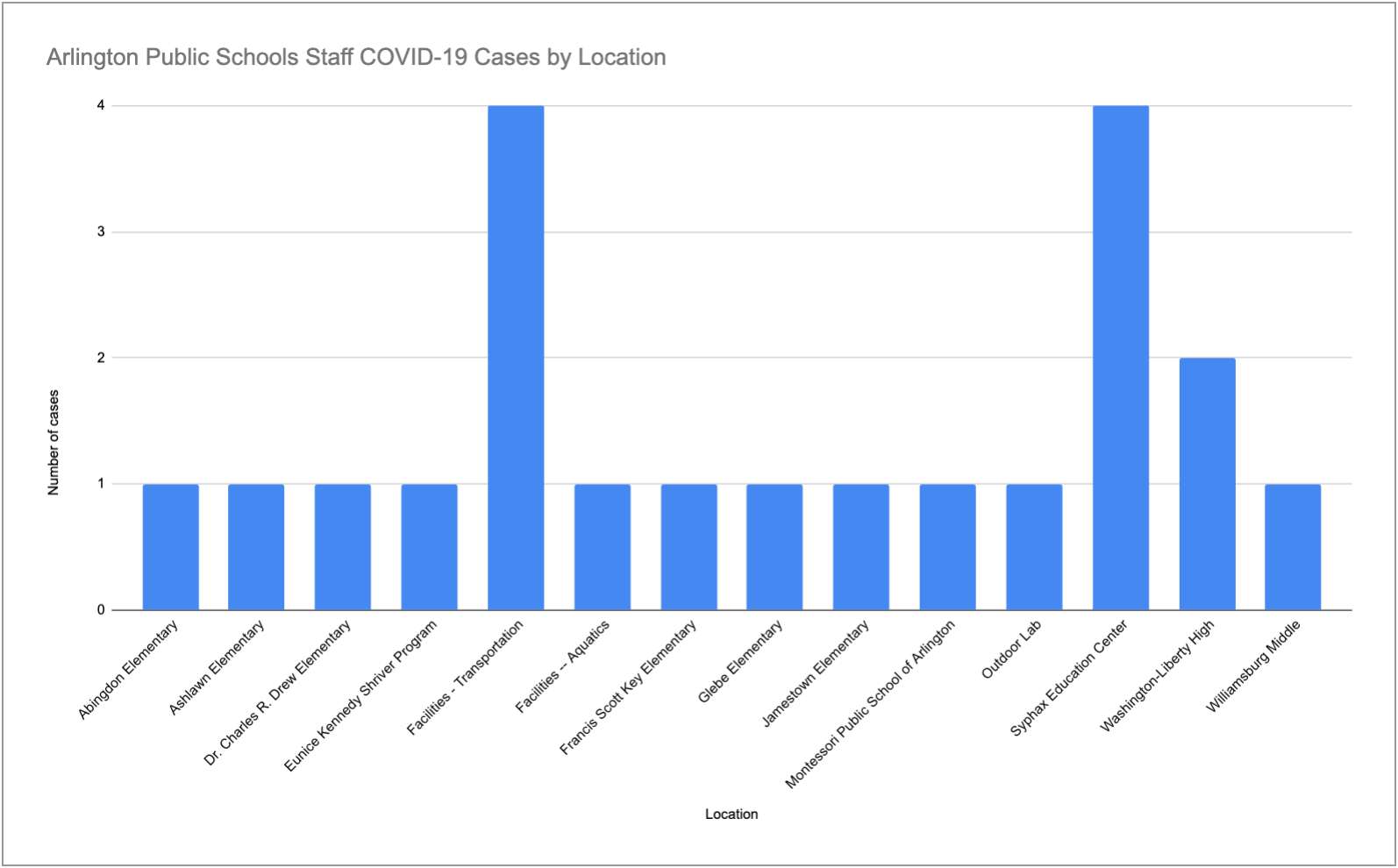
Among teachers — who returned in February — and other school employees, there have been 21 reported positive cases. Of those, 13 cases are among teachers and eight cases are among staff.
So far, the central APS office at Syphax Education Center and the school system’s transportation department, which operates school buses, have the highest number of cases, with four each.
Views about the school system’s reporting of and response to COVID-19 cases vary among School Board contenders and parents.
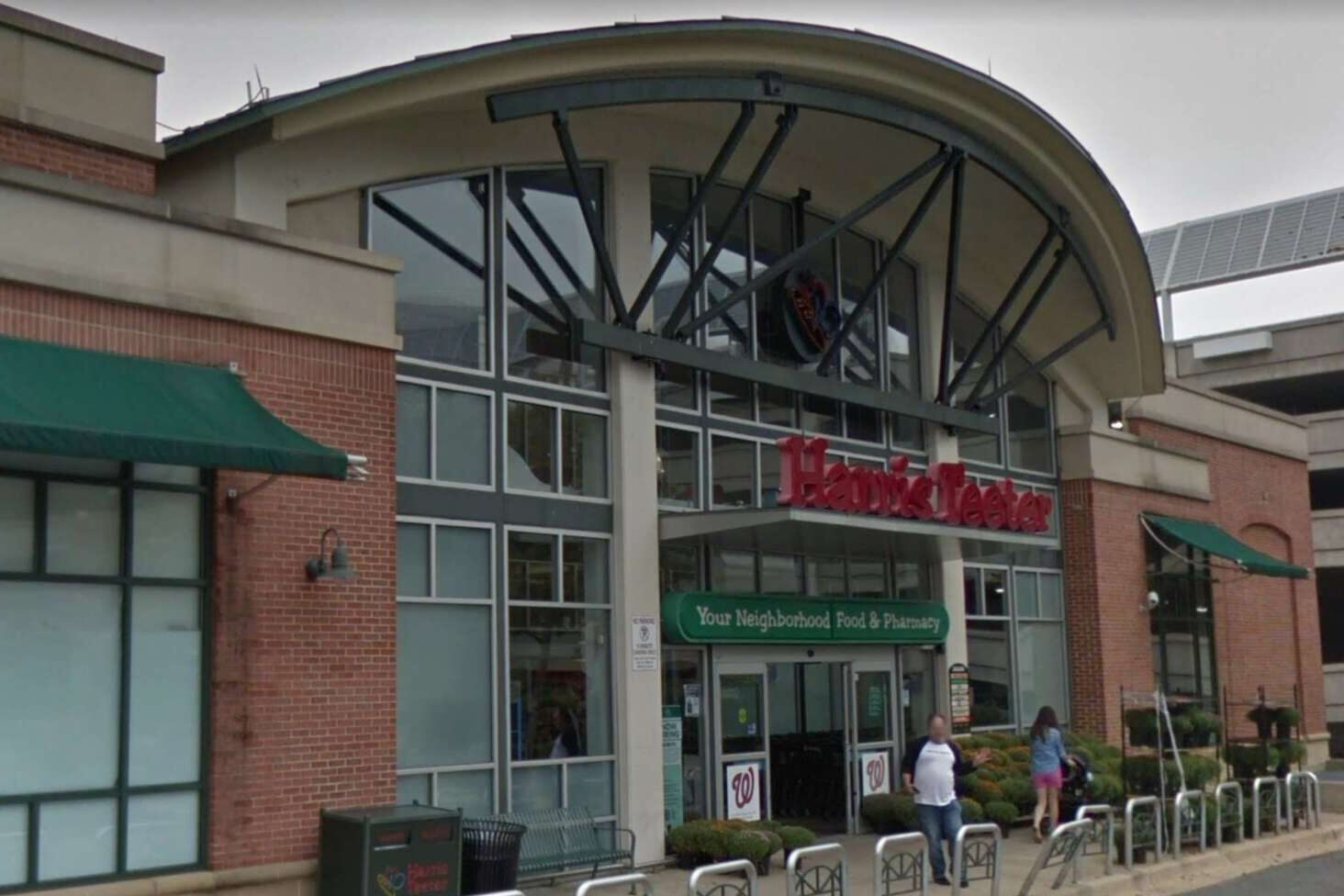
(Updated at 6:50 p.m.) It seems the Harris Teeter in the Pentagon Row shopping center, now rebranded as WestPost, will not be vacating its spot anytime soon.
And if it did, Arlington County will continue to hold the shopping center’s owner to a 1998 agreement that requires the space be filled by a full-service grocery and drug store. The County Board affirmed the status quo in a vote on Saturday.
Although Harris Teeter has at least 10 years on its lease, the Sun Gazette reports, residents in the 22202 zip code were worried about even the possibility that their neighborhood grocery store would one day be replaced with a smaller-scale grocer such as Whole Foods or Trader Joe’s. (Pentagon City already has one Whole Foods, near Amazon’s future HQ2.)
Anticipating the end of Harris Teeter’s initial lease, Pentagon Row’s owner, Rockville-based Federal Realty Investment Trust, had requested the county modify the 1998 agreement to allow Federal Realty to find a smaller retailer that sells drug- and grocery-store items if it could not find a full-service store.
The ask, which included other requests for flexibility regarding space, went before the Arlington County Board last month. At the time, nearly a dozen community members voiced their support for keeping the language. Board members deferred the item for one month so County Manager Mark Schwartz could work with the property owner on changes.
The revised proposal that the Board saw on Saturday kept provisions allowing the shopping center more flexibility with leasing and architecture, nixed the grocery store request completely. Members of the County Board unanimously approved the revised proposal, without any modifications to the grocery store agreement, without discussion.
“Because of our combined efforts, the developer backed off on changing [the] section that would have allowed less than a full-scale grocery,” said Carol Fuller, the president of the Crystal City Civic Association and Open Space Coordinator for Livability 22202, an advocacy group for quality-of-life issues in the area. “We were very worried about losing Harris Teeter. We fought it hard. Once they dropped that, we were no longer concerned with the other amendments.”
The county previously said that “Federal Realty shared their full intent and interest in retaining the current tenant or other similar operator.”
The shopping center sought the flexibility, supported by the National Landing Business Improvement District and the Arlington Chamber of Commerce, “so that they can respond to changes in the market in the event that they need to replace the grocery store tenant and services.”
Scott Miles, president of the Aurora Highlands Civic Association, said last month that losing Harris Teeter, or an equivalent full-service store, would degrade grocery options in a core part of the county and hinder residents’ ability to buy necessities without a car.
“A large, full-service grocer at the site remains an essential community service,” he said. “This may sound harsh, but we want the applicant to be fearful of not maintaining a large grocer — it’s not enough to ask for commercially reasonable efforts.”
The County Board is slated to vote on its fiscal year 2022 budget tomorrow (Tuesday) and affordable housing is top of mind for many Arlingtonians and Board members.
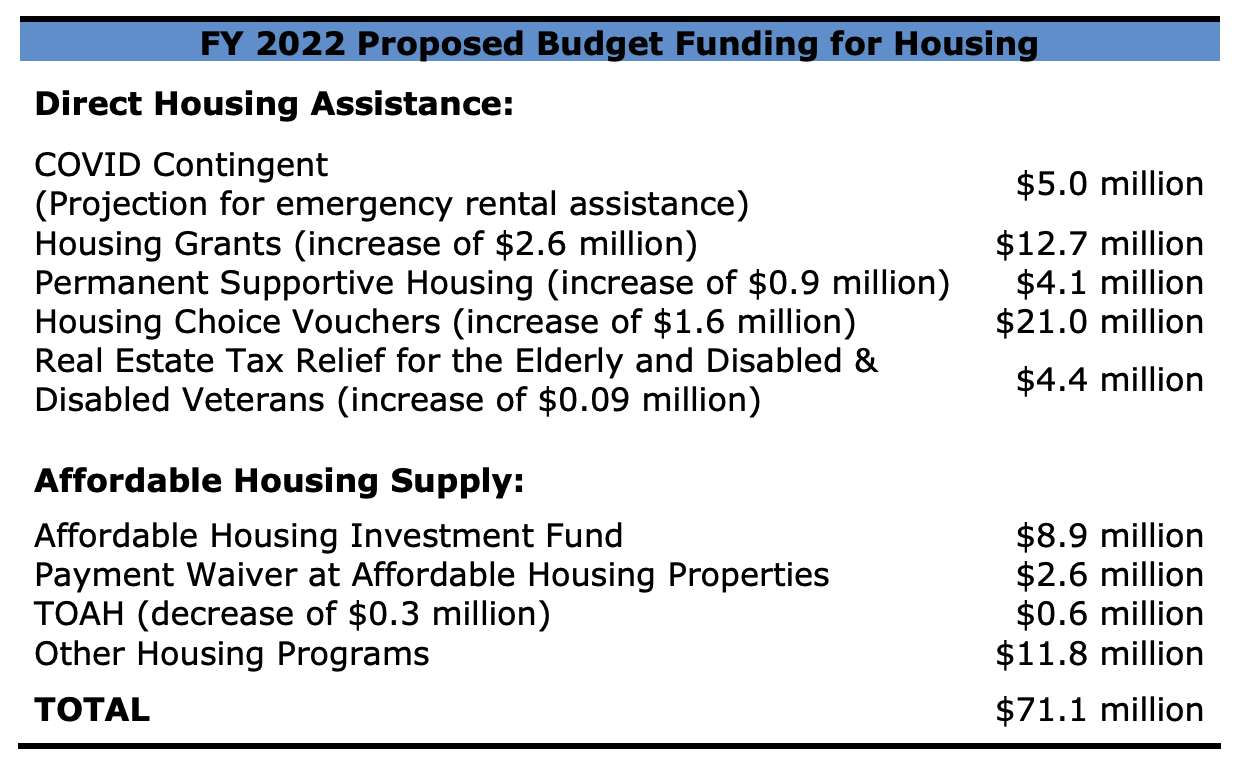
In February, County Manager Mark Schwartz proposed a budget with $71.1 million earmarked for housing — about 8.5% of the overall $834 million county budget, excluding schools.
This month, however, housing advocates told the Board that may not be enough to tackle the entrenched problem of rising housing costs and the deepening inequality caused by the pandemic. In response, Board members have identified three ways to amend the budget.
Testifying before the County Board on April 6, Carlos Velazquez, who sits on the board of trustees for Arlington Community Foundation, said the county needs to maintain flexibility for families seeking housing aid.
“COVID-19 assistance has helped many low-income families and individuals [stay in Arlington] and keep food on the table,” he said. “But the need has not gone away… We believe that flexibility should be maintained after the pandemic to help residents resolve delinquencies and develop plans to move forward from personal crises.”
Over the last two weeks, County Board members have discussed ways of doing just that. Last Thursday, ahead of the vote tomorrow evening, County Board Chair Matt de Ferranti proposed adding up to $2.4 million in several areas.
The chair proposed just over $1 million to maintain COVID-era guidelines that expanded eligibility for working families who needed financial aid during the pandemic. For those receiving grants, who currently contribute 40% of their income toward housing, de Ferranti is also proposing about $487,000 in one-time and recurring funding to lower annual housing contributions.
According to county staff, that could affect 700 families.
“This is of interest to us in the sense that severely rent-burdening individuals at 40% is more than [The United States Department of Housing and Urban Development] recommends,” de Ferranti said.
The County Board is also looking to add $850,000 in one-time funding for the Affordable Housing Investment Fund, a loan fund that helps to fund the development of new, dedicated affordable housing.
A portion of the $17.5 million set aside in the budget for the county’s response to the pandemic, meanwhile, will go toward eviction prevention. Housing advocates would like to see the county take bolder action in light of rising housing costs and economic hardship among lower-income residents.
Shaheera Sayed, an advocate with ACE Collaborative, an Asian American community-building group affiliated with Alexandria-based advocacy organization New Virginia Majority, said more needs to be done to prevent displacement of current residents.
ACE, which recently organized a rally near the future Amazon HQ2 in Pentagon City, proposed adding $8 million in funding.
“There is proof that the Asian Americans and other communities of color in Arlington county are struggling,” she said. “By adding more funding and expanding eligibility in programs such as the Housing Grants, more people who are unable to get affordable housing but are struggling to pay rent can benefit from this program.”
Beyond this year’s budget, County Board members say that more housing support will be needed for years to come. The most vulnerable in Arlington will likely face the longest road to full economic recovery, said County Board member Katie Cristol.
“Let’s not set ourselves up to make this purely one-time investment in Fiscal Year 2022,” she said.
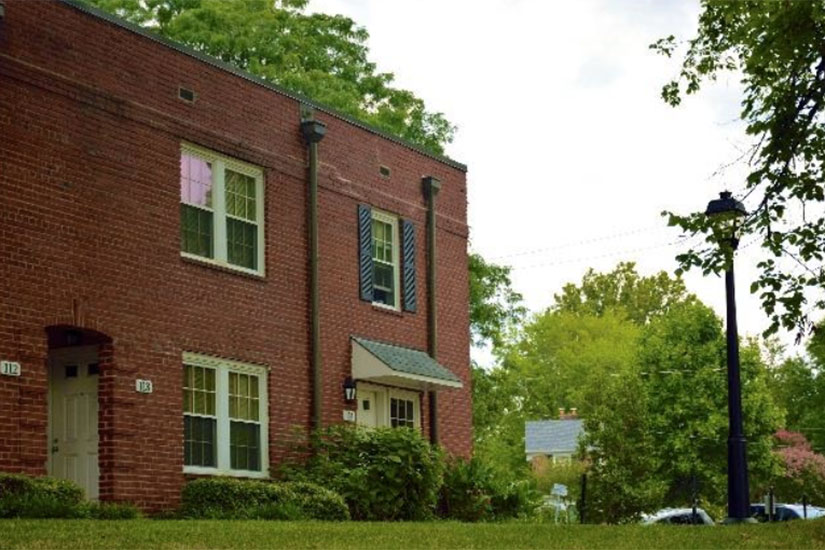
Photo (top) via Arlington Partnership for Affordable Housing, (middle) via Arlington County
Sponsored by Monday Properties and written by ARLnow, Startup Monday is a weekly column that profiles Arlington-based startups, founders, and other local technology news. Monday Properties is proudly featuring 1812 N. Moore Street in Rosslyn.
When Arlington resident Michael Morgan suffered an anxiety attack, he had no idea that the source of his recovery would one day become a business.
The attack was a slow burn. Morgan started feeling unsteady on his feet and a few months later, he could not get out of bed.
After seeking therapy, he realized his physical state stemmed from business and personal troubles: smarting from two startups that sank, due to legal and financial missteps, and reeling from his father’s recent cancer diagnosis.
He said the attack “was 100% related to the entrepreneur life” while the diagnosis “hit me like a ton of bricks.”
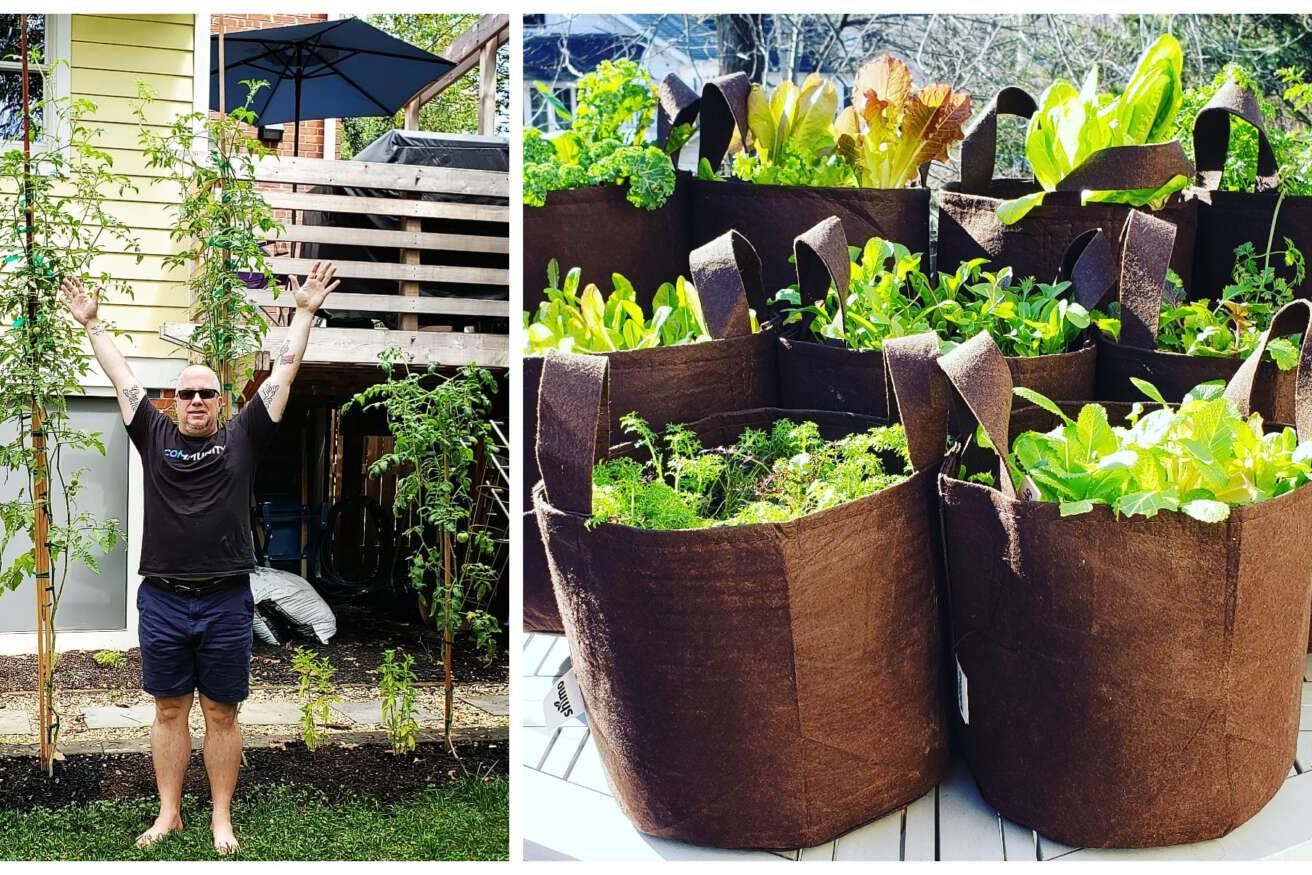
Morgan, a biochemist, has a green thumb, and his first steps outside his house were to his backyard, where he healed through gardening. He did not intend to turn his hobby into a company but his friends saw his gift and spotted the business opportunity. This year, Morgan launched Shimo, an organic gardening kit for novices with a little space.
Sustainability runs like a vein through his three ventures. Morgan’s last two ventures included a sustainable phone and Everblume, a hydroponic appliance that nearly made it to the business-launching TV show Shark Tank.
But unlike these two, Shimo grew more organically, he said.
“Entrepreneurs will often start by creating a product and finding customers,” he said. “This time, it was the customer saying, ‘I think you have a good product.”
Shimo takes Morgan back to the root of gardening, too.
“When you think about growing food, it’s really that simple: soil, seed, water, sun,” the biochemist and entrepreneur said. “Why over-complicate it?”
The kit ($50-$60) ships to customers’ doors and includes 100% organic soil, seeds, plant food and a grow bag made from recycled material. Morgan said Shimo makes growing food less intimidating for newbies.
“People ask me, ‘Why is this unique?'” he said. “I tell them, ‘Go to Lowe’s or Home Depot one weekend, go to the Lawn and Garden Center, and then tell me where you’re going to start. There are thousands of seeds and fertilizers to choose from. Then, they get it.”
Families can grow delicious lettuce, tomatoes, peppers, and more for as little as two dollars per harvest, which he said could be a boon to people who live in food deserts.
The bags and the soil will last several years and the recurring costs are just new seeds, fertilizer and an annual soil amendment, Morgan said.
“Shimo uses the concepts we’ve used for several thousands of years and puts a spin on it for an urban or suburban environment, where people don’t have space or access to land, but still are interested in growing their own fresh food,” he said.
With his bounty, Morgan said he has pickled unripe cherry tomatoes to use in martinis instead of olives, made sage sticks and lavender oil, and is working with a D.C.-based mixologist to craft a cocktail using the flowers from mustard greens. He is compiling these ideas and other tips and tricks for his website’s blog.
Ultimately, Morgan aims to cultivate a community of micro-homesteaders around Shimo. He envisions people swapping knowledge, experiences, stories, as well as their own recipes and DIY ideas.
“I know it’s cliché, but when you think about agriculture, society, and history has been, it has always been community-driven,” he said.
This is set to be a pivotal year for how Arlington County represents itself in its logo and its infrastructure.
At the close of 2020, Arlington County kickstarted the process of updating its logo — a process that will soon be inviting public input — and this fall, County Board members expect to review a new framework for considering the possibility of new names for things like parks, streets and building.
Board member Christian Dorsey and NAACP President Julius “JD” Spain, Sr. previewed these upcoming changes during a recent discussion on renaming hosted by the Arlington Committee of 100, a group that talks about local issues.
Meanwhile, Marymount University assistant professor Cassandra Good shed light on the history of Arlington’s street naming and made recommendations for a new approach.
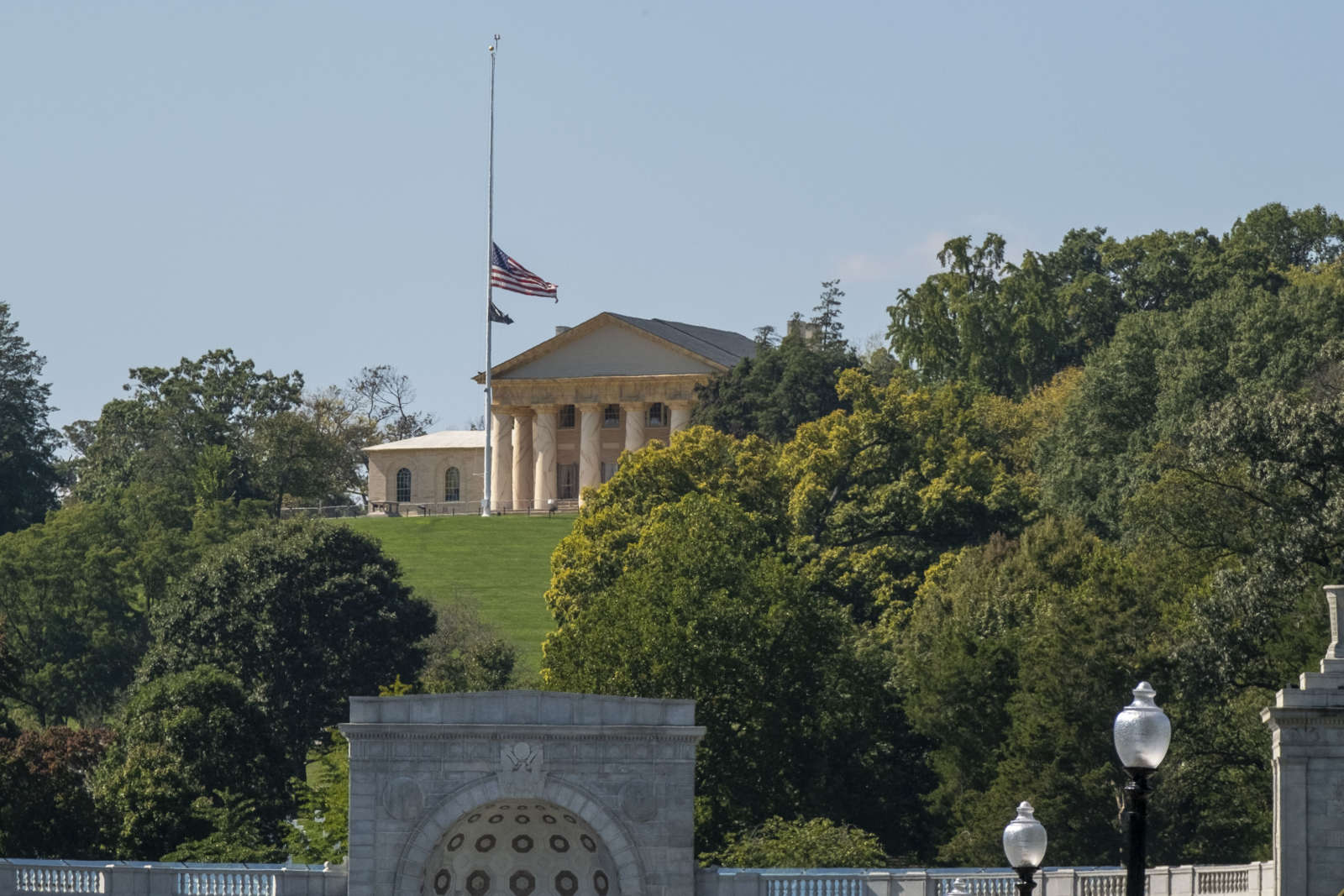
Spurred by a national discussion of systemic racism and police violence in 2019 and 2020, Arlington County is re-examining its logo, which depicts Arlington House: The Robert E. Lee Memorial, the former plantation home of the Confederate general and descendants of George Washington. The county is also reconsidering the names of various roads, parks and local landmarks named for Confederate generals and soldiers, slaveholders, plantations, and historic figures known for their racism.
Meanwhile, county staff members are hammering out a formal process for naming and renaming places in Arlington going forward, to bring a systematic approach to what has so far been a case-by-case process.
“We expect that during the fall of this year, we will have a proposal from our county manager for how we ought to think about the renaming issue,” Dorsey said. “There’s going to be a lot more that comes with that, I expect.”
Some Committee of 100 members wondered whether the panelists think the county ought to change its name, too, given that the county is named after the plantation house that’s being removed from the logo.
Panelists said such a conversation could take place but changing the name Arlington would not only pose an extreme logistical challenge but may also not reflect a nuanced view of renaming.
“When we’re talking about changing the name of Arlington, it may come a time when we need to have that conversation,” Spain said. “But Arlington — I believe changing the name of a county is a pretty heavy lift.”
Dorsey said he is not in favor of throwing out everything that was the product of a certain time in history as “the poisonous fruit of a poisonous tree.”
A recurring question for officials tasked with renaming has been whether to swap one historical figure with another. The community could choose a person whose character could come into question later on, they said.
Good, the Marymount professor, said while her preference is not to use names of historical figures, there ought to be a few new historical figures featured.
“There need to be some names for people,” she said, otherwise, “the names that remain will mostly white people.”
Dorsey added that while the county can think beyond individuals, there will be some figures who community members will want to honor.
“I would hate to lose that entirely,” he said.
Good said Arlington first formalized a naming process for streets in 1932, when a commission of, as far as she can tell, all-white Arlington residents finalized the names for the county’s streets. Several — including Lafayette, Hamilton and Pocahontas Streets — were renamed at that time, she said.
Going forward, she recommended that all renaming decisions include those who have been excluded and involve a professional historian. Renaming should be considered if the current name was originally chosen to honor somebody for reasons that are at odds with the community’s values, she said.