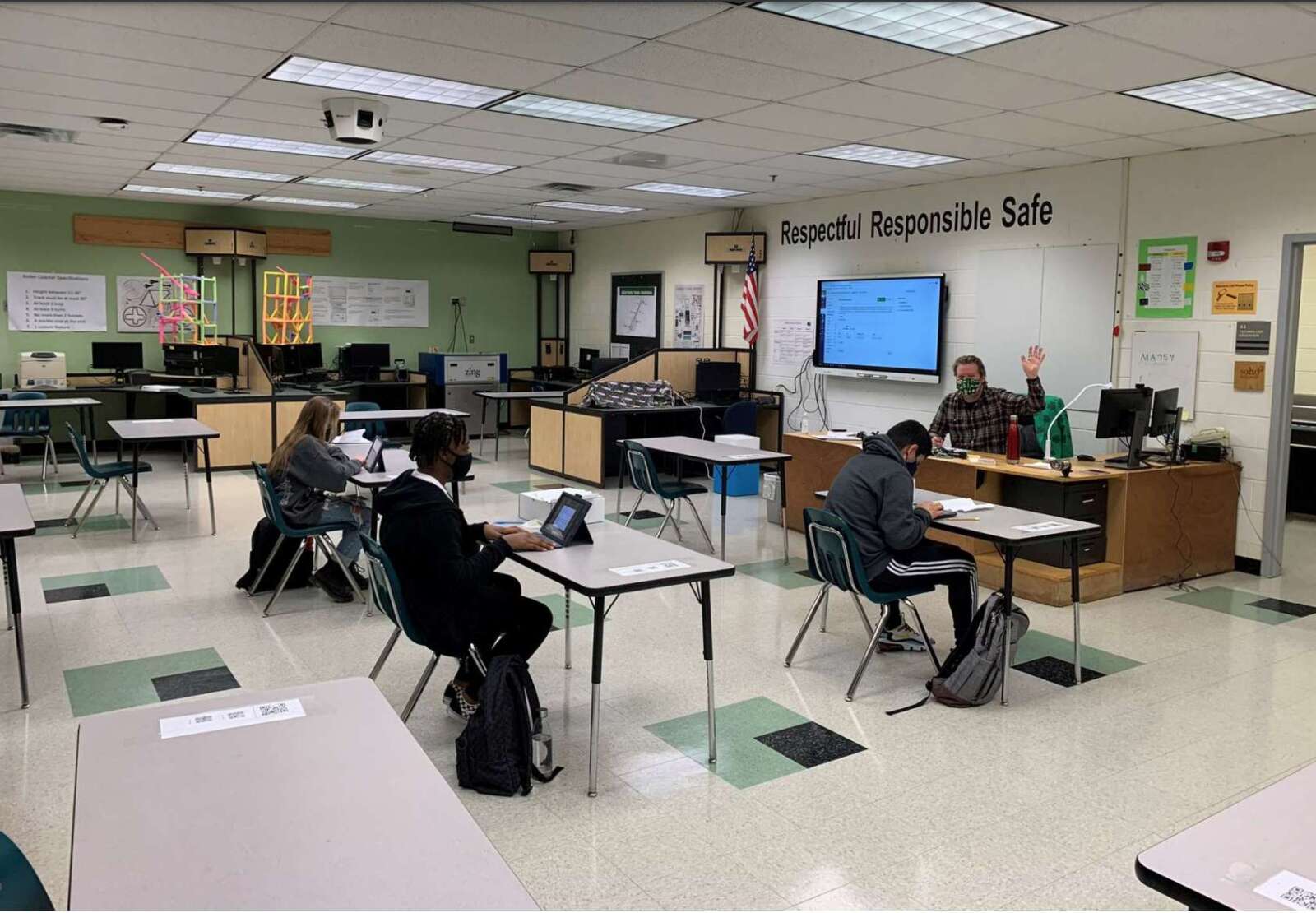
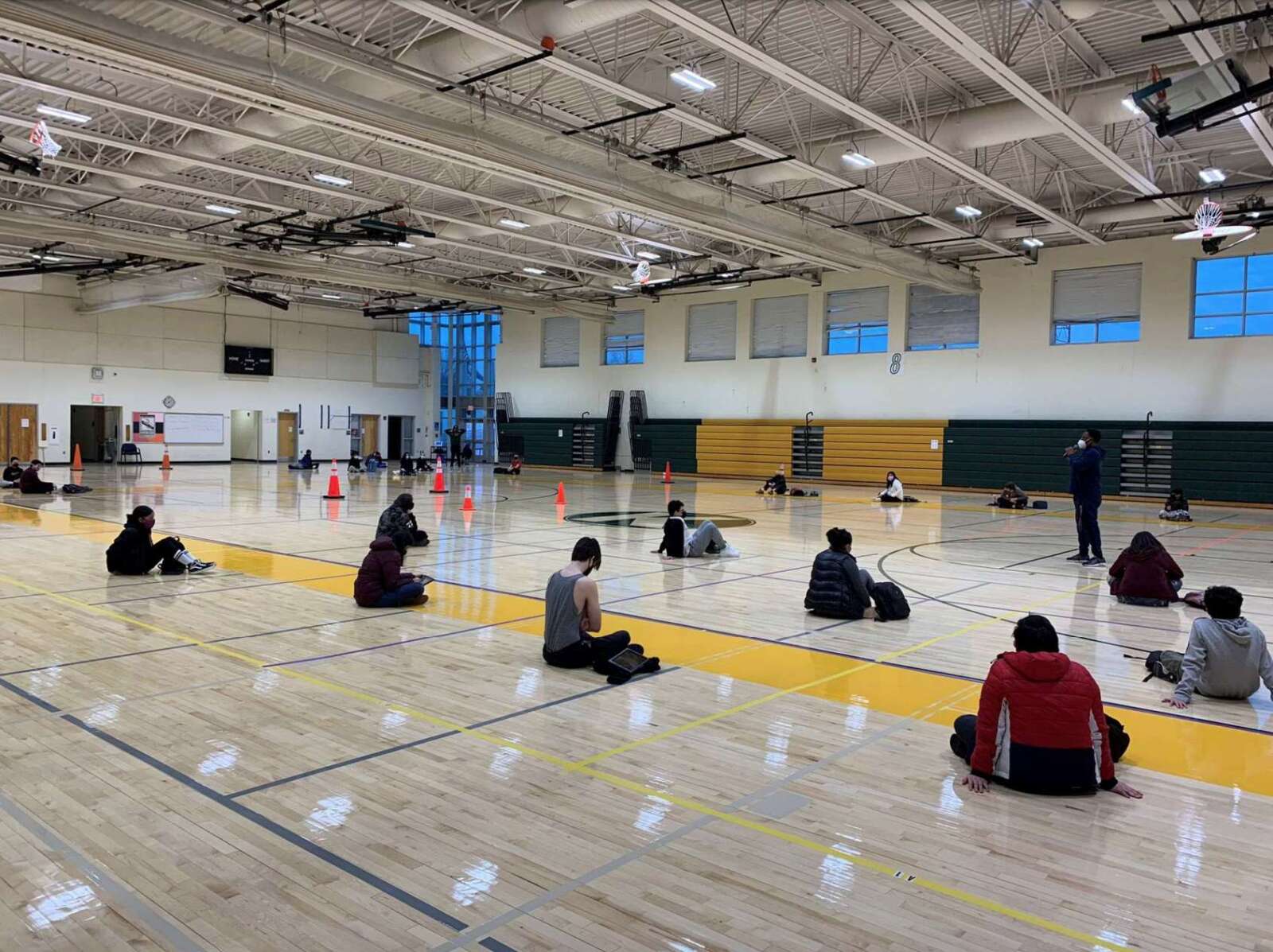
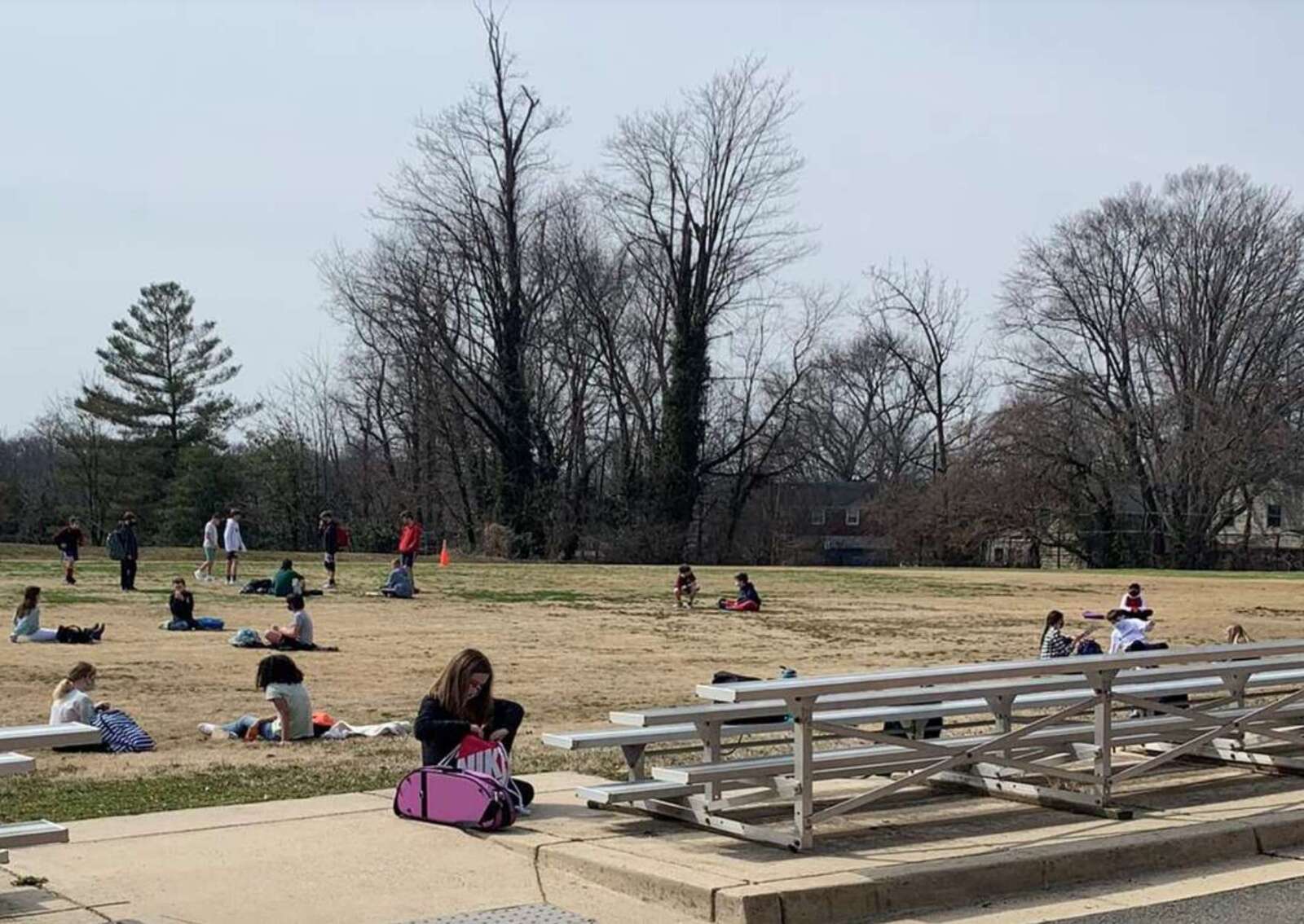
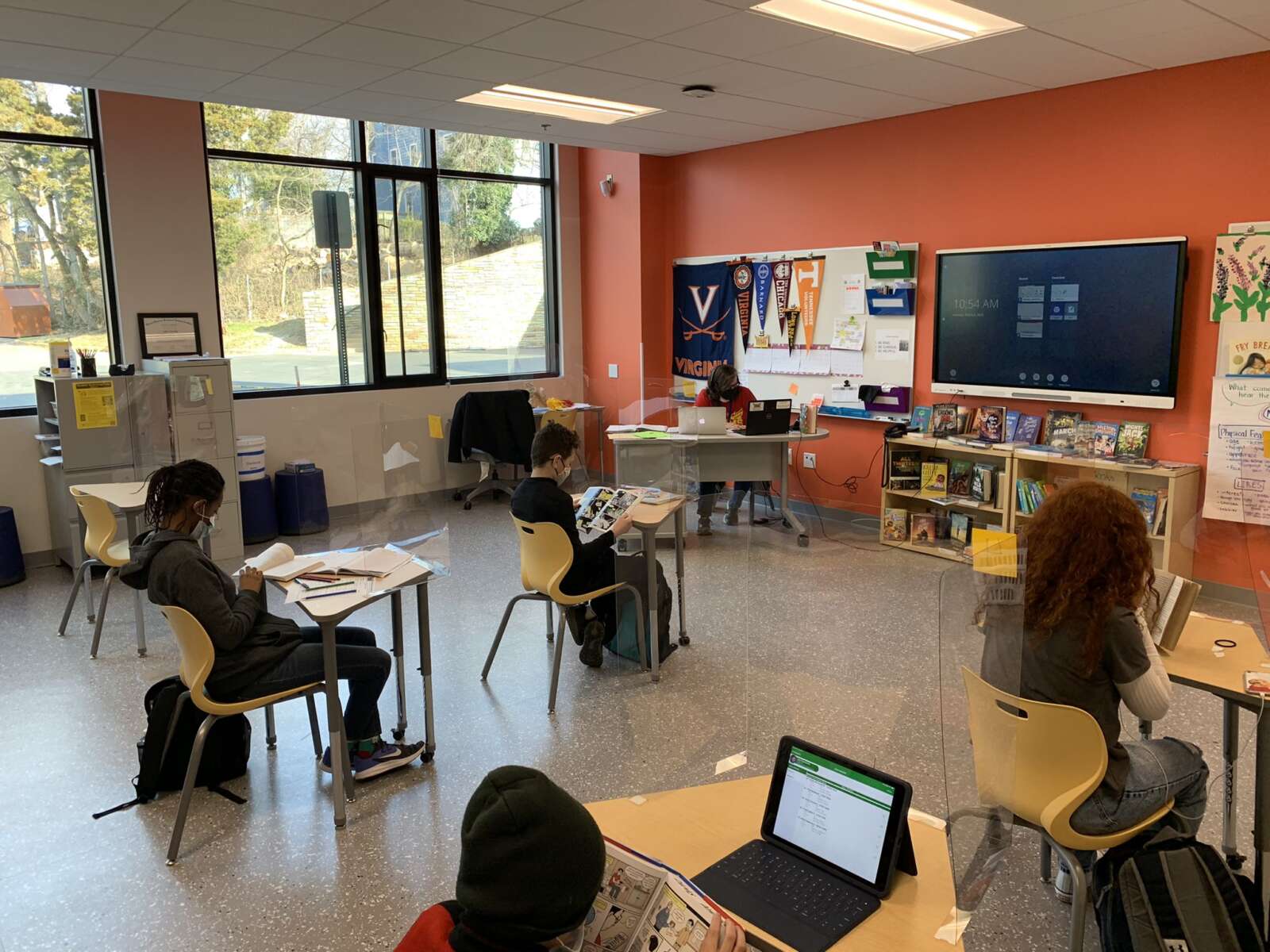
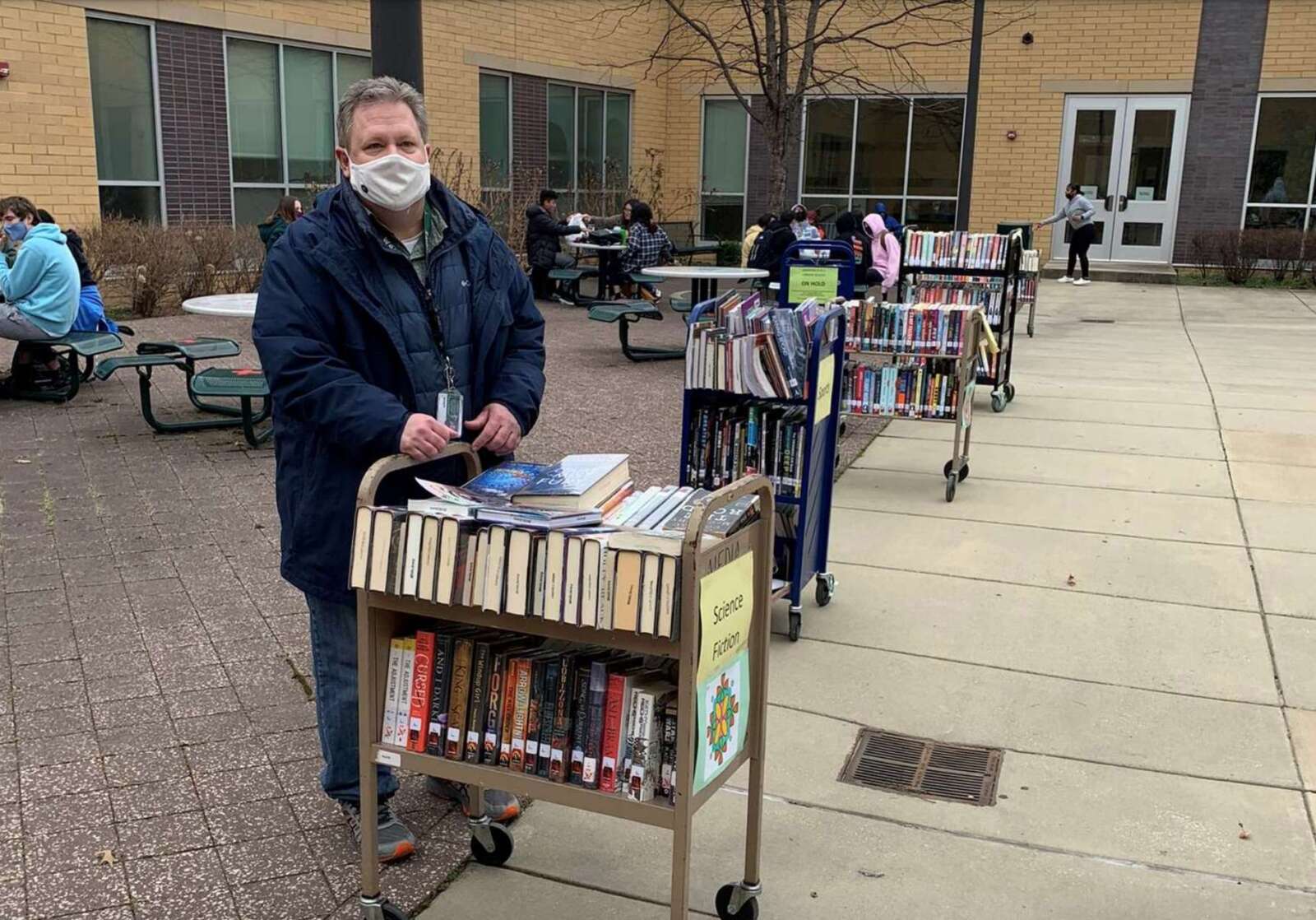
Some Arlington School Board members are putting pressure on administrators to get more students inside school buildings more often.

Arlington Public Schools has finished a month-long process of phasing students into school buildings for a hybrid, two-day-per-week model of in-person learning. Currently, about 35% of students are still fully virtual, and some of them are on waitlists for in-school instruction.

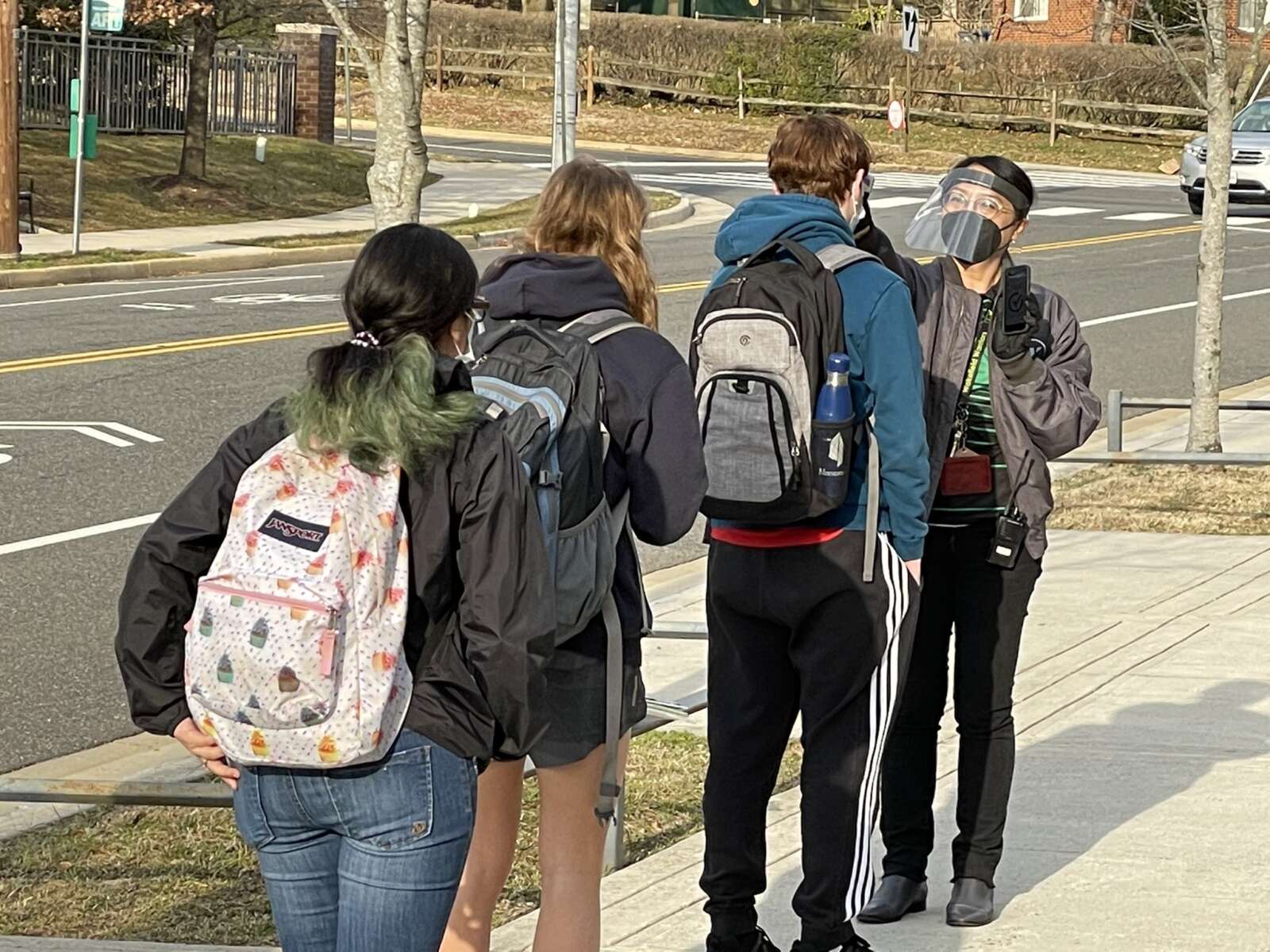
Some School Board members told Superintendent Francisco Durán on Thursday that they want more students in classrooms, as well as more than two days a week of in-person instruction, in light of new guidance from the Centers for Disease Control and Prevention. The CDC halved its social-distancing guidelines from six feet to three feet among students in classrooms.

Durán previously said that APS would conclude the spring semester in the hybrid model.

In response to the new guidance, Durán told School Board members that APS will admit some waitlisted students into buildings, prioritizing those learning English, receiving special education services, or at risk of failing grades 8 and 12.

Citing logistical and instructional hurdles, however, APS will not be increasing the number of days students can be in-person based on the new guidance, he said. It will use the guidance to work toward five days of in-person instruction for summer school and the fall, he said.

“I have received many calls over the past week — since the beginning of the guidance we received — asking us to revise our model and provide four to five days of in-person instruction,” Durán said. “I certainly understand those calls and the disappointment many people are feeling in wanting to get back more days in-person.”

Under the new guidance, buses could transport up to 22 students, or one in every row, where it currently seats 11 students, one every other row. Inside classrooms, every classroom could theoretically increase the size from 12 to 14 students. Staff said such changes would require redrawing bus routes for the entire school system and true capacity would vary by classroom and school building.

Doing so would take staff away from the task of carrying out the hybrid model that APS just finished rolling out, he said.

“This change is not a simple change that can just happen quickly when you think of all the things that need to happen,” he said. “Planning for five days in the summer and fall is something is something that we will be doing.”

Board Vice-Chair Barbara Kanninen said Thursday’s presentation tells the community that APS is coming up with excuses not to do something hard.

“When we let students into school, we certainly don’t let them say, ‘This is hard,'” she said. “We start asking them to get started with something — to try something. I believe that our staff does have a can-do spirit but I’m not hearing it this evening.”

She and Reid Goldstein said by the next meeting, they want to see a new plan that gets more students in-person for more days.


(more…)


Sponsored by Monday Properties and written by ARLnow, Startup Monday is a weekly column that profiles Arlington-based startups, founders, and other local technology news. Monday Properties is proudly featuring 1812 N. Moore Street in Rosslyn.

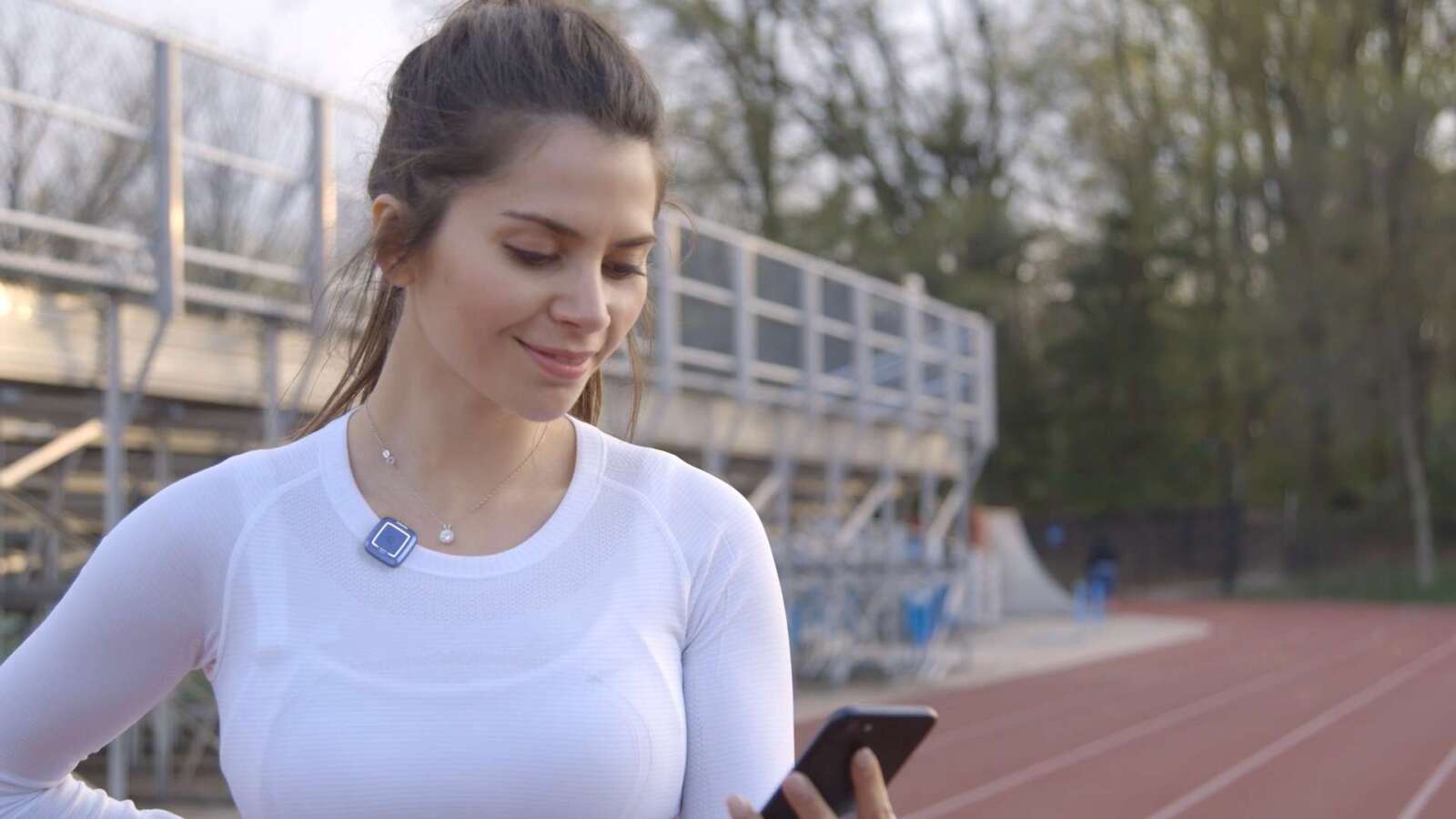
The finish line is in sight for a Clarendon-based startup that has developed a wearable breathing sensor called Respa.

Zansors, located at 3100 Clarendon Blvd, has created an inch-square device that connects to a mobile app, showing wearers their breathing patterns. Originally created to help people screen themselves for sleep apnea from the comfort of their home, Zansors has also tailored the product to fit the needs of fitness enthusiasts who want additional data on their exercise.

The company has been around nearly nine years, during which time the product has gone through research and development and has been beset by engineering and developmental delays, said co-founder Abhijit Dasgupta. Now, Zansors is in the final stages of developing the app and connecting it to the device.

“We’re looking forward to ramping up this spring and getting out the door in the summer,” Dasgupta said. “It’s obviously a good feeling that we’re in the final stretch. It’s a lot of work, effort and sweat equity. The hiccups have been frustrating, but we’re just trying to hammer it home.”

Dasgupta, who has a doctorate in biostatistics and previously worked in medical research, said the idea for a wearable breathing sensor came from seeing how common — but under-detected — sleep apnea is.

“To create a device that can allow you to detect it at home, you wouldn’t have to get wired up, and spend the night in a foreign bed,” Dasgupta said. “We felt sleep studies weren’t reflective of your own sleep experience.”

The wearable sensor detects how sleepers move and breathe and warns doctors of abnormal patterns, he said. But Respa is a screening product, not a diagnostic one, he said.

Over time, Zansors started looking into other areas where breath and motion are synced, and made it work for athletes and fitness buffs.

“It’s the same device, leveraged in different ways,” he said.

Dasgupta and his team have other ideas for repurposing the product for respiratory diseases, something at the forefront of their minds due to the coronavirus pandemic.

Although it has become fodder for future development, the pandemic has also hurt Zansors’ ability to travel, meet buyers and clients and raise investment money, Dasgupta said. When personal protective equipment was hard to come by, Zansors pivoted to selling high-quality masks with filters, which it sold to several U.S. Army and Air Force bases, he said. Now that PPE is easier to find again, Zansors has refocused on the Respa.

The company is also in active talks about possible military usage of the device, Dasgupta said.

“There are plenty of ideas out there but we need to get this out the door so that we can put this in the ‘done’ column,” he said.

Initially, most of Zansors’ work was funded by the National Institutes of Health, through its Small Business Innovation Research grant program, as well as a few investors in Northern Virginia. The Arlington community specifically has been supportive of Zansors, Dasgupta said.

“I think it’s great that we’re in Arlington,” Dasgupta said. “Arlington is a great place to center a business because there’s so much going on: There’s so much networking and the business development groups are good.”


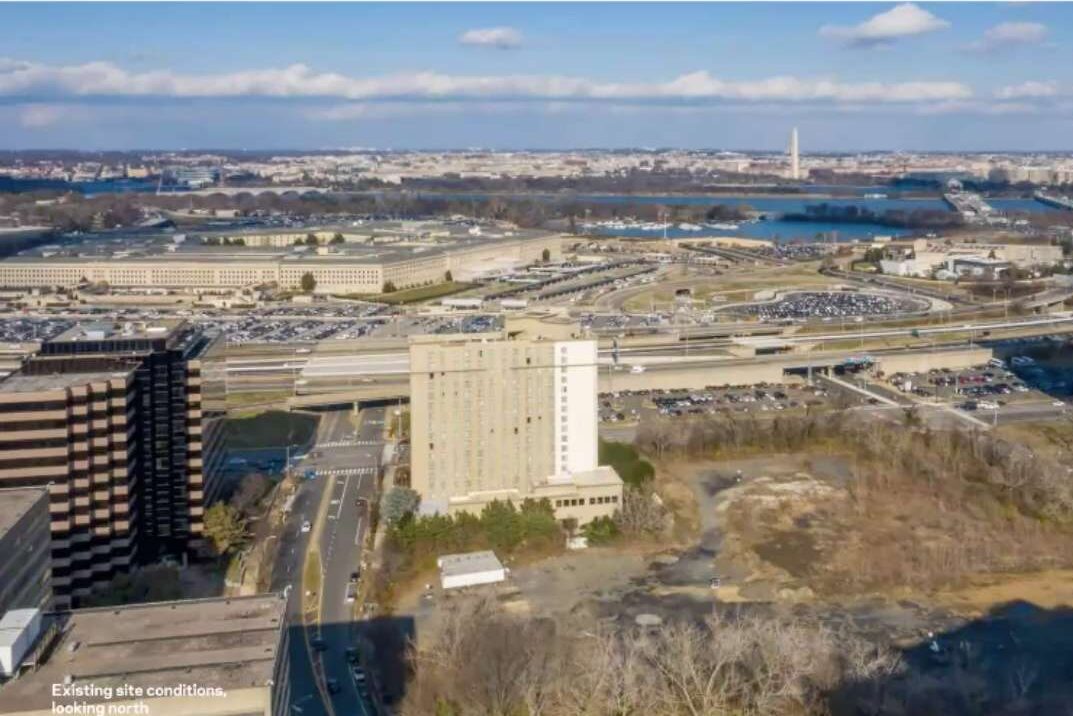
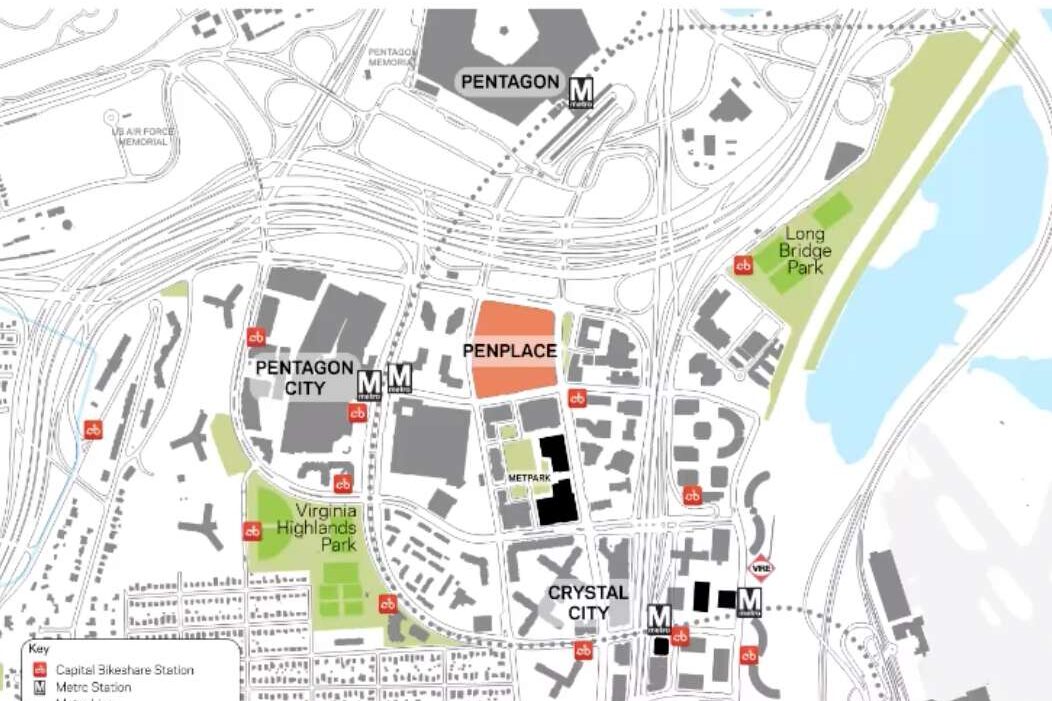
Arlington County has kicked off the review process for PenPlace, the second proposed phase of Amazon’s HQ2.

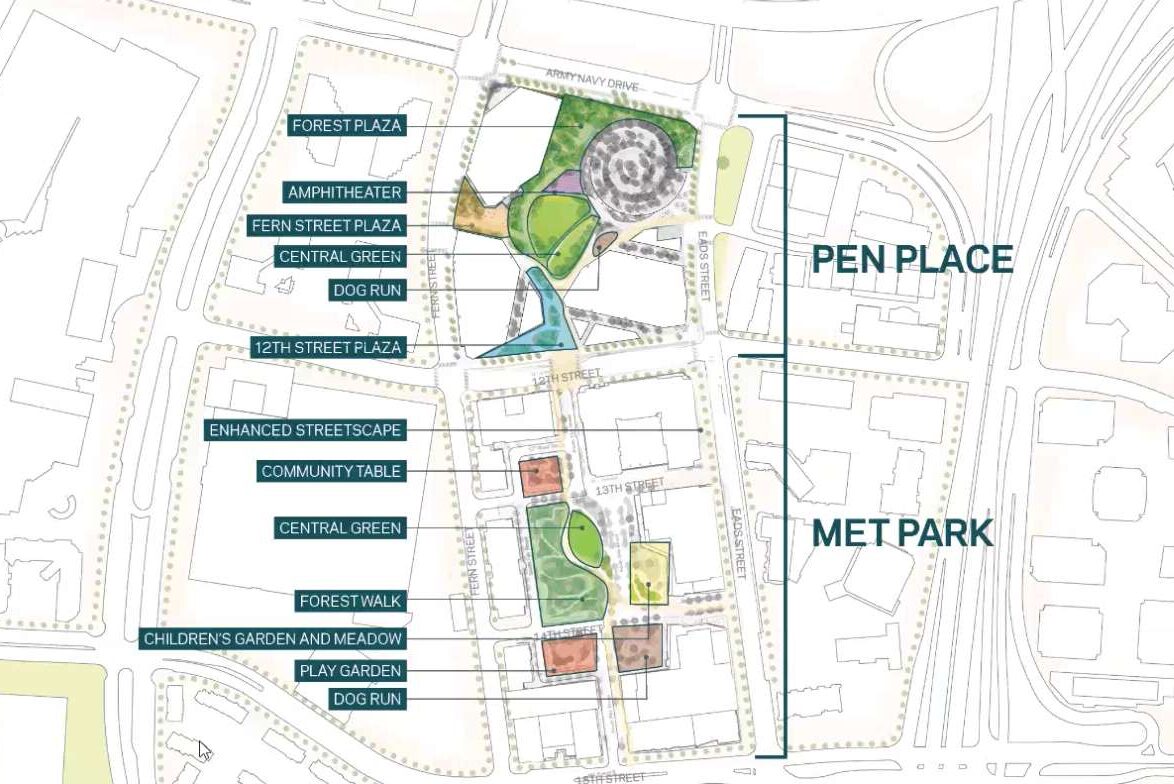
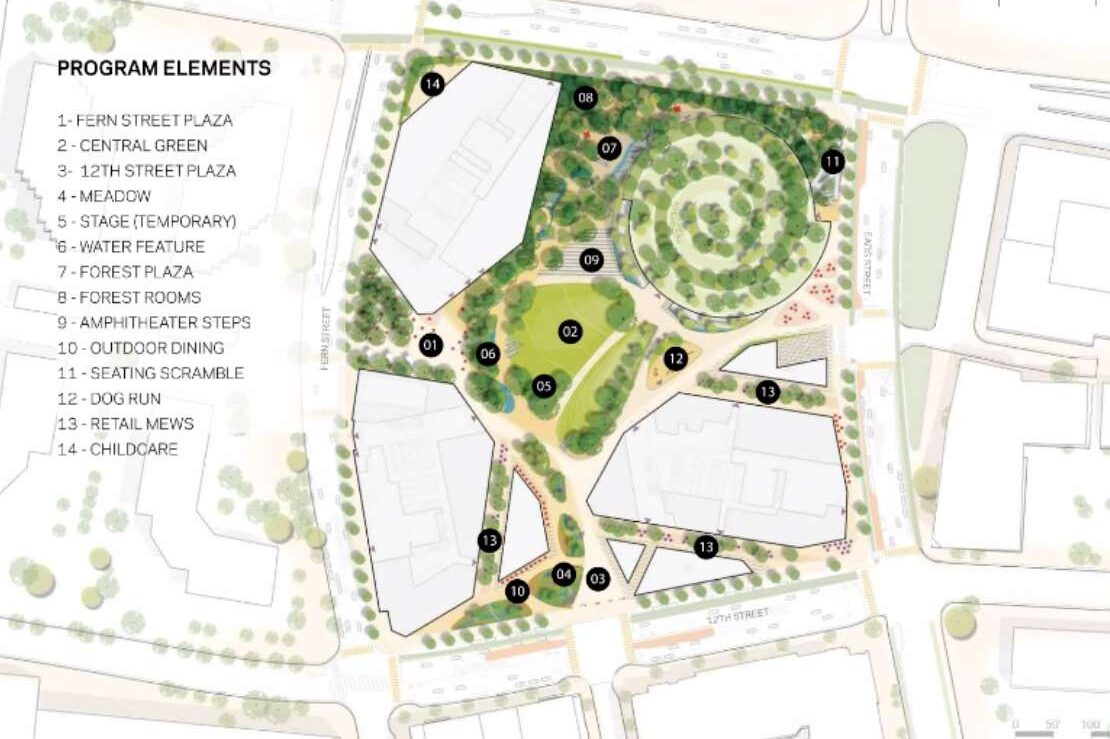
For PenPlace, located at the intersection of Army Navy Drive and S. Eads Street, Amazon is proposing 3.3 million square feet of solar-powered office space divided among the lush, futuristic building, dubbed “The Helix,” and three, 22-story office buildings with ground-floor retail.

The 11-acre site, which could accommodate up to 16,000 employees, will also have 2.5 acres of public open space, three retail pavilions and child care. A network of 2,100 parking spaces and loading areas for trucks will all be underground.

And, of course, there will be the “The Helix,” the distinctive building described as “a 350-foot tall spiraling office building that recreates a climb in the Blue Ridge Mountains.”

County officials say there will be numerous opportunities for virtual public engagement and are encouraging people to get involved in the process. The County Board is anticipated to hold a public hearing on PenPlace by the end of 2021.

“We have always had a highly engaged community and we’re proud of the valuable input that we use to fashion the best possible outcomes,” Board Chair Matt de Ferranti said during a meeting last night (Thursday) that kicked off the review process.

He added that Arlingtonians “are civically minded, they’re knowledgeable, and they so often bring us the best ideas that add to original plans that have been put forward.”

County Manager Mark Schwartz said the review process will resemble the process for Metropolitan Park — the first permanent HQ2 phase — which the County Board approved in December 2019 and is set to be complete in 2023. Located near S. Eads Street and 15th Street S., Met Park features 2.1 million square feet of office space across two towers and 2.5 acres of public park space.

“We are starting the process — there’s a road ahead of us,” Schwartz said. “It’s a proposed plan and we’re going to have a lot of conversations with the community.”

John Schoettler, Amazon’s vice president for global real estate, said the public input for Met Park proved valuable as Amazon mapped out PenPlace.

“The PenPlace design plans build on the community input we received during the Metropolitan Park approvals to raise the bar even further on accessibility, design innovation and sustainability,” he said, adding that Amazon is aiming for LEED Platinum certification for its PenPlace buildings.

Over the course of the next 10 months, online engagement opportunities will be held at multiple points in the process.

In April and May, the Long Range Planning Committee will consider how Amazon’s project fits into the county’s plans for future development in the area and will take input from nearby civic associations, property owners and county commissions.

Then, the Site Plan Review Committee will take over, during which time the committee can ask Amazon to make changes based on their reviews and community feedback. After the SPRC, PenPlace will go to the Planning Commission before going to the County Board for approval.

Meanwhile, the Department of Parks and Recreation will lead a review of public spaces in the area as part of a Park Master Planning Process. Community members will also be able to provide feedback on this process during online engagement opportunities and through online questionnaires, county staff said.

At the county’s request, an in-depth multimodal transportation assessment is also ongoing, Gorove Slade Transportation Planner Dan VanPelt said. The principal focus will be weekday rush hour traffic, although some attention will be paid to weekend retail traffic, too, he said.


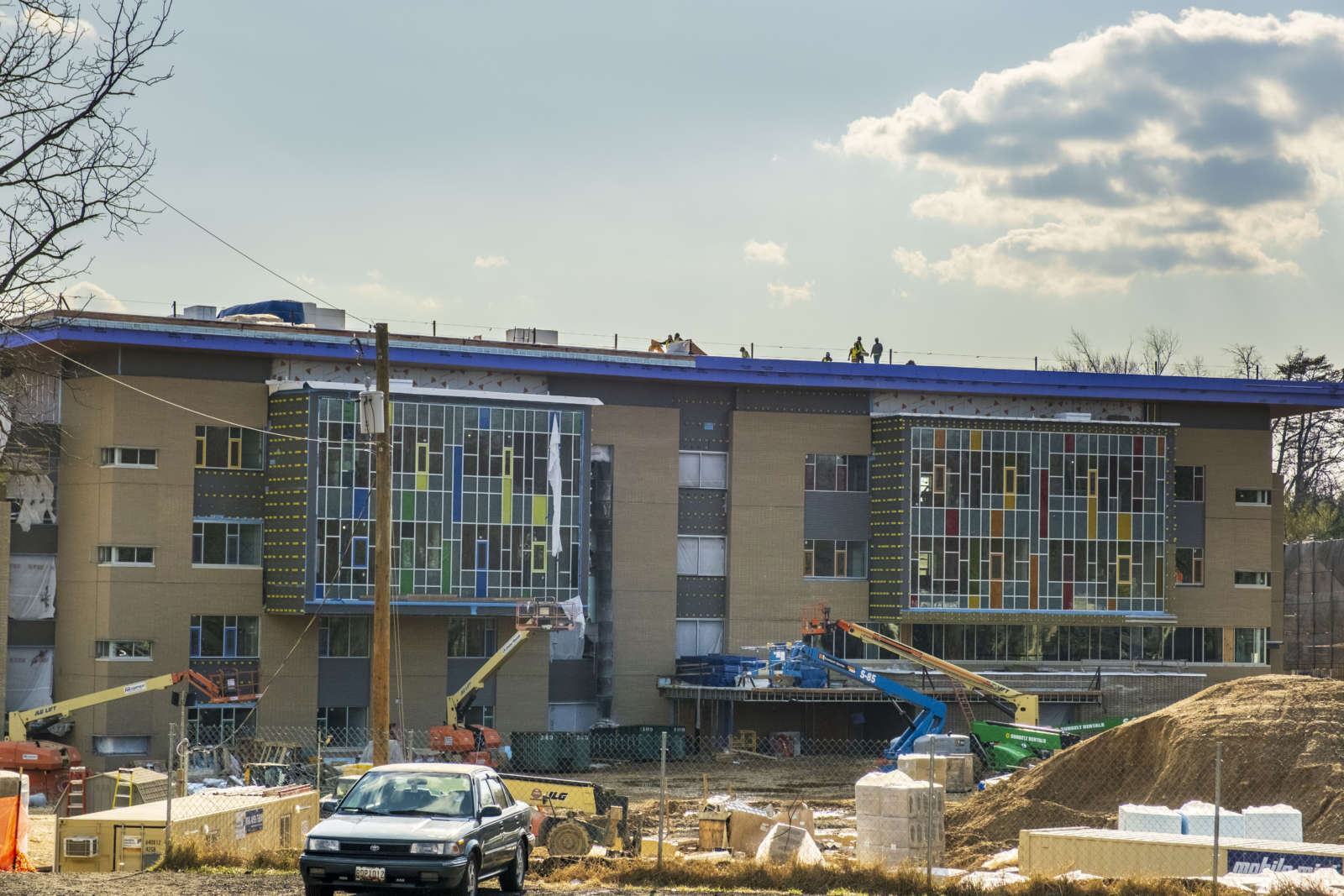
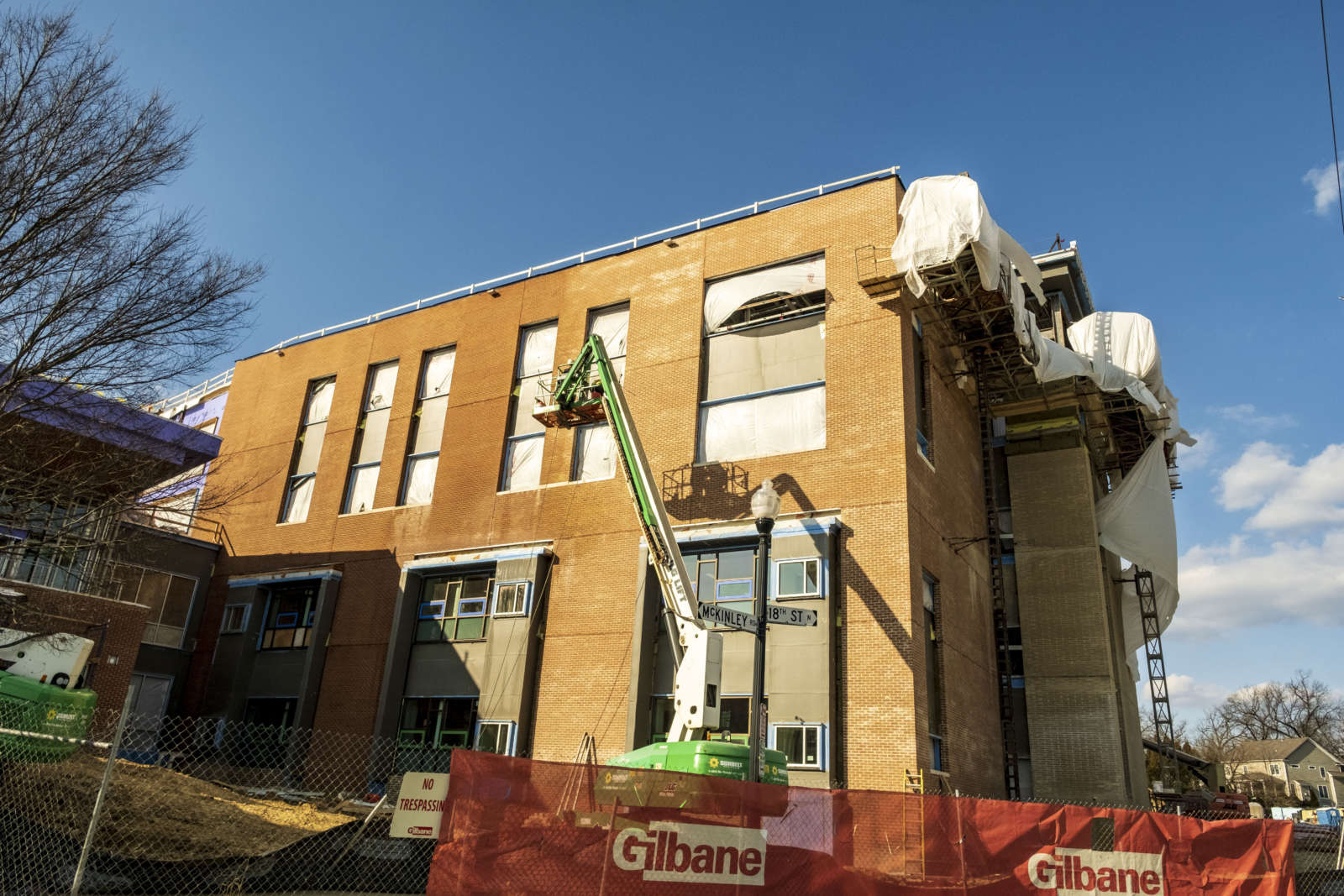
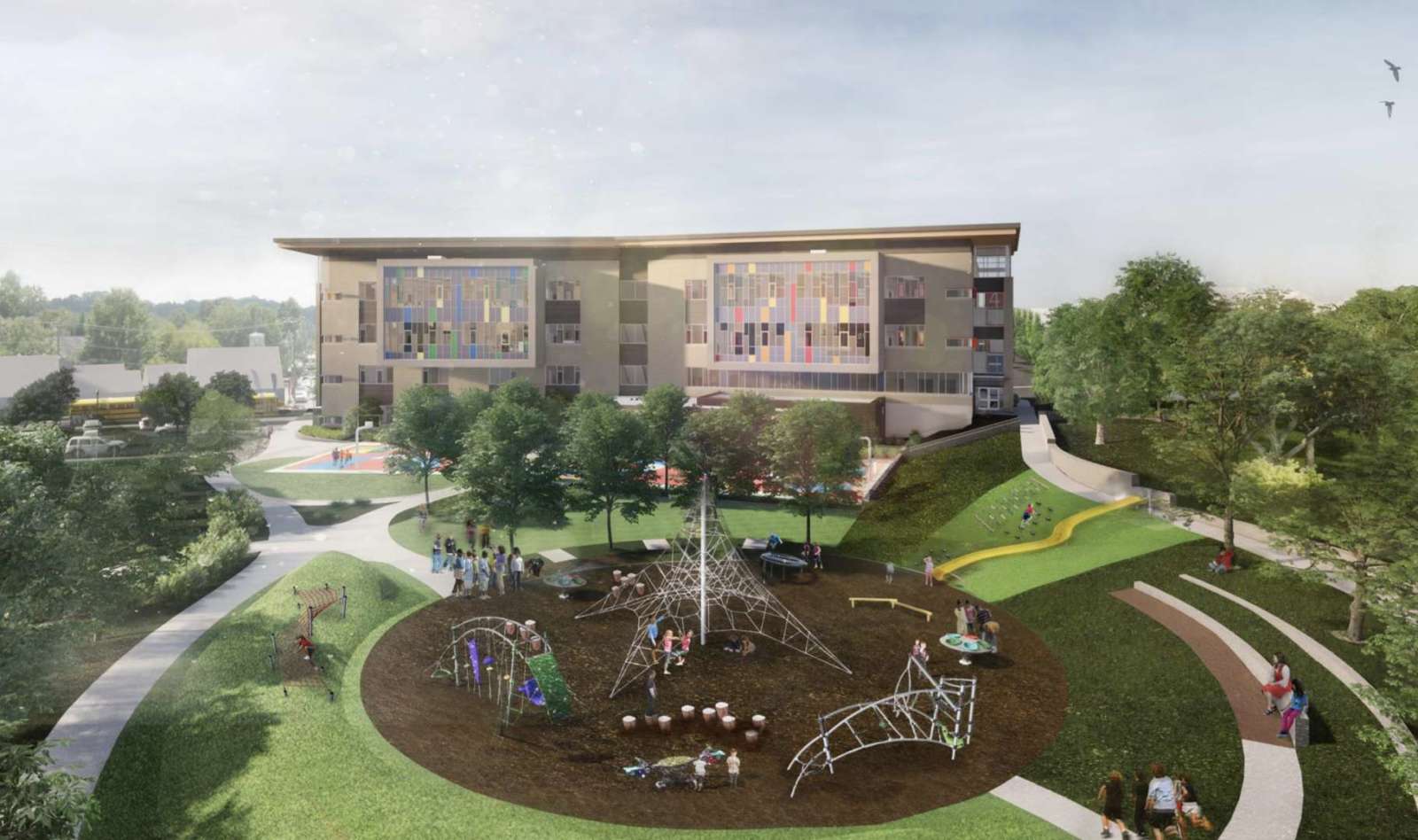
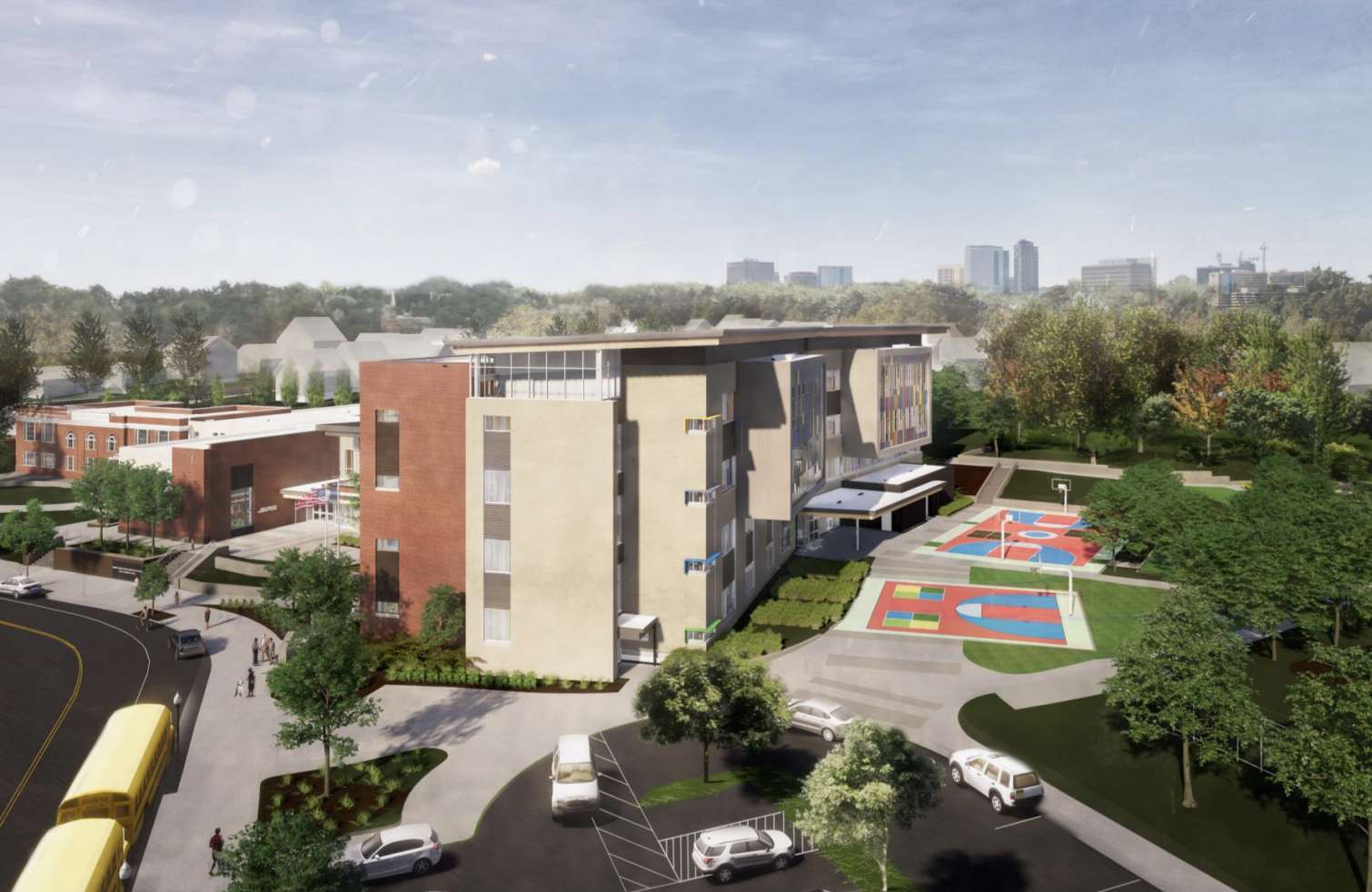
A last-minute possible name for the new school under construction at the Reed Elementary School site did not go over well with Arlington School Board members.

Members of the Reed School naming committee presented their top two choices, Westover Village Elementary School followed by Cardinal Elementary School, during the regular school board meeting last night (Thursday).

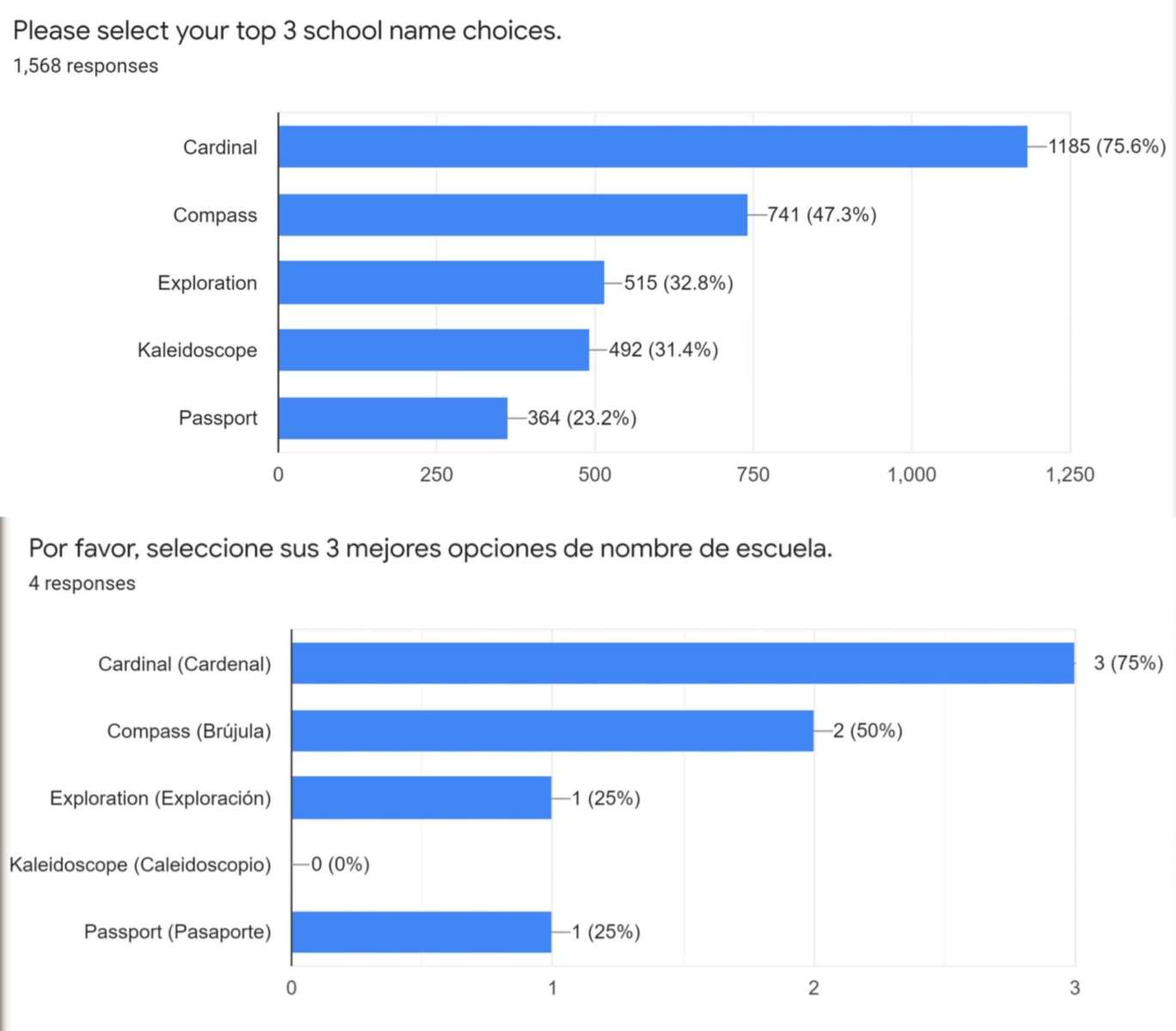
Westover Village is a new addition borne from feedback the committee received in a survey, through NextDoor and neighborhood email lists. Cardinal was one of five names the committee had initially planned to choose from — the others being Compass, Exploration, Kaleidoscope and Passport.

“The Westover name recognition came from the hope that this school would be a community-based school and a neighborhood school,” McKinley Elementary Assistant Principal Gina Miller said.

The committee decided to push past the possible association with Westover Plantation, which was owned by William Byrd II, who founded the City of Richmond and was noted for the often cruel treatment of enslaved people on the plantation.

“The committee felt naming it Westover Village alleviated the concern of Westover due to concerns of connection to the plantation,” APS spokesman Frank Bellavia said.

Arlington School Board members, however, disagreed. They condemned using the name Westover for the new school at the Reed site — even with “Village” tacked on, the name still bears the association with Westover Plantation, they said.

“I do understand that the community is so excited to have a community school once again,” Board Chair Monique O’Grady said. “With that fresh start, however, I think it’s imperative that we look at our values, our push to ensure that we have equity, that we embrace all students, that they feel safe and valued and that we do not continue to raise up the name of institutions that built their success on the backs of people of color.”

Arlington has “far too many examples” of holding onto historical references that need to be left in the past, she said.

“The best way to learn from this history is to not continue to allow it to live in the names of our institutions, especially the names of our schools, where students are meant to learn,” she said.

Board members Cristina Diaz-Torres and David Priddy and Board Vice-Chair Barbara Kanninen raised similar concerns and voiced their support for the name Cardinal. They are slated to vote on the name on Thursday, April 8.

Diaz-Torres recalled the Wakefield High School students who alleged racist behavior on the football field less than three weeks ago.

“I understand the rationale conceptually of adding the word Village to separate the connotation with the Westover plantation but that doesn’t erase the fact that Westover would be at the front of the name,” she said.

Diaz-Torres added that she is “disheartened that members of civic associations decided to encourage rejecting the preference of 1,100 community members” over the 73 who suggested Westover in the comment section of the survey.

The new school at 1644 N. McKinley Road will open this fall and will accommodate 725 students. Most of the students will move from McKinley Elementary School, with others moving from Tuckahoe Elementary School.

(more…)


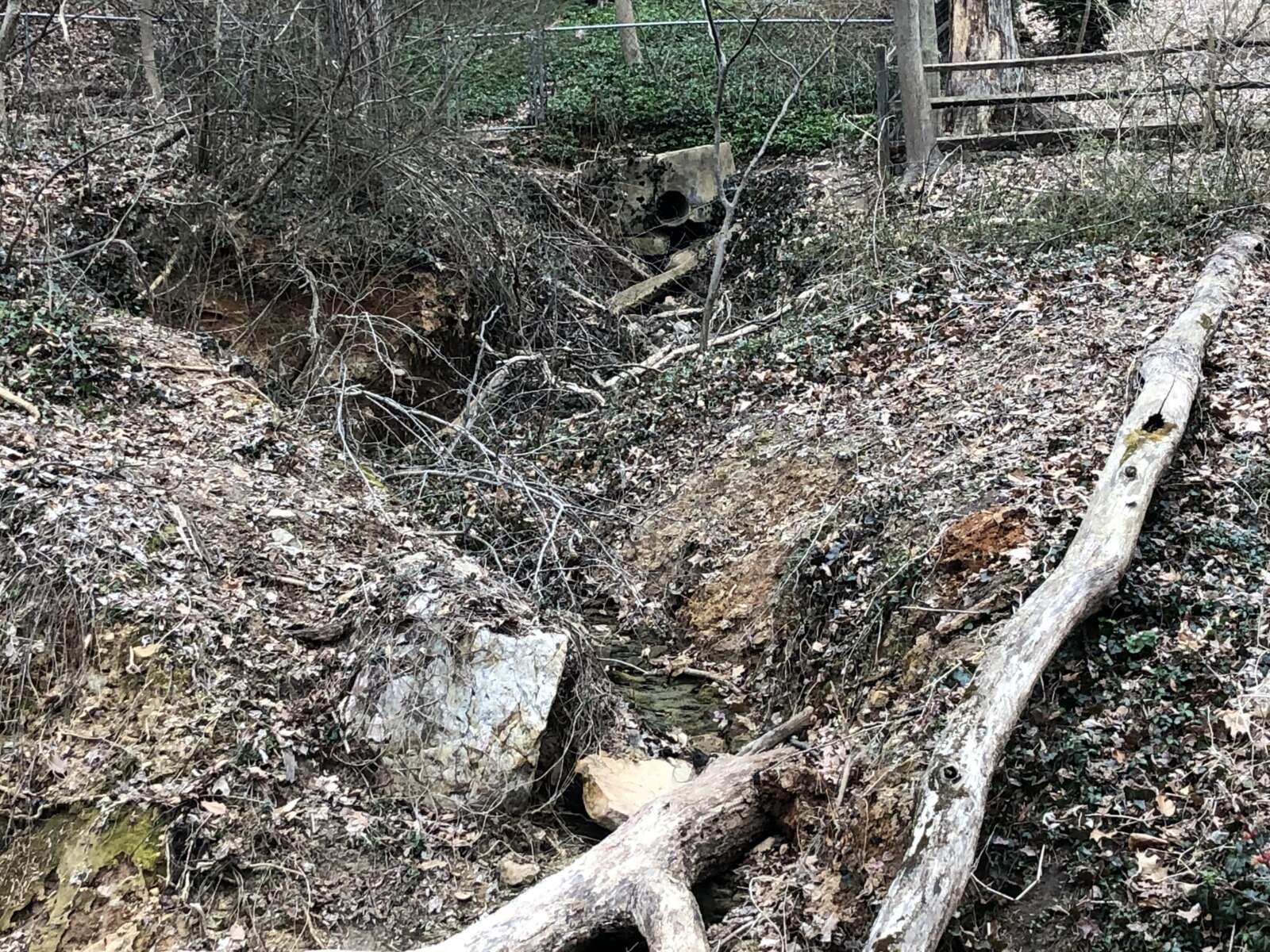
(Updated at 4:30 p.m.) Arlington County is moving forward with a project to restore Donaldson Run Tributary B despite some vocal public opposition.

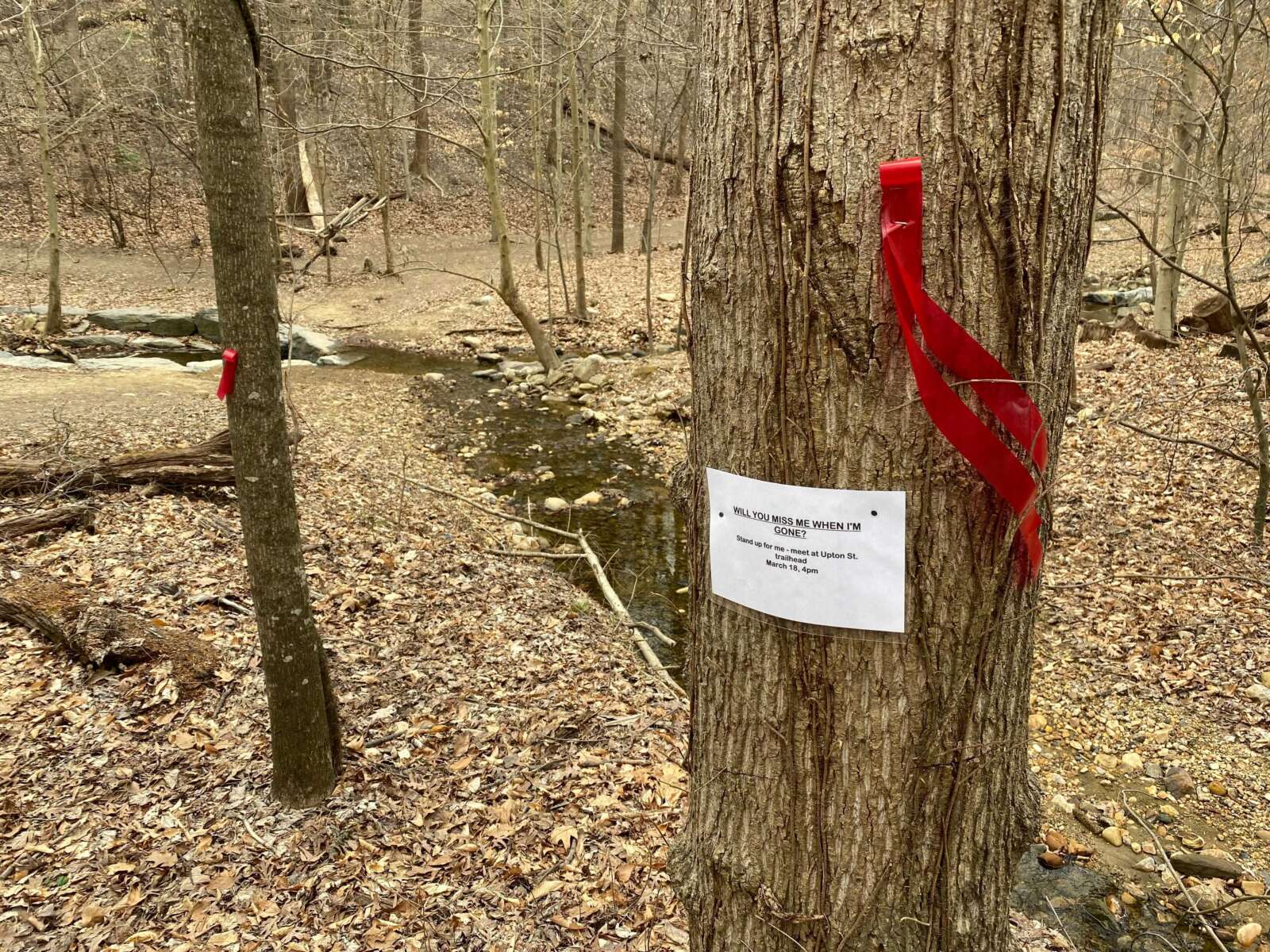
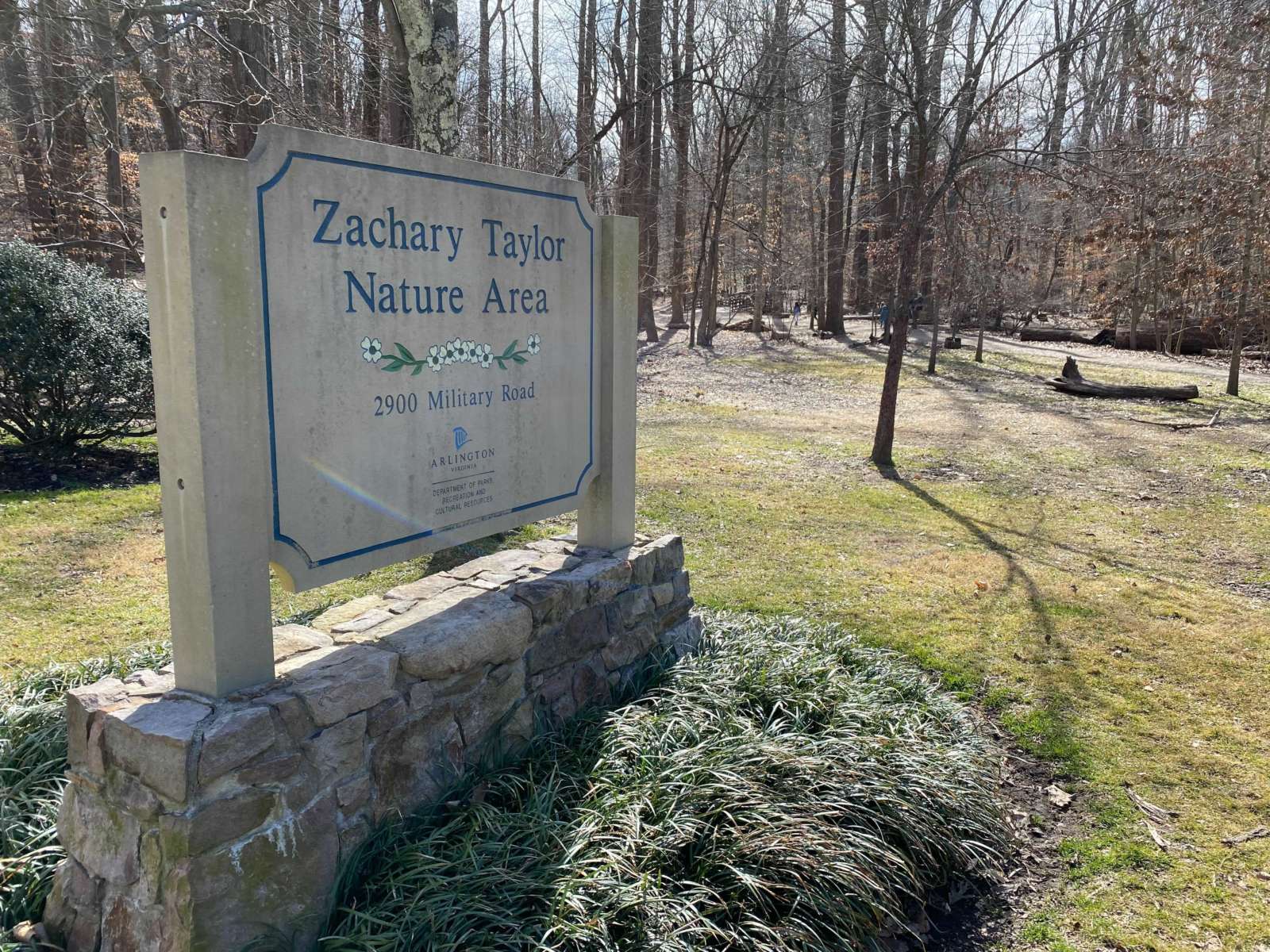
On Tuesday, the County Board voted 4-1 to award a $1.5 million contract to restore a segment of the stream beginning at N. Upton Street and extending about 1,400 feet downstream to where it meets with Donaldson Run Tributary A in Zachary Taylor Park. Takis Karantonis cast the dissenting vote.

The vote came after a handful of locals criticized the proposed project for sacrificing trees, as well as allegedly misusing taxpayer dollars and ignoring changing scientific opinions.

With the vote, the county will use an approach similar to the one taken in 2006 to restore Donaldson Run Tributary A.

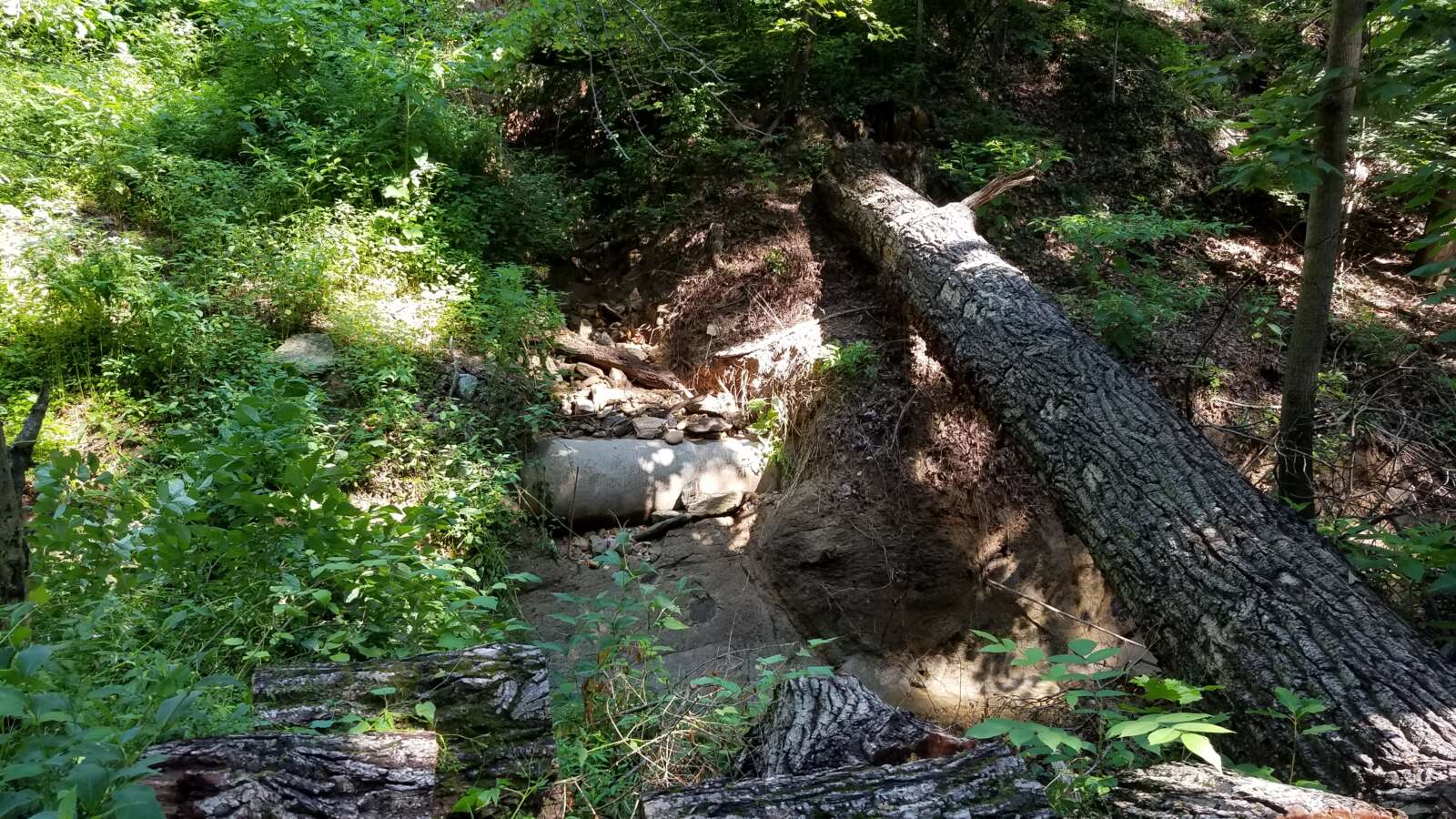
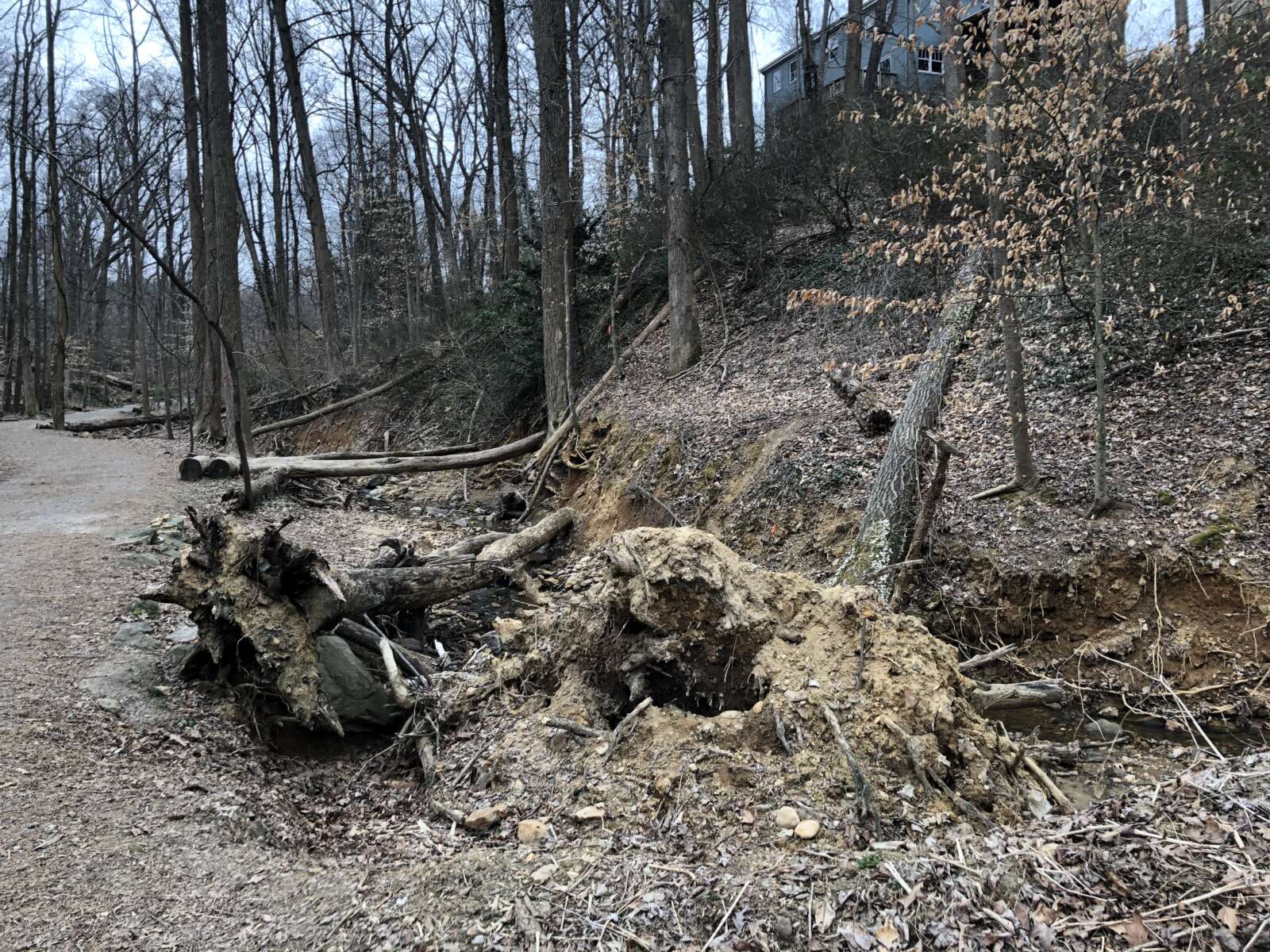
The project will address “critical infrastructure, public safety and environmental threats,” the county said. It “will stabilize the stream’s eroding banks to protect existing stream valley infrastructure, including the threatened water main and sanitary sewer, which crosses the stream and runs parallel to it.”

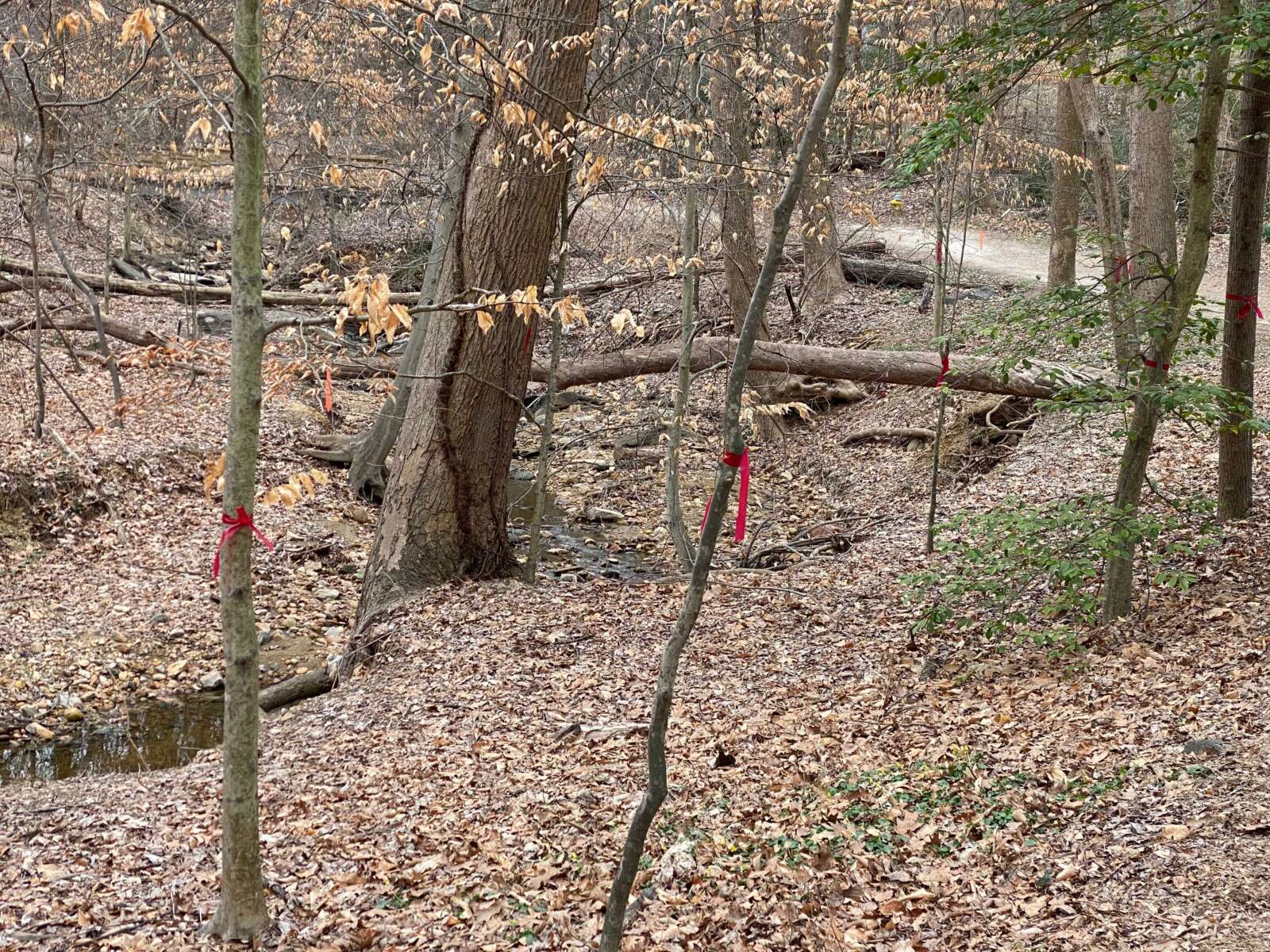
Staff said 83 trees will be axed as part of the project, which has been in the works since 2004.

Board Chair Matt de Ferranti told public speakers he agreed with many of their points but he is ultimately supporting what county staff recommended.

“We need to work on impervious cover and climate change but we also lost more than 20 trees since 2017 due to some of the washout that has come,” he said.

Critics weren’t convinced.

The restoration of Tributary A “failed miserably,” said Rod Simmons, who said he worked on the project and argued that it actually made flooding and runoff worse. Those recommending a different solution say theirs is cheaper, less intensive, and will save more trees.

“I am heart-sick at the devastation of the Donaldson Run ecosystem that will result from this project but I am even more distressed at the systemic discounting of the importance and integrated nature of the unique ecosystems in Arlington such as Donaldson Run,” said Mary Glass, a local resident. “For more than a decade, concerned citizens have provided valuable information on the adverse impact of this project and constructive alternatives to reach the same results…It’s a shame that despite all of this, no significant modification has occurred.”

Karantonis argued that the area needs restoration but 83 felled trees is too high a price.

“I don’t think we did everything we could to minimize impact,” he said.

But Jason Papacosma, the watershed programs manager for Arlington County, said the method suggested by the advocates is not applicable to the “very high-energy environment” of Donaldson Run.

(more…)


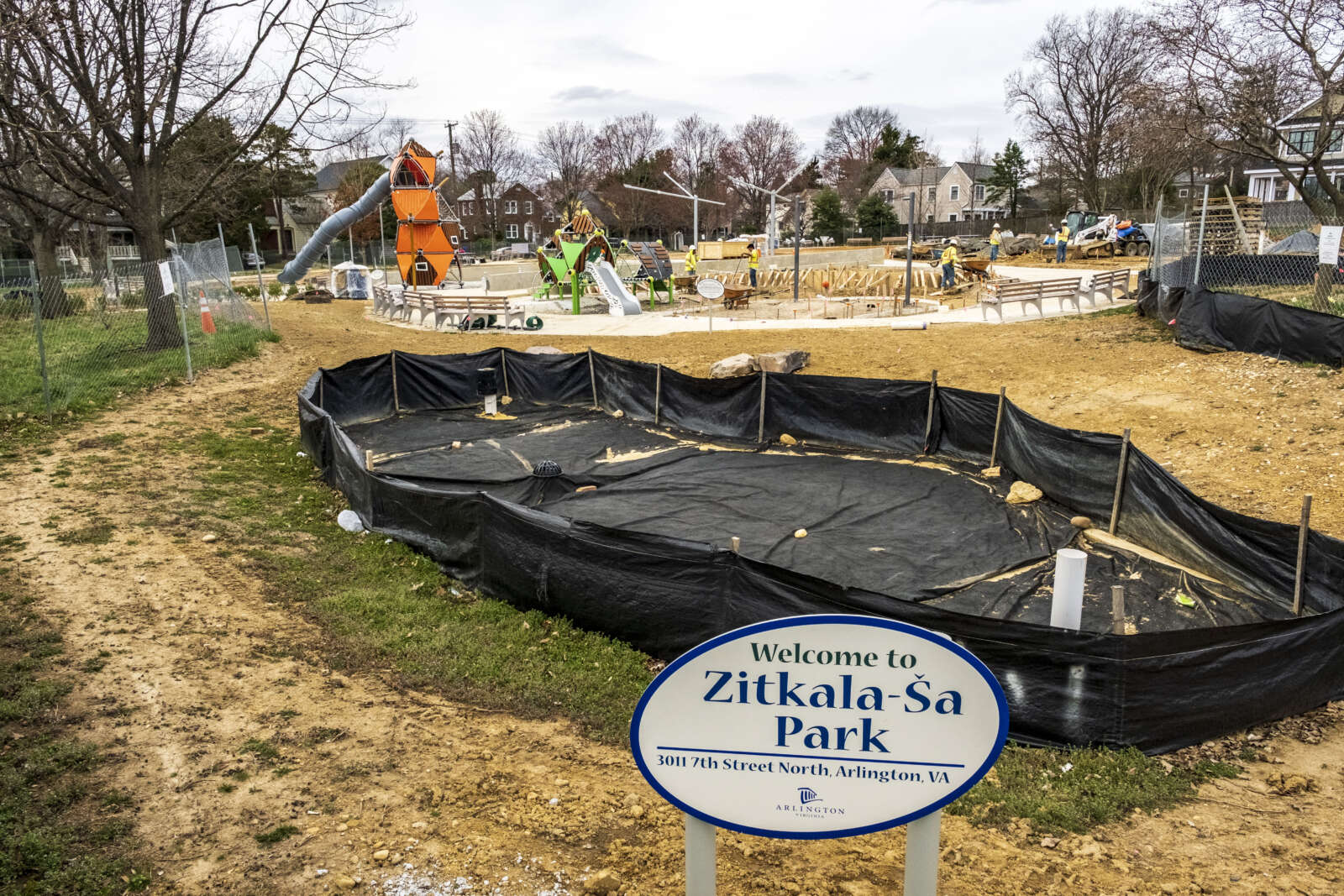
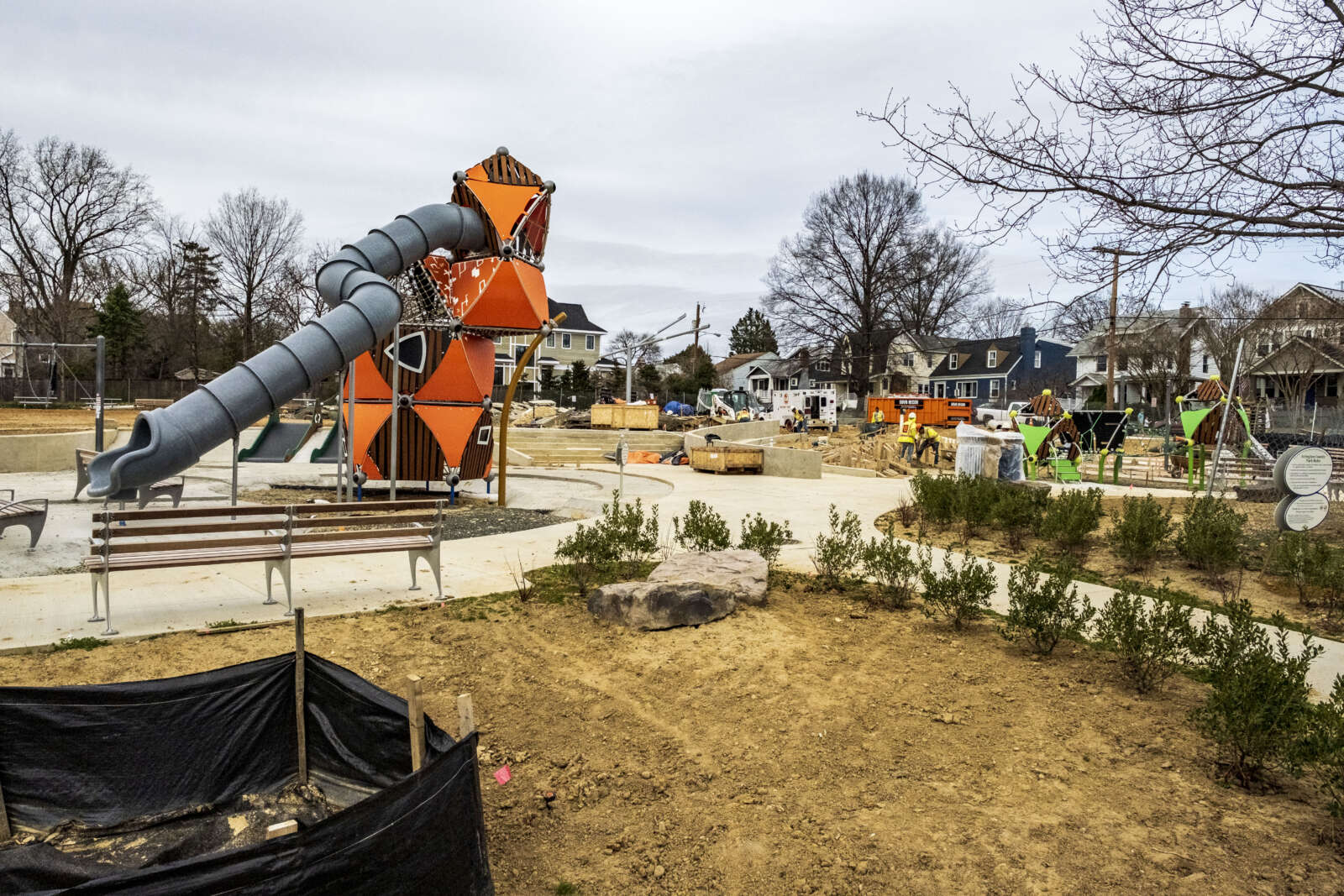
Zitkala-Ša Park in Lyon Park could be ready by July to welcome neighbors who have gone without their community green space since October 2019.

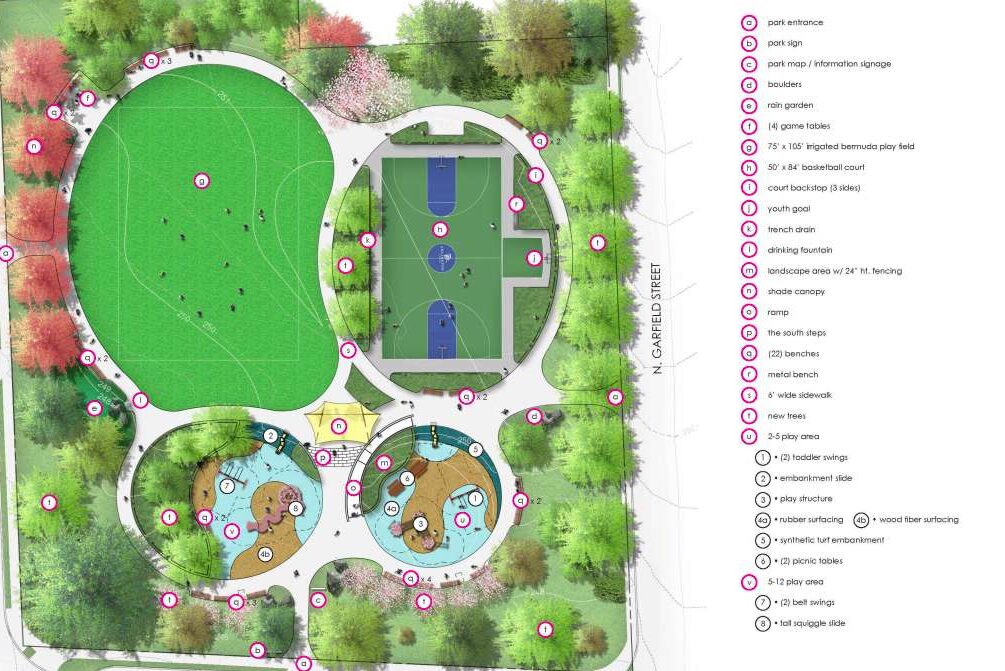
Construction on the park at the corner of 7th and N. Highland streets is nearly a year behind schedule due to pandemic- and weather-related delays. Upgrades include re-doing the basketball court and adding new play structures, a picnic shelter, as well as fencing and landscaping.
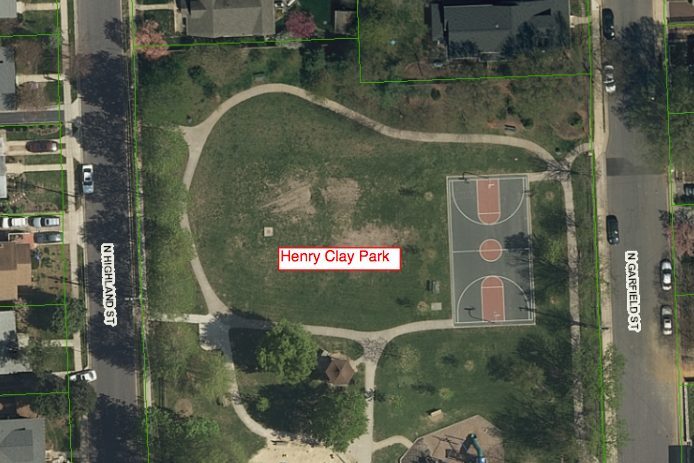
New signage also went up recently to reflect a name change. In December, the County Board officially renamed Henry Clay Park after Zitkala-Ša, an Indigenous rights activist who lived near the park.

Initially, the Department of Parks and Recreation set out to complete the changes by July 2020 but the pandemic caused manufacturing and shipping delays. A new timeline of December 2020 was set. Now, work is being hampered by weather, said parks department spokeswoman Susan Kalish.
“We are progressing along as best we can, however, due to weather we have not been able to complete all the work we’d like to do,” she said.

Kalish added that many of the remaining tasks — planting, laying asphalt and safety surfaces, striping the basketball court — “are weather-sensitive and can be completed only after the weather gets a little better.”

These two complications combined led the department to move the completion date sometime between April and June 2021.

When completed, the community “will see a new basketball court, playground, open field and picnic shelter with updated site circulation, site furnishing, fencing, drainage and landscaping,” Kalish previously told ARLnow.

The park “is a heavily used facility,” the county said in a 2019 report. “The outdoor amenities for [Zitkala-Ša Park] are now past their useful life and are in need of replacement.”


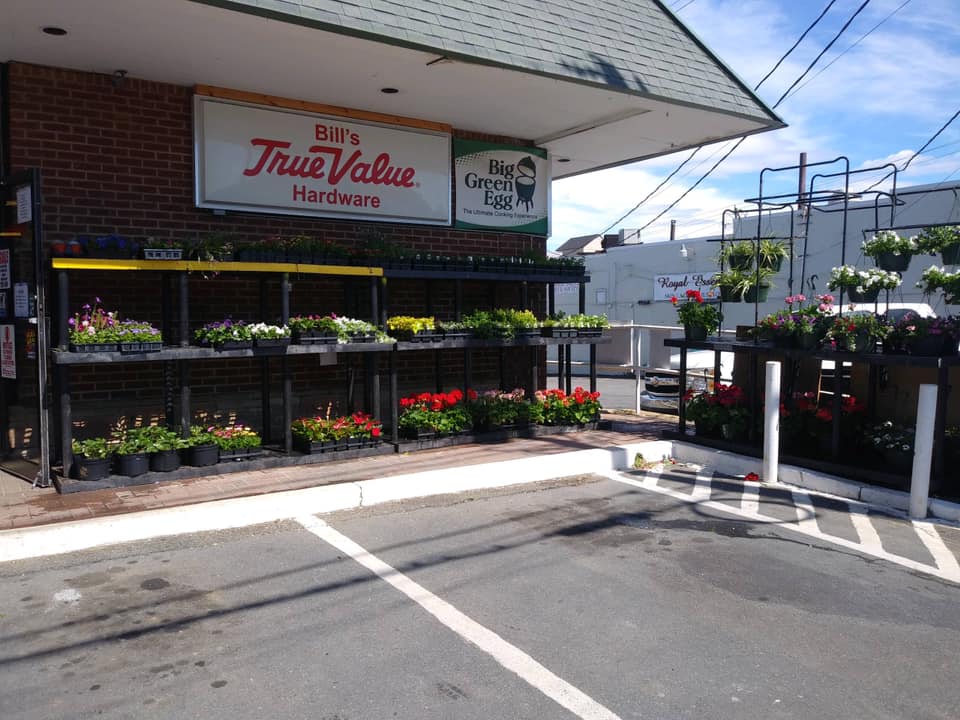
Bill’s True Value Hardware, which William “Bill” Ploskina owned and operated for 42 years, is staying open under the ownership of one of his children.

The elder Ploskina, who opened Bill’s along Lee Highway in 1979, died on Feb. 18 at 75 years old, according to his obituary. The new owner, his son Sean, lives in Virginia Beach and is a retired fire lieutenant. He tells ARLnow that he has been running the business since becoming president last year.

For employees, business continues as usual over at 2213 N. Buchanan Street.

“We told everybody who was worried if we’re going to stay here that we’re planning to stay here as long as possible,” said Robert Moody, the store’s manager and grill specialist. “Nothing has changed.”

The hardware store has been busy since the pandemic started. Bill’s son Mark told ARLnow last year that masks flew off the shelves, and people were stocking up on emergency supplies — as well as gardening supplies to break the monotony of lockdown.

Over the last month since Ploskina’s death, the store has received a wave of support from the community, said Moody, who worked with Bill for 20 years.

“There’s been a lot of feedback from the neighborhoods, they’ve been sending their condolences, cards, cookies, things of that nature,” he said. “He was a real known man.”

As a testament to the store’s longevity and its community focus, Ploskina even donated to Moody’s baseball team when he was a kid.

“That was 30 years ago,” Moody said, chuckling. “He’d help you out any way he could and was always willing and able to donate to any organization if they came in.”

According to his obituary, Ploskina was born in McKeesport, Pennsylvania — outside of Pittsburgh — and graduated from Penn State with a degree in aeronautical engineering.

“Bill enjoyed traveling and lived in Singapore for one and a half years,” the obituary noted.

Community members and longtime patrons remembered Ploskina as knowledgeable and invested in the local area.

“Mourning the loss of a neighborhood and North Arlington institution,” one person wrote in a post on the obituary. “My family and I will think of you whenever we go to Bill’s Hardware (which is often).”

“I know he will be greatly missed by many,” wrote another.

Photo via Bill’s True Value Hardware/Facebook


(Updated 4/5/21) Arlington Public Schools is preparing to release more information on its plans for getting students into classrooms during the current semester.

During the School Board meeting this Thursday, Superintendent Francisco Durán is slated to address updated K-12 school guidance from the Centers for Disease Control and Prevention, which was released on Friday.

“APS is reviewing the guidance to determine how the changes may impact our ability to serve additional students in person and improve transportation in the current school year,” Durán said in a School Talk email on Friday. “An update will be provided at the March 25 School Board meeting.”

The CDC now recommends that, with universal masking, students should maintain a distance of at least 3 feet in classrooms, down from the previous guidance of 6 feet. The change reflects “the latest science on physical distance between students in classrooms,” according to the CDC.

There are some exceptions: Adults should remain 6 feet apart from each other and students, and 6 feet should be enforced in common areas such as auditoriums, lobbies, the cafeteria during meals, and any time masking would hamper breathing, such as choir or band practice, sports practices and P.E. classes.

APS is currently enforcing 6 feet for children and adults who are learning in-person twice a week in a hybrid model. As of March 11, Durán said about 64% of students are in-person. The rest have either opted to stay virtual or are on waitlists pending more space. APS recently said it would finish the semester in the hybrid model current, before returning to five-day-per-week in-person learning in the fall.

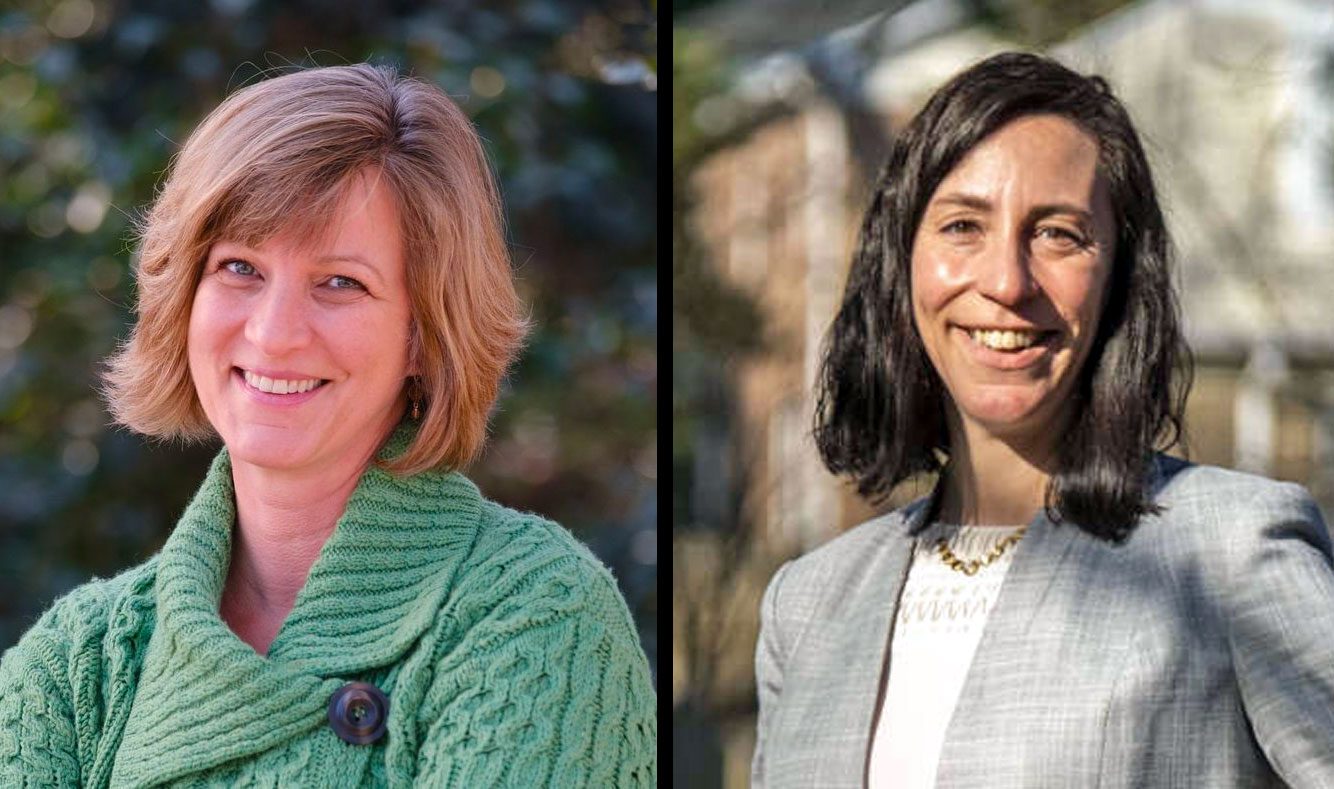
If APS shortened the social-distancing minimum to 3 feet, waitlisted students should be able to get back into classrooms, School Board candidates Mary Kadera and Miranda Turner tell ARLnow.

“I am encouraged that the CDC’s updated guidelines may provide the opportunity for students who are currently on wait lists to return to school,” Kadera said.

Turner agreed, saying that the new guidance “hopefully will be an impetus for APS to try and get more students in buildings this school year.”

Both candidates, who are seeking the Democratic endorsement in the School Board race, are awaiting more information from APS this Thursday.

“While we want to open our schools to all students who wish to return, we also have to remember what CDC guidance hasn’t yet changed, such as the requirement of 6 feet of distance between adults and students and 6 feet of distance in common areas, so I am interested to learn the details from Dr. Duran at this Thursday’s School Board meeting,” Kadera said.

Meanwhile, Rep. Don Beyer (D-Va.) has joined the chorus of people calling for returning more students to in-person learning this semester, which ends in June.

“I respectfully request that APS continuously review CDC revised guidance, and apply it to APS’s operational implementation for the current school year,” he said in a letter to Durán last week.

Beyer added that APS will receive $19.4 million from the recently passed American Rescue Plan Act to put toward reopening. The money is earmarked for items such as funding additional staff, implementing new testing protocols and supporting special-education programs as well as programs targeting unfinished instruction and social-emotional needs, he said.

On Friday, the pro-reopening group Arlington Parents for Education called on Durán to immediately apply the revised CDC recommendations. The group said the change would expand the current 11-student cap for buses, which it called “a misguided decision directly responsible for keeping kids out of school who want to be there.”

Relying on 6 feet of distance, it said, will “prevent Arlington’s students from receiving more than just two days of in-person instruction a week and from beginning the process of recovering academically, mentally, and socially, for the rest of the school year.:

Not everyone thinks a further reopening is the right move at the moment, however.

(more…)


Sponsored by Monday Properties and written by ARLnow, Startup Monday is a weekly column that profiles Arlington-based startups, founders, and other local technology news. Monday Properties is proudly featuring 1812 N. Moore Street in Rosslyn.

Courthouse-based startup WireWheel is gearing up to bring its software to more mid- and small-sized companies looking to comply with new data privacy laws being passed in the U.S.

And the startup, located at 1310 N. Courthouse Road, recently raised $20 million in funding, led by ForgePoint Capital, to make that expansion happen.

“We raised our financing with a terrific investor out of Silicon Valley that helps companies build out and sell products,” said co-founder and CEO Justin Antonipillai.

Founded in 2016, WireWheel provides companies with the infrastructure needed to show customers what data they collect on customers and how that data is used. These platforms also help customers access or delete this data or indicate they do not want their data sold.

“People are getting creeped out by the idea that you go to a website and then you start seeing ads everywhere,” Antonipillai said.

Antonipillai, the former Acting Undersecretary of Economic Affairs at the U.S. Department of Commerce under President Barack Obama, predicts this infrastructure will become more crucial in the near-term. In the coming year, he said between five and 10 states are poised to pass laws on data privacy, following the lead of California and Virginia.

While each state’s law may look different, he said, they generally will require companies to be more transparent with users and potential auditors about the data they collect and whether and to whom they sell that sensitive information.

“Every company you know is worried about a simple problem: How do I make sure my marketing and website are complying with laws?” he said. “We help companies solve that problem.”

California rang in 2020 with the first major data privacy law and Virginia passed the second this year, he said. Arlington and Northern Virginia’s robust cybersecurity industries likely contributed to this push, he added.

WireWheel first targeted a handful of big-brand companies, and this year, made its essential offerings available to companies of all sizes, Antonipillai said. This includes a product that helps new companies weave law-abiding data privacy into their websites and platforms as they build them.

It recently launched a data privacy conference called Spokes that has quickly become the largest such conference in the world, attracting business and government leaders from Europe and the US, he said. That trans-Atlantic collaboration is important because Europe has considered shutting down data-sharing operations because the US had fewer regulations on data privacy, he said.

“You don’t really think of data as something that a group of countries could stop but the truth is that it can be,” he said.

Although data-sharing, with the lack of privacy regulations, poses problems now, it can be a powerful tool for good, he said. Antonipillai imagines WireWheel helping usher in a world in which consumers actually trust the government or a company to use data responsibly and delete their identifying information if they wish.

“If I felt more comfortable with that, I would let more companies and governments use my data to solve big problems,” he said.

One example is in healthcare, where patients could permit their information to be shared anonymously with researchers for further study or with organizations, such as cancer societies, so newly diagnosed individuals can learn more about their chances for survival and remission, and what lifestyle changes they can make to improve their chances.

“Those are the kinds of things where a lot of people want to help, but don’t trust healthcare data will be protected and used the right way,” he said.


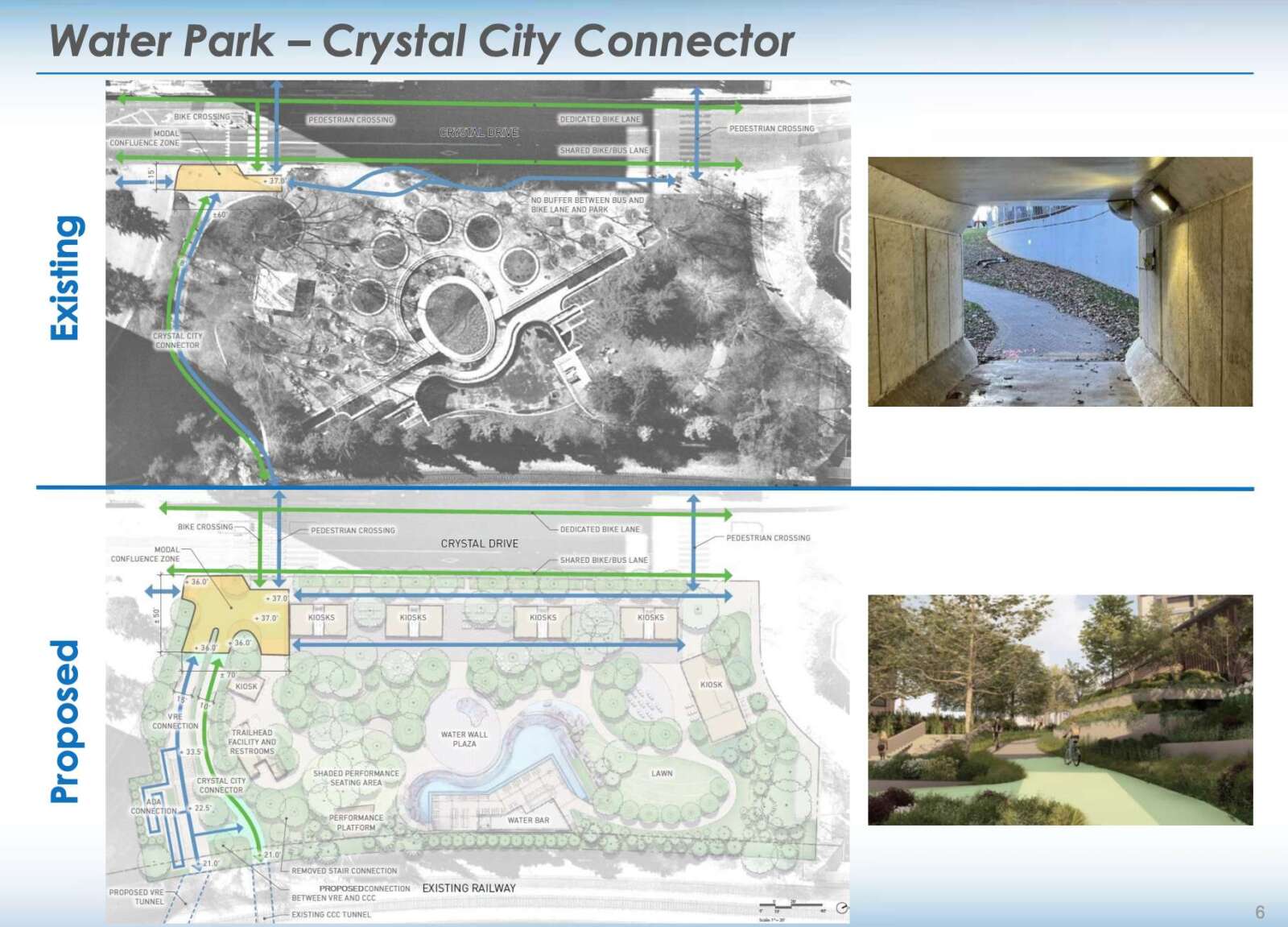
The County Board has unanimously approved plans to improve walking and cycling connections and add amenities to the Crystal City Water Park.

Water features and a food stand currently activate the privately-owned Crystal City Water Park at 1601 Crystal Drive. It also provides connections to the Mount Vernon Trail and Reagan National Airport, as well as the proposed Virginia Railway Express north entrance.

Park owner JBG Smith initially came to the board in January with plans to modify the Crystal City Connector path — which cuts through the site — and renovate the park. Members deferred the proposal over predictions that the developer’s plans for the pathway would lead to unsafe pedestrian and cyclist interactions.

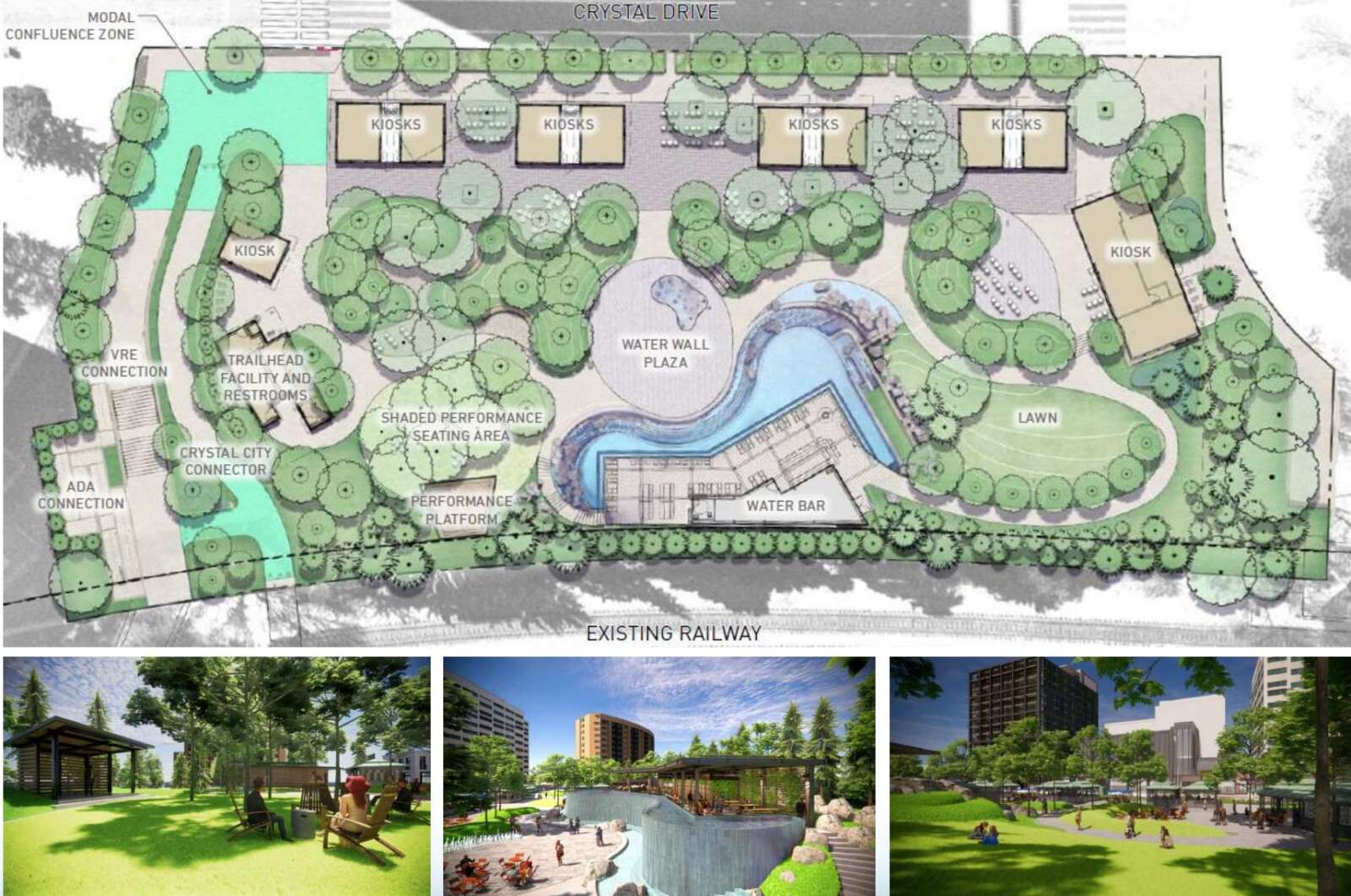
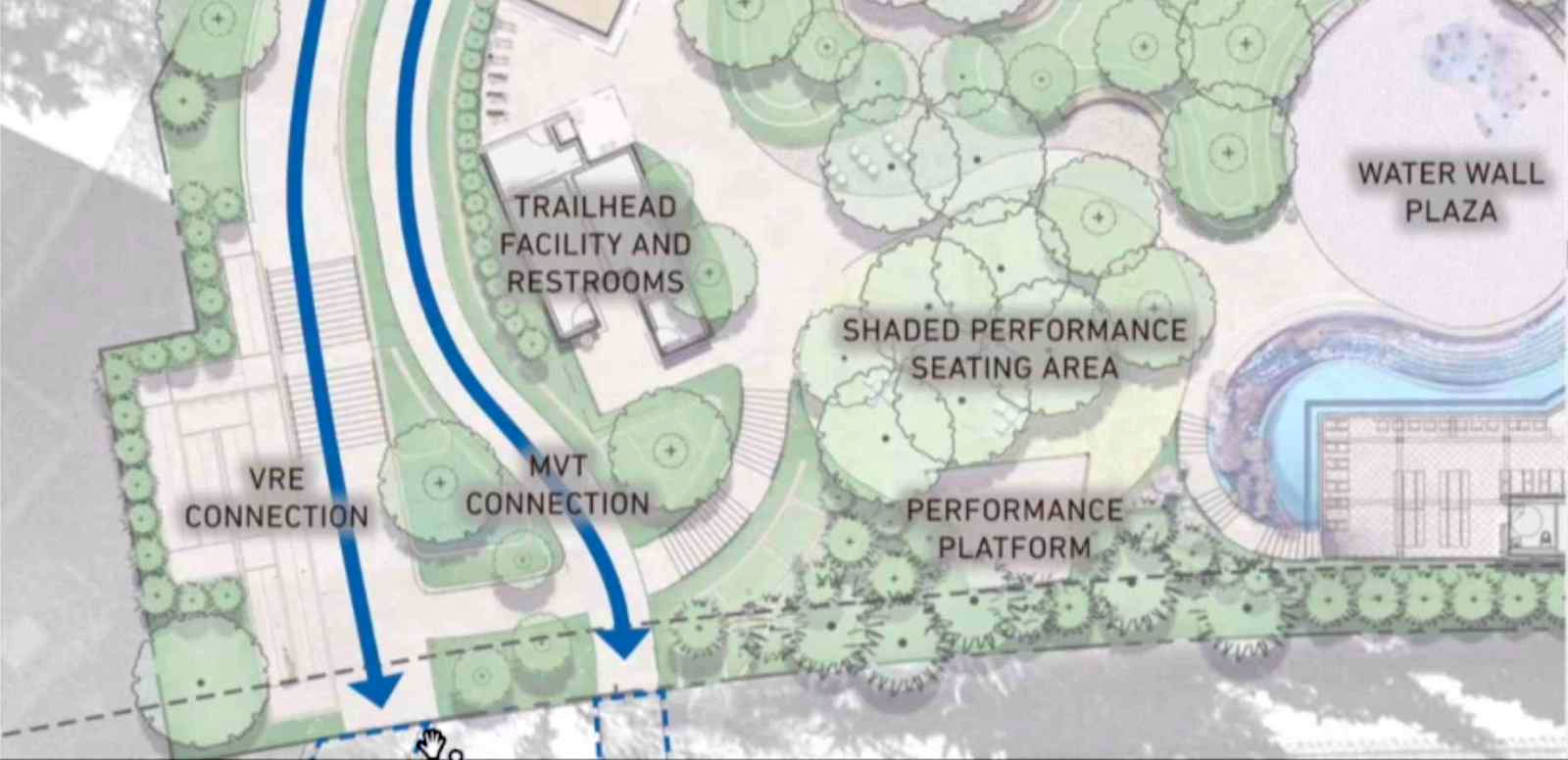
On Saturday, County Board members signed off on revision to the project. The Crystal City Connector path will be turned into two paths accessing the Mount Vernon Trail and the new VRE entrance: one for pedestrians and the other focused on bicyclists.

JBG Smith will be “adding retail shops, cafes, and restaurants along the edges of the park, upgrading the existing water wall… adding a new water feature, [and] adding public art and an outdoor bar,” the county announced on Monday.

The additions include “nine (9) 300 square-foot retail structures positioned along Crystal Drive, a 1,415 square-foot retail structure along the northern edge, a 760 square-foot bar with a 2,069 square-foot terrace atop the water wall, a 409 square-foot performance platform to be used for the event lawn, and a 747 square-foot trailhead restroom facility,” per a county staff report.

“We’re proud to say that this project has evolved in response to the comments and we think gotten to a place that is better than we were a couple of months ago,” said Kedrick Whitmore, an attorney representing JBG Smith.

The staff report said the plan has been redesigned to minimize conflicts and support increasing number of pedestrians and bicyclists accessing the trail and the VRE station. Potential users testified in January that the initial proposed design, below, would lead to conflicts at the exit from the Mount Vernon Trail access tunnel, where visibility is low.

JBG Smith’s new plan removes the stairway that linked the pathways to the water park, located near a series of tunnels. It does not, however, remove an adjacent path between the Crystal City Connector path and the connection to the proposed VRE station, although some community members predicted it too would be unsafe.

“We think this is a really important area to maintain a connection,” Whitmore said. “Despite keeping the connection in place, we did hear loud and clear that there were safety concerns, and the use of paint, mirrors, signage and paving will help.”

The developer will also widen the sidewalk along Crystal Drive from eight to 10 feet and use landscaping, signage, striping and paving treatments near the tunnels and the connection to Crystal Drive to increase visibility and heighten awareness for all users, the report said.

Board members told County Manager Mark Schwartz that the county needs to increase the level of public engagement for similar projects going forward. Board members agreed with some speakers that more scrutiny from county commissions could have uncovered the safety concerns sooner and prevented the project’s deferral from earlier this year.

“Let’s not do this again,” said Pedestrian Advisory Committee secretary Pamela Van Hine, suggesting a smaller-scale version of the site plan review process for large projects. “We can help you but you have to ask us to help you.”

While the county classifies this project as a minor site plan amendment, Board member Katie Cristol said such amendments “may have a major impact on how people experience the site.”

Photos via Arlington County


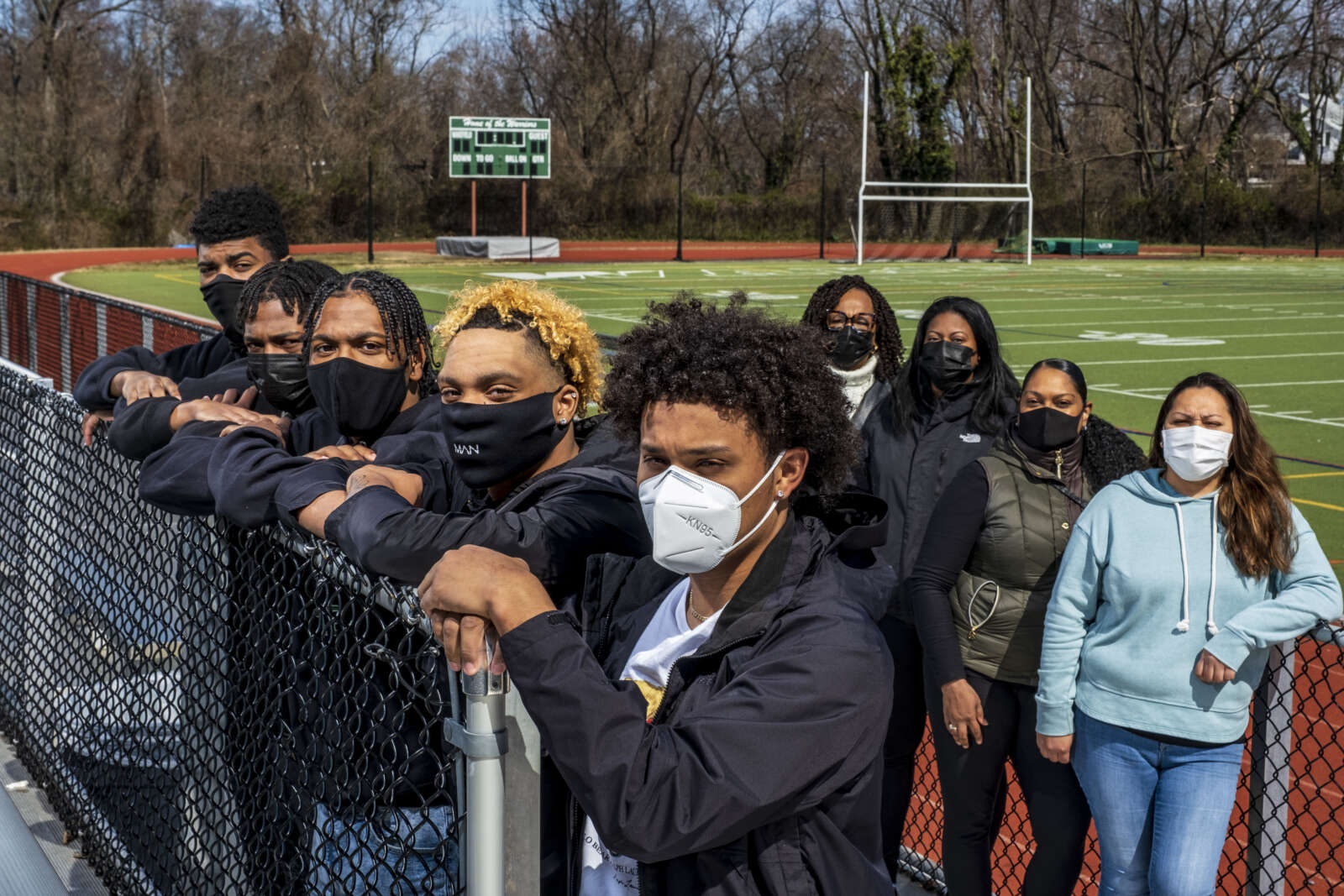
A group of players and parents from Wakefield High School are speaking out about an alleged racist incident at Marshall High School (Staff Photo by Jay Westcott)

A group of Wakefield High School football players and their parents are contesting game suspensions and calling for accountability among athletic officials in response to reports of racism on the field.

The athletes say they endured being called “boy” and the N-word, and one student was spat on, during a football game on March 5 at Marshall High School.

On Thursday, Arlington Public Schools issued statements confirming the reports of racial slurs being used. Fairfax County Public Schools said it conducted an investigation and is working on a plan for restorative justice, but these reports are being contested by members of the Marshall community.

Senior Lukai Hatcher, one of the students who posted a widely-shared account of what happened on social media, tells ARLnow the taunting — which built on similar name-calling during basketball season — started early in the game.

“We complained to the ref, who did nothing, and the coaches, who couldn’t do anything,” he said. “Of course, if you leave something untreated, it’s going to grow.”

At the end of the game, Hatcher said a Marshall player spit at him, and he lunged for the player. This launched a brawl between the two teams and resulted in three Wakefield students and one Marshall student receiving three-game suspensions.

“We only got a reaction out of the refs when we did something to protect ourselves,” he said.

His mother, Lydia Hatcher, said that following the game she was in contact with the football coach, the school athletic director and the principal. She told them and Virginia High School League that she disagreed with the suspension on the grounds that her son was defending himself.

“My kids are used to being bumped a little harder, but they’re not used to being called the N-word,” Hatcher said. “If I had been close enough, I would’ve taken my son off the field.”

https://twitter.com/JavellEdge/status/1372363087626506247

Both schools worked together to reduce the suspensions for students, said Mike McCall, the director of communications for VHSL.

“As soon as VHSL staff was made aware of incidents surrounding this game, the video of the game was reviewed,” he said. “Additionally, all those within the authority level of the VHSL were involved in conversations surrounding the concerns associated with the game. The schools worked collaboratively together with the VHSL during the entire process.”

Arlington Public Schools confirmed it has been in contact with multiple officials since the game.

“From the beginning, APS and Wakefield officials have been in contact with Marshall High School, VHSL leadership, staff at the Northern Virginia Football Officials Association, and Fairfax County Public Schools about what transpired and the lack of action by the officials after repeated attempts by players and coaches to alert them to the behavior,” the school system said in a statement. “Staff was working behind the scenes to get the Wakefield suspension overturned.”

For Lydia Hatcher, however, the decision was inequitable.

“Had Lukai, as a black young male, spit on someone who was not a person of color, there would have been charges pressed,” she said. “A little slap on the wrist for one game is not acceptable punishment.”

The parents have launched a petition that currently has nearly 5,000 signatures, demanding an apology from Marshall and from VHSL, asking for the suspension on the Wakefield players to be reversed, and mandatory diversity and inclusion training for local athletes, coaches and officials.

Late Friday afternoon, the Arlington branch of the NAACP issued a statement in support of the “#PlayFairNow” petition, decrying “a culture of hate towards black students at Arlington Public Schools with no accountability for bad actors.”

“We’re trying to fight the pandemic, work careers, help kids with schooling, and we have to fight racism,” said Monique Brown-Bryant, whose son Kevin Robinson was on the field that night. “It’s a separate pandemic.”

(more…)


View More Stories