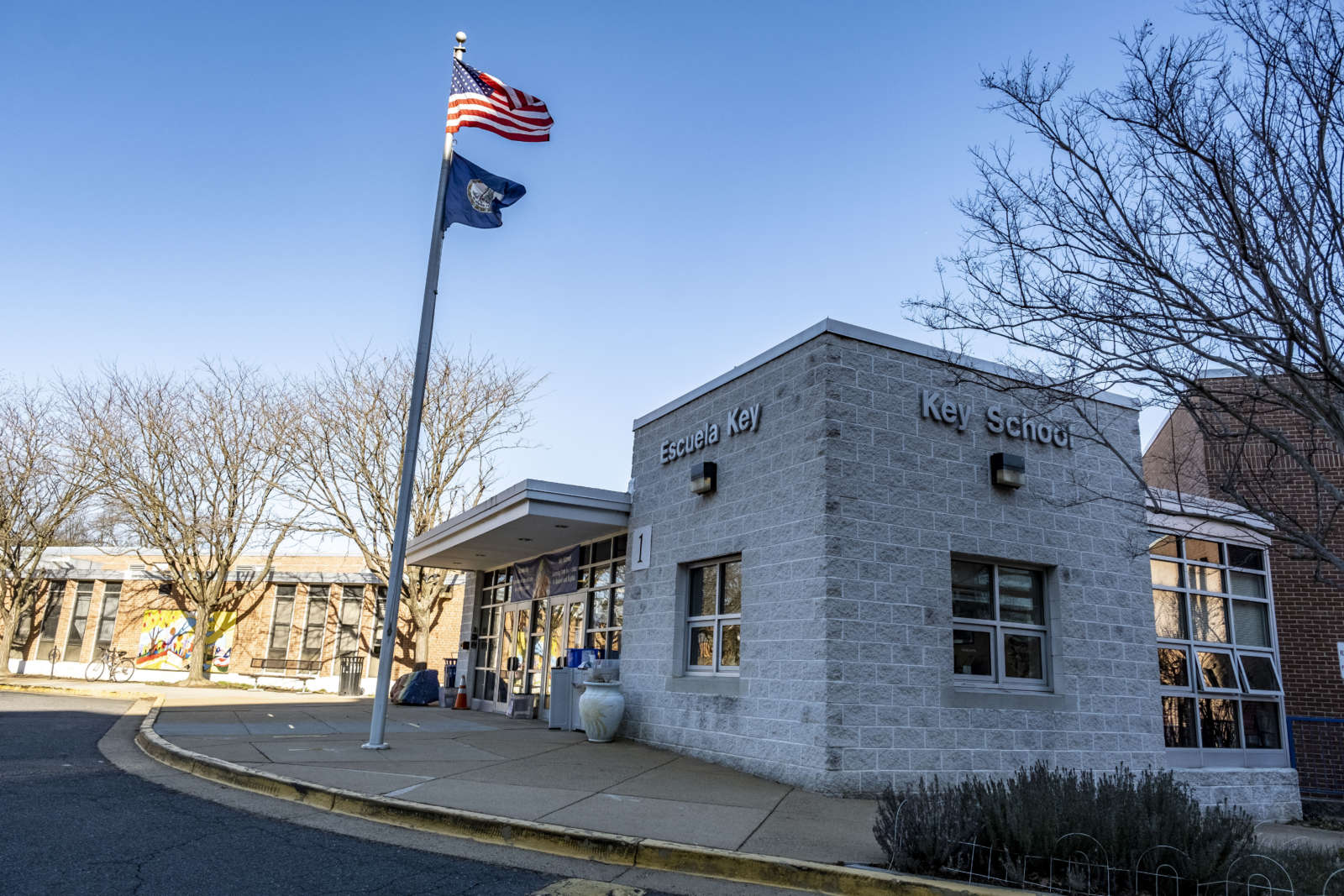
The elementary school at the Key site is close to getting a new name, and it will not be after a person.

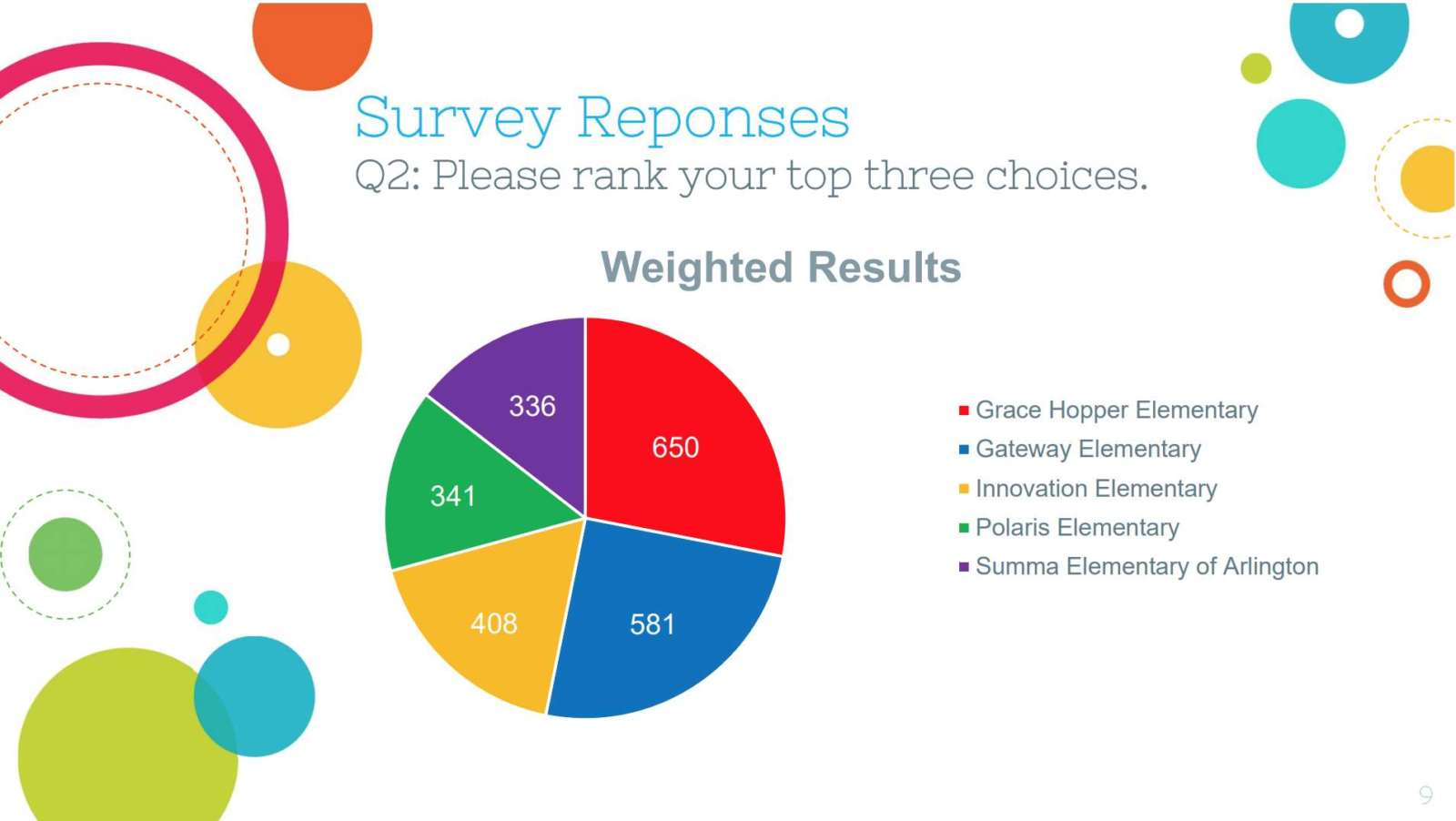
A naming committee is proposing Innovation Elementary School, or Gateway Elementary School as an alternate, for the school building 2300 Key Blvd. The Arlington School Board will choose a name on Thursday, March 11 ahead of the school opening to students this fall.

“We really feel like Innovation represents a skill and an ideal that we want our children to get from their elementary school experience,” the new school’s principal Claire Peters said.

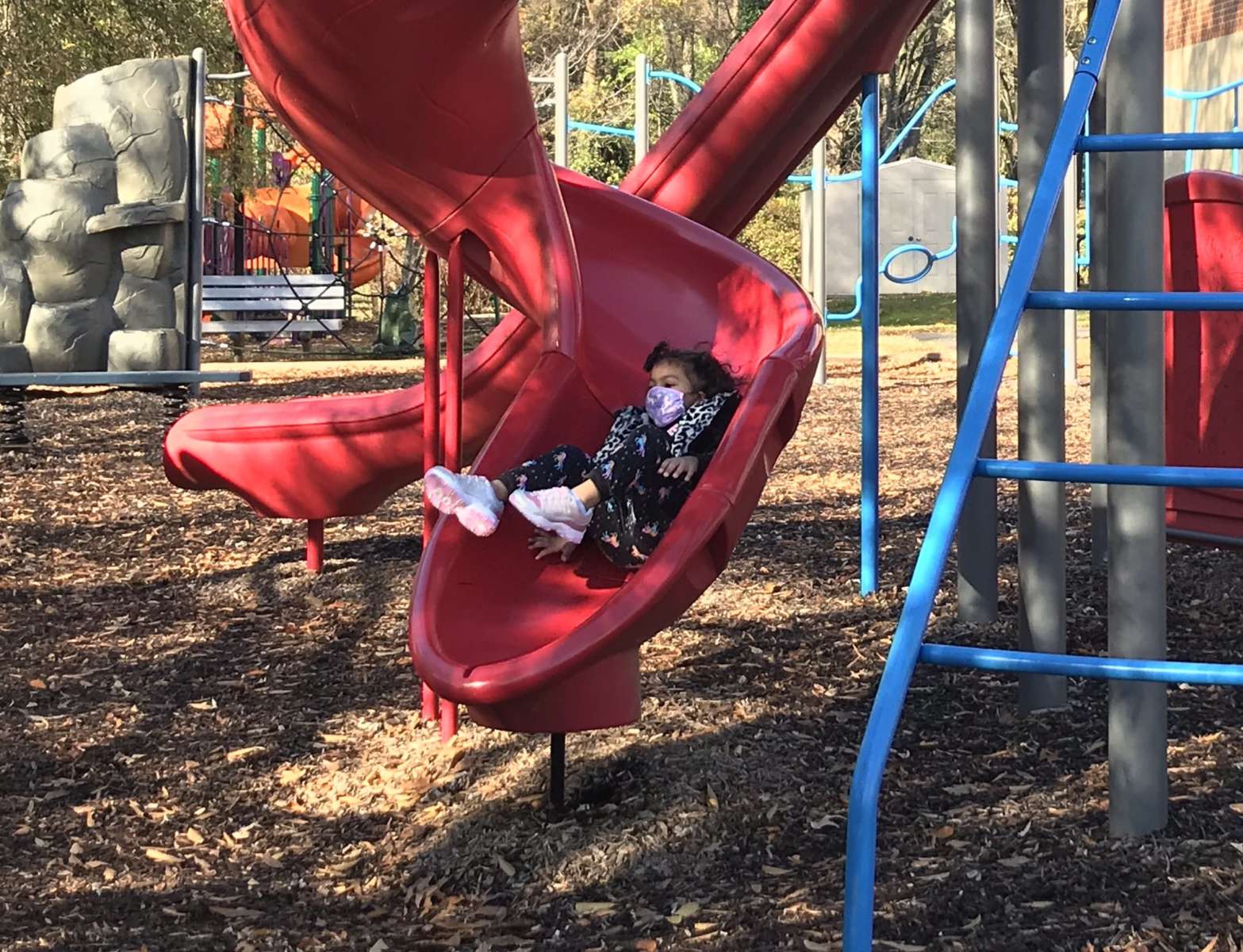
The new school at the Key site, which is currently used by a Spanish immersion choice program, will be a neighborhood school, and it was created by a controversial swap involving multiple schools.

The school will be populated with students who live in the fast-growing Rosslyn area, including some who were previously zoned for Arlington Science Focus School.

Absent from the top two was the preferred choice among a group of survey respondents — Grace Hopper Elementary School — named for computer engineer and university teacher Naval Rear Admiral Grace Hopper.
Fresh from renaming what is now Washington-Liberty High School, and in the thick of efforts to remove names of Confederate generals and soldiers and slave-owners from Arlington’s roads and parks, committee members and at least one School Board member said they want to avoid people entirely.

“We had a very significant discussion around naming a school after a person, and it was clear from both the comments we received in the survey and comments that our committee brought back from their community that naming a school after a person is a divisive choice,” the new school’s principal Claire Peters recently told the School Board.

School Board member Reid Goldstein concurred.

“I was cringing a little bit when I saw the name because lately, I’ve been shying away from naming schools after individuals,” he said.

School staff said Gateway would reference the school’s location as the gateway to Arlington from Washington and communicate the idea that an education is a gateway to a bright future.

The other suggested names were Polaris Elementary School and Summa Elementary School of Arlington.
The survey generated nearly 400 responses, as well as 74 comments, including a few in Spanish or Mongolian.

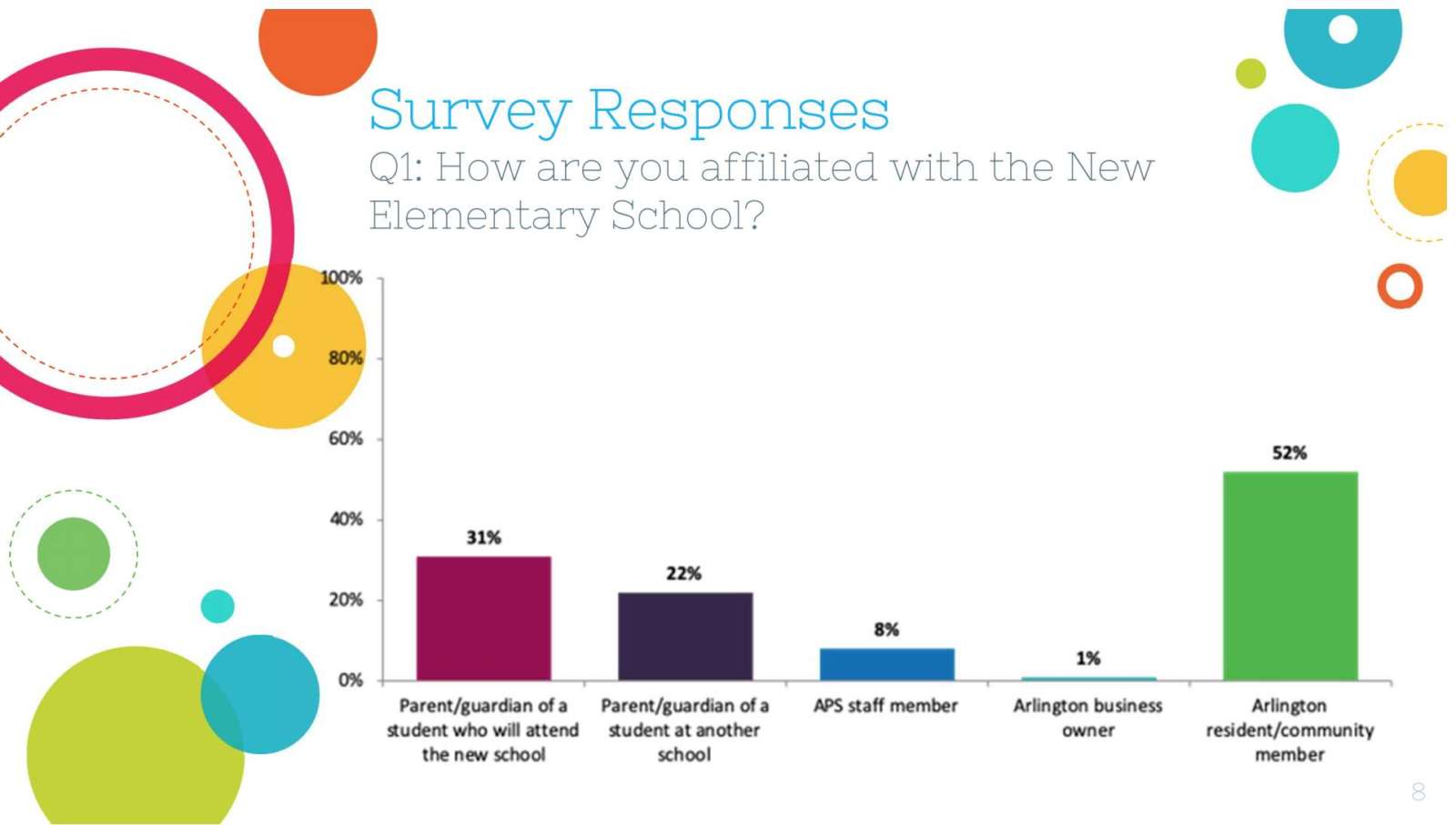
More than half of respondents said they were community members, while the rest said they were parents of students going to the new school, parents of students at other schools, APS staff or business owners.

“This was a very small representation of the community that will be served by this elementary school,” Wilson said.

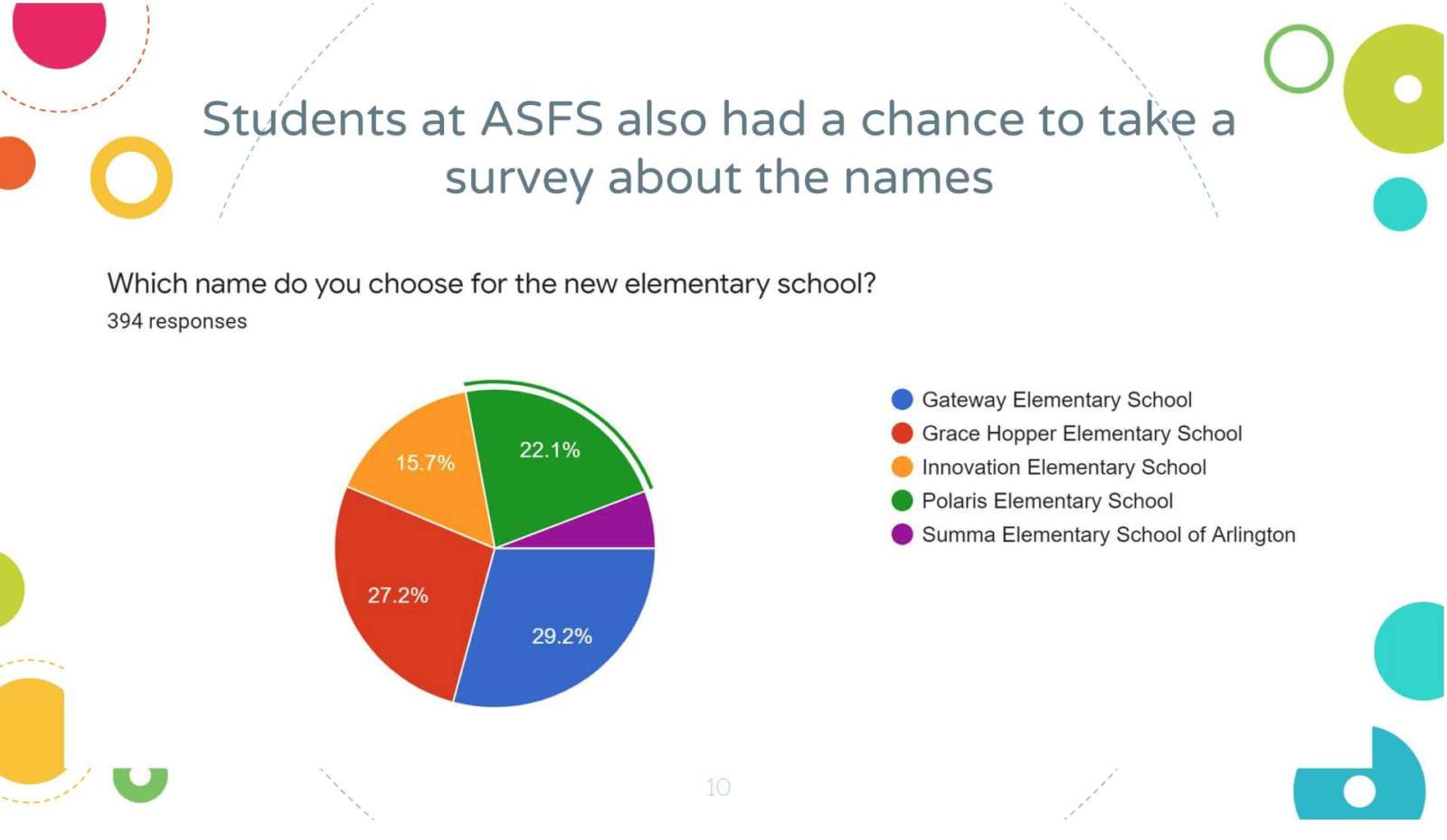
Arlington Science Focus School students also picked their favorite names: Gateway came in first and Innovation in fourth.
Photos via Arlington Public Schools
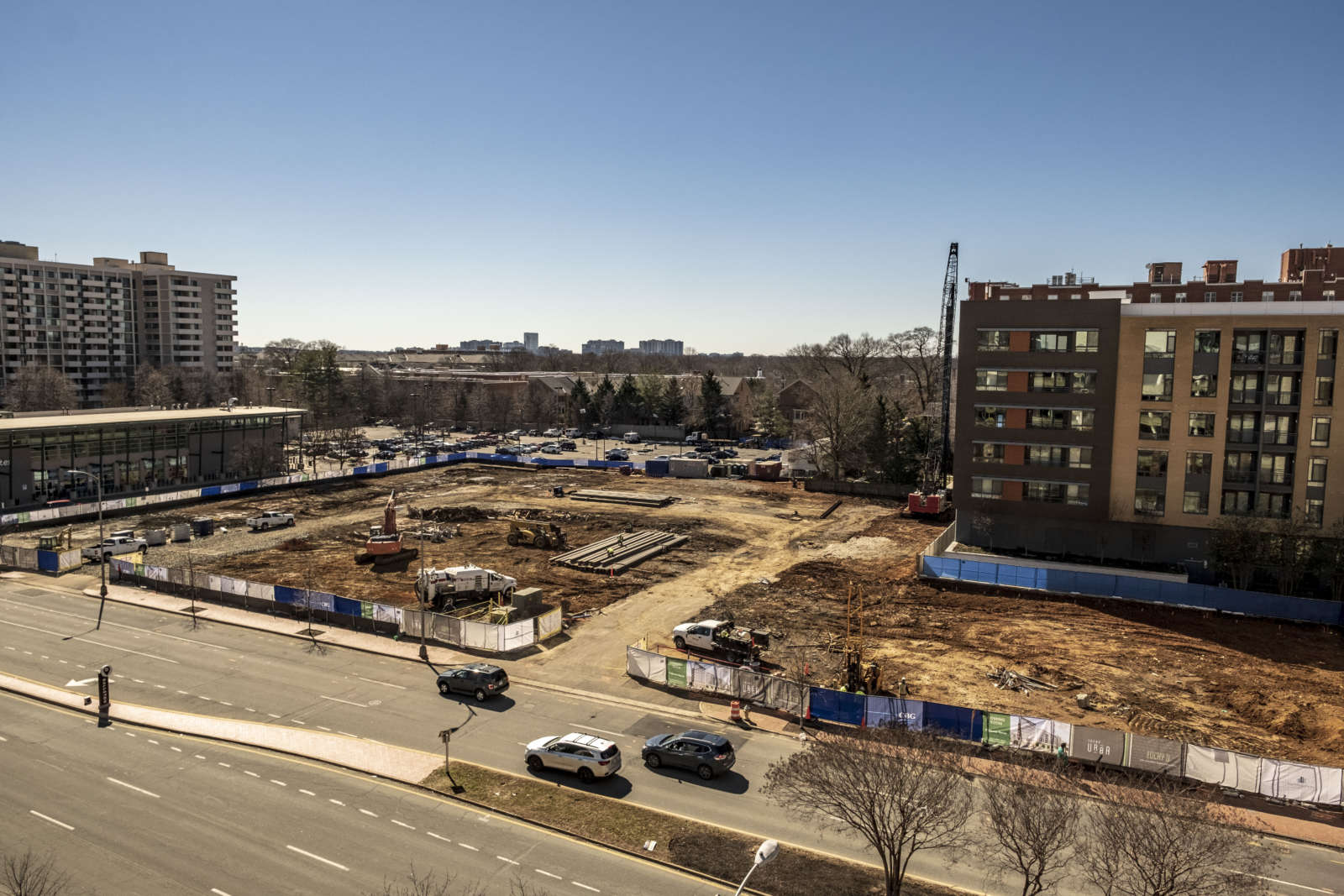
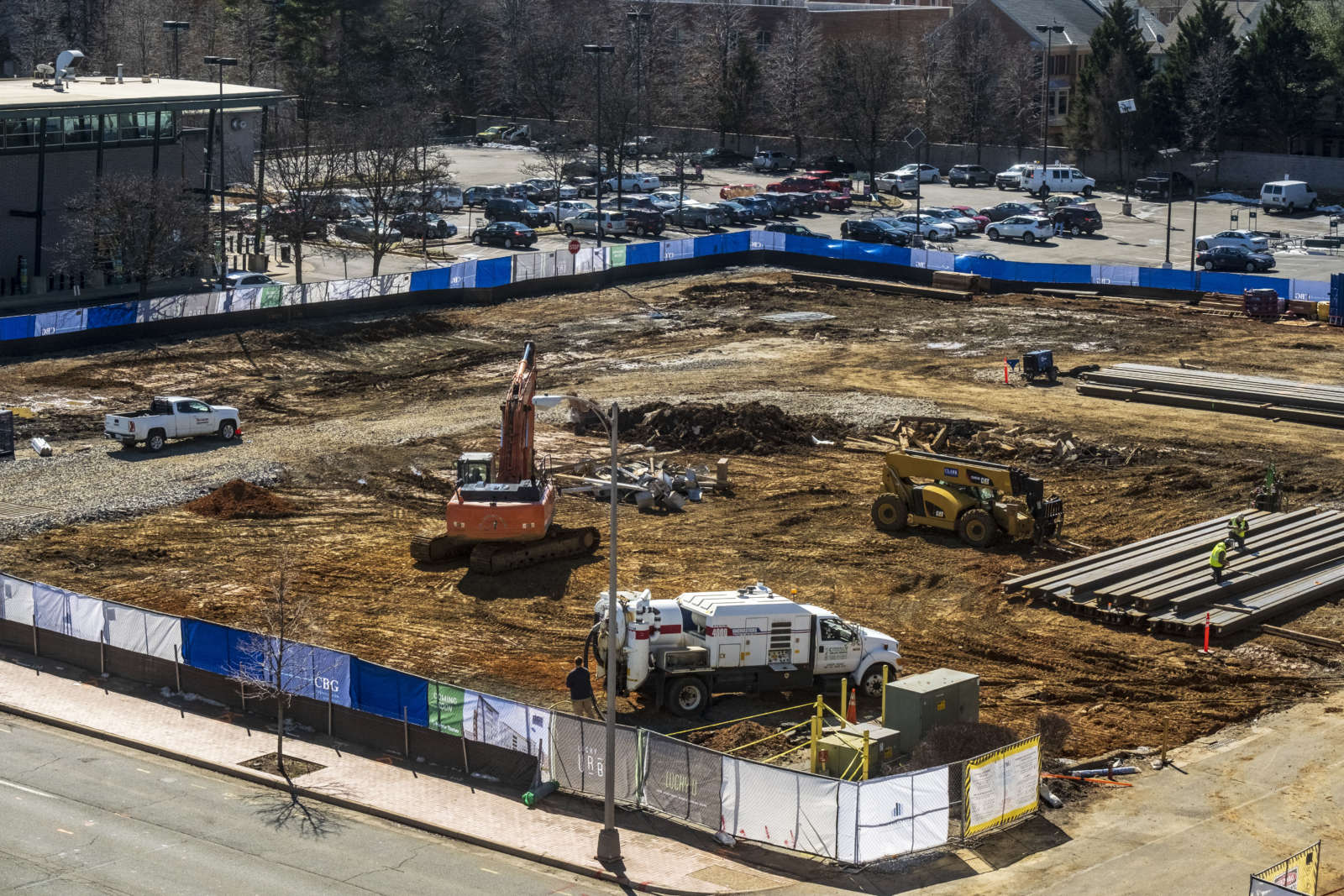
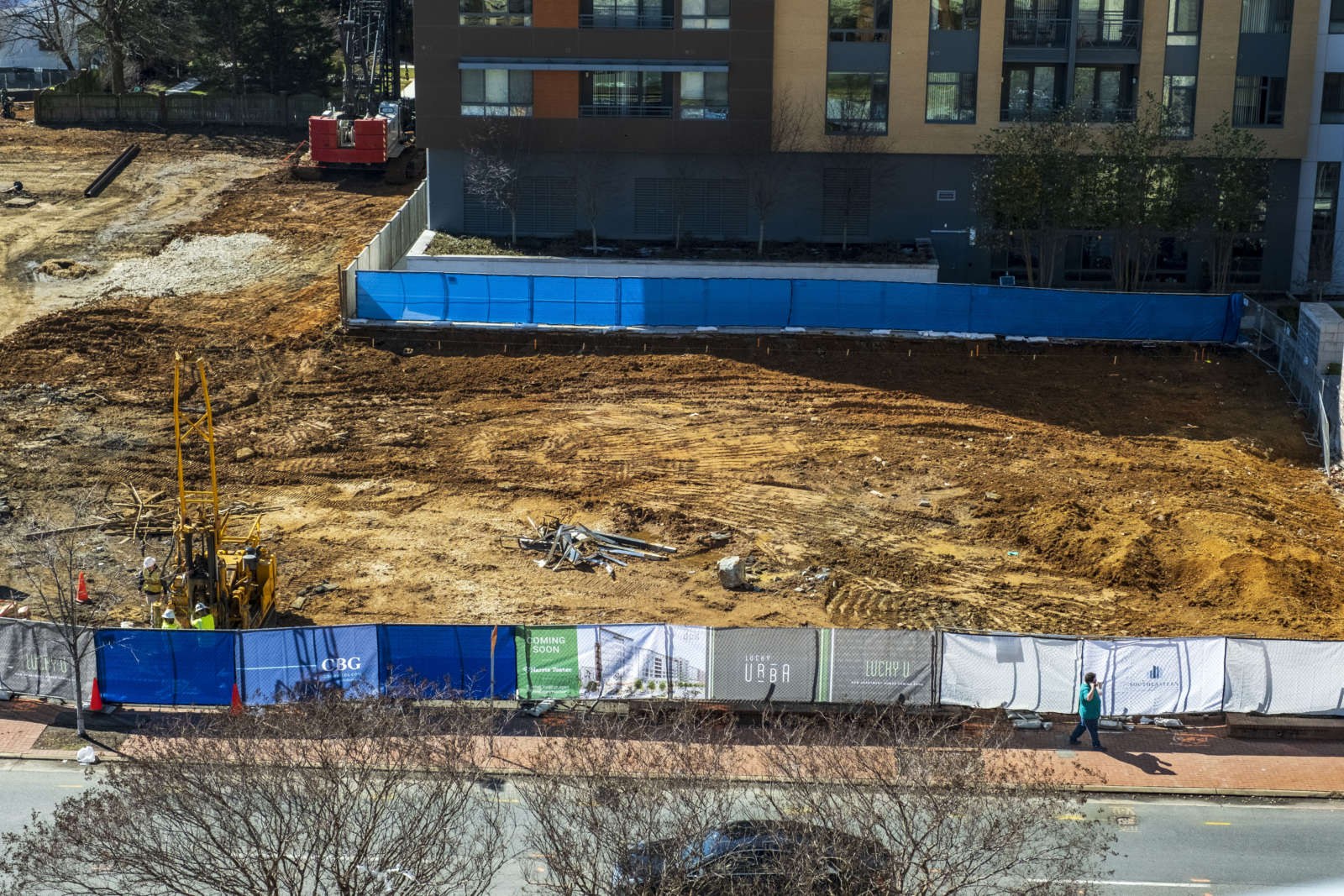
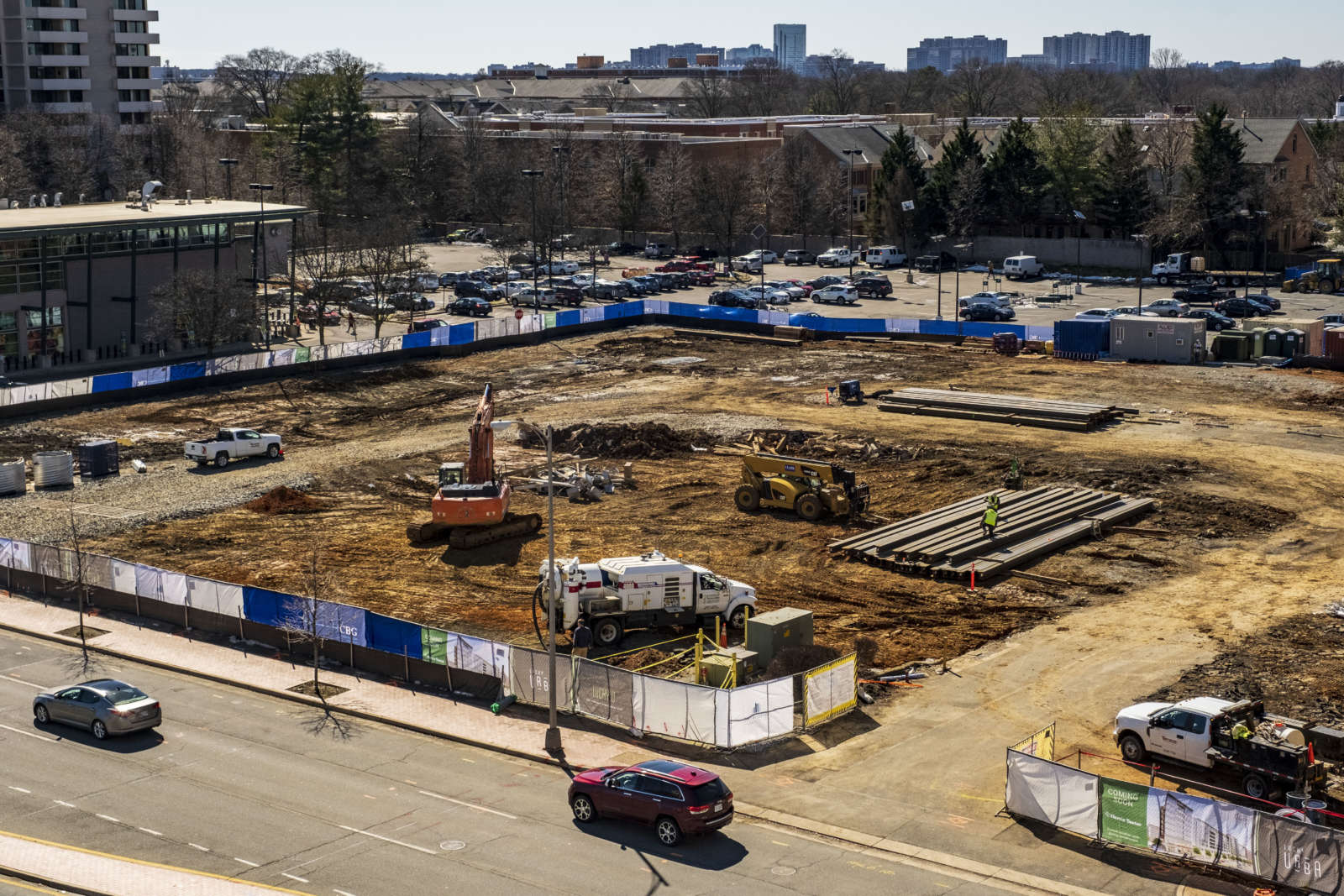
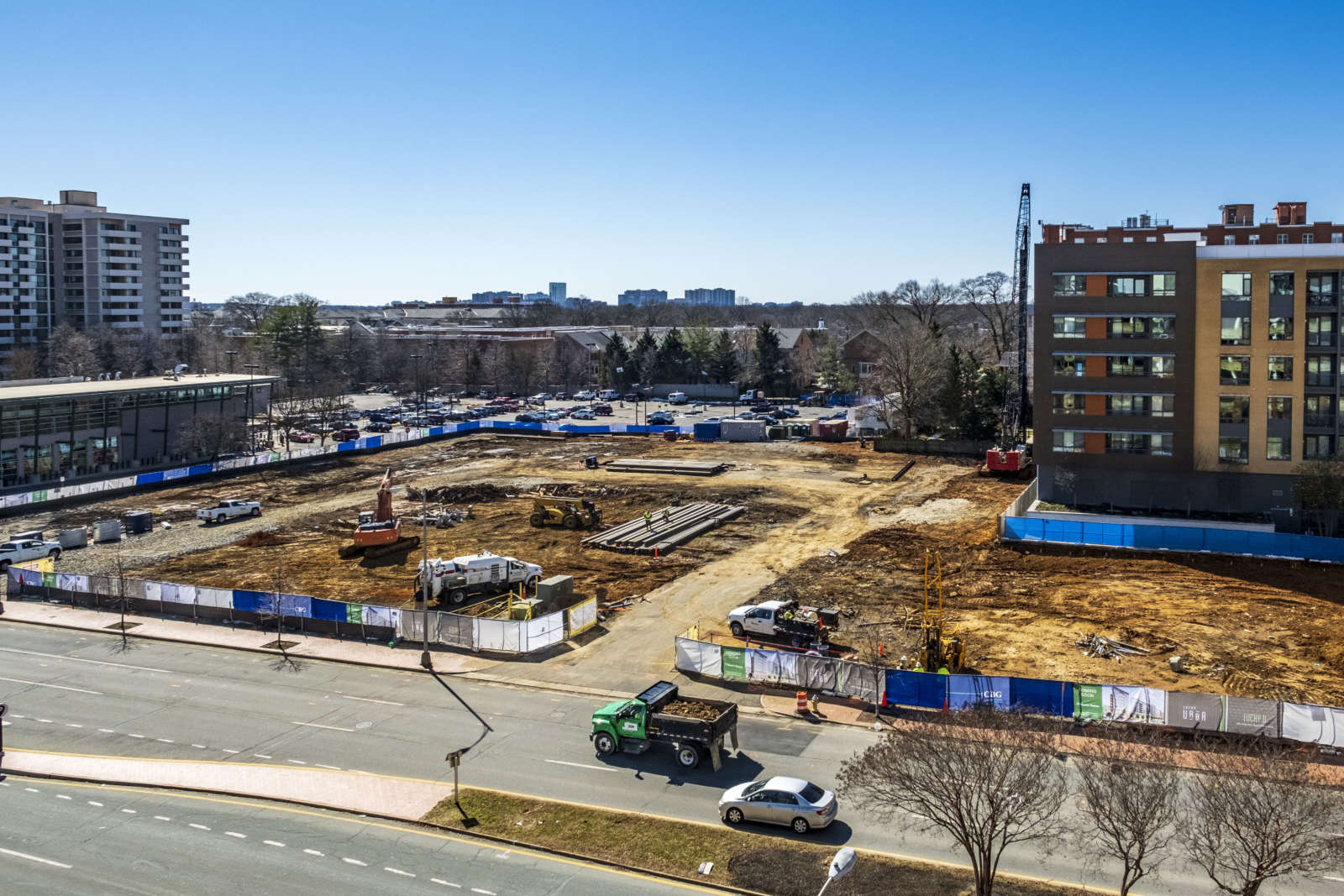
Construction has started in Ballston on the future site of a new Harris Teeter, three apartment buildings and a new green space.

Excavation and sheeting and shoring work started this past week at 600 N. Glebe Road, said Mary Senn, the vice-president of Georgia-based developer Southeastern Real Estate Group, LLC, the developer overseeing the project.

“We are underway,” she said.

Work began last year with utility relocation and demolition of the vacant American Service Center building, Southeastern president Mark Senn told ARLnow in October.

The current phase is the first of three for the site, approved in 2019. In phase one, a new 310-unit apartment building with a new Harris Teeter space on the ground floor will replace the former American Service Center building.

In this phase, customers still have access to parking and the current Harris Teeter, which was the company’s first in Virginia.

“Harris Teeter and Southeastern are very excited to be moving forward with the construction, and the community will be excited to have the new store,” Mary Senn said. “[Harris Teeter] will really do this one up as the latest and the greatest, as far as the store goes.”

The grocery store may have a bar, among other new features, and will also have covered parking, she said.

“People in Arlington, given the weather the past couple of weeks, will appreciate the covered parking, which will definitely be an improvement,” said Senn.

The timeline for the construction of the project has not changed, the vice-president said. Phase one is expected to be complete in 2023.

“But we’ll be open before then,” she said.

During the second phase, the old Harris Teeter will be demolished for new temporary surface parking. The second apartment building, with 195 units, and the public open space will be constructed in phase two.

In the third phase, the temporary parking lot will become the third apartment building: a 227-unit residential building with retail on the ground floor and two levels of below-grade parking.

The park will include a pedestrian path, a dog run, a picnic area, as well as natural vegetation to support pollinator insects and birds.


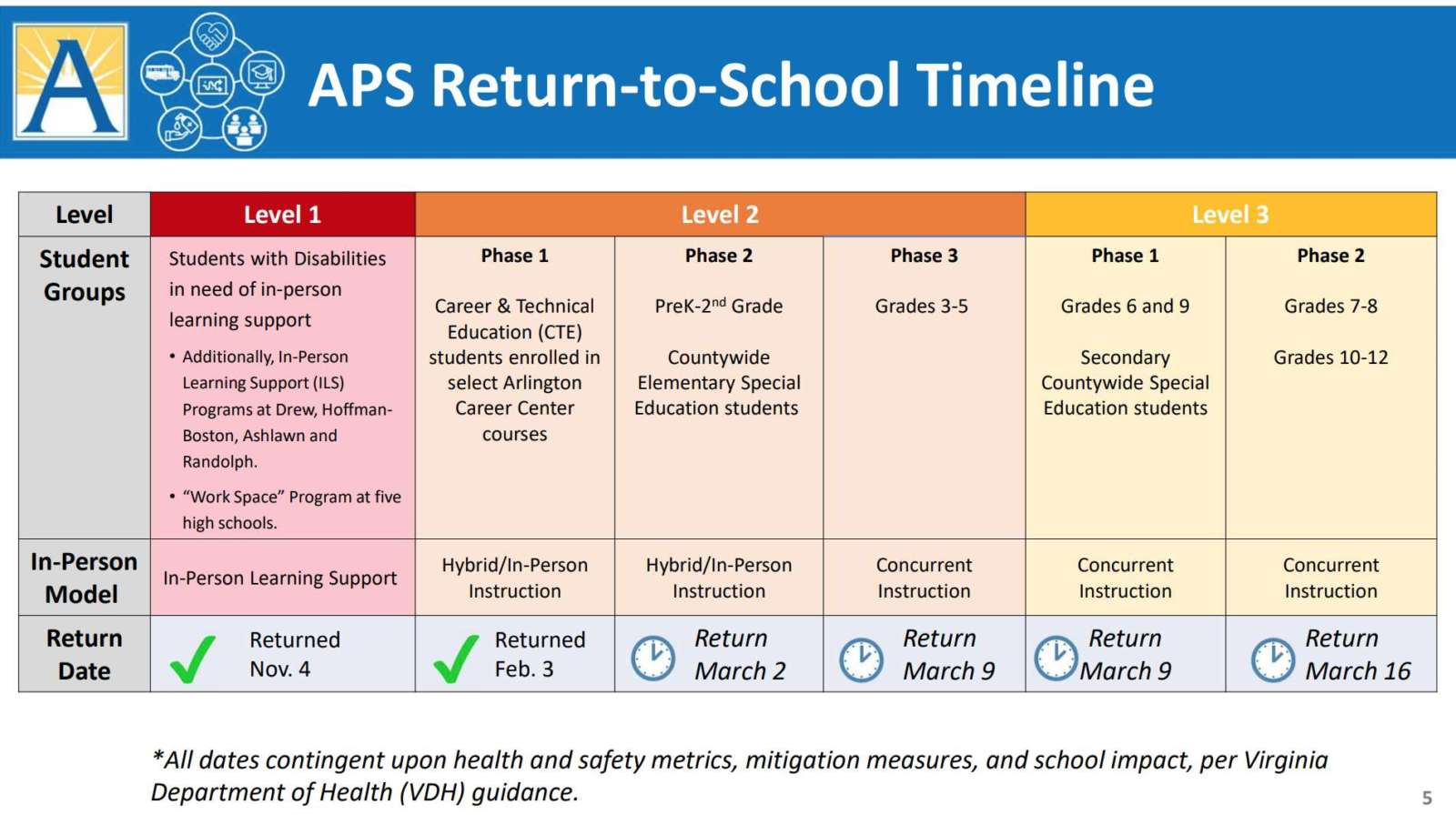
(Updated 12 p.m. 2/26/21) For the first time in nearly a year, school starts next week for Pre-K through 2nd grade students in Arlington Public Schools.

To help ensure safety for students getting to school — even if only for two days per week — the Arlington County Police Department is getting involved in the process.

APS is making final health and safety preparations ahead of elementary schoolers returning on Tuesday, March 2 — nearly one calendar year after APS closed due to the pandemic. Meanwhile, ACPD is ramping up efforts to remind residents of how to drive, cycle and walk safely in school zones.

“Since this is the first time in nearly a year that motorists will see an increased number of students walking, bicycling, and riding the bus to class, ACPD is encouraging the public to re-familiarize themselves with the location of school zones, applicable traffic laws (including those pertaining to school buses), and tips to keep students safe,” a press release said.

APS expanded its walk zones around schools to limit the number of students on the buses and enforce social-distancing. ACPD said this may result in more children being driven to school.

“The public can expect to see increased vehicular traffic in and around schools,” the release said.

Message boards along roadways throughout the county will remind motorists to slow down, avoid distractions and watch for students.

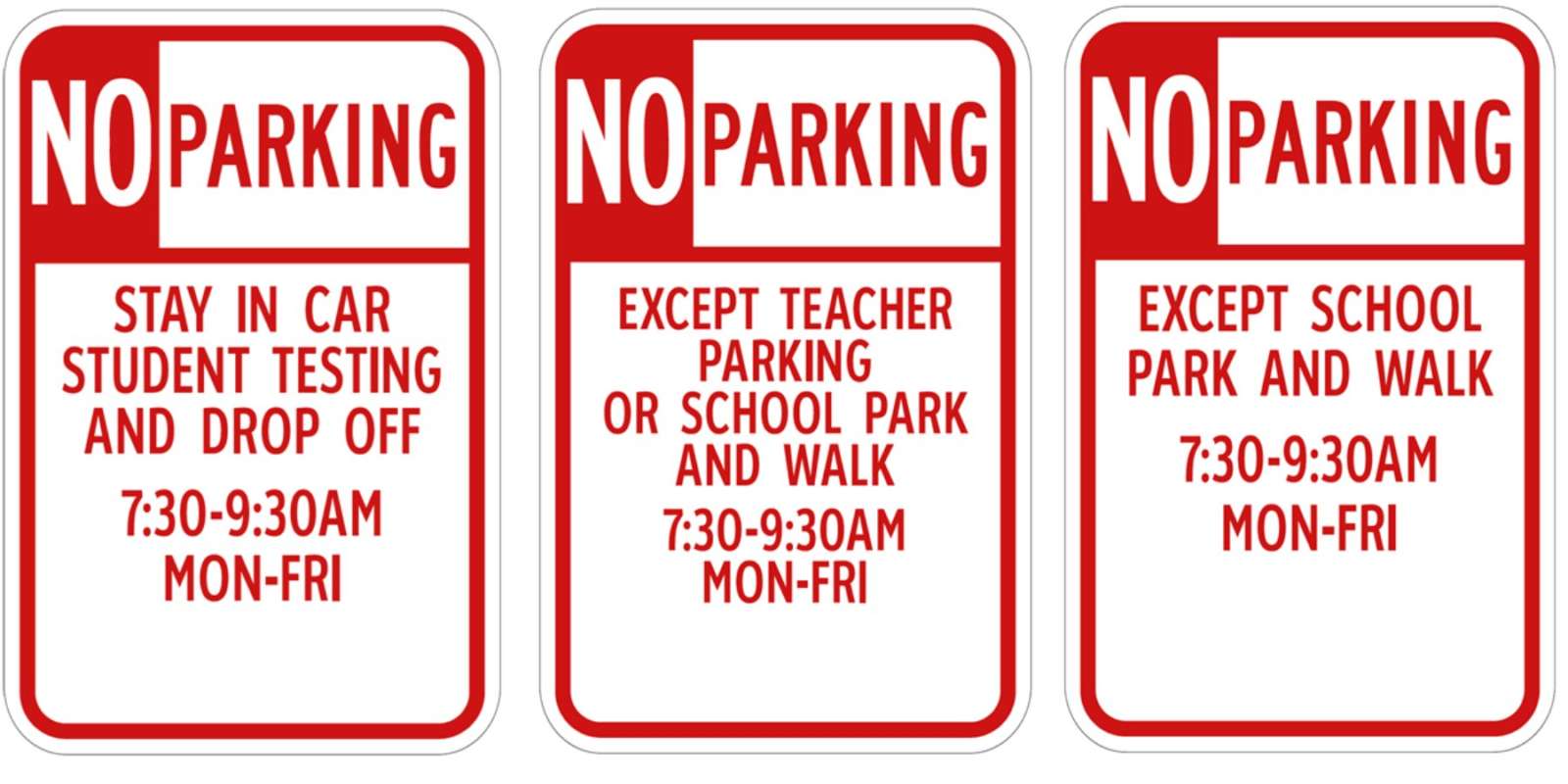
The county is also installing the following signs indicating temporary parking restrictions near schools.

In terms of health and safety inside schools, more than 98% of classrooms meet or exceed air quality requirements, APS said.

Additionally, the school system has three ways to ensure lunch can be consumed safely, Superintendent Francisco Durán told School Board members on Thursday. And starting March 1, families can fill out the daily COVID-19 symptom screener sent to their devices, and the school has made changes to transportation.

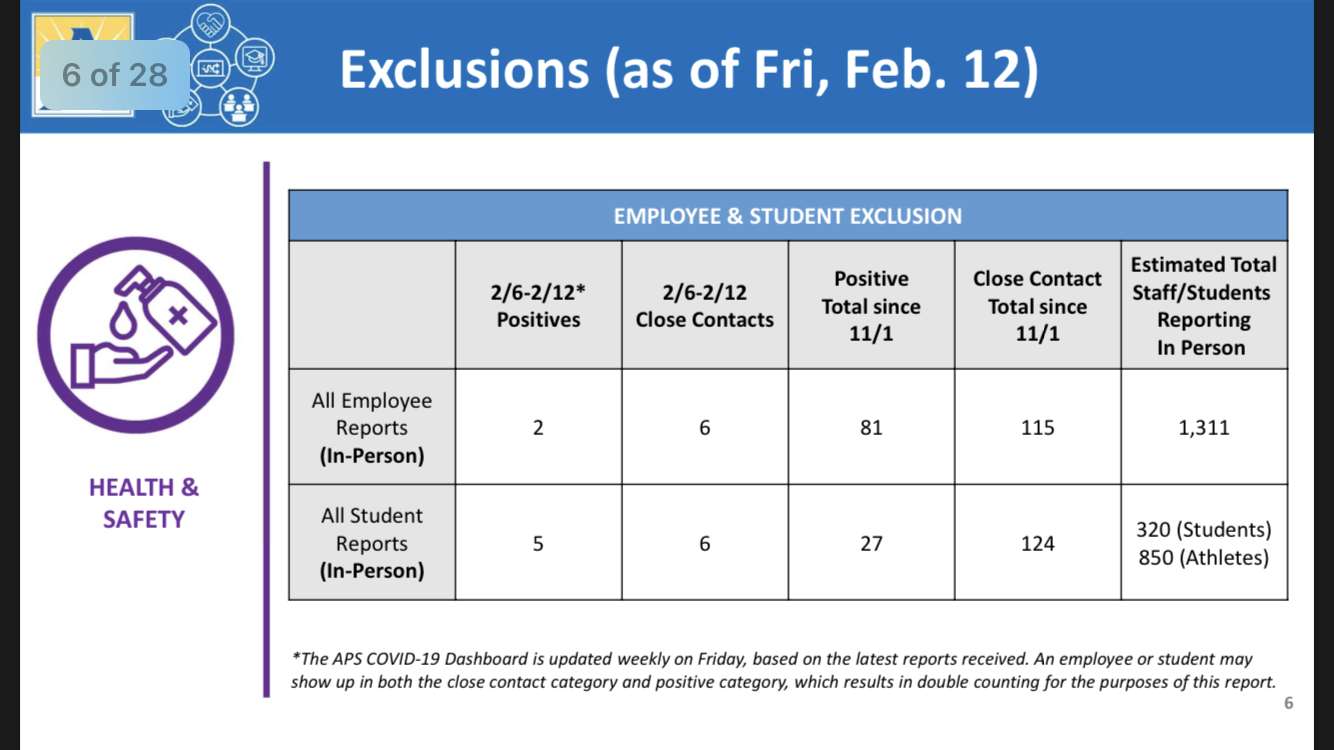
Amid falling rates of COVID-19 cases, reported cases among in-person students and teachers appear to remain low, when compared to close contacts with sick individuals. This means mitigation strategies are working, Durán said.

“I just want to acknowledge the Herculean effort that has gone on over the past year even to get to this point… and all the people who contributed to creating this plan,” Arlington School Board member Cristina Diaz-Torres said. “I am very confident in what we have thus far.”

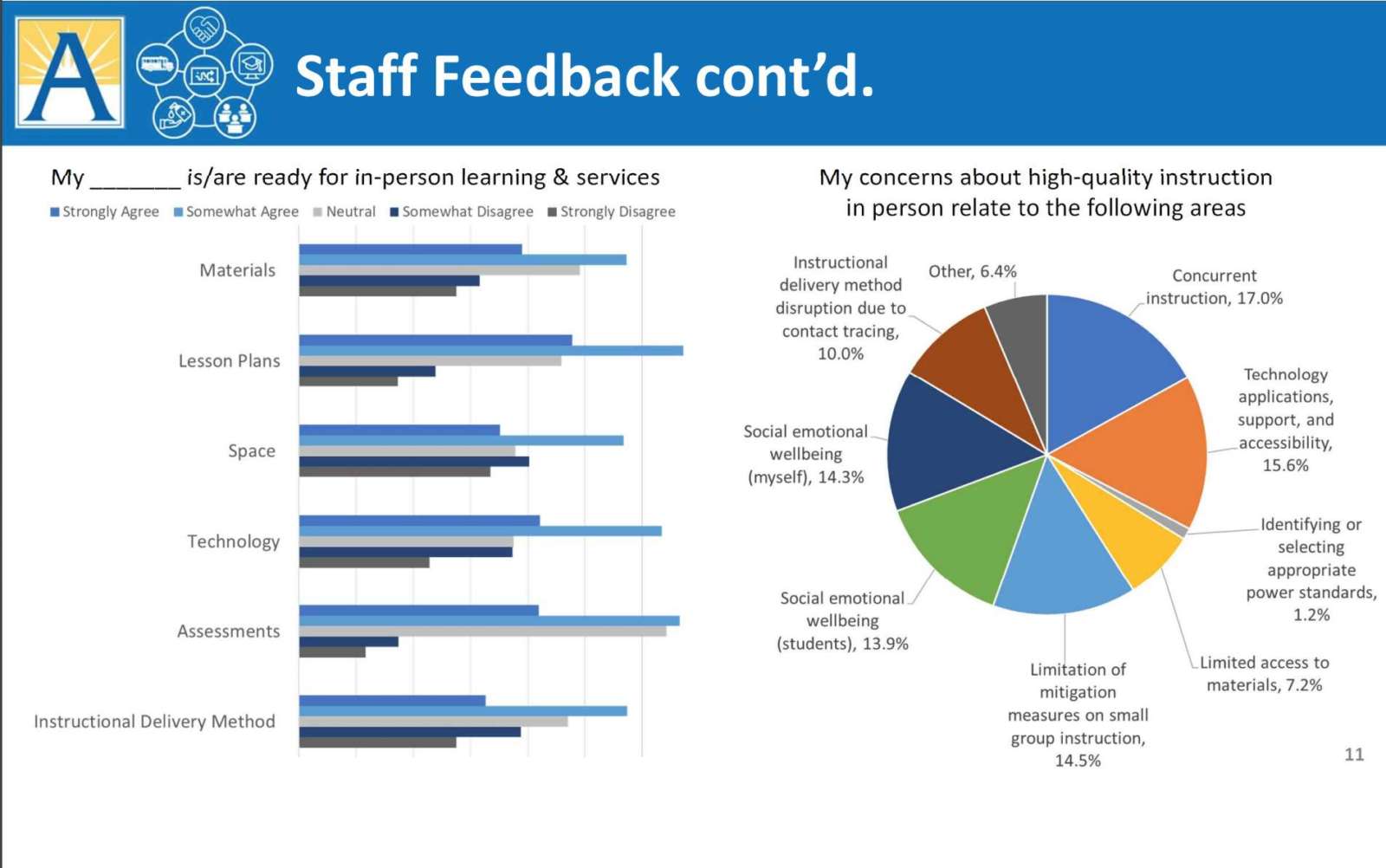
Still, the superintendent acknowledged more work ahead. Many teachers report lacking clarity on how to teach online and in-person students at the same time using new technologies such as special microphones and cameras.

For most students, in-person learning will occur only twice a week, and a group of 75 parents, teachers, staff and students have determined ways distance learning could be improved. The group found that teachers and schools could use technology more consistently and students should be encouraged to turn on their cameras.

“When they have their cameras turned off consistently, it’s hard to find their level of engagement and for staff to build a meaningful relationship,” Durán said.

More back-to-school safety tips from the police press release, below.

(more…)


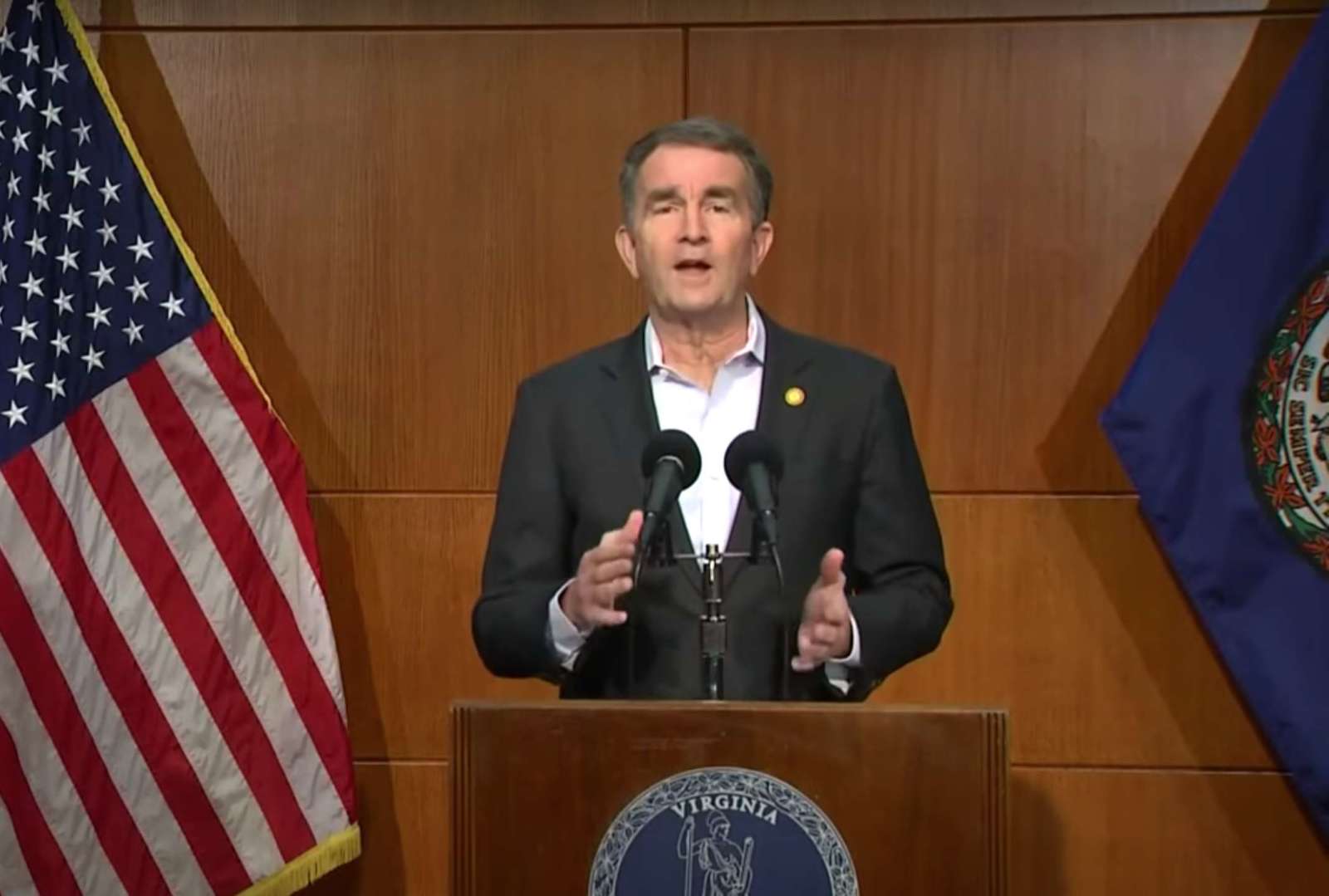
Gov. Ralph Northam announced today that he is easing some public health restrictions, including the 10 p.m. curfew on alcohol sales.

Effective March 1, Virginians will be able to buy and drink alcohol at restaurants, food courts, breweries, distilleries and wineries until they are required to close at midnight.

The changes to the current executive order come amid declining rates of hospitalizations and infections and rising vaccination rates in the Commonwealth, Northam said during a press conference this morning (Wednesday).

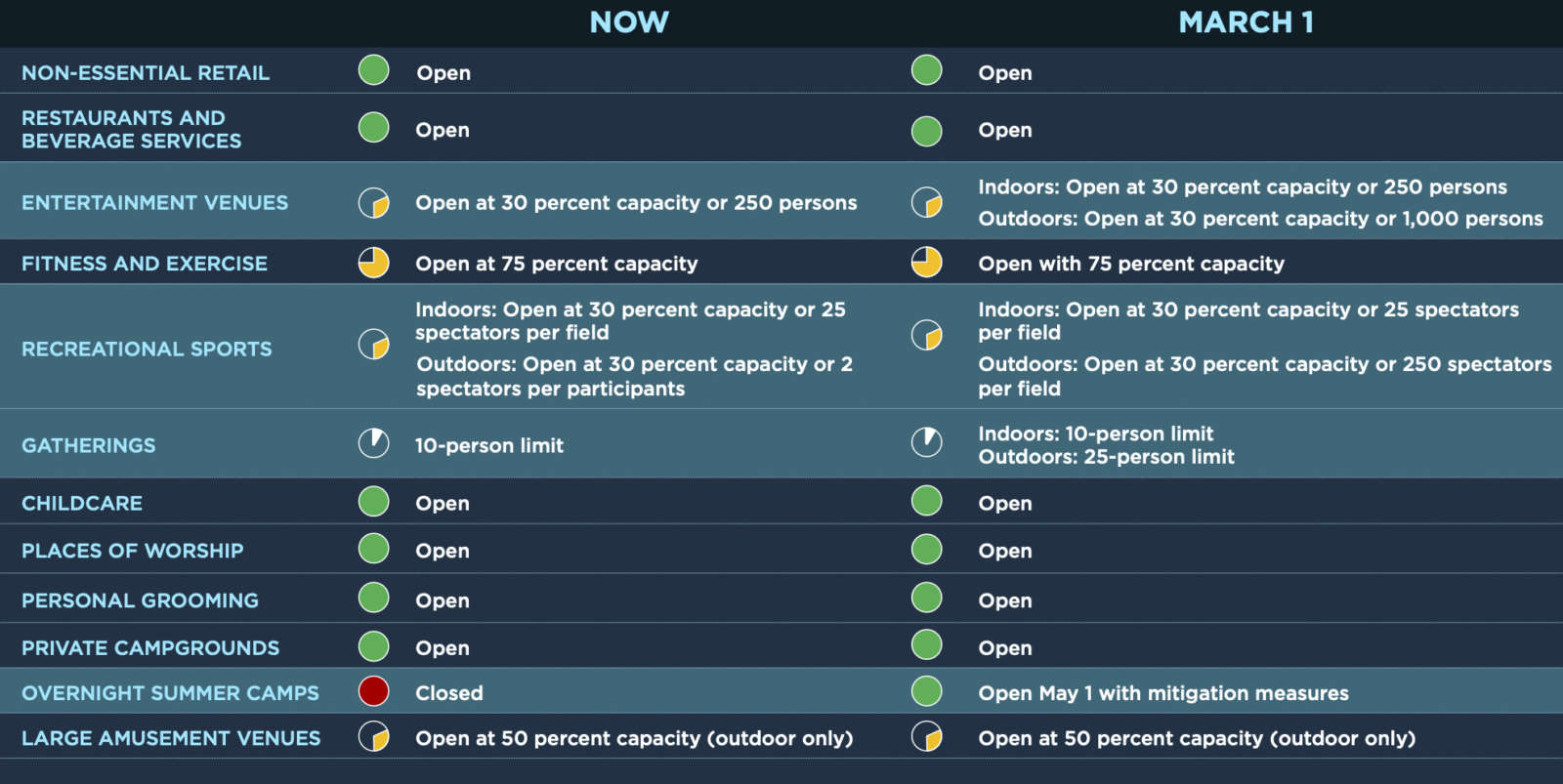
Northam is also easing restrictions for outdoor entertainment and social gatherings, where evidence shows the risk of airborne transmission of COVID-19 is lower, as well as allowing overnight summer camps to open “with strict mitigation measures in place.”

“Thanks to the hard work and sacrifice of all Virginians, hospitalization and positivity rates across the Commonwealth are the lowest they have been in nearly three months,” Northam said in a press release. “As key health metrics show encouraging trends and we continue to ramp up our vaccination efforts, we can begin to gradually resume certain recreational activities and further reopen sectors of our economy.”

He attributed the rise in cases over the winter to cold weather and the holidays.

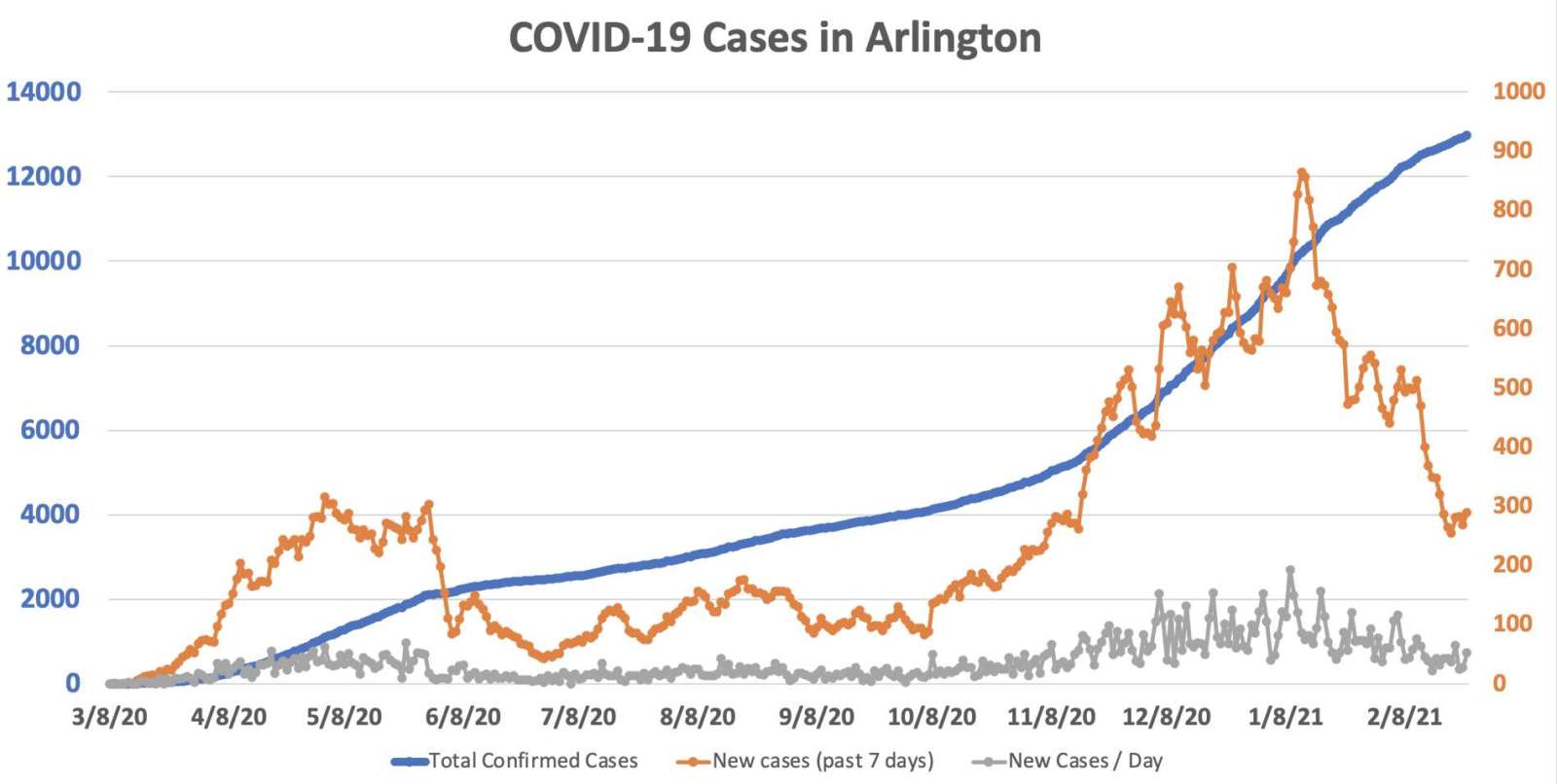
In Arlington, the rate of new coronavirus cases dropped from a peak of around 850 cases per week since mid-January, but has since leveled off between 250-300 cases per week. Cases have similarly dropped nationwide, but that drop has been leveling off.

Meanwhile, Virginia’s Safer at Home strategy — and its accompanying requirements for physical distancing, mask-wearing, gathering limits and business capacity restrictions — will remain in place.

“Even as we take steps to safely ease public health guidelines, we must all remain vigilant so we can maintain our progress — the more we stay home, mask up, and practice social distancing, the more lives we will save from this dangerous virus,” Northam said.

The current modified Stay at Home order will expire on Sunday.

Several Arlington restaurants have told ARLnow that they were waiting on a decision about the Stay at Home order before making plans for March, a month that includes St. Patrick’s Day, March Madness basketball and other events that are traditional draws for local bars.

The full press release from the governor’s office is below.

(more…)


Arlington County officials say names of people pre-registered to receive a coronavirus vaccine are still migrating into the state’s new Vaccinate Virginia system.

It has been more than one week since Arlington County shut down its pre-registration platform to send 41,000 names to the Virginia Department of Health’s new statewide platform. The delay means that for now, some pre-registered individuals may not see their registration status. But that does not mean the pre-registrations have gone missing, county spokeswoman Cara O’Donnell said in an email.

“At no time were any lists ‘lost,'” O’Donnell said. “All data still exists, and the County is in the process of rolling out vaccine scheduling notification to residents 65+.”

This applies to about 10,000 pre-registered individuals 65 and older, she said.

Many pre-registrations have not merged due to formatting problems, state health department spokesperson Logan Anderson said. For example, some data fields were case sensitive, which he said has been addressed.

“Data cleanup is an ongoing process, and they may show up in the system,” he said. “There were also 1.6 million entries transferred in total. After cleanup and de-duplication, that number dropped to about 1.2 million.”

Arlington County shut down its pre-registration system at 5 p.m. on Friday, Feb. 12 to start sending its names to VDH, O’Donnell said.

“As we’ve seen, that migration process is taking longer than anticipated, and we are in constant communication with VDH about the migration,” she said.

She said county officials are hearing that one feature of the state system in particular, called “Check the List,” is not working for many lookups.

“This is not an indication that these people are not in the system,” she said. “Many actually are, but the checking the list feature is still experiencing difficulties.”

While some ARLnow readers report that their registration has yet to transfer, others say their problems last week were resolved, or that they re-registered.

One woman who could not find her three family members’ statuses last week told ARLnow that “all three family members registered as 1B with Arlington in mid-January now appear with VDH as ‘This user is registered.'”

Another woman who spoke with ARLnow last week confirmed that after she and her husband decided to re-register.

“Since then we show up in the system, but we have no real way of knowing whether our original Jan. 9 registration with Arlington County is part of the consolidated list, or whether we moved to the back of the line,” she said.

The Commonwealth is encouraging people to re-register online or call the Vaccinate Virginia call center at (877) VAX-IN-VA, Anderson said.

During a County Board work session last week, Board Member Christian Dorsey said the system’s issues are basic and should have been tested before the launch.

“It’s creating a really huge burden on the local districts to basically provide customer service and complaint feedback on the state’s site,” Dorsey said. “This is an implicit unfunded mandate to fix through customer service and other forms a state-mandated issue.”

Arlington Public Health Director Dr. Reuben Varghese said he and his colleagues across the state have been giving the state “more than an earful about the impact that this has been having.”

“It should have been working from the minute that it opened up,” he said.

Board Chair Matt de Ferranti said the county will continue to work with people worried about their status.

“If you’re pre-registered, take some days and up to a week before you do anything — take a breath,” de Ferranti said. “We have a committed staff and we will reach out.”

(more…)


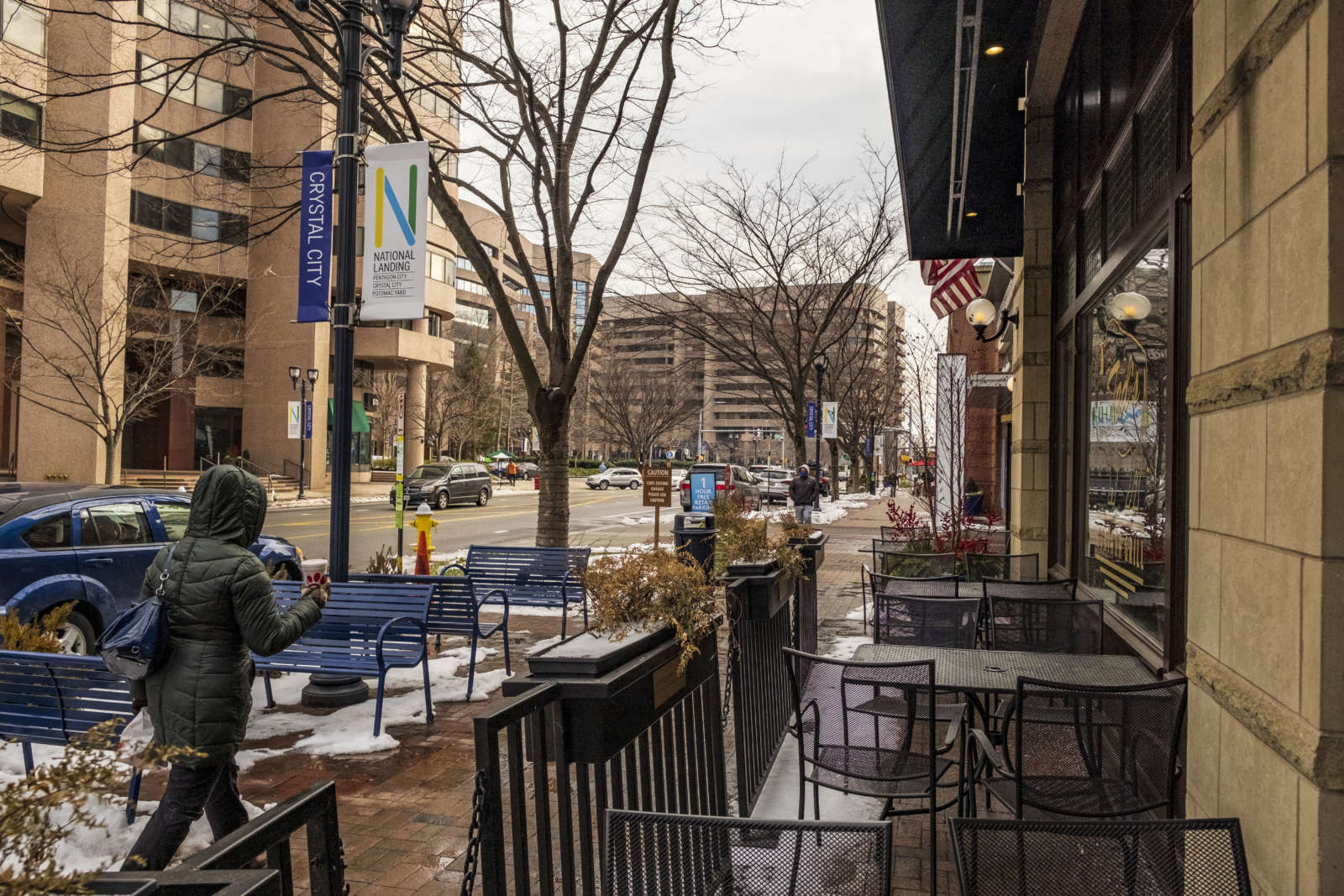
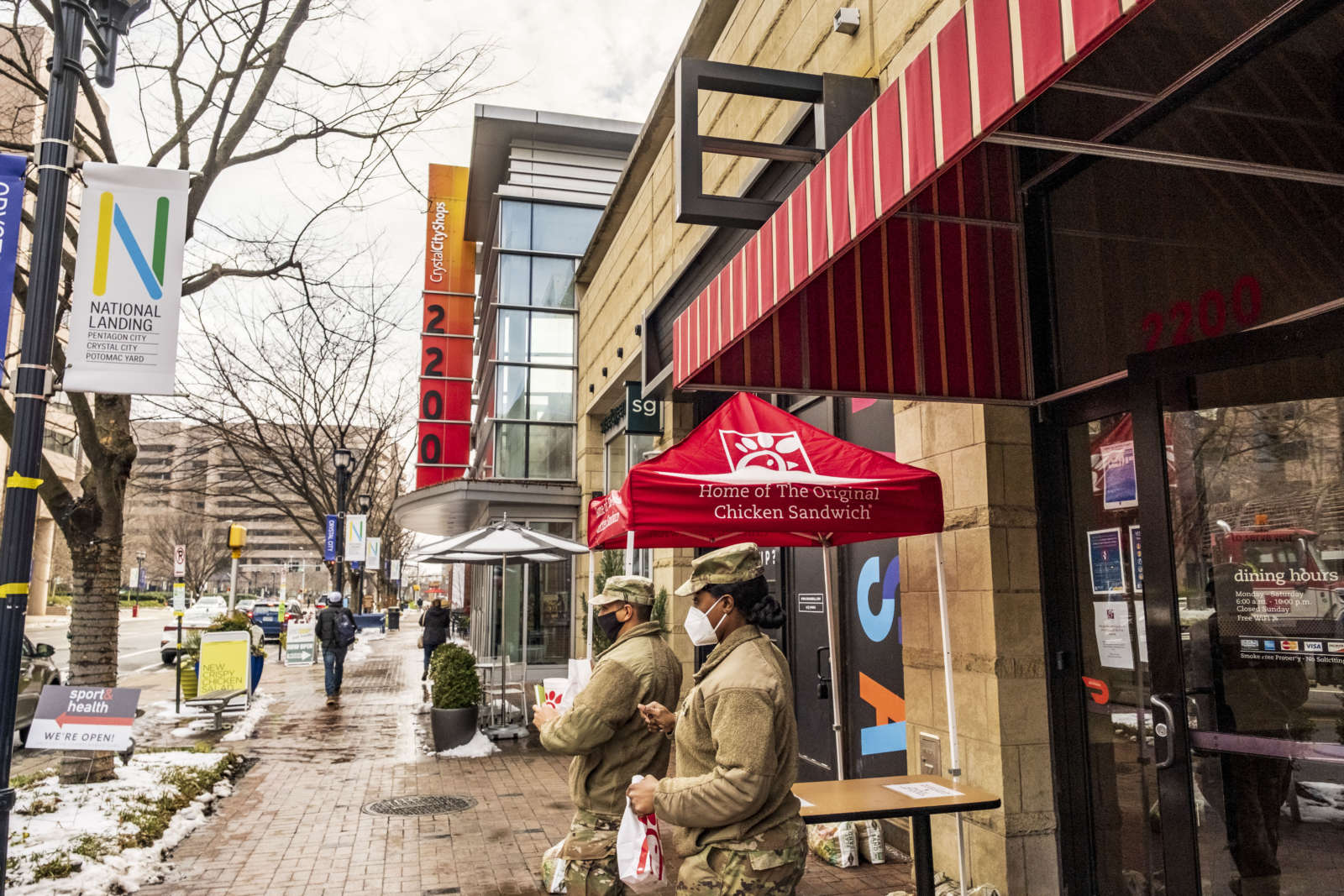
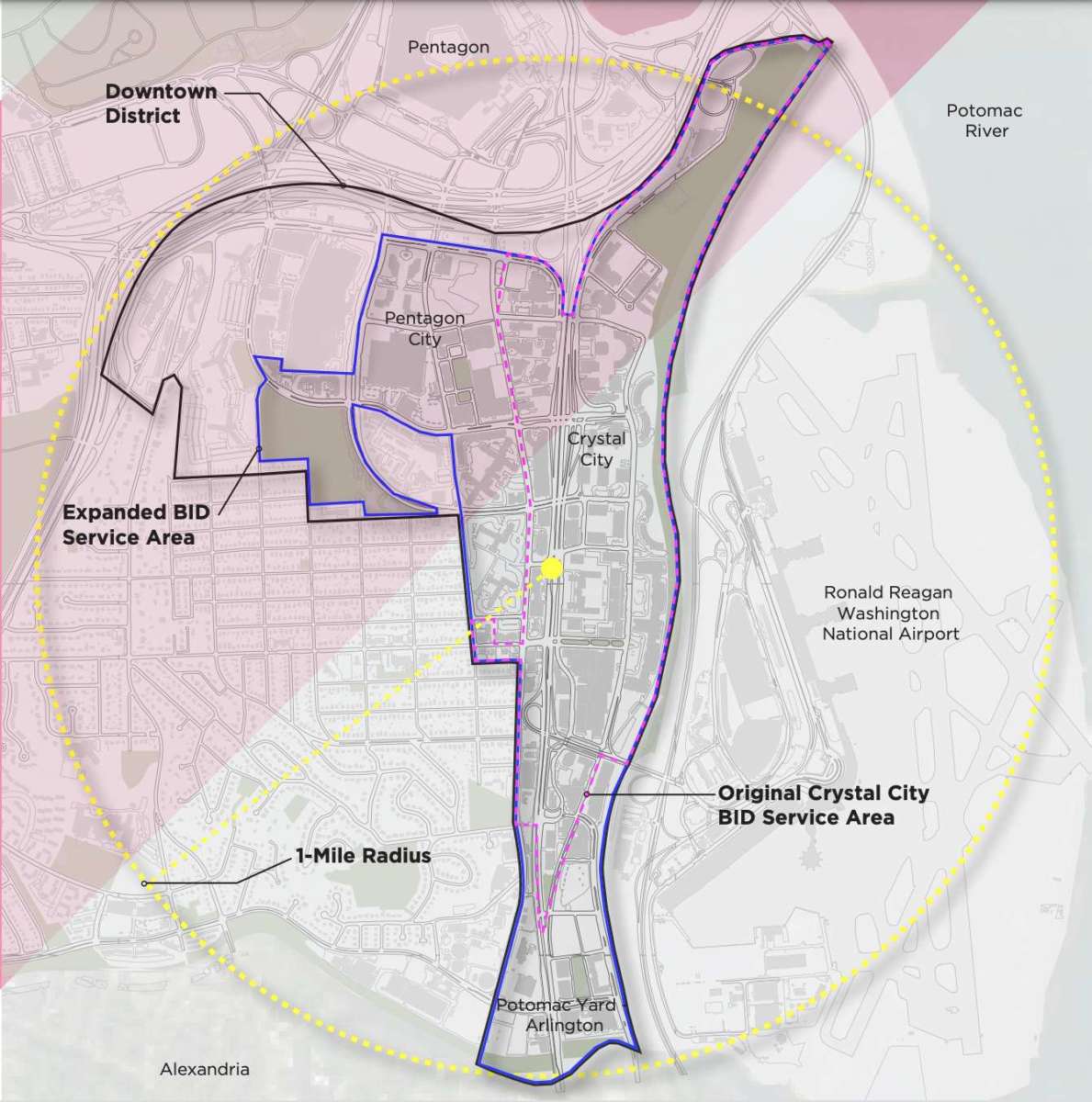
The National Landing Business Improvement District is working on a program to support ground-floor restaurants and retailers in Pentagon City, Crystal City and Potomac Yard.

Dubbed “Love Local,” the marketing campaign will distribute almost $100,000 in grants to eligible retail and dining establishments within the boundaries of the BID, through a partnership with Restaurant Association Metropolitan Washington.

“While the support of businesses is a consistent function of Arlington County’s business improvement districts, the specific needs of businesses has changed as a result of the global health pandemic,” a county report said. “This initiative aims to provide direct financial support to businesses within the BID boundary in response to the economic conditions created by the COVID-19 pandemic.”

The BID does not yet have a comment, a spokeswoman said.

The $100,000 in funding for the program includes an administrative and marketing fee of $10,000 for RAMW, which will administer the grants.

During its regular meeting on Saturday, the County Board approved the BID’s request to change its work plan for the 2021 Fiscal Year to include this grant program. The amendment allows the business district to provide direct assistance to businesses in the form of a grant, “an action that requires approval by the County Board as the governing body of the BID,” the county said.

County Manager Mark Schwartz is able to review the eligibility requirements to participate in the grant program as well as how the money would be used if not for the relief program, the county said.

This is the first fiscal year that the organization is fully operational as the National Landing BID, according to its 2021 Work Plan. The County Board voted in September 2019 to expand the boundaries of the Crystal City BID to include Pentagon City and Potomac Yard.

Image via Google Maps


Zitkala-Ša (pronounced “Zit-KA-la Sha”), an Indigenous rights activist and a former Arlington resident, is the Google Doodle today (Monday), in honor of her 145th birthday.

The writer, editor, translator and political activist of Yankton Lakota Sioux descent lived in Lyon Park for 13 years before her death in 1938.

She is featured in the doodle with illustrations of cardinals, as her name translates to “Red Bird,” as well as a violin, which she studied at the New England Conservatory of Music.

She recently received recognition from Arlington County as well. On Dec. 12, the Arlington County Board approved a request by the Lyon Park Citizens Association to rename Henry Clay Park after her. The park at 3011 7th Street N. remains closed while it undergoes extensive renovations, which the county expects to complete by April.

Born in South Dakota in 1876, Zitkala-Ša left her reservation at eight years old to attend a manual labor school. There, she was given the name Gertrude Simmons, her long hair was cut and she was forbidden from speaking her native language.

“Although she enjoyed learning to read and write, she experienced first-hand the damage of having her heritage stripped away,” Arlington Public Library wrote about her. “Feeling torn between her life on the reservation and her forced assimilation into white mainstream culture, Zitkála-Šá pursued higher education and distinguished herself as a public speaker on social and political issues.”

Before diving into political work, she attended college, taught at a boarding school for Native Americans and studied violin at a conservatory.

In 1925, she moved with her husband Capt. Raymond Talefase Bonnin to 261 N. Barton Street in Lyon Park, where they lived until their respective deaths in 1938 and 1942. Both are buried in Arlington National Cemetery and their home still stands at the corner of 3rd Street N. and Barton Street.

The couple founded the National Council of American Indians and advocated for voting rights, healthcare, legal standing and land rights, the library said.

Screenshot via Google


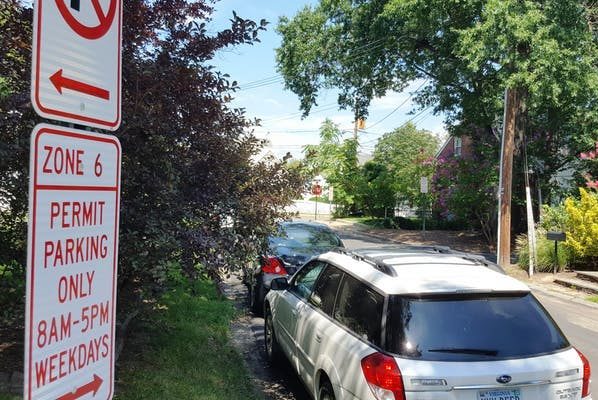
Paid, two-hour parking will not be included in Arlington’s updated Residential Permit Parking program.

The County Board unanimously approved significant changes to the program during its meeting on Saturday.

The new program expands RPP program eligibility to multi-family buildings — excluding those approved via site plan — and grants permits to households based on how much off-street parking they have. Residents will be charged for some previously free permits, which according to the county, will end support for the program from general tax funding.

The Board ended up nixing a county staff recommendation to allow those from outside a neighborhood to pay for limited-time parking in zoned areas.

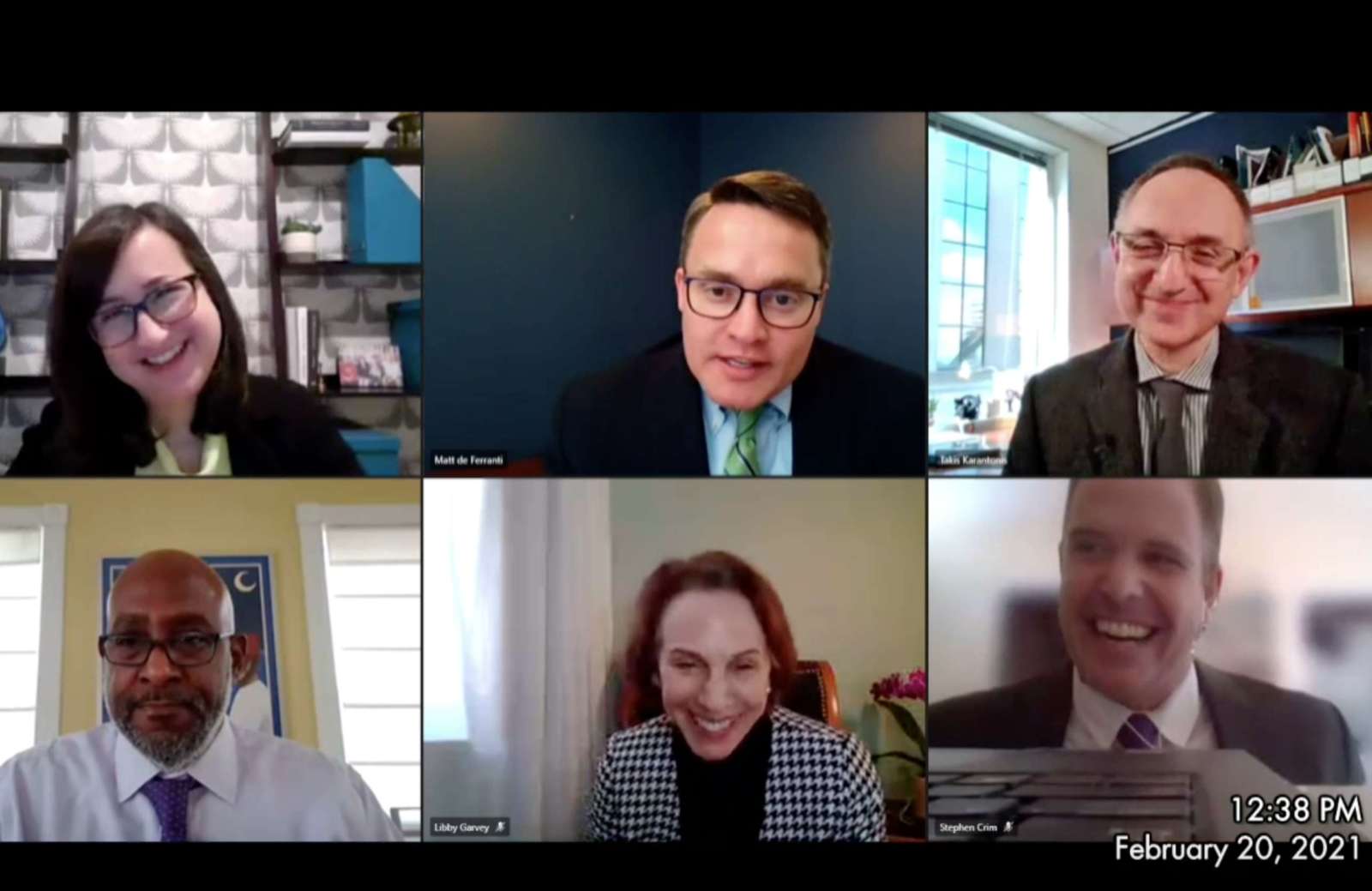
“Removing the two-hour [paid parking] is the big change that we have done,” Board Chair Matt de Ferranti said. “I was reading 196 pages of letters. We listened, and I think that is a big important step. Folks should hear that that is the biggest change.”

A county report and public letters indicate many residents pushed back on this specific proposal, which also divided members of the Planning Commission. County Board members cited enforcement challenges, given that vehicles without permits may actually be parked legally.

“Enforcement is too difficult right now,” Board member Libby Garvey said. Visitors will still be able to park in zoned parking if given a pass from an eligible resident.

While two-hour visitor parking was removed, Board members drew attention to the expansion of eligibility to multi-family buildings.

“One of the major reasons to reevaluate and reenact this program in Arlington [is] because it discriminates on the basis of housing types,” Board member Katie Cristol said. “I do feel confident that these amendments are going to make this program [fairer] and more consistent with our values in Arlington.”

She said the changes will leave the county better off than when the County Board repealed a RPP zone to put an end to a years-long dispute between Forest Glen and Arlington Mill residents, which pitted apartment dwellers over single-family home owners in an area with limited street parking.

The vote comes after a three year review of the program, during which new RPP applications were suspended. The program was originally established in 1972 to regulate parking in residential neighborhoods near Metro stations and commercial centers. Although the U.S. Supreme Court upheld the program in 1977, the program has been criticized recently for excluding people who live in apartments and condos.

About 10% of Arlington households are in current RPP zones, according to the county.

Public forums set for last spring were canceled due to the pandemic. Rather than reschedule them virtually, county officials concluded the review, citing equity concerns. A new period of public engagement began as the county geared up to propose the changes to the County Board in January 2021.

In December, the County Board deferred a public hearing until February to allow residents more time to look at the proposal.

Under the newly adopted program, all housing types can petition. However, those who live in residential buildings approved via site plan — as well as certain other types of mixed-use developments, plus Form Based Code developments along Columbia Pike — will be ineligible to apply for permits or petition for the program.

The county will require 80% of neighbors on a block to support a RPP petition, up from 60%. The county no longer needs to find that at least one-quarter of on-street parking is occupied by people from outside the area. Instead, it would need to find that more than 85% of spots are occupied.

“It’s really hard to tell what is an out-of-area vehicle,” county transportation official Stephen Crim said. “This out-of-area test is what causes many petitions to fail.”

Households with off-street parking are eligible for two annual permits (down from four), and households without it can get four permits.

For one permit, households can stick with the annual permit or opt for a FlexPass — a dashboard placard that residents and their visitors can use. All households can get up to five short-term visitor passbooks, which provide up to 300 days of parking each year.

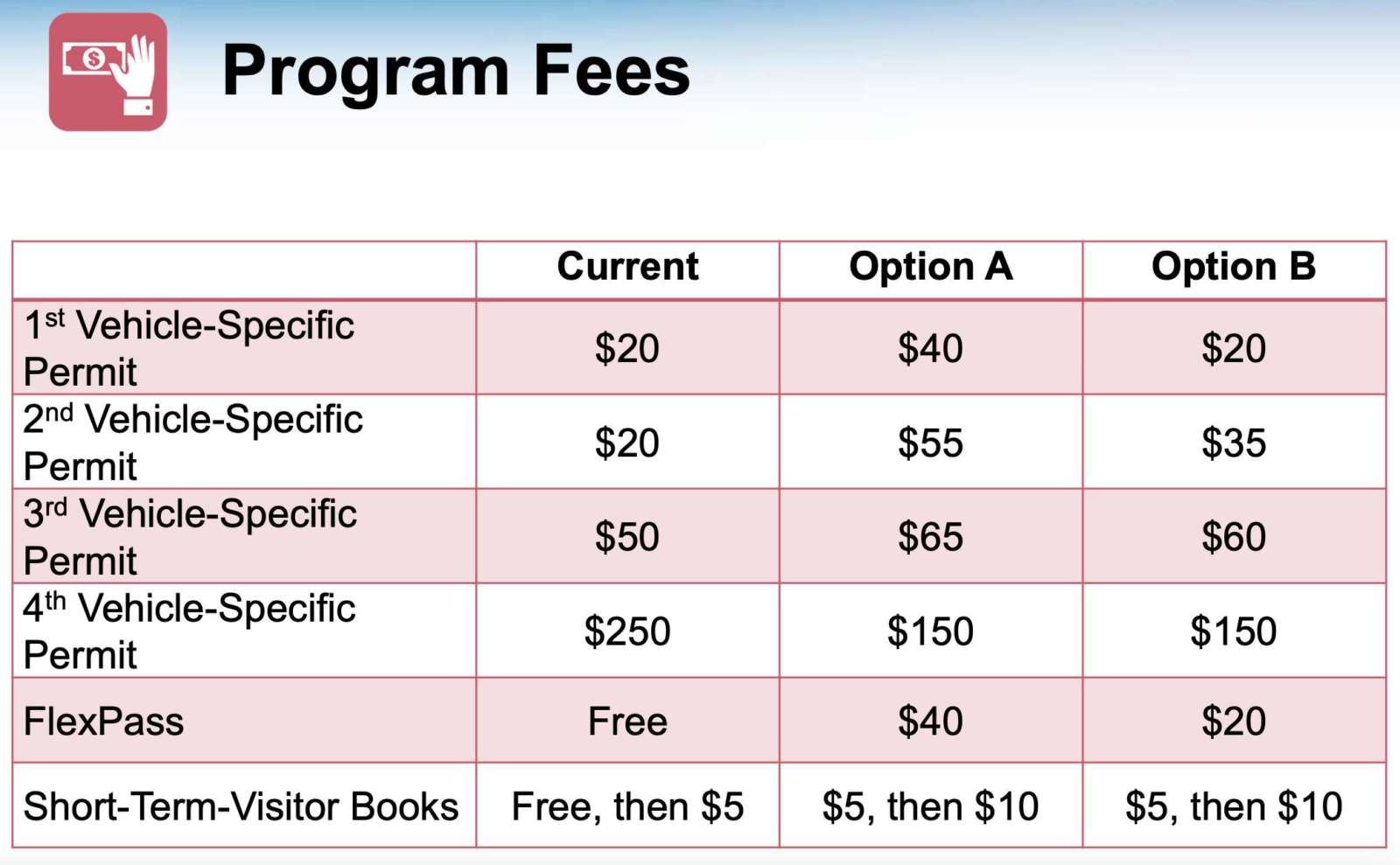
The county will be charging for the FlexPass and the first book of short-term visitor passes. The first vehicle-specific permit or FlexPass is $40. The second, third and fourth vehicle-specific permits will cost $55, $65, and $150 respectively.

Low-income households that qualify for state and federal assistance programs will receive a 50% discount on passes.

Photos via Arlington County


Sponsored by Monday Properties and written by ARLnow, Startup Monday is a weekly column that profiles Arlington-based startups, founders, and other local technology news. Monday Properties is proudly featuring Shirlington Gateway. The new 2800 Shirlington recently delivered a brand-new lobby and upgraded fitness center, and is adding spec suites with bright open plans and modern finishes. Experience a prime location and enjoy being steps from Shirlington Village.

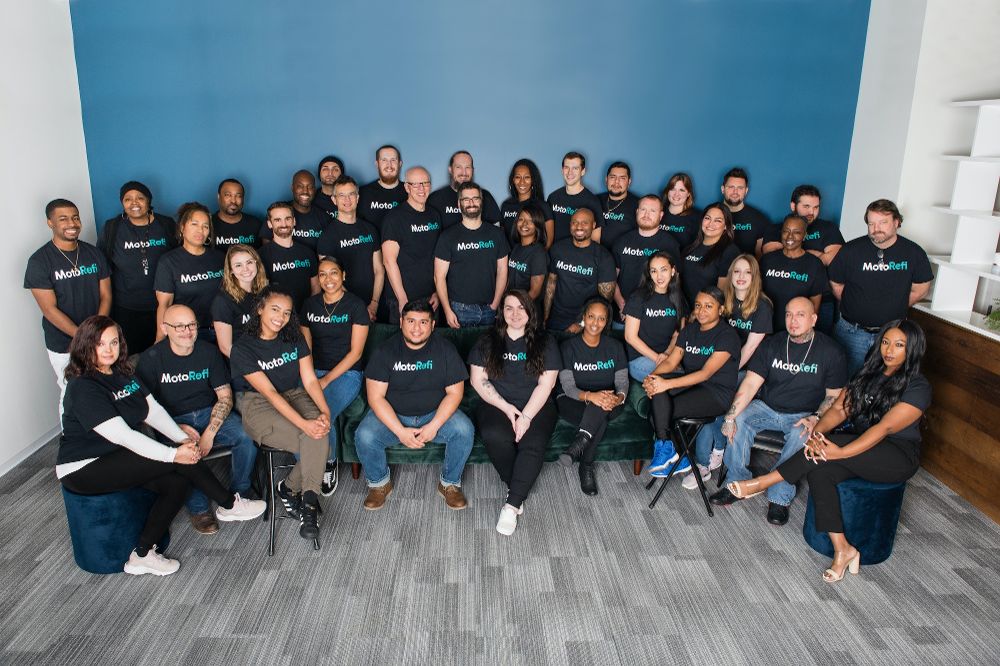
Arlington-based auto-refinancing startup MotoRefi recently announced $10 million in funding, led by Moderne Ventures.

The funding announcement comes after a year of gains for the four-year-old company, CEO Kevin Bennett tells ARLnow. In 2020, MotoRefi — based at 1010 N. Glebe Road in Ballston — raised $9.4 million, saw the number of users on its platform double and saw its revenue grow six times over. It facilitated over $250 million in auto refinancings and brought on an additional 100 employees.

(Bennett said MotoRefi does not release the number of users.)

The company, which was created by a team of venture-builders from Alexandria-based QED Investors, matches drivers looking to refinance their auto loans with credit unions and community banks. Bennett, who has worked on four other D.C.-area startups, said QED Investors co-founder and managing partner Nigel Morris asked him to lead the fledgling startup.

“Most consumers don’t know they can refinance their cars,” he said, contrasting it with a more commonly-understood home refinancing. “Only 47% know they can refinance their car and 2 to 3% do it.”

And unlike refinancing a home and or some student loans, where online platforms such as Rocket Mortgage and SoFi have made the process easier and more transparent, Bennett said this part of the market has not had its “Rocket Mortgage moment.” MotoRefi changes that, he said.

“People rightly don’t see the process as laid-out fairly,” he said. “One of the things that’s attractive about this startup is that it has a real very specific impact on people’s lives. We see the results of our work every day and that’s incredibly motivating.”

The startup handles the refinancing process from soup to nuts, checking credit scores and matching users only with the rates from banks and credit unions that they qualify for, Bennett said. The average customer saves about $100 a month.

For the smaller credit unions and banks that MotoRefi partners with, Bennett said the startup provides them access to customers they would not otherwise be able to reach. The startup also smoothes out the onboarding of new customers by streamlining the process of gathering documents and matching people with companies based on whether they would be approved, he said.

“We’re more efficient than our competitors because we’re the first real tech company in the space,” he said. “Our approval rates are higher, and it’s much less work for that credit union to review and fund a loan since we’re only sending customers who we know are a match.”

MotoRefi’s revenue comes from a number of different streams, Bennett said. The startup charges customers a processing fee in their loan and lenders pay MotoRefi for access to the people seeking loans, he said. The company also sells car-related services like a gap warranty.

Photo courtesy MotoRefi


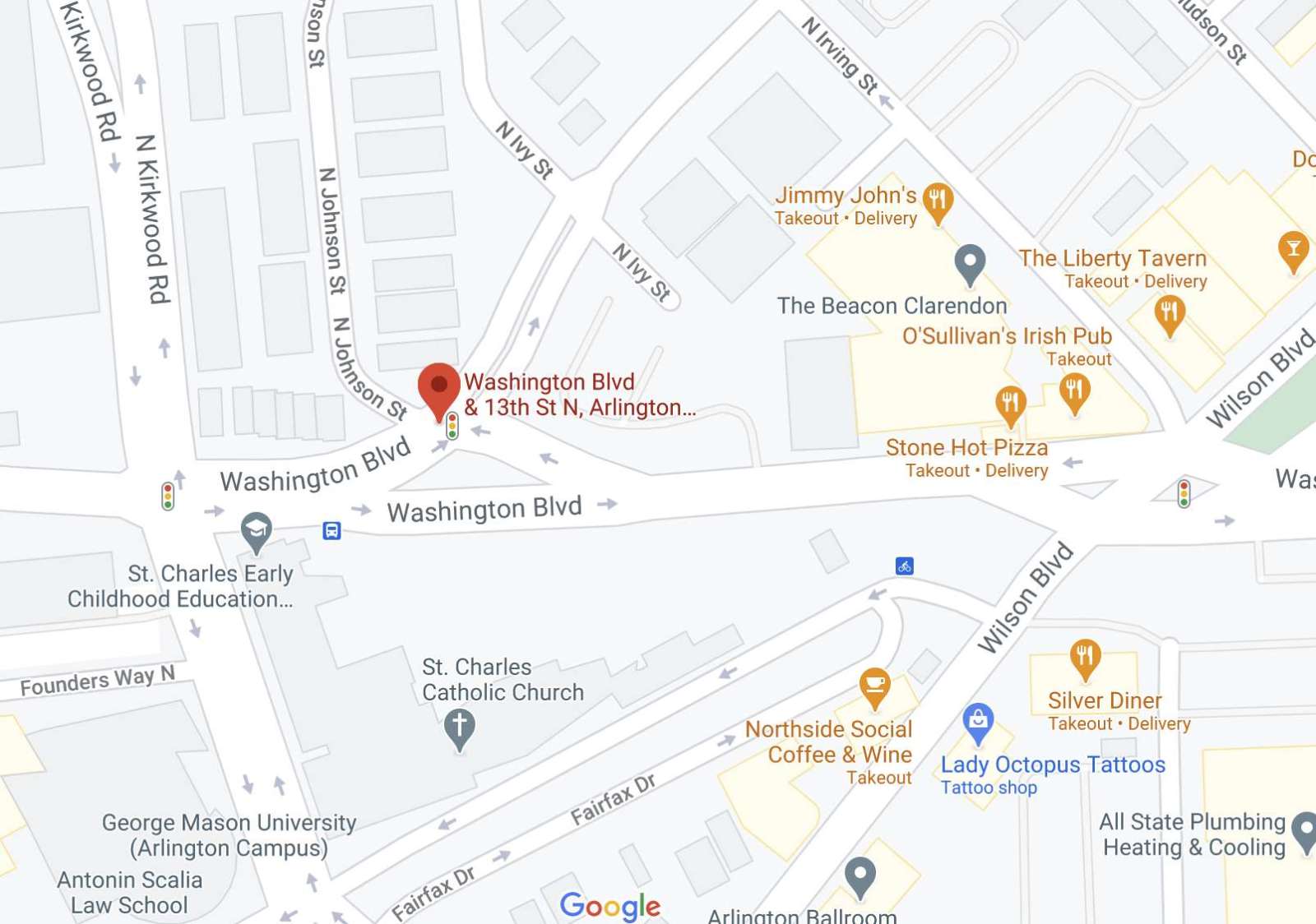
Arlington County is looking to overhaul the reversible lanes and the triangle-shaped intersection at Washington Blvd and 13th Street N., near Clarendon.

Washington Blvd would be widened to create a four-lane road between Clarendon Circle and N. Kirkwood Road, while 13th Street N. would be realigned to form a “T” intersection with Washington Blvd, according to a county staff report.

“The project will improve pedestrian safety and accessibility along Washington Boulevard and 13th Street North to provide a safe, and practical pedestrian route,” staff said.

The County Board is slated to hear proposed changes to the traffic patterns and pedestrian infrastructure at this intersection — which staff call a “porkchop” — during its regular meeting on Saturday.

As a part of the project, utilities would be moved underground, and revamped sidewalks, Americans with Disabilities Act-compliant ramps, and other streetscape elements will be constructed to match improvements at Clarendon Circle.

The county’s Washington Blvd plans, made in conjunction with the Clarendon Circle work and the redevelopment of the nearby Red Top Cab properties, were delayed by more than a year.

“[The project] required coordination with Dominion Power on the utility undergrounding part of the project and staff work to improve the plans for walking pathways during construction, to make it safer for people walking around the construction area,” Arlington Dept. of Environmental Services spokesman Eric Balliet tells ARLnow. “Both of these items have been worked on for over a year, and needed to be completed before we issued the construction contract for bid in December.”

Arlington County has selected Sagres Construction — which bid just over $2.5 million, to which the county is adding $500,000 for contingency — as the contractor.

Taking the utilities underground means the project will take about 18 months, a timeline that, according to the county, concerned some stakeholders.

Still, “there is a general understanding of the technical difficulties associated with the undergrounding of utilities along Washington Boulevard” and “members of the community have expressed full support for the project,” staff said in the report.

This project is a part of the 2006 Clarendon Sector Plan. In the intervening years, Arlington County said it has acquired three lots at Washington Boulevard and N. Johnson Street needed to make the intersection a “T.”

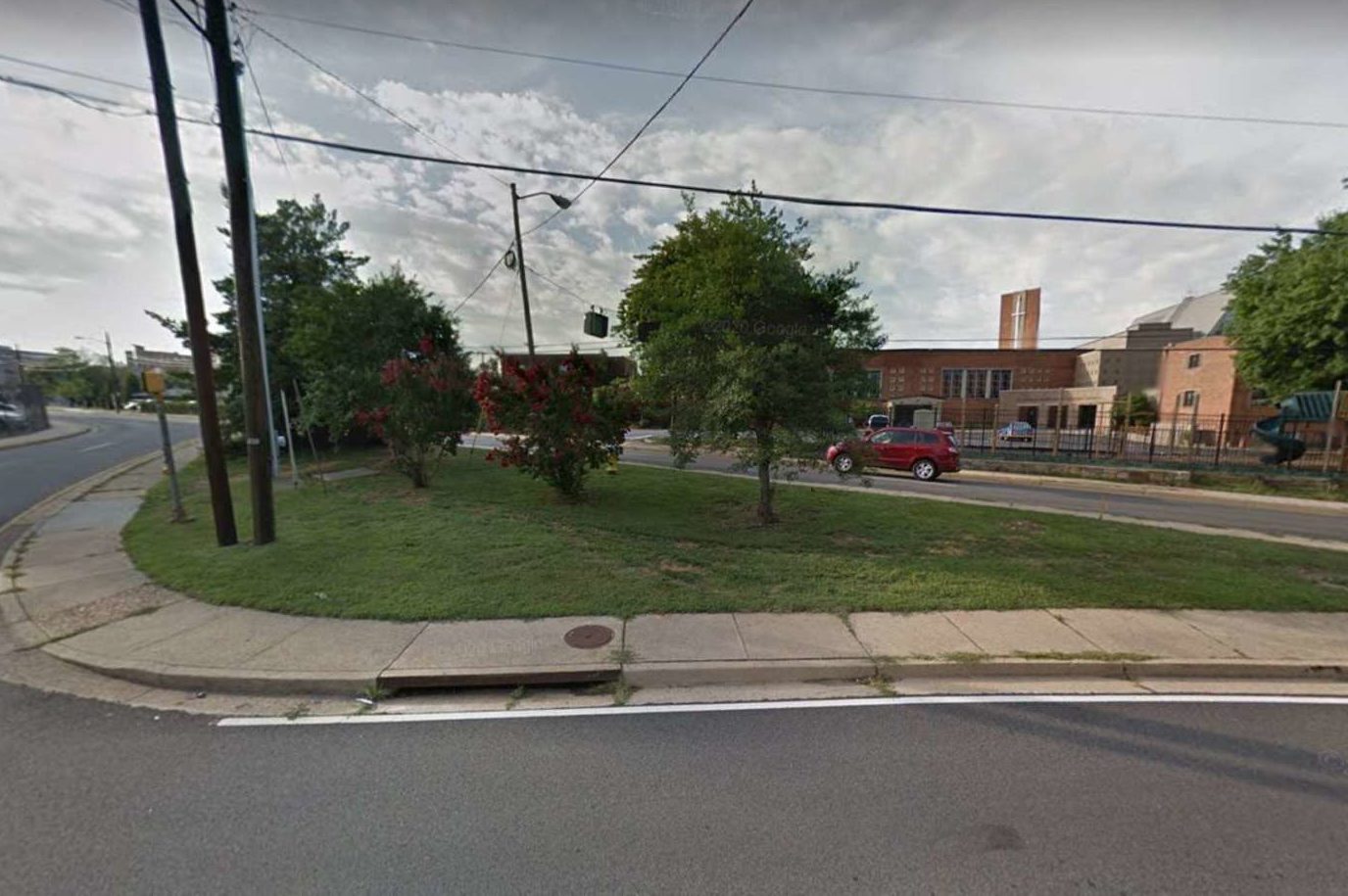
These changes are moving forward amid a county-led review of the Clarendon Sector Plan to accommodate a handful of major redevelopment projects. One such project is to update the St. Charles Church campus, which also includes changes to the walking and biking experience along Fairfax Drive between Clarendon Circle and Kirkwood Road.

Images via Google Maps


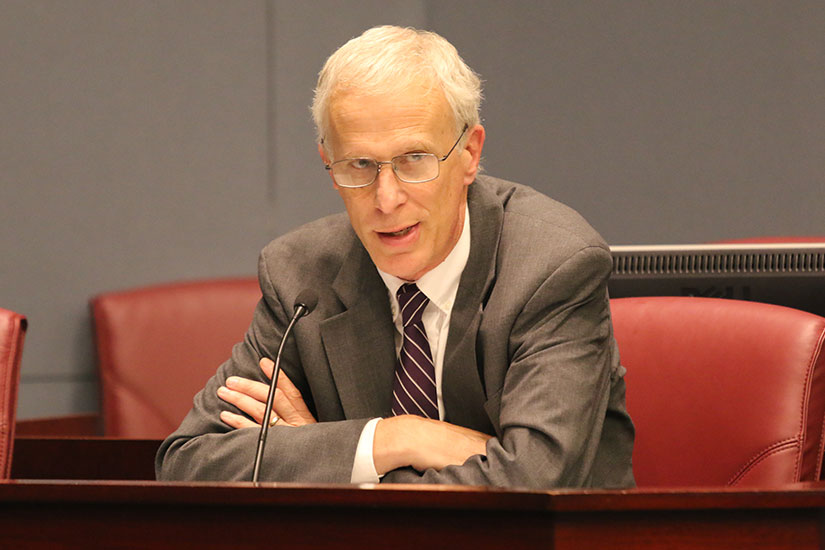
Last year started out as “a good budget year” for County Manager Mark Schwartz. But nearly a year after the pandemic hit Arlington, Schwartz’s new budget proposal is more austere.

Schwartz calls the upcoming Fiscal Year 2022 budget, which is being presented to the County Board Thursday afternoon, a “transition budget.” While modestly increasing spending, his proposal reflects big pandemic-era declines in some key revenue sources.

“This budget provides us a path forward, ensuring we have a strong, resilient County government when we emerge from this pandemic,” he said after a press briefing earlier today.

For starters, the proposed $1.36 billion budget — representing a 1.4% increase in spending — includes a $17.5 million coronavirus contingency fund. This will fund vaccine distribution and testing, eviction prevention, food assistance, and will go toward supporting local businesses.

Meanwhile, Schwartz has identified $16.4 million in cuts to help close what the county describes as a budget shortfall of $26 million, down from what was initially estimated last fall to be a $50 million shortfall. The rest will be made up through one-time funding sources, he said.

The bulk of the cuts come from eliminating 56 vacant positions, which resulted from a voluntary retirement package offered in January and a continuing hiring freeze from last year.

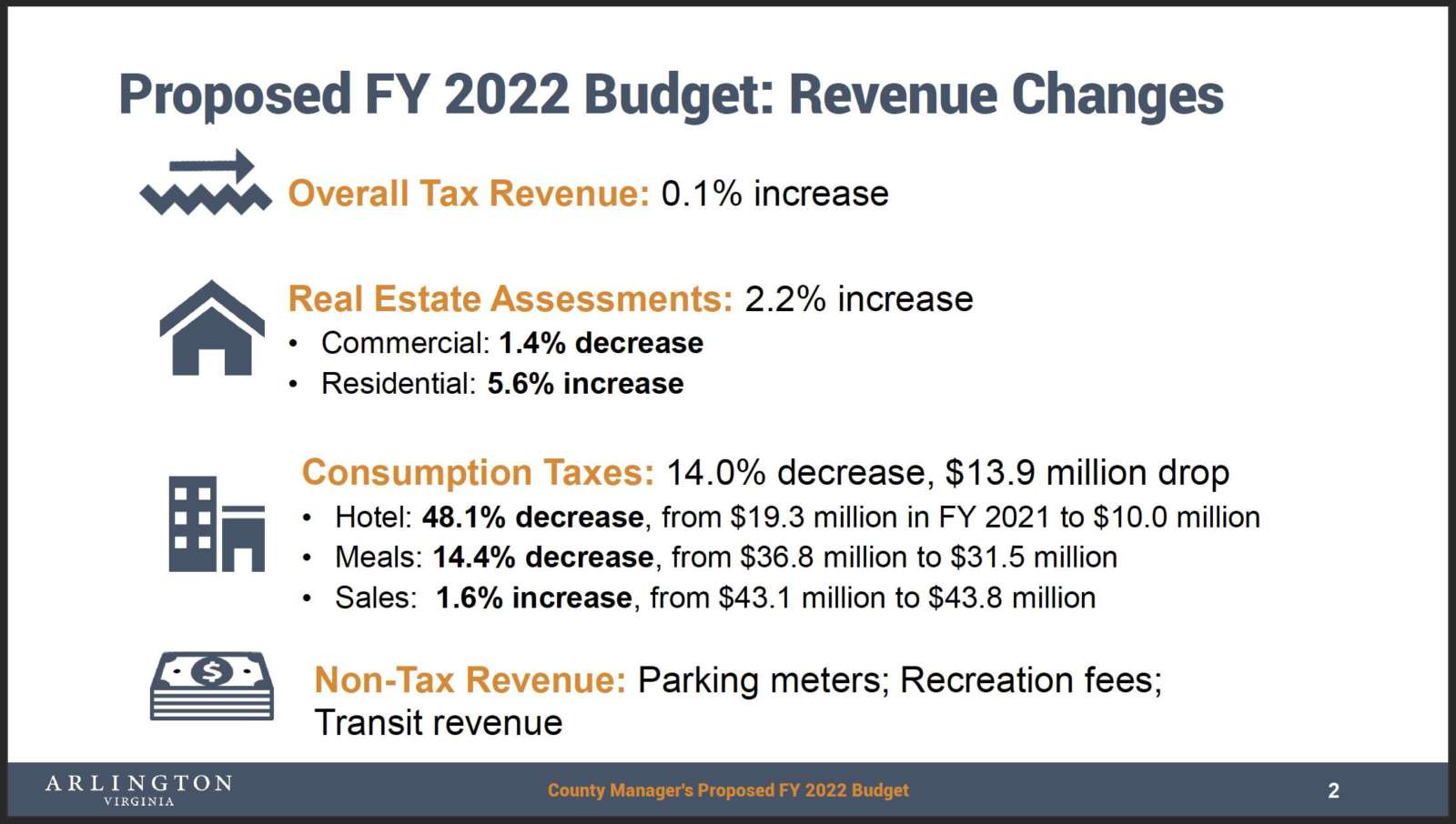
Schwartz proposes keeping the $1.013 per $100 property tax rate flat, as he did last year. Still, the average homeowner will see a tax bill that is 5-6% higher due to rising property values, Schwartz said. Commercial property assessments, by contrast, declined this year.

Homeowners will see an average increase of $29 in stormwater taxes, reflecting a rate hike of 1.3 to 1.7 cents per $100 in property value. The increase will help generate $15.1 million earmarked for stormwater improvements. Eventually, the county plans to eliminate the stormwater tax completely in favor of a fee based on how much impervious surface covers a given property, Schwartz said.

Schools will receive 47% of the tax revenue, or $529.7 million, an increase of $5.1 million over last year.

(Updated on 2/23/21) The pandemic has saved the county money through remote work and online services, which Schwartz said will help fund other programs and services. His budget includes a one-time, $500 bonus for county employees, who will be foregoing merit-based raises.

“Our employees have gone without raises — or a vacation day — for an entire year,” Schwartz said.

After the County Manager submits his proposed budget, the Arlington County Board will vote on an advertised tax rate this Saturday. The Board will be able to ultimately adopt a property tax rate equal to or less than, but not above, the advertised rate.

The Board will then review the budget proposal and conduct a series of work sessions with each county department beginning in March.

There will be two public hearings: Tuesday, April 6, and Thursday, April 8. The final vote on the FY 2022 operating budget is scheduled for Saturday, April 17.

Certain parts of the budget may be revisited, Schwartz said, should additional federal funding become available.

Other highlights from the budget proposal include:

  • More racial equity training, money for a Restorative Justice initiative, and more funding for probation, parole and the Public Defender’s Office.
  • About $1.5 million to implement several recommendations from the Police Practices Group, especially in transitioning mental health-related work from police officers to clinicians.
  • Allowing firefighters to work a shorter week, adding transportation safety officers to the police department, and multiple positions to support the new body-worn camera program.
  • The county elections office is proposed to receive additional staff to support mail-in ballots and absentee voting.
  • Funding for the opening of the Long Bridge Park Aquatics and Fitness Center and the Lubber Run Community Center
  • Increasing the lowest base pay for county employees from $15 to $17 per hour
  • Adding Juneteenth as a County holiday
  • Delayed re-opening of Cherrydale and Glencarlyn libraries, saving $881,000
  • An additional $2.6 million in housing grants, plus $21 million in housing choice vouchers and $8.9 million for the Affordable Housing Investment Fund.

Schwartz’s budget proposal focuses affordable housing efforts on “eviction prevention and direct housing support,” but decreases county funding for Arlington’s affordable housing development fund, as the Washington Business Journal’s Alex Koma noted on Twitter (below).

“4.6% of the County’s operating budget is dedicated to housing and more than 15% is dedicated to safety net services and housing,” a slide from the budget presentation noted.

File photo


View More Stories