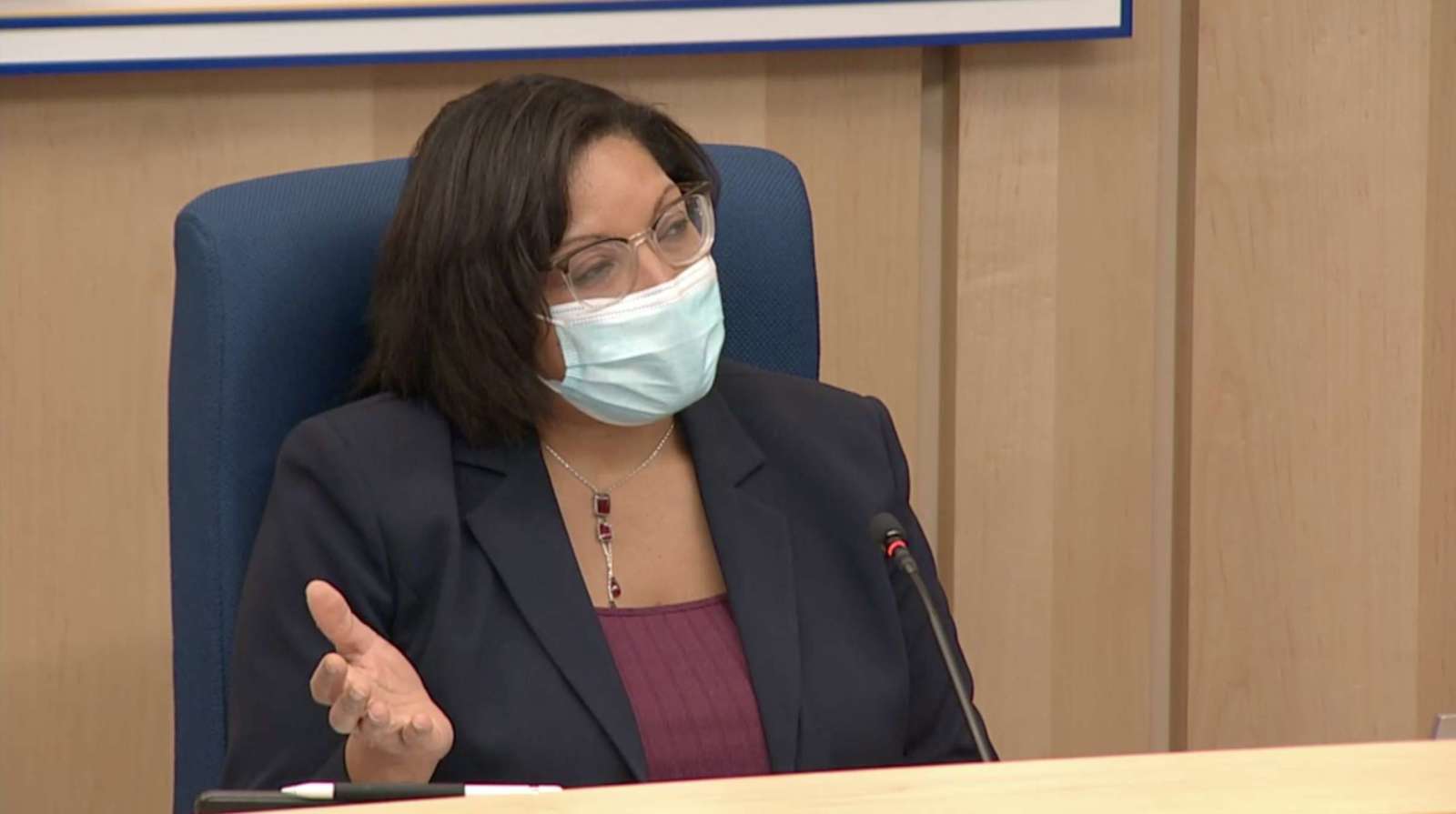
School Board Chair Monique O’Grady will not be seeking reelection after her term ends this December, according to an announcement on her website.

The chair said on Sunday that she will work for a better future for all students through her term, which ends on Dec. 31, 2021. In her announcement, she said she wrote “with a heavy heart” after “much thought, consultation with my family, and careful consideration.” She declined to comment for this story.

O’Grady joined the School Board in 2018 and became chair in July 2020. She said she needs to spend her last six months as chair and her last year on the board working to reopen schools.

“We must return Arlington Public Schools to the strongest and safest new normal that can be achieved as we continue to mitigate the volatile pandemic,” she wrote. “This will require my full and undivided attention.”

O’Grady said in a different time, she would not hesitate to seek re-election, but amid the coronavirus and political unrest, her focus has to be on “returning to in-person learning as safely as possible and pushing forward our equity work.”

“This is especially important as we continue to address the impact that the pandemic has had on all our students, and in particular on those who our data shows are not progressing as well with distance learning,” O’Grady said.

She follows in the footsteps of former School Board members Tannia Talento and Nancy Van Doren, who also chose not to run for additional terms. They were replaced by Cristina Diaz-Torres and David Priddy, who were both elected in November and welcomed onto the board during the Jan. 7 School Board meeting.

O’Grady has lived in Arlington for 25 years and has been an APS parent for 19 of those years, according to her website. She and her husband Mike have three children: Mikey, a Gunston Middle School student, as well as APS graduates Caitlin and Brittany, who is an actress.
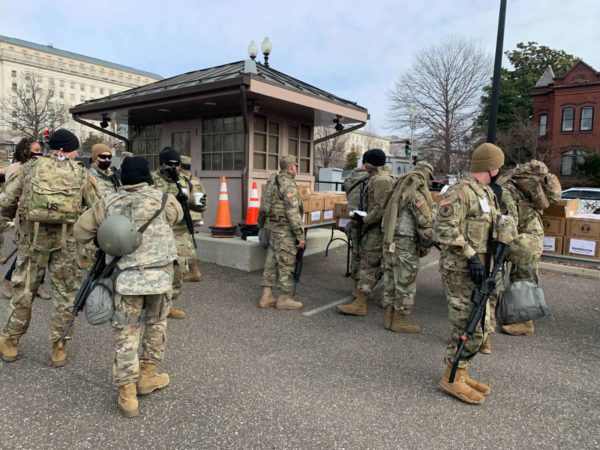
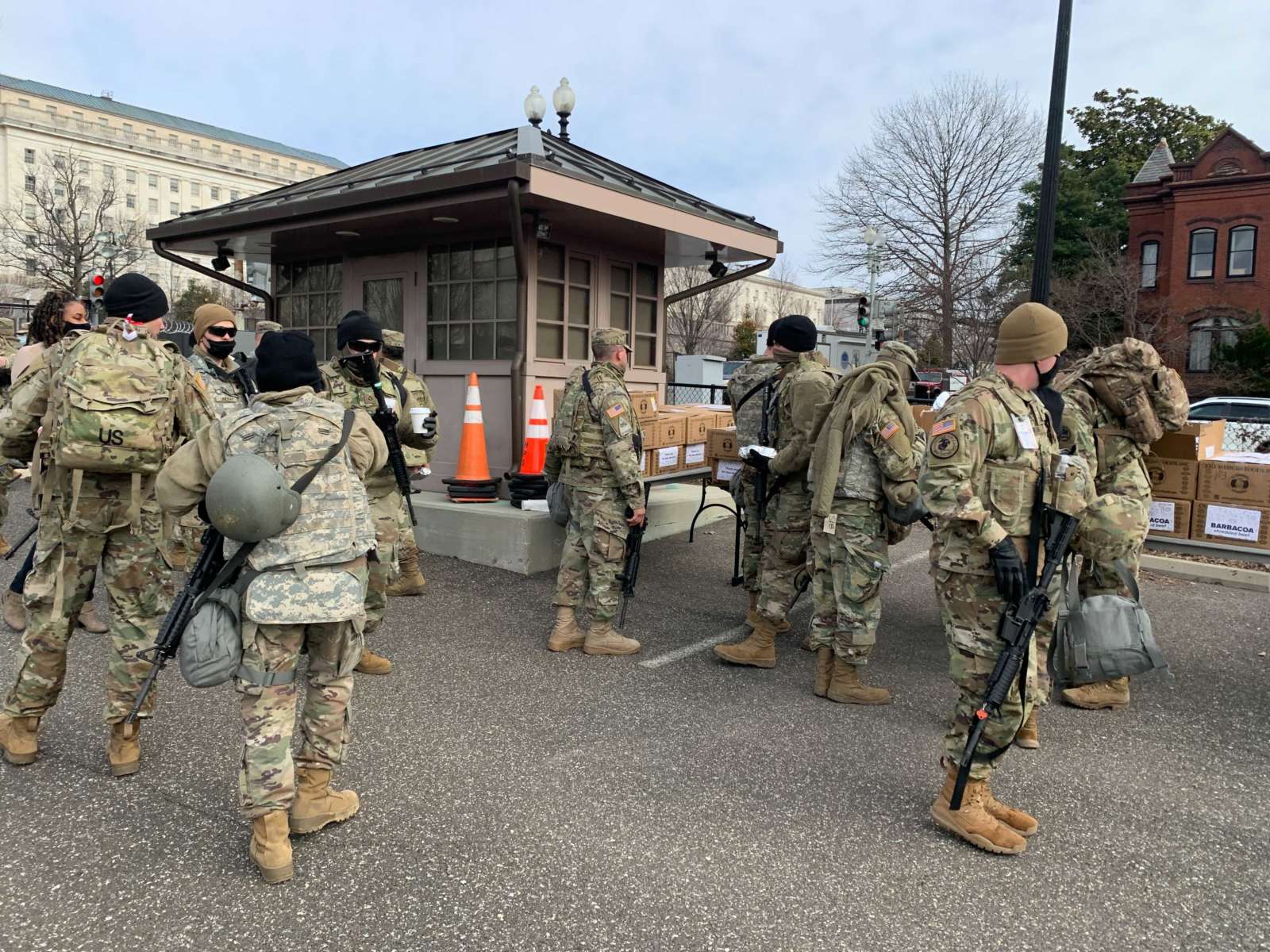
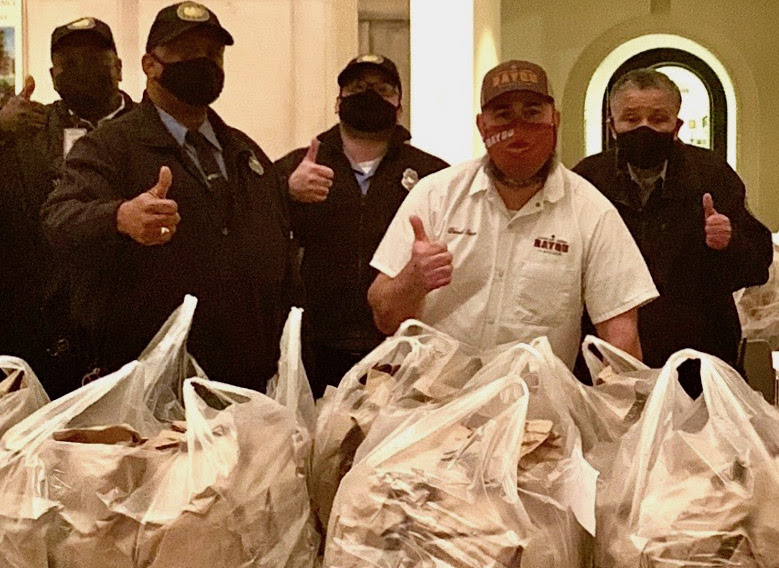
When Chef David Guas of Bayou Bakery in Courthouse delivered food to the security personnel in the District on Monday, it took two-and-a-half hours and many phone calls — even to D.C. Mayor Muriel Bowser — to pass each checkpoint. 

“When I arrived the Commander of that unit and the policeman literally cheered, [saying] ‘Bayou Bakery is here,'” Guas tells ARLnow.

Bayou Bakery and Arlington-founded District Taco are helping nourish the 25,000 servicemen and women, along with law enforcement, deployed to protect the nation’s capital during the 59th Inauguration.

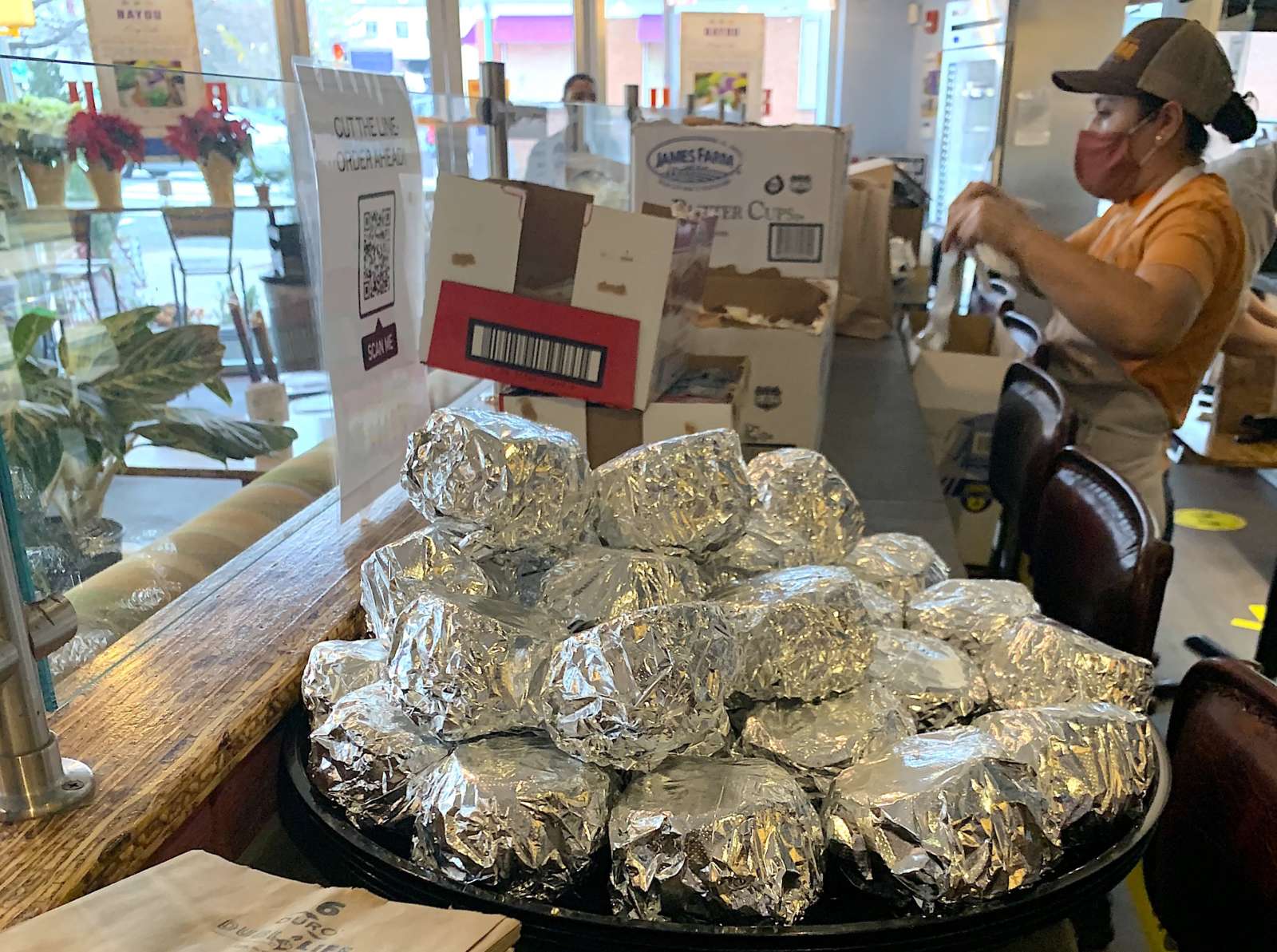
The homegrown Mexican chain donated 2,000 burritos to the National Guard on Monday. The day before, Guas said he and his crew worked into the night to prepare biscuits and sandwich lunches for the Monday delivery.

The two join about 30 D.C.-area restaurants distributing meals to the multitudes, hailing from Maine to Guam. The heightened security is in response to the mob of Trump supporters who stormed the Capitol on Jan. 6.  

District Taco donated burritos that were pledged during a “Buy One, Give One Burrito” campaign in December.

On Monday, CEO and co-founder Osiris Hoil cashed in all 2,000 BOGO burritos to feed the National Guard. He said they were so popular that supplies ran out long before the lunch hours ended.

“When I saw the brave servicemen and women protecting the Capitol building, I knew exactly where I wanted those pledged burritos to go,” Hoil said in a press release. 

District Taco also donated hundreds of burritos to essential workers in hospitals and food banks last October and November. Hoil said he is proud to continue this longstanding tradition of giving back.

“Thanks to the support of our community, our restaurants are still open,” Hoil said. 

Guas also uses his food for good. He co-founded Chefs Feeding Families during the pandemic and has cooked for the annual awards dinner put on by Blue Star Families.

“Not having served in the military myself — but having grandparents that did — I’ve always jumped at the opportunity to help our men and women in uniform who protect our freedom,” he said.

Guas credits his involvement to Micheline Mendelsohn Luhn and Spike Mendelsohn, his friends and two of the family members behind We, The Pizza. The duo told ABC News that D.C. restaurants — despite struggles during the pandemic — are pitching in to provide fresh food to upwards of 5,000 people, who might otherwise have to rely on pre-packaged military meals, each day.

Photos (1) via District Taco, (2-3) via Bayou Bakery


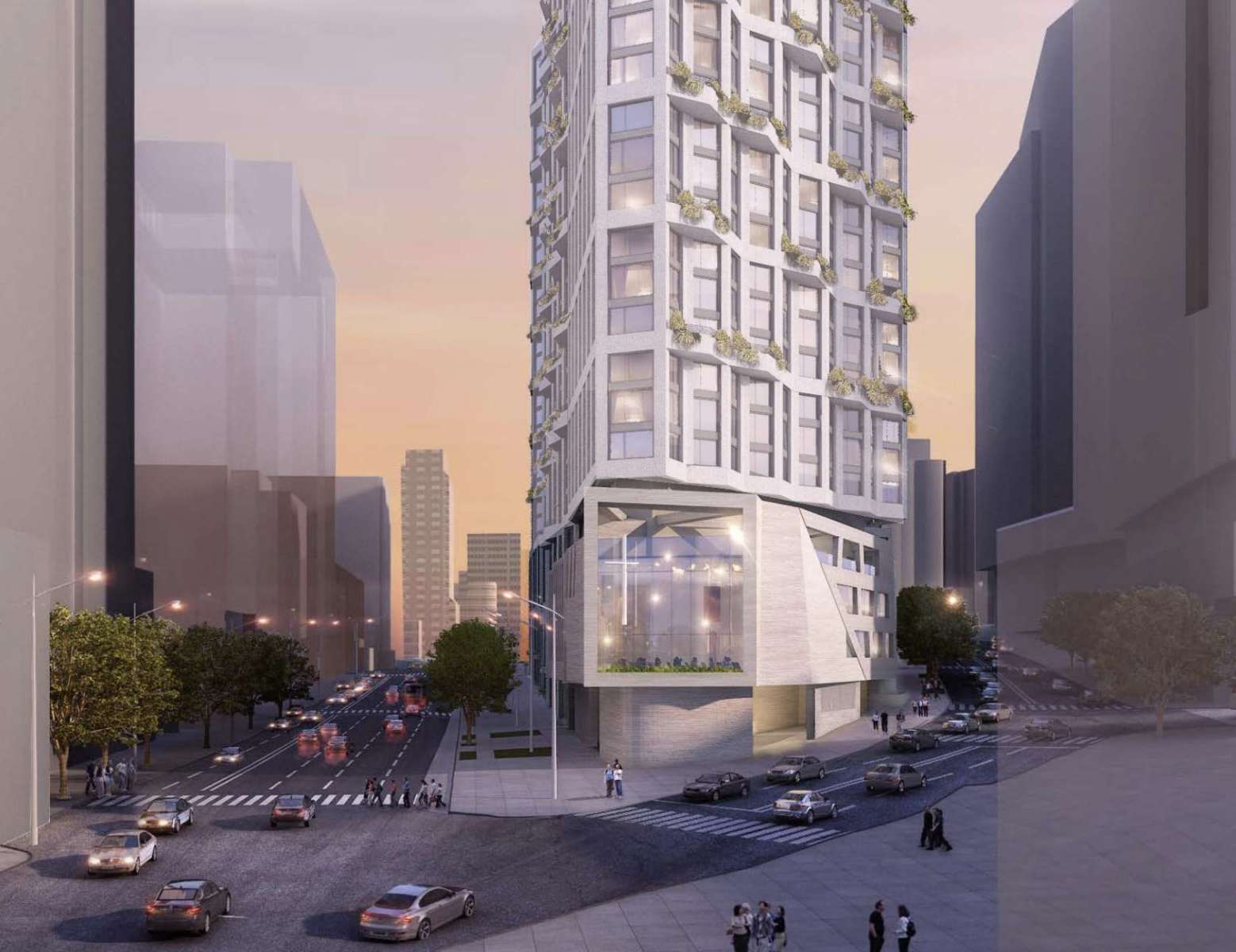
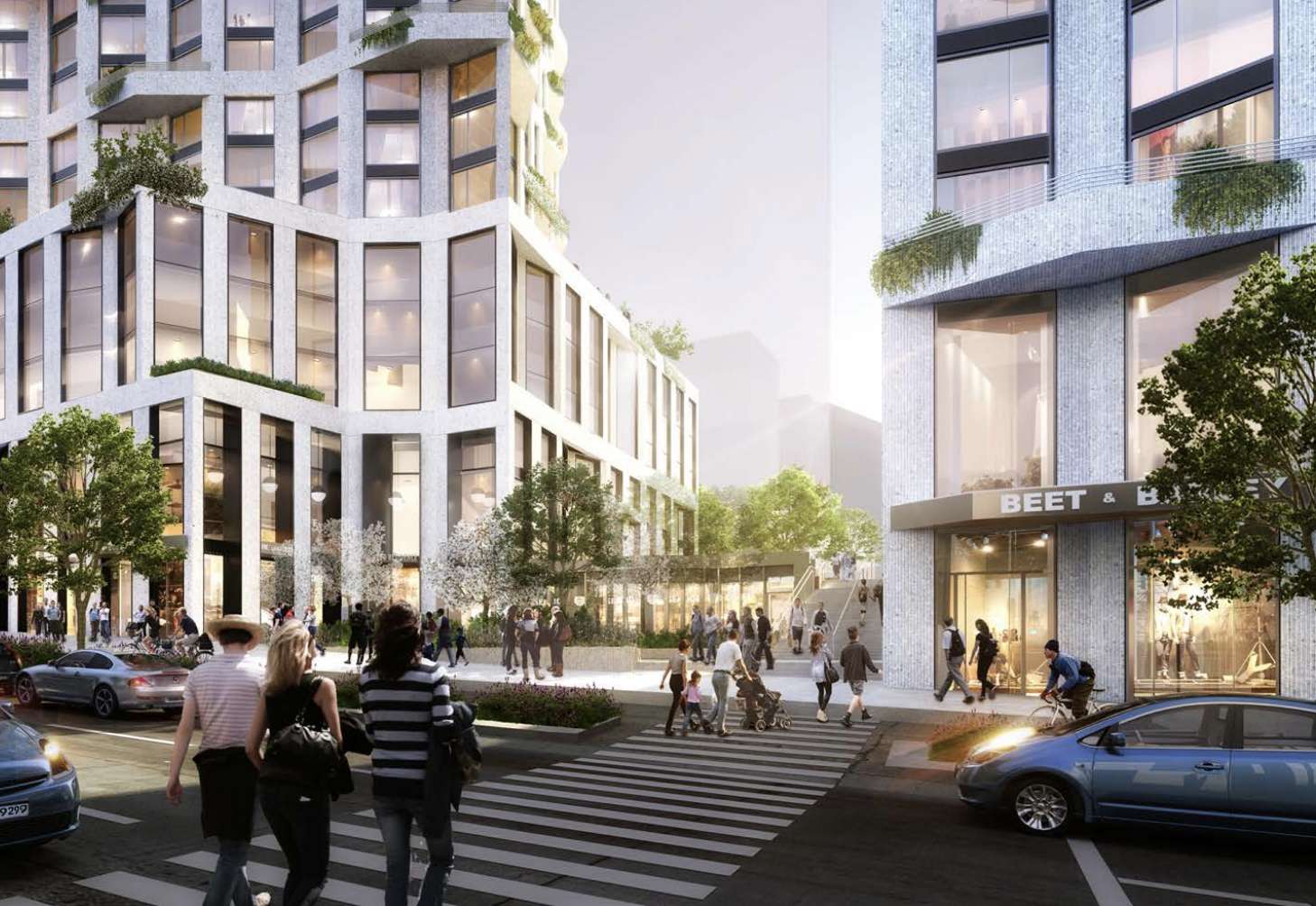
The Arlington County Board is slated to review plans for two residential towers at 1820 N. Fort Myer Drive that include substantial affordable housing contributions.

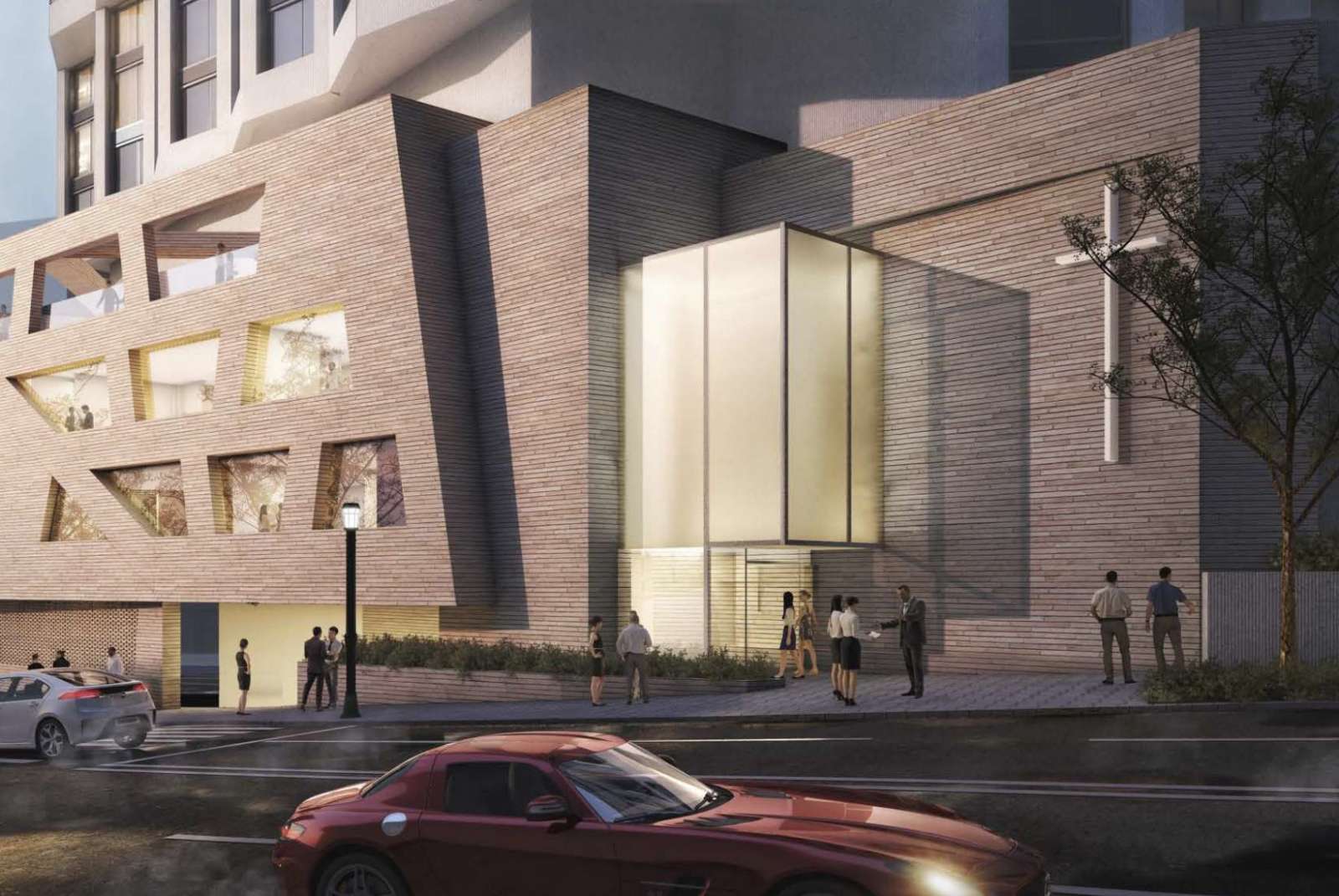
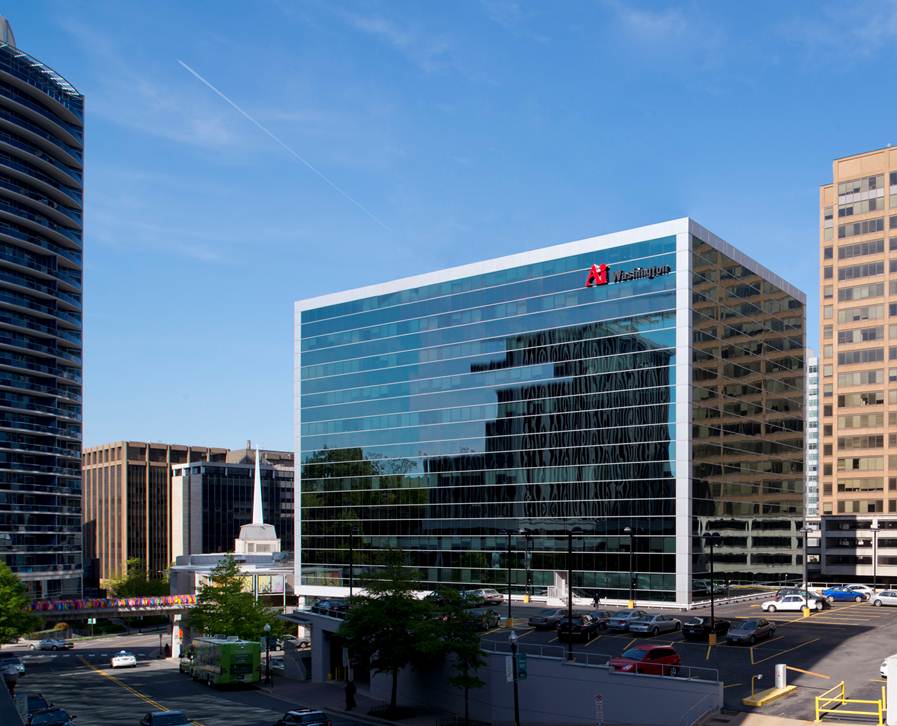
The proposal from Arlington-based Snell Properties would replace the Ames Center office building across from the Rosslyn Metro station. A south tower will abut the Hyatt Centric hotel and a north tower will surround the existing Arlington Temple United Methodist Church and Sunoco gas station, dubbed “Our Lady of Exxon.”

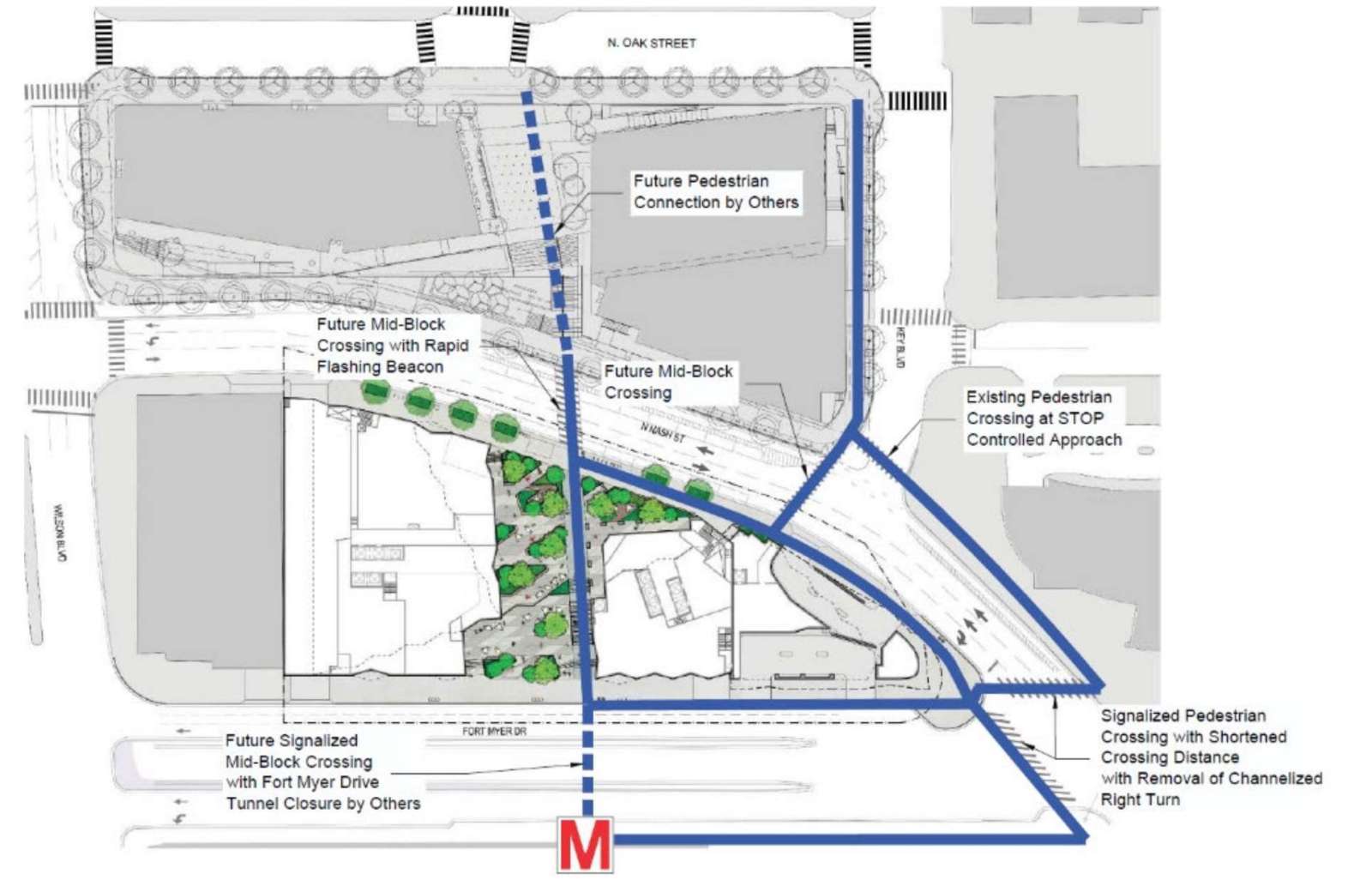
Although the church and gas station will be “redeveloped in place,” the skywalks — which provide an elevated pedestrian connection to the Metro station — will be demolished, according to the County.

Along with plans for the Holiday Inn and the RCA building, the proposal from Snell will further change Rosslyn’s skyline, demolishing the existing building, formerly occupied by the Art Institute of Washington.

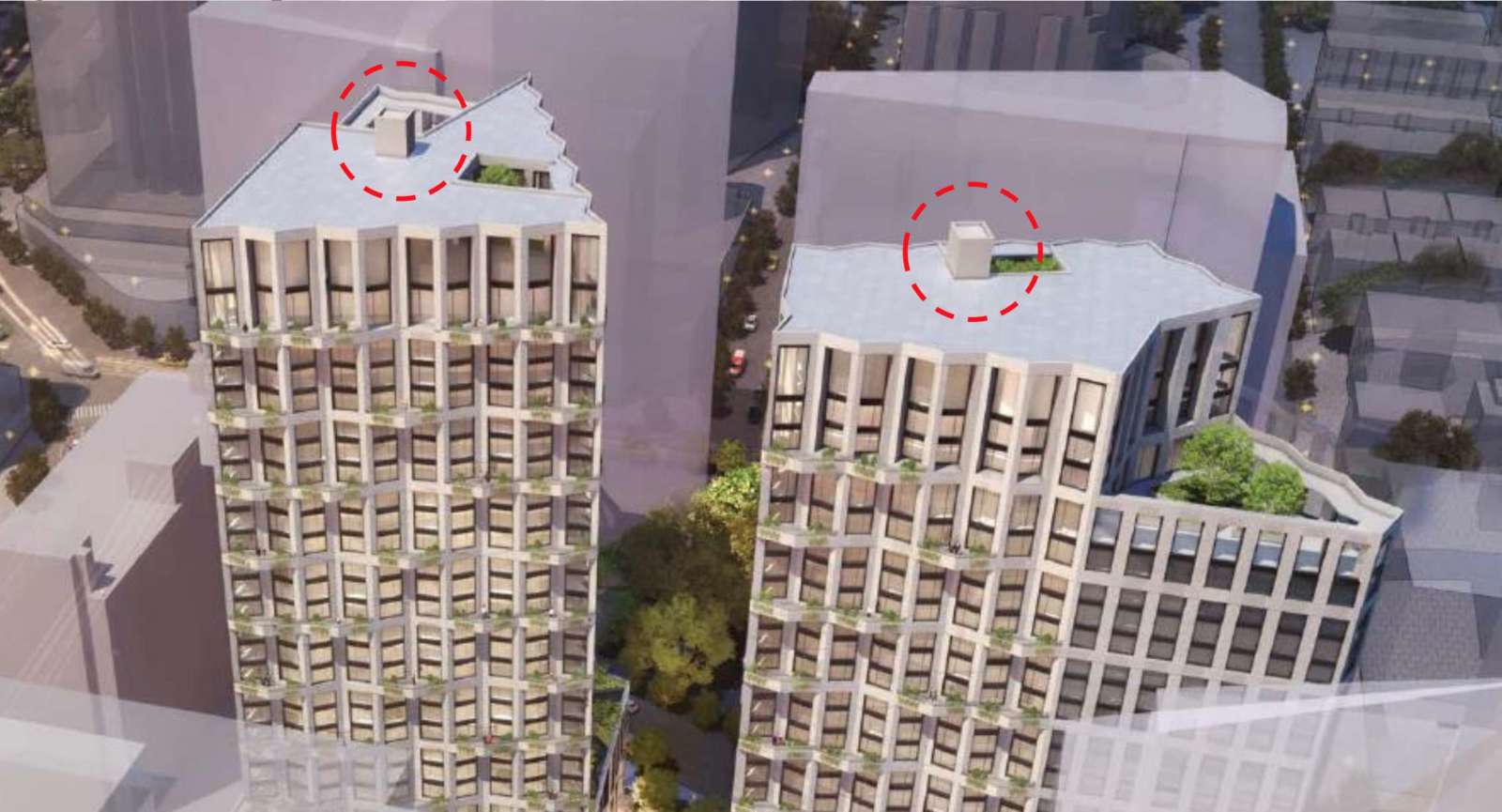
The proposed towers, 30 and 31 stories tall, include 740 multifamily units and about 10,146 square feet of retail space. Up to 225 of the residential units may devoted to an interim hotel use, while the apartments are leased.

In a report, staff highlighted the affordable housing units in the building, committed as such for the next 30 years.

“The Rosslyn Coordinated Redevelopment District area, where this project is located, is one of the most expensive rental markets in the County,” staff said. “There are currently no [committed affordable units] within the RCRD.”

Twenty-four one- and two-bedroom units will be reserved for households making up to 80% of the Area Median Income.

Typically, such units are reserved for those who make up to 60% AMI, but staff said Rosslyn is so expensive that reserving units for up to 80% AMI “will better leverage the community benefits value while providing much-needed affordability directly in this area.”

Snell Properties is also committing nearly $2.5 million in cash toward affordable housing. The County said this sum could create about 29 units in future developments that are affordable for households earning up to 60% of the Area Median Income.

The project additionally includes a $5 million cash contribution for the Fort Myer Drive tunnel project, which includes plans to convert the road into a two-way street, remove the tunnel, widen sidewalks and add protected bike lanes.

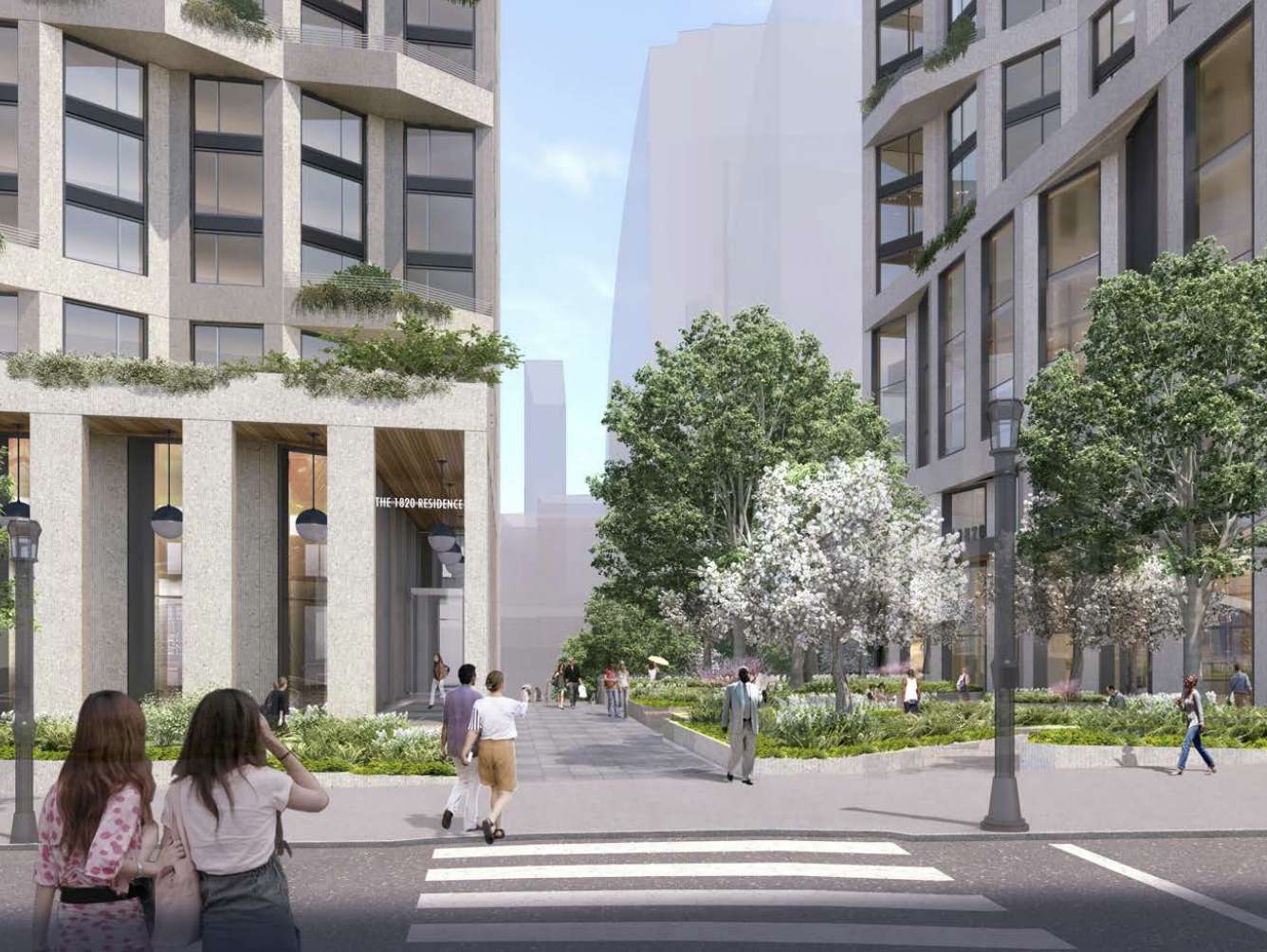
A cement plaza will separate the two towers and form one segment of a planned pedestrian pathway that County planners call the “18th Street Corridor.” This street-level walkway will replace the existing, elevated passages. Mid-block crosswalks will join the plaza to 18th Street N.

Those who participated in community engagement from July and September “were universally in support of [the] removal of both skywalks,” staff said.

The towers will share four levels of below-grade parking and the south tower will have four levels of above-grade parking — 574 parking spaces in total.

The County said “there are no outstanding community issues” but the mechanical penthouse roof and elevators may block or hurt the view of D.C. from the Central Place Observation Deck.

The south building will be built in phase one, along with an interim open space and other streetscape improvements. The second phase will see more activity: construction of the north tower, the plaza and remaining streetscape improvements, as well as the removal of the skywalks.

The County Board is expected to review the project at its Saturday meeting.


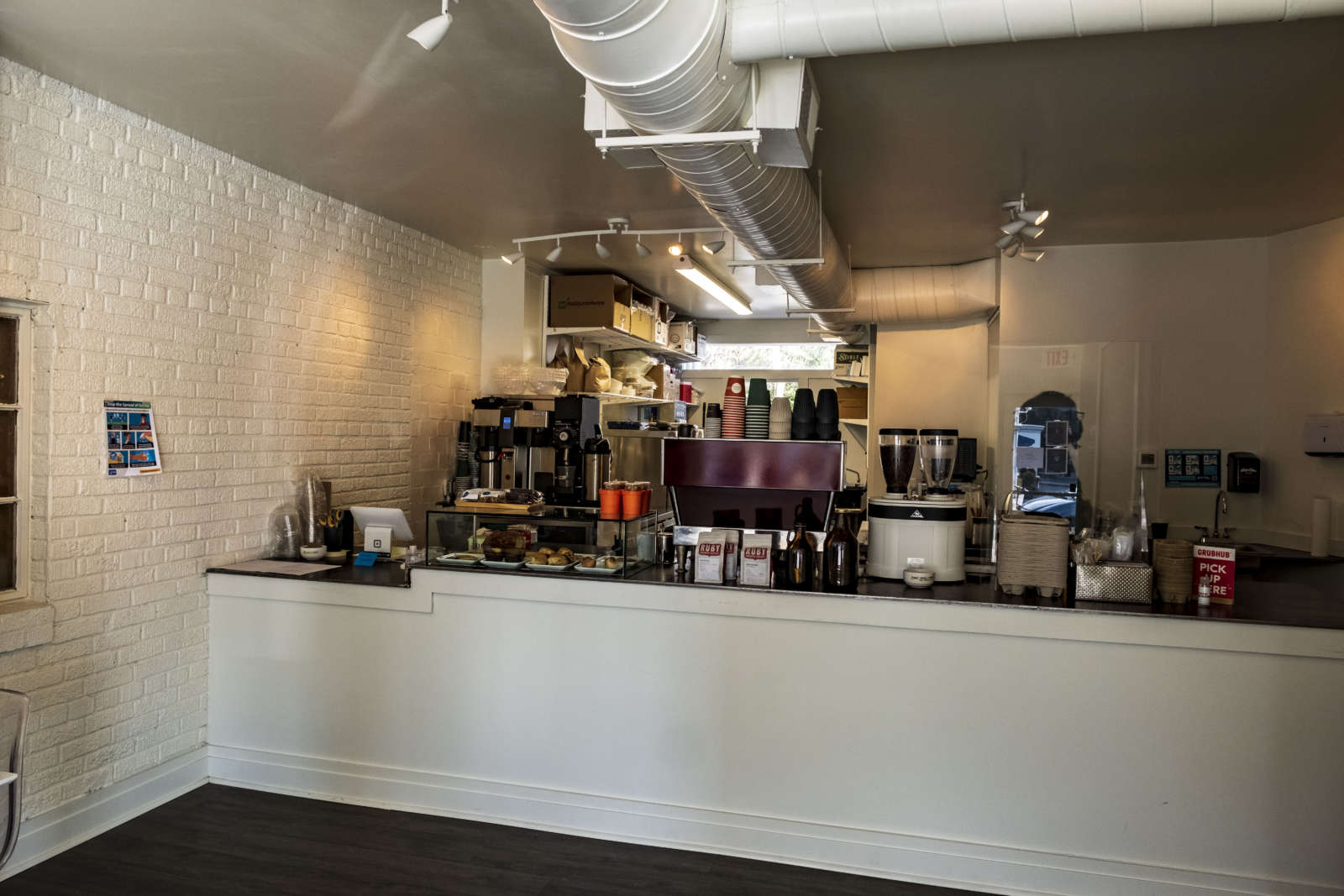
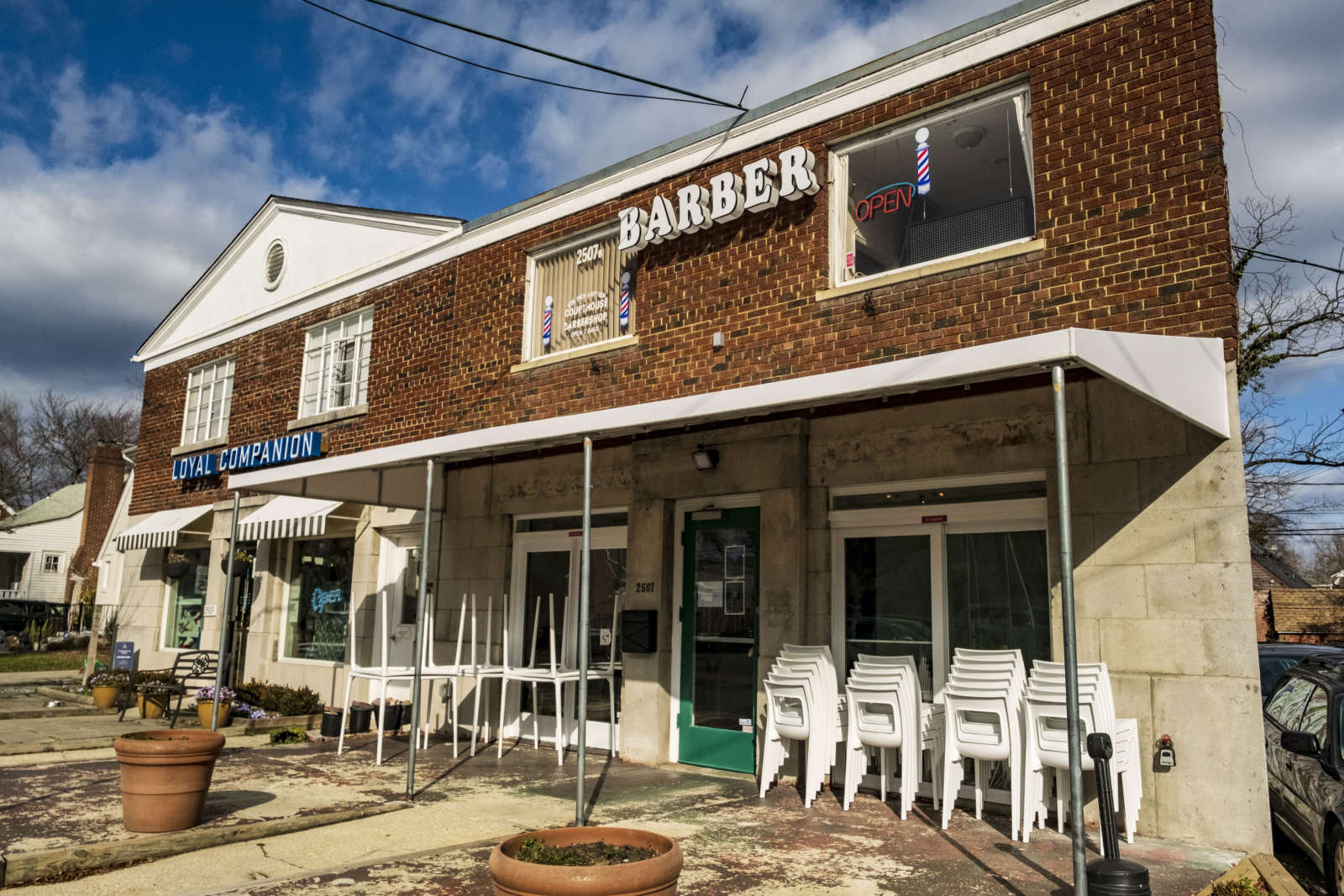
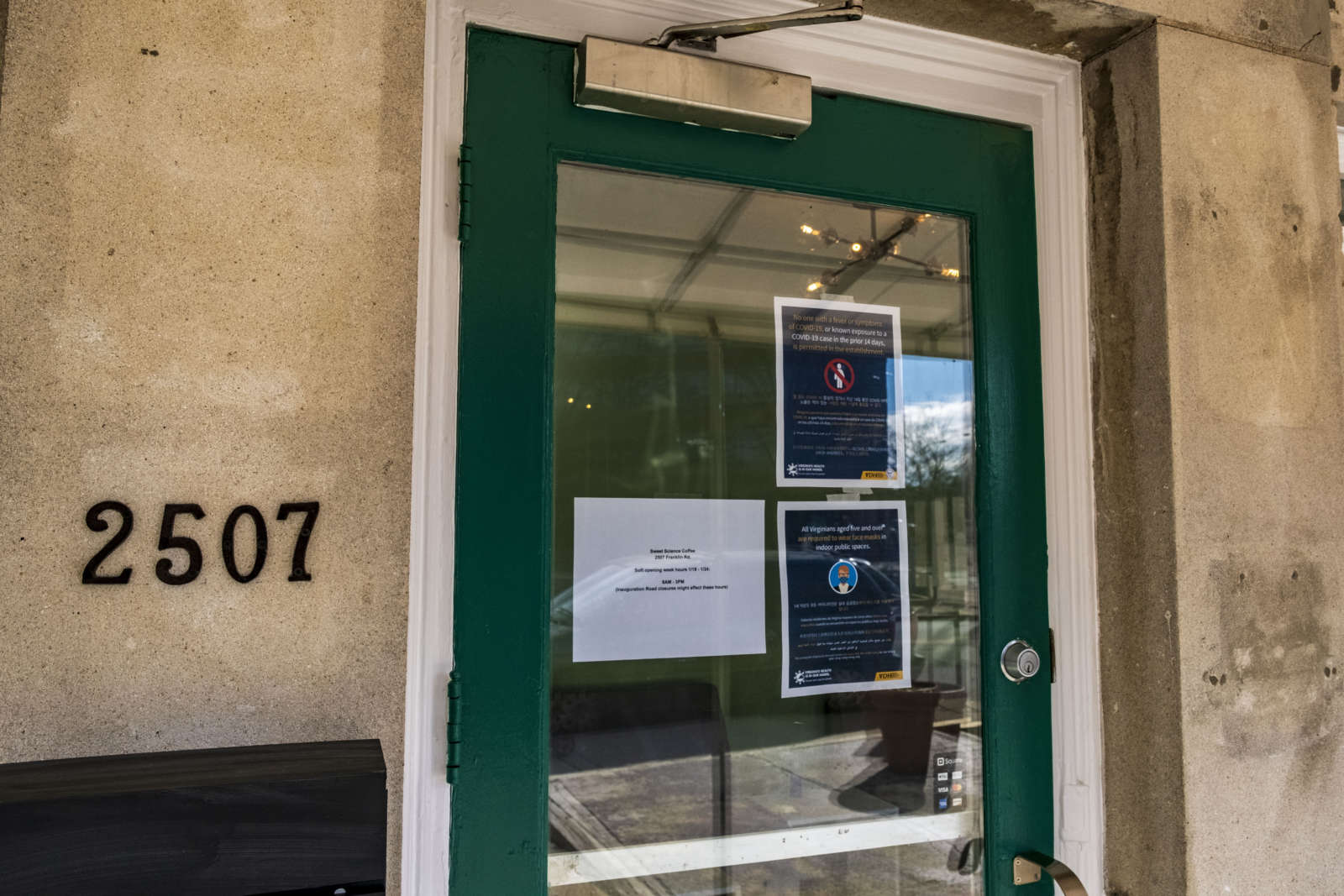
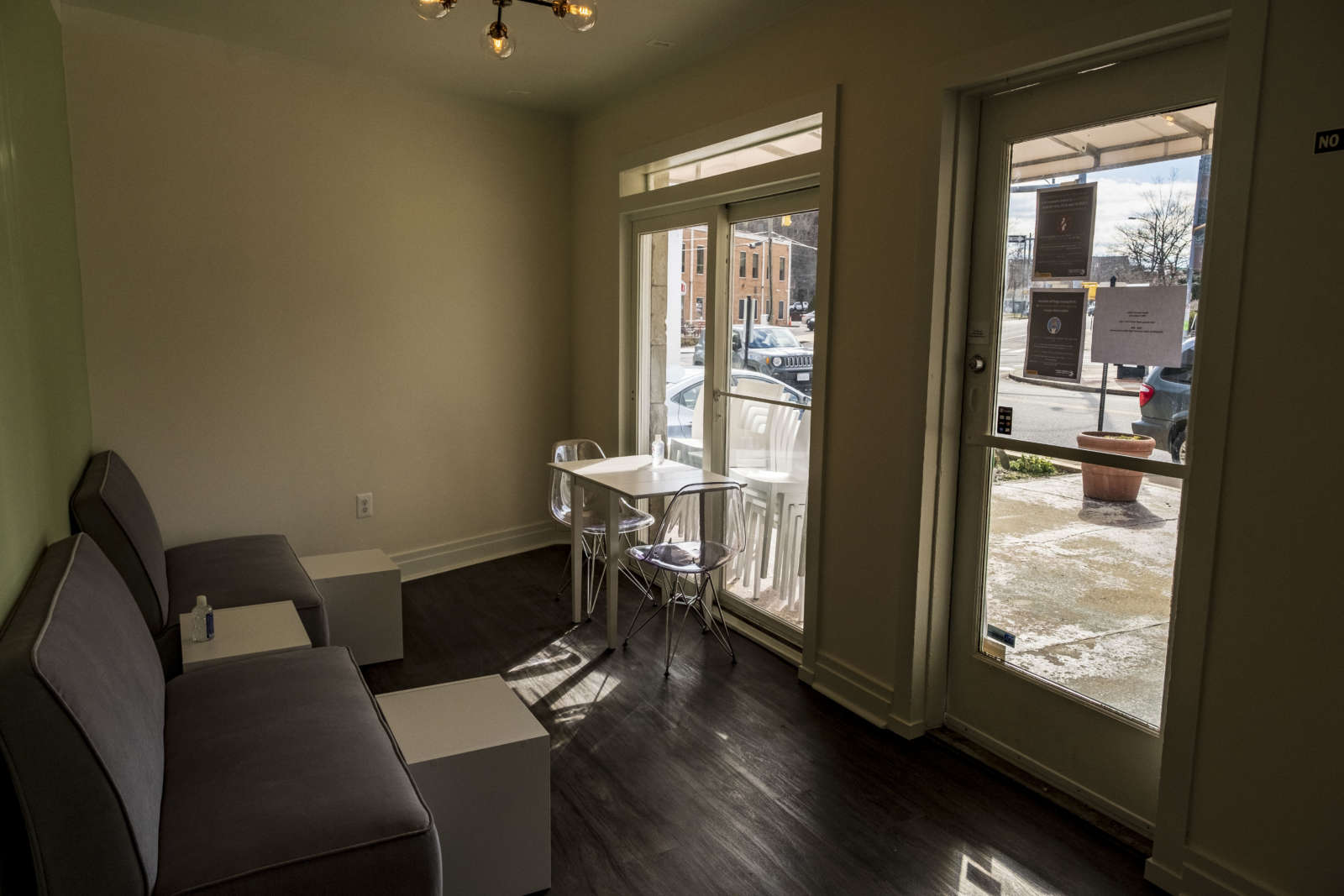
After 10 months of delays, D.C. coffee favorite Sweet Science Coffee opened its doors on Monday inside the former Java Shack building in Courthouse.

The soft opening this week will culminate in an open house on Saturday, from 10 a.m.-2 p.m., with coffee and pastry samples. The shop is open from 8 a.m.-p.m. this week, and this coming Monday will transition to its regular hours of 7 a.m.-4 p.m.

Sweet Science founder Sandra Wolter told ARLnow on Tuesday that she is ready to kindle in her customers a love of great coffee. Her philosophy can be taste-tested at 2507 Franklin Road, where she said the unpretentious space will make high-quality coffee feel approachable.

“We are doing the best we can to show a good variety of complex flavors while being open and welcoming,” she said.

In November 2019, Wolter announced her plans to move in after the community hub, owned by Commonwealth Joe, said it would close by Thanksgiving. But the road to opening was bumpier than Wolter anticipated.

The acclaimed coffee shop closed its basement location in Adams Morgan and moved to D.C.’s NoMa district in January 2020. Wolter planned to open in the Lyon Village neighborhood last March or April, but renovations and the coronavirus delayed the opening for 10 months.

First, the building needed new plumbing and electricity. By the time the unanticipated construction ended, summer was over, cases and restrictions were mounting and her NoMa location was struggling. She once more pushed off the opening.

“But hey, now we’re here,” she said.

Once Wolter receives her outdoor seating permit and a wine and beer license, she will extend her weekend hours so people can visit for coffee and a pastry, before slowly transitioning to a glass of wine and a snack — a nod to her European roots.

“I grew up like that,” said the Berlin native. “Over there, it’s so normal.”

The shop offers house drip coffee and espresso drinks as well as seasonal roasts. The beans are sustainably sourced, sometimes directly from farmers. A chef makes the pastries in-house and from scratch.

Still, Wolter is careful to avoid intimidating people into uncomfortably ordering “just a cup of coffee.”

“I don’t want people to walk in and feel like they need a code word to order,” she said. “If [a coffee] piques your interest, we’re more than happy to talk about it.”

She only wishes she can devote less time to surviving and more time to sharing flavors and menus with others.

“That would be really nice,” she said.


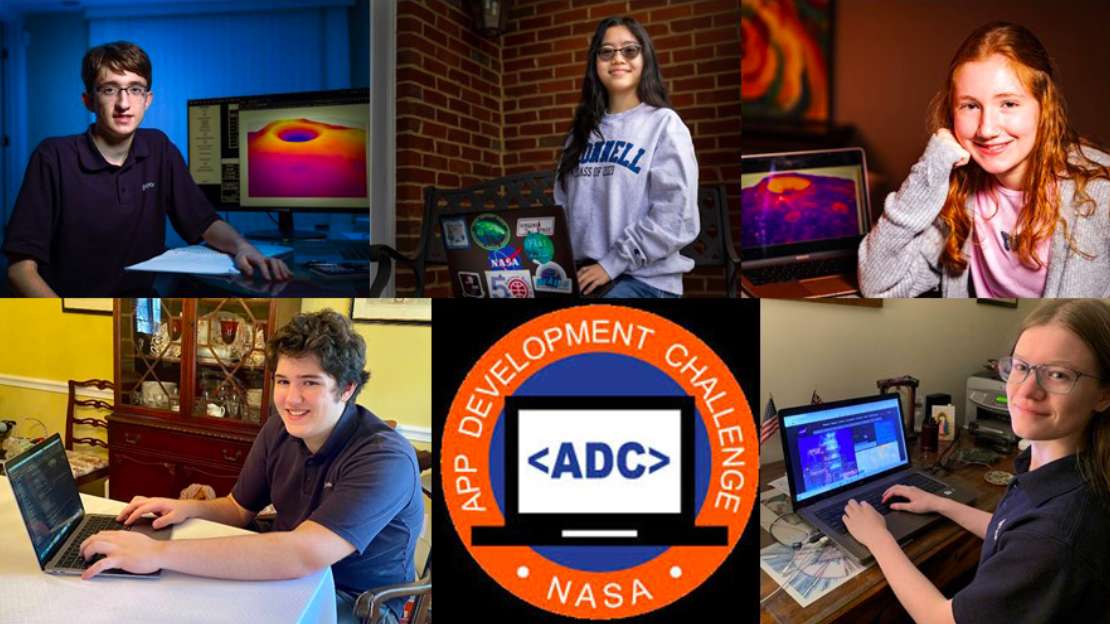
(Updated at 4 p.m.) In just seven weeks, engineering whizzes at Bishop O’Connell High School developed an app that NASA may draw from as it gears up to land the first American woman and next man on the Moon, in preparation for missions to Mars.

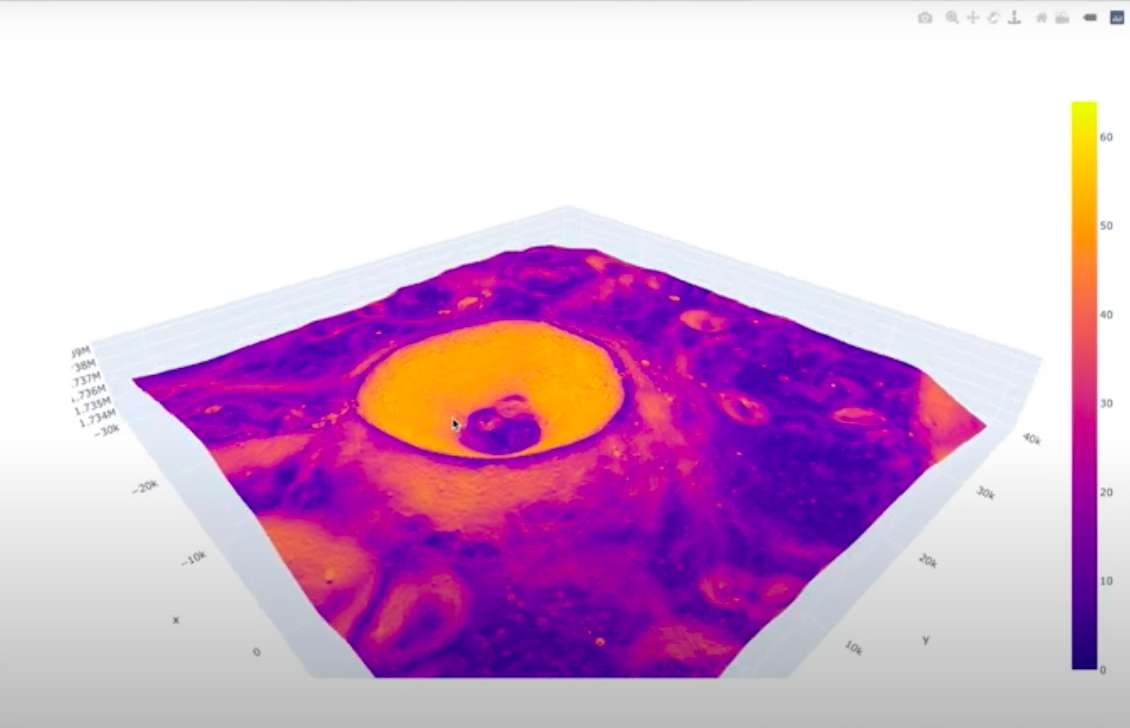
This week, NASA recognized them as one of top 10 teams in the 2020 NASA App Development Challenge, which occurred last fall. Students crunched lunar terrain data to create an app that visualizes the South Pole region of the Moon, and NASA will be using aspects of the 10 winning apps for its own program to help astronauts communicate on and navigate the Moon’s surface.

As members of a winning team, DJO students Alex Janninck ’22, Daniel Kippenhan ’22, Elaine Ly ’21 and Claire Toia ’23, as well as Sevginaz Gurleyici ’23, from the Madeira School in McLean will be able to participate in a NASA leadership event in February.

“It takes confidence, drive and a lot of perseverance,” Bishop O’Connell STEM teacher and team advisor Melissa Pore said. “This was incredible to see them achieve this.”

Students developed the app virtually, using “Code With Me” — the Google Docs of collaborative coding — and talked via Discord, a growing communications platform that is popular among gamers and teens. At the height of the challenge, Ly recalls taking notes in class with her right hand and coding with her left.

A NASA official said during a live-stream announcement that the students “displayed great team work by maximizing each team’s strengths in completing both the coding and non-coding aspects of the challenge.”

The odds were stacked against the students: The team barely met the minimum size to participate and the school went fully virtual (due to a COVID-19 outbreak) near the tail-end of the challenge. Team members also did not have app experience, and only Janninck and Ly could code proficiently — so they mentored other members in the coding language Python, Pore said.

“What adult groups would have persevered when they had to learn a new code and train others?” she said.

NASA wants to use this technology “right now,” said Pore, adding that the app can visualize any planet and is suitable for color-blind people.

“Good for NASA to use our smartest levels of students to figure out tricks they wouldn’t have thought of,” she said. “You taught the adults some lessons.”

Ly, who wrote about the news for the school, said she “wouldn’t be half as interested in engineering if it weren’t for [Pore].”

Always learning, Pore became a licensed amateur radio operator to build satellites with her students, and is working with the International Space Station so her students can learn about and access opportunities in aerospace engineering.

A senior headed to George Washington University, Ly nominated Janninck to take charge next year.

“He’s a really good leader and programmer,” she said.

As soon as Janninck finds another interesting challenge, he is willing to try it.

“We do need to get rest from coding and working really hard,” he said.

Especially since the next challenge could be a 24-hour competition to develop a floating settlement to flee to if a meteor strikes Earth.

“No sleep — it sounds wonderful,” Janninck said.


At the start of the pandemic, Arlington Kabob co-owner Susan Clementi spent 20 hours a day trying to coronavirus-proof her restaurant. She did not have time, or the financial knowledge, to navigate the Paycheck Protection Program.

When she tried to hire legal help, the application fees amounted to $5,000. Clementi realized she had to do it herself.

Arlington Kabob was denied funding, but what frustrated Clementi the most was seeing restaurants that had a dozen locations receive loans.

“I felt very, very small,” she said.

Her experience during the first round of PPP played out across the nation.

The Small Business Administration and the banks issuing the loans were criticized for awarding funds first to bigger companies while overlooking smaller and minority-owned businesses. For round two, the SBA opened applications for small-scale, local lenders this week, and is expanding access to all eligible lenders next Tuesday.

ARLnow spoke with a handful of restaurant owners who are waiting for the green light to apply. All of them said that if they get relief, their first order of business will be paying staff.

“Sometimes I have to go into personal money to pay my employees,” said Vince Johnson, the owner of Mexican street corn stand Shuck Shack in the Fashion Centre at Pentagon City mall. “I didn’t sign up for that.”

Sloppy Mama’s BBQ owner Joe Neuman said he would use the funds to cover wages and pay bills that he may not be able to afford in three weeks.

“We’re just trying to minimize losses, knowing that another round of PPP would be coming through at some point,” he said.

Those who applied last year struggled to navigate the application forms and process. After Neuman’s wife spent 14 hours on it, their accountant took over and submitted it at 11 p.m. the night before funds ran out, the BBQ joint’s owner said.

“We got real lucky,” he said.

Jessica Yanez is in a different boat. She is preparing for the grand opening of Los Chamacos along Columbia Pike. For her, the PPP loan would help cover wages until the county issues the last permit.

“We’re trying to open as soon as we can,” Yanez said. “We have people working for us, that’s why [Arlington Economic Development] told me about the PPP program.”

Some restaurant owners benefited from the significant office population, and remote work has tanked their catering revenues. Clementi said her Lee Highway location is supporting her November 2019 expansion into Courthouse, which thrived briefly on office lunches. Meanwhile, Neuman said his restaurant’s dinner sales have increased and sustain the near-total hits to his lunch-friendly Ballston Quarter location and catering outfit.

Some owners are taking on risks in a risky time. Yanez said she and her husband, Benedicto, had an opportunity and “had to take it.”

One year after Johnson opened, he acquired a food truck to serve people who are out and about. He is still figuring out how to run a food truck, but so far, the business is not what he thought.

“We’re seeing more people in the malls. People are not really paying attention to COVID-19 anymore, sad as it is,” he said, adding that this will prolong economic instability for eateries.

Although they face many hardships, these Arlington restaurateurs are dedicated to their communities and their roots.

“We decided to open this restaurant because we know the neighborhood,” Yanez said. “It’s a good neighborhood.”

Johnson is trudging through an application and inspection process to bring his truck to military installations.

“Being a vet myself, it was part of my plan putting this together,” he said.

Clementi thanked her customers for their support and has been providing discounts and free meals to first responders.

“We have to make everyone feel stronger by being there for each other,” she said.


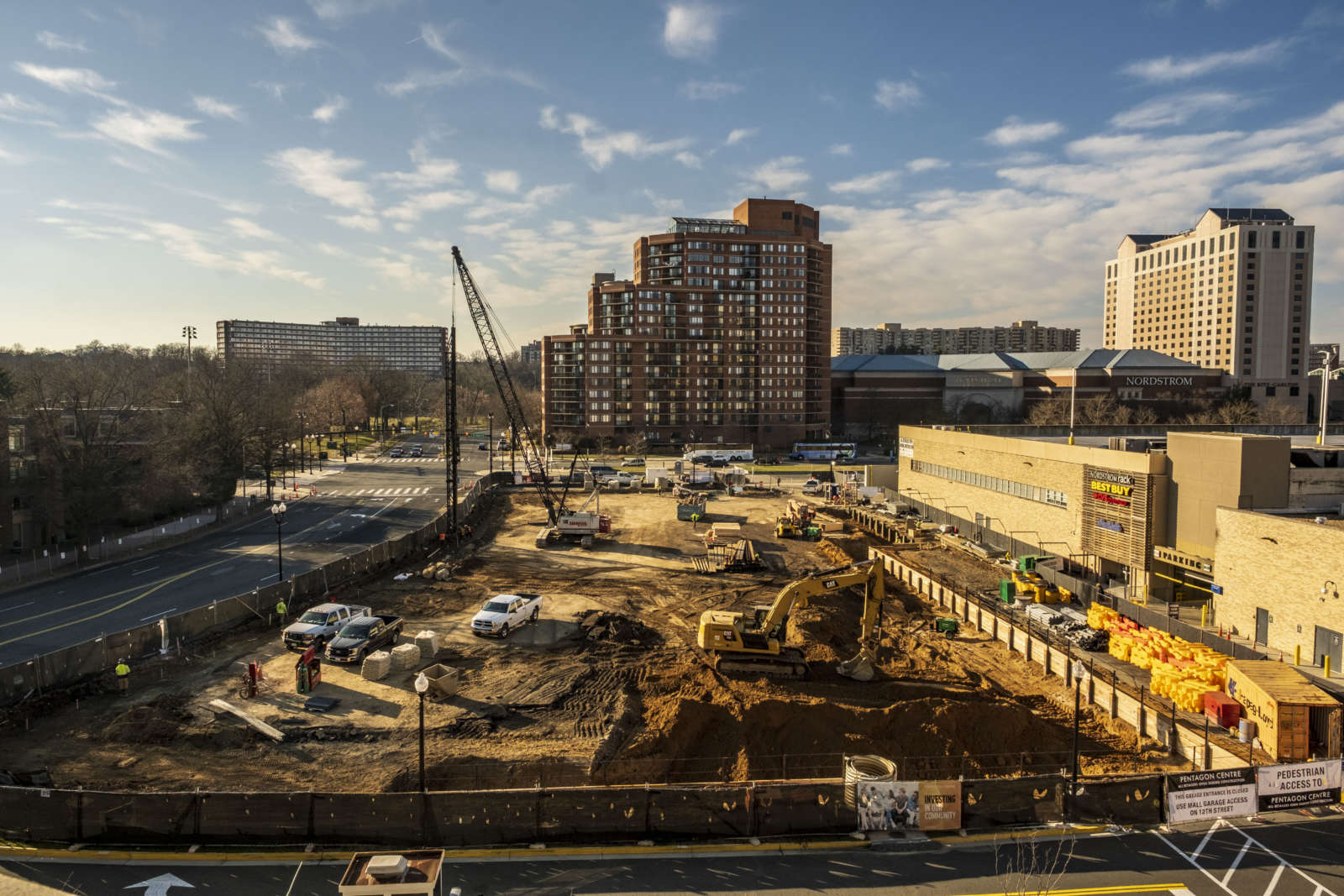
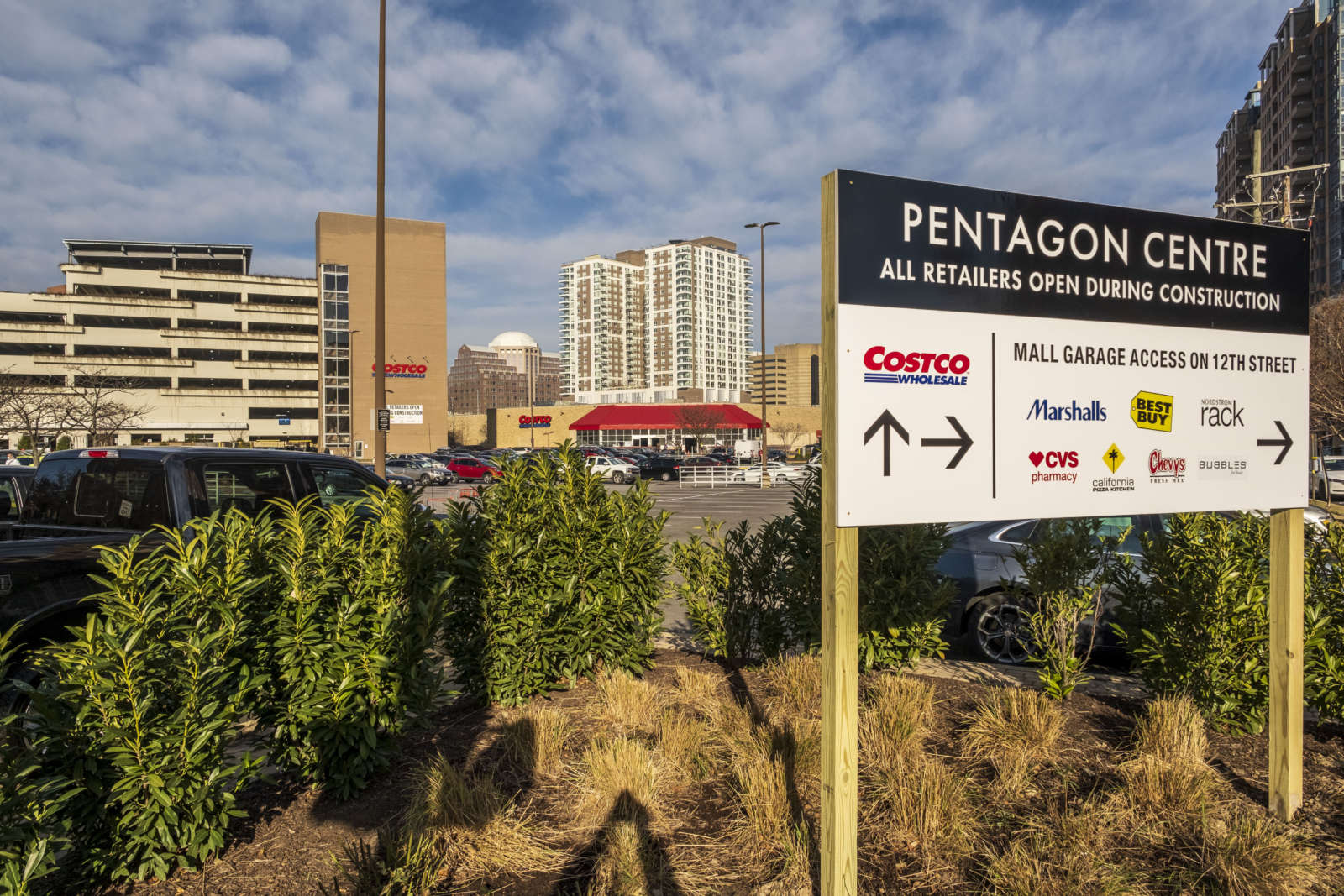
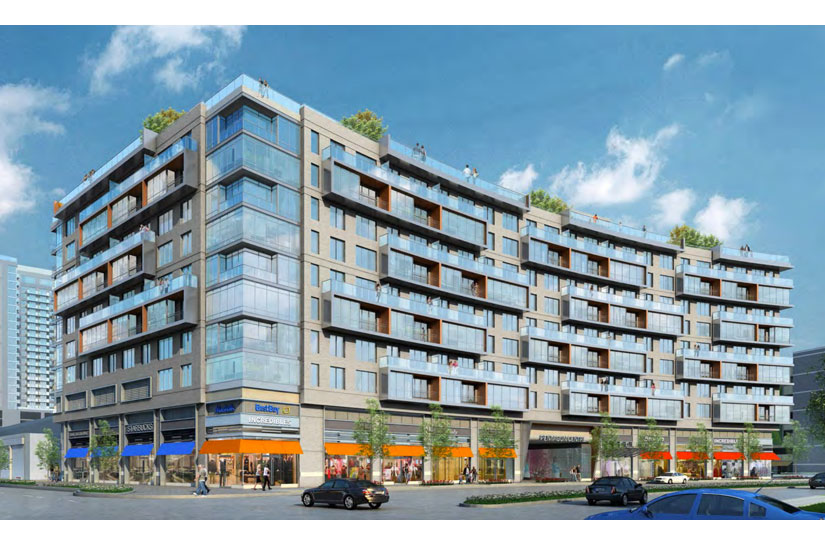
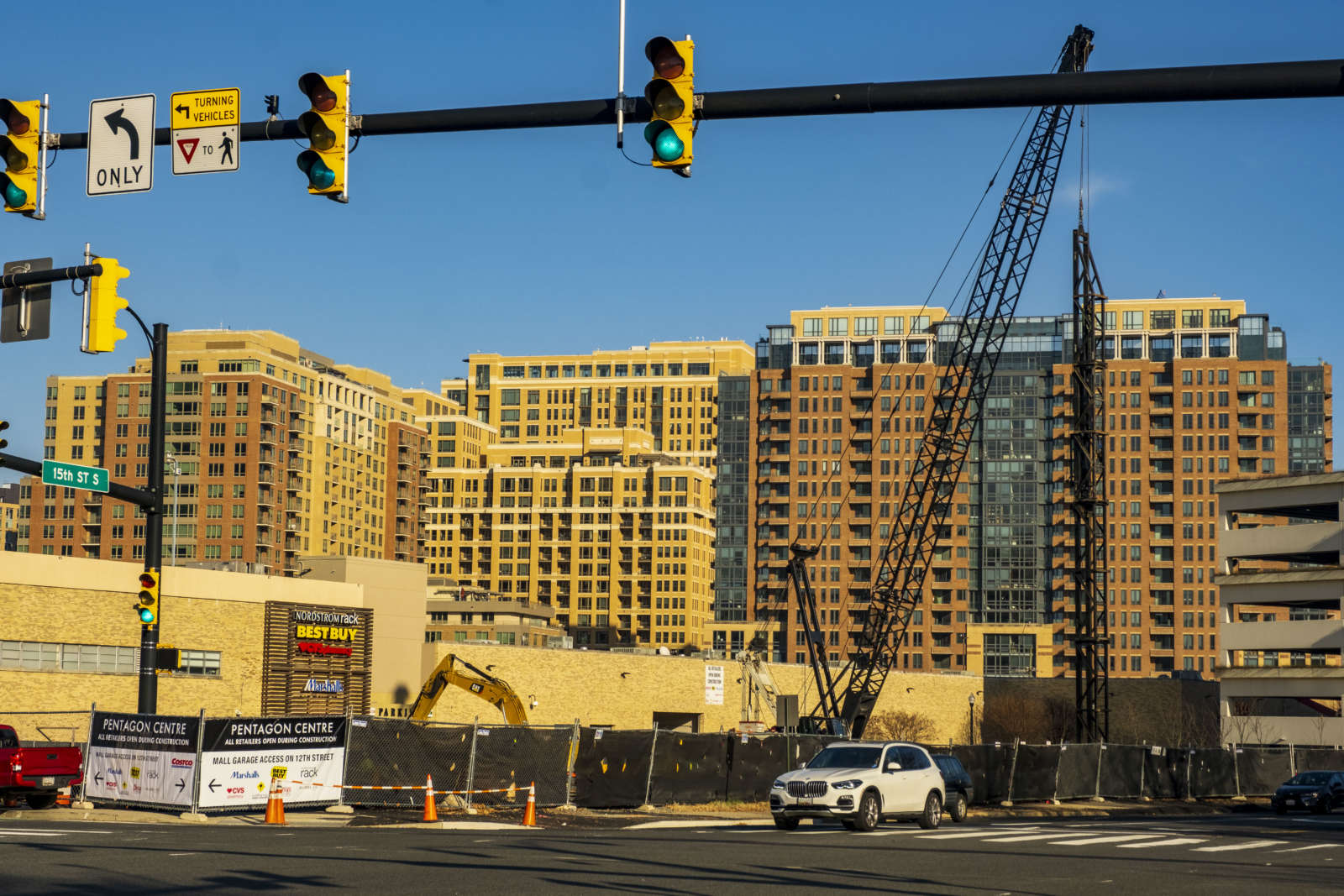
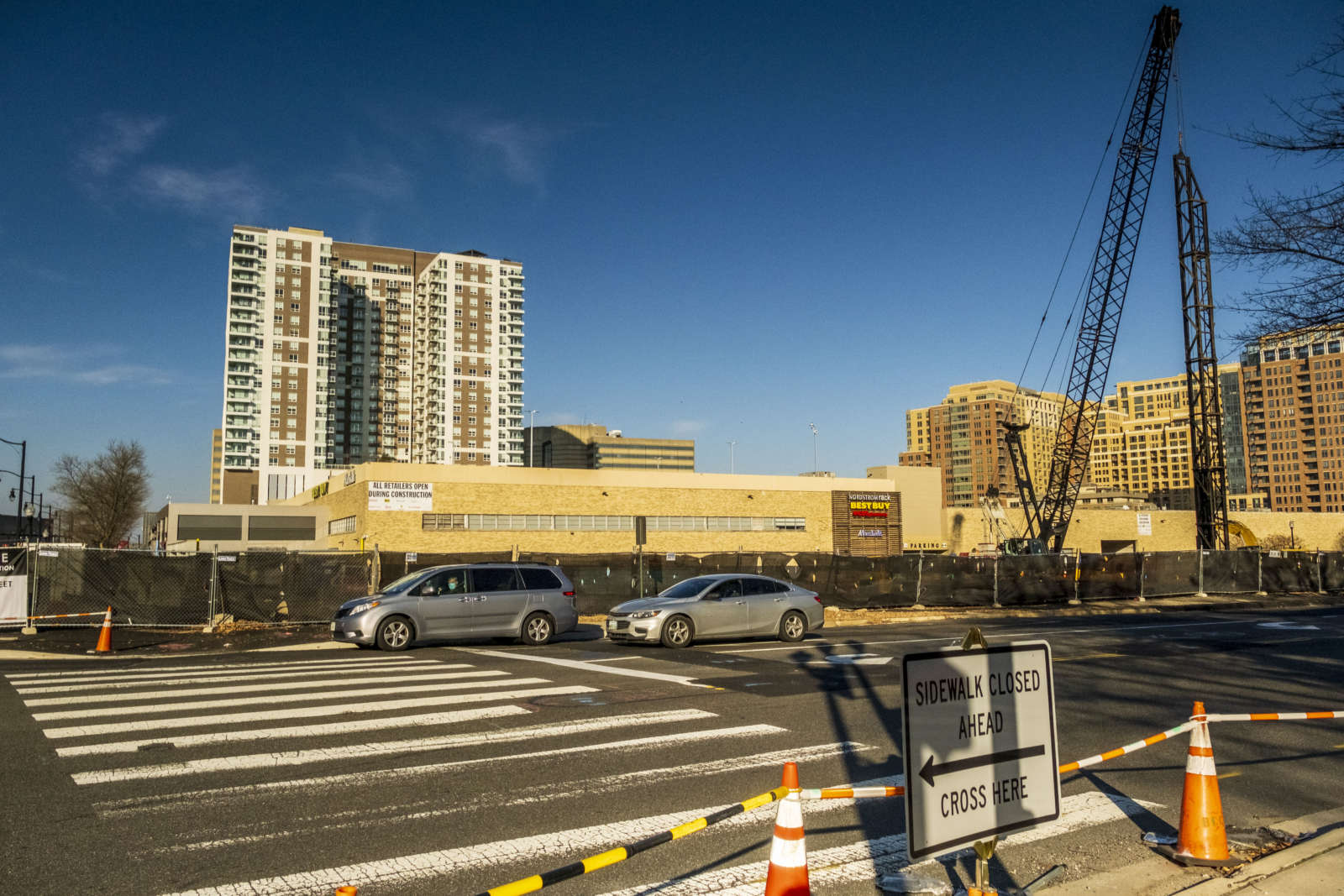
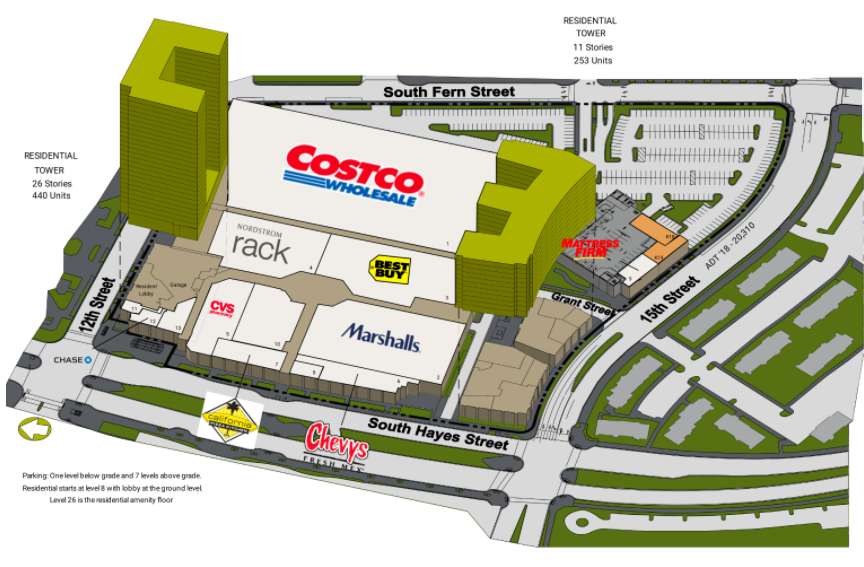
The second of two residential towers at Pentagon Centre, in Pentagon City, is taking shape at 15th Street S. and S. Hayes Street.

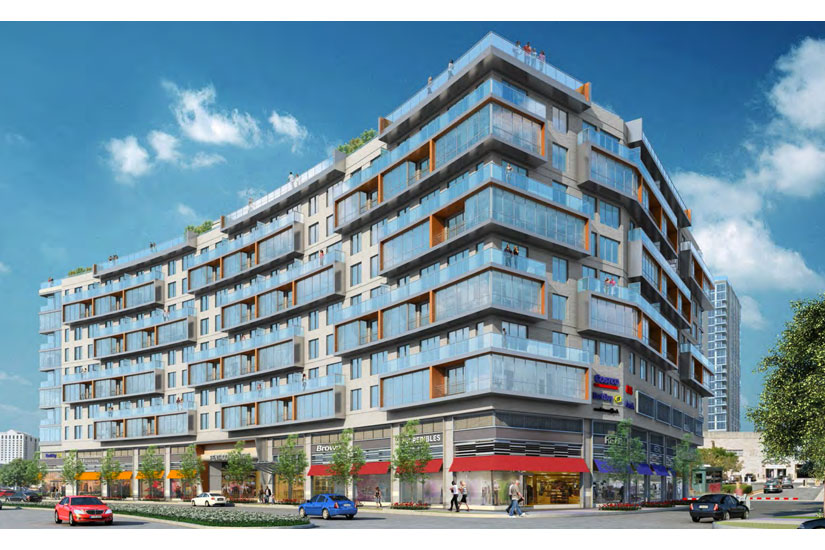
This past spring, work began on The Milton, an 11-story building with 253 residential units and 15,541 square feet of ground-floor retail. It follows on the heels of a 26-story, 440-unit residential tower with 7,000 square feet of ground-floor retail called The Witmer (710 12th Street S.), which opened in July 2019.

The Milton is set to be completed in 2023, said Geoffrey Glazer, the Senior Vice President for National Development of Kimco Realty, owner of the shopping center.

The County Board approved the buildings in 2015 as part of Kimco’s three-phase, 30-year development of Pentagon Centre. Phase one began with a parking garage near Costco. The project also includes a 9,000-square foot open space, according to a staff report.

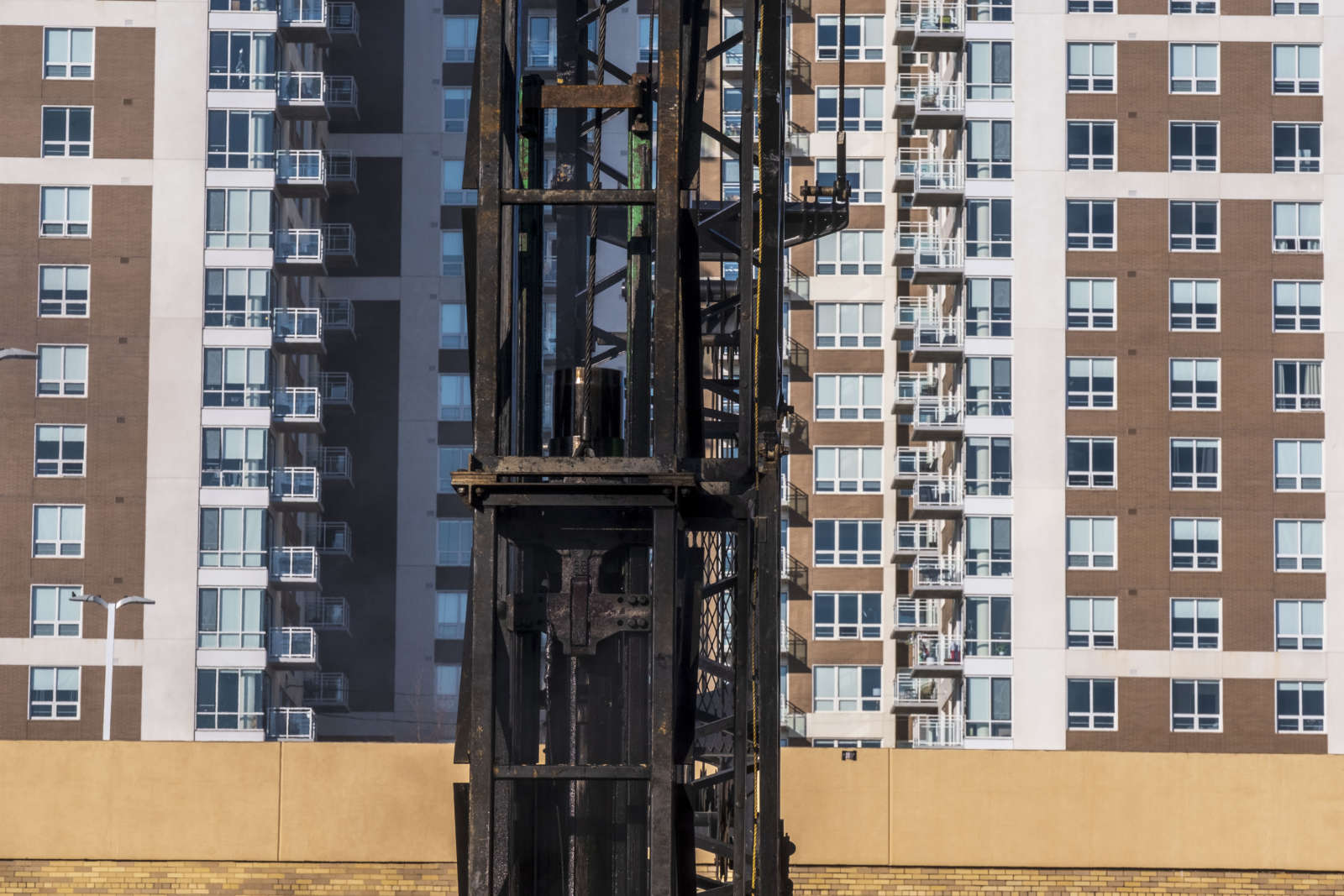
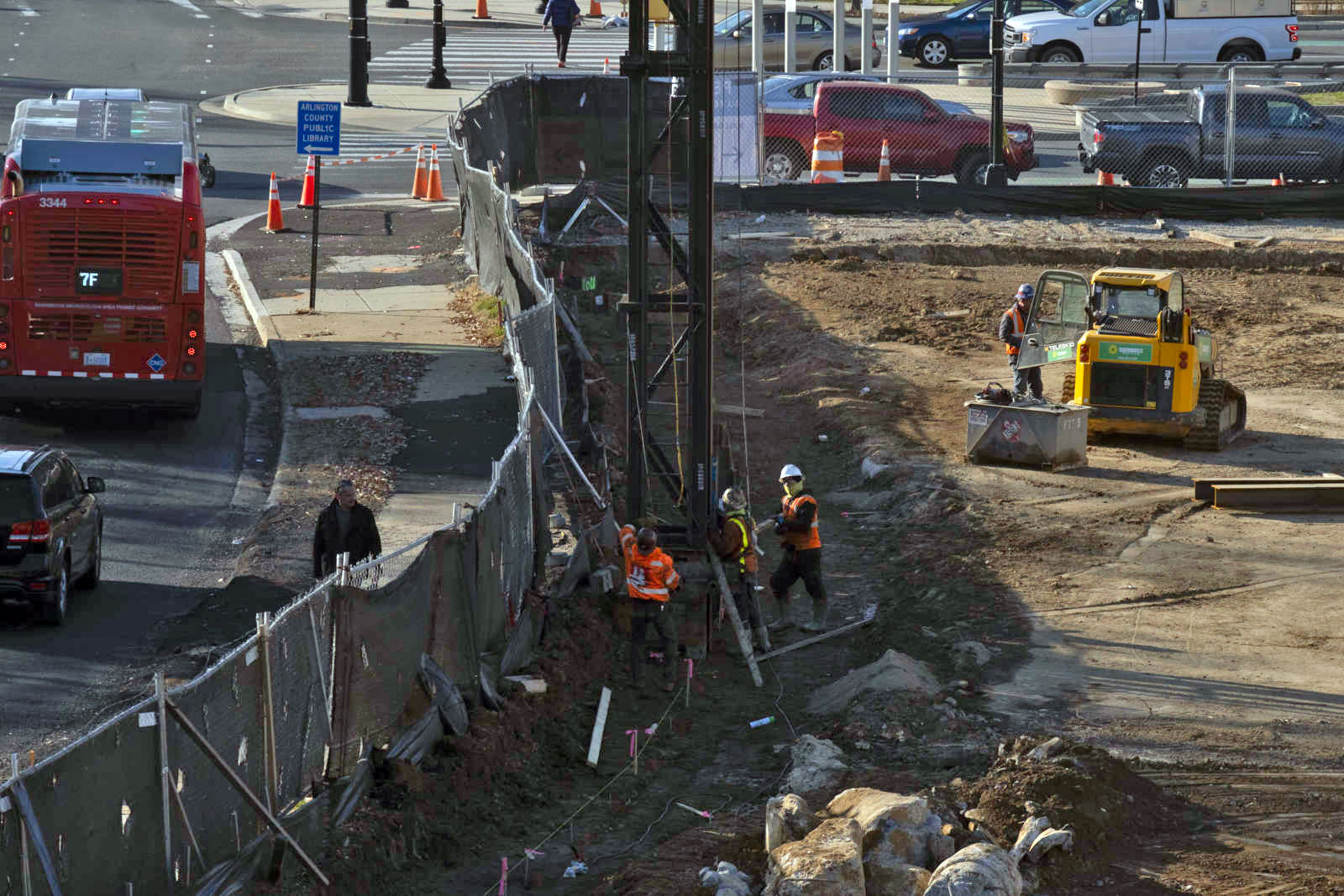
Construction crews worked from spring to fall relocating utility lines for the new building, and the project is still on-schedule, Glazer said. Right now, they are doing preliminary foundation work and will eventually start digging.

“We’re very close to where we were [supposed to be] when we started that project,” he said. “We worked through most of the pandemic, and construction on the site work all kept moving forward.”

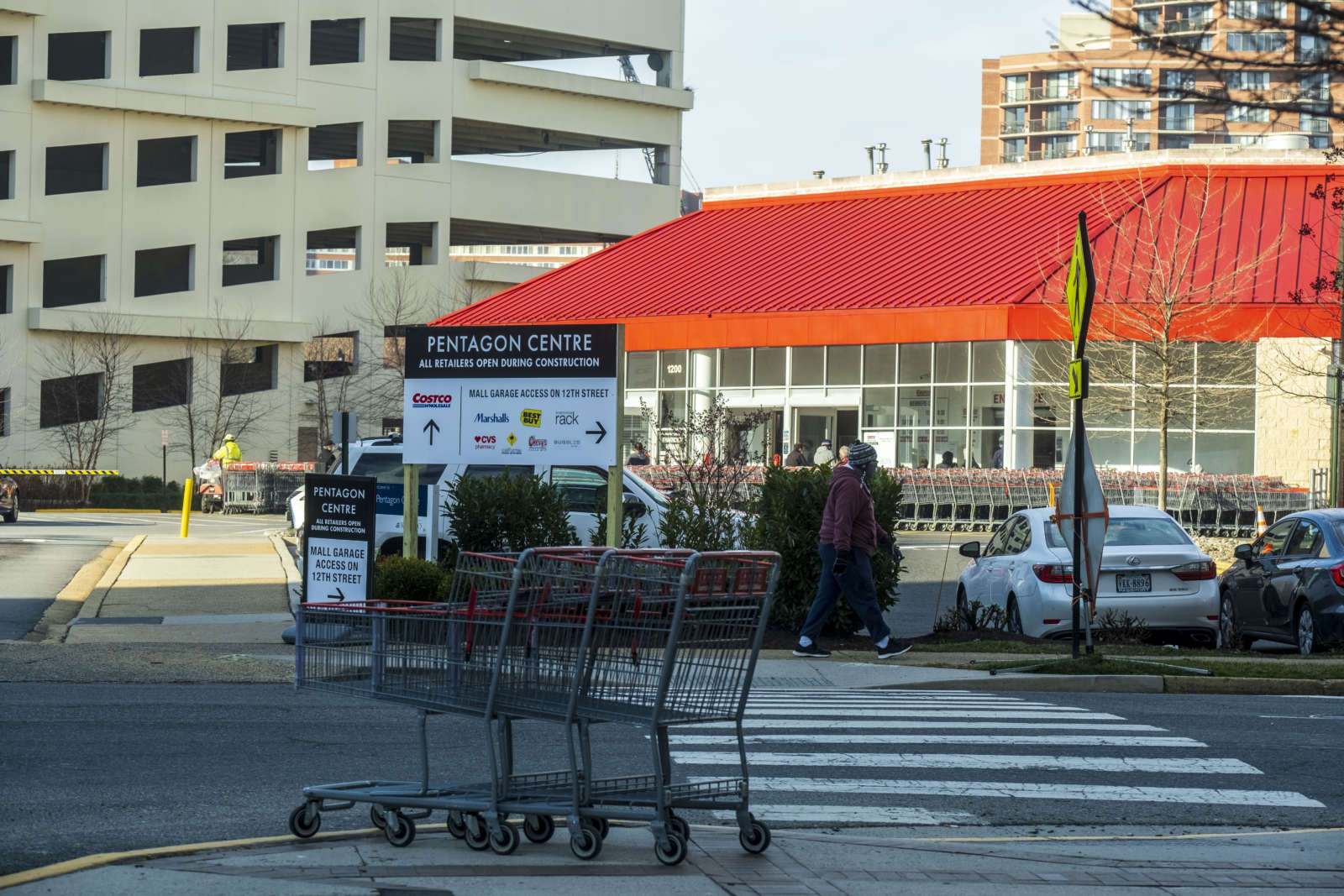
He does not anticipate the construction causing any disruptions to shopping at Costco, Nordstrom Rack or Marshalls.

“Access to our existing parking structures and fields will all be open and operational,” he said. “There will be additional signage for people to have clarity for how to move around.”

In later phases, scheduled out about two decades, leases will be up for the big-box stores, making way for public open space and new development.

“It’s out there,” Glazer said. “Everybody’s leases have lots more term.”

Meanwhile, Chick-fil-A and a Chase Bank branch are moving into the ground floor of The Witmer, joining Arlington’s second outpost of Wiseguy Pizza. The local D.C. pizza chain opened the Pentagon location in June.

Ultimately, as currently configured, the site will have 346,000 square feet of retail, 705,000 square feet of office space and a 200-room hotel. With the residential buildings, that brings the total project size to nearly 2 million square feet, according to Kimco.


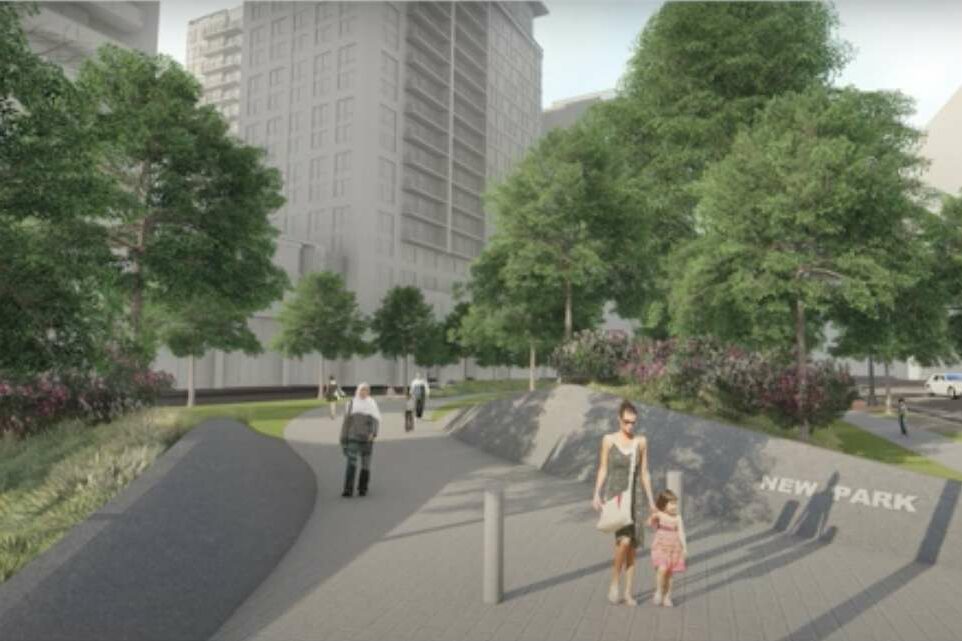
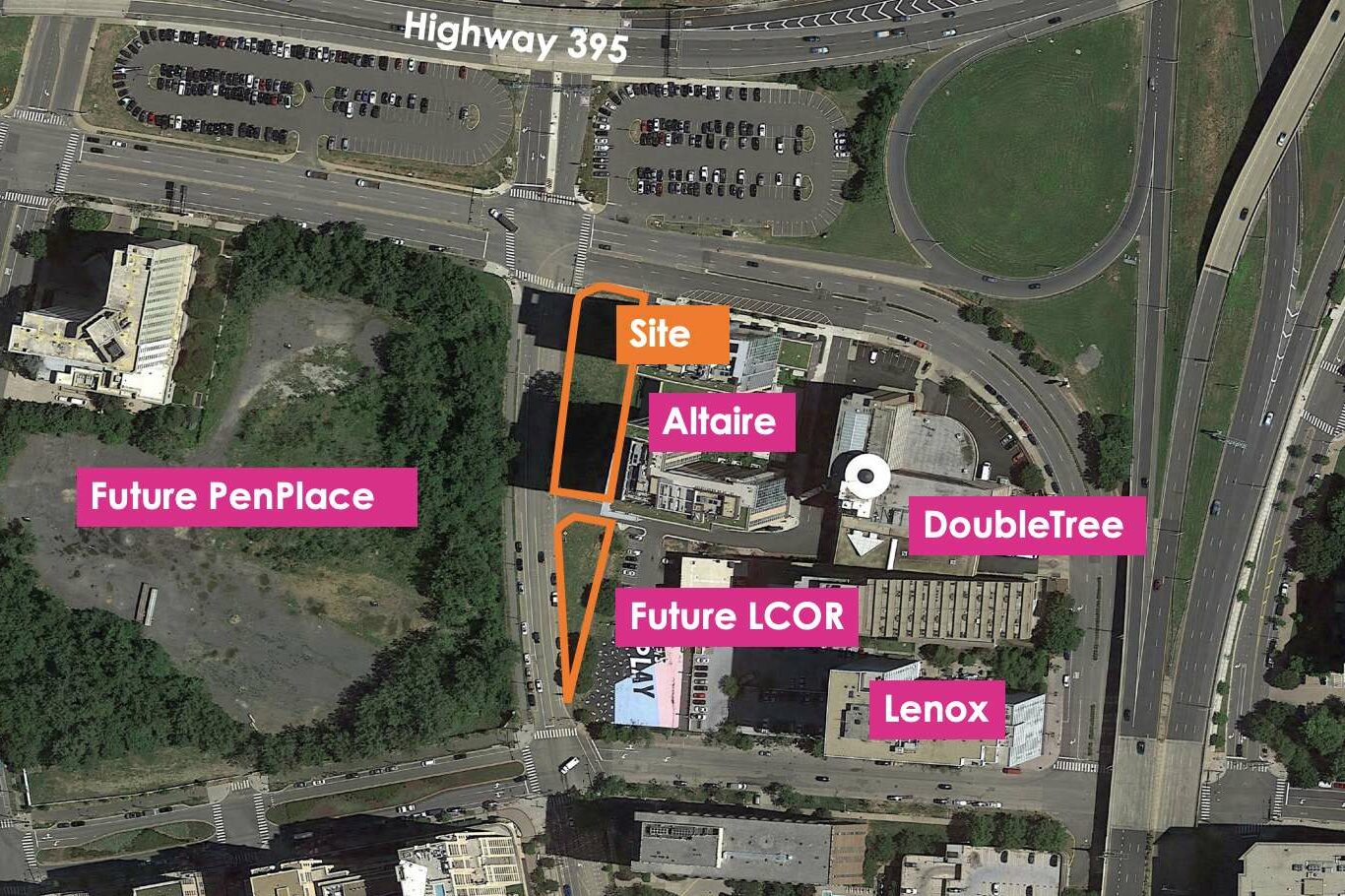
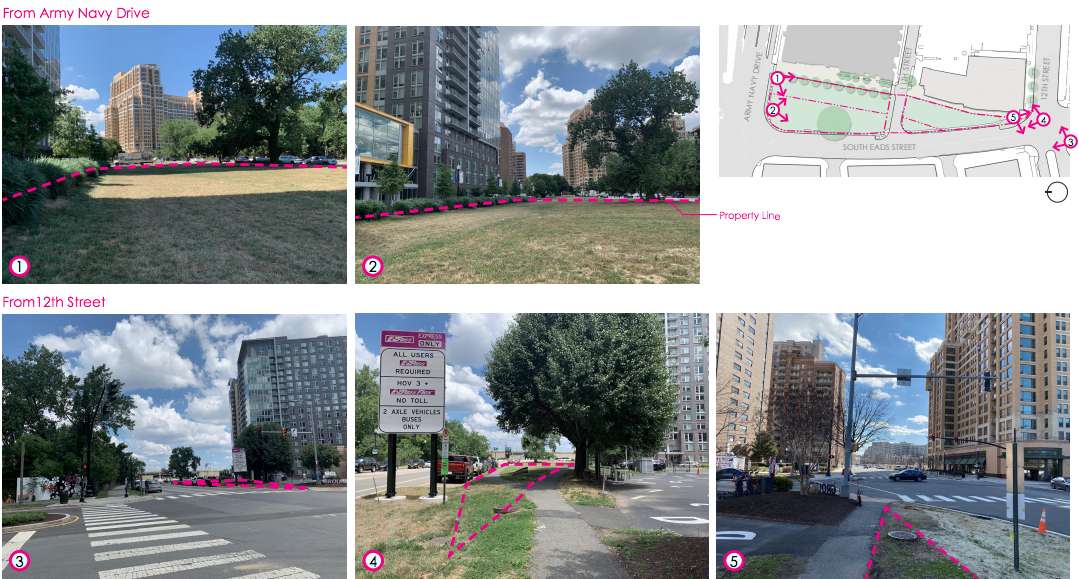
Architects have developed three different visions for the new park at S. Eads Street and Army Navy Drive, an open space and proposed park in Crystal City.

Through Friday, Arlington County is once more accepting feedback on the space, which borders Pentagon City and is also known as the “Teardrop Parcel.” A third online engagement period will occur in February.

“We’ve received an incredible number of questionnaires from the community, about 160 in fact,” said Mark Gionet, the Principal at LSG Landscape Architecture, during a presentation in December.

The new park is located by the Verizon telecommunications facility site (400 11th Street S.) and the construction site for a new, 19-story residential building. It’s adjacent to the recently-built Altaire apartments and across the street from the second phase of Amazon’s permanent HQ2. The park project, with a $2.6 million budget, is funded by set-asides from the Altaire and the new residential building.

Most respondents to an earlier feedback round said they live nearby and use the park to pass through the area. They would like a place “where they can feel connected to nature,” Gionet said.

Many respondents said they would like pop-up programming, benches and attractive design features. Popular name ideas include Pentagon Park, Teardrop Park, Canal Park and National Landing Park.

“There is an overwhelming preference that this park site remain a natural refuge in character,” Gionet said, adding that respondents support preserving the mature cottonwood tree on the site.

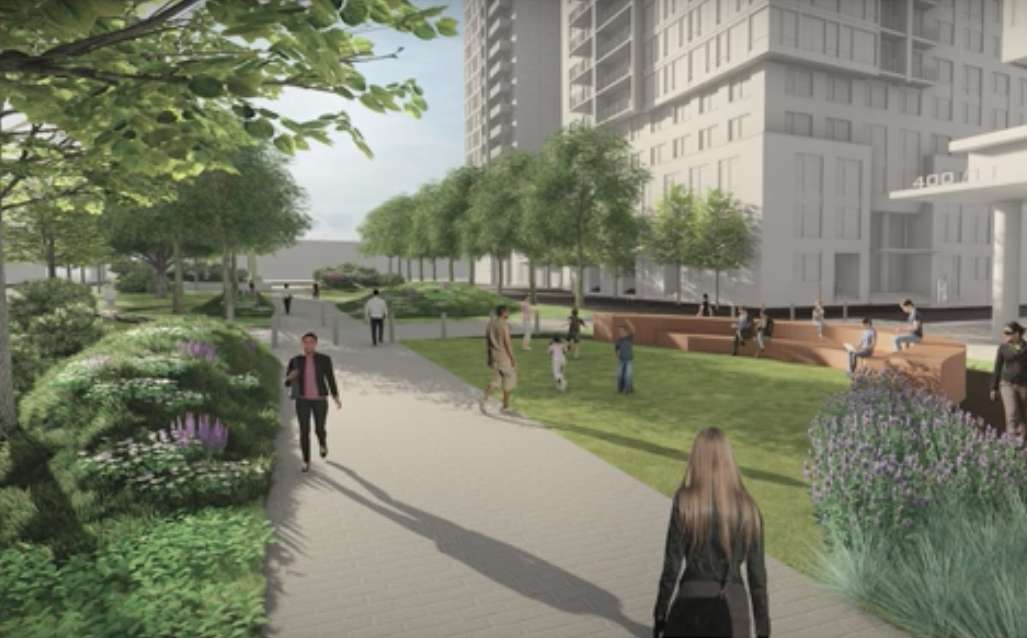
He proposed three ideas. The first, which he called “The Meander,” is an “immersive walking experience” with a curving paved path bordered by greenery and habitats for pollinators.

The second, called “Canal Walk,” traces the historic route of the old S. Eads Street and “grounds the new park in its historical context,” he said. The park would have amenities for working out and socializing.

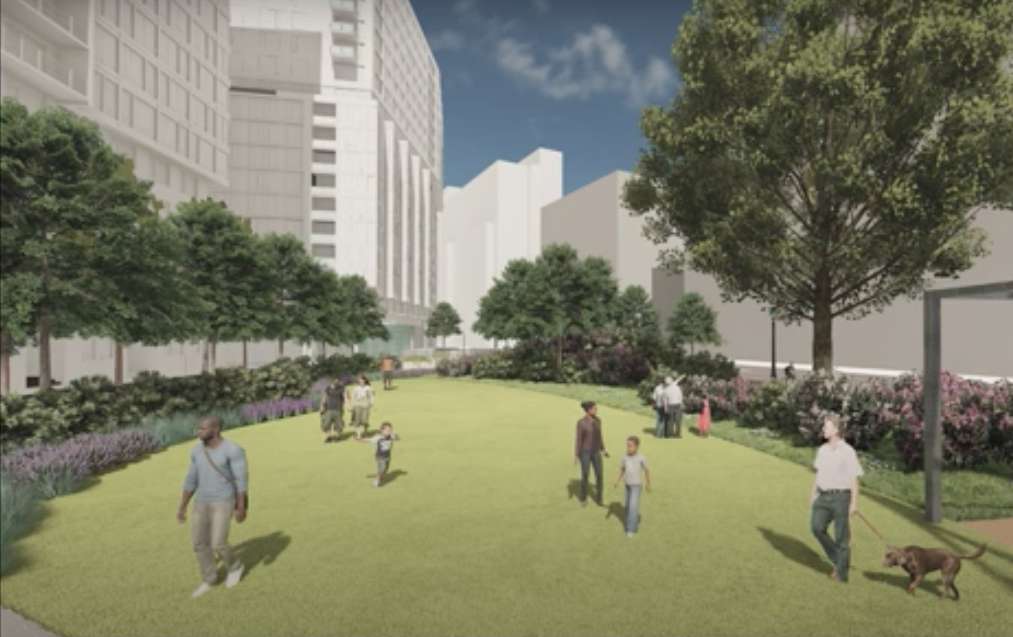
His third concept, “Central Hub,” focuses on passive green spaces and dog amenities, including a dog run.

After the third online engagement period, the project is expected to be reviewed by County commissions in March and go before the County Board for approval in April.


While VDOT considers lowering a section of Route 1 to a surface boulevard, a group of civic associations, known as Livability 22202, recommends going below ground instead.

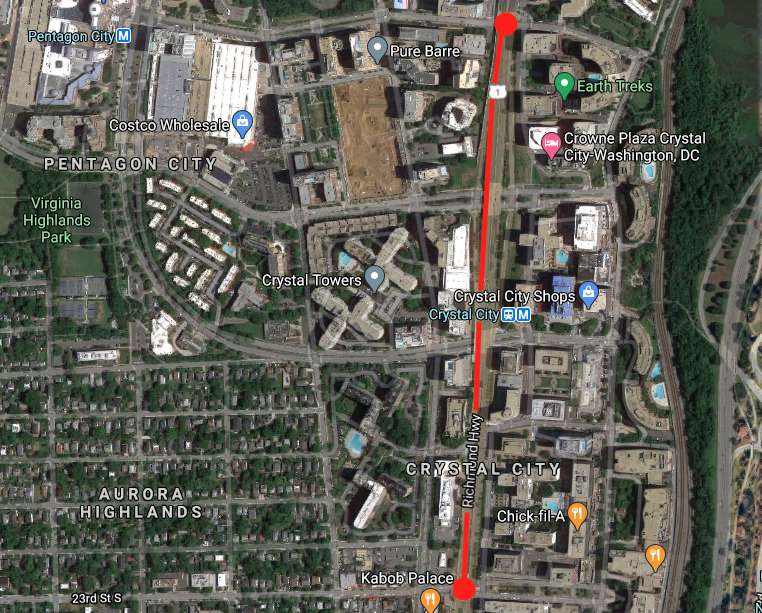
As development activity in Crystal City and Pentagon City continues, VDOT and Arlington County are looking for ways to improve the pedestrian and transit experience along Route 1, also known as Richmond Highway. The study directly responds to the increased demand for transportation resulting from the construction of Amazon’s HQ2.

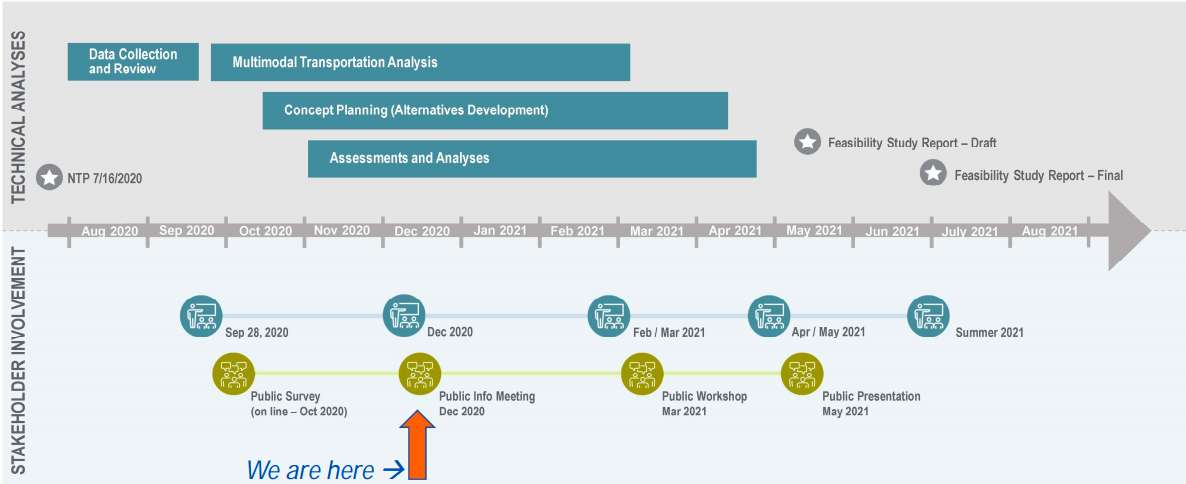
VDOT’s study will examine the feasibility of an at-grade boulevard, with the current overpasses removed, comparing it to the current elevated route and the changes prescribed in the Crystal City Sector Plan, according to a presentation from December.

Following online public engagement in the fall and a virtual public meeting, Livability 22202, which represents the Arlington Ridge, Aurora Highlands and Crystal City civic associations, published a series of alternatives to an at-grade boulevard — including taking part of Route 1 below-grade.

The group suggests going underground for at least the 18th Street S. and 23rd Street S. intersections, creating patterns similar to those in Washington, D.C., where through-traffic is below-grade and local traffic uses at-grade streets — like Connecticut Avenue NW through Dupont Circle.

For a more extensive below-grade roadway, the group suggests trenched express routes from 23rd Street S. to 15th Street S., flanked by at-grade roads. The underground portion would eventually transition into the 12th Street overpass.
“This concept would solve side-street traffic issues, create far-safer pedestrian crossings, create a brand-new open space in what is now wasteland, and open up myriad redevelopment opportunities,” the group said in its response. An even more extensive “big dig” is also proposed, though the group acknowledges is may be “infeasible.”

Dropping Route 1 to grade and creating more signalized intersections would make pedestrians and cyclists less safe unless significant measures are put in, Liveability 22202 predicted. They suggested lower speeds, bike tunnels, signalized right turns and pedestrian-led crossings.
The group also envisions an at-grade boulevard as a “linear park” with retail, wide sidewalks and an abundance of trees.
If VDOT keeps Route 1 elevated, Livability urged VDOT to consider something like a viaduct. Such a bridge would allow the space below to be activated with open spaces or retail.

In a letter, the presidents of the three civic association said “a study of Route 1 in this area is long overdue,” but until VDOT conducts a broad stakeholder review of multiple alternatives, “we endorse the Crystal City Sector Plan as the best alternative.”

The 2010 sector plan keeps the grade separations at 12th, 15th and 18th streets, reconfigures the 15th Street intersection and takes traffic below-grade at 26th Street S., under a newly-created National Circle, as pictured below.


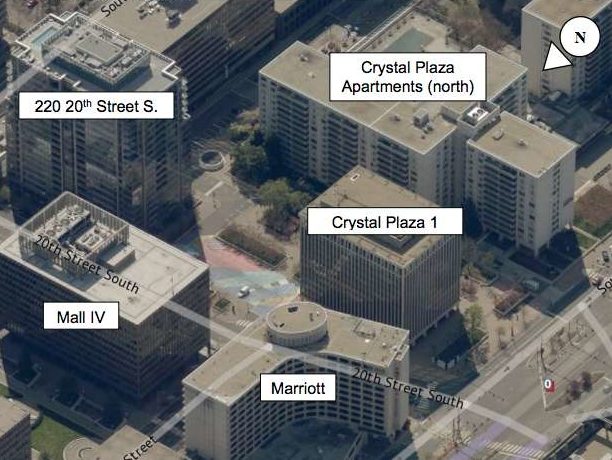
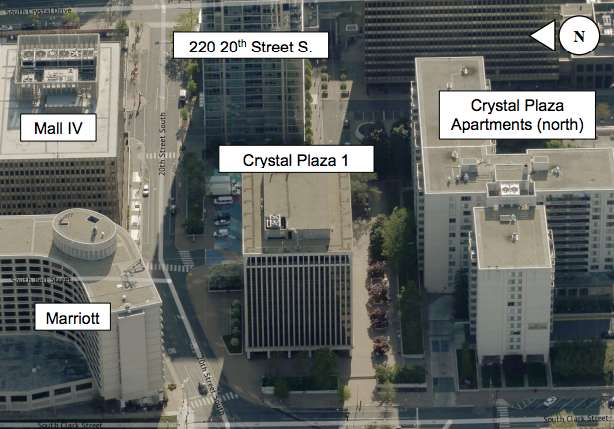
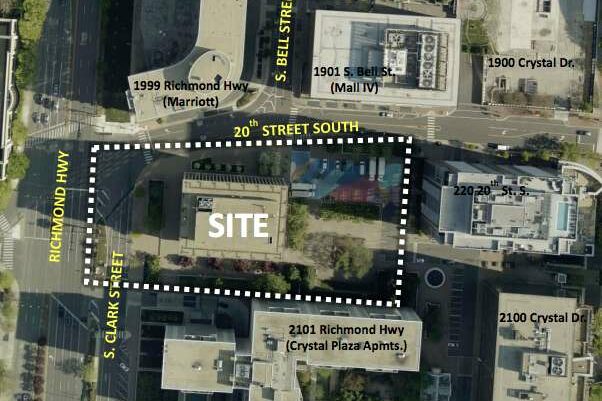
JBG Smith is proposing to replace the Crystal Plaza One office building with two multifamily towers in Crystal City.

As part of the project, the Bethesda-based developer will be shifting S. Clark Street to the east to create a new S. Clark-Bell Street and “create greater connectivity” in the area, according to a recent JBG Smith presentation.

After a public comment period closed yesterday (Monday), the project is in the home stretch, with only a few meetings to go before an expected review by the County Board later this year.

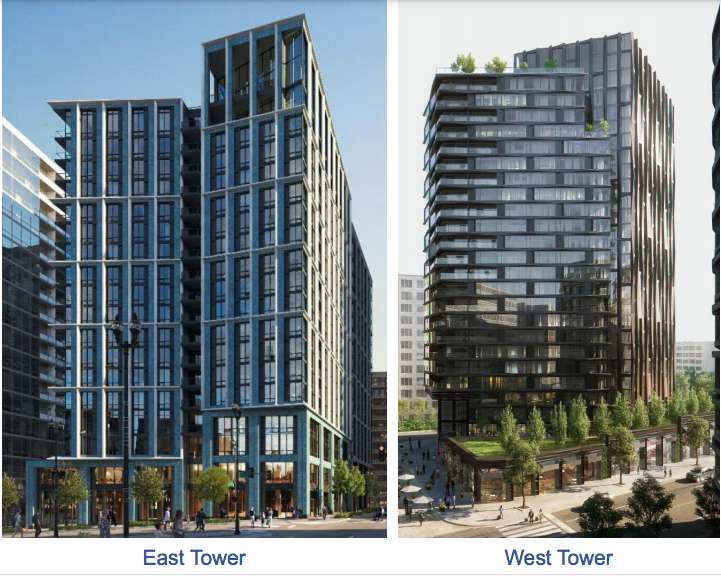
JBG Smith proposes 786 units across two LEED Silver-certified buildings bisected by a new S. Clark-Bell Street. A pedestrian pathway would form the eastern border of the East tower.

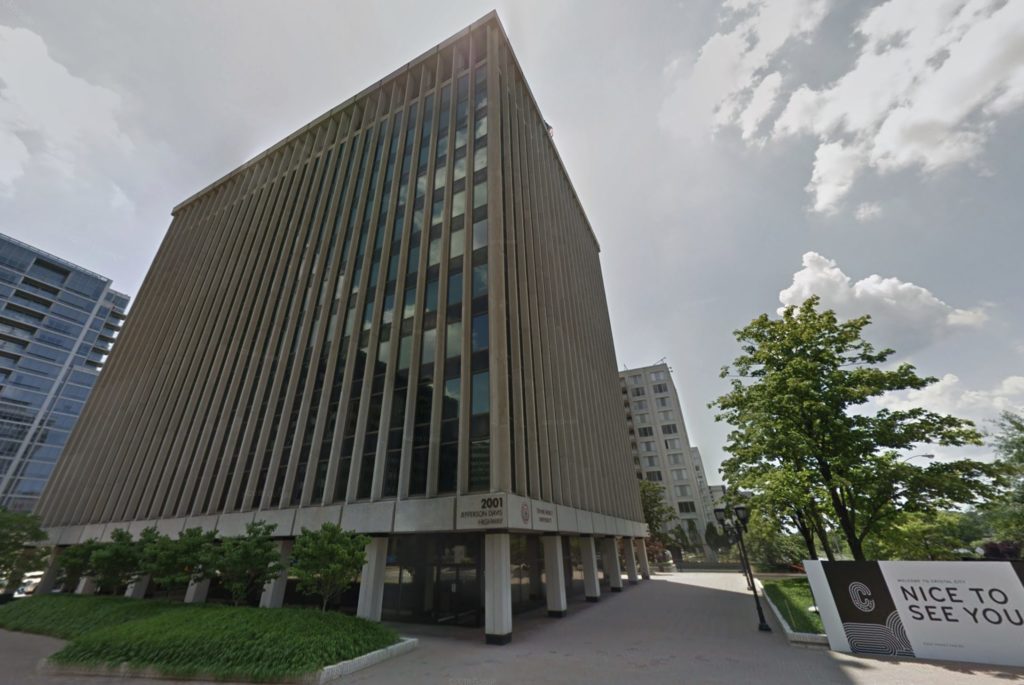
The towers would replace an aging office building at 2001 Richmond Highway, along with a surface parking lot previously used for some public events.

The West tower (2000 S. Bell St.) has the following specifications:

  • 250 feet tall
  • 365 units
  • 18,510 square feet of ground-floor retail
  • 180 parking spaces

The East tower (2001 S. Bell St.) has these specifications:

  • 200 feet tall
  • 421 units
  • 11,060 square feet of ground-floor retail
  • 167 parking spaces

The new S. Clark-Bell Street would shift S. Clark Street east and, south of the buildings, tie into the existing S. Clark Street, according to a county report. The northern end of the road would line up with S. Bell Street north of 20th Street S.

In response to the proposal, members of the Crystal City Civic Association, as well as a few transportation and pedestrian commission, have pointed out the project fails to meet some basic requirements of the Crystal City Sector Plan.

In a letter provided to ARLnow, the civic association said the planning process “failed to meaningfully address long-range planning issues implicated by the proposed site plan.”

Transportation Commission member and Aurora Highlands resident Darren Buck said efforts to expand cycling options in the area will be hampered by the buildings, which are eight feet closer to their property lines than the Crystal City Sector Plan calls for.

Buck wrote that the project is part of a trend in which “the strict terms of the [Crystal City Sector Plan] are used to justify refusing or ignoring minor deviations from the plan sought by members of the public (particularly in regards to non-motorized transportation), while substantial deviations are advanced when they originate from an applicant.”

Meanwhile, the Crystal City Civic Association said the sector plan calls for “trees, gardens and benches” for the space where JBG Smith proposes a cement pedestrian plaza. The association characterizes the plaza as “an afterthought,” and Pedestrian Advisory Committee member Pamela Van Hine said it should be a pocket or linear park, not a hardscape.

The civic association also expressed concerns about the future of the network of tunnels in Crystal City, known by locals as the “Underground.” JBG Smith proposes an underground garage, which the civic association said would interfere with the tunnels.

The association credited JBG Smith for changing its plan so the new garage and existing tunnels link up and said it supports the developer’s commitment to “a holistic approach to revitalizing the entire Underground.”


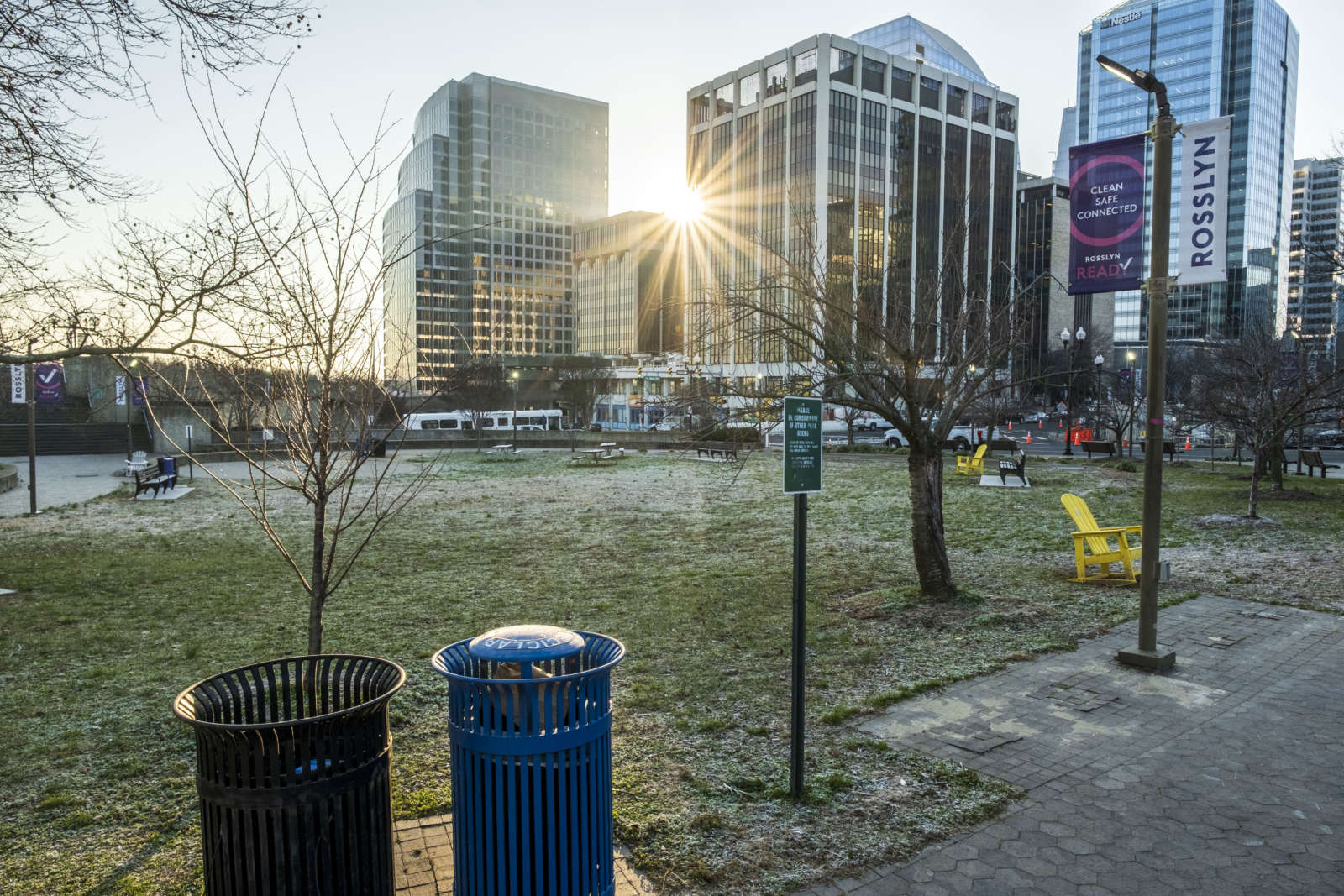
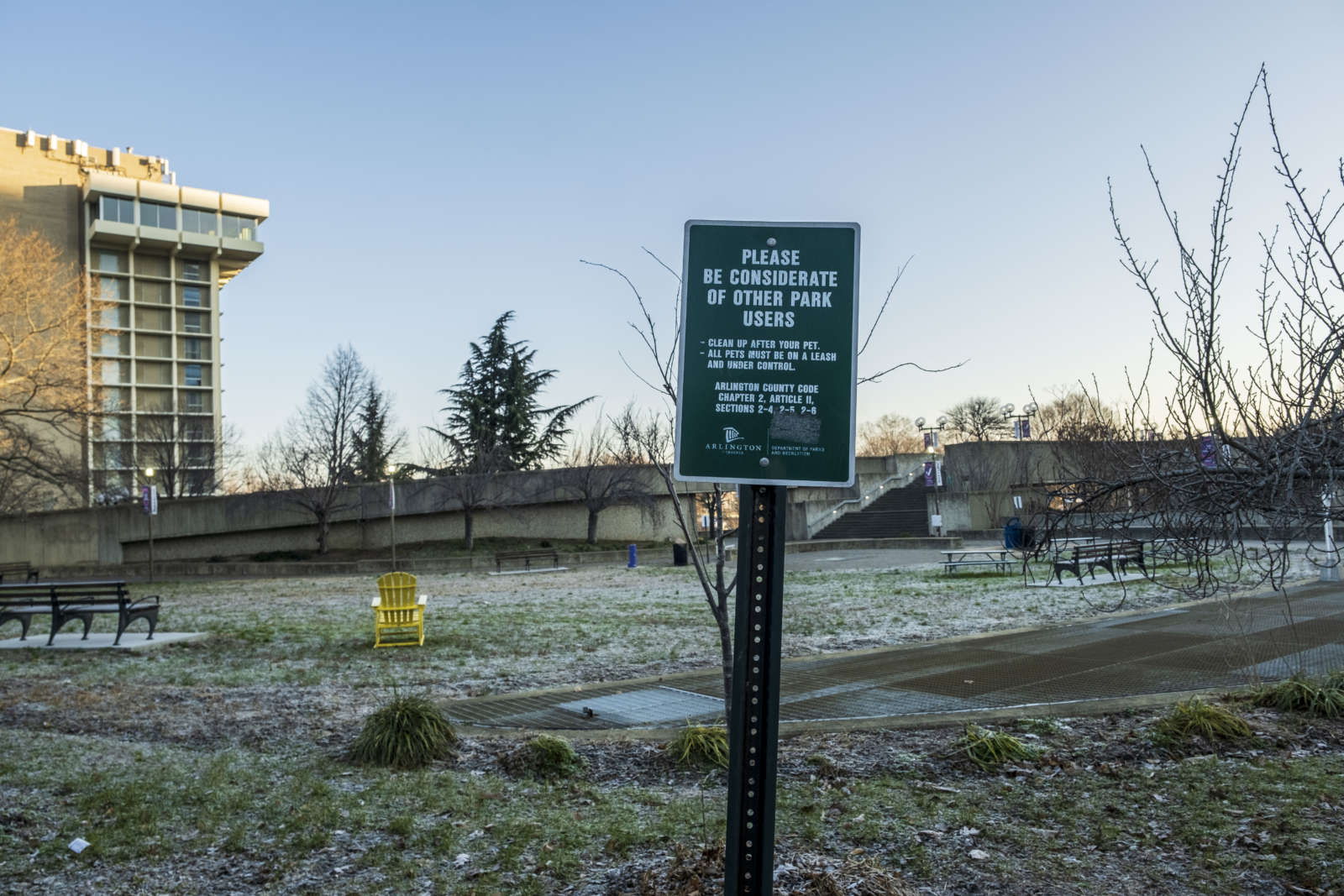
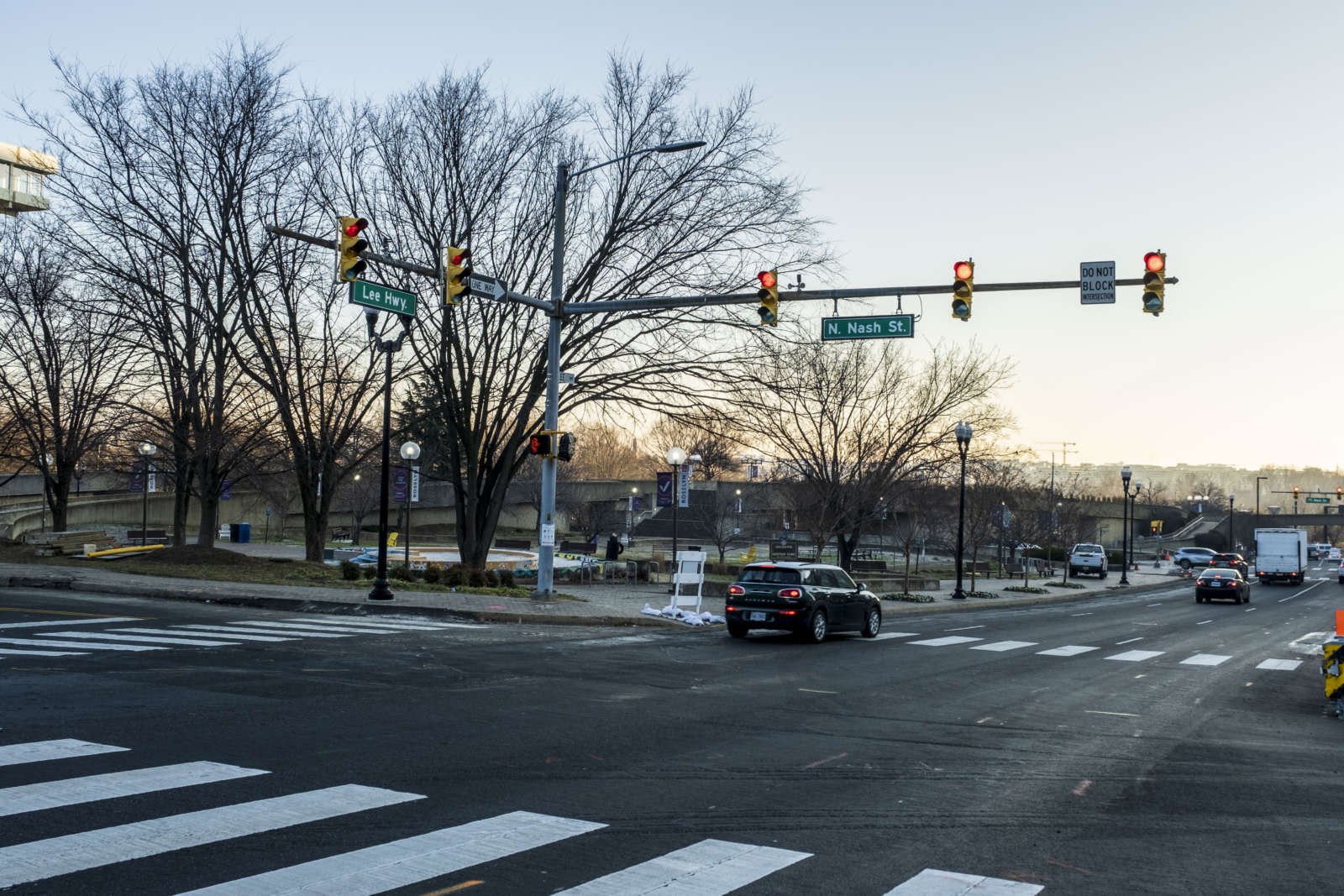
Starting today (Tuesday), fencing is set to be installed for an interim dog park in Rosslyn’s Gateway Park.

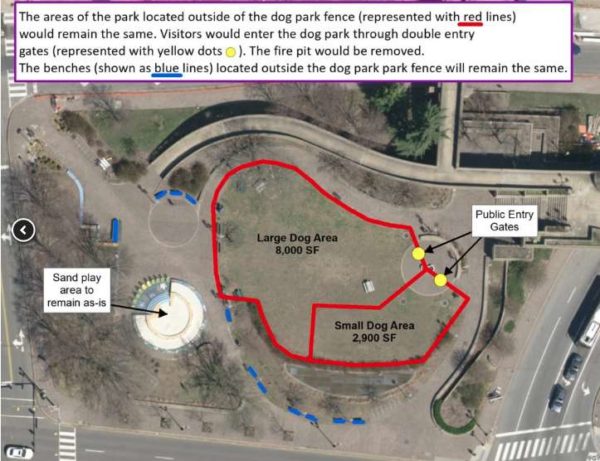
Work on the dog park, including the installation of lighting and a water fountain, started in 2020. It is slated to finish in the first quarter of 2021, said Mary Ann Elliott, the director of R-Dogs, which is one of the main forces behind the project.

Eventually, the area will be fenced-in, with a section for small and disabled dogs and one for large dogs.

“Fencing is the last major part,” Elliott said.

The interim dog park at 1300 Lee Hwy fills Rosslyn’s growing need for dog parks, of which the county will need three by 2035, according to a county planning document. The temporary facility will be in place until a Park Master Plan is developed and funding becomes available for a potential permanent replacement.

The plan could be finished in 2022 and funded in 2028, Elliott said.

The interim park is the result of nearly three years of work by R-Dogs, a community group-turned-nonprofit, and the Rosslyn Business Improvement District.

“It has been a long process with rules and regulations that one comes to find with any rules of county governance,” said Elliott. “I’m very pleased, overall, with the County, and thrilled with what the BID has contributed.”

Mary-Claire Burick, President of the Rosslyn BID, said the park represents a “wonderful partnership” among the County, R-Dogs and the BID to meet the needs of Rosslyn’s growing residential population.

“We are excited to add in a designated place where owners and their pets can safely enjoy the fresh air,” she said in a statement.

The Arlington parks department anticipates a dog park will be considered in the master planning work, but will need to go through a community process before it can be more specific, department spokeswoman Susan Kalish said in an email.

Elliott said the interim dog park will cost about $40,000, and the BID, a veterinary practice, several small businesses and individuals have chipped in to fund it. This sets the dog park apart, she said.

“All of the other dog parks in the County have a sponsor group of community residents, but did not raise money or establish a company with by-laws in order to make it a reality,” she said.

Photo (bottom) via Arlington County


View More Stories