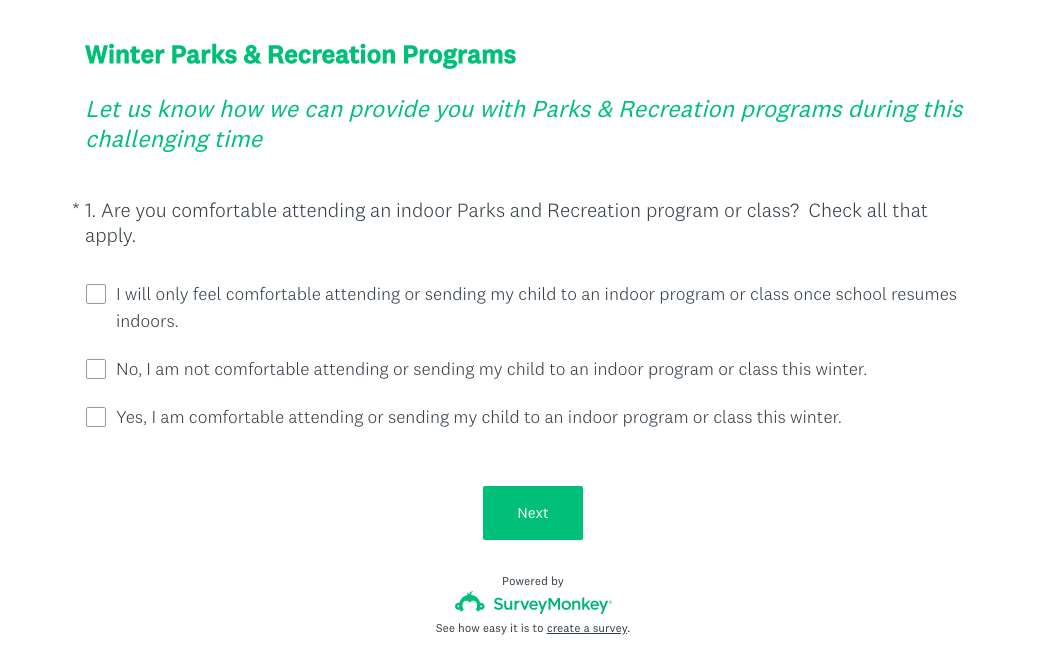
The Arlington County Department of Parks and Recreation is asking residents if they would attend indoor programs and classes this winter.

In an email sent yesterday, the parks department announced that as staff prepare for winter, they are exploring opportunities for safe indoor classes and programs.

The survey asks whether residents are comfortable attending or sending children to indoor programming, or whether they would rather stick with virtual activities.

“It’s really to take folks’ temperature,” spokeswoman Susan Kalish said.

Whether the department hosts programs this winter is “not up to us — it’s up to the guidelines,” she said, referencing state health guidelines.

One guideline in Phase 3 of Gov. Ralph Northam’s Forward Virginia plan, initiated in August, tells establishments to keep 10 feet of distance between attendees when exercise activities, singing or cheering are involved. In all other settings, the minimum distance required is six feet.

Program sizes will be smaller and in some cases, due to constraints, particular classes may not be viable, Kalish said.

Community centers will have one-way entrances and exits, be reconfigured and cleaned more frequently, the email said.

Options for physical activities range from gymnastics to therapeutic adapted services, and other suggested topics for programming include history, music, science and discovery, languages and nature.

The parks department continues to offer virtual programs for people of all ages, abilities and interests. For now, the department said outdoor spaces are open and it continues to run “Programs in the Park (while the weather is good).”


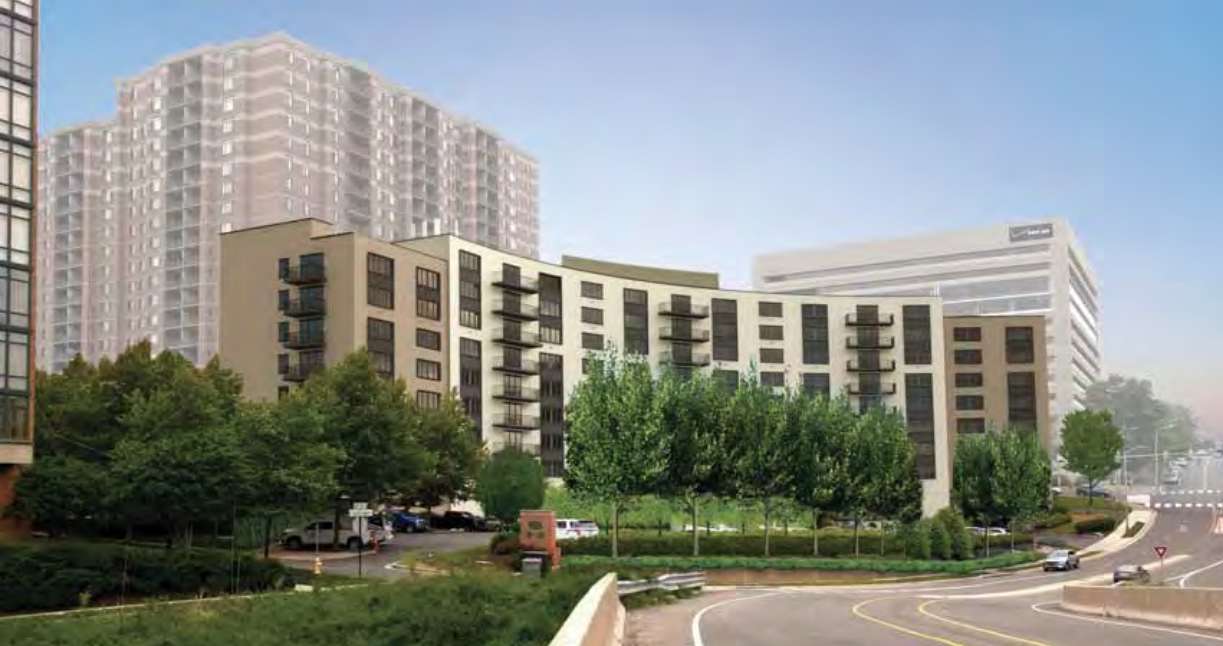
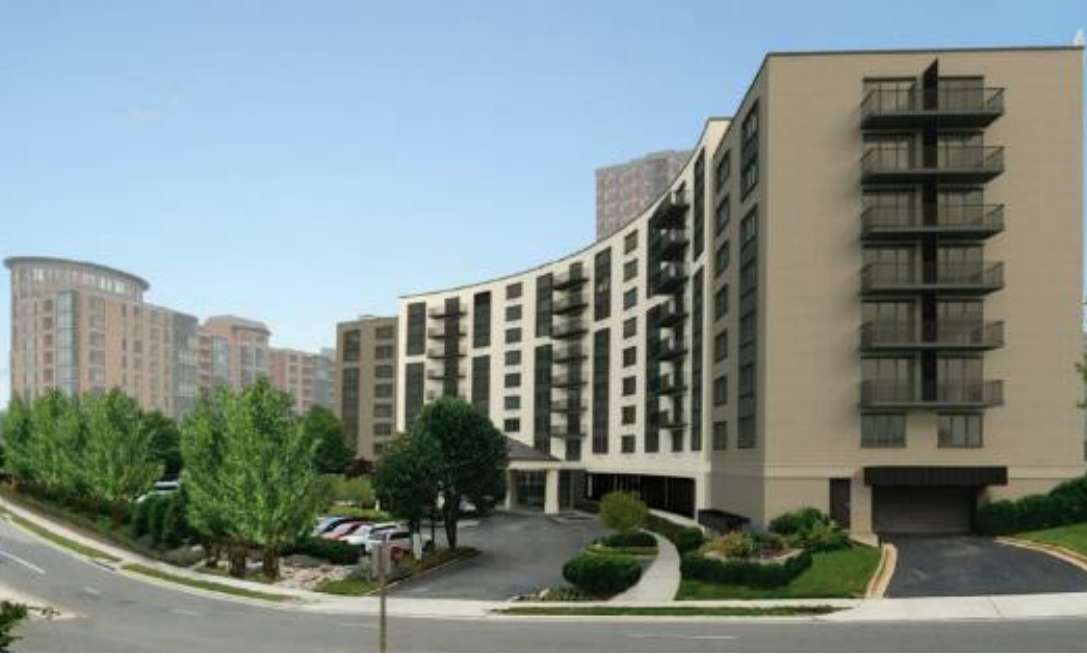
A proposal to return Arlington Court Suites Hotel to its original purpose, an apartment building, is slated to be considered by the Arlington County Board on Saturday.

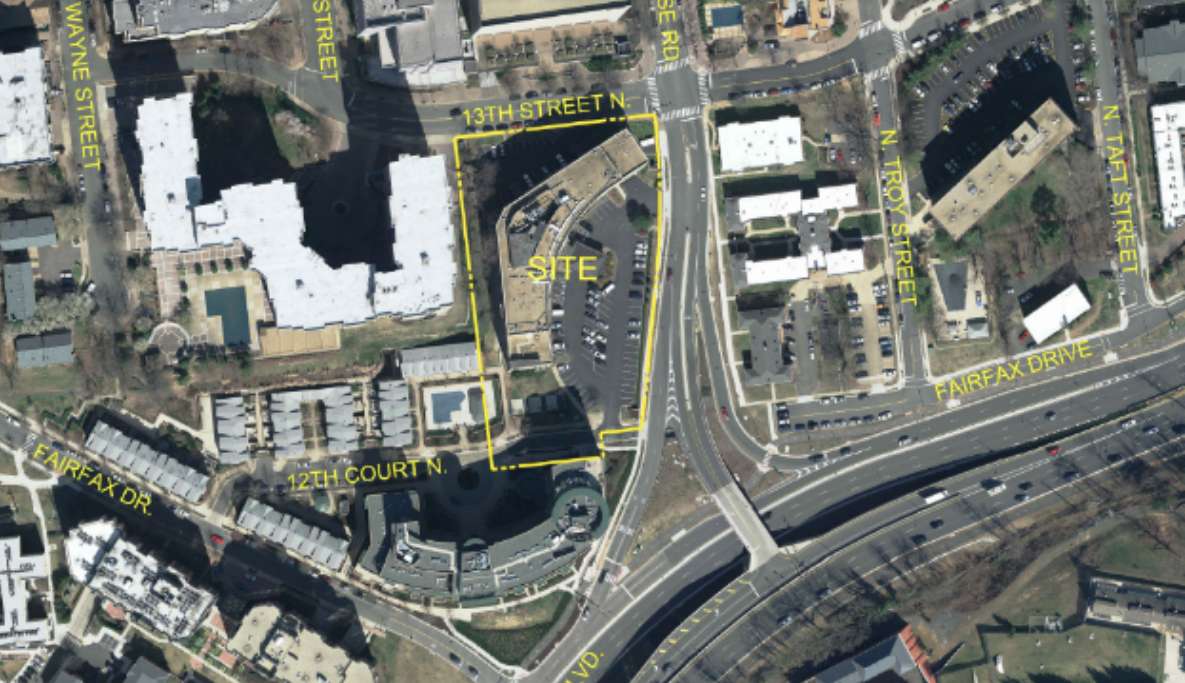
The 187 guest rooms at 1200 N. Courthouse Road would become 180 homes, possibly condominiums, according to an application filed by the property owner. This hotel-to-residential project is just a couple of blocks south of the Court House Metro station.

County staff are advising the board to approve the plan, which has been amended after Transportation Commission members argued that the original plans provided too much parking.

“Overall, the applicant’s proposal presents an opportunity to provide new housing units within a transit-rich neighborhood through the conversion of an existing building in a manner that is generally consistent with applicable County adopted plans and policies,” the staff report says.

One feature includes an upgraded and expanded pedestrian route making it easier to get to and from the Metro station and the Arlington Boulevard Trail. The route will also connect with nearby apartment and condo buildings, but will not be ADA accessible due to how steep the the grade is, the staff report says.

The project is exempt from providing mandatory affordable dwelling units, according to county staff.

“Given that the proposed density of the subject site plan is decreasing, and is a renovation of an existing building, the ADU provision does not apply,” the document says.

An apartment building was originally constructed on the site in 1962, and was turned into a hotel in 1980. In 2005, the County Board approved a plan to construct 252 new multifamily, townhouse and stacked residential units nearby, known currently as the Vista on Courthouse and the Bell at Courthouse.

The ratio of parking spots to dwellings for the renovated building has been the subject of scrutiny. In February, Transportation Commission members unanimously objected to the first iteration of the plan, which knocked the original 203 spots to 171.

The revised plan includes 150 spaces for a new parking ratio of 0.83 spots per unit. Many of those would be located on a surface parking lot, with the rest in a garage under the building. A county policy adopted in 2017 said parking at residences near Metro stations could be as low as 0.2 spaces per unit.

In a letter to the Board, Transportation Commission Chair Chris Slatt said his commission appreciates the reduced parking and added pedestrian route.

“That said, many commissioners remarked that they would support an even lower parking ratio given proximity to (the) Metro and encouraged the applicant to further reduce the amount of parking on-site, particularly the surface parking,” he wrote.

The County Board will meet virtually this Saturday, Oct. 17, starting at 8:30 a.m.


A proposal for a large outdoor café in Clarendon is set to be considered by the Arlington County Board this weekend.

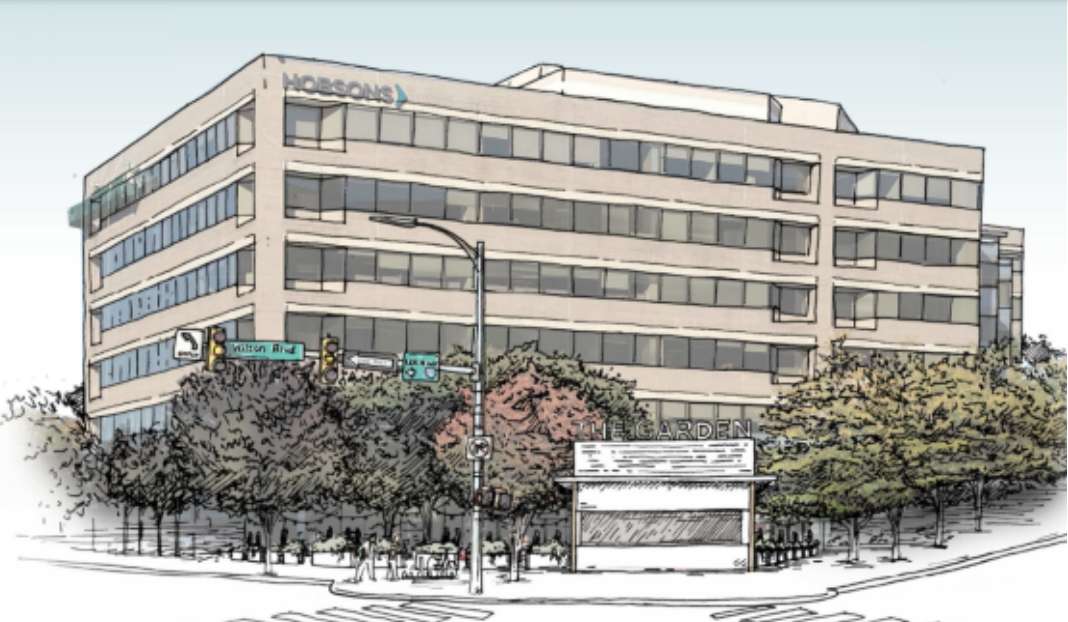
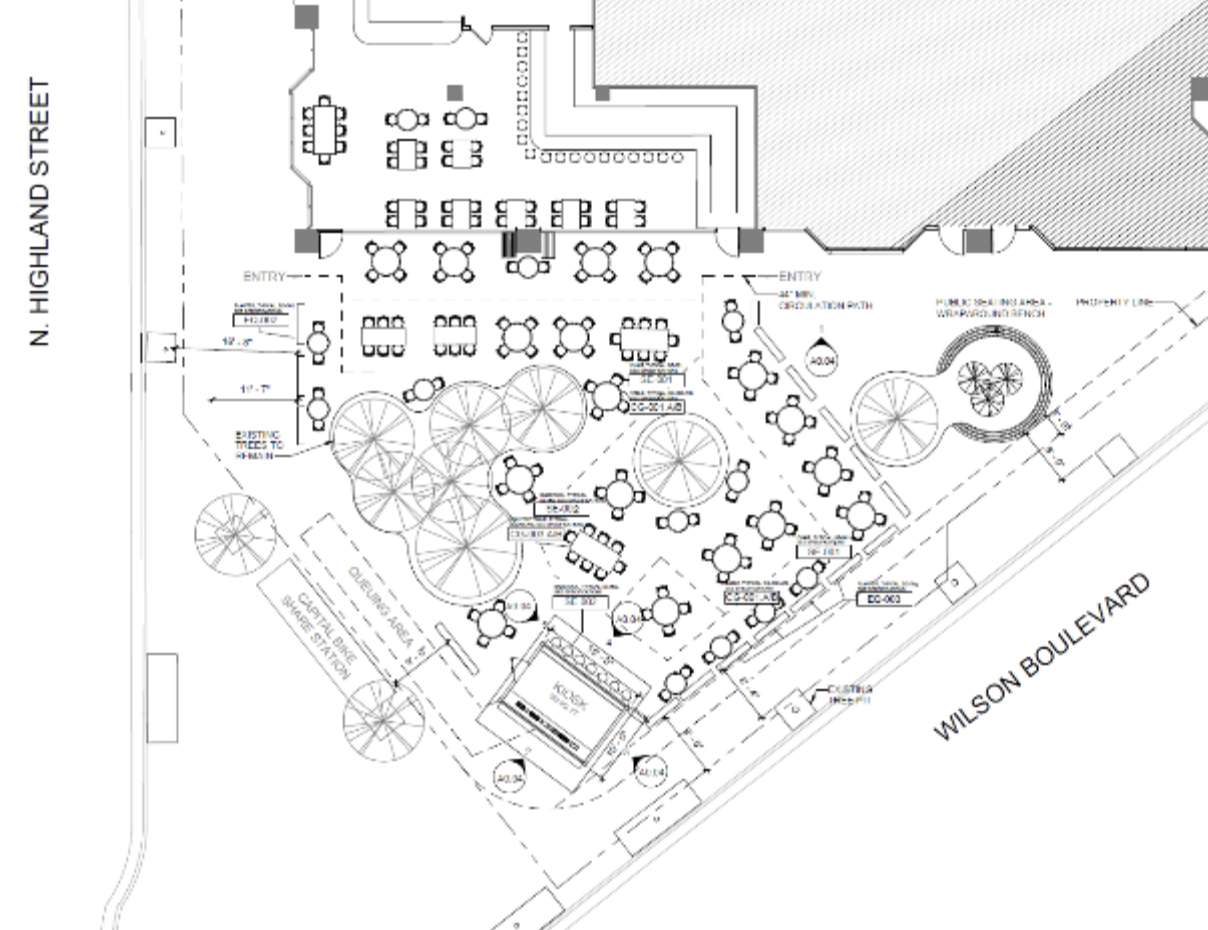
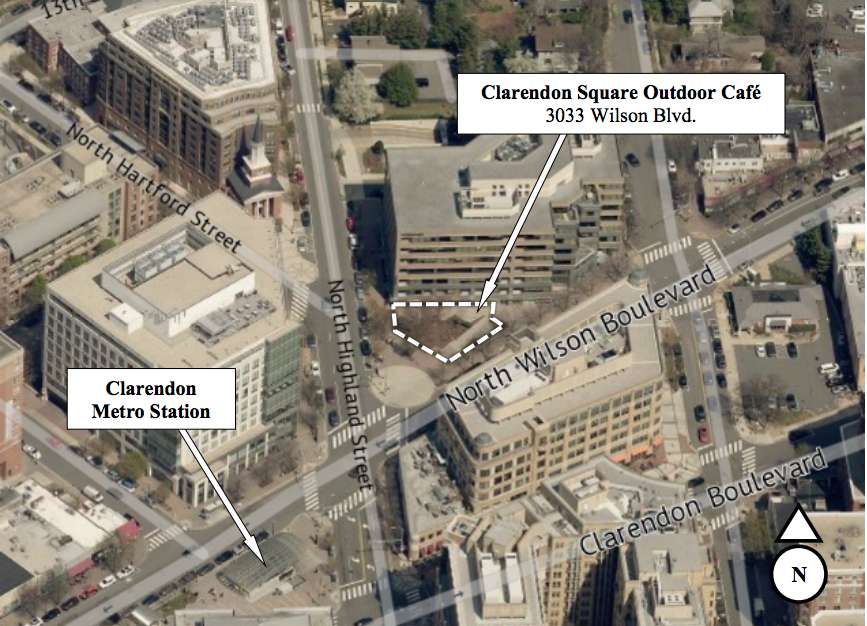
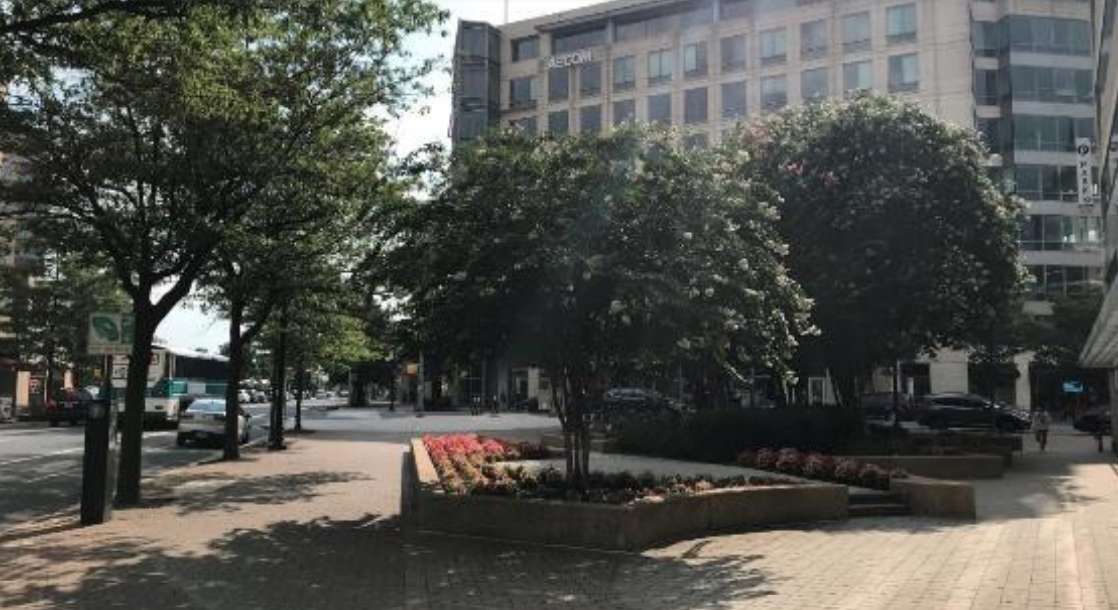
The owner of the Clarendon Square office building at 3033 Wilson Blvd is requesting permits to operate an outdoor café and kiosk in an open area of the property, catty-corner from the Clarendon Metro station.

The proposed café would have 125 seats outside and 59 seats inside, according to a county staff report.

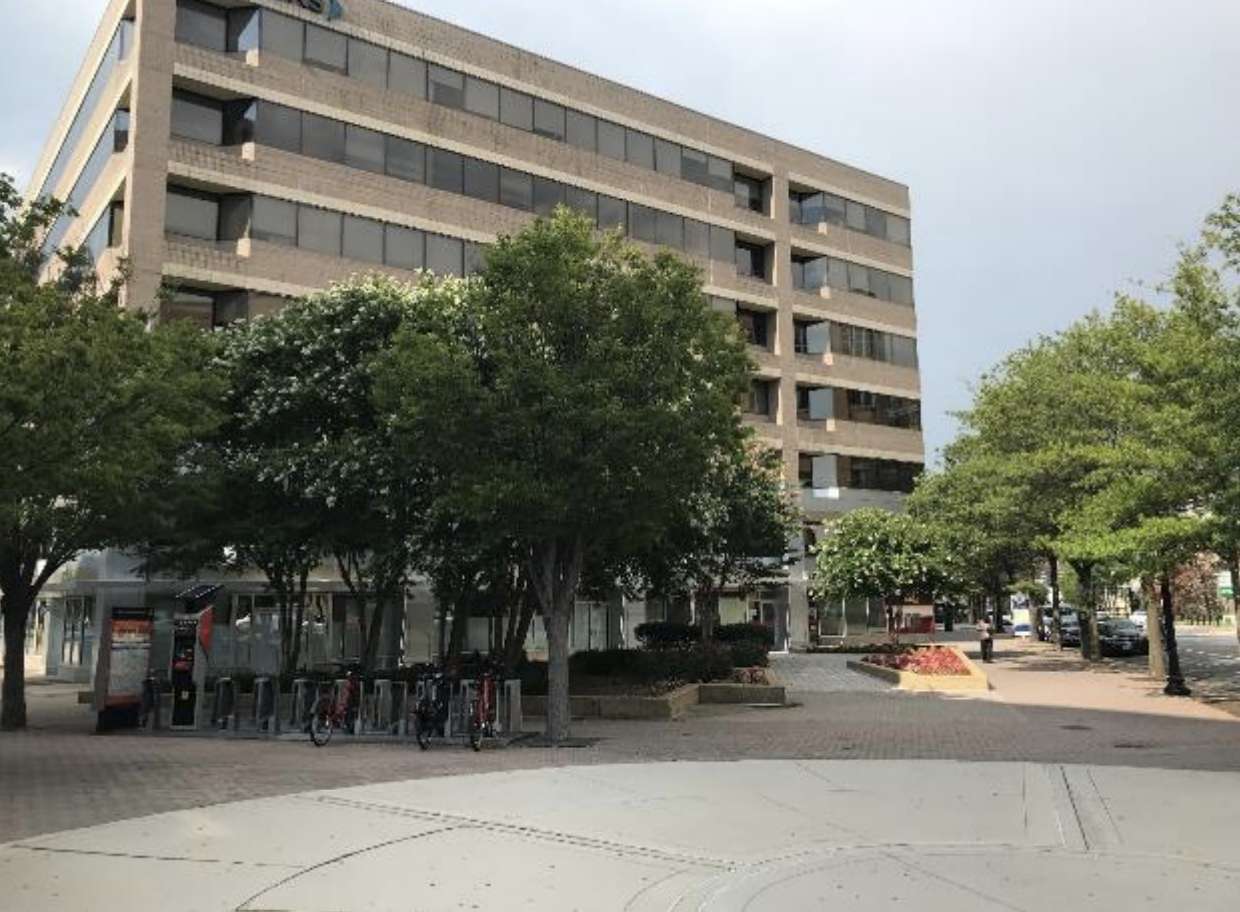
“The outdoor café will occupy the majority of the existing plaza and be enclosed by moveable planters,” the staff report notes. “Although all existing trees will be maintained, the existing raised planter walls will be redesigned to accommodate the outdoor seating.”

The kiosk will serve “grab-and-go beverages” to both passersby as well as those dining at the outdoor café. It’s being considered by the County Board separately from the café.

“The kiosk will operate the same hours as the restaurant and outdoor café and will be located on private property at the corner of Wilson Boulevard and North Highland Street,” the staff report says.

The County Manager recommends approving both the outdoor seating and the kiosk, with a County Board review in one year.

Clarendon Square is a 7-story office building constructed in 1987 and managed by Carr Properties, a real estate investment trust with two properties in Clarendon and one in Courthouse. The agenda item was deferred one month because when it came up in September, county staffers were still working with Carr on café furnishings, design and sidewalk width concerns.

The building contains ground-floor retail including a bank, a UPS Store, and a café called Waterhouse Coffee & Juice Bar. The existing plaza is publicly accessible and has raised planter beds with trees, shrubs and flowers.

The proposed café will serve restaurant-goers late into the night, according to the county documents. The building owner is asking for permission to pipe music in until midnight on Friday and Saturday nights. Music will end at 10 p.m. on weeknights.

In August, the Lyon Village Citizens Association asked that the building owner keep noise to a minimum after midnight, manage crowds and have overnight security of the outdoor seating area. The Clarendon-Courthouse Civic Association voted to support the proposal during its August meeting, provided that the 8-foot clear walkway is maintained on Wilson Blvd.

The café proposal comes amid a shift towards outdoor dining during the pandemic, and a spate of redevelopment in parts of Clarendon.

The County Board will meet virtually this Saturday, Oct. 17, starting at 8:30 a.m.


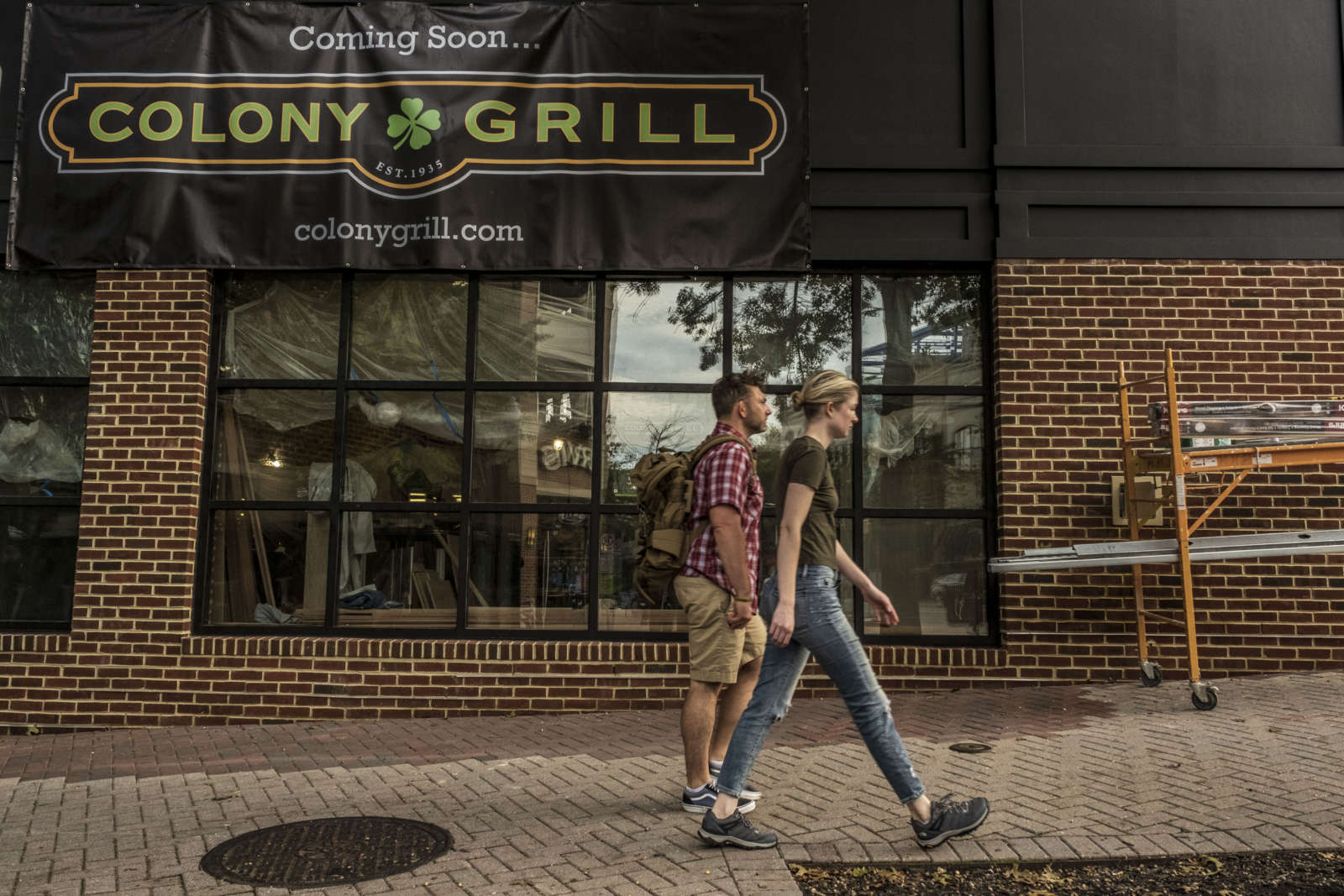
Today, 85 years after opening its first location in Connecticut, Colony Grill (2800 Clarendon Blvd) began serving Arlingtonians its famed thin-crust bar pie, sizzling with hot oil and topped with peppers known as “stingers.”

The location, three years in the making, is the first outside southern Connecticut and Port Chester, New York. Construction on the two-story establishment at Market Common Clarendon began in February and only lost a week or two to delays related to the pandemic, said co-owner Ken Martin.

He and his fellow co-owners, Paul Coniglio, Chris Drury and Cody Lee, began looking outside their home state because real estate there is limited. The childhood friends from Trumbull, Connecticut fell in love with the D.C. area “almost overnight,” he said.

“Arlington resembles Fairfield County on steroids,” Martin said, noting that it has the same energy: a dense population of smart, eclectic people who are especially social.

If the Clarendon outpost does well, more D.C. area locations may follow, according to Martin.

“We hope to open more down here once we establish ourselves and are doing well,” Martin said, mentioning Bethesda and the District as possible destinations.

Irish immigrants opened Colony Grill in Stamford, Connecticut in 1935, two years after the end of the Great Depression and the Prohibition era. The owners served many dishes, but the Italian and Eastern European chefs devised the “bar pie” to be smaller and thinner than a traditional pizza, and fit on the bar top.

Today, the chain only serves this pizza, although the name and the Irish decor pay homage to the kitchen’s original menu and the restaurant’s origins.

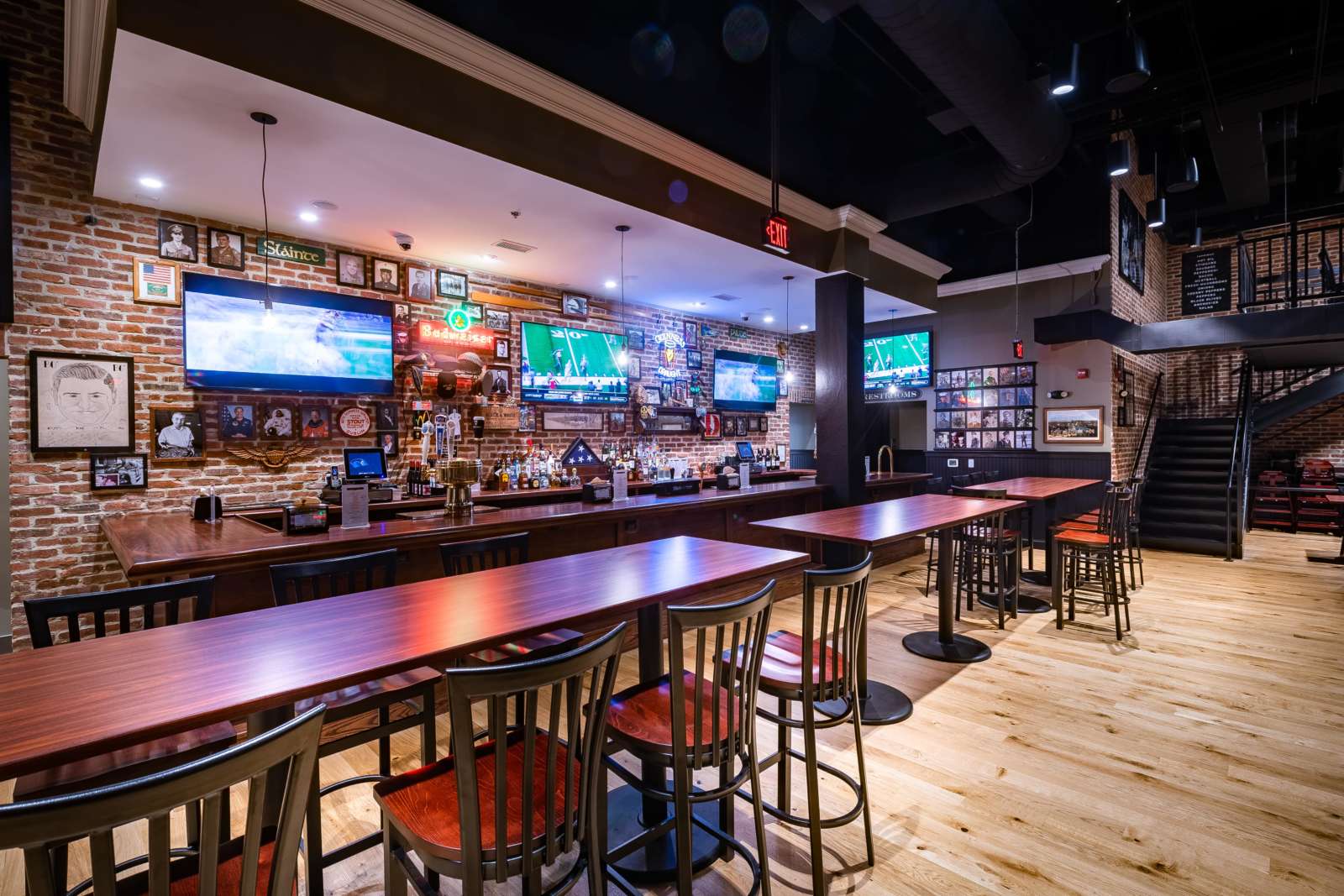
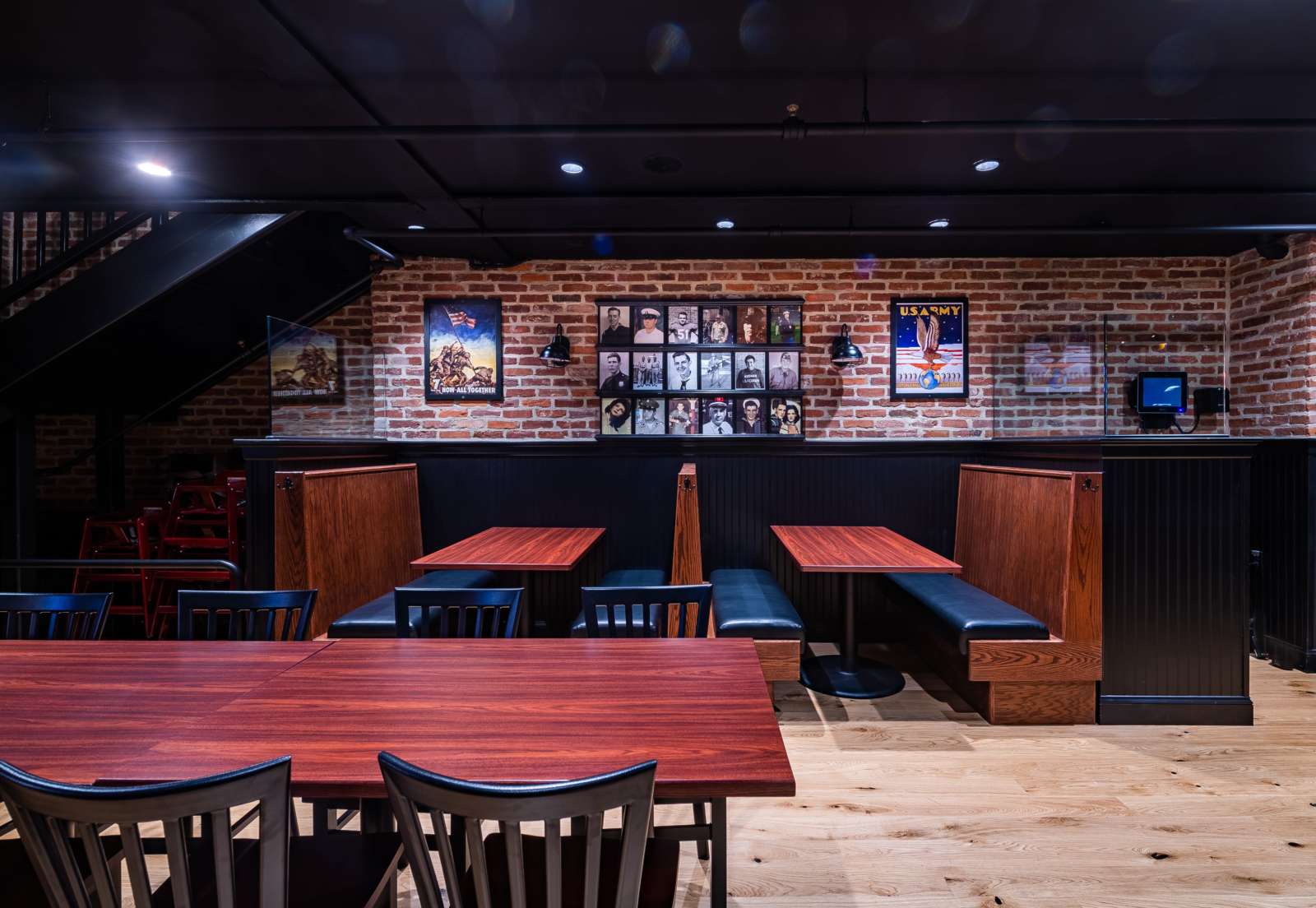
After World War II, the owners began collecting framed pictures of those who fought to honor Connecticut’s contributions to the war effort. Today, locals to each new location are invited to bring pictures of their friends or family members in the service to be hung on the brick walls.

Arlington patrons can submit 8×10 inch photos of friends, family members or themselves, in their branch of the military uniform, to the restaurant’s collection.

Local antique pieces will join the familiar faces in sepia tones and in color, including three prominent astronauts with roots in the area, to make patrons feel at home.

Colony Grill’s designer visited flea markets, tag sales, and frequented libraries and historical societies to get a feel for Arlington’s neighborhoods. Folks will recognize some of the antiques on display, Martin said.

“We want to give people the feel that we understand the neighborhood as they come in,” he said.

Pizzas cost up to $13, and customers can choose standard toppings or the chain’s original offerings, including the salad pie and the breakfast pie.

Colony Grill also has 12 beers on top and wine bottles by the glass or bottle.

In response to the coronavirus, the company has spent nearly $100,000 at each location on glass partitions and a streamlined check platform for employees, according to the co-owners. The restaurant has also invested in an online app for contact-less ordering and payment.

Colony Grill is open daily from 11:30 a.m. until late closing, at the corner of Clarendon Blvd and N. Fillmore Street, for up to 170 people.

Photos courtesy Rey Lopez, as marked


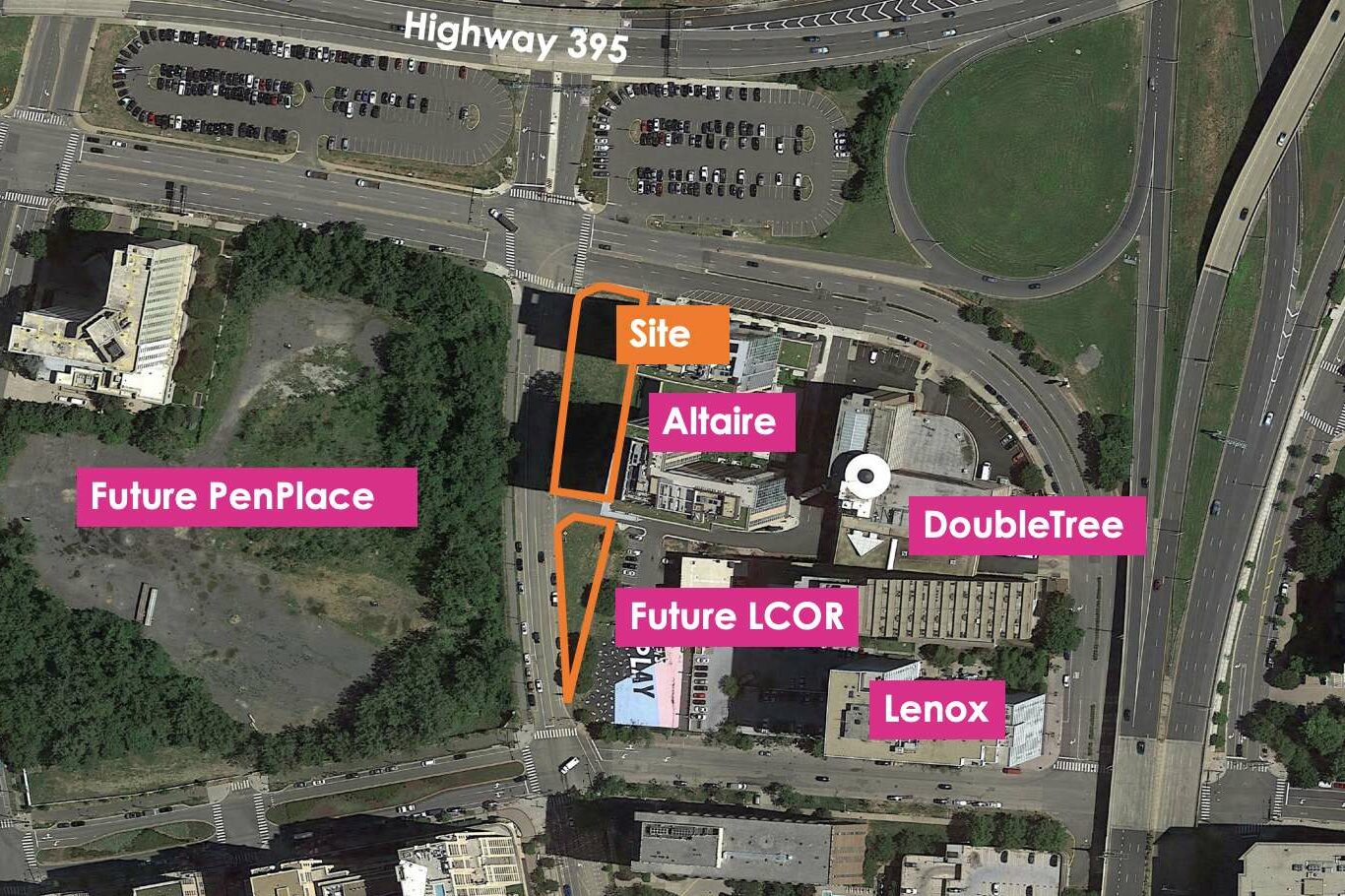
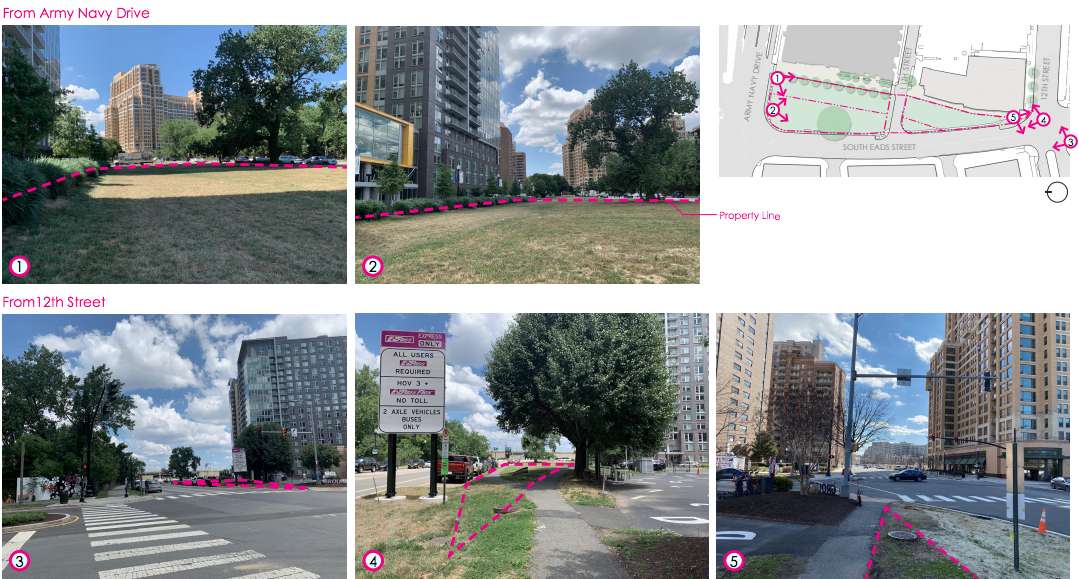
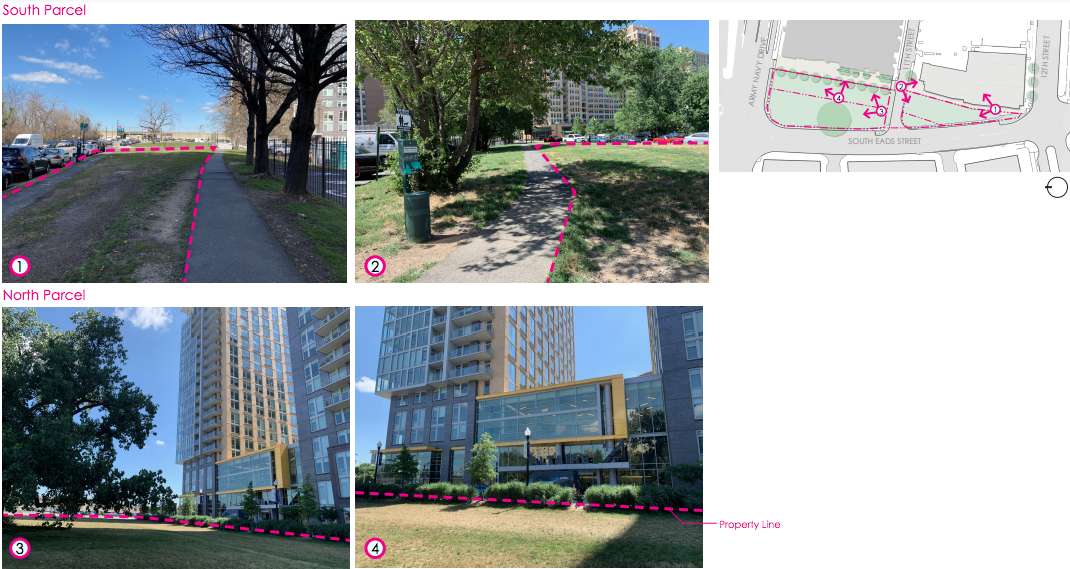
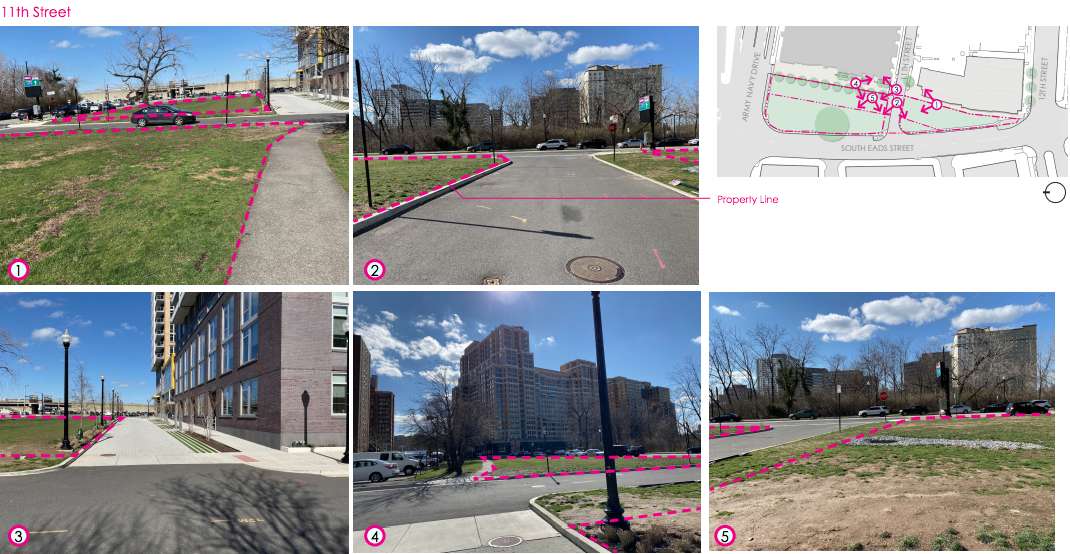
Arlington County is asking for public input for a new park in Crystal City, just on the border of Pentagon City.

Currently called “Teardrop Parcels” from the shape of the two pieces of land that form the space, the county’s working name is “New Park at South Eads Street and Army Navy Drive.”

The green space is located by the Verizon telecommunications facility site (400 11th Street S.) and the construction site for a new, 19-story residential building. It’s also adjacent to the recently-built Altaire apartments and across the street from the second phase of Amazon’s permanent HQ2.

An online feedback form is available until end of day today (Oct. 14), according to a presentation delivered on Sept. 29. The next opportunity for public feedback will be in November, while third and final opportunity will come in December. Name suggestions are welcome, according to the presentation.

The owner of the Altaire is contributing more than $1.4 million and the new apartment development is pitching in nearly $1.2 million, for a total budget of $2.6 million for the new park.

With the new developments, the park could see more activity from residents, workers and shoppers in the coming years, said Mark Gionet, the Principal at LSG Landscape Architecture.

Studies show that having retail space bordering an urban park — as is planned in this case — can help activate the two spaces, said the architect, whose firm is partnering with the county to facilitate public engagement with plans for the park.

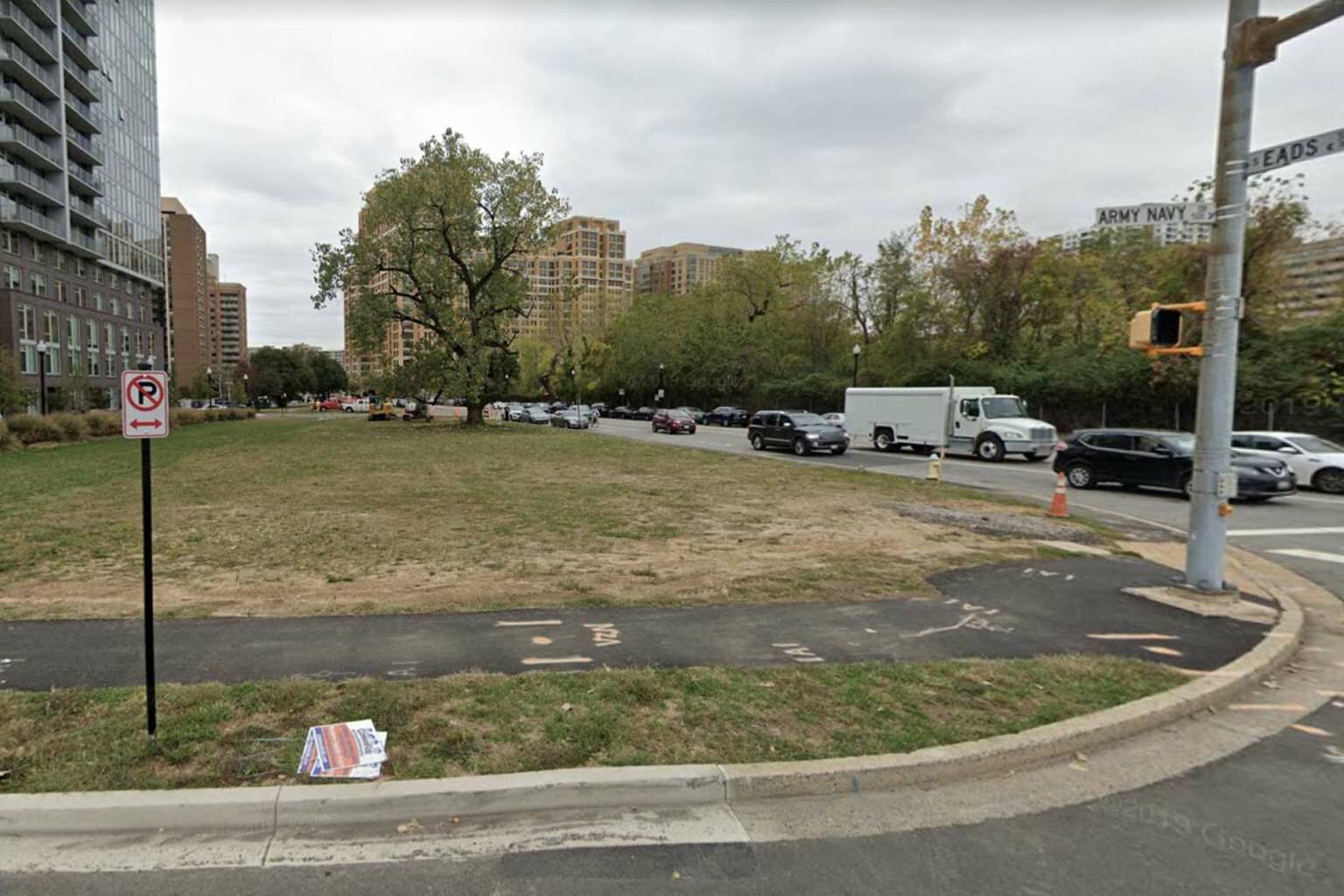
Currently, during weekday work hours, the land is used by people walking to get groceries and lunch. On the weekends, children play while their parents watch from lawn chairs. The land is popular with dog walkers, who use the pet waste station.

The presentation notes that Metropolitan Park, Long Bridge Park and Virginia Highlands Park are all within walking distance, with a variety of existing amenities.

“A range of active, passive and social park amenities are available within a walking distance,” the presentation said. Planners will take that, public feedback, and the fact that the park is shaded by nearby buildings much of the time into consideration when mulling over what features the new park might have.

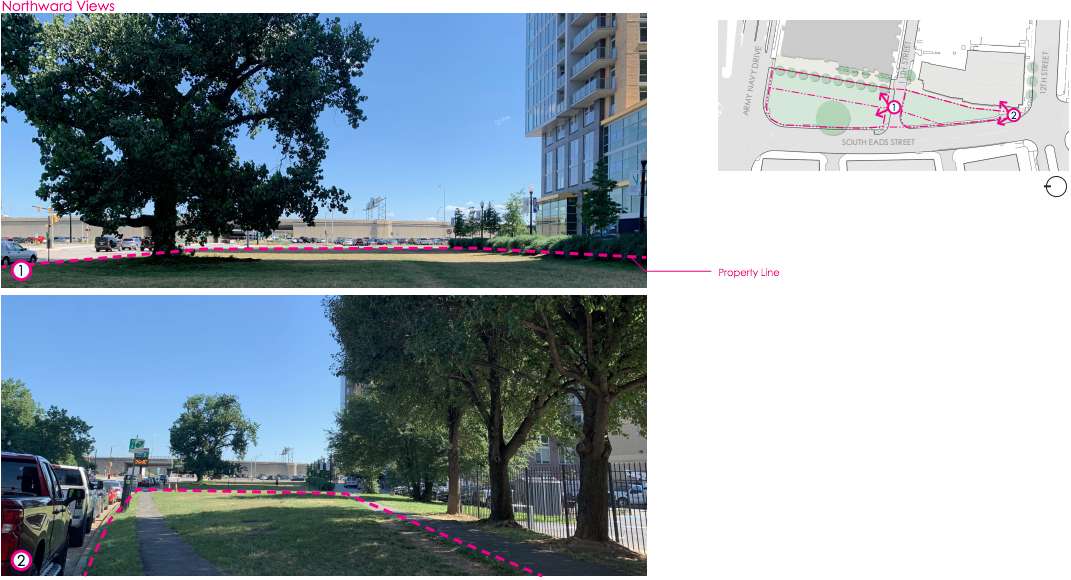
Work on the park should not harm the large, leafy tree on the land, Gionet said. Its extensive root system, however, will limit the developable area in the park, he said.

Photo (2) via Google Maps


Sponsored by Monday Properties and written by ARLnow, Startup Monday is a weekly column that profiles Arlington-based startups, founders, and other local technology news. Monday Properties is proudly featuring Shirlington Gateway. The new 2800 Shirlington recently delivered a brand-new lobby and upgraded fitness center. Experience a prime location and enjoy being steps from Shirlington Village. Spec suites with bright open plans and modern finishes are under construction and will deliver soon!

(Updated on 10/13/20) Rosslyn-based tech company LiveSafe has been purchased by Tampa-based Vector Solutions.

Founded in 2012, the company focused on campus security, as one co-founder survived the Virginia Tech mass shooting. Over the years, it gained footholds in other sectors and got an extra boost in 2018, when it received $11 million in new venture funding.

Today, the app and dashboard help businesses, schools and governments respond to anything ranging from harassment to a COVID-19 outbreak.

The acquisition will take LiveSafe to new heights and expand the company’s reach to new clients, said LiveSafe co-founder Shayan Pahlevani.

“You can’t be happier as a founder or LiveSafe team member see something you worked on for so many  years make it to the next level,” he said.

From its ground-floor office at 1400 Key Blvd, LiveSafe serves more than 400 customers including Hearst, Cox Communications, Brookfield Properties and the Crystal City-based Consumer Technology Association.

“It’s great that they see value in what we created,” Pahlevani said. “They have a number of incredible solutions in their deck, and to have access to their incredible customers is a huge testament to what we built.”

Many of the details are still being finalized, including whether LiveSafe will keep its office. Pahlevani said he could not disclose the cost of the sale, citing a non-disclosure agreement.

Vector Solutions and LiveSafe first partnered in 2019 to bring customized safety and security tools to higher education and K-12 markets.

Vector Solutions CEO Marc Schiepe said in a statement that the acquisition builds on a “longstanding and trusted relationship with LiveSafe and brings dynamic safety and security capabilities into the Vector Solutions product portfolio.”

Pahlevani said Vector became one of LiveSafe’s customers and was “very impressed with our team and the product.”

One product came online this year, inspired by the coronavirus pandemic’s effect on return-to-work plans. LiveSafe launched WorkSafe to help organizations detect potential COVID-19 infections, prevent outbreaks and reduce legal liability, while keeping employee health information private.

The acquisition comes as Vector Solutions — which bills itself as the “leading provider of software solutions for learning, operational readiness, workforce management” — rebrands its platforms to include the Vector name. LiveSafe will take on a new name, but Vector pledges to deliver the same experience.

Bringing LiveSafe into the fold “fits perfectly with Vector’s mission to serve everyday heroes by delivering intelligent software solutions that empower them to make safer, smarter, better decisions,” Schiepe said in his statement.

As for Pahlevani, he said the acquisition will afford him time to focus on Hungry, the buzzy Ballston-based startup he founded that connects businesses to local caterers for lunches and events.

“I get to focus 100 percent on Hungry,” he said.

This article has been updated to remove sensitive staffing information covered by a non-disclosure agreement. 


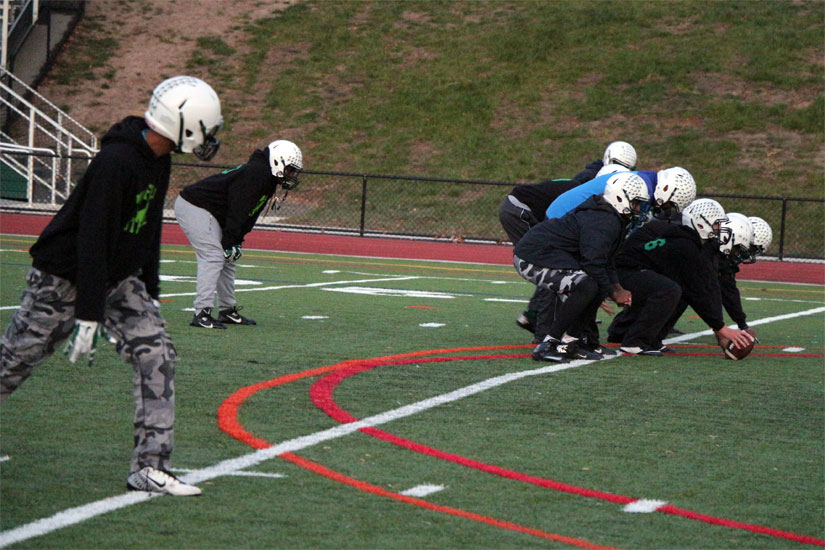
High school athletes can start working out in-person next week, regardless of whether they chose distance- or hybrid-learning, Arlington Public Schools has announced.

Starting Monday, Oct. 12, APS will be using stadiums, tracks and fields for student workouts and athletic activities. While students exercise, the facilities will be closed to public use.

“During the APS athletic workouts, staff will be following COVID precautions and therefore all school facilities (stadiums, track, fields) will be closed to the public,” the school system said. “It is important that the community respect the closure and practice social distancing.”

APS is currently conducting remote learning only, but preparing to bring students back in a “hybrid” model, with most students spending two days per week in schools and other students able to opt to continue a distance learning-only program.

The school system previously said it would be screening kids daily, including temperature checks before participating in sports. Students are encouraged to check with their coach and school’s athletic webpage for more information.

School athletic facilities will be closed on the following days and times, according to APS.

Greenbrier Stadium (Yorktown) and fields
Monday, Thursday and Friday, closed from 3:30-8 p.m; Tuesday and Wednesday, closed from 3:30-7:15 p.m.

Wakefield Stadium and fields
Monday through Friday, closed 3:30-6:30 p.m.

Washington-Liberty Stadium and fields
Monday through Friday, closed 3:30-7:30 p.m.

File photo


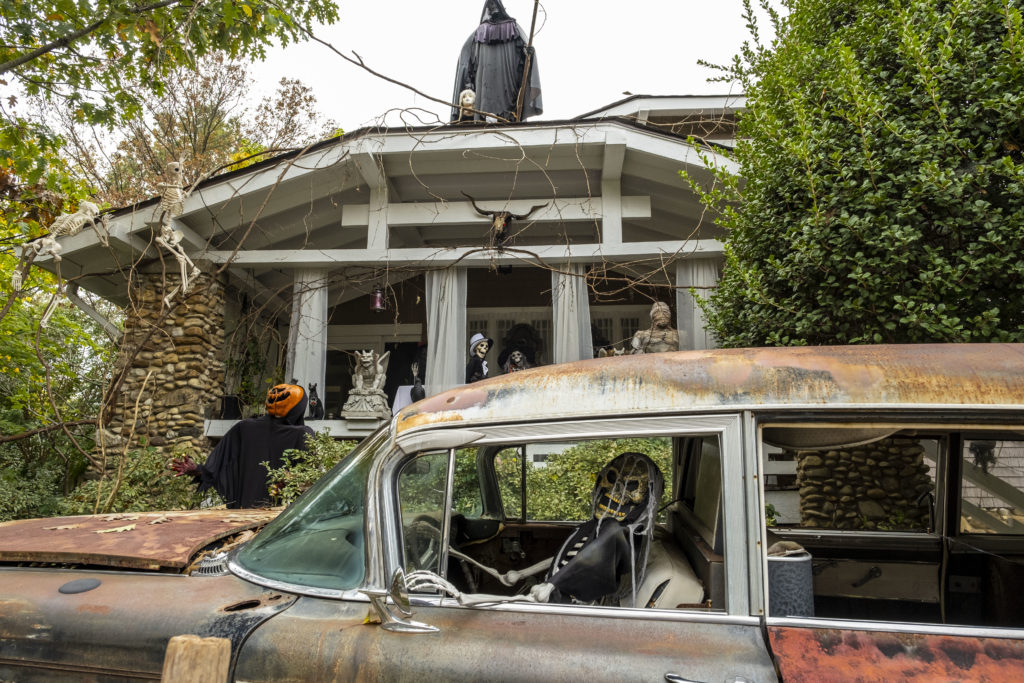
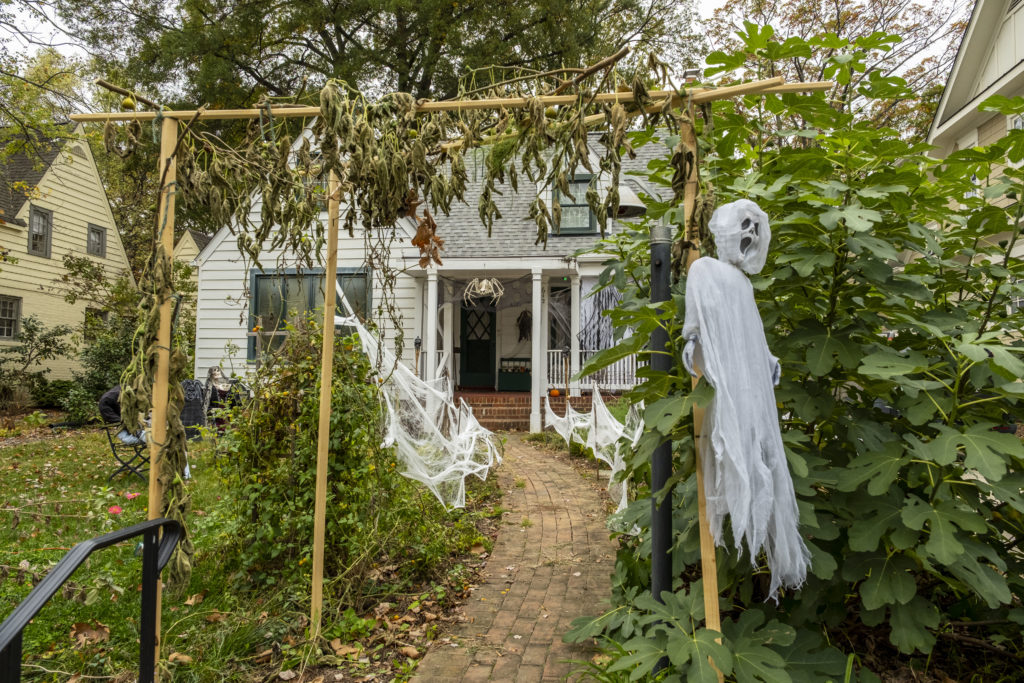
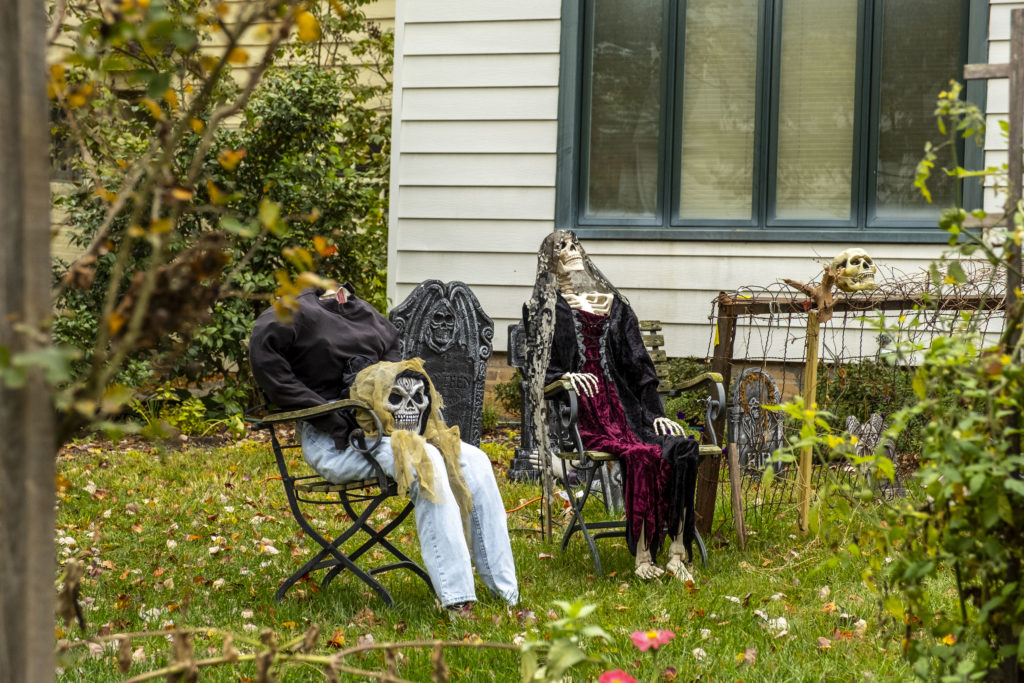
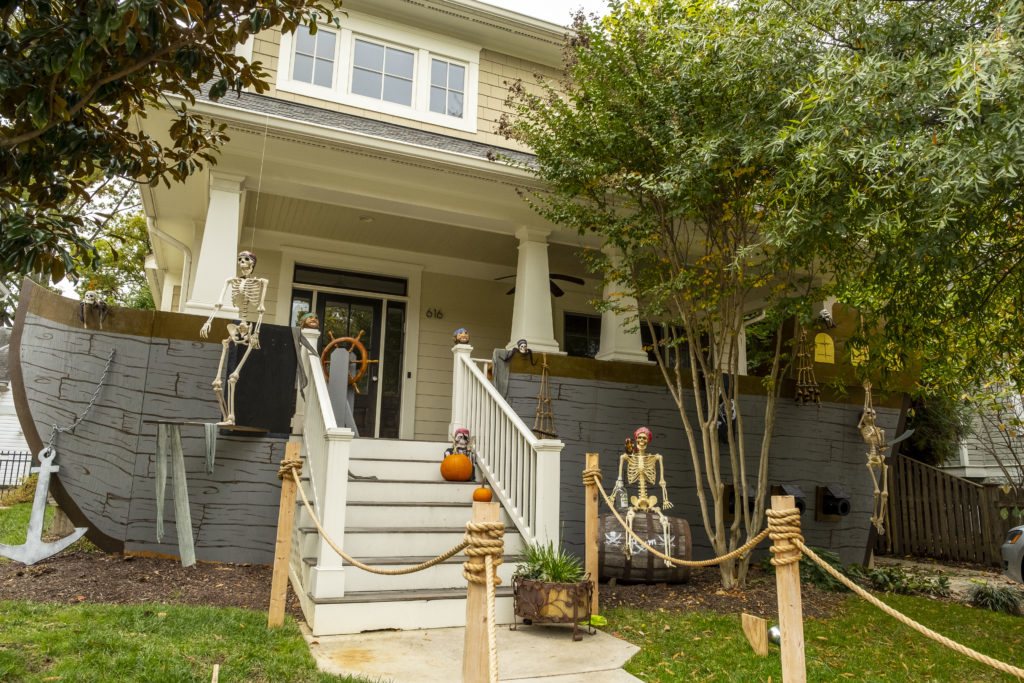
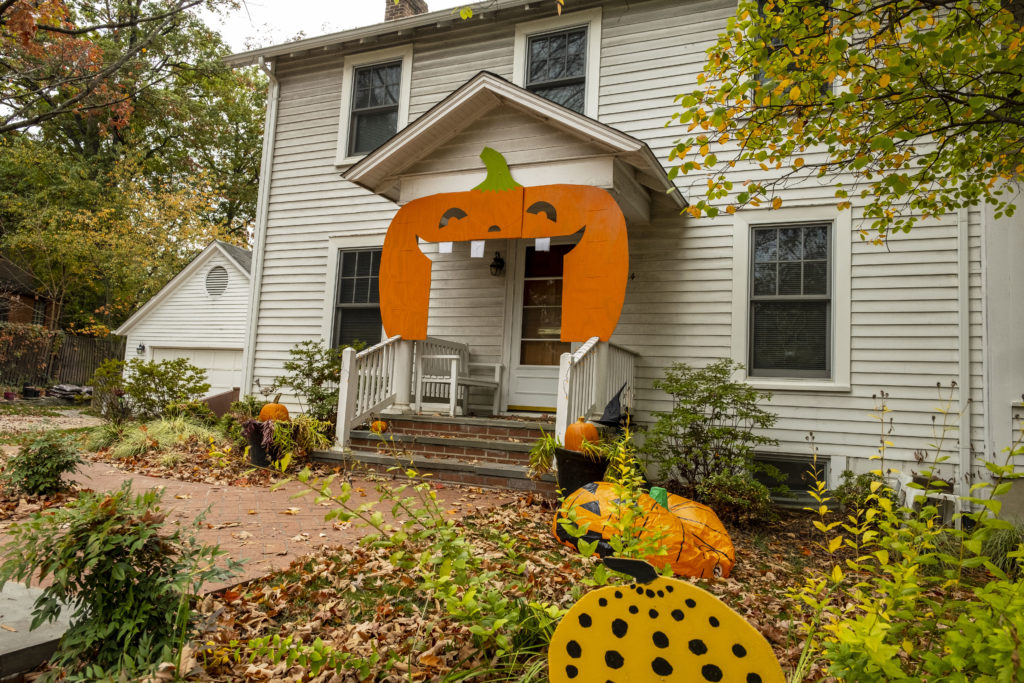
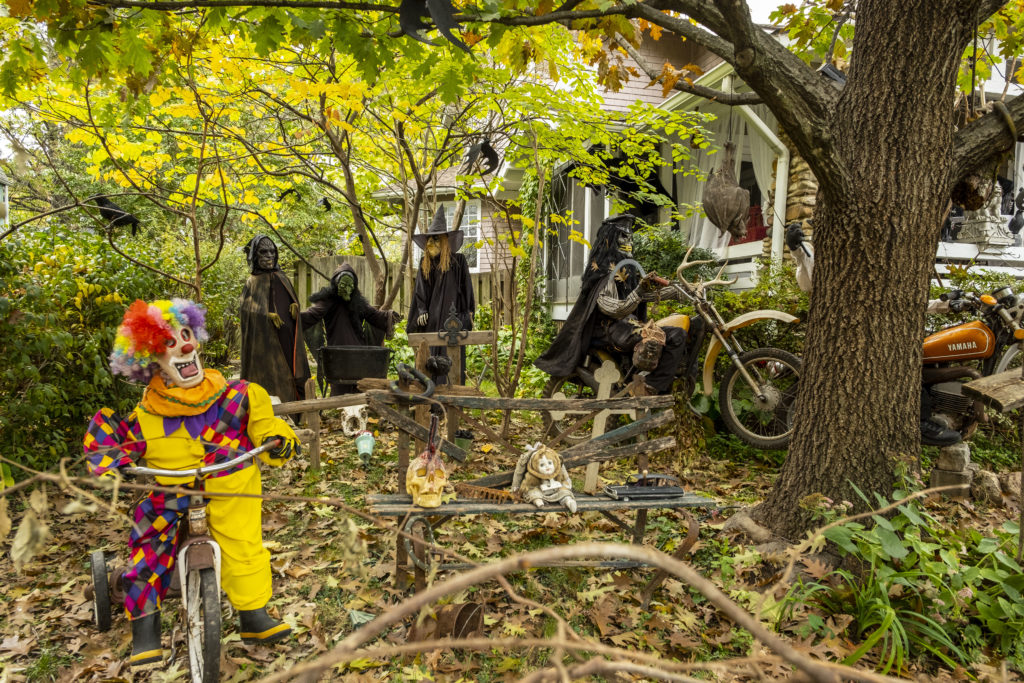
Homes on N. Jackson Street in Ashton Heights may put up Halloween decorations this year, but most will not hand out treats in order to discourage trick-or-treating and follow state and national health guidelines.

The Virginia Department of Health recommends that people avoid traditional trick or treating because it is a “higher risk activity.” North Jackson Street neighbors — noted for having the most elaborate Halloween decorations in Arlington — decided that respecting this guidance would mean foregoing the usual Halloween revelry.

The street has been a popular destination for trick-or-treating for decades. Homes between Wilson Blvd and Pershing Drive deck out their houses with witches, pumpkins and skeletons galore, create a haunted house, and give out enough candy to keep pediatric dentists in business.

“Halloween is a treasured tradition in our community,” said Scott Sklar, president of the Ashton Heights Civic Association.

Some homes will be decorated on N. Jackson Street, but Sklar said he anticipated many others along the street and in Ashton Heights may avoid decorating, to discourage crowds.

“We regret seeing a scaled-back Halloween, but want to be good neighbors and do our part to keep our community safe,” he said.

Sklar said he hopes his neighborhood can bring back the ghouls, ghosts and graveyards next year.

COVID-19 is slightly dampening the spooky spirit in Arlington County. A recent ARLnow poll found that of more than 2,000 respondents, nearly half are not planning to hand out candy this year. Another poll found that more than a third of locals who usually decorate for Halloween are either skipping it or scaling it back this year.

The county’s guidance encourages people to decorate, but discourages them from going door-to-door for candy, walking through haunted houses with screaming people, and attending large, in-door parties.

“Everyone planning to celebrate Halloween this year should avoid close contact with people who do not live in their household, wear a mask, keep 6-feet distance and practice frequent and proper hand washing,” said Arlington County Public Health Director Dr. Reuben Varghese. “There are still ways to celebrate Halloween, but it will have to be on a more limited scale.”


(Updated at 4:50 p.m.) Arlington Public Schools is seeing a sharp decline in enrollment this year as families cope with remote learning during the pandemic.

From September 2019 to September 2020, PreK-12 enrollment fell from 28,020 to 26,895 — a 4% drop — according to APS’ official Sept. 30 count. That’s an even bigger drop than the preliminary numbers at the beginning of September, which showed enrollment of 27,109.

The drop comes after years of enrollment growth. As of earlier this year, enrollment fall enrollment was projected to be 29,142, a 4% increase over 2019.

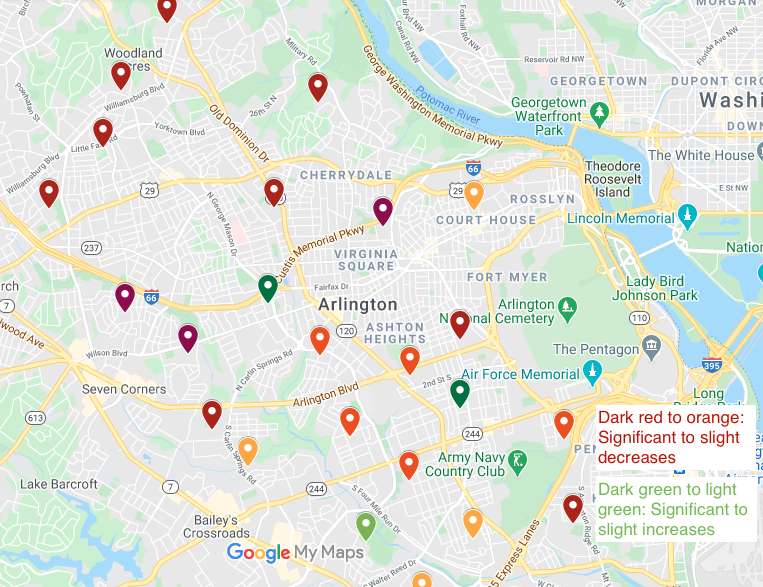
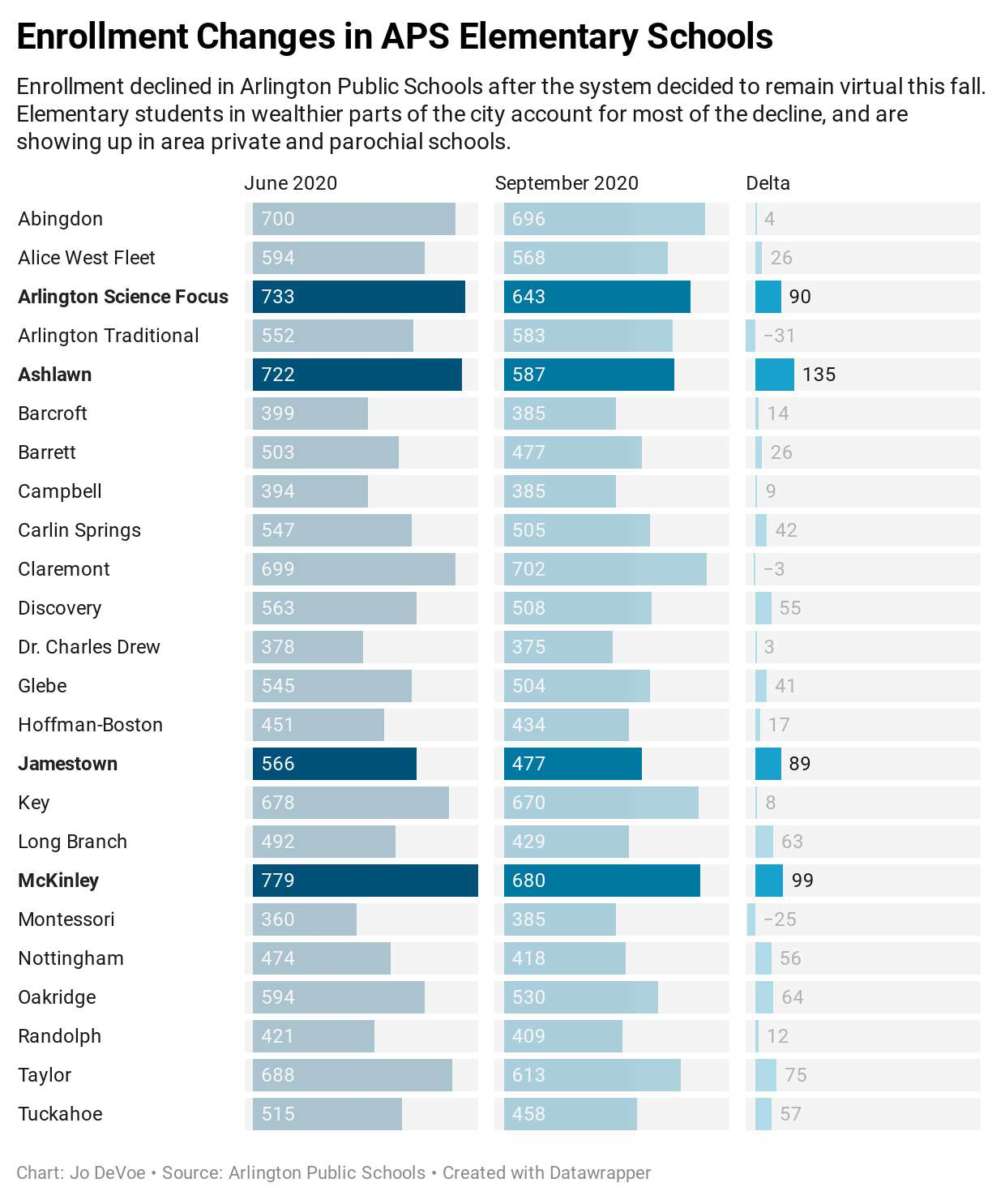
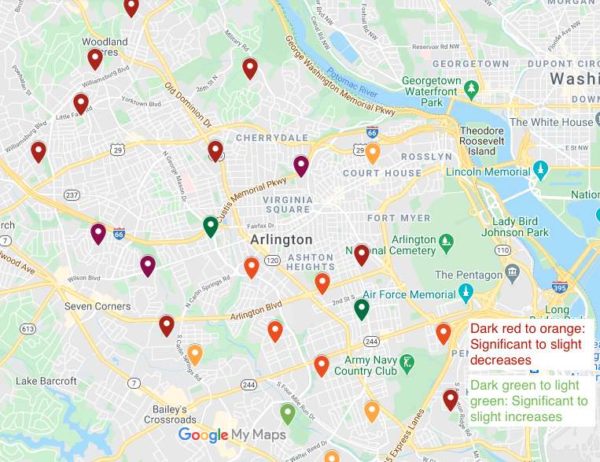
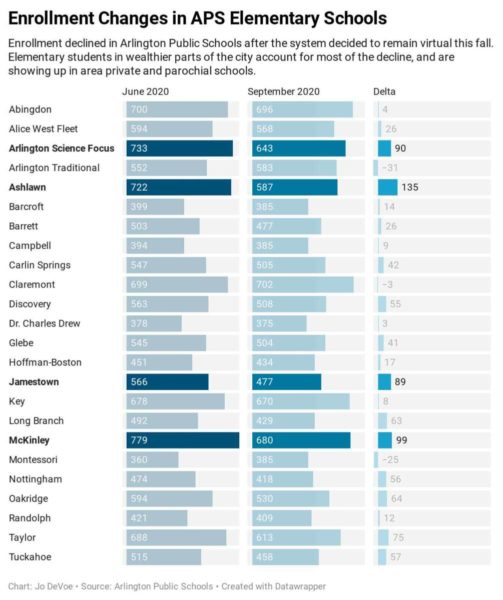
The change is sharpest in the elementary schools, and levels off in the secondary schools. Elementary schools in more affluent North Arlington neighborhoods — including Ashlawn, McKinley and Jamestown — have some of the biggest drops.

PreK enrollment alone is down 270 kids versus last year, the APS numbers show, while K-5 enrollment at elementary schools is down by 843 students.

“The elementary is where you see the story,” said Lisa Stengle, Executive Director of Planning and Evaluation for APS, adding that kindergarten alone has seen a drop of about 300 students.
Anecdotally, officials in public and private education say families are opting for parochial and private schools that are offering more in-person instruction. Currently, APS is fully remote, though moving towards “hybrid” in-person learning in the coming months.

Stengle said staff have told her that families are deciding to wait a year, homeschool their kids or switch to private and parochial schools.

About 74 new students enrolled at Our Savior Lutheran School in Barcroft, which Principal Joshua Klug described as a “huge increase.” His school offers daily in-person sessions in the morning or afternoon, with have no more than 10 children per class.

Normally, the largest increases are in kindergarten, with 15 to 20 new students. This year’s surge crossed grade levels, he said. Enrollment is now 126 students, up from 113 last year.

“We get new families every year, but it’s a greater percentage this year than in past years,” he said. “We lost more than we would normally lose because of the pandemic, but we definitely gained more than we normally do.”

Klug said he’s not sure whether all of the new students will stay when public schools reopen their buildings for all students. But there might also be an influx of students when conditions feel safer.

“We’ll see what happens,” he said.

Stengle said the fluctuation is not a sustained pattern, but “the effect of the pandemic.” Still, that decline is not as sharp as it may appear, she said.

“We’re lower than projected, but we’re not a lot lower than our actual enrollment,” she said. “Next year, I expect to see growth when we return to a normal school setup.”

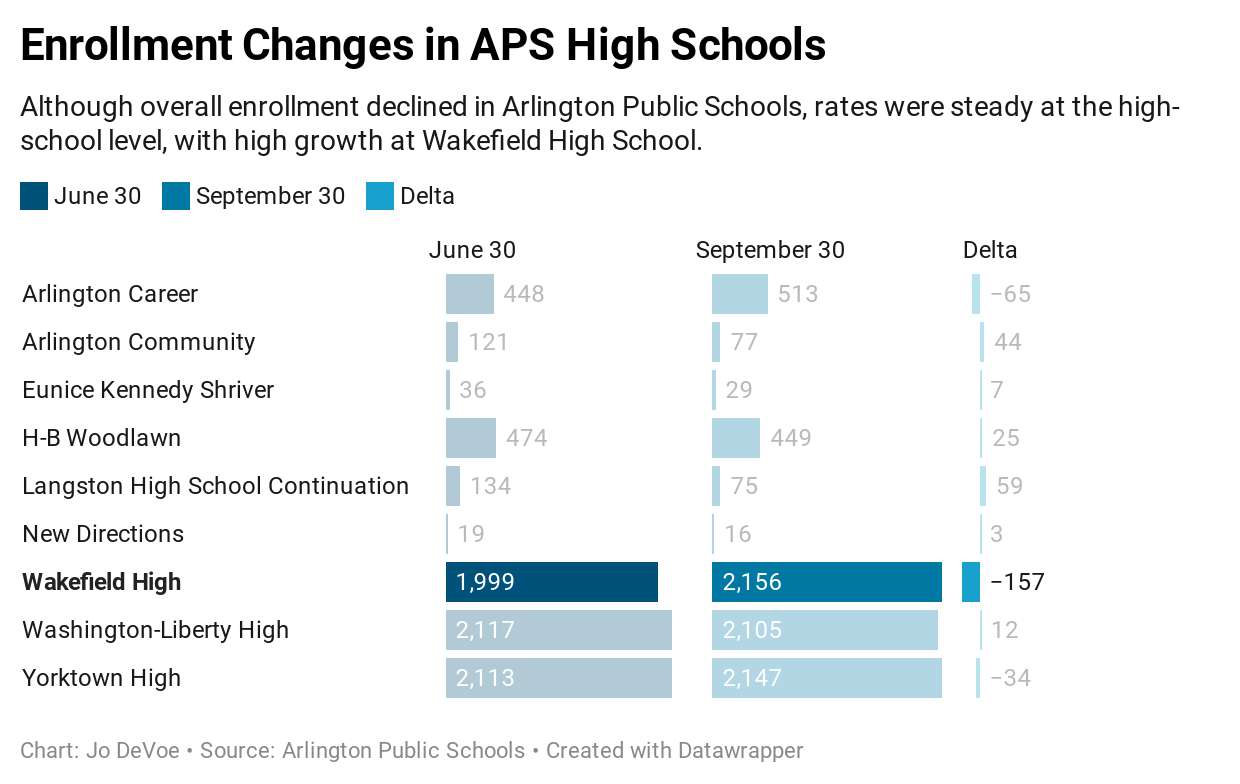
Some schools saw increases, including Wakefield High School, which is located in one of Arlington’s fastest-growing areas for student enrollment.

Among nearby school systems, Fairfax County Public Schools also saw a decrease in enrollment, by about 8,000 students. In his opening of schools report on Sept. 18, Superintendent Scott Brabrand said 181,477 students enrolled in this year, compared to the 189,837 students projected in the budget.

Alexandria City Public Schools also recently had a high-profile instance showing the draw of private schools. Superintendent Gregory Hutchings, Jr. recently confirmed that one of his two children has enrolled at the private Bishop Ireton High School since the start of the pandemic. Hutchings confirmed the decision to Theogony, the T.C. Williams High School paper.

“I can confirm that our family made a decision to change my daughter’s school this school year,” Hutchings told Theogony. “Decisions like these are very personal family decisions and are not taken lightly. This in no way impacts my absolute lifelong, commitment to public education, to which I remain as personally dedicated as ever.”
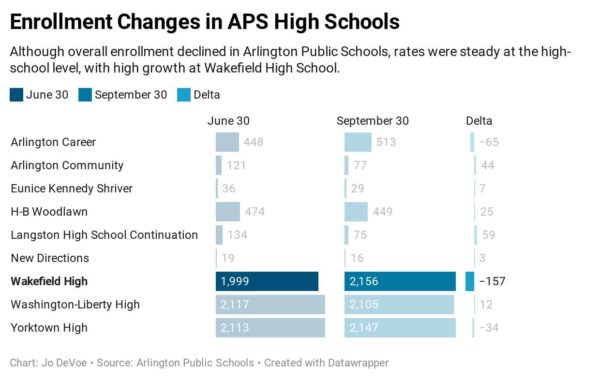


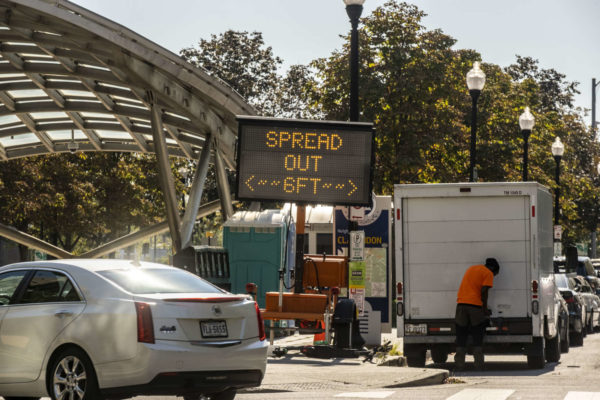
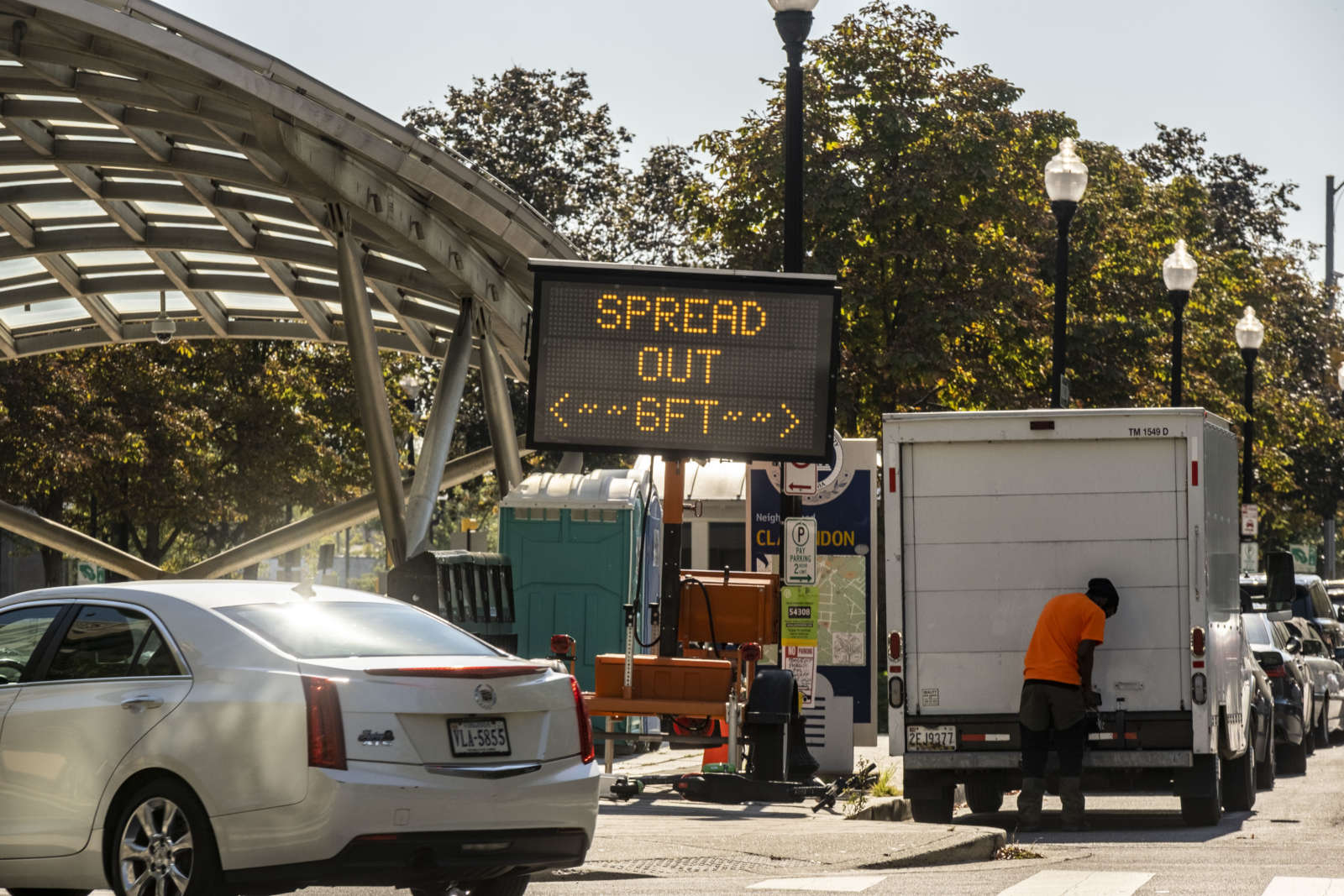
As the summer approached with lockdowns in place, many cities, including D.C. and Alexandria, closed some streets to drivers and expanded walking and biking options.

Arlington did not, although many residents supported the idea, according to an ARLnow poll from April that found support for closing streets among 80% of respondents.

The county did not close roads primarily because it lacked materials and manpower, Director of Transportation Dennis Leach told the Arlington Bicycle Advisory Committee during its meeting on Monday. The explanations angered members.

Gillian Burgess, the former chair of the committee, told ARLnow that the meeting was “frustrating.” Members were told to advocate for increased funding to close streets and to attend other meetings, which she said deflected the responsibility away from the department.
“No one is willing to say ‘Yes, how do we do it?'” she said.
Burgess started championing the cause in March, when she rallied together people from various organizations to ask the County Manager for more space for non-drivers. Their efforts were unsuccessful.

Transportation and Operations Bureau Chief Hui Wang told ARLnow that the department looked at the roads people suggested for closures, considering safety, feasibility, resources and the opinions of neighboring businesses and residents.

“We had a hard time to find a good piece of road that was suitable for the treatment that was suggested,” she said.

Obstacles included frequent bus stops and curb cuts, pick-up and drop-off zones next to businesses and access for emergency responders, Wang said. Closing streets, she said, is not as easy as just putting up a few signs.

Signs must meet national standards, for instance, while getting placed in safe spots, checked for damage and replaced when necessary, she said. Safety requirements like these make the task difficult.

Wang said the pandemic revealed what her bureau lacked in order to respond. Her team did manage to procure temporary outdoor seating areas within sidewalks, and closed some parking lanes to allow people to walk around the new outdoor dining areas, but does not have the resources for large-scale temporary pedestrian-only zones, she said.

Another factor in the action: questions of equity and whether closing streets in certain areas would benefit those hardest-hit by the pandemic.

Burgess said she understood these reasons at the beginning of the pandemic. Eight months later, it is “super disappointing that Arlington can’t be creative, nimble or quick and can’t try something that would serve residents,” she said.

Arlington transportation officials have now turned their attention to Arlington Public Schools an an anticipated return to school for students. They are working to identify the best routes for walking and changing the timing of lights to make crossing the street safer.

Buses will operate at a lower capacity, meaning more parents may drive their kids when they could walk or bike instead, Burgess said. She said a silver lining of decreased busing may be a growing realization that Arlington should prioritize making streets more biking- and walking-friendly.


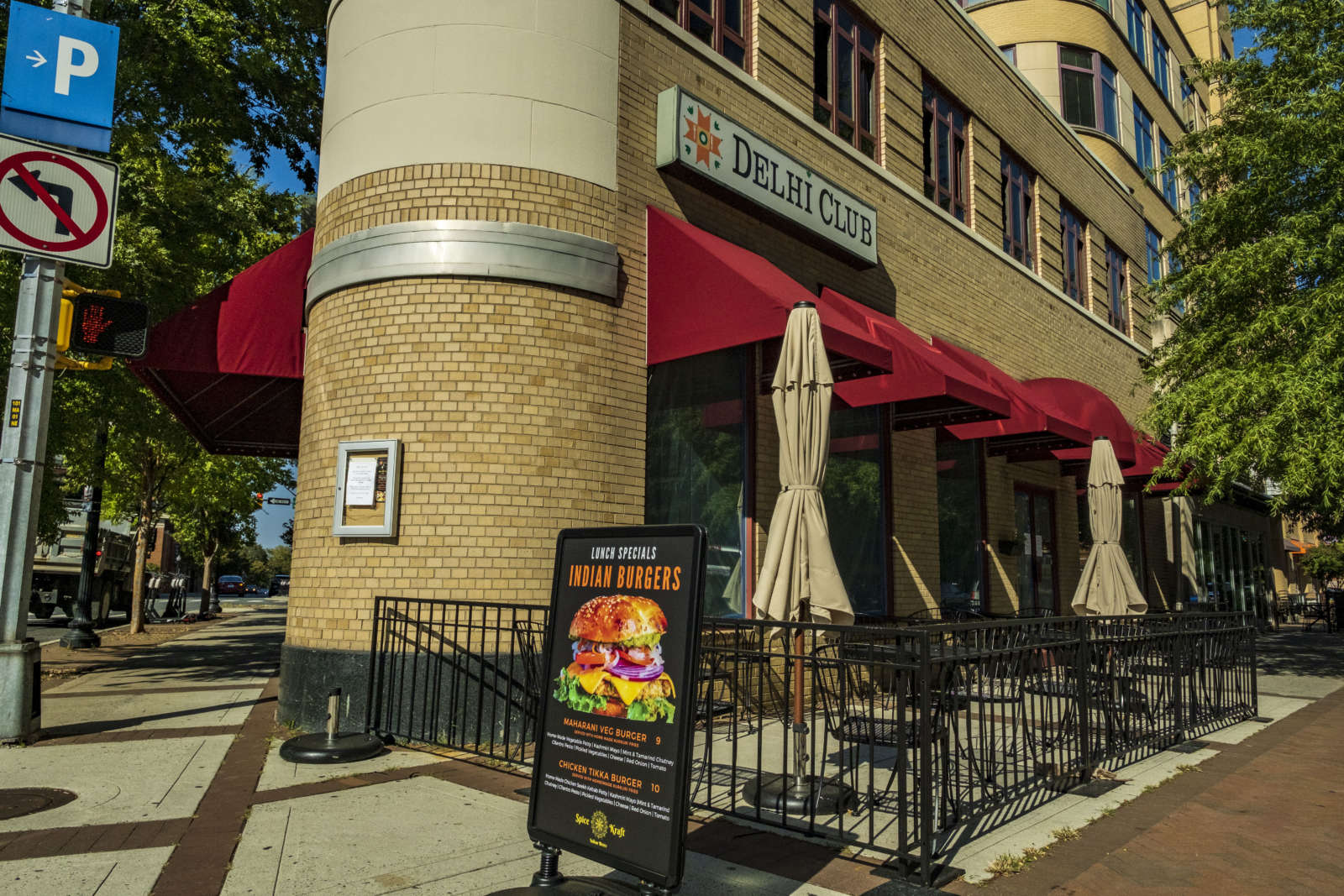
Delhi Club (1135 N. Highland Street) is under new management, and will soon take on a new name: Spice Kraft Indian Bistro.

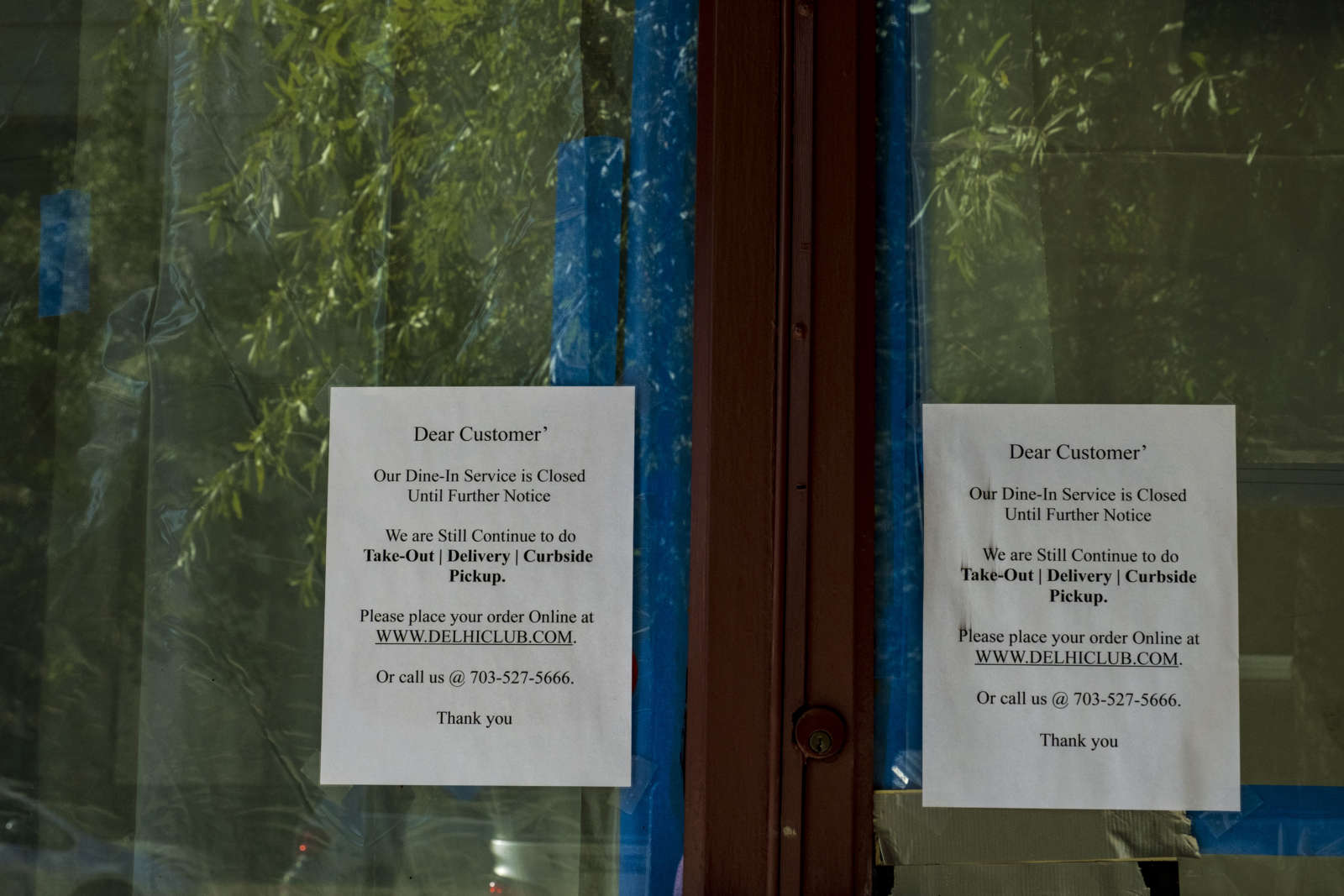
For now, the change is unofficial and the restaurant continues to do business as Delhi Club, said general manager and co-owner Anthony Shankar. Delhi Club’s doors will reopen as Spice Kraft Indian Bistro by the end of the month, he said.

The restaurant in Clarendon will be the second location for Spice Kraft, which first opened in August 2019 in Alexandra’s Del Ray neighborhood, but had its grand opening this January. Like its approach to Delhi Club, Spice Kraft opened in the former Bombay Curry Company space.

Shankar said the owners of Spice Kraft and Delhi Club have a business relationship. When the Delhi Club owners decided it was time to close their restaurant, they approached Spice Kraft to see if they were interested in the spot, he said.

“They saw Spice Kraft has potential in Arlington,” Shankar said.

Shankar and fellow co-owners Helen Sanjjav and Prem Durairaj were planning to open the space before the pandemic started, but COVID-19 delayed the project from March through August.

Once regulations started easing up, the three got to work.

“We didn’t want to wait too long,” said Shankar, who managed Taaza, a popular Indian restaurant in Roanoke, for seven years before relocating to Alexandria to open Spice Kraft.

The owners have aspirations of Spice Kraft becoming a local chain, and intend to open two to three more locations in Northern Virginia after expanding to Clarendon.

Another nearby Indian restaurant, Delhi Dhaba, operates a few blocks down in Courthouse, but Spice Kraft will not be in direct competition with it, Shankar said.

“We see ourselves as classical and contemporary,” he said.

The menu is mostly the same across the two locations, but about one-quarter of the options are new, including some of the lunch fare, fusion dishes and rice bowls, Shankar said.

For example, Spice Kraft is serving up burgers with proteins such as chicken tikka, and the pre-plated rice bowls come with a protein, side, bread and salad for about $10.

Delhi Club opened in the early 2000s, but closed briefly during the summer of 2011 after a fire broke out.


View More Stories