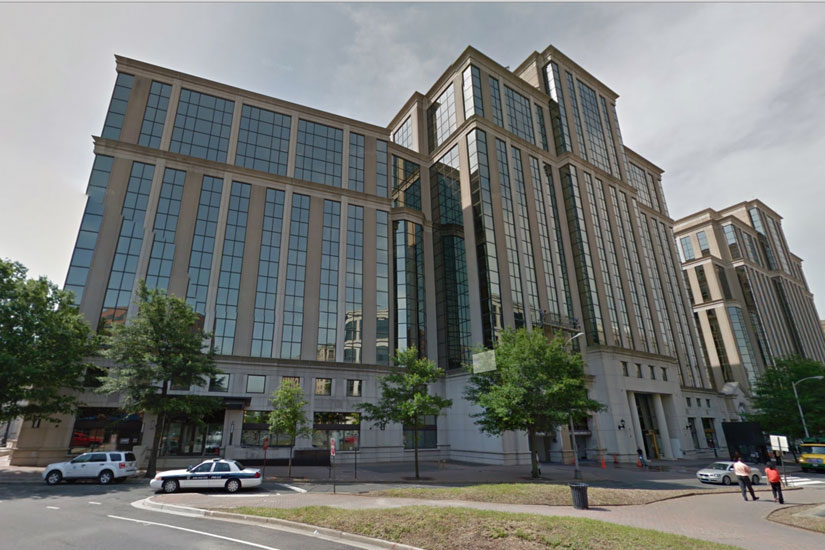
The lower levels of the county government’s headquarters in Courthouse will undergo renovations starting next Monday, Sept. 20, and lasting through January 2023.

Most public areas of the Ellen M. Bozman Government Center (2100 Clarendon Blvd) will remain accessible while the lower levels are being revamped, according to the county.

The $4.8 million project, which the County Board approved in July, includes a variety of renovations to the first three floors and the creation of additional spaces.

“The renovations are designed for better, more concentrated use of space by the public and staff,” the county said. “They also include a new reception area on the lobby level, more conference rooms, and security enhancements.”

There will be renovations to the lobby, second and third floors, the ninth-floor break-room and parking garage-level common areas. Arlington Public Library’s Plaza Branch, located in the lobby, will get a children’s area. More conference rooms will be added and the first-floor reception area for the Department of Community Planning, Housing and Development will be reconfigured.

A county report from July said the renovations will support the county’s “new approach to building security as well as enhance customer interaction and engagement.”

Visitors will still be able to access lower-floor public service counters, including Voter Registration and Elections, the Treasurer’s Office and the office of the Commissioner of Revenue. Directional signs in common areas will guide visitors to their destinations.

Starting Monday, Sept. 27, the Treasurer’s Office will move to the first floor so people can pay their real estate and vehicle taxes in-person through the Tuesday, Oct. 5 due date.

The library’s Plaza Branch, which has been closed throughout the pandemic, will remain closed to the public during construction.

The County Board awarded the $4.8 million contract to Vienna-based Cooper Building Services. Funding will come from a $23.7 million tenant improvement allowance that was provided by landlord JBG Smith when the county renewed its lease in 2018.

The county previously used part of its tenant allowance on a contract to design the interior upgrades. There will be around $14 million left over after these renovations are complete.

Arlington County owns the land under the Bozman Center while JBG Smith owns the building. A letter of intent to restructure the ground lease agreement, announced in March, could eventually extend the land lease to JBG from 2062 to 2119.
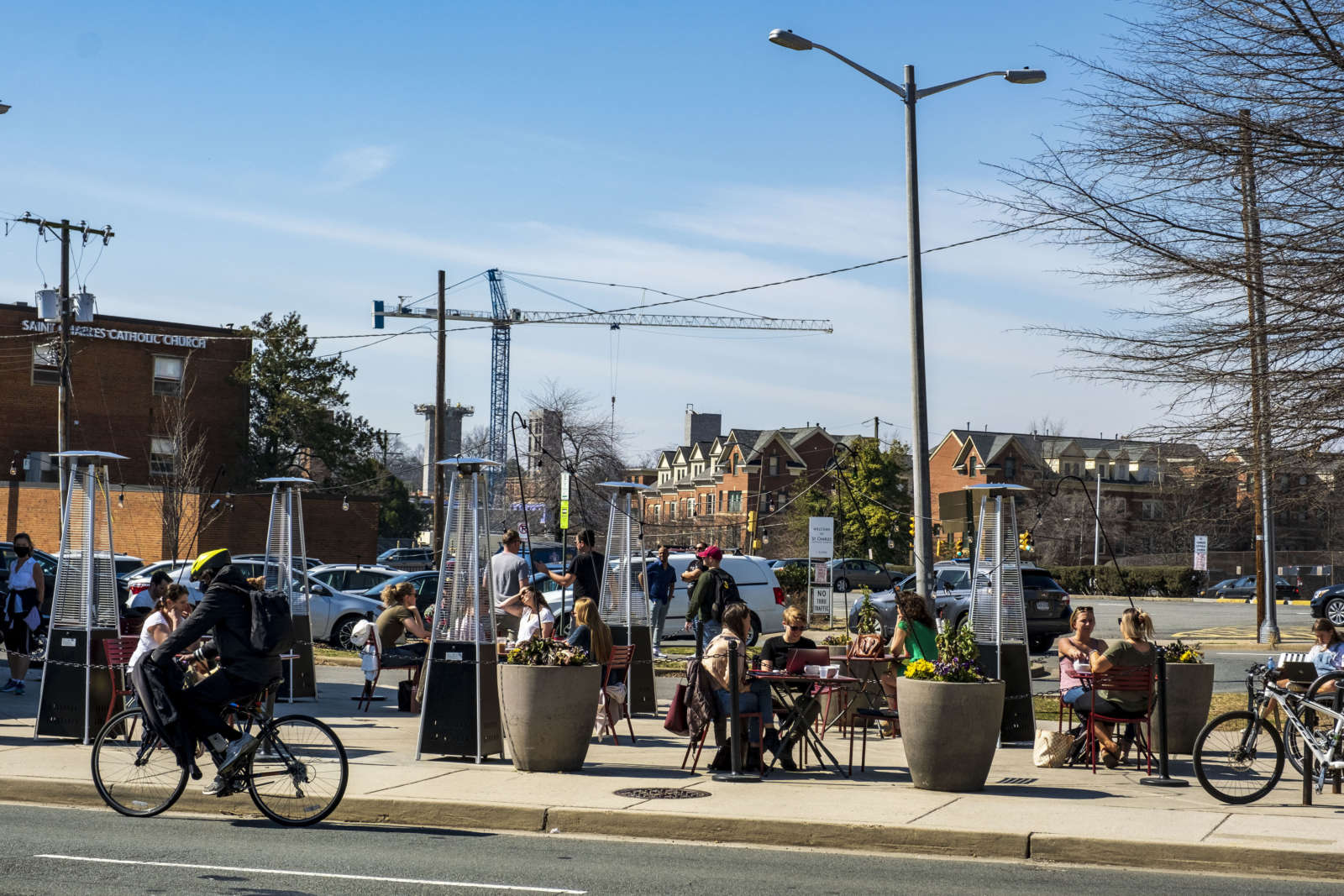
Arlington County says it will explore ways to make it easier for restaurants to establish or expand outdoor dining after the pandemic ends, according to a county report.

During the pandemic, the Arlington County Board approved a temporary way for restaurants to circumvent the normally lengthy county process for getting an outdoor dining permit. Many restaurants debuted outdoor seating over the last year to make up for the indoor space lost to social distancing requirements and give guests a safer dining experience.

Since then, the County Board has amended the outdoor dining ordinance to expand it and mold it to changing circumstances.

In December, the Board granted restaurant and bar owners the ability to set up temporary outdoor seating areas (TOSAs) in common areas, such as plazas. When capacity restrictions were lifted this spring, the County Board gave restaurants a way to request temporary certificates of occupancy (TCOs) for their TOSAs so they could operate the seating areas while operating at full capacity indoors.

The county report said staff will be looking to see if some aspects of the program could be worked into the regular outdoor seating approval process. It did not include a timeline for this inquiry.

“Specifically, staff will be working to commence a strategic exploration of whether certain flexibilities provided as part of the TOSA program initiated in response to the COVID-19 emergency should be incorporated into established regulatory provisions for outdoor dining,” it said. “This future process will have a robust engagement element and would also include public hearings prior to the County Board’s consideration of any recommended policy or regulatory changes that might result from the study,”

All this is being considered in the background of a technical change that will give restaurateurs a little leeway in phasing out the outdoor seating when the local pandemic emergency is declared over.

When the county passed a continuity of governance emergency ordinance last spring to keep government and business operations afloat, it said any flexibility allowed by the ordinance, such as TOSAs, would expire six months after the declared end of the emergency. But in reality, the document’s section on TOSAs said they expire with the declared end of the emergency.

On Saturday, the County Board is slated to consider advertising a public hearing to amend the ordinance so it’s clear that eateries also have six months to phase out the seating.

“In addition to providing consistency with the Ordinance and continued support of Arlington’s businesses, this proposed amendment will also ensure that food establishments are not required, immediately at the end of the emergency, to make significant changes to their operations and allows time for business planning,” the county report said.

Kate Bates, President and CEO of the Arlington Chamber of Commerce, said the Chamber supports this change but urged the county to get cracking on the study of permanent options.

“Given the time it will take for Arlington County to set the rules for permanent, expanded outdoor dining, and the further time it will take for restaurants to adapt to new rules, the Chamber encourages Arlington County to advance its work on making the TOSA program permanent,” she said. “While the 2022 outdoor dining season feels far off as the summer of 2021 winds down, restaurants will need to start making investments soon to be prepared in the spring.”

As part of the upcoming request to advertise, staff said they will do outreach to see how locals feel about TOSAs. Staff report fielding a range of comments, questions and opinions on them, from support from the business community to concern that outdoor dining makes it harder for pedestrians and cyclists to get around. The report said neighbors near TOSAs tolerate the noise associated with them provided that TOSAs would end along with the emergency.

Bates said making the provisions permanent will allow restaurants to invest in their spaces in ways that could mitigate these concerns.

“We expect that there will be some refinements to the outdoor dining rules as they are made permanent, but we encourage Arlington County not to risk the success of outdoor dining by over-regulating to ameliorate any possible complaint,” she said.


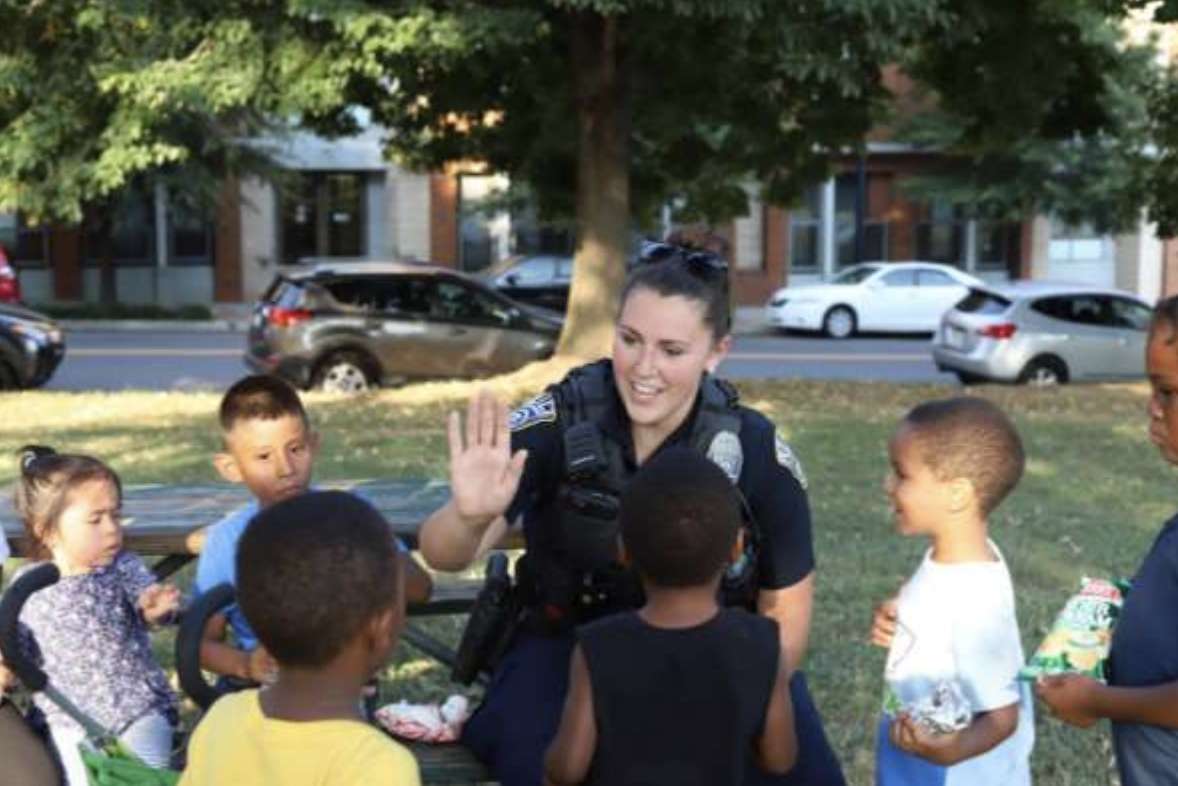
Arlington police officer interacts with kids (photo via ACPD)

Arlington Public Schools and the Arlington County Police Department are hashing out their new working relationship following the School Board’s decision to remove School Resource Officers from school grounds.

Rather than place officers in school buildings, ACPD has formed an off-site Youth Outreach Unit tasked with developing engagement opportunities for and building relationships with kids. This summer, the Arlington School Board became the second in the region to remove SROs from school grounds out of concern for racial disparities in juvenile arrests.

While the new unit builds up its presence, ACPD and Arlington Public Schools are discussing their respective roles in maintaining school safety, which will be outlined in a new Memorandum of Understanding (MOU).

“We are meeting with the Youth Outreach Officers now to determine how they will interact with students and schools during the school year,” APS spokesman Frank Bellavia said. “We are also beginning the process developing the new MOU ACPD/APS MOU. As part of that process, we are creating focus groups with school-based staff and administrators to further discuss the future of our SRO relationship with the shared goals of best serving our students, schools, parents and the broader community.”

Work on the new MOU began on Aug. 30, according to APS. A final draft will be posted for review on Nov. 1, at which point the community will have 15 days to provide feedback on it.

Currently, ACPD’s Youth Outreach Unit has four corporals, two sergeants and a lieutenant who also oversees the Community Outreach Units, ACPD spokeswoman Kirby Clark said. Two team members were previously School Resource Officers.

“The [Youth Outreach Unit] team was selected following a standard internal process, open to all members of the department who hold the rank of officer or corporal,” Clark said.

The unit has fewer than half the 17 officers once assigned to the SRO unit, according to a March 2021 presentation.

Members were assigned to the unit in August and have started attending community events, including the Community Conversations with the Chief and the Arlington Police, Fire and Sheriff 9/11 Memorial 5K Race, Clark said.

“While attending community events and conducting proactive engagement on a daily basis, members of the Youth Outreach unit regularly seek to have meaningful conversations, answer questions, and build relationships with community members,” Clark said.

Feedback from the community conversations will inform the Youth Outreach Unit’s “specific programs, mission and objectives,” she said.

The unit is developing educational programming that could cover topics once addressed by SROs, such as Virginia’s legal system, internet safety, cyberbullying, dating safety and substance abuse. The unit also aims to partner with community groups and organizations to host relationship-building activities, such as sports.

“Given the very recent formation of the unit, specific programs and partnerships are still in development,” Clark said.

The unit and ACPD patrol officers will continue to respond to school-based incidents, which can be reported by calling the Emergency Communications Center at (703) 558-2222 — or 911 in an emergency, ACPD said last month. Non-emergency incidents can be reported through the Online Police Reporting System or by calling (703) 228-4300.


Parents and students are once more rallying behind the German language program at Arlington Public Schools, the future of which is unclear.

When students returned to school on Monday, Aug. 30, those enrolled in German 2 and 3 found out they had no in-person teacher. They instead received links to virtual German classes taught by Fuel Ed and Oklahoma State University, respectively, while German I students were told to choose another language, as virtual education would not be conducive for beginning instruction.

Germanophiles are worried about the program’s existence now and in the long term. For some, it feels like déjà vu, as the community rallied around German and Japanese a few years ago when enrollment was low and APS was considering the future of these programs.

“APS is cutting programs, pushing things online, and making it harder to learn language, when they should be starting early, making it fun and making it so they are actually learning something,” said Suzette Lohmeyer, whose son is enrolled in German 3, and would’ve been bussed to the Arlington Career Center this year for German before his class went online.

Two weeks after school started, the school system tells ARLnow it now has a temporary teacher for German I until a permanent replacement is found. APS added that it remains committed “to providing strong in-person linguistic support” to German 2 and 3 students.

“Our current German teacher has agreed to stay and teach German synchronously (she will be virtual while the students will be at the Career Center with a classroom monitor) until a permanent replacement is found,” spokesman Frank Bellavia said. “Schools will begin modifying student-schedules so that they can begin German 1 by next week. We will continue with our search, but this news gives us time to make sure that we hire a highly qualified German teacher.”

This teacher had resigned before the start of the school year, and APS attributed the problems to the timing of her announcement.

“The timing of the departure of our German 1 teacher has presented some scheduling and recruitment challenges but we are committed to finding a solution,” Bellavia said.

Low enrollment has threatened German in the past. It has the fewest students enrolled of the world languages offered, according to APS data. While Japanese was also on the chopping block a few years ago, enrollment has since increased, resulting in a second teacher getting hired for this fall. German, meanwhile, hovered between 43 and 56 students between 2015 and 2020. This spring, 35 students listed German as their preferred course for the fall, according to APS.

Regardless of enrollment, Lohmeyer and Judith Davis, whose children are studying German and whose families are dual U.S.-German citizens, say the program should stay because one of Arlington’s sister cities is in Germany.

Further, the parents say that the now-returned teacher has been thrown under the proverbial bus. They have built a coalition of other families frustrated by situation, as well as other current and former students and parents, and are pushing for more information, greater transparency and stopgap solutions.

“We have a values gap at the moment,” Davis said. “This is not just a bunch of parents trying to cause trouble: We’re just saying ‘This is not acceptable.'”

(more…)


Sponsored by Monday Properties and written by ARLnow, Startup Monday is a weekly column that profiles Arlington-based startups, founders, and other local technology news. Monday Properties is proudly featuring 1515 Wilson Blvd in Rosslyn. 

Founded in 2007, Clarendon-based Brazen experienced significant growth since the start of the pandemic.

And it’s no wonder, since the company has offered virtual hiring event technologies before virtual-anything was a societal norm. Brazen aims to help companies, universities and organizations engage students, job candidates and employees and improve recruitment and retention, via virtual job fairs and other online events.

“While the mission has remained the same, the types of organizations that saw a need to leverage virtual technologies to help with recruiting and retention expanded greatly in the past year,” the company tells ARLnow.

Brazen said its clientele has expanded from recruiting teams at Fortune 500 companies to state and regional workforce organizations to universities.

The mid-sized, remote-first startup has raised $13.4 million in funding and maintains headquarters in Arlington. Amid pandemic-era labor shortages, it has managed hiring initiatives for Spectrum, University of Southern California and CVS Health, among others.

The company says hiring in general is on the rise right now.

“The war for talent took a break but it’s only heating up more,” it said. “When you add the pressure of 2020’s events and the call for action around diversity, equity, and inclusion, it’s more important than ever for employers to hire, for universities to stand out and support their students and alumni, and for associations, organizations, and government entities to connect more people with more opportunities.”

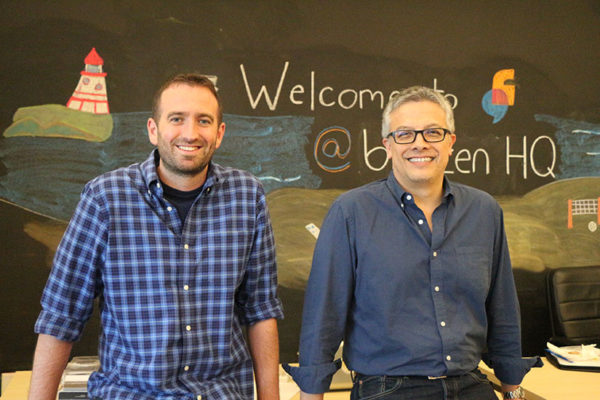
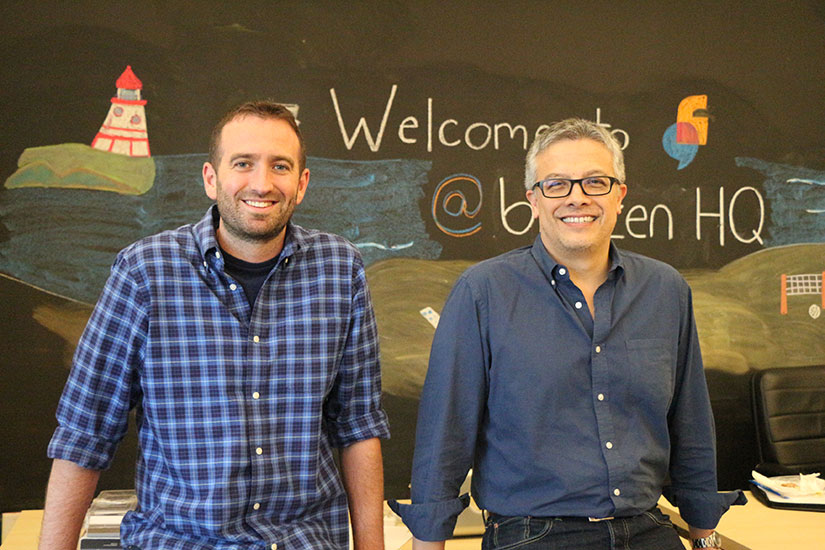
Ryan Healy and Ed Barrientos of Brazen, in 2015

While Brazen’s offerings have also evolved over the last 14 years, its focus remains virtual hiring events.

“Our product innovation has accelerated in the past couple years to make recruiting and hiring even better,” Brazen said. “We’ve added live video broadcasts, video chat, a live chatbot, and more to help facilitate more meaningful connections for all people.”

Those features distinguish Brazen from the likes of Zoom and Cisco WebEx, to which companies rushed to keep up business and host virtual events.

Unlike the other platforms, Brazen said its platform supports everything a team needs to host a virtual event: customizable landing pages, chat management tools to ensure recruiters chat with the most qualified candidates, live broadcasts and follow-up features.

Like Zoom and Cisco WebEx, Brazen says its platform attracted new customers during the pandemic.

“At the onset of the COVID-19 lockdowns and remote work, companies all over the world flocked to Brazen to allow them to continue to hire and retain talent through virtual hiring events and virtual career fairs,” it said. “The genie is out of the bottle and virtual hiring is here to stay.”

The company pointed to in-house research, which found that 83% of surveyed talent acquisition professionals — who are not Brazen clients — said a majority of their hiring events will remain virtual post-pandemic.

“Now that organizations, from enterprise businesses to universities, and anyone working to connect employers and job seekers, have turned to virtual event platforms like Brazen, they’ve seen first hand the benefits of these tools,” it said.


Transit planners have come up with four different ways that they say could solve congestion at the Rosslyn Metro Station while planning for future ridership needs.

Unfortunately, a Metrorail line through Columbia Pike — supported by nearly 70% of ARLnow poll respondents — did not make the cut. But each of the potential future projects does start with changes that some Arlingtonians could see as benefits: a second Metro station in Rosslyn and a first-ever Georgetown stop.

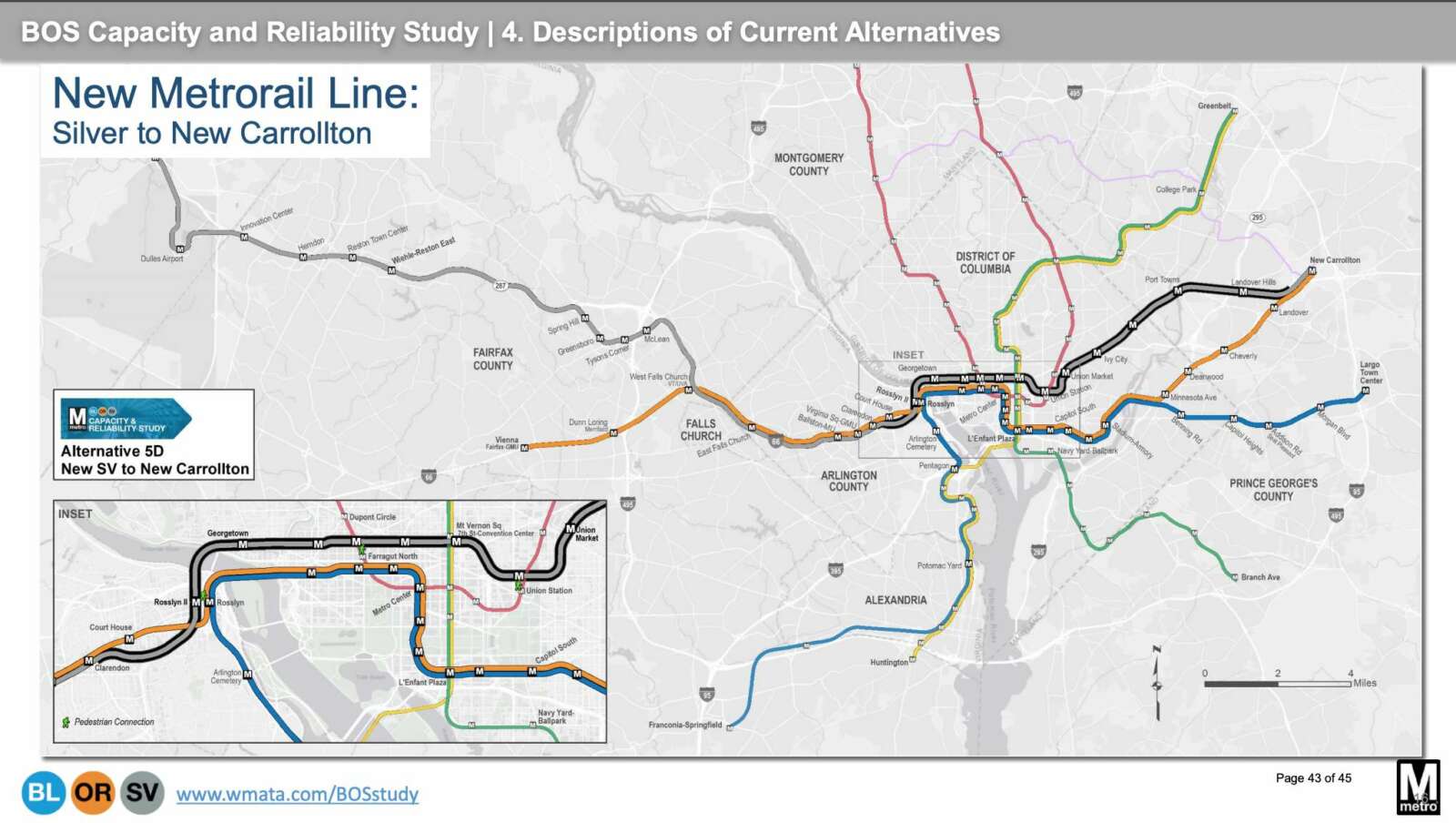
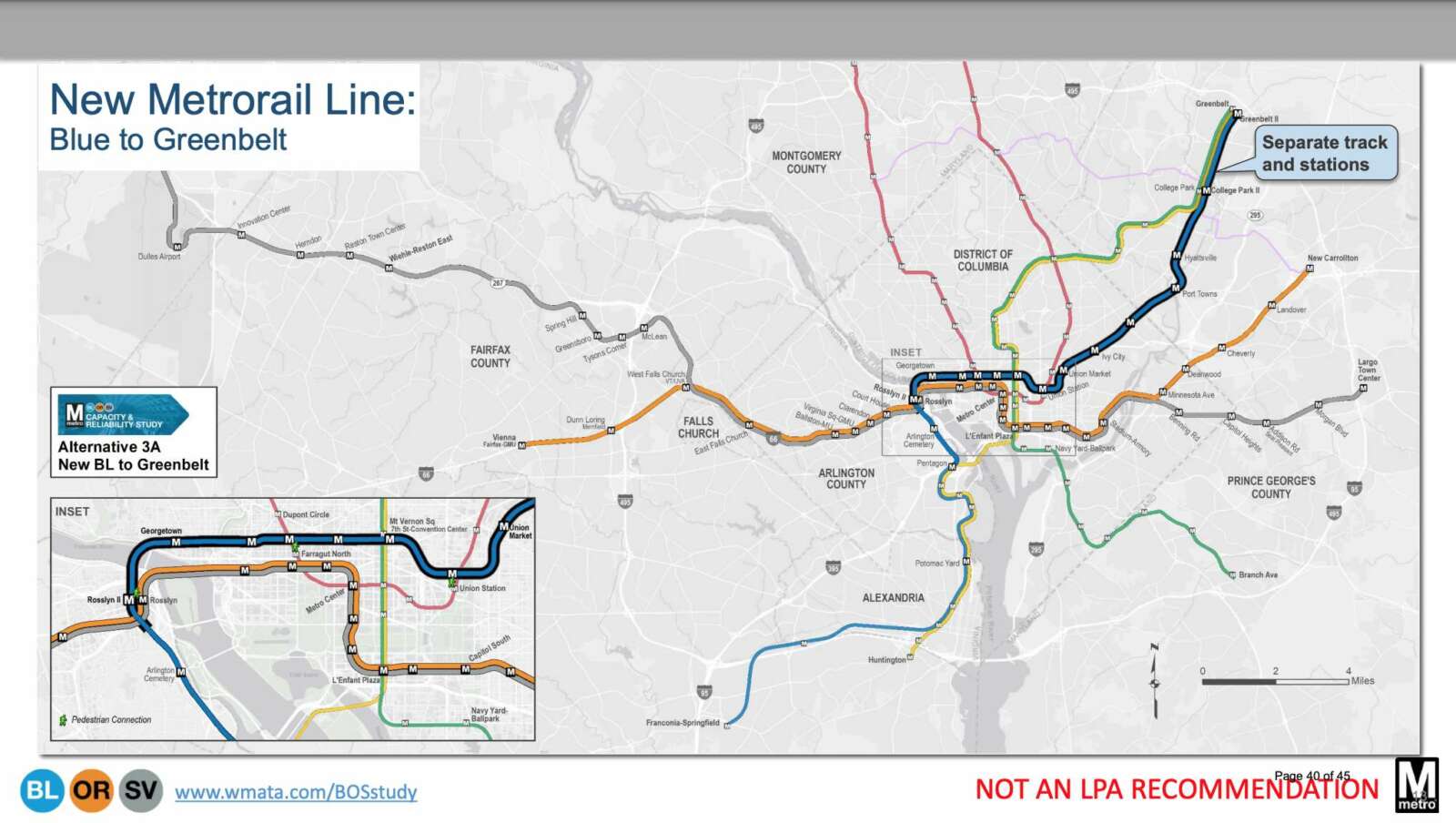
After linking Rosslyn to Georgetown, all four expanded lines would run parallel to and to the north of existing east-west trains, connecting Arlington to West End, the southern halves of Dupont Circle and Logan Circle, and stopping at Union Station. From there, they veer north toward Greenbelt and New Carrollton, Maryland or south to National Harbor.

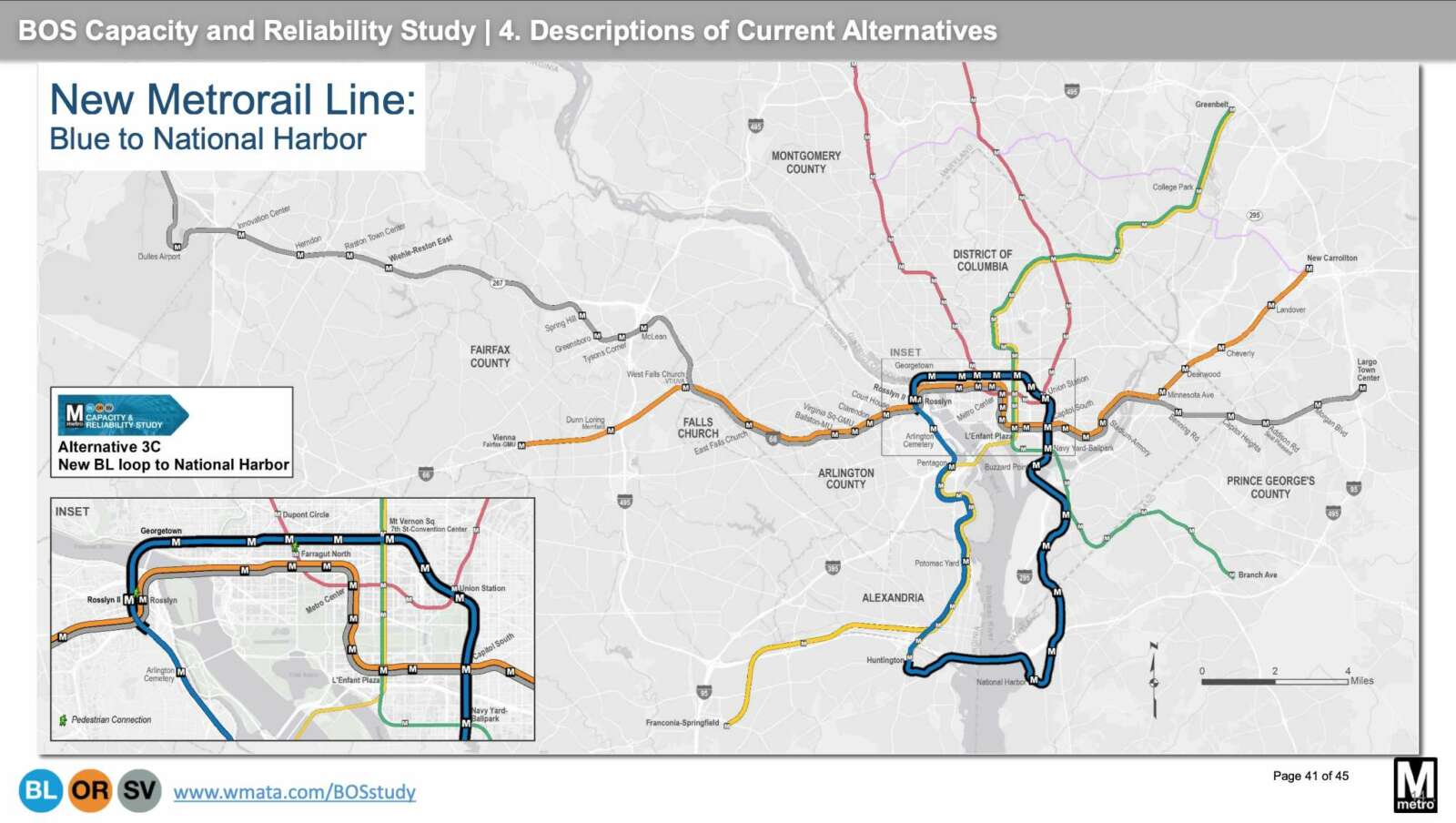
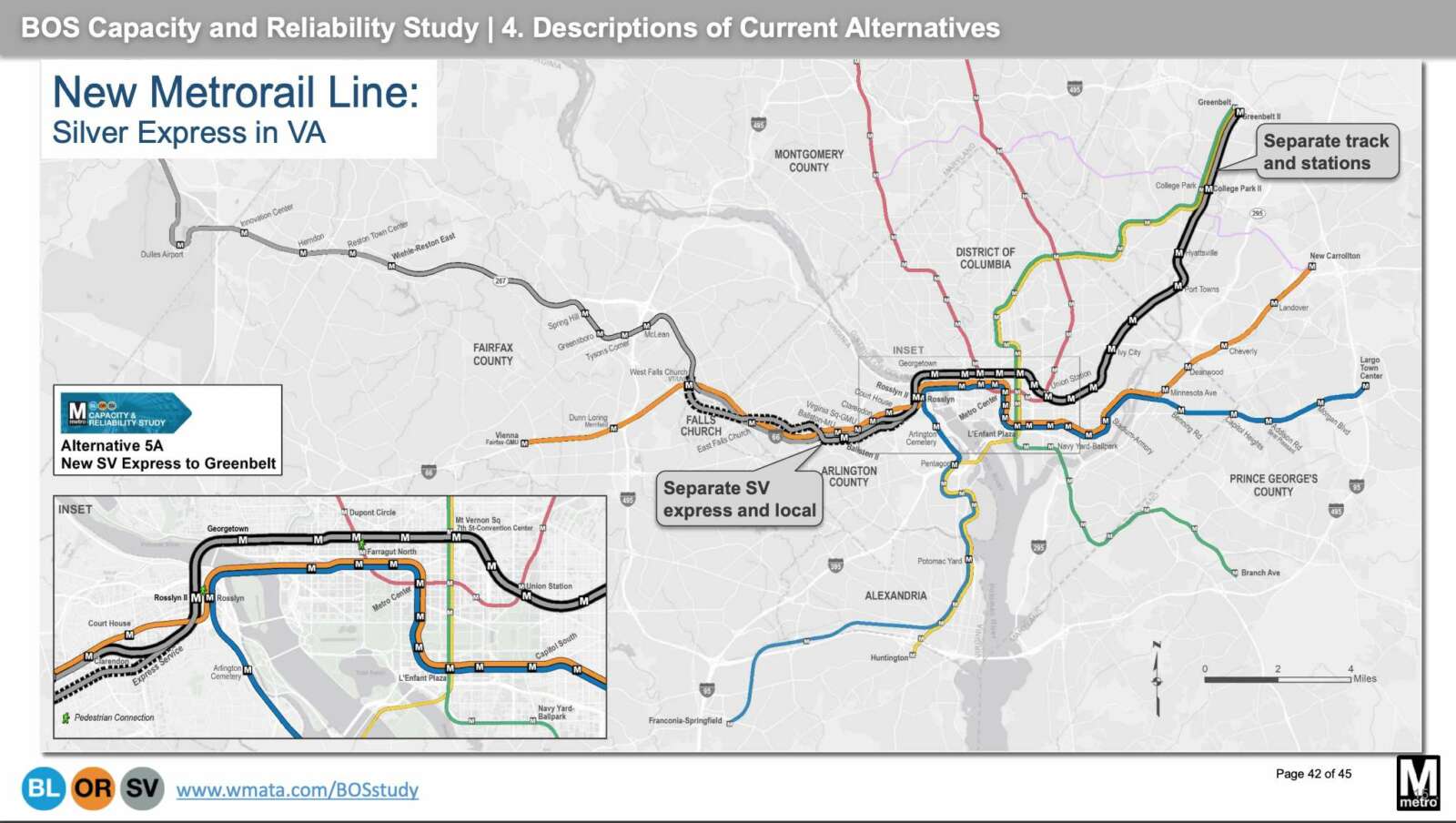
Two options stand out from the pack. First, a Silver Line express tunnel in Virginia starting at West Falls Church station, and stopping at a possible second Ballston station en route to a second Rosslyn station. Another intriguing possibility is a Blue Line loop to National Harbor, which would add some new direct transit connectivity to Arlington’s Crystal City-Pentagon City corridor.

WMATA says these two would have the second-greatest and greatest gains in new ridership and annual fare revenue, respectively.

While these changes could improve commutes, the projects are decades down the road, if they happen at all. Each of the two options above could take up to 25 years to fund (needing $20-25 billion), construct and complete.

Suspending for a moment how far away these new Metro projects could be, what do you think of WMATA’s proposed changes to connectivity in Arlington and just over the river?


Gavel (Flickr photo by Joe Gratz)

An Arlington man has been sentenced to decades in prison for killing a man in the Douglas Park neighborhood three years ago.

Michael Nash, 29, is set to spend nearly 35 years behind bars. Five years and one month of the 40 years sentence was suspended. Nash will have five years of supervised probation.

Earlier this summer, Nash pleaded guilty to first-degree murder for killing Arlington resident Patricio Salazar, who had tried to intervene when he found Nash sexually and physically assaulting his then-girlfriend. Other charges, including forcible sodomy and robbery, were dropped as part of the agreement.

“It was the most accurate charge for the most serious conduct, and it had the support of the other victims,” Commonwealth’s Attorney Parisa Dehghani-Tafti said.

At a 2019 hearing, Nash’s then-girlfriend told a judge that they argued loudly enough for police to come, but were allowed to leave together after separate interviews, the Washington Post reported. They continued walking and ended up on near Doctor’s Run Park.

That’s when Nash “pushed her to the ground and began beating her, stripping her of her clothing and touching her sexually,” the Post reports.

Salazar tried to stop him, but Nash beat him and knocked him unconscious, police said at the time. Salazar was transported to George Washington University Hospital, where he was pronounced dead.

Nash fled the scene and robbed a woman of her cell phone, police previously said. Officers and a police helicopter eventually apprehended Nash near the intersection of Columbia Pike and S. George Mason Drive.

Salazar’s sister Loty launched a GoFundMe fundraiser to honor her brother’s life and raise money for three organizations that support victims of sexual assault in the U.S. and Bolivia. It brought in more than $30,000. Bradley Flood, a witness, also raised money for the family.

His sister remembered Salazar as “one of the most kindhearted and genuine people I have ever met.”

“And, as he showed by his final act of great courage, he was a man of integrity and character, who believed in doing the right thing no matter what the cost,” she wrote.

Flood wrote that it chills him to think what would have happened if Salazar had not intervened.

“He is a Good Samaritan if there ever was one,” he said.


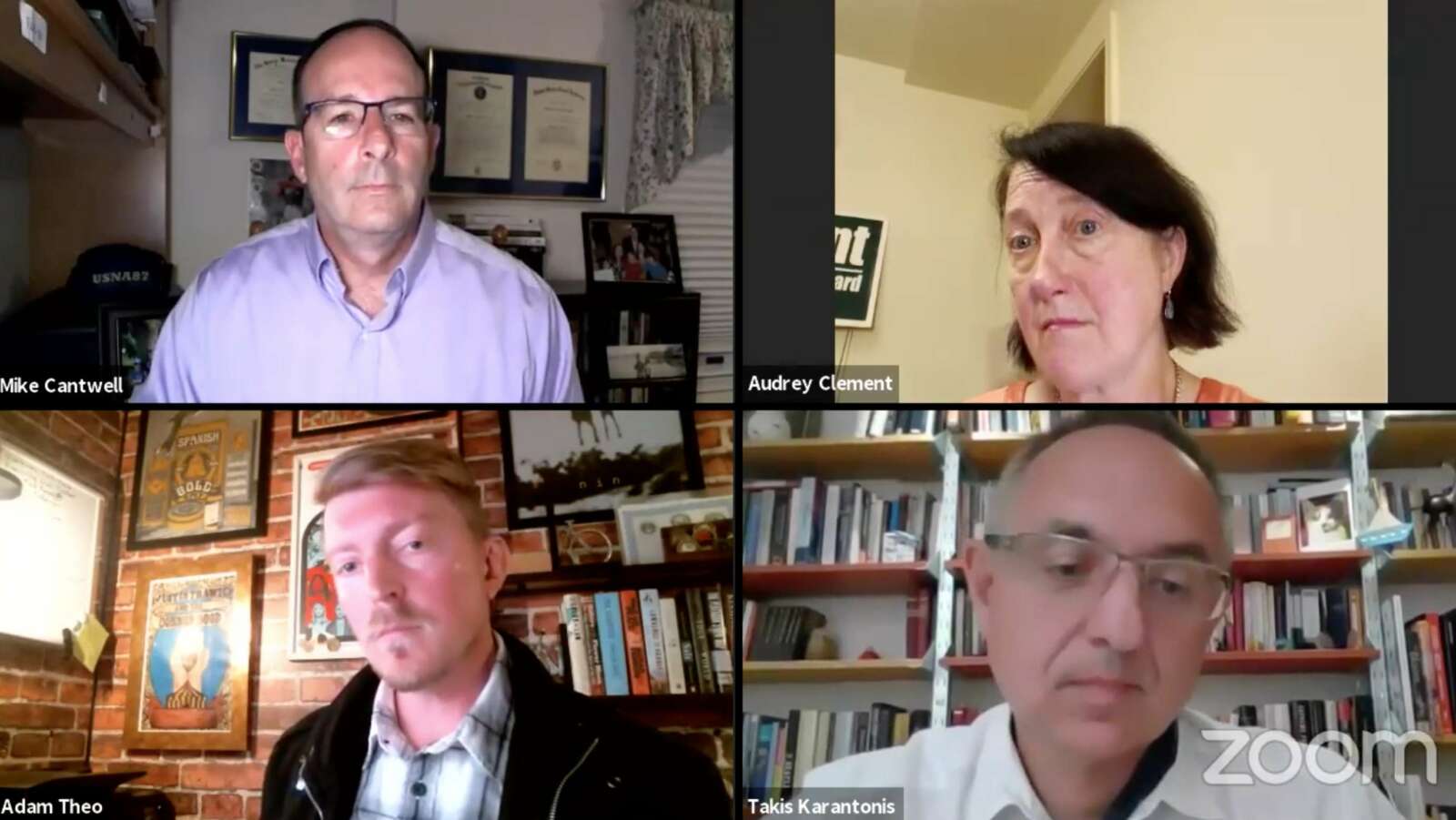
A screenshot of the four candidates for the County Board (via Arlington Committee of 100/Facebook)

Ranked-choice voting is supported by all four candidates for County Board, according to their comments at an Arlington Committee of 100 candidate forum held last night (Wednesday).

The event was the first candidate forum of the fall general election season.

Support is strong among the three independent candidatesAudrey Clement, Mike Cantwell and Adam Theo — who want to unseat Democrat incumbent Takis Karantonis. He won a special election in 2020 and his seat is now up for a full four-year term. Theo, a Libertarian, is the most recent addition to the ballot after officially launching his campaign this week.

While all four support ranked choice voting, the reform would not be ready for the upcoming Nov. 2 election, as the county is still hammering out the logistics of the system. Dismayed at the pace of implementation, the independents said the reform would reveal public support for candidates like them and add political diversity to the County Board.

“I’ve spent a lot of my free time promoting ranked choice voting in Virginia,” said Cantwell, who became the vice president of Fair Vote Virginia, which advocates for ranked choice voting in Virginia, in 2019. “I went to Richmond in February 2020 and lobbied to bring it to Virginia. At that time, to the surprise of many, the legislature passed bills 506 and 1103, which allowed it in [Arlington] and the rest of Virginia. Since that time, [the county has] taken very little action to implement that new law.”

Theo also criticized the lack of movement on implementing the new voting system and educating voters about it.

“It would’ve been awesome to have the logo-picking determined by ranked choice voting,” he said. “That would’ve been a great way to educate the public. Here we are, waiting for the county to proceed and provide results. I have a lot of skepticism for the County Board’s real willingness to push forward real reform. It puts their own positions, jobs, in jeopardy.”

Karantonis said he is on the record supporting ranked-choice voting and voted to fund an initiative to test it out.

“I put money where my mouth is,” he said. “I think this is a great improvement in democracy.”

During the forum the four candidates articulated their positions housing and on Arlington County’s goal of carbon neutrality by 2050. Both Karantonis and Theo said “affordable housing” is the biggest issue facing Arlington.

“I’ve been a housing advocate from day one,” Karantonis said. “The first thing my wife and I experienced [when moving here] was not being able to find housing, not having choices… Arlington is a community that looks back to a solid record of planning carefully for housing, of matching development with assets like transportation, schools and natural resources. We need to bundle these to support the creation of new housing choices because displacement is a real thing.”

Theo agreed.

“[Housing affordability] poses the problem of pricing out the elderly, low-income, immigrant and disabled people who are clinging on as it is already,” he said. “The number of housing units built in this county is horrifyingly low.”

But he took a jab at the County Board for talking about affordable housing and posing for photos at new developments, while not doing more to prioritize affordability. He spoke favorably of the Missing Middle Housing Study, a county-led effort to see if single-family home areas should be rezoned for more types of moderate-density homes, as a means to increase housing options for the middle-class.

Cantwell said he worries about affordability both in terms of housing and taxes.

“I think the biggest problem facing Arlington is runaway spending and taxes and lack of accountability in county government, [which] stems from lack of political competition,” Cantwell said. “I’m for affordable housing, but I question the outcomes of $300 million spent on a government-run affordable housing program… I think most Arlingtonians are interested in finding a market rate affordable housing place to live in, but not that many are interested in being part of government run program, where they have to submit tax returns, W-2s [and other] bureaucracy.”

Clement said the Missing Middle Study will create more housing, but nothing truly affordable, predicting people will continue to get priced out of their neighborhoods. She added that it won’t promote racial equity, citing a study from New York University that found between 2000-2007, upzoning in New York City “produced an influx of whites in gentrified areas, even as white population plummeted.”

“A far better solution is to repurpose unrented luxury units in the Rosslyn-Ballston corridor to moderate income housing,” she said.

(Another NYU study found little link between neighborhood gentrification and displacement of low-income residents, at least in New York City.)

(more…)


The Arlington County Board is set to vote on adopting a 5-cent tax on disposable plastic shopping bags at its meeting next week.

Last March, the Virginia General Assembly gave municipalities the option to levy the tax with revenues earmarked for local environmental education and cleanup. The County Board discussed enacting a tax last year, but put it off over concerns about how this would financially impact low-income residents during the pandemic.

Now, the county is looking to tax plastic bags issued at grocery, convenience and drug store checkouts to help “reduce pollution and protect natural landscapes.” Similar efforts are underway in Alexandria and Fairfax County, meaning much of Northern Virginia could see a tax in effect by January 2022, the county said in a press release.

“The tax gives shoppers an incentive to bring their own reusable totes rather than accept single-use disposable plastic that can wind up polluting local waterways or simply tossed in with trash destined for incinerators and landfills,” it said.

Currently, Arlington’s residential recycling program does not accept plastic bags because they can damage sorting equipment, the county said. Many large supermarkets do offer bag bag drop-off bins, and some retailers in Arlington have given shoppers a checkout discount for using reusable bags.

Exempt from the tax will be: paper bags; task-specific bags, like those used for holding meat and seafood, vegetables and protecting dry cleaning; and bags that are products for purchase, like trash and pet waste bags.

Retailers who collect the tax can keep two cents per bag for the next two calendar years, and then one cent per bag in subsequent years. Collection is overseen by the state Department of Taxation, which then distributes revenues for localities to administer.

The county will develop strategies to address the equity impacts of this proposed change, Department of Environmental Services spokesman Peter Golkin tells ARLnow.

“We are pleased that the legislation allows proceeds of the tax to fund the purchase of reusable bags for WIC and SNAP program beneficiaries and we anticipate expanding that to others in our community,” he said.

This fall, the county will embark on an education campaign to help residents understand the program and its environmental benefits.

When the County Board last discussed the plastic bag tax in October 2020, staff had drafted a timeline for implementing it by summer of 2021. But Board members cautioned moving too quickly and not considering the unintended consequences on those who are vulnerable and low-income — especially during the pandemic.

“The most vulnerable suffer the most from pollution and will suffer the most when we try to clean it up,” Board Chair Libby Garvey said at the time. “We’re going to try and do it right and be aware of the pitfalls, and there are a lot.”

The public will be able to comment on the proposed tax at next Saturday’s meeting, before the Board vote.

Photo by Morgan Vander Hart on Unsplash


It looks like the Washington Metropolitan Area Transit Authority is not going to consider a Metro line through Columbia Pike any time soon.

For the last year and a half, there were some signs that such an expansion — which was part of initial Metro planning in the 1960s but was never built — was an actual possibility.

In December 2019, Metro mulled the idea for a Silver Line extension down Columbia Pike and up Route 7, connecting with the West Falls Church Station, as one of a handful of ways to address congestion in the Rosslyn Metro tunnel, system reliability and future ridership growth. News of President Biden’s $2 trillion infrastructure plan, which coincided with WMATA’s deliberations, further crystallized those hopes.

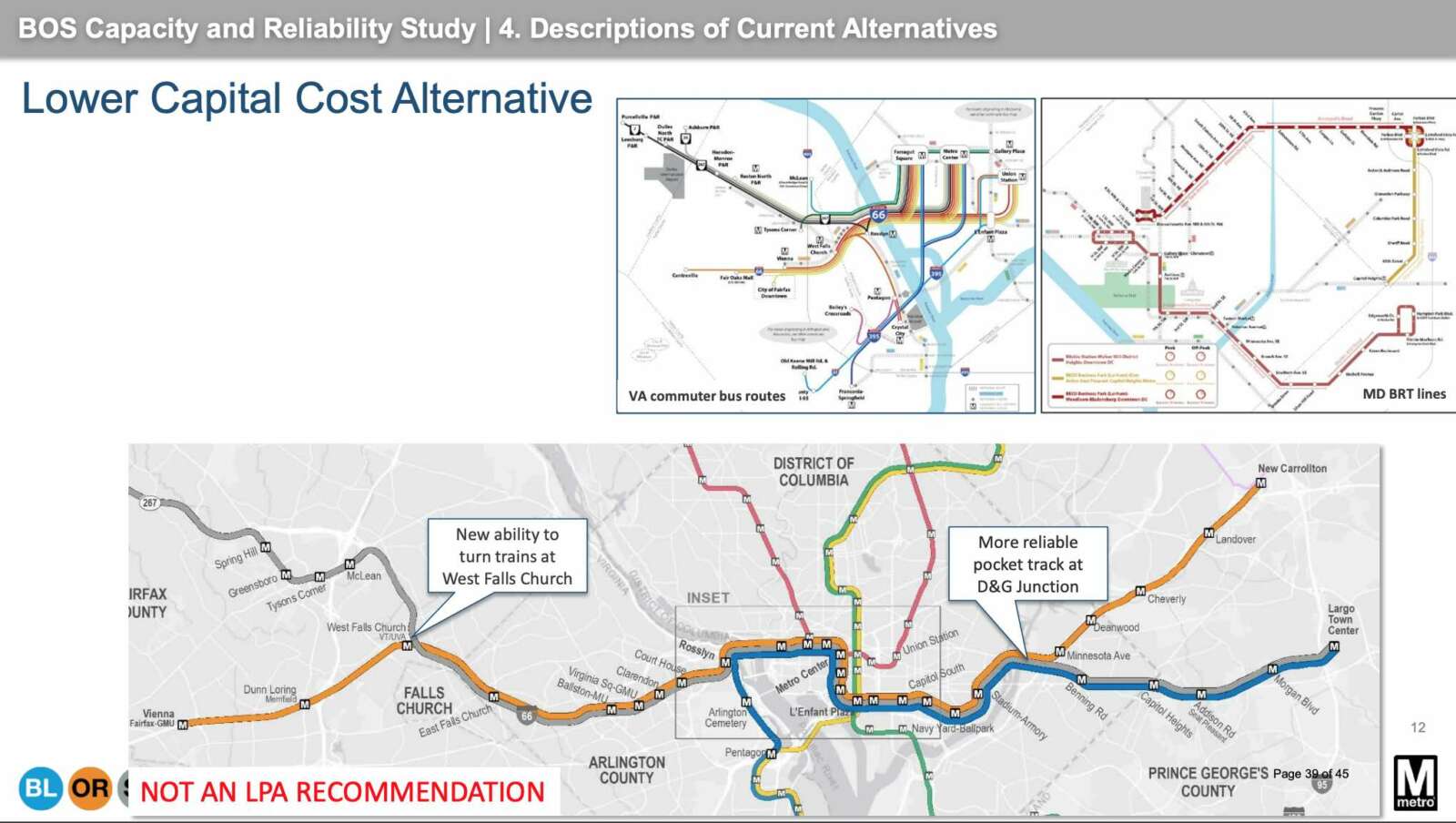
A new study posted this week, however, indicates this extension — which nearly 70% of ARLnow readers supported in an April poll — has been ruled out. That follows a cost-benefit analysis by planners, which favored four other routes — each starting with a second Metro station in Rosslyn and adding an underground Metro station in Georgetown — as well as two options that don’t involve new construction.

WMATA is looking for the next way to expand Metro on a scale similar to the Silver Line extension to Dulles International Airport, as it seeks to alleviate traffic and congestion in the Rosslyn tunnel and along the the Blue, Orange and Silver lines. In early 2019, it launched the Blue/Orange/Silver Capacity & Reliability Study (BOS Study) to identify a line that would do so.

Metro planners outlined the four finalists, absent the Pike, in an update to the BOS Study that Metro posted this week. The four options use a second Rosslyn station to alleviate congestion at the existing station, and establish a long-discussed underground station in Georgetown, which has never had a Metro connection.

The possible projects, which would cost billions of dollars to build, include a Blue Line loop to National Harbor — which planners think would add the most new riders and revenue to the Metro system — as well as a Blue Line extension to Greenbelt, a Silver Line express tunnel option through Arlington, and a Silver Line to New Carrollton.

The express option “would create a separate tunnel and tracks for the Silver Line, starting at West Falls Church Station,” according to WMATA. A diagram suggests it would skip all Arlington stations except the second Rosslyn station and perhaps a second Ballston station.

“From WFC to a new second Rosslyn station, the new tunnel could support express service, local service or a mix of express and local service,” WMATA said. “From the second Rosslyn station, the Silver Line would travel through Georgetown…. to Greenbelt.”

(more…)


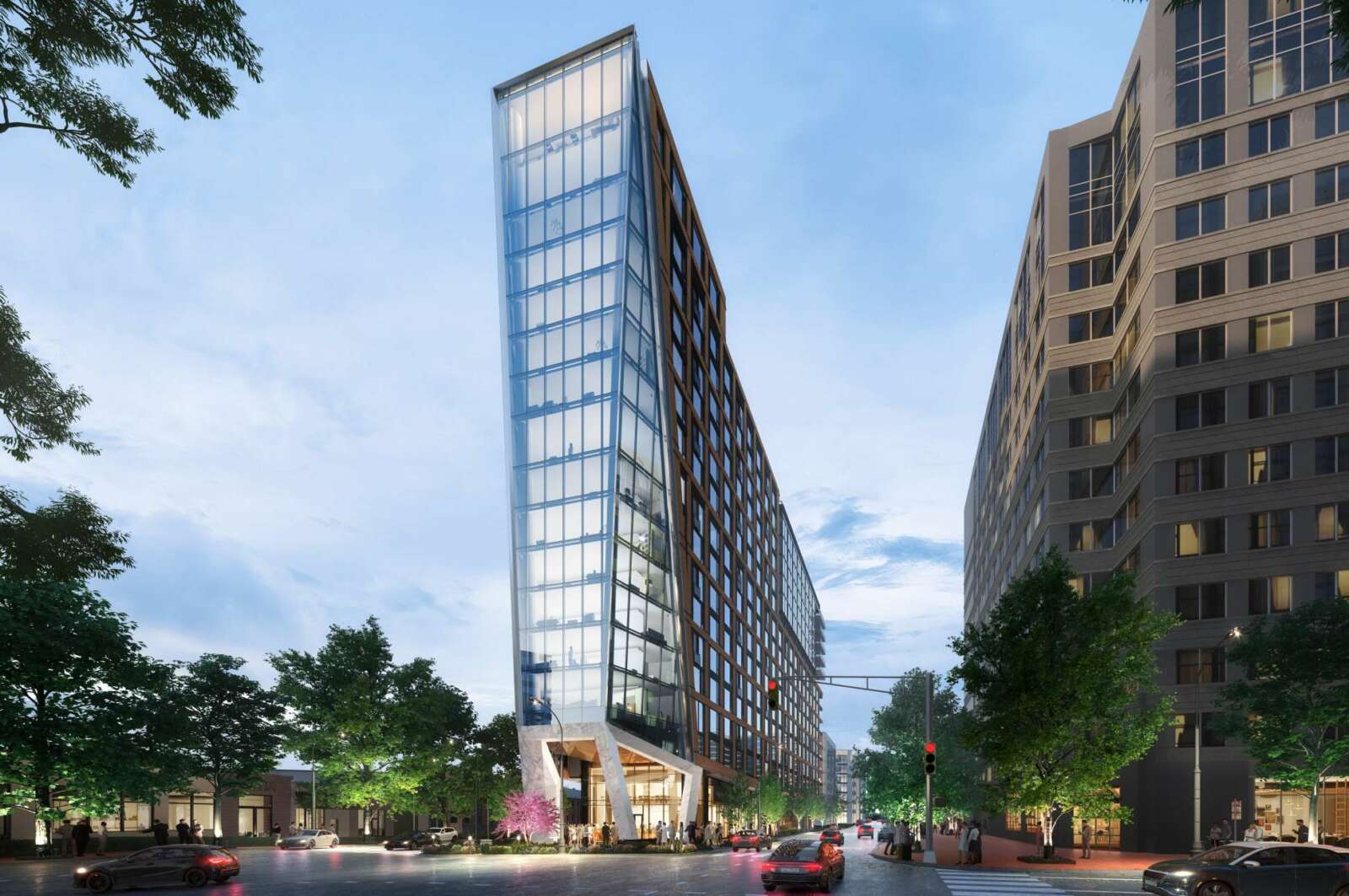
Arlington County is inviting the public to provide feedback on the planned development for the vacant Wendy’s lot at 2025 Clarendon Blvd.

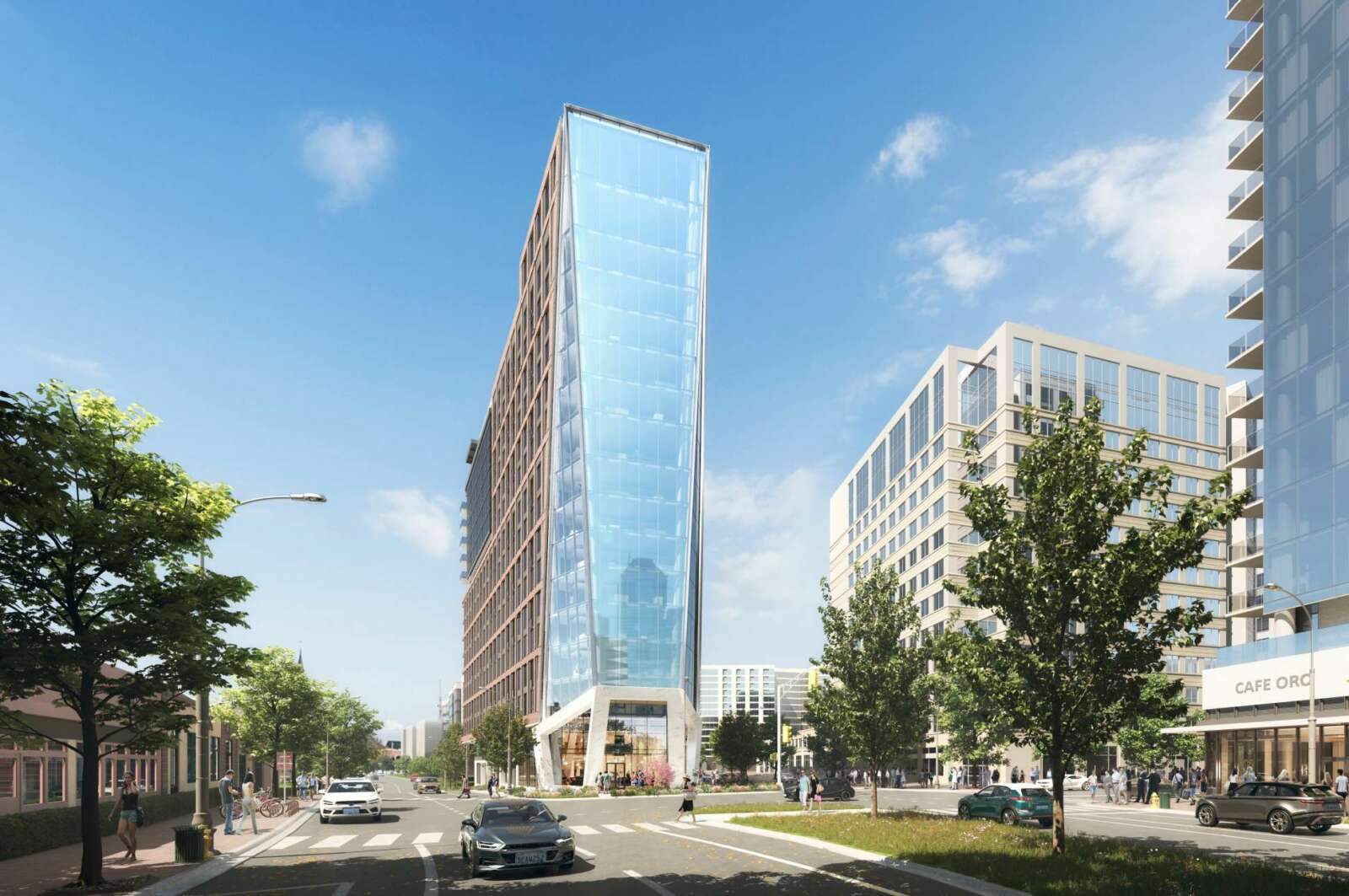
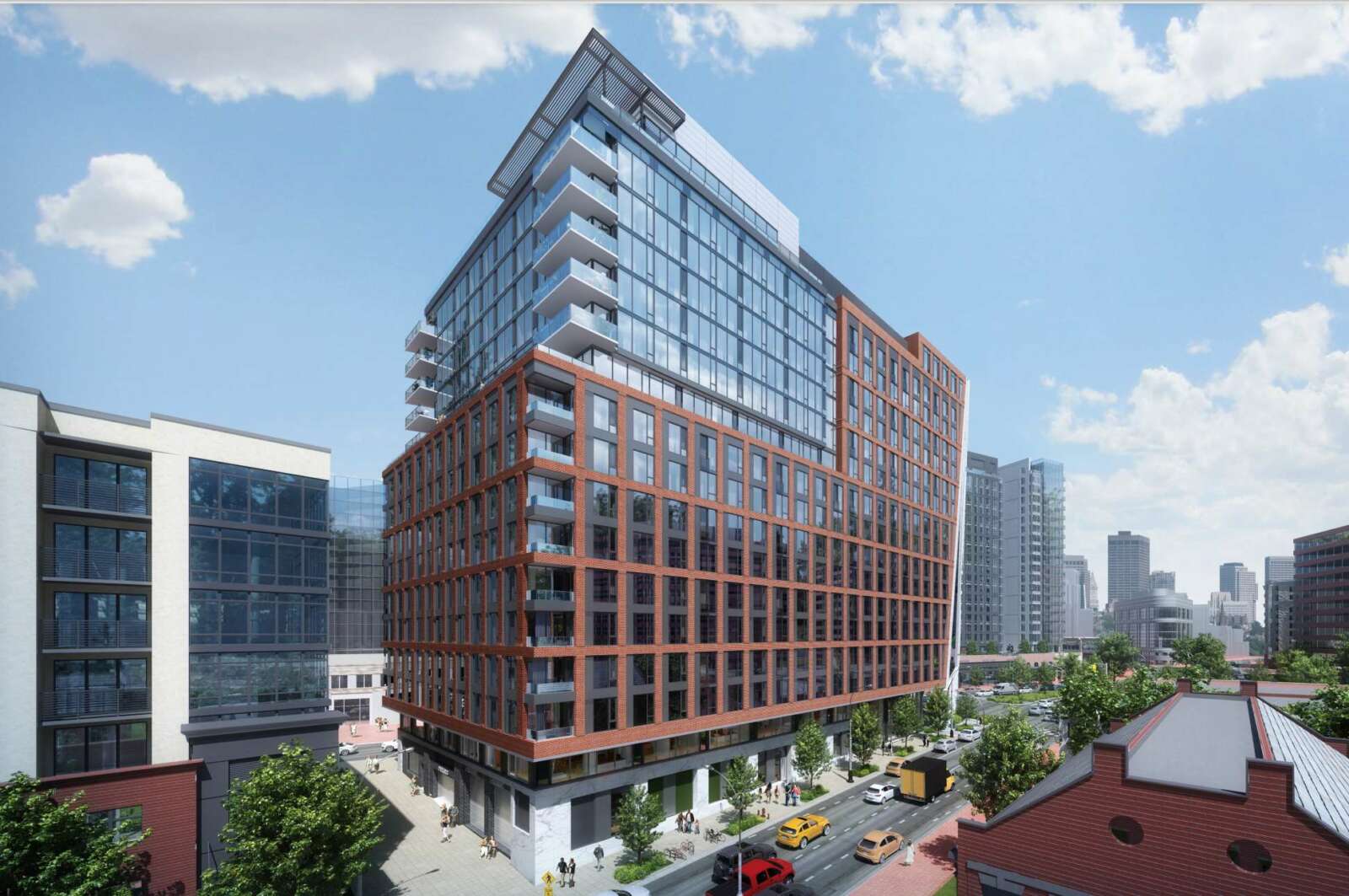
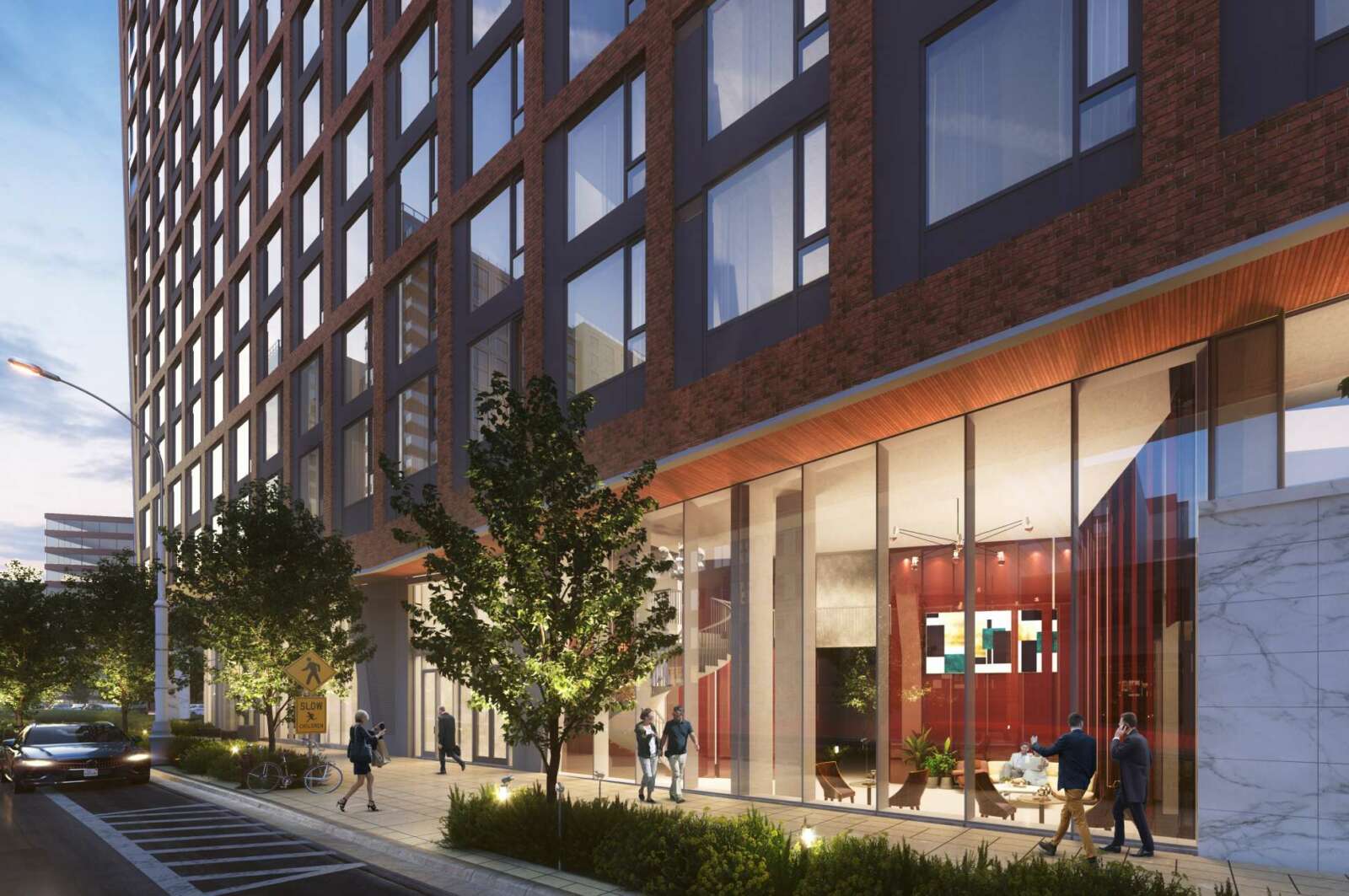
Greystar Real Estate Partners is proposing to turn the 0.57-acre lot about a block from the Courthouse Metro station into a 16-story apartment building, with up to 231 residential units and 4,000 square feet of retail.

Through Thursday, Sept. 16, residents can comment on land use — whether the building should be used for apartments or offices — as well as building size, architecture, transportation and open space.

Initially, the project was set to be an office building, proposed by the former developer, Carr Properties. After receiving the County Board’s go-ahead in 2015, the fast food spot was demolished in 2016 but the office building never materialized. The vacant lot has instead been used as a staging area for 2000 Clarendon, a condo project across the street.

A Greystar representative said in a presentation that Carr could not secure a tenant for the office building. So the new developer has turned to apartments instead.

“While a conversion from office to residential use will always require some changes to a building, we took a fresh look at the previously approved project, while changing it to fit a residential floor plan and adding a modest amount of additional height,” the representative said.

For the new project, the county and Greystar are interested in feedback on the architecture.

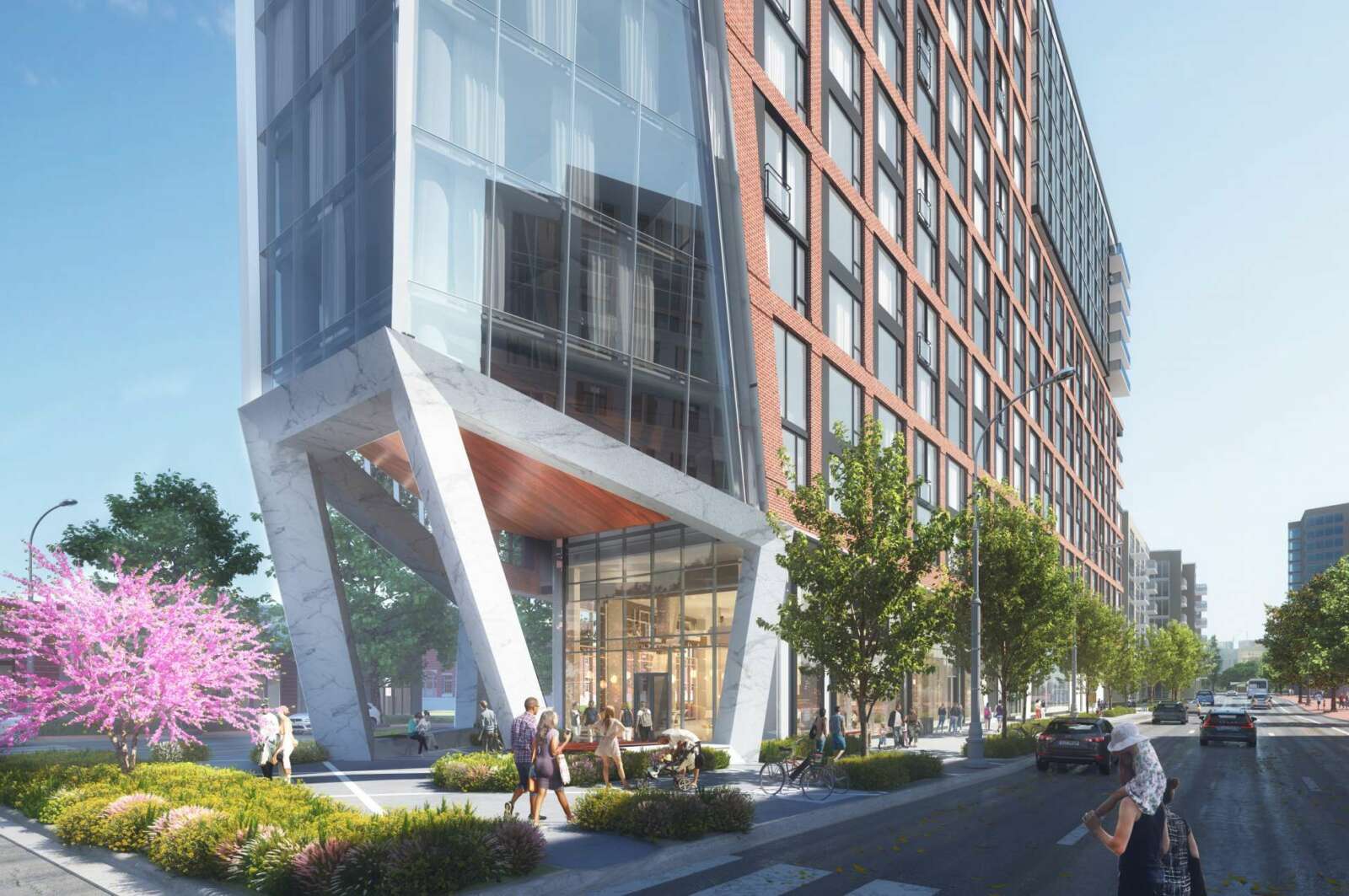
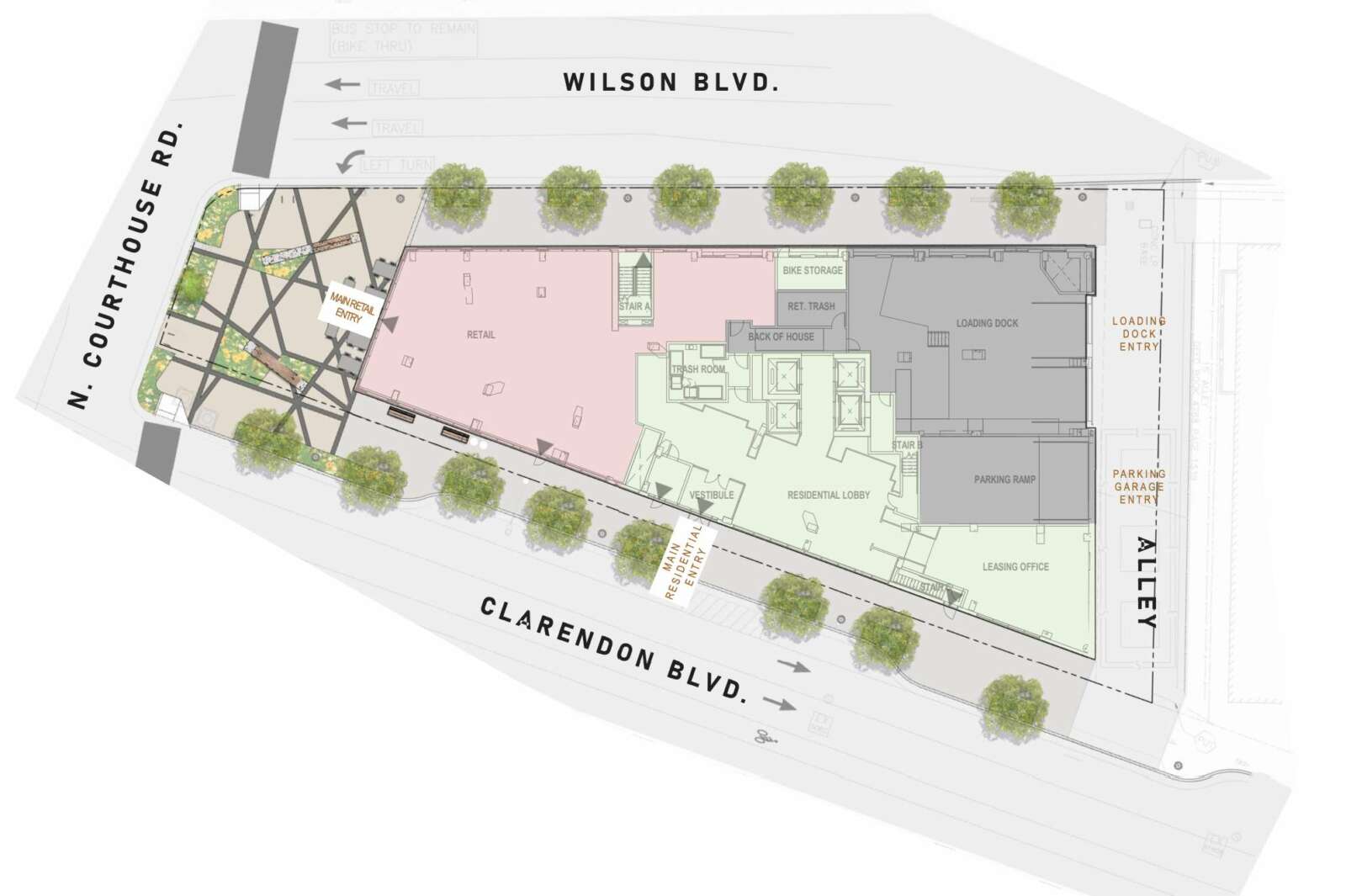
Greystar and architect Cooper Carry liken the building to a ship, said county planner Adam Watson. At the “prow,” pointing west towards N. Courthouse Road, an “angular glass vessel” set on marble-clad columns will rise above the plaza, while the façades along Clarendon and Wilson Blvd will feature red brick, he said.

“We really look forward to hearing your thoughts and comments on what you’d like to see in terms of signature gateway architecture at the site,” he said.

A 1,497-square-foot public pedestrian plaza will sit under the columns, at the intersection of Courthouse Road, Wilson Blvd, and Clarendon Blvd. Greystar is looking to fill the retail space with a restaurant that can use the plaza for outdoor dining, according to a spokesman.

Below ground, the new project includes a parking ratio of .32 spaces per unit, for a total of 74 spaces for residents, but no retail parking, according to a staff presentation. There will be 252 secure bicycle parking spaces and eight visitor spaces.

At 16 stories and 165.5 feet tall, the project clocks in much taller than recommended maximum of 10 stories in the Rosslyn to Courthouse Urban Design Study. But Greystar has a plan for securing its desired height and density.

The project includes a 104,789 square foot transfer of development rights from Wakefield Manor, a small garden-apartment complex less than a half-mile from the proposed development. The housing on N. Courthouse Road — featuring art deco and moderne design elements — has a historic easement, according to the county.

After the comment period ends, the county expects to hold virtual site plan review committee meetings in October and November. Dates for commission meetings and a final approval from the County Board have yet to be determined.


View More Stories