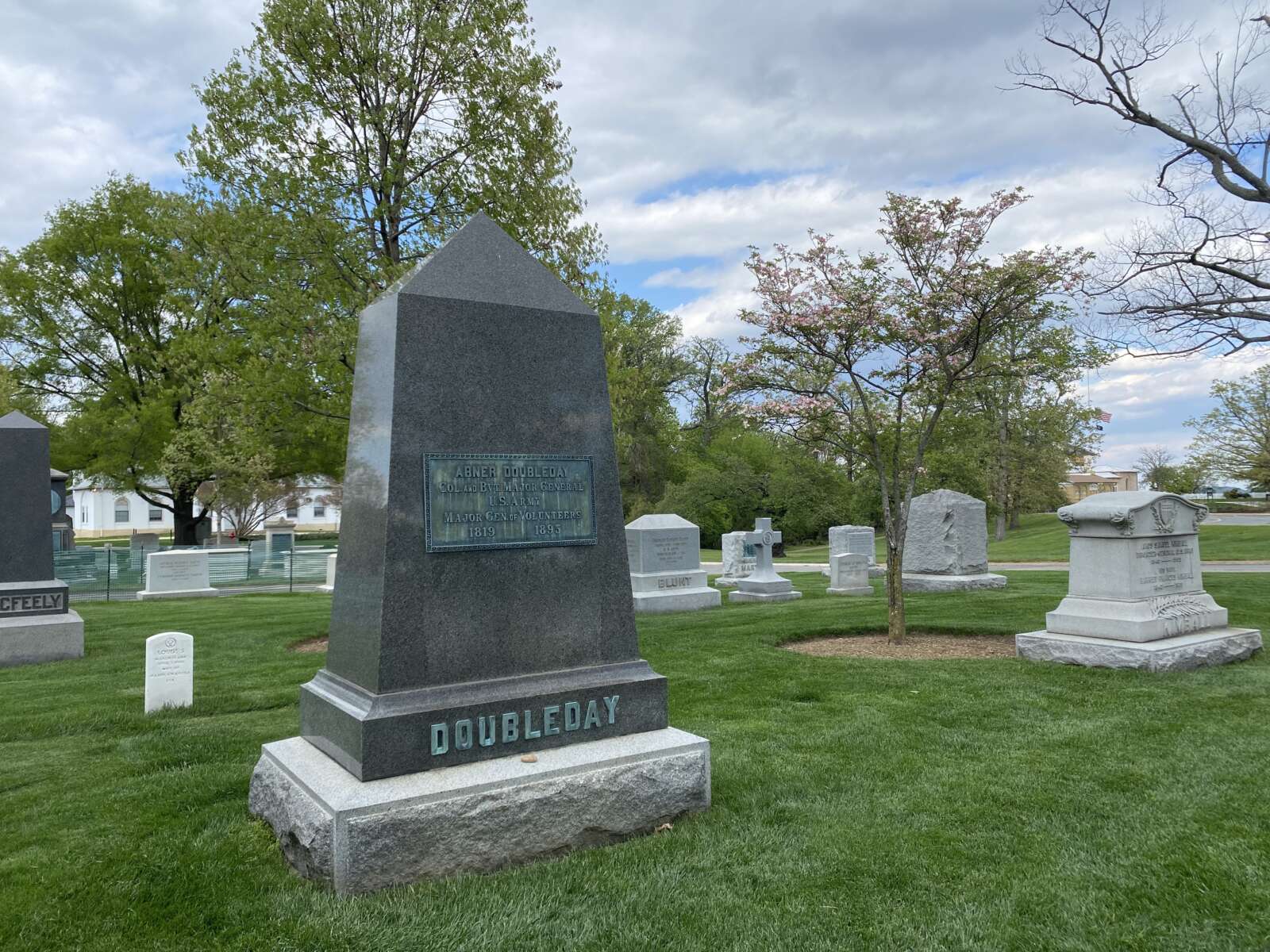
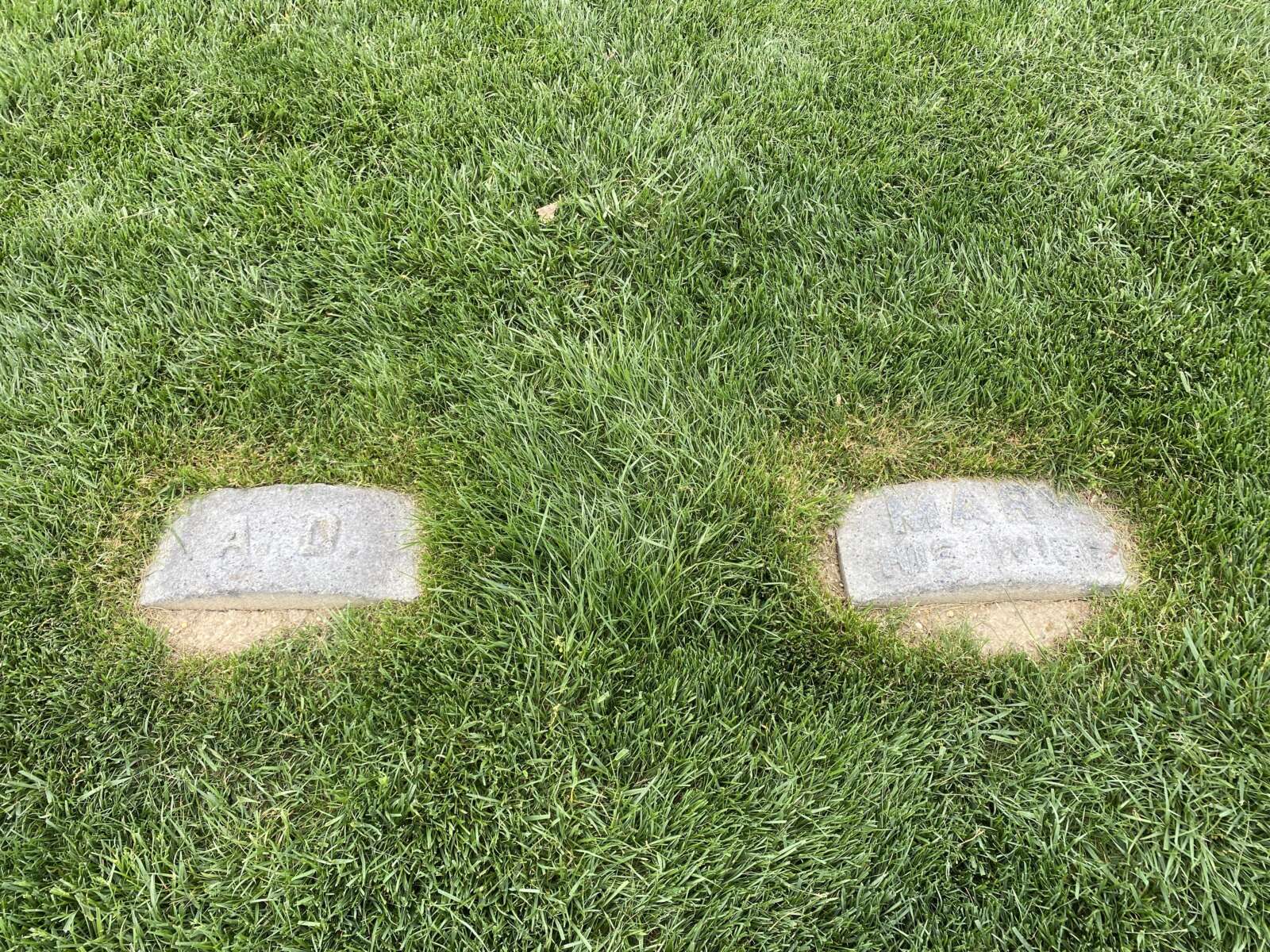
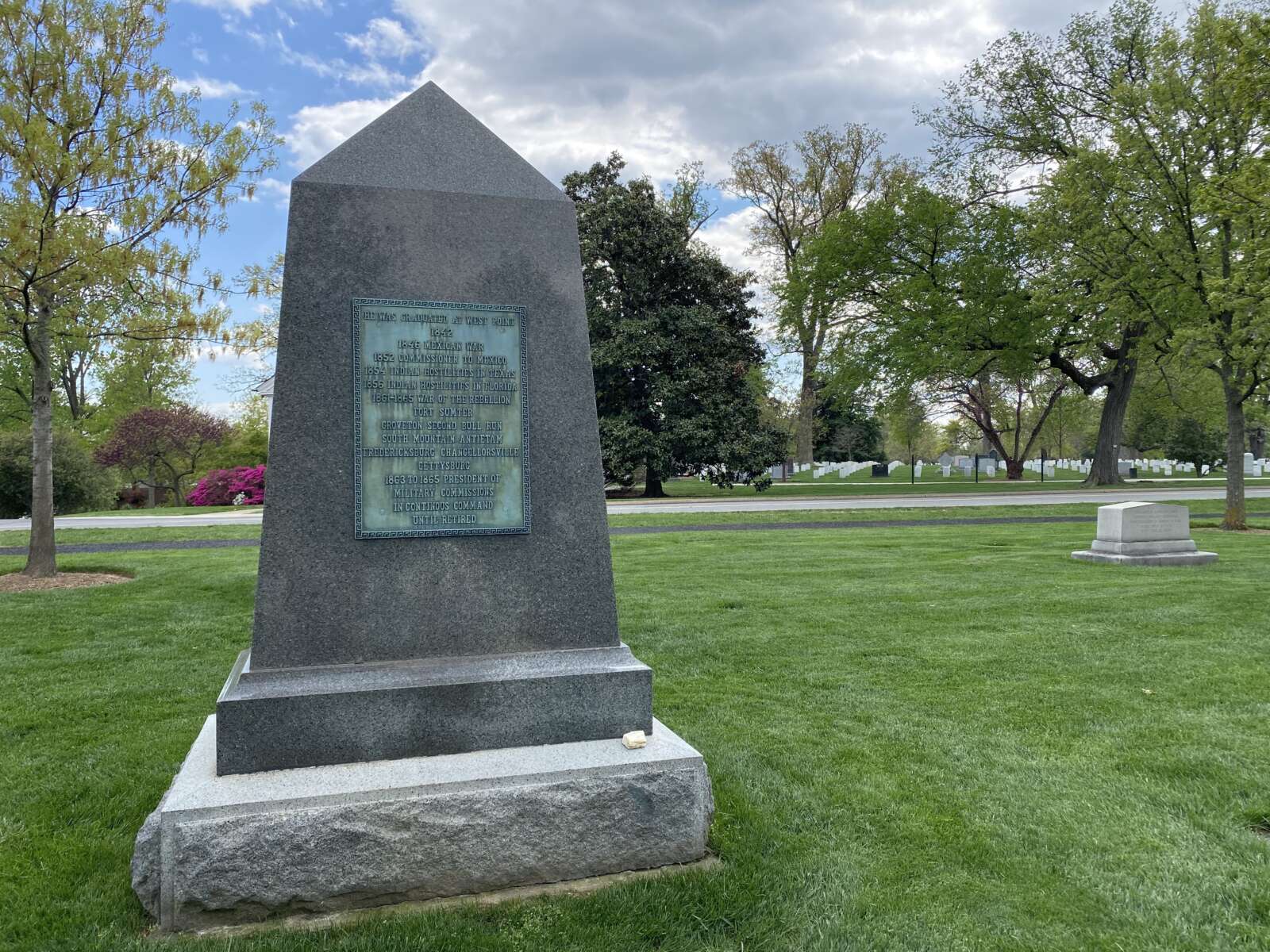
Up the hill from John F. Kennedy’s grave and behind Arlington House on the western side of Arlington National Cemetery lies the purported inventor of America’s pastime.

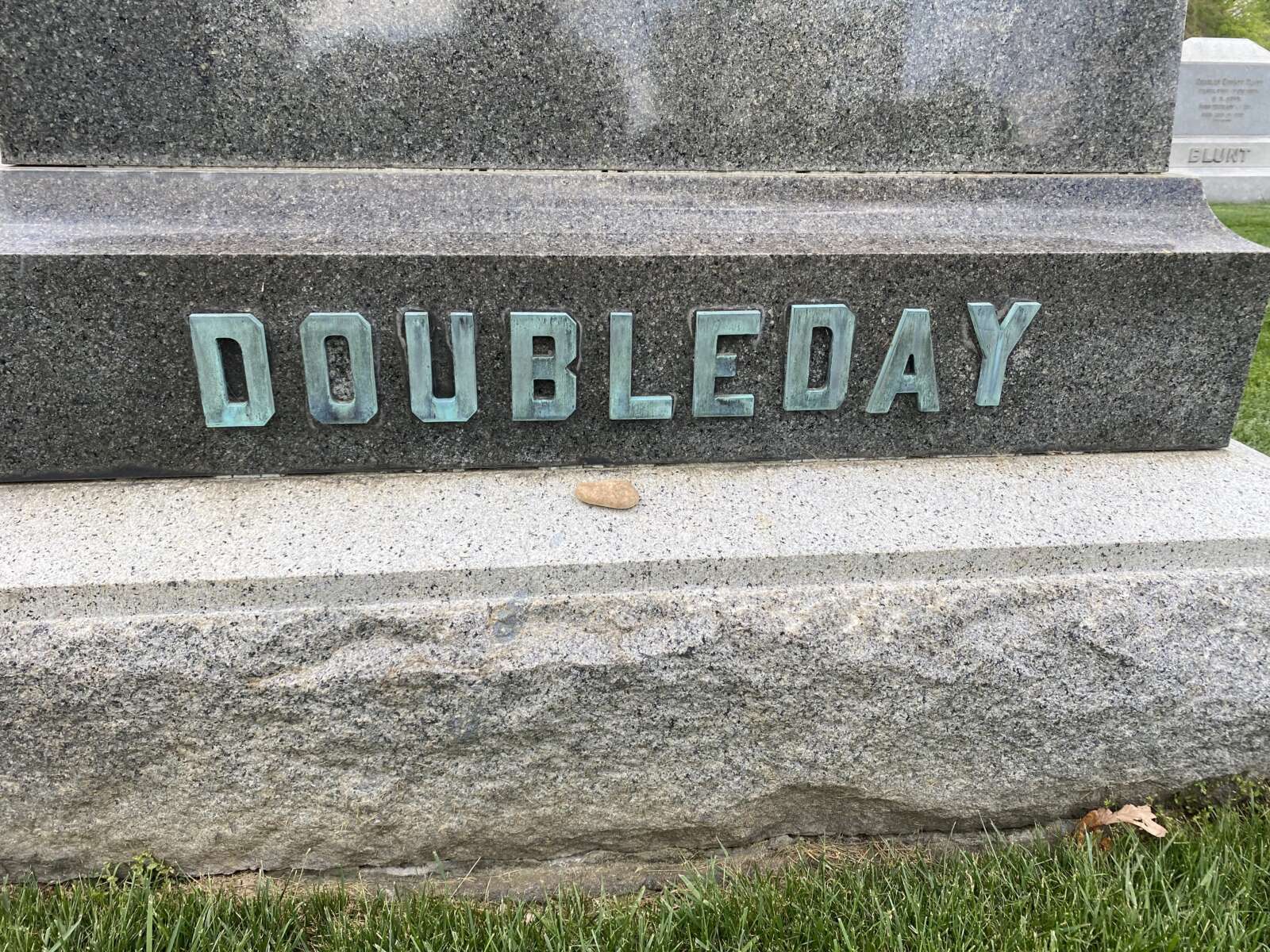
The former Union Army General Abner Doubleday is interred in section 1, laid to permanent rest there nearly 130 years ago. He’s one of more than a hundred Union generals that are buried at Arlington National Cemetery. While it’s his accomplishments during the Civil War that led him here, history remembers Doubleday much more for his perceived contributions to the game of baseball.

“I’m a big baseball fan. When I was growing up in the 1960s, the common view among the public was that this guy named Doubleday invented it,” says George Dodge, former Arlington Historical Society president and author of a book about the history of Arlington National Cemetery. “But that’s largely been completely discredited.”

Doubleday, a New York native, had a lifetime full of military experience. He was an officer in the Mexican War, fought in the Seminole War, and actually commended the gunners that fired the Civil War’s first shots at Fort Sumter. During the Civil War, he also saw action at Antietam, Fredericksburg, Bull Run, and Gettysburg.

This feature was supported by the ARLnow Press Club. Join to get the exclusive Early Morning Notes email and to help us tell stories like this. Click here to get a free trial (offer expires 5/31/22).

It was at Gettysburg where Doubleday was given command of the corps, when another general was killed in action, that helped to secure high ground. This ultimately led to the Union’s victory at the famed battle and likely turned the tide of the war.

“He has to be given some credit for that and I don’t think he does,” says Dodge.

After the war, he worked to help formerly enslaved people transition to a life of freedom, secure patents for San Francisco’s cable car system, and led a religious group devoted to spiritualism. Doubleday died in 1893 in New Jersey.

But before all of that, he apparently — according to legend — invented baseball.

The story goes that, while living in Cooperstown, New York, in 1839, a 20-year-old Doubleday drew a diamond in the dust and declared this was for a new game he called “base ball.” Along with a 1871 request for baseball-like equipment, this was enough proof for some that Doubleday invented baseball.

And, for the better part of the 20th century, this narrative existed — and, to some extent, still to this day.

Over the last several decades, however, historians have proven that Doubleday likely didn’t invent baseball.

The tale of him drawing a diamond in the dust was only first recounted via letter in 1905, more than 60 years after the fact, to the Mills Commission, a group that had been tasked to determine the origins of the great American game of baseball.

The letter was written by a man named Abner Graves who claimed he was there that day, but Graves would have only been 5 years old at the time. Additionally, it was unlikely that Doubleday was even in Cooperstown at the time. He was a cadet at West Point in 1839 and, even if he had returned home to see family, his family had moved to another village.

“They were looking for even the flimsiest of proof that [baseball] originated here in the United States,” says Dodge.

The more likely reason that this myth exists is that Doubleday represented a home run candidate — a respected Union Army general buried at Arlington National Cemetery.

(more…)


Sponsored by Monday Properties and written by ARLnow, Startup Monday is a weekly column that profiles Arlington-based startups, founders, and other local technology news. Monday Properties is proudly featuring 1515 Wilson Blvd in Rosslyn.

Caitlin Iseler had great benefits in her executive search job, but nothing that supported her as a working parent.

She loved working at consulting firm Korn Ferry and wanted to be exceptional in her career but also wanted to do the best she could as a mom.

“I was like these (benefits) are great but this isn’t really solving my challenge of wanting to be a great mom and really wanting to be present and having those health wins outside of work,” she said. “I became really passionate about this concept of how do you support people in their time outside of work so they can be great at work.”

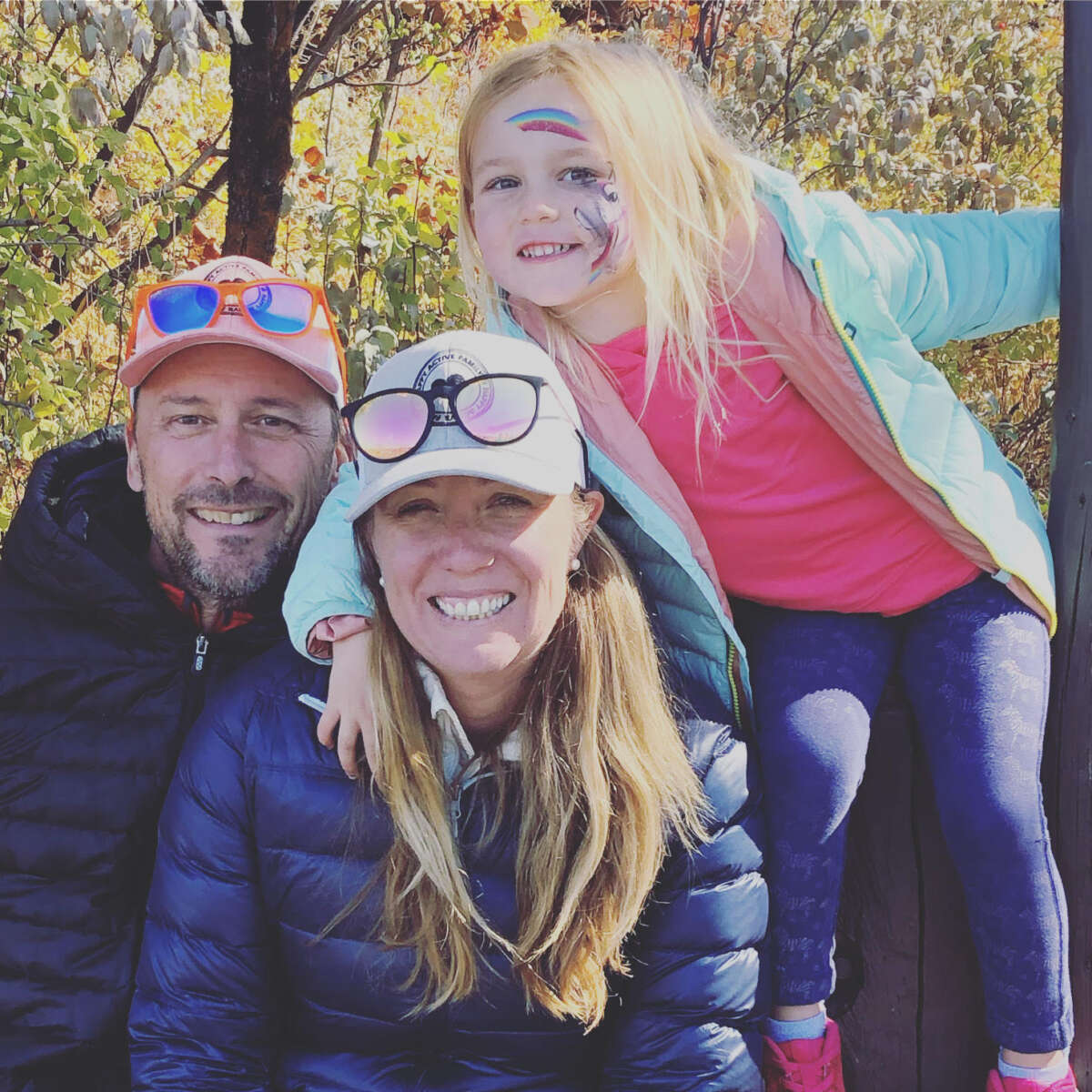
Happyly Founder Caitlin Iseler and her family (courtesy of Caitlin Iseler)

So, in 2019, she and co-founders Liz Regard and Randi Banks started Happyly, a platform companies can offer employees that provides activity plans and ways to give back to the community. Twenty corporations, including Navy Federal, her former employer Korn Ferry and Appian, offer Happyly’s service to their employees.

“It shouldn’t take a lot of time or money to do great things with your family and to really live your best life outside of work,” Iseler said. “So our platform is designed to support those experiences for real connection and again it all ties back to, for employers to ‘take care of people and they’ll take care of your company.'”

Last week, the Arlington-based company launched a new website and this week will roll out a new version of its app.

“There’s a lot coming down the pike in terms of our product evolution and around this give back component,” Iseler said.

The Virginia Innovation Partnership Corporation is a Happyly investor, and the company recently received a grant from the Commonwealth Commercialization Fund. The startup also participated in the 757 Accelerate program and has several other investors from Virginia and the University of Virginia, Iseler’s alma mater.

“So for us, it’s just such a good place to be, and that has a lot to do with how we’ve been embraced by the state in terms of trying to bring this idea to life,” she said. “And I was in the D.C. area for 15 years after college… it’s home in so many ways.”

Over the next year, Happyly looks to add 30 to 50 more corporate clients and to double its roster of eight full-time employees and 120 ambassadors, which create content across the U.S. They’re hiring across many different categories, Iseler said.

“At the end of the day, building a business and being an entrepreneur is challenging and humbling because I get to live my purpose,” Iseler said. “I’m really proud of the team that we built and being able to bring together people who have such different experiences but are united by this purpose.”

Happyly co-founders Randi Banks, Caitlin Iseler and Liz Regard (courtesy of Caitlin Iseler)

But it is difficult to create a new category.

“You have to find the right companies at the right stage to introduce something so different,” she said, noting after launch only about a quarter of the companies really “got it.”

“But those are the ones we need to focus on, right, because we don’t need every single company in the world, we need the ones that really care and get it,” she said. “And we hope that in a couple years that this new category will be something that every company is thinking about.”

(more…)


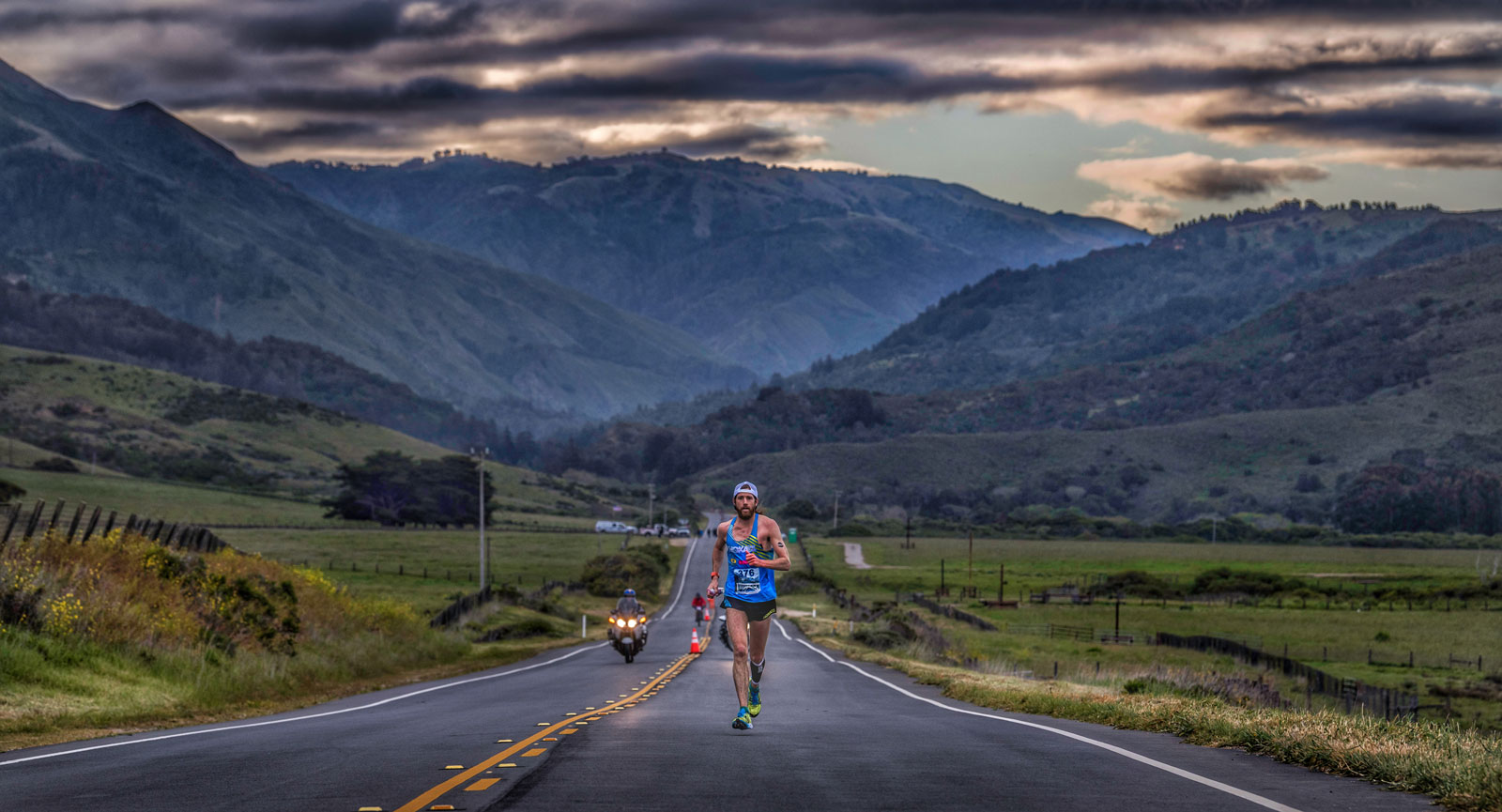
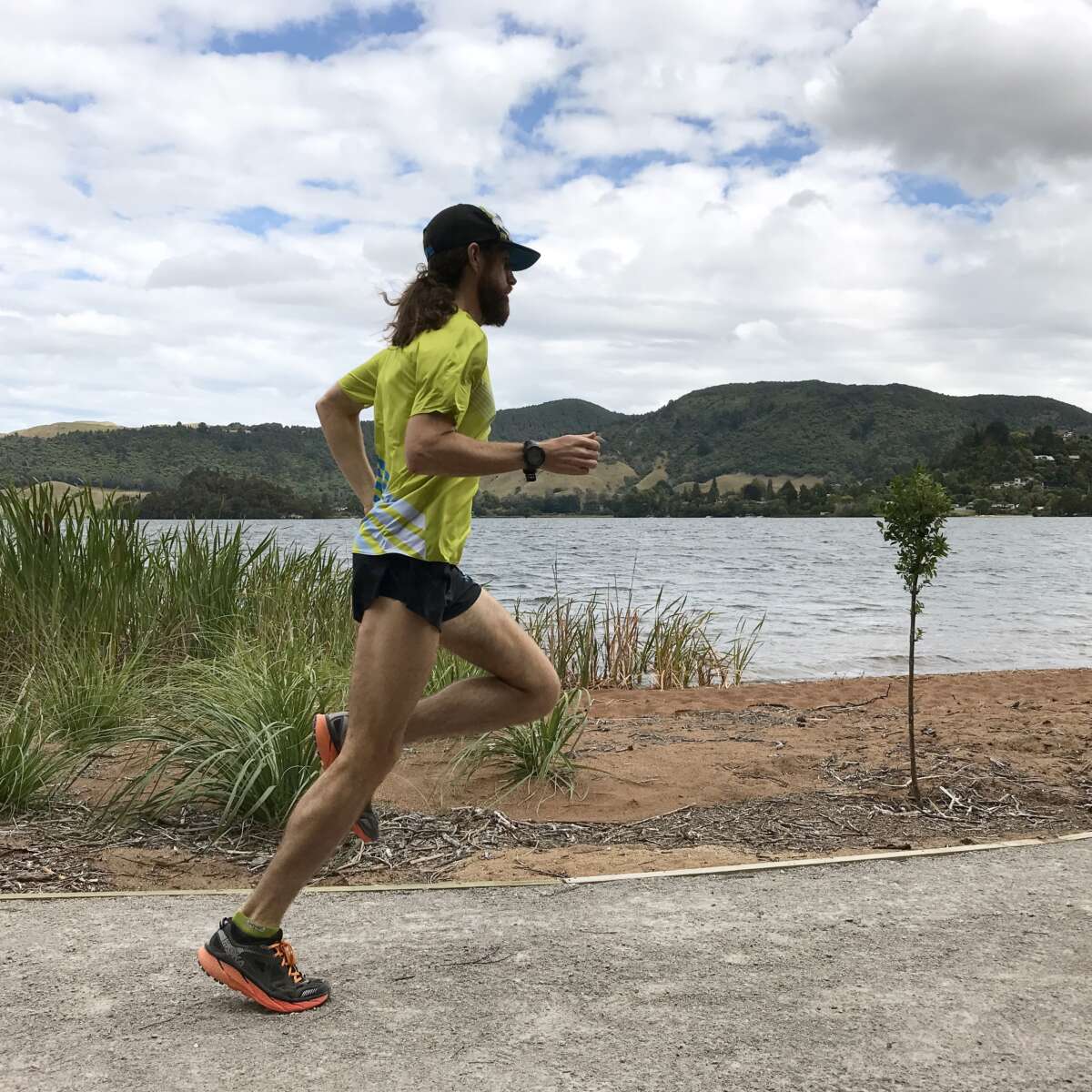
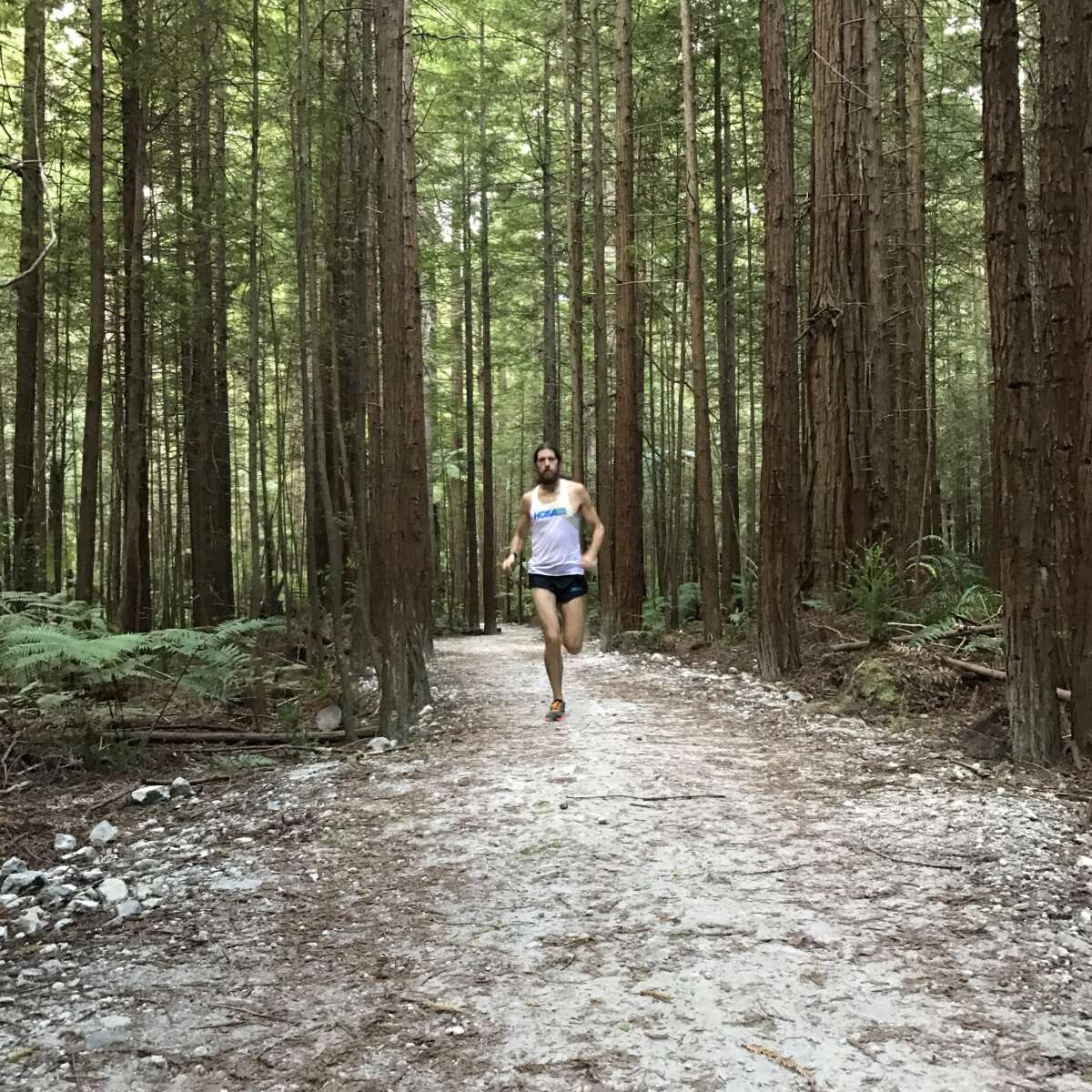
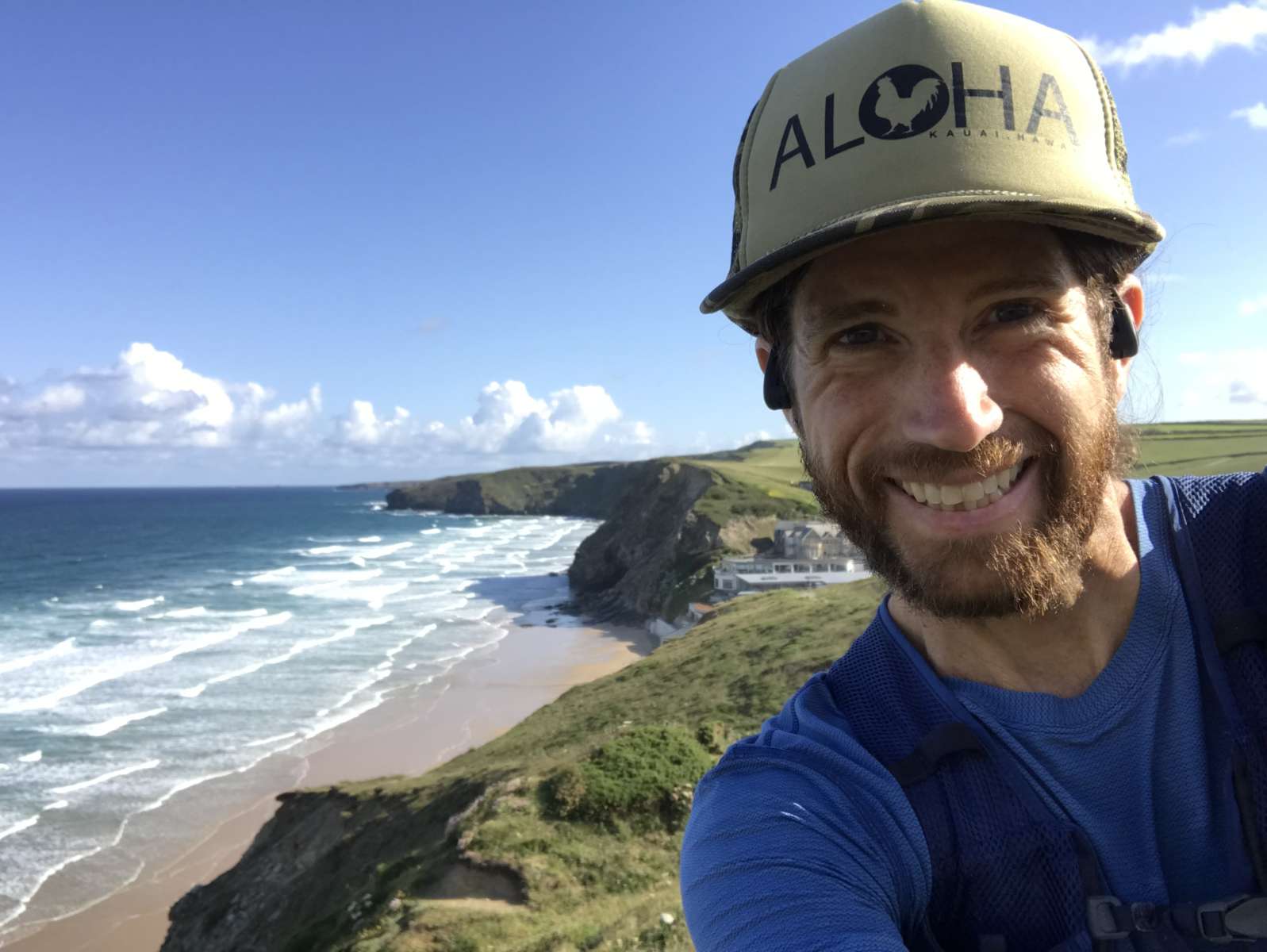
(Updated at 12:40 p.m.) Famed local ultramarathoner Michael Wardian is going full Forrest Gump and running across America.

The 48-year-old Arlington resident and noted athletic adventurer has a new running challenge: to run from sea to shining sea.

The journey begins this Sunday (May 1) at San Francisco City Hall. Wardian will follow U.S. Route 50 to Arlington and, then, onto Dewey Beach, Delaware. His mission is to dip his toes in the Atlantic Ocean on July 4. That’s 3,184 miles in 65 days.

“With no planned rest days,” he tells ARLnow on the phone from San Francisco. “At least, that’s the plan right now.”

Wardian is doing this to raise money for World Vision, an organization that works to provide clean and safe drinking water to families across the globe. His goal is to raise $100,000.

It will be his longest run ever, an attempt inspired by his run across Israel back in 2019.

“It’s something I’ve never done before. I’m looking forward to it,” he says. “But also a little nervous.”

Wardian is known for incredible feats of the foot. That includes running seven marathons on seven continents, setting treadmill records, and logging 260 miles running loops around Arlington Forest. He also has recently set his sights on mastering pickleball.

He was actually planning to run across the country back in 2020, but the pandemic pushed those plans back two years.

“This has been my dream for, like, 20 years. And now it’s finally coming to fruition,” he says.

With him running nearly 50 miles per day, Wardian acknowledges the effort will take a physical and, crucially, a mental toll. This will be the longest he has ever been away from his family, he noted.

But Wardian is not doing this alone. He’ll have support alongside him the whole way, including someone very special. Trailing behind him in an RV will be his dad, there to prepare meals, do laundry, and just be supportive.

“This is a chance to reconnect with my dad… this is the longest I’ve ever been with him since I moved out 25 years ago,” Wardian says. “He’s going to be cheering for me the whole time.”

There are several ways to keep pace with Wardian on his months-long journey from coast to coast. There’s the normal social media channels like Facebook, Instagram, and TikTok. There will also be real-time tracking along with a detailed day to day schedule (including endpoints).

For those who get the bug, runners can also join Wardian on his journey at any point and for any distance — yes, much like Forrest Gump and his running entourage — by reaching out to [email protected].

About 40 people have already committed to joining him at some point one the expedition, including a few Arlington pickleball buddies.

“Hopefully, I can pop in on some [pickleball] games along the way,” he says. “I’d also like to play chess at various places too.”

Oh, Wardian is an avid chess player as well.

Wardian understands why he’s sometimes compared to Forrest Gump: the beard, the long hair, and the jogging across America.

“I have been called ‘Forrest Gump’ about a gazillion times… over the years and across the planet so I completely understand and embrace that,” he says.

But there’s one difference, he says, between him and the fictional character.

“Forrest Gump, to me, wasn’t quite sure why he was running at first but eventually he found what he was looking for,” Wardian says. “Which is different than me.”


Sponsored by Monday Properties and written by ARLnow, Startup Monday is a weekly column that profiles Arlington-based startups, founders, and other local technology news. Monday Properties is proudly featuring 1515 Wilson Blvd in Rosslyn.

There are two “waves” one Arlington analytics company is riding: the health care industry’s inefficient use of data and the need for the U.S. to get a handle on health care costs.

Virginia Square-based CareJourney was founded in 2014 and uses data analytics to help organizations understand their customers and efficiently grow as the industry focuses more on keeping people healthy rather than just treating ailments.

CareJourney started as a service advisory business, so it was providing management consulting to the first few customers, CEO Dan Ross said.

“Pretty soon we figured out that we were sending some of the same things to each customer and so it was kind of a hint that we were on to something that could be repeatable software,” he said. “And so one of the first things we did, you know, in about three, two years in, was to start to pivot into a software business.”

The CareJourney team (courtesy of CareJourney)

CareJourney has about 120 customers, including health care organizations and providers. Ross said the company’s growth has been fast, adding about 10 to 15 customers every quarter since it began focusing on software in 2017.

And last year, CareJourney began partnering with other companies as well. It recently announced a new partnership with Credo Health, which automates digital medical record retrieval. The partnership allows clients to grow more efficiently and manage care for an increasing number of patients.

“When you put the two pieces of technology together, in our case, our data with their software, it just allows their end customers to do more than they would have been able to do just with the Credo software,” Ross said.

CareJourney has about five partners similarly incorporating the CareJourney data into their services.

Ross attributes the company’s success to its hyper-focus on solving customers’ problems, and its hiring, developing and coaching employees, as well as building a good culture. He said it has about 100 full-time employees, mostly in the D.C. area.

When CareJourney was started, its founders — Ross, Aneesh Chopra and Sanju Bansal — lived locally and had already started other businesses in the area, so Arlington was a natural choice to locate the new company.

“We expected to be hiring a lot of tech-oriented people… Arlington is like one of the hotbeds locally of places to start and have a tech business,” Ross said. “So it’s kind of an easy choice, nearby and sensible.”

Ross said to start a high growth business, a company needs to be in an important and large space and “riding some waves.”

“The adoption of analytics, technology in health care, and also this like screaming need for more efficiency are two big waves that we ride,” he said.

As the health care industry increasingly transitions to focus on incentivizing health systems to keep people healthy — called value-based care — versus treating them for illness and ailments, the need for data analytics is also growing.

“The whole point of value-based care is not to pay for when someone’s sick, whatever that is, but instead to flip the incentives around and incent the health care delivery system to take care of patients, whether or not they are sick,” Ross said.

One example is when using CareJourney’s data, one of its clients noticed a high number of hospital admissions over a month or two stemming from a similar condition.

“And so using our data, they were able to go back and look and say ‘oh, well, people who hadn’t seen a urologist — as this is in the senior population — had this, like, unusually high rate of hospital admissions from UTIs,'” Ross said.

So the client implemented a urologist screening, and the data showed that it prevented hospital admissions.

“When you keep somebody out of the hospital, that’s just a huge win in health care,” Ross said. “That’s probably the number one thing we can do, is just, in general, keep people out of the hospital.”


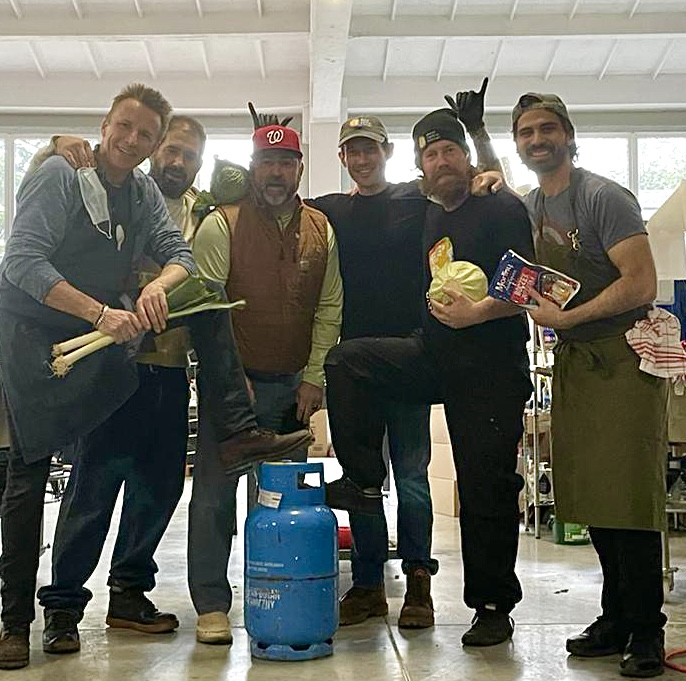
Chef David Guas was like many of us when he saw the images coming out of Ukraine — upset and desperate to do something.

“My wife was tired of me yelling at the TV… she says, ‘You should text José [Andrés] to let him know you want to do something,”’ the owner of Bayou Bakery in Courthouse and occasional television personality tells ARLnow. “And a couple of hours later, there was an email saying David was on his way to Poland. There was no turning back.”

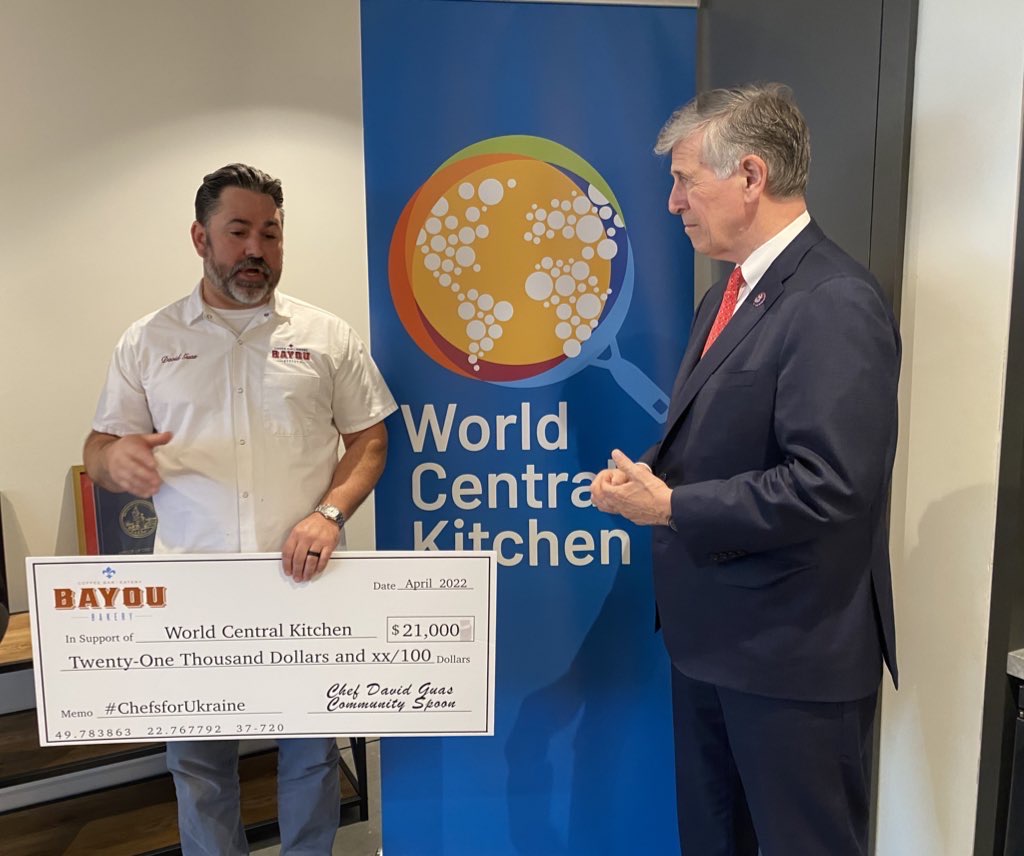
Guas spent 15 days last month in Poland working with World Central Kitchen, the nonprofit founded by Andrés, to help feed Ukrainian refugees as they fled their war-torn home. Earlier this week, the Arlington-based chef also donated $21,000 from his Community Spoon initiative to WCK to help continue its mission in Europe.

“It’s going to be used to buy food. Beef, borscht, cabbage, some potatoes…It’s going to continue to just fuel them financially, so they can continue to think big,” Guas says about his donation.

This isn’t the first time that Arlington’s resident celebrity chef has helped during hard times. In the early part of the pandemic, he formed Chefs Feeding Families, which provided free, plant-based meals to underserved Arlington families. Then, he served up meals to the National Guard and local law enforcement protecting the Capitol. Last year, he put together Community Spoon, which was initially founded to help feed Afghan refugees coming into the region.

Then, came Russia’s invasion of Ukraine and the heartbreaking images of people fleeing their homeland.

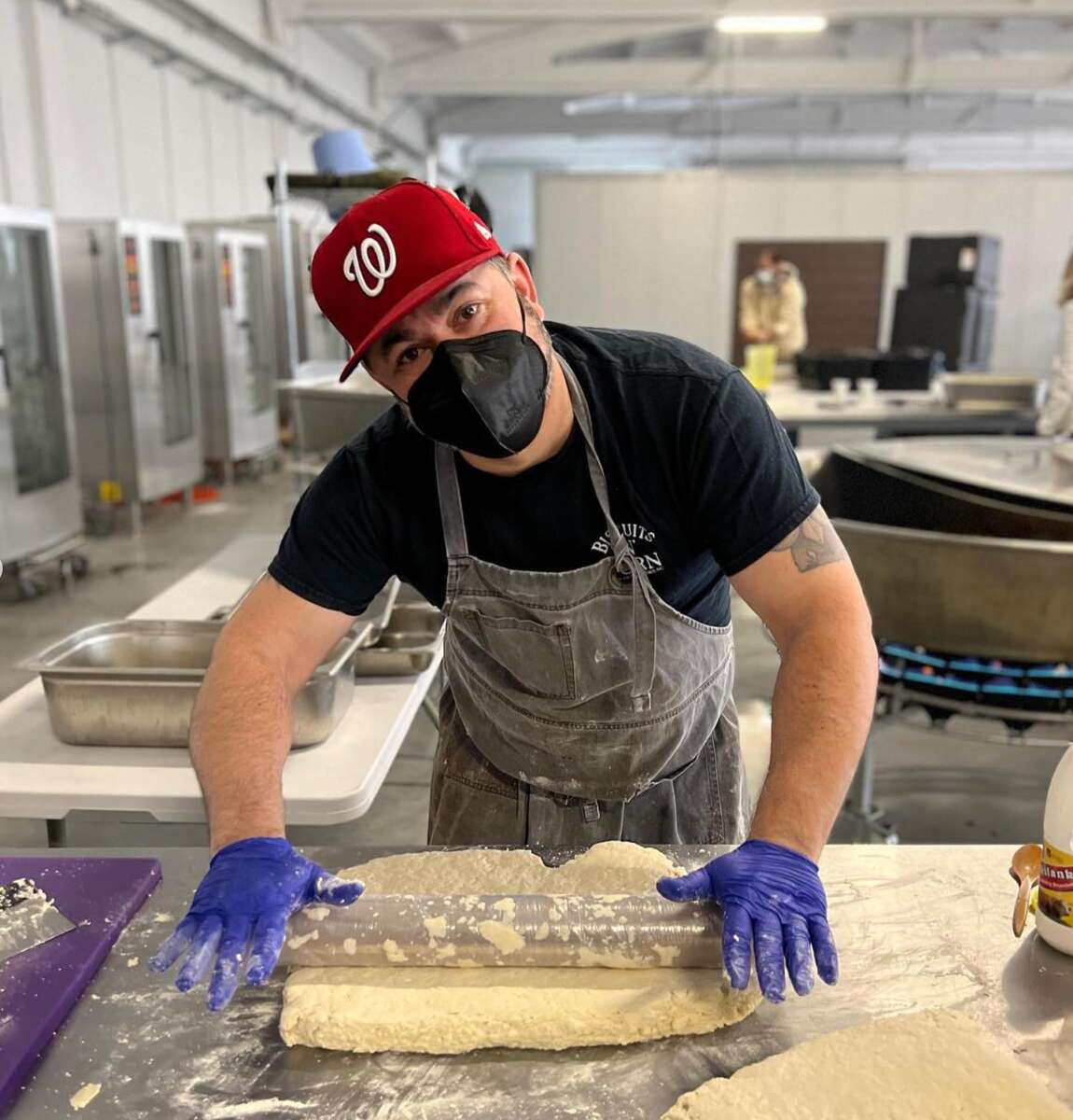
Upon arriving in Poland, Guas was stationed at a WCK facility in the city of Przemyśl which is only about seven miles from the Ukrainian border. There, he cooked and made biscuits, soup, applesauce cake, and meat to serve to volunteers and refugees crossing the border.

“[We were making] a lot of broths, a lot of soups, and a ton of vegetables,” he says. “Beef stocks, pork stocks, chicken stocks, beef cheeks, beef shoulder, and a lot of chicken. Basically, a soup or broth every single day.”

There was also hot chocolate, served both in the morning and at night.

“Everyone needed a little sugar and a little chocolate,” Guas says.

He admits the work was hard and could be monotonous. For more than two weeks, his days were on repeat with him starting at 7 a.m., working 12 to 14 hours, trying to decompress, and going to bed. Then, he would start it all over again.

There were days when he spent hours defrosting hundreds of pounds of beef cheeks, but Guas knew this is where he needed to be.

“I was there because this is who I am… needing to help,” he says.

(more…)


This article was funded by and first shared with the ARLnow Press Club. Join us to fund more local journalism in Arlington and to get early access to feature stories and each day’s coverage plan.

It was a reasonable ask. Amanda Dabrowski and Jessie Dertke just wanted to do more outdoor activities and go camping. So, they joined the Boy Scouts. Specifically, Arlington’s Troop 104, the oldest continuously operated troop in the Commonwealth and first established more than a century ago.

For nearly all of those years, though, girls weren’t allowed to join.

But all of that changed in 2019 when the Boy Scouts of America allowed girls ages 11 to 17 years old to enter their ranks for the first time. The organization was renamed Scouts BSA. Additionally, the new members were given the opportunity to rise to the rank of Eagle Scout.

The very first day, February 1, 2019, that girls were allowed to join the Boy Scouts, then-12-year-old Dabrowski did exactly that. And went camping, winter be damned.

“I was so excited. And there was a camp-up that day, so I went out and did it. It was six degrees and freezing cold. But I was really, really psyched,” Dabrowski tells ARLnow, now 15 and living in the Ashton Heights neighborhood.

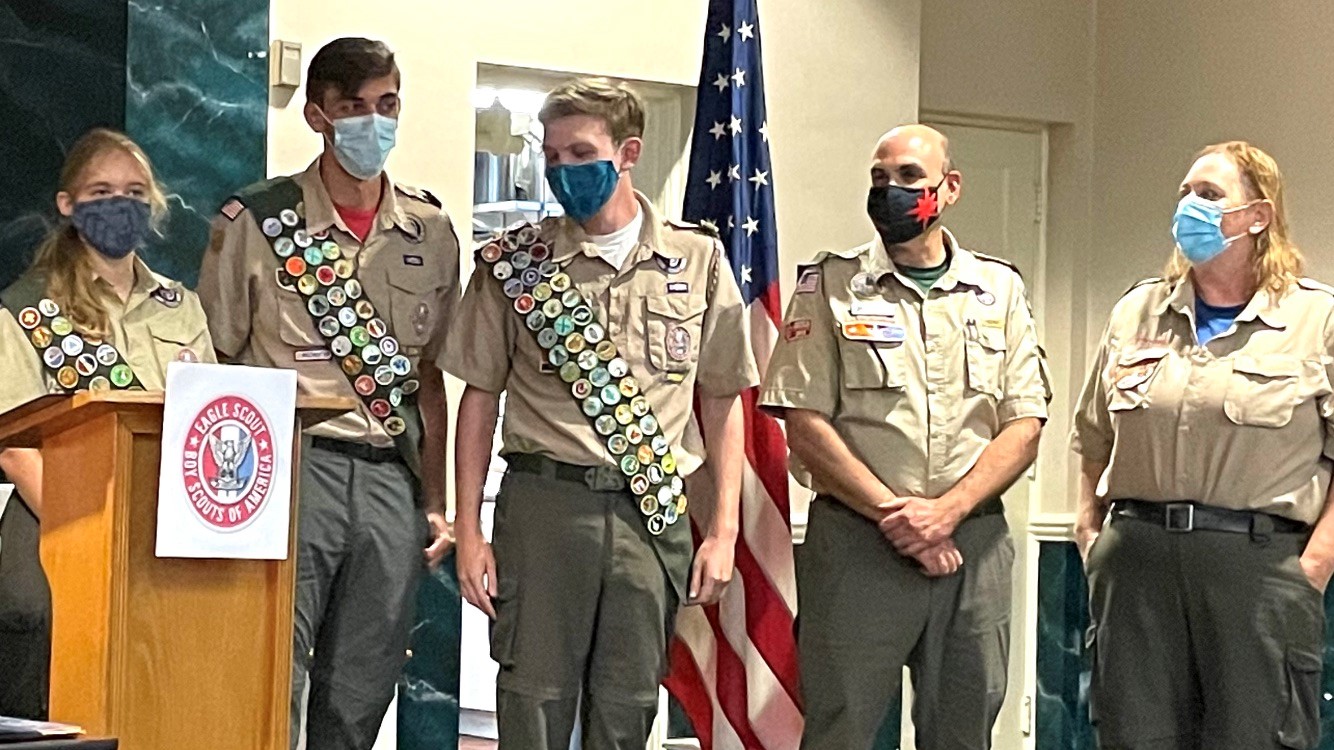
Dabrowski, as well as Dertke have gone on to become Eagle Scouts, making them among the first girls in Arlington to not only be part of what was once called the Boy Scouts but achieve the organization’s highest rank.

“I’m super proud,” Dabrowski says. “It makes me really happy and [becoming an Eagle Scout] doesn’t feel quite real yet… I’m one of the first people within the movement to be part of this.”

Overall, the two Arlingtonians are part of as many as 140,000 girls nationwide who have joined Scouts BSA since early 2019.

Like some who make history, the locals’ initial intentions weren’t necessarily to be first. It was simply to have the same opportunities as their male counterparts. They just wanted to go camping, build fires, and learn how to use a hatchet.

Dabrowski explains that she used to tag along with her twin brother’s troop, doing all of the same activities and completing all the tasks, but wasn’t given the same opportunity for recognition.

“It was really hard to see my brother get the awards and, then, I had done the same things, but wasn’t able to be awarded it because of my gender,” she says.

For 18-year-old Dertke, who’s now a student at Virginia Tech, joining the Scouts was also a way to get outside and go camping. Though, she did have some trepidation about joining.

“I kinda didn’t really want to join at first because I was worried people would say, ‘What are you doing here? You are a girl?’,” she says. “It was actually a great atmosphere and everyone was very supportive. It was a very good decision [to join].”

(more…)


This article was funded by and first shared with the ARLnow Press Club. Join us to fund more local journalism in Arlington and to get early access to some stories.

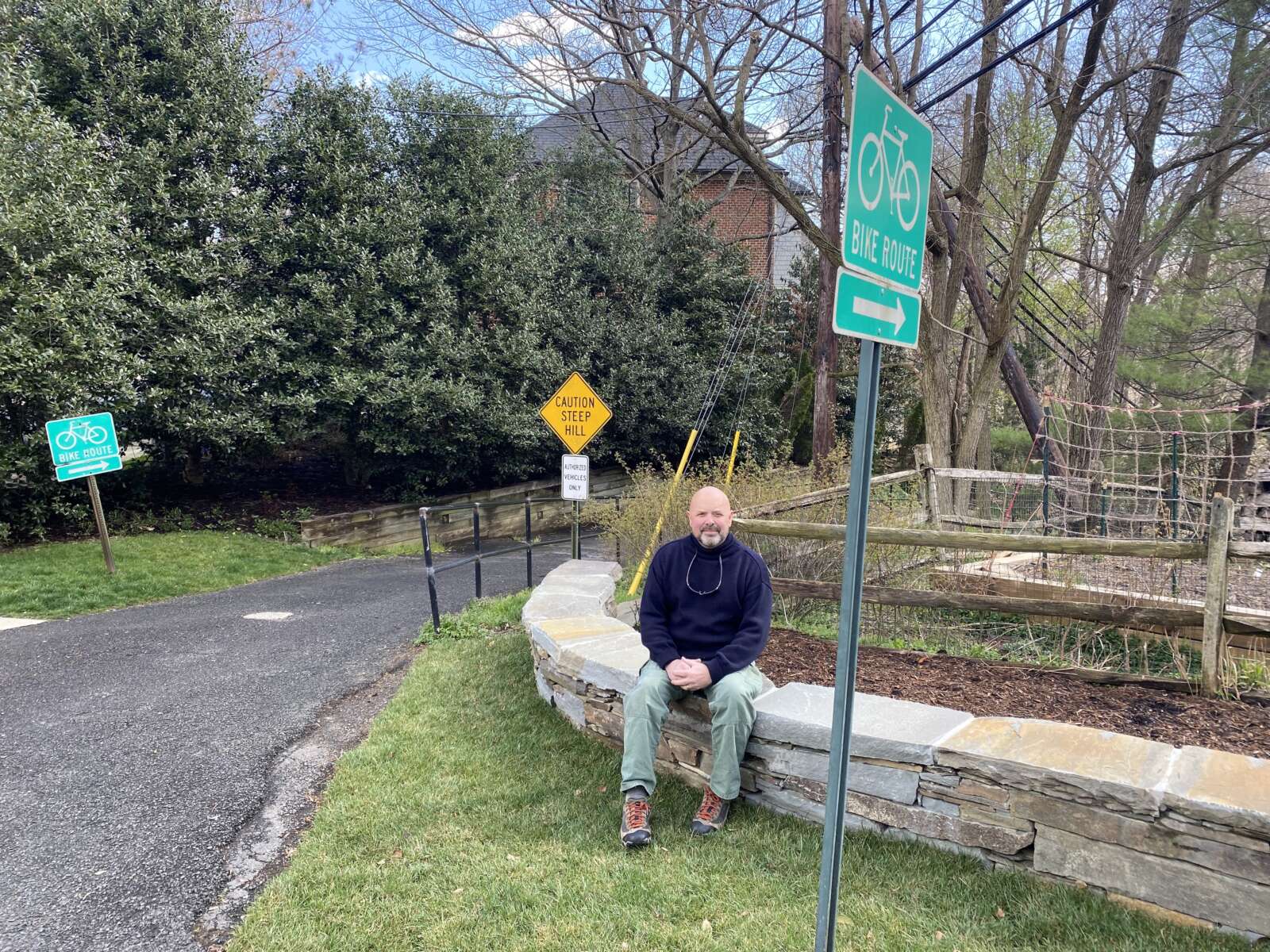
(Updated at 3 p.m.) Tom Jensen has seen a lot on the uphill bike trail that ascends intimidatingly past his house in the Arlingwood neighborhood of Arlington.

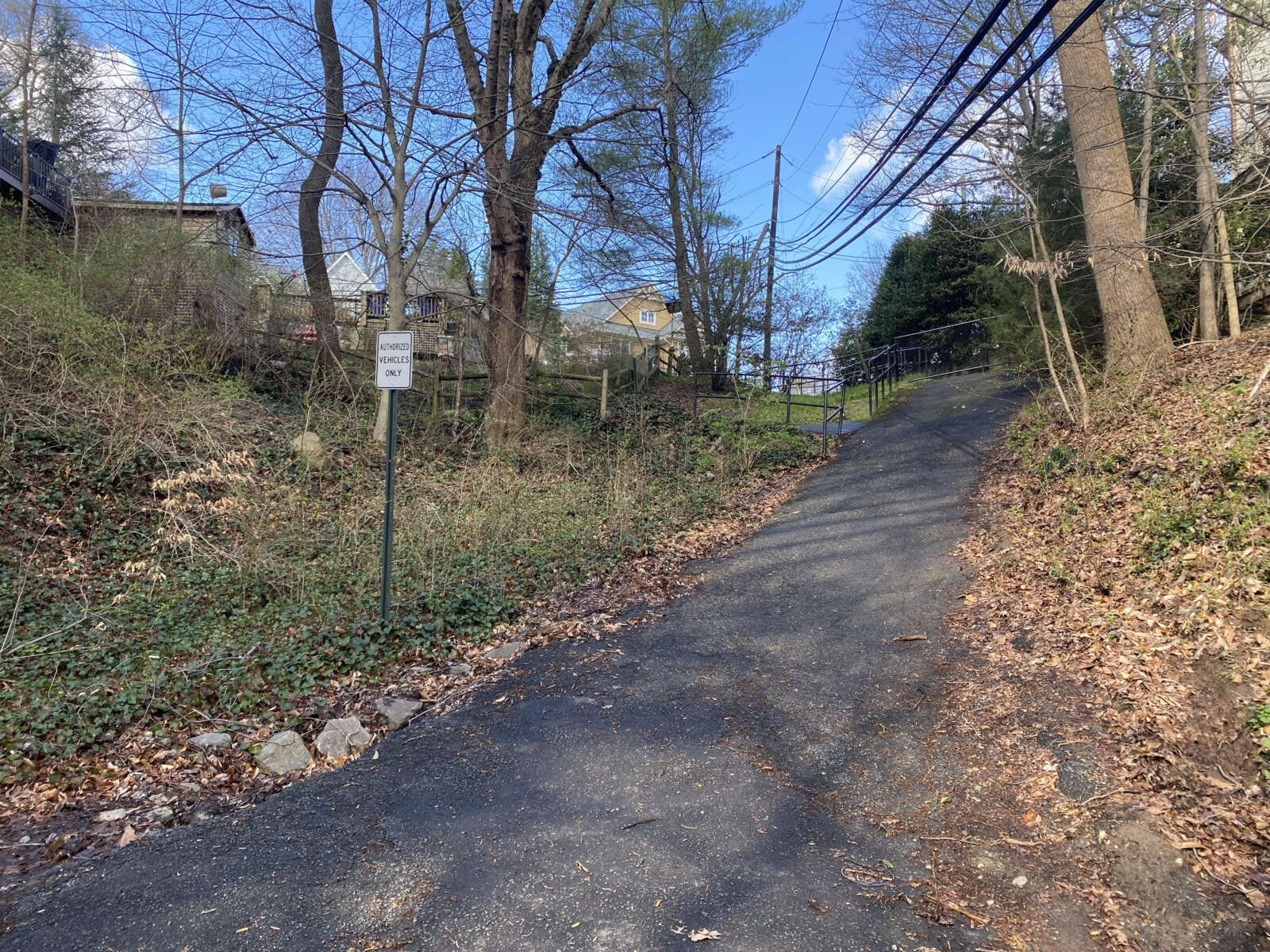
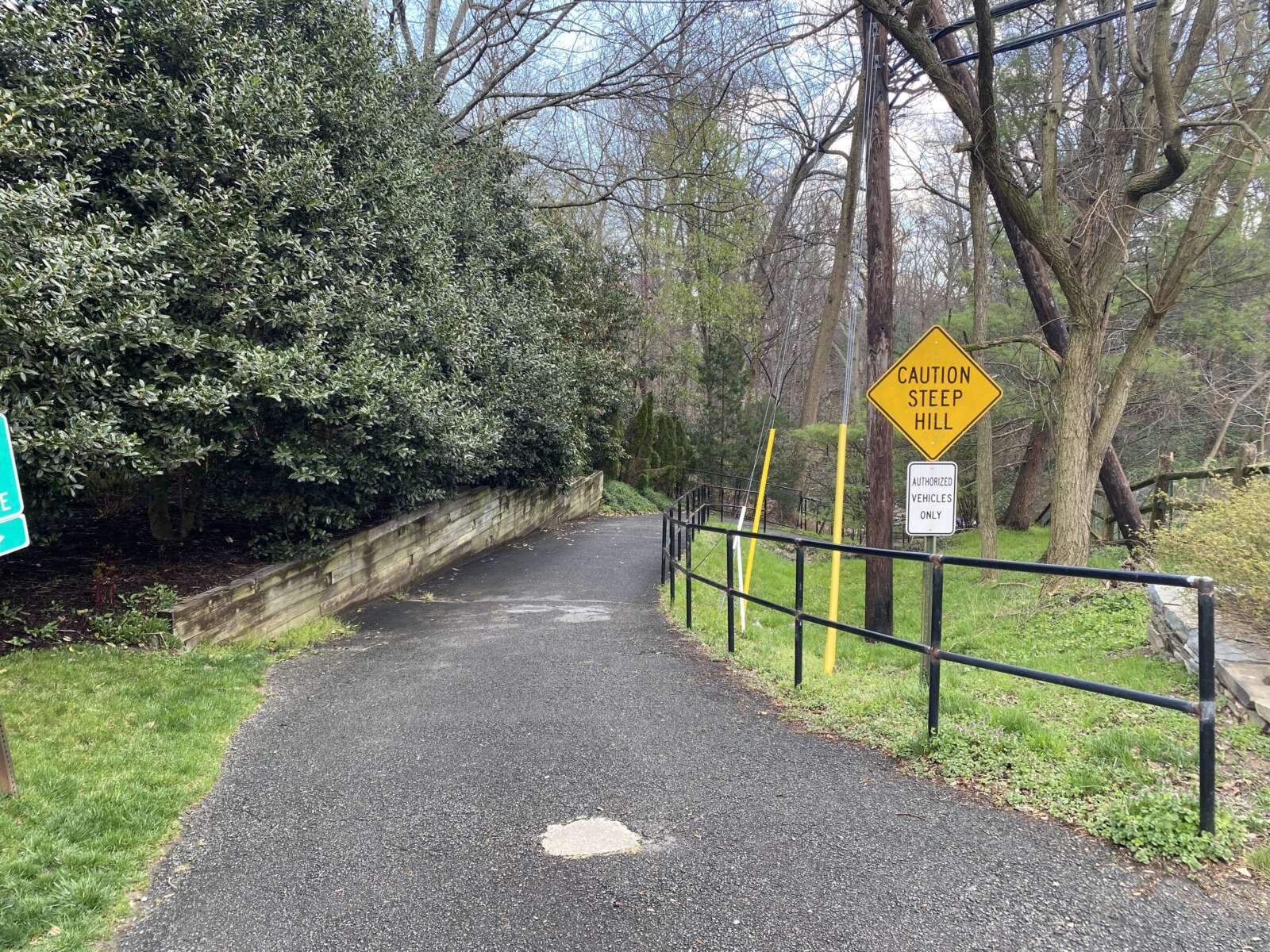
In the 11 years he’s lived at the house on N. Randolph Street alongside the county-owned trail that connects with Chain Bridge, Jensen has spotted broken bikes, overheated hikers and lost walkers (as well as confused motorists) all climbing the steep hill that he calls “The Wall.”

Often, when travelers finally make it to the top, they are frustrated, tired and possibly cursing.

“I hear a lot of exclamations,” he tells ARLnow, laughing, on a breezy morning at the hilltop, outside of the home he shares with his wife, teenage son, two dogs and a cat.

So, at the beginning of March, Jensen built a flat stone wall — a bench, essentially — at the top of the hill to help people catch their breath and recoup before going on their way.

“We’ve constructed a new stone wall with a wide flat top at comfortable seating height right next to the trail,” he wrote on Nextdoor in mid-March. “It’s ours, but it’s really yours.”

The post has received nearly 1,000 likes and has received numerous comments of gratitude.

“Your kind gift will give solace to the cyclists like me, wondering where their lowest gear has wandered off to,” wrote one person.

“Thank you!” wrote another. “I’ve heard Marylanders refer to your hill as ‘The Committee to Welcome you to Virginia.'”

Jensen, who previously lived in Cherrydale before moving to Arlingwood in the early 2010s, is not entirely clear why such a steep trail exists here.

He believes it may have to do with a long-time-ago installation of a water pipe that county workers paved over. Much of the neighborhood, including Jensen’s cabin and house, is historic and dates back at least nine decades, so the steep trail wasn’t likely constructed anytime recently. He estimates the grade of the hill to be between 6 and 12%, which is quite steep. (U.S. interstate highways are not allowed to be more than 6% grade.)

Jensen, an attorney who specializes in natural resource law, simply saw a need for a bench and decided to take action.

“It’s remarkable how a very small thing can matter,” he said.

Jensen has ordered a sign to let passers-by know that they are welcome to sit on the bench and — to add to the hospitality — is considering installing a free little library as well as a bike repair station.

“[The hill] can break your bike because you have to put some much force into it to overcome the elevation change,” he says. “You get these poor folks sitting there with their bikes upside down, trying to get their chains out from wherever they got jammed.”

On spring and summer weekends, Jensen estimates that he sees “hundreds” of cyclists and “scores” of walkers and hikers using the paved path. Even on a chilly Friday morning for less than an hour, ARLnow saw a cyclist, a jogger, and a walking group of three all traverse the hill.

(more…)


Sponsored by Monday Properties and written by ARLnow, Startup Monday is a weekly column that profiles Arlington-based startups, founders, and other local technology news. Monday Properties is proudly featuring 1515 Wilson Blvd in Rosslyn.

Relying on survey feedback after an event was not enough for the co-founders of Bear Analytics.

While surveys were the standard for evaluating trade show performance, Joe Colangelo and Eric Misic saw an opportunity in all the data event organizers were already gathering from their customers but weren’t using very well.

Arlington-based Bear Analytics collects registration information, exhibitor sales and more from across various platforms to increase attendance and encourage people to return the following year.

Colangelo and Misic started in the large trade show space, where they saw challenges to reporting how well events were being marketed. In 2013, they started asking around to see if others were struggling with the same thing and most answered yes.

“So we quit our jobs that summer and started Bear,” Colangelo said.

Now, their clients range from the National Association of Home Builders, Global Pet Expo and National Confectioners Association.

Virginia Venture Partners recently announced an investment in Bear Analytics so it could ramp up hiring for technical roles.

While Bear Analytics works with people all over the world, its core team is based out of the Crystal City office. Colangelo grew up in the Buffalo/Niagara Falls area but moved to Arlington to work in a trade organization in D.C.

“I love Arlington,” he said. “Arlington has a lot to offer.”

Colangelo said marketing traditionally had been very reactive, like in the ’60s and ’70s with door-to-door sales focused on selling goods and then surveying to discover what could improve.

“But now, as information moves faster than ever, we’re in a position where we can actually change the future outcomes,” he said.

The Bear Analytics team (courtesy of Bear Analytics)

The days leading up to a trade show is when the data can be the most impactful but is also when organizers are already in “show mode” and have the least amount of time to use that data, Colangelo said. Without Bear, organizers may not look at it until after the event is over.

“And then you’re only in a scenario that you can get it right the following year, if you even do something with it,” he said.

But using the information, Bear can make predictions ahead of the show — something the company has doubled down on since the pandemic.

Bear Analytics’ most productive quarter was right before the pandemic, the first quarter of 2020, and then many factors changed for live events, Colangelo said. People weren’t attending in person, and if they were, they wouldn’t commit to a show until a few weeks out, closer to the event than before the pandemic.

“Your window for reaching (customers) with the right message and the right offer to get them to attend is narrower than it’s ever been,” he said. “We use data to let you know who is more likely to convert at the right time.”

The pandemic was a turning point for Bear Analytics. Colangelo said they had to change everything to reimagine the way Bear worked, going from a boutique consultancy agency to technology first.

(more…)


Sponsored by Monday Properties and written by ARLnow, Startup Monday is a weekly column that profiles Arlington-based startups, founders, and other local technology news. Monday Properties is proudly featuring 1515 Wilson Blvd in Rosslyn. 

It has been a newsy two months for Ballston-based restaurant commerce platform GoTab.

The company, located at 901 N. Stuart Street above the Ballston Metro station, is crossing international borders into the land of hockey and maple syrup, bringing its contactless ordering and payment platform to Canada.

Meanwhile, 2022 is looking to be a big year for sales, as it aims to process more than $1 billion in sales at restaurants, bars and sports and entertainment venues. To facilitate all those sales, it has added a new feature to eliminate one hassle of smartphone ordering — punching in payment details — and is working to establish itself in the hotel industry.

The northward expansion, announced last week, has already yielded fruit for the six-year-old startup. GoTab has a new partnership with a Canadian company called Baseline Payments, which sees the technology as a way to help restaurant operators and front-of-house staff.

“We are excited for GoTab to enter the Canadian market and see tremendous opportunity for its innovative technology,” said Marc Weber, business development vice-president for Baseline Payments, in a statement. “Our mission aligns perfectly with GoTab’s vision: to make life simpler for operators and allow them to provide a superior level of service.”

Canada is not the only new frontier for GoTab. The company is also working with Mastercard to get rid of the need to punch in credit and debit card details or remember passwords.

Mastercard customers can choose to have their information saved to the credit card company’s platform called Click to Pay. When checking out with retailers, restaurants and venues — online or in-person — that accepts Mastercard, they can use the Click to Pay icon to checkout without pulling out their card.

“We strive to help our operators enhance the guest experience,” GoTab CEO Tim McLaughlin said in a statement. “Mastercard Click to Pay is the perfect solution to simplify and make the checkout process easier, faster, and completely seamless.”

A GoTab user scans a QR code to order (courtesy of GoTab)

The new option first launched at the Stone Brewing taproom in Richmond late last month.

“We’ve had a very successful run with GoTab and Mastercard Click to Pay across all of our taprooms and bistros,” said Gregg Frazer, VP of Hospitality for Stone Brewing. “Our guests were already big fans of GoTab, but the convenience and security of Click to Pay made the payment experience even better.”

This year, GoTab is looking to expand beyond restaurants and bars entirely and get into — and strengthen its presence within — the hotel industry.

That comes as the hotel business, hit hard by the pandemic, is trying to embrace new technologies to streamline processes like check-in. But the industry is projected to see more growth this year, driven by an uptick in domestic leisure travel, less restricted international travel and a return to the office.

“There are so many opportunities to modernize systems within the hospitality industry and utilize GoTab’s technology for guest amenity programs, in-room dining, common indoor and outdoor spaces [and] rooftop bars,” said Deborah Tappan, GoTab’s new Director of Hospitality Management, in a statement. “The options are endless.”


Sponsored by Monday Properties and written by ARLnow, Startup Monday is a weekly column that profiles Arlington-based startups, founders, and other local technology news. Monday Properties is proudly featuring 1515 Wilson Blvd in Rosslyn. 

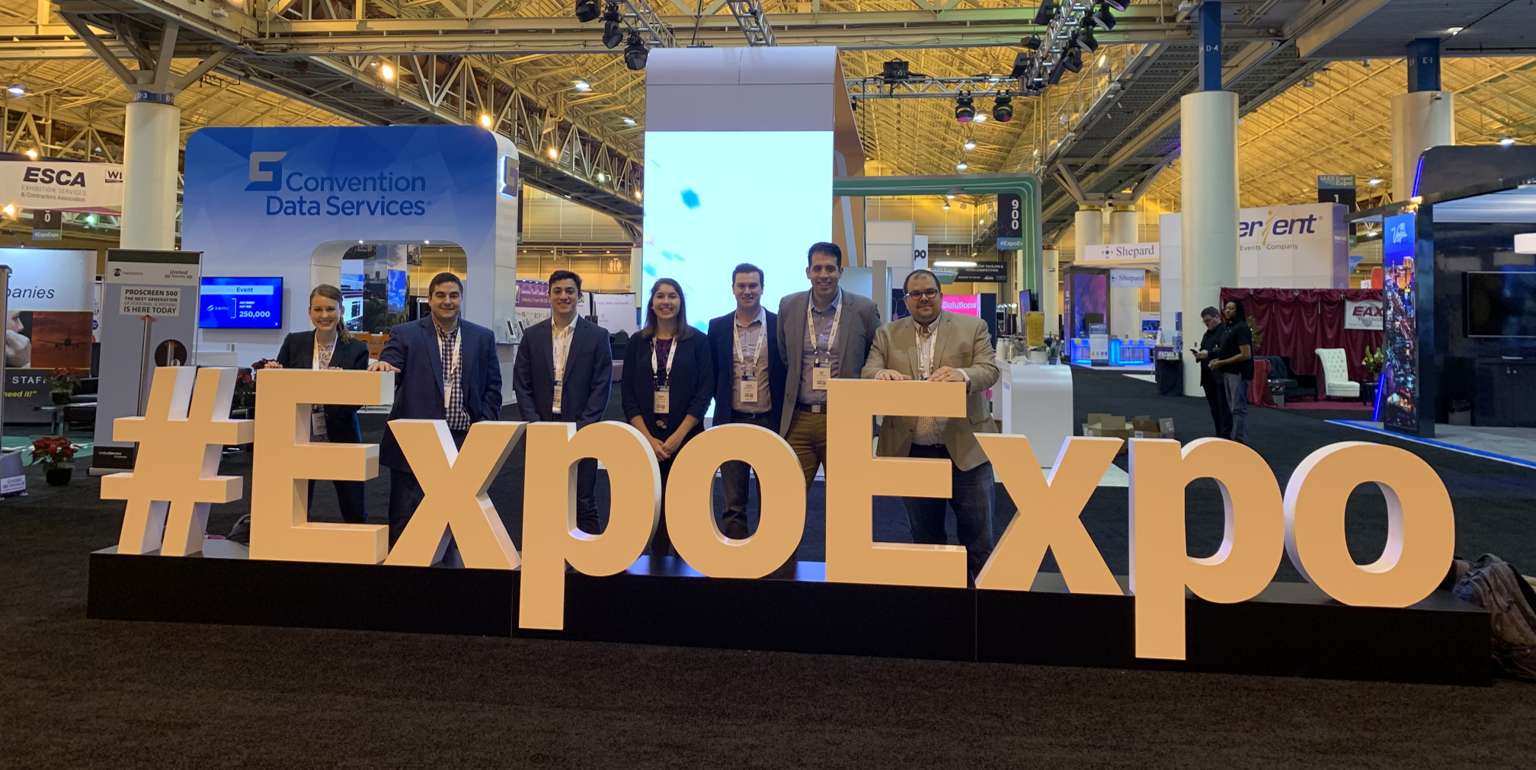
There is a new takeout- and delivery-only bakery in Arlington, and it is open until 2 a.m. on weekends — just when a cookie craving may strike.

The ghost kitchen, called MOLTN Cookies, celebrated its opening on Saturday with free cookies. It operates from within the Allspice Catering storefront (6017 Wilson Blvd) in the Dominion Hills neighborhood, near the county border with the City of Falls Church. Allspice and MOLTN have separate ownership and are otherwise unaffiliated, save the agreement to share a kitchen.

The company offers 10 cookie options — including s’mores, Reese’s Peanut Butter Cup and white chocolate macadamia nut — as well as several ice cream flavors for shakes and sundaes, all of which is made to order. Cookies are available in packs of six, 12 and 24. The ghost kitchen also offers corporate and event catering packages.

“Anyone in the area with a sweet tooth knows how difficult it can be to find a quality selection of desserts late at night,” co-owner Neal Miglani said in a statement. “As we watched the ghost kitchen concept take hold in the DMV, we realized we could use the model to fill this need, providing a variety of options when people need them the most.”

MOLTN Cookies promotional graphic (courtesy photo)

Miglani grew up helping out in his family’s restaurant, mopping floors and working in the kitchen, and eventually began consulting for restaurants and food tech startups in D.C.

Compared to places like New York City, Los Angeles and the Bay Area, Miglani says the Washington region was “definitely a little late to the party” when it came to the food-tech scene.

“Delivery just wasn’t as much a priority for restaurant owners before the pandemic here, but the market is responding quickly,” he tells ARLnow. “I think we are going to start seeing a lot of restaurants experimenting with virtual brands and delivery-focused menus.”

He says the food-tech scene has changed in the last two years primarily because the pandemic whetted people’s appetites for the convenience of pickup and delivery. That has in turn birthed a number of startups that specialize in building online ordering platforms for restaurants.

“We’ve also seen new food tech companies come into popularity recently such as LunchBox, BBot, and many more that have made the process much smoother,” he observed. “After witnessing this transformative shift in dining first-hand, we knew that when we started our own cookie business, we would utilize a takeout- and delivery-based business model.”

Miglani tested out his cookie concept in Gaithersburg, Maryland last year. The success of the location ultimately led him and his cofounders to open the Arlington location, he said.

He tells ARLnow that the location near the Arlington-Falls Church border is “perfect” because MOLTN can serve both areas.

(more…)


There are few people who know more about how Columbia Pike has changed in recent years than Lloyd Wolf, director of the Columbia Pike Documentary Project.

Since 2007, Wolf and a team of photographers, interviewers and community activists have spoken with hundreds of residents and taken thousands of pictures of South Arlington’s main thoroughfare.

As part of the project, they’ve kept a running blog, published books, and conceived numerous exhibits all aimed at discovering what makes Columbia Pike so special.

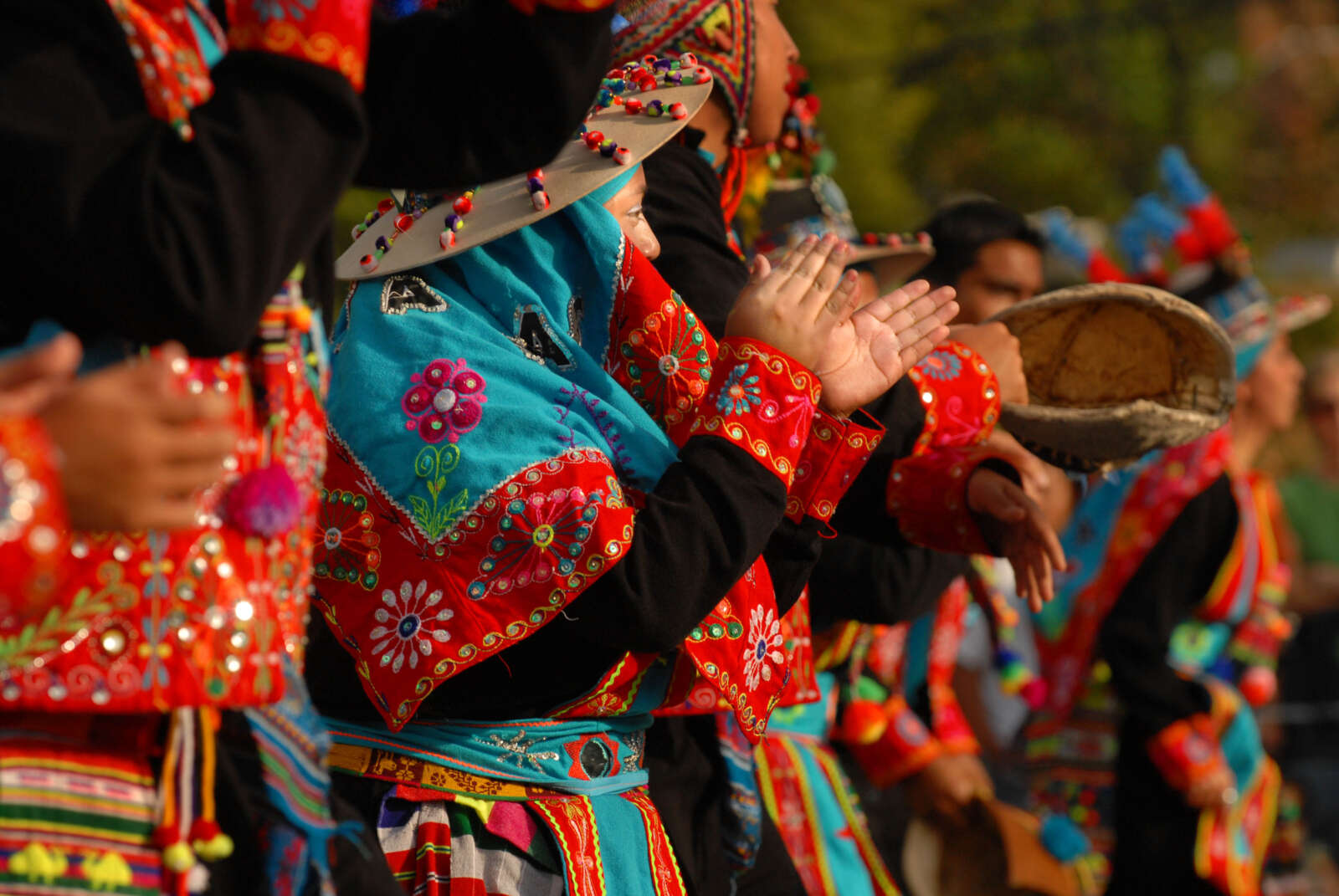
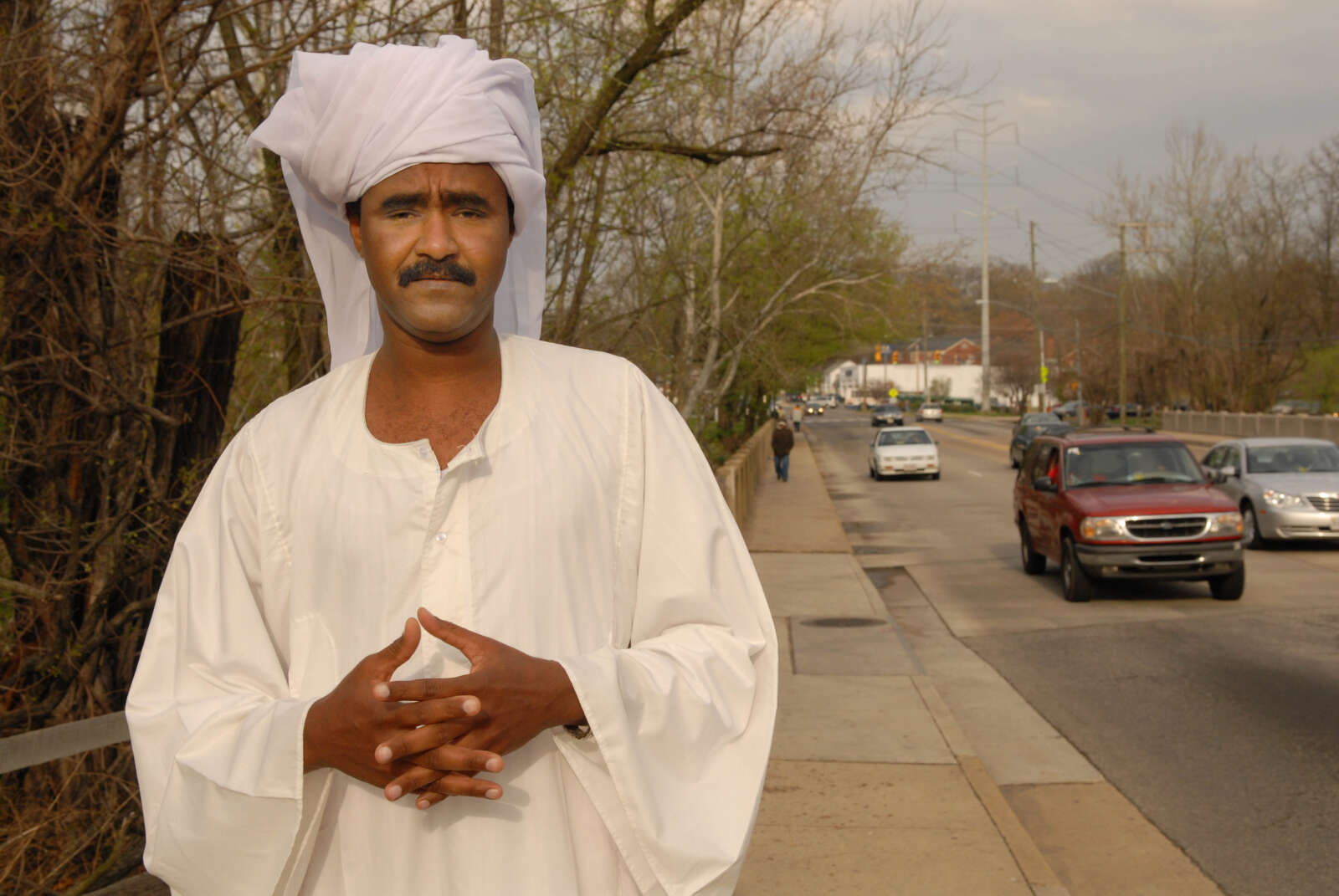
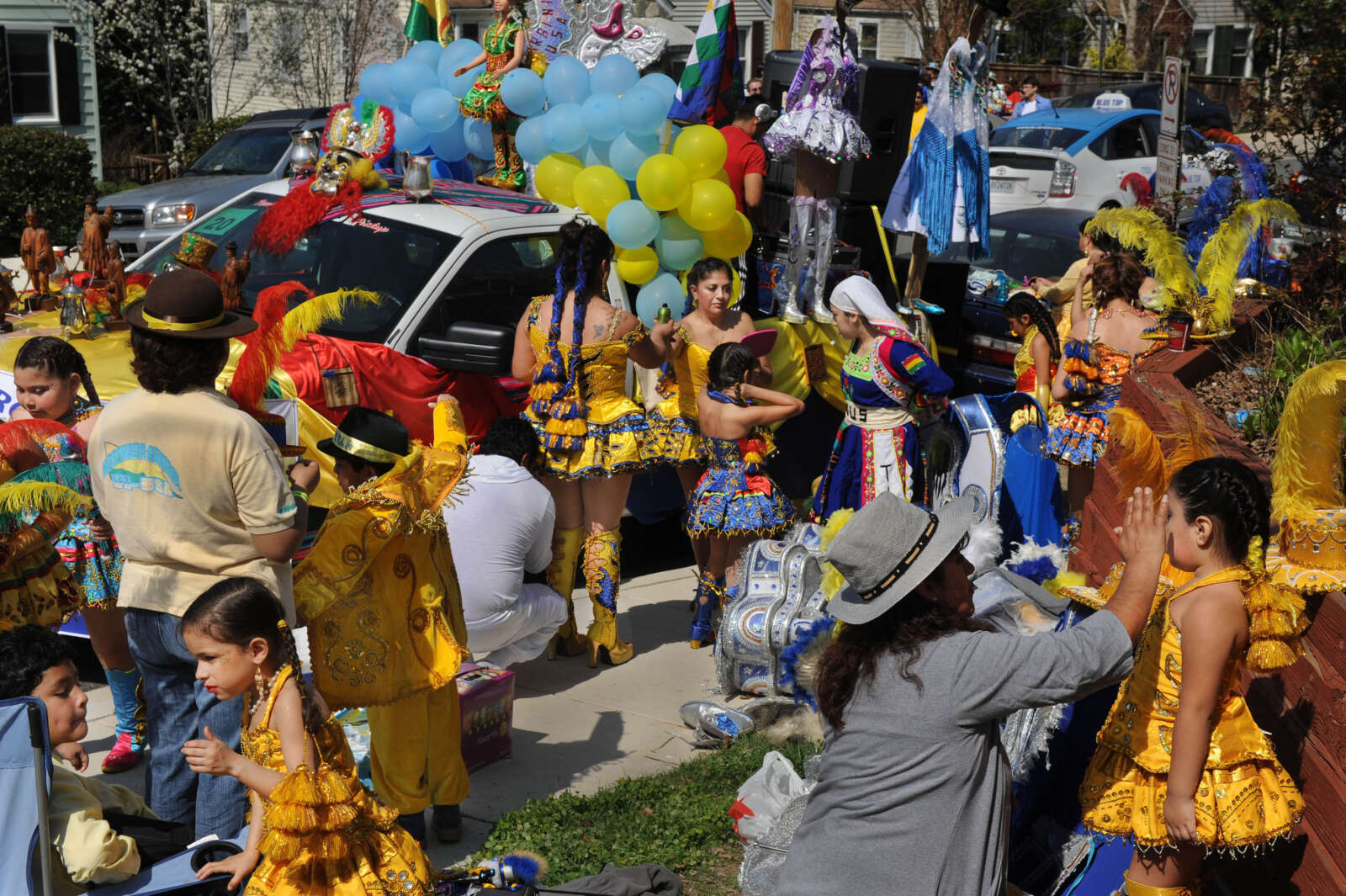
Wolf and his team of now-five include Dewey Tron, Xang Mimi Ho, Lara Ajami and Sushmita Mazumdar. They have documented a Bangladeshi-American car parade, a Thanksgiving dinner for new Ethiopian immigrants, a local Piedmont blues style guitarist along with dozens more celebratory moments and personal stories.

“The Pike is this nexus of immigration and diversity. And people are basically getting along and we thought ‘This is something we really should examine in-depth,'” Wolf tells ARLnow about how the project got started more than a decade ago.

Columbia Pike has a well-earned reputation for being among one of the most diverse neighborhoods in the country. It’s estimated that there are people from more than 130 countries speaking at least a hundred languages living on or in the Columbia Pike corridor. Famously, the Pike and its corresponding 22204 ZIP code has gotten the nickname for being the “world in a ZIP code.”

Wolf says one of the most gratifying aspects of the project for him is the ability to listen and learn about cultures and communities from around the world; the traditions, the rituals, the successes, and the challenges. Plus, his team is made up of people whose backgrounds include being Syrian, Vietnamese, Laotian and Japanese.

To Wolf, this perfectly encapsulates what makes Columbia Pike so special.

“If we weren’t doing this project, maybe we wouldn’t have a chance to meet. I have this line ‘This is what peace looks like,'” he says. “To the Pike, people come. It’s not perfect, but by and large, the groups interact well.”

This is a testament to the Arlington community as a whole. In a county where diversity is valued, appreciated, and celebrated, Wolf notes, differences don’t divide but unite.

“I’ve heard immigrants say that ‘I don’t feel different here because everyone is different,'” he says.

However, like much of Arlington, it’s no secret that Columbia Pike is physically changing, with a number of major development projects set to be completed in the near future.

And, recently, Wolf has set out to explore how these changes might impact the communities he’s spent years documenting.

(more…)


View More Stories