
Sponsored by Monday Properties and written by ARLnow, Startup Monday is a weekly column that profiles Arlington-based startups, founders, and other local technology news. Monday Properties is proudly featuring 1812 N. Moore Street in Rosslyn.

Hacks of infrastructure are on the rise, according to Ballston-based cyber security company Fend, which says the newly passed infrastructure bill with “unprecedented” cybersecurity spending couldn’t come at a better time.

Within the last year, criminals have realized that the business of holding billion-dollar infrastructure systems for ransom is a lucrative one, says Fend’s CEO and Founder Colin Dunn. Companies and government agencies work together to rustle up the ransom sum and put a halt to the chaos these attacks cause, such as the long lines at the pump after the Colonial Pipeline hack.

“They’re out for the money,” Dunn said. “It wasn’t until this year that they realized, ‘Oh, you can hold a pipeline company for ransom and everyone’s going to be really angry.’ I think we’re going to see more of it. Attackers are seeing how weakly defended these major major assets are.”

The $1 trillion infrastructure bill, signed into law last week, includes nearly $2 billion for cybersecurity. About $1 billion will go to state, local, tribal and territorial governments to modernize their systems to deter cyber attacks; $100 million will support a cyber response and recovery fund accessible to private-sector owners of critical infrastructure; and $21 million will go toward staffing the Office of the National Cyber Director, according to a U.S. Senate press release.

Dunn is encouraged by the allocation, as well as similar allocations in the American Rescue Plan Act.

“This is really unprecedented,” Dunn said. “I think the administration has seen these attacks, like the one on Colonial Pipeline… and they’re taking it really seriously, knowing that’s a threat that our enemies and criminals can hold over us — hold billion-dollar assets for ransom.”
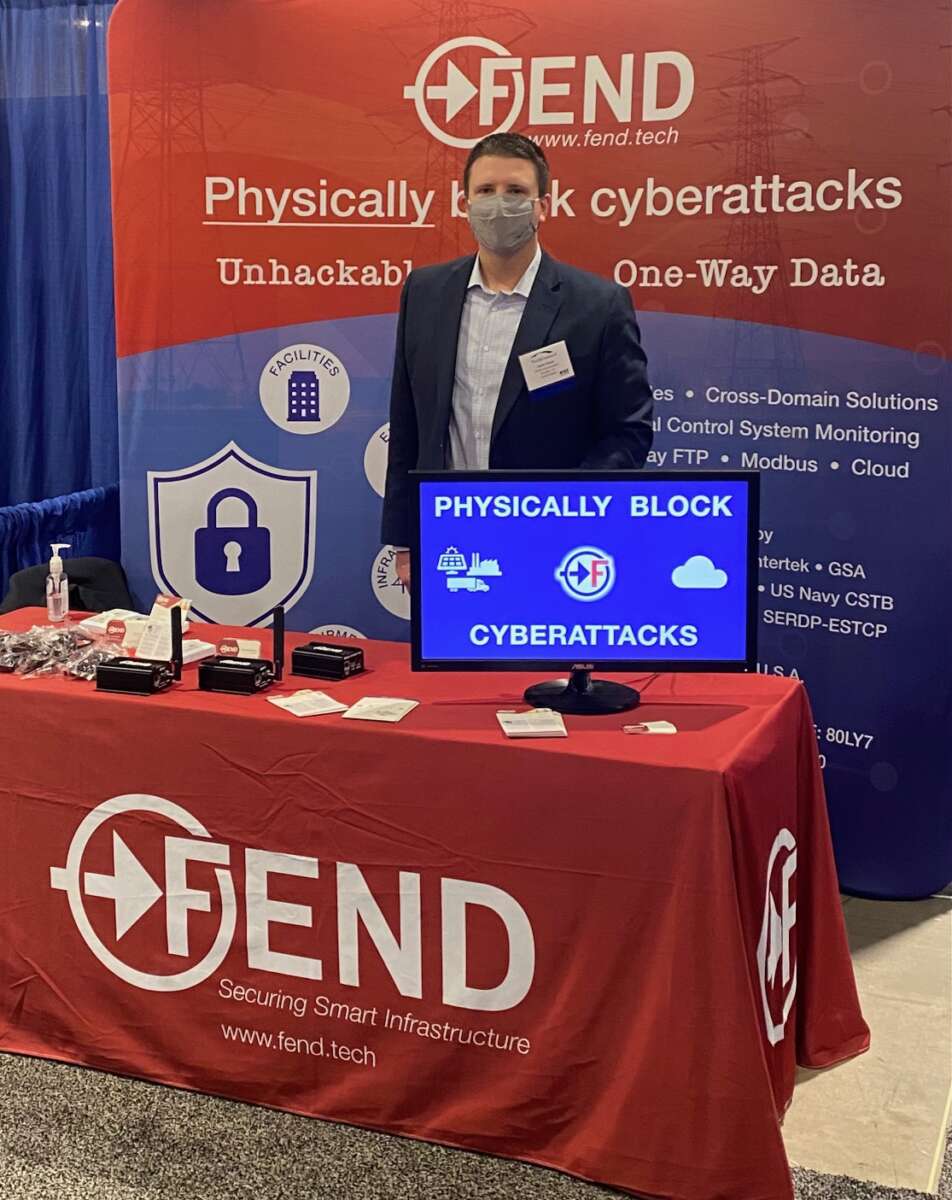
Colin Dunn of Fend at an expo this year (courtesy photo)

Having the conversation now — when new infrastructure is set to be built — means that cybersecurity can be embedded from the beginning, rather than retroactively applied after an attack, he says.

“So much of the infrastructure that we are seeing fall under attack… we’ve had to apply cybersecurity way after these facilities were brought online. Now we’re talking about doing that up front,” he said. “Baking that early in the conversation is a big step forward and will be good for our security overall.”

The bill could be a boon for Arlington, which is home not to numerous cybersecurity companies, but also to “big players in energy,” he says. It emphasizes cybersecurity workforce development, which could be good news for a state and region focused on creating a pipeline of tech workers.

“There’s pretty much zero unemployment in cybersecurity, and expanding that nationwide is going to be really important, and here, where it’s a stronghold,” he said.

The bill does include a preference for U.S.-made goods and services, such as Fend’s cybersecurity products, which Dunn says will be helpful for supporting American businesses rather than the great deal of overseas competition.

He said he hopes the spending helps protect the U.S.’s growing renewable energy facilities, such as the solar farms that Fend secures. Securing renewable energy has long been one of Dunn’s priorities.

“If we lose our renewables, we’ll go back to burning more fossil fuels,” he said.

In this new world of infrastructure hacks, Fend has gained traction and business, Dunn says.

Most recently, Fend — located at 4600 Fairfax Drive in Ballston — announced a partnership with Federal Resources Corporation, allowing Fend’s products to be sold to more government agencies, such as the Department of Defense. That’s fitting, he says, because government funding helped Fend get started.

“Between them and NASA, there’s lots of funding flowing, which helps make the product readily accessible,” he said.

Earlier this year, Fend completed some additional fundraising and attained its third patent, he added.
The following appeared earlier this week in the ARLnow Press Club’s Early Morning Notes newsletter. Join the Press Club and help support more local reporting in Arlington.

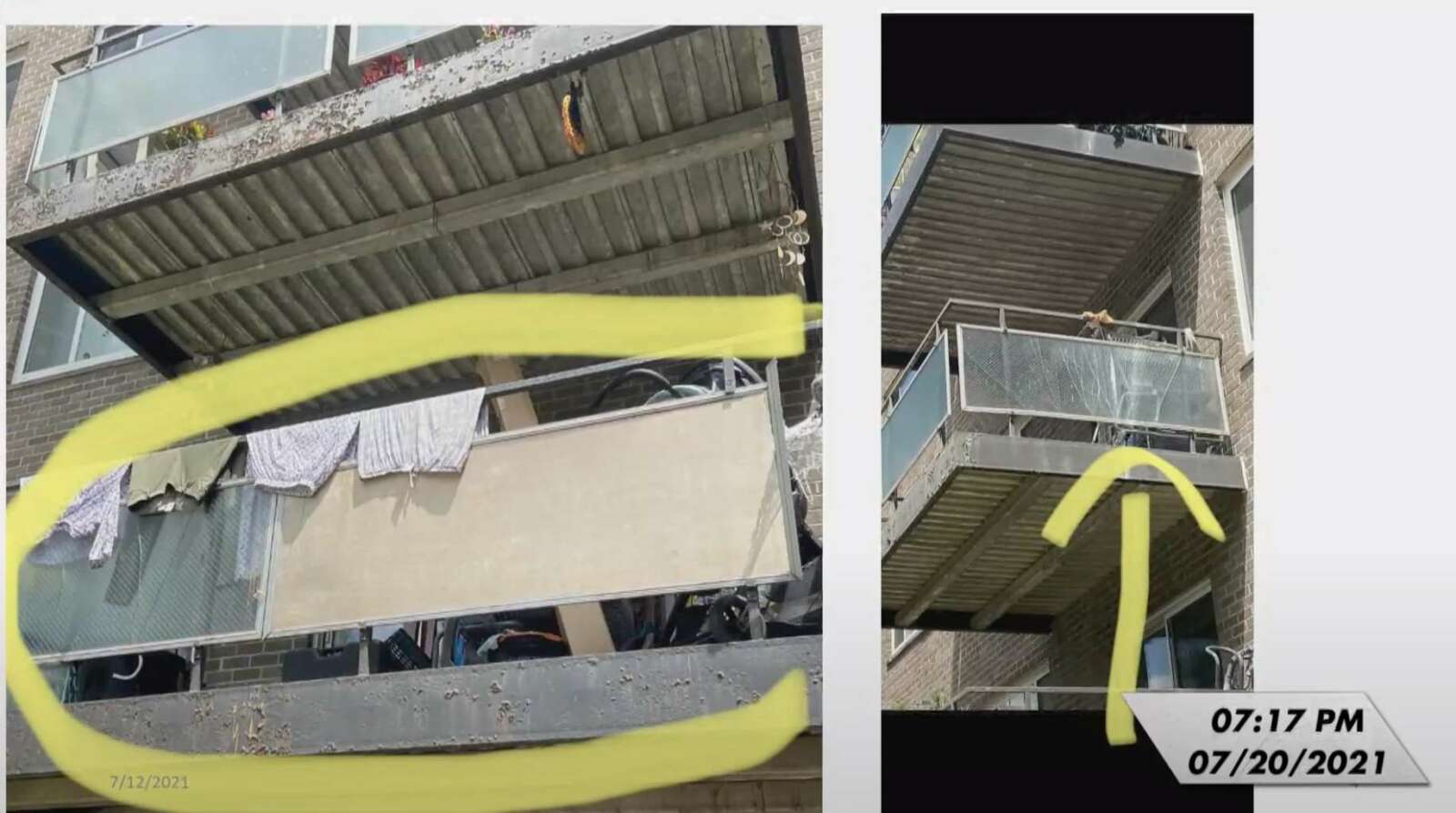
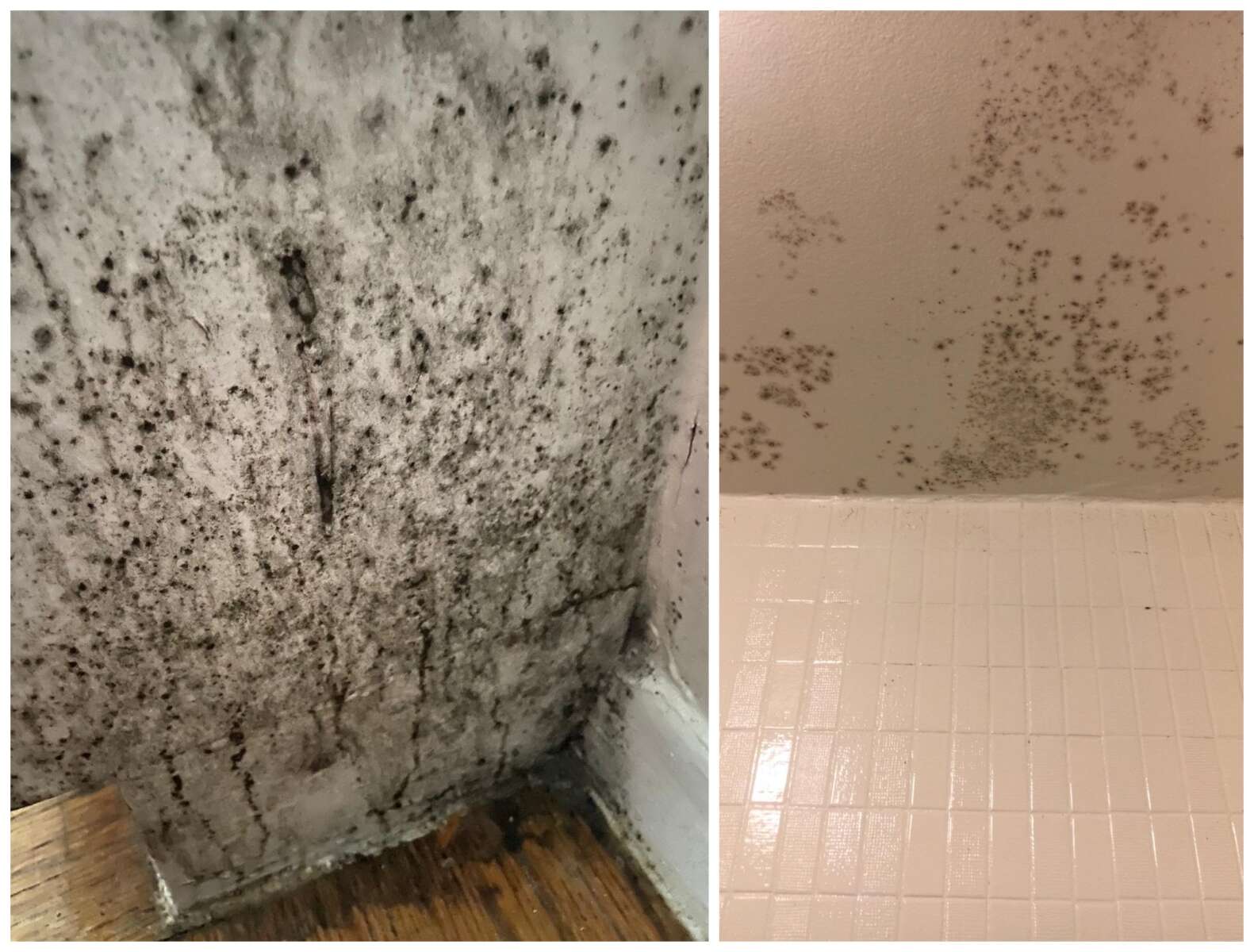
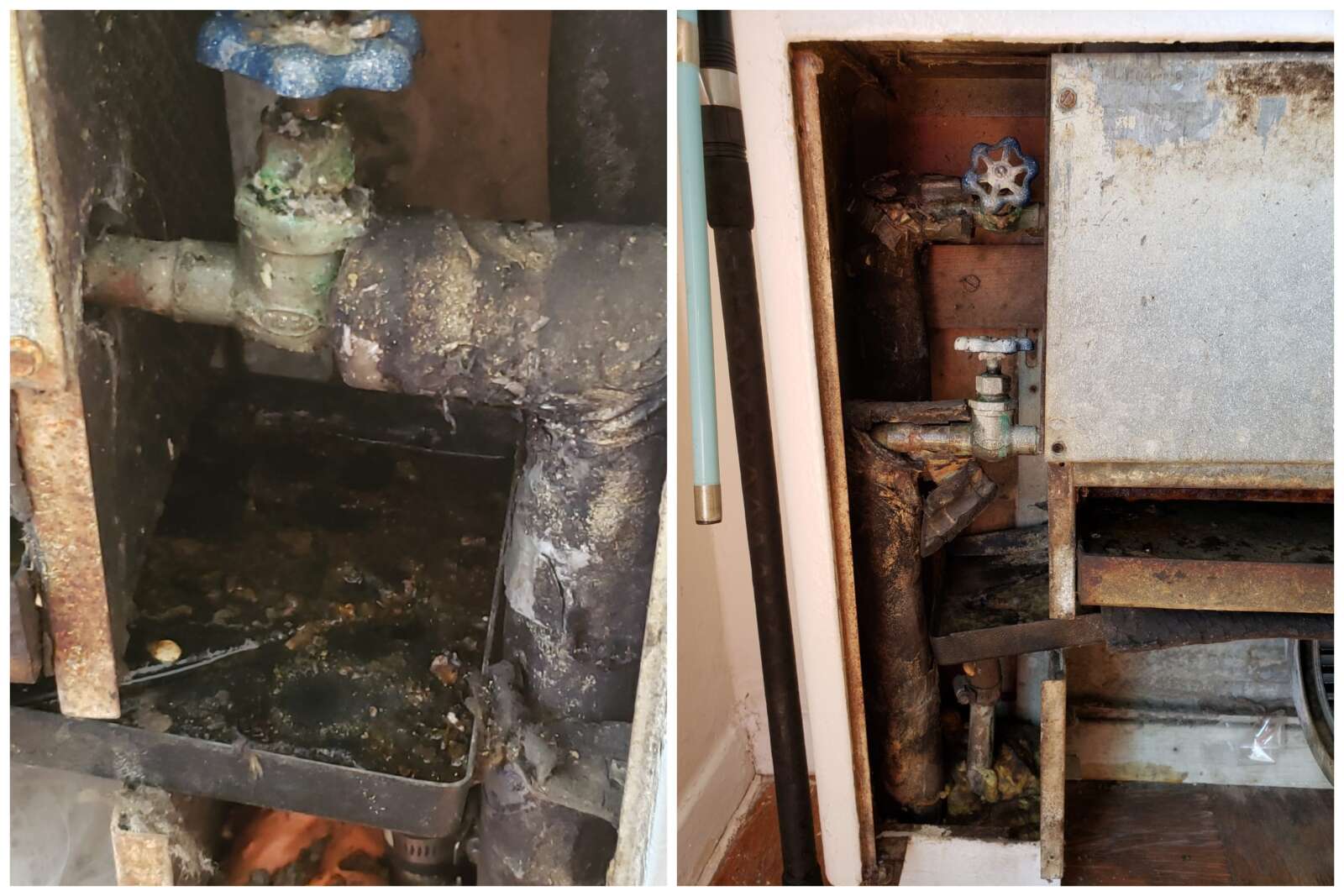
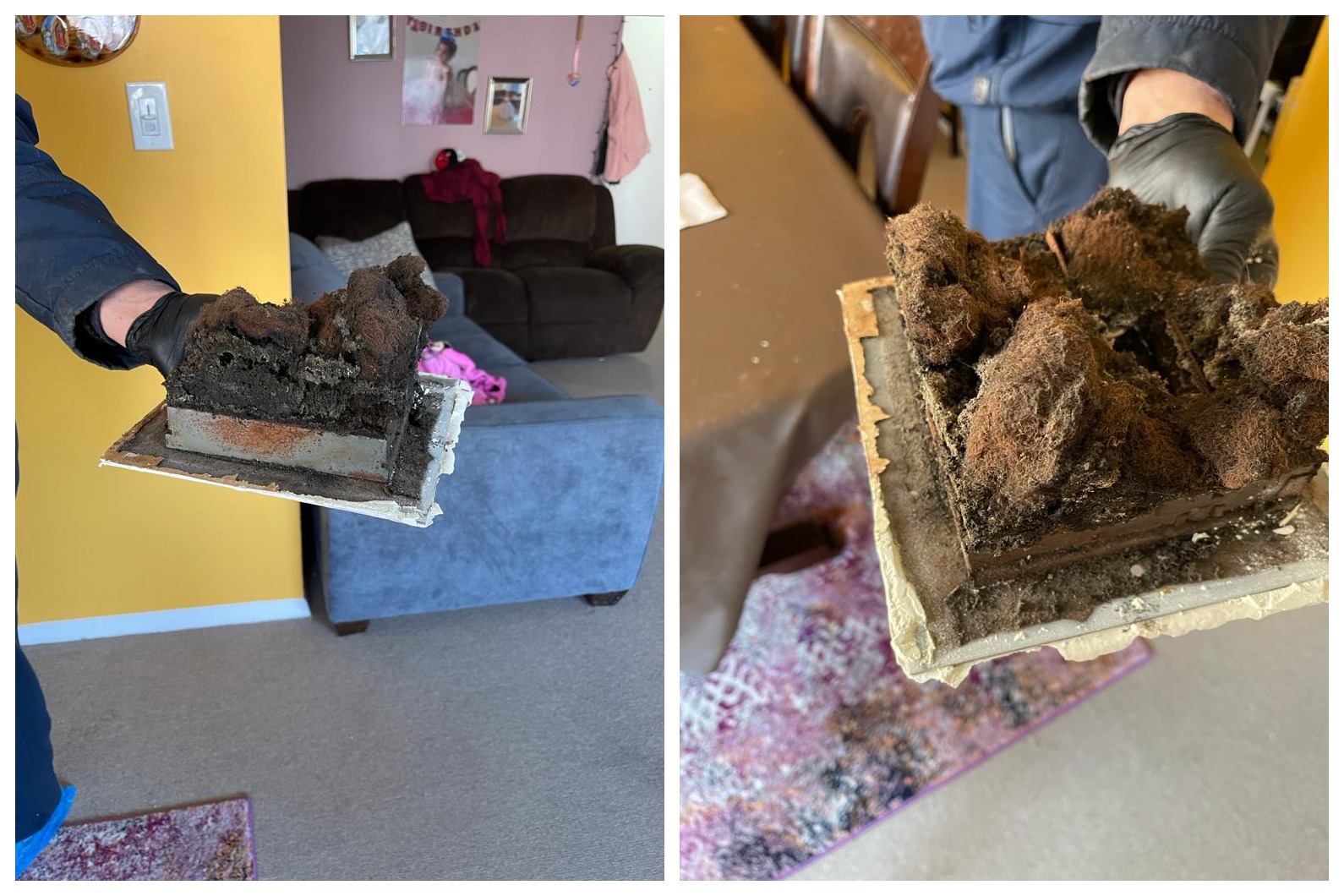
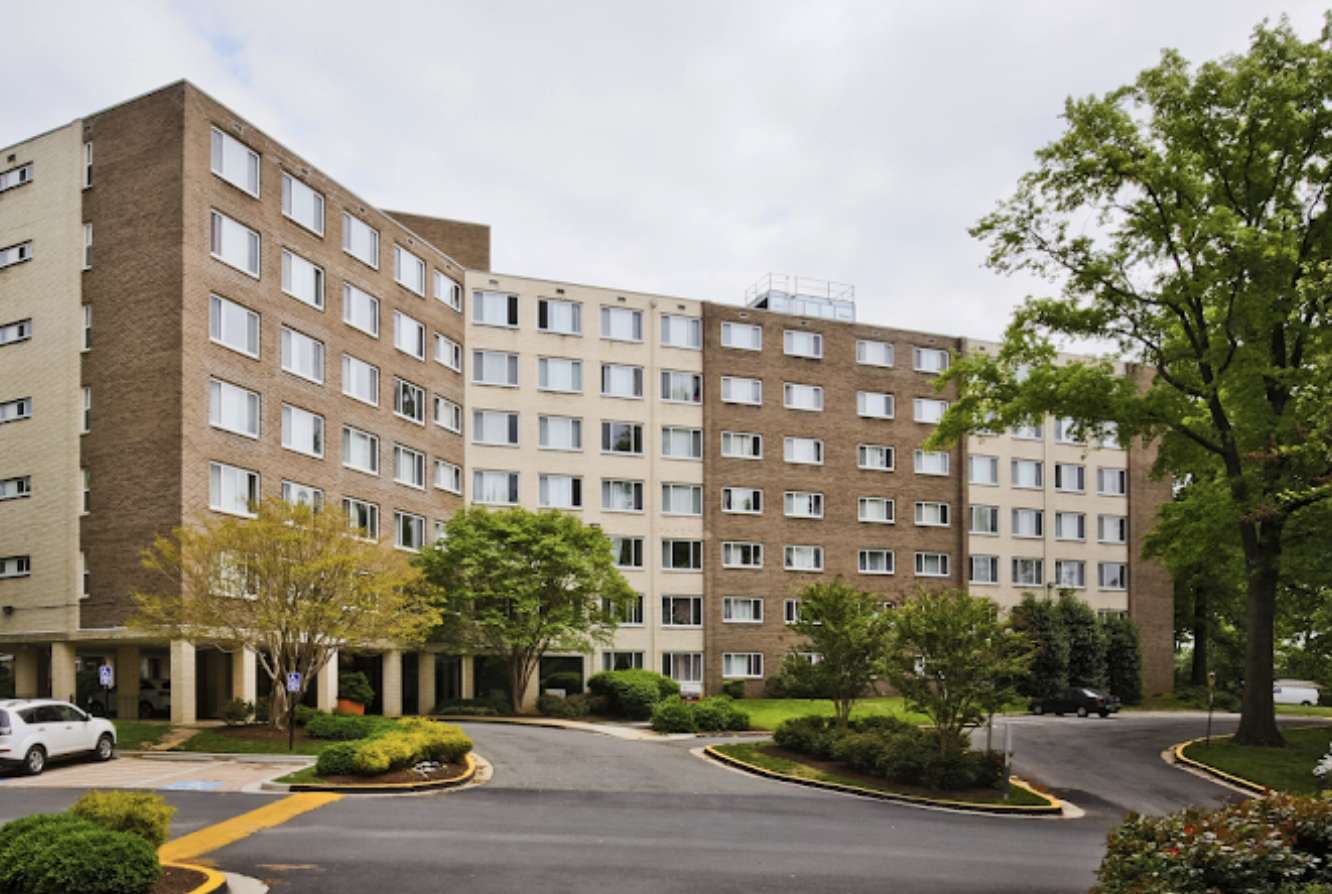
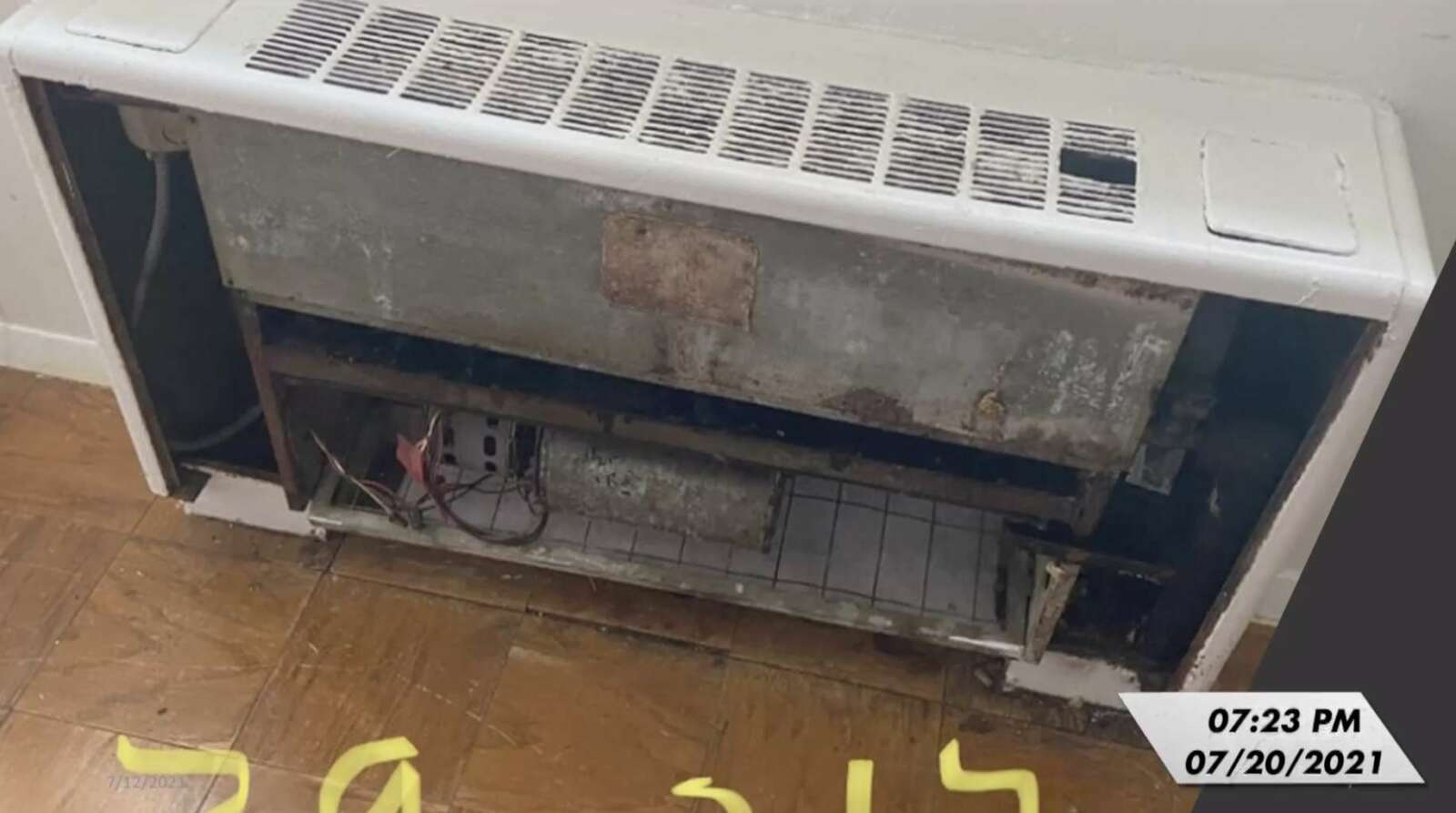
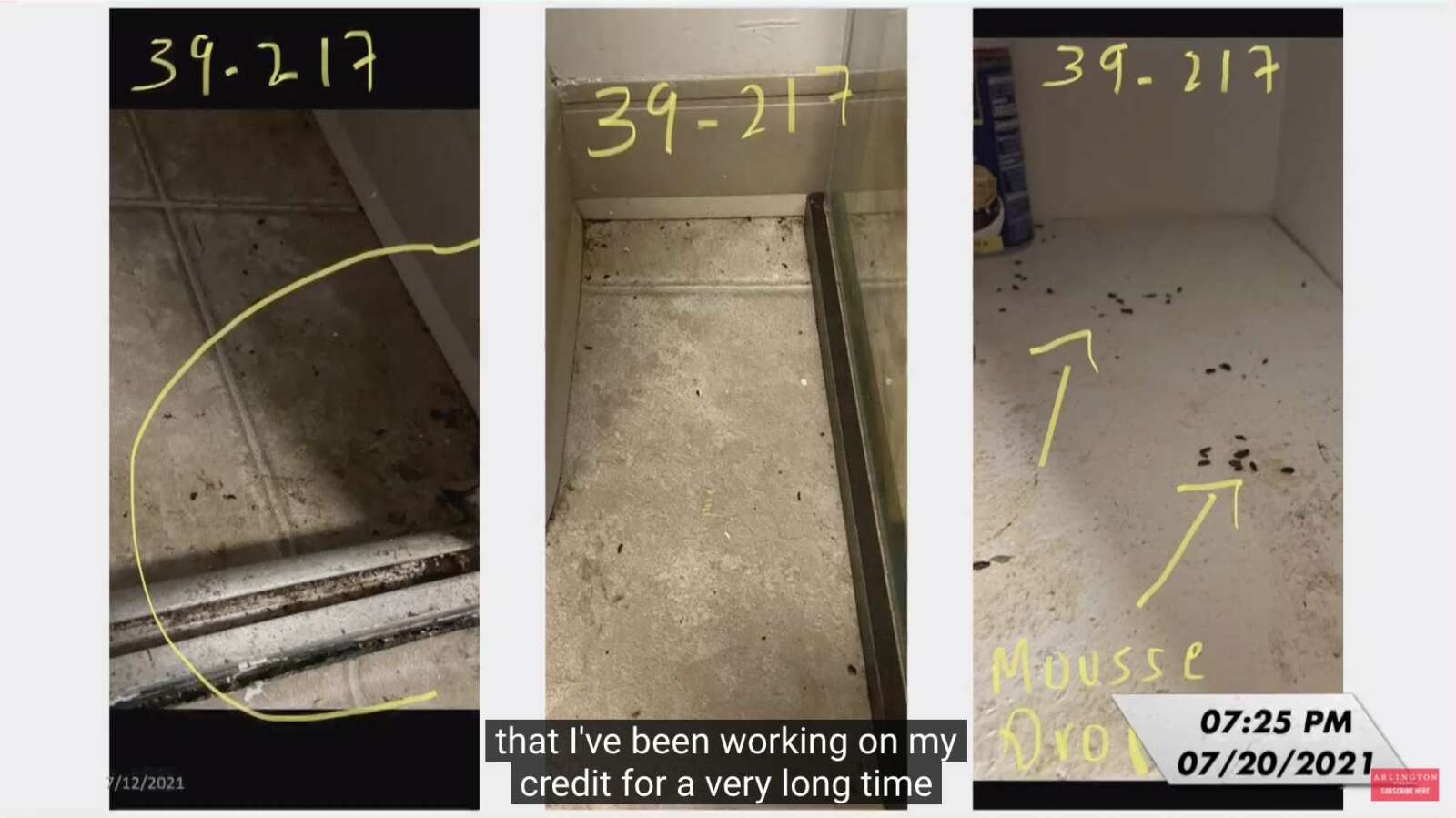
This week, the County Board got another update from tenant advocates and property owner AHC, Inc. about the ongoing work to improve the physical conditions at the Serrano Apartments as well as their tenant-landlord relationship.

Seven months ago, residents went public with accounts of rodents, mold and shoddy maintenance that they had endured for years. In the ensuing weeks, the County Board instituted regular updates from residents and affordable housing nonprofit AHC to keep tabs on the work being done to improve life at the Serrano.

Both parties say physical conditions have improved. Inspections are complete, everyone has either moved back to the Serrano or into a new living situation and AHC is still seeing administrative changes after the retirement of CEO Walter Webdale: two more retirements, six new members of the Board of Directors, including two AHC apartments residents, and an ongoing CEO search.

“We have been continuing to make strong progress together with tenant advocates and residents,” said interim AHC CEO Susan Cunningham. “We continue to be focused on making sure our most affected households from some maintenance issues at the Serrano last year are able to be back in secure and comfortable homes.”

But tenants say trust is still lacking — especially when it comes to insurance claim-like process AHC has set up to reimburse residents for property damage caused by its neglect.

For claims settled without mediation, residents are accepting one-third or less than what they estimated was the dollar amount of property damage (which in most cases was under $15,000), said Elder Julio Basurto. He argued that AHC, in undercutting what residents claim is due, re-victimizes them.

“[AHC] can hide behind insurance adjusters. They’re telling residents, ‘If you don’t like it, go to mediation — go to court,” said Basurto. “We ask that you [the County Board] be involved to stop the re-traumatizing, the re-victimizing of these residents.”

If the claims issue can’t be resolved, tenants can choose mediation. But they need a lawyer. Both parties do.

For a company like AHC, Cunningham says getting a lawyer preserves the integrity of the process. But for the folks Basurto represents, “lawyering up” means getting entangled in a process that they may not have the means, command of English, bandwidth or legal status to do.

During the meeting, County Board members spent some time parsing out these differing dynamics. Ultimately, members said they can’t really do anything to modify this legal process. What I took away from this conversation was that residents believe the parameters of an in-court mediation systematically disadvantage people seeking relief, and the County Board wanted to establish that the steps AHC was taking to right things could have unintended negative consequences.

This tension points back to the lack of out-of-court mediation options for tenant-landlord disputes in Arlington County, an issue that ARLnow columnist Nicole Merlene first brought to my attention earlier this year. She talked about the Tenant-Landlord Commission’s work to reinstate some kind of out-of-court, county-run mediation process after the county defunded one years ago.

(more…)


Sponsored by Monday Properties and written by ARLnow, Startup Monday is a weekly column that profiles Arlington-based startups, founders, and other local technology news. Monday Properties is proudly featuring 1812 N. Moore Street in Rosslyn.

(Updated on 11/16/21 at 6 p.m.) Shift5, a Rosslyn-based cybersecurity company, has raised $20 million in Series A funding to help protect the world’s transportation infrastructure and weapons systems from cyberattacks.

The money will allow Shift5 to expand its Arlington office, adding secured facilities and labs, and add to its 50-person team, according to its announcement.

Shift5 also plans to educate fleet operators, regulators and legislators on the risks that unsecured computerized infrastructure present and show them how the data collected by these digitized planes and trains can be used to improve their efficiency, the announcement said.

The round was led by 645 Ventures, with participation from Squadra Ventures, General Advance and First In.

The company, founded by two veterans of the U.S. Army’s Cyber Branch, closed its seed funding round in 2019. Since then, Shift5 has grown through a series of contracts with several large, national passenger rail systems and more recently, with the U.S. Army and Air Force to beef up security on their combat vehicles and planes, respectively.

With the news of the second funding round and new contracts, ARLnow asked Shift5’s CEO and co-founder Josh Lospinoso to reflect on the entrepreneurial process and on what it takes to raise money as a startup. The following Q&A has been slightly condensed and edited for clarity.

ARLnow: How long have you been actively working on raising Series A funding? Did the numbers meet or exceed expectations?

Lospinoso: Shift5 closed seed funding in 2019, and in the aftermath, won a series of contracts, including work with the US Air Force, which allowed us to grow organically through this year. Our Series A was very competitive, and ultimately our new partners at 645 represented a huge addition to the team that we couldn’t pass up.

ARLnow: When you started the company, were you someone who got energized by the idea of talking to investors, or was that intimidating? Do you think your product is an easy sell, given the immediate and debilitating threats cyberattacks pose?

Lospinoso: The Shift5 founding team is very passionate about the risk to national security posed by insecure transportation infrastructure. The idea of spreading awareness about the problem was more exciting and energizing than intimidating. We live in an era in which the cyber physical effects of cyberattacks are rapidly becoming a national menace. We’re seeing the US government act here — for example, the TSA is mandating rail and air operators tighten cybersecurity. Our customers are just glad there are folks out there solving the problem for them.

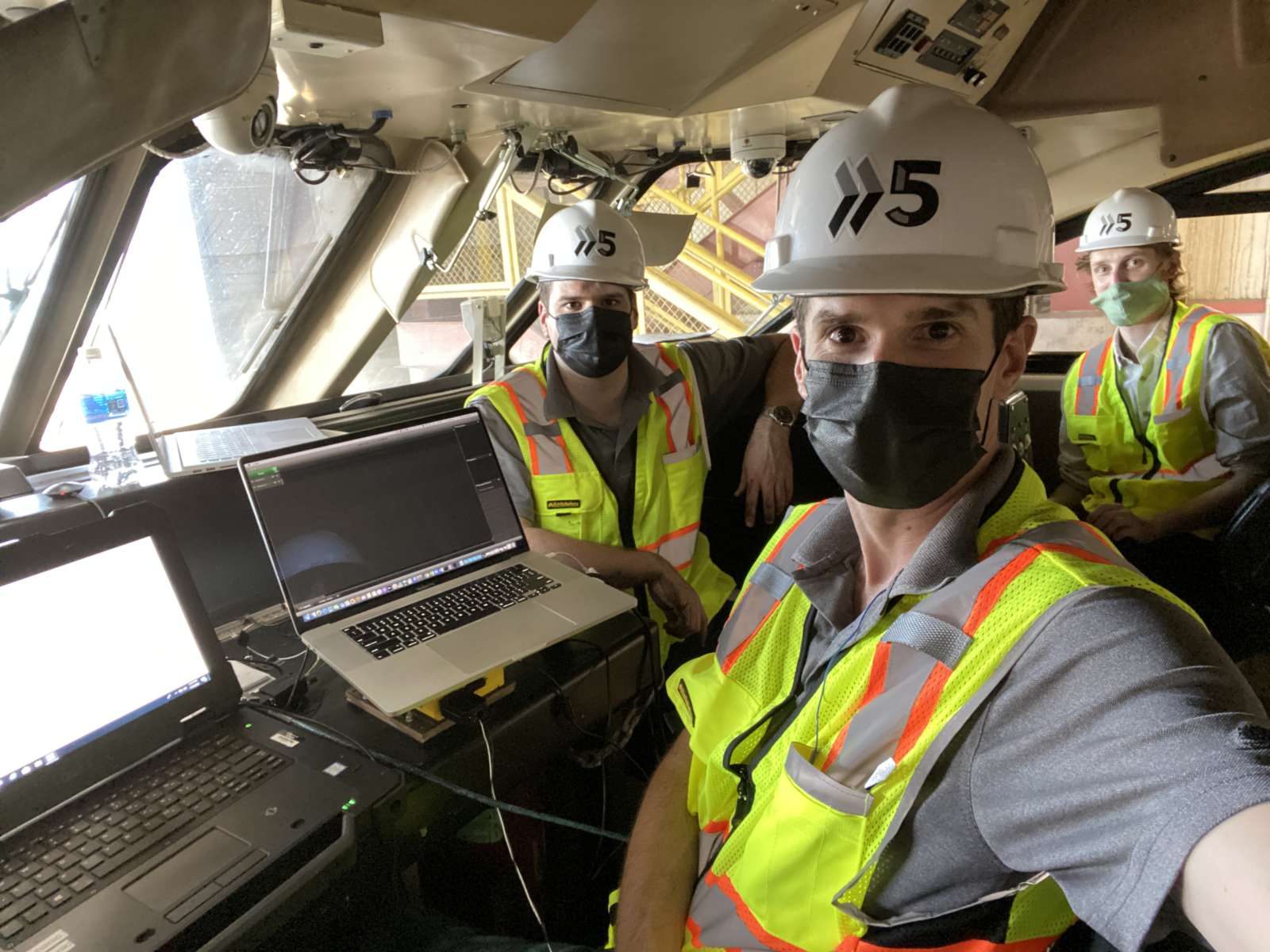
Shift5 founders deploy their product on a train (courtesy of Shift5)

ARLnow: Was there a steep learning curve to starting a company after leaving the military? Or do you think that it imparted some entrepreneurial skills?

Lospinoso: There was a pretty steep learning curve. The military prepared Mike and me for this. You’re used to jumping into high-tempo environments, having to learn the ropes quickly under a lot of pressure.

ARLnow: Which was harder, raising Seed or Series A funding?

Lospinoso: Both have difficulties in their own way. Seed Series funding is really team- and mission-focused. The Series A is much more about product/market fit. It’s about showing how your thesis at the Seed Series is playing out. By numbers, relatively few companies raise a Series A successfully. We were fortunate that we faced a problem in uniform that gave us a unique perspective on a very large opportunity. And we see that playing out.

ARLnow: What does it take to raise $20 million?

  1. Knowing something about the world that few people know to be true. Go after a big problem facing lots of people. The best kinds of problems are those that people don’t know they have.
  2. Having a risk appetite to eschew a steady paycheck and work/life balance to throw every ounce you have at a single problem.
  3. Being stubborn enough not to be deterred by short-term setbacks but nimble enough to accept feedback from customers, investors, and employees.
  4. Telling the story effectively and rallying others to your cause.
  5. Having a maniacal focus on solving customer problems.
  6. Having the maturity to give up responsibilities and control to empower those around you. Remember about rallying others to your cause.

Want to know the minute something big happens in Arlington? We recently added a new option for getting alerted.

ARLnow now offers two ways to get alerts right on your phone or computer: text message alerts for urgent and breaking stories, and email alerts for major breaking stories.

The text alerts are an exclusive feature for ARLnow Press Club members.

Each time we publish a story that’s marked “JUST IN,” “EXCLUSIVE,” “TRAFFIC ALERT,” “DEVELOPING” or “BREAKING,” you’ll get the headline and link texted to you within seconds.

Want to be the first to know? Join the Press Club.

Already a member? Sign up for text alerts now.

If you only want to know when the really big stuff happens, that’s an option, too: subscribers of our free Afternoon Update newsletter automatically get email alerts for major stories.


Sponsored by Monday Properties and written by ARLnow, Startup Monday is a weekly column that profiles Arlington-based startups, founders, and other local technology news. Monday Properties is proudly featuring 1812 N. Moore Street in Rosslyn.

(Updated 3:15 p.m. on 11/9/21) Next to water, Americans probably drink coffee more than any other beverage — but they know very little about the brew, says Karel Leon, the co-founder of a Ballston-based coffee company.

He and his co-founder Javier LLano want to change that by selling better beans through their company, Black & Brown Coffee House (4075 Wilson Blvd). It has the ambitious goal of tackling commercial coffee’s alleged unhealthy physical side effects and unethical treatment of farmers and unsustainable practices, while giving back to D.C.’s poorest communities.

“When you have a product, any product, and you know your food is not ethical, it’s not sustainable, and it’s bad for health of consumer, I would quit that job,” he said. “Why would I do that?”

Disaffected by his job at World Bank Group, Karel — who grew up on a coffee farm in Colombia — wanted to do work that directly impacted people in poverty. He started Dignity Coffee in 2018, providing offices with coffee from growers in his hometown, and brought LLano on after.

But the pandemic hit and slashed Dignity’s profits by 90%, he said. Karel and LLano, who are Latino and Black, respectively, rebranded in the wake of 2020’s social justice movements to draw attention to the inequality in the commercial coffee industry and provide consumers with an alternative.

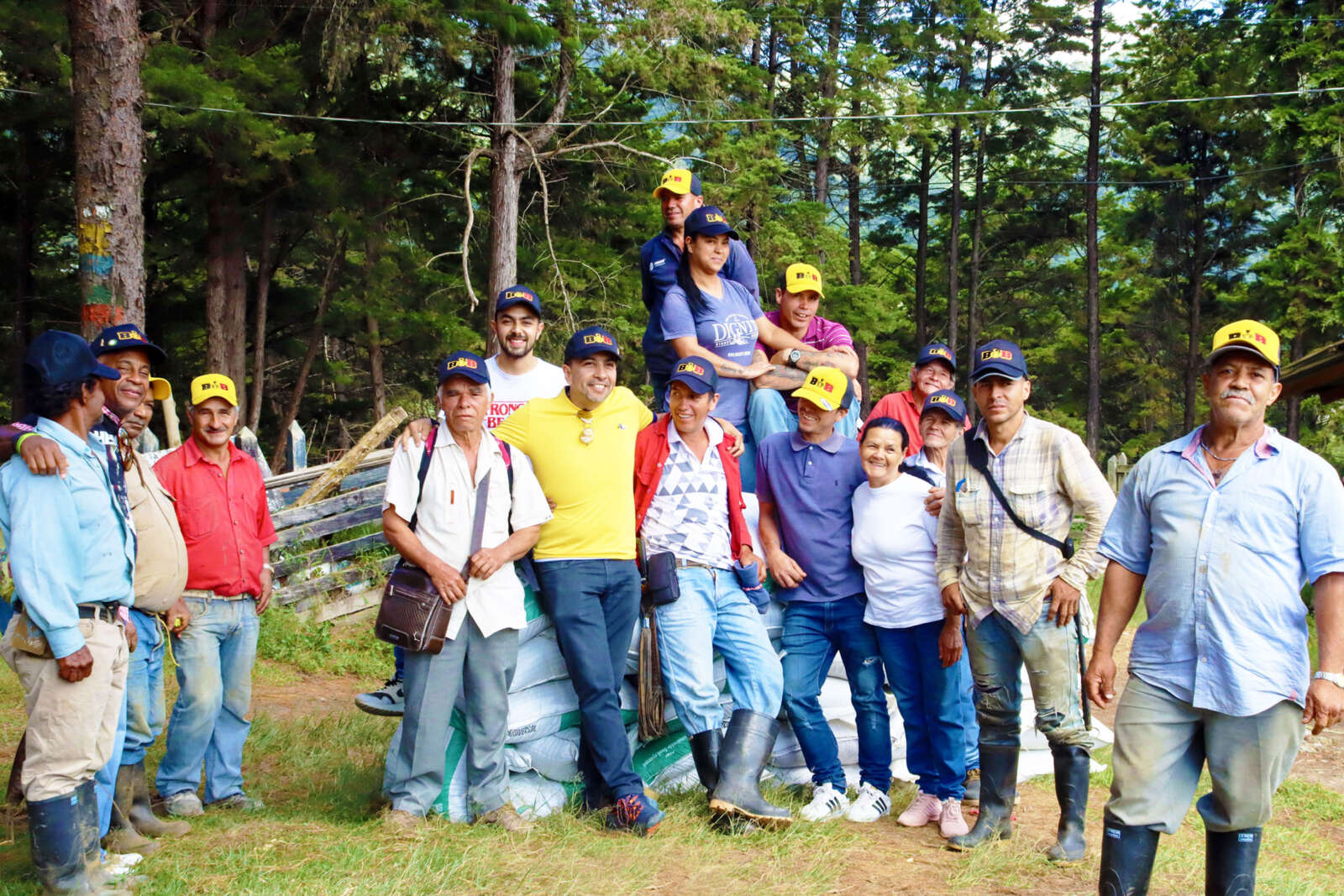
Black & Brown Coffee House founders Javier LLano and Karel Leon pose with Colombia coffee farmers (courtesy photo)

They decided to start where bad-quality coffee hits people the hardest: their stomachs.

“The most important thing for the consumers is to educate people about what ‘healthier black coffee means’ and why that matters,” Leon said.

Leon needed coffee at the office in order to remain alert, but it gave him indigestion, so he tried eating bagels and adding milk and sugar to quiet his stomach grumblings.

He realized he wasn’t alone. Moreover, he learned that the common side effects of diarrhea and acid reflux could be traced to where the coffee berries are grown and how they’re picked and processed.

Most commercial coffee berries are grown in flat areas in the constant sun. He said coffee trees ought to grow on the sides of tree-covered mountains, where berries are exposed to fluctuating hot and cool weather that balances out the acidity and fully develops their natural flavors.

But farmers use flat land because their machines — which don’t discriminate between ripe, unripe and rotten coffee berries like a picker in the mountains would — to scale up their harvests, he said.

Berries continue developing their flavors during a fermentation process that underpaid farmers being exploited by large companies tend to rush, he said.

To extract flavor from under-ripe coffee, the beans are caramelized — or burned — on a high heat, which produces oils the body also can’t handle effectively, he said. Coffee shops and fast food places combat the burnt taste by serving the coffee extra hot, with additives or as carbon dioxide-infused “Nitro coffee.”

“This is one of the most unknown stories out there,” he said. “If people knew better, they would make better choices.”

Black and Brown Coffee House produces “healthy coffee” by paying Colombian coffee farmers fair wages and divvying up the work, he said.

(more…)


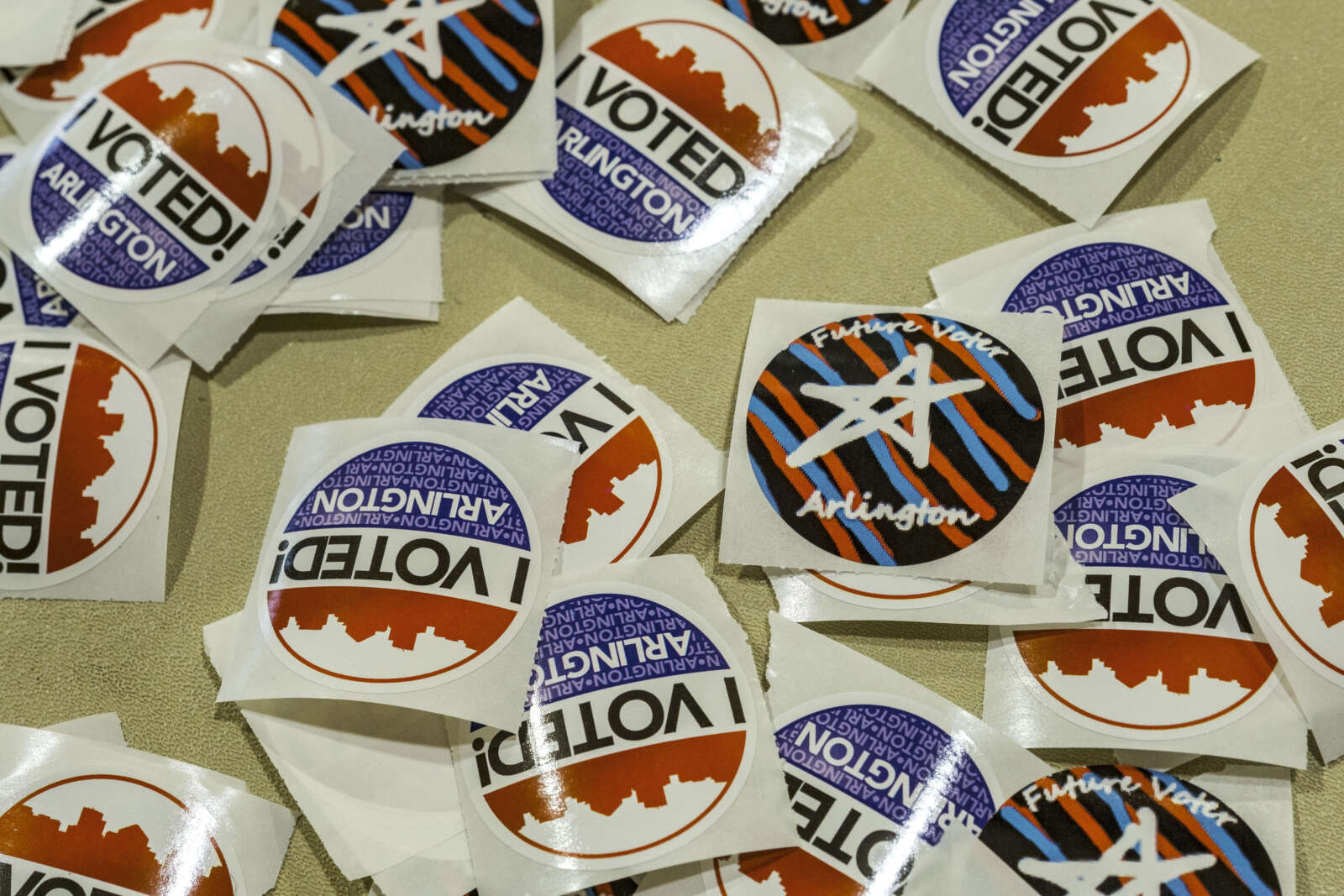
Voting stickers (staff photo by Jay Westcott)

Once a week, we provide additional insight into local news stories for ARLnow Press Club members with our Reporter’s Notepad feature. Here’s one we published earlier this week. 

I had a long chat with Arlington GOP Communications Director and former ARLnow opinion columnist Matthew Hurtt about Tuesday‘s election results and what the slight shift to the right here (which went 17% for Donald Trump in 2020 and 22.8% for Glenn Youngkin on Tuesdaymeans for the future of the local Republican party.

Hurtt attributed Youngkin’s victory to the governor-elect taking up education as a major campaign focus in a year when many parents were frustrated with school closures and masking policies, how schools talk about systemic racism, and policy decisions such as changing the admissions standards at Thomas Jefferson High School for Science and Technology in Fairfax County or eliminating all advanced math classes before 11th grade.

He says the energy that brought those folks out — contributing to a higher level of Republican enthusiasm in Arlington than he had seen in years — can propel a greater county-level Republican presence in local offices.

But it’s a steep road to climb in Arlington: The last time a non-Democrat sat on the County Board, for example, was when John Vihstadt won in 2014. The last non-Democrat on the Board before Vihstadt was 15 years prior.

And even though qualified Republican candidates are out there, Hurtt says, they have public-facing jobs and tend to view the (R) by their name as a liability in a county that went 80% for President Joe Biden.

The non-establishment types who do mount campaigns run as independents, providing occasional counterpoint to establishment Democrats but never building enough of a coalition to win an election. This year, incumbent Democrat Takis Karantonis claimed 60% of votes and beat out his three independent opponents.

Hurtt said he appreciated every independent’s qualifications: as a perennial candidate, Audrey Clement knows the history of important issues; Mike Cantwell got his start with a Yorktown parents group and the Yorktown Civic Association; and Adam Theo had experience in organizing the local Libertarian party.

“How do we make a mega-candidate out of those people? You’re not going to win in Arlington without Democrat votes, so he or she needs appeal,” he said. “It needs to be somebody who can speak to Republicans and Democrats.”

The hypothetical Theo-Cantwell-Clement super candidate chipped away roughly 40% of the vote. But unfortunately, Hurtt said, the reality in Arlington is that they didn’t stand a chance, as Democrats “are a Tammany Hall machine” (referencing a group of Democratic political bosses who, for 200 years, controlled New York City politics).

“They’ve professionalized their activism,” he said. “I give them kudos for doing it: it prevents anyone — even within Democrat ranks — from dissenting.”

Nowhere was that more apparent, he observed, than when Miranda Turner ran against Mary Kadera during Arlington County Democratic Committee’s School Board caucus, which endorsed Kadera to replace Monique O’Grady.

Turner’s candidacy, tailored to the issues of reopening schools, represented the body of parents who were dissatisfied with how the School Board and Arlington Public Schools handled school closures — one reason Hurtt said education-issues voters went for Youngkin — but whose political views were diverse. (One caveat is that while the group members are bipartisan, at least in the case of the neighboring Fairfax group, funding seems to come from right and center-right people and groups.)

That could be why the anti-Trump messaging from Terry McAuliffe’s campaign, coming from McAuliffe and President Joe Biden during their joint events in Arlington, wasn’t enough to secure his victory. There was a cohort of voters for whom that label didn’t ring true.

We know that this election brought out the suburban Republicans who didn’t support Trump in 2020, per the University of Virginia’s Center for Politics. We also know that Youngkin kept some distance between himself and Trump, except when he discussed election integrity and audits of voting machines.

“It didn’t appear as though Youngkin did engage with Trump,” Hurtt said. “I didn’t hear much about Trump in Arlington. The voters were more interested in what he was going to do as governor, and they were not particularly interested in who was president last year.”

Unfortunately, he says, local GOPers are often too focused on federal politics. To get that “mega-candidate” he spoke of in 2022 or 2023, he said Arlington GOP’s game plan is to hammer home the importance of getting involved in civic associations — the bedrock of local engagement in the county.

“That’s our next move,” Hurtt said. “We want Republicans to be part of their civic associations, the local machinations that are largely non-partisan, the Arlington Committee of 100, the Columbia Pike Partnership [formerly the Columbia Pike Revitalization Organization], the Rosslyn Business Improvement District… We want them to show up and show people that Republicans are engaged in the community.”


Sponsored by Monday Properties and written by ARLnow, Startup Monday is a weekly column that profiles Arlington-based startups, founders, and other local technology news. Monday Properties is proudly featuring 1812 N. Moore Street in Rosslyn.

Federated Wireless is using its proprietary private 5G solution to make a Marine Corps Logistics Base in Georgia smarter.

The company says it was able to make it happen because of its physical location in Arlington, close to the Pentagon. From its Ballston office at 4075 Wilson Blvd, Federated Wireless conducted in-person demonstrations and briefings with Department of Defense leaders during the pandemic, when travel was down.

“Being located in Arlington has really been a benefit to Federated Wireless,” Vice President and General Manager Sal D’Itri said. “We won a huge contract to implement our technology along with some marquee partners at the Marine Corps Logistics Base Albany because of our headquarter presence close to the Pentagon and its leaders. We’ve been able to cultivate those relationships as we build the business.”

This past January, it deployed its solution at the base. The improved connectivity supports innovations such as precision forklifts, smart sensors and robots, and automated inventory management, making manual inventory and manual work inside the warehouse a thing of the past.

“This is one of the largest smart warehouse deployments of private 5G networks in the United States,” D’Itri said.

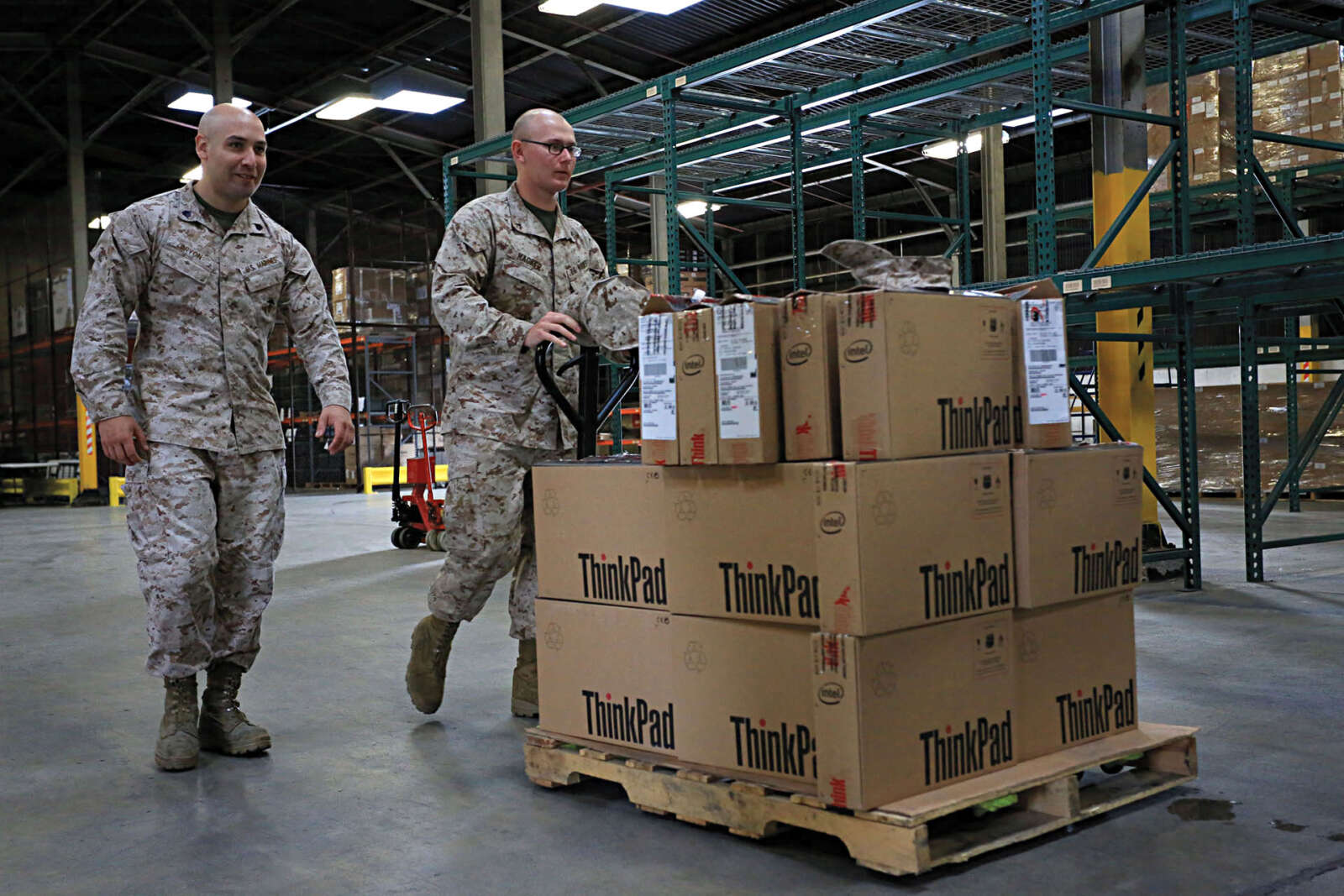
Two Marines Corps members push inventory in a warehouse (courtesy photo)

The 5G being used in Georgia provides persistent communication — also known as low latency — to spectrum networks that goes way beyond what’s available to ordinary cellphone users. D’Itri says the warehouse needs this low latency in order to support sensors, robots and machines without the interruptions and network slow-downs cellphone users occasionally experience.

“It’s a technology that’s really geared for enterprises,” he said. “We can have the low-latency that we need for robotics. We have the capacity for things we need, like holographic Internet of Things representations and augmented reality.”

Federated Wireless is growing as governments and enterprises worldwide increasingly focus on harnessing innovative 5G networks.

“5G is on every ad and every commercial now,” D’Itri said. “Our business is growing with that, particularly as we look at 5G networks that are targeting enterprises, school districts and communities that want to have a private, secure network that is more oriented to applications, as opposed to merely a carrier network” such as AT&T or Verizon.

He says Federated Wireless’s private 5G solution is made possible through its “shared spectrum controller.” In the U.S. today, spectrum is either assigned to the federal government or auctioned to carriers like AT&T. Federated Wireless uses its proprietary controller to share unused spectrum with private companies, powering reliable, private 5G networks.

With that kind of power, D’Itri says companies can not only experience greater connectivity without being tied to a specific carrier but can create “next-generation experiences” such as holographs or virtual reality.

Using its ability to share spectrum, Federated Wireless is also looking to tackle another area that large businesses and equipment manufacturers heavily rely on: WiFi.

“When you add spectrum to WiFi, you help relieve congestion and deploy more of it to stay connected,” D’Itri said. “[Consumers] would have better WiFi connectivity and more capacity.”

With these developments, D’Itri says Federated Wireless is having to grow its local presence over the next several years.

“We certainly are planning to continue hiring our Arlington office,” he said. “We have a wonderful facility here, growing the Arlington ecosystem and hiring Arlington folks, and bringing business into Arlington.”


Sponsored by Monday Properties and written by ARLnow, Startup Monday is a weekly column that profiles Arlington-based startups, founders, and other local technology news. Monday Properties is proudly featuring 1515 Wilson Blvd in Rosslyn. 

Qntfy, an Arlington-based startup collecting data on mental health, has just been acquired by a platform that connects therapists and patients.

The terms of the acquisition by Denver-based SonderMind are not public. But the purchase of the 6.5-year-old company came right as Qntfy was beta-testing its software, which analyzes users’ data to enhance people’s experience in therapy.

“Often, in therapy, the homework is to go home and record your thoughts, emotions, what’s happened, whatever we’re trying to track,” said Qntfy’s founder Glen Coppersmith, now the Chief Data Officer at SonderMind. “It turns out there are other ways to capture that information: Some of us have wearables that explain what our heart is doing, when we’re sleeping. Others of us have social media, and we’re explicit about what’s going on in our lives: we’re posting pictures with or without people, what we do.”

The software’s algorithm uses the data to estimate the mental health of the patient, which can then inform therapy sessions and improve the patient’s well-being over time, he said.

Glen Coppersmith, former founder and CEO of Qntfy, now Chief Data Officer for SonderMind (courtesy photo)

Coppersmith says the product was still being tested when a potential funder introduced him to the CEO of SonderMind in early 2021.

“And that went in a very different direction than any of us thought,” Coppersmith said. “They were building all these human systems, while we were building all the technology systems. We were building as the same company and yet, we’d never met.”

Through the acquisition, SonderMind has gained a data science team and Qntfy now has a way of integrating its algorithm into the mental health field, he said.

“Recruiting Glen and the Qntfy team adds additional depth to the comprehensive SonderMind experience,” SonderMind’s co-founder and CEO Mark Frank said in a statement. “This ultimately gets people better more quickly, more effectively, and at less cost over time.”

The algorithm will be built into SonderMind’s app, which is “very far along in development” and “coming in the very near term,” Coppersmith said.

The app will be available to residents in a dozen states, including Maryland and Virginia. In 2022, SonderMind will continue personalizing therapy using Qntfy’s system, he added.

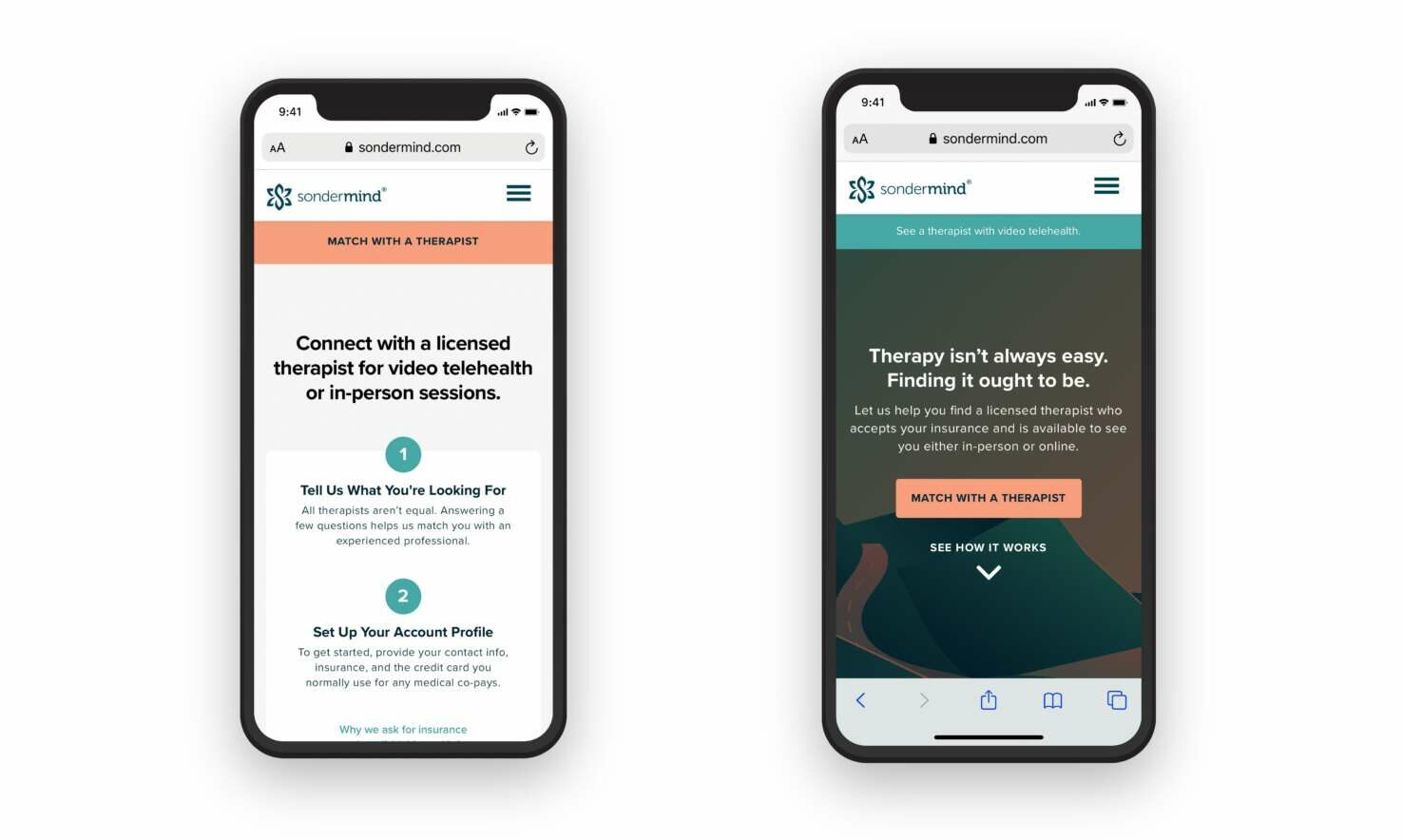
SonderMind’s app (courtesy photo)

Qntfy mostly operated remotely but had an Arlington office and its first check came from local co-working space Eastern Foundry.

As part of the office space’s first Foundry cup, the company awarded innovative approaches to understanding post-traumatic stress disorder — a particular interest of the company’s veteran founders, Coppersmith said.

“I’m not a vet, but my background is in computer science and psychology,” he said. “I’ve always been interested in using computers to understand human behavior… what makes people violent, and how do you understand and prevent that.”

While Coppersmith explored these questions during his graduate work at Johns Hopkins University, he discovered a “gaping hole” in available data on mental health outcomes.

“There’s immense pain, suffering and cost associated with mental health, but part of the real difficulty was that we couldn’t quantify objective measures of mental health and well being,” he said.

Since the available measures cost significant time and money, he turned to repurposing user data that would otherwise just get used to sell people goods and services.

To fund the research and development of that technology, Qntfy worked with clients seeking a greater understanding of mental health issues, including the George W. Bush Presidential Center, a nonprofit for veteran wellness.

“We were a standalone business incubating this product, taking contracts that allowed us to build the relevant technology for this, and we had enough and were going for rapid expansion,” he said. “This is a far better plan.”


Sponsored by Monday Properties and written by ARLnow, Startup Monday is a weekly column that profiles Arlington-based startups, founders, and other local technology news. Monday Properties is proudly featuring 1515 Wilson Blvd in Rosslyn. 

(Updated 2:25 p.m.) This week, George Mason University’s Virginia Square campus will hold Accelerate 2022, a new startup competition and investor conference.

Tomorrow (Tuesday) and Wednesday, the campus will host dozens of top tech companies and students who will showcase their ideas to venture capital investors and the D.C.-area tech community. They’ll be competing for cash prizes and potential investments as well as “fame, glory, and bragging rights,” the website said.

The competition targets companies from Virginia, Maryland and D.C. with $2 million in revenue or less, students with business concepts that could be viable in the long term, and entrepreneurs seeking seed funding.

“This will be pretty exciting,” said Paula Sorrell, GMU’s associate vice-president of innovation and economic development. “There’s a lot of interest. Knowing the early-stage tech economy is important to the region and expanding rapidly, we’re all running at a rapid pace and this is one example of that.”

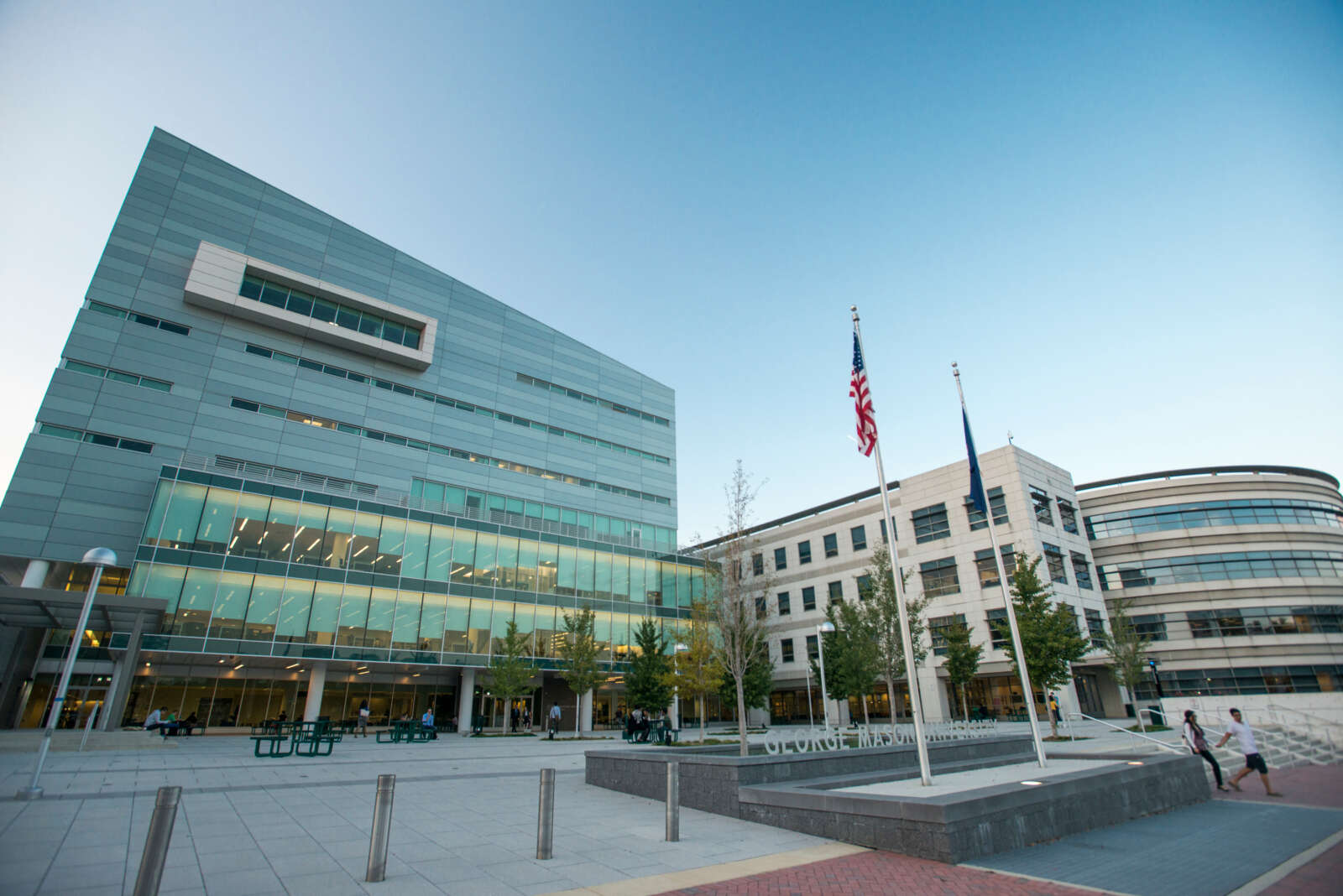
Founders Hall and Hazel Hall at George Mason University’s Arlington Campus (via Alexis Glenn/Creative Services/George Mason University)

Taking into account some last-minute registrations, Sorrell says there will be “a couple hundred” participants this year, spread across four indoor-outdoor venues.

Accelerate 2022 is one of the early fruits of Mason’s planned expansion in Arlington and the Commonwealth’s Tech Talent Investment Program, which aims to graduate thousands of computer science students. Both were sparked by Amazon’s decision to establish its second headquarters in Arlington, construction of which is now well underway.

“The feedback we got pretty consistently indicated that there were a couple of gaps,” Sorrell said. “One was in seed capital and the other was in late-stage funds. In Mason’s role as educator and convener, the feedback was we can play a role in getting together ecosystem partners, curating partnerships between local investors and those not in the region to create more of a strong edge here.”

The associate vice-president said Accelerate will give smaller companies the opportunity to pitch in front of investors, allowing them to get feedback on their business models and pitches.

“This helps make better companies in the long run,” she said.

Students from the D.C. area will learn the process of entrepreneurship and funding, which are “critical experiences for those who want to run their own company or join a startup,” Sorrell said.

Accelerate 2022 draws on GMU’s experience hosting global investor conferences, she said. The new event has attracted more than 28 sponsors and a number of presenting companies, including Wednesday night’s keynote speaker Paul Misener, Amazon’s vice president of global innovation policy and communications and an alumnus of GMU’s law school.

Sponsors include Arlington Economic Development and Accenture, which has a presence in Arlington. Sorrell said Mason already has attracted sponsors for next year’s conference, and the university aims to host Accelerate annually.

Meanwhile, work continues on the physical aspect of Mason’s expansion, built atop the now-demolished Kann’s Department Store on the west side of the Fairfax Drive campus. With state funding, GMU is building an Institute for Digital Innovation that will house a 5G testing area, an incubator space, and other tech-related education opportunities.


Sponsored by Monday Properties and written by ARLnow, Startup Monday is a weekly column that profiles Arlington-based startups, founders, and other local technology news. Monday Properties is proudly featuring 1515 Wilson Blvd in Rosslyn. 

Ballston startup GoTab, which facilitates QR code ordering in restaurants, has unveiled its new, all-in-one point-of-sale system for restaurants and bars.

The cloud-based system is designed to help restaurants and bars adapt to a growing preference for online ordering without erasing the personal connection of in-person service.

GoTab launched its contactless ordering technology in 2016, but experienced a huge boon in use during the pandemic when contactless ordering and payment became the norm. Today, it operates in restaurants, hotels, resorts, golf courses, festivals and the Capital One Arena in D.C.

And now, the startup is banking on restaurants seeing these technological changes not as pandemic-era adaptations, but as new fixtures of the dining experience. One way it aims to do that is by incorporating the benefits of QR code ordering — more guest control over ordering and paying — into a soup-to-nuts sales platform that works for eateries.

“With the GoTab all-in-one restaurant POS, operators can now easily tailor a guest-initiated experience or a server-initiated experience, enabling both parties to start and access the ordering tab and giving everyone flexibility to place orders however they wish,” the company says.

The all-in-one point of sale from Arlington-based startup GoTab (courtesy photo)

Having the information accessible both by servers and customers makes it easier for customers to communicate what they want and easier for servers to curate positive dining experiences, the company says.

It also means less work for servers, as the system eliminates the need to take down orders and modifications by hand and input them manually into a legacy point-of-sale system.

With GoTab, servers and managers can start and add to a digital tab, pass the tab to guests and update it later with order changes. Guests can then close out their tab on their phones with a credit card or mobile payment platform.

“Servers can be proactive and anticipate guests’ needs,” the release said.

And after the guests leave, GoTab’s cloud-based system remembers guests’ preferences, meaning restaurants can repurpose that information. The traditional system, meanwhile, only captures the information of the person paying, CEO Tim McLaughlin said.

“In a traditional restaurant — let’s say you have a table of four — a restaurant is lucky if they can capture a single diner’s data for loyalty, spending insights and marketing purposes,” he said. “With GoTab, operators have access to all four diners’ ordering details. So we provide an operator with exponentially more first-party data.”

With that information, he said, restaurants and bars can create loyalty programs and foster repeat customers.


Sponsored by Monday Properties and written by ARLnow, Startup Monday is a weekly column that profiles Arlington-based startups, founders, and other local technology news. Monday Properties is proudly featuring 1515 Wilson Blvd in Rosslyn. 

A local agricultural technology company is offering tools to help industrial farmers grow food more sustainably and fight climate change.

EarthOptics, a startup with a significant Crystal City presence at 2461 S. Clark Street, developed a product that impressed investors enough that it led to a $10.3 million Series A funding round.

Its product uses technology to imitate a natural process. Every year, the Earth’s terrestrial surfaces and oceans absorb billions of tons of carbon from the atmosphere. Industrial farmlands, however, release more carbon into the atmosphere than they trap, contributing to climate change.

Over the last 50 years, farming has led to 130 billion tons of carbon evaporating from the soil, EarthOptics CEO Lars Dyrud said. But scientists estimate about or 60-70 billion tons could be returned to soil through simple changes such as tilling fields more effectively. That represents five years’ worth of human carbon emissions, he says.

“It’s a win-win for everybody: It takes carbon out of the atmosphere, makes the soil more fertile and makes the food grown there more nutritious,” he said.

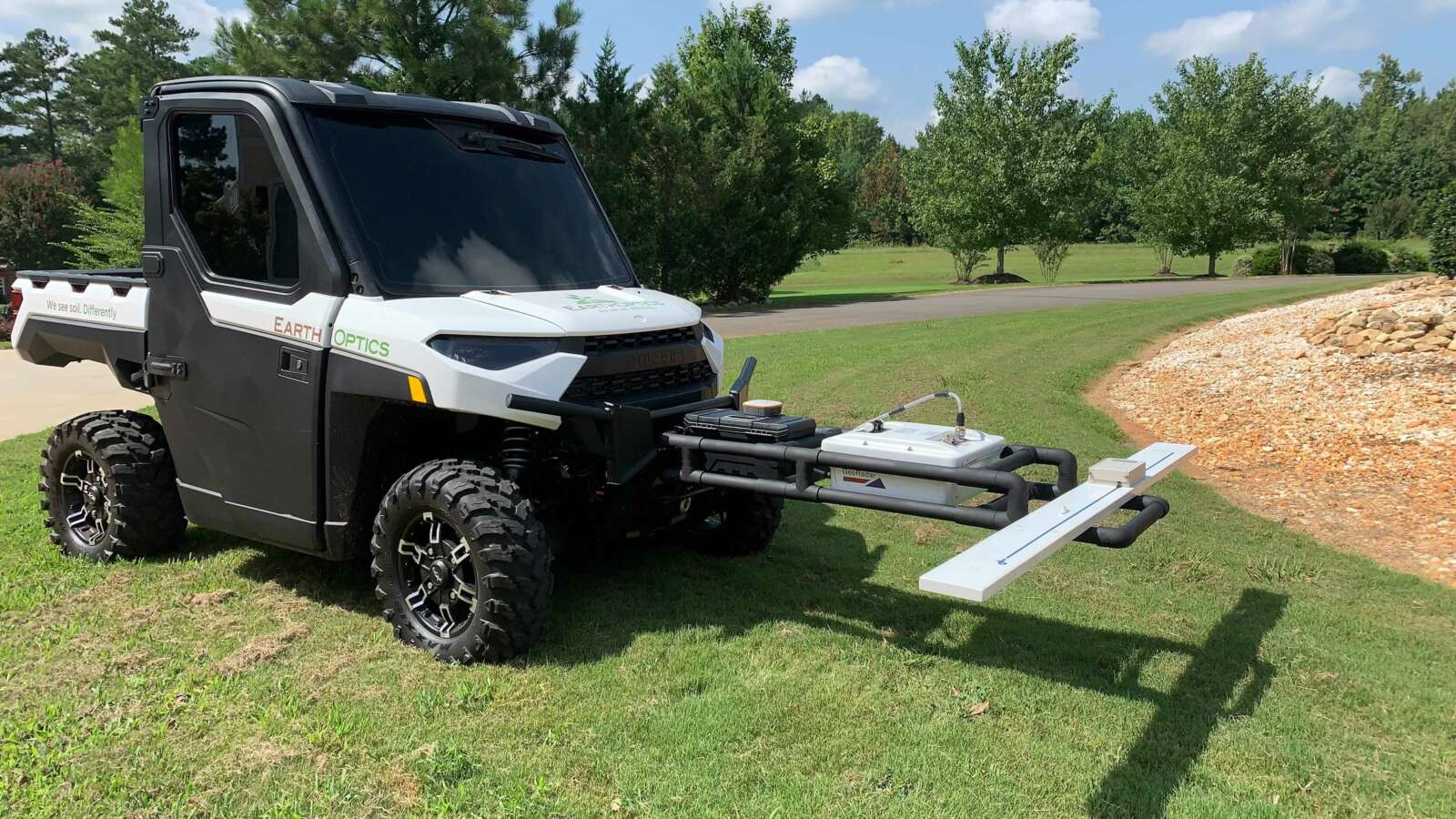
EarthOptics has two tools that use Artificial Intelligence to help farmers sequester more carbon in the soil while improving yields and food quality, while trimming costs.

“We’ve taken 130 billion tons of carbon out of the soil through our agricultural practices,” Dyrud said. “It seems fairly straightforward that we can put it back… We all have to eat anyway — if we can make eating part of the solution that seems like a pretty exciting prospect.”

EarthOptics’ TillMapper helps farmers decide if, when, where and how deep to till (courtesy photo)

The first product to launch maps how dense the soil is. Due to heavy rains and machinery, soil gets compacted, making it harder for plants to grow. In response, farmers till the land to loosen it, releasing carbon. The map allows farmers to till only where needed and retain more carbon.

This year, EarthOptics launched a tool that measures how much carbon is sequestered so that farmers can be reimbursed through carbon credits for carbon-storing practices. The credits are paid for by large companies looking to offset their carbon emissions, such as Google.

Dyrud said the product makes participation cost-effective for farmers. Traditionally, farmers have to take dozens of soil samples and send them to a lab for testing. This process tends to eat up most of the money they make.

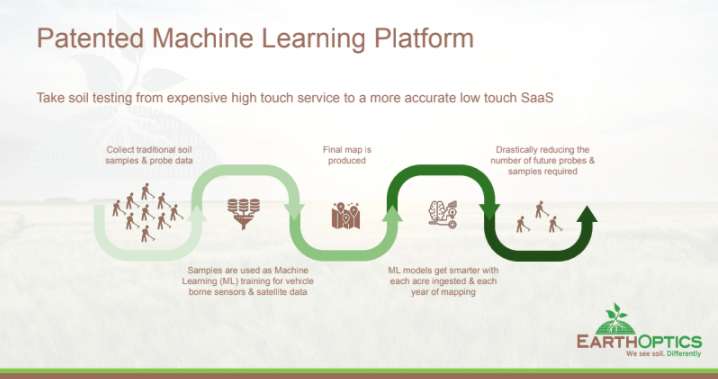
Instead, EarthOptics combines samples and AI sensors to map out carbon levels across the site using fewer samples.

“We’re the only ones that still combine traditional measurements, which is where accuracy and trust comes from, with machine learning to dramatically lower costs,” he said.

EarthOptics’ patented machine-learning system (courtesy photo)

That piqued the interest of investment groups such as Leaps by Bayer, the venture arm of German pharmaceutical company Bayer, as well as other firms, including Alexandria-based Route 66 Ventures. With the backing, Dyrud said EarthOptics will scale up its existing products and launch new technologies that measure nutrient levels, which could lower fertilization and irrigation costs.

(more…)


View More Stories