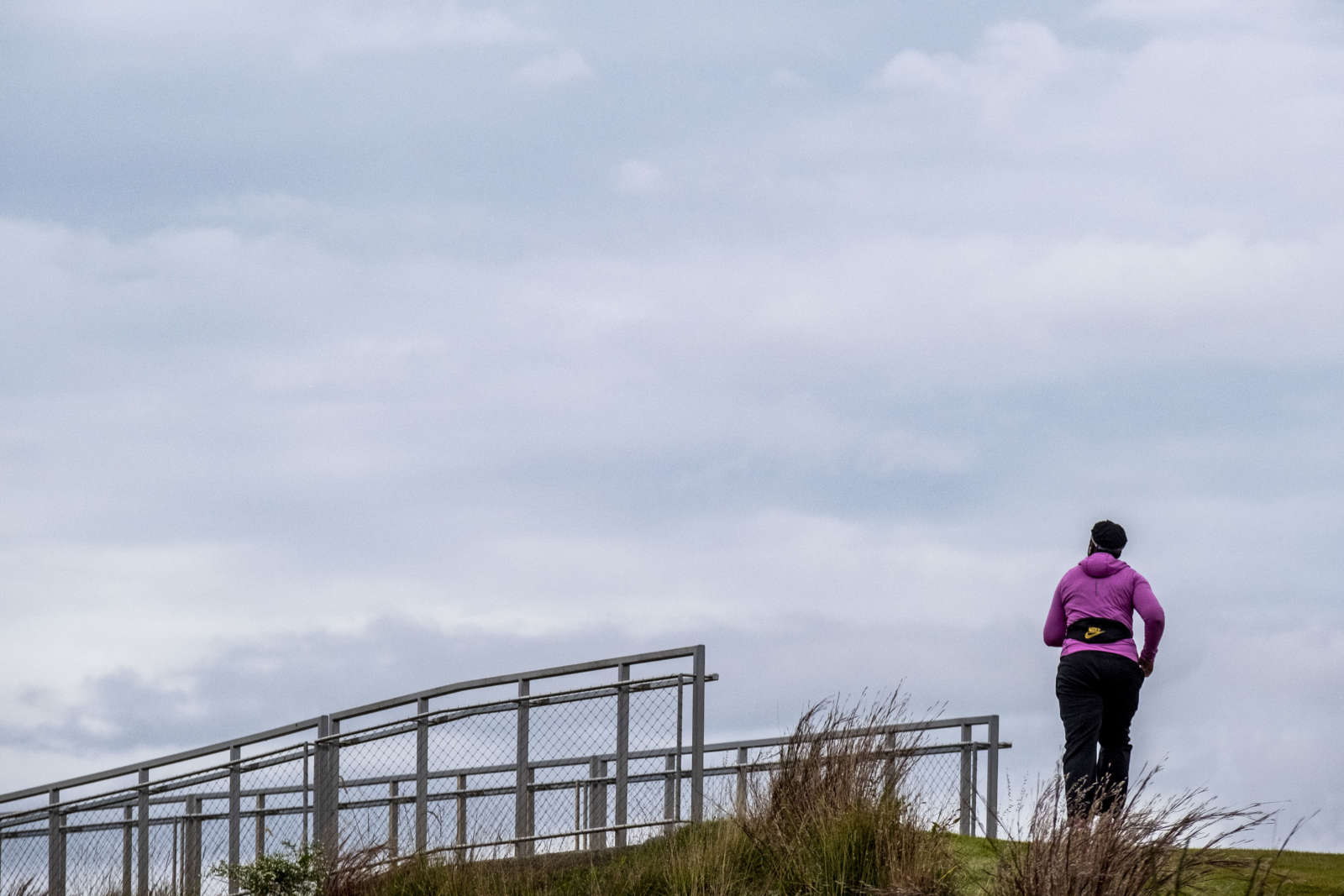
Running at Long Bridge Park on a cloudy fall day (Staff Photo by Jay Westcott)
Arlington Visit for First Lady — First Lady Jill Biden is set to deliver remarks at the 2023 PFLAG National Convention at a hotel in Pentagon City this afternoon, according to guidance from the White House. The LGBTQ+ organization’s event is sold out.
AWLA Asks for Help — “Today we only have two open dog kennels. The rest are full. We are desperately in need of families to give our dogs a break from the kennel and make room for more dogs coming into our care.” [Twitter]
Restaurant Week Wrapping Up — Arlington Restaurant Week will continue through the weekend. Restaurant Week deals at nearly 50 local restaurants end on Monday, Oct. 23. [ARLnow]
Crystal City Curbs Questioned — “These sidewalk ‘improvements’ have only been at 12th and Eads for about a week, but I’ve seen so many folks trip or stumble over them. The random curb in the middle of the sidewalk is really something else.” [Twitter]
Election Official Departing — “Serving as the No. 2 staffer in the Arlington Office of Elections long has been a launch pad for those who occupied it. You can now add Tate Fall to the list. Fall, currently deputy director of elections for Arlington, has been appointed elections director of Cobb County, Ga. She will start in early December.” [Gazette Leader]
Nightly Pentagon Police Ritual — “Pentagon Police officers raise the U.S. Flag each morning outside the Pentagon in honor of our great Nation. The @POW/MIA flag is also raised and displayed directly below the U.S. Flag as a powerful symbol of our national commitment to those Americans who were Prisoners of War/Missing in Action.” [Twitter]
It’s Friday — Expect showers later in the afternoon, with mostly cloudy skies and a high near 69. The south wind will be blowing at 8 to 11 mph, and may gust up to 18 mph. The chance of precipitation is 50%. For Friday night, there is a possibility of showers and thunderstorms, a mostly cloudy sky, and a low around 51. [Weather.gov]
A Muslim group’s planned banquet in Arlington has been cancelled after it says the hotel received “multiple terror threats.”
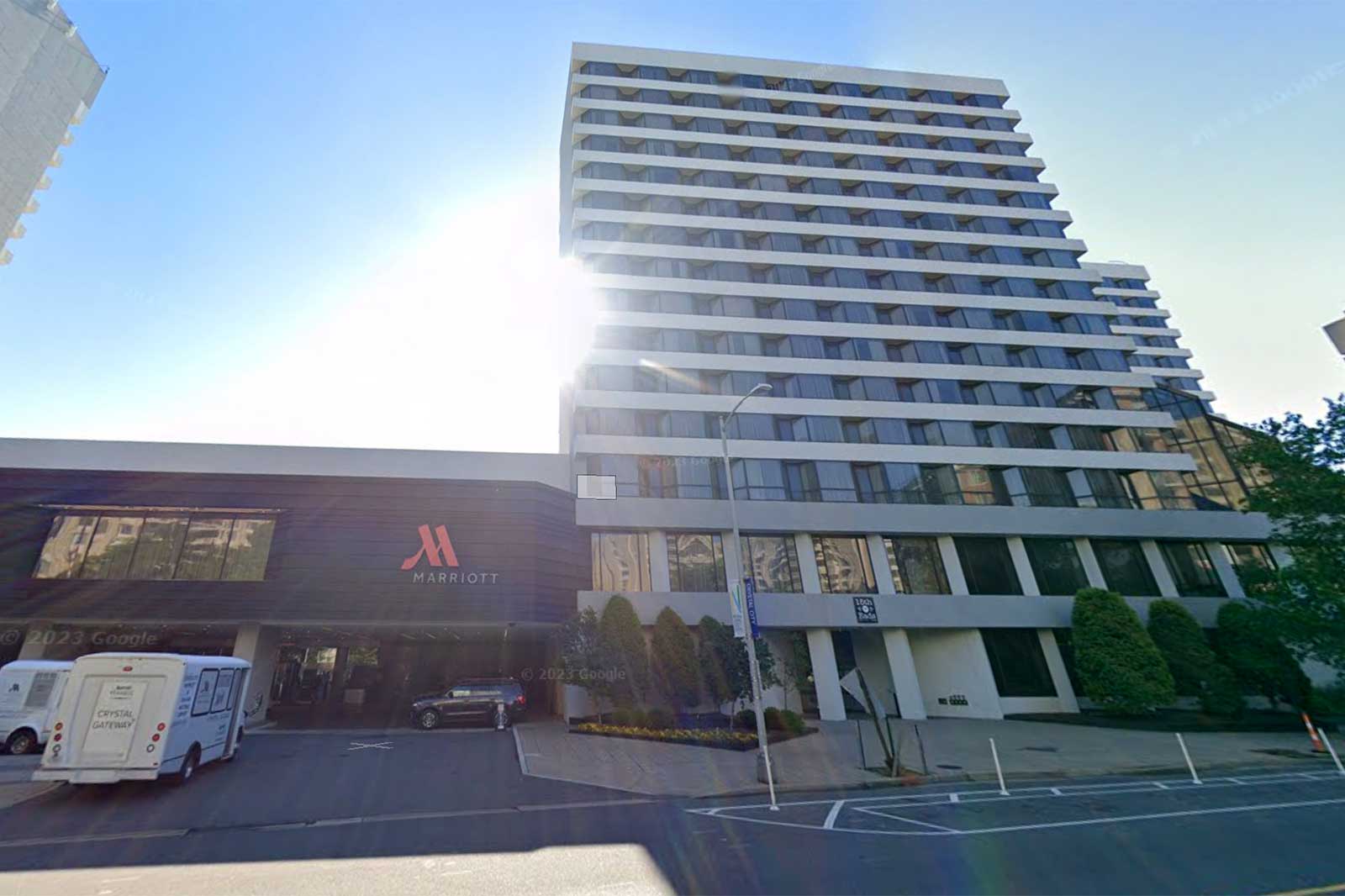
The Council on American-Islamic Relations (CAIR) was scheduled to hold its 29th annual banquet Saturday night at the Crystal Gateway Marriott at 1700 Richmond Highway.
“CAIR has hosted banquets there annually for over ten years,” the group said tonight (Thursday) in a press release. “In recent days, according to the Marriott, anonymous callers have threatened to plant bombs in the hotel’s parking garage, kill specific hotel staff in their homes, and storm the hotel in a repeat of the Jan. 6th attack on the U.S. Capitol if the events moved forward.”
“Law enforcement authorities and the FBI have been notified of the terror threats. The FBI has confirmed to CAIR that it is investigating the reported threats,” the press release continued. “The terror threats came after CAIR updated its original banquet programming to focus on the work needed to support basic Palestinian human rights.”
CAIR says it “plans to proceed with [the] banquet at an alternate secure location with heightened security.” A separate banquet planned for Oct. 28 in Maryland “will also be cancelled as a precaution and merged into the Oct. 21st event.”
The banquets were billed as “a night of solidarity with Palestine,” amid the Israel-Hamas war.
“We strongly condemn the extreme and disgusting threats against our organization, the Marriott hotel and its staff,” CAIR National Executive Director Nihad Awad said in a statement. “We will not allow the threats of anti-Palestinian racists and anti-Muslim bigots who seek to dehumanize the Palestinian people and silence American Muslims to stop us from pursuing justice for all.”
“We ask all those who value free speech, human rights and justice to support CAIR’s work today to show hateful extremists that they will not succeed in silencing us and will only make our voices stronger, God willing,” Awad added.
An Arlington-based conservative media outlet wrote Tuesday that the banquet was “generating concerns among pro-Israel advocates, who say the hotel chain has a responsibility to stop its venues from being used to foment anti-Israel fervor.”
The United States has seen heightened incidents of bigotry and violence against Muslims and Jews since the war’s outbreak, which started with a surprise Hamas attack that killed more than 1,000 in Israel. The Israeli airstrikes since then have killed several thousand in Gaza, Palestinian authorities say.
Among the incidents was the murder of a 6-year-old Palestinian American boy in Illinois. He was buried Monday after, authorities say, he was stabbed to death by a landlord who was “obsessed with the war between Hamas and Israel.”
Today (Thursday), retired Fairfax County Judge David Schell denied most of the county’s motions to dismiss the case, according to an attorney for the 10 residents who sued Arlington. He had put off making a decision for one month when the parties last convened in court in September.
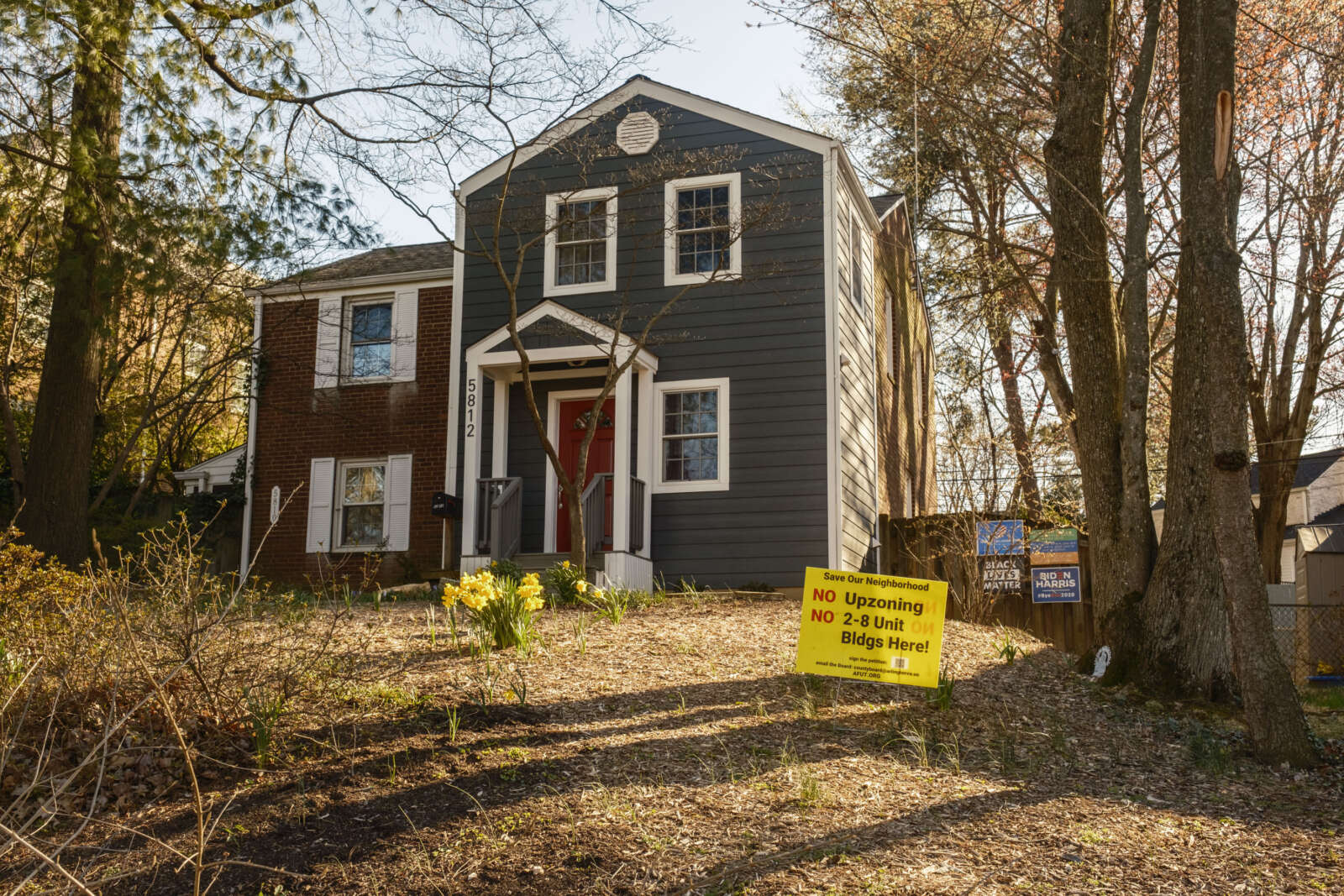
The judge upheld their right to sue on six of seven charges they levied against Arlington County. The residents said the county ran afoul of state law when it allowed 2-6 unit homes, also known as Expanded Housing Options or EHOs, in areas formerly zoned exclusively for single-family homes.
Among other reasons, they say the county acted improperly because it did not commission studies to gauge their impact.
Only one charge will not move forward, we’re told. This charge asserted the county violated Freedom of Information laws in how the county disseminated information to Arlington County Board members on the day of their vote as well as to the community.
The court will now reconvene on Nov. 16 to set trial dates.
“Residents are seeking to hold the Arlington County Board accountable for failing to follow the law in its elimination of single-family zoning in Arlington,” Dan Creedon, a member of Neighbors for Neighborhoods Litigation Fund, which has provided financial support for the suit, said in a statement.
“The judge’s ruling recognizes that the plaintiffs — all Arlington homeowners — get the opportunity to make their case at trial,” he continued. “This is the democratic process at work.”
Arlingtonians for Our Sustainable Future (ASF), another group opposed to Arlington’s Missing Middle rezoning, called the decision “a major victory for residents.”
“Using our tax dollars to contest the residents, Arlington County’s attorneys tried to get this case dismissed before trial on multiple different grounds, but failed,” said ASF founder Peter Rousselot.
Arlington County had argued the 10 residents who sued did not have legal standing to do so, saying it is too soon to tell if they will be harmed and it is unlikely they will experience particular harms other residents will not.
In court last month, Arlington County Attorney MinhChau Corr said this case amounts to upset residents who disliked the decision and took to the court for relief. She said this tactic is a “subversion of our democratic process.”
Schell disagreed. He said it was “readily apparent” that the plaintiffs have standing to sue as owners of properties that have been rezoned from single-family to multi-family, per the release from Neighbors for Neighborhoods.
“He added that the plaintiffs don’t need to wait for multi-family buildings to be built in their neighborhoods to sue and that the lawsuit is a ‘quintessential’ use of declaratory judgment (declaring that EHO zoning is void) as a remedy,” the organization said.
To illustrate the fact that the residents are affected by Missing Middle, the judge “used an extreme analogy that if their homes had been rezoned from residential to garbage dumps, it would affect their interests,” according to Natalie Roy, a former Arlington County Board candidate who published highlights in her “EHO Watch” newsletter.
Crime scene tape at shooting scene in Green Valley (staff photo by Jay Westcott)
Arlington has a slightly higher than average crime rate compared to the region overall, according to a new report.
The Metropolitan Washington Council of Governments recently released its annual report, in which it compiled crime statistics reported out by local police departments, including Arlington County Police Department.
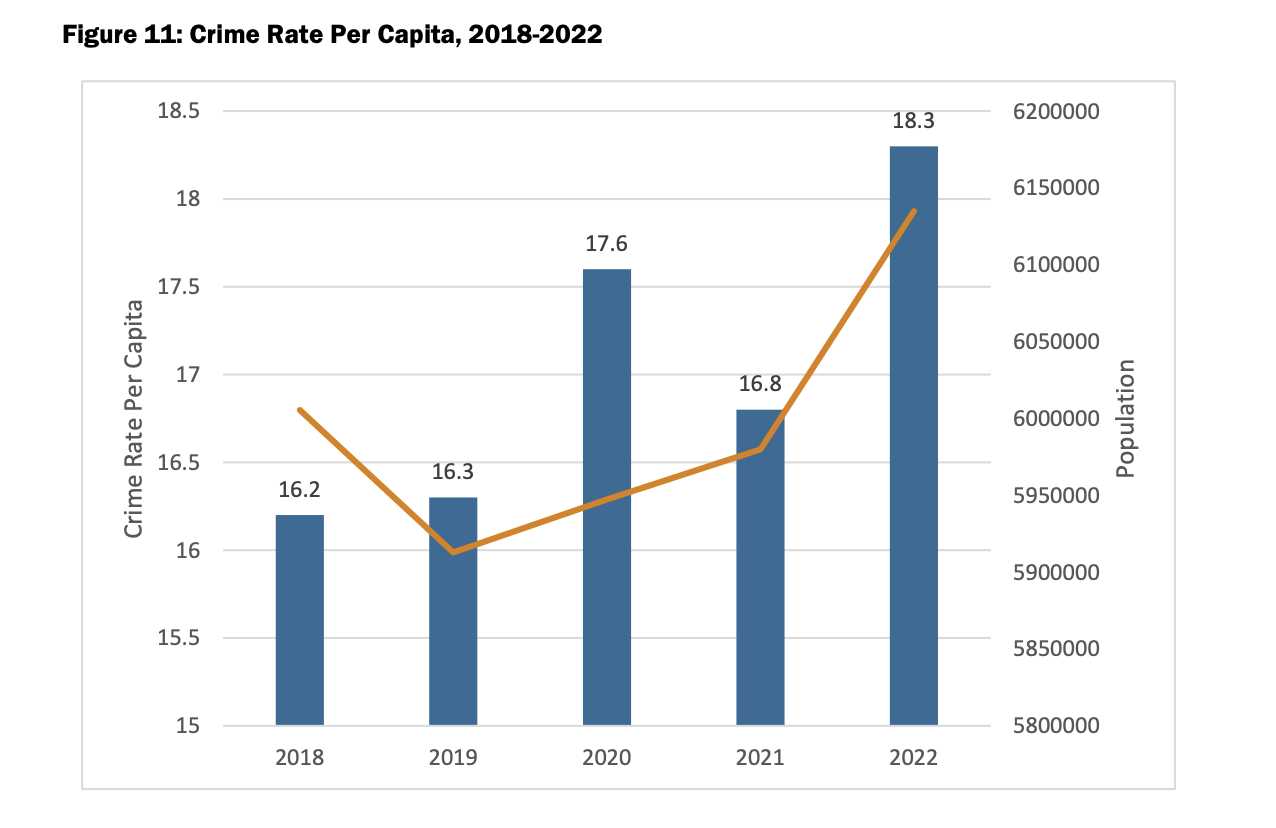
Overall, MWCOG found the D.C. area is seeing 18.3 crimes per 1,000 people involving rape, robbery, aggravated assault, burglary, larceny and motor vehicle theft. This is higher than the 2021 rate of 16.8.
Arlington County’s rate increased from 15.9 to 19.7 and is now higher than the regional average, though the lowest in the region’s urban core, which also includes Alexandria and D.C. The former claims second-highest rate, at 20.8, and D.C. claims the highest crime rate, at 40.6.
Larger, more suburban counties tend to have lower crime rates, including Fairfax County, with a rate of 15.6 crimes per 1,000 people.
“This is something that you didn’t necessarily know the data point but you knew to be true: crime is increasing across the region and, right now, is at elevated levels that we haven’t seen in quite some time,” Arlington County Board Chair Christian Dorsey said during a meeting on Tuesday.
Crime rate in the D.C. area (via MWCOG)
Among Northern Virginia jurisdictions, Arlington saw a 25% increase in offenses, the median rise in crime for its Virginian neighbors.
“We’re all struggling and we’re not struggling any more than anyone else,” Dorsey said.
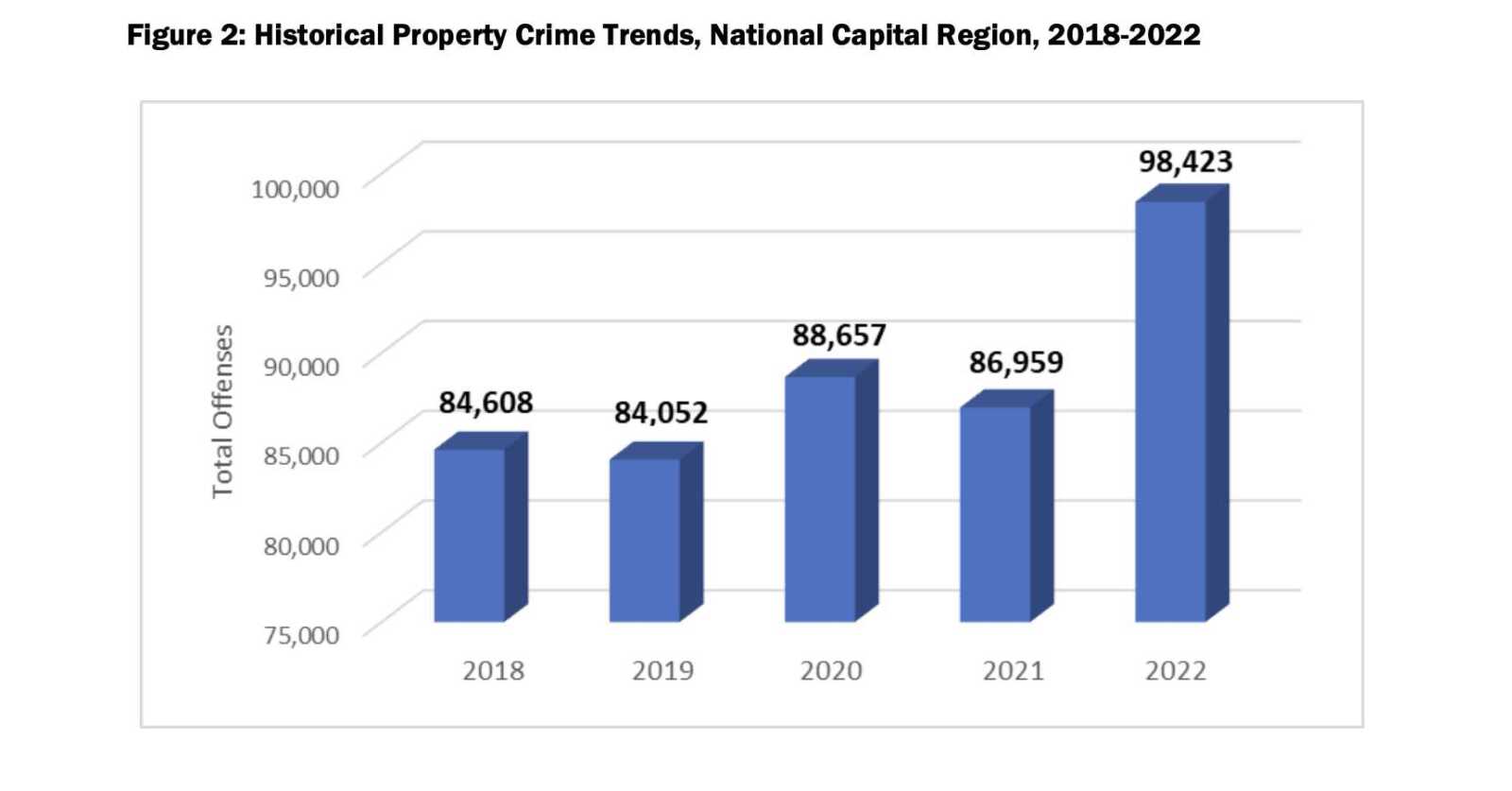
Property crimes drive the trends regionally, according to 5-year trends in the MWCOG report. That appears to be reflected locally, with an uptick of reported motor vehicle thefts: 412 thefts in 2022, up from 313 in 2021.
Property crime trends in the D.C. area (via MWCOG)
Carjackings are this year’s headline-grabbing offense, regionally, one that Dorsey stressed is thorny to tackle.
“There is a lot of interagency cooperation on these issues, but they are also quite difficult for police to bring to a satisfactory conclusion in terms of arrests and prosecutions,” Dorsey said.
Earlier this month Arlington surpassed the total number of carjackings from 2022, according to ARLnow’s count. While the county is seeing more carjackings, they are still less common than in D.C. and Prince George’s County, according to heat maps by the Washington Post.
One crime for which Arlington is an outlier, according to Dorsey, is assaults.
“We experienced a ridiculously huge increase in aggravated assaults in the year and are definitely a regional outlier, and not in a good way, with a 43% increase,” Dorsey said.
ACPD says “aggravated assault” is a category that includes distinct 20 felonies and three misdemeanor charges, spanning a broad range of crimes, including:
throwing items at occupied vehicles
brandishing firearms or similar-looking objects
child abuse
malicious wounding
The fact that 23 different charges encompass “aggravated assault” makes it difficult for community members to understand what exactly is happening in their community, says Chuck Miere, a Virginia criminal justice reform lobbyist who dug into ACPD data earlier this year.
“There’s very little transparency as to what gets counted year to year as falling into any of these categories because there isn’t a single ‘aggravated assault’ charge in Virginia,” he tells ARLnow. “There are a bunch of assault charges that can be aggravated.”
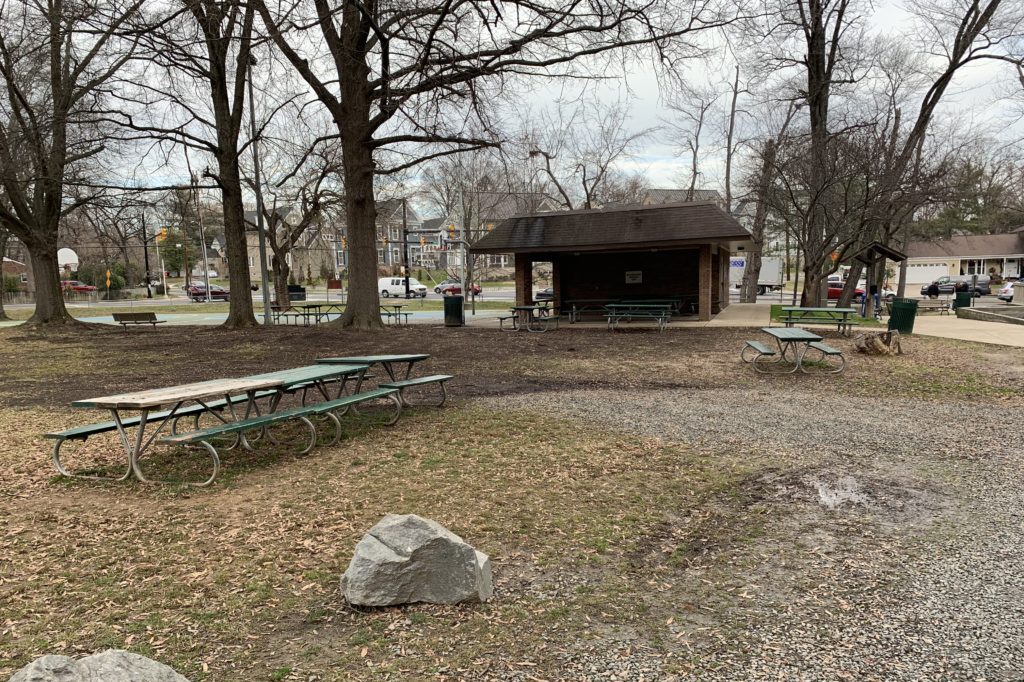
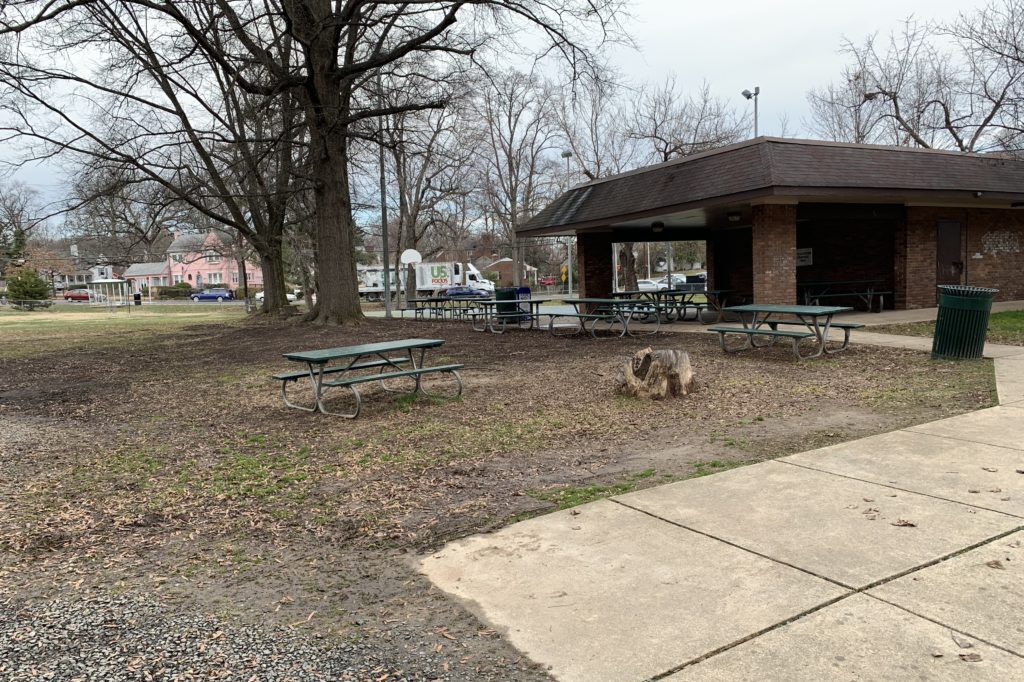
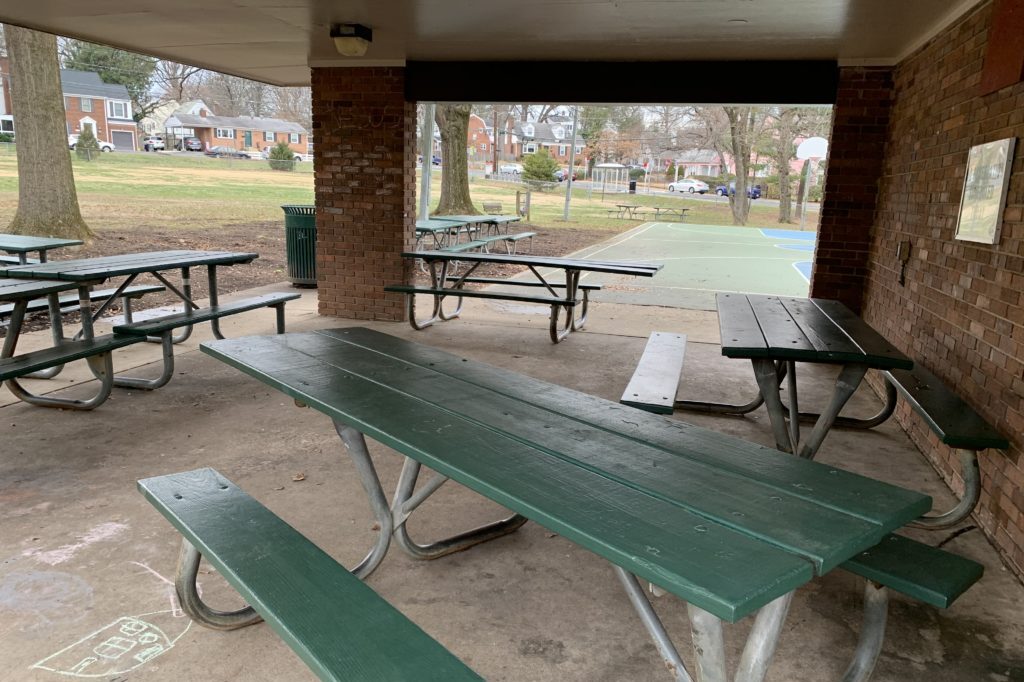
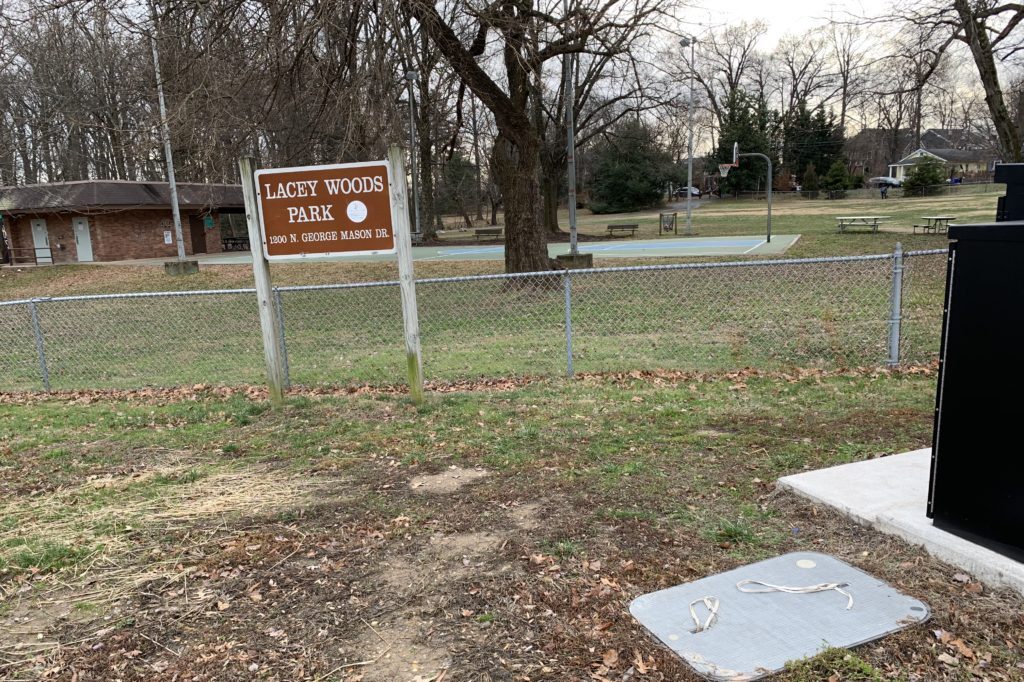
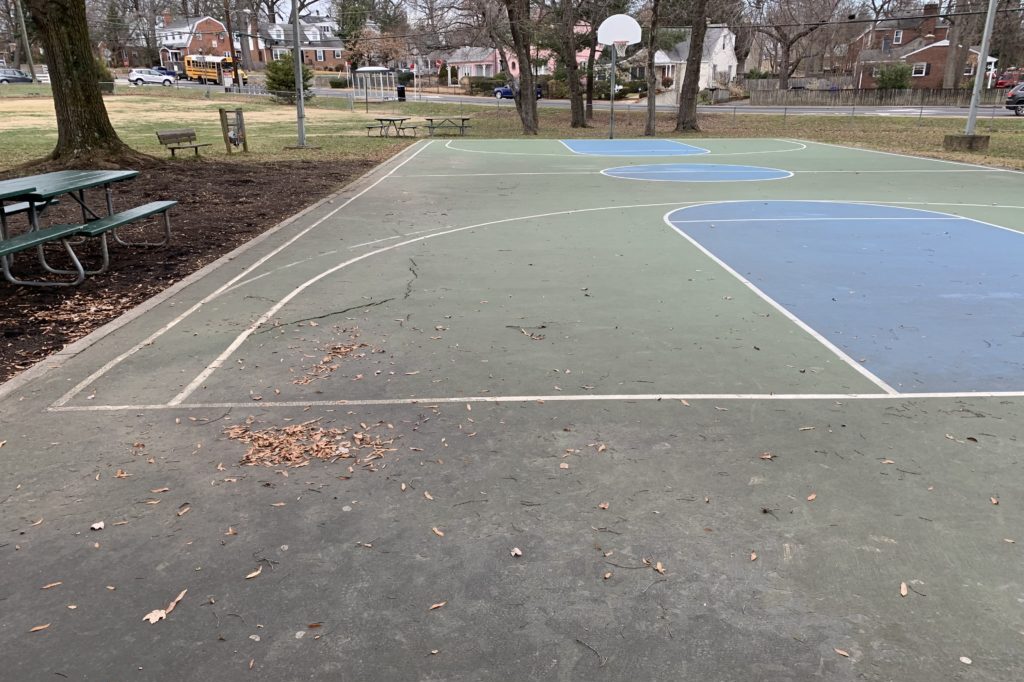
Views of the northern portion of Lacey Woods Park (via Arlington County)
Views of the northern portion of Lacey Woods Park (via Arlington County)
Views of the northern portion of Lacey Woods Park (via Arlington County)
Views of the northern portion of Lacey Woods Park (via Arlington County)
Views of the northern portion of Lacey Woods Park (via Arlington County)
The northern portion of Lacey Woods Park will be getting a facelift.
Arlington County will replace the lighted basketball court and multi-use field at the 14-acre park along N. George Mason Drive near Ballston, according to a project webpage.
The building housing both a picnic shelter and restrooms will be replaced with a new picnic shelter and structure for restrooms.
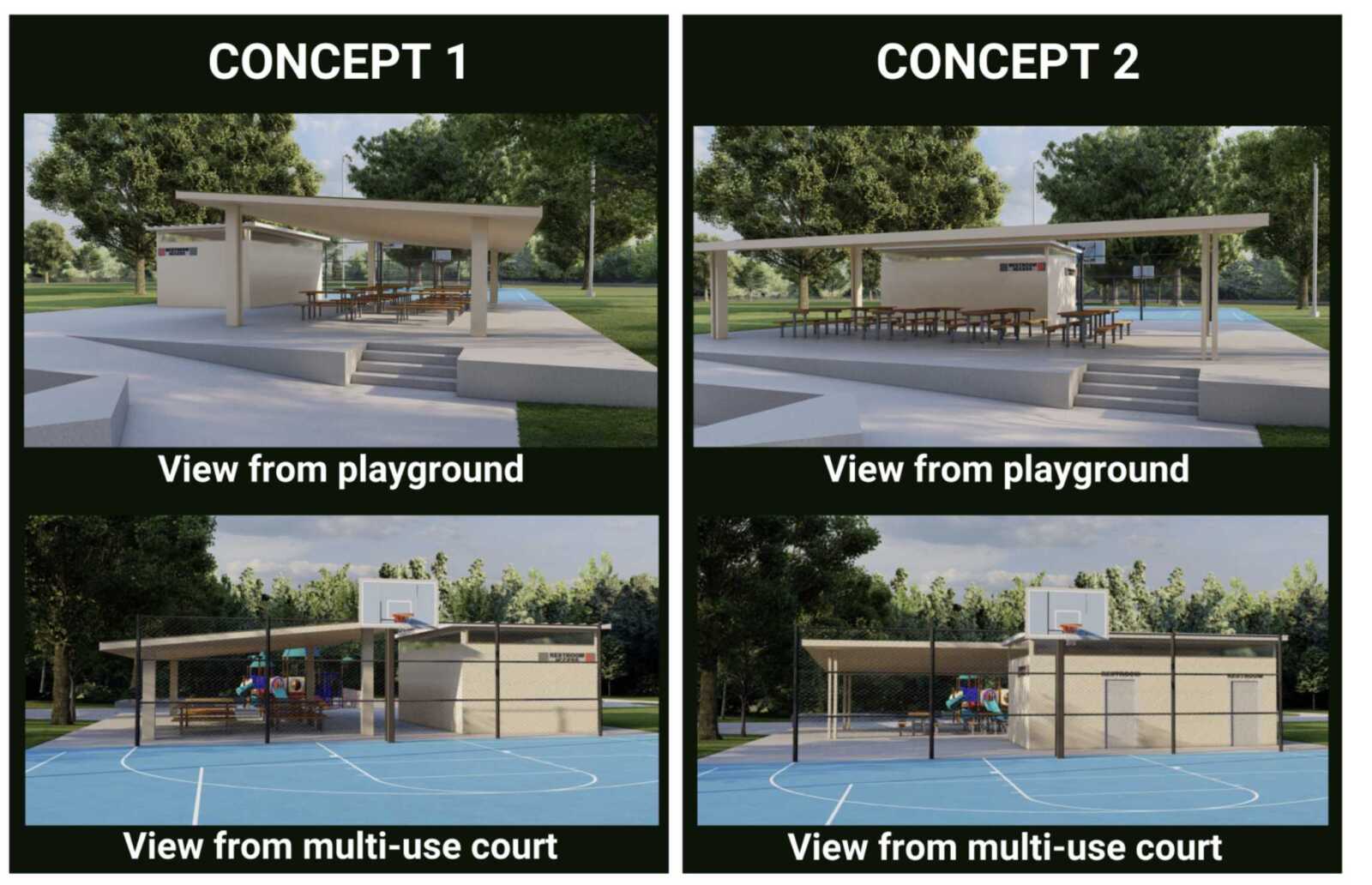
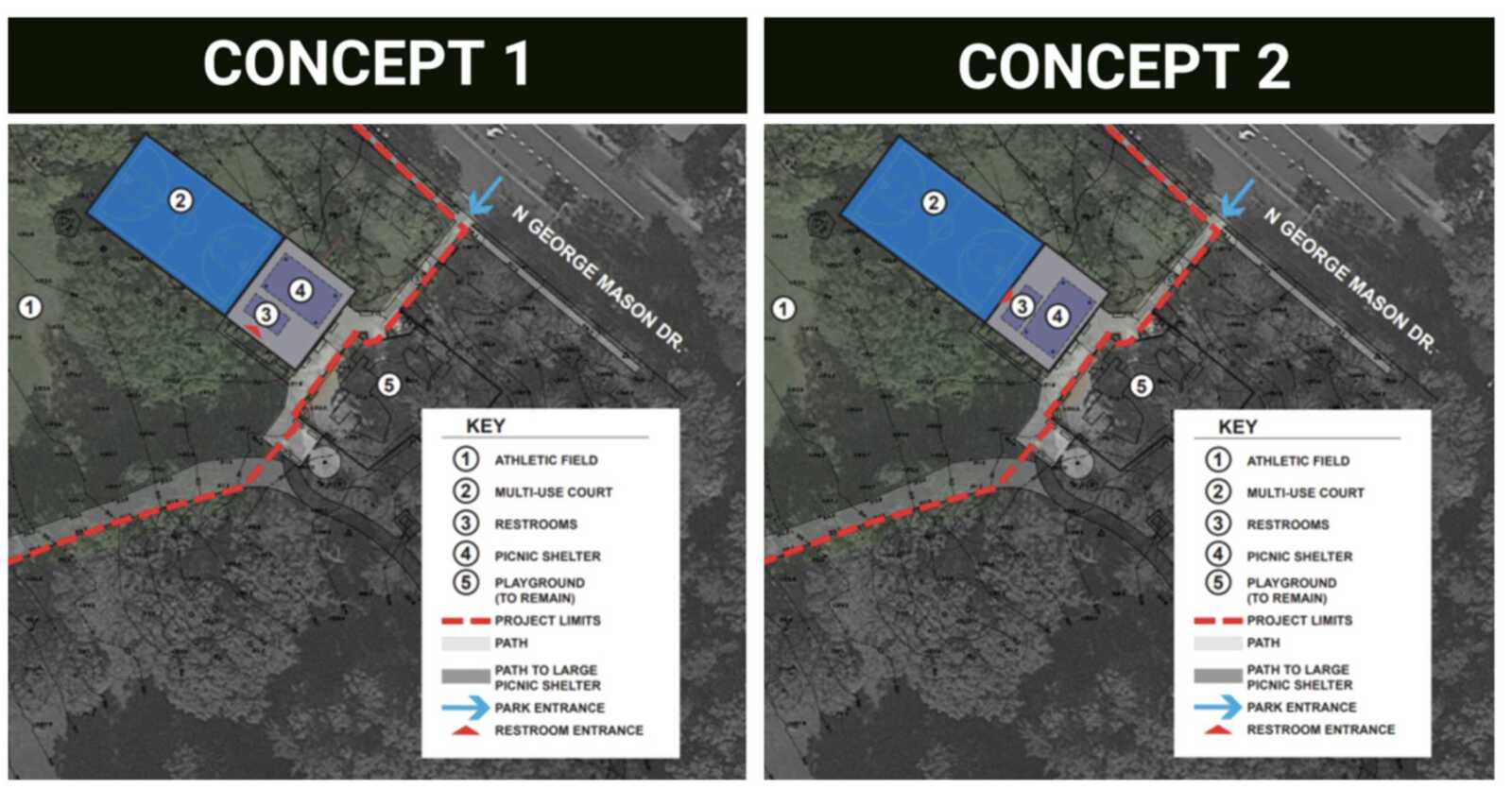
Arlington County is mulling two design concepts for this project. It is seeking public feedback on these concepts via an online survey open now through next Thursday, Oct. 26.
“Your feedback will help inform updates to the existing amenities, including a preferred layout for the restrooms and picnic shelter,” the survey says.
Two concepts for updates to Lacey Woods Park (via Arlington County)
In the first concept, the bathrooms and picnic shelter both border the new court and the restroom entrance is off to the side.
In the second concept, the bathroom entrance faces the court and the picnic shelter is behind the bathrooms.
Two concepts for updates to Lacey Woods Park (via Arlington County)
The county will also update site furnishings and make improvements for circulation and accessibility for people with disabilities. There will be landscaping, drainage and stormwater management upgrades.
This project is set to cost a little more than $2 million and was approved as part of the 2019-28 Capital Improvement Plan. Some $388,000 comes from short-term financing and another $1.6 million from bonds.
“Capital maintenance projects address facilities that have exceeded their lifespan and are in need of renovation,” the survey says. “Renovations to the existing playground and the addition of new amenities are not within the scope of this project.”
A picnic shelter in the southern half of the site was replaced in 2014.
The county is currently estimating that construction on this project would start in the second quarter of 2025 and wrap up in the last quarter of the year.
Point of sale payment at a store (Photo by Blake Wisz on Unsplash)
Don’t be surprised if your receipt lacks a sales tax charge this weekend.
Starting Friday at 12:01 a.m. and running until midnight on Sunday, a variety of products, from school supplies to refrigerators, will be exempt from taxation during a three-day tax holiday.
Virginia shoppers can take advantage of this tax break on certain items categorized into three groups
Qualifying Energy Star™ or WaterSense™ products under $2,500 purchased for noncommercial home or personal use
These eligible products can be purchased both in physical stores and online, as well as through mail or telephone orders.
The three-day “holiday” traditionally falls in August. However, this year, it was postponed due to a delay in state lawmakers approving a spending bill, which was ultimately passed in September.
“As Virginians continue to face inflation and high prices, Virginians will receive some needed tax relief this weekend,” Gov. Glenn Youngkin said in a press release. “This sales tax holiday is an important measure to help Virginians keep more of their hard-earned money when purchasing essential school supplies, hurricane preparedness items, and clothing.”
Police car at night (file photo courtesy Kevin Wolf)
A 43-year-old Arlington man is in jail after an overnight barricade situation in the Buckingham neighborhood.
The incident started around 12:30 a.m. with what was reported as a woman’s ex-boyfriend kicking down her door and confronting her and her current boyfriend with a knife.
DOMESTIC-RELATED HOME INVASION WITH INJURY AND MANHUNT— 4200 blk 2nd Rd North in Arlington. Caller's ex-boyfriend kicked in the door and attacked the caller and new boyfriend with a knife. Fairfax Co helicopter was assisting with the search. @ARLnowDOTcompic.twitter.com/8bBiA7x0eL
The suspect then returned to his home nearby, leading to a barricade situation that eventually ended peacefully after negotiations with police, according to the Arlington County Police Department.
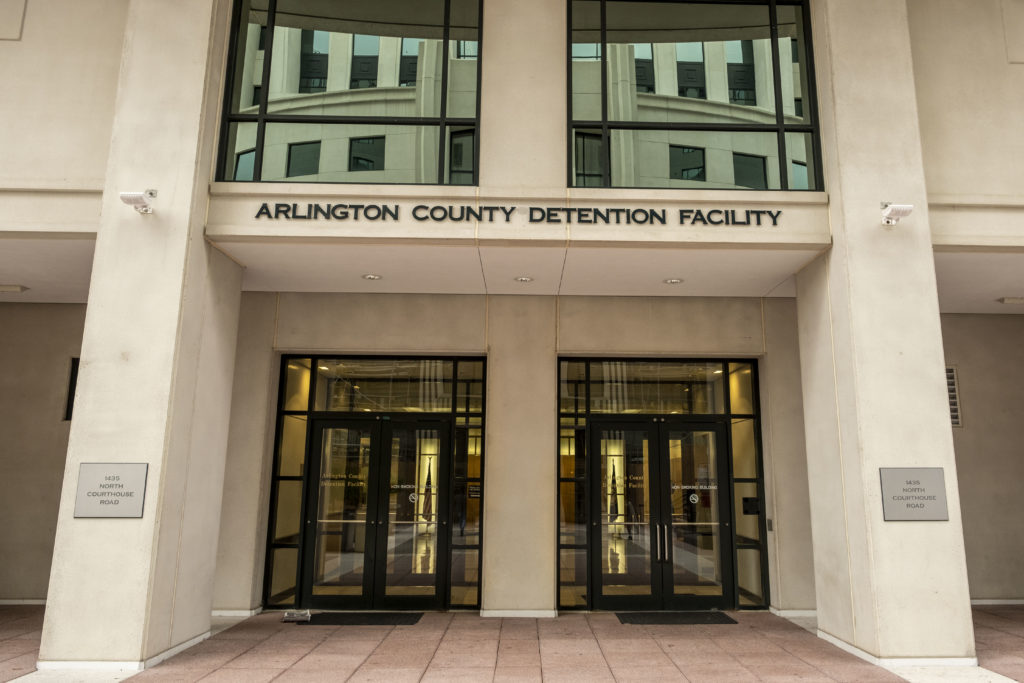
The Arlington County Police Department is announcing the arrest of a suspect following an early morning barricade in the Buckingham neighborhood. Jermaine Chambers, 43, of Arlington, VA is charged with Attempted Malicious Wounding, Burglary with Intent to Commit Assault and Assault & Battery (x2). He is being held without bond in the Arlington County Detention Facility.
At approximately 12:23 a.m. on October 19, police were dispatched to the 4200 block of 2nd Road N. for the report of a possible assault with a weapon. Upon arrival, it was determined the known male suspect forced entry into the victim’s residence, brandished a knife, threatened and physically assaulted the female and male victims before fleeing the residence on foot. The male victim was treated on scene by medics for injuries considered non-life threatening. The female victim did not require medical treatment.
Officers searched the area for the suspect with the assistance of Fairfax County Police Department’s helicopter and determined he had returned to his residence in the 200 block of N. Thomas Street. Officers established a perimeter, made telephone contact and initiated negotiations with the suspect who refused to exit his residence and remained barricaded inside. Members of the Department’s Emergency Response Team responded to the scene, continued negotiations with the suspect and eventually took him into custody without incident.
This remains an active criminal investigation and anyone with information related to this incident is asked to contact the Arlington County Police Department’s tip line at [email protected]. Information may also be provided anonymously through the Arlington County Crime Solvers hotline at 1-866-411-TIPS (8477).
Ballston as dark clouds move into the area (Staff Photo by Jay Westcott)
Square Foot Cost Slips — “From Jan. 1 to Sept. 30, the average price per square foot for Arlington residential sales was $472. That’s down 1.9 percent from $481 during the same stretch in 2022. Throughout the metro area, Arlington was only surpassed in the ranking by the District of Columbia, whose average $527 cost per square foot was down 4.4 percent from a year before.” [Gazette Leader]
Cost of Local Homeownership — “The Q3 median cost of a single-family home was $739,900 in Arlington. To afford that, average wage earners would have to make at least $113,633 and be positioned to spend 46.2 percent of their annual pay on their mortgages. The report also shows a 7.8 percent year-over-year increase in median home sale prices in Arlington.” [Patch]
Plan’s Affordable Housing Questioned — “The draft plan Arlington County officials are reviewing includes recommendations for where, and how, to build affordable housing along Langston Boulevard, with a goal of making it happen by 2075. You read that right: 2075! Trekkies will note that the year 2075 is twelve years after Earth makes first contact with aliens from another world.” [Greater Greater Washington]
Halls Hill and Langston Blvd Plan — “Wilma Jones, President of the John M. Langston Citizens Association, sat down with Jo DeVoe to discuss Plan Langston Boulevard, community history, and historic preservation efforts in the Halls Hill neighborhood.” [Apple Podcasts]
Next Week: Drug Take-Back Day — “The Drug Enforcement Administration’s (DEA) fall National Prescription Drug Take-Back Day will take place on Saturday, October 28, 2023. This dedicated day is an opportune time for community members to take advantage of free, convenient and confidential medication disposal at one of Arlington County’s four permanent drug take-back boxes.” [ACPD]
Tourney Win for Softball Team — “With late-inning comebacks in semifinal and championship games, the Arlington Sage won the recent 14-and-under B Division of the Madison Small Memorial girls softball tournament in Sterling. The tourney was reduced to one day because of weather issues. The Sage finished 6-0 in their 15-team age division.” [Gazette Leader]
Funding for Local Health Startup — “An Arlington heart health startup has raised $8 million to bring its virtual home care to more value-based care provider groups and payers… Ventricle Health provides its members with access to a network of 2,000 cardiologists — members can book appointments to be seen virtually in as little as three days.” [Washington Business Journal]
It’s Thursday — Expect partly sunny skies with highs around 69 degrees and south winds ranging from 6 to 11 mph, gusting up to 18 mph. As for Thursday night, it will be cloudy with lows near 55 degrees accompanied by south winds blowing at 7 to 9 mph. [Weather.gov]
Jail entrance at the Arlington County Detention Facility (file photo)
A one-woman show ran one of the county programs that diverts people from jail.
Her departure this summer has left a hole in the county’s series of initiatives that keep defendants out of jail, reduce their time in the detention facility or improve their chances of not reoffending once they leave.
Bond Diversion works with criminal defendants who the Arlington Dept. of Human Services (DHS), attorneys and judges determined would fare better waiting for court appearances in stable housing and receiving community-based medical treatment. In many cases, participants had mental illnesses and committed minor misdemeanors.
DHS oversees the program as well as many of the services used by defendants who go through the program. The department is recruiting for a replacement but is up against a regional shortage of licensed behavioral health specialists, says DHS spokesman Kurt Larrick.
“[Bond Diversion] is basically on hold, though both the Forensic Diversion team and jail-based team are identifying opportunities to divert people and doing so when possible,” says Larrick, noting the position, which pays between $92,000 and $140,000, has been offered to two people who have declined.
Meanwhile, more people with mental illnesses are being booked in the Arlington County Detention Facility even as Arlington County is trying to disentangle law enforcement from mental health issues. Since 2020’s widespread calls for police reforms, the county has taken some steps to create community-based services that do not involve the criminal-legal system.
Arlington’s top prosecutor and chief public defender esteemed the last Bond Diversion coordinator for providing high-quality re-entry planning. They said these plans instilled confidence among prosecutors, defense attorneys and judges that defendants released from the jail would show up to court, stick with their treatment plans and not reoffend in the long term.
“[Bond Diversion] allowed us to have creative solutions that allowed us to not criminalize mentally ill people,” said Commonwealth’s Attorney Parisa Dehghani-Tafti. “It allowed us to spend our resources in areas where you really needed to prosecute.”
Without it, the jail — already under scrutiny for the deaths of inmates, some of whom were homeless and booked on trespassing charges — has become home to people with mental illnesses who are held without bond or on bonds they cannot afford to pay. Although the jail has clinicians to help these inmates, this trend worries Dehghani-Tafti.
“We are warehousing mentally ill people in our jail because we do not have a functioning Bond Diversion program,” she said.
When it worked well, the program was “really cutting-edge diversion,” Chief Public Defender Brad Haywood said.
Now, his office is shouldering a lot of the reentry planning previously overseen by the Bond Diversion coordinator. Two paralegals, who normally review body-camera footage and prepare legal filings, are instead helping the office’s mitigation specialist draft reentry plans.
“Even that’s not enough,” Haywood said. “My office is too taxed to do reentry planning and someone at DHS is better equipped to access services they provide.”
Bond Diversion: One of several jail ‘off-ramps’
Arlington has several “off-ramps” through which the court-involved can be diverted from the detention facility.
Some off-ramps are put into motion the moment law enforcement could be involved or does get involved. The Crisis Intervention Team, for instance, trains law enforcement in better responses to people with mental illnesses and encourages them to work with DHS to find mental health professionals or other services in lieu of incarceration.
Police who do arrest people bring them to the jail where they go before magistrates who determines — as part of the Magistrate’s Post-Booking Project — if they should stay in jail or be released for behavioral health interventions.
Bond Diversion is the next step.
If someone is held without bond or on a bond they cannot pay, they are arraigned before a district court judge. If applicable, Haywood says, the public defender’s office will be appointed and shortly after, will request that the client be released until their court date. For some clients, his office might request a Bond Diversion plan.
Other times, the referral may come from the prosecutor. Or the judge may be sympathetic to releasing the defendant because the crime was minor, but may feel uncomfortable doing so without a housing and medication plan in place, Haywood said.
Throughout this process, members of the 14-person, jail-based forensic diversion team are screening the mental health of defendants to determine what kind of behavioral health interventions they should get — whether in the jail or upon their release.
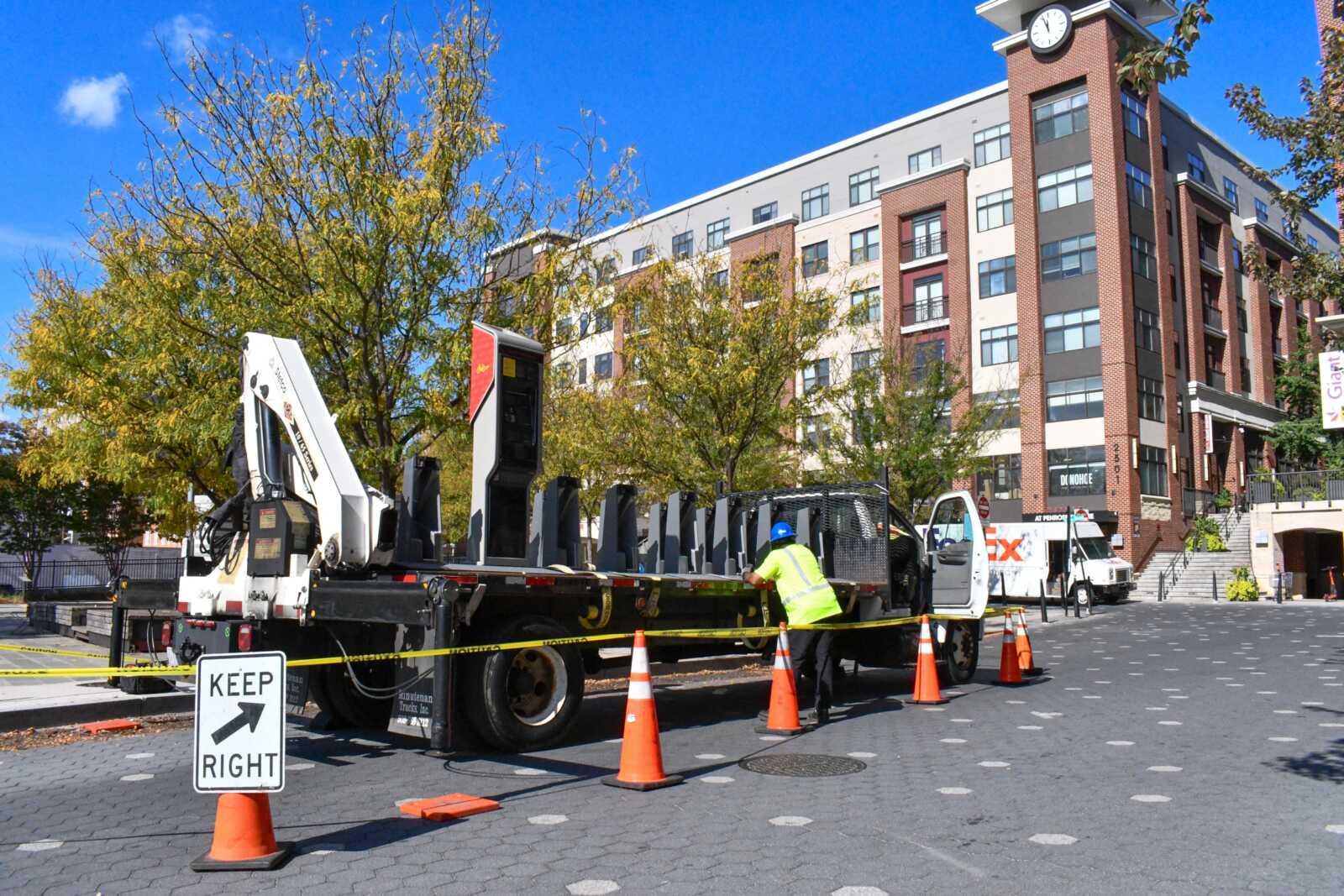
Capital Bikeshare station along S. Barton Street in Penrose is being relocated to S. Wayne Street two blocks away (staff photo by James Jarvis)
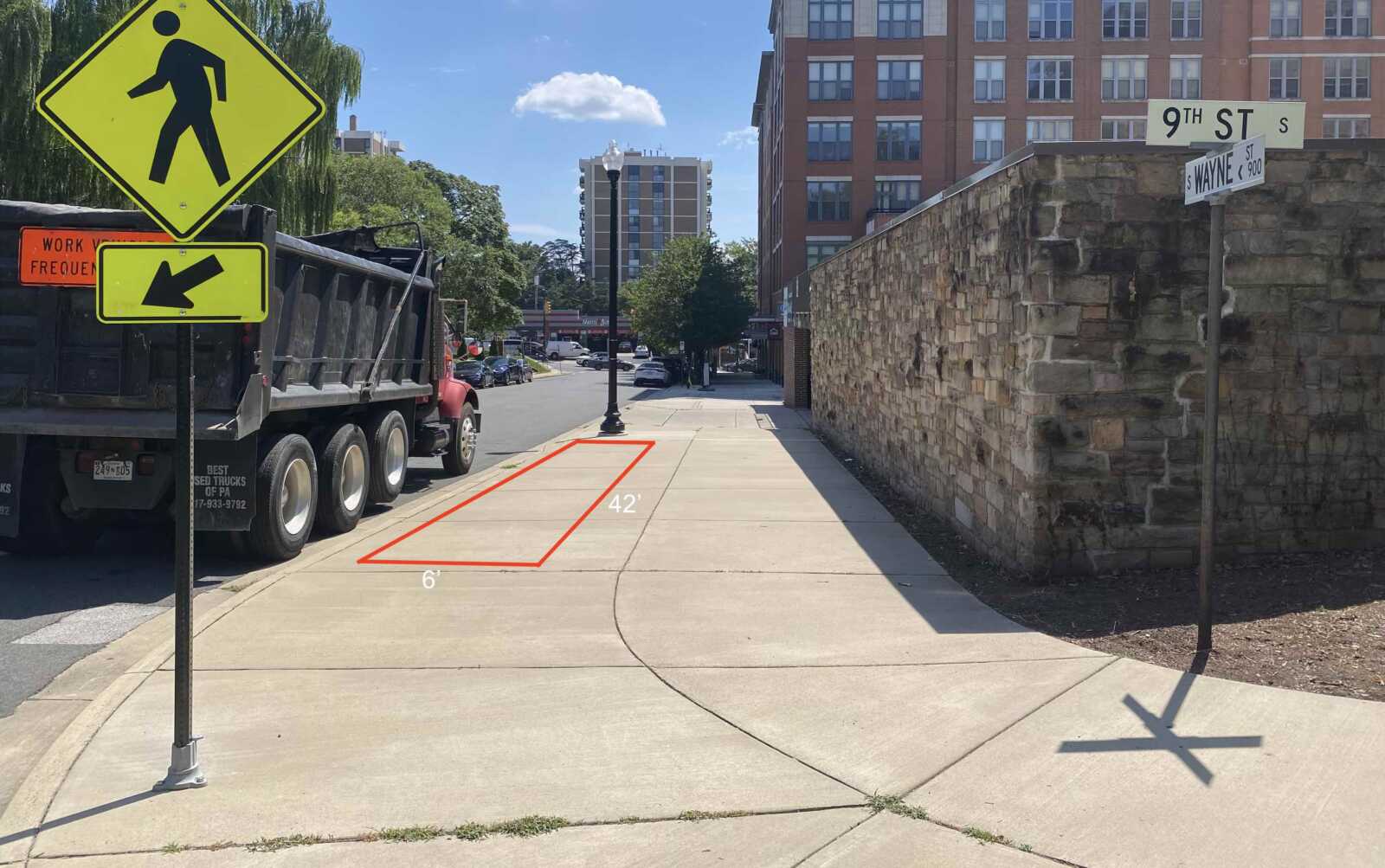
New temporary location of Capital Bikeshare station to S. Wayne Street (courtesy of Arlington County)
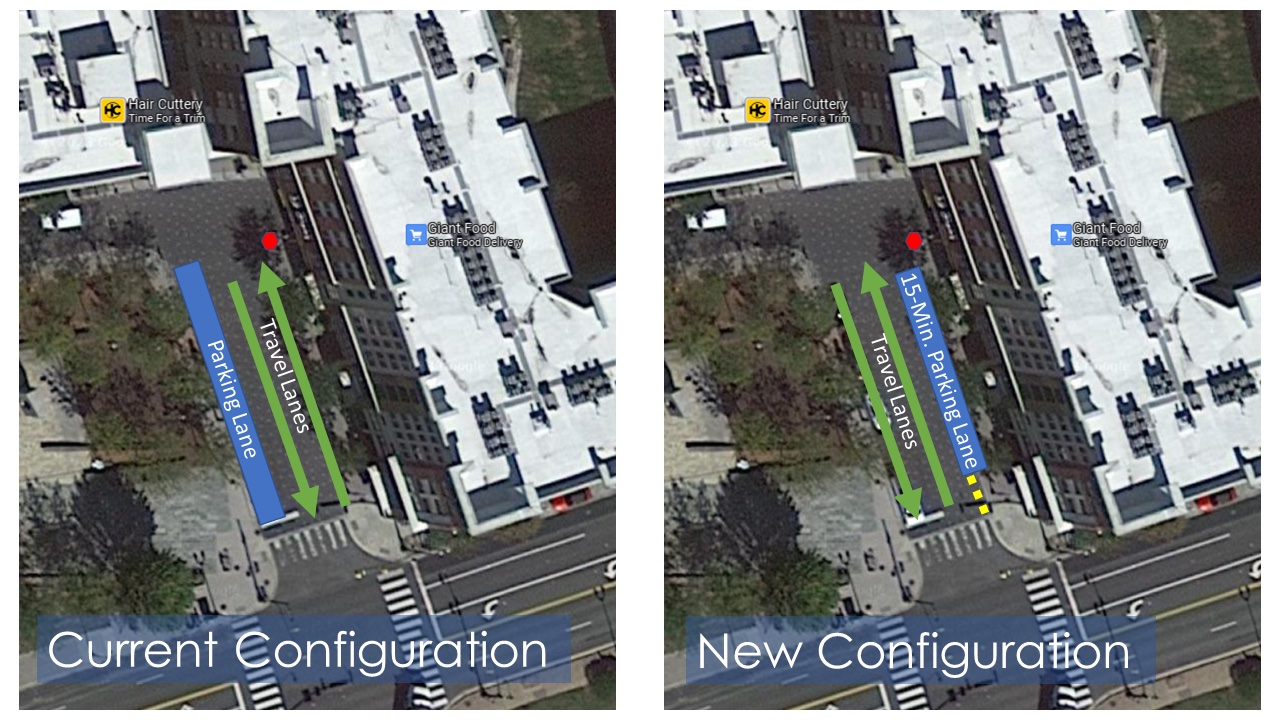
S. Barton Street reconfiguration (courtesy of Arlington County)
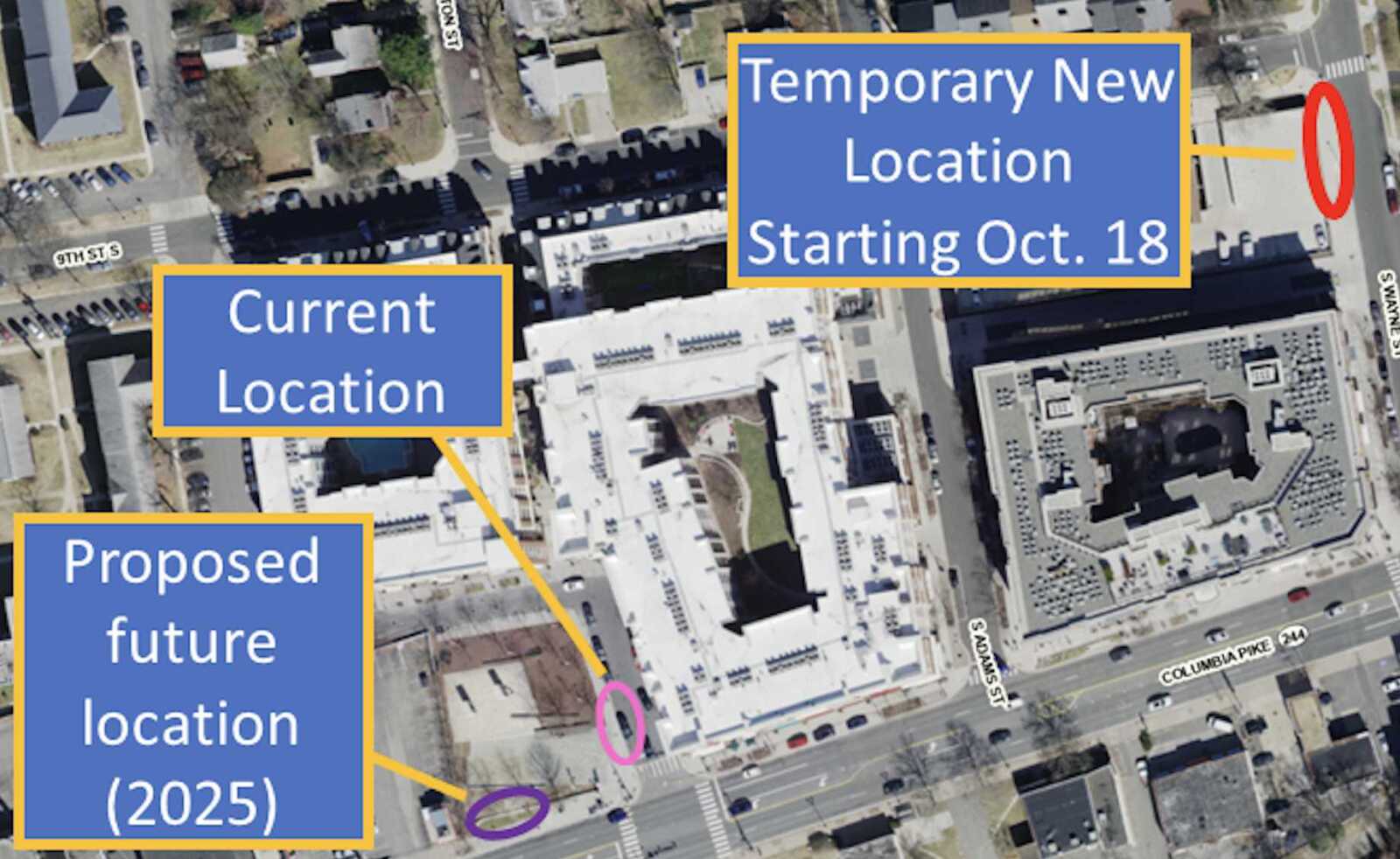
Map depicting old,temporary and possible new location of Capital Bikeshare in Penrose (courtesy of Arlington County)
(Updated 9:55 a.m.) A Capital Bikeshare station in Penrose was relocated Wednesday to free up more street parking in response to concerns about safety and illegal parking.
“We fail to see how relocating the Bikeshare station will help with the illegal parking at Penrose Square, as those problems existed well before the Bikeshare Station’s installation in 2022,” Chris Slatt, president of Sustainable Mobility for Arlington County, told ARLnow.
Slatt — who also serves on Arlington’s Transportation Commission — argues relocating the bikeshare station two blocks away along S. Wayne Street won’t solve the numerous traffic and safety-related issues that have plagued the square.
Instead, he says it will make “life more difficult for people choosing not to drive to the area, such as Bikeshare users.”
The planned relocation is meant to address “double-parking from pick-up/drop-off traffic at one of the Penrose Square retailers,” Arlington Dept. of Environmental Services spokesperson Claudia Pors wrote in an email.
“In the new configuration, the curbside lane next to the retailers will be turned into 15-minute pick-up/drop-off (PUDO) parking, and travel lanes will shift toward the west side,” she said.
The county did not specify which retailer it was referring to. However, Slatt and a nearby business owner previously noted that the illegal parking issue worsened after the Starbucks (2413 Columbia Pike) moved in eight years ago.
Pors said the plan is to move the bikeshare station back to Penrose Square in 2025 once Segment D of Columbia Pike Multimodal Improvements Project — slated to start next week — is finished and the “station is determined safe to move to this final location.”
Pors said the S. Wayne Street location was chosen because of adequate sidewalk width, continuous sunlight — used to power the bikeshare station — and its proximity to public space.
The station’s new permanent location has not been confirmed, but Pors said the county is seriously considering “the grassy area in front of the wall at the south end of the plaza, near the Burrito Bros.”
Construction prevented the station being moved there now.
“Segment D construction will at times close sidewalk access in front of the plaza and narrow travel lanes on the Pike, which could add a pinch point or prevent people from accessing the Bikeshare station,” Pors said.
While Slatt says he generally supports moving short-term parking for vehicles to the other side of S. Barton Street, he disagrees it should come at the cost of the bikeshare station.
“This location was chosen in 2022 through a community conversation and online survey which indicated majority support for putting the station on Barton Street,” Slatt said, adding its proximity to the grocery store and park is more convenient than the new temporary location.
Slatt also voiced his frustration that residents were only told about the move last Wednesday, and there wasn’t enough time for the community “to comment, object, or suggest other solutions.”
Pors said the county typically does not “seek input on temporary relocations of Capital Bikeshare stations.” Moreover, she noted that relocating it to privately owned spots in the plaza would have been more time-consuming process, whereas moving the station to S. Wayne Street was more convenient because it’s a public space.
Penrose resident Christiann MacAuley — also opposed to the relocation of the bikeshare station — said she thinks there may have been “some miscommunication” between the county and residents.
“It’s surprising was that apparently ‘the community’ was consulted, but none of the transportation or bike people in the neighborhood seem to have heard anything about it,” she told ARLnow.
Either way, MacAuley said, “it’s hard to imagine how the new plan will fix any of our traffic problems here.”
Those problems, as documented by a local resident on social media, include drivers making illegal U-turns, double parking, and making other unsafe driving maneuvers while rushing to pick up their orders at Starbucks.
Slatt said Starbucks should put up signs encouraging customers to instead use the garage, which offers an hour of free parking. He also advocated for more parking enforcement in the area.
Cars: illegal u-turn Cars: no stop for stop sign Cars: endangering pedestrians Cars: honk honk Cars: illegal parking Arlington: hmmm not sure what to do… maybe get rid of bike share I guess 🤷♂️ https://t.co/XR8ApdI6ec
A man was seriously injured after a hammer and knife attack in the Lyon Village neighborhood yesterday.
The Tuesday evening incident happened on the 1700 block of N. Calvert Street, a few blocks from Lyon Village Park, and involved two men who knew each other, police said.
Officers were not made aware of the attack until later that night, after the victim was treated at Inova Fairfax Hospital, according to an Arlington County Police Department crime report.
More from ACPD:
MALICIOUS WOUNDING (late), 2023-10170254, 1700 block of N. Calvert Street. At approximately 9:22 p.m. on October 17, police were dispatched to INOVA Fairfax Hospital for the late report of an assault that occurred in Arlington County. The preliminary investigation indicates at approximately 4:50 p.m., the male victim and male suspect, who are known to each other, became engaged in a verbal dispute during which the suspect allegedly struck the victim with a hammer. A witness separated the victim and suspect and a short time later, the suspect reapproached the victim, brandished a knife and struck the victim, causing a laceration. The suspect left the scene and the victim self-reported to the hospital with serious, non-life threatening injuries. The investigation into the incident is ongoing.