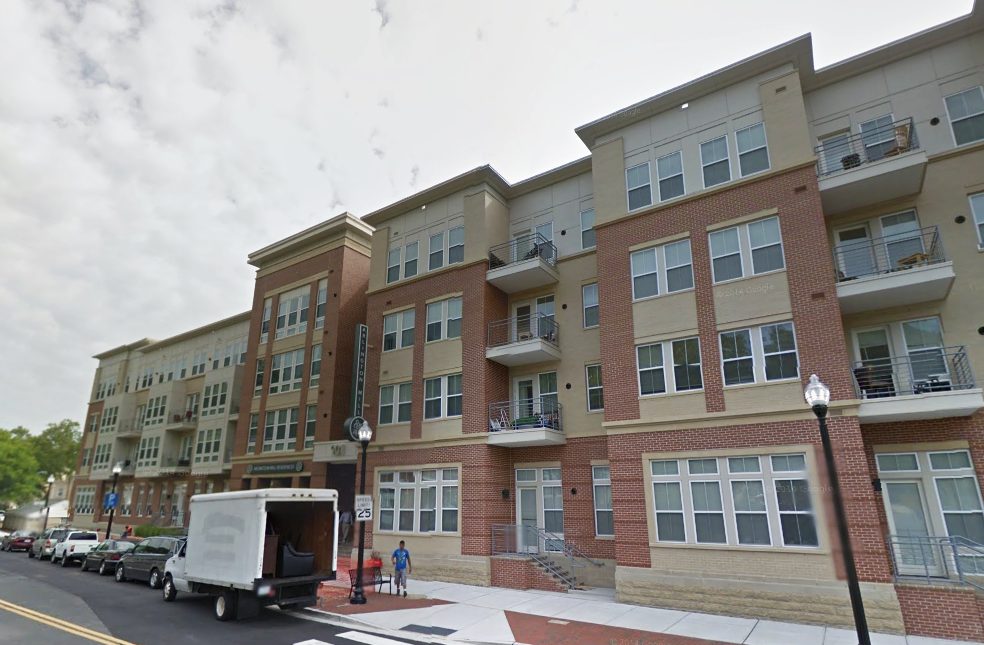
Residents of an affordable housing complex in Arlington Mill could soon get access to free wi-fi, thanks to the county’s own fiber optic network — but is that legal?

It’s a question that vexes broadband experts and legal observers alike, who see the county potentially running afoul of some restrictive state laws, even though the project happens to be in service of a good cause.

The county’s plans for this “Digital Inclusion Initiative” over at the Arlington Mill Residences have attracted new scrutiny as local officials and a team of independent experts have begun studying the “ConnectArlington” dark fiber network.

That group identified a whole host of problems with the county’s management of the program, which was designed to build on Arlington’s existing fiber network to provide high-speed internet to local businesses. The county already uses the network to link its facilities together, and expanded it in 2015.

The experts did not identify any issues with the Arlington Mill project, specifically, in a report they prepared for county staff, but some members of that “Broadband Advisory Committee” told ARLnow that they harbor deep concerns about it. And a survey of other lawyers specializing in telecommunications policy reveals that it’s entirely unclear whether the project’s structure is actually legal under state law.

Arlington officials and attorneys believe they’re perfectly within the bounds of the law with their efforts, and the county held a community celebration to kick off the installation of some internet equipment last month.

Thus far, county leaders have billed it as a pilot project, which could inform other efforts to connect communities that lack access to low-cost internet. Officials are particularly enthusiastic about its potential to connect students living at Arlington Mill with the internet, closing the “homework gap” and helping kids get online and keep up with their increasingly high tech studies.

But, at the very least, experts fear this means that the county has wandered into a confusing legal gray area that could invite future court challenges.

“They’re doing it for the right reasons, and I don’t fault them for it,” said Chris Rozycki, a member of the county’s Broadband Advisory Committee with 30 years of telecom regulatory experience. “But I think they know they’re tiptoeing onto thin ice here.”

(more…)


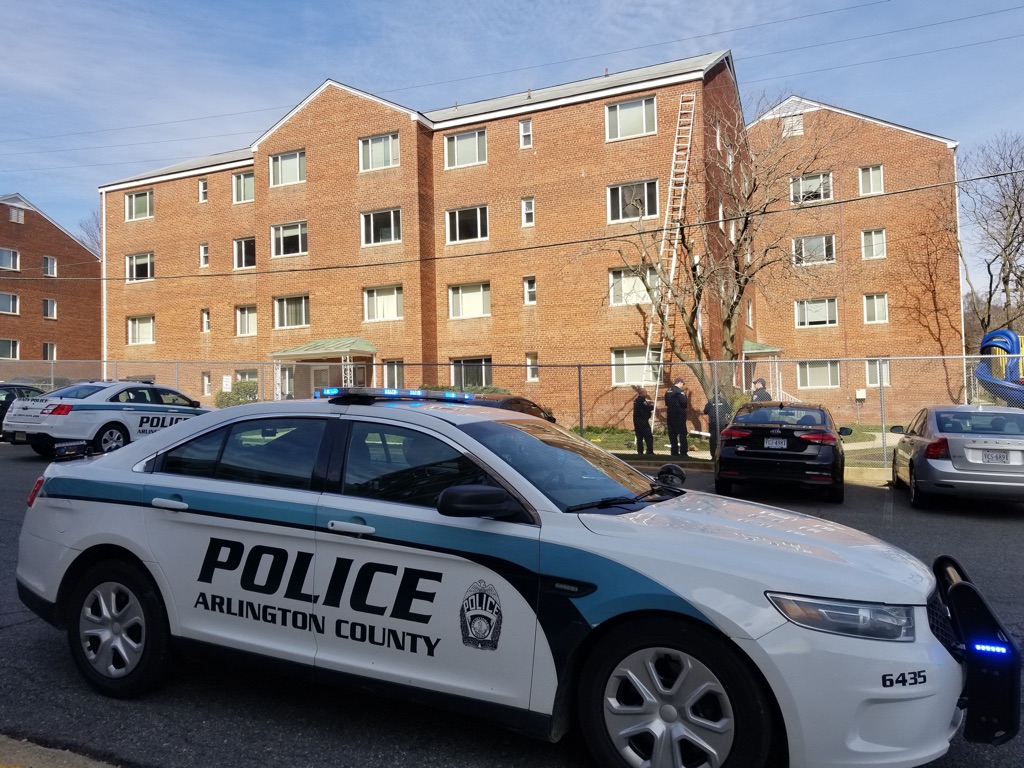
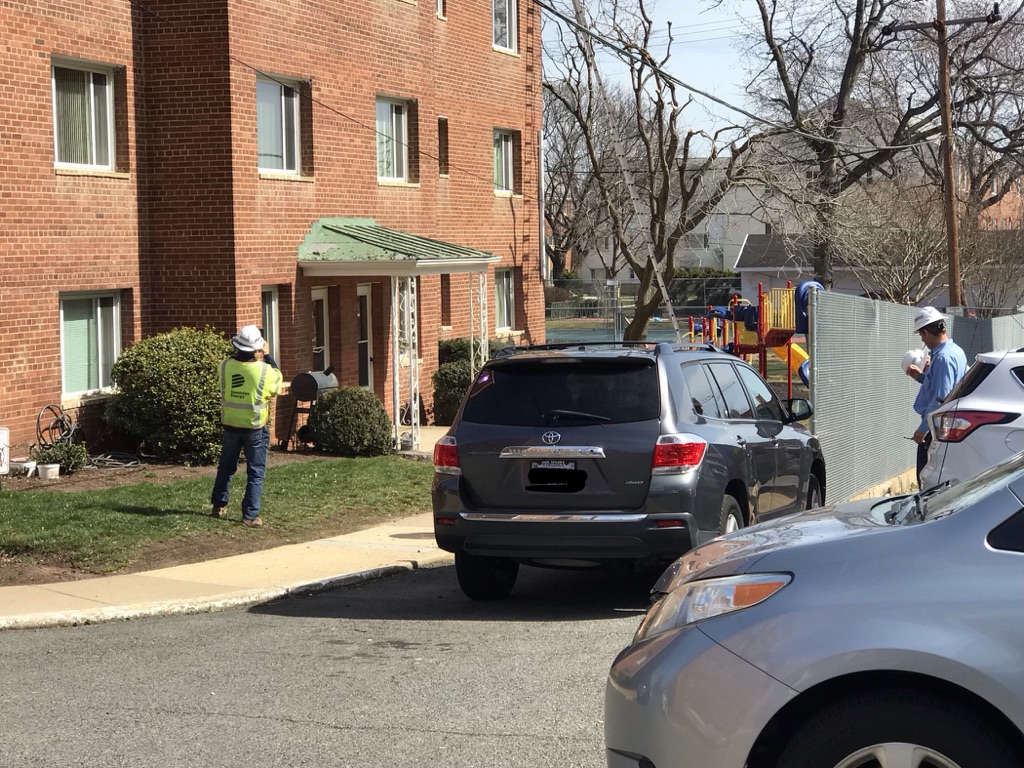
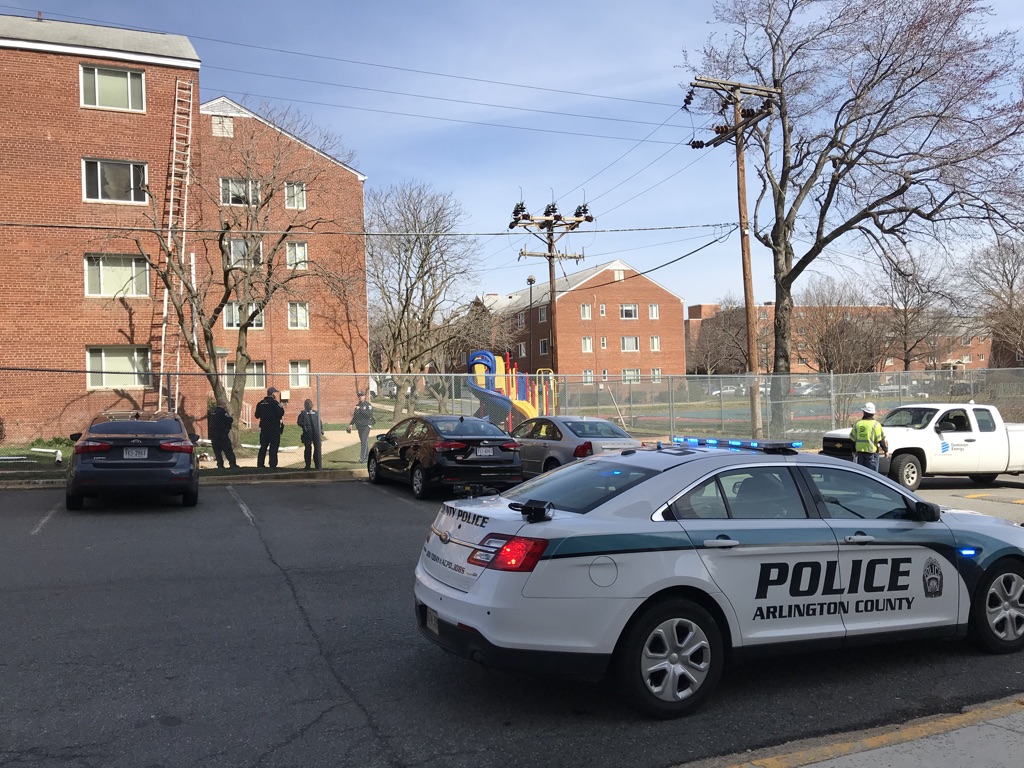
(Updated at 12:30 p.m.) Police are on scene of an electrocution at the Dorchester Apartments on the 2000 block of Columbia Pike.

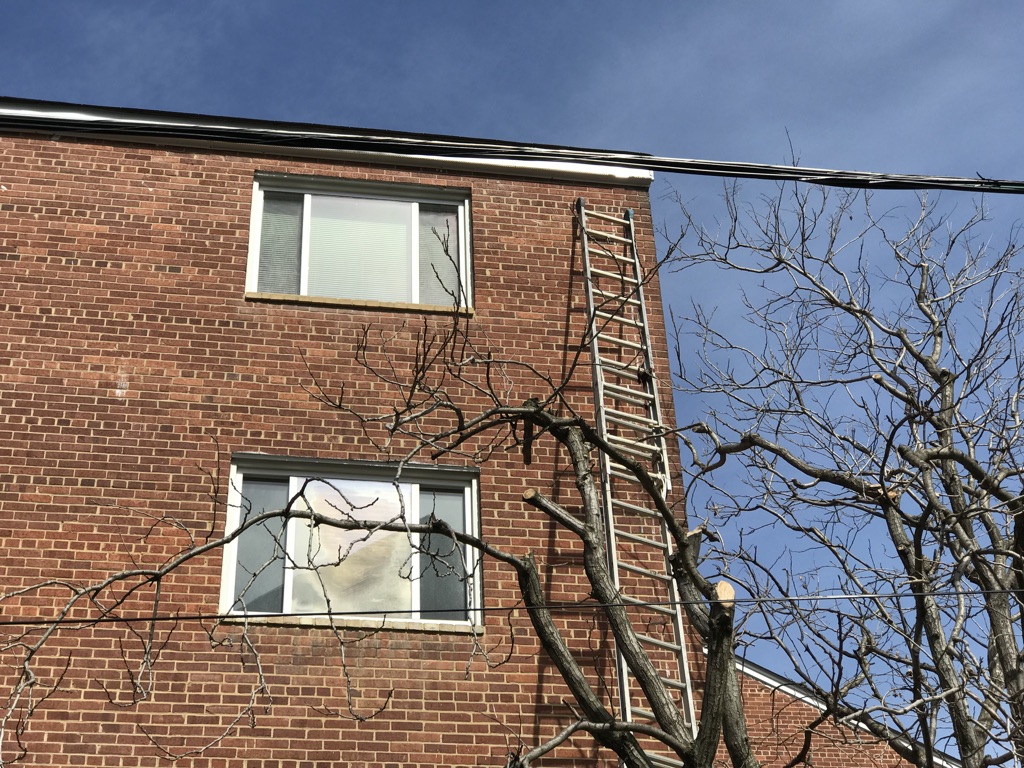
Police and medics were dispatched to the rear of the apartment community around 11:20 a.m. after multiple 911 callers reported that a man fell from a ladder or a rooftop and was electrocuted by nearby power lines.

The victim was transported to a local hospital with critical injuries, according to Arlington County Police Department spokeswoman Ashley Savage.

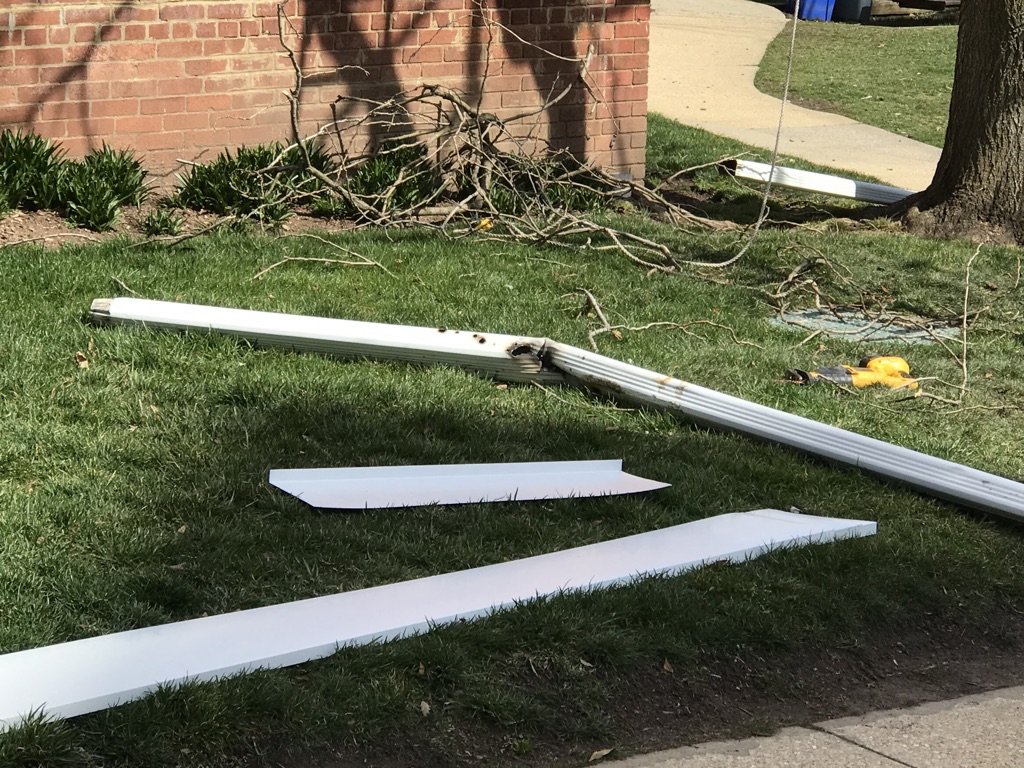
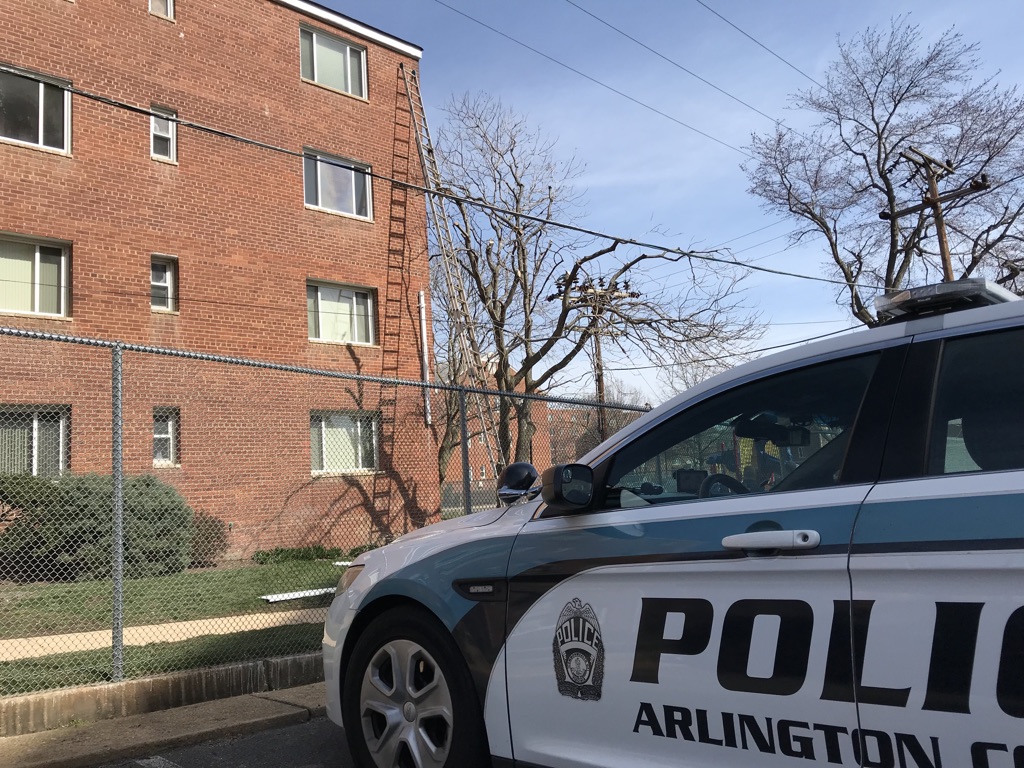
Police and crews from Dominion Power remain on scene. A blackened portion of a metal downspout, potentially indicating contact with the electrical lines, could be seen near where the victim fell.

Occupational safety inspectors have been called to the scene for an investigation.

Photo via Google Maps


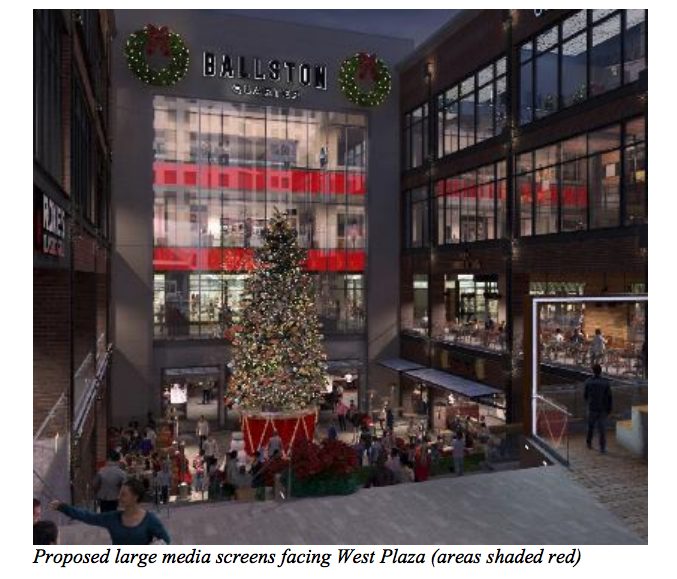
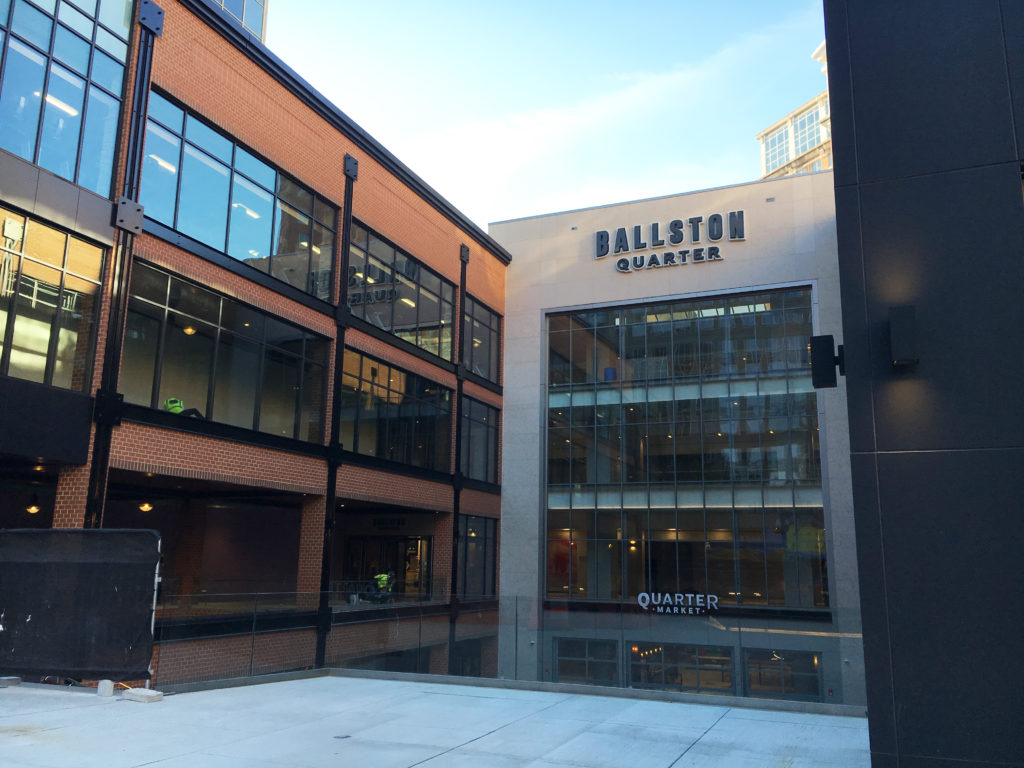
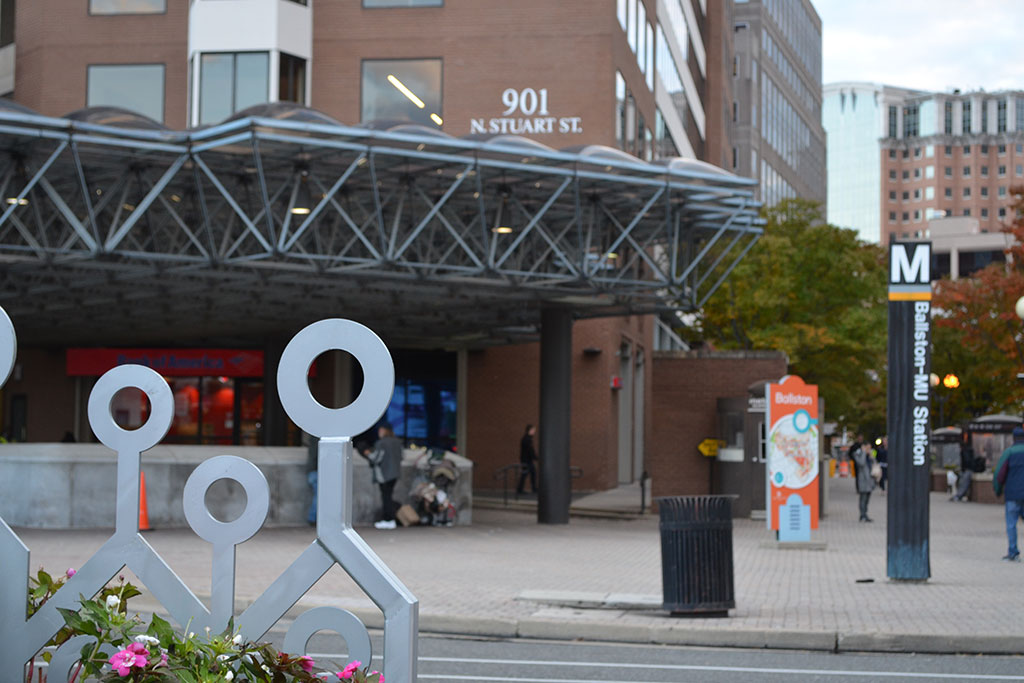
Ballston Quarter could soon win the county’s approval to install large “media screens” above its public plaza.

The newly renovated Ballston Common mall’s developers, Forest City, have been hoping to construct the new screens ever since the fall. But the company’s lawyers soon realized that the county zoning code wouldn’t allow for the sort of design they envisioned.

Now, the County Board is gearing up to tweak zoning rules ever so slightly to let that construction move ahead. The Board is contemplating changes this weekend that would allow “urban regional shopping centers” like Ballston Quarter to install the screens up to 55 feet off the ground.

“Large media screens are an appropriate tool for use by urban regional shopping centers to create a vibrant sense of place, to enhance outdoor community gathering spaces and to stimulate economic competitiveness,” county staff wrote in a report for the Board. “The signs can infuse increased interest and activity in areas of pedestrian and retail activity at urban regional shopping centers.”

Previously, the county limited such screens to a height of 40 feet off the ground. When Forest City submitted its first round of plans for the screens, the developer and county staff realized the designs called for the screens to be just over 49 feet high.

Accordingly, Forest City asked for a delay in advancing those plans until county officials could come up with a zoning code amendment to allow the higher screens.

The proposed changes would limit the construction of the screens only to shopping malls, and only to those within a quarter-mile of a Metro station or “major bus transfer station.” The Board will also maintain the ultimate discretion to hand out use permits to allow the screens’ installation, and staff write that they could become “one of the most regulated sign types” in all of the county’s zoning code.

The signs will be allowed to display “still, scrolling, or moving images, including video, media broadcasts and animation,” per the report.

The Board will only consider whether to set public hearings on the matter Saturday (March 16). So long as the Board signs off, the Planning Commission will hold an April 8 hearing on the matter, setting up a Board vote on April 23.

If the zoning change passes, Forest City would still need to obtain a use permit to build the screens, so it could be months before shoppers notice them there.

Ballston Quarter has been slowly opening stores to customers since last fall, most recently opening up its new food court for business.


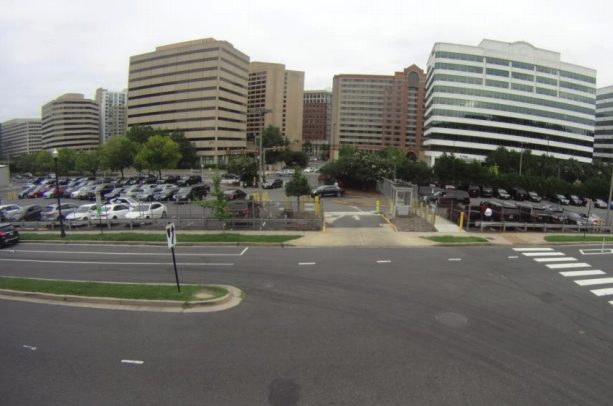
County officials and representatives from ridesharing companies are planning another community meeting to talk through traffic headaches generated by a staging lot for Uber and Lyft drivers serving Reagan National Airport passengers.

Arlington leaders will convene another gathering on the subject next week — in tandem with Uber, Lyft and airport executives — though they hope they’ve managed to alleviate many of the issues the community raised last fall.

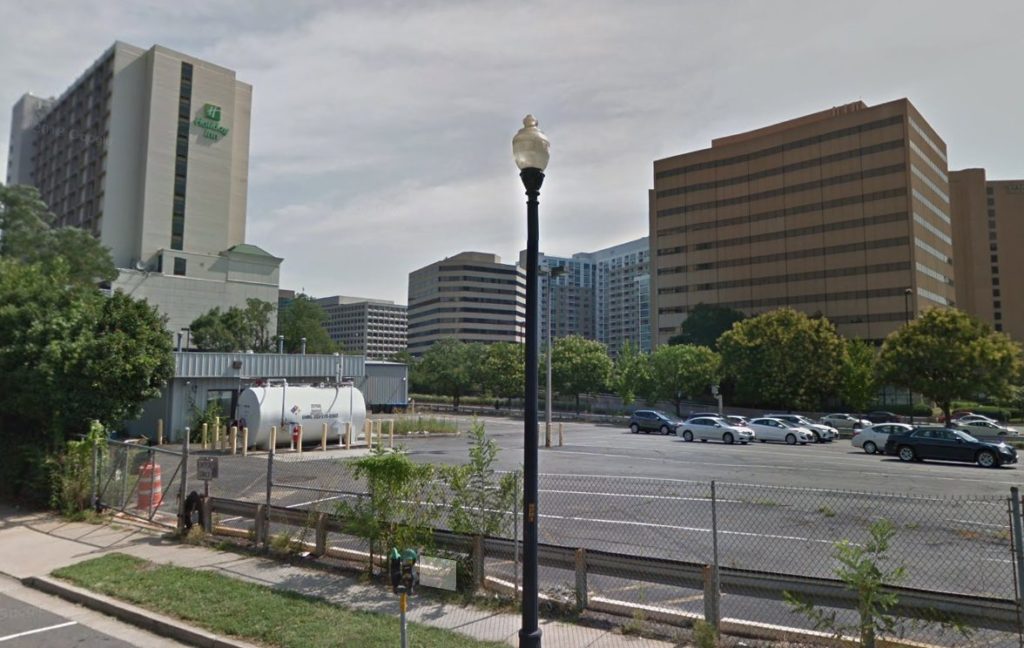
At the time, many people living near the lot (located at 2780 Jefferson Davis Highway in Crystal City, adjacent to S. Eads Street and a Holiday Inn hotel) said the surge of rideshare drivers in the area had snarled traffic in the neighborhood.

Airport officials only started directing drivers over that way to account for National’s massive “Project Journey” construction effort, requiring drivers to wait in the lot until would-be passengers request rides. But, back then, the lot only had one entry/exit to reach S. Eads Street, prompting big traffic backups and encouraging drivers to cut through other parking lots in the area to more easily reach the airport.

The county responded with an “interim” fix designed to make a difference in the short-term — officials opened up another entrance/exit to the lot along Route 1, installing a temporary traffic light to allow drivers to turn onto the road and jump onto an exit ramp leading directly to the airport access road.

Since then, county staff say they’ve recorded a 73 percent drop in the number of cars exiting onto S. Eads Street each day. Officials say they’ve also met with Uber, Lyft and airport executives to discuss additional steps, like “exploring the use of technology and messaging through the [rideshare] apps to reduce the volume of vehicles coming to the lot and seeking additional staging locations to reduce demand.”

The county is also mulling another, more costly change.

Officials are currently exploring the possibility of aligning the lot’s temporary exit onto Route 1 with 27th Street S., which sits directly across from the staging area. That would allow cars from the lot and 27th Street to turn at the same time, perhaps cutting down on wait times at each traffic light.

“Implementation would require relocating a traffic signal pole, replacing [the] temporary traffic signal with a permanent traffic signal pole on Route 1, and reconfiguring the [rideshare] lot to allow proper ingress flow,” county staff wrote on Arlington’s website.

That project comes with a $250,000 price tag and take at least a year to complete — plus, it requires the County Board’s approval.

Staff plan to discuss that option and others at the upcoming meeting. It will be held in the Crystal City Community Room at the Crystal City Shops (2100 Crystal Drive) on March 18, from 6-7:30 p.m.

Photo 1 via Arlington County


More on Seven Corners Death Investigation — “Detectives from our Major Crimes Bureau are investigating after a body was found… in the 6100 block of Arlington Boulevard in Falls Church. Officers found a 49-year-old Hispanic man lying unresponsive in an alley near the intersection of Arlington Boulevard and Patrick Henry Drive.” [Fairfax County Police]

D.C. Area Adds Fewer Jobs Than Expected — “The Washington region added 35,300 jobs in 2018 based on data released yesterday from the U.S. Bureau of Labor Statistics (BLS), 16,800 fewer jobs than indicated by the preliminary releases.” [George Mason University]

Home Sales Continue Trend — “Year-over-year home sales across the Washington region have now tumbled each of the first two months of 2019, but the median sales price rose for the 29th consecutive month, according to new data, while inventory levels tightened slightly as the winter market segued into spring.” [InsideNova]

Dudley’s Opening at Last — Nearly four years after it was first announced that a new sports bar called Dudley’s Sport and Ale was coming to the former Bungalow space in Shirlington, the long-delayed sports bar is finally planning to open to the public on Friday. [Facebook]


Virginia Hospital Center executives celebrated when they finally earned permission to expand the hospital’s North Arlington campus and execute a long-planned land swap with the county — but one of the consequences of the deal has some employees and parents feeling blindsided.

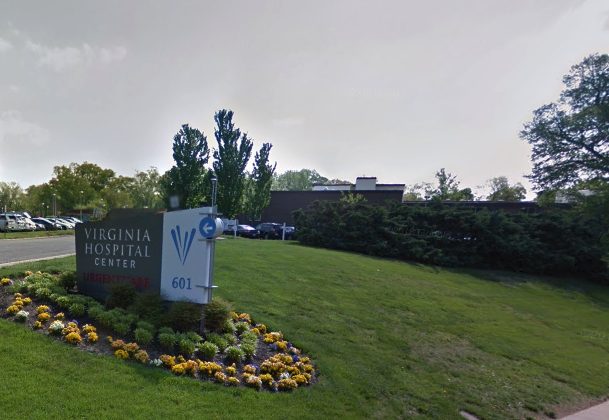
VHC is gearing up to send Arlington its property at 601 S. Carlin Springs Road in Glencarlyn, in exchange for gaining control over a piece of land at 1800 N. Edison Street. The latter property is adjacent to its existing facilities along N. George Mason Drive, and will be a key part of the hospital’s hotly debated expansion plans.

Of course, that’s going to prompt some big changes at the Carlin Springs Road site as the county takes over. Among them is the impending closure of a childcare center that the hospital operated on the property in tandem with Bright Horizons, serving VHC employees and local parents alike.

The daycare facility is now set to close on July 26, according to letters from both VHC and Bright Horizons provided to ARLnow. Though that deadline may be a full four months away, parents with kids at the daycare say they’re now scrambling to find alternative options.

The county is currently facing a childcare crunch, with local leaders currently weighing strategies to bring down the cost of daycare options in Arlington, and VHC parents say those conditions have only exacerbated the shock they felt about the childcare center’s closing.

“I was feeling reassured that finally Arlington realized that there’s more demand than supply when it comes to childcare, and now this happens,” said one parent, who declined to be identified. “It’s ironic that in Arlington, where there’s supposed to be some attention to how challenging it is to find childcare centers, instead of opening a new place we’re closing one of the big ones down and forcing families and employees to figure things out on their own.”

A spokesperson for the hospital would only confirm that the center is closing sometime this year, saying that “the details of the closing are still being worked out,” but otherwise would not comment on the situation.

Mike Malone, VHC’s vice president for administrative services and chief human resources officer, wrote in a letter to parents that it was his “great disappointment” to have to close the center. He said “the county will be repurposing the land on the Carlin Springs campus and demolishing the building,” prompting the closure — VHC leaders previously told ARLnow that the land swap would be finalized by May or June at the latest.

Malone added that Bright Horizons is “committed to helping every current family find care in another Bright Horizons center or [helping] you transition into another center of your choosing.”

In a letter of their own, Bright Horizons executives pointed to the “over two dozen centers spread across the metro area” that the company operates as options for parents. They also noted that they have “resources available to facilitate your child’s transition,” and said they plan to help staff at the center find jobs at other Bright Horizons locations.

Parents at the center told ARLnow that help is appreciated, but they fear it isn’t enough to manage the transition.

(more…)


Some local developers are now set to hand over more than $6.8 million to help the county afford a second entrance to the Ballston Metro station, a project officials have hoped to finish for years in order to open up access to the subway stop for people living and working along N. Glebe Road.

The newfound cash stems from the long-stalled redevelopment of an office building at 4420 Fairfax Drive, which sits above the county’s planned spot for the new Metro entrance. The project’s backers are now offering up the money to help fund the entrance’s construction, in exchange for the County Board agreeing to extend deadlines for the redevelopment through end of 2022.

Originally, development firm JBG Smith was backing the project, known as “the Spire at Fairmont,” and it planned to build a new Metro entrance station at the same time as it constructed a new mixed-use building on the site. But that effort languished for close to a decade, and JBG sold the property to its current owners — Washington Capitol Partners, Kettler Development and Bognet Construction — in 2015.

That group has made little progress, however, and the “site plan” the county approved governing the redevelopment effort is rapidly nearing its July 2020 expiration date. Accordingly, the developers are looking for an extension, and negotiations with the county heated up earlier this year.

As part of that back-and-forth, Arlington officials told the developers that they weren’t interested in waiting for the new, 23-story structure to be built before moving ahead with the Metro entrance project. Instead, they asked for a simple cash contribution, and the companies eventually agreed, according to a staff report prepared for the County Board.

“The county has decided that it may be prudent to proceed on its own with the complete design and construction of the Ballston West Entrance… which would be more efficient considering differing time frames for completion of the developer’s project and transit improvement,” staff wrote.

Some of that urgency stems from the fact that Arlington previously won about $26 million in state funding for the project, but has yet to spend much of it. Officials don’t see any imminent threat that the funding could be “clawed back,” but are nonetheless anxious to show some progress on the project.

In general, it’s been tough sledding for the county to find any cash to power the construction in recent months.

Arlington was counting on regional transportation dollars to kickstart the project, asking for $72 million from the Northern Virginia Transportation Authority to wrap it up. But the group declined t0 hand out any cash for it — after losing out on tens of millions as part of the vagaries of the deal to provide dedicated funding to Metro — and Arlington was forced to push back its plans for the entrance by several years.

Any timeline for the project is still murky, however. The staff report notes that JBG paid an engineering firm to prepare some designs for the new entrance, but those plans were never “accepted by WMATA or the county.” The new developers have taken control of those plans, and if the county finds they’re up to snuff, Arlington officials could agree to reduce the cash payment they need to pony up.

The developers are also set to send the county just under $410,000 to secure some other zoning changes to allow construction to move ahead. Current plans call for 237 apartments and 9,200 square feet of retail space to be built on the site, in addition to a garage with 237 parking spaces.

The County Board is scheduled to sign off on the details of this deal at its meeting Saturday (March 16). The matter is slated to be considered as part of the Board’s consent agenda, which is largely reserved for noncontroversial items approved without debate.

File photo


Arlington officials are proposing a $12,000, mid-year funding bump for a program aiding the county’s undocumented residents.

Last week, County Manager Mark Schwartz published his recommendation to the County Board that they give an extra $12,250 from the county’s current budget and transfer the funds to the Legal Aid Justice Center (LAJC). The Board is set to the weigh the issue this Saturday at its monthly meeting.

The funds are earmarked for the undocumented residents the Justice Center is providing with immigration assistance, such as visa consultations or asylum petitions as part of a program called “200 bridges.” Twenty-eight out of the 50 participating families have undocumented members, Schwartz wrote in the proposal.

If approved, the $12,250 would be a funding raise for the Justice Center — the county already granted $40,000 this year to fund legal rights workshops and counsel for individuals and families. Last fiscal year, the county allocated $100,000 to the Justice Center.

Since the Trump Administration’s crackdown on immigration enforcement, Arlington officials have acknowledged they want to remain “inclusive” to undocumented residents, but that they cannot provide “sanctuary” from federal agencies like ICE. Residents responded by raising thousands of dollars of their own money to cover the cost of local immigrants’ citizenship applications.

The county has taken steps to make some services (like public schools, health clinics and employment aid) available by not requiring users to show proof of residency.

Last week’s proposal suggested moving money out of Department of Human Services’ general fund for fiscal year 2019 and giving it to the legal aid provider to “bolster its provision of legal consultation and representation for undocumented Arlingtonians and mixed-residency status Arlington families.” (The current fiscal year ends in June, meaning the funds would have to be spent before then.)

About 23 percent of all 234,965 Arlington residents were born outside the United States, according to the latest Census data.

There are no data for the total number of residents who are undocumented, but in 2014 the American Immigration Council estimated 300,000 undocumented immigrants lived in Virginia, making up approximately 28 of the total immigration population.

A 2016 research study by the Pew Research Center estimated 25,000 people live without immigration documentation in the total Greater Washington Area.

Schwarz’s proposal would allocate the $12,250 to the Legal Aid Justice Center’s Arlington office, not its other offices in Charlottesville, Petersburg and Richmond.

Image via Youtube.


Plans are coming together for a major transformation of Rosslyn’s streets, as county officials advance a series of proposals designed to someday make the neighborhood a bit more friendly to cyclists and pedestrians.

The county is holding a public meeting tomorrow (Wednesday) to unveil a newly revised design for the future of Rosslyn’s street network. Known as the “Core of Rosslyn” study, planners have been working since 2017 to finalize a redesign of the neighborhood that comports with the “Rosslyn Sector Plan” the County Board adopted in 2015.

Some of the proposed changes, revealed in detail last fall, are quite substantial.

Perhaps the largest one is the removal of the Fort Myer Drive tunnel under Wilson Blvd, transforming it into a traditional at-grade, signalized intersection. The county could also follow through on long-contemplated plans of building a car-free, “pedestrian corridor” running from 18th Street N.’s intersection with N. Oak Street to N. Kent Street, replacing the Rosslyn skywalk system to make the Metro station more accessible.

Another major change included in previous proposals was the conversion of N. Fort Myer Drive, N. Lynn Street and N. Moore Street into two-way streets. But officials are now rolling out a revised set of plans that would keep the latter two streets as one-way roads, after hearing feedback from the community on the study.

Planners have indeed seen Lynn Street as a particularly challenging option for opening up to two-way traffic. Though officials expect the change would make things a bit less confusing for drivers, it would also force the county to find new access points to the G.W. Parkway, I-66 and the Key Bridge.

Other proposed changes include 14 new or improved crosswalks for pedestrians, and more than 1.3 miles of new protected bike lanes. Those are largely set to run along Fort Myer Drive, N. Moore Street and N. Nash Street, and are designed to ease bike connections to the Key Bridge and the Mt. Vernon and Custis Trails.

The public meeting on the “Core of Rosslyn” plans is set for the Observation Deck at CEB Tower (1800 N. Lynn Street), located on the 31st floor of the massive office building, tomorrow from 4-7 p.m.

The county hopes to have final results of the study ready for consideration sometime this summer.

File photo


Seven Corners Suspicious DeathUpdated at 10:25 a.m. — Fairfax County Police are investigating a “suspicious death” on the 6100 block of Arlington Blvd in Seven Corners, near the Arlington border. That block is home to the Willston Centre shopping center, a McDonald’s, a hotel and a number of commercial offices. [Twitter, Twitter]

What’s Up With the ‘Psychedelic Tower?’ — “You’ve probably seen the tower if you’ve ever driven across the 14th Street Bridge… It’s a hexagonal, granite structure that sits about a third of the way down the bridge, closer to the Virginia side. By day, it doesn’t look like much. But by night, its windows light up like a gigantic kaleidoscope.” [WAMU]

New Pike Library Remains a Goal — “Arlington government leaders haven’t given up their quest to add a new library branch on the western end of Columbia Pike. But unless an unbeatable opportunity presents itself, a new facility is not going to happen immediately.” [InsideNova]

Arts Cuts Highlighted in TV ReportProposed budget cuts to the county’s scene shop, costume shop and technical services provided to local theater companies “would really destroy the arts community,” advocates told NBC 4 in a segment that aired last night. [NBC Washington]

Nearby: Seven Corners Office Buildings Purchased — “BoundTrain Real Estate has purchased the two commercial office towers located at 6400 and 6402 Arlington Boulevard in Falls Church for more than $38 million. The two 13-story buildings in the Seven Corners commercial district include more than 410,000 square feet of commercial space.” [Falls Church News-Press]


Arlington officials have pitched Amazon on a program to help the company slash its business license tax burden when it sets up shop in Pentagon City and Crystal City — but the county is also admitting that Amazon could avoid that particular tax altogether.

Should an incentive package designed to bring the tech giant’s new headquarters to Arlington win county approval this weekend, Amazon will still be subject to all manner of local levies. In particular, officials are counting on real estate tax revenues from the company to generate an extra $342 million for county coffers over the next 16 years.

But it’s an open question how much in business license taxes — a levy known as the “Business, Professional and Occupational License” tax or “BPOL” — Amazon will actually need to pay. It’s an issue that’s fueled outrage from local Amazon critics, who argue that the county shouldn’t be offering tax breaks to an extremely valuable company owned by the world’s richest man, which has already successfully avoided paying federal taxes for the last few years.

Documents show that county officials have already marketed Arlington’s “Technology Zone” program to the company, an incentive program that could help Amazon slash its BPOL burden by as much as 72 percent for the next 10 years. It’s unclear whether Amazon might qualify for the tax break, but county staff say it’s also a possibility that the BPOL tax might not apply to the company at all.

In a report prepared for the County Board ahead of this weekend’s vote, staff wrote that Amazon “may be classified as a type of company that is not subject to BPOL at all, such as a retailer or wholesaler.” State law does indeed allow for a variety of exemptions to the tax, with organizations from banks to newspapers eligible to avoid the BPOL levy.

Or perhaps Amazon could avoid the BPOL tax because it’s levied on each company’s “gross receipts.” Staff write that “as a corporate headquarters and global company, Amazon may not have gross receipts attributable to the Arlington location,” largely due to where the sales in question might originate.

Christina Winn, director of business investment for Arlington Economic Development, says the county will examine “the point of sale” in making that determination. If the sales happen somewhere other than Arlington, the BPOL tax may not apply to Amazon.

“Taxes are very complicated, especially with these large companies where all their consultants are based in other places,” Winn said. “They’re based here, but they may be on site in some other state.”

Victor Hoskins, the head of Arlington Economic Development, previously told the Washington Post that other companies with large corporate headquarters in the county (like Nestle and Lidl) have avoided the tax for just that sort of reason. He said it “just hasn’t been the case for large global companies” that they’ve been subject to the BPOL rate.

Staff stressed in the report that they haven’t included any BPOL revenues in their projections of the company’s fiscal impact on Arlington, given the uncertainty over Amazon’s eligibility for the tax. Instead, the county has based its revenue assumptions on real and personal property taxes, hotel stay and meals taxes and sales taxes — Arlington is also counting on BPOL taxes from the company’s landlord in Crystal City, developer JBG Smith.

“Because it’s such a big company with many different lines of business, and they don’t know what businesses are coming into the Arlington facility, we just assumed zero for gross receipts,” Winn said. “We just felt like that was the most conservative and responsible way to model this project.”

Amazon will need to sort out these tax questions with county staff, likely involving the commissioner of revenue’s office.

If the company does qualify for the BPOL tax after all, it could still apply for the “Technology Zone” incentive, though that only applies for 10 years, and would slash (but not eliminate) Amazon’s BPOL tax payments.

If the county judges that the business units located at Amazon’s Arlington headquarters have “a primary function in the creation, design and/or research and development of technology hardware or software,” the company would qualify for the tax break. The program has gone relatively unused since it was last updated in 2014 — for full disclosure, ARLnow’s parent company applied for the tax break in 2015, but was rejected, despite approximately 20 percent of the company’s budget being devoted to web design, development and hosting.

“That incentive zone is there for any business, and Amazon can take advantage of it, if they want to,” County Board Vice Chair Libby Garvey said during an interview on WAMU 88.5’s Kojo Nnamdi Show Friday. “So, we’re really treating Amazon — as hard as it is to believe — basically, like any other business. So, we’re not telling them that every other business can make use of this tech zone incentive that we have and you can’t.”

The Board is set to vote on the incentive package at its meeting Saturday (March 16), including the heart of the proposed offer to Amazon: an estimated $23 million over the next 15 years, drawn from a projected increase in hotel tax revenues driven by the company’s arrival.

However, the county has recently conceded that number could go higher (or lower) depending on what sort of impact local hotels actually see in the coming years. Amazon will only be permitted to use that cash on building and furnishing its new headquarters.


View More Stories