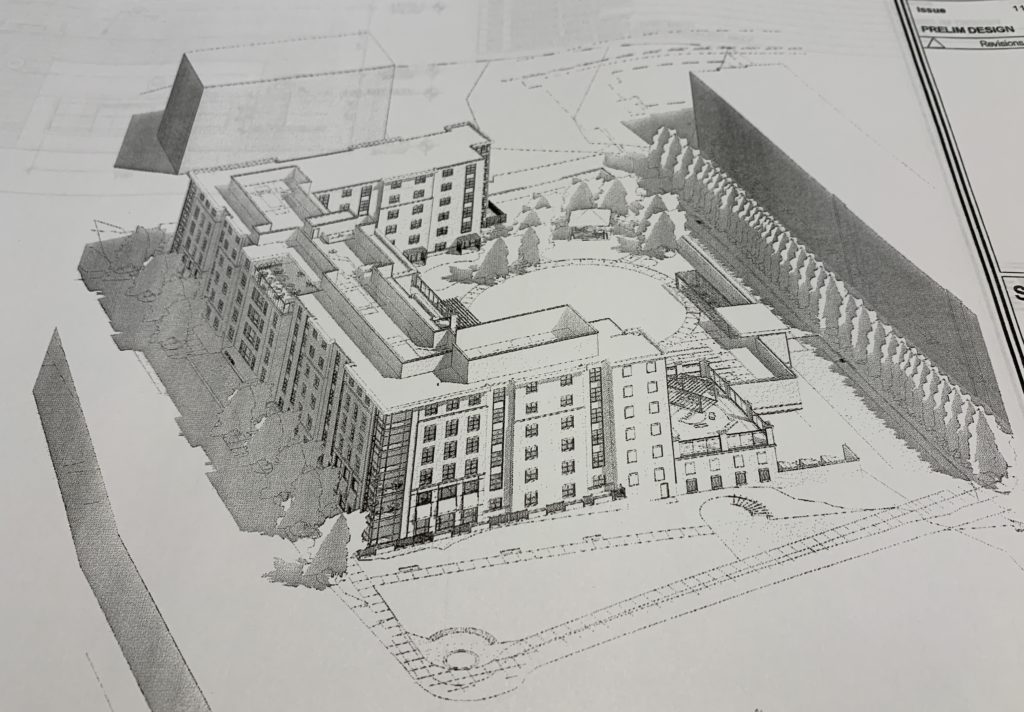
A new senior living center, perhaps the first to be built in Arlington in decades, could soon be on the way for a property along Lee Highway.

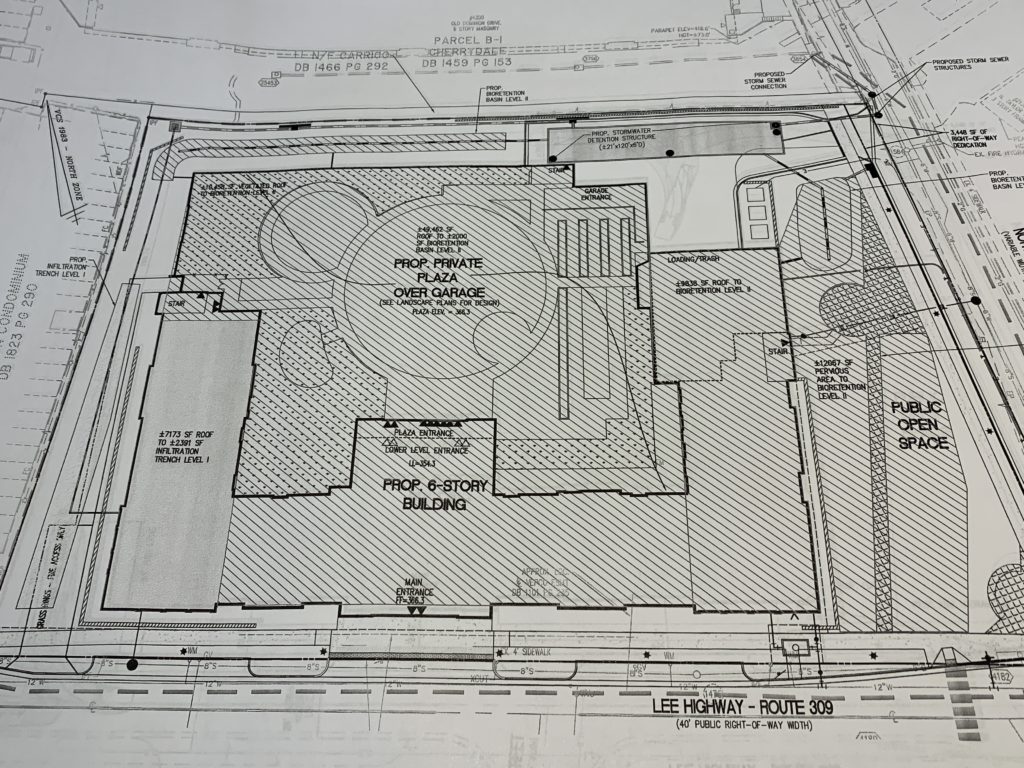
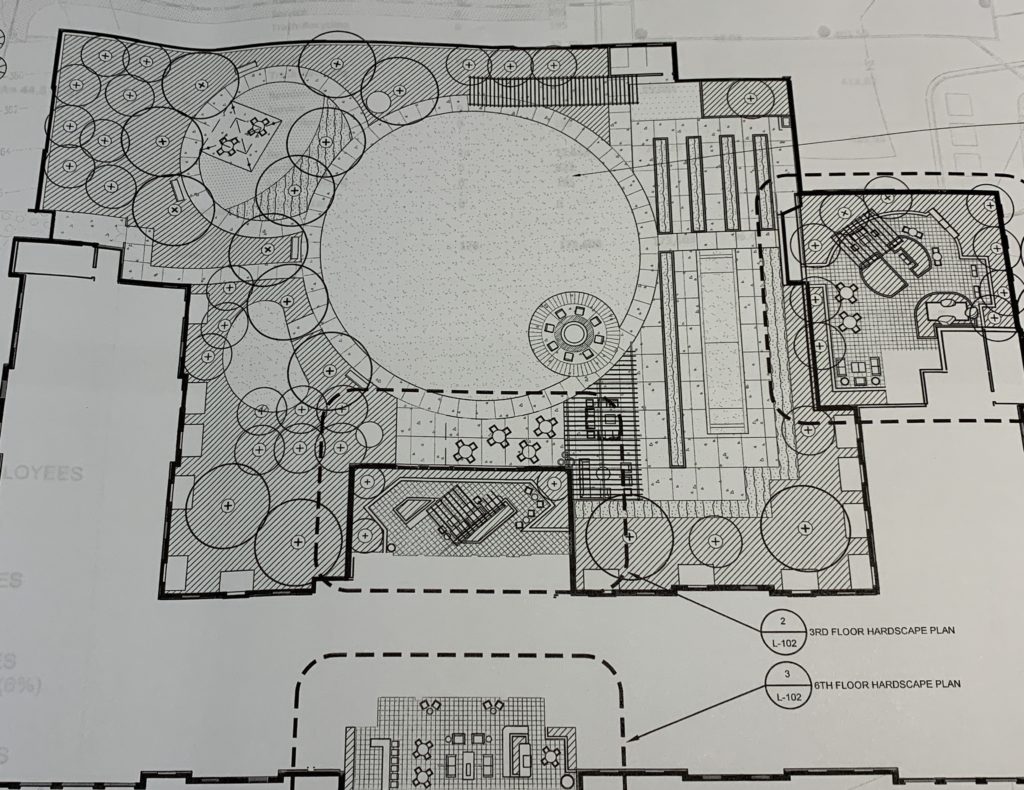
McLean-based Artis Senior Living has filed plans with the county to build a six-story facility with 175 units on a 2.79-acre property near Cherrydale. The building would be divided into two wings, surrounding a landscaped plaza and a new public park near the site, located at 2134 N. Taylor Street.

Artis has discussed the potential of bringing a senior living center to the property with neighbors in Cherrydale and Waverly Hills for close to a year now, but the company (which operates facilities across nine different states) only brought zoning applications to county officials in late November.

“The proposed facility would be the first new assisted living facility constructed in Arlington in almost 20 years,” Martin Walsh, an attorney representing Artis, wrote in a letter to zoning officials. “There is a sincere need for additional senior housing in Arlington. Currently, without sufficient capacity in the county, seniors are forced to look outside Arlington for assisted living. The proposed facility would allow Arlington’s seniors to ‘age in place’ and continue to call Arlington home.”

Artis’ plans call for one wing of the building to be about 173,600 square feet in size, with another at about 152,500 square feet. That would include room for 95 assisted living units, and another 80 specifically set aside for “memory care” patients.

The apartments would range in size from studios to one- or two-bedroom units. The buildings will overlook a plaza with green space for residents, which will sit over top of a partially buried parking garage. That will have about 108 spaces, under the company’s proposal, which Artis expects will be more than enough space for the center’s 50 employees.

The company also expects that close to 30 percent of its workforce will rely on nearby Metrobus and Arlington Transit routes to get to work, and a traffic analysis attached to the plans does not foresee the senior center impacting congestion on Lee Highway.

The new park, designed as a contribution from Artis to the county in order to benefit both the facility’s residents and neighbors, would be located at N. Taylor Street’s intersection with Lee Highway. Walsh noted in the application that a visioning study of the Lee Highway corridor completed in 2016 called for a new park on that site — the document was created ahead of a broader effort to draw up new plans for the entire corridor, which just began in earnest last month.

Once the county signs off this proposal, Artis plans to purchase the property, which is made up of several different parcels of land along the 4300 block of Lee Highway. They were owned for decades by the Courembis family, and neighbors have often debated what might become of them, though the homes on the land now sit empty, according to Arts’ application.

The company is asking for some zoning changes to allow for the construction of a senior center in the area, and submitted this application as a “site plan,” a process that will involve an additional layer of county scrutiny.

The Site Plan Review Committee will now hold meetings on the project and its design. Should it withstand that group’s review, it will need to advance to the Planning Commission and, ultimately the County Board for approval.


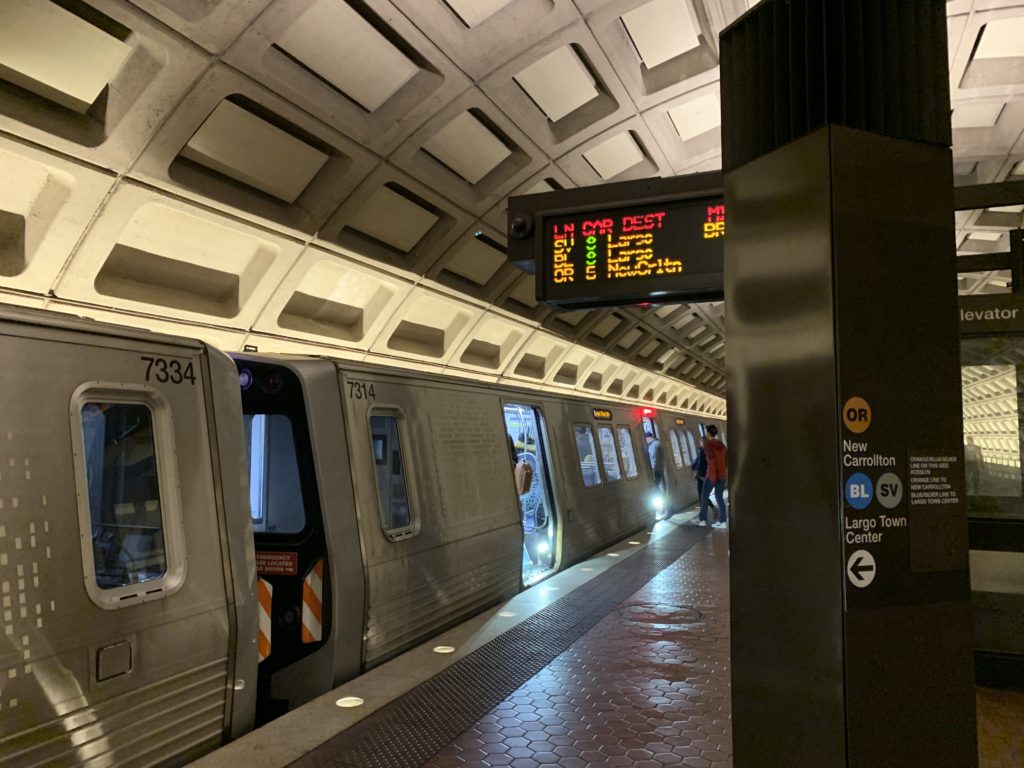
Arlington Metro riders might soon notice some digital screens displaying local artwork popping up at five stations sometime this spring.

WMATA plans to install the new screens at a dozen stations across the Metro system over the coming weeks, including several stops in Arlington itself: Crystal City, Ballston, Pentagon City, National Airport and Rosslyn.

The screens are part of Metro’s “Art in Transit Program,” which seeks to “work with cultural organizations and stakeholders to integrate art content into the new digital displays,” according a report by county staff. The County Board is set to approve an agreement this weekend that would allow Arlington Cultural Affairs to submit content to be displayed on the screens.

“Through this collaboration, WMATA is seeking to create a dynamic transit experience that increases community awareness and pride, and provides customers and the public with additional access to vibrant art produced by partnering organizations,” staff wrote in the report.

Other groups contributing artwork include the Hirshhorn Museum and Sculpture Garden, the National Portrait Gallery, the National Museum of Women in the Arts and the NOMA and Golden Triangle business improvement districts.

Arlington’s artwork is set to appear on the screens for “20 seconds at least every six minutes for a period of at least 28 days,” according to the report.

The Board is set to sign off on the project at its meeting Saturday (March 16), but riders should start noticing the screens as soon as this week. WMATA is scheduled to install the Crystal City screen from March 11-15, then bring the screens to the other Arlington stations sometime between April 29 through May 3.

This wouldn’t be the first public art project bound for the Ballston station, in particular — the station is set for a colorful, LED-light makeover sometime within the next few years.

File photo


Residents Support HQ2 in Letters — “Many Arlingtonians want Amazon.com Inc. to set up HQ2 in Crystal City and Pentagon City — or at least that is what a slew of letters and emails to the [Arlington County Board] seems to indicate… ‘I would say the theme of the emails is: ‘Don’t blow it,” [Libby] Garvey said.” [Washington Business Journal]

Expect Fireworks at County Board Meeting — “Board Chair Christian Dorsey (D) said he has ‘no interest’ in postponing [this weekend’s Amazon] vote and has heard no suggestions to do so from other board members. He expects the measure to pass, but he also said anywhere from 100 to 400 speakers could show up for the public hearing before the vote.” [Washington Post]

More on Expected HQ2 Jobs — “While Amazon has said about half of the 25,000 HQ2 jobs here will be tech-related, we now know a bit more about the breakdown, thanks to a Thursday talk by Ardine Williams, vice president of people operations for the company, to high schoolers.” [Washington Business Journal]

Extended Comcast Outage — Much of Arlington lost its Comcast cable and internet service for several hours Sunday. [Twitter]

More Trouble for Trustify — “Real estate investment trust JBG Smith Properties Inc. is heading to court to try to collect on a $263,477.21 judgment against one of its tenants, private investigation startup Trustify. The Chevy Chase developer won an ‘unlawful detainer’ judgment against the company Jan. 31, allowing it to evict Trustify from its main office at 200 12th St. South in Crystal City.” [Washington Business Journal]

ACFD Helped Battle McLean Fire — Arlington County firefighters helped to extinguish a house fire in McLean over the weekend. One resident died in the blaze. [Tysons Reporter]

Flickr pool photo by Rex Block


A dine-and-dash in Clarendon turned violent this week after police say a man tried to run out on his bill and assaulted an employee who confronted him.

Police say they were responded to a call along the 3100 block of Clarendon Blvd at 8:52 p.m Tuesday, after a patron allegedly left the establishment without paying. The block is home to popular bars including Mister Day’s, Bar Bao and Pamplona.

Police believe the customer struck a restaurant employee in the face before attempting to flee the scene. But when he tried to take off, bystanders stopped him, and held him, until officers arrived.

Police identified the man as 28-year-old Arlington resident John Strittmatter.

Strittmatter was charged with malicious wounding, a crime punishable by five to 20 years in prison and a fine of to $100,000, according to the Virginia criminal code.

Police also charged him with “defrauding an innkeeper,” which is Virginia legalese for leaving unpaid bills and is a non-jailable offense, but may carry a fine depending on the size of the unpaid bill.

Full details from the county crime report:

MALICIOUS WOUNDING, 2019-03050244, 3100 block of Clarendon Boulevard. At approximately 8:52 p.m. on March 5, police were dispatched to the report of a larceny in progress. Upon arrival, it was determined that the suspect left a restaurant without paying his bill. When confronted, the suspect allegedly struck an employee in the face before fleeing the scene on foot. Additional citizens detained the suspect until police arrived. John Strittmatter, 28, of Arlington, VA was arrested and charged with Malicious Wounding and Defrauding an Innkeeper.


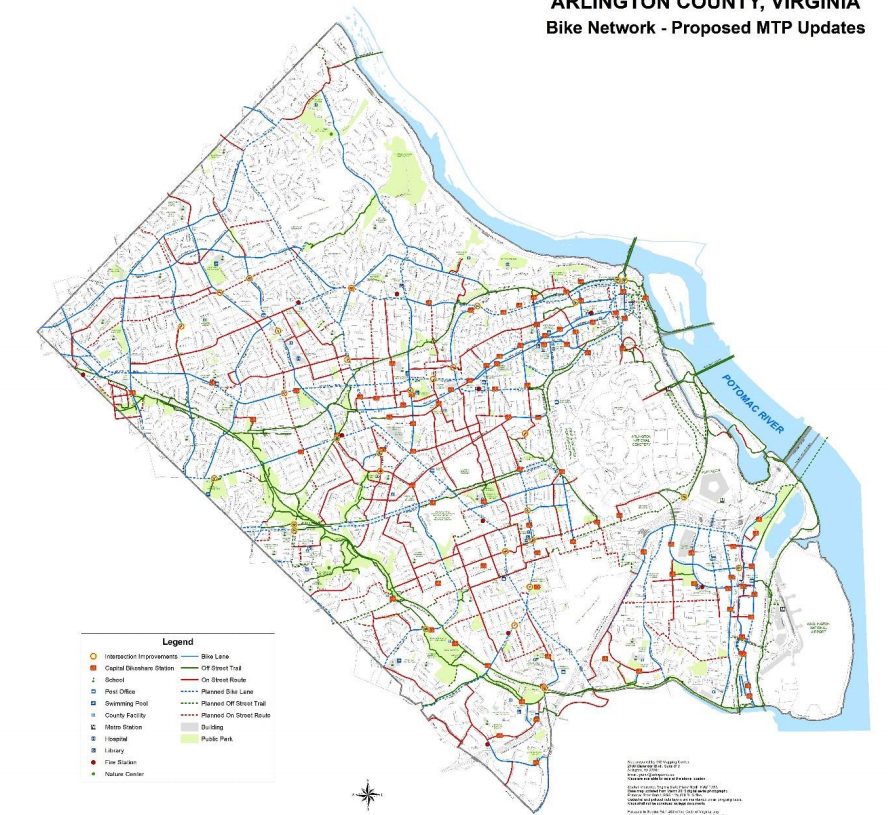
Arlington transportation planners’ latest attempt at crafting the future of the county’s cycling infrastructure has left neighbors, bicyclists and environmental advocates both pleased and disappointed.

The first draft of the 5o-page document, known as the bicycle element of the county’s Master Transportation Plan, originally included 26 cycling infrastructure projects including new trails and on-street bikeways. Since then, county staff has cut a few bike trails from the document, including two major projects: the Arlington Hall trail in Alcova Heights and another connecting the former Northern Virginia Community Hospital in Glencarlyn to Forest Hills, which were chopped after outcry from neighbors and environmentalists.

Still, bike advocates expressed broad support for the plan, but some think the latest draft doesn’t go far enough to ensure pedestrian safety and combat climate change.

“We made a number of changes in response to what we heard,” said Richard Viola, the project manager for updating the plan at the transportation division of the Department of Environmental Services (DES) told ARLnow Thursday. “I don’t think it negatively affects the overall plan, but it certainly shows a little more consideration of our natural resources.”

The plan is a sort of guiding “wish list” for the county, which some refer to as the “Master Bike Plan.” Viola’s group has been revising the document for more than a year, with the final version expected to be adopted later this spring. The latest edition will be posted publicly next week, he said.

During this latest revision, the county dropped its proposal for an off-street, half-mile trail connecting 6th Street S. to S. Quincy Street in the Alcova neighborhood at S. Oakland Street. The trail became a point of controversy because it could mean 6th Street residents lose some backyard privacy, and the county would cut down some important trees.

“We heard from a number of people from that Alcova Heights neighborhood that they did not want to see the trail built,” said Viola. “And then later we heard from a number of people in the neighborhood who want to see the trail build.” Ultimately, his working group shelved the Alcova trail idea for another time.

Another nixed idea was to extend the Four Mile Run Trail a half mile to connect with Claremont Elementary and Wakefield High. The Audubon Society wrote a letter in January warning that the proposal could cause “potential harm” to the rare magnolia ecosystem in the area.

“It’s a useful connection,” Viola said of the proposed trail. “People walk it today. But it would not be a suitable bike route when we thought about it because of the steepness [of the trail] and the proximity to this magnolia bog natural preserve.”

Another plan that became bogged down was a Glencarlyn/Hospital Trail connecting Glencarlyn and Forest Hills neighborhoods via the old site of the Northern Virginia Community Hospital. The half-mile project was envisioned by Viola’s team as a “low-stress route” between Arlington Boulevard and Columbia Pike because it could link up with other bikeways on S. Lexington Street, S. Carlin Springs Road, and 5th Road S.

The Audubon Society wrote that a trail passing through the old hospital site would “destroy valuable natural resources” in the conservation area that protects Long Branch Creek.

As a compromise, Viola’s team suggested instead widening the sidewalk on the east side of Carlyn Springs Road, so bikes and pedestrians can share.

“There are other comments they did not address in their plan,” said Audubon Society member Connie Ericson, referring to the organization’s January letter. “But we are pleased that they took some of our suggestions.”

However, members of the Arlington County Transportation Commission were “not wild” about the sidewalk idea, according to Commission Chair Chris Slatt.

Slatt told ARLnow Friday morning that members felt a paved, woodsy trail was too rare an opportunity pass up.

“There aren’t a lot of places where you could jog or bike without cars next to you,” he said. “It would seem like a shame to give up on that.”

In general, the plan drew praise from Ericson, and other advocates like D.C.-based Wash Cycle who said they couldn’t “spot any holes in the plans” in a January blog post.

Bruce Deming, who runs the Law Offices of Bruce S. Deming, Esq. and is known as the “Bicycle Lawyer,” also praised the Master Bike Plan for being “very thorough” and having a “cohesive strategy.” But he also told ARLnow in a phone call that, when it comes to safety, the “sense of urgency should be greater” in the latest draft.

The plan contains no mention of speed cameras — something Deming admitted is “politically unpopular” but reduces the injury and mortality rates in crashes with pedestrians and cyclists.

Deming also critiqued the plan for not prioritizing more bike lanes protected from cars, something 64 percent of respondents surveyed by the county wish for according to the Master Plan.

“According to the latest version of the plan, we’ve got 29 miles of bike lanes and 10 percent are the protected bike lanes,” said Deming. “I’d like to see that percentage increase substantially.”

Viola told ARLnow that the plan has been updated to language about “traffic safety education.”

The updates to Arlington’s Master Bike Plan are the first in 10 years, and according to Viola, the county doesn’t expect to undergo the process again for another decade. This comes a few months after the U.N.’s report indicating humans have 12 years to cut emissions before global warming causes permanent ecological damage, and reducing trips by car is one way to do this.

The Master Bike Plan acknowledges this, writing that improving the county’s pledges to improve air quality and reduce its emissions “depend greatly on shifting more travel to energy-efficient travel modes such as bicycling and walking.”

For Slatt, this means ensuring the infrastructure is so good it makes people want to ditch cars for bikes — something that would be easier to figure out how to do if the county allocated more resources and invested in high-end data analysis.

“People don’t people pick their transportation option because it saves the planet,” he said. “People pick their transportation option because it works for them because it’s faster or cheaper or makes them happy.”


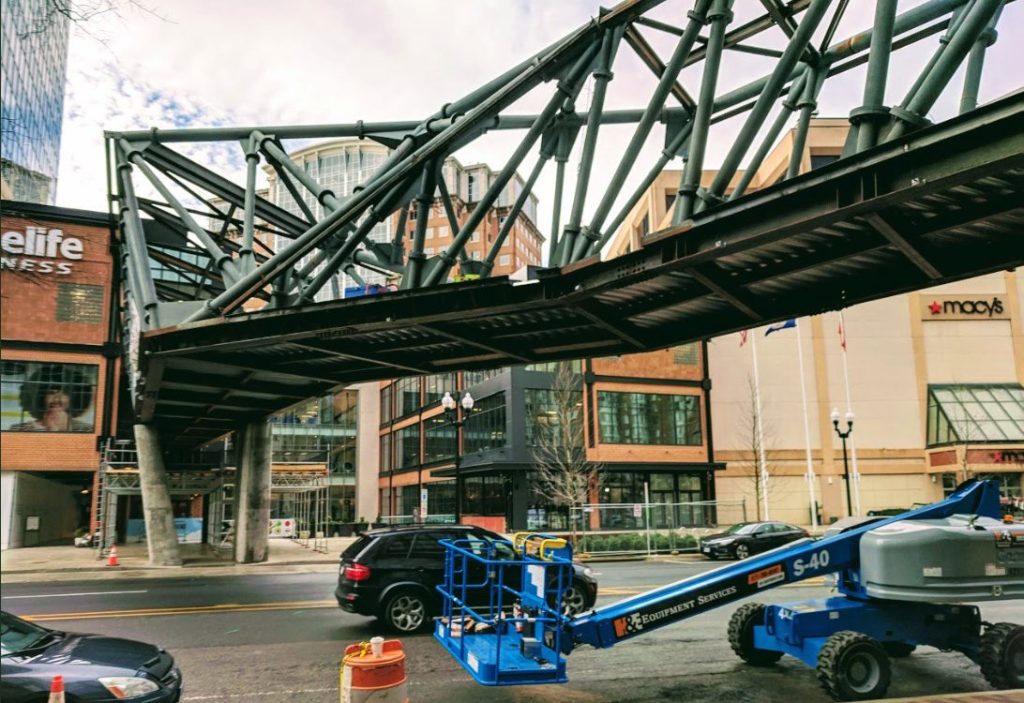
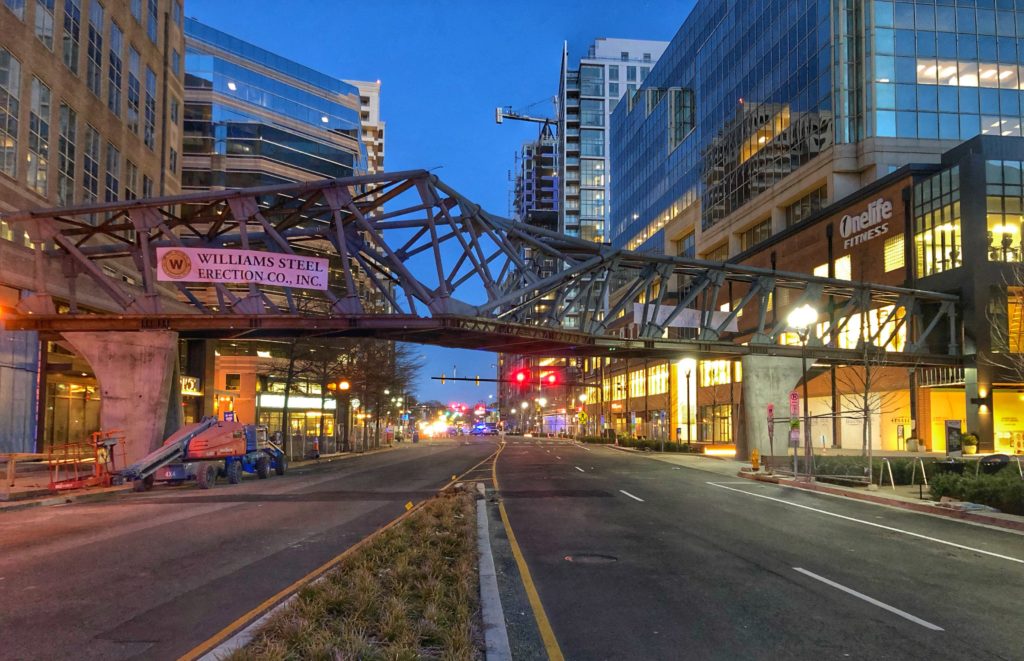
Construction work on the Ballston Quarter pedestrian bridge will prompt yet more road closures tonight (Friday), but the more extensive work set for weeknights is on hold for a bit.

For the second straight week, workers plan to close Wilson Blvd between N. Randolph and N. Stuart streets starting at 8 p.m tonight through Sunday at 6 p.m.

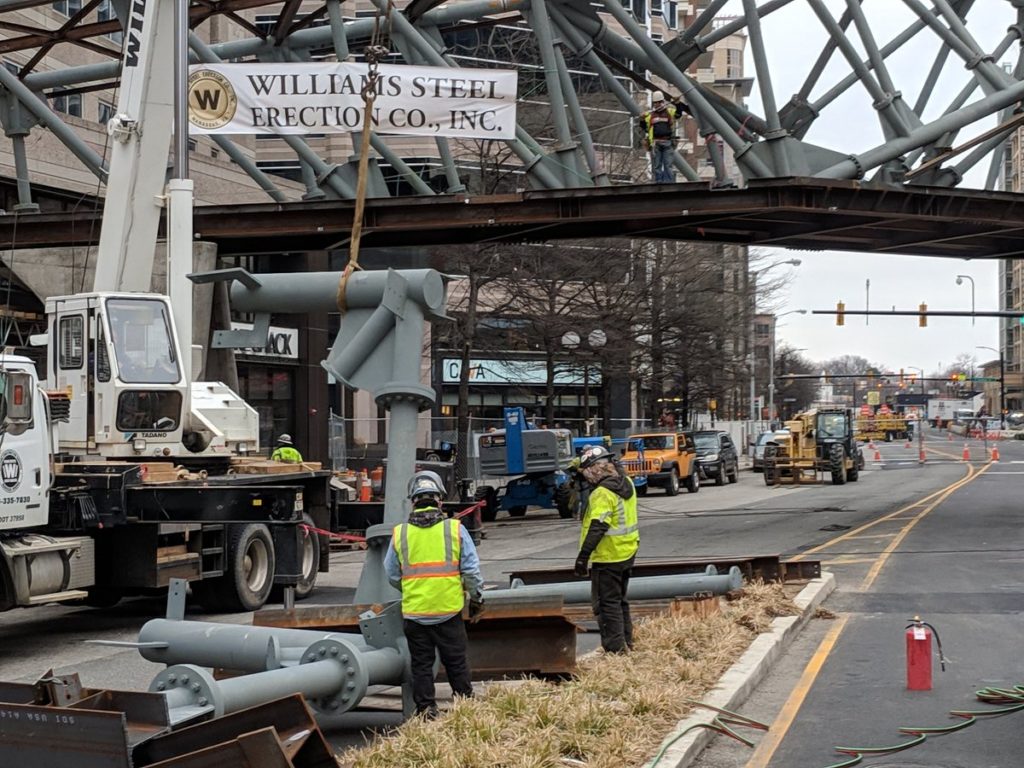
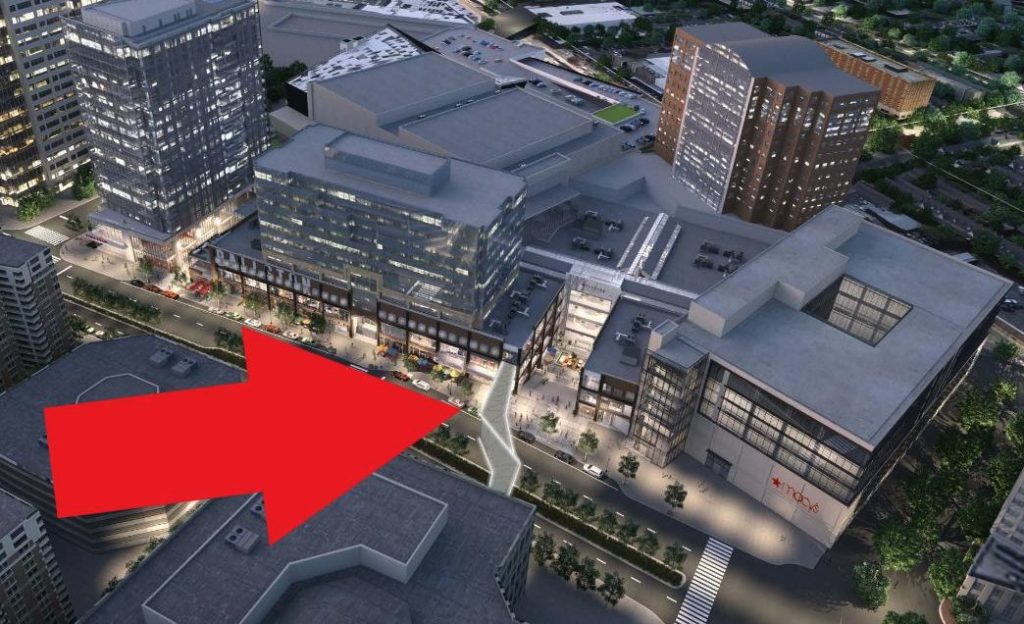
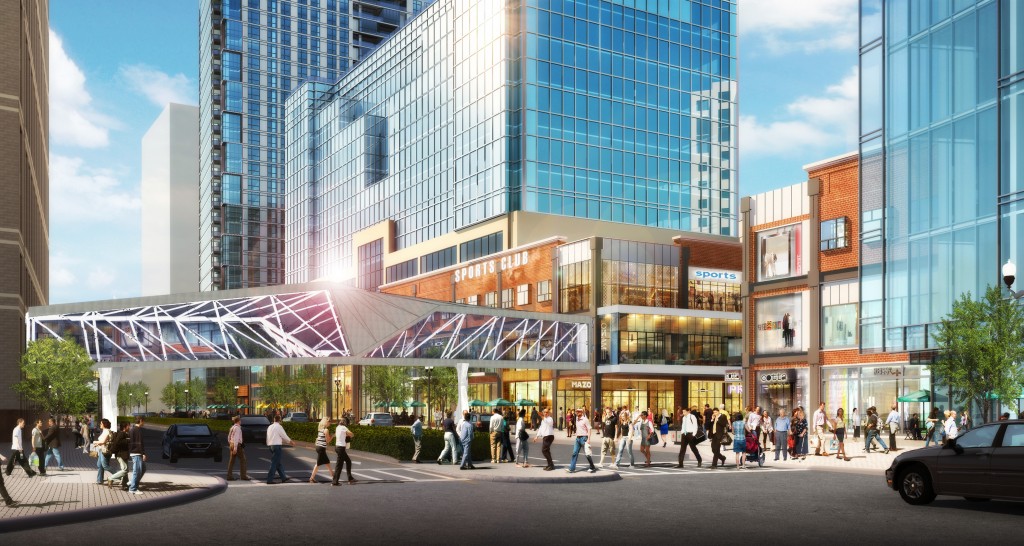
Workers lifted the bridge’s frame into place over Wilson last month, where it will eventually connect the newly revamped Ballston Quarter development with the neighborhood’s Metro station, running through the Ballston Exchange development at 4201 Wilson Blvd.

However, the four months of work set to snarl traffic in Ballston on weeknights is on hold, county officials announced this week. They’d originally planned to start closing the eastbound lanes of Wilson Blvd to allow for more glass installation on the bridge starting Monday night.

“Due to recent inclement weather, installation work on the pedestrian bridge was delayed,” Will Voegele, senior vice president for mixed-use development at Brookfield Properties (the company that bought Ballston Quarter developer Forest City) wrote in a statement.

“Barring any additional weather-related delays, construction will continue to move forward as scheduled,” he added.

The county says that weeknight closures will now begin on March 17. From 8 p.m. to 6 a.m. each night, the eastbound lanes of Wilson Blvd will be off-limits to drivers for the next eight weeks. Then, they’ll close the westbound lanes for another eight weeks.

This is far from the first delay for this project, or Ballston Quarter as a whole. Forest City had originally hoped to have the bridge open in time for stores to begin opening at the development this fall, before pushing back construction for months.

The developer has also missed its own targets for opening some stores to customers, and it’s currently unclear where things stand with its new food court. A few restaurants are now open in the new “Quarter Market,” but it’s unclear when the full, 14-restaurant food hall will be ready.

Photo 1 via @ArlingtonDES


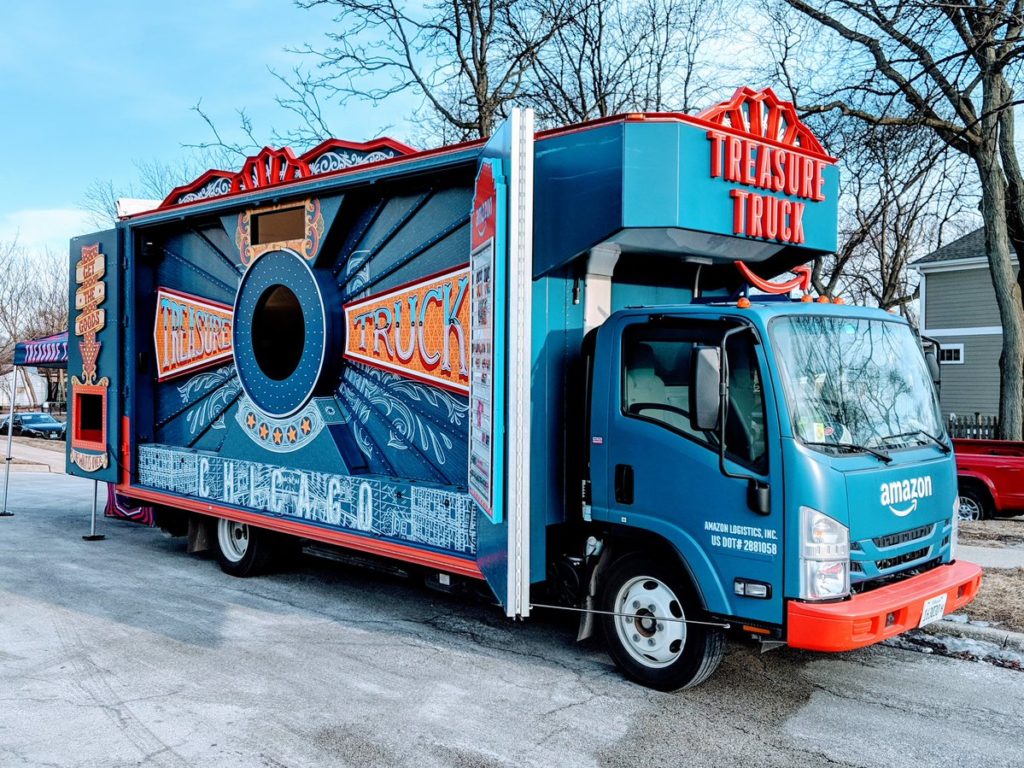
Amazon is sending a pop-up store into Crystal City today with the hopes Arlingtonians will stop by.

The store-on-wheels is dubbed the “Treasure Truck” and travels the country offering “new, trending, local, or delicious items” per a company spokesman. Today the truck will be parked at 2011 Crystal Drive until 1 p.m.

Amazon app users can sign up for notifications that alert them when the truck opens and whatever the truck is offering that day. Users can then purchase the items they want online and pick-up in person at the truck.

In the past, the truck has served up an array of items from brownies to gold Bohemian Rhapsody movie backpacks to lightbulbs, according to Twitter posts.

https://twitter.com/treasuretruck/status/1101505275276681218

The truck’s inventory was not available to this reporter online as of 10:45 a.m. this morning.

Amazon’s treasure truck heralds the company’s impending move to the area scheduled for 2021, when it will begin construction for its second headquarters in the Crystal City and Pentagon City area that some local officials have attempted to rebrand as “National Landing.”

The trillion-dollar company’s promise to occupy long vacant real estate and add 25,000 jobs comes in exchange for $23 million in county grant money, $750 million in state incentives, and a head’s up on any Freedom of Information Act Requests, according to documents released this week. It’s a deal that’s drawn criticism from unions and affordable housing advocates as ARLnow previously reported.

Arlington County has also been criticized for directly pitching tax incentives Amazon would be eligible to receive, but which few other businesses have taken advantage of, as ARLnow reported this week.

Photo via @Dr_Pete


You might’ve noticed a new byline popping up here at ARLnow this week, and that’s because we have some big changes on the way.

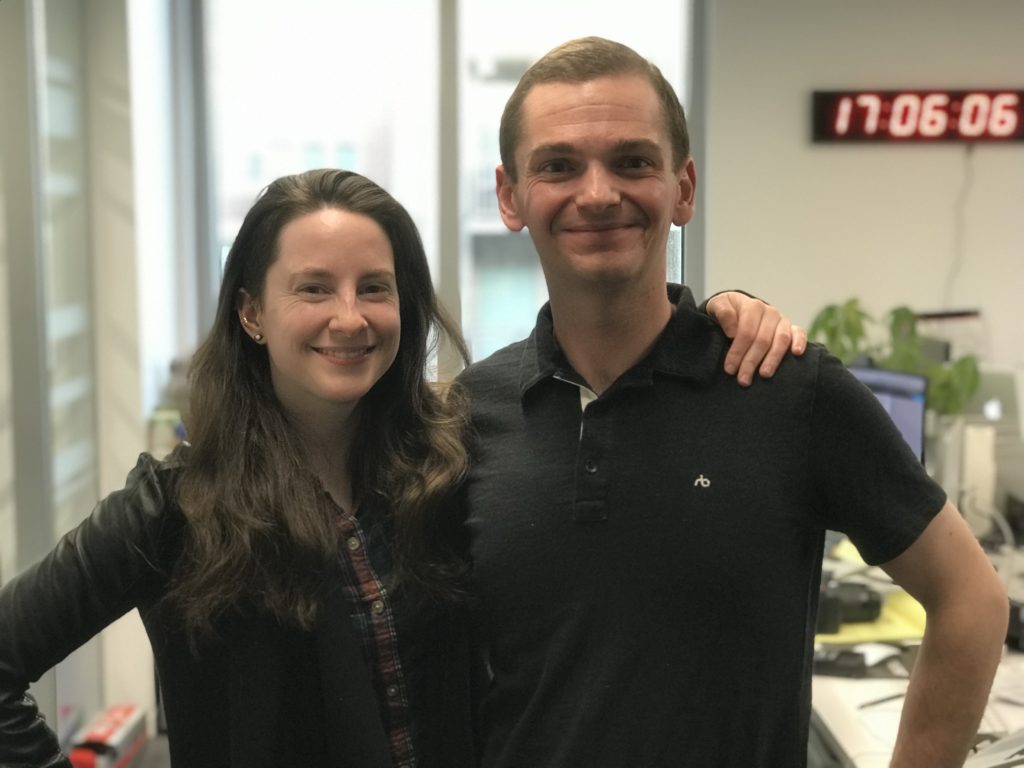
Give a hearty Arlington welcome to Julia Airey, who is stepping in as the site’s lead reporter and editor. After roughly a year with ARLnow, Alex Koma is moving on to become a staff reporter with the Washington Business Journal.

Airey, who normally goes by her last name, comes to ARLnow fresh off a stint as the metro reporter over at the Washington Times.

She got her degree at a college in the Netherlands in 2015, then proceeded to work a series of odd jobs out of school — she says those range from time working in a library to becoming a legal researcher.

Airey started her journalism career as a stringer for the Sentinel and Enterprise newspaper in Fitchburg, Massachusetts. She moved to the area to take a job as a staff writer covering technology for Technical.ly DC in 2016.

When she’s not busy chasing down stories, Airey says she enjoys woodworking and spending time with all dogs. She also serves as the co-captain of the Journalism and Women Symposium’s D.C. chapter and describes herself as “a big wonk.”

If you spot her out around the county, be sure to ask Airey about the time she was “shanghai’d into an antique sailing race.”

As for Koma, he won’t be leaving Arlington, and he says he’ll miss all of ARLnow’s staff tremendously.


Crash Closes Part of Parkway — A serious crash has closed the northbound lanes of the GW Parkway between the Daingerfield Island marina and I-395. A crash investigation is underway. [Twitter]

False Report Prompts Big Police Response — “At approximately 2:30 p.m. on March 6, police were dispatched to the report of a man brandishing a firearm in the lobby of” the Days Inn hotel on Arlington Blvd. “The investigation determined that no disturbance had occurred and that the reporting party allegedly had an ongoing dispute with the hotel over a refund. A warrant for Filing a False Police Report was obtained for the suspect.” [Arlington County]

Garage Races Cancelled This Weekend — Updated at 9:35 a.m. — Crystal City’s Crosshairs Garage Races series will continue to bring fearless cyclists and spectators together for races through one of the neighborhood’s sprawling parking garages later this month. This year the series is being held on Saturdays in March, but this weekend’s scheduled races have been canceled due to a water main break. [Crystal City, Twitter]

Local Road Project ‘On the Bubble’ — “With tolls set to begin on Interstate 395 in October and already underway for more than a year on Interstate 66 inside the Capital Beltway, the Northern Virginia Transportation Commission is set Thursday to consider the next steps of how to spend part of the money… Arlington County plans for a High Occupancy Vehicle and bus-only lane on Lee Highway in Rosslyn would be on the bubble.” [WTOP]

Remember to ‘Spring Forward’ This Weekend — “On Sunday, March 10, at 2 am, daylight saving time begins. We’ll set our clocks forward one hour, and the change will push sunsets later into the evening hours and sunrises later into the morning hours.” [Vox]


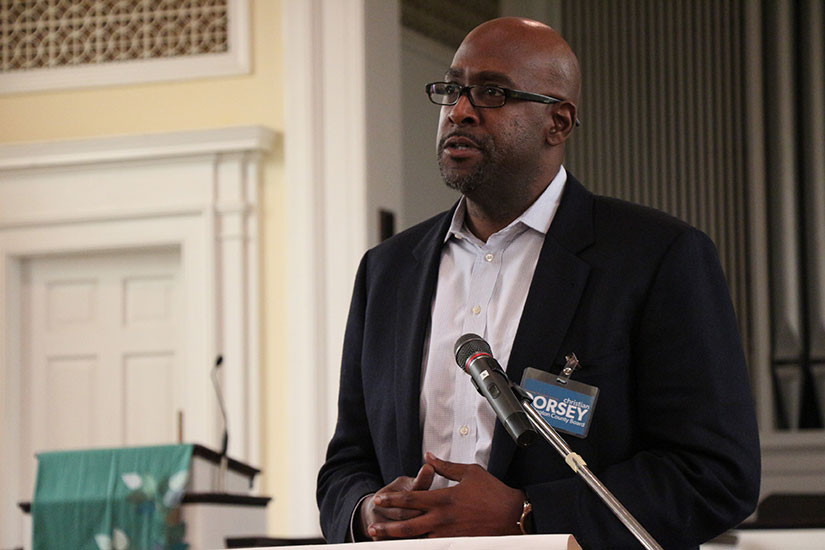
County Board Chair Christian Dorsey is making a run for re-election, joining fellow Board member Katie Cristol in a bid for another four years in office.

Dorsey formally announced his bid at the Arlington County Democratic Committee’s monthly meeting last night (Wednesday), according to the group’s website. The county’s elections office also now lists Dorsey as a candidate for the Board, which has two seats on the ballot this fall.

Dorsey did not immediately respond to a call seeking comment, but he’s telegraphed a run for another term for several weeks now. He held a Super Bowl-themed fundraiser in early February, but held off on formally announcing until now. Cristol, who won office in 2015 alongside Dorsey, announced her re-election bid last month.

The pair won spots on the Board four years ago as relative political newcomers, triumphing in a crowded, six-way caucus to earn the Democratic nomination and then decisively winning in the general. Dorsey had run for county office before, but his background is mainly in work at D.C. think tanks.

Since joining the Board, Dorsey has taken a leading role on transit and housing issues, most notably serving on Metro’s Board of Directors. He rotated in for a one-year stint as chair back in January.

Dorsey and Cristol have since helped steer the Board through several tough budget years, as persistently high office vacancy rates have strained county coffers, and also been tasked with navigating the complexities of bringing Amazon to Arlington, and the resulting debate over the deal.

As of yet, however, no other Democrats have stepped forward to challenge the pair in a June 11 primary. Democratic Committee Chair Jill Caiazzo said that other candidates have until March 28 to file for the race, otherwise the party will call off the primary.

“I have not heard of anyone else seeking the Democratic nomination at this point, but there is still time,” she told ARLnow via email.

However, independent (and perennial candidate) Audrey Clement has already announced plans to run for the Board in the general election.

There’s broad speculation as well that recently ousted independent John Vihstadt could mount a comeback bid, after losing to Democrat Matt de Ferranti this fall.

In an off-off-year election, where only local offices and statehouse races will be on the ballot, Cristol and Dorsey could well face a taller task in fending off Vihstadt. De Ferranti was buoyed, in part, by a surge of Democratic voters, eager to send a message to national Republicans in the 2018 midterms.

State Sen. Barbara Favola (D-31st District) and Dels. Alfonso Lopez (D-49th District), Rip Sullivan (D-48th District) and Mark Levine (D-45th District) also formally announced their re-election bids at last night’s meeting.

Favola and Lopez have drawn primary challengers so far; Sullivan and Levine are currently unopposed.

File photo


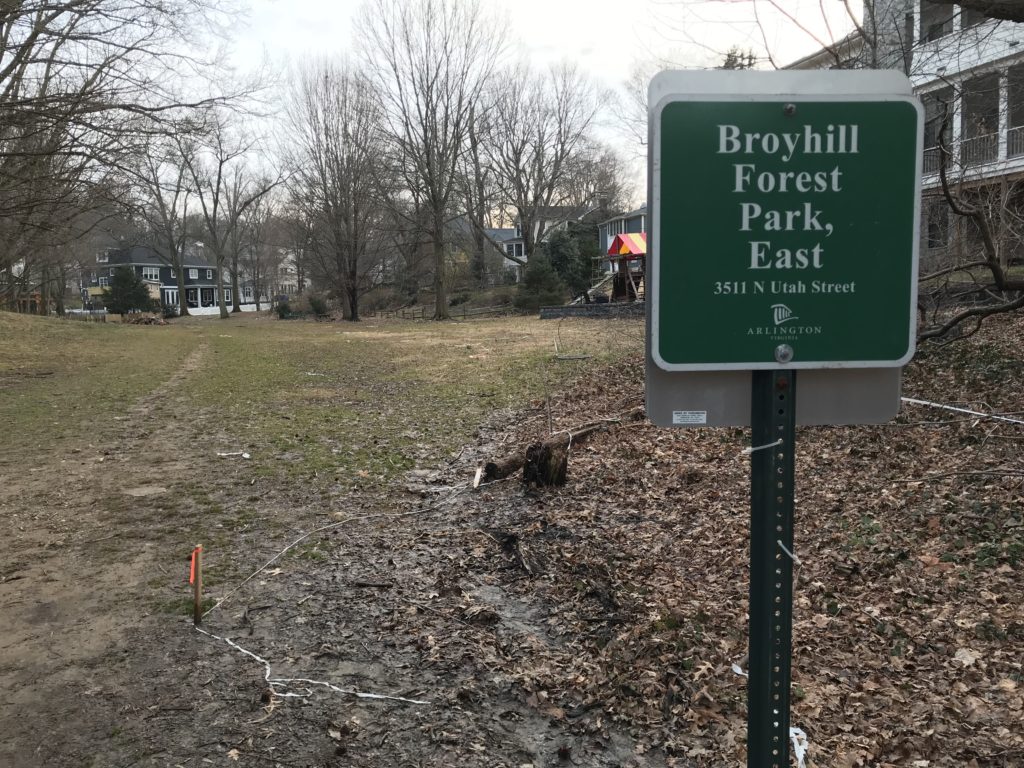
Arlington’s lengthy, detailed public space planning documents might seem dry and technical at first glance, but an impending update to those plans has sparked a bitter fight in the county.

Though the sparring centers largely around reams of statistics and data, the debate cuts to the heart of a key question for leaders in the 26-square-mile county: how should Arlington divvy up its limited amount of public land?

The newly revised “Public Spaces Master Plan” is designed to provide lots of answers to that question for Arlington officials. Last updated in 2005, the document sketches out the county’s goals for building and maintaining its parks, fields, trails and other open spaces.

Since 2015, community leaders have been working to update the document in a process commonly known as “POPS,” or “A Plan for Our Places and Spaces.” A county advisory committee has been sharpening the document’s specifics for months, and the County Board now looks ready to schedule public hearings and a vote on the plan’s update this weekend.

But critics charge that the plan is fatally flawed, and some have spent more than a year working to build opposition to one of its key elements. Chiefly, they’re concerned that the new document calls for the county to set aside more space for athletic fields than it actually needs, which could gobble up room for other important facilities (namely, schools and parks).

Opponents of the plan also argue that county staff have been deceptive in providing data to guide this process, undermining many of the master plan’s conclusions.

Others close to the process, especially those representing parks or sports groups, feel those concerns are misguided, and insist that the new plan will provide an adequate roadmap for meeting the growing demand for field space in Arlington. But, with the issue coming to a head in the coming weeks, the plan’s critics are hopeful that the Board will take their concerns seriously and act accordingly.

“The county is going to use this document to make decisions for the next 20 years,” said Peter Rousselot, a leader with the “Parks for Everyone” advocacy group and a regular ARLnow columnist. “But through it all, we’ve had the sense that [county staff] weren’t an honest broker on this. And that matters, when this stuff might someday be taken as gospel, and staff might point to it and say ‘the County Board voted 5-0 to approve this.'”

Both critics and supporters of the plan acknowledge that the latest draft of the document has gone through sufficient changes since it was released last fall to be a lot more appealing to all involved. Yet emotions around the issue are, undoubtedly, still running high.

“There have been lots of accusations against county staff, and we’ve met with [the plan’s critics] several times,” said Caroline Haynes, a co-chair of the POPS advisory group and the chair of the county’s Parks and Recreation Commission. “But some people we’re just never going to please. We’re just not.”

How many more fields does Arlington need?

Rousselot, who has long been active in county politics, says he became interested in the issue as other local activists began to bring it to his attention. Kari Klaus was a key driver of those early efforts, based on her previous work examining the county’s plans for parks in Aurora Highlands, and the pair worked with some other concerned community members to found Parks for Everyone.

Chiefly, Klaus and Rousselot became concerned about the plan because of one, highly technical, piece of data contained within the document: something called “population-based level of service” analysis.

In essence, the calculation involves county staff looking at Arlington’s population data, national averages and other “peer localities” to see how many parks and fields Arlington needs to serve its residents. In this case, staff judged Arlington’s peers to be other suburbs of major cities including: Alexandria; Bellevue, Washington; Berkeley, California; and St. Paul, Minnesota.

Using that data, staff came up with ratios designed to guide how many facilities the county needs to add going forward.

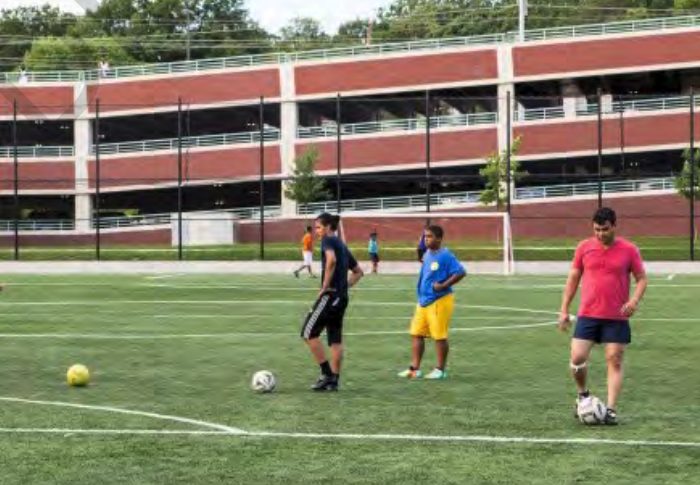
For instance, Arlington currently has 53 rectangular, athletic fields — the plan’s estimates suggest the county should be striving to have closer to 61 instead. Similarly, the document shows that Arlington has 43 “diamond” baseball fields, while 54 might be a better number to serve its current population. And both of those projections will only grow as the county swells with new residents over time.

Those estimates disturbed and frustrated Rousselot and Klaus. They say they couldn’t understand how the county landed on those figures, instead of relying on current data showing how often people use the county’s existing fields.

Several people interested in the matter filed a series of public records requests to get more county data, and became increasingly frustrated that staff would only release limited information about their process for calculating those numbers.

But, from what they did find, Rousselot and his fellow critics became convinced that the county’s Department of Parks and Recreation wasn’t following the industry’s best practices for coming up with “level of service” calculations. They argue that the number of people actively seeking to use county fields would provide a much better baseline to work off of than simply the number of people living in the county in total.

“DPR had lots of data on supply and demand, but staff didn’t use it to inform themselves about what this population-based LOS number ought to be,” Rousselot said. “And it was so hard to even get them to acknowledge they had this data.”

In response to the group’s extensive criticisms, County Manager Mark Schwartz released a lengthy statement defending staff’s methods. Chiefly, he argued that “population is an easily understood way to project needs and is used regularly by the county and [the school system] to anticipate future capacity.”

Haynes echoed that point, stressing that all of the advisory committee’s work suggested that the population-based calculations were the “most straightforward method” possible for staff to use. Otherwise, she says the county would have to rely on a cascading series of assumptions about how much field use would increase (or decrease) over time, which might prove increasingly inaccurate as time goes by.

Rousselot, however, argues that such a standard for calculating field needs is “deceptively simple,” and doesn’t allow much room for nuance as decisions get made in the future.

“There is something quite appealing at first blush about how simple it is,” Rousselot said. “But the way history tells us DPR operates is that these numbers become much more gospel like than they deserve.”

Is demand real, or deceptive?

But Haynes vigorously defended county staff’s management of the process, and their willingness to re-examine their own methods. She said the advisory committee has broadly been “very pleased” with the county throughout the process, which she finds slightly “incredible” given that they’ve been working together for the better part of four years now.

And she believes that the open space plan’s critics miss an obvious point about the county’s current conditions — field space is already at a premium for sports teams and casual users alike.

“Arlington is growing and we need more of everything,” Haynes said. “Sometimes we have four to six teams playing on any given field.”

But Rousselot and the plan’s critics charge that field demand can be deceptive — he sees the county’s management of its fields as the root cause of any problems. Many field reservations are managed by volunteers, not county staff, which he feels has led to plenty of inefficiencies. Other fields are unusable because they haven’t been maintained well, which Rousselot chalks up to the county’s shrinking maintenance budget.

“It’s left a lot of sports teams angry and under the impression that they can’t get fields,” Rousselot said. “But the process of scheduling and maintenance has been, to put it diplomatically, a mess.”

Haynes argues it would not be “an efficient use of county resources” to task staff with managing fields, and says the county has done some work with its Sports Commission to encourage better communication with sports leagues to determine who needs certain fields and when.

And Schwartz pointed out in his statement that the county is currently reviewing its processes on both those fronts.

“We do not have it figured out yet — but we are doing better maintenance, better scheduling, and creating more opportunities for the fields to be available for casual use when not scheduled,” Schwartz wrote.

What happens next?

Fundamentally, Haynes believes that the county has been responsive to all of the concerns Rousselot and others have raised.

And she doesn’t want the concerns of a few critics derail the passage of a plan that’s been years in the making, particularly when many others support it. A petition backed by the Arlington Sports Foundation supporting the plan now has nearly 1,300 signatories.

“What we’ve heard is a very small group of people who have been very vocal about it,” Haynes said. “There is so much good stuff in here, but we’ve really gotten sidetracked on just a few issues.”

But Rousselot and his allies believe they’ve convinced enough people around the county of their point of view that they are more than just lone voices in the wilderness.

Most notably, the Arlington Civic Federation, one of the county’s oldest and most revered civic organizations, threw its support behind their efforts. Rousselot and other critics presented their case at one of the group’s meetings, and after some follow-up study of the plan, the federation’s members voted 66-17-3 to issue a resolution broadly echoing Rousselot’s critiques of the plan.

Specifically, the group urged the county to strip those level of service recommendations from the plan, arguing that “available data appears to demonstrate that the LOS for athletic fields has been significantly overstated.”

“The fact that they have come out so overwhelmingly in favor of this makes it pretty hard for people trying to argue that it’s four or five malcontents raising these issues,” Rousselot said.

Rousselot credited the group’s intervention for spurring some changes to the plan, and even Haynes would agree that staff and her committee has been able to make some tweaks to the document in recent weeks.

Specifically, she said they’ve sought to stress that “this is a high level planning document, it’s not proscriptive,” particularly when it comes to how closely the county should follow its recommendations about how many fields it needs to build. As Rousselot puts it, the revised plan “softens the Moses tablet-like” quality of those recommendations, making it a bit less likely that officials hew quite so closely to those numbers in the future.

Still, the document’s critics would rather see the population-based level of service recommendations removed entirely before the plan is passed, but that looks increasingly unlikely.

Then-County Board Chair Katie Cristol wrote an October letter to Klaus and Rousselot saying that four of the Board’s five members supported leaving that section of the plan in place. She said Board members felt the metric was “the more appropriate one for our community, where different stakeholders have widely divergent assumptions about future [field] utilization.”

The lone Board member to support revisions to that part of the plan was John Vihstadt, Cristol wrote, but the independent lost his seat to Democrat Matt de Ferranti last fall.

Accordingly, it would seem the current plan has enough support to pass in its current form sometime this spring. The Planning Commission voted last night (Wednesday) to recommend that the County Board advertise public hearings on the plan at its meeting Saturday — that would set the stage for a final vote on the plan in April.

With the process nearing its conclusion, Rousselot is encouraged that Parks for Everyone achieved some of its goals. But he’s still holding out hope that leaders will just go a few steps further in tweaking the plan’s prescriptions.

“Assuming the Board adopts at least some of the changes we recommended, then we’ll be better off than we would’ve been if we hadn’t raised the issue,” Rousselot said. “How much better off will depend on what happens next.”

Photo via Arlington County


View More Stories