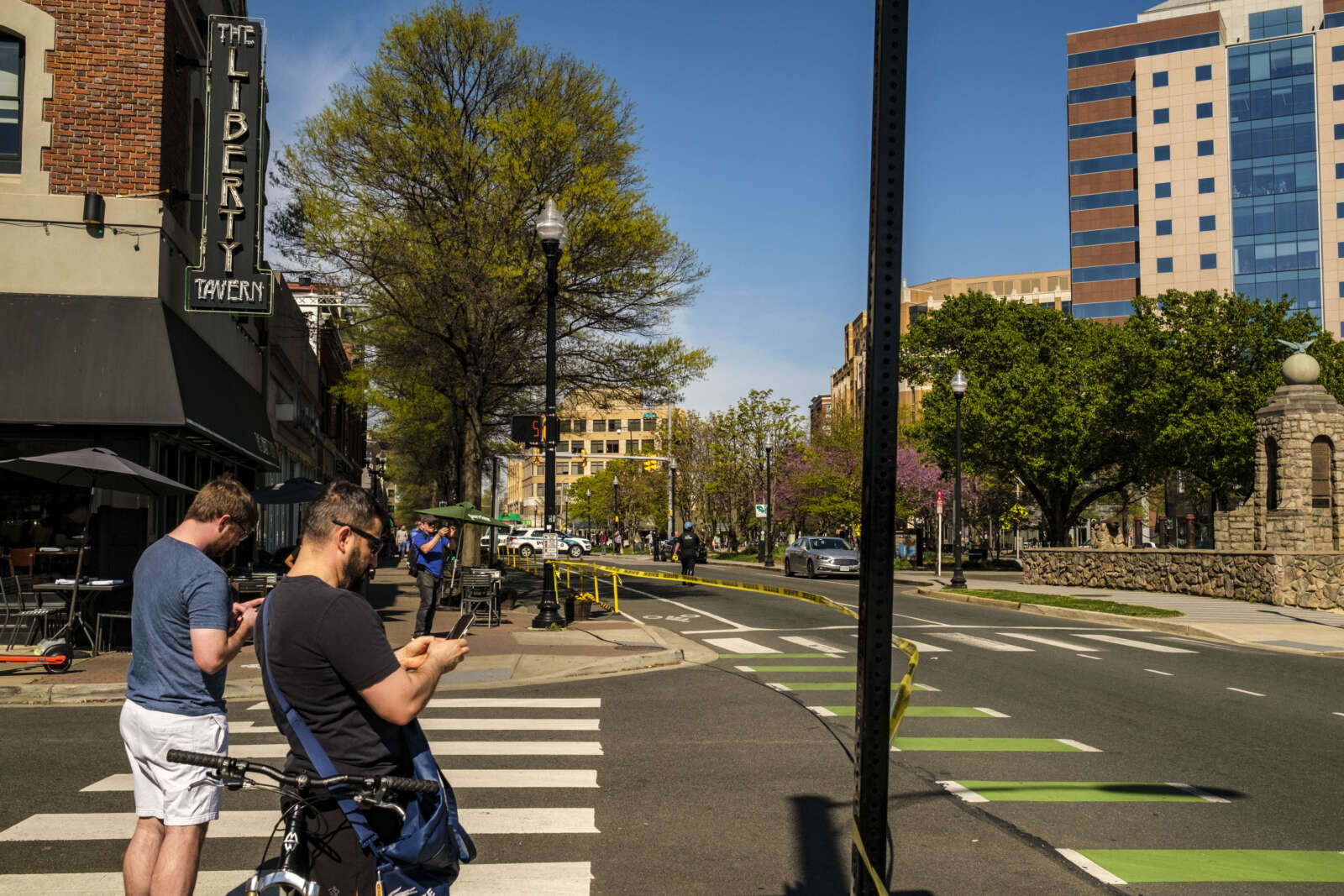
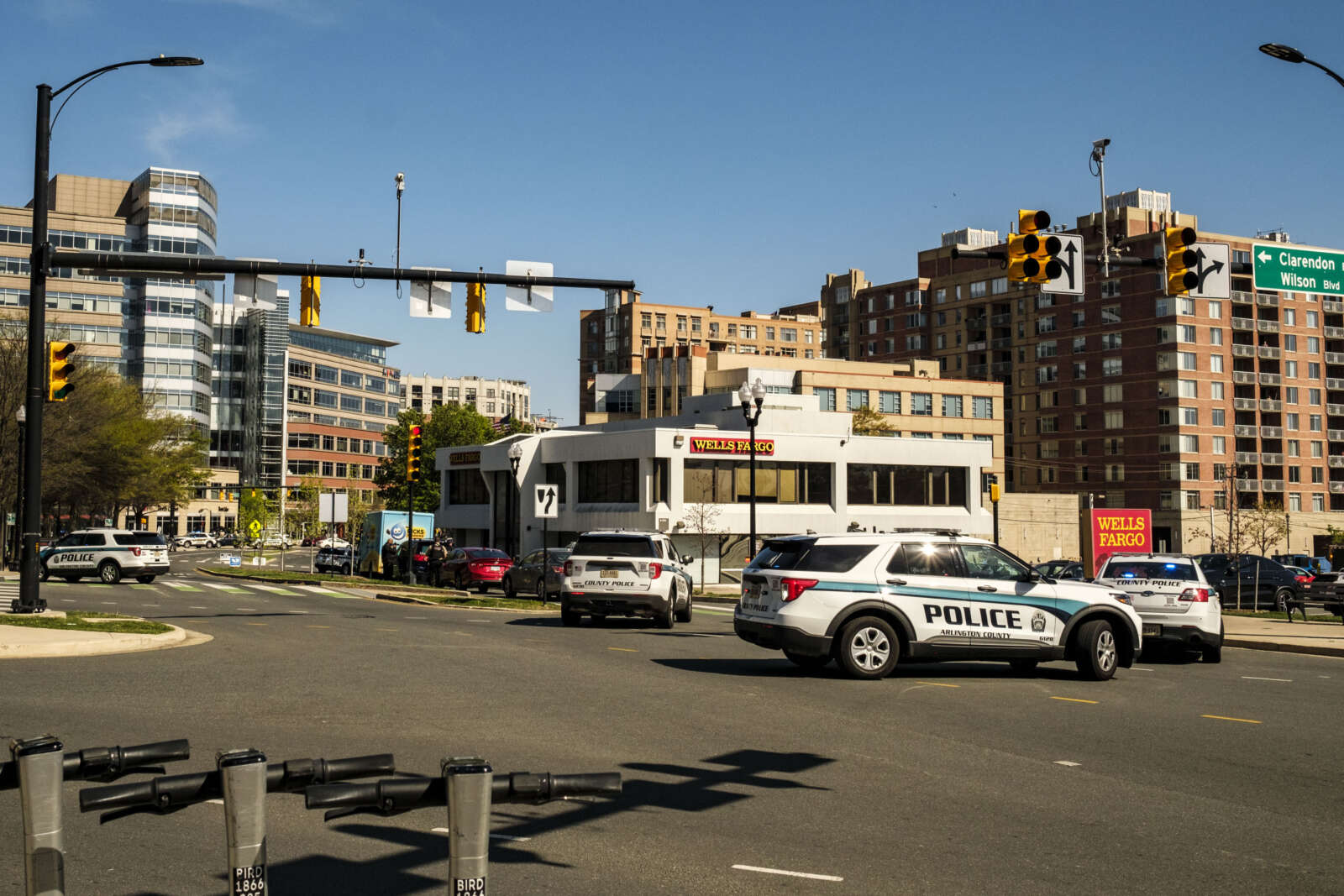
(Updated at 9:20 p.m.) Roads have reopened around a bank in Clarendon after a reported robbery and possible hostage situation.
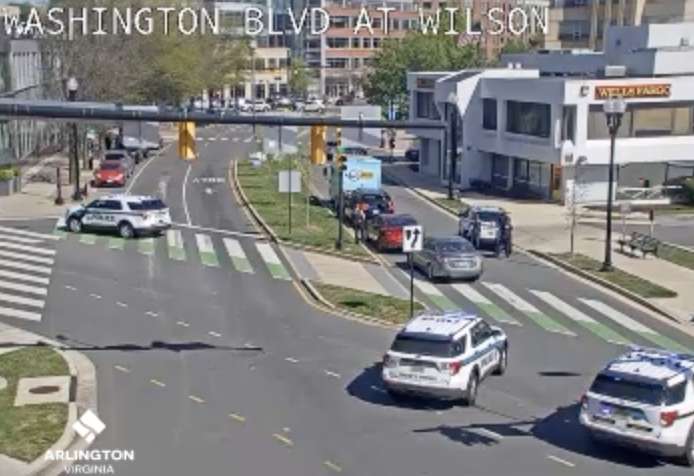
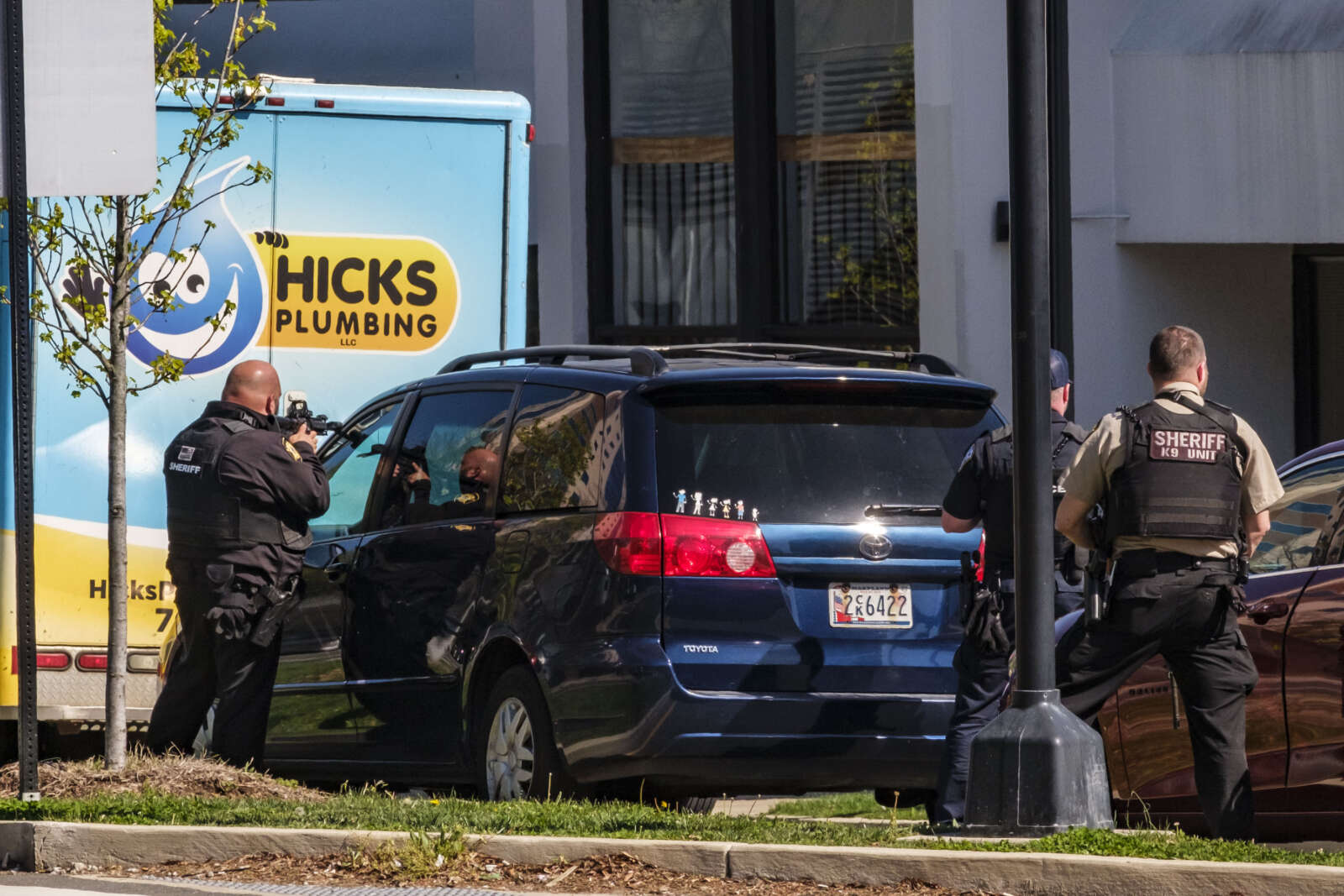
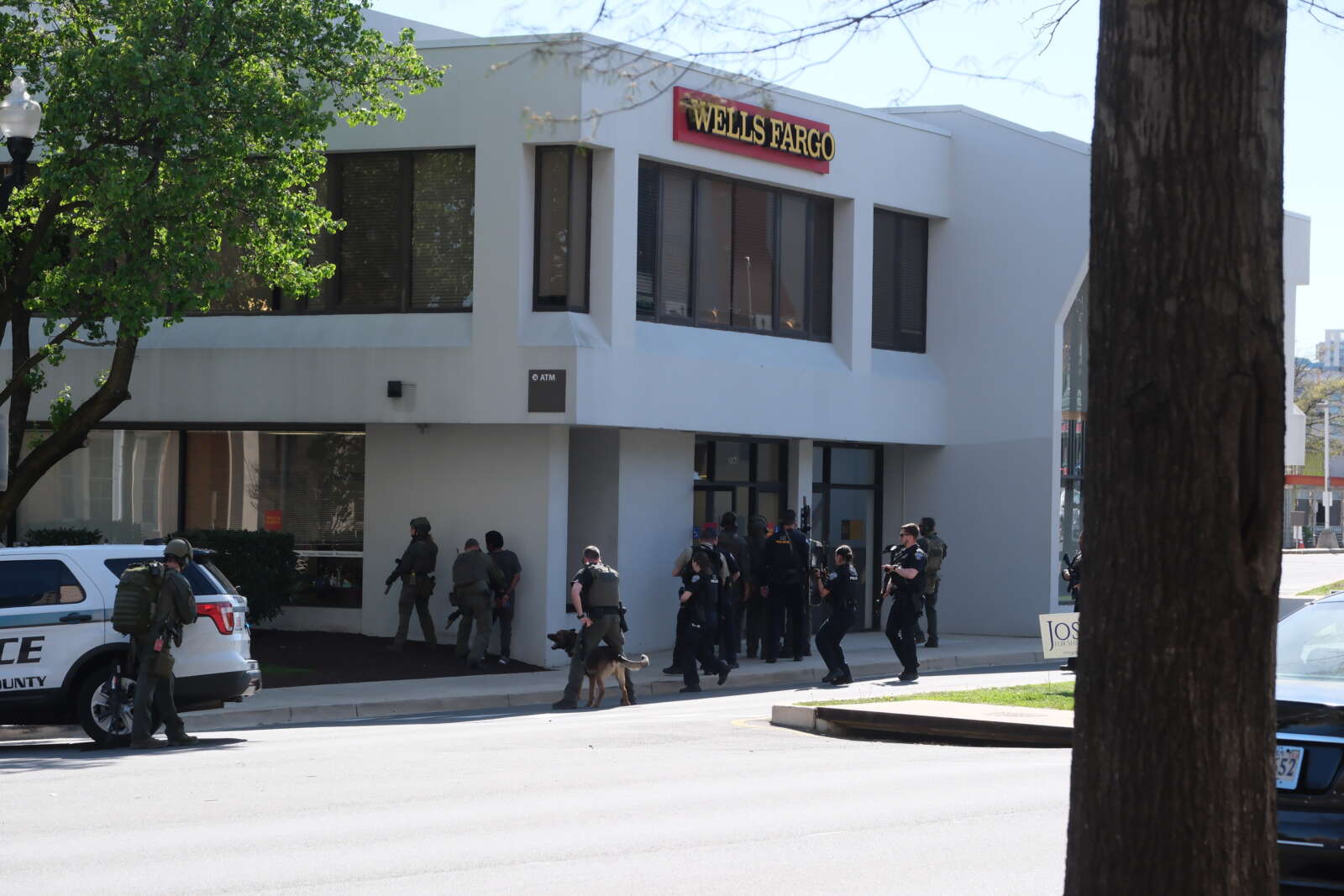
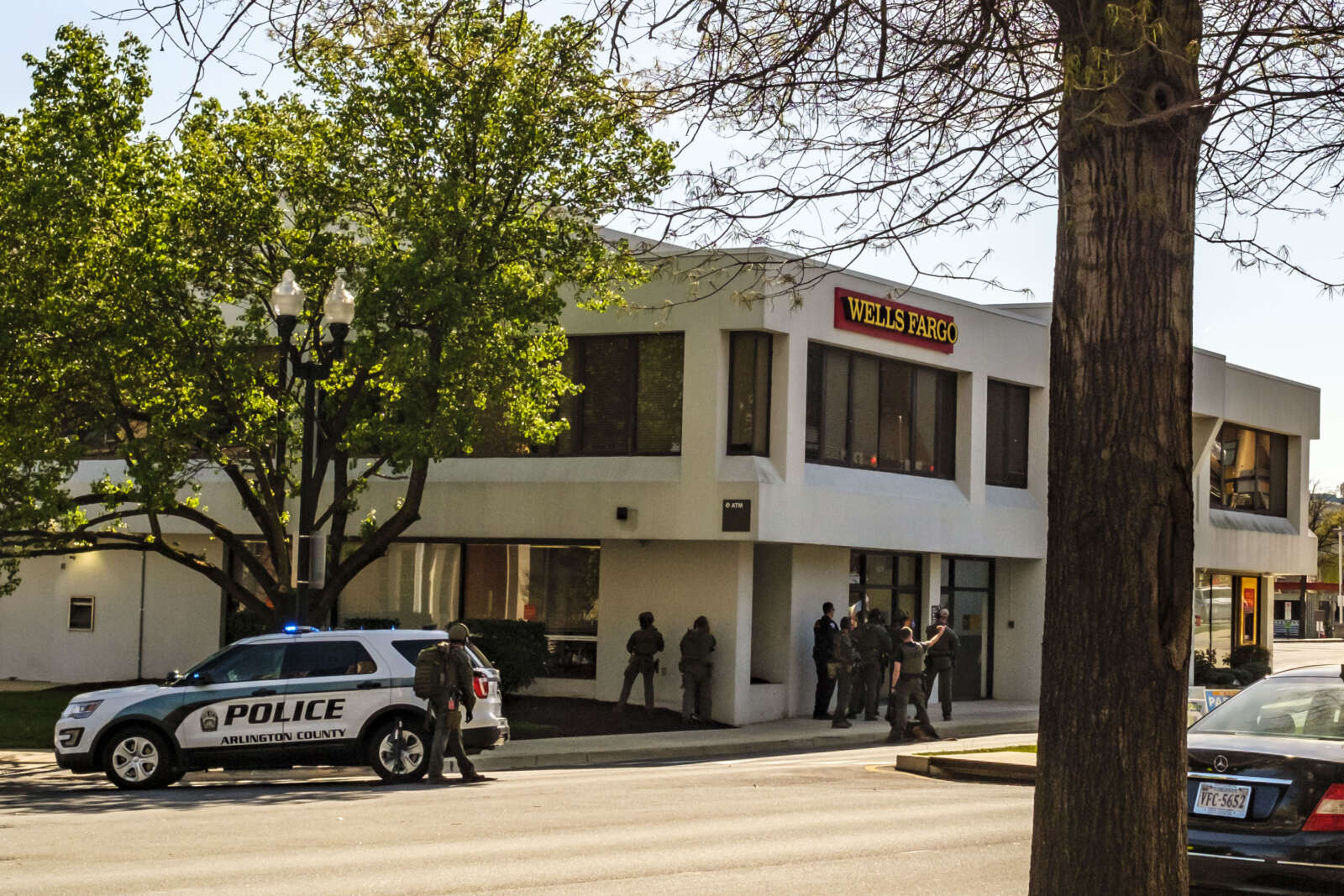
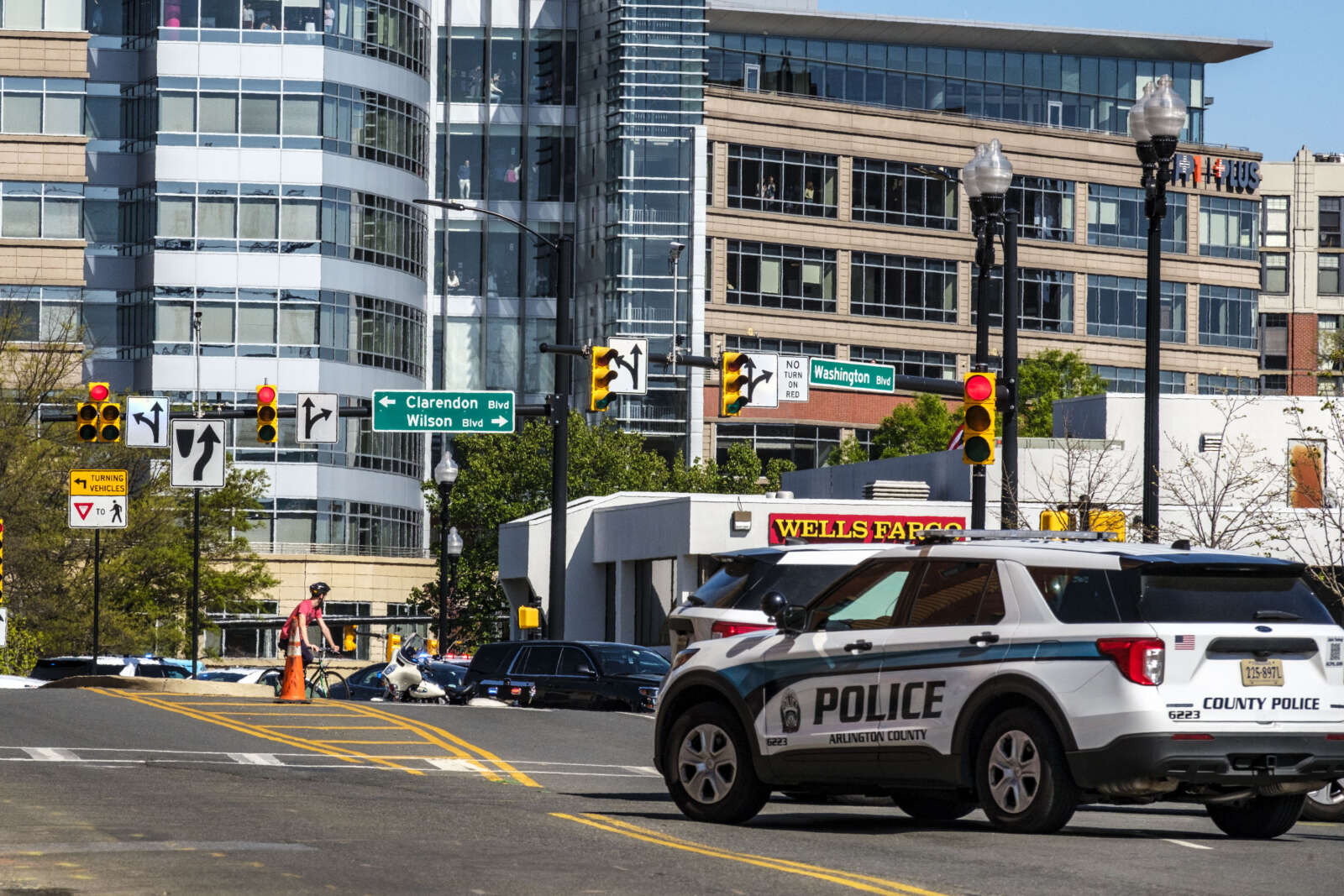
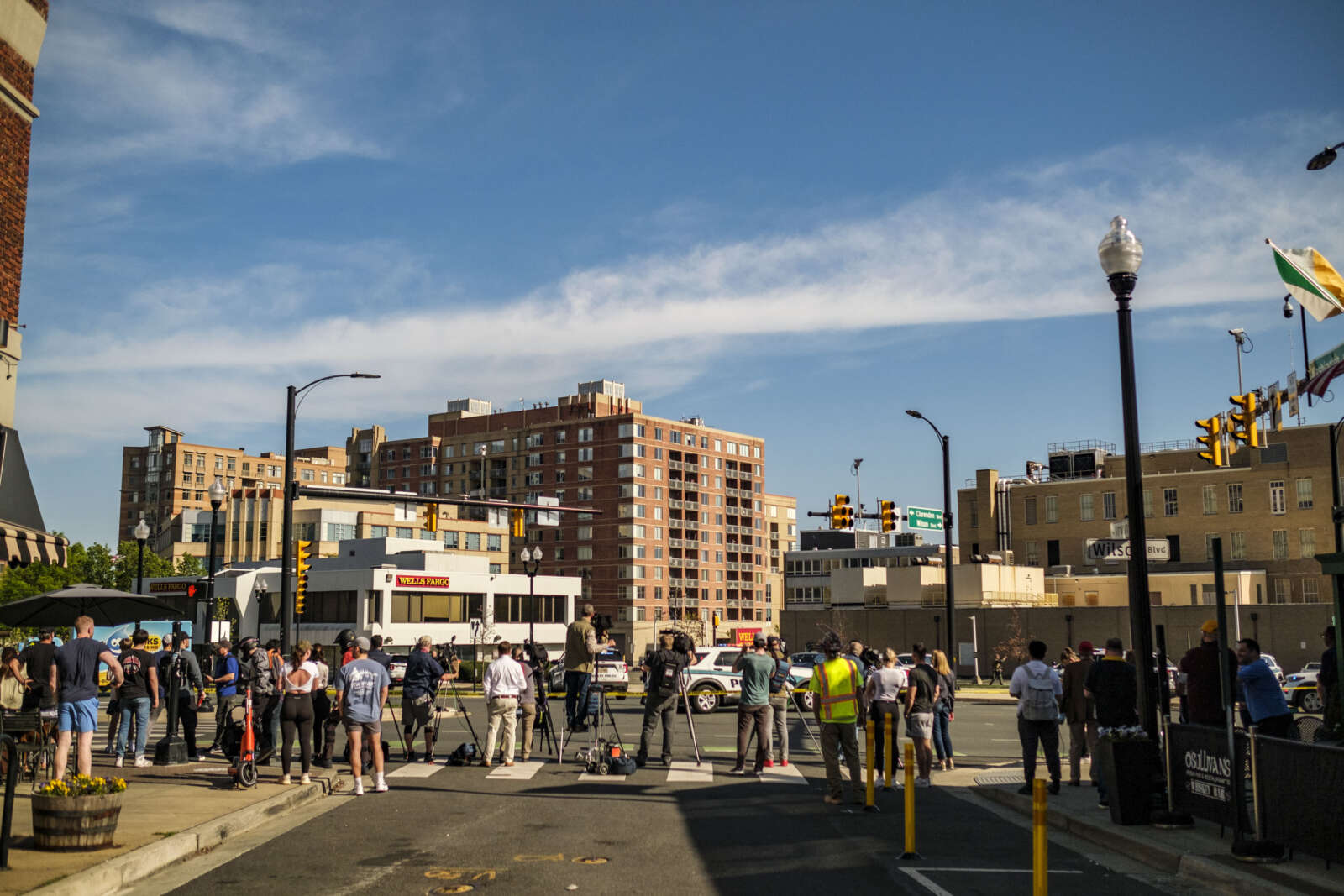
The Wells Fargo at 3140 Washington Blvd was robbed shortly after 3 p.m. and the suspect — reported to be a man in his 20s — was still in the bank when officers arrived. Police surrounded the bank and shut down traffic in the area.
Five employees and customers, including a small child, were held in the bank with the suspect during the hour-long incident, according to an update from police.
The suspect implied that he had a weapon, according to police, but it’s unclear whether he was actually armed. A negotiator and SWAT team members responded to the scene, while firefighters and medics staged nearby.
Witness video published by WUSA 9 showed people lying face down on the bank floor during the incident.
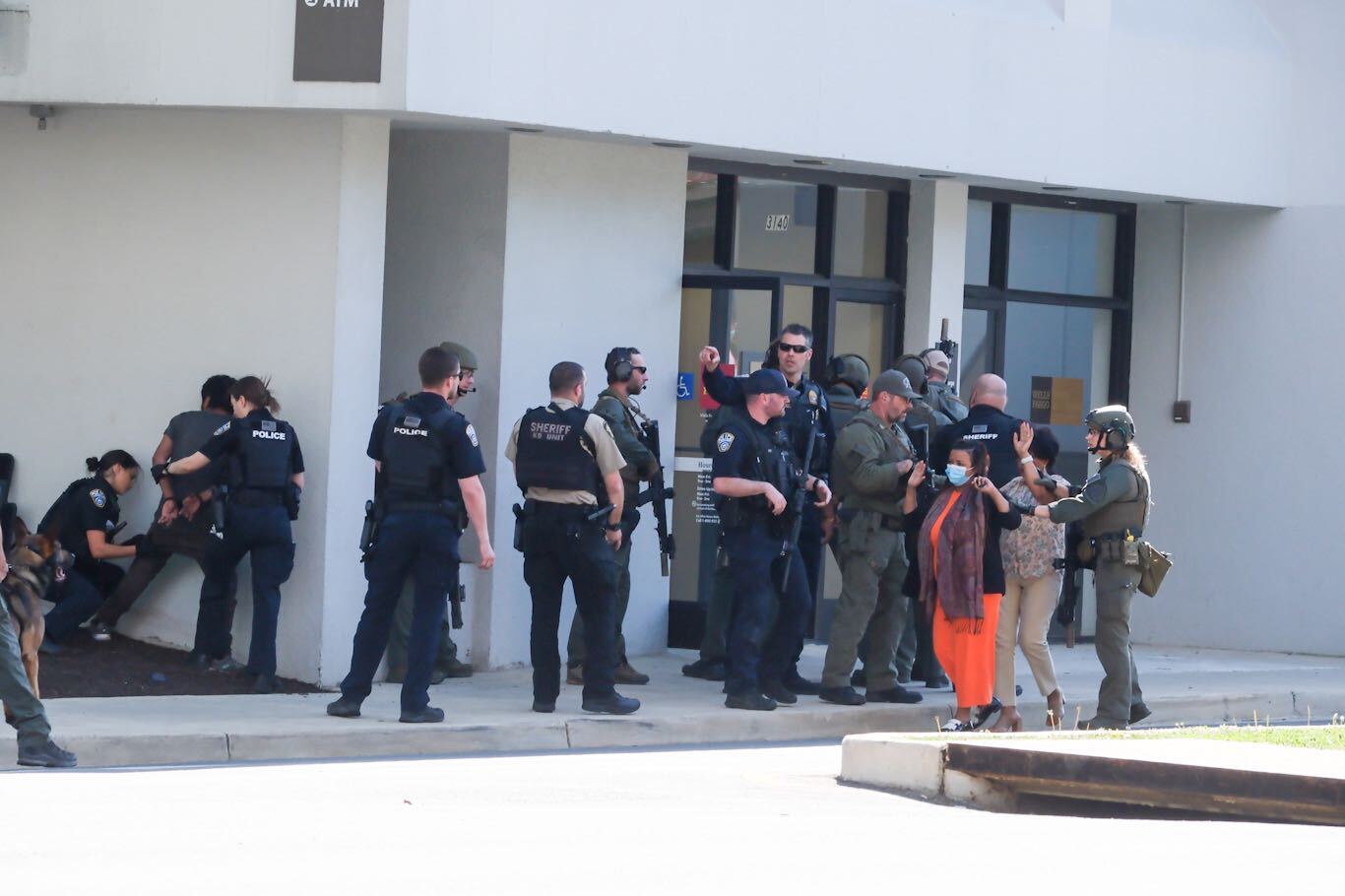
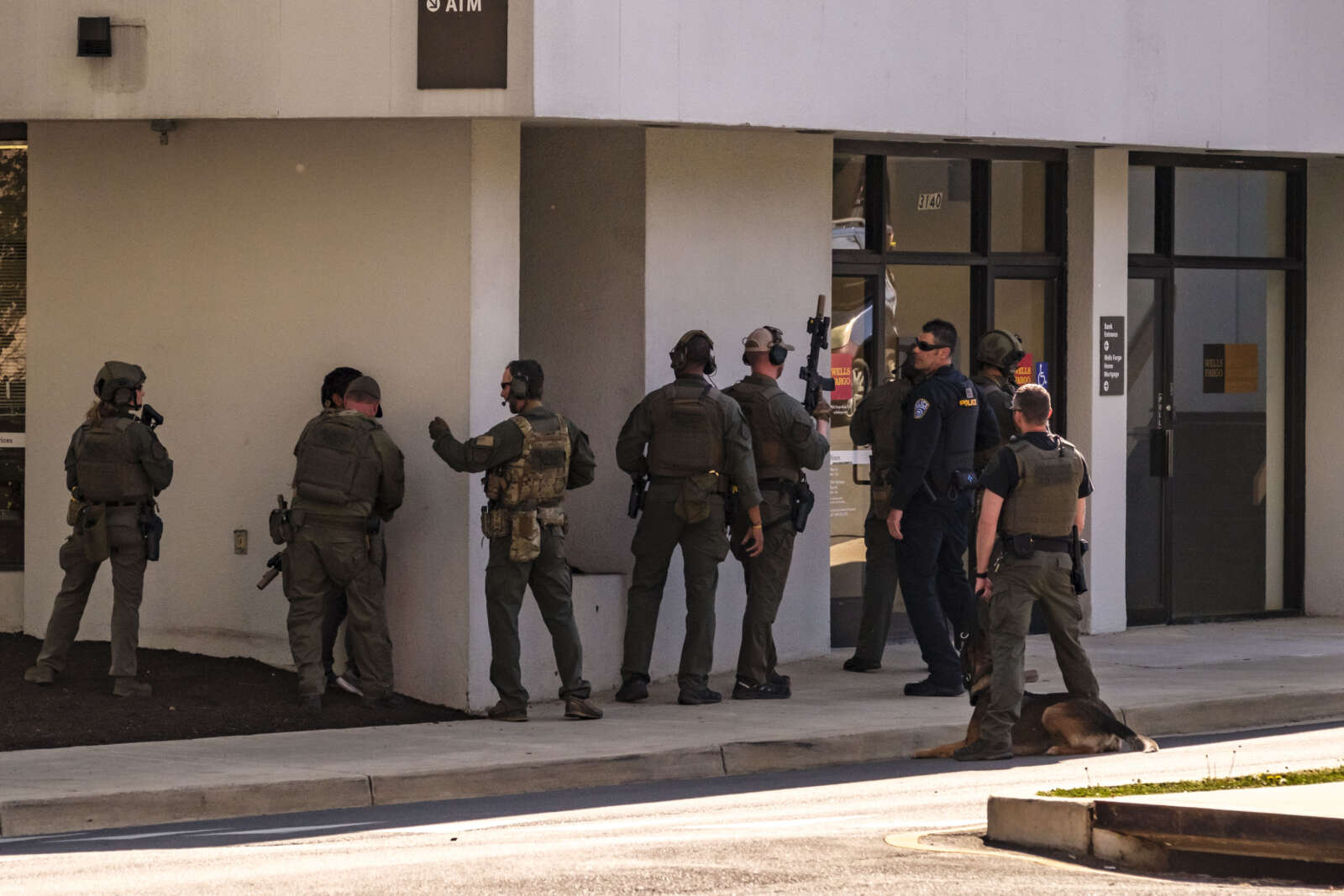
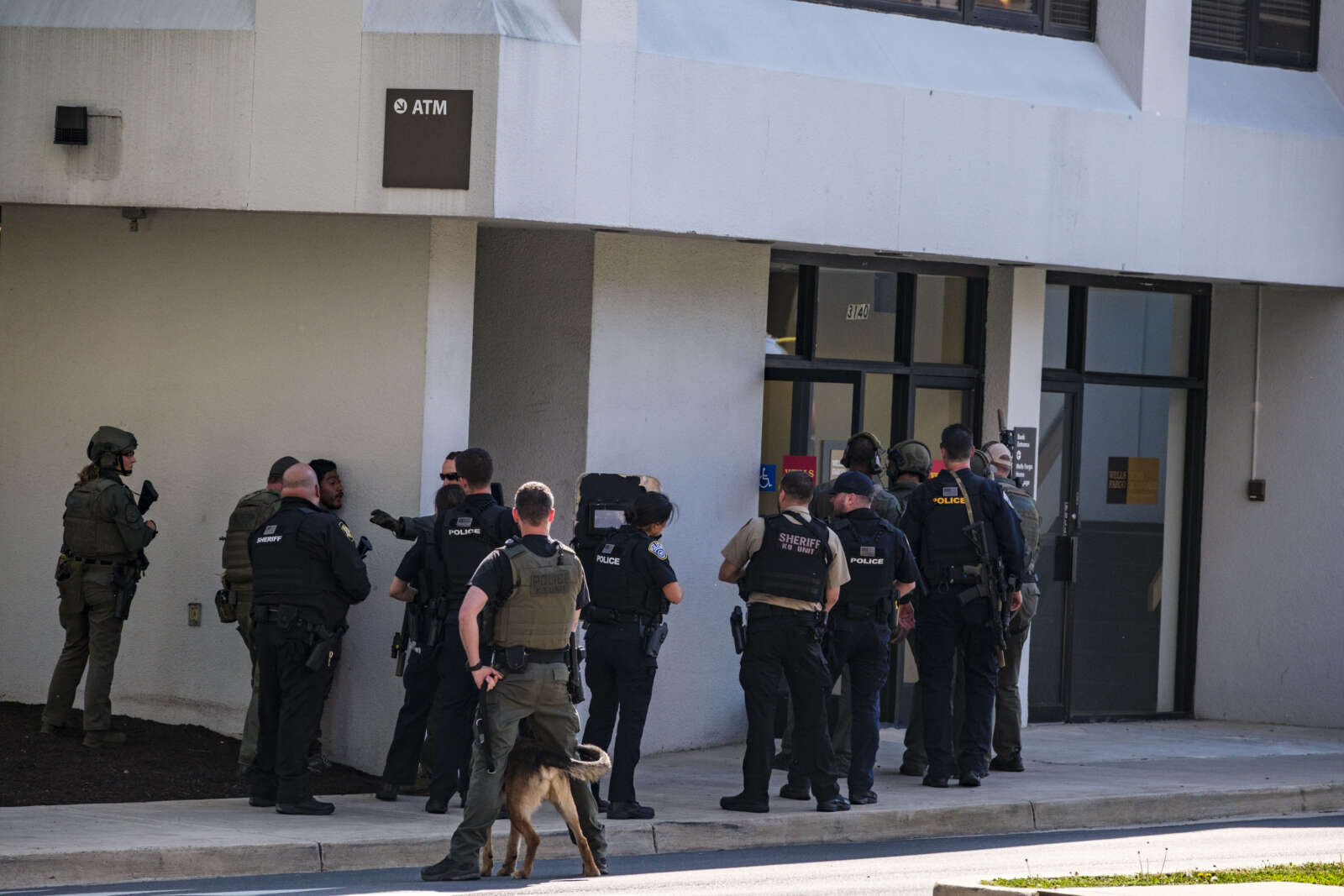
Shortly after 4 p.m., a group of heavily armed officers could be seen approaching the bank and, in English and Spanish, commanding those inside to come out with their hands up. The scene was captured on video by ARLnow staff photographer Jay Westcott.
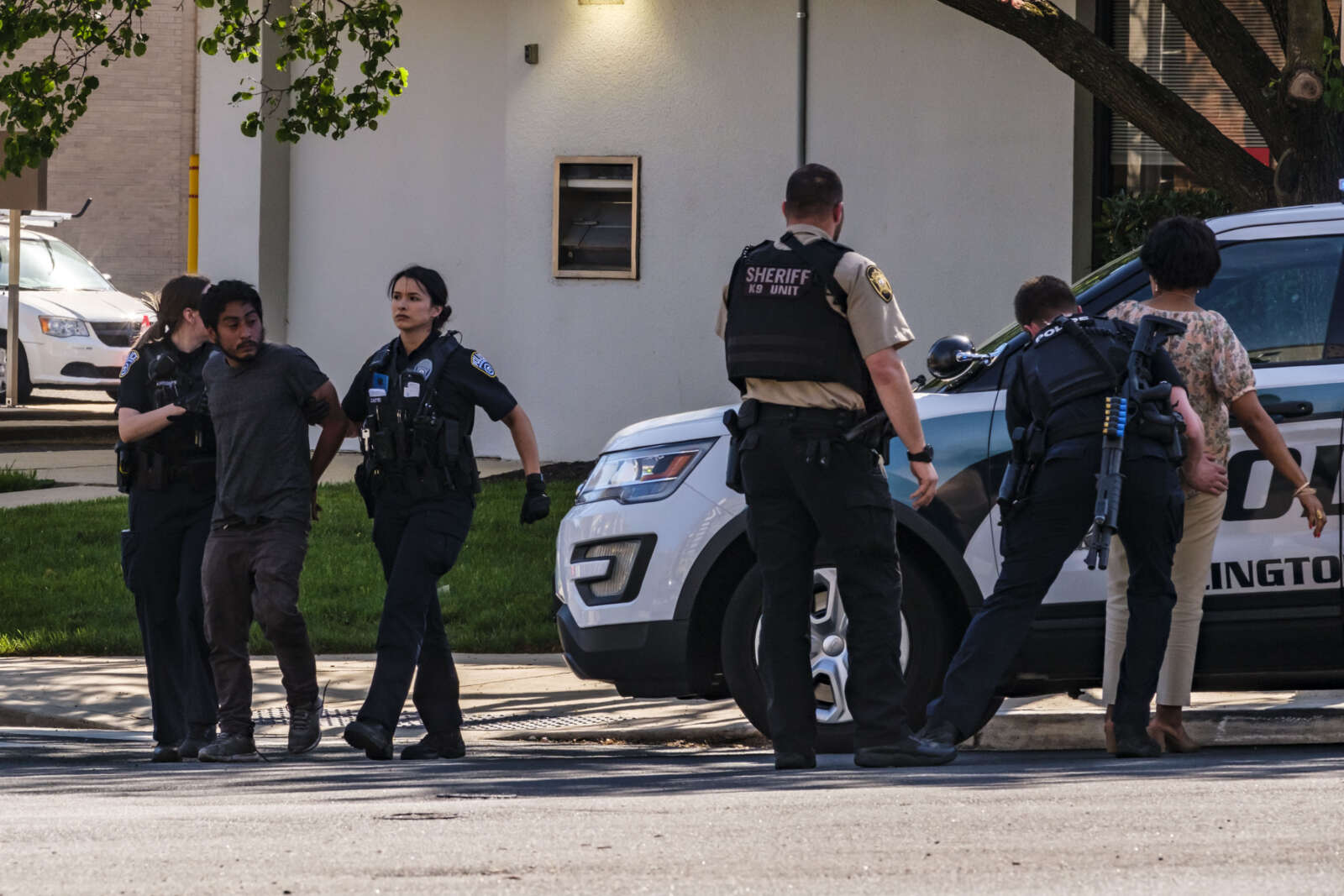
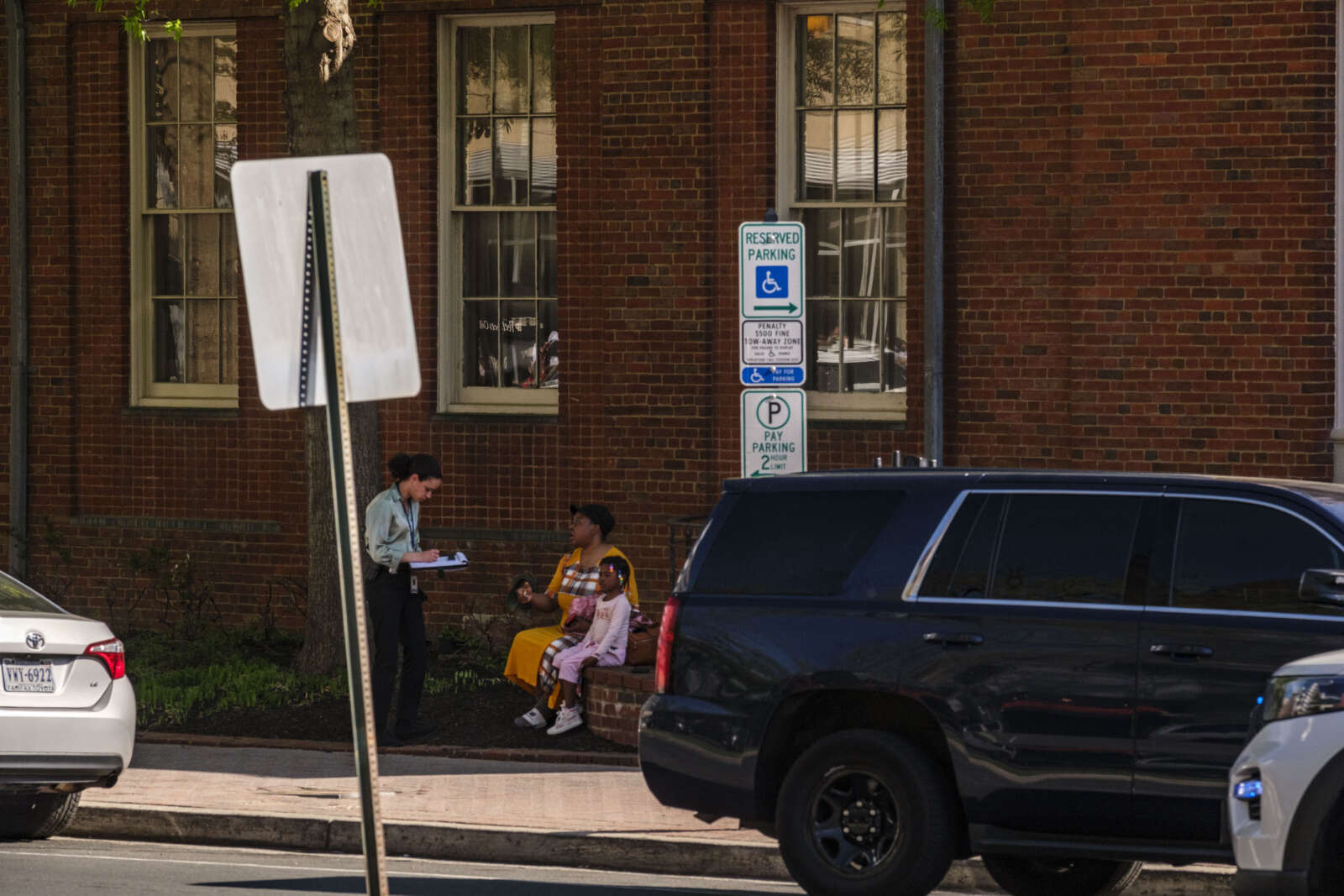
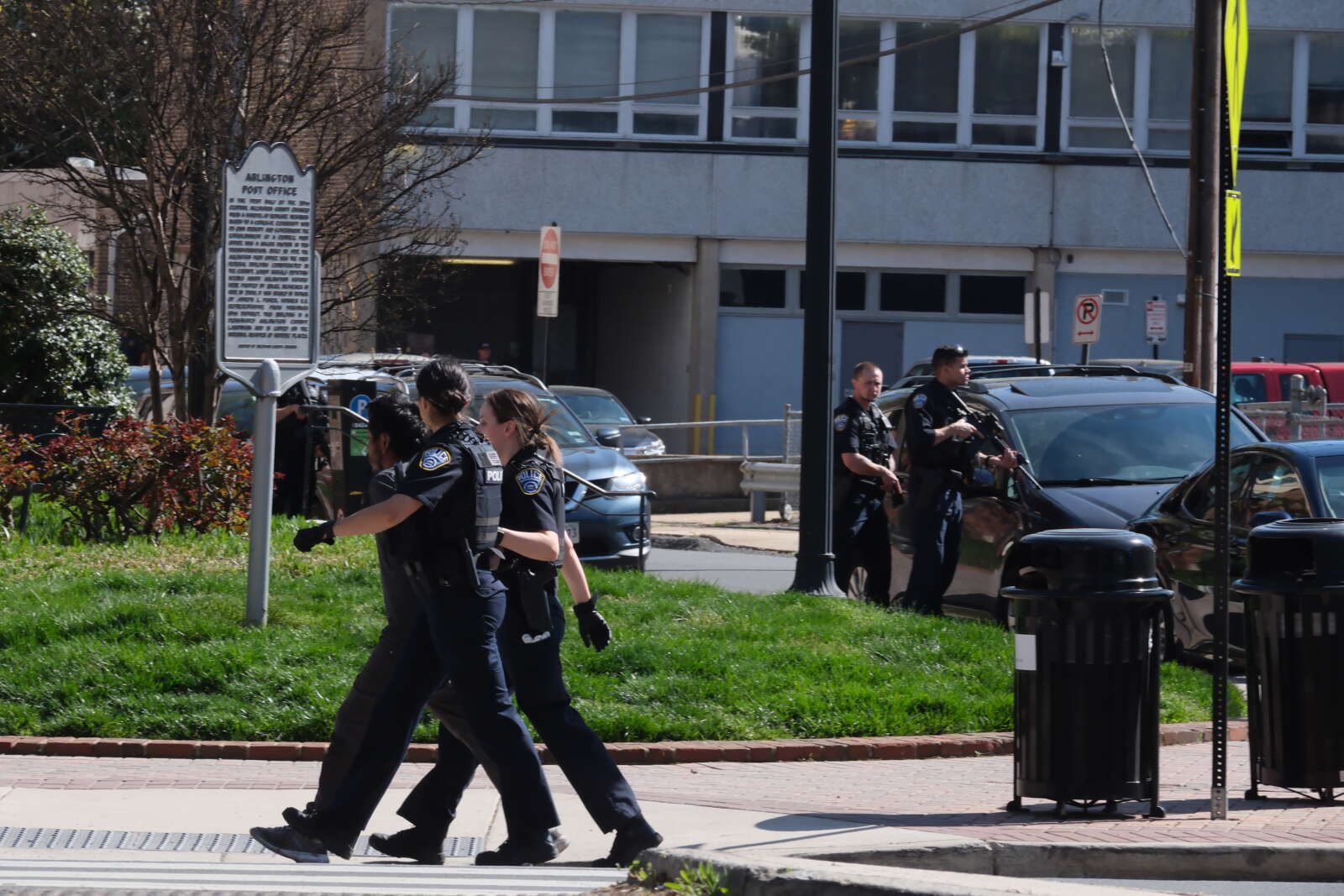
Shortly after that, a man could be seen being led out with handcuffs. The people being held then came out and were asked to provide statements to police.
Police confirmed shortly after 4:30 p.m. that the suspect was in custody and an investigation is underway. No injuries were reported.
Several drivers who were caught up in the robbery response and had to abandon their vehicles on Washington Blvd, in front of the bank, were allowed to return to their vehicles and drive off around 5 p.m.
Later Tuesday night, Arlington County police released the following press release about the robbery and arrest, identifying the suspect as a 30-year-old North Carolina man. No gun was found at the scene.
The Arlington County Police Department has arrested a suspect following a bank robbery in the Clarendon neighborhood. Oscar Gonzalez Allarenja, 30, of Durham, NC, has been charged with Bank Robbery and Abduction. He is being held without bond in the Arlington County Detention Facility.
At approximately 3:09 p.m. on April 11, police were dispatched to the report of an armed robbery in the 3100 block of Washington Boulevard. The preliminary investigation indicates the suspect entered the bank, grabbed an employee, indicated he had a firearm and demanded cash before walking behind the counter. Responding officers established a perimeter and worked to safely resolve the incident as the suspect remained barricaded inside the bank with employees and patrons. During the course of the incident, members of the Emergency Response Team approached the bank, gave the suspect commands which he complied with and took him into custody without incident. The patrons and employees, four adults and one child, then safely exited the bank. All were evaluated on scene by medics as a precaution and no injuries were reported.
No cash was reported stolen and no weapon was located on scene. This incident remains an active criminal investigation and anyone with information is asked to contact police at 703-228-4180 or [email protected]. Information may also be provided anonymously through the Arlington County Crime Solvers hotline at 1-866-411-TIPS.
— Eric Sutton (@EricMSutton) April 11, 2023
Watch: This was the moment around 4 pm that @ArlingtonVaPD pulled the suspect in the Wells Fargo bank robbery through the front door & made the arrest. Then the 5 people inside the bank were able to safely leave. #police @ARLnowDOTcom @RealTimeNews10 @SafetyVid @HCBright10 https://t.co/5Rrdmv2ZSh pic.twitter.com/1u3Nys4DWI
— Dave Statter (@STATter911) April 11, 2023