Mark KellyThe Right Note is a weekly opinion column. The views and opinions expressed in the column are those of the author and do not necessarily reflect the views of ARLnow.com.

Not a single member of the House of Delegates from Arlington received an endorsement from the National Federation of Independent Businesses, the nation’s largest organization of small businesses. To be fair, not a single Democrat in Virginia received one of NFIB’s 53 endorsements.

While NFIB’s legislative priorities of lower taxes and a common sense regulatory environment does not regularly line up with the Democratic policy agenda, it makes one think, how are Democrats doing when they can implement their own agenda?

While the General Assembly is controlled by Republicans, Democrats in Arlington have a 4-1 majority on the County Board. This is not new. As Arlington has become more urban, its voting patterns have increasingly trended toward the Democrats. The Democrats have controlled the Board since the 1980s and have spent most of the time since holding all five of the seats.

Erik Gutshall, the Democrats’ current nominee for County Board, is almost certainly going to maintain that 4-1 split this November. To his credit, he has posted a number of issue statements on his website. In one of them, Gutshall repeats the line that many Democrat candidates have used when he says, “it is more important than ever for Arlingtonians to embrace the shared progressive values that have always united us.”

When I hear a Democrat make such a statement, it makes me wonder do they spend much time talking to people outside of their own bubble? While “progressive values” do unite about one-third of Arlingtonians, one in four Arlingtonians typically vote Republican. The remainder are left of center and generally vote for Democrats, but they are open to a common sense message that paved the way for the election of Republican-backed Independent John Vihstadt to win a seat.

But year after year Democrats in Arlington run on a similar set of so-called “progressive” issues. After three decades of controlling Arlington, maybe it’s time to ask how have their results stacked up against their own agenda? Here are three issues to start the conversation:

Commercial Vacancy Rate: This issue has come to the forefront in recent years, but it boils down to a simple question: do Arlington’s policies as they relate to owning and operating a business attract new businesses to our county?

Housing Affordability: For all of the efforts to address this issue and talk year after year from Democrat candidates, has the all-Democrat county leadership made housing in Arlington more affordable or less affordable?

The State of Metro: Arlington is not alone in this one, but the WMATA Board has almost exclusively been made up of Democrats. Under that leadership, is Metro structured and operated in a way that is safe and fiscally sustainable?

Democrats may have a virtual lock on electoral politics for the foreseeable future here in Arlington. They also benefit from Arlington’s location directly across the Potomac River from the greatest concentration of power and wealth on Earth which protects are tax base and gives our elected leaders a big margin for error in how they manage our resources. They should be held accountable for how they measure up to their own “progressive” standards.
Peter RousselotPeter’s Take is a weekly opinion column. The views and opinions expressed in this column are those of the author and do not necessarily reflect the views of ARLnow.com.

As ARLnow.com previously reported, Arlington County has posted a draft civic engagement action plan.

You should read the current two-page draft plan outline, and submit comments by September 13 using the comment form.

Discussion

Just last year, the County Manager created the new Office of Communication and Public Engagement. The office was created in the wake of multiple civic engagement fiascos (e.g. WRAPS process, Fire Station 8, Bluemont Park baseball field). Bryna Helfer was appointed an Assistant County Manager to lead the office.

Over the past four to six months, Bryna and her team have been actively meeting with community leaders to gather insights about how they viewed public engagement, particularly for capital projects. The team has held meetings with government planners, engineers, county leadership and County Board members.

The team believes four key themes emerged:

  • Engagement Opportunities
  • Communication Practice
  • Diversity of Views and Participants
  • Lack of Capacity

The resulting draft plan raises many issues, some mentioned, some not.

MENTIONED

Strategies for different projects and policies

The County plans to use the development of next year’s Capital Improvement Plan as a pilot to test improved strategies for civic engagement concerning new capital projects. This makes sense. However, there should be other distinct civic engagement models for other types of major county decisions (e.g., significant new policies, major capital maintenance, ranking among priorities based on overall budget constraints) — each with clear explanations for community engagement.

Predetermination

Staff must disclose up front all current assumptions and restrictions for all projects and policies. If necessary, neutral facilitators should be employed to conduct civic engagement. 

Accountability

Arlington’s civic associations, ranging from the many superbly-managed ones all the way to some non-existent ones, always will display a spectrum of effectiveness because these are volunteer groups. The county government, NOT civic associations, must assume primary responsibility and accountability for civic engagement with respect to taxpayer-funded projects and policies.

The County should maintain a separate, interactive webpage with all information, data, assumptions, civic engagement results (favor, oppose) and FAQs about the projects or policies subject to civic engagement.

Project and policy definitions

If the county only asks, “where shall we put the basketball court?”, and never asks, “do you want a basketball court?”, the county and its citizens are in serious trouble.

Weight of community opinions

The weight to be given community opinions depends on knowledgeable expertise. In siting a new school, a community’s opinion about whether to build “up or out” should be entitled to a lot more deference than whether a foundation can bear the weight load.

NOT MENTIONED

Limits of civic engagement

Even the best civic engagement practices cannot prevent fiascos caused by other factors such as:

  • wrong policies
  • lack of proper staff training
  • needs changing
  • lack of accountability

If the policy is wrong, change it. If staff lacks training, train them. If needs change, then processes need to be flexible. If staff members are never disciplined, transferred, nor fired for repeated mistakes, civic engagement cannot fix that fundamental management failure.

Conclusion

No outreach, survey, tool, process or plan is perfect. However, because Arlington properly relies so heavily on its numerous and talented citizen volunteers, the County must ensure that it is delivering the best possible opportunities for fair, transparent and inclusive civic engagement.

The May & June 2017 Friends of Aurora Highlands Park Newsletter contains excellent additional civic engagement suggestions.


Progressive Voice is a weekly opinion column. The views and opinions expressed in the column are those of the individual authors and do not necessarily reflect the views of their organizations or ARLnow.com.

By Paul Friedman

It was said by some that Barack Obama’s election and presidency was a reflection that America had become a post-racial society.

For many people, that was a positive, hopeful – albeit optimistic — statement. For others, it was a reason to discredit diversity and inclusion efforts and declare that institutional racism no longer existed; that discrimination against people of color could not exist in a land that had elected an African American president.

For still others — including President Donald Trump – President Obama’s election was illegitimate. It was the culmination of societal change favoring people of color and foreigners at the expense of white Americans who had made this country great. President Obama was to be opposed and delegitimized. The attack on white America was to be exposed. America was to be made great again.

These forces led to the election of Donald Trump. In August 2017, they led to the invasion of Charlottesville and the University of Virginia by white supremacists, neo-Nazis and the KKK. They led, in turn, to a President signaling support for those invaders.

What a far cry from March 1965, when America recoiled from the racism of state police nearly killing marchers on the Edmund Pettus Bridge in Selma, Ala. The brutal display – almost exactly 100 years after the end of the Civil War – led to passage of the Voting Rights Act of 1965.

The post-racial society illusion would underlie a 2013 U.S. Supreme Court 5-4 decision stripping the Voting Rights Act of Section 4, one of its most important provisions that required certain states to get advance federal approval before making any changes impacting voting.

Led by Chief Justice John Roberts, the Court claimed that states with a long history of slavery, segregation, racism and voter suppression had evolved and were no longer in need of close federal supervision. Contrary to the Chief Justice’s unjustified and convoluted logic that Section 4 was no longer necessary, the result of the decision has been a concerted push to eliminate from the voting rolls African Americans and other people of color.

Those who felt the need to oppose and delegitimize President Obama provided the political catalyst for Donald Trump, who boldly launched his campaign against President Obama in March 2011 on “The View” by asking: “Why doesn’t [Obama] show his birth certificate? There’s something on that birth certificate he doesn’t like.”

On Fox News five days later, he said, “I’m starting to wonder myself whether or not he was born in this country.” Two days later, he went on Laura Ingraham’s radio program and declared: “He doesn’t have a birth certificate, or if he does, there’s something on that certificate that is very bad for him. Now, somebody told me … that where it says ‘religion,’ it might have ‘Muslim.’ And if you’re a Muslim, you don’t change your religion, by the way.”

Off to the races, Trump has not looked back. He initially declined to disavow the support of David Duke. He used Twitter to send coded messages, sometimes via his family members, about his support for racists and anti-Semites – amazingly despite his daughter becoming Jewish, marrying a Jew and raising Jewish children.

Then, in the wake of the hatred and anti-Semitism on display in Charlottesville, America saw its elected national leader take his strategy, and the expression of his personal views, to a whole new and previously unthinkable level. President Trump actually said that there were “many fine people” among the neo-Nazis and KKK’ers despite videos of them chanting racist and anti-Semitic epithets as they marched with torches. He has not backed away from his statement.

And he wants to ensure that we keep monuments in place to uphold our “heritage.”

Think back to the Edmund Pettus Bridge in March 1965. Pettus served as a Confederate general during the Civil War. After the war he was a Grand Dragon of the Alabama Ku Klux Klan and a Democratic U.S. Senator. The bridge was named for him in 1940 to send a message of support for his involvement in the KKK. It was one of many such acts by those seeking a return to a world in which white people were viewed as superior to African Americans in the law and in daily interactions.

Is this the heritage President Trump wants to preserve?

We have an opportunity in Virginia in 2017 to send a strong signal to President Trump that his vision does not reflect our values. I hope voters will send that signal on November 7.

Paul Friedman is an attorney and a long-time resident of Northern Virginia. He has been active in nonprofit organizations, civic organizations, and as a business consultant. He is currently the Executive Director of a national advocacy organization.


News related to the events in Charlottesville last week has dominated local Arlington happenings in the past few days.

But in happier news, you may hear cannon fire around Fort Myer on Saturday evening for the U.S. Army Band’s annual 1812 Overture concert. And the Arlington County Fair is underway, wrapping up up Sunday.

These were our top five most read stories this week:

  1. UPDATED: Police Investigating Stabbing in Courthouse
  2. Letter to the Editor: Time to Remove the ‘Lee’ from Washington-Lee High School
  3. Arlington Is Seeking the Authority to Rename Lee Highway and Jefferson Davis Highway
  4. BREAKING: School Board to Consider Changing School Names
  5. Local Charlottesville Solidarity Rally Organized By Two Recent Yorktown Graduates

And these received the most comments:

  1. Letter to the Editor: Time to Remove the ‘Lee’ from Washington-Lee High School
  2. Morning Notes (August 14)
  3. Morning Notes (August 16)
  4. Clement Decries Further Affordable Housing Demolition in Westover
  5. McCullough Calls For Renaming Jefferson Davis Highway After Charlottesville Violence

Feel free to discuss anything of local interest in the comments below. Have a great weekend!


The following Letter to the Editor was submitted by Washington-Lee High School 2015 graduate Alexander Wallace, who is now a student at the College of William & Mary.

Activists called for Lee’s name to be removed from W-L at the Arlington School Board meeting on August 17, in the wake of this past weekend’s events in Charlottesville.

Board members announced they would study the names of all current and future schools in the county and decide if any should be changed.

Since the violence in Charlottesville over the removal of the statue of Robert E. Lee, there have been calls to rename Washington-Lee High School, Arlington’s oldest. Others want to keep the old name.

As a 2015 graduate, I have thought about this subject often, especially after the Charleston massacre, which was on the day of my graduation.

I understand the argument for renaming the school. Robert E. Lee fought for a government whose raison d’etre since its inception was the preservation of chattel slavery; the Cornerstone Speech by their Vice President, Alexander Stephens, makes this clear as day.

In fighting for said government, Lee therefore fought to preserve that vile institution even if it was not his premier motive, and that in and of itself leads to just condemnation. That fact certainly makes the banner in the halls “Washington-Lee Celebrates Diversity” more than a little ironic.

That being said, I also understand the opposition to the name change. Washington-Lee, as a name divorced from its namesakes, has become an honored name, with famous graduates like Sandra Bullock and Warren Beatty, and academic and athletic success. Thousands of people by now have formed memories and friendships under that name.

Additionally, changing the name to proposals such as “Washington-Lincoln” or “Washington-Lafayette” (which I have both seen) would cause a significant degree of financial trouble to the school administration as they would have to replace signs, songs and logos on just about everything.

In full understanding of both perspectives I propose a compromise as a plan of action. We need not change the name “Washington-Lee,” but the name “Lee” could be rededicated to Robert’s father, Henry Lee. The elder Lee fought for the early Republic during our war for Independence in both Northern and Southern campaigns, and died long before the Confederacy was ever even an idea.

In doing so, we could keep the name “Washington-Lee,” the mascot “Generals” (for they were both generals in the Continental Army, and both from Virginia), the alma mater (which refers only to ‘Washington-Lee’ as a collective), and most everything else. All that would need to be changed are some portraits, like the ones in the main office and little theater, and one of the logos.

This compromise would allow the complete removal of the stain of the Confederacy from the school whilst maintaining its long-standing traditions. It is a compromise that I find ideal and hopefully would spare the school from the worst of the ongoing culture wars and bring the dispute to a quiet conclusion, one that would not attract undue attention.

In these trying times, I share the sentiment of our alma mater: “Washington-Lee, Washington-Lee, humbly for thee do we pray.” Our alma mater will need it.

ARLnow.com occasionally publishes thoughtful letters to the editor about issues of local interest. To submit a letter to the editor for consideration, please email it to [email protected]. Letters may be edited for content and brevity.


Mark KellyThe Right Note is a weekly opinion column. The views and opinions expressed in the column are those of the author and do not necessarily reflect the views of ARLnow.com.

As a result of numerous complaints about predatory towing practices, Arlington passed towing restrictions which required business owners to sign off on each tow.

The ordinance met resistance from some in the business community who felt the “second signature” requirement was unduly burdensome.

Unfortunately, managers of business, often restaurants, tell those towed they have no power over the decision. So what is a person to do as they stand in the parking lot with no car but a receipt from the business in hand? It is no wonder they often lash out at the Advanced Towing attendant like one ESPN reporter did.

There is little recourse for the person other to pay the $135 to get their car back. Most do not have the time or the resources to even attempt to get their money back, something Advanced knows. Even if they wanted to bring a small claims court action against the towing company or the business who owns the parking lot, the process seems daunting to most.

If business owners refuse to be held accountable and the towing company refuses to be held accountable, then who is to blame when the towing company gets it wrong? That is the question the Arlington County Board tried to answer with its new ordinance.

The coalition opposed to Arlington’s ordinance went to the General Assembly to overturn the County Board’s decision. Gov. Terry McAuliffe (D) initially rejected the legislation, but eventually signed it into law.

After hearing about another victim of Advanced Towing last week, I did another online search on the company. What did I find?

According to this NBC 4 report, the company made a $1,500 contribution to state Sen. Barbara Favola (D) to encourage her to meet with Gov. McAuliffe and share the “pros and cons” of legislation after she initially opposed it.

The contribution was made April 13. The meeting with the governor took place April 24. It was part of what was called “a full-court press by Democratic senators and the business community that convinced the governor to back the bill.”

Favola and McAuliffe eventually sided with Advanced Towing and the business owners who did not want to be hassled with signing off on each tow.

Arlington’s towing ordinance may not have been the perfect solution. To be sure, businesses have a right to ensure their parking lots are used by their customers. But Advanced has towed people who were lawfully parked and may continue to do so without fear of any meaningful repercussions.


Progressive Voice is a weekly opinion column. The views and opinions expressed in the column are those of the individual authors and do not necessarily reflect the views of their organizations or ARLnow.com.

By Graham Weinschenk

At the end of the 2016-2017 school year, I stood in front of the Arlington School Board along with fellow members of the Student Advisory Board leadership team and declared that we had just experienced “The Year of the Student” in the Arlington Public Schools.

Multiple times throughout the school year, large numbers of students had expressed themselves in front of the School Board and attempted to influence policy; something unseen before this year.

Most notably, on February 16 over 100 students, parents and staff from Yorktown High School walked into the Arlington Education Center and took their places facing the School Board. Nearly 40 of those students spoke out, providing over an hour and a half of testimony. They spoke out because after dozens of incidents of racism, homophobia, xenophobia and hate, the response from the Yorktown High School administration appeared to be non-existent. There was either no punishment or little punishment for those who made inappropriate and callous remarks. Targeted students had no tangible support from their school administration.

So, the students took their concerns to the School Board. Thirty-nine speakers later, the members of the School Board gave their responses. The Superintendent of the Arlington Public Schools, Dr. Patrick Murphy (whose contract was recently renewed a year early), said, “I am stepping up. This is not acceptable.” Yet, what has come to fruition from the outrage expressed by parents, teachers and, most importantly, students?

Speaking as the former Vice Chair of the APS Student Advisory Board, my conclusion is that seven months later we have yet to see a single proposed policy change. The School Board and the Superintendent heard, but they did not listen.

Today, we continue to hear a lot of talk, but there remains no tangible commitment by the Arlington Public Schools to make changes on this issue. The frustration that still exists among students, especially on this topic, leads me to call for a student representative to the Arlington School Board.

Student representatives are nothing new, and it would be fairly easy to introduce one to the Board. The Virginia Code (§22.1-86.1) has allowed for the appointment of student representatives to local school boards since 1999. The Alexandria School Board has had two appointed student representatives since 2013 while the Fairfax School Board has had a student representative since 1986.

Under state law, student representatives are eligible to sit with school boards during public and closed meetings, introduce resolutions for consideration, and be able to say how they would have voted. However, there are still some restrictions. Student representatives are not allowed to vote on matters before the board, and they are not allowed access to confidential information, including information related to a specific student, teacher, or employee.

Last school year was a hallmark year for student involvement in the Arlington Public Schools. Like never before, students were able to translate their anger and disappointment on numerous issues into direct action – at times flooding the board room to make their voices heard on multiple occasions and for numerous issues.

The frustration that many students feel goes beyond not feeling included; it stems from a feeling that not only is the student voice not wanted, but that it is also not an important factor for consideration in the decision-making process. The relationship between the Arlington School Board and the Student Advisory Board is similar to the relationship between a teacher and a student and as long as that attitude of keeping students at arms-length exists, the voices of students will never truly be heard.

Now more than ever, students need a sign from APS that they matter, and a student representative on the School Board would show that the student voice is important. Student apathy toward the Arlington Public Schools is dead. It is time to include us in the decision-making process.

Graham Weinschenk is a former Yorktown High School student who graduated in 2017. He served as the Vice Chair of the Arlington Public Schools Student Advisory Board for the 2016-2017 school year. Outside of APS, he serves as the Secretary of the Virginia Young Democrats and will be attending the College of William & Mary in the fall.


Peter RousselotPeter’s Take is a weekly opinion column. The views and opinions expressed in this column are those of the author and do not necessarily reflect the views of ARLnow.com.

On July 11, Arlington posted a “Preliminary Draft” of its new Public Spaces Master Plan. This draft reflects considerable thought and effort. I encourage you to provide your comments by the newly-extended August 31 deadline.

The PSMP (p. 2) seeks to provide the foundation for:

a network of publicly- and privately-owned public spaces that connect the Countys established neighborhoods and growing corridors to natural areas, protect valuable natural resources, provide opportunities for structured and casual recreation, and ensure access to the Potomac River, Four Mile Run, and their tributaries.

Today’s column discusses only a small number of issues raised by this 272-page draft.

Discussion

I have highlighted previously  the urgency of preserving and materially increasing Arlington’s inadequate park and recreation resources to address dramatically increasing demands from the projected county population growth of 63,000 people (29 percent) by 2040.

The PSMP core “Strategic Direction 1 – Public Spaces” seeks to “ensure equitable access to spaces for recreation, play and enjoying nature by adding and improving public spaces.”

These proposed changes can help reach this goal:

Counting “parkland” 

The PSMP states (p. 44): “Arlington has over 2000 acres of parkland, both County and non-County owned…”  However, without greater clarity as to what is being counted as “parkland” (e.g., possibly all APS facilities and “unusable” portions of the federally-owned GW Parkway are included), this global number appears inflated and misleading.

The relevant issue is the amount of additional parkland needed in Arlington to meet present and future demand.  See the “Population-Based Standards” chart (p. 90).

New “Public Space” 

Proposed “Action” 1.1 (p. 70) states: “Add at least 30 acres of new public space over the next 10 years.” Inclusion of this land acquisition goal is critical and has widespread community support.

However, “Natural Areas and Wildlife Habitats” ranked as the second highest outdoor need on the statistically valid 2015 Parks and Recreation Needs Assessment Survey, and county citizens are consistently calling for more natural green space: “We want natural grass, trees, and a place to relax.”

This goal should be clearly focused on the county acquiring more “green parkland” or it will be “fulfilled” in large part by more hardscape plazas and/or synthetic turf in our urban corridors.

The PSMP should also incorporate the three separate sub-categories of “natural lands”, “unstructured” (or “casual use”) areas, and “structured” areas, i.e. athletic fields and courts I previously recommended. This should also provide explicit prohibitions on any loss of natural lands and “casual use” areas.

New Land Acquisition Policy

While hopefully facilitating parkland acquisition, this policy needs revisions to avoid filtering out critical present and potential “natural lands” and “casual use” areas. Higher points must be awarded to such “natural lands” that don’t have “special features.” Criteria affording points to such “casual use” areas need to be added. Points should also be reallocated from existing plans where parcels may already have been developed to parcels with strong community support identified on an “ad hoc” basis.

Conclusion

The PSMP is a new step forward for Arlington’s park and recreation resources.  Although creative mechanisms to acquire more parkland are identified, our critical need for preserving and increasing our parkland — particularly our “green parkland” — can only be met with a strong commitment by the County Board in our budgets and CIPs for the foreseeable future.


The following Letter to the Editor was submitted by writer and Washington-Lee High School graduate Waleed Shahid, who has started an online petition to push for removing Robert E. Lee’s name from the school.

Activists are also expected to call for Lee’s name to be removed from W-L at tonight’s Arlington School Board meeting, in the wake of this past weekend’s events in Charlottesville, sources tell ARLnow.com.

When I was a student at Washington-Lee, I clearly remember being taught in history class that Robert E. Lee “did not fight for slavery; he fought for Virginia.” I didn’t make much of it until I left Virginia for college. Many of my classmates thought it was strange that I went to a school named after the leader of the Confederate Army and that there was a highway that ran through my hometown honoring Jefferson Davis. These were racist slave-owners who rebelled against the American government and Abraham Lincoln, they told me. I shrugged and didn’t make it much of it.

But over the past few years — and particularly over the past week — many Americans have been beginning a conversation about our nation’s living wounds. It’s clear that too many are ignorant of our country’s history. And this past week has shown that a small minority of white nationalists are increasingly comfortable with publicly stirring up the worst aspects in American society by pitting Americans against each other.

To these white nationalists, Robert E. Lee represents their deep commitment to racial hierarchy. When three of his slaves escaped, Lee whipped them and had their backs washed with stinging brine. Lee ordered his Confederate soldiers to respect white property, but declared that any black people they encountered — regardless of their previous ‘status’ — were to be seized and returned to the South to be sold into slavery. At the Battle of the Crater, Lee’s Army even killed black prisoners of war. This is the history we honor when we name our school after Robert E. Lee — and why white nationalists felt so threatened by the removal of his statue in Charlottesville.

We must understand the stakes too. Arlington Public Schools should not shy away from taking a clear stand on this issue. It’s up to our civic leaders and institutions to take steps toward reconciling and repairing our nation’s living wounds where we can make a difference. Washington-Lee High School should be renamed so that we can move toward creating a school, county and country that truly belongs to all who call it home. If the President of the United States is unwilling to provide the leadership our country needs, then we need to provide it ourselves.

America was founded upon a revolutionary promise: freedom and justice for all. But, the revolutionary promise of America has never been fulfilled. We, the people has never included all of us. The story of our nation has always been a struggle over who America belongs to: the chosen few, or all of us? This is what is at stake when we honor the leaders of the Confederacy. Which side of that struggle will we honor? Germans don’t honor Nazi soldiers; South Africans don’t honor those who held up Apartheid. But Americans still honor Robert E. Lee and countless other Confederates who raised up a new flag and started a rebellion against the United States of America. Why?

It’s time Arlington honor those who fought tirelessly to create an America for all of us. As an alum of Washington-Lee High School, I urge you to consider re-naming our school Washington-Douglass or Washington-Tubman High School. As a Muslim-American who grew up in Arlington, continuing to have my alma mater named after Robert E. Lee is like seeing a Confederate Flag being constantly waved in my face. It makes me sick to my stomach knowing that we are honoring a man who fought to shackle and chain other human beings.

In many ways, Washington-Lee is a microcosm of America. My alma mater — just like my country — is still working to perfect our experiment in constructing a vibrant multi-racial democracy. This past week has been a reminder that some still hope to thwart our collective project and take us back to darker times. But by committing to change the name of Washington-Lee High School, we can take concrete steps toward living up to our best traditions and creating a nation where we all feel like we belong and where “We, the People” includes all of us. This is our historic responsibility as Americans in this moment in our history.

ARLnow.com occasionally publishes thoughtful letters to the editor about issues of local interest. To submit a letter to the editor for consideration, please email it to [email protected]. Letters may be edited for content and brevity.


The discovery of what appeared to be a self-driving car dominated the news this week in Arlington, and more than 900 of you think that testing such vehicles is fine in Northern Virginia, even in areas like Clarendon.

But before we get to the other popular stories from this week, here are some you may have missed:

Gov. Terry McAuliffe came to town to help break ground on the I-395 Express Lanes, a letter to the editor argued for decriminalizing marijuana in Virginia and a new Arlington Forest cafe features a “laptop free” coffee bar.

And, in case you missed it, the Arlington County Police Department released its highly anticipated video of officers performing a synchronized swimming routine to advertise its upcoming block party.

These were this week’s top five most read articles:

  1. Crime Report: Someone Broke into a Rosslyn Apartment and Cleaned It
  2. SPOTTED: ‘Driverless’ Vehicle Cruising the Streets of Clarendon
  3. Car Flips in East Falls Church Parking Lot
  4. Filipino Restaurant Bistro 1521 Now Open in Ballston
  5. Mother Appeals For Witnesses After Daughter Struck By Hit-and-Run Driver

And these received the most comments:

  1. Letter to the Editor: Arlington Needs New Options for High-Speed Internet Service
  2. Cristol: Pedestrian-Only Street Can Help Make Rosslyn a Destination
  3. Morning Notes (August 10)
  4. Confirmed: Dunkin’ Donuts and Baskin Robbins Coming to Clarendon
  5. Morning Poll: Self-Driving Vehicle Testing in N. Va.

Feel free to discuss anything of local interest in the comments below. Have a great weekend!


When I first began my ARLnow internship, I knew nothing about Arlington. A native New Yorker, to me, Arlington was just some place across the river from D.C. I was a bit of a “big city” snob, so I expected very little from the area.

Three months later, as my internship comes to a close, my view could not be more different. After writing dozens of articles about Arlington, from covering the opening of a Clarendon tattoo parlor to a piece about the county’s decreasing homeless population, I’ve developed quite a fondness for the community.

“Arlington is the smallest self-governing county in the U.S. And no, the Pentagon is not in D.C., it’s actually in Arlington,” I would proudly tell my friends when they asked about my job.

Of course, I am no “Arlington expert” but I have dipped into the pool of what Arlington has to offer and boy, is it deep!

There is something for everyone here: urban enclaves like Clarendon or Crystal City are just minutes’ drive from quintessential suburban neighborhoods with cozy brick homes and tumbling gardens. There are free yoga classes every Sunday throughout the summer and so many events that we publish an event calendar that is updated daily.

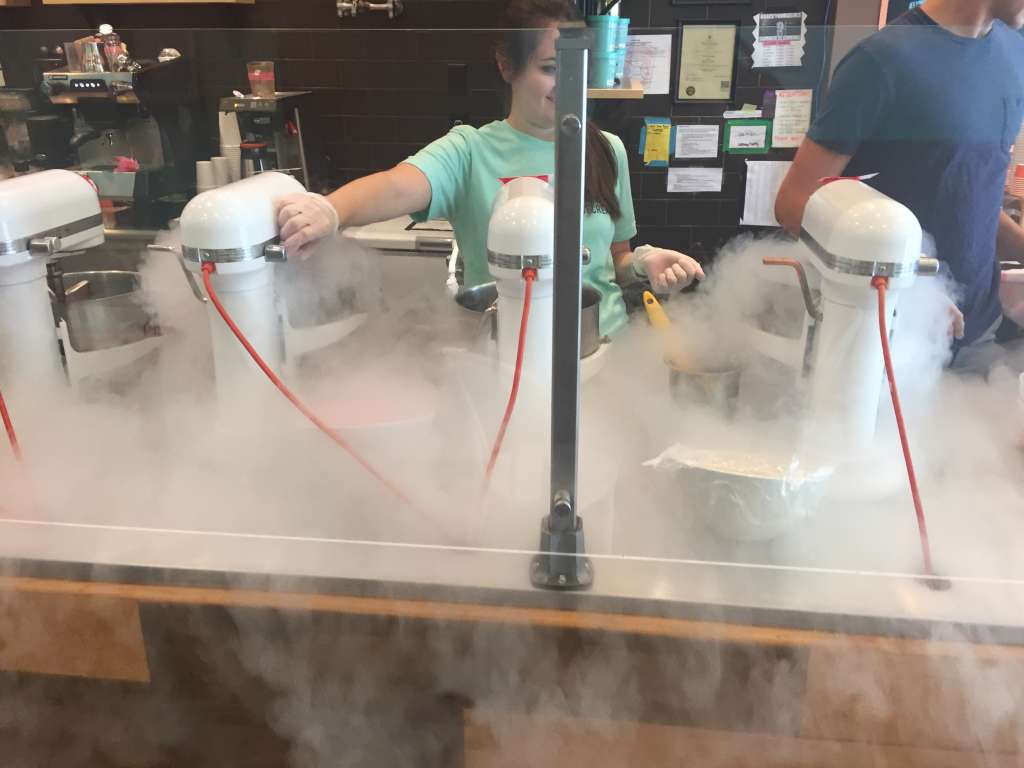
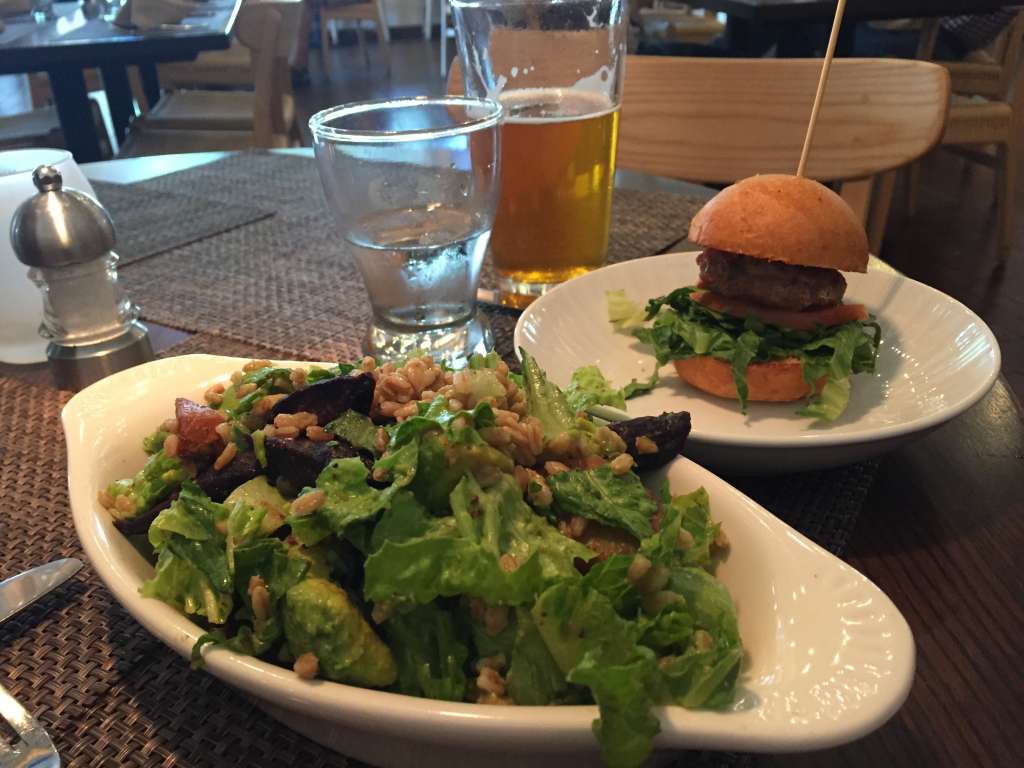
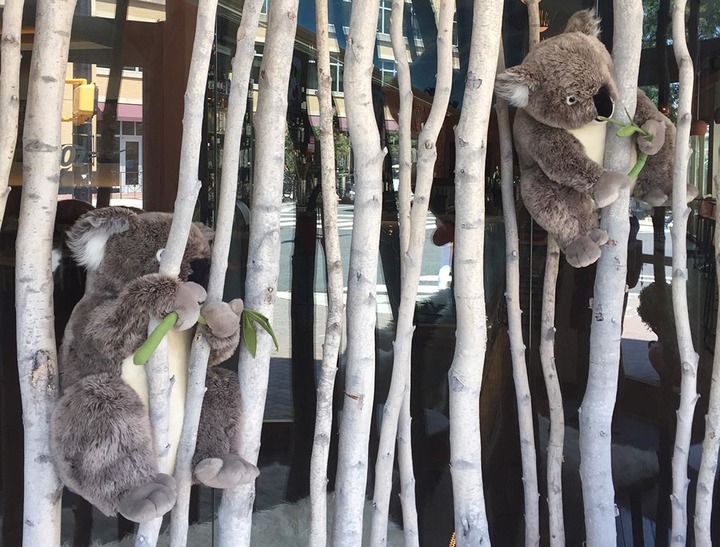
The variety in Arlington’s food scene made me feel like I was back in my hometown, except here, there’s elbow room and you’re not rushed after paying your check. I have eaten dinner while watching artists paint at Palette 22 and I’ve tried ice cream made with Nitrogen. I slurped up bubble tea from bottles shaped like lightbulbs at Kokee Tea and had my first taste of kangaroo at Oz (in case you were wondering, it tastes like a hamburger).

Perhaps more impressive than the free events and delicious food are Arlingtonians themselves. Every week, ARLnow publishes a weekly Startup Monday article, in which we write about a startup based in the county. I remember when I wrote my first Startup Monday, I was told to find a startup in Arlington that our website had yet to write about.

I wondered how many startups this one county can have. It turns out, it’s enough that ARLnow has been able to write about a new one almost every week since September 2013. That goes to show the incredible talent and creativity found in Arlington. There’s a guy giving free rides thanks to his advertising model; a couple with a company that plans “surprise” vacations; somebody creating an app to ensure people know their rights.

Even my boss — the founder of ARLnow — Scott Brodbeck, was once one of those Arlingtonians with a startup dream. He noticed that parts of Arlington had very little news coverage and saw an opportunity for a business. Seven years later, ARLnow is alive and thriving, and I got to intern with it and you’re reading it right now.

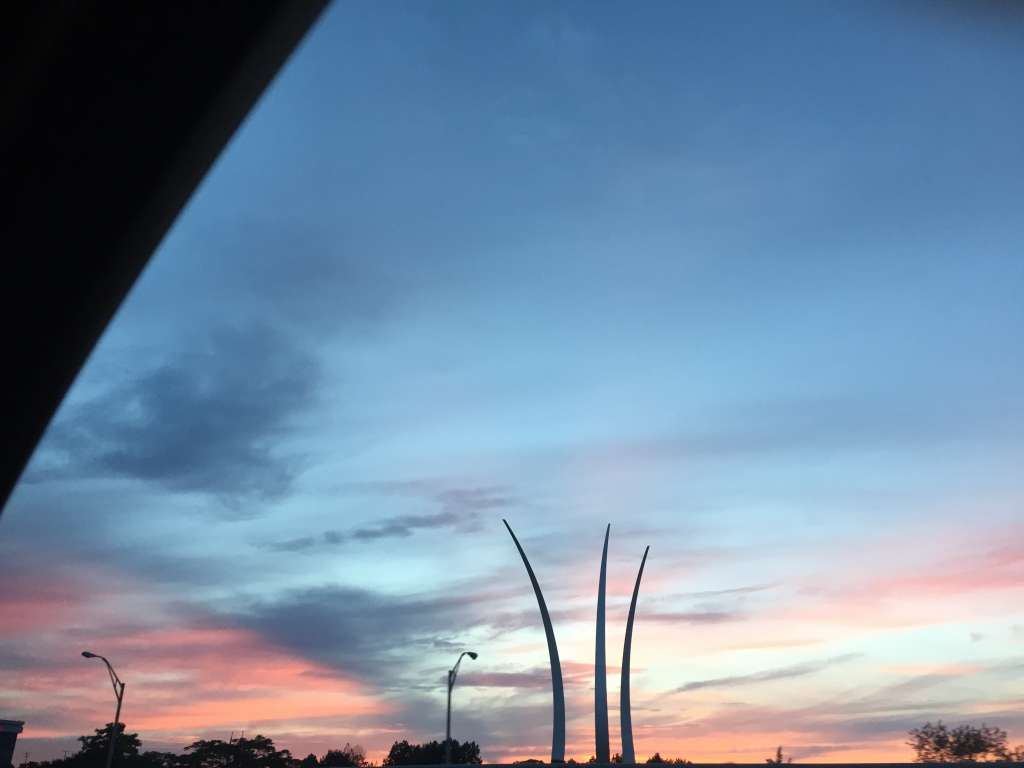
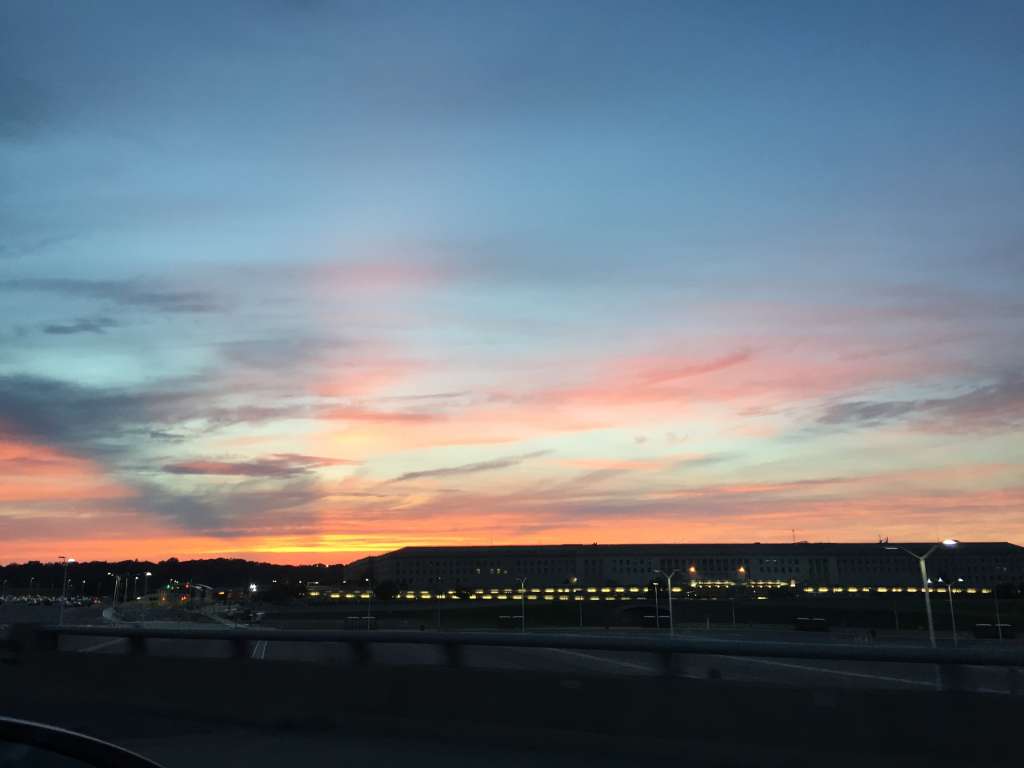
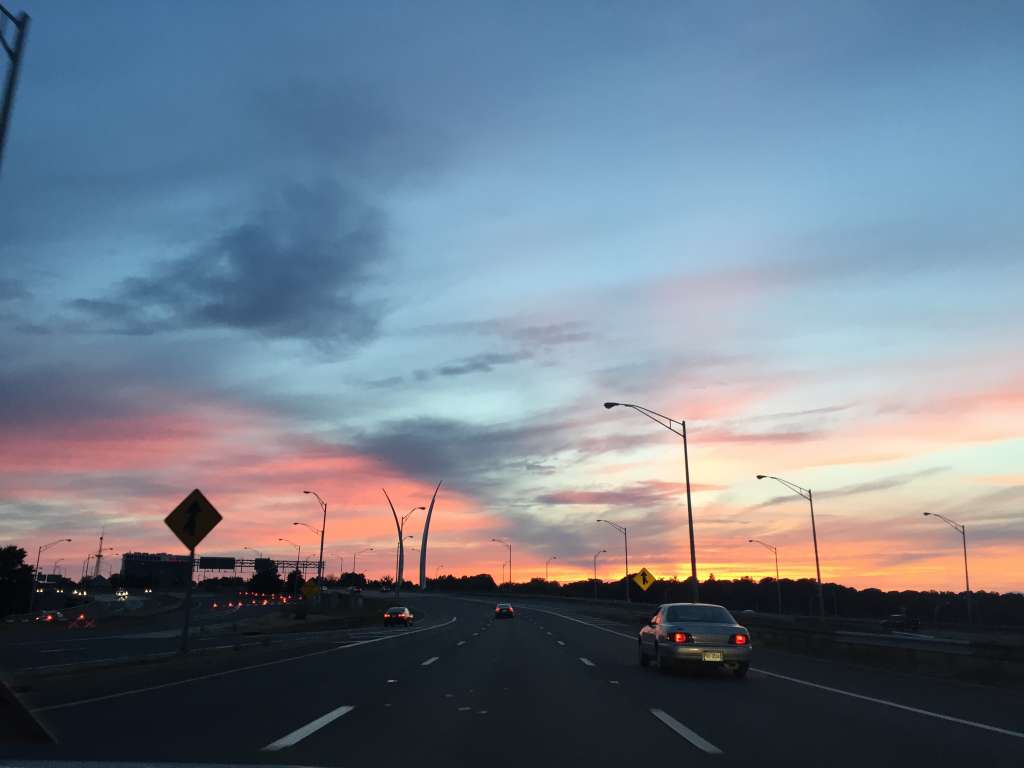
Tonight, as I leave Arlington to return to New York, I will wave goodbye to this place that has shown me so much, as I relish one of my favorite vistas: the sprawling Pentagon and graceful Air Force Memorial, set against a backdrop of pink skies.


View More Stories