As tensions with a nuclear-armed North Korea escalate, it may be prompting some who live here in the D.C. area to reflect on the threat of nuclear conflict.

While experts say nuclear war with North Korea is unlikely, and both the North Koreans and the United States continue to talk about deterrence rather than aggression, there is no denying that the nation’s capital is a prime target for anyone who wants to attack the U.S.

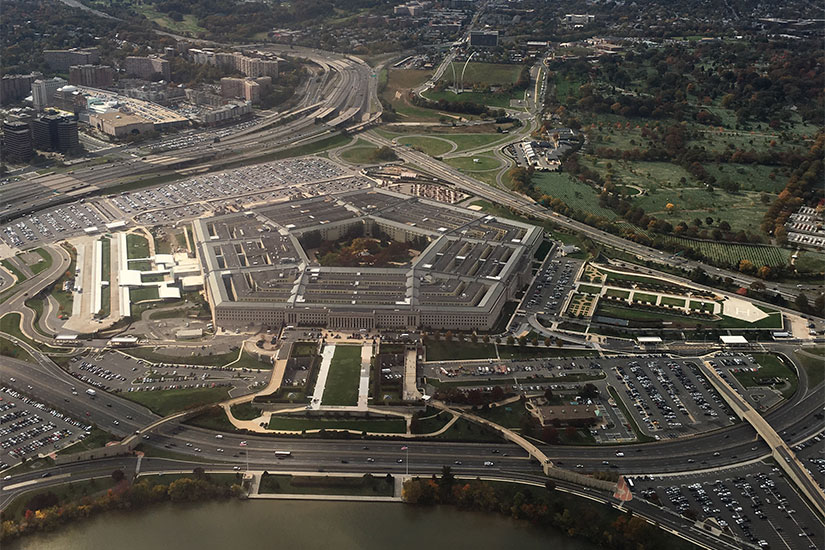
Even in the event of a conflict, North Korea’s intercontinental missiles would not be able to reach D.C., according to news reports. Still, given our proximity in Arlington to places like the White House, the U.S. Capitol, and the Pentagon, how worried are you — in the back of your mind — about nuclear warfare given the latest escalation in rhetoric?

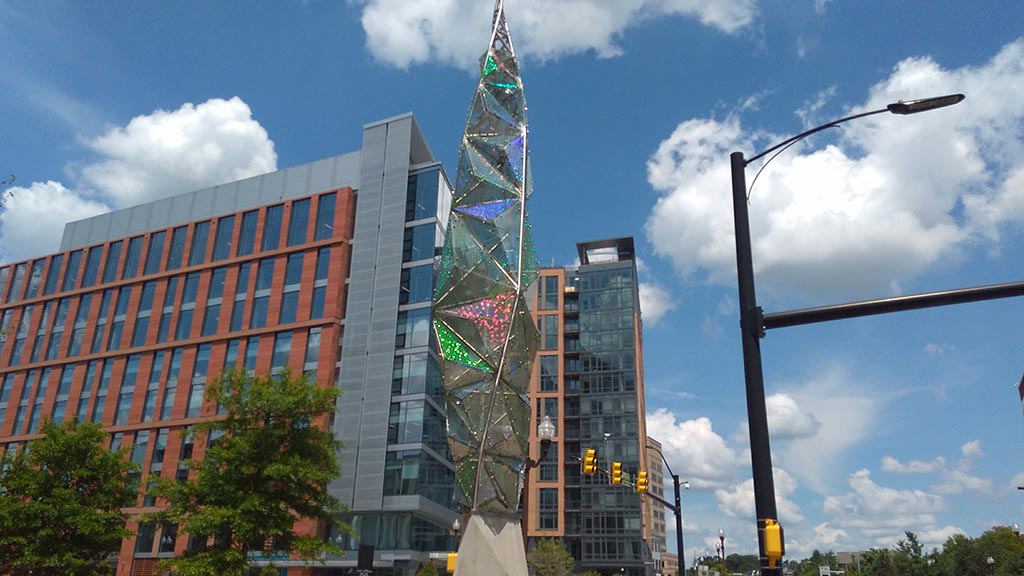
Flickr pool photo by Michael Coffman


Mark KellyThe Right Note is a weekly opinion column. The views and opinions expressed in the column are those of the author and do not necessarily reflect the views of ARLnow.com.

It’s August and the County Board is on its annual summer hiatus, so why not talk about bringing back an annual holiday tradition?

Last year, incoming Board Chair Libby Garvey convinced her colleagues to move the New Year’s Day organizational meeting. Garvey’s rationale was that it was easier on the families of county staff and Board Members not to come back one day early and work for a couple of hours.

The Sun Gazette noted last week that presumed 2018 chair, Katie Cristol is at least open to the idea of moving the meeting back to its traditional place on January 1, which is a Monday this coming year. The story touched on the number one reason to end the one year experiment of moving the meeting – the public was not as interested in attending.

While some of the rhetoric can seem stale, or even empty, it is the one time each year that Arlingtonians can hear from each Board Member on their individual priorities, not on the pressing issue of the day. Sure, the same speeches can be made a few days later, but this year proved, it’s not quite the same.

6,204 Reasons Democrats Are Unlikely to Win the Virginia House?

Politicos from across the country will be watching our November elections here in Virginia and studying the results to see what it foreshadows for the 2018 mid-term Congressional elections. Democrats in the General Assembly and their activist supporters on the left are excited about the prospect of winning House of Delegate seats across the Commonwealth as well as holding the three statewide elected offices.

Delegate Rip Sullivan is Chairman of the Democratic Caucus in the Virginia House. As part of his leadership of the Democrats’ efforts to win control of that legislative body, he launched Blue Dominion PAC last year.

ARLnow gave Sullivan a recent shout out for his efforts. But as the races are heating up throughout Virginia, Sullivan’s PAC reported raising just $4,296 in the most recent quarter and having $6,204 in the bank.

To put that in perspective, the PAC could send out about 12,000 of those full color, oversized post-cards you receive in the mail around election time. That’s roughly 700 for each of the 17 districts Democrats need to flip.

In terms of attempting to help win these campaigns, that is drop in the bucket and an anemic effort from a member of the Democratic leadership who represents one of the wealthiest districts in Virginia. Maybe the excitement to toss all the Republicans out of office is not quite as widespread as the Democrats think?


Peter RousselotPeter’s Take is a weekly opinion column. The views and opinions expressed in this column are those of the author and do not necessarily reflect the views of ARLnow.com.

Last week, The Washington Post published a story about newly-imposed parking restrictions on a one-block, dead-end street in the Woodmont neighborhood.

After initially receiving a complaint from one street resident, county staff decided that parking on certain narrower portions of the street should be prohibited even for residents, per the article: “Deputy County Manager Carol Mitten said that the county does not seek out violations of its parking or zoning laws but that once a complaint is filed, it is obligated to respond.”

The Post story explained that the county’s decision to ban parking was based on “rules that allow the government to ban parking on streets narrower than 21 feet (24th Street N. is only 15 feet wide in places) and concerns about how fire department vehicles could quickly get in and out.”

Arlington County staff’s solution was worse than the problem

Once county staff received the original complaint, staff were obligated to “respond” by investigating, learning about all relevant facts and circumstances, and respectfully seeking to engage with all street residents (there were only 13 homeowners) regarding possible solutions.

One of those solutions could have been: take no action. The county’s “rules,” as quoted in The Post, are not mandatory. Even if they were, the county could change them. Justifiably, when residents of the block finally found out that “most of their curbside parking was about to disappear…they were outraged.”

Understanding the character of the neighborhood puts their outrage into context:

All of the houses on the block have at least one off-street parking space. Edwards and his wife, Vicki Edwards, 80, who has an artificial knee and artificial hip, share a steep private driveway with Joe Ruth and Sharon Rogers. When it rains or snows, however, both households prefer to park on the street, which gives them easy access to their front doors. “This is definitely limiting our goal of aging in place,” said Rogers, 75, who has helped organize the street’s resistance.

After the original complainant withdrew her complaint, all street residents opposed county staff’s solution.

The squeaky wheel shouldn’t always get the grease

There are too many instances in which County staff receive a complaint or a request from an individual citizen that at first blush suggests taking an action, but after careful investigation and consideration actually deserves a no-action response.

Another example is the Nelly Custis playground request I discussed in a column a few months ago. In the Nelly Custis situation, the county’s Department of Parks and Recreation initially decided to install a 3d playground in a .8-acre park located in the Aurora Highlands neighborhood.

That neighborhood already had two playgrounds within a little over one block. DPR made that initial decision at the request of a nearby day-care provider, but without taking into account the objections of many other neighbors who preferred to retain open green space at that location in their small park.

Conclusion

Even the intervention of a sympathetic County Board member, John Vihstadt, didn’t fundamentally alter the outcome in Woodmont: “‘It’s sometimes hard to fight city hall, even from the inside,’ he said.”

We need a new culture at city hall: first, do no harm. Why is the current culture so often oblivious? What happened to common sense?

Ms. Minton told one resident that staff’s solution couldn’t be changed because “this ship has sailed.” This ship should be returned to port.


Progressive Voice is a weekly opinion column. The views and opinions expressed in the column are those of the individual authors and do not necessarily reflect the views of their organizations or ARLnow.com.

By Andres Tobar

Today’s national media attention on immigration is primarily focusing on the deportation of undocumented immigrants and on the building of a border wall and who will pay for it.

Less attention is focused on the positive work being achieved in local jurisdictions where immigrants are viewed as an asset, not a liability, and the work that they do to bring a civil tone to the immigration debate.

In Arlington County, many Latino activists have worked over the years with other community and civic leaders to ensure that Arlington remains a place of welcome and inclusion. One outstanding leader is Leni Gonzalez, a Latina from Mexico who came to the United States several decades ago to study on a Fulbright scholarship. She later moved to Arlington when, in 1986, she married her husband, Lee Niederman. Later this month, Leni will leave Arlington to move to El Salvador, where her husband has accepted a job.

During her time in our community, Leni has always worked to improve the lives of immigrants and new Americans. In the last decades, her experience and compassion for others has made her an important leader on numerous fronts.

For example, Leni was one of the founders of the Shirlington Employment and Education Center (SEEC), a day laborer center established in 2000 to help immigrants find employment by matching them with employers who are in need of temporary labor. She has been a member of the Executive Board, including serving as its Chair for the past several years. Leni has worked closely with SEEC’s community partners to strengthen SEEC’s programs and build upon its successes.

SEEC is the only local nonprofit organization in Virginia that works with the County government in providing a welcoming venue for immigrants seeking temporary employment and a convenient process for employers.

As SEEC Board Chair, Leni’s leadership helped expand SEEC’s mission to train immigrant women on using green cleaning products in their housekeeping businesses, improve their marketing and safety, and increase their business opportunities. Leni also championed a SEEC program to train Latinas on starting their own businesses, an initiative that SEEC has hosted in partnership with El Poder de Ser Mujer (The Power of being a Woman).

Leni was one of the founders of the Virginia Coalition of Latino Organizations (VACOLAO), a coalition of Latino organizations advocating for immigrant rights and in opposing anti-immigrant legislation in the Virginia State legislature. Leni served on its Executive Committee and for more than 10 years helped organize advocacy activities in Richmond by bringing immigrants, many of them students, as well as members of the faith community, to meet with General Assembly members to express opposition to numerous anti-immigrant bills.

A number of these bills focused on immigrant students and higher education. These bills were intended to block immigrant students, even if they graduated from our local schools, from entering college or paying in-state tuition. The testimony of the students helped humanize immigrants before legislators, most of whom had rarely encountered this community in their everyday life.

Leni’s understanding of the Latino community and the need to participate in the political process led to her being the first Latino leader to Co-Chair an Arlington Democratic Joint Campaign in 2000.

In 2002, Leni worked in Gov. Mark Warner’s Administration, followed by a similar appointment in Gov. Tim Kaine’s Administration. Most of her work was in the Department of Motor Vehicles, where Leni was a Department Liaison to the community. She did extensive work in clarifying the driver’s license eligibility requirements for legal residents. Leni also promoted through the Latino media information to help immigrants navigate DMV processes.

For Leni’s years of service as a multicultural outreach worker, she has received recognitions and honors, including Northern Virginian of the Year in 2016, Distinguished Latina Women Life Achievement Award in 2014, and Arlington County’s James B. Hunter Human Rights Award in 2015.

There are few Latinos in Virginia who have demonstrated over time the ability to work effectively with both state and local government agencies and in the immigrant community. Leni is one of those few. Fortunately, she has set an example that other Latinos have learned from and will be able to follow.

Leni will be dearly missed by both the immigrant community and those in government circles who had the privilege of working with her.

Andres Tobar has been the Executive Director of SEEC for the past 13 years and has worked and served with Leni on many Latino advocacy and political organization efforts.


The owner of a small technology business wrote to the Arlington County Board this week to argue that the existing choices for high-speed internet service in Arlington are inadequate and new options should be considered.

Josh Blanchard, a Ballston resident, shared his letter with ARLnow.com.

Dear County Board of Arlington,

Imagine that new residents in Arlington routinely went for days or weeks without power, or water service in their new homes. Imagine that the power company routinely shut off service to new and old residents for arbitrary reasons, and that restoring service required dozens of hours spent on the phone battling a Kafkaesque bureaucracy.

This is the situation we have in Arlington county right now with internet service, and it is untenable. I’m writing to ask what plan the county has to improve competition in Arlington for reliable, high speed Internet service.

My wife and I have been Arlington residents for 10 years, and recently moved to a new home in Avon Park just west of Ballston. Our experience with Verizon FIOS has been so aggravating that I find myself regretting our decision to remain in Arlington. The prior resident at our new home had Verizon FIOS working, we are FIOS subscribers. The switch should have been flawless, as it was for our other utilities. It was not. Our service worked for 24 hours before Verizon arbitrarily shut us down, and now insists that it will be a week before they restore service. We have been on and off the phone with Verizon for days, in a series of increasingly more futile conversations. Our only other option for high speed Internet is Comcast, who offers incredibly unreliable Internet and also has terrible customer service. In our old house (also in Avon Park), we repeatedly suffered similar outages and aggravations at the hands of both Comcast and Verizon. Our experience is far from unique – terrible treatment and unreliable service from Verizon and Comcast is par for the course in Arlington County.

I’m a software engineer and business owner who works from home. Internet is not a luxury for me, it is an essential utility. Our home is replete with IoT devices that require Internet to function. The temperate in our home got to 85 degrees in the middle of the night last night because our thermostat does not function properly without Internet connectivity. Our home security will not work without internet. Not to mention, every minute we are without service costs my business money.

We live just 3 blocks away from the Ballston Business Improvement District, and as you know the county is actively courting startups and technology companies to the area. If a fellow business owner were to ask me about locating a new tech startup here, I would caution them against it, as Internet service is too essential to be left to the dreadful oligopoly we have with Comcast and Verizon. Our options for residential internet service are appalling for an urban area, making Arlington an undesirable location for most tech companies who will rely heavily on telecommuting. Commercial service options in the area are no better. If Arlington wishes to grow a tech friendly community, we must address this problem.

To that end, I have a few questions to ask you:

1) What is the county doing to court competitors to Comcast and Verizon, such as Google Fiber?

2) What steps has the county board in Arlington taken to lower the regulatory burden for laying fiber infrastructure, and court new ISP startups, like Brooklyn Fiber, Chattanooga Fiber, or Rocket Fiber in Detroit?

3) Has Arlington county explored establishing a county run municipal broadband service?

4) What other steps does the county plan to improve competition for high speed Internet service to Arlington residents?

Thank you for your time and consideration, I look forward to hearing your response.

Sincerely,

Josh Blanchard

ARLnow.com occasionally publishes thoughtful letters to the editor about issues of local interest. To submit a letter to the editor for consideration, please email it to [email protected]. Letters may be edited for content and brevity.


An Arlington resident recently wrote to the Virginia State Crime Commission during the ongoing Request for Written Content period in support of marijuana decriminalization. This issue was considered in the state legislature earlier this year, resulting in a study by the Virginia State Crime Commission.

The resident shared his letter, below, with ARLnow.com for publication. The resident, who wishes to remain anonymous, states that decriminalization could save the state money, keep non-violent offenders out of jail and allow police to focus on more serious crime.

Dear Virginia State Crime Commission,

Thank you all for your hard work on studying this critical issue of whether current marijuana laws are appropriate. The prohibition of marijuana has undoubtedly caused a myriad of unfortunate consequences. Among them the incarceration of many, but disproportionately minorities, for non-violent transgressions. Virginia has severe racial disparities in its arrest rates as well. It’s shocking that one in ten African American males in their 30s are in jail or prison on any given day.

Our state boasts long and punitive sentencing guidelines for simple possession of marijuana. Incarceration often produces hardened criminals. The absence of  compassionate rehabilitation for those who would welcome treatment for drug abuse is inhumane.

Recidivism is an enormous problem in the US. Nearly 68 out of every 100 prisoners are rearrested within three years. Educational and career opportunities are lost due to having a criminal record for a minor offense. The lack of lawful opportunities further encourages the vicious cycle of recidivism.

The Commonwealth of Virginia spends far too much on enforcement and incarceration for marijuana-related crimes in Virginia. According to Lt. Gov. Ralph Northam, “Virginia spends $67 million on marijuana enforcement, which is enough to open another 13,000 pre-K spots for kids.”

Our state spends more than $25,000 per inmate, at an annualized cost of approximately $1.5 billion. With a budget shortfall of $266 million per year, and a potential savings of at least $67 million for just reducing marijuana enforcement, the math is clear. Virginia cannot afford to continue down this path of investigating, arresting and incarcerating non-violent marijuana offenders.

Decriminalization has a positive effect, by reducing law enforcement spending on marijuana to better prioritize resources on serious crime. Lowering the unaffordable and unsustainable cost of our prison system, improving our state’s budget deficit and improving trust in law enforcement.

Obviously marijuana should not be used by developing children and adolescents. However, adults in the privacy of their own home should not have to fear legal repercussions for an activity that seems to cause no serious harm, especially in comparison to alcohol or tobacco, both of which are legal.

In closing, I ask that the State Crime Commission takes in to consideration not just the present, but the future. Virginia is respected as a bellwether for legislation by other, nearby states, including North Carolina, which has already decriminalized simple possession of marijuana.

Decriminalizing marijuana would send a powerful signal to our other neighbors and bring Virginia in to alignment with 22 other states who have done the same. We owe it to our fellow Virginians to give our laws a second look and determine if the the punishment really and truly does fit the crime.

ARLnow.com occasionally publishes thoughtful letters to the editor about issues of local interest. To submit a letter to the editor for consideration, please email it to [email protected]. Letters may be edited for content and brevity.


As noted this morning, Virginia has made it legal to test self-driving car technologies in the Commonwealth.

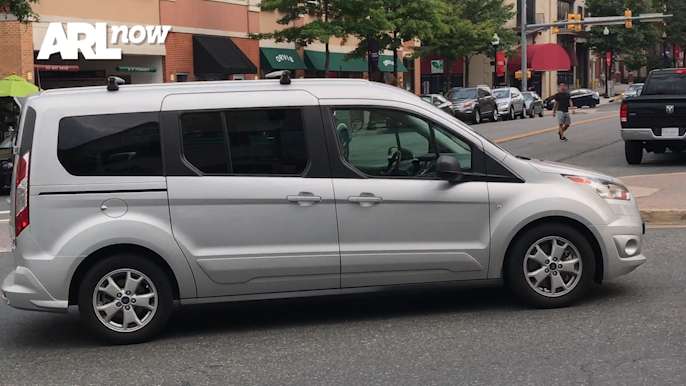
That policy is getting additional attention after a seemingly driverless van was spotted driving around Clarendon last week and, this week, was revealed to be a human-driven Virginia Tech research project.

While the mysterious van was not self-driving, automated vehicle testing is expected to take place in Northern Virginia, as we wrote last week.

VDOT and FHWA recently announced that Virginia Tech would be conducting automated vehicle testing along I-95, I-495, I-66, Route 50 and Route 29. The announcement did not mention testing on primary streets along Metro corridors, however WTOP reported in May that “self-driving cars already on Virginia roads, even if you don’t realize it.”

Self-driving vehicles have the potential to save thousands of lives each year by reducing human-caused crashes while also freeing up drivers to focus on other tasks during their daily commute. Such technology could also become an economic engine for the region, should Northern Virginia become a leader in the field.

On the other hand, testing a new technology in a heavily populated region certainly comes with risks. And many fear the unknown with self-driving cars: what if the tech has flaws and causes crashes?

What do you think of automated vehicle testing in Northern Virginia?


It’s the end of another week, but before we look at our most popular stories, here are some you might have missed:

Longtime outdoor store Casual Adventure will be open through at least Christmas, while plans for redevelopment nearby could come before the Planning Commission as soon as next month.

This weekend is the fourth annual Kennan Garvey Memorial Bike Ride, while the former Artisphere will become a coworking space and nonprofit The Reading Connection will close on August 11 after 28 years.

These were this week’s five most-read stories:

  1. Naked Man Walking Down the Middle of Columbia Pike Arrested
  2. Whole Foods Parking Lot Closes for Resurfacing, Tempers Flare on the Street
  3. UPDATED: Dog Did Not Die of Rabies, CDC Says
  4. SPOTTED: Driverless Vehicle Cruising the Streets of Clarendon
  5. BREAKING: Fire Reported at N. Glebe Road Business

And these received the most comments:

  1. Survey Says: Millennials Favor More Transit, Less On-Street Parking
  2. Whole Foods Parking Lot Closes for Resurfacing, Tempers Flare on the Street
  3. Morning Notes (July 31)
  4. Morning Notes (August 1)
  5. Naked Man Walking Down the Middle of Columbia Pike Arrested

Feel free to discuss anything of local interest, including the stories mentioned above, in the comments. Have a great weekend!


Applying to college is a scary but exciting process. Picking out schools, writing a personal statement and stacking up all of your best accomplishments.

But there was only one experience that I was never able to put into simple words, and that was the 11 years that I spent in immersion classes.

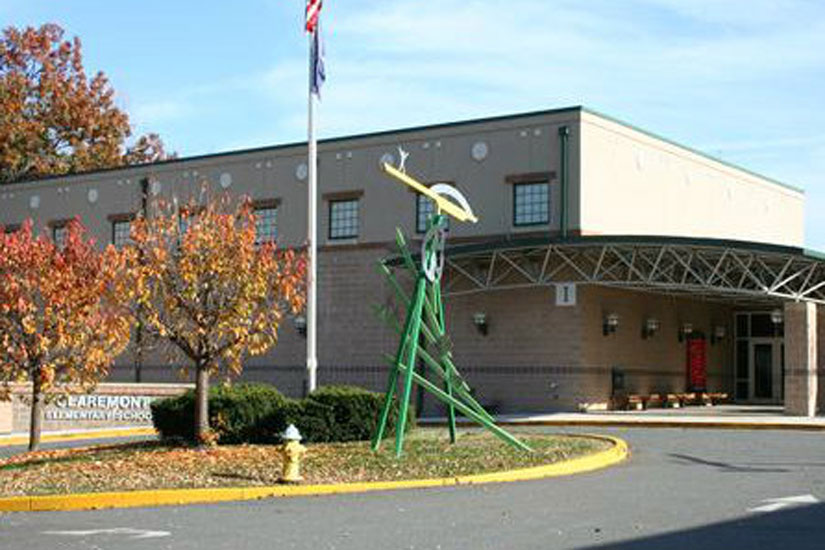
Arlington County is home to four Spanish immersion programs, at Claremont and Francis Scott Key elementary schools, Gunston Middle School and Wakefield High School.

Arlington Public Schools says the goal of the programs is to develop “high levels” of proficiency and literacy in two languages, promote high academic achievement and cross cultural competence.

I started second grade at Claremont Immersion School in 2003. It was the first year the school opened and students came from the immersion programs at Abingdon Elementary and my former school, Oakridge. I spent half my first day reciting the multiplication tables in Spanish, the other half in English.

It was not always easy, I struggled with both science and math as I got older and the content got more complicated. I stuck with it, although it was common for classmates to leave the school so they could thrive in a traditional setting.

Language skills improve even more in middle school, when there are 11 hours of Spanish instruction a week. Because subjects switch throughout the day, there’s a possibility to go back and forth from English to Spanish. It’s a brain workout to go back and forth between the two every 45 minutes. Unlike the elective Spanish classes offered in middle school, the Spanish Language Arts class that immersion students take is structured much like an English class.

High school is the true test. Some students struggle with AP level Spanish, as you don’t practice the language the way you do in middle school. With block scheduling, you may only get one day of Spanish instruction.

Continuing to practice Spanish every day is a valuable commitment. Many of my friends are double majoring or minoring in the language. They have traveled to Spain, Cuba and Costa Rica to practice the language.

“I’ve gotten to travel the world with confidence in my ability to speak the language,” said Peyton Johnson, a senior at James Madison University double majoring in Communications and Spanish.

(more…)


Mark KellyThe Right Note is a weekly opinion column. The views and opinions expressed in the column are those of the author and do not necessarily reflect the views of ARLnow.com.

Ever been in your neighborhood grocery store and had to explain to a parent why their child will be switching schools next year because you voted to move an invisible boundary? If you have, you probably are, or were, on the school board.

Parents are, rightly, protective of their kids. Decisions about what happens in our schools is taken seriously, and changes can impact people on a very personal level.

It may be the job of the school board member to make those decisions, but it is not always an easy one. And on the tough calls, you almost certainly will be faced with heated dissent which may not be confined to the board room.

Right now, Arlington is in the painful process of redrawing its school boundaries and making difficult decisions on locating new schools. But hopefully our board members, parents and the community at large are looking well beyond seats for students.

What goes on inside the classroom is far more important than how old that classroom is or which school building it is in.

Our American education system is designed on a foundation from over half-century ago, built to prepare kids for an economy that is far in the rear view mirror.

We need elected leaders who are thinking about preparing kids in a way that does not just conform to the top-down models of the past. And, we should never make it a default position that a traditional four year college program is the next step for every student.

There are positive signs. Arlington Tech represents a new approach for high school students. The year-old school is encouraging students to tackle real world problem solving skills while integrating core curriculum.

We can and should get beyond infrastructure decisions and continue to look for new approaches to meet the needs of our student population. We have the resources here in Arlington to be a leader in the education system of the future.


Peter RousselotPeter’s Take is a weekly opinion column. The views and opinions expressed in this column are those of the author and do not necessarily reflect the views of ARLnow.com.

A close Redskins watcher says Virginia is the most likely site for a new Redskins stadium because team President Bruce Allen has “significant personal ties at the highest levels of the Virginia government,” and the amount of public financing for a new stadium will be the “single most important factor” in site selection.

Virginia Gov. Terry McAuliffe is “vigorously pursuing” the stadium. On July 27, McAulliffe renewed his lobbying of Redskins owner Dan Snyder:

“We’ve laid everything out and served it up beautifully,” McAuliffe said …. McAuliffe pivoted to the latest method of financing massive NFL projects in which a stadium is part of a vast retail, shopping and hotel complex, by relying on development funds (in addition to considerable tax breaks) to foot the bill….

Football stadiums do not spur significant economic growth

The evidence is overwhelming that subsidizing the construction of a new Redskins stadium will never be in the best interests of Virginia taxpayers:

Roger Noll, an economist who studies sports-stadium subsidies at Stanford University, says he has never witnessed the construction of a football stadium that has had a significant positive impact on the local economy.

Direct costs far outweigh the benefits

A very extensive study by the Federal Reserve Bank of Kansas City found that a typical stadium costs taxpayers more than four times more than any long-term benefits from jobs and tax revenues:

Proponents of using public funds to finance stadium construction argue that the benefits from increased economic activity and increased tax revenue collection exceed the public outlays. But independent economic studies universally find such benefits to be much smaller than claimed.

Opportunity costs further tilt the balance against taxpayer funding

The costs of a new Virginia stadium for the Redskins are even higher when you factor in the opportunity costs. Virginia tax dollars spent on such a stadium are tax dollars that could have been spent to:

  • fund Virginia’s state share of a new dedicated funding stream for Metro
  • redress some of the many remaining critical deficiencies in Virginia’s mental health facilities
  • help bring high-speed broadband to rural areas of Virginia that currently lack it
  • expand Virginia’s Medicaid program

These are only four of hundreds of more deserving needs.

Dan Snyder doesn’t need the money

Redskins owner Dan Snyder is a billionaire who doesn’t need a public hand out. Any Virginia tax dollars for a new Redskins stadium will go directly into Dan Snyder’s pockets.

A 2003 study by a member of the University of Texas economics department documented that a new stadium increases:

  • team profits by an average of $13 million annually
  • payroll salaries by $14 million annually
  • team book value by $90 million

All these numbers are likely to be much higher in 2017.

Conclusion

I admire McAuliffe for his tireless work to promote economic development in Virginia. But, Virginia should not offer to give Dan Snyder either “development funds” or “considerable tax breaks.”

Nothing related to the stadium should be subsidized by Virginia taxpayers. Dan Snyder should arrange 100% private financing. Under these conditions, Snyder could build his stadium in Virginia if he could find a welcoming local government.

Seattle Seahawks all-star cornerback Richard Sherman gets it: “I’d stop spending billions of taxpayer dollars on stadiums…and maybe make the billionaires who actually benefit from the stadiums pay for them.”


View More Stories