
Progressive Voice is a weekly opinion column. The views and opinions expressed in the column are those of the individual authors and do not necessarily reflect the views of their organizations or ARLnow.com.

By Lisa Nisenson

In another example that transit system improvements don’t happen overnight, we now know that we will need to wait another year, at least, for promised Columbia Pike bus improvements.

To be fair, the delay is due largely to investments in Metro’s SafeTrack repairs. Moreover, on the positive side, Arlington is moving forward on 13 new ART buses, estimated to arrive either this year or next.

But new transit models around the world show that we can have service improvements without waiting for years. On-demand rides and real-time information only a few taps away on a mobile app create public expectations for innovation in all aspects of transportation, both public and private.

So in addition to what happens next with bus improvements on Columbia Pike, we need to ask:

  • Are there ways to quickly combine the best of on-demand rides and the regional power of Metro’s rail and bus service?
  • Can we extend the benefits of high performing transit throughout Arlington — not just transit stops and station areas?
  • What are other regions doing we can adopt or adapt quickly?

Last December, the U.S. Department of Transportation announced winners of their Mobility on Demand Sandbox. The sandbox reference suggests play, but the aim is research into “what works” for integrating personalized mobility features into transit programs. While there were no winners from our region, the 10 selected transit systems have features we can copy — especially for first/last mile service to Metro stations.

For example, Pima County, Ariz. is building the Adaptive Mobility with Reliability and Efficiency project that augments existing fixed route transit with Uber and Lyft-like on-demand, shared rides, integrated payment systems and advanced traveler information systems.

Los Angeles and Seattle are working directly with Lyft for a mobility on demand partnership for trips beginning and ending at select transit stops. Customers can use the Lyft app or call a dispatcher phone number, providing equity to lower income individuals.

San Francisco is building a carpool match program to link drivers with riders based on their transit destinations, including a seamless payment platform that assigns preferential parking for carpoolers while increasing transit ridership by improving access to BART stations.

Other programs are built around on-demand shuttles comparable to hotel shuttle service that circles Crystal City and Ronald Reagan Washington National Airport. One is a Boston-based company called Bridj. Ford Motors recently acquired a similar service called Chariot. These shuttles provide a “missing middle” in transit that can be more demand-responsive than larger buses.

Perhaps the boldest experiments are with autonomous (or driverless) cars and shuttles. Most trials are on private campuses, but Las Vegas recently launched a driverless shuttle and Local Motors has begun producing 3-D printed, autonomous shuttles at National Harbor in Maryland.

We can get started now on similar initiatives, but there are some key principles to keep in mind in dealing with emerging technologies:

Prioritize Metro: Some observers predict transit’s demise with new technology. However, our region cannot operate without high capacity Metro rail and buses. There is not enough road space to host hundreds of thousands of riders in small vehicles. Well-planned programs will feed riders to Metro and support innovation with ART vehicles and services.

Understand testing: With fast-changing technology, initial service runs are used to experiment with route selection, define target riders, test pricing models, and work through program bugs. In Kansas City, Bridj ridership fell far below expectations in early tests. But the tests revealed who was most likely to try and stick with the service, and it not surprisingly includes Millennials. Poor initial results aren’t always a reason to quit, because ridership can and does increase with continuous improvements via testing.

Mobility hubs: Premier transit access is no longer tied to locations within the first quarter mile walk from Metro stations. Arlington can create hubs that concentrate certain transportation options in key locations around the County. Locating and designing these hubs, differing from highly visible Metro stations, will require knowing where people need to go, how quickly they want to get there, when they want to travel, and the best marketing channels.

In building partnerships with transportation providers, regional transit agencies, universities, and neighborhoods, Arlington can take prompt and lower risk actions to test ways that can help people get from place to place quickly without relying on single occupancy vehicles — reducing congestion and filling service gaps until transit build out can be completed.

Lisa Nisenson leads Alta Planning + Design’s New Mobility groups and is founder of the award-winning start-up GreaterPlaces. She gave a 2015 TEDxArlington talk on building better transportation networks.



Mark KellyThe Right Note is a weekly opinion column. The views and opinions expressed in the column are those of the author and do not necessarily reflect the views of ARLnow.com.

Imagine you are building a new house. You live in Arlington, so you have a budget of $1 million. Your builder comes back to you and says for $1 million, you may have to cut a few things off your wish list.

Instead of marble tile in your bathrooms, you will have to go with another natural stone or maybe even ceramic. They are going to have to downgrade your hardwood floors and kitchen appliances slightly. And, you may only be able to finish half of the basement, so your media room may have to be a little bit smaller.

You may be disappointed you cannot get a little more for your money, but you take heart in the fact you still will have a brand new $1 million house to live in.

When the County Manager or County Board says they are making “difficult choices” in the budget, they are a lot like the person who can only get 98 percent of what they want in a new house.

To gain a dollars and cents perspective, let’s take a look back over the past three years.

Arlington’s total spending for FY 2015 was $1.479 billion.

The FY 2016 adopted budget was $1.486 billion, but the county actually spent $1.529 billion. The $41 million difference, or 2.7 percent spending increase, was accounted for in the budget closeout process.

For FY 2018, the County Manager proposed $1.604 billion. It looks like an increase of $125 million in just three years. However, the closeout process that would take place in November 2018 will move that number up by at least $25 million, not including the budget savings that will be available to spend. But the County Board essentially pretends every March that millions in excess revenue will not be available to spend in the closeout process every November, so this is nothing new.

As predicted, Arlingtonians flocked to the public hearing on Tuesday to oppose the County Manager’s “proposed cuts.” The County Board will now be able to say with a straight face, they heard from the community that the cuts — that were never going to happen anyway — are a non-starter.

Reining in the budget is just too difficult to do they will say. Property taxes must, therefore, must go up by the full 5 percent.

The cycle that began when the Board spent the FY 2016 closeout dollars last November will soon be complete.


Peter Rousselot

Peter’s Take is a weekly opinion column. The views and opinions expressed in this column are those of the author and do not necessarily reflect the views of ARLnow.com.

In a March 9 column, I analyzed County Manager Mark Schwartz’s proposed 2-cent property tax rate increase to generate $14.8 million to close a gap in the FY 2018 operating budget.

According to the Manager, that gap is attributable to an “unanticipated” increased funding requirement from Metro and a supplemental funding request from Arlington Public Schools. The APS request exceeded the monies otherwise available to APS under the County-APS revenue sharing allocation formula.

As I noted in that column:

Without much-needed fundamental reforms, the long-term costs represented by APS and Metro will indeed put tremendous upward pressure on Arlingtons property tax rate in every year for the foreseeable future.

On March 15, at the direction of the County Board, the Manager proposed cuts to the County budget to offset 1 cent of the proposed 2-cent tax rate increase.

The Manager’s proposed cuts are just the latest illustration that unless fundamental reforms are implemented, we will be confronted year after year for the foreseeable future with:

  • increasing property tax rates (further decreasing the affordability of Arlington for new and existing residents), and/or
  • crowding out of core County services.

The fundamental reforms should include:

APS operating model

As indicated by the latest APS supplemental funding request, there is a justified basis for concern that APS will not be able to support its dramatically increasing enrollment under its existing operating model within APS’ fixed budget allocation. The solution cannot be either to continue routinely to increase APS’ share of the budget (because that would crowd out core County services) or to increase the tax rate (because that would make Arlington less and less affordable).

The School Board should launch a broad community process, including engaging residents outside the schools’ community, to review APS’ operating model to determine how to maintain school quality while permitting APS to continue operating within a reasonable budget share. For example, this new petition offers compelling reasons why every APS elementary student does not need a taxpayer-funded iPad.

APS Construction Costs

As I wrote in December, the County and School Boards should adopt appropriate revisions to the design standards, construction processes, and community review processes for constructing future new schools, with a specific percentage numerical target for per-seat cost-cutting. Both APS and County projects need off the shelf designs, increased competitive bidding, and benchmarks from multiple similar jurisdictions.

Increased County Board Engagement Regarding APS Fiscal Matters

The last several years have seen a welcome and dramatic increase in cooperation between the County and School Boards, including work sessions, the Joint Facilities Study and now the Joint Facilities Advisory Commission.   However, the fixed budget allocation between the County and APS should not continue to be an unqualified delegation of decision-making from the County to APS.

New initiatives should be undertaken to enable the County Board to increase its oversight and input into APS’ utilization of capital and operating monies provided by the County.

As I also wrote in December, the County Board should develop financial projections out to 2040 for both capital and operating budget spending, utilizing at least 3 assumptions: most likely case; optimistic case(s); pessimistic case(s). The Board should publish the results and the assumptions, invite community input and publicize what the community says.

Conclusion

Stop pretending we are confronting “unanticipated” circumstances. Start enacting fundamental reforms to anticipate our recurring circumstances.


The following letter was sent to members of the County Board, ARLnow.com and other community organizations by Bluemont resident and local activist Suzanne Smith Sundburg, who says the proposed tax rate hike is regressive and unnecessary. Arlington County is in the midst of its annual budget process.

Dear Chair Fisette and members of the Arlington County Board,

Meaningful discussion of revenue (the real estate tax rate) without any discussion of expenditures (the budget) makes little sense, as these two items are inextricably linked.

For FY18, the effective advertised real estate tax-rate (assessment increase + 2-cent rate increase) is equivalent to a 4-cent hike in the real estate tax rate. Over the past decade, Arlington County homeowners, commercial property owners, and renters have been asked to shoulder ongoing increases in the tax and fee burden.

With a 2-cent increase, the average homeowner would see the tax and fee burden rise from $8,305 in calendar year (CY) 2016 to $8,613 in CY 2017 — a 4% increase, or about $492 — and will have absorbed a cumulative, 5-year increase of $1,613 in additional taxes and fees (CY 2013-CY 2017).

Commercial property owners (and the businesses that rent from them) face an even greater burden with the 12.5-cent transportation surcharge and (where applicable) BID assessment.

At a March 9 budget work session with the commissions, the manager agreed that real estate tax increases are passed through to commercial office tenants and that taxes are one driver of the county’s stubbornly high vacancy rate. However, he could point to no specific data or recent analysis predicting the impact of a 4-cent (or lesser) effective tax-rate increase on Arlington’s vacancy rate.

Likewise, in answer to another question on March 9, the manager also agreed that raising the real estate tax rate would increase the cost of housing for the county’s affordable housing community — even as the county is simultaneously subsidizing this cost. Increases in Arlington’s tax and fee burden makes housing less affordable for all Arlingtonians, and this burden disproportionately affects those living on lower and fixed incomes, including elderly and disabled residents.

Given the large amount of cash on hand, as outlined below, it would seem highly likely that the manager could (with Board concurrence) cover all new proposed spending by reallocating a small portion of these funds to cover limited-duration and nonrecurring expenditures in the general fund budget rather than raising the tax rate for FY2018.

Using cash already on hand, the manager’s proposed budget could be funded without any spending cuts or a tax-rate increase. I therefore urge the Board not to increase the tax rate and to ask the manager to identify expenditures that are appropriate for alternative cash funding and to trim any unnecessary spending, using public money efficiently and effectively to minimize the need for future tax increases (or spending cuts). Below the list of several sources of cash on hand, I have identified a few cost savings and efficiencies as well.

CASH ON HAND

  • $191.2 million — Fund Balance. (See Exhibit 3, FY16 CAFR.) I am not asking the board to tap the county’s 5% operating reserve of $58 million or similar required reserves. There is a great deal of money in the fund balance beyond required reserves. Since FY09, the county has been carrying an unspent fund balance of at least $100 million. (See Exhibit 5, FY09-FY16 CAFRs.) Since FY06, the fund balance has generated a net positive surplus, even at the height of the real estate crash when revenues were $72 million less than expenditures.

Thus, over the last decade the county historically and consistently has taken in more money than it has spent. FY18 will likely continue this trend as the manager has presented a “balanced budget that continues the current level of service within existing tax rate” of $0.991 per $100 of assessed value.

  • $77.7 million — APS reserves. APS has its own $77.7 million cash reserves (on top of county reserves), which are defined/described in the superintendent’s FY18 proposed budget. The superintendent has set aside approximately $24 million in cash for “future budget years,” $19 million of which is unallocated and presumably will be carried over into FY19.
  • $157 million — Transportation Capital Fund. (See Exhibit X, FY16 CAFR.) The TCF is expected to generate another +/-$26 million in revenue in FY18. On March 9, the manager confirmed to me that at least some of the 1-cent proposed increase for Metro could alternately be funded by TCF dollars. When we know that borrowing costs are likely to rise, why would we want to float more new bonds than strictly necessary, particularly when we have so much unspent money in the TCF?

Surely out of a $1.24 billion budget, the county can find $14.8 million in limited-duration and nonrecurring expenditures that could be otherwise funded from cash already on hand. If it’s a choice between making cuts and finding expenditures that qualify for an alternative funding source(s), my guess is that the county’s departments will be able to provide a list of items that would qualify.

(more…)


Despite a bit of a cool start today, spring has definitely sprung in Arlington.

Seasonal allergies aside, there’s a lot of like about spring here: rising (but not sweltering) temperature, cherry blossoms and the return of many farmers markets and other outdoor activities.

For some, however, spring is nice but not the nicest of the local seasons. What’s you favorite? Let’s find out.


In Monday’s Morning Notes, we linked to a Washington Business Journal article that noted that there is more domestic migration out of the D.C. region than into the area last year.

Slower job growth and a high cost of living were blamed as possible reasons for the outflow.

We have previously predicted that Arlington will struggle to retain millennial residents as they start having families due to the high cost of housing and childcare. Those millennials may seek greener pastures outside the region, particularly in the kinds of cities that saw a net influx of domestic migration: Phoenix, Dallas, Seattle and Houston.

Would this prediction bear out in a poll of our readership? Let’s find out.

Photo courtesy James Mahony


After one last blast of cold weather this week, it appears that old man winter has taken his last bow for the season, according to our friends at the Capital Weather Gang.

Also bowing out: the Republican effort to pass a replacement for the Affordable Care Act. A number of local lawmakers and Democratic political candidates have issued statements on the bill’s failure this afternoon, including Sen. Tim Kaine (D-Va.).

Also this afternoon, a grinning Rep. Nancy Pelosi, the House Minority Leader, was spotted taking a flight out of Reagan National Airport in Arlington.

While the healthcare bill has received much of the national media attention this week, it was also a busy local news week. Here are some of the week’s most-read articles.

Feel free to discuss the return of spring-like weather, the healthcare brouhaha on Capitol Hill or any other topic of local interest in the comments.


Mark KellyThe Right Note is a weekly opinion column. The views and opinions expressed in the column are those of the author and do not necessarily reflect the views of ARLnow.com.

Next week the County Board will open its microphones to any Arlingtonian who wishes to discuss items in the budget or the advertised tax rate. If this year holds to form, hundreds of Arlingtonians will show up to advocate for higher spending and adopting the highest tax rate. Few will speak to lowering taxes.

It would be nice if the thousands of Arlingtonians who are tired of the Board’s tax and spend record would pack the room next Thursday and make the case to hold the tax rate level, if not lower it. But past experience has taught us all that the Board will listen politely, and then do what they were going to do anyway.

The Board formally approved at least $10 million in taxpayer subsidies to lure Nestlé to Arlington — $4 million directly from our local budget. According to county staff, Arlington had to out-bid another state in order to land the company.

The staff report claims a net tax benefit to Arlington of $14.2 million over the next 10 years, though they did not include $2 million in other infrastructure improvements in this calculation. Taxpayers will likely forget by then to ask for a report of the actual tax benefit from this deal.

In the meantime, hopefully the Board will set aside some of its annual budget to provide tax relief to businesses that are already in existence by reducing the burden of the Business License Tax.

Arlington Democrats have mysteriously pushed for satellite absentee ballot locations for this fall’s elections. One can only assume local committee chairman Kip Malinosky is operating under the assumption the 2017 governor’s race is going to be close, and they are hoping to squeeze as many votes as possible out of Arlington for the Democrat nominee.

According to the Electoral Board, the request would cause a great deal of strain on both the elections staff and their budget — both of which were set up to meet the needs normal gubernatorial year elections. The Courthouse Plaza office accommodated 5,000 in-person absentee voters in 2013 — more than 15,000 fewer than the preceding year’s presidential election — with very few voters experiencing a wait of more than 10-15 minutes. They anticipate a similar number of in-person voters again this year.

After the Democratic-majority Electoral Board rejected the request, Malinosky has apparently appealed directly to the County Board. It will be interesting to see if the Board takes any action on this matter.


Peter Rousselot

Peter’s Take is a weekly opinion column. The views and opinions expressed in this column are those of the author and do not necessarily reflect the views of ARLnow.com.

Last week, Donald Trump presented his first budget blueprint.

Regardless of its prospects, this blueprint is important because it offers the most detail to date regarding what the President wants to see happen. It exposes Trump’s values and priorities.

Trump’s budget is a moral failure

Although numerous other examples are discussed, one illustration of Trump’s budget’s moral failure is his proposal to cut funding upon which the Meals on Wheels program depends. CNN’s Jim Acosta asked Trump’s Budget Director, Mick Mulvaney, whether the budget was hard-hearted:

“No, I don’t think so,” Mulvaney replied. “I think it’s probably one of the most compassionate things we can do.”

“To cut programs that help the elderly and kids?” Acosta asked, incredulously.

“We’re trying to focus on both the recipients of the money and the folks who give us the money in the first place,” Mulvaney explained. “And I think it’s fairly compassionate to go to them and say, ‘Look, we’re not gonna ask you for your hard-earned money, anymore, single mother of two in Detroit … unless we can guarantee to you that that money is actually being used in a proper function.'”

WRONG. There’s not an ounce of compassion here. That single mom in Detroit, a New York billionaire in Trump’s cabinet and all other federal taxpayers should continue to share the responsibility to use their hard-earned money to help fund Meals on Wheels — and many other programs from which Trump’s budget would cut funding.

Asked what she would say to Trump, one Trump voter responded: “What if it was your mama?”

Trump’s budget hurts Virginia

Sen. Tim Kaine (D-Va.) has prepared a lengthy fact sheet listing Trump’s budget cuts that would hurt Virginia. A small fraction of those cuts are:

$2.6 billion cut to the Environmental Protection Agency could jeopardize:

  • The Chesapeake Bay Cleanup Program, which would be cut entirely under Trump’s budget. The program has reduced pollution, bolstered oyster and crab populations, and driven tourism and outdoor recreation.
  • The Clean Power Plan and climate change research, which is critical to combatting sea level rise in Hampton Roads and climate effects across Virginia.

$2.4 billion cut to the Department of Transportation could jeopardize:

  • Metro capital investment, which helps Metro reduce its maintenance backlog.

Proposed cuts in the Department of Homeland Security could jeopardize:

  • The budget proposes cutting FEMA preparedness grants for state and local entities by $667 million. In 2016, Virginia received more than $18 million in FEMA preparedness grants for counterterrorism efforts including local law enforcement equipment and training and transit security.
  • The TSA’s VIPR program, which conducts targeted operations at transportation hubs including Dulles International Airport, Reagan National Airport, and Virginia metro stations.

$100 Million cut to NASA could jeopardize:

  • STEM Education in Virginia. Trump’s budget would eliminate NASA’s Office of Education ($115 million), which has supported scholarships and educational opportunities for thousands of Virginia students, particularly minorities and women. (Moving Virginia backward toward the Hidden Figures SAD.)

Trump’s budget hurts Virginia Trump voters

Voters in Appalachian areas of Virginia would be particularly hurt by Trump’s proposal to completely defund the Appalachian Regional Commission.

Of the 420 counties served by ARC, 399 voted for Trump. You can review the ARC Virginia programs that would be defunded.

Conclusion

Trump’s budget is mean-spirited, harmful, and counterproductive. 


Progressive Voice is a weekly opinion column. The views and opinions expressed in the column are those of the individual authors and do not necessarily reflect the views of their organizations or ARLnow.com.

By Michelle Winters

For Arlington to realize the benefits anticipated when the County approved its first Affordable Housing Master Plan (AHMP) in 2015, we need greater urgency in making the decisions needed to implement it.

Without some bold actions, most parts of Arlington are at risk of becoming enclaves for the rich rather than communities that welcome people from all walks of life. If Arlingtonians value our diversity, are we doing enough to keep Arlington accessible to people with a broad range of income levels – Arlington for everyone?

The AHMP, a component of Arlington County’s Comprehensive Plan, calls for 17.7 percent of the County’s housing stock to be affordable to renters earning no more than 60% of area median income (AMI) by 2040. Is 17.7 percent a lot? Not really. It’s basically holding steady – representing roughly the same share of households at this income level that we had in 2015. Just holding steady on affordability may be considered ambitious in a community like Arlington, because it will take a lot of investment to make it happen.

This winter, the County published its first annual report on the AHMP – Investing in Our Community. It’s an impressive report that shows progress on several fronts. Yet, a problem remains because the County is nowhere near the pace it needs to be in adding and preserving affordable units if it intends to meet the goals expressed in the 2015 plan.

In FY2016, the County added 219 units of committed affordable housing, but lost 874 units of market-rate affordable housing that had been affordable to renters at 60 percent of AMI. Contrary to the belief of many who are skeptical of investment in affordable housing, the County’s investment is not adding to the affordable housing stock — it’s not even keeping up with the loss.

With this track record, the County Manager’s proposed FY 2018 contribution to the Affordable Housing Investment Fund is not enough to stem the inevitable losses in coming years. He has proposed a contribution of $13.7 million, flat from the level provided in the prior year. Implementing the County’s plan will actually require at least double that amount over the long run.

Housing advocates recognize that there are other important needs that deserve attention and public support, especially in tough budget years. But shortchanging affordable housing compromises other County goals.

Take the educational achievement gap as an example. Research has shown that living in housing that’s healthy, safe, and affordable has positive impacts on a child’s ability to focus on her education. It also reduces stress for parents so that they can engage more with their children and the community. Housing is a critical investment that leverages returns in many other areas, an impact many have likened to a “vaccine” that can prevent a host of other problems.

We have other real world examples. In addition to affordable homes, our award-winning local affordable housing providers such as AHC and APAH provide after school programs, food distribution, workforce development, backpack drives, and other services that enhance the lives of their residents and set them up for success. Keeping a child in stable and affordable home is probably one of the most fundamental ways of supporting them, and without that support additional investments in education will not be as effective.

What will it take to meet the County’s affordable housing needs?

A principal County priority should be allocations for the Affordable Housing Investment Fund that are commensurate to the challenge. It can also mean looking at new ways to leverage the resources that we already have. With high demand and low affordable supply, we will need more than business as usual to make a dent in the problem.

For example, we issue bonds for school construction, infrastructure, and neighborhood improvements, but doing the same to invest in the long-term affordability of our housing stock has not yet been on the table. This kind of option — used recently in Seattle and Austin — deserves a closer look.

If we are going to break through and finally start making the right levels of investment in housing, County residents need to make it clear to the Board during this year’s budget cycle that Arlington cannot stay on its current trajectory. An affordable Arlington for everyone — including our workforce, our children, the elderly and the disabled — requires an investment, not just a plan.

Michelle Winters is the executive director of the Alliance for Housing Solutions in Arlington. AHS is a 501(c)(3) nonprofit organization working to increase the supply of affordable housing in Arlington and Northern Virginia through public education, facilitation and action. Learn more about the Arlington for Everyone campaign at http://www.allianceforhousingsolutions.org/.


The following Letter to the Editor was written by Arlington resident Matt Rizzolo regarding the county’s potential purchase of the Buck property, across from Washington-Lee High School, and the land use decisions that will accompany the purchase.

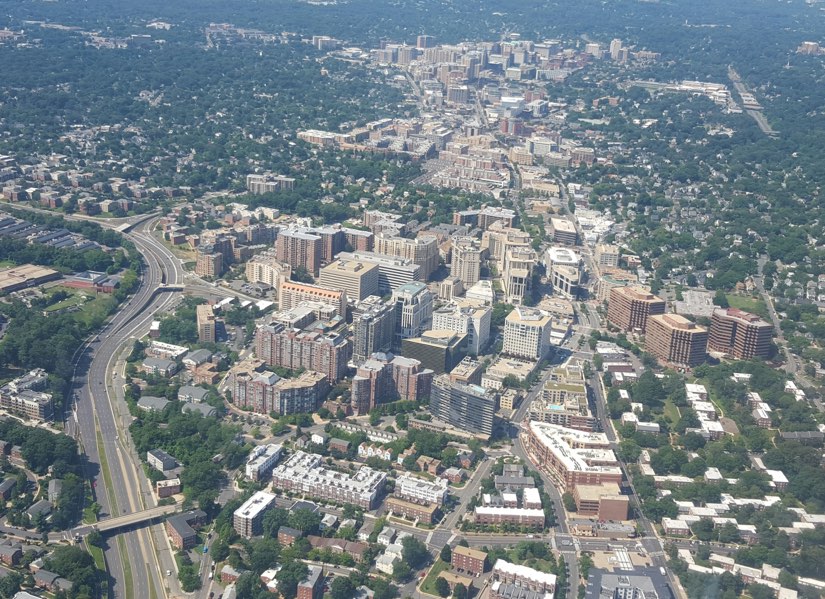
With over 8,000 people per square mile, Arlington is one of the most densely populated areas in the country. It’s no surprise, then, that Arlington is often held up as a model of walkability and smart growth, and the county government rightly champions such accolades. But being such a small, highly populated and growing county presents unique challenges–with transportation and facilities issues, including schools, high on the list.

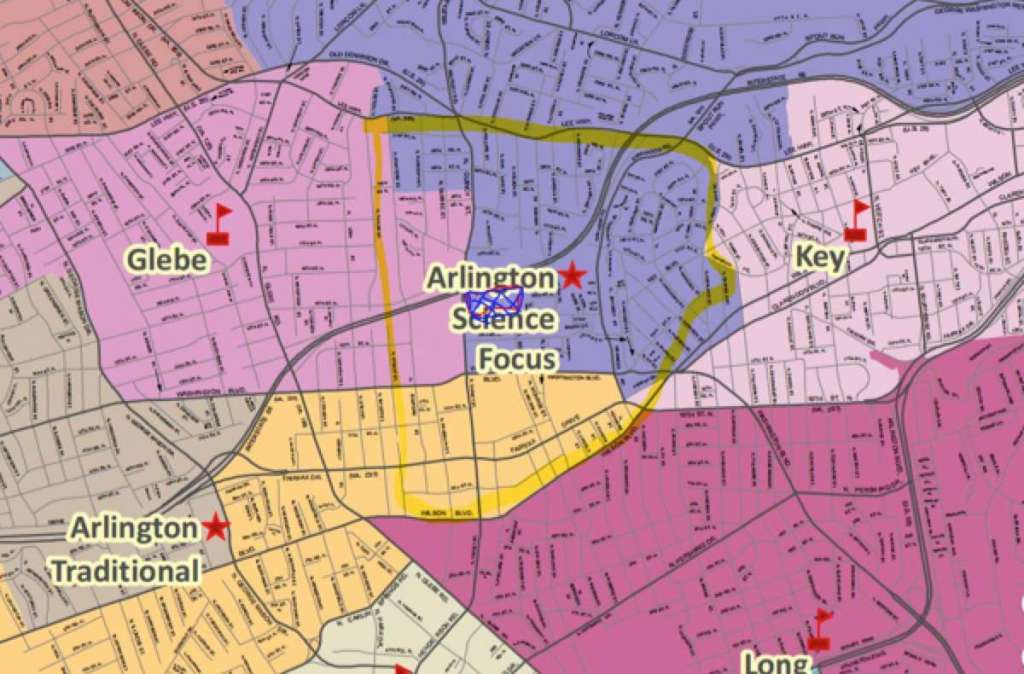
This is where the county’s possible purchase a six-acre parcel of land in North Arlington comes into play. This plot, known as the “Buck property,” is in a central, high-value location: for example, it’s within walking distance of three different Metro stations, including Ballston and Clarendon. The size of the land–rarely available in Arlington–understandably has Arlington leaders champing at the bit to see how best to use this property to satisfy some of the county’s many needs. Arlington’s growing population requires more schools to educate students, more storage for school and county buses, more emergency and municipal facilities, and more open space for playing fields, to name just a few. A few months ago, I wrote a piece for the Washington Post urging the county to think big about this property–including exploring decking over I-66–and not simply take the path of least resistance. To me, the first step in this process is elementary–as in, elementary school.

Despite being located in one of the most densely populated parts of Arlington, houses near the Buck Property have no nearby neighborhood elementary school–most nearby children either walk nearly a mile to Glebe Elementary School (crossing busy Glebe Road), or most take buses to Taylor or Ashlawn Elementary Schools, both several miles away. (Arlington Science Focus School, located a couple blocks from the Buck property, is a choice school that offers no geographic preference to nearby households.) The location of the Buck property and the density of the surrounding neighborhood provide the county with an opportunity create a new, “walkers-only” elementary school–an opportunity the county should seize.

Building an elementary school on the Buck property would allow Arlington to “walk the walk on walkability,” and also to satisfy multiple county needs at once. Arlington doesn’t provide transportation for elementary school students who reside less than a mile from their school–here, a new elementary school could likely be filled with students who live within just a half mile from the site. A walkers-only school, drawing from the current boundaries of Glebe, Taylor, and Ashlawn, would obviate the need for these children to ride buses or walk long distances to school. Such a school would obviously hew to Arlington’s mission of smart growth and walkability, and could be used as a model for elsewhere in the region (and possibly, the nation).

Students’ health would benefit from walking even short distances to school instead of taking buses. A new elementary school would also alleviate the pressure on the already-stressed school system, which is currently forced to use over 100 trailer-type portable classrooms countywide. Arlington would be able to construct a new school without the expense of purchasing, housing, and servicing new buses to support the student population; the county would likewise be able to re-route or re-purpose buses currently used to transport students to Ashlawn or Taylor. Fewer buses moving students through the county’s busy corridors means reduced traffic and less pollution.

Finally, this new school could be just the first step in a larger, long-term project for the surrounding area. The school grounds could be combined with nearby Hayes Park and provide additional green space playing fields for students and the Arlington community. With so many schools and the David M. Brown Planetarium nearby, the county could explore partner with a private entity to establish a children’s learning center or athletic facilities. And the decking of I-66 should be analyzed, to possibly stitch back together the neighborhoods of Ballston-Virginia Square and Cherrydale (split by I-66 back in the early 80’s) with development above the highway.

The possibilities are many, but the first step here is for Arlington to walk the walk on walkability. Let’s examine the potential for walkers-only elementary school on the Buck property.

Matt Rizzolo
Arlington, Va.

ARLnow.com occasionally publishes thoughtful letters to the editor about issues of local interest. To submit a letter to the editor for consideration, please email it to [email protected]. Letters may be edited for content and brevity.


View More Stories