

peter_rousselot_2014-12-27_for_facebookPeter’s Take is a weekly opinion column. The views and opinions expressed in this column are those of the author and do not necessarily reflect the views of ARLnow.com.

It’s time for Arlington County to conduct a comprehensive re-examination of whether to continue to install new artificial turf fields and if so, when, where, why and what kind.

Background

At its April 16 meeting, the County Board unanimously approved a County staff recommendation to award a $674,000 contract to renovate the synthetic turf field at Greenbrier Park. The field is the home field for Yorktown H.S. It is used for a wide variety of sports and school events.

The current artificial turf field at Greenbrier Park uses a surface containing re-cycled crumb rubber. The new artificial turf field at Greenbrier Park will use an alternative infill, EPDM (Ethylene Propylene Diene Monomer). EPDM is a vulcanized rubber material that County staff believes resembles and plays like crumb rubber, but is not made from recycled materials.

Discussion

All Arlington’s re-cycled crumb rubber fields should be replaced

Arlington should be commended for deciding to replace the crumb-rubber-based artificial turf field at Greenbrier Park.

Arlington County currently has one indoor and 14 outdoor fields with synthetic turf. Thirteen of these 15 synthetic turf fields use styrene butadiene rubber (SBR). This is crumb rubber made from recycled tires. These fields are: Barcroft Park (two fields), Greenbrier Park, Gunston Park (two fields), Long Bridge Park (three fields), Rocky Run Park, Thomas Jefferson Community Center, Virginia Highlands Park, Wakefield High School and Washington-Lee High School.

The newest, most credible evidence suggests that all these Arlington fields containing re-cycled crumb rubber pose too great a health risk. They should be replaced. As recently documented in a Change.org petition:

Montgomery County, MD passed a unanimous Council vote to ban crumb rubber and implement the use of plant-based alternatives such as coconut fiber, cork and rice husk blend. Hartford, CT, Los Angeles Unified School District and the New York City Parks Departments already have banned the use of crumb rubber.

The federal Environmental Protection Agency (EPA) has not yet definitively banned synthetic turf fields that use re-cycled crumb rubber. But, Arlington need not wait for EPA’s final conclusions. Instead, Arlington should follow the lead of Montgomery County and other jurisdictions by committing to replace all of its artificial turf fields that currently use re-cycled crumb rubber when the useful lives of those fields end.

Arlington should comprehensively re-examine future installation of artificial turf

Arlington County staff currently believes that one of the key arguments in favor of artificial turf is that, although the upfront cost of installing artificial turf is far higher than installing natural turf, it is so much cheaper to maintain artificial turf that artificial turf is overwhelmingly more cost-effective. A Forbes magazine article casts serious doubt on this argument–certainly enough doubt to warrant re-examining it. As part of this re-examination, Arlington should consider a ban on future use of EPDM as has Hartford, CT.

Conclusion

The artificial turf industry lobby in this country is large, well-financed, and eager to maintain or increase the industry’s market share. The artificial turf industry lobby knows how to market its product to local municipalities. Given the potential health risks and dollars at stake, Arlington should appoint a special citizen-led task force to re-examine where Arlington should go from here on the artificial turf issue.



Terry SavelaProgressive Voice is a weekly opinion column. The views and opinions expressed in the column are those of the individual authors and do not necessarily reflect the views of their organizations or ARLnow.com.

By Terry Savela

It is deeply disappointing when political leaders say one thing and do the opposite. That is why it was so troubling to see Tuesday’s County Board action violating the Board’s own public notice requirements – that Board Chair Libby Garvey had previously advocated for vigorously – in order to set in motion a review of “Strategic Priorities for Arlington.”

Acknowledging that Board members had discussed the proposal for months, she nevertheless initiated a wholesale review of County priorities by an unelected small group without providing any opportunity for comment by the public, Advisory Commissions, the School Board or Arlington’s many engaged community organizations. The draft Charge was not posted on the County’s website until the start of the Board’s Tuesday meeting where it was voted upon.

Whether or not one believes that the County’s priorities over recent years – schools, affordable housing, public safety, parks, environmental stewardship, and economic competitiveness – should be changed, this was not the way to do it.

The call for a six-member “Blue Ribbon” Panel – one member appointed by each County Board member and one appointed by the County Manager – will proceed without any selection by School Board members even though nearly half of our County’s budget goes to our excellent schools and we face a large and growing enrollment challenge.

The Panel’s Charge is to “provide an evaluation of the current policy goals and objectives for the County…and recommendations for a plan to reconcile and prioritize those goals.” Ms. Garvey talked at length about the need to “do things differently” and set priorities among all the service areas. Yet her repeated call to focus on “core” services suggests she has already decided which services she intends to downgrade. Those of us who take pride in services that reflect Arlington’s progressive values, including parks, trails, human services, arts, libraries and the environment, have reason to worry about service cuts.

In addition, it appears that the six Panel members will recommend which adopted County policies should be de-emphasized. I expect many Arlingtonians who labored on the Community Energy Plan, Affordable Housing Master Plan or Master Transportation Plan will be deeply concerned whether this small group will push to change or undo their recommendations.

By contrast, the well-received 2015 Community Facility Study resulted from a timely and efficient process involving more than 200 individuals and groups. The need for the Facility Study was identified in multiple campaigns and in both school and County advisory groups. The County and School Boards appointed a 23-member group that was a cross section of Arlingtonians – by age, geography, ethnicity, and leadership experience. And the charge mandated broad community involvement from interested Arlingtonians and organizations.

Perhaps, we shouldn’t be surprised by this contrast. It hearkens back to a failure by Ms. Garvey during her School Board tenure to engage our schools community in creating a long-term vision for addressing growing enrollment. The result has meant that every boundary change, proposed new school or programmatic adjustment stirs distrust from parents who care passionately about the education of their children. And she has shown little interest in acting on the widely-supported recommendations of the Community Facilities Study that would help address that earlier failure.

Perhaps the most telling moment of Tuesday’s discussion came when, addressing Jay Fisette’s comment about the importance of broad civic engagement in the development of Arlington’s plans, John Vihstadt noted that it would be up to the Board to decide in December whether the work of six Panel members would actually be used or might “end up in the proverbial circular file.”

So is the launch of the “Blue Ribbon” panel only the start of a longer process? Or is it meant to unwind community priorities that have evolved over a great deal of time and through broad-based discussions?

Is this the beginning of an effort to examine the Arlington County budget holistically and establish a common-sense approach for setting budget priorities? Or is it just a way to play favorites?

Whatever the motives, violating the Board’s own prior notice requirements and launching a wide-ranging review without input from residents, businesses or community groups is wrong. It certainly isn’t the Arlington Way.

Terry Savela has lived in Arlington since 1985 and served as a County Planning Commissioner, Transportation Commissioner, and as the vice chair of the Crystal City Task Force.


Mark KellyThe Right Note is a weekly opinion column. The views and opinions expressed in the column are those of the author and do not necessarily reflect the views of ARLnow.com.

The County Board decided to appoint a Blue Ribbon Commission to order future county priorities found in the Comprehensive Plan.

The Comprehensive Plan currently contains 10 elements and receives a comprehensive review every five years. The last five-year review was completed by the County Board in December of 2011. This new panel seems to be timed with a Board review this year.

Arlington has a history of creating a lot of conversation, but not always conversation that produces action. But rather than critiquing the County Board decision to appoint this panel, here are some suggestions to those who are selected.

  1. Be specific. The report from this panel should produce readily identifiable action steps and establish an order of priorities based on meeting community needs.
  1. Talk to critics. Understanding why there is disagreement with County Board decisions or staff actions will better inform your decisions.
  1. Be tough-minded. Do not attempt to reach a consensus that will appeal to everyone. Make hard choices and identify the most pressing priorities. The Board is appointing you, at least in some small part, because they have to play politics. You do not.

Here is a further note on this point. If you agree to serve on this Board as a stepping stone to run for the County Board in the future, please reconsider. The last thing we need is someone wondering how their recommendations will play in a political campaign down the road.

  1. Think outside the box. Do not confine your discussions or recommendations to the Comprehensive Plan as it currently exists. No one needs to read the same report that county staff could have produced on their own. And if the county staff sends you a draft report that does not reflect your discussions, send it back.

The bottom line: if the final set of recommendations does not ruffle more than a few feathers, the panel will probably have failed to do its job.


View of Rosslyn and graffiti from Georgetown (Flickr pool photo by xmeeksx)

It’s Friday. It’s 5:00. And it’s looking like a perfect spring weekend, weather-wise.

If outdoor activity isn’t your thing, you could spend your Saturday morning at the Arlington County Board meeting. Or, if you like being outside and like art, you could head to the Arlington Festival of the Arts in Clarendon.

Either way, enjoy the weekend and, as always, feel free to discuss any topic of local interest in the comments.

Flickr pool photo by xmeeksx


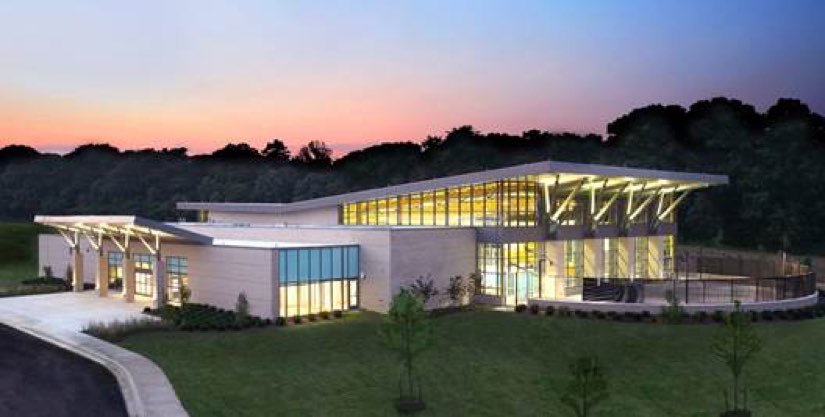
North Arundel Aquatic Center in Glen Burnie, Maryland, which is similar in scale to what is being proposed by the author's committee

The following op-ed was written by Tobin Smith, Chair of the Long Bridge Park Citizen Advisory Committee. Smith is also a past chair of the Arlington Park and Recreation Commission.

Earlier this week, the Long Bridge Park Citizen Advisory Committee, which I chair, recommended that the County proceed with designing a new aquatics, health and fitness facility at Long Bridge Park.

This is not an attempt to revive the large aquatics center that was shelved by the County in 2014 after construction bids far exceeded the bond funds authorized by Arlington voters in 2004 and 2012. We have learned many lessons from that. The current proposal is one-third smaller and more modest. It should have a more sustainable design and less ambitious energy-saving systems. It should be bid and built with much stronger controls on costs. And perhaps most importantly, not a dime more should be spent for this project than what voters already approved. Additional features should only be added if they meet a clearly identified community need and if an outside sponsor/partner is willing to bear the costs.

The scaled-down facility would feature two pools: a 50-meter pool for lap swimming, fitness and competition and a multipurpose leisure/training pool for family fun and swim lessons/classes. It would also include ample space for exercise equipment and fitness activities, which generate revenue to offset costs. The facility our committee envisions is comparable to those enjoyed by residents of many neighboring jurisdictions, including the District and Fairfax, Montgomery, Prince Georges, Loudoun and Anne Arundel Counties.

Besides the aquatics and fitness facility, the project known as Phase 2 of Long Bridge Park includes 10 more acres of parkland for informal recreation and community gatherings; extension of the esplanade, rain gardens, public art, and parking. The authorized, available county funds for all this totals $64 million. Based on staff estimates, the hard costs for construction of the facility we are recommending should be about $44 million of that.

Our committee’s recommendations were based on extensive community engagement. Several hundred Arlingtonians provided input at the County Fair and other events. Over 1900 responded to an online survey. A statistically valid, countywide recreational needs survey found that aquatics resources ranked as the highest indoor recreational need for over 60 percent of Arlington households. Additional indoor fitness and exercise spaces also got substantial support.

Our committee also found that despite the recent improvements of Arlington’s three high school-based community pools, the Department of Parks and Recreation is not able to meet Arlington residents’ demand for county-sponsored aquatic programs such as learn to swim classes and senior water aerobics. County staff report that in the last two years, the number of aquatics class participants has grown 24%. Nearly 40% of those who tried to register for these classes have been waitlisted. Arlington’s expected population growth will make the wait lists even longer in the future. Moreover, because our existing pools are used for school instruction, they are unavailable for seniors and other community users during school hours.

The facility we recommend will be able to accommodate a wide variety of aquatics and fitness programs and activities for Arlingtonians of all ages and abilities. Such consolidated, community-run facilities have the added benefit of achieving economies of scale that maximize cost recovery, compared to the performance of much smaller neighborhood or school-based pools.

Some will say that Arlington should not build a new recreational facility right now because other county needs are more pressing. They will say that the recreational needs so clearly identified can wait, or are “wants” rather than “needs.” I disagree. As our population rapidly expands, we have a responsibility to provide ample opportunities within Arlington where our kids can learn to swim, where our county-sponsored swim team and Arlington-based water sports teams don’t have to travel elsewhere to practice and compete, where seniors can get vital exercise, and where families can exercise, recreate and play together when kids are not in school. We need to catch up with our neighbors and provide ample recreational and fitness opportunities for all parts of our population if we are to maintain Arlington as an attractive community in which to live.


Don Beyer (courtesy photo)The following op-ed is an open letter written by Rep. Don Beyer (D-Va.).

The arrival of two new gun stores in Northern Virginia in close proximity to families and schools set off a wave of concern from constituents. First, NOVA Firearms opened near Franklin Sherman Elementary School in McLean.  Then NOVA Armory opened its doors in Arlington’s vibrant Lyon Park neighborhood. Almost every person who contacted me expressed strong opposition to gun stores at these locations.

Thanks to Virginia’s Dillon Rule, state control preempts local authority. In these cases, it means Arlington and Fairfax Counties cannot prohibit these stores from opening, regardless of the overwhelming will of local families and schools. The power to stop this from happening rests with a gun-friendly General Assembly, which has refused to help, despite the efforts of Northern Virginia’s delegation in Richmond.

It is difficult to reassure constituents that the federal government can help them when Congress has spent a decade undermining oversight of gun dealers by the agency tasked with inspecting them: the Bureau of Alcohol, Tobacco, Firearms, and Explosives.

Over time the gun lobby and its allies in Congress have deliberately limited the enforcement capability of the ATF, using “appropriations riders,” restrictions snuck into must-pass spending bills that are meant to force a change in policy. The gun lobby has used appropriations riders to prevent the ATF and other law enforcement from properly regulating the sale of guns and investigating illegal gun purchases. Limits on trace data could be used to crack down on bad apple gun dealers, but use of trace data has been blocked by Congress. These tactics jeopardize the oversight ability of the ATF and potentially put our communities in danger.

Yesterday I introduced a bill, the ATF Enforcement Act, to undo these restrictions on the ATF’s enforcement authority. The bill would also remove the requirement that the ATF’s Director be confirmed by the Senate. Since 2006 lawmakers backed by the gun lobby have refused to confirm the nominees of both Democratic and Republican presidents. Only one Director has been confirmed in the last decade.

My bill would repeal these restrictions on the ATF and let them do their job of inspecting gun dealers and preventing criminals and people who are legally barred from owning guns from acquiring them.

It is not the role of the federal government to intervene in local zoning, but we can at least make sure that the federal entity charged with regulating the sale of guns is able to do so properly, without the insidious roadblocks which Congress has put in their way.

Whether or not you agree with their trade, most gun dealers are law-abiding. It is nearly impossible, however, to discipline or prosecute the ones which break the law in the current environment, even the ones who repeatedly supply guns used to commit crimes.

The ATF Enforcement Act will not solve the problem of gun violence or wipe away the objections which so many have expressed against these gun stores. If it passes, however, it will at least help the ATF hold them accountable.

Congress tells ATF to protect the public from criminals who commit crimes with guns, but simultaneously hampers their enforcement capabilities. It’s hypocrisy of the worst kind, and innocent people die because of it. I’m putting forward this legislation to call the gun lobby’s bluff and give ATF the tools it needs to effectively protect our communities.

Congressman Donald S. Beyer Jr.
Virginia’s 8th Congressional District


Mark KellyThe Right Note is a weekly opinion column. The views and opinions expressed in the column are those of the author and do not necessarily reflect the views of ARLnow.com.

This week County Manager Mark Schwartz proposed a revised aquatics center plan for Long Bridge Park during a County Board work session.

The aquatics center at Long Bridge had been shelved when the costs continued to balloon. Former County Manager Donnellan ultimately announced they simply could not find a bid to build the pool complex within the allotted budget.

The County it seems was unwilling to go back to the taxpayers again to approve additional bonds for the project which was threatening to top $80 million. Bonds dating back to 2004 have been approved by voters and nearly $17 million have already sold but are yet unused on the project. $30.5 million of bonds have been approved, but not sold.

The new $65 million (approximate) plan seeks to reduce the size of the facility by a little more than one-third and is estimated to save 17% from the old estimate. However, these are only county staff estimates as there has been no final price tag from a construction firm.

Of course, it was not just the construction costs causing heartburn. County estimates pegged the project with an ongoing annual operating deficit of more than $4 million before it was halted. The staff says the new plan will only result in an operating deficit of $1 million.

As the aquatics center discussion moves forward, ongoing operating costs will remain an important issue. How much of a subsidy should we provide to Arlington residents? And will people from surrounding communities who use the facility be required to pay more?

In watching the County Board work session presentation on the new project, two other claims stood out. First, it was stated that the new facility would be designed and built to meet identified community needs. Second, that the previous design was biased toward better architecture and not better energy efficiency. This time around, energy efficiency will be given a higher priority.

It makes one wonder, why was it not done this way the first time?


peter_rousselot_2014-12-27_for_facebookPeter’s Take is a weekly opinion column. The views and opinions expressed in this column are those of the author and do not necessarily reflect the views of ARLnow.com.

Jessica Tucker, the new Independent Auditor, is off to a promising start. She was hired in December 2015 and reports directly to the County Board.

An Audit Committee provides oversight and advice regarding Ms. Tucker’s work. The committee held its first public meeting with Ms. Tucker on March 29.

Discussion

Ms. Tucker helpfully identified six metrics as informing what should be audited: cost savings; improved service delivery; revenue enhancement; increased efficiency; transparency and accountability; and risk mitigation. At the meeting, the committee applied these metrics to 33 suggestions for possible audits, pp. 7-11.

The 33 audit suggestions reviewed by the Audit Committee included the following:

  • Effective and efficient use of park funds
  • Site plan conditions: amendment and enforcement; whether developers are providing the community benefits promised to the County
  • Jail Medical Services (follow-up review of a previous study conducted by the Criminal Justice Institute in 2006)
  • Procurement Process

On March 29, the Audit Committee agreed initially that Ms. Tucker should begin two audits in fiscal 2016. The committee plans to decide upon its final 2017 fiscal year audit plan at its next meeting (tentatively scheduled for July 11). This will allow time for the committee to consider other items on the list of 33 together with suggestions from members of the general public submitted via use of the online “Audit Suggestion Form.”

The first two audits selected on March 29 are those relating to site plan conditions and jail healthcare.

Site Plan Conditions

As noted in a March 4 memorandum submitted by the Planning Commission, site plan conditions reflect the community’s expectations for a particular project. At times, developers subsequently request changes, and not all such requests go back to the Planning Commission or the County Board for review. Some of the changes have greatly altered a project from what was approved originally. The purpose of this audit is to analyze these changes over the years–how many have there been, what types, who actually approved them, and did the changes alter the physical project or the community benefits negotiated compared to the plan the County Board approved?

Jail Healthcare

Despite a series of jail healthcare reforms recommended in the 2006 report, there have been a series of healthcare issues at the jail. For example, a man collapsed and died there in October 2015 . And, a deaf man alleged that the six weeks he spent there amounted to torture because of inadequate procedures to deal with deafness.

Other Matters

The Audit Committee considered asking the Independent Auditor to review the County’s procurement practices given cost overruns and delays with the new homeless services center and several parks projects. Because there has been major procurement staff turnover in the last twelve months, the committee decided that since reforms are already underway, such an audit should be deferred.

The Audit Committee also conducted a lively debate regarding the Independent Auditor’s requested addendum to the County Board’s audit charge regarding free and open access to books and records, facilities and personnel, p. 4. The committee ultimately approved this request in order to send an important signal for the future.

Conclusion

The work of the new Independent Auditor should improve Arlington’s fiscal health.


Larry RobertsProgressive Voice is a weekly opinion column. The views and opinions expressed in the column are those of the individual authors and do not necessarily reflect the views of their organizations or ARLnow.com.

By Lawrence Roberts

In the March 31 Progressive Voice column, I explored the impact of the Dillon Rule on Arlington County – how Arlington cannot exercise its governing will unless the governing authority has been provided by the Virginia General Assembly. Moreover, the General Assembly can pass laws preventing localities from addressing matters of concern to the locality.

Perhaps the most publicized recent action by a state to prevent a locality from acting was the passage in North Carolina of HB2 (called the “Public Facilities Privacy & Security Act”).

Much of the news coverage about HB2 focused on the requirement that people (including transgender individuals) use bathrooms that correspond to the gender on their birth certificates and the restrictions on the rights of LGBT individuals to sue in state court to address discrimination.

But the bill was passed in a rushed special session hurriedly called to invalidate an anti-discrimination ordinance recently adopted by City Council of Charlotte, the state’s largest city.

Not only did the state legislature reverse Charlotte’s expansion of LGBT rights, but it also banned North Carolina cities from raising the minimum wage.

North Carolina’s governor quickly signed HB2 into law, only to face backlash from a broad spectrum of interests including major businesses and academic institutions.

While the Governor has now taken steps to give state employees more nondiscrimination protections, the invalidation of Charlotte’s ordinance and ban on local minimum wage increases remain in place.

One difference between North Carolina and Virginia is that in North Carolina the same party controls both the state legislature and the Governor’s office. By contrast, in Virginia Republicans control the General Assembly while Governor McAuliffe is a Democrat.

In the March 31 column, I identified bills vetoed by Governor McAuliffe that would have limited local authority or expanded state control in ways contrary to the view of a large percentage of Arlingtonians.

Over the past two weeks, before the veto deadline, the Governor wielded his veto pen to stop other legislative initiatives that would either assert state authority or restrict local self-governance in ways that most Arlingtonians would consider inconsistent with their values.

Measures that would have become law but for the Governor’s veto (as those bills were described by the Governor) include:

1) HB481 and SB270 attempt to prohibit the release of individuals in custody if those individuals are suspected of violating U.S. immigration laws where the bills are intended to communicate a sense that non-citizens are to be feared and should be treated as more dangerous than other persons;

2) HB516 would interfere with local school board policies and have the state require schools to identify material that is “sexually explicit” contrary to the state’s long policy of entrusting curriculum management to local school boards;

3) HB518, HB389, and HB8SB would undercut local school boards’ constitutional authority to determin how to assign students to schools;

4) HB1234 would permit school security officers who are not employees of a local law enforcement agency to carry firearms in schools without ensuring adequate training; and

5) SB626 and HB766 would eliminate the application and training requirements before carrying a concealed handgun in ways that would encourage victims of domestic violence to introduce deadly weapons into an already dangerous situation.

In all, Governor McAuliffe vetoed 32 of 811 bills passed by the General Assembly – more than any Virginia Governor since Jim Gilmore in 1998.

The Governor’s vetoes will be considered by the General Assembly during a Reconvene Session to be held on April 20. Two-thirds votes of both the House of Delegates and State Senate are required to override the vetoes.

Arlingtonians will be left to consider how different the state and County would be if, as in North Carolina, a conservative legislature does not have to contend with a progressive Governor.

That will be the central question facing Arlington voters in 2017 when Virginia will elect a new Governor and the 100 House of Delegates seats are up for election.

Larry Roberts is a 30-year resident of Arlington and an attorney in private practice. He chaired two successful statewide campaigns and is a former Chair of the Arlington County Democratic Committee.


Washington Nationals opening day on ThursdayLast weekend, we announced that our comment section was no longer open to comments from unregistered commenters.

Anyone can still register to comment, and do so anonymously, but the change gives us an upper hand in battling trolls and spammers.

The overarching goal is to restore civility to the comments section so that thoughtful community conversation — and yes, witty and irreverent banter as well — can once again flourish without being drowned out by a bunch of jerks.

We want to hear from you: what do you think of the change so far? Also, feel free to discuss any other matters of local interest in the comments.


The Celtic HouseDevelopment, affordable housing, school crowding, Metro’s woes. Those are just a few of the local issues we’ll discuss during ARLnow Presents: Hot Topics on the Pike on Wednesday, April 27.

The event is taking place at Celtic House, at 2500 Columbia Pike, from 6:30 to 8 p.m.

(Feel free to take advantage of the $5 Wednesday wing special or stick around afterward for Celtic House’s weekly trivia night at 8:30.)

The first half of the event will be a debate among our opinion columnists — Mark Kelly (The Right Note), Peter Rousselot (Peter’s Take) and Lawrence Roberts (Progressive Voice) — on countywide issues.

Next up is a discussion of the future of Columbia Pike. It’s been more than a year since the cancellation of the streetcar, yet development has continued on the Pike seemingly unabated. So what does the future hold for the corridor? Among those joining us for the conversation are County Board member Katie Cristol and Arlington Transportation Committee Chair Chris Slatt.

Doorways for Women and Families logoRSVP is required — tickets are only $5 online.

April is Sexual Violence Awareness Month. All of ARLnow’s proceeds from the event will be donated Doorways for Women and Families, an Arlington-based nonprofit that creates pathways out of homelessness, domestic violence and sexual assault.


View More Stories