

Mark Kelly

The Right Note is a weekly opinion column. The views and opinions expressed in the column are those of the author and do not necessarily reflect the views of ARLnow.com.

This week, outgoing County Board Member Walter Tejada voted against the creation of an independent County Auditor. He blamed the new office on Republicans.

The County Auditor was not a partisan idea. It started with the Civic Federation. And as John Vihstadt pointed out, Delegate Hope, Governor McAuliffe and three other Democrats on the County Board ultimately supported it.

 Mr. Tejada contends the office only became a reality because Republican have passed out some sort of anti-government “Kool Aid.” Tejada further contends that hiring an auditor will only further cause a “timid and stagnant era of distrust.”

 Tejada’s speech reminds me of many of the speeches of his former Board colleague Chris Zimmerman. He often laid the blame of pretty much anything that went wrong at the feet of Republicans in Richmond or in Washington or in general.

 In Arlington, the math is simple. There are about two Democrats for every Republican and independent voters tend to lean to the left. The Democrats have essentially controlled the County Government for at least three decades. No amount of blaming Republicans for decisions in Arlington is going to change who is responsible for the decisions that have been made.

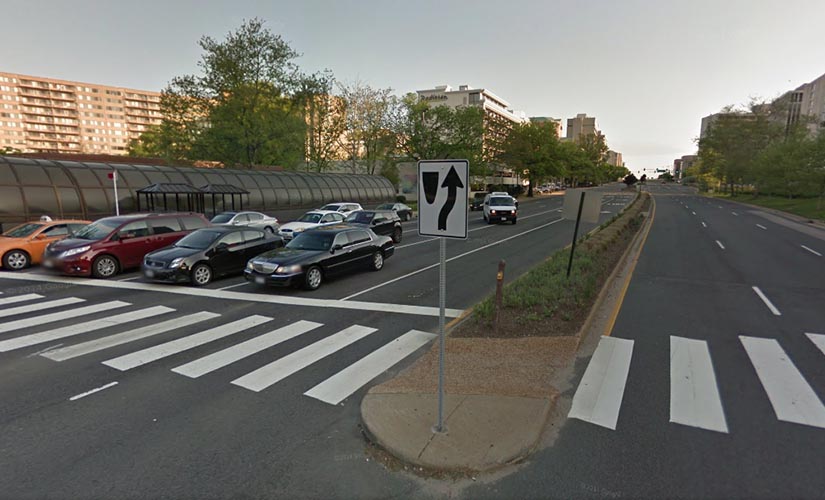
 If people in the community distrust Arlington’s government enough to elect a non-Democrat to the Board while Mark Warner was racking up 70% of the vote here, Mr. Tejada has no one to blame but himself and his own party. The Artisphere, the million dollar bus stop, the ill-conceived trolley, the overpriced dog parks and gold-plated aquatics center were not Republican ideas. And, Republicans alone were powerless to stop them despite our best efforts.

 The Zimmerman-Tejada line of thinking, though, really goes much deeper. They claim that Republicans hate all forms of government.

 Republicans believe government is necessary, but should be limited. We believe that government closest to the people is best. And we believe that government at all levels should be efficient, not wasteful. After all, the government is using money they have the power to take from us.

Republicans remember what our Founding Fathers warned us about — that the power to tax is the power to destroy. We know it is the duty of the people to be vigilant in watching carefully those who hold that power.

 So, if Mr. Tejada wants to oppose increased transparency and accountability and give credit to Republicans for creating the County Auditor’s office, then on behalf of the Republican Party — I accept.


Mark Kelly

The Right Note is a weekly opinion column. The views and opinions expressed in the column are those of the author and do not necessarily reflect the views of ARLnow.com.

The Arlington County Board announced it is ramping up to hire an independent County Auditor. The Auditor is to be independent in the sense that the office is slated to report directly to the Board rather than going through the filter of the County Manager’s office.

For good or ill, the Auditor would operate along with an Audit Committee of up to seven other people representing the Board, the county staff and citizen advisors. In general, the larger such a committee is, the less efficient it will be. Let’s hope the Committee does not restrict the ability of the Auditor to be effective.

It is particularly good to see that the reports will be published online in a timely fashion. That will give the community the opportunity to review the findings and draw their own conclusions.

Arriving at this point began with the Arlington Civic Federation who first called for an Auditor a few years back. Several candidates, including myself, made it a part of our campaign platforms when challenging the all-Democrat County Board. As with the other changes, including the end of the streetcar project, it did not come to fruition until voters put an end to the one party rule on the Board.

Libby Garvey got on board with the concept after John Vihstadt’s election, and the two convinced their colleagues to consider it. To his credit, Delegate Hope then carried a bill to ensure Arlington had the authority to create the position. The effort has truly been bi-partisan. And it proves that good ideas in Arlington can come from outside the Board or the current power structure within the Democratic Party.

The true test will be when the Auditor finds waste or inefficiencies in the current county government. The question will be, just how committed is the Board to making positive changes that will save taxpayers money? And if the Board is willing to reduce or eliminate certain spending, will they find other ways to spend it or will they actually consider lowering tax rates?

Also, will the Board charge the Auditor to take an honest look at the regular annual budget process and the less well understood closeout process? As I have argued here, the closeout process itself unnecessarily drives up spending outside of the regular budget process. It is not difficult to imagine that we could change the way county staff builds budgets to the benefit of taxpayers.

While questions remain, we should be cautiously optimistic that an Auditor will increase transparency and accountability and even keep a few more tax dollars in the pockets of the people who earned them.


Mary Rouleau

Progressive Voice is a weekly opinion column. The views and opinions expressed in this column are those of the individual author and do not necessarily reflect the views of the author’s organization or of ARLnow.com.

In September, the County Board will vote to adopt the Affordable Housing Master Plan (“Plan”) as part of the County’s Comprehensive Plan. The draft Plan has undergone review and revision and continues to be a hot topic in local blogs and print outlets. Here’s my case in support of its adoption.

Let’s start with what the Plan is: a policy document that contains enabling principles, goals and objectives. It is not a master housing siting plan or an allocation of new resources. The Plan, with a 20+ year look forward, does not commit to a specific course of action or number of committed affordable units (CAFs). In fact, it specifically reserves the right to make adjustments based on feasibility and market conditions.

There is a fair amount of confusion about the impact of the accompanying Implementation Framework (“Framework”), a staff guidance document that describes the existing and potential tools that will be used to achieve the Plan. The County Board will be asked to “accept” the Framework to guide staff efforts to develop new housing tools and consider housing site plans. These resulting processes to evaluate those tools and plans will be subject to community review and input–as has been the tradition.

So why has the County, guided by a citizen working group, spent the better part of three years preparing the Plan? For one thing, a change in state law now requires the County to incorporate an affordable housing plan into its state-mandated Comprehensive Plan which currently contains the County’s policies regarding land use, energy, transportation, and public spaces. This helps ensure integrated planning.

But more importantly, it’s time to re-examine housing needs, given that the last major study and current housing goals and targets were created 15 years ago. Since then, rents and housing prices have doubled, and the County has lost 13,000 rental units that were once affordable to households making 60 percent of AMI (Area Median Income — roughly $46,000 for a single person and $65,500 for a family of four).

Three other trends require the new policies expressed in the Plan.

First, available land in Arlington is scarce and costly. New approaches are needed to encourage market forces to develop affordability and allow for its distribution throughout the County. The Plan proposes exploring new approaches including land use and zoning changes, simplified approvals, and new housing design, including revisiting the accessory dwelling ordinance. Specifically, however, the Plan commits the County to using its financing (loan fund) and land use tools and sector planning to incentivize distribution of affordable units throughout the County.

Second, affordability challenges now confront the middle class. That and the growth in Baby Boomers who wish to “age in place” and Millennials require a fresh look at housing options. The Plan includes policy language and potential tools for addressing these concerns, including using land use and zoning policy to incentivize ownership housing affordable to households between 80-120 percent of AMI. The Plan includes new County policies to both help the middle class and enable Arlingtonians to age in community.

Third, Arlington’s economic sustainability in the face of increased competition requires a robust and stable employee base and a housing mix to support that base. In expressing support for the direction and goals of the Plan, the Arlington Chamber noted the importance of housing to employee recruitment and retention and business location decisions. The Plan expresses a preference for existing residents and Arlington-based workers in using County funds for rental or ownership programs.

Market forces, strong property rights laws and the Dillon Rule notwithstanding, our success in meeting current and future challenges — if we are to remain a place that is both diverse and economically sustainable — will depend on creative approaches and flexibility. The policies and objectives of the Plan provide that foundation.

Mary Rouleau is a 25-year resident of Arlington. She is the Executive Director of The Alliance for Housing Solutions.


peter_rousselot_2014-12-27_for_facebook

Peter’s Take is a weekly opinion column. The views and opinions expressed in this column are those of the author and do not necessarily reflect the views of ARLnow.com.

The latest Arlington County Retail Plan— scheduled for County Board review on July 18— remains far too prescriptive. The plan’s underlying, fundamentally flawed methods dictate overly specific retail outcomes on a block-by-block basis.

To get a flavor of the scope of this government exercise in micromanagement, simply skim the combined total of 113 single-spaced pages in the two key Retail Plan documents posted on Arlington’s website:

Efforts to revise the Retail Plan can be traced back at least to a 2009 Arlington Economic Development Commission (EDC) report (p. 3) recommending greater flexibility. While the current plan claims to have abandoned the “retail everywhere” approach, it still embodies a heavy-handed approach that is fundamentally inconsistent with what the EDC recommended.

A few examples illustrate the plan’s flawed methodology:

Clarendon

Most of Clarendon is locked into the “red” shopping and dining/entertainment category (Retail Plan, PDF p. 39), which is the narrowest and most restrictive of four separate categories. Other retail uses — like gyms or hair salons — are excluded. Government-enforced clustering of too much of the same type of retail in a small geographic area can create an artificial retail “monoculture,” risking a domino-effect collapse if its popularity wanes or businesses begin cannibalizing one another’s customer base.

Ballston

Forcing retail space to be added to the west side of Glebe Road (Retail Plan, PDF p. 43), and then also trying to set rules that push competing retail to be located outside Ballston Common Mall, is self-defeating. It makes little sense to set up a public-private partnership with Forest City and provide taxpayer funds to aid a failing mall, while at the same time undercutting the mall by creating lots of competing space directly across from it.

“A-Townization”

Previously, the plan acknowledged “issues associated with the lively, noisy, energetic and, sometimes, messy environment created by night life uses.” The County’s noise ordinance doesn’t apply to mixed-use, multifamily housing (and is basically unenforceable after 6 pm and on weekends countywide). All four street categories permit “dining” establishments like A-Town to be located in close proximity to people’s homes. Thus, the current plan exacerbates the ongoing and inherent conflict between the operations of A-Town-style businesses and the right of residents to get a decent night’s sleep.

Conclusion

Though this plan now applies only to the major corridors, it will eventually be extended to all site plan development countywide, wherever it occurs. The County Board should:

  • reject the flawed, inflexible, interventionist methods driving this plan, and
  • direct the staff to submit a revised plan reflecting marketplace realities.

Jefferson Davis Highway in Arlington (photo via Google Maps)

Arlington County plans to ask its state legislative delegation to sponsor a bill that would rename Jefferson Davis Highway, the Washington Post reports.

While the likelihood of such a bill passing is slim, County Board Chair Mary Hynes said the county has received “a flurry of letters from residents” asking that the Confederate leader’s name be removed from the highway, also known as Route 1.

(County Board Vice Chair Walter Tejada did not respond to an inquiry from ARLnow.com last month, asking whether a name change resolution for Jefferson Davis Highway was a possibility.)

In 2012, the county renamed the stretch of road formerly known as Old Jefferson Davis Highway “Long Bridge Drive.” This time around, talk of renaming the highway comes amid a national conversation about the Confederate flag and whether it’s more a symbol of southern heritage — or slavery and racism. Last week, South Carolina’s legislature voted to remove the flag from the grounds of the state capitol.

Do you think Jefferson Davis Highway should be renamed?

Photo via Google Maps


peter_rousselot_2014-12-27_for_facebook

Peter’s Take is a weekly opinion column. The views and opinions expressed in this column are those of the author and do not necessarily reflect the views of ARLnow.com.

A recent out-of-court settlement between Virginia and a private-consortium shows that bad things can happen when government fails to understand the risks of public-private partnerships. Under that settlement, Virginia taxpayers will lose over $200 million that the state paid to the private consortium to build a 55-mile highway that was never built.

Virginia’s 1995 public-private transportation law was hailed as a way to enable state and local governments to stretch their tax dollars by entering into partnerships with the private sector to build transportation projects. But, there were significant flaws in the way the 1995 law was designed.  Disastrous results often followed when those flaws were combined with the frequent mismatch between the technical and legal expertise available to the private sector (usually superior) compared to the public sector (usually inferior).

The public-private partnership contract to build U.S. Highway 460 was negotiated under the administration of Virginia Governor Bob McDonnell. After Terry McAuliffe became Governor, he asked his top transportation official, Aubrey Layne, to look into this troubled project. Layne described what happened next:

[A]fter he had a chance to get into the nitty-gritty of the contract …, he learned that the risks associated with obtaining a construction permit for the road rested on the state, not the contractor, as he and others on the Commonwealth Transportation Board had been led to believe. That meant, Layne said, that the contract called for [the private partner] to keep getting automatic payments regardless of whether it had the permits to build anything. Moreover…the deal was structured to front-load state payments to the company, with the justification being that doing so would lower borrowing costs and save the commonwealth money. In fact, the arrangement ended up doing the opposite.

Governor McAuliffe has just signed the new public-private partnership transportation law designed to cure the flaws in the old law.

Implications for Arlington

At the end of 2012, with inadequate public notice, Arlington rushed to enact its own local guidelines for public-private transportation partnerships. Those guidelines are now obsolete because they are based on the old law.

Virginia wisely has recognized the many flaws in its old public-private transportation partnership law and procedures. It’s time for Arlington to do the same.

The financial calamity exposed by the U.S. Highway 460 settlement also raises a broader issue. Public-private partnership agreements, whether or not they relate to transportation, often can be complex. Arlington needs to take care that it knows what it’s doing before it signs them. The County Board’s recent directive to the County Manager to explore a public-private partnership to redevelop Ballston Mall challenges the County government to see if it does know what it’s doing.


GOP county board candidate Mark KellyThe Right Note is a weekly opinion column. The views and opinions expressed in the column are those of the author and do not necessarily reflect the views of ARLnow.com.

Delegates Hope and Sullivan announced they would work across the Commonwealth to cut into the massive GOP majority in the Virginia House of Delegates.

Delegate Hope previewed his stump speech saying “Republicans are killing their constituents.” Hope’s over-the-top reference was reportedly to GOP opposition to expanding the Affordable Care Act and supporting coal.

Setting aside the Supreme Court’s failure to uphold the plain meaning of words as well as the fact there is nothing affordable about the law, it seems that the recent health care ruling breathed new life into this issue for Virginia Democrats. The wisdom of campaigning for this Washington program anywhere outside of the beltway remains to be seen.

Coal not only helps fuel the economy of southwestern Virginia, but shutting down all coal-fired power in the United States any time in the near future would cause utility rates to skyrocket. Higher electric bills impact those at the bottom of the economic ladder with the least amount of disposable income the most. In addition to home heating and cooling bills, it would drive up the price of every other good and service they need. Seems like a losing argument most places across the Commonwealth.

On balance, if Hope and Sullivan are going to bring their brand of being a Democrat to the campaign trail outside of Northern Virginia, GOP Speaker Howell might pay their way to stump for Democratic challengers. Their far left positions may play well in Arlington, but not in most, if not all, GOP-held seats.

Sullivan did argue the GOP would not change unless they lost elections over a specific issue. This is an argument I made about the Democrat-controlled County Board on the Columbia Pike trolley, and it proved to be true.

Mobile App “Saved”

Yesterday’s “breaking news” was that Arlington Public Schools mobile app has probably been saved from budget “cuts.” It seems as if Blackboard is willing to provide it for free.

You have to wonder whether or not the APS staff explored this possibility with Blackboard before announcing it would cut the $12,000 expenditure or whether Blackboard made the offer after APS notified them?

Whether it is a $12,000 mobile app or $1.2 million for Macbooks, the staff at APS owes it to Arlington taxpayers, students, parents and teachers to always look for innovative ways to save money, even though they have plenty of it.


Max Burns

Progressive Voice is a weekly opinion column. The views and opinions expressed in this column are those of the individual author and do not necessarily reflect the views of their organization or ARLnow.com.

Politics isn’t just a contest of competing visions for our community. As this year’s primary victories by Katie Cristol and Christian Dorsey and last year’s victory by John Vihstadt show us, successful campaigns understand the importance of a strong “ground game.” Message matters, but people need to hear it, see it and feel it.

Across Arlington and the broader 8th Congressional District, I’ve met progressive candidates with values and messages worth vocalizing. Yet they struggle with an important but often hidden problem: good campaign teams don’t fall out of the sky. Building top-notch campaigners takes training and hands-on experience.

We can do more to develop strong campaigners and campaign teams at the local level even though we lack the resources of a state or federal operation.

That’s why, in collaboration with the 8th District Democratic Committee, we launched the Next Generation Leaders Program. NGLP is unique mentorship initiative that connects passionate Democrats with elected officials, candidates and community leaders to build a strong bench of future campaign professionals.

Then we did one better and made sure the program would be absolutely free of charge. We believe financial limitations should never prevent a future campaign superstar from taking her or his first step.

Applicants to NGLP are largely younger Democrats and those looking to make a career out of campaign management, and we built the program with them in mind. After our successful applicants are chosen from those who apply before our July 15 deadline, they’ll work directly with active campaigns and Democratic leaders to learn a broad range of fundamentals, from fundraising to event management, campaign communications and crafting direct mail.

We’re especially focused on applying at the local level, where reliance on volunteers is no longer enough for candidates in competitive races. These skills are vital in races that lack large resource pools.

By building up real-world political management skills, NGLP offers diligent, committed Democrats the opportunity to stand out over the course of a campaign. It also marks the start of a growing network of NGLP participants and mentors with long-term value even for those who decide professional campaigning isn’t in their future.

I’m proud of the hard work of the 8th District Democratic Committee and the volunteer mentors from every city, county and magisterial district in developing NGLP. This program and its future participants will ensure that our candidates’ progressive values are backed by strong campaign organizations that ensure a good dialogue between voters and candidates and that those progressive values are communicated effectively in Arlington and beyond. It makes us more competitive as a party, and fosters a new generation of experienced, skilled political managers.

There’s still time to apply for our 2015 Pilot Program. If you’ve been looking for an opportunity to turn your progressive values into marketable job skills, look no further. We’re ready to see what you’ve got.

Max Burns is a member of the 8th District Democratic Committee and served as President of the Arlington Young Democrats.


Joseph-Leitmann-Santa-Cruz

Progressive Voice is a weekly opinion column. The views and opinions expressed in this column are those of the individual author and do not necessarily reflect the views of their organization or ARLnow.com.

This column is written by Joseph Leitmann-Santa Cruz.

My wife and I are proud to raise our family in and be part of a community that recognizes the importance of investing in our public education system. Arlingtonians have built a world-class education system and we need to celebrate that; however, not everyone throughout the County — especially our kids and families in South Arlington — has benefited equally.

South Arlington has been growing rapidly in the past few years. This rapid growth has been placing a burden on how effectively our elementary schools in South Arlington are able to address the needs of the current and projected school population.

Nine out of 10 elementary schools in South Arlington have significant projected seat deficits for the upcoming 2015-2016 school year. Two of those schools, Barcroft and Claremont, have reached overcapacity by 24% and 20%, respectively. Fast forward five years and the projected overcapacity figures increase to 35% and 23%. This is unacceptable. We can do better.

Our kids and families in South Arlington can and should have access to more and better programs, services and facilities.

Because Arlington cares, we seem to be moving in that direction.

On June 25, at the invitation and request from the Arlington School Board, I had the privilege of joining representatives from over 40 civic association, parent teacher associations, and other community organizations from South Arlington as we launched the first meeting of the South Arlington Working Group to Site a New Elementary School. I know, it’s quite a long name!

To achieve the School Board’s goal of opening a new, 725-seat neighborhood elementary school in South Arlington, preferably by the fall of 2019, the Working Group is charged with analyzing site options and providing input on related program moves with two key goals –addressing crowding and enhancing instructional opportunities — in South Arlington elementary schools.

Some might view this as redoing what the Thomas Jefferson Working Group already did. Hopefully, most will view our Working Group’s approach as focusing on having a broad, extensive, and transparent decision-making process.

There is a lot to learn from what worked and didn’t work from the TJ Working Group. Furthermore, our goal is a broader one of having all options “on the table” for community consideration.

The challenges are many but so are the opportunities to truly make available a world-class education system to every child in Arlington regardless of which neighborhood her or his family lives in.

From the very first meeting, the Working Group rolled up its sleeves and got to work. There is no issue too big or too small to be considered: site location, diversity matters, cost effectiveness, open/green space, traffic management, etc.

The focus and resources that the School Board is devoting to seeking solutions for school crowding and enhancing instructional opportunities is commendable, as is the spirit of cooperation and collaboration that the County Board and School Board have adopted this year to help ensure that we maintain a superior school system.

The Working Group will meet every two weeks. Our meetings are open to the public, so please join us and be part of the process. Furthermore, we invite and encourage the community to keep track of our Working Group’s progress by accessing our meeting minutes and discussed materials at http://www.apsva.us/moreseats.

This Working Group and other similar fora we have in our community are what helps make Arlington a special place where different voices can be heard. I look forward to being part of our collaborative approach to benefit all in the community.

Joseph Leitmann-Santa Cruz is the Director of External Relations for Capital Area Asset Builders (CAAB) and a member of the Board of Directors of the Arlington-based non-profit organization Dream Project.


GOP county board candidate Mark KellyThe Right Note is a weekly opinion column. The views and opinions expressed in the column are those of the author and do not necessarily reflect the views of ARLnow.com.

This week the Arlington School Board voted unanimously to add gender identity to its employment and harassment policies. The School Board did so rather quietly, adding it initially to its consent agenda before eventually holding a separate up or down vote.

Also included as part of the policy updates, the School Board made three additional changes related to the hiring of staff that received no coverage either before or after the fact.

On both the goals policy, which describes the staff the School Board seeks, and the equal employment opportunity policy they added “economic status” to the list of things the Arlington Public Schools would not take into account in hiring decisions.

Certainly, this is a change that would have widespread support. It is also almost certainly a change with no practical impact other than to comply with suggested legal language. No one would imagine discrimination of this type currently exists in the Arlington Public Schools (APS).

On the goals policy, the School Board struck “political affiliation” and “affiliation with an employee organization” from the same list. The accompanying memo did not state a reason for these changes other than to “align language across policies.”

While those items were never a part of the equal employment opportunity policy, it seems odd that the School Board would find a need to strike them from our goals.

Does the change mean the School Board now thinks it is ok for APS to consider whether or not an applicant voted in only Republican or only Democratic primary elections?

What about requiring an applicant to be, or not be, a member of the Virginia Education Association or another state’s teachers union as a condition for employment?

No, I do not think Superintendent Murphy will put these items on the job application or that he will assign a staffer to do a political background check. Yes, it is possible a lawyer told them they were better off to have the two lists match exactly.

But goals are just that, goals. It is disconcerting that protecting an APS staff member’s First Amendment free association rights are now somehow less worthy of a mention.


peter_rousselot_2014-12-27_for_facebook

Peter’s Take is a weekly opinion column. The views and opinions expressed in this column are those of the author and do not necessarily reflect the views of ARLnow.com.

What do Mitch McConnell and the Dean of the Washington National Cathedral have in common? They both want to stop the public veneration of Civil War “heroes.”

The Episcopal Dean concluded that two stained glass windows at the Cathedral–depicting the Confederate battle flag, Jefferson Davis and Robert E. Lee–should be removed. The Dean explained:

While the impetus behind the windows’ installation was a good and noble one at the time, the Cathedral has changed, and so has the America it seeks to represent. There is no place for the Confederate battle flag in the iconography of the nation’s most visible faith community. We cannot in good conscience justify the presence of the Confederate flag in this house of prayer for all people, nor can we honor the systematic oppression of African-Americans for which these two men fought.

The Republican Senate leader concluded that a statue of Jefferson Davis, a native Kentuckian, should be removed from the state capitol in Kentucky.

What lessons should Virginia and Arlington draw from McConnell and the Dean?

Let’s stop treating Confederate leaders as revered heroes. Let’s remove their names from the commons by rebranding streets and schools. As long as we have to subliminally pay our dues to General Lee every time we go to work or go shopping, we will fail to understand slavery for the prolonged act of violence that it was. As for schools, what is the bigger lesson imparted to a child who attends schools that celebrate Confederate “heritage” with these names?

The right thing to do is for the appropriate Virginia authorities to rename Jefferson Davis and Lee Highways, and for the appropriate Arlington authorities (the School Board) to remove General Lee’s name from Washington-Lee HS.

But, every aspect of the American Civil war should remain wide open for discussion and debate in our:

  • educational institutions,
  • museums,
  • history books, and
  • civic life.

Moreover, let’s not let the politicians off the hook. Taking an image of a Confederate flag off a license plate or removing the name of Confederate leader Jefferson Davis from a major highway won’t suffice.

After the Charleston massacre and the high-profile wave of deaths of black men and boys at the hands of police officers across the country, there is no denying the persistence of institutional racism.

Our state lawmakers need to do their part by doing such things as reforming overly-restrictive voter ID laws. As they create new seats for students, our county leaders must close achievement gaps and re-balance school districts so that none of our schools remain intensely segregated.

CONCLUSION:

Let’s eliminate both the major symbols of racism and the lingering effects of racism.


View More Stories