Progressive Voice is a weekly opinion column. The views and opinions expressed in this column are those of the individual author and do not necessarily reflect the views of ARLnow.com.

The following is an excerpted version of a statement delivered at the Arlington County Board’s January 1 Organizational Meeting. The full text will be available on the County web site – countyboard.arlingtonva.us/county-board-members.

Mary HynesThe past year was a time of change in our community. Today is a day for reflection and making resolutions. I resolve to build upon our community values and to listen carefully to Arlington’s many voices as we strive to make Arlington an even better place for us all.

A challenge we face in 2015 as a community is how we move beyond our recent discord on key issues and work together to ensure that our County has the resources to meet our residentsfacilit yneeds while remaining the high-quality, caring community each of us has chosen to make our home?

We are always better when we listen to each other, seek to understand the breadth of the challenges we are facing, and work together to adjust our course.

So, in 2015, the County Board will work in partnership with our community to begin writing a new chapter in Arlingtons story. Joined by our School Board colleagues, supported by our many advisory commissions, the Civic Federation, civic associations, and PTAs as well as members of the business community, we are launching today the Arlington Community Facilities Study — a Plan for the Future. 

The Study Committee will be composed of Arlington residents and business leaders charged with developing a consensus framework to address our communitys need for additional schools, fire stations, and vehicle and other storage facilities in the context of our long-term economic and demographic growth. This Study is intended to give both Boards information needed to make critical decisions leading to adoption of an updated Capital Improvement Plan in July 2016.

This process will allow the community to address several key questions head-on: What are our facility needs for schools, fire stations, recreation, and transportation vehicle and other storage and how do we pay for them? What criteria should we use to decide their location? What opportunities and challenges are there in our aging affordable and workforce multi-family housing stock? What do changes in the Federal government presence and the residential and private commercial marketplace mean for County revenues?

The consensus framework the Study Committee will create, working with the larger community, will answer these questions as informed by our realities:

  • Arlington is small; no new land is being created.
  • We must use what we already have thoughtfully and equitably to serve Arlingtonians throughout the County.
  • Significant new funding is unlikely.
  • We must examine facility needs strategically and maximize use of available revenue.
  • We must have a sensible long-term financial plan for the County.

Our framework will acknowledge: change is unavoidable as our population grows; challenges loom as we reinvigorate our economy; and our available physical space limits some possible solutions.

Later this month at a joint public meeting with the School Board, the County Board will adopt the charge for this Study. The two Boards will stay involved. I am pleased to announce that John Vihstadt has agreed to join me as County Board liaison to the process.

Two especially important issues will intersect with the Study Committee’s work: housing affordability and business vibrancy.

Housing affordability — Some have wondered why housing affordability requires local government investment.  Simply put, a variety of home choices offers more opportunity to stay in the community. Those who live and work in Arlington share in the value that their work helps to create — rooting them firmly in the community. Through their work, volunteerism and engagement, they strengthen and enrich our community’s civic life.

Business Vibrancy — Arlington is experiencing unprecedented vacancy rates in our commercial sector. To help address the challenges facing the business community we will have on board a new Economic Development Director and we will host a quarterly Chairmans Breakfast with Business Leaders, joined by our County Manager. Thanks to the Chamber of Commerce for its support of this activity.

Good ideas can come from anywhere.I am grateful for the time so many have taken to share their views with me.  At the beginning of my year as Board Chair, now more than ever, I hope ideas will keep coming from all quarters of our community.

In a very real sense, government in Arlington is informed and driven by dialogue.

  • Dialogue within our neighborhoods, among friends, at PTAs, civic associations and other community meetings.
  • Dialogue among citizens involved in advising the County Board on the full range of issues.
  • Dialogue between citizens, businesses, the County Board and the County Manager and her staff.

It is this on-going, informed dialogue that makes us a better community.  Lets keep it going.

Mary Hynes will serve as 2015 Arlington County Board Chair. She was elected to the County Board in 2007. She previously served for 12 years on the Arlington School Board, including three times as Chair.


Peter’s Take is a weekly opinion column. The views and opinions expressed in this column are those of the author and do not necessarily reflect the views of ARLnow.com.

Peter RousselotArlington is part of a regional economy that faces a serious economic crunch. Arlington must continue to adjust to our new economic reality.

Our New Economic Reality

Federal government downsizing “has seen the D.C. region’s gross regional economy shrink two years in a row beginning in 2013.” Average wages and average household incomes in Northern Virginia have been declining. Dr. Stephen Fuller of George Mason University concludes: “downsizing and repositioning are watchwords. …We are facing the need for a substantial reduction in things not important.”

Federal government downsizing has led to large increases in commercial office vacancy rates in Arlington and throughout Northern Virginia. There is no end in sight. This situation depresses the potential growth in the value of commercial property. At the same time, substantial increases in the value of Arlington residential property continue. County Manager Barbara Donnellan forecasts a 6 to 8 percent growth (slide 10) in the value of Arlington residential real estate during calendar year 2015.

These economic trends mean Arlington’s residential taxpayers will pay a higher and higher percentage share of the total cost to fund Arlington’s budget. But, the average incomes of those residential taxpayers are likely to be flat or declining. That’s why Arlington voters in 2015 will continue to insist that Arlington set priorities by concentrating spending on core services.

A More Rigorous Approach to Investing in Core Services

Arlington should adopt a more rigorous and systematic approach to investing in core services. That approach should be one in which core services receive a higher percentage share of their budget “wish list” compared to the percentage share received by non-core services.  

Other municipalities have provided guideposts that Arlington can use to move toward this more rigorous and systematic approach. One example is the core continuum approach to budgeting taken by the city of Regina, Saskatechewan. Arlington should use Regina’s approach as a starting point, and alter that approach as necessary to fit those aspects of Arlington that differ from Regina.

Arlington not only needs new approaches to setting priorities overall, it also needs new thinking and new approaches regarding development, education, and transportation.

Development

Do we care how much development we have? County Manager Donnellan forecasts that Arlington’s residential population will increase 25 percent from 2010 to 2030. There is no credible plan to pay for the public infrastructure (e.g. schools) that will be required. Arlington needs to have a transparent public conversation to prepare that plan.

All options must be on the table for discussion. We should not prevent discussion by saying, “that’s not how we do things in Arlington.”

Education

The need for such a transparent conversation is most evident in the area of public education. As I have written previously, county and APS demographers need to agree on a single, unified projection of APS enrollment growth. Then, the county and the schools need to develop a joint plan explaining how Arlington will pay for the construction of the new school facilities that will be required. Developer proffers for education should be part of that conversation.

APS also needs to apply a core services approach within its own budget.

Transportation

Arlington County needs to move forward quickly to present and implement a new plan for upgrading transit in the Columbia Pike and Crystal City corridors. Arlingtonians for Sensible Transit (AST) already has contributed to the public dialogue by presenting AST’s proposal for upgraded transit in these corridors.

Conclusion

We need new ideas and new policies to solve the unprecedented challenges we face in 2015.


It was a momentous year for Arlington, as demonstrated by the second of our three “Top Stories of 2014” posts.

Perhaps the biggest Arlington story of the year, in terms of local policy significance, came in at No. 6 on our list (which ranks the most-read articles of 2014). The year’s only homicide in Arlington County also made this list.

Here are articles Nos. 6-10 on our countdown. (See Nos. 11-20 here.)

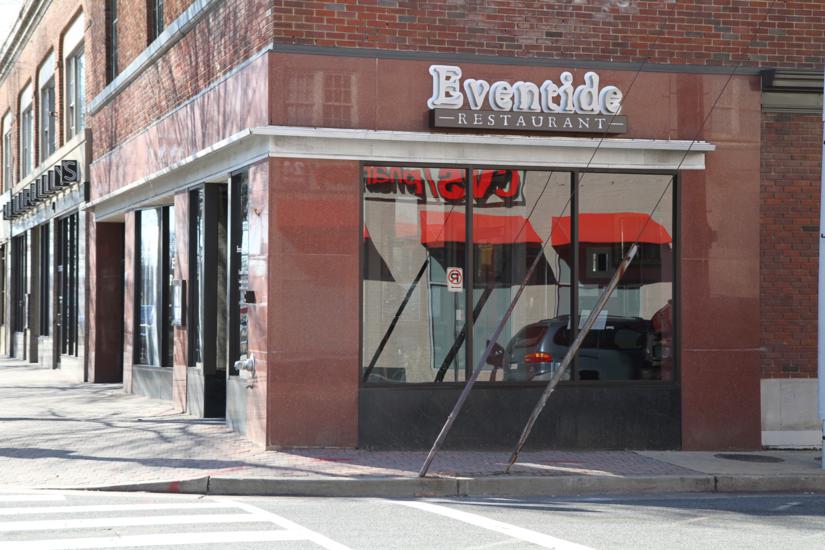
Eventide Restaurant10. Eventide Restaurant Closes in Clarendon (16,098 views) — Whenever a restaurant opens or closes in Arlington, it’s almost always a big story for us in terms of readership. Restaurants help to give neighborhoods character, serve as a gathering place and are a tangible part of the community. Losing a well-known and well-liked restaurant like Eventide hits home for many people. While this article had more readers, a follow-up article announcing Don Tito, Eventide’s successor, received more comments.

9. Westover Deaths the Result of a Murder-Suicide, Police Say (19,553 views) — The sad story of 31-year-old Kristy Flowers, a Westover resident with a promising future, pulled on the heartstrings of many readers earlier this month. Police say Flowers was murdered by her live-in boyfriend, Ray Savoy, Jr., who then turned the gun on himself. They were a seemingly happy couple in photos posted to Facebook just weeks before the shooting, making the shooting ever more senseless.

8. Police Investigating Possible Homicide in Westover (20,191 views) — ARLnow.com was the first to report on the tragic crime that was also the focus of our No. 9 story. It originally came in on the scanner as two people found dead in an apartment. While it wasn’t reported as a homicide over the air, we immediately sent a reporter to the scene. We waited for a source to confirm our suspicions before we published our report that police were investigating a possible murder-suicide.

7. Stabbing at Ballston Metro Station (20,508 views) — Any time you have a large number of police and fire department vehicles rush to a Metro station, it’s going to get a lot of attention. We reported on this brutal stabbing after receiving numerous tips from readers. A witness report that was retweeted by @unsuckdcmetro also caught our attention: “Someone was just stabbed on inbound platform at Ballston. Blood all over the platform.” We were able to get some initial information from Metro, then update the article with more details the next day.

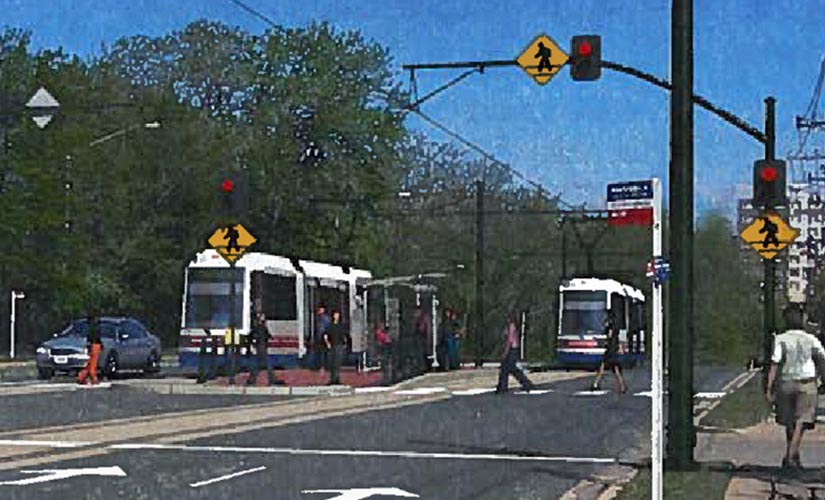
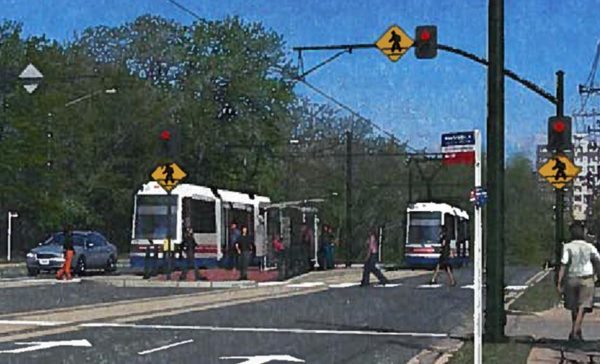
Rendering of a streetcar along Columbia Pike6. Streetcar Project Canceled (23,411 views) — To say that this news was a surprise is an understatement. After many years of planning and a couple years of pitched controversy and political infighting, Arlington’s ambitious half-billion-dollar streetcar project was nixed with one somber press conference and a quick vote.

We were told that morning (Nov. 18) that a “significant” announcement regarding the streetcar would be coming at noon. But even Arlington insiders were caught off-guard at the sudden reversal. ARLnow.com editor Scott Brodbeck and Sun Gazette editor Scott McCaffrey took bets on what the announcement would be — and both were wrong. The one person who saw this coming was local Democratic political strategist and blogger Ben Tribbett, who told ARLnow.com that “the streetcar is dead” just hours after the historic re-election of County Board member John Vihstadt.

(more…)


The Right Note is a weekly opinion column. The views and opinions expressed in the column are those of the author and do not necessarily reflect the views of ARLnow.com.

Mark KellyAt last Saturday’s County Board meeting, Walter Tejada lashed out at the decision to derail the Columbia Pike trolley project.

In his lengthy diatribe, Tejada extolled the virtues of planning by Arlington County. One would think based on the tenor of Mr. Tejada’s comments that all the projects Arlington County embarks on turn out well — even the ones that have substantial opposition during the planning process.

Then on Wednesday, County Manager Barbara Donnellan recommended the closure of the Artisphere. While millions were already poured into the project, this decision will stop the ongoing millions in annual taxpayer subsidies to an arts center that was supposed to be self-sufficient by now. Once again, it appears Arlington leaders are bowing to realities many of us saw coming before a single tax dollar was wasted on a project.

Yet, just 18 months ago, then-Chairman Walter Tejada had this to say about the Artisphere:

“The Artisphere is an ongoing investment in Arlington’s future,” he said. “It’s helping to building our arts and cultural community. This is a proven and documented economic development strategy that attracts the young, educated demographic who are the workforce for the technology and innovation sectors.”

“Artisphere is on its way,” he concluded. “We expect the Artisphere to become a self-sustaining organization.”

The Artisphere was a planning failure that could have been avoided had the County Board heeded the warnings of fiscal watchdogs at the time.

Now comes Wednesday’s decision to bail out the Signature Theater — again. In a disappointing 5-0 vote, the County Board forgave $411,000 in past due utility and lease payments and will not charge the theater anything for its $90,000 per year lease for the next 19 years. This move comes on top of a smaller $250,000 bailout 18 months ago. Total forgiveness of obligations due to Arlington County under the original Arlington Way planning process for Signature will be $2.371 million over 20 years — a pretty nice Christmas gift for the theater.

The Board also refinanced the theater’s loan at a rate of 1 percent per year in exchange for United Bank forgiving $2.7 million due to them. These new loan terms are a pretty good deal for the theater considering the Board on Saturday refinanced other County debt at 2.52 percent.

Last night as debate was wrapping up, Tejada and Chairman Fisette emphasized what was being done for Signature was not a “gift,” it was a “loan.” You could make the argument that initial planning had failed and cutting a deal to bail out Signature should be done, but saying it was only a loan does not make it so. Just like claiming the Columbia Pike trolley was a good idea that deserved to go forward because it had been planned for 15 years did not make it so.

Mark Kelly is a former Arlington GOP Chairman and two-time Republican candidate for Arlington County Board.


Progressive Voice is a weekly opinion column. The views and opinions expressed in this column are those of the individual author and do not necessarily reflect the views of ARLnow.com.

MaxBurnsThis has been a year marked by a constant stream of contested political campaigns in Arlington that resulted in the election of new members of the School Board, County Board, House of Delegates and Congress.

During that time of intense internal political focus in Arlington, I also had a chance to participate in the University of Virginia’s Sorensen Institute for Political Leadership — a program that promotes the values of trust, civility and respect in its graduates through direct engagement with communities around Virginia.

Over the course of 2014, as it has for 20 years, the Sorensen Political Leaders Program brought together each month professional, civic and political leaders and future leaders — Democrats, Republicans and Independents — from every region of the Commonwealth. The Sorensen Institute has long worked to provide meaningful conversation and consideration of the issues facing our localities and our Commonwealth. It stresses open dialogue, looking beyond surface and party/ideological differences, and clear, fact-based thinking about policy challenges we face.

My Sorensen experience has given me a broader perspective in which to view the eventful 2014 in Arlington. As we near the end of the year, it may also be worthwhile for our progressive community to step back and analyze the current political situation in our county.

It’s been a challenging year for the Arlington County Democratic Committee. We faced an unexpectedly strong challenge with John Vihstadt’s candidacy for the County Board. We struggled against the image of a local party so used to victory that no other outcome was possible.

Also, few political groups have to contend with normally dry discussions about membership bylaws and steering committee procedures becoming front-page news. Yet, ACDC found itself in that place this year when senior party officials decided to endorse and campaign for a non-Democrat contrary to national, state and local party rules. That difficult situation played out in a very public way.

While the rules were clear, we fell short in building understanding in the community about the way that party rules and ACDC procedures work, why those rules exist, and how few people they affect directly.

We now know that Arlington — like other parts of the country in 2014 — faced a shake up and increased skepticism about politics, elected officials and institutions generally.

Regrettably, this led to instances when civility broke down within ACDC and also within broader community conversations about the County Board, its policies and the 2014 election.

One of Sorensen’s most valuable lessons for me is that, difficult as it can seem, we are better served moving past our knee-jerk responses and exploring issues more deeply — even if the end result isn’t as self-validating as we’d hoped.

That is why I believe “The Arlington Way” deserves better than increasing derision in the community. While criticized as an empty buzzword, it does have the benefit of urging us to approach disagreements with civility and respect as we strive to make Arlington a better community.  Those core principles underpin good government regardless of party or candidate.

It’s time we reinvigorated the phrase and recommitted to building a community that takes seriously the input of a broader range of Arlingtonians, whether they are political activists or choose to spend their time contributing in other ways. How we conduct ourselves as we strive to build better schools and more responsive public services is every bit as important as the quality of schools and services we provide. So let’s set an example. (more…)


Peter’s Take is a weekly opinion column. The views and opinions expressed in this column are those of the author and do not necessarily reflect the views of ARLnow.com.

Peter RousselotThe past year was filled with revealing stories about Arlington and Virginia politics and government. Here are my top five:

5. APS Capacity Crisis Grew

County and APS demographers continued to present sharply differing forecasts of population growth and APS enrollment. The County and the schools failed to develop a unified plan that even came close to explaining how Arlington will pay for the construction of the new school facilities that will be required.  For no compelling reason, too many sites, designs, and financing options were not on the table for discussion.

4. Medicaid Expansion Failed

After Virginia Republicans gained control of the Virginia state Senate, Democratic Gov. Terry McAuliffe’s proposal to expand Medicaid in Virginia was blocked by Republican majorities in both legislative branches. While Republican leaders in other states passed their own legislation to expand Medicaid, Republican leaders in Virginia failed to do so. The failure by Virginia Republican legislative leaders to present and lobby for their own alternative Medicaid expansion plan was a major disappointment.

3. McDonnell Convicted

Former Virginia Gov. Bob McDonnell was found guilty of violating federal criminal law relating to public corruption. Most legal experts and political observers agreed that Virginia’s state criminal laws on public corruption are so full of holes that McDonnell could not have been successfully prosecuted under state law. Far from discouraging corrupt conduct, Virginia’s porous state laws continued to enable it. The McDonnell verdict highlighted the need for both Virginia and Arlington to strengthen their laws and ethics policies.

2. Streetcar Cancelled

The County Board’s decision to cancel the streetcar was the right decision as a matter of public policy. When the costs of a $500+ million project are so disproportionately greater than any possible benefits, no other decision would have made sense. A public majority correctly decided years ago that streetcars made no sense for Arlington. They could not understand the Board majority’s stubborn refusal to cancel the project. The abruptness with which the belated cancellation was announced reinforced the public’s conclusion of failed Board leadership.

1. Vihstadt Elected Twice

John Vihstadt’s elections to the County Board by landslide margins in April and November were a fitting recognition of his 30 years of community service. Independent Vihstadt’s decisive November victory, at the same time as Democrat Sen. Mark Warner also decisively carried Arlington, repudiated the insular thinking and policies of Fisette, Hynes, and Tejada on a wide range of issues. Arlington voted instead to prioritize spending our tax dollars on core services:

  • public schools,
  • basic infrastructure (sewers, water mains, roads),
  • sensible transit, and
  • public safety.

Conclusion:

These 2014 stories provide important background for 2015.

Peter Rousselot is a former member of the Central Committee of the Democratic Party of Virginia and former chair of the Arlington County Democratic Committee.\


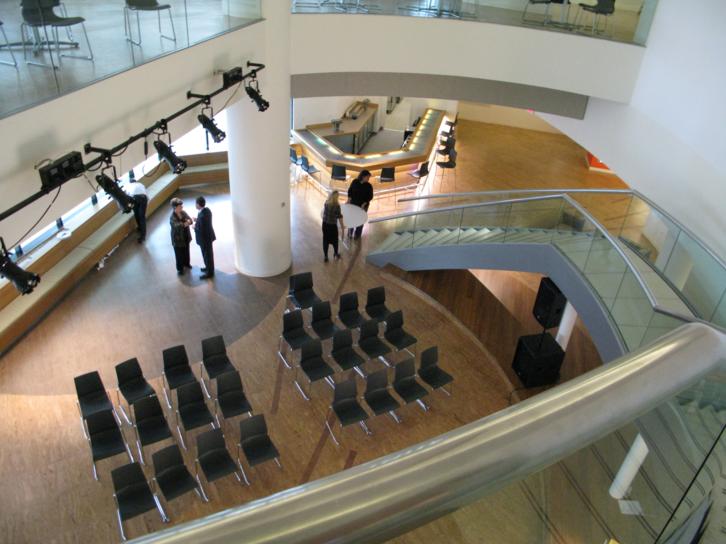
Artisphere Preview 015(Updated at 9:40 p.m.) Arlington County Manager Barbara Donnellan is recommending that the county close the Artisphere cultural center in Rosslyn after the first half of 2015.

Donnellan said Artisphere “has not lived up to projections” and would likely require substantial taxpayer support to stay open — more than $2 million per year.

Based on subsequent comments from County Board members, it appears that the Board is likely to adopt the manager’s recommendation next year.

Do you agree that Artisphere should close?


Arlington County has been trying to figure out how to better reach out to the hordes of young apartment-dwellers who make up a significant portion of the county’s population, but who are usually nowhere to be found during community meetings.

“It’s not always easy to reach certain parts of the community,” Arlington Public Library Director Diane Kresh says in a new county-produced video (above). “We’ve tried several methods over the years — community meetings in schools, in community centers — and typically the same people would come out each time. So what we decided we needed to do was try something different.”

To help design events and services tailored to the elusive mid-20s to mid-30s professional set — dubbed “Metro Renters” — county staff is taking an approach called “Design Thinking,” which builds a needs profile through interviews with members of a given group.

“Design Thinking is a system of methods and processes that uses a designer’s sensibility to match people’s needs with what is feasible and viable,” explains Dept. of Environmental Services program manager Joan Kelsch.

Via interviews, the county developed the following profile of “Metro Renters.”

  • They want their resources to be quick and convenient and are willing to pay top dollar if it fulfills their needs in a hurry
  • They’re tech savvy and they can’t function without their mobile devices
  • They’re highly educated with varied reading interests
  • They listen to NPR on weekday mornings and track the news online all day
  • They work hard and play hard
  • Hanging out with friends is important
  • They like good food
  • Many don’t have cars so location is important
  • They enjoy a quiet, relaxing environment for conversation with a friend
  • Many are also interested in meeting potential life partners, so activities and places that give them something to do where they can meet new people with common interests are good
  • They consider themselves hard working and busy people without a lot of free time, so anything they attend should have an immediate impact on their lives or otherwise be important to them

If you have first-hand familiarity with the “Metro Renter” set, how would you grade the county’s job of producing a broadly accurate profile of the average 25-35 year old Metro corridor renter in Arlington?


Ask Adam Real Living header

This regularly-scheduled sponsored Q&A column is written by Adam Gallegos, Arlington-based real estate broker, voted one of Arlington Magazine’s Best Realtors of 2013 & 2014. Please submit your questions via email.

Q. I saw a mention on ARLnow this past Tuesday that Arbour Realty has been acquired.  Isn’t this your company? Are you going to continue the Ask Adam column? 

A. Yes, Arbour Realty is a company that my wife and I started in 2008. We were recently acquired by a company called Real Living | At Home. Real Living is a national brand owned by Berkshire Hathaway. Real Living | At Home is the regional franchise.

They have been one of the fastest growing real estate brokerages in D.C. and Maryland. Purchasing Arbour Realty is part of their strategy to begin their rapid growth in Northern Virginia. Real Living is on the cutting edge of technology and real estate services, providing a clear advantage over traditional brokerages.

Real Living | At Home logoWe will now have an in-house staff of PR, marketing, photography, videography and technology professionals working on our behalf when we are selling homes. We are looking forward to leveraging the myriad of resources provided by Real Living to take our real estate services to the next level.

We are keeping the Arbour Realty team together under the new brand. I will remain a leader in the Virginia office, but will focus more on our clients and less on the administrative duties of running a company.

I will continue to write the Ask Adam articles for ARLnow so please keep the questions coming. I truly enjoy responding to your questions and following the comments that follow my articles.

The views and opinions expressed in the column are those of the author and do not necessarily reflect the views of ARLnow.com.


Peter’s Take is a weekly opinion column. The views and opinions expressed in this column are those of the author and do not necessarily reflect the views of ARLnow.com.

Peter RousselotA recent ARLnow.com story asked the question: “Why doesn’t Arlington ask developers for school funding?” County leaders quoted in the story bobbed and weaved, but failed to provide convincing answers.

County Attorney Steve MacIsaac seemed to suggest that current state law severely limits the extent to which such developer contributions could be required. But, MacIsaac didn’t explain exactly why such developer contributions are not similarly limited in neighboring jurisdictions like Fairfax.

Is MacIsaac claiming that, with respect to developer proffers, Arlington has a different legal status under Virginia law than Fairfax? If so, he needs to explain that fully. If that’s the situation, then any Arlington legislator could seek necessary changes in state law.

Arlington County Board Chair Jay Fisette was similarly opaque. Fisette was quoted as saying, “if we would have to undo our current structure to be able to replicate what’s done in Loudoun, I think that would be ill-advised.” Why would it be ill advised? Fisette didn’t explain.

Fisette was somewhat more candid on the Kojo Politics Hour. When a caller noted that projections of rapid school enrollment growth suggested Arlington would have real trouble financing the construction costs of seats for new students, Fisette admitted: “We are victims of our own success.”

Precisely because Arlington students and their parents indeed would be the victims of this kind of “success,” the public is rightfully calling for a completely transparent discussion of the developer proffer issue.

It was troubling to read several comments to the ARLnow.com story claiming that County Board members have threatened School Board members that there would be adverse consequences to the school system if the proffer issue were discussed publicly. Claims like these could be either true or false. But, the issue of developer proffers is real, and deserves a full, fair and extensive public discussion.

It was welcome news to learn that such a public discussion could take place at the January meeting of the Arlington Civic Federation. A Sun-Gazette story about the Civ Fed’s plans suggested that County leaders might be reluctant to open up this issue because developer proffers for new school construction might be “a zero sum game.” If so, such proffers might have to be offset by comparable cuts in developer contributions for other things, like affordable housing or public art.

We need a robust public discussion of questions like these:

  • Is it really a zero sum game?
  • Which priorities matter most?
  • If we can’t even afford to pay for the seats for new students required by recent development, why shouldn’t we slow future development until we catch up?

Peter Rousselot is a former member of the Central Committee of the Democratic Party of Virginia and former chair of the Arlington County Democratic Committee.


The Right Note is a weekly opinion column. The views and opinions expressed in the column are those of the author and do not necessarily reflect the views of ARLnow.com.

Mark KellyGov. Terry McAuliffe’s office recently announced that he has closed 228 economic development deals since January. This is a carryover from a similar push by the McDonnell administration to bring jobs to Virginia.

In a report by the Watchdog, the latest deal merely shifted jobs from one Virginia county to another. Regardless of the quality of all the deals, bringing business to Virginia is a laudable goal. This is especially true as Virginia must adjust to a federal government that will not go back to 2009 stimulus spending levels any time soon — if ever.

The question is should Virginia’s priority be to play let’s make a deal, or should we improve the baseline for our business climate?

According to the Tax Foundation, Virginia ranks 27th in overall business tax climate. Virginia ranked 23rd in 2012. Virginia’s elected officials have not done anything to make us significantly less competitive, but we are now in the bottom half of states rather than the top.

Governor McAuliffe issued a lengthy report outlining what he wanted to do to increase economic growth in 2015. It purports to outline a “New Virginia Economy” and is chock full of buzz words.

Included is a small section to “right size regulations” — though it is short on specifics and seems short on any real regulatory reforms. What is not in the report under any of the “goals & strategies” is making Virginia the number one business tax climate. The section mentioning taxes highlights that we are better than average by some measures — hardly a real selling point.

When competing with Maryland for businesses looking to locate in the greater Washington, DC area, Virginia is still ahead when it comes to the tax climate. But, if we want to truly compete nationally, we have to do more on the fundamental tax issues because every state competing for businesses is offering incentives like those currently being handed out by Governor McAuliffe.

Making Virginia number one for its business tax climate would be a real opportunity for the governor to work with the Republican-controlled General Assembly over the next three years. Unfortunately, it does not look like it will be a priority.

Mark Kelly is a former Arlington GOP Chairman and two-time Republican candidate for Arlington County Board.


View More Stories